
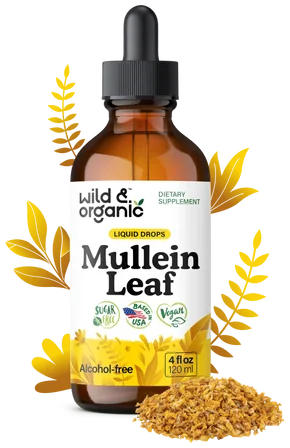
Wild & Organic Mullien Leaf Drops Review
Wild & Organic Mullein Leaf Drops are a liquid herbal supplement meticulously formulated to support lung comfort and overall respiratory wellness. This alcohol-free tincture combines the traditional benefits of Mullein leaf (Verbascum thapsus) with the synergistic properties of Organic Echinacea root (Echinacea Purpurea) and Organic Licorice root (Glycyrrhiza glabra), all suspended in a base of certified organic vegetable glycerin and purified water. Designed for adults seeking daily herbal support, these drops offer a convenient and fast-absorbing alternative to pills or capsules, aiming for a 98% absorption rate. The primary ingredient, Mullein leaf, has a long and esteemed history in traditional herbal medicine across various cultures, including European folk medicine and Native American healing practices, for its profound affinity for the respiratory system. Mullein is rich in naturally occurring plant compounds such as mucilage, saponins, flavonoids, phenylpropanoid glycosides, and iridoids. The mucilage content is particularly noteworthy for its demulcent properties, which means it forms a soothing, protective film over irritated mucous membranes in the respiratory tract, helping to calm coughs and alleviate throat irritation. Saponins, on the other hand, are believed to act as natural expectorants. They work by reducing the surface tension in bronchial secretions, making mucus less viscous and easier to mobilize and expel from the lungs and airways, thereby aiding in natural mucus clearance and supporting healthy breathing patterns. Furthermore, mullein possesses anti-inflammatory, antioxidant, and antimicrobial properties, contributing to its ability to soothe inflammation in the lungs and airways and support the body's natural defenses against seasonal challenges. Complementing Mullein's actions, Organic Echinacea root is included for its well-known immune-supportive qualities. It is packed with antioxidants like flavonoids and chicoric acid, which help bolster the body's natural immune response. Organic Licorice root further amplifies the formula's effectiveness. Licorice root is traditionally recognized for its soothing effects on the respiratory system and its ability to enhance the benefits of other herbs. The combination of these ingredients in a liquid tincture form allows for efficient delivery and absorption, providing comprehensive support for lung health, immune function, and overall breathing wellness. The product is vegan, non-GMO, and contains no added sugar, reflecting a commitment to natural and clean supplementation.
We don’t sell supplements. We help you make decisions and get the best price.
Lowest prices
We may earn a commission from some store links. How we choose.
Lowest cost per month first, in stock, at 3 servings a day. Checked Nov 14.
- VitacostLowest$19.95 a bottle$21.37/moBuy at Vitacost (opens in a new tab)
Study, Trial or Testing Result Summary
Members Only14 human studies · 13 improved
No study in people has tested any of these ingredients, taken by mouth, for aging or cell repair. Echinacea, at 300 milligrams a day here, has the only human evidence, and all of it involves skin products rather than drops you swallow. A facial serum with echinacea used daily for one month by 104 women around menopause was safe, moved skin measures toward a younger state and lowered a sign of oxidation damage, but there was no comparison group [1]. An echinacea cream or gel used for one month by 10 adults raised skin moisture and reduced wrinkles by about 9 to 15 percent [2]. In lab skin samples exposed to ultraviolet light, an echinacea emulsion prevented nerve ending loss [3]. Licorice, at 90 milligrams a day, was also tested only in skin creams: one with several active ingredients improved aging hands [4], and another increased skin density after 56 days [5]. Mullein, the main ingredient at 2,100 milligrams a day, has only animal evidence: a mullein compound improved memory in mice [6], and an extract with a related plant lowered oxidative stress in rats [7]. Because the studied products were creams or animal doses, there is no studied dose by mouth to compare this product against. Animal and cell studies are never counted.
See all 14 studies →Hide the studies
- In skin samples from 20 patients exposed to UV light in the lab, an emulsion containing Echinacea purpurea extract fully prevented the loss of nerve endings seen with placebo, which lost 40 to 60 percent.Neuroprotective effects of a new skin care formulation following ultraviolet exposure.
- In 104 women in pre-menopause, menopause or post-menopause, a facial serum containing Echinacea angustifolia meristem cells applied daily for one month was judged safe and shifted skin measures toward a younger state, with less lipid peroxidation.Effects of Plant Meristem-Cell-Based Cosmetics on Menopausal Skin: Clinical Data and Mechanisms.
- In a 120-day trial, a hand cream containing licorice root along with retinol and other ingredients improved the appearance of aging hands, with physicians rating texture, wrinkles and pigment significantly better than at the start.Assessment of a Novel Anti-Aging Hand Cream.
- In 10 healthy adults aged 25 to 40, a cream or gel containing Echinacea purpurea extract applied for one month raised skin hydration and reduced wrinkles by about 9 to 15 percent, with no skin irritation.Skin improvement and stability of Echinacea purpurea dermatological formulations.
- A topical cream containing licorice root extract significantly increased skin density after 56 days, and in laboratory studies the extract also boosted collagen production in skin cells.Phytoestrogens as Natural Anti-Aging Solutions for Enhanced Collagen Synthesis in Skin.
- In lab mice and cultured immune cells, glycyrrhizin from licorice root triggered self-destruction of mature T immune cells, with no clear effect on other immune cell types.Induction of T lymphocyte apoptosis by treatment with glycyrrhizin.
- In lab tests and mice, licorice extract packaged in tiny fat vesicles neutralized free radicals, helped skin cells grow and migrate, and reduced inflammation in skin wounds.Delivery of liquorice extract by liposomes and hyalurosomes to protect the skin against oxidative stress injuries.
- In lab rats with a toxin that impairs cell energy, glycyrrhizin blocked a protein that drives nerve cell death in the striatum and reduced the damage.HMGB1 Promotes Mitochondrial Dysfunction-Triggered Striatal Neurodegeneration via Autophagy and Apoptosis Activation.
- In rats given the toxin brucine, licorice extract reduced kidney damage and oxidative stress and limited kidney cell death.Licorice Extracts Attenuate Nephrotoxicity Induced by Brucine Through Suppression of Mitochondria Apoptotic Pathway and …
- In mice with a blocked kidney and in immune cells grown in lab dishes, isoliquiritigenin, a compound from licorice, lowered inflammation and kidney scarring; this was an animal and cell study, not a human trial, and it did not measure aging.Isoliquiritigenin Attenuates UUO-Induced Renal Inflammation and Fibrosis by Inhibiting Mincle/Syk/NF-Kappa B Signaling P…
- In rats and cultured heart cells given doxorubicin, glycyrrhizin improved cell cleanup processes and reduced heart injury and oxidative stress.Glycyrrhizin improved autophagy flux via HMGB1-dependent Akt/mTOR signaling pathway to prevent Doxorubicin-induced cardi…
- In lab mice exposed to low-dose radiation, pretreatment with glycyrrhizin lowered oxidative stress and inflammatory signals and kept more cells alive.Glycyrrhizin ameliorating sterile inflammation induced by low-dose radiation exposure.
- In mice and cultured heart cells given the chemotherapy drug doxorubicin, licochalcone A from licorice reduced heart cell death and oxidative damage and improved heart measures.Licochalcone A alleviates ferroptosis in doxorubicin-induced cardiotoxicity via the PI3K/AKT/MDM2/p53 pathway.
- In male rats given the chemotherapy drug cisplatin, glycyrrhizin at 25 mg/kg reduced testicular oxidative stress, cell death, and sperm abnormalities.Glycyrrhizin alleviated cisplatin-induced testicular injury by inhibiting the oxidative, apoptotic, hormonal, and histol…
Review Totals and Summary
Members Only6,212 reviews · 93% positive
Customer feedback for Wild & Organic Mullein Leaf Drops reveals several recurring qualitative themes, predominantly centered around respiratory relief and ease of use. Many users consistently praise the product's effectiveness in loosening and clearing mucus from the chest and nasal passages, often noting a significant improvement in breathing and a reduction in coughing. Several individuals, including those with long-standing respiratory issues or conditions like asthma, have reported feeling a noticeable difference within a short period, sometimes as quickly as 30 minutes to a few days, leading to a sense of improved lung comfort and clearer airways. One customer, who previously experienced frequent hospital visits due to respiratory problems, shared a transformative experience, stating they no longer cough and feel "great" since incorporating the drops into their routine. Another user, a smoker with asthma, described a "life-changing" experience, noting they were coughing up mucus and could breathe with an unprecedented amount of air after using the product. The liquid drop format is frequently highlighted as a positive aspect, with customers appreciating its ease of use and the perceived faster absorption compared to pills or capsules. The taste is also a common point of discussion, with many finding it pleasant and sweet, allowing them to take it directly from the vial without issue. This palatable nature contributes to the overall satisfaction and adherence to the recommended dosage. However, the feedback is not entirely without caveats. While many report sustained benefits, a few users have experienced a plateau in effectiveness after a certain period, such as one month, suggesting that the initial noticeable effects may diminish for some over time. There are also isolated instances of customers reporting no benefit at all, feeling "ripped off," or even experiencing adverse effects, though these appear to be less frequent. Additionally, some reviews mention issues unrelated to the product's efficacy, such as never receiving an order. Despite these less common negative experiences, the overwhelming sentiment from global customer feedback points towards a high level of satisfaction regarding the product's ability to provide respiratory support, particularly in terms of mucus clearance, cough reduction, and overall breathing improvement.
Biohacker Summary
Members Only6 of 10 recommend it
Echinacea, the main ingredient, drew comments from five of the ten panelists, and they were split. Two recommend it, one for bacterial infections and one for clinically studied formulas that reduce upper respiratory infections, while one includes it in an emergency travel pack of supplements. Another panelist used to take it after workouts for antioxidant benefits and joint stiffness on a ketogenic diet, but now warns against it because he says it interferes with the body's natural adaptation to exercise stress. Two others stayed neutral, noting its immune support and discussing whether it works for colds and flu, and no doses or pairings were given for echinacea. Licorice is a smaller ingredient in this product, and several panelists recommend it for gut or adrenal support while others warn it can raise cortisol and blood pressure and clash with meds.
See all 8 biohackers →Hide the biohackers
Dr. Mark Hyman · Echinacea · uses
- Includes echinacea in his emergency travel pack of supplements.
- Recommends licorice to help repair the gut lining.
- Recommends licorice root, marshmallow root, and slippery elm bark as herbs that can help soothe the gut lining, reduce inflammation, and promote healing, especially when taken in powdered form or as a tea before or after meals or before bed.
- Includes licorice in herbal antimicrobial regimens.
- Recommends licorice root as a gut-healing nutrient.
- Recommends DGL (deglycerized licorice) as a supplement for reflux, suggesting chewing two or three tablets before eating and before bed.
- Has used licorice as part of herbal formulas to treat H. pylori in his clinical experience.
- Recommends using deglycerized licorice (DGL) to help calm the stomach down and treat reflux.
- Suggests using chewable tablets of DGL, a form of licorice, as a natural remedy to help soothe the gut.
- Recommends echinacea as a bitter herb that helps drive out dampness and phlegm, possessing antiviral properties.
- Warns that licorice can raise blood pressure and should be used carefully, especially if one has high blood pressure, though it can be supportive for depleted adrenal glands.
- States that licorice can be used if someone is really depleted in their adrenal glands, but one must be careful as it can make you feel more anxious if adrenals aren't low and can raise blood pressure.
- Recommends Echinacea, noting its bitterness, as another good herb for fighting viruses.
- Recommends echinacea for fighting viruses, noting its bitter taste and ability to drive out dampness and phlegm.
Thomas DeLauer · Echinacea · warns
- Used to take Echinacea post-workout but now warns against it, stating that it interferes with the body's natural adaptation to oxidative stress from exercise.
- Recommends taking Echinacea for antioxidant benefits.
- Recommends DGL (deglycyrrhizinated licorice), especially when combined with aloe vera gel and slippery elm, to be taken any time for symptoms of acid reflux.
- Recommends taking Echinacea for its antioxidant and anti-inflammatory properties, which can help with joint stiffness on a ketogenic diet.
- Mentions Echinacea as an important antioxidant that can aid in recovery from cardio.
- Mentions that compounds in licorice can lessen inflammation through the same pathway as fasting, but notes it's not a realistic daily consumption.
- Recommends buffering stress with things like echinacea, which have a high antioxidant or polyphenol profile.
Ben Greenfield · Echinacea · neutral
- Notes that Echinacea is an herb that helps with the immune system and, surprisingly, with red blood cells.
- Mentions that a report for a client with high gut inflammation suggested using DGL, a form of licorice acid.
- Recommends some forms of DGL licorice for H. pylori issues in the gut.
- Recommends licorice root to delay the conversion of cortisol to cortisone, but warns against high doses found in many supplements, suggesting a very low dose of about 20 milligrams.
- Mentions YumEarth licorice as a healthier alternative to Twizzlers.
- Recommends echinacea to improve oxygen transport capacity, stimulate erythropoiesis production, and increase T-cell activity, leading to massive increases in oxygen availability and a boost in erythropoietin, similar to blood doping.
- Recommends licorice root as an adaptogenic herb that delays the conversion of cortisol to cortisone.
- Keeps echinacea on hand all the time to help keep his immune system in top condition and notes it also helps with red blood cells and oxygen utilization for athletes.
- Mentions echinacea as something that can increase red blood cell production.
- Uses licorice root as part of a decoction tea for gut immunity.
- Says that when he is disciplined about taking his Mike Chlorella formula with Echinacea, he gets a bump in red blood cell production and cold weight loss.
- Is drinking copious amounts of licorice each day as part of a three-month detox protocol, which coats the stomach and makes him feel amazing.
- Recommends echinacea as a substance that can increase erythropoietin, contributing to a higher VO2 max.
- Mentions the amazing echinacea + sauna training hack for building new red blood cells.
Dr. Eric Berg · Echinacea · recommends
- Recommends echinacea for bacterial infections.
- Recommends Licorice root, noting it has traditionally been used to soothe the throat and respiratory tract.
- Recommends Licorice root, noting its traditional use to soothe the throat and respiratory tract during chest infections.
- Recommends licorice root as an ancient remedy that is great for sore throats, viral-related issues, lung infections, coughing, and asthma attacks, suggesting it be taken orally as a supplement.
- Dr. Berg warns that consuming too much licorice, even chronic low doses like 100 mg of licorice candy daily for 2 weeks or two cups of licorice tea per day, can cause sodium retention, potassium flushing, muscle cramps, and heart arrhythmias, especially for older individuals, those with high blood pressure, or those on certain medications.
- Notes that licorice extract is included in some natural remedies for age spots.
- Recommends consuming echinacea for infections.
- Recommends echinacea as another good remedy for infections.
- Recommends including 90 drops of Echinacea extract in a natural a med drink for cough or illness.
- Recommends choosing one or two herbs, including echinacea, to help inhibit EBV from coming out of remission.
- States that echinacea is their choice over Tamiflu for the flu.
- Recommends Echinacea as a natural herb that can help suppress viruses, especially the Epstein-Barr virus.
- Mentions licorice as something that can inhibit the enzyme 11 beta hydroxy a med dehydrogenase type 1, which is involved in cortisol regulation.
- Recommends licorice root as a good anti-inflammatory, including for histamines.
Andrew Huberman · Echinacea · neutral
- Explains if common preventatives and treatments such as echinacea work for colds and flu.
- Mentions that a component of licorice root can significantly increase cortisol but warns that it can be contraindicated with many medications.
- Warns that licorice root potently increases cortisol and should be avoided at night and approached with caution, as it can raise blood pressure and is contraindicated with some medications.
- States that licorice root is a potent elevator of cortisol and can be used early in the day, but advises caution due to potential medication interactions, and mentions personally using it in the morning.
- Recommends black licorice as a nutritional strategy to increase morning cortisol.
- Mentions evidence that licorice root can be of benefit for rosacea, typically found in a topical ointment.
- Warns that taking Echinacea regularly at high doses can potentially impede innate immune system function, and suggests reserving its use for when feeling run down or during a single winter month, not continuously or for more than four weeks at a time.
- Warns that licorice increases cortisol and blood pressure, and reduces testosterone due to glycyrrhizin.
- Mentions Echinacea as a supplement to prevent and treat colds and flu.
- Discusses Echinacea in the context of preventing and treating colds and flu.
- Licorice, specifically black licorice, contains glycyrrhizin, which increases cortisol and can decrease estrogen and testosterone, and also increases blood pressure, making it a bad idea if you're trying to optimize testosterone and estrogen or during periods of chronic stress.
Dave Asprey · Echinacea · recommends
- Suggests looking at formulations of echinacea and Andrographis that are clinically studied to reduce upper respiratory infections.
- Recommends licorice root extract (not DGL) as an effective way to increase cortisol, especially for those with chronic fatigue syndrome, but advises caution for individuals with high blood pressure.
- Says he takes herbs like licorice root to support his body's ability to have a healthy stress response during global public speaking trips.
- Started using licorice root to support adrenal function and recovery from adrenal fatigue.
- Mentions licorice root as a way to keep blood pressure up if needed.
- Mentions taking licorice root extract as part of a protocol for adrenal fatigue.
- Recommends deglycerated licorice (DGL) to help protect the gut, emphasizing that it must be deglycerinated to avoid raising blood pressure.
- Notes that Andrographis in combination with echinacea has been studied to reduce respiratory tract viral and bacterial infections.
- Mentions licorice root as a way to keep blood pressure up if needed.
Siim Land · Licorice · warns
- Warns that licorice root, often found in thyroid supplements, can raise adrenaline levels, leading to overstimulation and anxiety.
Peter Attia · Licorice · recommends
- Recommends licorice root as a potent ingredient in adrenal support supplements to help increase cortisol levels in patients with low free cortisol, citing an anecdote about its strong effect.
RAL Summary
Members OnlyTier 2 for Healthy Aging
More Details
Members OnlyBody systems · Combine with · Possible side effects
Body systems: Skin, Nervous system, Respiratory system
Combine with: For enhanced respiratory support, consider combining Mullein Leaf Drops with Vitamin C and Zinc to bolster immune function, or with N-acetylcysteine (NAC) to further support lung health and mucus clearance. Echinacea and Elderberry are also excellent choices for general immune system strengthening, which can indirectly benefit respiratory health.
Possible side effects: The echinacea skin products caused no irritation and were judged safe in the studies. A few reviewers reported unspecified adverse effects.
Supplement Facts
Organic Mullein Extract 700 mg · Organic Echinacea Extract 100 mg · Organic Licorice Extract 30 mg
| Organic Mullein Extract (leaf) | 700 mg | † |
| Organic Echinacea Extract (root) | 100 mg | † |
| Organic Licorice Extract (root) | 30 mg | † |
Directions: Shake before using. Add one (1) full squeeze of the dropper bulb to 2 oz. of water or juice, 3 times daily, or as directed by your healthcare professional.
Label source: the brand's label · Report a label change
Show entire label
More healthy aging products
Members OnlyThe highest ranked for the same goal
Read more
Our articles on this subject
- Healthy Aging Tips: A Science-Backed Guide to Living Better for LongerArticle · Mar 17, 2026
- NAD Anti-Aging Supplements: Benefits, Evidence, and How to ChooseArticle · Jun 15, 2026
Graded October 29, 2026 by the Reverse Age Lab evidence engine, from human studies, real reviews and our biohacker panel. How we grade. Is this medical advice? No. Rala organizes the published evidence; go over any change with your doctor, especially if you take meds.
Privacy policyConsumer health dataAffiliate disclosureTermsDo Not Sell or Share My Personal InformationCookie settings