
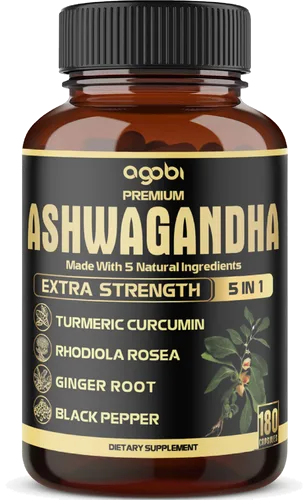
5in1 Premium Ashwagandha Capsules - Added Turmeric, Rhodiola Rosea, Ginger, Black Pepper - 180 Caps for 6 Months Review
5in1 Premium Ashwagandha Capsules - Added Turmeric, Rhodiola Rosea, Ginger, Black Pepper - 180 Caps for 6 Months, sold by agobi through Amazon. The product page describes a vegan ashwagandha supplement with extracted powder ingredients, including Ashwagandha Root, Turmeric Root, Rhodiola Rosea Root, Ginger Root, and Black Pepper, presented as a great choice for elevating well-being. The listing calls it a 5in1 Extra Formula Booster with a high absorption Agobi Ashwagandha Turmeric Blend, stating it is scientifically developed to support strength, muscle mass, mood, a strong heart, immune function and energy production, and to bring health to the next level. The page directs buyers to take just one vegan capsule daily, providing the optimal dosage with 180 veggie pills in a bottle, which the listing describes as a convenient 6-month supply. The listing states the product is tested, that the Agobi Herbal Ashwagandha Extract Complex is made from pure herbs by a cGMP, ISO, and FDA-registered manufacturer, and that it is gluten-free, non-GMO, plant-based, keto-friendly, and vegan. It says quality is assured by a USA lab. The page also encourages readers to maintain a healthy balance by incorporating exercise and herbal supplements into their lifestyle, and presents Agobi Dietary Supplements as a way to embrace safe and healthy living. The item details list the brand as agobi, the item form as capsule, the container type as bottle, the recommended use as immune support, the age range description as 6 months, the package quantity as one bottle, and the unit count as 180 count. The special ingredients are listed as ginger and turmeric, and the material features as plant based, vegan, and vegetarian. The manufacturer part number and model number are both listed as AGB Ashwagandha180Caps. The item is priced at $22.99 as a one-time purchase, with a Subscribe and Save option at $20.69, or $19.54 with 15 percent savings on repeat deliveries. The listing notes that the item is non-returnable due to food safety reasons, though damaged or defective items may be refunded or replaced. The page shows the item ships from Amazon and is sold by agobi. An Amazon's Choice badge appears on the listing, and the page notes 1K+ bought in the past month. Other sellers offer the item new from $22.99 with free shipping on orders over $35 shipped by Amazon. The 90 count size is also shown at $15.99 in the size selector, while the 180 count version is the one this page sells.
We don’t sell supplements. We help you make decisions and get the best price.
Lowest prices
We found no store selling it right now.
Products with nearly the same formula (Matched on the main ingredients)
Study, Trial or Testing Result Summary
Members Only106 human studies · 85 improved
3 of these 106 human studies gave the ingredient by inhaler, not by mouth.
Ashwagandha, the main ingredient, is here at 400 milligrams a day, above the lowest dose that worked in studies. Reviews pooling many placebo-controlled trials found it lowered stress, anxiety and the stress hormone cortisol, though results varied between trials [1][2][3]. The best stress effect was seen at 300 to 600 milligrams a day [2]. In trials, doses as low as 125 milligrams reduced stress, though one 12-week trial at 400 milligrams found no benefit over placebo. Turmeric reaches a studied dose only when taking two servings a day. At that level, curcumin has been shown to ease anxiety, mostly in people with depression [4][5]. Black pepper's active compound, given alongside ashwagandha, was part of combinations that lowered stress and cortisol [6]. Rhodiola is present only in a trace amount, far below the 340 to 576 milligrams that helped in studies [7]. Ginger taken by mouth did not change stress or anxiety in controlled trials [8][9]. Animal and cell studies are never counted.
See all 106 studies →Hide the studies
- Across 192 trials of 17,437 adults with depressive disorders, curcumin improved depressive symptoms both on its own and when added to a med medications.Comparative efficacy and tolerability of nutraceuticals for depressive disorder: A systematic review and network meta-an…
- Across 23 placebo-controlled trials with 1706 adults, ashwagandha lowered the stress hormone cortisol and raised serotonin compared with placebo, though results varied a lot between trials.Hormonal Modulation with Withania somnifera: Systematic Review and Meta-Analysis of Randomized-controlled Trials.
- Across 12 randomized trials with 1002 adults, ashwagandha reduced anxiety and stress compared with placebo, with the best stress effect at 300-600 mg a day, but the certainty of the evidence was low.Does Ashwagandha supplementation have a beneficial effect on the management of anxiety and stress? A systematic review a…
- Across 11 trials of 693 surgery patients, ginger reduced nausea and vomiting versus placebo, but the review reported no anxiety result for ginger and rated the evidence very low certainty.Herbal medications for anxiety, depression, pain, nausea and vomiting related to preoperative surgical patients: a syste…
- Across 9 randomized trials with 558 patients, ashwagandha lowered perceived stress, anxiety scores and blood cortisol compared with placebo, and four trials reported mild to moderate side effects.Effects of Ashwagandha (Withania Somnifera) on stress and anxiety: A systematic review and meta-analysis.
- Across 10 studies involving 531 people with depression, adding curcumin to standard care significantly reduced both depressive and anxiety symptoms.Curcumin for depression: a meta-analysis.
- Across 5 randomized trials with 400 adults, ashwagandha extract modestly improved sleep and anxiety compared with placebo, with larger effects at 600 mg or more a day and for 8 weeks or longer, but did not change quality of life.Effect of Ashwagandha (Withania somnifera) extract on sleep: A systematic review and meta-analysis.
- Across 6 clinical trials of 377 patients with depression lasting 4 to 8 weeks, curcumin significantly reduced depressive symptoms compared with placebo and showed anti-anxiety effects in 3 trials.Clinical Use of Curcumin in Depression: A Meta-Analysis.
- Across 5 placebo-controlled trials with 254 people, ashwagandha reduced anxiety scores and improved several sleep measures, though results varied widely between trials.Safety and efficacy of Withania somnifera for anxiety and insomnia: Systematic review and meta-analysis.
- In a comparison of 29 trials of medicinal herbs for anxiety, ashwagandha lowered anxiety scores more than placebo, but the trials were small so the results are preliminary.Medicinal herbs for the treatment of anxiety: A systematic review and network meta-analysis.
- Across 22 randomized trials in adults, ashwagandha reduced stress, anxiety and depression, with a dose-related effect on stress, but the trials differed a lot from one another.Effects of ashwagandha (Withania somnifera) on mental health in adults: A systematic review and dose-response meta-analy…
- A review of plant adaptogens including Rhodiola reported benefits for chronic fatigue, cognitive impairment and immune protection, though human trials are limited and stress calmness was not specifically measured.Plant Adaptogens-History and Future Perspectives.
- A review of herbal medicines for psychiatric conditions described ashwagandha as having preliminary encouraging evidence in mood and anxiety disorders, but not high-quality evidence.Herbal medicines in the treatment of psychiatric disorders: 10-year updated review.
- A review of 30 human studies found ashwagandha root appeared effective and safe for chronic stress, anxiety and insomnia, with mostly mild side effects, and called for larger well-designed trials.Safety and clinical effectiveness of Withania Somnifera (Linn.) Dunal root in human ailments.
- A review of 256 papers on plant-based brain supports concluded that ashwagandha modulates anxiety and social-related thinking, though results across plants were inconsistent.Plant-derived nootropics and human cognition: A systematic review.
- A review of 9 trials in stressed adults taking ashwagandha for about 30 to 112 days found it lowered cortisol (a stress hormone) without significant side effects, but long-term effects were not studied.Effects of Withania somnifera on Cortisol Levels in Stressed Human Subjects: A Systematic Review.
- A systematic review of 10 randomized clinical trials concluded that curcumin reduces depressive and anxiety behaviors, lowers cortisol levels, and inhibits pro-inflammatory cytokines in humans.Read the study on PubMed (33673739) →
- A review of herbal medicines for psychiatric disorders said Rhodiola rosea may help depression but there is not yet enough solid clinical evidence and more research is needed.Herbal medicines in the treatment of psychiatric disorders: a systematic review.
- A review of controlled trials of herbal medicines for depression, anxiety and sleep found early positive evidence for Rhodiola rosea on depression, but many studies had not been repeated.Herbal medicine for depression, anxiety and insomnia: a review of psychopharmacology and clinical evidence.
- A review of 52 randomized trials of plants on stress hormones, including Rhodiola rosea, found the effects on stress hormone activity unclear for most plants, with only ashwagandha showing a consistent cortisol-lowering effect.Modulation of the hypothalamic-pituitary-adrenal (HPA) axis by plants and phytonutrients: a systematic review of human t…
- A review of 24 randomized trials (5 on Rhodiola rosea, at 290-1500 mg daily for 3-16 weeks) reported reduced stress and anxiety, better sleep and cognition, though trials were small and varied.Clinical evidence for the adaptogenic effects of Withania somnifera and Rhodiola rosea - A systematic review with molecu…
- In 290 people with chronic fatigue syndrome, adding ginger moxibustion to acupuncture for 8 weeks improved fatigue scores more, but anxiety improvement did not differ between groups.Ginger-indirect moxibustion plus acupuncture versus acupuncture alone for chronic fatigue syndrome: a randomized control…
- In 248 adults with cancer receiving infusion therapy, inhaling ginger essential oil for seven days gave statistically significant improvements in anxiety and fatigue compared with an odorless control oil.Efficacy of Inhaled Essential Oil Use on Selected Symptoms Affecting Quality of Life in Patients With Cancer Receiving I…
- In 186 stressed adults over 60 days, full-spectrum ashwagandha root reduced perceived stress, anxiety and improved sleep quality compared with placebo, with no change in mental alertness.Effects of multi-herb and ashwagandha root formulas on stress modulation: a randomized, double-blind, placebo-controlled…
- In 172 people with COVID-related smell loss, 24 weeks of smell training with a ginger-containing aromatic blend gave better self-rated anxiety and sleep scores than conventional aromas at 3 and 6 months.Clinical efficacy of olfactory training using aromatic traditional Chinese medicine in managing olfactory dysfunction in…
- In 161 young cadets, a single dose of Rhodiola rosea extract (two doses tested) produced a clearly greater antifatigue effect on mental work than placebo, with no difference between doses.A randomized trial of two different doses of a SHR-5 Rhodiola rosea extract versus placebo and control of capacity for m…
- In an 8-week placebo-controlled trial of 141 adults with stress and anxiety, 600 mg per day of a proprietary ashwagandha root extract lowered perceived stress and anxiety scores more than placebo.A proprietary herbal extract of ashwagandha root for stress and anxiety in healthy adults: a randomized, double-blind, t…
- In a 60-day placebo-controlled trial of 135 adults with functional constipation, a herbal blend containing ashwagandha root reduced depression and anxiety symptoms and lowered cortisol and IL-6 compared with placebo.A Novel Herbal Composition Alleviates Functional Constipation, Reduces Gastrointestinal Transit Time, and Improves Bowel…
- In an 8-week placebo-controlled trial of 135 women aged 45 to 65, a combination of ashwagandha and Shatavari root extracts improved menopause symptoms and mood more than placebo; the ashwagandha dose was not reported separately.Efficacy and safety of Shatavari root extract (Asparagus racemosus) for menopausal symptoms: a randomized, double-blind,…
- In 135 healthy adults with elevated stress, a once-daily sustained-release Ashwagandha root extract capsule (150 mg or 300 mg) for 60 days reduced perceived stress by about 39 to 42 percent and improved sleep quality and well-being compared with placebo, with no safety concerns reported.Efficacy and safety of Ashwagandha root extract sustained-release (AshwaSR) capsules in healthy adult, stressed subjects…
- In 130 stressed healthy adults, taking one 300 mg sustained-release ashwagandha capsule daily for 90 days improved memory and focus, lowered stress, and improved sleep quality compared with placebo.Efficacy and Safety of Ashwagandha Root Extract on Cognitive Functions in Healthy, Stressed Adults: A Randomized, Double…
- In 123 people with major depressive disorder taking 500 mg or 1000 mg daily of curcumin extract (or 500 mg curcumin with 30 mg saffron) for 12 weeks, active treatments significantly reduced depressive and anxiety symptoms compared with placebo.Efficacy of curcumin, and a saffron/curcumin combination for the treatment of major depression: A randomised, double-bli…
- In 120 burn patients, 250 mg ginger capsules lowered pain versus control, but on day 6 anxiety was significantly lower with prayer than with ginger.Comparison of the effect of prayer and ginger on the severity of pain and anxiety in inpatients with burn: Palliative ca…
- In a placebo-controlled trial of 103 healthy active adults, a morning supplement with 600 mg ashwagandha and Rhodiola for two weeks reduced weekly perceived stress and improved sleep quality compared with placebo.Modulating stress and sleep through a multi-compound dietary supplement: a randomized, double-blind, placebo-controlled …
- In 103 adults having chemotherapy, 84 mg a day of active ginger compounds for 5 days per cycle over 3 cycles improved nausea and fatigue but had no effect on anxiety or depression.Effect of a Standardized Ginger Root Powder Regimen on Chemotherapy-Induced Nausea and Vomiting: A Multicenter, Double-B…
- In a 24-week placebo-controlled trial of 100 adults, 600 mg per day of ashwagandha root extract reduced perceived stress more than placebo, along with greater weight loss.Efficacy and safety of Ashwagandha (Withania somnifera) root extract on stress and weight management in adults: a prospe…
- In 98 adults with chronic stress, ashwagandha extract at 125, 250, or 500 mg daily for 8 weeks reduced perceived stress, with the lowest dose already effective.Effects of Withania somnifera Extract in Chronically Stressed Adults: A Randomized Controlled Trial.
- In 96 first-time mothers, taking 500 mg of curcumin daily for 8 weeks significantly lowered postpartum depression and anxiety scores compared with placebo.The effect of curcumin on postpartum depression and anxiety in primiparous women: a double-blind randomized placebo-cont…
- In a four-arm trial of 91 people receiving chemotherapy, aromatherapy inhalers (lavender, jojoba, orange, or ginger) were feasible and overall symptom severity fell, but the abstract does not report results for the ginger arm alone.Effects of aromatherapy on chemotherapy-related symptom management.
- In 90 adults with mild to moderate stress, taking 125 mg of the Zenroot ashwagandha formulation once daily for 84 days reduced stress and anxiety, improved mood and sleep quality more than placebo, and caused no related side effects.A New Ashwagandha Formulation (Zenroot™) Alleviates Stress and Anxiety Symptoms While Improving Mood and Sleep Quality: …
- In 90 people with sleep apnea and low mood treated for 3 months, Rhodiola added to a breathing machine lowered anxiety and depression scores and oxidative stress, but Rhodiola alone raised anxiety and depression scores.[Effects of rhodiola rosea on oxidative stress and negative emotional states in patients with obstructive sleep apnea].
- In 90 patients after colorectal cancer surgery, a foot massage with a blend including ginger oil gave lower anxiety than no massage over the first three days, similar to massage without aroma.The effects of aromatherapy massage given to patients after colorectal cancer surgery on symptom management: A randomize…
- In 85 children aged 6 to 12, 150 mg of ashwagandha gummies twice daily for 8 weeks improved several measures of attention and memory and parent-reported sleep compared with placebo gummies.A clinical assessment of the therapeutic effects of Ashwagandha root extract on cognitive performance, sleep, and fatigu…
- In a 12-week randomized trial of 81 employees with moderate to severe anxiety, a naturopathic package including 600 mg per day of ashwagandha reduced anxiety more than standard psychotherapy, though ashwagandha was not tested alone.Naturopathic care for anxiety: a randomized controlled trial ISRCTN78958974.
- In 81 a med-dependent people, a four-herb compound including ginger taken for 12 weeks reduced anxiety, depression and craving more than placebo, though ginger's own effect cannot be separated.Read the study on PubMed (32109133) →
- In 80 healthy adults and adults with insomnia, taking ashwagandha root extract for 8 weeks improved sleep measures more than placebo, with the larger benefit in people with insomnia.Clinical evaluation of the pharmacological impact of ashwagandha root extract on sleep in healthy volunteers and insomni…
- In 80 overweight adults with suboptimal fasting blood sugar, taking two 800 mg phytosomal curcumin tablets daily (providing 400 mg of curcumin alongside phosphatidylserine, phosphatidylcholine, and piperine) for 8 weeks significantly lowered serum cortisol, fasting insulin, triglycerides, and liver enzymes compared with placebo.Effects of phytosomal curcumin on anthropometric parameters, insulin resistance, cortisolemia and non-alcoholic fatty li…
- In 80 adults with diabetes and nerve pain, taking 80 mg of nano-curcumin daily for 8 weeks reduced anxiety and depression scores compared to placebo, but did not significantly change stress scores.Beneficial effects of nano-curcumin supplement on depression and anxiety in diabetic patients with peripheral neuropathy…
- In 79 adults with digestive complaints, taking 500 mg of Curcugen curcumin extract daily for 8 weeks reduced anxiety and digestive symptoms more than placebo, though other mood and stress scores were unchanged.Efficacy of a curcumin extract (Curcugen™) on gastrointestinal symptoms and intestinal microbiota in adults with self-re…
- In 70 adults with mild to moderate anxiety and depression, taking 500 mg of ashwagandha root extract with piperine once daily for 90 days improved anxiety, depression, sleep, and quality of life more than placebo, along with higher serum serotonin.A Standardized Withania somnifera (Linn.) Root Extract with Piperine Alleviates the Symptoms of Anxiety and Depression b…
- In 70 patients with migraine, taking 250 mg of phytosomal curcumin daily for 8 weeks reduced stress scores and migraine attacks compared to placebo, but had no significant effect on anxiety or depression.Effect and Safety of Phytosomal Curcumin Supplementation on Migraine Patients: A Randomized, Double-Blind and Placebo-Co…
- In 66 people with a recent schizophrenia flare taking 1,000 mg daily of a standardized Ashwagandha extract for 12 weeks, perceived stress fell more than with placebo, along with symptom improvements and minimal side effects.Adjunctive Use of a Standardized Extract of Withania somnifera (Ashwagandha) to Treat Symptom Exacerbation in Schizophre…
- In 66 people with schizophrenia taking 1,000 mg daily of a standardized Ashwagandha extract for 12 weeks, depression and anxiety symptoms improved more than with placebo, with mild and transient side effects.Effects of a standardized extract of Withania somnifera (Ashwagandha) on depression and anxiety symptoms in persons with…
- In 66 colorectal cancer patients having chemotherapy, three light Thai massage sessions with ginger and coconut oil over one week lowered self-rated stress scores more than standard care alone.Effectiveness of aromatherapy with light thai massage for cellular immunity improvement in colorectal cancer patients re…
- In 64 adults under chronic stress, taking 300 mg of ashwagandha root extract twice daily for 60 days significantly reduced stress and anxiety scores and serum cortisol compared with placebo.A prospective, randomized double-blind, placebo-controlled study of safety and efficacy of a high-concentration full-spe…
- In 64 adults, taking 1330 mg of curcumin combined with 350 mg of green tea extract daily for 8 weeks provided no extra benefit over placebo for stress, anxiety, or depression.A Randomized Controlled Trial to Determine the Effects of Curcumin and Epigallocatechin-3-Gallate Supplementation on Ser…
- In 60 stressed adults taking 240 mg of a standardized ashwagandha extract daily for 60 days, anxiety scores fell more than with placebo, and morning cortisol dropped more as well.An investigation into the stress-relieving and pharmacological actions of an ashwagandha (Withania somnifera) extract: A…
- In 60 adults with insomnia and anxiety, taking 300 mg of ashwagandha root extract twice daily for 10 weeks shortened time to fall asleep, improved sleep quality and sleep efficiency, and reduced anxiety more than placebo.Efficacy and Safety of Ashwagandha (Withania somnifera) Root Extract in Insomnia and Anxiety: A Double-blind, Randomized…
- In 60 stressed healthy adults, taking 125 mg of ashwagandha root extract twice daily for 8 weeks significantly reduced stress scores and cortisol compared with placebo, and improved sleep quality.Adaptogenic and Anxiolytic Effects of Ashwagandha Root Extract in Healthy Adults: A Double-blind, Randomized, Placebo-co…
- In 60 college students taking 700 mg of full spectrum ashwagandha root extract daily for 30 days, students reported less stress, better sleep, more energy, and clearer thinking than placebo takers.The Perceived Impact of Ashwagandha on Stress, Sleep Quality, Energy, and Mental Clarity for College Students: Qualitati…
- In 60 college students, 700 mg of ashwagandha root extract daily for 30 days improved sleep and reduced food cravings more than placebo, while the stress difference was not statistically significant.The Impact of Ashwagandha on Stress, Sleep Quality, and Food Cravings in College Students: Quantitative Analysis of a Do…
- In 60 women aged 45 to 55 with menopausal symptoms, Ashwagandha root extract taken for 8 weeks reduced menopausal symptoms, hot flashes and perceived stress more than placebo, and improved quality of life.A prospective, randomized, double-blind, placebo-controlled study on efficacy and safety of Ashwagandha root extract (Wi…
- In a 60-day placebo-controlled trial of 60 adults with stress, anxiety and hypertension, 600 mg per day of Ashwagen reduced anxiety, stress and cortisol more than placebo, with no serious adverse events.Safety and efficacy of ashwagen (a standardized withania somnifera extract) in stress and anxiety with hypertension and …
- In 60 people with stress-related fatigue, 576 mg a day of rhodiola extract for 28 days reduced burnout scores, improved attention and lowered the cortisol stress response on waking more than placebo.A randomised, double-blind, placebo-controlled, parallel-group study of the standardised extract shr-5 of the roots of R…
- In 60 patients with sepsis, a herbal decoction containing dried ginger for 7 days changed stress hormone levels early and improved symptoms, but the ginger contribution cannot be separated from the other herbs.[Effect of Sini decoction on function of hypothalamic-pituitary-adrenal axis in patients with sepsis].
- In 59 healthy young adults taking 225 mg of liposomal ashwagandha daily for 30 days, some memory and attention tests improved and feelings of tension and fatigue decreased compared with placebo.Acute and Repeated Ashwagandha Supplementation Improves Markers of Cognitive Function and Mood.
- In 58 children and adolescents with mild attention-deficit/hyperactivity disorder, 300 mg daily of Ashwagandha root extract for 8 weeks improved attention and executive function, plus sleep and anxiety scores, compared with placebo, with a favorable safety profile.Efficacy and safety of ashwagandha root extract in children and adolescents with mild attention-deficit/hyperactivity di…
- In aging overweight men with mild fatigue, ashwagandha extract for 8 weeks raised DHEA-S and testosterone more than placebo, but fatigue and vigor did not differ significantly from placebo.A Randomized, Double-Blind, Placebo-Controlled, Crossover Study Examining the Hormonal and Vitality Effects of Ashwagand…
- In 56 team sports athletes during pre-season training, 600 mg daily of Ashwagandha root extract for 6 weeks kept the stress hormone cortisol from rising as it did with placebo, and improved recovery feelings and leg jump performance in some groups.Ashwagandha Root Extract Stabilises Physiological Stress Responses in Male and Female Team Sports Athletes During Pre-Se…
- In 56 adults with major depressive disorder taking 1000 mg of curcumin daily for 8 weeks, mood and depressive symptoms improved significantly from weeks 4 to 8 compared to placebo, with a non-significant trend toward reduced trait anxiety.Curcumin for the treatment of major depression: a randomised, double-blind, placebo controlled study.
- In 56 healthy young physicians on night duty, one daily tablet of rhodiola extract for two weeks improved mental performance and reduced fatigue compared with placebo in a crossover trial.Rhodiola rosea in stress induced fatigue--a double blind cross-over study of a standardized extract SHR-5 with a repeate…
- In 54 healthy adults taking 500 mg of a standardized ashwagandha root extract daily for 60 days, perceived stress and anxiety improved more than with placebo, along with concentration and multitasking scores.A standardized Ashwagandha root extract alleviates stress, anxiety, and improves quality of life in healthy adults by mo…
- In 52 adults under chronic stress, taking 300 mg of ashwagandha root extract twice daily for 8 weeks improved stress, food cravings, and happiness scores and produced weight management benefits more than placebo.Body Weight Management in Adults Under Chronic Stress Through Treatment With Ashwagandha Root Extract: A Double-Blind, R…
- In 51 healthy adults aged 18 to 30, 1.2 g of ginger root powder daily for 14 days did not change stress, anxiety, depression, fatigue or quality of life compared with placebo.Effect of Ginger Root Powder on Gastrointestinal Bacteria Composition, Gastrointestinal Symptoms, Mental Health, Fatigue…
- In 50 healthy athletes, taking 300 mg of ashwagandha root extract twice daily for 8 weeks improved maximum oxygen uptake and recovery scores more than placebo.A double-blind, randomized, placebo-controlled trial on the effect of Ashwagandha (Withania somnifera dunal.) root extra…
- In 48 adults with functional constipation, a blend of ashwagandha root and okra extract for 14 days improved constipation symptoms, sleep quality and stress more than placebo, and lowered interleukin-6 and cortisol.A blend of Withania somnifera (L.) Dunal root and Abelmoschus esculentus (L.) Moench fruit extracts relieves constipatio…
- In 48 smokers abstaining overnight, inhaling black pepper oil vapor during a 3-hour session reduced cigarette craving versus controls and eased negative mood and physical anxiety symptoms versus the unflavored placebo.Inhalation of vapor from black pepper extract reduces smoking withdrawal symptoms.
- In 42 women with premenstrual syndrome, a combination supplement containing Rhodiola taken for 3 months improved mood within the supplement group, but showed no difference from placebo between groups.Effects of the PREMEN-CALM® in the Management of the Premenstrual Syndrome: A Randomized, Double-Blind, Placebo-Controll…
- In 41 women with major depression and sexual problems from a med, an herbal blend containing ginger taken for 8 weeks reduced anxiety and depression symptoms more than placebo, but ginger was not tested alone.Read the study on PubMed (37763782) →
- In 40 people with generalized anxiety disorder who were also taking meds, 1,000 mg daily of Ashwagandha root extract for 6 weeks reduced anxiety scores more than placebo, with no side effects observed.Assessment of the Efficacy of Withania somnifera Root Extract in Patients with Generalized Anxiety Disorder: A Randomize…
- In 30 adults with obesity, taking 1 gram of curcumin daily for 30 days reduced anxiety scores compared to placebo, though it did not affect depression scores.An investigation of the effects of curcumin on anxiety and depression in obese individuals: A randomized controlled tria…
- In 30 people, one week of SHR-5 Rhodiola rosea reduced self-reported fatigue compared with placebo, and also lowered ultra-weak photon emission from the hands.The influence of adaptogens on ultraweak biophoton emission: a pilot-experiment.
- In 26 healthy young men, 600 mg daily of Rhodiola rosea extract for 4 weeks sped up simple and choice reaction times compared with placebo, but did not change endurance exercise capacity or hormone levels.Effects of Rhodiola rosea supplementation on mental performance, physical capacity, and oxidative stress biomarkers in h…
- In 24 female taekwondo athletes with premenstrual syndrome, 500 mg daily of Rhodiola rosea extract for 10 days reduced premenstrual symptoms and reaction time compared with placebo, and lowered perceived exertion after exercise.Short-term Rhodiola rosea supplementation improves premenstrual symptoms, reaction time, and perceived exertion in femal…
- In 22 men with recurrent prostate cancer taking a combination supplement containing turmeric for 12 weeks, there were no significant differences in anxiety or depression outcomes compared to placebo.A Placebo-Controlled Double-Blinded Randomized Pilot Study of Combination Phytotherapy in Biochemically Recurrent Prosta…
- A single dose of 3 mg per kg body weight of Rhodiola rosea taken one hour before exercise let 18 people finish a bicycle time trial slightly faster and rate their effort as lower than placebo.The effects of an acute dose of Rhodiola rosea on endurance exercise performance.
- In 13 healthy volunteers, a single 400 mg dose of ashwagandha extract improved working memory, sustained attention and reaction speed compared with placebo over six hours.Effects of Acute Ashwagandha Ingestion on Cognitive Function.
- In overweight adults with high stress and fatigue, 400 mg of ashwagandha daily for 12 weeks did not reduce perceived stress more than placebo, but it did reduce fatigue more than placebo and increased heart rate variability.Exploring the efficacy and safety of a novel standardized ashwagandha (Withania somnifera) root extract (Witholytin®) in…
- In a double-blind, placebo-controlled pilot of students during a 20-day exam period, the SHR-5 Rhodiola rosea extract reduced mental fatigue and improved neuro-motor tests and physical fitness more than placebo, though the dose was probably too low.A double-blind, placebo-controlled pilot study of the stimulating and adaptogenic effect of Rhodiola rosea SHR-5 extract…
- In 111 people with major depression, adding curcuminoids with 10 mg piperine daily to standard meds for 6 weeks reduced anxiety and depression scores more than meds alone.Investigation of the efficacy of adjunctive therapy with bioavailability-boosted curcuminoids in major depressive disord…
- In 80 mildly anxious adults, 400 mg a day of rhodiola extract for 14 days reduced self-reported anxiety, stress, anger, confusion and depression compared with no treatment, with no change in thinking tests.The Effects of Rhodiola rosea L. Extract on Anxiety, Stress, Cognition and Other Mood Symptoms.
- In 30 healthy people, warm ginger powder chest compresses over 4 weeks raised heart rate variability and lowered heart rate, which suggests a short-term relaxation effect, with no longer-term effect.Quantification of Cardiovascular Regulation Applying Heart Rate Variability Analyses for Different Warm and Moist Chest …
- In 28 healthy volunteers, a single 500 mg dose of Rhodiola rosea extract prevented a brain plasticity reduction induced by electrical stimulation, but did not change cortical excitability.Exploring the effect of adaptogenic Rhodiola Rosea extract on neuroplasticity in humans.
- In 20 young men taking 432 mg of SHR-5 Rhodiola rosea daily during 8 days of heat training, the Rhodiola group showed no extra benefit over placebo in endurance, heart rate, stress hormones or perceived exertion.Influence of Rhodiola rosea on the heat acclimation process in young healthy men.
- In 20 male students doing a 30-minute stressful calculation task, black pepper aroma dampened the rise in heart rate and the drop in heart rate variability compared with scentless air, but people did not report feeling less stressed.Alleviation of acute stress response by black pepper aroma administration.
- In 120 adults aged 50 to 89 with physical and cognitive complaints, a Rhodiola rosea and vitamin combination taken for 12 weeks was followed by significant improvement in symptoms and faster scores on a digit connection test, with 81 percent of patients rated very good or good by physicians; the study had no placebo group.Efficacy and tolerability of a Rhodiola rosea extract in adults with physical and cognitive deficiencies.
- In an open-label trial of 118 outpatients with burnout symptoms, 400 mg daily of Rhodiola rosea extract for 12 weeks clearly improved most burnout and stress outcome measures, with low rates of adverse events.Multicenter, open-label, exploratory clinical trial with Rhodiola rosea extract in patients suffering from burnout sympt…
- In an open-label study of 101 people with life-stress symptoms, 200 mg twice daily of Rhodiola rosea extract for 4 weeks produced clinically relevant improvements in stress symptoms, and it was generally well tolerated.Therapeutic effects and safety of Rhodiola rosea extract WS® 1375 in subjects with life-stress symptoms--results of an o…
- In 100 people with prolonged or chronic fatigue, 400 mg of Rhodiola rosea extract daily for 8 weeks produced significant fatigue improvement in an uncontrolled open-label trial, with favorable safety.Rhodiola rosea in Subjects with Prolonged or Chronic Fatigue Symptoms: Results of an Open-Label Clinical Trial.
- In 70 pregnant women, 300 mg of ashwagandha root extract twice daily for 12 weeks, added to iron therapy, raised hemoglobin more than iron therapy alone, lowered perceived stress and improved sleep, with no adverse events.Efficacy and safety of Ashwagandha (Withania somnifera) root extract in pregnant women: a prospective, randomized, compa…
- In an open-label 12-week study of 46 women with mild to moderate anxiety, a saffron and ashwagandha supplement reduced anxiety scores, though the ashwagandha amount was not reported separately and there was no placebo group.Effectiveness of a Saffron and Withania Supplement on Mood in Women With Mild-to-Moderate Anxiety During the COVID-19 Lo…
- In a non-randomized pilot of 35 people with solid tumors, 400 mg of bitter ginger zerumbone twice daily for 8 weeks was linked to less anxiety, depression, and fatigue, but there was no control group.Bitter ginger (Zingiber zerumbet) for patients with solid tumors with no treatment options: A pilot clinical study.
- In 10 adults with generalized anxiety disorder, 340 mg of Rhodiola rosea extract daily for 10 weeks significantly lowered anxiety ratings, with mostly mild side effects such as dizziness and dry mouth; there was no control group.A pilot study of Rhodiola rosea (Rhodax) for generalized anxiety disorder (GAD).
- Over three months of one tablet daily of a multi-ingredient product containing ginger, postmenopausal women had lower menopause symptom scores, including less anxiety with hot flushes, though the study had no separate control group.[Evaluation of the efficacy of a new nutraceutical product in the treatment of postmenopausal symptoms].
- In an observational study of 45 adults with mild to moderate depression, taking a rhodiola and saffron combination (154 mg rhodiola per tablet, two tablets daily) for 6 weeks was followed by a significant drop in depression scores, and 85.4% of patients reported improvement. The study had no placebo group.A preliminary assessment of a combination of rhodiola and saffron in the management of mild-moderate depression.
- In foreign students during an academic load, the Rhodiola rosea preparation rhodaxon increased physical work capacity, reduced psychic fatigue and situational anxiety, and improved general condition.[The effect of the preparation rodakson on the psychophysiological and physical adaptation of students to an academic lo…
Review Totals and Summary
Members Only18,334 reviews · 87% positive
Across the stores that sell it, these capsules carry about 18,334 ratings, and buyers are mostly positive. Most praise the calm, sleep and convenience, while a couple of buyers had bad experiences. **What buyers say it did for them:** The most common report is calmer moods and better sleep. One buyer calls it "extraordinarily good at providing calm and also sleep." Another says that "within a couple weeks" they noticed a "significant reduction in my stress levels," and adds that sleep improved too. Others mention relief from aches and inflammation. One writes that it helps "many of my aches and pains" and adds "and its working!" One long-term user has taken it for several years and calls it "a game-changer." **What they complain about:** Complaints are few but serious. One buyer wrote that "the product made me ill," with no further detail. Another said "the taste of my mouth was horrendous," which suggests a lingering aftertaste for at least one person. Both gave one star. The reviews don't say whether these problems were common. **Taste, smell, pill size and form:** Reactions to taste are mixed. One buyer says the pills are "not to overpowering with the taste," while the one-star review reports a bad taste in the mouth. A reviewer who likes the product says the capsules are "easy to swallow." The same reviewer says they are made with organic ingredients, have clear labeling and contain no unnecessary fillers. Nothing is said about smell. The reviews of other forms of this product, such as gummies or powder, were left out, and only the capsules are covered here. **Value for money:** Buyers see good value, mainly because several ingredients come in one capsule. One calls it a "great supplement at a great price." Another says it is "good value and convenient," because it replaces "a bunch of different pills." A third finds that buying this brand "with all the other things just is better than buying one at a time." A long-term user says it is "worth the cost" for how well it reduces stress. **Who it seems to suit and who it did not:** It seems to suit people who already take ashwagandha, turmeric or ginger and want one capsule instead of several. One buyer says they "regularly taken Ashwagandha as well as Turmeric & Ginger" and were glad to find all three together. It also suits people looking for help with stress, sleep, aches or inflammation. One reviewer found this brand "the best one I have tried." It did not suit the buyer who felt ill, or the one who couldn't stand the taste. The reviews give no further detail about who is more likely to have those problems. **Bottom line:** Most buyers rate it highly for calm, sleep, convenience and price, and the few negatives concern side effects and aftertaste.
Biohacker Summary
Members Only10 of 10 recommend it
The main ingredients here are turmeric and ashwagandha, and the panel leans positive on both. For turmeric, six of the ten spoke: most recommend or use it for its anti-inflammatory effect, one takes it for sore knees and recovery after workouts, one stirs it into bone broth, and one drinks it as turmeric water, while one warns to stop it before surgery because it can act like a med that thins the blood. Black pepper is the favored pairing, since two panelists say it improves absorption of curcumin, the active compound in turmeric. For ashwagandha, most of the panel recommend or use it to lower cortisol and support stress, sleep, mood and performance, and the few doses given were 120 to 1,000 mg a day for at least 6 weeks, with most studies using 400 to 600 mg, preferably standardized extracts. Cautions come from one panelist who says to avoid it with low cortisol, one who says to take a two-week break after two weeks of use, and one who says it may not help everyone with sleep; ginger is a smaller ingredient in this product that several panelists use for inflammation and digestion.
See all 10 biohackers →Hide the biohackers
Dr. Eric Berg · Turmeric · recommends
- Dr. Eric Berg recommends pairing turmeric with black pepper to improve curcumin absorption.
- Dr. Eric Berg recommends pairing black pepper with turmeric to improve curcumin absorption.
- Suggests that ginger is an easy addition to a daily routine that may support digestion, inflammation, and healthy blood sugar levels.
- States that one cup of turmeric water could have surprising benefits for health.
- Notes that black pepper aids in the absorption of Curcumin.
- Dr. Eric Berg recommends adding turmeric to eggs to support satiety, antioxidant potential, cardiovascular, and liver health.
- Dr. Eric Berg recommends adding black pepper to eggs to support satiety, antioxidant potential, cardiovascular, and liver health.
- Recommends consuming ginger every single day for its benefits on digestion, inflammation, skin, blood sugar stability, and potential fat loss.
- Recommends ashwagandha, suggesting 250 milligrams per day over time to increase stress tolerance and help the cortisol receptor.
- Recommends turmeric for its chelation abilities and its ability to turn up the body's detoxification genes.
- Mentions turmeric as a food that black cumin seed oil outperforms in reducing inflammation.
- Mentions ginger as a food that black cumin seed oil outperforms in reducing inflammation.
- Dr. Eric Berg states that turmeric can contribute to supporting liver health.
- Says turmeric is a natural a med because it helps retain neurotransmitters like serotonin, GABA, and dopamine.
Ben Greenfield · Turmeric · warns
- Advises patients to stop turmeric before surgery because it can act as a med or antiplatelet agent.
- Advises patients to stop ginger before surgery because it can act as a med or antiplatelet agent.
- Ashwagandha, taken as 120–1,000 mg for at least 6 weeks, with most studies providing a dose of 400–600 mg/d, can lower cortisol levels, improve sleep quality, and enhance cognitive resilience for athletes during challenging phases consisting of high-volume resistance training.
- Notes that ashwagandha is an ingredient in MTE.
- Mentions Ashwagandha as a supplement people cycle through when still sleeping poorly, suggesting it might not be addressing the true sleep problem.
- Recommends root spices like turmeric for use on the AIP diet.
- Notes that ashwagandha is a nightshade herb, but it is taken as a supplement and not used for cooking.
- Recommends root spices like ginger for use on the AIP diet.
- Advises watching out for black pepper, as it is eliminated in core AIP and many people are surprisingly sensitive to it.
- Suggests using choice herbs like turmeric when preparing meat to weave in small stressors.
- Recommends combining black pepper with Triphala and Himalayan pink salt as a powder to brush with, as it is astringent, drives up inflammation and infection in the gums, is refreshing, and prevents plaque.
- States that Ashwagandha helps regulate stress response and steady the nervous system, influencing biological systems tied to sleep quality.
- Has found that adaptogens like ashwagandha, taken about half an hour before using the Shift Wave, seem to enhance its effects on tuning up the nervous system. He also found it helped him and his co-founder achieve slower respiratory heart rate coherence.
- Lists turmeric as one of the ingredients in Organifi Green Juice.
Dr. Mark Hyman · Ashwagandha · recommends
- Lists ashwagandha as an herb that can help lower anxiety or depression symptoms.
- Uses ginger in his chicken soup and a special drink because it is anti-inflammatory and helps with symptoms when feeling sick.
- Recommends turmeric as an anti-inflammatory powerhouse.
- Recommends ginger as an anti-inflammatory powerhouse.
- Notes that if people have used something like turmeric for several thousand years as a remedy and an anti-inflammatory compound, it can't be wrong.
- Recommends seasoning turmeric with black pepper to help the body absorb more nutrients.
- States he was using circ turmeric to stimulate the NRF2 pathway and open up detox.
- Dr. Mark Hyman designed 'The World's Smartest Smoothie' using organic ingredients, including Organic Ginger juice.
- Mentions using turmeric (curcumin) in certain people, especially those with elevated amyloid levels in the blood.
- Recommends Paleovalley's Turmeric Complex, which uses whole food turmeric with over 200 beneficial compounds, plus organic ginger, rosemary, and cloves, to support overall wellness.
- Recommends turmeric as a simple way to support health against stress and inflammation, noting its key compound curcumin supports the body against conditions like cancer, cardiovascular stress, neurogenic diseases, and helps with inflammation, metabolic balance, joint comfort, mood, immune function, and brain health.
- Mentions that Paleovalley's turmeric complex includes organic ginger.
- Notes that black pepper, along with gentle heat, improves the absorption of curcumin in Paleovalley's turmeric complex.
- Recommends turmeric as a simple way to support health, noting its key compound curcumin supports the body against various conditions and helps with inflammation, metabolic balance, joint comfort, and mood. He specifically recommends Paleovalley's Turmeric Complex for its whole food approach and improved absorption.
Thomas DeLauer · Turmeric · uses
- Recently started taking turmeric for their joints, specifically for knee issues, as it helps support recovery, especially after a workout.
- Mentions that Dose Daily contains turmeric, which contributes to its positive impact on liver enzyme levels.
- Mentions that Dose Daily contains organic ginger root powder.
- Uses ginger oil, an ingredient in Curcumin Gold, stating it helps modulate inflammation within the gut.
- Recommends ashwagandha extract, noting a study where 57 overweight men over 40 saw a 14.7% increase in testosterone and an 18% increase in DHEA over 16 weeks, suggesting it removes the cortisol block suppressing the entire hormonal cascade.
- Mentions ashwagandha as part of a full testosterone protocol, supporting production through different pathways.
- Recommends ginger, explaining that it contains components that allow GLUT4 receptors to disperse more heavily throughout a cell, which helps absorb glucose and reduces blood sugar.
- Recommends dried ginger powder for insulin resistance, stating that it hits all three pathways simultaneously and significantly lowers fasting blood sugar and reduces insulin resistance.
- Recommends dried ginger for fat burning, stating that it activates a fat-burning receptor and drives up adrenaline and fat loss without needing caffeine or stimulants. He suggests taking 1 to 5 grams pre-exercise or in a fasted state, or adding it to coffee, electrolytes, or tea.
- Recommends ginger powder, stating that it hits inflammation from two different angles simultaneously, suppressing enzymes that produce pain and swelling, and suppressing nuclear factor kappa B to block inflammatory gene expression. He suggests using 3g per day consistently for 6 to 8 weeks for muscle soreness reductions.
- Recommends taking black pepper with curcumin to increase its bioavailability, as curcumin gets metabolized before it can do anything without it.
- Mentions Turmeric as an ingredient in DOSE that has proven literature behind it for liver health.
- Mentions that Dose Daily, which he recommends for liver support, contains turmeric.
- Mentions that Dose Daily, which he recommends for liver support, contains organic ginger root powder.
Siim Land · Ashwagandha · recommends
- Recommends Ashwagandha for stress, sleep and performance, based primarily on human research, especially randomized controlled trials showing measurable benefits.
- Lists Ashwagandha as one of 15 supplements backed by human studies.
- Notes that Ashwagandha is one of several supplements with human evidence.
- Mentions ginger as a compound that can increase autophagy, but notes it doesn't come close to exercise in effectiveness.
- States that ashwagandha, unless contaminated, is not going to raise liver enzymes.
- Stopped taking ashwagandha because it immediately caused a mouth sore.
- States that ashwagandha consistently reduces stress and anxiety in randomized controlled trials.
- Mentions that turmeric helps with arthritis and joint pain, with clinical trials showing its effectiveness.
- States that ginger lowers body weight in people who are overweight or have high inflammation.
- States that Ashwagandha helps with testosterone primarily in stressed out or poor sleeping people.
- Recommends having ginger tea in the evening as it has autophagy-regulating effects.
- States that ashwagandha has strong evidence for increasing testosterone, mostly in stressed or infertile men.
- Mentions ashwagandha as an example of a testosterone-boosting supplement he has no interest in taking.
- Drinks ginger tea in the evening.
Dave Asprey · Ashwagandha · neutral
- Dave Asprey notes that ashwagandha, when taken as a real standardized extract at a real dose, genuinely lowers cortisol and shows effects on stress and sleep quality in randomized trials, but lacks polysomnography data.
- Recommends ginger as a midwife remedy to help with nausea during pregnancy.
- Dave Asprey discusses ashwagandha as part of an adaptogen trio that works together for stress response and human performance.
- Mentions ashwagandha as an adaptogen in MTE that helps blunt the cortisol spike.
- Advises against ashwagandha for low cortisol, stating that salt and water are needed instead.
- Warns that turmeric is exceptionally high in oxalate, which can cause issues if consumed in large amounts.
- Uses turmeric as an example of an unprotected ingredient that, once proven beneficial through studies, allows everyone to take advantage of the knowledge.
- Warns that ashwagandha can raise testosterone in women, causing irritability, and therefore needs to be cycled.
- Dave Asprey mentions ashwagandha as a supplement and cofactor that supports thyroid activation.
- Recommends ashwagandha as a cofactor that can help thyroid function, especially with conversion issues.
- Dave Asprey lists ashwagandha as part of a supplement stack that supports healthy hormone levels.
- Dave Asprey used to research black pepper extract but changed his mind about its use after a discussion with Christian DPO, who highlighted its downsides.
- Dave Asprey mentions that turmeric can stimulate orexin, which keeps you awake, alert, and motivated.
- Discusses ashwagandha as a common adaptogenic herb used by biohackers to deal with stress, noting it was banned in Denmark and can cause anhidonia and reduced ability to reach orgasm at higher doses.
Dr. Rhonda Patrick · Turmeric · uses
- Likes adding turmeric to bone broth for flavor, warmth, and its anti-inflammatory compounds.
- Likes adding ginger to bone broth for flavor, warmth, and its anti-inflammatory compounds.
- Recommends Ashwagandha supplementation, specifically standardized for withanolides (KSM-66 at 5% or Sensoril at 10%), to indirectly boost testosterone by reducing cortisol levels, and also to improve anxiety, stress resilience, and sleep quality.
- Recommends ashwagandha, specifically patented extracts like Sensoril or KSM66 standardized to sufficient quantities of withanolides, for its indirect effect on testosterone by suppressing cortisol and stress response, which can be beneficial for anxious individuals and improve sleep.
- Is very bullish on Ashwagandha, citing meta-analyses showing improved lean mass, strength, sleep, and stress management. He notes it also raises testosterone but not enough to explain the lean mass changes.
- Discusses ashwagandha.
- Takes a ginger capsule, which seems to improve his digestion.
- Uses ashwagandha as a supplement to help with sleep.
- Suggests that if someone is an 'immuno-ager,' they might want to take turmeric to help with their immune system.
- Explains that turmeric, specifically curcuminoids, are slightly toxic to the body, which activates phase II detoxifying enzymes and turns on anti-inflammatory genes. She also notes that aromatic turmerone in turmeric can increase neural stem cell proliferation and affect memory and performance.
- Adds black pepper to her turmeric tea because the piperine in it stops enzymes in the liver from clearing out polyphenols, thus extending their half-life.
- Feels comfortable using turmeric with ginger and black pepper to counteract unnecessary inflammation, noting its long history in Ayurvedic medicine.
- Dr. Patrick mentions that catechins and polyphenols are found in things like green tea, dark chocolate, turmeric, blueberries, and other purple pigmented fruits and vegetables, as well as red wine.
- Mentions turmeric as a beneficial hormetic stressor that activates the body's stress response mechanisms.
Peter Attia · Ashwagandha · neutral
- Peter reviews the evidence for select off-label medications and supplements commonly used for sleep, including glycine, magnesium, ashwagandha, and phosphatidylserine.
- Finds ashwagandha a little bit helpful for sleep, though notes it may not be for everyone.
- Finds ashwagandha "a little bit helpful" for sleep, but notes that it may not be for everyone.
- Peter Attia's brand, AVIA Skincare, incorporates Ayurvedic wisdom, including turmeric and other Eastern botanicals, for anti-inflammatory care.
- Finds ashwagandha a little bit helpful for sleep, but notes it may not be for everyone.
- States that the data for ashwagandha are weak.
- Discusses the current evidence for ashwagandha's effects on sleep, stress, and anxiety.
- Mentions ashwagandha as an evergreen shrub historically used in traditional Indian medicine for indications such as sleep, stress, and immune health.
- Mentions ashwagandha as something that can help with sleep in the setting of chronic stress and hypercortisolemia.
- Takes 600 mg of Solgar ashwagandha at night, having recently switched to this brand and returned to taking it after a previous hiatus.
- Takes 600 milligrams of ashwagandha at night, having recently switched to the Solgar brand and having returned to taking it after a long break.
Andrew Huberman · Ashwagandha · recommends
- He shares science-based tools for modulating aggression, including supplementation with ashwagandha.
- Discusses a study where people who had taken powdered ginger were less judgmental because their stomachs were calmed, noting that ginger calms the stomach.
- Asks if ginger can increase metabolism and states that apparently, it can.
- Conducted a study on ginger powder dissolved in warm water, which significantly elevated the thermic effect of food over a 6-hour period, suggesting it could boost energy expenditure.
- Warns that while ashwagandha is a potent inhibitor of cortisol, chronic supplementation for longer than two weeks can disrupt other hormone and neurotransmitter pathways, so it should be used with a two-week break after two weeks of use.
- Recommends avoiding bioavailable curcuminoids like bioavailable turmeric if someone's DHT is already low or if they have somewhat insensitive androgen receptors.
- Recommends avoiding bioavailable curcuminoids like black pepper extract if someone's DHT is already low or if they have somewhat insensitive androgen receptors.
- Recommends Ashwagandha as a supplement to reduce cortisol.
- States that there are good, unbiased peer-reviewed studies showing that 1 to 3 grams of ginger can cause a notable reduction in nausea.
- Mentions that turmeric is on a list of colorants and could technically move a food into the ultra-processed category, despite being full of curcumin and having possible health benefits.
- Explains how to optimize hormone levels through supplements such as ashwagandha.
- Mentions ashwagandha as a potent commercial compound in supplement form that can be used to reduce chronic stress, especially late in the day, by significantly decreasing cortisol.
- Discusses Ashwagandha as a supplement to better manage stress.
- Uses ashwagandha when feeling particularly stressful to lower anxiety and cortisol, but does not take it year-round or on a regular basis.
Bryan Johnson · Turmeric · uses
- Uses turmeric for its antioxidant, anti-inflammatory, and metabolic benefits, noting that black pepper boosts its power.
- Adds black pepper to turmeric because a compound in pepper called piperine boosts the power of turmeric by slowing the breakdown of curcumin in the gut and liver, making its antioxidant, anti-inflammatory, and metabolic benefits last longer.
- Drinks his Blueprint longevity mix with additional morning supplements, including ashwagandha.
- States that Blueprint Ashwagandha can be used to stabilize mood.
- Includes three capsules of Ginger in his Blueprint stack.
- Mentions that Ashwagandha is included in the LA Longevity Mix, which condenses his 100 daily pills into a drink.
- Includes 3g of ginger in his Super Veggie for a variety of benefits including liver, pancreas, artery health, and digestion.
- Mentions ashwagandha as a potential therapy that could positively influence sperm health.
- Mentions ashwagandha as an ingredient in his 'bag of goodies', indicating he uses it.
- Includes ginger in his Super Veggie meal, which he eats at 7 AM.
- Takes one gram of turmeric a day for inflammation, joints, and liver.
- Takes ashwagandha for anti-anxiety, improved cortisol management, improved sleep, and increased testosterone.
- Includes ginger in his daily 'Super Veggie' breakfast for its nutrient density.
- Uses Ashwagandha + Rhodiola for energy and stress support.
RAL Summary
Members OnlyTier 3 for Stress and Calm
Human studies of Turmeric show a clear improvement in 3 meta-analyses, the largest of 17,437 people (10 of 15 human studies showed an improvement), and 87% of 18344 reviews are positive. 3 of our biohacker panel warn against its main ingredient, so it drops one tier. The final check notes: The rules based the grade on turmeric, a minor ingredient, and cite a 17,437-person meta-analysis that is not in the findings, when the main ingredient, ashwagandha at a full dose, gives the same tier on its own strong stress evidence.
Take 2 servings a day (2 capsules) to match the dose that worked in the studies.
Where the evidence disagrees: 8 of the 106 human studies found no effect.
More Details
Members OnlyBody systems · Combine with · Possible side effects
Body systems: Nervous system, Endocrine system
Combine with: This formula pairs well with L-theanine (100-200 mg) for calm focus without sedation, and magnesium glycinate (200-400 mg) to support relaxation and nervous system balance. Phosphatidylserine may help blunt an elevated evening cortisol response, while B-complex vitamins (especially B6, folate and B12) support neurotransmitter synthesis during periods of stress. For sleep quality, consider glycine or a low dose of apigenin/chamomile in the evening. Omega-3 fatty acids (EPA/DHA) complement the curcuminoids in turmeric for mood and neuroinflammatory support. Because the black pepper (piperine) here boosts absorption, take it with a meal that contains some fat, and check with a healthcare provider if you take medications, since piperine can alter drug metabolism and ashwagandha may interact with thyroid, sedative or immunosuppressant drugs.
Possible side effects: Four ashwagandha trials reported mild to moderate side effects. The review summary mentions one buyer who felt ill and one who had a bad aftertaste.
Supplement Facts
Ashwagandha 400 mg · Turmeric 46 mg · Rhodiola Rosea 25 mg
Other ingredients: Vegetable Capsules (Cellulose).
Directions: As a dietary supplement, take one (1) capsule per day or as directed by your health care professional.
Label source: Amazon · Report a label change
More stress products
Members OnlyThe highest ranked for the same goal
Read more
Our articles on this subject
- Supplements for Stress and Anxiety Relief: What the Evidence SupportsArticle · Oct 26, 2026
- The Four Pillars of Good Health: Diet, Exercise, Sleep and StressArticle · Mar 17, 2026
Graded November 4, 2026 by the Reverse Age Lab evidence engine, from human studies, real reviews and our biohacker panel. How we grade. Is this medical advice? No. Rala organizes the published evidence; go over any change with your doctor, especially if you take meds.
Privacy policyConsumer health dataTermsDo Not Sell or Share My Personal InformationCookie settings