
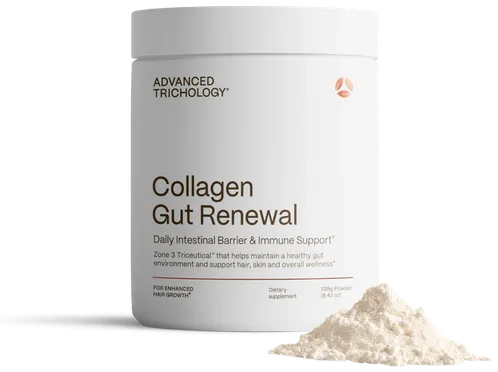
Advanced Trichology Collagen Gut Renewal Review
Advanced Trichology Collagen Gut Renewal is a powder supplement that you mix into a drink. One serving is 1 scoop (7.98 g), and each container holds 30 servings. Per serving the label lists Partially Hydrolyzed Guar Gum 3000 mg, Bovine Collagen Peptides 2500 mg, Magnesium 500 mg and Vitamin C 30 mg. It also shows 20 calories, 3 g total carbohydrate, 2.5 g dietary fiber and 2 g protein. The only other ingredient listed is maltodextrin. The directions printed on the label say to mix 1 scoop (7.98 g) into 8 to 12 oz of water or another beverage once daily. For a sensitive stomach, the label says to start with half a scoop for 7 to 14 days. Buyers who have commented say the powder did not dissolve for them and they could still taste it, and one planned to try it in a smoothie next time.
We don’t sell supplements. We help you make decisions and get the best price.
Lowest prices
We may earn a commission from some store links. How we choose.
Finding the lowest prices at the stores now. This takes a few seconds.
Study, Trial or Testing Result Summary
Members Only65 human studies · 30 improved
The two main ingredients have the best support. Partially hydrolyzed guar gum is at a full dose when taken twice a day as directed. In 108 adults with irritable bowel syndrome, 6 grams a day for 12 weeks eased bloating and gas more than placebo, though other symptoms did not change [1]. In 188 adults it improved pain and bowel habits and was better tolerated than wheat bran [2]. In children it reduced bowel symptoms more than placebo [3]. One trial in constipated women using a mix with inulin found no benefit over placebo [4]. Magnesium is at a full dose, above the daily recommended limit, so members can take less. Magnesium-rich water relieved constipation in women [5] and made stools softer and more frequent in healthy adults [6]. Magnesium oxide helped constipated children [7], and a review found moderate evidence for magnesium salts in chronic constipation [8]. Collagen peptides are well below the studied dose of 20 grams. The only study was small, had no placebo and most participants did not finish [9]. Vitamin C has not been tested alone for gas, bloating or irregularity, and studies of people with irritable bowel syndrome found no link with symptoms [10]. Animal and cell studies are never counted.
See all 65 studies →Hide the studies
- Across six studies of 3,285 adults, a low-volume bowel prep with vitamin C cleansed as well as the comparison prep and caused less vomiting, with no difference in nausea or abdominal pain.Efficacy and safety of split-dose ultra-low-volume polyethylene glycol with ascorbic acid versus sodium picosulfate with…
- In 20 trials of 2,468 children preparing for colonoscopy, a bowel cleanser containing vitamin C was rated adequate but was tested in only one study, and no clear benefit for digestive symptoms was shown.Comparative Cleansing Efficacy, Safety, and Tolerability of Bowel Preparation Agents in Pediatric Patients: A Network an…
- In a pooled analysis of 10 studies in children with constipation, polyethylene glycol worked better than other laxatives including milk of magnesia, and magnesium itself was not shown to help.Efficacy and complications of polyethylene glycols for treatment of constipation in children: a meta-analysis.
- A review of 24 trials in 1390 children with functional abdominal pain found guar gum improved irritable bowel symptom frequency, but other fibers showed no effect and the overall evidence on fiber was inconclusive and of low quality.Nonpharmacologic treatment of functional abdominal pain disorders: a systematic review.
- Among seven studies of 616 palliative care patients, evidence comparing laxatives including magnesium hydroxide with liquid paraffin was inconclusive.Laxatives or methylnaltrexone for the management of constipation in palliative care patients.
- In four trials of 390 children preparing for colonoscopy, a bowel-cleansing drink containing magnesium citrate cleaned the bowel as well as polyethylene glycol and caused less bloating, pain and nausea.Sodium Picosulphate with Magnesium Citrate versus Polyethylene Glycol for Bowel Preparation in Children: A Systematic Re…
- A review of 41 trials lasting at least 4 weeks found moderate evidence that magnesium salts help chronic constipation, though bloating and abdominal pain were common side effects of over-the-counter laxatives.Efficacy and Safety of Over-the-Counter Therapies for Chronic Constipation: An Updated Systematic Review.
- A summary of 41 trials of at least 4 weeks found modest evidence supporting magnesium oxide for chronic constipation, with bloating and cramping among the common side effects of laxatives.Evidence-based treatment recommendations for OTC management of chronic constipation.
- In a review of 20 trials in cancer patients taking meds, one cohort study showed magnesium oxide helped prevent constipation compared with no laxative, and the authors judged it likely effective.Read the study on PubMed (38452708) →
- In 276 adults with functional indigestion, one month of a combination of simethicone, charcoal and magnesium oxide reduced overall symptoms, fullness, pain, burning and bloating more than placebo.Efficacy of a simethicone, activated charcoal and magnesium oxide combination (Carbosymag®) in functional dyspepsia: res…
- In 244 constipated women, drinking 1 liter daily of magnesium sulfate-rich mineral water for 4 weeks reduced constipation in 37.5% by week 2, versus 21.1% with low-mineral water, and cut hard stools and rescue laxative use.Efficacy and safety of a magnesium sulfate-rich natural mineral water for patients with functional constipation.
- In 206 adults having an afternoon colonoscopy, the 2-liter prep with vitamin C cleansed less well than a 4-liter prep without it and was linked to more bloating (23.1% vs 11.5%).Efficacy of morning-only 4 liter sulfa free polyethylene glycol vs 2 liter polyethylene glycol with ascorbic acid for af…
- In 196 adults with quiet ulcerative colitis, a 1-liter prep with vitamin C cleansed as well as the 2-liter dose (98.6% vs 97.1% success) but caused more nausea.One-liter polyethylene glycol with ascorbic acid provides comparable cleansing quality to two-liter regimen in bowel pre…
- In 188 adults with irritable bowel syndrome, 5 g a day of partially hydrolyzed guar gum for up to 12 weeks improved pain and bowel habits about as well as wheat bran in the per-protocol analysis, and had a higher success rate (60% vs 40%) in the intention-to-treat analysis and was better tolerated.High-fiber diet supplementation in patients with irritable bowel syndrome (IBS): a multicenter, randomized, open trial c…
- In 173 adults having a colonoscopy, a bowel-cleansing drink containing magnesium citrate cleaned the bowel about as well as a standard polyethylene glycol drink, but caused less nausea, vomiting, headache and bloating.'Pico-Bello-Klean study': effectiveness and patient tolerability of bowel preparation agents sodium picosulphate-magnesi…
- In 168 adults, 1 liter of the vitamin C prep plus a suppository cleansed as well as the 2-liter prep, with similar abdominal pain and nausea but less sleep disturbance and anal discomfort.Combination of bisacodyl suppository and 1 L polyethylene glycol plus ascorbic acid is a non-inferior and comfortable re…
- In 108 adults with irritable bowel syndrome, 6 g a day of partially hydrolyzed guar gum for 12 weeks reduced bloating and gas scores more than placebo, but had no effect on other symptoms, severity or quality of life scores.Randomized clinical study: Partially hydrolyzed guar gum (PHGG) versus placebo in the treatment of patients with irritab…
- In 100 patients on tube feeding, formula with partially hydrolyzed guar gum fiber reduced diarrhea compared with standard formula but caused more flatulence.Reduction in diarrhea incidence by soluble fiber in patients receiving total or supplemental enteral nutrition.
- In 90 people with acid reflux, adding a magnesium-containing mineral water to standard treatment for about a month improved indigestion and pain symptoms and liver function more than standard treatment alone.Application of mineral waters in the complex treatment of patients with gastroesophageal reflux disease.
- In 86 adults with irritable bowel syndrome, guar gum fiber at 5 or 10 grams a day for 12 weeks improved gut symptoms and quality of life, though the gains shrank by month six after stopping.Treatment effects of partially hydrolyzed guar gum on symptoms and quality of life of patients with irritable bowel synd…
- In a randomized trial of 80 hospitalized patients, bowel-cleansing preparations for colonoscopy containing sodium picosulfate (with magnesium citrate) and mannitol produced similar colon cleanliness, though mannitol caused more abdominal distension.Randomized clinical trial comparing sodium picosulfate with mannitol on the preparation FOR colonoscopy in hospitalized …
- In 61 constipated children, four weeks of partially hydrolyzed guar gum raised weekly bowel movements from 4 to 5 and improved stool consistency and abdominal pain, working about as well as lactulose with fewer side effects.Can partially hydrolyzed guar gum be an alternative to lactulose in treatment of childhood constipation?
- In 60 constipated women, 15 g a day of an inulin and partially hydrolyzed guar gum mix for 3 weeks improved bowel movements no more than placebo, though it lowered Clostridium bacteria in the gut.Microbiota benefits after inulin and partially hydrolized guar gum supplementation: a randomized clinical trial in const…
- In 60 children aged 8 to 16 with functional bowel disorders, 5 g a day of partially hydrolyzed guar gum for 4 weeks reduced symptoms in 43% versus 5% with placebo and normalized bowel habit more often (40% vs 13%).Partially hydrolyzed guar gum in pediatric functional abdominal pain.
- In 55 people, the vitamin C bowel prep alone cleansed poorly in those with spinal cord injury (50% acceptable) versus 89% in able-bodied people, and adding neostigmine raised acceptable cleansing to 85%.Neostigmine Administered With MoviPrep Improves Bowel Preparation for Elective Colonoscopy in Patients With Spinal Cord …
- In 47 people with irritable bowel syndrome, a blend of partially hydrolyzed guar gum, probiotics and polyphenol extracts for 2 months improved quality of life and some inflammation markers more than placebo, but the effect of the guar gum alone cannot be separated.Effects of a polyphenol-rich extract blend, probiotics, and hydrolyzed fiber on quality of life and gut health markers i…
- In 45 children with long-term constipation, magnesium oxide taken for 4 weeks led to more bowel movements, more treatment success and less hard stool than placebo, with results similar to a probiotic.Lactobacillus casei rhamnosus Lcr35 in children with chronic constipation.
- In 44 healthy adults with a tendency toward loose stools, 3 months of partially hydrolyzed guar gum normalized stool form compared with placebo and increased Bifidobacterium, but did not change how often they had bowel movements.Effect of Repeated Consumption of Partially Hydrolyzed Guar Gum on Fecal Characteristics and Gut Microbiota: A Randomize…
- In 40 adults over 4 weeks, a hydration drink containing vitamin C among other ingredients was well tolerated, with only mild bloating and cramping changes and no meaningful harm versus placebo.Randomized Trial to Assess the Safety and Tolerability of Daily Intake of an Allulose Amino Acid-Based Hydration Beverag…
- In 40 patients preparing for CT colonography, the highest laxative dose combining 16.4 grams of magnesium citrate with bisacodyl caused more severe diarrhea and higher overall burden without improving image quality.Image quality and patient acceptance of four regimens with different amounts of mild laxatives for CT colonography.
- In 40 healthy adults, drinking 1 liter a day of magnesium-rich mineral water for 2 weeks made stools softer and increased bowel movement frequency compared with soft water.Magnesium-Rich Mineral Water Improves Stool Consistency and Bowel Habits in Healthy Subjects: A Randomized Controlled Tr…
- In 38 children with chronic constipation followed for 6 months, magnesium hydroxide worked about as well as polyethylene glycol 4000 for stool consistency and bowel movements, though more children refused the magnesium version because of its taste.Comparison of the effectiveness of polyethylene glycol 4000 without electrolytes and magnesium hydroxide in the treatmen…
- In a placebo-controlled trial of 38 women, 200 mg of magnesium daily for two menstrual cycles reduced bloating, swelling, and weight gain before periods in the second cycle, but not in the first.Magnesium supplementation alleviates premenstrual symptoms of fluid retention.
- In 24 overweight adults with newly diagnosed type 2 diabetes, adding 10-15 g of guar gum to a low energy diet for up to 20 weeks gave no lasting benefit and caused more abdominal discomfort and gas than the other diets.Does adding fibre to a low energy, high carbohydrate, low fat diet confer any benefit to the management of newly diagnos…
- In 11 people after total stomach removal, taking 5 grams of guar gum with a glucose drink reduced blood sugar spikes and symptoms compared with glucose alone; some continued guar gum for months with fewer symptoms.Postprandial hyperglycemia after different carbohydrates in patients with total gastrectomy.
- In 10 healthy volunteers, a single 5 gram dose of guar gum added to a meal caused more abdominal symptoms than the meal alone, and more gas production was loosely linked to more symptoms.Effects of guar gum, ispaghula and microcrystalline cellulose on abdominal symptoms, gastric emptying, orocaecal transit…
- In hemodialysis patients taking a synbiotic of partially hydrolyzed guar gum and Bifidobacterium longum BB536 for 4 weeks, stool form and abdominal bloating improved more than with the fiber alone, along with higher levels of Bifidobacterium and short-chain fatty acids.Synbiotics Improved Stool Form via Changes in the Microbiota and Short-Chain Fatty Acids in Hemodialysis Patients.
- In 313 people with chronic pancreatitis treated with a medical plan that included an antioxidant mix with 540 mg vitamin C daily, 84.7 percent had significant abdominal pain relief at one year, though vitamin C was not tested alone.Long-term pain relief with optimized medical treatment including antioxidants and step-up interventional therapy in pati…
- In 134 adults with irritable bowel syndrome, 5 grams a day of partially hydrolyzed guar gum for 24 weeks increased bowel movement frequency and reduced flatulence and abdominal symptoms, without a placebo group.[Partially hydrolyzed guar gum: a fiber as coadjuvant in the irritable colon syndrome].
- In 83 children with functional constipation followed for 12 months, magnesium hydroxide was as effective and safe as polyethylene glycol 3350, though more older children rejected it.Efficacy, safety, and acceptability of polyethylene glycol 3350 without electrolytes vs magnesium hydroxide in functiona…
- In 49 adults with chronic constipation, four weeks of partially hydrolyzed guar gum (reported in the abstract as 5 mg daily) shortened colon transit time and improved bowel movements, stool form, and abdominal pain days.Partially hydrolyzed guar gum accelerates colonic transit time and improves symptoms in adults with chronic constipation…
- In 43 Australian adults with digestive disorders, a multi-herb formula containing guar gum taken at 5 then 10 grams a day for 4 weeks after a control phase improved upper and lower digestive symptoms and gut health over 16 weeks; the guar gum dose alone was not reported.Herbal formula improves upper and lower gastrointestinal symptoms and gut health in Australian adults with digestive dis…
- In an open-label single-group study of 40 healthy women, 14 completed 8 weeks of taking 20 grams of collagen peptides daily, and 13 of those 14 (93%) reported less digestive trouble, including bloating; the study had no placebo group and was small.Effect of a Daily Collagen Peptide Supplement on Digestive Symptoms in Healthy Women: 2-Phase Mixed Methods Study.
- In 14 patients after upper gut surgery given 1500 mg vitamin C daily by feeding tube for 5 days, the high-dose feed was well tolerated, with flatulence in only 3 of 14 people.Safety and intestinal tolerance of high-dose enteral antioxidants and glutamine peptides after upper gastrointestinal su…
- In people with irritable bowel syndrome taking partially hydrolyzed guar gum for 90 days, those with a more diverse baseline gut microbiome had significant improvements in symptoms and quality of life, while those with low diversity did not improve significantly.Role of Baseline Gut Microbiota on Response to Fiber Intervention in Individuals with Irritable Bowel Syndrome.
- In people with irritable bowel syndrome taking usual medicines, six months of added partially hydrolyzed guar gum fiber increased beneficial gut bacteria, lowered Bacteroides, and normalized stool consistency; results in Crohn's and colitis patients were not significant.Changes in intestinal microbiota and biochemical parameters in patients with inflammatory bowel disease and irritable bo…
- In a large UK cohort of 182,213 people, higher dietary magnesium intake of about 335 to 420 mg per day was linked to lower risk of bowel disorders including irritable bowel syndrome, and mouse studies found magnesium deficiency worsened gut aging and colitis.Magnesium Deficiency Accelerates Gut Aging and Increases Susceptibility to Colitis.
- In a large UK study of 157,900 adults followed for about 13 years, moderate intake of vitamin C within an overall antioxidant diet was linked to lower risk of irritable bowel syndrome, while very high intake gave no added protection.Nonlinear association between composite dietary antioxidant index and irritable bowel syndrome: insights from UK Biobank…
- In a national survey of 7042 American women, higher blood vitamin C levels were linked to a lower prevalence of gallbladder disease and gallstones, but no link was found in men.Serum ascorbic acid and gallbladder disease prevalence among US adults: the Third National Health and Nutrition Examinat…
- In a case-control study of Iranian adults, a nutrient pattern high in antioxidants including vitamin C was linked to lower odds of irritable bowel syndrome, but this was an association and vitamin C was not tested alone.The Relationship of Dietary Nutrient Patterns and Irritable Bowel Syndrome: A Multicenter Case-Control Study.
- In a case-control study of 775 Lebanese adults, lower vitamin C intake was linked to food hypersensitivity (including gut symptoms), but this was an association and not a test of vitamin C.Nutritional Profile, Lifestyle Characteristics, and Intestinal Inflammation in Lebanese Adults Suffering from Food Hyper…
- In 555 young women, higher vitamin C intake and mid-range blood vitamin C levels were linked to more premenstrual appetite changes and bloating or swelling.Associations Between Dietary Vitamin C, Serum Ascorbic Acid, and GSTT1 Genotype and Premenstrual Symptoms.
- In a questionnaire survey of Romanian adults with anemia, vitamin C had mixed results in easing treatment side effects such as stomach discomfort.Impact of Side Effects on Anemia Therapy Compliance.
- Women with endometriosis had more gastrointestinal symptoms such as flatulence and constipation than controls and lower dietary vitamin C intake, but the study did not test vitamin C as a treatment.Different nutrient intake and prevalence of gastrointestinal comorbidities in women with endometriosis.
- People with irritable bowel syndrome ate more vitamin C from food than matched controls, but vitamin C intake was not linked to symptom severity or bowel subtype.Nutrient intake in patients with irritable bowel syndrome compared with the general population.
- In 155 adults with irritable bowel syndrome, vitamin C intake was low in many participants, but the study did not link vitamin C intake to bowel symptoms.Intake of fiber and micronutrients in patients with IBS.
- In a retrospective study of 146 children, an oral sulfate tablet worked as well as a polyethylene glycol and ascorbate bowel prep for colonoscopy, with less abdominal pain. This tested bowel-cleansing products, not vitamin C as a digestive aid.Efficacy and safety of oral sulfate tablet vs. polyethylene glycol and ascorbate for bowel preparation in children.
- In 105 people with irritable bowel syndrome, lower dietary magnesium intake was linked to more fatigue and body-wide symptoms, but magnesium was not tested as a supplement and the study does not show it improves digestion.Poor intake of vitamins and minerals is associated with symptoms among patients with irritable bowel syndrome.
- In 68 people with constipation-predominant irritable bowel syndrome, four weeks of partially hydrolyzed guar gum improved symptoms, stool form, and laxative use, with benefit varying by sex, age, and body weight.Partially hydrolyzed guar gum in the treatment of irritable bowel syndrome with constipation: effects of gender, age, an…
- In 53 people with irritable bowel syndrome, vitamin C intake was high from diet, and higher fiber intake was linked to fewer general symptoms. Vitamin C itself was not linked to symptoms.[Dietary intake of a group of patients with irritable bowel syndrome; relation between dietary fiber and symptoms].
- In a 1988 study of 45 people (chronic pancreatitis patients, epilepsy patients on enzyme-inducing drugs, and controls), vitamin C intake was one of several factors that separated the groups, but no vitamin C supplement was given and no digestive symptoms were measured.Antioxidants, enzyme induction, and chronic pancreatitis: a reappraisal following studies in patients on anticonvulsants…
- In a 1985 dietary survey of gastroenterology outpatients, women with functional bowel and reflux disorders had lower vitamin C intake than women with inflammatory bowel disease. No vitamin C supplement was tested and symptoms were not linked to vitamin C.Nutritional status of gastroenterology outpatients: comparison of inflammatory bowel disease with functional disorders.
- In a retrospective study of people with irritable bowel syndrome, a low FODMAP diet group had greater symptom relief than a regular diet group and higher vitamin C intake, but vitamin C itself was not tested as the cause of the benefit.Impact of low-FODMAP diet on symptom relief in irritable bowel syndrome patients.
- In a retrospective review of people with functional diarrhea or diarrhea-type irritable bowel syndrome, a berberine-based supplement that also contained depolymerized guar gum reduced diarrhea episodes by 70 to 80 percent after 90 days, though flatulence and bloating were common side effects.Role of a berberine-based nutritional supplement in reducing diarrhea in subjects with functional gastrointestinal disor…
- In a dose-finding study of 16 children with sickle cell anemia, magnesium pidolate caused diarrhea and abdominal pain at higher doses, which set the maximum tolerated dose at 125 mg/kg/day.Phase I study of magnesium pidolate in combination with hydroxycarbamide for children with sickle cell anaemia.
Review Totals and Summary
Members Only2 reviews · 75% positive
Ratings across the stores that sell it total about 2, and the one written comment is about how the powder mixes, so the overall picture is thin. **Taste, smell and form:** The only theme in the feedback is how the powder behaves in a drink. The buyer says "It doesn’t desolve. I can still taste the powder." The same buyer plans to stir it into a smoothie next time instead. There is no feedback on what buyers say it did for them, on complaints beyond the mixing, on value for money, or on who it suits or did not suit, so those themes are left out.
Biohacker Summary
Members Only10 of 10 recommend it
Magnesium is the main ingredient, and most of the panel recommends or uses it, with seven recommending it, three using it, and one staying neutral. Sleep is the top reason, and several take 400 mg of the threonate form before bed, while others favor glycinate for its absorption, sleep, and muscle relaxation. Other reasons include muscle cramps, blood pressure, bone health, vitamin D function, recovery, and keeping electrolytes up, with daily amounts of 300 to 500 mg suggested as a minimum by two of them. A few pair it with electrolyte drinks or potassium, and one looks at it alongside protein, while one panelist said it does not fix waking during the night, and no one reported stopping it. Vitamin C is a smaller ingredient in this product, and the panel mostly links it to collagen support.
See all 10 biohackers →Hide the biohackers
Dr. Rhonda Patrick · Magnesium · recommends
- Explains that magnesium helps the body activate and metabolize vitamin D, and that magnesium intake has been associated with lower odds of vitamin D deficiency and insufficiency.
- Mentions that getting too little magnesium may play a role in declining testosterone levels.
- Recommends getting enough magnesium, around 300–400 mg daily from diet and supplements, as it is an essential cofactor for vitamin D metabolism. Magnesium glycinate is a good form.
- Mentions magnesium as one of the micronutrients found in multivitamins that people often don't get enough of from their diets.
- Explains that magnesium helps control blood pressure by boosting the production of substances that relax blood vessels and improve cardiovascular health, citing a meta-analysis that found magnesium supplementation at an average dose of 368 mg per day notably lowers both systolic and diastolic blood pressure.
- Magnesium supplementation has lowered blood pressure in randomized controlled trials. An analysis of 34 trials involving over 2,000 participants found modest reductions in both systolic and diastolic pressure, with a median dose of 368 mg/day.
- Warns that some magnesium supplements make the dose look much larger than it really is and that labels can fool people.
- Mentions magnesium as an important nutrient component for testosterone.
- Warns that some supplement companies mislead consumers by listing the total compound weight of magnesium citrate as the elemental magnesium dose, when the actual elemental magnesium content is much lower, potentially around 44-66 milligrams.
- States there is not yet strong, consistent evidence that magnesium supplementation reliably improves sleep, noting that while some meta-analyses suggest it can improve sleep quality scores, sleep efficiency, and sleep duration, individual studies are inconsistent and several have found no meaningful effect.
- Lutein and zeaxanthin can also be obtained from certain multivitamins.
- Recommends nutrients like vitamin C for men to prioritize sperm mitochondrial health.
- Dr. Rhonda Patrick's daughter chugs an Emergency fizzy drink in the morning to ensure she gets some vitamin C and micronutrients before school.
- Choosing a multivitamin that includes lutein and zeaxanthin ensures you get meaningful amounts every day.
Dr. Eric Berg · Magnesium · recommends
- Recommends Magnesium glycinate, noting its high absorption rate compared to magnesium oxide, and its support for energy, sleep, muscle relaxation, and vitamin D function.
- Dr. Berg states that when nutrients like magnesium are too low, fatigue and weakness can follow.
- Warns against generic multivitamins, stating they are often full of fillers and synthetics.
- Recommends focusing on magnesium to support stronger bones if a neck hump is associated with osteoporosis.
- Explains that leg and calf cramps are most often caused by low magnesium, with leafy greens being a top source.
- States that magnesium is a cofactor that allows B1 to work more efficiently.
- Mentions that bleeding or swollen gums point to vitamin C deficiency, and sugar competes with it directly, reducing absorption.
- States that magnesium is the most important mineral for energy production, as one cannot make energy without it.
- Magnesium is involved in 300 to 600 enzyme reactions, acts as a biological brake pedal, is the master controller over calcium, and is involved in making ATP, the energy currency of the body. It takes energy to go to sleep, and magnesium is required for relaxation and good sleep. Magnesium also helps balance cortisol levels and calm you.
- Dr. Eric Berg states that magnesium supports energy, muscle function, and sleep, and that most of it is stored inside cells, making deficiencies harder to detect with a standard blood test.
- Notes that magnesium could also be a factor in preventing muscle cramps.
- Mentions that lemon is loaded with vitamin C, and when combined with coffee, vitamin C significantly increases the bioavailability of antioxidants in the coffee.
- Recommends magnesium, specifically magnesium glycinate, stating it is key for D3 and K2 to work and is probably more important than calcium for building bone.
- Dr. Berg states that Vitamin C helps fight biofilms and is essential for making collagen in gums, teeth, and capillaries.
Thomas DeLauer · Magnesium · recommends
- Recommends taking magnesium glycinate and threonate at night to act as a brake on the nervous system, block excitatory signaling, help wind down, and support serotonin and melatonin production for better sleep.
- Recommends whole food vitamin C, found in kiwi fruit, citrus, and bell peppers, to help clear uric acid by competing at kidney transporters, preventing reabsorption.
- Mentions that magnesium glycinate also helps a lot with sleep.
- Mentions that restless leg syndrome is often treated with magnesium, but states that the sensation is actually coming from three other issues.
- Uses Element's cans which contain 30 milligram magnesium, finding that electrolytes help his workout performance.
- Recommends taking vitamin C along with collagen about an hour before a workout for connective tissue benefits.
- Uses Element's 30 mg magnesium cans first thing in the morning to prime his day and help with workout performance.
- Recommends magnesium around the time one would normally break a fast to calm the brain and dull feelings of conditioned hunger.
- Uses vitamin C as part of their immunity duo, stating it is important for boosting the immune system, especially during cold and flu season.
- Recommends magnesium, noting it is a cofactor for enzymes that build neurotransmitters, and deficiency can affect mood, happiness, and motivation.
- Notes that modern agricultural practices have led to soils depleted of trace minerals like magnesium, resulting in widespread magnesium deficiency.
- Recommends consuming vitamin C to aid in NADPH recycling, which is necessary for glutathione to be reused after neutralizing oxidative stress.
- Recommends taking some magnesium glycinate tonight to help calm down and sleep.
- Takes Purity's liquid liposomal vitamin C for immune support and overall wellness, finding it easy to add to water, juice, or take straight up due to its good taste.
Andrew Huberman · Magnesium · recommends
- Notes that Les Spellman's team includes 'Magnesium timed right' as part of their game plan to optimize recovery in unfavorable conditions.
- Discusses Magnesium Threonate as a tool for falling asleep.
- Takes 400 mg of Magnesium Threonate before bed for sleep.
- Uses Element, an electrolyte drink with sodium, magnesium, and potassium in correct ratios and no sugar, to ensure adequate hydration and electrolytes, especially when starting days fast or during physical exercise.
- Takes 400 mg of Magnesium L-Threonate before bed for sleep.
- Confirms that magnesium is absolutely important for cognitive function, noting studies show those with lower magnesium intakes tend to perform less well on cognitive function tests, and it's related to brain changes over time and dementia risk.
- Takes 400 mg of Double Wood Magnesium L-Threonate before bed for sleep.
- He takes 400 mg of Magnesium L-Threonate from Double Wood before bed for sleep.
- Takes 400 mg of Double Wood Magnesium L-Threonate before bed for sleep.
- Takes 400 mg of magnesium L-threonate before bed for sleep.
- Takes a multivitamin every day for longevity.
- Recommends AG1, a vitamin, mineral, and probiotic drink, and notes that for a limited time, a subscription comes with additional supplements.
- Takes an extra gram of vitamin C a day for its effects on immunity and potential synergy with collagen.
- Found the Met RX Big 100 Bar to be 'magic' on the trail because it's a hunk of calories with protein and fortified with vitamins and minerals, despite being something they would never eat in normal life.
Dr. Mark Hyman · Magnesium · recommends
- Recommends magnesium breakthrough advanced ten from Biooptimizers, which is their most complete magnesium formula with 10 bioavailable forms and 550 milligrams of elemental magnesium, designed to support restful restorative sleep, muscle recovery, stress resilience, and metabolic health.
- Recommends considering magnesium glycinate before bed for nervous system support, deeper sleep quality, and to help the body transition into rest, and states that they take it every night.
- Explains that a lack of magnesium can cause muscles and nerves to malfunction, resulting in muscle weakness, twitching, and cramps.
- Recommends Magnesium Breakthrough Advanced 10 from Bioptimizers for restful sleep, muscle recovery, stress resilience, and metabolic health, especially during stressful times of the year.
- Recommends magnesium because it is involved in over 600 reactions in the body and up to 80% of people may have low levels that never get flagged on a standard blood test.
- Recommends magnesium as a basic supplement during detoxification to support pathways, help with constipation, and provide electrolytes.
- Recommends vitamin C as a basic supplement during detoxification to help with inflammation and detoxification.
- Recommends Magnesium Breakthrough Advanced 10 from Biooptimizers, which contains 10 bioavailable forms and 550 mg of elemental magnesium, to support restful sleep, restorative sleep, muscle recovery, stress resilience, and metabolic health.
- Dr. Hyman mentions vitamin C as an advanced therapy for skin repair.
- Mentions topical vitamin C as an antioxidant that can help skin with aging.
- Mentions that what they do when a cold comes on is not just vitamin C.
- Recommends ensuring adequate vitamin C intake on a regular basis for immune support, stating it's important for healthy immune function despite mixed data on its effectiveness for colds.
- Has recommended magnesium breakthrough from bioptimizers for years and now uses Magnesium Breakthrough Advanced 10 as part of his evening routine, especially during periods of travel, training, and higher stress, to support sleep, muscle recovery, and metabolic health.
- Mentions that vitamin C was the very first vitamin discovered, isolated, and synthesized in 1932, and its deficiency caused scurvy.
Dave Asprey · Magnesium · uses
- Looks at magnesium alongside protein to keep muscle for the long run.
- Suggests adding magnesium to help keep potassium in the system longer, as they work hand in hand.
- Recounts a doctor telling him in his 20s that vitamin C would kill him.
- Mentions magnesium in the context of sleep but states that it doesn't address the core issue of waking up during the night.
- Suggests that magnesium may help slow aging, support cellular repair, and improve sleep.
- Recommends taking vitamin C for better skin health.
- States that magnesium can affect how the body responds to a supplement.
- States that currently, he is only taking vitamin C and vitamin D.
- Recommends fixing sleep with 300mg of Magnesium 101 before bed if diet and exercise aren't melting stubborn belly fat.
- Dave Asprey says his daily routine includes magnesium as part of a carefully developed combination for longevity.
- Recommends magnesium glycinate for sleep, stating that trials show it helps people fall asleep about 17 minutes faster and that he finds it incredibly effective.
- Mentions magnesium glycinate as one of the five gut-friendly, extensively researched ingredients in Kill Switch that helps with natural sleep.
- Dave Asprey recommends Magnesium Glycinate for sleep, noting human studies show it helps people fall asleep faster, is safe, and works on a fundamental aspect of health, unlike magnesium oxide which acts as a laxative.
- Dave Asprey reflects on how new research clarifies the mechanism behind IV vitamin C's anti-cancer effect, vindicating a decades-old idea that was dismissed for the wrong reasons.
Ben Greenfield · Magnesium · uses
- Uses magnesium during surgery because it is neuroprotective.
- States that vitamin C is extremely important for collagen turnover and cites orthopedic data showing that 500 mg to 1 g of vitamin C can reduce the rate of complex regional pain in total knee replacements and wrist fractures.
- Says he is drinking LMNT, which contains sodium, potassium, and magnesium, and states that he actually drinks this stuff.
- Mentions magnesium as part of a bare-minimum protocol.
- Advises getting red blood cell magnesium levels to the high end of the range as a minimum step for overall health and to slow down heart disease.
- Mentions vitamin C as part of a bare-minimum protocol.
- Notes that while vitamin C has significant value, the optimal dose is a vexed question, and high doses might not always be beneficial, potentially blunting the hormetic effects of exercise.
- Recommends supplementing with magnesium threonate if one is low in magnesium, as it crosses the blood-brain barrier and is demonstrated to increase hippocampus plasticity, theoretically making one smarter and improving memories.
- Uses Magnesium Breakthrough from BIOptimizers as part of their daily stack, taking four capsules in the evening to support relaxation, recovery, and a good night of sleep.
- Notes that IV vitamin C has been used for decades for cancer patients with almost no standardization and that he receives many questions about its effectiveness and combination with chemo.
- Recommends Celtic Sea Salt's new electrolyte drink "Hydrate" for replacing electrolytes and trace minerals lost through sweat, noting it contains 70 naturally occurring trace minerals, plus magnesium, taurine, and potassium.
- Had heart palpitations when he was really overdoing magnesium, not knowing what he was taking.
- Recommends taking magnesium as a co-factor to increase vitamin D absorption.
- Recommends Vitamin C for skin repair post-tattoo.
Siim Land · Magnesium · recommends
- States that Magnesium can be a useful addition for some people for sleep.
- Recommends taking vitamin C with collagen to support joint collagen synthesis.
- States that vitamin C is needed for initiating collagen synthesis and that higher vitamin C intake appears to increase vitamin C content in the skin.
- Recommends magnesium for sleep, especially deep sleep, and suggests trying better types like Threonate, Biscinate, or Torate, referencing a study where magnesium supplementation improved deep sleep.
- Recommends Magnesium for blood pressure, migraines and deficiency, based primarily on human research, especially randomized controlled trials showing measurable benefits.
- Lists Magnesium as one of 15 supplements backed by human studies.
- States that magnesium is a fundamental mineral governing over 600 enzymes and metabolic reactions, and recommends that most people need at least 400-500 mg/d for health, with some needing up to 600 mg/d.
- Lists seafood and pumpkin seeds as sources of Magnesium.
- Lists sauerkraut and fruit as sources of Vitamin C.
- Thinks magnesium has some of the strongest evidence and is worth considering.
- Notes that Vitamin C is one of several supplements with human evidence.
- Recommends taking magnesium, specifically glycinate and threonate forms, 1 to 2 hours before bed for sleep benefits, noting that glycinate promotes relaxation and threonate crosses the blood-brain barrier for sleep quality and cognitive function.
- Notes that Boron reduces calcium/magnesium loss.
- Notes that magnesium is important for activating thiamine into its more biologically active form, and a magnesium deficiency can impair blood sugar regulation even with adequate thiamine intake.
Bryan Johnson · Magnesium · uses
- Takes 400 mg of Magnesium Threonate before bed for sleep.
- Takes 400 mg of Magnesium L-Threonate before bed for sleep.
- Takes 400 mg of Magnesium Threonate before bed for sleep.
- He takes 400 mg of Double Wood Magnesium L-Threonate before bed for sleep.
- Takes 400 mg of Magnesium L-Threonate before bed for sleep.
- Takes 400 mg of Magnesium Threonate before bed for sleep.
- Takes 400 mg of Magnesium L-Threonate before bed for sleep.
- Takes 400 mg of magnesium L-threonate before bed for sleep.
- He takes 400 mg of Magnesium L-Threonate before bed for sleep.
- Takes 400 mg of magnesium threonate before bed for sleep.
- Uses Vitamin C as an example of how it would be great if people knew that when they took it, it had a measurable amount and wasn't polluted, which is what Brian ensures with his products.
- Applies vitamin C after showering.
- Takes 250 milligrams of Vitamin C.
- Recommends Vitamin C for skin health, noting it's good to pair with collagen peptides and is included in the Blueprint stack.
Peter Attia · Magnesium · neutral
- Peter reviews the evidence for select off-label medications and supplements commonly used for sleep, including glycine, magnesium, ashwagandha, and phosphatidylserine.
- Suggests that zinc and magnesium could potentially help with vasodilation and sleep, particularly for women experiencing severe symptoms in the luteal phase.
- Peter discusses electrolytes and fiber and the ketogenic diet, specifically preventing magnesium loss.
- Recommends magnesium as one of the 'big three' micronutrients for bone health, suggesting a daily intake of 300 to 500 milligrams as a minimum, and personally aims for about a gram of supplemental magnesium.
- Recommends magnesium for optimizing bone mineral density, suggesting a daily intake of 300 to 500 milligrams as a minimum, but personally aims for about a gram.
- Recommends vitamin C as an important molecule for skin, noting its role as a precursor for collagen synthesis, a powerful antioxidant, and a regulator of complexion for even skin tone.
- Tried a vitamin C serum mixed with ferulic acid but stopped using it because she hated the smell. She notes that topical application of vitamin C far exceeds the levels achievable by ingestion for skin benefits.
- States that vitamin C deficiency is associated with an elevated risk of cataract, but supplementation to supranormal levels has not been shown to protect against cataract formation.
- Mentions the elimination of scurvy through the work of James Lind and the eventual understanding that it was due to vitamin C, initially thought to be just citrus.
- Takes a hardline view that most people do not have adequate or optimal levels of magnesium, and suboptimal levels will impede the metabolism of vitamin D because magnesium is a cofactor in its enzymatic conversion.
- Takes a hardline view that most people do not have adequate or optimal levels of magnesium, and suboptimal levels will impede vitamin D metabolism because magnesium is a co-factor in the enzymatic conversion of vitamin D.
- Takes magnesium as a straightforward supplement.
- Mentions that magnesium intake is often super low and impactful on testosterone levels.
- Discusses the important roles of magnesium in the body, how to determine if one might be deficient, the prevalence of magnesium deficiency, and its potential cognitive benefits.
RAL Summary
Members OnlyTier 4 for Digestion and Bloating
Controlled trials support partially hydrolyzed guar gum and magnesium for bloating and irregularity, but with only 12 reviews there is not yet enough buyer feedback to rank it higher than emerging.
Take 2 servings a day (2 scoops) to match the dose that worked in the studies.
- Emerging: not enough evidence to rank higher yet.
Where the evidence disagrees: 25 of the 65 human studies found no effect.
More Details
Members OnlyBody systems · Combine with · Possible side effects
Body systems: Digestive system
Combine with: Ginger is often paired with fiber blends like this because the two act on different parts of the gut, ginger on the stomach and fiber lower down. Probiotic strains such as Lactobacillus are often paired with fiber because the fiber serves as their food. L-glutamine is often paired with collagen peptides because both supply amino acids the gut lining uses. Zinc is often paired with glutamine because both feed into gut lining upkeep.
Possible side effects: High doses of magnesium can cause diarrhea and abdominal pain, and laxative studies noted bloating and cramping. The one buyer comment says the powder does not dissolve well and can be tasted.
Supplement Facts
Vitamin C 30 mg · Magnesium 500 mg · Partially Hydrolyzed Guar Gum 3000 mg
| Calories | 20 | |
| Total Carbohydrate | 3 g | |
| Dietary Fiber | 2.5 g | |
| Protein | 2 g | |
| Vitamin C | 30 mg | |
| Magnesium | 500 mg | |
| Partially Hydrolyzed Guar Gum | 3,000 mg | † |
| Bovine Collagen Peptides | 2,500 mg | † |
Other ingredients: Maltodextrin.
Directions: Mix 1 scoop (7.98g) into 8–12oz of water or beverage once daily. If you have a sensitive stomach, start with ½ scoop for 7–14 days.
Barcode (UPC) 199874385846 · Label source: Reverseagelab · Report a label change
Show entire label

More digestion and bloating products
Members OnlyThe highest ranked for the same goal
Read more
Our articles on this subject
- Magnesium Glycinate vs Citrate: What the Studies ShowArticle · Oct 30, 2026
- Magnesium Glycinate vs Threonate: Which Form Is Right for You?Article · Nov 6, 2026
Graded November 15, 2026 by the Reverse Age Lab evidence engine, from human studies, real reviews and our biohacker panel. How we grade. Is this medical advice? No. Rala organizes the published evidence; go over any change with your doctor, especially if you take meds.
Privacy policyConsumer health dataAffiliate disclosureTermsDo Not Sell or Share My Personal InformationCookie settings