
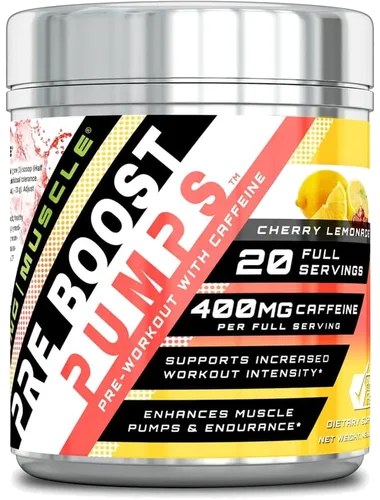
AN Amazing Nutrition Amazing Formulas Amazing Muscle Pre Boost Extreme Pre-Workout with Caffeine | 20 Full Servings | Cherry Lemonade Flavor | | 16.25 Grams per Serving Review
We don’t sell supplements. We help you make decisions and get the best price.
Study, Trial or Testing Result Summary
Members Only350 human studies · 176 improved
5 of these 350 human studies gave the ingredient by drip or injection, not by mouth.
Creatine is the best-supported ingredient here, at a full dose when two servings are taken daily. Across 143 trials it added about 0.82 kilograms of lean mass, more with strength training [1], and another pooled analysis found about 1.39 kilograms more than placebo [2]. With training it modestly improved bench press, squat and jumping [3]. Branched-chain amino acids, at a full dose, modestly improved strength and muscle in older adults, though results varied [4]. In trained women they added nothing beyond training [5]. Caffeine at this dose helps people lift more and faster in a single session [6][7], but a 6 week trial found no added muscle growth [8]. Citrulline reaches a full dose only at three servings, and the best reviews found no strength or lean mass gain [9][10]. Beta-alanine did not change lean mass in pooled trials [11]. Betaine is below the studied dose and showed little benefit [12]. Carnitine and beetroot are present only in trace amounts compared with studied doses [13][14]. Animal and cell studies are never counted.
See all 350 studies →Hide the studies
- In a pooled analysis of 29 trials with 2,255 older adults, creatine (among other nutrients such as amino acids) significantly improved muscle mass, though the best dose and duration were not established.Factors influencing the efficacy of nutritional interventions on muscle mass in older adults: a systematic review and me…
- Across 69 trials with 1,937 adults, creatine plus resistance training modestly improved bench press, squat, jump height and peak power versus placebo, but not handgrip or leg press strength, with clearer benefits in younger adults and men.The Effects of Creatine Supplementation on Upper- and Lower-Body Strength and Power: A Systematic Review and Meta-Analys…
- Across 14 trials of 1,437 people with cirrhosis, BCAA improved handgrip strength compared with placebo, and BCAA with vitamin D improved muscle index more than BCAA alone, though the evidence was low certainty.Efficacy of different nutrition interventions on sarcopenia in patients with cirrhosis: a systematic review and network …
- In 1387 adults doing resistance training, multi-ingredient protein supplements (often protein plus creatine) added about 0.8 kg of lean mass and some strength compared with non-multi-ingredient supplements, but were not better than protein alone.Do multi-ingredient protein supplements augment resistance training-induced gains in skeletal muscle mass and strength? …
- Across 33 placebo-controlled trials with 1076 older adults and adults with chronic disease, creatine improved sit-to-stand performance, upper-body and handgrip strength, and lean tissue mass, though the evidence quality was low or very low.Creatine supplementation for optimization of physical function in the patient at risk of functional disability: A system…
- In 763 women across 14 trials combining supplements (protein, amino acids, creatine) with exercise, muscle mass did not improve but bench press and handgrip strength did, particularly in creatine studies.Nutritional Supplementation Combined with Exercise for Musculoskeletal Health in Women: A Systematic Review and Meta-Ana…
- In 608 postmenopausal women across seven trials, creatine added about 0.37 kg of lean mass and 7.5 kg of leg-press strength, mainly at 5 g or more per day with resistance training, with no change in bone density.Creatine monohydrate for lean mass, strength, and bone density in postmenopausal women: a systematic review and meta-ana…
- In 509 adults under 50 across 23 trials, creatine with resistance training raised upper-body strength by 4.4 kg and lower-body strength by 11.4 kg more than placebo, with clearer gains in males than females.Effects of Creatine Supplementation and Resistance Training on Muscle Strength Gains in Adults <50 Years of Age: A Syste…
- Across 20 randomized trials with 492 people, beta-alanine did not change body weight, fat mass, body fat percentage or fat-free mass compared with control.Effects of beta-alanine supplementation on body composition: a GRADE-assessed systematic review and meta-analysis.
- In 14 trials with 364 people with muscle diseases, creatine raised muscle strength in muscular dystrophies by about 8.5% over placebo but did not improve strength in metabolic muscle diseases, and high doses worsened daily activities and muscle pain in McArdle disease.Creatine for treating muscle disorders.
- In 357 older adults doing resistance training for about 13 weeks, adding creatine increased fat-free mass, chest press and leg press strength, and chair-stand performance more than training alone.Creatine supplementation during resistance training in older adults-a meta-analysis.
- In 10 trials of 211 older women, creatine with resistance training increased upper-body strength but not lower-body strength or muscle mass overall, with gains in both strength types when training lasted 24 weeks or more.Efficacy of Creatine Supplementation Combined with Resistance Training on Muscle Strength and Muscle Mass in Older Femal…
- In seven trials of 206 people with cirrhosis, exercise and nutrition (including BCAA among others) improved muscle index and albumin when continued for 12 months, but BCAA effects were not separated out.Effects of exercise and nutrition in improving sarcopenia in liver cirrhosis patients: a systematic review and meta-anal…
- Across four trials pooling 138 resistance-trained adults, citrulline malate did not improve muscle strength compared with placebo.Effects of Citrulline Malate Supplementation on Muscle Strength in Resistance-Trained Adults: A Systematic Review and Me…
- In eight trials of exercise-induced muscle damage, BCAA lowered a blood marker of muscle damage compared with placebo but did not significantly reduce muscle soreness.Branched-chain amino acid supplementation and exercise-induced muscle damage in exercise recovery: A meta-analysis of ra…
- Across 35 trials in older adults, BCAA-rich supplements modestly improved muscle strength and muscle mass compared with controls, with high variation between studies.Effects of branched-chain amino acid-rich supplementation on EWGSOP2 criteria for sarcopenia in older adults: a systemat…
- Across 20 trials in people with cirrhosis, BCAA gave a small gain in muscle mass compared with other treatments, but no change in fat mass.Efficacy of branched chain amino acids supplementation in liver cirrhosis: A systematic review and meta-analysis.
- Pooling placebo-controlled studies, creatine produced small but significant gains in lean body mass and short high-intensity exercise performance, with larger effects for upper-body exercise and no difference by sex or training status.Effect of creatine supplementation on body composition and performance: a meta-analysis.
- Pooled trials in older adults doing resistance training showed creatine gave greater gains in lean tissue mass and strength than placebo, including when taken only on training days, though strength benefits depended partly on a loading phase.Meta-Analysis Examining the Importance of Creatine Ingestion Strategies on Lean Tissue Mass and Strength in Older Adults…
- In ten trials of healthy adults training for at least 6 weeks, creatine added a very small increase in muscle size measured by imaging, about 0.10 to 0.16 cm in muscle thickness.The Effects of Creatine Supplementation Combined with Resistance Training on Regional Measures of Muscle Hypertrophy: A …
- Across 143 trials, creatine increased fat-free mass by 0.82 kg and reduced body fat percentage by 0.28 points, with larger effects when combined with resistance training.Creatine supplementation protocols with or without training interventions on body composition: a GRADE-assessed systemat…
- In twelve trials of adults under 50 doing resistance training, creatine added 1.14 kg of lean mass and reduced fat mass by 0.73 kg compared with training alone.The Effect of Creatine Supplementation on Resistance Training-Based Changes to Body Composition: A Systematic Review and…
- Pooled trials showed creatine significantly increased muscle strength, with greater gains in untrained people, with low-to-moderate doses, and with high-intensity training.Effects of creatine supplementation on muscle strength gains-a meta-analysis and systematic review.
- Across 61 trials, creatine added 1.39 kg of fat-free mass compared with placebo in both novice and experienced lifters, with no significant difference between the two groups.Creatine supplementation and resistance training: a comparison between novice and experienced lifters - a systematic rev…
- Across 34 studies, a single serving of caffeine-containing energy drinks improved muscle strength and endurance, endurance exercise, jumping and sport-specific actions but not sprinting, and higher taurine doses were linked to better performance.Acute effects of caffeine-containing energy drinks on physical performance: a systematic review and meta-analysis.
- In 21 trials, citrulline had no overall effect on body weight, fat mass or fat-free mass, though shorter 3 to 8 week interventions were linked to a rise in fat-free mass.Effects of Citrulline or Watermelon Supplementation on Body Composition: A Systematic Review and Dose-Response Meta-Anal…
- In nine trials of adults, L-citrulline plus exercise reduced body fat and belly-area fat more than exercise alone, but did not change body weight, BMI, hip-area fat or lean mass.Synergistic effect of long-term L-citruline supplementation combined with exercise on body composition in adults: A syst…
- Across seven randomized trials, L-carnitine reduced muscle soreness and short-term muscle damage markers (24 hours) after exercise compared with placebo, with benefits mainly in resistance training and untrained people.The Effect of L-Carnitine Supplementation on Exercise-Induced Muscle Damage: A Systematic Review and Meta-Analysis of Ra…
- In a review of trials in people with end-stage kidney disease, L-carnitine increased muscle quantity in dialysis patients, though most trials were low quality.The Effect of Non-Pharmacological and Pharmacological Interventions on Measures Associated with Sarcopenia in End-Stage …
- In ten strength and ten power studies, caffeine slightly improved maximal strength and jump power, with a significant gain for upper body strength but not for lower body strength.Effects of caffeine intake on muscle strength and power: a systematic review and meta-analysis.
- A review of 21 meta-analyses found caffeine improved muscle strength, muscle endurance, power and jumping, with moderate quality evidence, mostly in young men.Wake up and smell the coffee: caffeine supplementation and exercise performance-an umbrella review of 21 published meta-…
- In nineteen placebo-controlled trials, caffeine improved bench press endurance and maximum strength in healthy adults, but showed no significant effect on leg press performance or perceived exertion.Effects of caffeine supplementation on muscle endurance, maximum strength, and perceived exertion in adults submitted to…
- Across twelve trials of very low caffeine doses (0.9 to 2 mg per kg body weight), caffeine slightly improved muscular strength, muscular endurance and lifting speed during resistance exercise compared with placebo.Exploring the minimum ergogenic dose of caffeine on resistance exercise performance: A meta-analytic approach.
- Across fourteen studies, a single dose of caffeine capsules improved muscle strength and muscle endurance, especially in men, with the biggest strength gains at 6 mg per kg body weight or more taken 45 minutes before exercise.Effects of Acute Ingestion of Caffeine Capsules on Muscle Strength and Muscle Endurance: A Systematic Review and Meta-An…
- A review that pooled nine earlier meta-analyses found caffeine modestly increased muscle strength and muscle endurance compared with control.The effect of caffeine supplementation on muscular strength and endurance: A meta-analysis of meta-analyses.
- Across 21 studies, caffeinated chewing gum taken about 5 to 25 minutes before exercise slightly improved muscular strength and jump height but had no significant effect on muscular endurance.Fast-Acting Caffeine: Does Caffeinated Chewing Gum Enhance Muscular Strength, Endurance, and Jumping Performance? A Syst…
- A review of 30 trials in 1976 critically ill adults, only one of which tested ornithine, found that effects of amino acid supplements on muscle wasting were unclear and mixed, with no ornithine-specific muscle result reported.A systematic review to assess the impact of amino acids or their derivatives on skeletal muscle wasting in critically il…
- In 12 trials of 1,337 older adults, BCAA with vitamin D improved muscle mass and strength in most trials, while BCAA alone did not improve muscle health in two trials.The Role of Nutrition in the Treatment of Sarcopenia in Old Patients: From Restoration of Mitochondrial Activity to Impr…
- In 12 studies of 1,225 people with cirrhosis, BCAA improved muscle index and mid-arm muscle size from baseline but not handgrip strength.Effects of Branched-Chain Amino Acids on Parameters Evaluating Sarcopenia in Liver Cirrhosis: Systematic Review and Meta…
- In seven studies of 463 people with cancer, creatine did not clearly improve lean body mass compared with placebo, and effects on weight and fat mass varied.Effect of Creatine Supplementation on Body Composition in Cancer Patients: A Systematic Review.
- Across 7 trials with 263 adults, taking creatine and β-alanine together for at least 4 weeks improved high-intensity exercise performance, but did not improve maximal strength or body composition more than creatine alone, and results for lean mass were mixed.Effects of Creatine and β-Alanine Co-Supplementation on Exercise Performance and Body Composition: A Systematic Review.
- In 9 studies of 197 trained people, doses of 4 to 6.4 g a day split into small servings were more likely to improve strength and power, while sustained-release or single large doses often did not.Dosing strategies for β-alanine supplementation in strength and power performance: a systematic review.
- In 5 studies of 163 older adults taking about 2.7 g a day for about 12 weeks, muscle strength and functional performance did not seem to improve, though exercise capacity may have.Beta-Alanine for Improving Exercise Capacity, Muscle Strength, and Functional Performance of Older Adults: A Systematic …
- In children with spinal muscular atrophy types II and III, creatine showed no clinically important change in motor function compared with placebo across trials lasting three to 24 months.Drug treatment for spinal muscular atrophy types II and III.
- In people with motor neuron disease, BCAA did not improve survival, muscle strength or function in the pooled trials.Amino acids for amyotrophic lateral sclerosis / motor neuron disease.
- A review of 40 articles in adults and children with liver cirrhosis found branched chain amino acids may improve muscle strength, though results varied and firm conclusions were limited.Effects of branched chain amino acid supplementation on patient care outcomes in adults and children with liver cirrhosi…
- A review of 19 articles found 2-10 g per day of branched chain amino acids, mostly in young men, helped muscle recovery after hard resistance exercise and may improve strength and muscle function.Intake of branched chain amino acids favors post-exercise muscle recovery and may improve muscle function: optimal dosag…
- A review of nine trials in adults 50 and older found beef and its nutrients, including amino acids and protein, had an overall positive effect on wellbeing, but leucine had no effect.The potential role of beef and nutrients found in beef on outcomes of wellbeing in healthy adults 50 years of age and ol…
- A review of 27 small studies in adults with cirrhosis found diet plus exercise worked best for body composition, with some benefit also seen from branched-chain amino acid supplements.The Effect of Diet and Exercise Interventions on Body Composition in Liver Cirrhosis: A Systematic Review.
- A review of 8 trials in healthy people over 65 combining supplements with exercise, including creatine, concluded the combination may improve strength, balance and speed.[Exercise and nutritional supplements; effects of combined use in people over 65 years; a systematic review].
- In 37 trials of adults aged 60 and over, exercise improved muscle mass and function, but adding supplements including creatine gave extra benefit in only about a quarter of studies.Nutrition and physical activity in the prevention and treatment of sarcopenia: systematic review.
- A systematic review of 23 trials in adults over 60 found six creatine trials showed no consistent effect on muscle mass, strength or physical performance.Effects of Protein, Essential Amino Acids, B-Hydroxy B-Methylbutyrate, Creatine, Dehydroepiandrosterone and Fatty Acid S…
- In older adults, creatine added to exercise may improve muscle strength and lean mass when taken as a continuous low daily dose with at least 12 weeks of resistance training, but benefits were not seen for mental health and effects on bone and cognition remain unclear.The Additive Effects of Creatine Supplementation and Exercise Training in an Aging Population: A Systematic Review of Ra…
- After anterior cruciate ligament reconstruction, creatine in one included trial produced no statistically significant gain in strength or muscle size of the operated leg compared with control.[Effect of dietary supplements and whey protein on muscle mass and strength of the operated limb after anterior cruciate…
- This review of reviews found creatine during resistance training safely increased total and lean body mass, strength and performance in short, repeated high-intensity tasks in healthy young people and athletes.Performance-Enhancing Drugs in Healthy Athletes: An Umbrella Review of Systematic Reviews and Meta-analyses.
- In breast cancer patients, creatine showed limited or no benefit for fatigue or muscle strength in the trials reviewed.Impact of Dietary Supplements on Clinical Outcomes and Quality of Life in Patients with Breast Cancer: A Systematic Revi…
- In 19 studies of combat sport athletes, creatine increased body mass, fat-free mass, strength and power, but did not change endurance, recovery or fatigue, with no serious side effects.Creatine Supplementation in Combat Sport Athletes: A Narrative Systematic Review.
- In 7 trials of combat athletes, beta-alanine improved strength, power and work capacity, but lean mass and fat mass changes were not significant.β-Alanine Supplementation in Combat Sports: Evaluation of Sports Performance, Perception, and Anthropometric Parameters …
- A review of seven randomized trials in healthy people found only two reported greater strength or power with betaine, while five showed no change, so evidence for a clear benefit is lacking.Effects of Betaine Supplementation on Muscle Strength and Power: A Systematic Review.
- A review of 15 clinical, animal and lab studies in burn injury reported that ornithine alpha-ketoglutarate improved nitrogen balance, reduced muscle breakdown and preserved muscle mass, but the studies were small and varied.Metabolic and Immunomodulatory Effects of α-Ketoglutarate in Burn Injuries: A Systematic Review.
- In a review of cancer cachexia supplements, L-carnitine increased body mass index and survival in advanced pancreatic cancer patients, but overall evidence was limited.A systematic review on the role of vitamins, minerals, proteins, and other supplements for the treatment of cachexia in …
- In 11 studies of healthy people taking 1 to 4 g daily for 12 to 24 weeks, L-carnitine raised muscle carnitine and increased muscle mass in centenarians but did not change muscle strength in older women, and it raised a blood compound linked to artery disease.The bright and the dark sides of L-carnitine supplementation: a systematic review.
- In a review of 29 studies of short-term high-intensity exercise, six of eleven resistance training studies showed significant benefits from caffeine, and some studies showed worse performance in repeated bouts.Efficacy of acute caffeine ingestion for short-term high-intensity exercise performance: a systematic review.
- In 332 cancer cachexia patients over 4 months, L-carnitine alone at 4 g daily did not clearly raise lean body mass (only the combination of all treatments did), though it improved Glasgow Prognostic Score and performance status.Randomized phase III clinical trial of five different arms of treatment in 332 patients with cancer cachexia.
- In 332 cancer cachexia patients over 4 months, L-carnitine alone at 4 g daily did not clearly raise lean body mass (only the combination did), though it improved prognostic score and performance status.Randomised phase III clinical trial of 5 different arms of treatment on 332 patients with cancer cachexia.
- In 237 postmenopausal women over 2 years, creatine with exercise increased lean tissue mass compared with placebo in completers, but did not increase bench press or squat strength and did not change bone density.A 2-yr Randomized Controlled Trial on Creatine Supplementation during Exercise for Postmenopausal Bone Health.
- In 220 people with cirrhosis over 28 days, branched-chain amino acids, programmed exercise, or both increased quadriceps muscle thickness, muscle strength and performance compared with standard care alone.Effect of branched-chain amino acid supplementation and exercise on quadriceps muscle quantity and quality in patients w…
- In 200 postmenopausal women with osteopenia over two years, 3 grams of creatine daily did not improve bone health, lean mass or muscle function compared with placebo.Creatine Supplementation (3 g/d) and Bone Health in Older Women: A 2-Year, Randomized, Placebo-Controlled Trial.
- In 200 pre-frail and frail older adults doing resistance training for 16 weeks, adding creatine did not improve muscle mass or strength compared with placebo.Supplement-based nutritional strategies to tackle frailty: A multifactorial, double-blind, randomized placebo-controlled…
- In 158 adults on long-term kidney dialysis who took an oral supplement of L-carnitine, L-arginine or L-leucine for 90 days, weight, muscle mass and handgrip strength improved within each group, but there was no difference between the supplements and no placebo group.[Effect of supplementation with L-leucine, L-arginine, and L-carnitine on body composition in patients undergoing chroni…
- In people with cirrhosis and weak muscle strength, 30 grams of BCAA daily for 12 months did not improve grip strength, muscle mass, or physical performance compared with whey protein.Branched-chain amino acid supplementation does not improve measures of sarcopenia in cirrhosis: results of a randomised …
- In an interim analysis of 125 cancer cachexia patients over 4 months, L-carnitine improved at least one main outcome and did better than the omega-3 supplement arm on lean body mass, energy expenditure and fatigue.Randomized phase III clinical trial of five different arms of treatment for patients with cancer cachexia: interim resul…
- In 104 people with amyotrophic lateral sclerosis taking 5 g of creatine daily for 6 months, creatine produced no measurable benefit on muscle strength or function compared with placebo.A clinical trial of creatine in ALS.
- In 104 women with advanced gynecological cancer, 4 months of l-carnitine combined with megestrol acetate, a med and antioxidants improved lean body mass, fatigue and quality of life more than megestrol acetate alone, and lowered inflammation markers.A randomized phase III clinical trial of a combined treatment for cachexia in patients with gynecological cancers: evalu…
- In 103 older adults doing resistance training for 16 weeks, taking 3 g of creatine daily added benefits to strength and daily function and lowered inflammation and oxidative stress markers compared with placebo.Effects of high-load, velocity-intentional variable resistance training combined with creatine supplementation on neurop…
- In 102 competitive male athletes given a single dose of caffeine (2 or 4 mg per kg) or placebo, caffeine did not change handgrip strength or jump power overall, and it lowered handgrip strength by 12.8% at 4 mg per kg in people with the CC gene type.CYP1A2 Genotype Modifies the Effects of Caffeine Compared With Placebo on Muscle Strength in Competitive Male Athletes.
- In 95 older adults in care homes, a nutritional supplement plus resistance training for 6 months was linked to better blood fat measures as choline levels rose, but this study did not report muscle building results for choline.Nutritional supplementation alters associations between one-carbon metabolites and cardiometabolic risk profiles in olde…
- In 94 resistance-trained men and women, a single 3 mg per kg dose of caffeine improved bar speed in bench press and squat strength and endurance tests compared with placebo, with the biggest benefit in people with the AA gene type.CYP1A2 Genotype and the Ergogenic Effect of Acute Caffeine Intake on Muscular Strength and Endurance Performance in Trai…
- In 88 patients with leg pain from poor circulation, a single 6 mg per kg dose of caffeine raised knee strength by about 10% and endurance by about 21% compared with placebo, but worsened balance.Randomized double-blind placebo-controlled crossover study of caffeine in patients with intermittent claudication.
- In 84 elderly people with rapid muscle fatigue, 4 g a day of levocarnitine for 30 days increased total muscle mass by 2.1 kg versus 0.2 kg with placebo, reduced fat mass, and reduced fatigue.Levocarnitine administration in elderly subjects with rapid muscle fatigue: effect on body composition, lipid profile an…
- In 84 hemodialysis patients with carnitine deficiency, 1,000 mg L-carnitine injections three times a week for 12 months maintained lean body mass, arm muscle area and grip strength, which all fell in the untreated group.Efficacy of L-carnitine supplementation for improving lean body mass and physical function in patients on hemodialysis: …
- In 81 obese older adults doing interval training for 12 weeks, adding citrulline gave greater gains in handgrip and thigh strength and a fat mass drop, while lean mass and muscle power rose similarly with placebo.Impact of high-intensity interval training with or without l-citrulline on physical performance, skeletal muscle, and ad…
- In 80 older adults after lumbar spine surgery, 3 weeks of branched-chain amino acids plus vitamin D increased knee muscle strength at 12 weeks compared with a non-amino acid group, but did not change muscle mass or the primary clinical questionnaire score.Branched-chain amino acids plus vitamin D supplementation promote increased muscle strength following lumbar surgery for…
- In 80 resistance-trained men, a pre-workout supplement containing 2 grams of creatine nitrate improved some thinking test scores and strength at 4 weeks, but these benefits were similar to placebo by 8 weeks and body composition did not differ.Effects of ingesting a pre-workout dietary supplement with and without synephrine for 8 weeks on training adaptations in…
- In 80 men and women aged 21 to 65, 5 weeks of L-carnitine tartrate improved perceived recovery and soreness, lowered creatine kinase, and reduced the drop in strength and power after a hard exercise challenge compared with placebo.L-Carnitine Tartrate Supplementation for 5 Weeks Improves Exercise Recovery in Men and Women: A Randomized, Double-Blind…
- In 75 resistance-trained men over 8 weeks of training, citrulline-malate did not significantly change lean mass or strength compared with placebo; the lean mass gain was seen with glutathione plus citrulline at 4 weeks only.Eight weeks of resistance training in conjunction with glutathione and L-Citrulline supplementation increases lean mass …
- In 72 people with cirrhosis, adding 110 g of daily branched-chain amino acids to a high-protein, high-fiber diet over 6 months increased muscle mass and reduced fat mass, with no rise in ammonia or glucose.Effect of a high-protein, high-fiber diet plus supplementation with branched-chain amino acids on the nutritional status…
- In 64 healthy women aged 50 to 80, two daily packs of a protein-enriched supplement with branched-chain amino acids for 12 weeks helped keep lean body mass from falling, while the placebo group gained body fat; strength and inflammation did not differ.Effectiveness of Protein-enriched oral nutritional supplements on muscle function in middle-aged and elderly women: A ra…
- In older adults doing supervised resistance training for one year, creatine increased lower-leg muscle density more than placebo, with some favorable bone area changes.Efficacy of Creatine Supplementation and Resistance Training on Area and Density of Bone and Muscle in Older Adults.
- In 69 young adults during 5 weeks of strength training, a mix of creatine, whey protein and conjugated linoleic acid gave a larger gain in strength and lean mass than the other groups, though the creatine effect could not be separated from the other ingredients.Conjugated linoleic acid combined with creatine monohydrate and whey protein supplementation during strength training.
- In 68 sarcopenic older adults in hospital rehabilitation over eight weeks, branched-chain amino acids and vitamin D plus low-intensity resistance training gave greater gains in handgrip strength and calf circumference than training alone, though overall physical function gains did not differ.Effects of branched-chain amino acids and vitamin D supplementation on physical function, muscle mass and strength, and …
- In 68 obese older adults doing interval training for 12 weeks, citrulline lowered a muscle microRNA linked to less body fat and better function, but muscle-specific microRNAs did not change.Skeletal Muscle and Circulating microRNAs Adaptations to 12-Week HIIT With or Without L-Citrulline in Obese Older Adults…
- In 66 centenarians with fatigue, 2 grams of levocarnitine daily beat placebo on fatigue, total muscle mass and memory test scores, while reducing body fat.L-Carnitine treatment reduces severity of physical and mental fatigue and increases cognitive functions in centenarians:…
- In 66 older adults training for 6 weeks, beetroot extract did not change strength, endurance or physical performance scores versus placebo, though men sprinted faster than at baseline and women had lower creatine kinase and urea.l-Arginine and Beetroot Extract Supplementation in the Prevention of Sarcopenia.
- In 64 middle-aged and older adults over 12 weeks, 10 grams of creatine per day (5 grams twice daily) increased lean tissue mass and strength with or without exercise and diet, and improved some memory and thinking test scores compared with placebo.Effects of creatine supplementation with and without exercise and diet intervention on body composition, cognitive funct…
- In 63 adults taking 5 grams per day of creatine for 13 weeks, lean body mass rose 0.5 kg more than controls after a 7-day start, mainly in women, but added resistance training gave no extra lean mass gain over 12 weeks.The Effect of Creatine Supplementation on Lean Body Mass with and Without Resistance Training.
- In 61 older adults at risk of sarcopenia over 6 weeks, higher vitamin D was seen with arginine and beetroot, not clearly with citrulline, and no citrulline muscle benefit was reported.Nitric-Oxide-Inducing Factors on Vitamin D Changes in Older People Susceptible to Suffer from Sarcopenia.
- In 60 people with COPD in a 4-week lung rehabilitation program, daily branched-chain amino acid supplements were not more beneficial than rehabilitation with placebo.Does branched-chain amino acid supplementation improve pulmonary rehabilitation effect in COPD?
- In 60 people with cirrhosis and sarcopenia over six months, 12 g daily of branched-chain amino acids added to exercise did not increase muscle mass compared with placebo.Randomised clinical trial: effect of adding branched chain amino acids to exercise and standard-of-care on muscle mass i…
- In 60 vulnerable older women over 24 weeks, creatine combined with resistance training increased leg strength and appendicular lean mass more than placebo or creatine alone, while creatine alone matched resistance training alone for lean mass gains.Creatine supplementation and resistance training in vulnerable older women: a randomized double-blind placebo-controlled…
- In 60 young men doing resistance training for 8 weeks, taking creatine (25 g daily for 5 days, then 5 g daily) lowered homocysteine within the group, but the change was not significantly different from placebo or control.Creatine supplementation alters homocysteine level in resistance trained men.
- In 60 patients with cancer-related wasting, 4 grams of L-carnitine daily with a med over about 4 months increased lean body mass and walking performance within both groups, but adding megestrol made no significant difference.Read the study on PubMed (22047681) →
- In 58 adults with mild to moderate inflammatory bowel disease (51 finished), 10 mg of piperine a day plus 1000 mg of curcumin for 12 weeks reduced muscle depletion and improved fat-free mass and phase angle compared with placebo.Curcumin plus piperine improve body composition in patients with inflammatory bowel disease: a randomized, double-blind,…
- In older women over 24 weeks, creatine added nothing to the muscle strength gains from strength training; training alone improved strength compared with no training.Creatine supplementation associated or not with strength training upon emotional and cognitive measures in older women: …
- In 54 frail people with cirrhosis, 16 weeks of twice-daily branched-chain amino acid supplements improved frailty in 36 percent of the group versus 0 percent of controls and increased skeletal muscle index.Branched-chain amino acids supplementation improves liver frailty index in frail compensated cirrhotic patients: a rando…
- In 54 resistance-trained men, a single 300 mg dose of caffeine or coffee taken 30 minutes before testing did not improve strength more than placebo, though both reduced the drop in sprint power.Effects of coffee and caffeine anhydrous on strength and sprint performance.
- In an open-label trial of 53 people with cirrhosis and muscle wasting awaiting liver transplant, L-carnitine given to those with sarcopenia was linked over 6 months after transplant to greater muscle mass gains and lower death rates (16.7% vs 55.6%) than no supplement; the dose was not stated.Impact of L-carnitine supplementation on post-transplant outcomes in liver transplant candidates with sarcopenia: A rand…
- In 50 people with Down syndrome, 5 grams of creatine daily for 6 months (after a 5-day loading phase) reduced arm and leg fat percentage versus placebo but did not change total fat or lean mass.Creatine supplementation modifies fat deposition in arm and leg tissues in individuals with Down syndrome.
- In 49 healthy older men, 20 weeks of a twice-daily supplement containing creatine, whey protein, vitamin D and fish oil increased lean mass and strength over 6 weeks versus placebo, and upper body strength stayed greater after exercise training was added.A whey protein-based multi-ingredient nutritional supplement stimulates gains in lean body mass and strength in healthy …
- After tonsillectomy, patients taking branched-chain amino acids kept or gained muscle mass over three weeks, while the control group lost muscle mass.Effects of branched-chain amino acids on changes in body composition during the recovery period following tonsillectomy.
- In 48 male volleyball players over 4 weeks of leg training, caffeine combined with Rhodiola rosea gave the biggest jump height gains and lowest fatigue compared with placebo.Effects of the Combined Supplementation of Caffeine and Rhodiola Rosea with Resistance Training on Lower Limb Explosive …
- In 47 adults with inflammatory muscle disease, 12 weeks of branched-chain amino acids did not improve overall muscle strength scores compared with placebo, but did improve repeated shoulder movement function.Branched chain amino acids in the treatment of polymyositis and dermatomyositis: a phase II/III, multi-centre, randomize…
- In 47 postmenopausal women over 12 months of resistance training, creatine raised relative bench press strength more than placebo (64% vs 34% gain).Effects of Creatine and Resistance Training on Bone Health in Postmenopausal Women.
- In 46 stroke patients doing two months of exercise, taking the leucine-enriched supplement with breakfast reduced body fat and improved leg strength and balance, though timing did not change muscle mass gains.The Effects of Timing of a Leucine-Enriched Amino Acid Supplement on Body Composition and Physical Function in Stroke Pa…
- In 46 young men doing interval training for 6 weeks, beta-alanine (6 g a day for 3 weeks, then 3 g) improved lean body mass and endurance only in the beta-alanine group in the later weeks.Effects of beta-alanine supplementation and high-intensity interval training on endurance performance and body compositi…
- In 45 older men, a single 6 gram branched-chain amino acid drink raised muscle protein building rates within the first two hours, though the effect did not last and was matched by milk protein only for the early period.Branched-chain amino acid and branched-chain ketoacid ingestion increases muscle protein synthesis rates in vivo in olde…
- In 45 older adults, resistance training with creatine for 10 weeks produced larger muscle strength gains than training with placebo.The role of resistance training and creatine supplementation on oxidative stress, antioxidant defense, muscle strength, …
- In 44 adults aged 60 to 73 doing an exercise program for 6 weeks, citrulline improved walking speed compared with placebo, but strength and endurance did not differ significantly from placebo.L-Citrulline Supplementation and Exercise in the Management of Sarcopenia.
- In 43 resistance-trained young men who trained four times a week for 8 weeks, creatine (a week of loading at 0.3 g per kg of body weight daily, then 0.03 g per kg daily) built more lean muscle than placebo, most in the arms (7.1% gain) versus the legs (3.2%) and trunk (2.1%).Creatine supplementation elicits greater muscle hypertrophy in upper than lower limbs and trunk in resistance-trained me…
- In 43 young trained men and women, a single dose of citrulline or citrulline malate taken 45 minutes before testing did not improve strength, jump performance or strength-endurance compared with placebo.Malate or Not? Acute Effects of L-Citrulline Versus Citrulline Malate on Neuromuscular Performance in Young, Trained Adu…
- In 22 younger and 21 older men, a single 3 mg per kg dose of caffeine did not change calf muscle force or how fast force was produced compared with placebo.Exogenous Caffeine Ingestion Does Not Increase Plantarflexor Torque in Older or Younger Men.
- In 43 middle-aged adults doing resistance training for 6 weeks, a caffeinated pre-workout supplement gave the same gains in muscle size and strength as carbohydrate alone, apart from a larger drop in waist size.Pre-workout multi-ingredients or carbohydrate alone promote similar resistance training outcomes in middle-aged adults: …
- In 42 middle-aged and older men over 14 weeks of resistance training, 5 g of creatine daily added no strength or lean mass benefit beyond training with placebo.The effects of supplementation with creatine and protein on muscle strength following a traditional resistance training …
- In 42 critically ill patients receiving 1.2 or 1.8 g protein per kg daily for 4 weeks, the amount of tyrosine in their feeding was not linked to skeletal muscle loss.Is the amino acid pattern in medical nutrition therapy crucial for successfully attenuating muscle mass loss in adult IC…
- In 41 people over 4 weeks, 6 g per day of isolated leucine did not improve muscle mass or function in patients with head and neck cancer, while older adults without cancer gained a modest amount of muscle mass compared with the comparator amino acids.Short-term isolated leucine supplementation was not associated with improvements in muscle mass or function in patients …
- In 41 obese postmenopausal women over 8 weeks, citrulline combined with vibration training raised leg lean mass by 2.7% compared with citrulline alone, while leg strength rose about 37% with both vibration groups compared with citrulline alone.Impact of L-citrulline supplementation and whole-body vibration training on arterial stiffness and leg muscle function i…
- In 41 adults with overweight or obesity doing alternate-day fasting for 8 weeks, krill oil (providing about 312 mg choline daily along with fish omega-3s and astaxanthin) prevented the loss of fat-free mass and handgrip strength that happened with placebo.Benefits of Krill Oil Supplementation During Alternate-Day Fasting in Adults With Overweight and Obesity: A Randomized T…
- In 40 critically ill patients over 10 days, 40 g per day of high leucine branched-chain amino acids reduced quadriceps muscle thinning compared with control (0% vs -13%) and lowered interleukin-6 inflammation levels.High leucine branched-chain amino acids supplementation ameliorates quadriceps femoris muscle thickness reduction and at…
- In 40 young adults doing resistance training for eight weeks, creatine monohydrate or creatine hydrochloride increased strength, muscle size and lean mass more than placebo, with hydrochloride giving no extra benefit over monohydrate.Supplementing With Which Form of Creatine (Hydrochloride or Monohydrate) Alongside Resistance Training Can Have More Imp…
- In 40 healthy young women, four weeks of three small cups of Turkish coffee daily did not change fat-free mass or skeletal muscle mass compared with no caffeine, and raised blood pressure and heart rate and worsened sleep.Short-Term Turkish Coffee Consumption Elevates Cardiovascular Risk Markers, Decreases Leptin Levels, and Impairs Sleep Q…
- In 39 older adults over 32 weeks of resistance training, creatine increased muscle strength more than placebo, and taking it right after training gave the largest lean tissue gain.Strategic creatine supplementation and resistance training in healthy older adults.
- In 38 healthy older adults, 12 weeks of a twice-daily amino acid supplement containing creatine and vitamin D increased lean mass, strength and power compared with placebo.Effects of 12 Weeks of Essential Amino Acids (EAA)-Based Multi-Ingredient Nutritional Supplementation on Muscle Mass, Mu…
- In 37 adults having knee replacement surgery, creatine monohydrate (10 grams daily for 10 days before surgery, then 5 grams daily for 30 days after) did not improve body composition, muscle strength or recovery compared with placebo.Creatine monohydrate supplementation does not improve functional recovery after total knee arthroplasty.
- In 37 college wrestlers and football players taking 4 g a day for 8 weeks, lean mass rose more than with placebo but the differences were not statistically significant.Effects of β-alanine supplementation on performance and body composition in collegiate wrestlers and football players.
- In 37 healthy adults aged 50 to 69 doing 12 weeks of resistance training, those with low choline intake gained much less strength and thigh muscle quality than those with medium or high intake, who gained about 47% in strength versus 19%.The Effect of Choline and Resistance Training on Strength and Lean Mass in Older Adults.
- In 36 older adults with type 2 diabetes over 24 weeks, 8 g of branched-chain amino acids daily did not change skeletal muscle mass or blood sugar control compared with soy protein, though depressive symptoms improved in that group.Effects of Branched-Chain Amino Acids on Skeletal Muscle, Glycemic Control, and Neuropsychological Performance in Elderl…
- In 36 people with muscular dystrophy taking creatine or placebo for 8 weeks in a crossover design, creatine produced a mild but significant improvement in muscle strength and daily activities.Creatine monohydrate in muscular dystrophies: A double-blind, placebo-controlled clinical study.
- In 36 middle-aged women with low muscle mass recovering from knee surgery, nitrate supplementation plus 12 weeks of resistance exercise kept thigh muscle size and improved knee strength more than placebo.Impact of Resistance Exercise and Nitrate Supplementation on Muscle Function and Clinical Outcomes After Knee Osteoarthr…
- In 36 men and women new to resistance training, a single 300 mg or 600 mg dose of caffeine did not change maximal knee muscle strength or endurance compared with placebo.Influence of two levels of caffeine on maximal torque at selected angular velocities.
- In 36 overweight adults doing diet and supervised exercise for 8 weeks, a multi-ingredient supplement containing caffeine (amount not stated) gave lean mass gains in both groups, but only men taking the supplement gained lean mass (1.3 kg), and leptin fell and adiponectin rose in the supplement group.The Combined Effects of Exercise, Diet, and a Multi-Ingredient Dietary Supplement on Body Composition and Adipokine Chan…
- In 36 resistance-trained women, a single 6 mg per kg dose of caffeine let fast caffeine processors do more leg press repetitions than slow processors, who also reported dizziness, while other exercise results were similar between groups.Impact of CYP1A2 Genotypes on the Ergogenic Effects and Subjective Mood States of Caffeine Ingestion in Resistance-Train…
- In frail older adults in residential care, combining exercise with branched-chain amino acids over 40 weeks improved muscle strength, thinking tests, and lowered an inflammatory marker, more than exercise alone or the control group.Effect of Training-Detraining Phases of Multicomponent Exercises and BCAA Supplementation on Inflammatory Markers and Al…
- In 35 surgical patients, five days of intravenous branched-chain amino acids after surgery prevented the muscle breakdown seen with dextrose alone, leaving patients in nitrogen balance instead of a negative balance.Infusion of the branched chain amino acids in postoperative patients. Anticatabolic properties.
- In 35 young men given a creatine and arginine alpha-ketoglutarate blend (which also contained taurine, a dose not stated) or creatine alone for 10 days, bench-press repetitions rose versus placebo and the blend raised peak power, but lean mass did not change in any group.Creatine, arginine alpha-ketoglutarate, amino acids, and medium-chain triglycerides and endurance and performance.
- In 35 resistance-trained men and women, a single 12 g dose of citrulline malate did not improve jumping, strength or muscular endurance versus placebo, and it added nothing to the benefits of caffeine.Effect of isolated and combined ingestion of caffeine and citrulline malate on resistance exercise and jumping performan…
- In 35 resistance-trained men taking 12 g of arginine alpha-ketoglutarate daily for 8 weeks, bench press max and peak sprint power improved, but body composition, muscle endurance and aerobic capacity did not change compared with placebo.Pharmacokinetics, safety, and effects on exercise performance of L-arginine alpha-ketoglutarate in trained adult men.
- In 33 college football players over 10 weeks of strength training, creatine alone or with beta-alanine produced greater strength gains than placebo, and creatine plus beta-alanine also gave greater gains in lean body mass and reductions in body fat.Effect of creatine and beta-alanine supplementation on performance and endocrine responses in strength/power athletes.
- In 33 older adults taking creatine at high or moderate doses or a placebo for 10 days, creatine did not improve muscle strength or endurance beyond placebo, with or without resistance training.Effect of Creatine Supplementation Dosing Strategies on Aging Muscle Performance.
- In 33 resistance-trained men taking 12 grams of citrulline malate daily during six weeks of resistance training, upper body muscular endurance improved more than with placebo, while lower body endurance showed only a trend and strength was not clearly changed.Changes in resistance training performance, rating of perceived exertion, and blood biomarkers after six weeks of supple…
- In 32 people with cirrhosis and muscle loss, 12 weeks of branched-chain amino acids plus standard care improved muscle mass in 83% of the supplement group versus 47% of the placebo group, a difference that was not statistically clear.Adding Branched-Chain Amino Acids to an Enhanced Standard-of-Care Treatment Improves Muscle Mass of Cirrhotic Patients W…
- In 32 sedentary older men doing home resistance band training for 12 weeks, a supplement containing creatine plus protein, vitamin D and omega-3 improved lean mass, grip and leg strength, and muscle fiber size, but creatine was not tested on its own.A Five-Ingredient Nutritional Supplement and Home-Based Resistance Exercise Improve Lean Mass and Strength in Free-Livin…
- In a retrospective analysis of older men with obesity or metabolic risk, a whey-based multi-ingredient supplement containing creatine gave greater muscle and strength gains than a collagen-based alternative over three months, though creatine was not tested alone.Obesity and Metabolic Disease Impair the Anabolic Response to Protein Supplementation and Resistance Exercise: A Retrosp…
- In 32 trained men, a single dose of taurine alone did not change strength or power versus placebo, while taurine combined with low-dose caffeine modestly raised handgrip strength and average power.Effects of combined low-dose caffeine and taurine on anaerobic, neuromuscular, and cognitive performance: a double-blind…
- In 31 older women after hip replacement, 3.4 g of branched-chain amino acids taken after exercise for one month improved knee extension strength on some sides compared with starch, but not hip abductor strength on the operated leg.Effect of exercise therapy combined with branched-chain amino acid supplementation on muscle strength in elderly women a…
- In 31 untrained adults around age 58 doing 12 weeks of resistance training, adding creatine at 0.1 grams per kilogram daily increased muscle mass and body mass more than placebo, with greater benefit in men than women.Effect of creatine supplementation and drop-set resistance training in untrained aging adults.
- In 30 resistance-trained men doing three days of intense leg training, 6 g of branched-chain amino acids mixed with carbohydrate did not reduce strength loss or muscle soreness compared with carbohydrate alone.Post-exercise branched chain amino acid supplementation does not affect recovery markers following three consecutive hig…
- In 30 postmenopausal women doing 8 weeks of resistance training, adding 9 g per day of branched-chain amino acids did not improve muscle gains beyond training with placebo, though both groups gained muscle mass and strength.Effects of branched-chain amino acid supplementation and resistance training in postmenopausal women.
- In 30 men averaging 70 years old doing 12 weeks of resistance training, creatine at 0.07 g per kg of body weight per day after a 5-day loading phase increased lean mass, leg strength, leg endurance, and power more than placebo.Creatine supplementation combined with resistance training in older men.
- In a crossover trial of 30 boys with Duchenne muscular dystrophy, about 4 months of creatine monohydrate at roughly 0.10 g per kg body weight daily increased fat-free mass and dominant hand grip strength compared with placebo, with no change in functional tasks.Creatine monohydrate enhances strength and body composition in Duchenne muscular dystrophy.
- In 30 healthy young men, a 5-day creatine loading dose of 20 g per day did not prevent loss of thigh muscle size or leg strength during 7 days of leg immobilization in a cast, compared with placebo.Creatine Loading Does Not Preserve Muscle Mass or Strength During Leg Immobilization in Healthy, Young Males: A Randomiz…
- In 30 men with prostate cancer on androgen deprivation therapy, adding creatine to a 12-week resistance exercise program produced no greater gains in lean mass, strength, or physical function than exercise plus placebo, though both groups improved.Creatine supplementation does not add to resistance training effects in prostate cancer patients under androgen deprivat…
- In 30 older adults hospitalized for stroke, 10 g of creatine twice daily for 7 days did not improve physical function, strength or muscle mass compared with placebo, though it lowered progranulin levels.Influence of CReatine Supplementation on mUScle Mass and Strength After Stroke (ICaRUS Stroke Trial): A Randomized Contr…
- In 30 active older adults doing a training program, 6 weeks of creatine plus HMB improved functional strength and endurance, but changes in muscle mass within the group were not statistically significant.Combined creatine and HMB co-supplementation improves functional strength independent of muscle mass in physically activ…
- In 30 strength-trained people taking 6.4 g of beta-alanine daily for 5 weeks of leg training, power output and the load lifted in a one-repetition maximum squat rose more than with placebo.Effects of β-alanine supplementation during a 5-week strength training program: a randomized, controlled study.
- In 30 recreationally trained men and women over 6 weeks of resistance training, a multi-ingredient supplement containing beta-alanine did not improve strength or body composition more than placebo.The Effects of a Multi-Ingredient Performance Supplement Combined with Resistance Training on Exercise Volume, Muscular …
- In 30 children with autism taking liquid L-carnitine for three months in a placebo-controlled trial, autism symptoms and cognitive scores improved, and hand muscle strength was linked to blood carnitine levels.A prospective double-blind, randomized clinical trial of levocarnitine to treat autism spectrum disorders.
- In 29 trained people doing CrossFit for 6 weeks, betaine did not improve muscle size or strength compared with placebo, though squat strength rose within the betaine group only.Betaine Supplementation Does Not Improve Muscle Hypertrophy or Strength Following 6 Weeks of Cross-Fit Training.
- In 29 young professional soccer players, 2 grams of betaine daily for 14 weeks raised testosterone and the testosterone to cortisol ratio but did not change lean mass or body fat compared with placebo.The effects of 14-week betaine supplementation on endocrine markers, body composition and anthropometrics in professiona…
- In 29 people with post-polio syndrome, 15 grams of L-citrulline daily for 24 weeks did not improve walking distance, muscle strength, or muscle MRI results compared with placebo, though it was safe and well tolerated.Treatment with L-Citrulline in patients with post-polio syndrome: A single center, randomized, double blind, placebo-con…
- In 29 active women, caffeine at 6.5 mg per kg body mass before strength sessions increased total repetitions compared with placebo, with no added benefit from combining it with a carbohydrate mouth rinse.Caffeine Supplementation or Carbohydrate Mouth Rinse Improves Performance.
- In 28 elderly dialysis patients with low albumin and poor appetite, 12 grams a day of branched-chain amino acids for 6 months improved appetite, food intake, and overall nutritional status compared with placebo.Oral supplementation of branched-chain amino acid improves nutritional status in elderly patients on chronic haemodialys…
- In 28 trained young adults over 6 weeks of resistance training, creatine alone or with caffeine produced no between-group differences in strength or body composition, except a small extra gain in knee extensor muscle thickness with creatine alone.Effects of Creatine and Caffeine Supplementation During Resistance Training on Body Composition, Strength, Endurance, Ra…
- In 28 recreationally active men doing 8 weeks of resistance training, creatine monohydrate increased overall quadriceps muscle size more than placebo, but leg extension strength and endurance did not differ between groups.Effects of a Blend of Trisodium Citrate, Creatine Monohydrate, Leucine, and Blueberry Extract on Training-Induced Change…
- In 28 young adults doing 4 weeks of low-load wrist training with blood flow restriction, caffeine taken 1 hour before each session at 6 mg per kg did not add to strength gains, though it improved fine control of force release.Neuromuscular adaptations to caffeine supplementation in low-load resistance training with blood flow restriction.
- In 27 adults aged 60 to 82 taking 3.2 g of beta-alanine daily for 12 weeks, beta-alanine added no benefit to resistance training for strength, body measurements or power compared with placebo.Beta-Alanine Does Not Enhance the Effects of Resistance Training in Older Adults.
- In 26 people doing 10 weeks of resistance training, a multi-ingredient supplement including creatine produced a greater increase in type II muscle fiber size than collagen, though creatine's effect alone cannot be separated out.The Effect of Multi-Ingredient Protein versus Collagen Supplementation on Satellite Cell Properties in Males and Females…
- In 25 college football players doing resistance training for 9 weeks, creatine (20 g daily for 5 days, then 5 g daily) gave greater gains in body weight, lean mass, strength and anaerobic performance than placebo or no supplement.Creatine supplementation during resistance training in college football athletes.
- In 25 resistance-trained adults taking a drink with 2.1 g of beta-alanine for 7 days, leg press endurance, bench press lifting volume and total lifting volume improved more than placebo, but cycling time-trial performance did not differ.Short-Term Effects of a Ready-to-Drink Pre-Workout Beverage on Exercise Performance and Recovery.
- In 24 hemodialysis patients, 10 grams per day of an amino acid blend for 12 weeks increased thigh muscle thickness and fat-free mass and reduced oxidative stress and inflammation markers, without changing short-term physical performance.The Combined Use of Hydroxymethylbutyrate and Branched-Chain Amino Acids to Counteract Uremic Sarcopenia.
- In 24 resistance-trained men over 6 weeks of periodized resistance training, a supplement containing beta-alanine increased lean mass more than placebo, while both groups gained similar strength.The effects of six weeks of supplementation with multi-ingredient performance supplements and resistance training on ana…
- In hypertensive postmenopausal women, 10 grams of L-citrulline daily for 8 weeks, combined with slow low-weight resistance training, gave greater gains in leg lean mass and leg curl strength than placebo with the same training.Combined L-Citrulline Supplementation and Slow Velocity Low-Intensity Resistance Training Improves Leg Endothelial Funct…
- In 24 healthy active young men, a single 6 mg per kg caffeine dose raised average power by about 23-27% and peak power by about 19-25% in a flywheel squat exercise versus placebo.Effects of Caffeine Supplementation on Power Performance in a Flywheel Device: A Randomised, Double-Blind Cross-Over Stu…
- In 24 women with obesity doing 8 weeks of interval training, muscle mass increased with training whether or not they took 3 mg per kg caffeine, so caffeine added no muscle benefit over placebo, though it improved blood sugar responses.Caffeine Optimizes HIIT Benefits on Obesity-associated Metabolic Adversity in Women.
- In 23 resistance-trained men over 8 weeks, creatine plus training gave larger effect sizes for lean mass and squat strength than training alone, but differences between groups were not statistically significant.Creatine Enhances the Effects of Cluster-Set Resistance Training on Lower-Limb Body Composition and Strength in Resistan…
- In 23 experienced strength-trained men, 2.5 grams of betaine daily for 6 weeks improved body composition, arm size and bench press workload compared with placebo, but not strength.Effects of betaine on body composition, performance, and homocysteine thiolactone.
- In 23 untrained young women doing resistance training for 8 weeks, 2.5 grams of betaine daily did not improve lean mass, muscle thickness or strength more than placebo, but fat mass and body fat percentage fell more.The effects of chronic betaine supplementation on body composition and performance in collegiate females: a double-blind…
- In 22 rowers over 6 weeks, creatine monohydrate (a 5-day loading phase followed by a maintenance dose) did not improve performance or training volume beyond placebo, though both groups improved.Effects of creatine monohydrate supplementation during combined strength and high intensity rowing training on performan…
- In 22 physically active young adults doing resistance training for 6 weeks, creatine taken after each training set increased leg press and chest press strength and total body strength, while the placebo group did not change.Effects of Creatine Supplementation during Resistance Training Sessions in Physically Active Young Adults.
- In 22 recreationally trained men, 28 days of 6.4 grams of beta-alanine daily did not prevent strength loss after intense intermittent exercise and did not increase strength or muscle growth from resistance training beyond placebo.Short-Time β-Alanine Supplementation on the Acute Strength Performance after High-Intensity Intermittent Exercise in Rec…
- In 22 postmenopausal women, 20 g daily of nitrate-rich beetroot extract for 8 weeks raised blood nitrate and nitrite and increased maximal knee extension strength compared with placebo.Eight weeks of nitrate-rich beetroot extract supplementation on fasting nitrate and nitrite levels and skeletal muscle c…
- In 22 trained men taking caffeine at 6 mg per kg of body weight one hour before exercise, they completed about 9.5 more total repetitions of knee extensions with blood flow restriction than with placebo.Improvement of Lower-Body Resistance-Exercise Performance With Blood-Flow Restriction Following Acute Caffeine Intake.
- In naturally menstruating women doing at-home resistance training for 6 weeks, 5 g daily of creatine did not produce strength gains beyond placebo, though it increased sleep on training days.Creatine Improves Total Sleep Duration Following Resistance Training Days versus Non-Resistance Training Days among Natu…
- In resistance-trained men over 12 weeks of training, a daily supplement with 180 mg extended-release caffeine increased thigh muscle size more than placebo without harming blood chemistry.Twelve weeks supplementation with an extended-release caffeine and ATP-enhancing supplement may improve body composition…
- In 21 recreationally trained men, a single 8 mg per kg dose of caffeine raised bench press, squat and deadlift strength compared with placebo, and a 6 mg per kg dose did not change calcium in plasma.High Doses of Caffeine Increase Muscle Strength and Calcium Release in the Plasma of Recreationally Trained Men.
- In 21 resistance-trained young men, a single 200 mg caffeine dose taken before upper-body superset training did not significantly change mechanical, physiological, or perceived exertion measures compared with placebo.Comparative effects of caffeine, beta-alanine, and their combination on mechanical, physiological, and perceptual respon…
- In 21 college baseball players, a 3 mg per kg caffeine dose did not improve jumping, lifting, or pull-up performance compared with placebo, whether or not they habitually used caffeine.The Effect of Habitual Caffeine Use on Strength, Power, and Muscular Endurance Performance in Collegiate Athletes.
- In 20 people with chronic heart failure, 12 weeks of a whey and branched-chain amino acid supplement during cardiac rehabilitation raised fat mass in the supplement group while improving peak oxygen use and walking distance within that group, though these changes did not differ significantly from controls.The Effects of an Oral Nutritional Supplement with Whey Peptides and Branched-Chain Amino Acids for Cardiac Rehabilitati…
- Over six weeks of resistance training in 20 active adults aged about 52, a post-workout blend containing creatine improved fat-free mass and reduced fat mass compared with a carbohydrate-only drink, but did not add further muscle thickness gains.Effect of a Multi-Ingredient Post-Workout Dietary Supplement on Body Composition and Muscle Strength - A Randomized Cont…
- In 20 physically active vegan adults over 4 weeks, creatine monohydrate (0.1 g per kg of body weight daily) increased muscle mass compared with placebo and improved jump performance, while sprint and strength tests did not change.Does creatine supplementation improve strength and power in physically active individuals on a vegan diet? a randomized,…
- In 20 trained men, an 8-week multi-ingredient pre-workout that included beta-alanine increased bench press strength, lean body mass, and thigh muscle thickness more than placebo, but beta-alanine's own contribution could not be separated out.Effects of 8 weeks of Xpand® 2X pre workout supplementation on skeletal muscle hypertrophy, lean body mass, and strength…
- In 20 men taking a 30 g multi-ingredient pre-workout blend containing beta-alanine for eight days of training, lean mass, body fat and strength did not improve more than with placebo.Acute effects of a commercially-available pre-workout supplement on markers of training: a double-blind study.
- In 20 active young men doing eight weeks of resistance training, those taking 3-6 g a day of beta-alanine plus sodium bicarbonate gained more thigh muscle size (about 21-24%) than those on placebo (about 5-9%), though strength and jump gains were similar in both groups.Eight Weeks of Resistance Training Supplemented with Beta-Alanine and Sodium Bicarbonate Increased Muscle Cross-Sectiona…
- In 20 active older women doing 6 weeks of exercise, 3 grams of citrulline malate daily improved sit-to-stand time within the group, but differences from placebo in walking and balance scores were not statistically significant.Short-term citrulline malate supplementation enhances lower-limb function in physically active older women: A pilot rand…
- In a 3-month randomized trial of 20 hemodialysis patients, L-carnitine increased muscle mass, reduced fat mass and sped up walking and chair-standing times, outperforming cycle exercise; the dose was not stated.l-carnitine supplementation vs cycle ergometer exercise for physical activity and muscle status in hemodialysis patients…
- In 20 postmenopausal women, 20 g daily of nitrate-rich beetroot extract for 12 weeks improved muscle structure quality and how fast muscles produce force, but maximal strength did not differ significantly from placebo.Long-Term Beetroot Extract Supplementation Improves Morphological Muscle Quality and Rate of Force Development in Postme…
- In 20 healthy men, a single dose of tyrosine (150 mg per kg body weight) taken before a loaded treadmill march did not improve endurance, handgrip strength, or stair-stepping power compared with placebo.Ingestion of tyrosine: effects on endurance, muscle strength, and anaerobic performance.
- In 20 men doing bench press sets to failure, caffeine before exercise made the lowering phase faster, so each set took less time under tension, without reducing power in the lifting phase.The acute effects of caffeine intake on time under tension and power generated during the bench press movement.
- In 20 male lifters and recreational athletes in a crossover trial, caffeine at 6 mg per kg improved muscular strength, muscular endurance and jump height compared with placebo, with similar effects in trained and untrained men.Are Caffeine's Effects on Resistance Exercise and Jumping Performance Moderated by Training Status?
- In 20 CrossFit participants, 6 mg per kg caffeine alone or with sodium bicarbonate did not improve performance in the Cindy workout compared with placebo, though caffeine with bicarbonate lowered perceived exertion.Supplementation of caffeine and sodium bicarbonate together could not improve performance and performance-related factor…
- In 19 resistance-trained men over 12 weeks of heavy training, creatine at 5 grams daily after a loading week increased fat-free mass, bench press and squat strength, and muscle fiber size more than placebo.Performance and muscle fiber adaptations to creatine supplementation and heavy resistance training.
- In breast cancer survivors, 7 days of creatine (5 g four times daily) did not change muscle performance compared with placebo.Impact of Short-Term Creatine Supplementation on Muscular Performance among Breast Cancer Survivors.
- In 19 resistance-trained men taking 6.4 grams of beta-alanine daily for 8 weeks of resistance training, strength and muscle thickness gains were no greater than with a placebo.Does beta-alanine supplementation enhance adaptations to resistance training? A randomized, placebo-controlled, double-b…
- In 19 people doing 6 weeks of arm curl training, beta-alanine did not increase maximal strength or total weight lifted compared with placebo, whether training used blood flow restriction or traditional methods.Does Beta-Alanine Supplementation Potentiate Muscle Performance Following 6 Weeks of Blood Flow Restriction or Tradition…
- In 19 regularly trained adults, 8 grams of citrulline malate taken before a single high-volume arm workout did not increase total repetitions compared with placebo, though muscle soreness was reported as lower.Citrulline Malate Fails to Improve German Volume Training Performance in Healthy Young Men and Women.
- In 19 participants, chewing caffeinated gum with 200 mg of caffeine before Romanian deadlifts increased peak and average power compared with placebo gum.Acute enhancement of Romanian deadlift performance after consumption of caffeinated chewing gum.
- In 18 patients with rheumatic disease on meds, 12 g of BCAA daily for 12 weeks increased whole-body muscle mass, strength, and mobility compared with no supplement in a small trial of 9 per group.The effects of bolus supplementation of branched-chain amino acids on skeletal muscle mass, strength, and function in pa…
- In 18 patients with rheumatic disease taking prednisolone, 12 weeks of added branched-chain amino acids limited the loss of thigh muscle, and higher blood levels of these amino acids were linked to greater muscle improvement.Amino Acid Profile in 18 Patients with Rheumatic Diseases Treated with Glucocorticoids and BCAAs.
- In young men doing 8 weeks of resistance training, creatine raised strength on several exercises above placebo, starting as early as 2 weeks, though it also increased muscle damage markers.Creatine monohydrate supplementation during eight weeks of progressive resistance training increases strength in as litt…
- In 18 injured adolescent swimmers, creatine during rehabilitation gave a larger gain in ankle strength and lower pain and muscle damage marker levels than placebo, with similar lean mass regain in both groups.Creatine Supplementation Supports the Rehabilitation of Adolescent Fin Swimmers in Tendon Overuse Injury Cases.
- In 18 trained men, 6 grams of betaine daily for 14 days did not increase leg press repetitions compared with placebo but did produce a larger rise in the growth factor IGF-1.The Impacts of Combined Blood Flow Restriction Training and Betaine Supplementation on One-Leg Press Muscular Endurance,…
- In 17 recreationally active young women, adding creatine to four weeks of high-intensity interval training did not improve fitness, performance or body composition more than placebo with the same training.Creatine Monohydrate Supplementation Does Not Augment Fitness, Performance, or Body Composition Adaptations in Response …
- In 17 male high school canoeists, 20 grams of creatine daily for 6 days increased upper-body maximal strength but did not change explosive power.Effects of Creatine Supplementation on Muscle Strength and Optimal Individual Post-Activation Potentiation Time of the U…
- In 17 healthy men doing 8 weeks of bicep curls with either blood flow restriction or traditional training, creatine increased muscle thickness compared with placebo in both training types, though the difference between creatine and placebo was not statistically significant.Creatine supplementation combined with blood flow restriction training enhances muscle thickness and performance: a rand…
- In 17 experienced strength athletes doing 3 weeks of heavy training, arginine and ornithine raised growth hormone and IGF-1 after exercise compared with placebo, but no muscle size or strength result was reported and other hormones did not differ.Arginine and ornithine supplementation increases growth hormone and insulin-like growth factor-1 serum levels after heav…
- In 17 resistance-trained men, one dose of caffeine (6 mg per kg body weight) taken an hour before training raised squat strength by 2.8 percent and medicine ball throw power by 4.3 percent versus placebo, but did not improve bench press strength or muscular endurance.Caffeine ingestion acutely enhances muscular strength and power but not muscular endurance in resistance-trained men.
- In 17 resistance-trained men, a single 300 mg caffeine gel improved jump height, leg strength, and bar speed in bench press compared with placebo.Caffeinated Gel Ingestion Enhances Jump Performance, Muscle Strength, and Power in Trained Men.
- In 17 recreationally active men, a single 300 mg caffeine dose taken in the morning did not significantly improve repeated sprint times or lower-body power compared with placebo or no pill, though it lowered perceived exertion.Effects of Acute Caffeine Ingestion on Morning Strength, Power and Repeated Sprint Measures in Males: A Standardized App…
- In 16 resistance-trained athletes, a single dose of BCAA (0.087 g per kg body weight) before squats sped recovery of strength, jump height, and soreness at 24 to 48 hours compared with placebo.The effects of acute branched-chain amino acid supplementation on recovery from a single bout of hypertrophy exercise in…
- In 16 untrained college women doing 8 weeks of resistance training, 3.4 g of beta-alanine a day gave no extra gain in body composition or maximal strength compared with placebo, though leg-press endurance improved more in the beta-alanine group.Effects of β-Alanine on Body Composition and Performance Measures in Collegiate Women.
- In 16 recreationally active men doing 4 weeks of resistance training, a pre-workout drink containing beta-alanine among other ingredients gave greater gains in lean body mass and squat strength than placebo, though beta-alanine alone was not tested.Effect of Bang® Pre-Workout Master Blaster® combined with four weeks of resistance training on lean body mass, maximal s…
- In 16 older adults with chronic obstructive pulmonary disease, 2 grams of L-carnitine daily for 6 weeks alongside exercise training gave bigger gains in inspiratory muscle strength and walking distance than placebo.L-carnitine as an ergogenic aid for patients with chronic obstructive pulmonary disease submitted to whole-body and resp…
- In 16 strength-trained men who already used caffeine daily, single high doses of 9 or 11 mg per kg body weight did not improve bench press strength or muscular endurance, and the 11 mg per kg dose slightly reduced peak bar velocity.The Effects of High Doses of Caffeine on Maximal Strength and Muscular Endurance in Athletes Habituated to Caffeine.
- In 16 resistance-trained men, caffeine at 5 mg per kg of body weight taken 40 minutes before bench press raised training volume in the first two sets compared with placebo, with or without brain stimulation.Transcranial Direct Current Stimulation Combined With or Without Caffeine: Effects on Training Volume and Pain Perceptio…
- In 16 male powerlifters taking caffeine at 8 mg per kg of body weight, bar speed and power were higher during squats and deadlifts, and perceived effort was lower, compared with placebo.Effects of Caffeine Supplementation on Neuromuscular Performance in Powerlifting Athletes: A Randomized, Placebo-Control…
- In 16 resistance-trained men taking caffeine at 5 mg per kg of body weight, knee muscle strength rose about 4% compared with placebo, but muscular endurance did not change significantly.Caffeine Supplementation Increases Muscle Strength, but Not Endurance, While Both Caffeine and Its Expectation Elevate B…
- In 15 women recovering from weight-loss surgery, 8 grams of creatine before each strength training session, three times a week for 8 weeks, did not reduce muscle loss any more than placebo.Creatine Supplementation Prior to Strength Exercise Training Is Not Superior in Preventing Muscle Mass Loss Compared wit…
- In 15 young healthy adults, a caffeinated energy drink produced a modest increase in maximum knee extensor strength compared with placebo, and the difference remained after fatiguing contractions.Small Beneficial Effect of Caffeinated Energy Drink Ingestion on Strength.
- In 15 healthy adults, a single dose of caffeine (5 mg per kg body weight) increased breathing muscle strength compared with placebo.Effects of caffeine on inspiratory muscle function.
- In 14 trained male runners during a 21 km run, a branched-chain amino acid sports drink prevented the drop in leg strength seen with no drink or water and reduced next-day soreness compared with no drink.Consumption of a Branched-Chain Amino Acids-Containing Sports Beverage During 21 km of Running Reduces Dehydration, Lowe…
- In 14 trained men, caffeine at 3 or 6 mg per kg of body weight taken before upper-body resistance training allowed more total repetitions than no caffeine, with no difference between the two doses.Caffeine and resistance exercise: the effects of two caffeine doses and the influence of individual perception of caffei…
- In 14 resistance-trained men, rinsing for 5 seconds with a 750 mg caffeine solution (not swallowed) increased bench press repetitions to failure and lowered perceived exertion, but did not change one-rep max strength.High Dose of Caffeine Mouth Rinse Increases Resistance Training Performance in Men.
- In 14 resistance-trained men, caffeine at 6 mg per kg of body weight improved strength in the first set and total repetitions of resistance training alone and combined with aerobic training, though the overall effect was small and combined training still reduced performance.Caffeine Supplementation Effects on Concurrent Training Performance in Resistance-Trained Men: A Double-Blind Placebo-Co…
- In 14 recreationally active men taking 300 mg of caffeine (2.8 to 4.3 mg per kg) early in the morning, maximal isometric leg force and bar speed in bench press and squats were higher than with placebo.Effects of Caffeine Ingestion on Morning Cognitive and Muscle Strength Measures in Males: A Standardized Approach.
- In 13 resistance-trained men, drinking BCAA during a single upper body workout did not improve performance compared with placebo, though it lowered cortisol modestly when combined with carbohydrate.Effects of carbohydrate and branched-chain amino acid beverage ingestion during acute upper body resistance exercise on …
- In 13 female collegiate dancers taking creatine monohydrate for 42 days, lean mass estimates rose from about 39.8 to 41.5 kg, though the abstract reports this change within the creatine group without a direct comparison to placebo.Creatine monohydrate supplementation changes total body water and DXA lean mass estimates in female collegiate dancers.
- In a placebo-controlled crossover trial of 13 children with facioscapulohumeral muscular dystrophy, creatine monohydrate (100 mg per kg daily, capped at 10 g) for 12-week periods did not significantly change the primary motor function score compared with placebo, though the 6-minute walk distance trended upward and creatine was well tolerated.Effect of creatine monohydrate on motor function in children with facioscapulohumeral muscular dystrophy: A multicenter,…
- In 13 resistance-trained men taking caffeine at 6 mg per kg of body weight, lifting speed improved for squats in the morning but not for bench press, and caffeine did not improve lifting speed in the afternoon.Improvements on neuromuscular performance with caffeine ingestion depend on the time-of-day.
- In 13 trained women, a single 3 mg per kg caffeine dose increased mean bar velocity at 60 percent of one-rep max by small amounts in the early and late follicular phases of the menstrual cycle, with no other significant differences from placebo.The Effect of Caffeine on the Velocity of Half-Squat Exercise during the Menstrual Cycle: A Randomized Controlled Trial.
- In 13 resistance-trained men, a single caffeine dose at 3 mg per kg of body weight improved muscle strength, power, and endurance in bench press and back squat compared with placebo, including counteracting the morning decline in performance.Acute caffeine intake improves muscular strength, power, and endurance performance, reversing the time-of-day effect reg…
- In 12 young adults after a resistance workout, 6 g of branched-chain amino acids retained leucine in the body about five times more than collagen protein, matching a dileucine amino acid blend in a single-session crossover test.Dileucine-supplemented essential amino acids support whole-body anabolism after resistance exercise and serum-stimulated…
- In 12 trained young men, a single day of arginine alpha-ketoglutarate (3.7 g per serving, taken twice before exercise) did not improve muscle endurance and led to fewer chin-ups than placebo.Acute arginine supplementation fails to improve muscle endurance or affect blood pressure responses to resistance traini…
- In 12 bodybuilders given single oral doses of ornithine, blood ornithine rose but insulin did not change, so ornithine did not act as an insulin releaser.Ornithine supplementation and insulin release in bodybuilders.
- In 12 people with mitochondrial myopathy taking 3 grams of L-carnitine daily for about two months in a crossover placebo trial, exercise time to exhaustion and oxygen use during exercise improved.Effect of L-carnitine on exercise performance in patients with mitochondrial myopathy.
- In 12 healthy men, beetroot juice before a single weight session allowed more repetitions than placebo, mainly in back squat and at lighter loads, with no benefit in bench press.Acute Effects of Beetroot Juice Supplements on Resistance Training: A Randomized Double-Blind Crossover.
- In 12 highly resistance-trained men, a single morning dose of caffeine (3 mg per kg body weight) raised squat and bench press strength and power about 4.6 to 5.7 percent above placebo, bringing morning performance up to afternoon levels.Caffeine ingestion reverses the circadian rhythm effects on neuromuscular performance in highly resistance-trained men.
- In 12 resistance-trained people who regularly consume caffeine, a single dose of 3 or 6 mg per kg raised average bar speed and average power during bench press throws compared with placebo, but did not raise peak speed or peak power.Acute Caffeine Intake Enhances Mean Power Output and Bar Velocity during the Bench Press Throw in Athletes Habituated to…
- In 12 resistance-trained men taking 400 mg of caffeine daily for 7 days, exercise performance did not improve compared with placebo, though thinking tests improved when caffeine was combined with creatine nitrate.The Effect of Creatine Nitrate and Caffeine Individually or Combined on Exercise Performance and Cognitive Function: A R…
- In 11 novice resistance-trained men over about 72 hours, creatine improved bench press repetitions at 80% of maximum compared with placebo, though beetroot juice produced broader benefits.Beetroot juice or creatine: which yields greater short-term benefits for resistance training capacity, performance and k…
- In 11 men, a single dose of beetroot juice changed heart rate variability and lowered the internal load of a resistance workout compared with placebo, but muscle building was not directly measured.Beetroot Juice Produces Changes in Heart Rate Variability and Reduces Internal Load during Resistance Training in Men: A…
- In 11 female collegiate athletes, a single dose of caffeine (6 mg per kg body weight) improved jump height compared with placebo, but did not improve maximal strength measures.The Effects of Caffeine on Jumping Performance and Maximal Strength in Female Collegiate Athletes.
- In 10 young adults over 8 weeks of resistance training, creatine monohydrate (0.1 g per kg of body weight) given before or after training gave similar gains in muscle thickness and strength on each side of the body.Timing of creatine supplementation does not influence gains in unilateral muscle hypertrophy or strength from resistance…
- In 10 resistance-trained men in a crossover trial, 10 grams of creatine daily for 5 days raised maximum leg force by about 10%, increased body mass by about 2%, and improved muscle endurance compared with placebo.Creatine supplementation enhances maximum voluntary isometric force and endurance capacity in resistance trained men.
- In 10 recreationally active people, 3 and 6 mg per kg of caffeine increased knee extensor strength at a fast speed but did not improve elbow flexor strength, so the benefit was seen only in lower body muscles.The effects of low and moderate doses of caffeine supplementation on upper and lower body maximal voluntary concentric a…
- In 10 resistance-trained men who regularly use caffeine, 3 mg per kg caffeine did not increase repetitions in a full-body workout to failure compared with placebo and had minimal effect on muscle damage and oxidative stress markers.The Effect of Acute Caffeine Intake on Resistance Training Volume, Prooxidant-Antioxidant Balance and Muscle Damage Mark…
- In 10 resistance-trained women, caffeine alone and a multi-ingredient preworkout did not increase repetitions to failure or total training volume compared with placebo.Multi-Ingredient Preworkout Supplementation Compared With Caffeine and a Placebo Does Not Improve Repetitions to Failure…
- In 9 trained CrossFit men, a single dose of caffeine at 6 mg per kg of body weight before a workout did not change workout performance, muscle power, strength, or muscle damage markers compared with placebo.Effect of caffeine supplementation on exercise performance, power, markers of muscle damage, and perceived exertion in t…
- In 8 resistance-trained men during four weeks of intense training, a high branched-chain amino acid supplement raised testosterone and lowered cortisol and muscle damage marker levels compared with placebo.Amino acid supplements and recovery from high-intensity resistance training.
- In 8 experienced resistance-trained men, 4.8 grams of beta-alanine a day for 30 days let them complete about 22% more repetitions of squats than placebo, though hormone responses to exercise did not change.Beta-alanine and the hormonal response to exercise.
- In 8 experienced centrifuge subjects, a caffeinated energy drink at 5 mg per kg raised relaxed G tolerance by 13% and may have increased hip muscle strength, but it did not change repeated high-G duration.Acceleration tolerance after ingestion of a commercial energy drink.
- In 8 trained young women taking caffeine at 6 mg per kg of body weight, they lasted longer in a knee extension fatigue test and showed a trend toward greater strength in squats and bench press, compared with placebo.Performance of muscle strength and fatigue tolerance in young trained women supplemented with caffeine.
- In heart failure patients doing resistance exercise, adding 10 g of BCAA daily did not change the gains in strength or fitness beyond exercise alone.Changes in body composition in heart failure patients after a resistance exercise program and branched chain amino acid …
- In resistance-trained young men over 60 days, a probiotic taken with whey protein raised blood branched-chain amino acid levels and improved leg press strength and vertical jump power compared with placebo.The effect of Bacillus coagulans Unique IS-2 supplementation on plasma amino acid levels and muscle strength in resistan…
- In gastric cancer patients having gastrectomy, a five-day early postoperative course of BCAA-enriched parenteral nutrition reduced lean body mass loss at 1 month compared with conventional nutrition, though the difference was not seen at 3 months.Early administration of postoperative BCAA-enriched PPN may improve lean body mass loss in gastric cancer patients under…
- In resistance-trained men over 11 weeks of training, creatine with carbohydrate or with whey protein gave greater strength gains and muscle growth than carbohydrate alone.Effects of whey isolate, creatine, and resistance training on muscle hypertrophy.
- In older adults with frailty doing 14 weeks of resistance training, adding creatine to whey protein did not improve muscle function or body composition more than whey protein alone, though both groups improved on functional tests.Resistance Training and Co-supplementation with Creatine and Protein in Older Subjects with Frailty.
- In untrained healthy older men doing 8 weeks of high-velocity resistance training, creatine at 0.1 g per kg of body weight per day plus maltodextrin gave greater gains in leg press and total lower-body strength than placebo, while muscle strength and thickness rose in both groups.Effects of high-velocity resistance training and creatine supplementation in untrained healthy aging males.
- In hemodialysis patients taking 5 g of creatine per day for one year, 65% of patients increased their skeletal muscle mass index at 6 months compared with 15.8% on placebo, and fat-free mass rose in the creatine group.Effect of Creatine Supplementation on Body Composition and Malnutrition-Inflammation Score in Hemodialysis Patients: An …
- In college football players taking 4.5 g of beta-alanine a day for 30 days, bench press training volume and subjective fatigue improved more than with placebo, but fatigue rates during a 60-second sprint test did not significantly differ.Short-duration beta-alanine supplementation increases training volume and reduces subjective feelings of fatigue in coll…
- In untrained people, 2 grams of betaine daily for 10 days did not raise muscle creatine stores, strength or power compared with placebo, unlike creatine.Creatine but not betaine supplementation increases muscle phosphorylcreatine content and strength performance.
- A pre-workout blend containing betaine, taken for six weeks alongside resistance training, did not improve body composition or objective exercise performance compared with a comparator, though users reported more energy and focus.Effects of a pre-workout supplement on lean mass, muscular performance, subjective workout experience and biomarkers of …
- In a 24-week placebo-controlled pilot in women aged 65 to 70, 1500 mg daily of carnitine tartrate raised blood carnitine levels but did not change muscle strength, body composition or inflammatory markers compared with placebo.l-Carnitine Supplementation in Older Women. A Pilot Study on Aging Skeletal Muscle Mass and Function.
- In 122 older adults with impaired mobility over 12 weeks, exercise plus a branched-chain amino acid and vitamin D high-protein food maintained muscle mass and improved stand-up and two-step test scores, while the exercise-only and control groups lost muscle mass.Effects of branched-chain amino acid- and vitamin D-containing high-protein food supplementation plus exercise on elderl…
- A single cup of caffeinated or decaffeinated coffee improved reaction time and mood within 30 minutes in healthy adults, but neither coffee changed hand grip muscle strength.The acute effects of decaffeinated versus caffeinated coffee on reaction time, mood and skeletal muscle strength.
- In 60 adults with overweight or obesity (38 finished), 12 weeks of three cups of coffee a day slightly increased muscle mass by about 0.7 to 0.8% and lowered body fat, with no comparison to a non-coffee group.Consumption of a Coffee Rich in Phenolic Compounds May Improve the Body Composition of People with Overweight or Obesity…
- In 56 obese older adults with weak grip strength, 10 g daily citrulline plus 12 weeks of interval training improved upper-limb strength and walking speed more than placebo.Effect of High-Intensity Interval Training Combined with L-Citrulline Supplementation on Functional Capacities and Muscl…
- In 54 people with stroke, 1 month of branched-chain amino acid powder with intensive rehabilitation gave greater improvement in skeletal muscle index and daily functioning than rehabilitation alone.The Effect of Branched Chain Amino Acid Supplementation on Stroke-Related Sarcopenia.
- In 40 older adults with type 2 diabetes and abdominal obesity on a low-calorie diet, 200 g daily of a taurine-enriched fermented milk for 3 weeks kept skeletal muscle mass while fluid decreased, unlike the control group, but it was a multi-ingredient product with no placebo.[Assessment of the clinical effectiveness of a specialized fermented milk product for the dietary correction of carbohyd…
- In 32 people with Parkinson's disease over 6 months, whey protein raised blood BCAA and glutathione levels compared with soy protein, but did not improve clinical symptom scores or brain imaging.Biochemical and clinical effects of Whey protein supplementation in Parkinson's disease: A pilot study.
- In 30 people over 60 recovering from thigh fracture, 500 mg of creatine phosphate injected daily for 20 days with physiotherapy increased thigh muscle thickness by 4.4 mm, versus 1.5 mm with physiotherapy alone.[Evaluation of the recovery of muscular trophicity in aged patients with femoral fractures treated with creatine phospha…
- In 30 male rugby players doing 7 weeks of resistance training, caffeine at 3 mg per kg before sessions improved strength in single tests and slightly increased total work done, but strength gains from training were no better than with placebo.Can 3 mg·kg-1 of Caffeine Be Used as An Effective Nutritional Supplement to Enhance the Effects of Resistance Training i…
- In 26 sports science students doing 10 weeks of resistance training, 6.4 grams of beta-alanine daily raised muscle carnosine but did not improve strength, muscular endurance, or body composition compared with placebo.The effects of 10 weeks of resistance training combined with beta-alanine supplementation on whole body strength, force …
- In 25 resistance-trained men, a single dose of caffeine (6 mg per kg body weight) increased knee extension peak torque and power compared with placebo, but did not improve knee flexion strength.Examining the Effects of Caffeine on Isokinetic Strength, Power, and Endurance.
- In 22 adult men doing 5 weeks of strength training, those taking arginine and ornithine gained more total strength and lean body mass and had lower urinary hydroxyproline (a tissue breakdown marker) than those taking placebo.Effects of arginine and ornithine on strength, lean body mass and urinary hydroxyproline in adult males.
- In 20 young combat sport athletes, 5 g of branched chain amino acids daily for 4 weeks raised muscle mass (not statistically significant at p<0.10 trend) and phase angle versus controls, and lowered IL-4, an inflammatory signal.[The efficiency of branched chain aminoacids (BCAA) in the nutrition of combat sport athletes].
- In 18 resistance-trained adults, a single 8 gram dose of citrulline taken one hour before training did not improve isometric force, bench press repetitions, bar speed or power, or muscle oxygenation compared with placebo.Acute Effect of L-Citrulline Supplementation on Resistance Exercise Performance and Muscle Oxygenation in Recreationally…
- In 16 healthy young women over 60 days of bed rest, a high protein diet with added branched-chain amino acids prevented insulin resistance, but lean body mass loss was about the same as on a conventional diet.High-protein diet with excess leucine prevents inactivity-induced insulin resistance in women.
- In 16 resistance-trained men, 4 weeks of 6.4 grams of beta-alanine daily increased total training volume by about 6.5 percent and lowered perceived effort compared with placebo.Beta-alanine Supplementation for Four Weeks Increases Volume Index and Reduces Perceived Effort of Resistance-trained Me…
- Over 4 weeks of bench press training, 16 participants taking caffeine before each session gained the same one-rep max strength as the placebo group, but their bar speed improved across a wider range of loads.Pre-exercise Caffeine Intake Enhances Bench Press Strength Training Adaptations.
- In 15 resistance-trained men given 8 grams of citrulline malate or placebo one hour before a hack squat session, the citrulline malate group completed about 11 more total repetitions and lifted more total workload, but blood lactate and perceived exertion did not differ, and muscle soreness was lower.Citrulline Malate Ingestion Enhances Muscular Performance During a Selected Hypertrophy Hack Squat Training Protocol.
- In 15 college-aged men, caffeine at 6 mg per kg of body weight taken one hour before training increased total repetitions to failure in leg extensions and repetitions in the first set of both leg extensions and arm curls compared with placebo.Read the study on PubMed (18824931) →
- In 14 patients on dialysis, 2 grams of intravenous L-carnitine three times weekly for 6 months improved muscle strength in 4 of 7 treated patients versus none of 7 on placebo.Evaluation of the effect of intravenous L-carnitine therapy on function, structure and fatty acid metabolism of skeletal…
- In 14 junior elite cyclists, 2 grams of L-carnitine daily plus extra protein for 6 weeks improved strength and lean body mass versus placebo, though the protein supplement makes the carnitine effect hard to separate.Studies concerning the ergogenic value of protein supply and 1-carnitine in elite junior cyclists.
- In 14 resistance-trained men, a single dose of caffeine at 5 mg per kg of body weight before training allowed more repetitions to failure in bench press and leg press than placebo.Effects of acute caffeine ingestion on resistance training performance and perceptual responses during repeated sets to …
- In 14 strength-trained women, caffeine at 3 or 6 mg per kg body mass improved leg press repetitions to failure and total volume lifted compared with placebo, but did not change one-repetition maximum strength.The Dose-Effects of Caffeine on Lower Body Maximal Strength, Muscular Endurance, and Rating of Perceived Exertion in Str…
- In 13 teens and adults with Prader-Willi syndrome, a diazoxide choline drug taken for 10 weeks open-label raised lean body mass by 2.26 kg and cut fat mass by 1.58 kg, but the choline salt was part of a drug and there was no placebo comparison for this outcome.A randomized pilot efficacy and safety trial of diazoxide choline controlled-release in patients with Prader-Willi syndr…
- In 12 resistance-trained men, 14 days of betaine taken twice daily increased bench throw power and bench press force compared with placebo, though repetitions did not change.Ergogenic effects of betaine supplementation on strength and power performance.
- In 12 participants, a single dose of caffeine (3 mg per kg body weight) before a bench press workout increased bar speed, power output and total work across the session compared with placebo.Caffeine Increases Muscle Performance During a Bench Press Training Session.
- In 7 people with leg pain from poor circulation, 2 grams daily of propionyl-L-carnitine for 4 weeks raised calf muscle strength, but the overall gain in walking time was not statistically significant.Effect of propionyl-L-carnitine on exercise performance in peripheral arterial disease.
- In 125 people with Prader-Willi syndrome, one year of diazoxide choline tablets was associated with a significant increase in lean body mass in an open-label study that had no placebo group.Diazoxide choline extended-release tablet in people with Prader-Willi syndrome: results from long-term open-label study.
- In 33 adults with pre-sarcopenia or sarcopenia, 3.6 g of BCAA powder twice daily for 5 weeks improved skeletal muscle index, gait speed, and grip strength, but these gains faded after 12 weeks off supplement; the study had no placebo group.Effects of enriched branched-chain amino acid supplementation on sarcopenia.
- In 24 abdominal cancer patients awaiting surgery, four weeks of blood flow restriction training with a daily sports supplement containing citrulline, creatine, and whey protein increased lean mass and improved walking and physical function, though the study had no control group and the citrulline effect cannot be separated from the other ingredients.Prehabilitation program composed of blood flow restriction training and sports nutrition improves physical functions in …
- In under-16 male basketball players doing 8 weeks of training, creatine improved one jump power measure more than control, with no group difference in the other jump tests.A randomized open-labeled study to examine the effects of creatine monohydrate and combined training on jump and scoring…
- In 6 healthy men, 5 days of 21 g per day creatine raised muscle creatine about 30% but did not change how fast muscle protein was built or broken down, at rest or after feeding.Creatine supplementation has no effect on human muscle protein turnover at rest in the postabsorptive or fed states.
- In a 12-week open-label trial of six children aged 8 to 12 with neurofibromatosis type 1, 1000 mg daily of levocarnitine tartrate was safe and was followed by gains in muscle strength and walking distance, though the study had no placebo group.L-carnitine supplementation for muscle weakness and fatigue in children with neurofibromatosis type 1: A Phase 2a clinic…
- In an open label pilot of adults on chronic hemodialysis, 5 g of creatine daily for 8 weeks improved physical performance scores and increased skeletal muscle mass and fat-free mass, though there was no placebo group and handgrip strength did not change significantly.Oral creatine in hemodialysis patients increases physical functional capacity and muscle mass, an open label study.
- In a survey of US adults aged 20 to 59, dietary caffeine was linked to muscle mass in a nonlinear way, peaking at about 1.23 mg/kg per day in young adults, and higher intake was not linked to sarcopenia.Caffeine intake is nonlinearly associated with muscle mass in young and middle-aged US adults.
- In a survey of US adults, higher coffee and caffeine intake was linked to greater skeletal muscle mass, though this link disappeared in people with a body mass index above 30.Association between coffee intake and skeletal muscle mass among U.S. adults: a population-based study.
- In 4852 older Koreans, higher leucine intake from food was linked to stronger handgrip, but BCAA intake from grains was linked to weaker grip.Higher Branched-Chain Amino Acid Intake Is Associated with Handgrip Strength among Korean Older Adults.
- In a matched retrospective cohort of 4,352 cirrhosis patients, BCAA users had similar rates of sarcopenia to non-users over 5 years, while having fewer complications such as hepatic encephalopathy and falls.Branched-Chain Amino Acid Supplementation and Clinical Outcomes in Liver Cirrhosis: A Propensity Score-Matched Multicent…
- In 4,336 older Chinese adults, higher dietary intake of branched-chain amino acids was linked to greater handgrip strength and faster walking, and those with the highest intake had about half the odds of low muscle strength in women.Association between Branched-Chain Amino Acid Intake and Physical Function among Chinese Community-Dwelling Elderly Resi…
- In 3214 adults in Newfoundland, higher dietary betaine intake was linked to less body fat and higher lean mass in a single cross-sectional survey.Higher Dietary Choline and Betaine Intakes Are Associated with Better Body Composition in the Adult Population of Newfou…
- In a cross-sectional study of 2085 adults aged 40 to 87, drinking more coffee was linked to lower odds of low muscle mass, with the lowest odds at 2 or more cups a day; this association does not prove coffee causes the difference.Coffee consumption and skeletal muscle mass: WASEDA'S Health Study.
- In 1938 middle-aged and older Chinese adults followed for 3 years, higher blood betaine levels were linked to less muscle loss and less fat gain, mainly in people with low starting levels.Association between serum choline and betaine concentrations and longitudinal changes of body composition in community-d…
- In a community study of 1590 middle-aged and older Chinese adults, higher blood betaine was linked to a higher share of lean body mass, most clearly in men, but this observational link does not show that taking betaine builds muscle.Serum betaine is inversely associated with low lean mass mainly in men in a Chinese middle-aged and elderly community-dw…
- In 1242 middle-aged adults followed for 3 years, higher dietary betaine intake was linked to less loss of leg and limb muscle mass.Dietary betaine intake is associated with skeletal muscle mass change over 3 years in middle-aged adults: the Guangzhou …
- In 1081 adults, higher blood betaine levels were linked to better body composition in men but not in women.Higher serum choline and betaine levels are associated with better body composition in male but not female population.
- In 1050 adults aged 65 to 85, lower dietary intake of several kinds of choline was linked to sarcopenia together with mild cognitive impairment in a cross-sectional study, which cannot show that choline causes muscle loss.Correlation between Mild Cognitive Impairment and Sarcopenia: The Prospective Role of Lipids and Basal Metabolic Rate in…
- In a study of 901 older adults followed for 7 years, higher blood levels of tyrosine were linked to higher fat mass in men, and tyrosine was not shown to improve muscle building or frailty outcomes.Serum metabolomic signatures associated with frailty-related phenotypes in a cohort of older people.
- In a survey of 459 gym members in Portugal, beta-alanine was one of the supplements some users reported taking, mainly by men, but the survey did not measure whether it helped muscle building.Prevalence of dietary supplement use by gym members in Portugal and associated factors.
- In a cross-sectional study of 257 older adults, the highest dietary tyrosine intake was associated with higher risk of sarcopenia (muscle loss), while higher animal protein intake was linked to lower risk.Association between dietary intake of protein and amino acids and sarcopenia: a cross-sectional study.
- In 189 community-dwelling older adults, higher blood choline levels were linked to lower odds of sarcopenia (low muscle mass and strength) in a cross-sectional study, which cannot show that choline itself builds muscle.Systemic and Metabolic Signature of Sarcopenia in Community-Dwelling Older Adults.
- In 91 people with COPD and 56 controls, tyrosine was used as a tracer to measure protein balance; lower protein balance tracked with lower muscle strength and poorer physical function, but tyrosine itself was not given as a supplement.A low postabsorptive whole body protein balance is associated with markers of poor daily physical functioning in Chronic…
- In 104 people on dialysis followed for one year, those given intravenous levocarnitine gained more knee leg strength than those not given it.Association between Levocarnitine Treatment and the Change in Knee Extensor Strength in Patients Undergoing Hemodialysis…
- In 88 people with chronic liver disease, those given levocarnitine kept more skeletal muscle mass and bone density over time than matched patients who did not take it.Effect of levocarnitine administration in patients with chronic liver disease.
- In 70 people with cirrhosis matched by propensity score, those given levocarnitine for over 6 months lost significantly less skeletal muscle mass than controls.L-Carnitine Suppresses Loss of Skeletal Muscle Mass in Patients With Liver Cirrhosis.
- In 39 adults with muscular dystrophy and 17 controls, higher intake of branched-chain amino acids from food was linked to greater lean mass and muscle strength, though people with muscular dystrophy ate about 31% less of them than controls.Nutritional status is linked to muscle strength and perceived function in adults with muscular dystrophy: evidence for t…
- In 52 people with liver cirrhosis taking 18 g a day of LOLA for 3 months, muscle loss stopped only in those whose blood ammonia was already high at the start; the main gut microbiome endpoint was not reached.An observational study on the effect of l-ornithine-l-aspartate (LOLA) on the gut microbiome in liver cirrhosis. A singl…
- In 52 people with cirrhosis treated with levocarnitine for over 3 months, higher doses were linked to increased muscle mass, and ammonia levels fell.Levocarnitine Use Is Associated With Improvement in Sarcopenia in Patients With Liver Cirrhosis.
- In 51 people with cirrhosis taking levocarnitine, progressive loss of psoas muscle volume predicted shorter survival, and longer levocarnitine use was linked to less muscle loss.Skeletal muscle volume loss among liver cirrhosis patients receiving levocarnitine predicts poor prognosis.
- In 46 adults aged 60 to 69 doing 12 weeks of resistance training, those eating the least dietary choline gained much less strength and lean muscle than those eating more.Low Intake of Choline Is Associated with Diminished Strength and Lean Mass Gains in Older Adults.
- In 36 adolescents with phenylketonuria, body composition and branched-chain amino acid levels were measured alongside diet and protein substitute types, but the study did not test a branched-chain amino acid supplement effect on muscle.Body Composition in Adolescent PKU Patients: Beyond Fat Mass.
- In 34 liver cancer patients taking lenvatinib, those given levocarnitine lost less skeletal muscle over 12 weeks than matched patients who did not take it.Levocarnitine Supplementation Suppresses Lenvatinib-Related Sarcopenia in Hepatocellular Carcinoma Patients: Results of …
- In 20 children with Crohn's disease, muscle protein balance of branched chain amino acids turned negative after a meal, which was linked to lower muscle mass; this was a meal study, not a supplement trial.Reduced skeletal muscle protein balance in paediatric Crohn's disease.
- Among 20 Spanish elite rowers, 85% reported taking beta-alanine, but the study only recorded what they took and their body composition, so it does not show any effect on muscle building.Analysis of Sport Supplement Consumption and Body Composition in Spanish Elite Rowers.
- In an 8-year study of middle-aged and older Japanese adults, those with higher dietary taurine intake (average about 207 mg per day at baseline) kept more knee extension leg strength over time, and in people aged 65 and over, higher intake reduced the decline in strength.Association of taurine intake with changes in physical fitness among community-dwelling middle-aged and older Japanese a…
- In 553 advanced cancer patients given a combination treatment including L-carnitine, leptin changes predicted gains in lean body mass, muscle index and grip strength, but the study had no group taking L-carnitine alone.Leptin as a surrogate immune-metabolic marker to predict impact of anti-cachectic therapy: results of a prospective rand…
- In mice and cell studies, carnitine supplementation improved muscle mitochondrial structure and reduced muscle loss; 66 people were also compared, showing lower carnitine levels in people with sarcopenia.Mechanical Stimulation Induces Yap Mediated OCTN2 Transcription to Enhance Carnitine Metabolism in Sarcopenia.
- In 30 overweight or obese adults on a 14-day diet program that included an ornithine-containing amino acid blend, body weight fell about 6.3%, but skeletal muscle mass also fell about 4.1%, so the program did not build muscle.[Diet therapy program for weight loss and assessment of its effectiveness in overweight and obese persons].
- In mice, branched-chain amino acids given in a diet eaten early in the active period increased muscle growth, and in an observational human analysis, people who ate more protein at breakfast than at dinner had higher muscle function.Distribution of dietary protein intake in daily meals influences skeletal muscle hypertrophy via the muscle clock.
- In rats given caffeine with albuterol for 4 to 8 weeks, lean mass gain increased and fat mass gain decreased more than with albuterol alone; in humans, acute caffeine raised resting metabolic rate.The effect of caffeine and albuterol on body composition and metabolic rate.
Review Totals and Summary
Members Only25 reviews · 48% positive
Extensive customer reviews and qualitative feedback are currently being aggregated for this product. Check back soon for a detailed sentiment analysis.
Biohacker Summary
Members Only10 of 10 recommend it
Creatine, a main ingredient, gets near-unanimous support: nine of the ten panelists spoke about it, and most of them recommend it or take it daily, mainly for muscle, strength and power, with brain energy as a second reason. Typical doses are 5 grams a day, with one panelist taking 10 grams with a morning protein shake and one citing 20 grams a day in small early brain studies; one panelist says 3 to 5 grams is enough. Panelists mix it into water or a drink, take it in the morning or with a meal, and pair it with resistance training, and one suggests choosing a certified product because of possible contaminants. Cautions include that one panelist says it may keep you awake if taken late in the evening, another warns that gains in lean mass may be water retention, and another notes it can affect kidney-related blood tests. Caffeine, also a main ingredient, draws mixed views: some use it, but several warn about timing, with the last cup well before bed to protect sleep, and one panelist stopped it for a year; choline, betaine, glutathione and taurine are smaller ingredients in this product, mostly recommended or used by a few panelists.
See all 10 biohackers →Hide the biohackers
Dave Asprey · Creatine · uses
- Dave uses higher doses of creatine for cognitive performance, and the notes say creatine supports brain energy.
- Takes creatine every day for muscle. They say brain research gives them one more reason to stay consistent, while holding the human brain claims loosely because the cited study was in rats.
- Host Dave Asprey explores caffeine's effects on cardiovascular function, adenosine signaling, and inflammation, explaining why individualized responses matter more than blanket dietary restrictions.
- Host Dave Asprey examines the connection between taurine, inflammaging, immune function, and longevity, explaining why cellular nutrient availability may matter more than blood concentrations and what this emerging mechanism means for supplementation and inflammation management.
- Dave and Phil examine creatine dosing, hydration, electrolytes, absorption, and why creatine supplementation can influence kidney-related blood test results.
- Loves creatine and believes it is the very best, stating that every study he looks at supports its benefits. He recommends a dose of 5 to 10 grams daily, noting that higher doses are not necessarily more useful for most people and can lead to problems.
- Mentions glutathione in the context of a compounding pharmacist getting into trouble, emphasizing that individual incidents don't reflect on all compounding pharmacists.
- Loves coffee, has the caffeine molecule tattooed on his arm, drinks it every morning, and says it does amazing things for your brain and for how long you can live, but it can't clear most brain fog on its own.
- Suggests that creatine supports brain health and muscle function.
- Recommends detoxing with glutathione.
- Created Danger Coffee, a mineral-enriched, lab-tested, mold-free coffee that delivers rich flavor and clean caffeine without all the junk, and recommends it to others.
- Dave Asprey's lab proved that caffeine is a flow hack and the only known substance to actually make you flow prone. Coffee will make you more flow prone.
- Warns that plain creatine can lead to flatness, fogginess, and bloating if hydration and minerals are not dialed in, because it pulls water into muscle cells.
- Dave and Michael examine emerging research on creatine supplementation and sleep deprivation, including whether creatine can temporarily support cognitive performance after insufficient sleep.
Andrew Huberman · Caffeine · warns
- Lists caffeine too close to bedtime as one of the things that inhibit the ability to fall asleep.
- Each serving has 5 g of creatine monohydrate to support muscle strength and performance as well as brain health.
- Notes that AG1 Pro contains 5g of creatine monohydrate to support muscle strength, performance, and brain health.
- Notes that AG1 Pro contains 5g of creatine monohydrate to support muscle strength, performance, and brain health.
- Discusses creatine in the context of its dose, benefits, and safety.
- Each serving of AG1 Pro has 5 g of creatine monohydrate to support muscle strength and performance, as well as brain health.
- Used caffeine, taking 400 milligrams, to improve his mood and physical vigor during mundane tasks like swimming, noting that it made life not so bad and allowed him to rip through the water.
- Mentions caffeine in a discussion about supplement use.
- Notes that AG1 Pro contains 5 grams of creatine monohydrate to support muscle strength and performance, as well as brain health.
- Mentions creatine in a discussion about supplement use.
- Discusses caffeine timing as a tool related to sleep.
- He recommends caffeine, in coffee or tea form, or in tablet or capsule form at lower dosages than found in coffee and tea, as a reasonable way to explore stimulant-based approaches for enhancing cognitive function and focus.
- Notes that AG1 Pro contains 5 grams of creatine monohydrate to support muscle strength, performance, and brain health.
- Uses AG1 Pro, which contains 5 grams of creatine monohydrate to support muscle strength, performance, and brain health.
Siim Land · Creatine · neutral
- Says creatine and glycine are very different supplements but quite related, and made a video comparing their effects and ranking which could be more useful.
- Creatine is described as one of the most researched supplements for strength, muscle, and power. Siim Land says doses of 3 to 5 grams are already adequate based on the research, and that about 100 mg per kilogram would be a maximal dose, which is more than needed.
- Warns that if one is trying to get more deep sleep, they should stop consuming caffeine earlier in the day, and potentially try consuming no caffeine at all, as 400 mg of caffeine 4 hours before bed reduced deep sleep by approximately 30 minutes.
- Recommends mixing creatine with water or any beverage, noting that taking it with a meal, especially one with carbohydrates and protein, may slightly increase muscle creatine uptake.
- Recommends taking Creatine any time but warns it might keep you awake if taken too late in the evening.
- Does not take creatine every day because he doesn't want to build more muscle strength, is not deficient in creatine, and is interested in avoiding its VO2 max inhibiting effects.
- Recommends stopping caffeine earlier to improve sleep.
- Notes that polyphenolic compounds in coffee, both decaf and regular caffeinated, can influence cellular stress pathways and have been seen to increase autophagy activity in mice, with regular coffee appearing more potent due to caffeine's additional energetic stress.
- Mentions an Alzheimer’s pilot study that found increased brain creatine and improvements in some cognitive test scores after 20 g/day for eight weeks, though it involved only 20 people and no placebo group.
- Recommends moving caffeine intake earlier in the day because having it too late can disrupt sleep, especially for slow metabolizers.
- Recommends not having caffeine after lunch, noting that 400 mg 4 hours before bed reduced deep sleep by approximately 30 minutes in a trial, although he personally has a fast caffeine metabolism.
- States that creatine supports muscle strength, power, and energy availability.
- States that taurine supports normal muscle, nerve, and heart function, and supplement trials suggest benefits for some metabolic markers, exercise performance and blood pressure.
- Recommends Creatine for strength, muscle and cognition, based primarily on human research, especially randomized controlled trials showing measurable benefits.
Dr. Mark Hyman · Creatine · uses
- Takes 10 grams of creatine with his morning protein shake and says it is good for muscle and brain. He notices muscle loss when he travels without it.
- Personally uses a protocol involving intravenous phosphatidylcholine, glutathione, and other antioxidants and carnitine for chronic issues like mold, chronic fatigue, toxins, brain health issues, cognitive decline, and Parkinson's.
- Recommends getting choline from sources like liver, soy, eggs, and fish, or taking choline supplements on a regular basis for membrane health.
- Recommends liposomal glutathione to support immunity through colder months, as it helps maintain healthy immune cell function, supports natural detoxification pathways, and neutralizes free radicals.
- Has her creatine on the counter in the morning, ready to take, so she doesn't have a choice.
- Recommends Rosen Nutrition Liposomal Glutathione to support immunity through colder months, noting it helps maintain healthy immune cell function, supports natural detoxification, and neutralizes free radicals.
- Mentions that sulforaphane helps the body make glutathione, an amazing nutrient that helps the body get rid of toxins.
- Includes creatine in a berry smoothie for breakfast.
- Includes creatine in their smoothie for muscle and brain support.
- Discusses with patients their caffeine consumption, suggesting that too much caffeine can artificially increase their stress response.
- Says creatine is one of the few supplements they return to again and again, supporting the rapid energy system used by muscle, and emerging research is exploring its role in brain health, cognition, and healthy aging.
- Recommends stopping caffeine by noon.
- Uses creatine, stating there's no significant downside for healthy individuals and it helps the brain and muscles.
- Used a lot of intravenous glutathione to help him detoxify and recover from chronic fatigue.
Thomas DeLauer · Creatine · recommends
- Says creatine is the one supplement he might give a lifelong approval to, outside of supplements tied to deficiencies and priorities.
- Recommends taking creatine first thing in the morning on an empty stomach, before coffee or food, as it can help stabilize the energy network and grid energy properly, especially for those dealing with metabolic dysfunction.
- Notes that while the body can make creatine, meat eaters have far higher levels because creatine is only found in meats, suggesting that consuming it leads to more optimal levels.
- Recommends taking a low dose of caffeine later in the morning, around 7 or 8 a.m., after cortisol has settled and adenosine has started to build, to maximize its effect on blocking fatigue.
- Recommends Create's German Creapure creatine, noting it makes his brain feel better and helps him feel more in control on fasting days.
- Would consume more caffeine throughout the day to mobilize fat, emphasizing the importance of combining it with activity to oxidize the mobilized fat.
- If you can wait for your cortisol levels to play out, call it 30-60 minutes, then the caffeine is actually going to land when adenosine is reasserting and cortisol is falling, and you're going to get so much more out of your caffeine.
- Is no longer doing super low doses of creatine, finding that the 'magic starts after 10 or 15 g' for fat loss, performance, muscle, strength, and energy. He previously thought low doses were okay but now believes bigger doses are more effective.
- Explains that caffeine from green tea mobilizes fatty acids, which can be converted into ketones, providing a ketone boost, especially in a fasted or low-carb state.
- Warns that treating brain fog with caffeine without addressing underlying inflammation is ineffective and likely to make the situation worse.
- Uses and recommends supplementing creatine to take the burden off the body's natural glycine production, which in turn frees up glycine for other vital functions like sleep and connective tissue repair. He specifically mentions using Klean Athlete's unflavored stick packs and gummies made with pure German Creapure creatine.
- Recommends using Creapure creatine, specifically the powder form during fasting days, to maintain mental alertness and feel more in control.
- Recommends taurine, stating it raises the stress threshold, acts as a GABA and glycine receptor modulator, and protects neurons from stress, ultimately lowering cortisol release.
- Notes that caffeine significantly increased fat metabolism and fat oxidation during exercise, especially at lower intensities, and that adding coffee around an exercise bout led to more calories and fat burned.
Bryan Johnson · Creatine · uses
- Takes 5 grams of Creatine in the morning for muscle.
- Takes 5 grams of Creatine in the morning for muscle.
- Warns that creatine did not build muscle or burn fat in a study, attributing the observed 'lean mass' increase to water retention rather than new contractile fibers.
- Drinks coffee when starting to fade, ensuring the last cup is between 10 and 12 hours before bed so caffeine doesn't affect sleep.
- Mentions that $630,000 of elite Blueprint creatine was stolen earlier this year and a new batch just came off the line.
- Takes 5 grams of Creatine in the morning for muscle.
- Used 300 mg of caffeine in the morning as part of their jet lag recovery.
- Uses 300 mg of slow release caffeine in the morning as part of a jet lag recovery protocol.
- Takes 5 grams of Creatine in the morning for muscle.
- He takes 5 g of Creatine in the morning for muscle.
- Notes that coffee affects the gut, which then affects the brain, and that it is the coffee bean, not the caffeine, doing most of the work.
- Takes 5 grams of Creatine in the morning for muscle.
- Takes 5 grams of Creatine in the morning for muscle.
- Takes 5 grams of Creatine in the morning for muscle.
Dr. Rhonda Patrick · Creatine · recommends
- States that creatine has value alongside resistance training for women, particularly after menopause, when maintaining muscle and strength becomes increasingly important.
- Suggests considering creatine, particularly for people with a stressed brain, noting pilot studies where people with Alzheimer's disease taking 20g of creatine monohydrate daily for about 2 months improved brain creatine levels and cognitive function.
- Recommends ensuring creatine is NSF certified due to potential contaminants like lead that can be harmful.
- Notes that 20 g/day of Creatine for 8 weeks increased brain creatine by 11% and improved several cognitive measures in a small Alzheimer’s pilot study, calling it promising but preliminary.
- Discusses emerging research on creatine, noting pilot studies where 20g of creatine monohydrate daily for two months improved brain creatine levels and cognitive function in Alzheimer's patients, suggesting it may help a stressed brain.
- Creatine may help women in perimenopause maintain more consistent sleep when combined with strength training.
- Explains that caffeine can activate AMPK, a cellular energy sensor involved in fat burning and glucose regulation, which helps muscle cells take up glucose and promotes using fatty acids for energy.
- Mentions that taurine depletion is a concern raised in long-term animal studies regarding Beta Alanine, though not observed in human trials, and notes that one can supplement with taurine, which is a beneficial compound.
- Recommends pairing caffeine with L-theanine to enhance alertness and focus while mitigating anxiety and jitteriness, suggesting a dose of 100 to 150 mg of caffeine.
- Recommends pairing coffee with L-theanine to enhance cognitive performance, noting that L-theanine can help balance caffeine’s stimulatory effects.
- Recommends cutting out caffeine in the three months before conception for both men and women, as it affects sperm.
- Discusses L-carnitine's role as a transporter for fatty acids into mitochondria for energy, its role in detoxifying metabolites, and its involvement in stabilizing cell membranes and ketone production. They mention studies showing it helps increase muscle mass and improve cognitive function in women, and meta-analyses showing reductions in body weight, waist size, and body fat in overweight and obese individuals.
- Discusses the truth about glutathione supplements.
- Recommends caffeine for alertness and focus, especially when combined with L-theanine to smooth out the response and maintain cognitive benefits, suggesting a practical dose of 100-150 mg.
Dr. Eric Berg · Creatine · recommends
- Highly recommends 5g per day of creatine monohydrate, noting that it may be one of the fastest acting meds ever studied and can improve depression by addressing the brain's energy failure.
- A simple remedy for pepsin regurgitation is betaine hydrochloride, taken before meals to reacidify the stomach and keep the valve closed.
- The show notes advise increasing choline-rich foods, along with healthy fats, to support long-term liver health and help reverse fatty liver.
- Recommends reacidifying the stomach with betaine hydrochloride, a natural acidifier, taking two before each meal over time to improve absorption of iron, zinc and B12 for hair growth.
- Recommends betaine hydrochloride as building blocks to help build stomach acid for those who don't have enough, noting amazing results in practice for issues like GERD and acid reflux by correcting stomach pH.
- States that sardines contain taurine, which supports GABA, a calming neurotransmitter.
- Recommends ensuring adequate choline intake, as a deficiency can make one susceptible to liver fat, and it's important for preventing fat accumulation in the liver.
- Recommends creatine, especially for brain energy, memory, focus, concentration, and reaction time, noting that plant-based diets provide almost zero dietary creatine.
- Discusses the benefits of creatine, especially for those over 50, and how it can support healthy aging.
- Recommends choline for brain health, noting that consuming two eggs provides 300 mg of choline, which is essential for brain communication.
- Recommends taking 5g of creatine every day for two weeks to experience benefits like increased muscle energy, faster recovery, improved cognitive function, and better mood.
- States that creatine does more than support physical performance and has surprising effects on the brain.
- Discusses what creatine is, what it does, and why a high creatinine reading on a blood test isn't automatically what people assume it is.
- Dr. Eric Berg recommends creatine supplementation for supporting strength, exercise performance, recovery, brain energy, and cognitive function.
Ben Greenfield · Caffeine · stopped
- Came off caffeine for a year after his separation.
- Will do glutathione for some patients after surgery.
- Quit caffeine in the same year he quit testosterone replacement therapy and alcohol.
- Uses caffeine, such as coffee or green tea, in his morning fasted fat-burning session to slightly increase the oxidation of fats.
- Discusses a study that suggests creatine causes cancer, but explains why the study's methodology makes its findings not applicable to the average creatine user.
- Advises against relying on caffeine for morning energy, suggesting that natural sugar-based stimulants combined with hydration and meditation can provide sufficient wakefulness.
- States that creatine isn’t a med and that 5g a day builds lean mass safely.
- Notes that in middle-aged and older adults, creatine increases muscle mass even without exercise.
- Notes that creatine is a trending topic regarding its potential to help with the thymus and immunity in general.
- Mentions creatine as something that helps keep healthy mitochondria efficient.
- Recommends Caffeine, noting that it can improve focus, mood, and training, help control appetite, raise calories burned, and reduce fatigue.
- Recommends Creatine, stating that research supports its use for building up the energy stores muscles use for short, hard efforts like heavy sets.
- Recommends Beta-alanine, explaining it builds up carnosine in muscles, helping buffer acidity during hard efforts.
- States that creatine comes from glycine and arginine, is found naturally in red meat and fish, is not a controlled substance, and no sports organization bans it.
Peter Attia · Caffeine · uses
- States that he needs two to three times the normal dose of any medication or drug to feel an effect, including caffeine, and can drink four cups of coffee without feeling anything.
- Peter discusses creatine as a key nutritional factor that supports muscle growth.
- Universally recommends creatine as one of the few supplements that consistently demonstrates benefits for strength, power, and muscle mass, acting as a phosphate donor to generate ATP.
- Mentions that the full episode covers the benefits of creatine supplementation.
- The episode covers the benefits of creatine supplementation.
- Mentions data suggesting caffeine might be more helpful in the luteal phase to help with fatigue components.
- Notes that creatine pulls water into the cell and can help with fluid in the right places, indirectly supporting performance. He also mentions that creatine might benefit women more by reducing actual bloating and pulling water into the cell, especially during the luteal phase.
- Peter Attia, who did not believe in dietary supplements as a collegiate athlete, later dove into understanding the impacts of beta-alanine during grad school.
- Uses caffeine in combination with Alpha GPC, MCT, and Theanine, often adding it to coffee for long periods of cognitive work.
- Finds Alpha GPC works well with caffeine, and he puts a product containing Alpha GPC, MCT, and caffeine into his coffee for long periods of cognitive work.
- Is reloading on creatine and will redo his resting metabolic rate measurement.
- Peter Attia covers creatine supplementation.
- Notes that initial research on creatine's effects on the brain using 5 grams a day did not seem to get creatine into the brain effectively, leading to potentially misleading conclusions in cognition literature.
- Rhonda became fascinated with creatine, a well-studied, safe, and effective supplement for improving exercise performance, and discusses its overlooked benefits for cognition and brain health.
RAL Summary
Members OnlyTier 4 for Muscle and Strength
Creatine, branched-chain amino acids and caffeine have human support for muscle and strength [1][6], but only 35 reviews were counted and just 57% were positive, so the evidence and the reviews disagree.
Take 4 servings a day (4 scoops) to match the dose that worked in the studies.
- Emerging: not enough evidence to rank higher yet.
Where the evidence disagrees: 95 of the 350 human studies found no effect.
More Details
Members OnlyBody systems · Combine with · Possible side effects
Body systems: Muscular system, Nervous system, Cardiovascular system
Combine with: Combine with a healthy diet and lifestyle.
Possible side effects: No major side effects reported.
Supplement Facts
BCAA Matrix 2:1:1 2750 mg · Creatine Monohydrate 1250 mg · CarnoSyn 1250 mg
| BCAA Matrix 2:1:1 | 2,750 mg | † |
| Creatine Monohydrate | 1,250 mg | † |
| CarnoSyn (Beta-Alanine) | 1,250 mg | † |
| Betaine Anhydrous | 500 mg | † |
| Taurine | 250 mg | † |
| L-Citrulline DL-Malate 2:1 | 3,500 mg | † |
| AAKG (Arginine Alpha-Ketoglutarate 1:1) | 250 mg | † |
| L-Ornithine HCl | 250 mg | † |
| L-Carnitine Tartrate | 125 mg | † |
| Beet Root Extract (Beta vulgaris) | 125 mg | † |
| L-Glutathione | 50 mg | † |
| L-Tyrosine | 500 mg | † |
| Caffeine Anhydrous | 200 mg | † |
| Choline Bitartrate | 200 mg | † |
| N-Acetyl-L-Tyrosine | 100 mg | † |
| L-Theanine | 50 mg | † |
| BioPerine (Black Pepper Extract) | 2.5 mg | † |
| Huperzine A (Huperzia serrata Extract) | 25 mcg | † |
Other ingredients: Silicon Dioxide, Calcium Silicate, Salt, Acesulfame Potassium, Sucralose, Citric Acid, Lemon Fruit Powder, Natural & Artificial Flavor, Red #40.
Label source: Amazingnutrition · Report a label change
Show entire label
More muscle and strength products
Members OnlyThe highest ranked for the same goal
Read more
Our articles on this subject
- Fat Loss Supplements: What the Human Trials ShowArticle · Nov 21, 2026
- Layne Norton's Supplement Stack, Reviewed: The Three-Item Core, What He Refuses to Take, and What the Evidence SupportsArticle · Oct 2, 2026
Graded November 26, 2026 by the Reverse Age Lab evidence engine, from human studies, real reviews and our biohacker panel. How we grade. Is this medical advice? No. Rala organizes the published evidence; go over any change with your doctor, especially if you take meds.
Privacy policyConsumer health dataAffiliate disclosureTermsBrand and legal noticesDo Not Sell or Share My Personal InformationCookie settings