
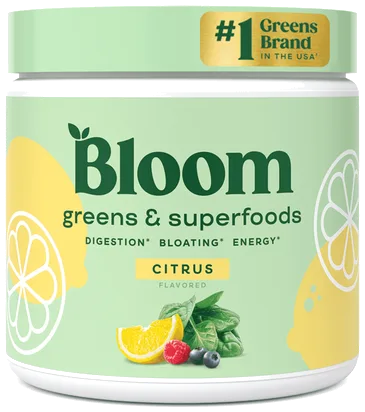
bloom nutrition , Greens & Superfoods, Citrus, (165 g) Review
Bloom Nutrition Greens & Superfoods in Citrus flavor is sold as a 5.82 oz (165 g) container on this Vitacost product page. The product is presented as a greens supplement and is labeled as a dietary supplement. The page highlights several claims at the top of the description. It describes the product as the #1 Greens Brand in the USA, with a footnote stating that this claim is based on SPINS annual sales data in the U.S. The listed benefit areas are digestion, bloating, and energy, and the bloating, energy, and digestion statements carry a footnote explaining that greens help aid digestion, relieve occasional bloating, and promote cellular energy. The label-style claims state that the product is dairy free, non GMO, gluten free, and manufactured in a cGMP facility. The brand's co-founder, Mari Llewellyn, is quoted with the message that the goal is to help customers bloom into their best selves. The page explains that Bloom Nutrition's Greens are made with more than 30 good-for-you ingredients, including fruits and vegetables, pre and probiotics, digestive enzymes, and more. The supplement facts panel lists a serving size of one scoop, which is 5.5 g, with 30 servings per container. Each serving provides 15 calories, 3 g of total carbohydrate, 2 g of dietary fiber, 3.6 mcg of vitamin B12 as methylcobalamin at 150% of the daily value, 0.5 mg of iron, and 8 mg of sodium. The label also lists proprietary blends. The fiber blend contains chicory root fructo-oligosaccharides, organic flaxseed, and apple fruit powder, totaling 1.606 g. The green superfood blend contains organic barley grass, spirulina, wheat grass, alfalfa leaf, and chlorella powders, totaling 1.367 g. The pre and probiotic blend contains blue agave inulin, Bacillus coagulans, Bifidobacterium bifidum, Lactobacillus rhamnosus, and Lactobacillus acidophilus, totaling 792 mg and providing 2.5 billion CFU. The fruit and vegetable blend includes carrot, beet root, kale, blueberry, spinach, broccoli, and ginger root extract, totaling 572 mg. The antioxidant beauty blend includes cranberry, strawberry, raspberry, tart cherry, elderberry, acai, goji berry, moringa, grape seed extract, and matcha green tea leaf, totaling 550 mg. The adaptogenic blend includes licorice root, rhodiola root, American ginseng root, ashwagandha root, astragalus root, and eleuthero root, totaling 100 mg. The digestive enzyme blend includes amylase, amyloglucosidase, protease, acid protease, cellulase, and lipase, totaling 25 mg. Daily values are based on a 2000 calorie diet, and the page notes that the daily value is not established for the blends. The suggested use is to add one scoop to 8 to 12 fl oz of water, juice, or another favorite beverage daily. The warnings advise storing the product in a cool, dry place, keeping it out of reach of children, and consulting a health care provider before taking any new supplement if the buyer has medical conditions, takes meds, is pregnant, or is lactating. The page also lists Prop 65 information. The page gives an expiration date of 02/01/2027 and a best by date of 04/01/2027. The UPC printed on the page is 051497173036. The listed price is $39.99, and the page indicates the product is sold with a maximum order of 12 per customer.
We don’t sell supplements. We help you make decisions and get the best price.
Lowest prices
We may earn a commission from some store links. How we choose.
Finding the lowest prices at the stores now. This takes a few seconds.
Products with nearly the same formula (Matched on the main ingredients)
Study, Trial or Testing Result Summary
Members Only81 human studies · 51 improved
The strongest support comes from the pre and probiotic blend. A large trial found a daily multi-strain probiotic and prebiotic mix eased bloating, gas, discomfort and constipation more than placebo [1], another trial in irritable bowel syndrome found 70% reported adequate relief [2], and a pooled review found probiotics beat placebo [3]. Results are not uniform: another review found prebiotic and probiotic combinations did not clearly help [4]. The exact strain amounts here are hidden in the blend. Spirulina helped bowel symptoms at 1 gram a day in one trial [5], but here it shares a 1.367 gram blend with four other greens, so it is likely below that dose. The fruit and vegetable blend was never tested itself; the ginger studies used different herbal mixes [6][7]. The digestive enzymes are a trace amount, far below the 400 milligrams that helped in a trial [8]. Vitamin B12 and iron at these small amounts have no shown digestive benefit [9][10]. Animal and cell studies are never counted.
See all 81 studies →Hide the studies
- Across 33 trials of 4,321 people with irritable bowel syndrome, probiotics (including synbiotic blends) improved overall symptoms more than placebo, while evidence for prebiotics alone was scarce.Efficacy and Safety of Probiotics, Prebiotics and Synbiotics in the Treatment of Irritable Bowel Syndrome: A systematic …
- In 22 trials with 1,995 colorectal cancer patients on chemotherapy, herbal medicines reduced overall digestive side effects, diarrhea and abdominal distension, but the benefit was not significant in double-blind studies.Efficacy of Herbal Medicines Intervention for Colorectal Cancer Patients With Chemotherapy-Induced Gastrointestinal Toxi…
- In 21 trials of 1,807 children with functional abdominal pain, probiotics improved pain outcomes versus placebo, but prebiotics and synbiotics showed no significant benefit.Comparative efficacy of probiotic, prebiotic, and synbiotic interventions in children with functional abdominal pain dis…
- In 9 trials of 826 adults with inflammatory bowel disease, probiotic or synbiotic users had more abdominal pain than placebo users, with a non-significant trend toward more side effects overall.Side Effects Associated with Probiotic Use in Adult Patients with Inflammatory Bowel Disease: A Systematic Review and Me…
- Across sixteen studies in people with chronic kidney disease, ferric citrate improved iron stores but raised the risk of diarrhoea, abdominal pain and discoloured stools.Ferric citrate in the management of hyperphosphataemia and iron deficiency anaemia: A meta-analysis in patients with chr…
- In a network analysis of randomized trials in adults with irritable bowel syndrome, probiotics improved symptoms versus placebo, but prebiotics and synbiotics did not show significant improvement.The Efficacy of Probiotics, Prebiotics, Synbiotics, and Fecal Microbiota Transplantation in Irritable Bowel Syndrome: A …
- In 24 trials with 1,390 children with functional abdominal pain, some probiotics (LGG and VSL#3) gave more responders than placebo, while fibre results were inconclusive and no prebiotic studies were found.Nonpharmacologic treatment of functional abdominal pain disorders: a systematic review.
- In 12 studies of 974 people with cancer, probiotics were linked to less abdominal pain, gas and bloating, and diarrhea, while prebiotics showed minimal benefit.The Use of Prebiotic and Probiotic Interventions for Treating Gastrointestinal and Psychosocial Health Symptoms in Cance…
- This review of 26 studies found people with irritable bowel syndrome tended to have lower iron levels, but it found too few supplement trials to show whether iron eases bowel symptoms.Association between irritable bowel syndrome and micronutrients: A systematic review.
- In eleven trials in children with iron-deficiency anaemia, groups given lactoferrin had significantly less constipation than iron-only groups, though vomiting, poor appetite and abdominal pain were also reported.Lactoferrin as treatment for iron-deficiency anemia in children: a systematic review.
- A review of controlled trials in lactose intolerance found varying effects but an overall positive link with probiotics depending on strain and amount, with only one prebiotic study.Effects of Prebiotic and Probiotic Supplementation on Lactase Deficiency and Lactose Intolerance: A Systematic Review of…
- In three winter trials of about 721 healthy adults, synbiotic blends improved bowel function, with less bloating and more regular motility than placebo, and also shortened respiratory infections.A new chance of preventing winter diseases by the administration of synbiotic formulations.
- In 350 adults with self-reported bloating or indigestion, a daily multi-species synbiotic taken for 6 weeks improved digestive quality of life, bloating, gas, abdominal discomfort and constipation more than placebo, with 72.3% reporting never or rarely bloating versus 55.9% on placebo.A Randomized, Placebo-Controlled Trial Evaluating Multi-Species Synbiotic Supplementation for Bloating, Gas, and Abdomin…
- In 202 adults with moderate to severe irritable bowel syndrome, a nine-strain synbiotic taken for 12 weeks improved symptom severity and overall symptoms more than placebo, and 70% of the synbiotic group reported adequate relief.Effectiveness of a Balanced Nine-Strain Synbiotic in Primary-Care Irritable Bowel Syndrome Patients-A Multi-Center, Rand…
- In 146 children aged 4 to 18 with functional constipation, 4 weeks of a synbiotic improved bowel movement frequency, abdominal pain and painful defecation, with complete benefit in 66.7% versus 28.3% on placebo.Investigation of the efficacy of synbiotics in the treatment of functional constipation in children: a randomized double…
- In 125 adults with irritable bowel syndrome and bloating or gas, an alpha-galactosidase enzyme taken with meals for 12 weeks showed only a trend toward lower symptom scores, no quality of life difference versus placebo, and more dropouts from pain and diarrhea.Does oral α-galactosidase relieve irritable bowel symptoms?
- In 120 anaemic adolescent girls given iron and folic acid for 3 months, weekly dosing caused fewer side effects than daily dosing (8.3% versus 13.35%), with abdominal pain the most common.Weekly iron folate supplementation in adolescent girls--an effective nutritional measure for the management of iron defi…
- In 120 adults with functional dyspepsia, 400 mg a day of a multi-enzyme blend for 2 months improved quality of life, pain and sleep scores compared with placebo, with no side effects.Efficacy of digestive enzyme supplementation in functional dyspepsia: A monocentric, randomized, double-blind, placebo-c…
- In a placebo-controlled trial of 115 children aged 6 to 18 with functional abdominal pain, a Bacillus coagulans and fructo-oligosaccharide synbiotic improved response at 4 weeks (60% vs 39.5%) but not at 12 weeks.Synbiotic containing Bacillus coagulans and fructo-oligosaccharides for functional abdominal pain in children.
- In 106 adults with functional bloating, 500 mg of a ginger, ajwain and black pepper blend three times a day for 2 weeks reduced how often and how severe bloating was compared with placebo and dimethicone, and the benefit lasted 8 weeks after stopping.The efficacy of a Persian herbal formulation on functional bloating: A double-blind randomized controlled trial.
- In 102 children aged 4 to 12 with functional constipation, a daily synbiotic sachet for 4 weeks added to standard liquid paraffin treatment produced more weekly bowel movements than paraffin alone, with no side effects from the synbiotic.Role of synbiotics in the treatment of childhood constipation: a double-blind randomized placebo controlled trial.
- In a placebo-controlled trial of 100 constipated women, 6 g daily of a synbiotic for 30 days increased bowel movement frequency, improved stool consistency and reduced constipation severity, without changing bloating or gas.Effect of synbiotic in constipated adult women - a randomized, double-blind, placebo-controlled study of clinical respon…
- In 100 children taking a 14-day Helicobacter pylori a med regimen, adding a Bifidobacterium synbiotic was linked to higher eradication (88% vs 72%) and significantly less diarrhea than triple therapy alone.Are Synbiotics added to the Standard Therapy to eradicate Helicobacter pylori in Children Beneficial? A Randomized Contr…
- In 90 healthy adults given 0 to 32 grams a day of a fat substitute for 8 weeks, vitamin B12 absorption was unaffected, and mild, temporary loose stools, urgency and gas were reported in all groups; this study did not test B12 as a treatment for digestion.Olestra dose response on fat-soluble and water-soluble nutrients in humans.
- In 88 children aged 4 to 13 with functional abdominal pain, one month of a Bacillus coagulans synbiotic reduced pain duration and frequency more than placebo, but pain severity did not change significantly.Comparison of the Effects of pH-Dependent Peppermint Oil and Synbiotic Lactol (Bacillus coagulans + Fructooligosaccharid…
- In a placebo-controlled trial of 80 adults with diarrhea-dominant irritable bowel syndrome, a multi-strain synbiotic over 8 weeks improved global symptoms and flatulence and stool pressure compared with placebo, with no difference in adverse events.The Effectiveness of Synbiotic Preparation Containing Lactobacillus and Bifidobacterium Probiotic Strains and Short Chai…
- In 76 adults taking a 14-day Helicobacter pylori a med regimen, adding a synbiotic raised the eradication rate compared with placebo and reduced anorexia as a side effect.The Effect of Probiotic Plus Prebiotic Supplementation on the Tolerance and Efficacy of Helicobacter Pylori Eradication …
- In a placebo-controlled trial of 67 children with functional abdominal pain, a synbiotic taken twice daily for 4 weeks produced a 53% response rate versus 11% with placebo, and reduced pain frequency, duration and intensity.Effect of a synbiotic on functional abdominal pain in childhood.
- In a placebo-controlled trial of 67 adults aged 60 and over with irritable bowel syndrome, a daily synbiotic for 4 weeks produced a 51.5% responder rate versus 23.5% with placebo, with better abdominal pain relief, though gas and bloating did not differ.Efficacy of a Synbiotic Containing Lactobacillus paracasei DKGF1 and Opuntia humifusa in Elderly Patients with Irritable…
- In a placebo-controlled trial of 64 adults with HIV, a synbiotic with 6 g fructooligosaccharides taken twice daily for six months did not reduce gastrointestinal symptoms more than placebo, though diarrhea decreased in both groups.Effectiveness of nutritional treatment and synbiotic use on gastrointestinal symptoms reduction in HIV-infected patients…
- In 60 adults with constipation-predominant irritable bowel syndrome, 1 g of spirulina daily for 12 weeks improved symptom severity, quality of life, antioxidant capacity, oxidative stress and a gut-leakiness marker more than placebo.Effects of Spirulina (Arthrospira) platensis supplementation on intestinal permeability, antioxidant and inflammatory ma…
- In 60 people with digestive symptoms after gastric bypass surgery, 2 weeks of digestive enzymes (or probiotics) improved gas, bloating, belching and pain scores, with no comparison to a placebo group.Effect of probiotics on postoperative quality of gastric bypass surgeries: a prospective randomized trial.
- In 52 children with gas-related symptoms, alpha-galactosidase for 2 weeks reduced overall distress, days with moderate to severe bloating and the share with flatulence versus placebo, with no side effects.Efficacy and tolerability of α-galactosidase in treating gas-related symptoms in children: a randomized, double-blind, p…
- In a placebo-controlled trial of 47 adults with irritable bowel syndrome, a combined synbiotic with fruit extracts over 2 months improved quality of life more than placebo, with the largest gain in dysphoria scores.Effects of a polyphenol-rich extract blend, probiotics, and hydrolyzed fiber on quality of life and gut health markers i…
- In 43 people with inflammatory bowel disease in remission and irritable bowel symptoms, a mix of beta-glucan, inositol and digestive enzymes for 4 weeks reduced abdominal pain, bloating and gas compared with standard treatment alone.Beta-glucan, inositol and digestive enzymes improve quality of life of patients with inflammatory bowel disease and irri…
- In 40 adults given one to three packets a day of a multi-ingredient hydration drink containing B12 for 4 weeks, the drink was well tolerated, with only mild changes in bloating and cramping over time and no meaningful adverse changes compared with placebo.Randomized Trial to Assess the Safety and Tolerability of Daily Intake of an Allulose Amino Acid-Based Hydration Beverag…
- In a small placebo-controlled pilot of 40 adults with functional diarrhea, a multi-strain synbiotic over 8 weeks increased formed stools and bowel movement satisfaction, while the placebo group did not improve.A Randomized, Double-Blind, Placebo-Controlled Trial to Evaluate the Effects of Multi-Strain Synbiotic in Patients with …
- In 40 people with irritable bowel syndrome, 8 weeks of a capsule combining three herb powders including ginger improved all bowel symptoms to a degree comparable to the standard drug mebeverine, with no side effects reported.Treatment of irritable bowel syndrome using a selected herbal combination of Iraqi folk medicines.
- In 37 people with type 2 diabetes taking a med, Beano with meals for 3 days lowered flatulence scores (0.79 vs 1.09) and breath hydrogen (31.2 vs 50.5 ppm) compared with a med alone, but may weaken the blood sugar lowering effect.Read the study on PubMed (9663365) →
- In a placebo-controlled trial of 36 healthy adults, a synbiotic taken daily for 6 weeks significantly improved self-reported digestive well-being and bowel habits compared with placebo.Beneficial effects of a synbiotic supplement on self-perceived gastrointestinal well-being and immunoinflammatory status…
- In 31 adults with irritable bowel syndrome eating high galacto-oligosaccharide meals for 3 days, a full dose of alpha-galactosidase enzyme (300 galactosidic units) cut overall symptoms and bloating compared with placebo among the 21 who were sensitive.Increasing Symptoms in Irritable Bowel Symptoms With Ingestion of Galacto-Oligosaccharides Are Mitigated by α-Galactosid…
- In a placebo-controlled trial of 30 people with kidney disease, 4 weeks of a synbiotic lowered blood p-cresol levels but did not change defecation, abdominal pain, stool shape, or gas symptoms compared with placebo.Effect of short-term synbiotic treatment on plasma p-cresol levels in patients with chronic renal failure: a randomized …
- In 30 adults with irritable bowel syndrome, 8 weeks of a high dose of synbiotic capsules improved abdominal discomfort, bloating, stool form and fatigue more than placebo.A Randomized Clinical Trial of Synbiotics in Irritable Bowel Syndrome: Dose-Dependent Effects on Gastrointestinal Sympto…
- In 30 lactose-intolerant adults drinking 400 ml of milk, lactase added to the milk (3000 or 6000 units) lowered breath hydrogen and symptom scores such as bloating, pain, gas and diarrhea compared with placebo.Effect of exogenous beta-galactosidase in patients with lactose malabsorption and intolerance: a crossover double-blind …
- In 24 lactose-intolerant adults given 50 g lactose, a single dose of chewable lactase lowered breath hydrogen and eased cramping, belching, gas, diarrhea and bloating compared with placebo.Effect of a single dose of lactase on symptoms and expired hydrogen after lactose challenge in lactose-intolerant subjec…
- In 24 lactose malabsorbers given 12.5 g lactose, acid lactase lowered peak hydrogen exhalation by about 29-33% and combined with yogurt culture by 46% versus placebo, and the higher dose and combination reduced gas and abdominal pain.A combination of acid lactase from Aspergillus oryzae and yogurt bacteria improves lactose digestion in lactose maldiges…
- In 20 people with irritable bowel syndrome eating high-oligosaccharide meals, 1200 GalU of alpha-galactosidase per meal was no better than placebo for gut symptoms or breath gas.A randomized double-blind placebo-controlled crossover pilot study: Acute effects of the enzyme α-galactosidase on gastr…
- In a small crossover trial of 19 people eating a high-fiber chili meal, eight drops of an alpha-galactosidase solution produced fewer gas episodes over 6 hours than placebo, though the difference was significant at only one time point.Does Beano prevent gas? A double-blind crossover study of oral alpha-galactosidase to treat dietary oligosaccharide into…
- In a crossover trial of 12 people with irritable bowel syndrome over about three months, lactase did not change gut symptoms compared with placebo.Lactase and placebo in the management of the irritable bowel syndrome: a double-blind, cross-over study.
- In a placebo-controlled trial of 10 lactose-intolerant adults, the three lactase products differed: only Lactaid lowered breath hydrogen, while Lactrase reduced pain and bloating and Dairy Ease reduced only pain.All lactase preparations are not the same: results of a prospective, randomized, placebo-controlled trial.
- In 8 healthy volunteers eating a bean meal, 1200 GalU of alpha-galactosidase reduced breath hydrogen and flatulence severity compared with placebo, and both 300 and 1200 GalU lowered total gas symptom scores.The effect of oral alpha-galactosidase on intestinal gas production and gas-related symptoms.
- In a small crossover trial of 8 lactose-intolerant adults, a lactase pellet capsule taken before 100 grams of lactose raised blood sugar and reduced cramping, belching, and gas compared with placebo.Treatment of lactose intolerance with exogenous beta-D-galactosidase in pellet form.
- In lactose-intolerant people given 20 g of lactose in milk, lactase products of about 6000 IU greatly reduced breath hydrogen and symptoms, but at 50 g of lactose the lactase had little significant effect.Comparative effects of exogenous lactase (beta-galactosidase) preparations on in vivo lactose digestion.
- In 90 people with irritable bowel syndrome, a mix of beta-glucan, inositol and digestive enzymes improved bloating, gas and abdominal pain compared with no treatment, with slightly more urgency to have a bowel movement.Effect of beta-glucan, inositol and digestive enzymes in GI symptoms of patients with IBS.
- In a randomized trial of 71 children aged 4 to 16 with irritable bowel syndrome, twice-daily synbiotic (Bifidobacterium lactis B94 with 900 mg inulin) for 4 weeks improved bloating and constipation, and 39.1% of the synbiotic group fully recovered versus 12.5% of the inulin-only group.Efficacy of synbiotic, probiotic, and prebiotic treatments for irritable bowel syndrome in children: A randomized contro…
- In 60 people with mild-to-moderate irritable bowel syndrome, a herbal mixture of boswellia, ginger and yarrow lowered abdominal pain, bloating, anxiety and depression scores over up to 3 months, while the control group showed no significant changes.Evaluating the efficacy of mixture of Boswellia carterii, Zingiber officinale, and Achillea millefolium on severity of s…
- In 31 volunteers (15 lactose intolerant), 1 liter a day of lactase-treated milk for 1 month was well accepted and caused few symptoms, while regular milk caused severe symptoms only in the intolerant people.Long-term acceptance of low-lactose milk.
- In 18 lactose-intolerant children, taking lactase tablets with a lactose drink cut breath hydrogen sharply and reduced symptoms such as abdominal pain, bloating, diarrhea and gas compared with placebo tablets.Beta-galactosidase tablets in the treatment of lactose intolerance in pediatrics.
- In 9 children with lactose malabsorption, lactose-hydrolyzed milk caused fewer abdominal pain, gas and bowel symptoms than regular milk, and calcium absorption was higher than on a lactose-free diet with extra calcium.Calcium absorption and acceptance of low-lactose milk among children with primary lactase deficiency.
- In a placebo-controlled crossover study of healthy adults, 8 g of xylo-oligosaccharides daily for 21 days increased bowel movements per day but did not change bloating, abdominal pain or gas compared with maltodextrin.Xylo-oligosaccharides alone or in synbiotic combination with Bifidobacterium animalis subsp. lactis induce bifidogenesis…
- In a placebo-controlled pilot trial of people with advanced kidney disease, two months of a synbiotic lowered a blood toxin, reduced gut permeability and eased abdominal pain and constipation in the kidney disease group only.An Innovative Synbiotic Formulation Decreases Free Serum Indoxyl Sulfate, Small Intestine Permeability and Ameliorates G…
- In lactase-deficient adults, 18 g of lactose eaten as yogurt produced about one third the breath hydrogen of the same lactose in milk or water, and fewer reports of diarrhea and gas.Yogurt--an autodigesting source of lactose.
- In an open-label study of 120 adults with irritable bowel syndrome, personalized prebiotic and probiotic supplements for 4 weeks significantly lowered symptom severity scores in diarrhea-type and constipation-type patients, with no serious side effects linked to the supplements; there was no placebo group.Effect of Personalized Prebiotic and Probiotic Supplements on the Symptoms of Irritable Bowel Syndrome: An Open-Label, S…
- In a single-arm pilot of 50 elderly adults with chronic constipation, a probiotic-prebiotic combination for 28 days increased complete bowel movements in 64% of patients, with no adverse events and no placebo group.Efficacy of a probiotic-prebiotic mix on chronic constipation symptoms in the elderly: results of a pilot study.
- In an open-label study of 50 people with functional dyspepsia, 1080 mg daily of ginger for 8 weeks was well tolerated, with mild side effects such as bloating and heartburn; this study measured safety, not whether symptoms improved.Evaluation of Adverse Effects and Tolerability of Dietary Ginger Supplementation in Patients With Functional Dyspepsia.
- In an open-label pilot of 31 people with irritable bowel syndrome, two herbal formulas improved bloating, gas, and abdominal pain; the constipation-predominant formula also improved bowel habits, while the diarrhea-predominant formula did not.Effects of two natural medicine formulations on irritable bowel syndrome symptoms: a pilot study.
- In 30 people with Parkinson's disease and constipation, 12 weeks of a synbiotic improved bowel movements, stool consistency, and non-motor symptoms in an uncontrolled open-label study.Synbiotic supplementation may globally improve non-motor symptoms in patients with stable Parkinson's disease: results f…
- In an open-label pilot of 30 children with autism, a synbiotic taken for 12 weeks was safe and was followed by improvements in anxiety, sensory sensitivity and abdominal pain, though without a control group.A novel synbiotic (SCM06) for anxiety and sensory hyperresponsiveness in children with autism spectrum disorder: an open…
- In a single-arm pilot of 29 infants with cow's milk allergy over 31 days, a synbiotic formula reduced abdominal pain, burping and flatulence, and improved growth and caregiver quality of life.Synbiotic containing extensively hydrolyzed formula improves gastrointestinal and atopic symptom severity, growth, careg…
- In an open-label study of 18 children under seven with cystic fibrosis, a new pancrelipase capsule for 10 to 14 days was as safe and well tolerated as standard enzyme therapy, with similar stool fat and symptoms.Safety and tolerability of a new formulation of pancrelipase delayed-release capsules (CREON) in children under seven ye…
- In 17 people with irritable bowel syndrome who completed three dietary guidance sessions, symptoms fell and quality of life improved over 3 to 9 months, and vitamin B12 intake rose from food, though the study did not test a vitamin B12 supplement.Effects of dietary guidance on the symptoms, quality of life and habitual dietary intake of patients with irritable bowe…
- In 10 adults with diarrhea-predominant irritable bowel syndrome, 4 weeks of a synbiotic supplement lowered symptom severity scores, raised stool butyrate and acetate, and lowered a stool marker of gut barrier leakage, with no control group.Effects of an oral synbiotic on the gastrointestinal immune system and microbiota in patients with diarrhea-predominant …
- In 8 adults with diarrhea-predominant irritable bowel syndrome, 4 weeks of synbiotic yogurt shifted blood metabolites toward healthy levels, increased fecal lactobacilli, and improved health status.Metabolomics analysis revealed metabolic changes in patients with diarrhea-predominant irritable bowel syndrome and meta…
- In an observational program of 912 people with duodenal ulcer treated for H. pylori infection, adding a probiotic to standard a med therapy was reported alongside reduced stomach abdominal pain scores, though this study did not test the probiotic alone.[Efficacy and safety of H. pylori eradication therapy in real-world clinical practice: results of the «PAMIR» observatio…
- In a case-control study of 775 Lebanese adults, lower iron intake was linked to having food hypersensitivity, which often included stomach symptoms, but the study did not test iron supplements.Nutritional Profile, Lifestyle Characteristics, and Intestinal Inflammation in Lebanese Adults Suffering from Food Hyper…
- In a survey of 382 Romanian adults with anemia, 45% reported side effects from their treatment, mostly stomach symptoms such as nausea, heartburn and abdominal pain, and side effects were more common with intravenous than oral treatment.Impact of Side Effects on Anemia Therapy Compliance.
- In 155 people with irritable bowel syndrome, about 60% or more had low intake of vitamin B12 from food diaries, and symptom severity was linked to body weight but not to nutrient intake.Intake of fiber and micronutrients in patients with IBS.
- In 105 people with irritable bowel syndrome, lower iron intake and lower blood iron were linked to more gut symptoms, but this was an association and no iron supplement was tested.Poor intake of vitamins and minerals is associated with symptoms among patients with irritable bowel syndrome.
- In a cross-sectional follow-up of 92 people who had taken part in an IBS trial, those who continued a multi-strain synbiotic for six months had much lower IBS symptom severity than former placebo users who stopped.Results from a Cross-Sectional Observational Study Examining Irritable Bowel Syndrome Patients Six Months After Finishin…
- In 86 people studied 12 to 20 months after gastric bypass surgery, most took vitamin B12 supplements, but the study did not test whether this affected digestive side effects such as gas, which 67.4% reported.Nutritional status following One Anastomosis Gastric Bypass.
- In 53 people with irritable bowel syndrome, food diaries showed high vitamin B12 intake, and fiber intake was linked to fewer general symptoms, while vitamin B12 itself was not tied to symptoms.[Dietary intake of a group of patients with irritable bowel syndrome; relation between dietary fiber and symptoms].
Review Totals and Summary
Members Only20,578 reviews · 81% positive
Across the two stores this powder shows 76 ratings in total (15 on Vitacost and 61 on iHerb), and the themes below come from the written reviews that could be read on their pages, which amount to about five on Vitacost and a similar handful on iHerb. The Vitacost reviews were originally posted on iHerb and shown through a review widget. Only reviews of the powder are covered here, and no reviews of other forms were used. The most common praise is for digestive and bloating benefits. One buyer says it helped with debloating, another saw great benefits for a bloating problem, and an iHerb reviewer says it made a large difference to bloating and calls it a favourite superfood. Another iHerb reviewer noticed an improvement in their gut environment after daily use and was on a second order. A reviewer in their 30s says it improved their skin and suits their diet, and describes it as rich in antioxidants. Antioxidants and the general nutritional value of adding greens to a daily diet are mentioned by iHerb reviewers too. Quality and ingredients also draw approval. Reviewers call it a high quality superfood with good ingredients, a trusted brand, and a suitable dose. One calls it the best choice for maintaining health. Good packaging is mentioned as well. A repeat buyer who has tried many greens brands says Bloom tastes great, delivers what is advertised, and is worth buying again. Ease of use is another positive. Several people call it an easy superfood that mixes easily. One iHerb reviewer mixes it into yogurt, finding the flavour pleasant with a faint citrus note and a vegetable undertone. Another drank it mixed into prune juice. Taste is the most divided topic. Some reviewers say it tastes really good and call it a love-it product. Others are lukewarm: one says the taste was not as enjoyable as expected but was still drinkable in prune juice, and another simply calls it acceptable. The harshest comment says they did not understand the hype, found the flavour too sweet in an unpleasant way, and gave a below-average rating, also doubting the marketing claims. Value draws a little criticism. One iHerb buyer says paying full retail price seems expensive, although they were impressed by iHerb's delivery speed. Overall, the product seems to suit people who want a simple daily greens powder for digestion, bloating, skin or general nutrition and who value a trusted brand with sound ingredients. It may suit less well anyone sensitive to sweetness, anyone expecting an enjoyable flavour on its own, or anyone who is price-conscious. Mixing it into yogurt or juice is how reviewers made the taste work. The balance of the written comments is positive, with the main reservations being sweetness, an ordinary taste for some, and price.
Biohacker Summary
Members Only10 of 10 recommend it
The panel has no statements about a main ingredient in this greens powder, so the discussion centers on two smaller ingredients, iron and vitamin B12, and iron drew far more comment. Iron got a mixed but mostly supportive response: about half the panel recommend making sure levels are adequate, citing thyroid function, brain health, muscle and recovery, and for women of reproductive age who are low, while one person takes 10 milligrams of heme iron and another noticed less soreness after starting a supplement. Several urge caution, saying iron should not be taken aggressively without testing, that excess may drive inflammation and cell aging, and that one person does not recommend iron supplements at all, preferring red meat or liver; one panelist stopped after years of trying every form without raising his levels. Vitamin B12 is a smaller ingredient in this product, and those who spoke on it mostly advise testing and supplementing only if low, with one preferring a liposomal methylcobalamin form and another warning not to take it too close to bedtime.
See all 10 biohackers →Hide the biohackers
Dr. Eric Berg · Vitamin B12 · neutral
- Mentions that one can of sardines provides 348% of the daily Vitamin B12.
- Dr. Berg states that when nutrients like vitamin B12 are too low, fatigue and weakness can follow.
- Warns against iron supplements, suggesting instead to get iron from red meat or liver.
- Dr. Berg states that when nutrients like iron are too low, fatigue and weakness can follow.
- Does not recommend taking iron supplements or cooking in iron skillets because the body has no mechanism of getting rid of iron unless one donates blood or is a menstruating female.
- Identifies iron as the Achilles' heel of cancer, as it is needed for its DNA to replicate.
- Mentions that grass-fed liver has heme iron, the most bioavailable form of iron that prevents anemia.
- Dr. Berg warns that too much iron can be damaging to the body and advises focusing on food sources to avoid overconsumption.
- Recommends taking the natural form of vitamin B12, methylcobalamin, to support nerve regeneration, myelin production, and nerve growth factors.
- Notes that Vitamin B12 is intimately involved in the nervous system and may be behind sciatica and carpal tunnel syndrome.
- Warns that too much iron, especially the ferrous sulfate or fumarate type found in many supplements, is corrosive and oxidizing, can mess with the liver, and create inflammation, noting that males have no natural way to excrete excess iron.
- Notes that tannins in tea bind iron, blocking its absorption.
- Recommends taking vitamin B12 if on a med.
- Briefly mentions Vitamin B12 in relation to neuropathy.
Thomas DeLauer · Iron · recommends
- Recommends giving any iron intervention a couple of months before deciding if it works, and suggests increasing heme iron through red meat or liver intake.
- Recommends Vitamin B12 for mental health and mood, explaining its role in myelination and neurotransmitter production. They specifically recommend a liposomal and micellar form of methylcobalamin B12 for better absorption and to avoid toxicity.
- Compares iron content in spinach (2.7mg) and beef (2.6mg), but emphasizes that beef's heme iron absorbs at about 25%, while spinach's non-heme iron absorbs at 2-8%.
- Recommends iron from meat, specifically red meat and beef liver, stating that it is a crucial part of the mechanistic triad for thyroid hormone function and is iron-dependent for iodine incorporation into thyroid hormone.
- Mentions that a single serving of sardines provides vitamin B12 at something like three to four times the daily needs.
- Recommends taking methylcobalamin as a methylated form of B vitamin for mitochondrial function.
- Notes that iron is essential for delivering oxygen to muscles and the brain, making it an important cofactor for signals to reach their targets.
- Recommends assessing iron along with selenium and iodine for optimal thyroid function, suggesting red meat as a source of iron.
- Recommends getting heme iron from real food sources like organ meats, red meats, or pumpkin seeds, and warns against iron supplements due to potential oxidation and issues with copper levels.
- Warns against overdoing iron supplementation unless truly needed, especially if ferritin levels are high, as ferroptosis is iron-dependent and excess iron can increase ferroptotic risk.
- Recommends good quality heme iron from food sources like liver and beef for preventing insulin resistance and type 2 diabetes, supporting glucose control, and energy regulation, but warns against iron supplements.
- States that iron status is critical for white matter development and maintenance, noting that anemic individuals tend to have a loss of white matter structure, which is common in women during perimenopausal transition.
- Advises against taking vitamin B12 if one's diet already provides enough, suggesting a B complex or liver capsule instead for B vitamins.
- Warns that polyphenols in coffee can bind to iron, making it useless. He recommends taking iron supplements upon waking on an empty stomach, potentially with vitamin C, and waiting 30-60 minutes before consuming coffee or tea.
Dr. Mark Hyman · Iron · neutral
- States that iron helps red blood cells carry oxygen, and a deficiency can make one feel like they are running on low power mode.
- Mentions iron as an existing biomarker that plays a role in mental health, which Function Health includes in their measurements.
- Notes that a woman patient had very low iron.
- States that they get the whole picture when it comes to iron, looking at ferritin, iron reserves, iron in the blood, iron saturation, and iron binding capacity to spot problems before full-blown anemia.
- States that vitamin B12 is a nutritional deficiency that impacts mental health.
- Recommends vitamin B12 with vitamin B6 and folate as supplements with strong evidence for PMS.
- Mentions iron as an example of a common nutritional deficiency.
- Notes that many Americans are deficient in iron, which affects mood and brain function.
- Mentions that repletion of vitamin B12 can help safely withdraw someone from meds and that simple vitamin B12 deficiencies are important to address in a depression workup.
- Recommends testing Iron as a biomarker before training for fitness.
- States that low iron, specifically a ferritin level less than 45, is a big hidden cause of insomnia, affecting up to half the population.
- Lists Vitamin B12 as important for nerve health and energy.
- Mentions that they check iron levels as part of evaluating mental illness biomarkers.
- Recommends carefully looking at iron, thyroid, and cortisol levels as they all play a role in affecting cognitive function and mental health.
Siim Land · Iron · neutral
- Mentions that iron is a mineral necessary for making collagen.
- States that excess iron promotes oxidative stress and inflammation, which increases heart disease risk.
- Created Microvitamin, a supplement that bundled all the supplements he was taking, to help fund his a med trial.
- Notes that iron deficiency is found in children with premature graying of hair and that some people get gray hair due to iron deficiency.
- States that vitamin B12 deficiency is the most common reason for premature graying of hair and recommends fixing B12 status if it is deficient, as it gives a greater likelihood of reversing gray hair.
- Recommends ensuring sufficient iron intake, especially during pregnancy and early life, to prevent mental developmental and cognitive issues.
- States his iron level is 103 micrograms per deciliter, which he considers a good result, and advises that men should aim for lower iron levels to reduce the risk of heart disease and aging.
- Places iron in the 'junk tier', warning that high iron levels are associated with heart disease, mortality, and liver disease, and advises caution with supplementation, especially for men with high iron.
- Warns that high iron levels are associated with increased risk of mortality and reduced lifespan, and that iron in excess is bad for maximum longevity. He states that iron levels slightly on the lower end, around 60 to 90 micrograms per deciliter, are associated with the lowest mortality risk, and that iron below 45 and above 145 micrograms per deciliter is associated with increased risk of mortality.
- Warns that very high iron levels can cause damage to the endothelium and increase the risk of heart disease, especially in men who accumulate iron more easily.
- Warns that too much iron can damage blood vessels, though people with low iron status are safe.
- Theorizes that Brian's lower iron status and hemoglobin status, possibly due to his plant-based diet and lack of iron supplementation, limits his V2 max.
- Takes 1 gram of Vitamin B12 from DoNotAge in the morning for longevity.
- Mentions Vitamin B12 as a key nutrient involved in the methylation cycle that helps prevent methionine from raising homocysteine levels.
Andrew Huberman · Iron · recommends
- States that Iron is one of the critical nutrients with the best evidence for cognitive function and reducing the risk of dementia.
- States that a deficiency in vitamin B12 can be terrible and lead to chronic fatigue-like syndromes, as many parts of mitochondria require B vitamins.
- Warns that excess iron will increase the number of senescent cells in the body, which accumulate as people get older and cause inflammation and cancer. He notes that people who are healthy and have a fairly vegetarian diet often have slightly low iron levels but super amounts of energy.
- Notes that about 50% of the population is iron deficient.
- Mentions that the podcast will review the role of iron in treating depression.
- States that B12, folate, and iron are essential to mitochondrial function and if deficient, mitochondria will not function properly, which is consistent with the mitochondrial theory of neuropsychiatric disorders.
- Recommends taking methyl B12 as part of methylated B vitamins to lower homocysteine levels and reduce cardiovascular risk.
- Has been taking AG1 for over 10 years, once and often twice every day, to ensure he gets all necessary vitamins, minerals, probiotics, and adaptogens, considering it a nutritional insurance policy.
- Advises women concerned with low ferritin to take an iron supplement every other day for 10 days, starting on the first day of their bleed, to maximize absorption.
- Has been taking AG1 since 2012 to ensure he gets enough vitamins, minerals, Prebiotic fiber, and other nutrients typically found in fruits and vegetables, providing nutritional insurance.
- Andrew Huberman started drinking AG1 in 2012 and still drinks it once or twice a day because it provides all his foundational nutritional needs, ensuring proper amounts of vitamins, minerals, probiotics, and fiber for optimal mental health, physical health, and performance.
- Discusses the role of iron in hair growth.
- Recommends the consumption of B12 and other B vitamins, especially folate, as it has been shown to partially decrease cancer risk in people who ingest alcohol, though it does not completely offset it.
- Started taking AG1 in 2012 and still takes it once or twice a day because it covers foundational vitamin, mineral, and probiotic needs, and supports immune system function and a healthy gut microbiome.
Ben Greenfield · Iron · recommends
- Recommends testing for and replenishing iron if levels are low, as it can affect the ability to maintain or preserve muscle, especially for those on GLP-1s.
- Recommends getting vitamin B12 tested and supplementing if deficient, as B12 deficiency can cause damage to the myelin coating around nerves, including cochlear nerves, and improve tinnitus severity scores.
- Notes that one can eat iron-rich foods or supplement with iron, but still feel exhausted if iron is not the missing piece, emphasizing that focusing on a single mineral in isolation can support a number on a lab test rather than the system itself.
- Mentions iron as a common deficiency.
- Recommends a nutritious diet including iron, as it is critical for brain development.
- Notes that the guidelines mention iron supplementation for infancy and early childhood.
- Started thinking about getting more heme-based iron in his diet after a podcast about reasons people feel fatigue.
- Warns that modern society has flipped the narrative on iron intake, leading people to consume excessive amounts (20-50 mg) through an iron-fortified diet, which the body cannot assimilate, leading to storage in tissues and disrupting iron physiology, contributing to aging.
- Notes that some people need to supplement with iron, recommending iron biscinate as a form that doesn't irritate the gut.
- Explains that 10X can pinpoint genetic variations that predispose some people to absorbing too much iron and will adjust the iron content in their supplement, potentially reducing or removing it entirely.
- Covers iron as a key supplement for kids.
- He recommends Vitamin B12, especially for kids on a vegan or vegetarian diet, as it is essential for nervous system development.
- Mentions that blood testing for an energy crisis would include nutritional things like a vitamin B12 level.
- Ben Greenfield consumes vitamin B12 as part of the Update Energy Drink.
Bryan Johnson · Iron · stopped
- Has had low iron for 11 years and despite eating meat and trying all forms of iron supplementation at different times and sequences, none of it worked to raise his iron or ferritin levels.
- Had low iron for 11 years, with ferritin averaging 38 ng/mL, and has finally boosted it back to healthy levels.
- States that Blueprint essential capsules and soft gels are packed with key vitamins and minerals needed for strong bone health.
- Takes 10 milligrams of heme iron to get his iron levels up, as they are borderline.
- Recommends adequate Iron for hair health, noting it is in the Blueprint stack.
- Recommends supplementing with iron for brain health for both the mother and the baby during pregnancy.
Dave Asprey · Vitamin B12 · recommends
- States that Vitamin B12 is extremely important for every kind of brain function and recommends ensuring B12 levels are optimal, around 500, not just barely above normal.
- Warns that if a doctor diagnoses anemia, one should not assume they just need more iron, as low hemoglobin doesn't always mean low iron and the issue can sometimes be how well the body is using iron.
- Notes that when energy intake is too low for training demand, nutrient intake often falls short, especially for iron, which is associated with impaired recovery.
- Recommends ensuring iron levels are good as it is a cofactor that can help thyroid function, especially with conversion issues.
- Recommends taking vitamin B12 if one has a deficiency.
- Egg yolks, particularly raw egg yolks, fatty cuts of meat, choline sources like that, making sure there's enough iron and a lot of the micro minerals, trace minerals, things like that. Those would be really important for bone marrow because mineral deficiencies are going to block that at the start.
- Warns that both too much and not enough iron can trash the body, highlighting the complex interactions between iron and copper.
- States that iron really helps in maintaining hair growth.
- States that many vegans don't get enough iron, which slows metabolism and makes it harder to build muscle.
- Warns that low iron in women leading up to and through the first 30 weeks of pregnancy can result in the baby having a lower IQ and being more likely to have ADHD and demyelination issues.
- Advises taking iron and calcium separately because they will bind together.
- Advises getting iron levels up through diet and supplementation, and to take iron and calcium separately because they will bind together.
- Dave Asprey notes that it's almost impossible to get vitamin B12 in a vegan diet, and it's primarily found in animal meat.
- Clarifies that Vitamin B12 is completely different from Vitamin B3 and is involved in different pathways, so there is no overlap with NAD pathways.
Dr. Rhonda Patrick · Iron · uses
- Recently found out he needed to get on an iron supplement and noticed he gets less sore in his training after taking it.
- Advises that menstruating women should ensure they are getting enough iron.
- Warns that Vitamin B12 enhances light's melatonin-suppressing effects and should be avoided too close to bedtime.
- Warns that iron is not an innocuous supplement and should not be taken aggressively without proper testing, as it can be complicated and has significant downsides if levels are not understood.
- Dr. Patrick explains that breast milk is incredibly low in iron, and by six months, infants can develop iron deficiency anemia, so pediatricians recommend introducing iron-rich complementary foods at that time.
- Rhonda discusses Dr. Lithgow's work on how excess dietary iron affects protein homeostasis in worms, noting that increased iron levels in the diet accelerated aging and the accumulation of insoluble proteins.
- Notes that a med can cause vitamin B12 deficiency, especially as absorption decreases with age, and suggests a sublingual form or B12 injections for older individuals.
- Discusses the origin of Vitamin B12, suggesting it's a microorganism that propagates in the soil and that animals get it from eating dirt, which is why it's less available in modern, sanitized plant foods.
- Describes a study where female mice fed a diet high in B vitamins, folic acid, and vitamin B12 three weeks before pregnancy had offspring that no longer had yellow fur and were not predisposed to obesity and cancer.
- Dr. Patrick takes some iron during menstruation.
- Increased iron levels in the brain worsen cognitive test performance by as much as 10% in older adults, a phenomenon linked to brain atrophy and decline in memory and attention.
- Iron plays a central role in health across the lifespan. It forms the core of hemoglobin, the molecule in red blood cells...
- The requirement for iron is 1.8 times higher for vegetarians.
- The findings highlight the importance of proper nutrition during development and suggest that iron supplementation may be beneficial, especially during adolescence.
Peter Attia · Iron · recommends
- Recommends iron supplements for women of reproductive age who are iron deficient.
- Notes that deficiencies in certain vitamins and minerals, such as iron, can be a cause of hair loss in women.
- Notes that deficiencies in certain vitamins and minerals, such as B12, can be a cause of hair loss in women.
- Delves into the crucial yet often overlooked topic of iron and iron deficiency.
- Explains that humans consume about 10 to 20 milligrams of iron per day, absorbing roughly 10% of that, which is 1 to 2 milligrams per day, perfectly offsetting the 1 to 2 milligrams lost daily.
- Peter emphasizes the importance of consuming an adequate amount of iron daily to prevent deficiency.
- Speculates that lower iron levels in women due to their menstrual cycle may offer a protective benefit against heart disease, citing data that metabolically deranged men benefit from therapeutic phlebotomy.
- Explains that when a person is not responding to traditional B vitamins, they will step it up and give them methylcobalamin B12.
- Notes that Ryan Lochte was suspended for a doping rule violation after a social media post showed him taking vitamin B12 in an illegal way, by IV infusion.
RAL Summary
Members OnlyTier 3 for Digestion and Bloating
The tier rests on the Fruit and Vegetable Blend, but its studies tested other herbal mixes (ginger with ajwain and black pepper, or with boswellia and yarrow), not this carrot, beet, kale and berry blend, where ginger is only a small hidden part. So it is graded Tier 3, lower than the rules alone gave.
Take 3 servings a day (3 scoops) to match the dose that worked in the studies.
Where the evidence disagrees: 17 of the 81 human studies found no effect.
More Details
Members OnlyBody systems · Combine with · Possible side effects
Body systems: Digestive system
Combine with: For blood sugar support, stack this with berberine (500 mg, 2-3 times daily with meals), chromium picolinate or polynicotinate (200-600 mcg), Ceylon cinnamon extract, and alpha-lipoic acid (300-600 mg). Magnesium glycinate or citrate helps insulin sensitivity, and soluble fiber such as psyllium or glucomannan blunts post-meal glucose spikes. Omega-3 fish oil and CoQ10 add cardiovascular support. Continue the greens powder for micronutrient, fiber, and gut-health benefits. Consult a healthcare provider before combining with meds, since berberine and similar agents can add to glucose-lowering effects.
Possible side effects: Probiotic products caused more stomach pain in people with inflammatory bowel disease, and ginger caused mild bloating or heartburn in some; reviewers mainly complained of overly sweet taste.
Supplement Facts
Vitamin B12 3.6 mcg · Iron 0.5 mg · Fiber Blend 1.606 g
| Calories | 15 | |
| Total Carbohydrate | 3 g | |
| Dietary Fiber | 2 g | |
| Vitamin B12 | 3.6 mcg | |
| Iron | 0.5 mg | |
| Sodium | 8 mg | |
| Fiber Blend | 1.606 g | † |
| Green Superfood Blend | 1.367 g | † |
| Pre and Probiotic Blend | 792 mg | † |
| Fruit and Vegetable Blend | 572 mg | † |
| Antioxidant Beauty Blend | 550 mg | † |
| Adaptogenic Blend | 100 mg | † |
| Digestive Enzyme Blend | 25 mg | † |
Other ingredients: Citric Acid, Natural Flavor, and Stevia Leaf Extract (Reb A).
Directions: Just add one scoop to 8-12 fl oz of water, juice, or your favorite beverage daily - it's that easy.
Barcode (UPC) 051497173036 · Label source: Reverseagelab · Report a label change
Show entire label

More digestion and bloating products
Members OnlyThe highest ranked for the same goal
Read more
Our articles on this subject
- How to Improve Gut Health Naturally: Fiber, Foods and the Probiotic Strains With Human TrialsArticle · Sep 15, 2026
- Best Probiotic for Bloating: The Strains With Human Trials, and How to Choose OneArticle · Oct 27, 2026
Graded November 10, 2026 by the Reverse Age Lab evidence engine, from human studies, real reviews and our biohacker panel. How we grade. Is this medical advice? No. Rala organizes the published evidence; go over any change with your doctor, especially if you take meds.
Privacy policyConsumer health dataAffiliate disclosureTermsDo Not Sell or Share My Personal InformationCookie settings