
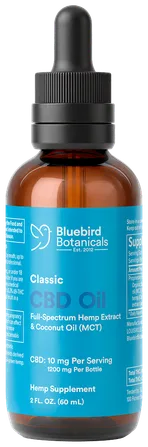
Bluebird Botanicals Clarify CBC 5 mg + CBD Oil 10 mg Review
Bluebird Botanicals Clarify CBC + CBD Oil is a full-spectrum hemp extract tincture. It pairs cannabichromene (CBC) with cannabidiol (CBD) in a 1:2 ratio. The ratio comes from the batch listings and retailer pages, where the 1 fl oz bottle is listed at 300 mg CBC and 600 mg CBD. The 10 ml bottle is listed at 100 mg CBC and 200 mg CBD. The serving in your query is a 5 mg CBC and 10 mg CBD dose, which I take to be one 0.5 ml dropper-style serving of that formula. I did not find a page that states this serving size explicitly. Retailer reviews describe the oil as having no artificial ingredients or additives. Bluebird markets it for focus and clarity, and it appears in the company's "Focus & Clarity" collection. Bluebird publishes third-party batch results (COAs) for each Clarify lot. The company says its testing covers cannabinoid potency, pesticides, heavy metals and residual solvents. CBC is one of the four major cannabinoids, alongside CBD, THC and CBG. It is non-intoxicating, and it comes from the same biosynthetic pathway as the others, starting from CBGA. CBC and CBD act on the body in different ways, so the two are combined. - **CBC and TRP channels.** CBC acts on transient receptor potential channels. A 2025 review and other pharmacology papers describe it as an activator and desensitizer of TRPA1, a sensory channel involved in nociception and inflammation. This desensitization is a mechanism shared with capsaicin at TRPV1. CBC also activates TRPV1 and TRPV2 at lower concentrations than CBD or CBG do. - **CBC and CB2.** Recent work shows that (−)-CBC is a CB2 receptor agonist, while (+)-CBC is not. CB2 is linked to immune and inflammatory signaling. CBC does not meaningfully engage CB1, which is why it does not cause a "high." - **CBC and the brain.** Preclinical studies report that CBC promotes the viability of neural progenitor cells and adult hippocampal neurogenesis. It has also shown anti-inflammatory, analgesic and a med-like effects in rodents. Human evidence is still lacking. - **CBD.** CBD does not bind strongly to CB1 or CB2. It modulates serotonin 5-HT1A signaling and TRP channels, and it slows the breakdown of anandamide, the body's own endocannabinoid. It is generally linked to calming effects. - **The "entourage" idea.** Full-spectrum extracts contain minor cannabinoids and plant compounds. These may act together, and a patent filing describes CBC and CBD acting synergistically at TRPA1. This is a hypothesis, not a proven benefit for this product. Taken together, the formula is meant to give a gentle daily effect on mood, focus and comfort. It is a dietary supplement, not a drug. It has not been evaluated by the FDA for treating any condition. A full-spectrum product contains trace THC, which could matter for drug testing. People who are pregnant, take medication (CBD can interact with drugs processed by CYP450 liver enzymes) or have liver conditions should talk to a clinician first.
We don’t sell supplements. We help you make decisions and get the best price.
Lowest prices
We may earn a commission from some store links. How we choose.
Finding the lowest prices at the stores now. This takes a few seconds.
Study, Trial or Testing Result Summary
Members Only66 human studies · 24 improved
No human study has tested cannabichromene by itself for stress or calmness. The studies found used whole cannabis extracts that were not measured for this ingredient. A cannabidiol-rich extract eased anxiety in children with autism [1]. A cannabis oil improved anxiety scores in a small study without a comparison group [2]. A review in children with cancer found no clear benefit from cannabis [3]. None of these results can be credited to cannabichromene. Cannabidiol has more research, but this product gives only 10 mg, well below the studied doses. Pooled studies linked cannabidiol to less anxiety in people with anxiety disorders [4], and a 15-week trial of a cannabidiol drink lowered anxiety more than placebo [5]. Single doses of 300 to 600 mg calmed people during public speaking tests [6][7] and calmed runners [8]. Results are not consistent. A 12-week trial of 20 to 30 mg a day, a dose closer to this product's, found no change in anxiety compared with placebo [9]. Overall, the evidence that this low-dose product promotes calm is thin. Animal and cell studies are never counted.
See all 66 studies →Hide the studies
- Across 152 trials with 12,123 people, cannabidiol clearly helped epilepsy and Parkinsonism, but the review did not report a clear calming or stress benefit for cannabidiol.Medical cannabinoids: a pharmacology-based systematic review and meta-analysis for all relevant medical indications.
- In 40 trials with 3,067 people, THC with or without cannabidiol slightly eased anxiety in people with other medical conditions (very low quality evidence), but few trials tested cannabidiol alone and evidence for mental disorders was scarce.Cannabinoids for the treatment of mental disorders and symptoms of mental disorders: a systematic review and meta-analys…
- In 14 studies with 1,823 adults with cancer pain, cannabis-based medicines including cannabidiol oil did not relieve pain meaningfully, and the review did not report on stress or calmness for cannabidiol.Cannabis-based medicines and medical cannabis for adults with cancer pain.
- Pooling eight studies with 316 people with anxiety disorders, cannabidiol was linked to a large reduction in anxiety, though the small sample means the result should be read with caution.Therapeutic potential of cannabidiol (CBD) in anxiety disorders: A systematic review and meta-analysis.
- Six case reports and seven trials with 201 people found weak evidence that cannabidiol may ease social anxiety, with mostly mild side effects like sedation and dizziness.Is there a role for cannabidiol in psychiatry?
- A review of five small non-randomized studies in children with cancer receiving palliative care found massage and Reiki helped pain-anxiety-worry-breathlessness symptoms, but the one cannabis study did not show a significant benefit.Effectiveness of complementary therapies for the management of symptom clusters in palliative care in pediatric oncology…
- A review of 35 studies across 13 conditions found 23 reported significant improvement in main outcomes, including anxiety, at doses under 1 to 50 mg per kg daily, but no benefit appeared in small trials of several other conditions that used low doses.A systematic review of cannabidiol dosing in clinical populations.
- A review of 27 randomized trials found limited evidence on cannabidiol for psychiatric disorders, with possible benefits for anxiety, psychosis and substance use, and a need for larger trials.Cannabidiol (CBD) use in psychiatric disorders: A systematic review.
- A review of eight small studies (six randomized trials) found oral or sublingual cannabidiol at 6 to 400 mg per dose improved anxiety scores in healthy volunteers and in people with anxiety disorders, and was well tolerated, with fatigue and sedation the most common side effects.Use of cannabidiol in anxiety and anxiety-related disorders.
- This review found tentative support for cannabidiol reducing social anxiety, but evidence for psychiatric use overall is early and too limited to recommend.Medicinal cannabis for psychiatric disorders: a clinically-focused systematic review.
- Nine studies in people with autism found cannabis products reduced symptoms including anxiety and restlessness, but controlled placebo trials are still needed.Cannabis and cannabinoid use in autism spectrum disorder: a systematic review.
- Across 49 controlled studies, high doses of cannabidiol were most consistently followed by some short-term relief of anxiety, but no study showed lasting benefit and bias risk was common.The differential effects of medicinal cannabis on mental health: A systematic review.
- A review of 26 randomized trials and 36 open label studies in adults with treatment-resistant anxiety found only preliminary open label evidence for cannabidiol as an add-on, and no clear conclusion on it.Integrative Systematic Review on Pharmacological, Psychotherapeutic, and Neurostimulatory Treatment Options in Treatment…
- In a placebo-controlled trial of 178 adults with mild to moderate anxiety, a nanodispersible cannabidiol oral solution over 15 weeks lowered anxiety scores more than placebo, with no serious adverse events.Evaluation of the efficacy, safety, and pharmacokinetics of nanodispersible cannabidiol oral solution (150 mg/mL) versus…
- In a randomized study of 159 regular cannabis users given a single session of cannabis flower, a balanced THC and CBD product produced less paranoia and anxiety than a THC-dominant product while giving similar positive mood effects, though it was not compared with placebo.Effects of cannabidiol in cannabis flower: Implications for harm reduction.
- In a double-blind placebo-controlled trial of 136 adults with hand osteoarthritis or psoriatic arthritis, 12 weeks of synthetic CBD at 20 to 30 mg daily produced no significant change in sleep, depression, anxiety or pain compared with placebo.Cannabidiol treatment in hand osteoarthritis and psoriatic arthritis: a randomized, double-blind, placebo-controlled tri…
- In 80 military veterans with PTSD, three weeks of smoked cannabis, including a high-CBD preparation, did not improve PTSD symptoms more than placebo.The short-term impact of 3 smoked cannabis preparations versus placebo on PTSD symptoms: A randomized cross-over clinica…
- Adding 300 mg of CBD daily to eight weeks of exposure therapy did not improve fear or treatment outcomes compared with placebo in people with social anxiety or panic disorder with agoraphobia.Cannabidiol enhancement of exposure therapy in treatment refractory patients with social anxiety disorder and panic diso…
- In 78 people with cocaine use disorder, up to 800 mg of CBD daily did not reduce anxiety or cortisol levels compared with placebo over the study.Cannabidiol Effect on Anxiety Symptoms and Stress Response in Individuals With Cocaine Use Disorder: Exploratory Results…
- In 65 overweight adults, 15 mg of hemp-derived CBD daily for six weeks did not significantly change stress resilience compared with placebo, though sleep quality improved within the hemp group.Effects of Hemp Extract on Markers of Wellness, Stress Resilience, Recovery and Clinical Biomarkers of Safety in Overwei…
- In 63 adults with high trait worry, 300 mg of cannabidiol taken daily for 2 weeks lowered physical anxiety symptoms compared with placebo but did not reduce worry, and a single dose had no effect.The effects of cannabidiol on worry and anxiety among high trait worriers: a double-blind, randomized placebo controlled…
- In 61 healthy young adults, a single oral dose of 150, 300, or 600 mg CBD taken 90 minutes before a carbon dioxide air challenge did not reduce self-reported fear, panic symptoms, or heart rate compared with placebo.A double-blind, randomized, placebo-controlled test of the effects of cannabidiol on fear elicited by a 10% carbon dioxi…
- In 60 children aged 5 to 11 with autism, 12 weeks of a cannabidiol-rich cannabis extract reduced anxiety and psychomotor agitation more than placebo, with few side effects (9.7% of treated children).Evaluation of the efficacy and safety of cannabidiol-rich cannabis extract in children with autism spectrum disorder: ra…
- In a randomized single-session study of 54 young adults who used caffeine daily, CBD doses from 25 to 240 mg combined with caffeine did not meaningfully change self-reported drug effects or anxiety compared with placebo, and no negative effects emerged.A preliminary investigation of the simultaneous effects of cannabidiol and caffeine.
- In a small trial of 33 people at high risk for psychosis, 600 mg of cannabidiol did not change the link between stress-induced cortisol and brain activity during fear processing compared with placebo.Altered relationship between cortisol response to social stress and mediotemporal function during fear processing in peo…
- In 51 adults with cannabis dependence, a 6-day course of nabiximols, containing up to 80 mg cannabidiol daily, reduced cannabis withdrawal severity and cravings more than placebo and kept more people in treatment, but did not reduce long-term cannabis use.Nabiximols as an agonist replacement therapy during cannabis withdrawal: a randomized clinical trial.
- In 51 adults with Parkinson's disease, about 26 mg per day of sublingual CBD for 12 weeks improved one naming test but did not change overall cognition, anxiety, or depression compared with placebo, and no serious side effects occurred.Cannabidiol and cognitive functions/inflammatory markers in Parkinson's disease: A double-blind randomized controlled tr…
- In 50 women with advanced breast cancer, a single 400 mg oral dose of CBD before a scan did not significantly reduce the main anxiety score compared with placebo, but anxiety was lower 2 to 4 hours after dosing.Cannabidiol for Scan-Related Anxiety in Women With Advanced Breast Cancer: A Randomized Clinical Trial.
- In 48 adults trained to fear a coloured box, a single 32 mg dose of cannabidiol given after fear-extinction practice strengthened memory of the extinction learning when tested two days later, compared with placebo.Cannabidiol enhances consolidation of explicit fear extinction in humans.
- Taking 300 mg of CBD daily for one week, either as a first dose or repeated, did not reduce anxiety, distress, or heart rate during trauma recall in 42 trauma-exposed adults compared with placebo.The effects of acute versus repeated cannabidiol administration on trauma-relevant emotional reactivity: A double-blind,…
- In 40 healthy young adults, a single 300 mg dose of cannabidiol did not change self-reported anxiety, but it lengthened attention lapses and increased early responses on a reaction test compared with placebo.The effects of cannabidiol on subjective states, cognition, and psychomotor function in healthy adults: A randomized cli…
- A single 600 mg dose of CBD taken before a simulated public speaking test reduced anxiety in untreated people with social anxiety disorder, bringing their response close to that of healthy controls.Cannabidiol reduces the anxiety induced by simulated public speaking in treatment-naïve social phobia patients.
- In a pilot trial of 35 adults with bipolar depression, cannabidiol added to usual treatment did not beat placebo over 8 weeks overall, though an exploratory analysis found 300 mg per day reduced depression scores from week 2 to week 8.Cannabidiol as an Adjunctive Treatment for Acute Bipolar Depression: A Pilot Study: Le cannabidiol comme traitement d'ap…
- In a double-blind placebo-controlled crossover study of 33 people, smoking CBD-rich marijuana did not change reaction time, stress behaviour, concentration or balance compared with placebo, though the authors advise waiting several hours before driving because THC levels may exceed legal limits.Impact of smoking cannabidiol (CBD)-rich marijuana on driving ability.
- A single 300 mg dose of CBD before recalling a traumatic event reduced the cognitive impairment felt by people with PTSD compared with placebo, but did not change anxiety, alertness, or discomfort.Effects of cannabidiol on symptoms induced by the recall of traumatic events in patients with posttraumatic stress disor…
- A single 300 mg dose of CBD before recalling a trauma reduced anxiety and cognitive impairment in people with PTSD whose trauma was nonsexual, but this effect was not seen in those whose trauma was sexual.The anxiolytic effect of cannabidiol depends on the nature of the trauma when patients with post-traumatic stress disord…
- In a randomized placebo-controlled study of 32 non-clinical volunteers with high paranoid traits, a single 600 mg oral dose of CBD taken before a virtual-reality stress test did not reduce anxiety or persecutory thinking compared with placebo, and showed a non-significant trend toward increased anxiety.The effects of cannabidiol on persecutory ideation and anxiety in a high trait paranoid group.
- In 32 college students with test anxiety, a single oral dose of 150, 300, or 600 mg of CBD did not reduce test anxiety or general anxiety compared with placebo.A Double-Blind, Randomized, Placebo-Controlled Test of the Effects of Cannabidiol on Experiences of Test Anxiety Among C…
- In 31 men with crack-cocaine dependence, 300 mg of CBD per day for 10 days did not reduce craving, anxiety, or depression more than placebo.Cannabidiol for the treatment of crack-cocaine craving: an exploratory double-blind study.
- In 30 adults with primary insomnia, 150 mg of CBD taken nightly for two weeks did not change most sleep measures compared with placebo, but it raised well-being scores.Cannabidiol for moderate-severe insomnia: a randomized controlled pilot trial of 150 mg of nightly dosing.
- In a 12-week crossover trial of 29 autistic children, CBD oil at 10 mg per kg per day did not improve the main social responsiveness score compared with placebo, but parents reported less anxiety, better social relating, and lower parental stress.Effects of Cannabidiol on Social Relating, Anxiety, and Parental Stress in Autistic Children: A Randomized Controlled Cr…
- In 26 recreational cannabis users, a single vaporised dose combining 13.75 mg cannabidiol with 13.75 mg THC caused less anxiety than THC alone, and cannabidiol offset THC-induced anxiety only in people with low baseline anxiety.Cannabis containing equivalent concentrations of delta-9-tetrahydrocannabinol (THC) and cannabidiol (CBD) induces less s…
- In 24 people with Parkinson's disease, a single 300 mg dose of cannabidiol reduced anxiety during a simulated public speaking test compared with placebo and also reduced hand tremor amplitude.Effects of acute cannabidiol administration on anxiety and tremors induced by a Simulated Public Speaking Test in patien…
- In a double-blind placebo-controlled crossover study of 24 healthy people, a single 600 mg oral dose of CBD did not change brain responses to emotional faces or experimentally induced anxiety compared with placebo.The acute effects of cannabidiol on emotional processing and anxiety: a neurocognitive imaging study.
- In 24 adults with fibromyalgia over 16 weeks, a 1:1 THC to CBD oil did not significantly change anxiety or depression compared with placebo, though pain and sleep improved more in the cannabis group.Feasibility, Safety and Preliminary Efficacy of 1:1 THC:CBD Cannabis Oil for Fibromyalgia Symptoms: Results From a Rando…
- In a crossover trial of 22 adults with severe Tourette syndrome, six weeks of an oral THC and cannabidiol oil reduced tics more than placebo, possibly lowering anxiety, but caused slowed thinking, memory lapses and poor concentration in some people.Tetrahydrocannabinol and Cannabidiol in Tourette Syndrome.
- In 17 healthy volunteers, a single 600 mg oral dose of CBD before ayahuasca did not change anxiety differently from placebo, although anxiety fell in both groups.Interactive Effects of Ayahuasca and Cannabidiol in Social Cognition in Healthy Volunteers: A Pilot, Proof-of-Concept, F…
- In 15 healthy men, a single 600 mg dose of cannabidiol showed a trend toward lower anxiety and reduced brain and skin-conductance responses to fearful faces, compared with placebo.Distinct effects of {delta}9-tetrahydrocannabinol and cannabidiol on neural activation during emotional processing.
- A single 600 mg dose of CBD disrupted brain connectivity between the amygdala and anterior cingulate when 15 healthy adults viewed fearful faces, a pattern the authors link to CBD's anxiety-reducing effects.Modulation of effective connectivity during emotional processing by Delta 9-tetrahydrocannabinol and cannabidiol.
- In 14 healthy volunteers, a single 600 mg dose of cannabidiol produced no significant symptom changes compared with placebo, though it changed brain activity during auditory processing.Modulation of auditory and visual processing by delta-9-tetrahydrocannabinol and cannabidiol: an FMRI study.
- In 12 adults with obsessive-compulsive disorder, a single session of smoked cannabis high in cannabidiol did not reduce obsessive-compulsive symptoms more than placebo, and it produced smaller anxiety reductions than placebo.Acute effects of cannabinoids on symptoms of obsessive-compulsive disorder: A human laboratory study.
- A single 300 mg dose of CBD taken two hours before a two-mile run made 12 runners feel more calm and relaxed than placebo and slightly lowered their perceived effort, without changing run time.The Effects of an Acute Dose of Cannabidiol on Health and Two-Mile Time Trial Performance-A Pilot Study.
- In 10 healthy men, a single 400 mg dose of cannabidiol reduced self-reported anxiety and changed activity in brain areas linked to anxiety, compared with placebo.Effects of cannabidiol (CBD) on regional cerebral blood flow.
- In nine adults who smoke cannabis, a low dose of Sativex containing 5 mg CBD over one session did not change the effects of THC on heart rate, anxiety, or good drug effects, and no serious side effects occurred.Subjective and physiological effects after controlled Sativex and oral THC administration.
- In eight healthy volunteers, a single 1 mg/kg dose of CBD blocked the anxiety caused by THC compared with THC alone.Action of cannabidiol on the anxiety and other effects produced by delta 9-THC in normal subjects.
- In an open-label study of 88 adults with chronic pain, 38 people reported at least a 50% drop in anxiety on full-spectrum cannabis extract (THC and CBD), with no control group for comparison.Effectiveness of Full Spectrum Cannabis Extracts in the Treatment of Chronic Pain: An Open Label Study.
- In 40 patients using prescribed medical cannabis, a single self-dosed session had minimal effect on most cognitive tests, and flower vaporized with high THC caused stronger feelings of being stoned and sedated than oils, with no placebo group.A Semi-Naturalistic, Open-Label Trial Examining the Effect of Prescribed Medical Cannabis on Neurocognitive Performance.
- In 33 women with menstrual-related symptoms, taking 320 to 640 mg of CBD per day for five days in each cycle lowered irritability, anxiety, stress, and overall symptom scores over three months, but the study had no placebo group.Examination of the effects of cannabidiol on menstrual-related symptoms.
- In an open-label trial of 31 young people aged 12 to 25 with treatment-resistant anxiety, add-on cannabidiol for 12 weeks reduced anxiety severity, with side effects such as fatigue and low mood.Cannabidiol for Treatment-Resistant Anxiety Disorders in Young People: An Open-Label Trial.
- In an open-label feasibility trial of 18 adults with hand osteoarthritis, a 4% cannabidiol gel applied for four weeks improved anxiety along with pain and grip strength.An open-label feasibility trial of transdermal cannabidiol for hand osteoarthritis.
- In 17 patients with burning mouth syndrome, a cannabis oil taken for 4 weeks led to clinical improvement in mouth symptoms and better anxiety and depression scores, and no one stopped treatment due to side effects.Evaluating the Suitability and Potential Efficiency of Cannabis sativa Oil for Patients with Primary Burning Mouth Syndr…
- In an open-label study of 10 people with Sturge-Weber syndrome, six months of oral cannabidiol improved anxiety and emotional regulation, with mild to moderate side effects.Cannabidiol Treatment for Neurological, Cognitive, and Psychiatric Symptoms in Sturge-Weber Syndrome.
- Among 300 adults with anxiety symptoms over 4 weeks, those using cannabis flower high in cannabidiol had lower anxiety scores than those using high-THC flower, though the study was not a randomized placebo comparison.Acute and Extended Anxiolytic Effects of Cannabidiol in Cannabis Flower: A Quasi-Experimental ad libitum Use Study.
- In a retrospective Canadian clinic study of 279 adults, CBD-rich treatment reduced pain, anxiety and depression symptoms over 3 months in those with moderate to severe symptoms, but mild-symptom patients got worse, and differences between 3 and 6 months were not significant.Cannabidiol use and effectiveness: real-world evidence from a Canadian medical cannabis clinic.
- In a retrospective chart review of 72 adults with anxiety or poor sleep given CBD alongside usual treatment, anxiety scores fell within the first month in 79.2% of patients and stayed lower, while sleep scores improved in 66.7% but fluctuated over time.Cannabidiol in Anxiety and Sleep: A Large Case Series.
- In a case series of two postmenopausal women with osteopenia, 12 weeks of oral cannabidiol showed no notable change in depression, anxiety, stress or sleep disturbance.Oral Cannabidiol Treatment in Two Postmenopausal Women with Osteopenia: A Case Series.
Review Totals and Summary
Members Only133 reviews
I found only a small amount of feedback on this specific product. Most of it comes from a retailer page with about six reviews, so treat these themes as tentative. I have not seen reviews of the exact 5 mg/10 mg serving, and I have filled in the rest from reviews of the Clarify oil and of Bluebird in general. Customers who use Clarify daily like its simplicity. They describe it as a "perfect dose" product with no artificial additives, and some have made it their regular daily CBD. Reviewers and editors value the clean, short ingredient list. Several reviewers call the price reasonable, and one expert roundup picks it as a low-cost, beginner-strength way to try CBC without spending much. The same roundup lists the small bottle size as its main drawback. Taste is the most common complaint. One buyer who hoped for relief says the earthy hemp flavor was hard to get used to, and others say the unflavored oil takes adjusting to. The reviews I found say less about measurable effects. Some people report calm and clearer focus, but others mention little noticeable change at this beginner dose. Some buyers are interested in CBC specifically and say they would try a higher strength. Feedback about Bluebird in general is a useful backdrop. Customers and independent reviewers repeatedly praise the brand's transparency, including its batch-by-batch lab results, and its quality control. A veterinary clinic says it has bought Bluebird for pets for years. Some users on Trustpilot report relief from arthritis-type discomfort at low doses of the regular CBD oil. Critics describe Bluebird as somewhat overpriced compared with other CBD brands. Trustpilot's score for the brand is mixed, and I did not find details explaining the lower ratings. Overall, customers appreciate the clean formula, the transparent testing and the low entry price. Complaints concentrate on the taste, the small bottle and effects that are subtle or hard to notice.
Biohacker Summary
Members Only3 of 10 recommend it
Only three of the ten panelists spoke about cannabidiol, the main ingredient in this product, so the panel view is thin. One of them recommends it and says he also uses it, while the other two are neutral. The one who recommends it takes it for sleep after intense activity, for plane flights, and in a topical gel for sore muscles after a race. He also says it helps calm brain inflammation and supports detox, and he mentions it as part of a protocol for memory decline. He takes about four capsules before bed, in a blend that also has magnesium, lemon balm and ashwagandha. One neutral panelist only notes that a cannabidiol medicine is approved for certain childhood seizure conditions, and the other calls it one of the most controversial supplements on the market and discusses its benefits. No one reported a caution or said they stopped using it, and the smaller ingredient in this product, CBC, was not discussed.
See all 3 biohackers →Hide the biohackers
Dr. Mark Hyman · Cannabidiol · neutral
- Mentions that GW Pharmaceuticals has an approval for CBD (cannabidiol) for pediatric epilepsy syndromes like Lennox-Gastaut and Dravet syndrome, noting that families had discovered its effectiveness in stopping seizures in their children.
Ben Greenfield · Cannabidiol · recommends
- States that CBD (cannabidiol from hemp) is the most important supplement in the last 30 years for stabilizing glutamate receptors, lowering neuroinflammation, and stimulating endocannabinoid production, making it an excellent adjunct to any detox program or for managing toxic exposure.
- Recommends NatureCBD for cannabidiol and ashwagandha as part of an optimal protocol for reversing Alzheimer's/Dementia.
- Uses a topical gel infused with cannabidiol (CBD) for sore muscles after a race, clarifying it is not THC.
- Ben uses cannabidiol for plane flights.
- Ben takes about four capsules of a cannabidiol capsule, which contains magnesium, lemon balm, ashwagandha, and cannabidiol, before bed to help him sleep after intense activities.
- Came out with a CBD product that is hybrid nano engineered, working with Doctor Mewa to design a water soluble form of cannabidiol.
- Is experimenting with cannabidiols (CBD) in oil form, consuming it sublingually or vaporizing it, for its relaxing and potentially insulin-controlling benefits.
- Considers cannabidiol and CBD extract to be one of the most medicinal and naturally beneficial compounds, consuming it nearly every day for sleep or focus, taking three or four capsules depending on the desired effect.
- Uses cannabidiol (CBD oil) as a healthy, non-addictive alternative to weed, experiencing anti-anxiety and anti-inflammatory effects without the potential for gray matter damage associated with THC.
- Ben states that CBD is one of his supplements of choice and that greenfieldfitnesssystems is producing an organic cannabidiol extract. He notes its use for anxiety, aggressiveness, stress, epileptic seizures, and degenerative joint issues in pets, and its ability to increase the rate at which fractures heal.
Dave Asprey · Cannabidiol · neutral
- Introduces cannabidiol (CBD) as one of the most controversial supplements on the market today and discusses its benefits.
RAL Summary
Members OnlyTier 4 for Stress and Calm
Human studies support Cannabichromene (2 of 3 human studies showed an improvement), but there are not yet enough reviews to confirm it (0). The final check notes: The emerging tier was credited to cannabichromene using studies of whole cannabis extracts that never isolated cannabichromene or measured how much they contained, so the evidence comes only from the cannabidiol findings, which are mixed and at doses far above this product's 10 mg.
- Emerging: not enough evidence to rank higher yet.
Where the evidence disagrees: 22 of the 66 human studies found no effect.
More Details
Members OnlyBody systems · Combine with · Possible side effects
Body systems: Nervous system
Combine with: For cellular and DNA repair and healthy aging, pair or replace this with compounds that have more direct mechanistic support: NAD+ precursors such as nicotinamide riboside or NMN to support sirtuin and PARP-mediated DNA repair, plus trans-resveratrol or pterostilbene for sirtuin and AMPK signaling. Add CoQ10 or ubiquinol and PQQ for mitochondrial function, and alpha-lipoic acid, glutathione or NAC for antioxidant defense. Fisetin or quercetin may support senescent cell clearance, and omega-3 fish oil, vitamin D3/K2, magnesium, and spermidine can support broader cellular health. If you keep Clarify for calm and stress support, it pairs well with magnesium glycinate, L-theanine, and ashwagandha. Check with a clinician about interactions, especially CBD with medications metabolized by CYP450 enzymes.
Possible side effects: Side effects were uncommon in the studies, and no serious side effects were reported. Reviewers mainly complain about the earthy hemp taste.
Supplement Facts
Cannabichromene 5 mg · Cannabidiol 10 mg
| Cannabichromene | 5 mg | † |
| Cannabidiol | 10 mg | † |
Directions: Suggested use: Take 1 serving by mouth, up to 5 times per day, or as directed by a medical professional.
Barcode (UPC) 856888009532 · Label source: NIH label database · Report a label change
Show entire label

More stress products
Members OnlyThe highest ranked for the same goal
Read more
Our articles on this subject
- Supplements for Stress and Anxiety Relief: What the Evidence SupportsArticle · Oct 26, 2026
- The Four Pillars of Good Health: Diet, Exercise, Sleep and StressArticle · Mar 17, 2026
Graded November 5, 2026 by the Reverse Age Lab evidence engine, from human studies, real reviews and our biohacker panel. How we grade. Is this medical advice? No. Rala organizes the published evidence; go over any change with your doctor, especially if you take meds.
Privacy policyConsumer health dataAffiliate disclosureTermsDo Not Sell or Share My Personal InformationCookie settings