
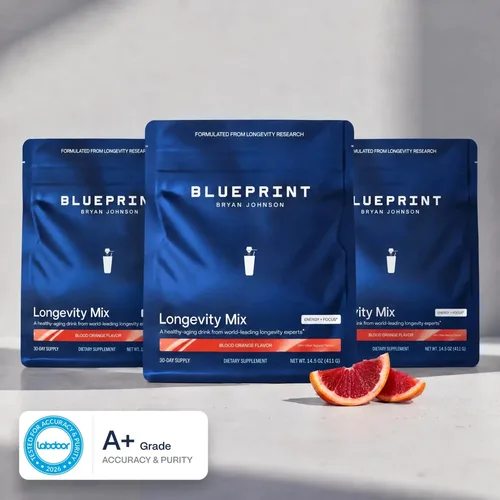
Blueprint Bryan Johnson Longevity Mix Blood Orange Review
Original Longevity Mix is a multinutrient drink mix from Blueprint Bryan Johnson, described on the page as a cornerstone of Bryan Johnson's protocol. One scoop is designed to support focus and a balanced energy metabolism, and the page describes the flavour as tangy and smooth. The Blood Orange flavour is listed in the Nutrition Facts as Natural Blood Orange Flavor with other Natural Flavors, citric acid, monk fruit extract and red radish for colour. The page states the product is for the morning, with one scoop to support cellular energy, recovery and vitality. It lists 12 longevity actives including creatine, glutathione, CaAKG, taurine and glycine. The formula is said to support metabolic energy with creatine monohydrate, lysine and vitamin C, to promote restful sleep and recovery with magnesium, glycine and L-theanine, and to support immune health with glutathione, taurine and vitamin C. The brand describes its doses as precision doses backed by research and says the product is third-party tested for purity and heavy metals. Listed badges include non-dairy, gluten free, non-GMO, vegan and no artificial ingredients. The container is 30 servings, 15.6 oz (443 g), with 14.8 g per scoop and 10 calories per serving. Directions say to mix one scoop with a cup of water and consume in the morning with food. The page suggests taking it with Essential Capsules. Benefit sections group claims under cellular energy, including promoting endurance, supporting stamina and helping maintain muscle performance; focus, including promoting relaxation, supporting stress management and promoting calm alertness; and recovery, including promoting restful sleep, supporting a healthy immune response and helping maintain healthy muscle function. Ingredient notes describe vitamin C as an antioxidant-rich essential vitamin, CaAKG as a Krebs-cycle metabolite, magnesium citrate as an essential mineral for sleep and muscle function, creatine monohydrate as a natural compound for muscle performance, taurine as an amino acid for heart health, glycine for relaxation and sleep, lysine for protein and collagen formation, glucosamine sulfate for cartilage, joints and skin, glutathione as a tripeptide antioxidant, L-theanine for focus and stress resilience, sodium hyaluronate for skin hydration, allulose as a low-calorie rare sugar, and monk fruit as a zero-calorie sweetener. The 30-day supply is offered as a one-time order or on autoship with a 5 percent saving, and the page notes the subscription can be paused or cancelled anytime.
We don’t sell supplements. We help you make decisions and get the best price.
Lowest prices
We may earn a commission from some store links. How we choose.
Finding the lowest prices at the stores now. This takes a few seconds.
Study, Trial or Testing Result Summary
Members Only139 human studies · 96 improved
20 of these 139 human studies gave the ingredient by drip or injection, not by mouth.
No study measured biological age reversal with this mix or its ingredients. The evidence points to better skin and muscle aging markers. At two servings a day, hyaluronic acid taken by mouth improved skin hydration, elasticity and wrinkle depth in pooled placebo-controlled trials [1]. At 200 mg a day it cut wrinkle depth by 18.8% in 60 women [2]. Vitamin C with collagen improved skin density and wrinkles, but not elasticity [3]. Creatine with strength training raised lean mass and strength in older adults [4]. It also lowered inflammation and oxidative stress [5]. Glutathione at 250 mg raised body glutathione and lowered oxidative stress over 6 months [6]. Calcium alpha-ketoglutarate reaches a full dose only at three servings a day. Its studies tested a different combination with another compound, and the results were mixed [7][8]. Magnesium and glycine are well below the doses studied [9][10]. Taurine, lysine and calcium have only thin or indirect evidence [11][12]. L-theanine has been tested only in animals [13]. Animal and cell studies are never counted.
See all 139 studies →Hide the studies
- In seven placebo-controlled trials of 608 postmenopausal women (12 to 104 weeks), creatine modestly increased lean mass and leg-press strength, mainly at 5 g or more per day with resistance training, but did not change bone density.Creatine monohydrate for lean mass, strength, and bone density in postmenopausal women: a systematic review and meta-ana…
- In 357 older adults doing resistance training for about 13 weeks, adding creatine increased fat-free mass, chest and leg press strength and chair-stand performance more than training alone.Creatine supplementation during resistance training in older adults-a meta-analysis.
- In ten trials of 211 older women, creatine with resistance training increased upper-body strength but not lower-body strength or muscle mass overall, with lower-body gains seen in studies lasting 24 weeks or longer.Efficacy of Creatine Supplementation Combined with Resistance Training on Muscle Strength and Muscle Mass in Older Femal…
- A pooled analysis of 23 studies found older people with sarcopenia ate less magnesium and other nutrients than those without it, though the studies compared intake rather than testing supplements.Comparison of calorie and nutrient intake among elderly with and without sarcopenia: A systematic review and meta-analys…
- Pooled trials in older adults found creatine with resistance training increased lean tissue mass and strength more than placebo, with results depending on dosing strategy and loading phase.Meta-Analysis Examining the Importance of Creatine Ingestion Strategies on Lean Tissue Mass and Strength in Older Adults…
- In eight placebo-controlled trials, creatine improved memory in healthy people, with a larger benefit in adults aged 66 to 76 than in younger people.Effects of creatine supplementation on memory in healthy individuals: a systematic review and meta-analysis of randomize…
- Pooling 6 studies, hyaluronic acid injections improved skin hydration and radiance but did not significantly change elasticity or melanin index compared with controls.The Effect of Local Hyaluronic Acid Injection on Skin Aging: A Systematic Review and Meta-Analysis.
- Pooling 7 placebo-controlled trials, oral hyaluronic acid significantly improved skin hydration, elasticity and wrinkle depth, while firmness, wrinkle volume and water loss did not change significantly.Oral Hyaluronic Acid Supplement: Efficacy in Skin Hydration, Elasticity, and Wrinkle Depth Reduction.
- Across 11 studies, facial injections of hyaluronic acid enriched with amino acids reduced wrinkle severity, increased skin thickness and improved cell viability, with no clear difference in side effects.Efficacy and Safety of Amino Acid-Enriched Hyaluronic Acid in Facial Rejuvenation: A Systematic Review and Meta-Analysis…
- In six studies of 1542 older adults, five reported creatine was linked to better memory and attention, but only two were trials and quality was mostly fair or poor.Creatine and Cognition in Aging: A Systematic Review of Evidence in Older Adults.
- A review of 24 studies with 1,410 patients found facial hyaluronic acid fillers persisted about 50-86% at 24 months, with satisfaction declining as volume faded and long-term side effects rare.Clinical Durability of Hyaluronic Acid-Based Dermal Fillers for Facial Application: A Systematic Review.
- Across six randomized trials of 281 healthy people, creatine may have improved short-term memory and reasoning, but results for other thinking skills were conflicting and young people showed no change.Effects of creatine supplementation on cognitive function of healthy individuals: A systematic review of randomized cont…
- A review of 20 studies on treating and preventing wrinkles listed topical vitamin C or E among many options, but the summary gives no results for vitamin C alone.Wrinkles.
- A review of 10 mostly observational studies found magnesium intake was linked to better physical performance in older adults, and one randomized trial found magnesium supplements improved physical performance.Minerals and Sarcopenia; The Role of Calcium, Iron, Magnesium, Phosphorus, Potassium, Selenium, Sodium, and Zinc on Musc…
- A review of nutraceuticals reported that minerals including magnesium help slow aging in older people, but it gave no specific numbers and called for more clinical research.Nutraceuticals and their role in promoting musculo-skeletal healthy aging.
- A review of 45 mostly observational studies found that magnesium intake or blood levels were linked to better muscle mass, strength, physical performance and less sarcopenia in older adults.Minerals and Sarcopenia in Older Adults: An Updated Systematic Review.
- Seventeen trials in older adults suggest creatine plus at least 12 weeks of resistance training may improve strength and lean mass, with possible bone gains after a year and no added benefit for mental health.The Additive Effects of Creatine Supplementation and Exercise Training in an Aging Population: A Systematic Review of Ra…
- A review of 52 studies in healthy and diseased adults giving glycine for up to 14 days or 4 months found the most benefit for the nervous system, such as psychiatric symptoms and sleep, but the healthy-population studies were small and at high risk of bias, so effects on slowing or reversing aging remain unproven.The effect of glycine administration on the characteristics of physiological systems in human adults: A systematic revie…
- A review of 17 publications on lip and perioral fillers, including hyaluronic acid, reported no results in the abstract and no agreement on the best material.Filling Procedures for Lip and Perioral Rejuvenation: A Systematic Review.
- A review of 18 articles found people were highly satisfied with hyaluronic acid cheek fillers for up to 24 months, with mostly mild side effects lasting under 2 weeks.Hyaluronic Acid Fillers for Midface Augmentation: A Systematic Review.
- In a review of 37 articles on lip rejuvenation, hyaluronic acid gel with perioral treatment showed a 94.3% improvement on the lip fullness scale one month after re-treatment, with minimal side effects.Perspectives and challenges in lip rejuvenation: a systematic review.
- In a trial of adults aged 50 to 80 comparing two diets for two years, blood magnesium, selenium and manganese rose and zinc fell, but this was a diet study, not a magnesium supplement test.Fostering healthy aging through selective nutrition: A long-term comparison of two dietary patterns and their holistic i…
- In 420 adults, three facial injections of hyaluronic acid gel three weeks apart improved overall appearance in 90.63% versus 3.65% with no treatment, and skin hydration and elasticity rose over 6 months.Efficacy and Safety of Sodium Hyaluronate Gel for Facial Skin Rejuvenation.
- In 332 heart surgery patients given intravenous vitamin C for five days after surgery, kidney injury was not significantly lower than in the control group (20.9% vs 28.4%).Effect of Ascorbic Acid on Cardiac Surgery-Associated Acute Kidney Injury Incidence.
- In 250 adults in a placebo-controlled trial, personalized magnesium supplementation that lowered the calcium-to-magnesium intake ratio to about 2.3 improved cognitive function by 9.1% in people over 65 with a high ratio diet, and lowered DNA methylation at two APOE gene sites.Ca:Mg Ratio, APOE Cytosine Modifications, and Cognitive Function: Results from a Randomized Trial.
- In 146 adults, three hyaluronic acid micro-filler sessions reduced wrinkles on the face, neck and chest and improved radiance and hydration more than moisturizer cream alone through day 120.A hyaluronic acid-based micro-filler improves superficial wrinkles and skin quality: a randomized prospective controlled…
- In 138 patients with nasolabial folds, hyaluronic acid gel was judged superior to bovine collagen in 56.9% of patients on wrinkle severity and 62.0% on overall improvement at 6 months, and was well tolerated.A randomized, double-blind, multicenter comparison of the efficacy and tolerability of Restylane versus Zyplast for the …
- In healthy men on a Western diet, adding 60 g of nuts daily for 14 weeks improved sperm count and movement and reduced sperm DNA damage compared with no nuts, though magnesium was not given on its own and free radical levels did not change.Effect of nut consumption on semen quality and functionality in healthy men consuming a Western-style diet: a randomized…
- In 109 older postmenopausal women with low bone density, 1 gram of creatine daily for one year did not change bone density, lean mass, or muscle function compared with placebo, and caused no side effects.Effects of long-term low-dose dietary creatine supplementation in older women.
- In 103 older adults doing resistance training for 16 weeks, 3 grams of creatine daily added benefits over placebo, raising an antioxidant enzyme, lowering inflammation markers and oxidative stress, and improving strength and function.Effects of high-load, velocity-intentional variable resistance training combined with creatine supplementation on neurop…
- In 100 adults aged 18 to 45 with poor sleep satisfaction, 2 g daily of magnesium L-threonate for 6 weeks improved overall cognition and reaction time versus placebo, with a 7.5-year reduction in estimated brain cognitive age.The effects of magnesium L-threonate (Magtein®) on cognitive performance and sleep quality in adults: a randomised, doub…
- In 100 patients with nasolabial folds, hyaluronic acid and collagen fillers worked similarly at 3 months, but hyaluronic acid kept greater improvement at 6 months.A Prospective Study Comparing the Efficacy of Hyaluronic Acid and Collagen in the Treatment of Nasolabial Folds.
- In 88 Korean adults, two hyaluronic acid mid-face fillers each kept volume improved in about 72-74% of the 69 extension participants at 2 years, with no serious side effects.A multicenter, randomized, double-blind comparison of two hyaluronic acid fillers in mid-face volume restoration in Asia…
- In 87 women aged 40-65 taking collagen with 80 mg vitamin C daily for 16 weeks, skin density, texture and wrinkles improved versus placebo, but elasticity and hydration did not.The Effects of Dietary Supplementation with Collagen and Vitamin C and Their Combination with Hyaluronic Acid on Skin De…
- In 87 women, a wrinkle cream containing retinol, hyaluronic acid and another ingredient reduced the appearance of wrinkles more than placebo, by 23.5% after 4 weeks and 27.8% after 8 weeks.The skin aging index: a new approach for documenting anti-aging products or procedures.
- In 82 people given one of two hyaluronic acid fillers in nasolabial folds, dermal thickness gain was similar at 24 weeks but at 48 weeks was lower with Restylane 2 (0.14 mm) than Dermalax DEEP (0.20 mm); there was no placebo group.Long-Term Follow-Up of Longevity and Diffusion Pattern of Hyaluronic Acid in Nasolabial Fold Correction through High-Fre…
- In 80 critically ill patients with transfusion-related lung injury, 4 days of high-dose intravenous vitamin C lowered oxidative stress and most inflammation markers compared with placebo.Role of ascorbic acid infusion in critically ill patients with transfusion-related acute lung injury.
- In Marines doing strenuous work at moderate altitude, 500 mg vitamin C daily for 4 weeks did not effectively control the rise in oxidative stress markers.Oxidative stress in humans during work at moderate altitude.
- In 72 women aged 35 or older, a daily collagen drink containing vitamin C improved skin hydration, elasticity, roughness and density over 12 weeks compared with placebo.A Collagen Supplement Improves Skin Hydration, Elasticity, Roughness, and Density: Results of a Randomized, Placebo-Cont…
- In 66 healthy women, a 10% vitamin C serum applied to skin for 12 weeks reduced glycation products by 17.65%, protein damage by 49.22% and an inflammation marker by 58.73%, and improved skin color.Study on the Multiple Efficacies of Vitamin C Serum in Anti-Glycation, Anti-Carbonylation, Antioxidation, and Anti-Infla…
- In 60 older women with muscle loss doing resistance training, 1000 mg vitamin C plus vitamin E daily for 12 weeks gave greater gains in muscle mass and strength and lower oxidative stress and inflammation than placebo.Effects of vitamins C and E supplementation combined with 12-week resistance training in older women with sarcopenia: A …
- In 60 women with polycystic ovary syndrome, 12 weeks of magnesium (100 mg twice daily) combined with zinc, calcium and vitamin D lowered inflammation (C-reactive protein) and oxidative stress (malondialdehyde) versus placebo.Magnesium-Zinc-Calcium-Vitamin D Co-supplementation Improves Hormonal Profiles, Biomarkers of Inflammation and Oxidative…
- In 60 women with polycystic ovary syndrome, 12 weeks of magnesium oxide (250 mg twice daily) with zinc lowered C-reactive protein and protein carbonyl, raised antioxidant capacity, and reduced inflammatory gene activity versus placebo.The Effects of Magnesium and Zinc Co-Supplementation on Biomarkers of Inflammation and Oxidative Stress, and Gene Expres…
- In 60 vulnerable older women over 24 weeks, creatine combined with resistance training improved muscle strength and lean mass more than placebo, but bone mass and bone markers did not change.Creatine supplementation and resistance training in vulnerable older women: a randomized double-blind placebo-controlled…
- In 60 people with metabolic syndrome, 15 g of glycine a day for 3 months lowered a blood marker of oxidative damage by 25% compared with placebo.Oral supplementation with glycine reduces oxidative stress in patients with metabolic syndrome, improving their systolic…
- In 60 adults with nasolabial folds, adding 0.3% lidocaine to a hyaluronic acid filler reduced injection pain but did not change how long the filler lasted over up to 76 weeks.Longevity of effects of hyaluronic acid plus lidocaine facial filler.
- In 60 people, three facial hyaluronic acid injections raised skin hydration more than placebo over 12 weeks, but skin elasticity did not differ between groups.Effects of hyaluronic acid injected using the mesogun injector with stamp-type microneedle on skin hydration.
- In 60 women with mild-to-moderate skin aging taking 200 mg a day of full-spectrum hyaluronan for 28 days, skin hydration rose 10.6%, wrinkle depth fell 18.8%, wrinkle volume fell 17.6% and elasticity rose 5.1% compared with placebo.Oral intake of a new full-spectrum hyaluronan improves skin profilometry and ageing: a randomized, double-blind, placebo…
- In 57 people recovering from mild-to-moderate COVID-19, 4 months of a glucosamine sulfate and fucoidan supplement reduced blood vessel lining damage and oxidative stress markers (malondialdehyde -26% vs -2.9%) more than placebo and improved vascular function.Effects of 4-month treatment with glycocalyx dietary supplement on endothelial glycocalyx and vascular function after CO…
- In 55 women, three monthly intradermal hyaluronic acid sessions lowered skin stiffness (a sign of better elasticity) and improved complexion radiance compared with saline, lasting at least 3 months after the last injection.Clinical and biometrological efficacy of a hyaluronic acid-based mesotherapy product: a randomised controlled study.
- In 54 healthy adults taking 250 or 1,000 mg of oral glutathione daily for 6 months, glutathione levels in blood and cells rose and oxidative stress fell compared with baseline, with levels returning to baseline after a 1-month washout.Randomized controlled trial of oral glutathione supplementation on body stores of glutathione.
- In 48 patients with diabetic foot ulcers, a dermal matrix with hyaluronic acid microparticles closed 57.8% of wound area in 4 weeks versus 26.6% with standard care, and lowered oxidative stress.Comparative Evaluation of Clinical Efficacy and Safety of Collagen Laminin-Based Dermal Matrix Combined With Resveratrol…
- In 47 men with advanced prostate cancer, intravenous vitamin C added to chemotherapy did not improve PSA response, survival, quality of life or oxidative stress markers compared with placebo, and the trial was stopped early for futility.High-Dose Intravenous Vitamin C Combined with Docetaxel in Men with Metastatic Castration-Resistant Prostate Cancer: A R…
- In 46 postmenopausal women with insulin resistance, vitamin C alone or with resveratrol lowered oxidative damage markers (malondialdehyde down 26-38%) and raised total antioxidant capacity by about 28-30% in the vitamin C groups.The Administration of Resveratrol and Vitamin C Reduces Oxidative Stress in Postmenopausal Women-A Pilot Randomized Clin…
- In 45 older adults over 10 weeks, resistance training improved oxidative stress markers, antioxidant defenses and strength, but creatine added extra benefit only for muscle strength, not clearly for oxidative stress.The role of resistance training and creatine supplementation on oxidative stress, antioxidant defense, muscle strength, …
- In 43 older men with bone and muscle loss, both groups received calcium, vitamin D and whey protein, so the effect of calcium alone was not tested; the exercise group kept bone density and gained muscle versus the control group over 12 months.Effects of High-Intensity Resistance Training on Osteopenia and Sarcopenia Parameters in Older Men with Osteosarcopenia-…
- In 42 healthy adults aged 40 to 76, a glycine, glutamine and niacin mixture (5 g twice daily for 3 weeks) raised growth hormone by about 70% versus placebo, but did not change IGF-I, mood or memory.Effects of an oral mixture containing glycine, glutamine and niacin on memory, GH and IGF-I secretion in middle-aged and…
- In 41 kidney failure patients starting dialysis, 1000 mg of vitamin C daily for one year did not significantly change lipid profile, but it lessened the rise in LDL oxidation (TBARS) compared with placebo, while HDL oxidation difference was not significant.Lipoperoxidation and hemodialysis.
- In 40 people with nasolabial folds, three hyaluronic acid dermal fillers gave essentially equal results over 12 months with safe side effects, with no significant difference between them.A prospective, split-face, randomized, comparative study of safety and 12-month longevity of three formulations of hyalu…
- In a split-face trial of 40 people, a polycaprolactone filler outperformed a hyaluronic acid filler on nasolabial fold wrinkles at 6, 9 and 12 months, while both were equally safe.A randomized, prospective, blinded, split-face, single-center study comparing polycaprolactone to hyaluronic acid for tr…
- In 39 healthy adults aged 50 to 71, 32 weeks of creatine with resistance training increased muscle strength more than placebo, and taking creatine after training gave greater lean tissue gains than placebo; no cell-repair markers were reported.Strategic creatine supplementation and resistance training in healthy older adults.
- In 38 healthy older adults, 12 weeks of a multi-ingredient supplement that includes creatine increased muscle mass, strength and power compared with placebo, though creatine's share of this effect cannot be separated out and no cell-repair markers were reported.Effects of 12 Weeks of Essential Amino Acids (EAA)-Based Multi-Ingredient Nutritional Supplementation on Muscle Mass, Mu…
- In 36 elderly nursing home residents with dry skin, low molecular weight hyaluronic acid lotion for 4 weeks improved skin hydration more than high molecular weight hyaluronic acid or vehicle, with no change in water loss or symptom scores.Effectiveness of topical hyaluronic acid of different molecular weights in xerosis cutis treatment in elderly: a double-…
- In 33 older adults over 10 days, creatine at high, moderate, or placebo doses (dosed by body weight) produced no difference in muscle strength or endurance beyond the placebo group's gains.Effect of Creatine Supplementation Dosing Strategies on Aging Muscle Performance.
- In a retrospective analysis of 32 older men, a multi-ingredient supplement that contained calcium along with protein, creatine, vitamin D and fish oil improved muscle and strength more than a collagen-based drink over 12 weeks, but calcium's own effect could not be separated out.Obesity and Metabolic Disease Impair the Anabolic Response to Protein Supplementation and Resistance Exercise: A Retrosp…
- In 32 people having lung cancer surgery, 10 days of 7.2 g alpha-ketoglutaric acid plus 720 mg 5-hydroxymethylfurfural daily raised peak oxygen uptake and power, lowered two oxidative stress markers, and shortened hospital and intensive care stays compared with the control group.The impact of preoperative micronutrient supplementation in lung surgery. A prospective randomized trial of oral supplem…
- In 32 people doing aerobic training for 8 weeks, glycine propionyl-L-carnitine lowered a resting oxidative damage marker (MDA) but had little effect on exercise-induced oxidative stress.Oxidative stress in response to aerobic and anaerobic power testing: influence of exercise training and carnitine supple…
- In 31 adults with neck aging, applying a vitamin C, vitamin E and ferulic acid serum after microneedle radiofrequency treatments for 12 weeks reduced wrinkles more than treatment alone, increased elasticity, and lowered skin aging markers in tissue samples.Fractional microneedle radiofrequency with the application of vitamin C, E, and ferulic acid serum for neck skin rejuven…
- In 30 heart surgery patients, a single intravenous dose of vitamin C during rewarming reduced the rise in reactive oxygen species after bypass compared with placebo and improved red blood cell flexibility.Vitamin C supplementation attenuates oxidative stress and improves erythrocyte deformability in cardiac surgery with car…
- In 30 physically active adults aged 60 and older, 6 weeks of creatine plus HMB alongside supervised exercise improved gait speed, sit-to-stand, timed up-and-go and 400-meter walk compared with placebo, but the abstract reports no direct aging-reversal or cell-repair markers.Combined creatine and β-hydroxy-β-methylbutyrate supplementation with integral conditioning exercise enhances functional…
- In 30 physically active older adults, 6 weeks of 3 g daily creatine plus 3 g daily HMB showed only nominal, non-significant changes in glutathione redox markers after multiple-comparison correction, and no aging-reversal effect was confirmed.Creatine plus β-Hydroxy-β-Methylbutyrate supplementation is associated with preserved glutathione redox-balance and redo…
- In 30 volunteers with neck wrinkles, an injected filler made from their own keratin and fibroblasts reduced wrinkles for up to 24 months, lasting longer than hyaluronic acid filler in a small control group, with no serious complications.New soft tissue filler derived from autologous keratin and fibroblast for neck wrinkles.
- In 24 older adults given a single dose of 3 g calcium HMB with whey protein, muscle protein breakdown fell and muscle building rose in women only, but this tested the HMB compound rather than calcium and not aging markers.The Effect of β-Hydroxy-β-Methyl Butyrate (HMB) upon Acute Fed-State Muscle Protein Turnover in Older Men and Women: A R…
- In 24 older adults, 16 weeks of glycine plus N-acetylcysteine, but not placebo, corrected glutathione deficiency and improved oxidative stress, mitochondrial function, inflammation, aging hallmarks and physical function.Supplementing Glycine and N-Acetylcysteine (GlyNAC) in Older Adults Improves Glutathione Deficiency, Oxidative Stress, M…
- In 24 people with knee osteoarthritis, 20 mg hyaluronan injections into the knee once a week for 5 weeks improved cartilage surface structure, chondrocyte density and mitochondria at 6 months, and worked better than methylprednisolone injections.Morphological analysis of articular cartilage biopsies from a randomized, clinical study comparing the effects of 500-73…
- In 22 dialysis patients, 250 mg of vitamin C taken after each session for 8 weeks lowered reduced glutathione, suggesting a pro-oxidant effect.Vitamin C decreases reduced glutathione in chronic haemodialysis patients: a pilot, randomised, double-blind trial.
- In 21 young football players, 500 mg of vitamin C plus vitamin E daily for 15 days reduced markers of oxidative stress after hard exercise but did not reduce muscle soreness or improve athletic performance.Antioxidant vitamin supplementation prevents oxidative stress but does not enhance performance in young football athlete…
- In 20 men with low baseline vitamin C, 30 days of vitamin C supplementation lowered markers of oxidative stress more than in men with high baseline levels, and may modestly raise exercise performance only in those with low levels.Low vitamin C values are linked with decreased physical performance and increased oxidative stress: reversal by vitamin …
- In 20 premature infants, amino acids given from birth raised glutathione production and levels but did not lower oxidative stress markers versus dextrose alone.Glutathione synthesis rates after amino acid administration directly after birth in preterm infants.
- In 20 women, cheek filler placed through the mouth gave aesthetic results equal to the standard skin approach over 1 year, with less pain reported by 55% of patients.Safety and efficacy of the transoral approach for cheek volumization with hyaluronic acid: A pilot study.
- In a split-face trial of 20 adults, an injectable particulate human skin matrix improved skin density, elasticity, wrinkles and hydration more than hyaluronic acid did on the other side of the face over 20 weeks.Injectable Particulated Human Acellular Dermal Matrix Booster for Skin Restoration: An Integrated Randomized, Split-Face…
- In 19 people getting neck rejuvenation, adding hyaluronic acid gel to botulinum toxin gave better skin hydration, skin thickness and aesthetic scores at 3 months than botulinum toxin alone, and was considered safe.Botulinum toxin injection as a single or combined treatment with non-cross-linked high molecular weight and low molecula…
- In 18 well-trained men, about 48 hours of alpha-ketoglutaric acid plus 5-hydroxymethylfurfural did not prevent the drop in exercise performance at simulated altitude, but it improved muscle oxygen extraction and lowered one oxidative stress marker (4-hydroxynonenal).Short-term supplementation with alpha-ketoglutaric acid and 5-hydroxymethylfurfural does not prevent the hypoxia induced…
- In 17 healthy volunteers, a 20% vitamin C serum delivered by microneedle mesotherapy improved skin firmness, elasticity, hydration and tone more than no-needle delivery across four treatments.Preliminary randomized controlled trial of antiaging effects of l-ascorbic acid applied in combination with no-needle an…
- In 16 men with cardiovascular risk factors in a crossover trial, sublingual glutathione lowered total and LDL cholesterol versus placebo but did not change blood vessel function or oxidative stress markers overall.Medium-term effect of sublingual l-glutathione supplementation on flow-mediated dilation in subjects with cardiovascular…
- In 15 male soccer players, a pea protein capsule of vitamin C kept blood vitamin C levels up longer and, after a single intermittent running test, showed signs of less oxidative stress and muscle damage than placebo.Pea protein-based ascorbic acid microcapsules reduce oxidative damage in soccer players: a randomised controlled trial.
- In 14 overweight men, a single 3 g intravenous dose of ascorbic acid reduced protein damage and other oxidative stress signs during mental stress compared with saline.Ascorbic acid inhibits vascular remodeling induced by mental stress in overweight/obese men.
- In 12 sedentary older adults, 4 weeks of creatine at 5 grams daily improved flow-mediated artery dilation and microvascular blood flow compared with placebo and lowered fasting glucose and triglycerides, with no change in oxidized LDL or malondialdehyde reported.Effect of Creatine Monohydrate Supplementation on Macro- and Microvascular Endothelial Function in Older Adults: A Pilot…
- In 8 moderately trained men in a crossover trial, alpha-ketoglutaric acid plus 5-hydroxymethylfurfural did not improve 2-hour cycling performance at simulated altitude or oxidative stress, though blood oxygen saturation was slightly higher (79.5% vs 78.2%).5-Hydroxymethylfurfural and α-ketoglutaric acid supplementation increases oxygen saturation during prolonged exercise in…
- Applying a 5% vitamin C cream daily for 6 months to sun-damaged skin reduced deep furrows and improved skin texture compared with the cream without vitamin C, and was well tolerated.Topical ascorbic acid on photoaged skin. Clinical, topographical and ultrastructural evaluation: double-blind study vs. …
- In post-menopausal women, a daily drink with vitamin C, lycopene, soy isoflavones and vitamin E plus fish oil significantly reduced facial wrinkle depth compared with placebo over long-term use, with more new collagen seen in the skin.Wrinkle reduction in post-menopausal women consuming a novel oral supplement: a double-blind placebo-controlled randomiz…
- In a randomized trial of pregnant smokers, vitamin C brought many DNA methylation changes in their offspring back toward levels seen in babies of nonsmokers; the abstract does not give the dose or number of people.Vitamin C Prevents Offspring DNA Methylation Changes Associated with Maternal Smoking in Pregnancy.
- In heat-exposed workers over 40 days, a daily vitamin C tablet with a hawthorn drink lowered blood pressure and a urine marker of oxidative stress compared with a control drink; the vitamin C effect was not tested alone.Effect of vitamin C and hawthorn beverage formula on blood pressure and oxidative stress in heat-exposed workers: a clus…
- In healthy men, 340 mg of magnesium daily for 2 weeks, given alongside taurine, increased the number of endothelial progenitor cells and lowered blood markers of free radical damage.Taurine and magnesium supplementation enhances the function of endothelial progenitor cells through antioxidation in hea…
- In people with high or borderline high blood pressure, 4 weeks of potassium magnesium citrate lowered a urine marker of oxidative stress (8-isoprostane) versus placebo, but did not significantly change nighttime blood pressure.Effects of Potassium Magnesium Citrate Supplementation on 24-Hour Ambulatory Blood Pressure and Oxidative Stress Marker …
- In a randomized trial of a hyaluronic acid filler for smoker-type perioral lines, 80.7% of treated people responded at week 8 versus 7.8% of untreated controls, and 66% were still responders at week 52.Efficacy and Safety of a New Resilient Hyaluronic Acid Filler in the Correction of Moderate-to-Severe Dynamic Perioral R…
- A 0.1% lotion of 2-kDa hyaluronan applied for 8 weeks made facial wrinkles significantly shallower than vehicle lotion, and raised collagen density in the forearm skin after 4 weeks.2-kDa hyaluronan ameliorates human facial wrinkles through increased dermal collagen density related to promotion of col…
- In a within-subject trial of nasolabial folds, a proposed hyaluronic acid filler (Lunaphil Ultra) reduced wrinkle severity by about the same amount as the reference filler Juvederm Ultra 4 at 24 weeks, showing equivalent results.Efficacy and Safety of a Proposed Hyaluronic Acid (Lunaphil Ultra) Compared to the Reference Product (Juvéderm Ultra 4) …
- Applying a peptide and hyaluronic acid lip serica twice daily for 3 weeks improved lip shine, texture and border in two small trials, with 94% of people without prior lip filler rated improved and 88% of those with prior filler rated improved, and no side effects were recorded.Efficacy and Tolerability of a Topical Peptide-Hyaluronic Acid Lip Treatment Using a Novel Delivery System in Subjects W…
- In 40 older adults with back and knee pain who took 900 mg of algal calcium plus collagen and glucosamine daily for 4 months, compared with 40 similar-age controls, pain eased, skin impedance (which rises with age) fell, and a bone breakdown marker dropped.The effect of active absorbable algal calcium (AAA Ca) with collagen and other matrix components on back and joint pain …
- In 50 women aged 30-65, a serum with vitamin C, vitamin E and raspberry leaf extract applied to one side of the face for 8 weeks improved skin color, elasticity, radiance, smoothness and wrinkles compared with the untreated side.Anti-aging and brightening effects of a topical treatment containing vitamin C, vitamin E, and raspberry leaf cell cultu…
- In 30 women, three hyaluronic acid gel injections on the back of one hand improved skin hydration, elasticity and roughness compared with saline on the other hand, and the gains were sustained to 12 months.12-month effects of stabilized hyaluronic acid gel compared with saline for rejuvenation of aging hands.
- In 23 Thai women, microneedle patches with or without 1.8% hyaluronic acid solution both improved nasolabial folds over 8 weeks, with no difference between the two sides and no side effects reported.Efficacy of a novel microneedle patch for rejuvenation of the nasolabial fold.
- In 15 volunteers, injected stabilized hyaluronic acid improved skin elasticity, roughness and hydration on the back of the hands over 12 weeks, and was better than non-stabilized hyaluronic acid, though effects faded toward baseline by 24 weeks.Changes in skin physiology and clinical appearance after microdroplet placement of hyaluronic acid in aging hands.
- In 14 healthy volunteers, a one-week formula containing 30 mg vitamin C with citrus bioflavonoids, coenzyme Q10 and vitamin B6 did not change oxidative stress.Bioavailability and antioxidant activity of some food supplements in men and women using the D-Roms test as a marker of …
- In older people, 500 mg a day of vitamin C by injection for one month improved T-cell response and skin test immunity compared with placebo, but did not change antibody levels or the other immune measures.Effect of vitamin C supplements on cell-mediated immunity in old people.
- In a small group of subjects, 1 g of vitamin C daily for 2 weeks lowered exercise-induced oxidative stress compared with placebo.Exercise-induced oxidative stress before and after vitamin C supplementation.
- Four weeks of magnesium supplementation reduced high levels of oxidative DNA damage in white blood cells of both sedentary young men and rugby players.Magnesium Supplementation Diminishes Peripheral Blood Lymphocyte DNA Oxidative Damage in Athletes and Sedentary Young Ma…
- In an open-label study of 1462 adults, a daily topical cream combining retinaldehyde and hyaluronic acid fragments for 90 days reduced overall photoaging, wrinkles, and skin elasticity loss, with no placebo group for comparison.Retinaldehyde/hyaluronic acid fragments: a synergistic association for the management of skin aging.
- In 81 adults with signs of skin aging, three injections of a hyaluronic acid skin booster every 3 weeks improved facial appearance and skin measures such as hydration, elasticity and wrinkle depth over 6 months, with only mild, short-lived side effects. There was no control group.Clinical and Biometric Assessment of a Hyaluronic Acid-Based Skin Booster for Face, Neck and Décolleté Rejuvenation: A P…
- In 45 adults aged 35 to 52, a combined laser, botulinum toxin, and hyaluronic acid treatment left 98% with smoother, more hydrated, and more elastic skin, with no comparison group.The skin rejuvenation associated treatment-Fraxel laser, Microbotox, and low G prime hyaluronic acid: preliminary result…
- In 44 women with mild to moderate hyperpigmentation and sun damage, a 30% vitamin C moisturizer used with a retinol product for 12 weeks significantly improved skin appearance scores by weeks 8 and 12, with dryness rising early and then easing.An Open Label Clinical Trial to Evaluate the Efficacy and Tolerance of a Retinol and Vitamin C Facial Regimen in Women W…
- In 36 women aged 22 to 40 using a two-step hyaluronic acid lip treatment at least three times daily for 4 weeks, lip texture, color, lines, plumpness and hydration improved, and the treatment was well tolerated.Clinical Assessment of Immediate and Long-Term Effects of a Two-Step Topical Hyaluronic Acid Lip Treatment.
- In 25 people with tear trough hollows, hyaluronic acid filler was injected under the eye, with 88% judged to have a cosmetic improvement, and no control group was used.Treatment of the tear trough deformity with hyaluronic acid.
- In 25 women aged 40 to 70 with photoaged thin hands, a hyaluronic acid gel injected into one hand over 6 months improved the hand appearance score at all time points, with no adverse events.Small-Particle Hyaluronic Acid Gel Treatment of Photoaged Hands.
- In 20 women aged 35 to 65 using a retinal skin cream daily for 12 weeks, fine lines, wrinkles, redness and skin tone improved, with all participants showing better facial appearance by weeks 8 and 12 and no product-related side effects.A Single-Center, Open-Label Study to Evaluate the Efficacy and Tolerability of Retinal Encapsulated in a Novel Biomimeti…
- In 15 patients, a hyaluronic acid and calcium hydroxyapatite filler injected into the cheek area increased facial volume and tissue elasticity over 180 days, with no serious side effects.Facial rejuvenation with the new hybrid filler HArmonyCa™: Clinical and aesthetic outcomes assessed by 2D and 3D photogr…
- In 15 adults with midface volume loss, a hyaluronic acid and polynucleotide filler improved midface volume, skin hydration, and elasticity over 24 weeks, with no serious adverse events.Midface volumization and skin quality enhancement with a hyaluronic acid-polynucleotide hybrid filler: a 24-week prospec…
- Seven of 10 women aged 40 to 60 felt better about their appearance two weeks after receiving 1 ml of hyaluronic acid filler in each cheek.Cheek augmentation improves feelings of facial attractiveness.
- In 8 elderly adults, 2 weeks of cysteine plus glycine supplements restored their glutathione synthesis to younger-adult levels and lowered blood oxidative stress and fat-damage markers.Deficient synthesis of glutathione underlies oxidative stress in aging and can be corrected by dietary cysteine and glyc…
- In 8 older men with HIV, 14 days of cysteine plus glycine raised their glutathione levels and improved how well their mitochondria burned fat and sugar, with better insulin sensitivity and muscle strength.Effect of increasing glutathione with cysteine and glycine supplementation on mitochondrial fuel oxidation, insulin sens…
- In 8 healthy women over 50 taking 250 mg of glucosamine sulfate daily for 8 weeks, skin biopsies showed increased levels of several genes linked to skin structure and collagen, with no placebo group for comparison.Efficacy of Glucosamine Sulphate in Skin Ageing: Results from an ex vivo Anti-Ageing Model and a Clinical Trial.
- In 8 older adults over 24 weeks of a glycine and N-acetylcysteine combination, without a placebo group, antioxidant levels and oxidative stress, mitochondrial function, inflammation, insulin resistance, cognition, strength, walking speed, and body fat improved, though benefits declined after 12 weeks off the supplement.Glycine and N-acetylcysteine (GlyNAC) supplementation in older adults improves glutathione deficiency, oxidative stress,…
- In 2796 French adults, a more inflammatory diet at midlife was linked to less healthy aging 13 years later; vitamin C was only given as part of a combined antioxidant supplement and was not tested on its own.The Inflammatory Potential of the Diet at Midlife Is Associated with Later Healthy Aging in French Adults.
- In a study of 2570 women aged 18 to 79, higher dietary magnesium intake was linked to greater muscle mass and leg explosive power, though this cross-sectional study cannot prove cause.Dietary Magnesium Is Positively Associated With Skeletal Muscle Power and Indices of Muscle Mass and May Attenuate the A…
- In 1382 women with facial aging signs, twice-daily use of a peptide and vitamin C ampoule containing hyaluronic acid for 28 days improved forehead wrinkles in 63% of users and skin hydration in 67%.Topical formulation containing peptides and vitamin C in ampoules improves skin aging signs: Results of a large, interna…
- In 1,252 urban adults followed for a median of 5 years, those with lower dietary magnesium intake were about twice as likely to have rapid kidney function decline.Dietary Magnesium and Kidney Function Decline: The Healthy Aging in Neighborhoods of Diversity across the Life Span Stud…
- In 300 adults aged 90 and older, higher blood magnesium was linked to a lower risk of reaching the end of healthy life span (hazard ratio 0.806 per interquartile increase).Association between plasma metal exposure and health span in very elderly adults: a prospective cohort study with mixtur…
- In 58 healthy men, a single vitamin C infusion improved blood vessel widening only in middle-aged and older men with low testosterone, and had no effect in younger men or older men with normal testosterone.Oxidative Stress and Inflammation Are Associated With Age-Related Endothelial Dysfunction in Men With Low Testosterone.
- In 28 women, four monthly injections of a hyaluronic acid solution increased skin hydration, elasticity and collagen density, and these gains partly persisted 120 days after the last session.Safety and Efficacy of an Injectable Solution Enriched With Sodium Hyaluronate, Amino Acids, and Peptides in Relation to…
- Across 61 populations in 25 countries, higher taurine excreted in 24-hour urine was linked to lower stroke mortality and lower heart disease mortality. This is an association from population data, not a supplement trial, and the number of people is not stated.Taurine as the nutritional factor for the longevity of the Japanese revealed by a world-wide epidemiological survey.
- Skin samples from older people showed fewer osmolyte transporters and weaker cell volume recovery than samples from young people, and adding taurine to aged skin cells in the lab restored their cell volume; no people were given taurine and no skin hydration was measured.Osmolyte transporter expression is reduced in photoaged human skin: Implications for skin hydration in aging.
- In 114 adults with signs of aging, injections of a hyaluronic acid, amino acid, vitamin and antioxidant solution improved skin hydration, firmness and fine lines, with good safety.Clinical evaluation of efficacy and tolerance of a skin reconditioning compound for anti-aging.
- In 62 patients with facial wrinkles, a combined injection protocol of hyaluronic acid, amino acids, vitamins and carbon dioxide significantly improved wrinkle and aesthetic scores for mild to severe aging, with no side effects reported.Face Rejuvenation: a new combinated protocol for biorevitalization.
- In 30 Chinese women with crow's feet and eye bags, hyaluronic acid patches applied three times a week for 4 weeks improved skin firmness, wrinkles and eye bags, with no adverse effects.Efficacy and safety testing of dissolving microarray patches in Chinese subjects.
- In 16 healthy young adults, changing dietary protein intake changed glutathione synthesis, with the best level near 1.0 g per kg per day, but oxidative stress markers did not change.Protein intake affects erythrocyte glutathione synthesis in young healthy adults in a repeated-measures trial.
- In 11 healthy young men, seven days of taurine supplementation reduced a blood marker of oxidative stress and DNA strand damage after exhaustive cycling, and raised maximal oxygen uptake and time to exhaustion. The abstract does not state the dose or whether a placebo was used.Role of taurine supplementation to prevent exercise-induced oxidative stress in healthy young men.
- This was a lab study developing a chemiluminescence probe that detected oxidized proteins in mouse and human blood serum; the abstract says it could track taurine's response in an inflamed mouse model, but it does not state whether taurine improved anything, and serum levels were higher in Alzheimer's patients and older adults than in healthy younger people.Half-Curcumin-Based Chemiluminescence Probes and Their Applications in Detecting Quasi-Stable Oxidized Proteins.
- In a 12-week study of older adults, a microneedle patch containing an arginine and lysine peptide blend plus other peptides reduced the appearance of fine lines and wrinkles by 25.8 percent, improved skin hydration by 15.4 percent, and increased dermal density and thickness by 14.2 and 12.9 percent, with no skin reactions. Lysine was only one part of a multi-ingredient product, and the study had no placebo group.Efficacy of bioactive peptides loaded on hyaluronic acid microneedle patches: A monocentric clinical study.
Review Totals and Summary
Members Only2,352 reviews · 85% positive
Across the stores that sell it, Blueprint Bryan Johnson Longevity Mix in Blood Orange carries about 2,352 ratings, and the reviews here are uniformly positive, with every starred review giving 4 or 5. Buyers like it as a daily habit, with some caveats about mixing and price. **What buyers say it did for them:** Most describe a general sense of benefit rather than a specific result. One says it "gives me that extra edge" alongside exercise and good food. Another reports, "I feel better after taking this," though they add that they wouldn't say it has improved their health yet after only two packets. One long-term user stopped all other supplements to test it and found the creatine in the daily intake "mind blowing" after several months. Another simply calls it a "Product I cannot live without now." **What they complain about:** The main complaint is that the powder doesn't mix well. One reviewer says it "Does not dissolve thoroughly," and another says it "doesn't mix well you really need a mixer." Price is the other criticism, from one buyer who calls it expensive. **Taste and form:** Taste draws little comment. One reviewer calls it "decent taste," and another says it is "Something I look forward to drink every day." Since it is a drink mix, the dissolving problem is the main practical issue raised about the form. **Value for money:** Opinion is mixed, and few reviewers address it. One buyer says it is expensive, while a UK buyer says "Great prices available to the UK." Another praises it as having "so much supplement value," which points to a feeling that the ingredient list justifies the cost. **Who it suits and who it didn't:** It seems to suit people who want an easy daily routine, with one buyer calling it the "Best daily routine without thinking about it." It also appeals to people following Bryan Johnson's research, with one buyer taking it every morning for that reason. One reviewer recommends it for "any man over 40." The less satisfied buyers were those who expected a quick, clear improvement in health, or who didn't want to use a shaker or mixer. Some reviews give little detail beyond praise, such as "Elite product." **Other forms:** Reviews of other forms of this product, such as gummies or capsules, were left out. This summary covers the powder only. **Bottom line:** Buyers are happy with it as a daily ritual and report feeling good on it. Expect to use a mixer, and be prepared for a higher price. Reviewers describe no dramatic or measurable results.
Biohacker Summary
Members Only10 of 10 recommend it
Creatine, the main ingredient, drew the most attention, and most of the panel recommends or uses it, mainly for muscle strength, power and brain health. Three of them recommend it outright, one takes 5 grams each morning, and another suggests 5 to 10 grams a day while saying higher amounts can cause problems. They suggest mixing it with water or a drink, taking it with a meal that has carbs and protein, and not taking it too late in the evening because it may keep you awake. Two cautions came up: one panelist said a study showed no real muscle or fat change and that the gain looked like water retention, and another said it can affect kidney-related blood test results. Only a few spoke about vitamin C, which was recommended from whole foods or paired with collagen, and about glutathione, which was recommended in liposomal form for immune support, while magnesium glycinate was a smaller ingredient in this product that many panelists praised for sleep.
See all 10 biohackers →Hide the biohackers
Dr. Eric Berg · Vitamin C · warns
- Warns against generic multivitamins, stating they are often full of fillers and synthetics.
- States that sardines contain taurine, which supports GABA, a calming neurotransmitter.
- States that one can of sardines contains 382 mg of calcium.
- Warns against calcium supplements, citing studies that link them to a higher risk of heart attack, especially in postmenopausal women, and suggests getting calcium from dairy instead.
- Recommends Magnesium glycinate, noting its high absorption rate compared to magnesium oxide, and its support for energy, sleep, muscle relaxation, and vitamin D function.
- Dr. Berg states that when nutrients like magnesium are too low, fatigue and weakness can follow.
- Mentions that bleeding or swollen gums point to vitamin C deficiency, and sugar competes with it directly, reducing absorption.
- Highly recommends 5g per day of creatine monohydrate, noting that it may be one of the fastest acting meds ever studied and can improve depression by addressing the brain's energy failure.
- Recommends focusing on calcium to support stronger bones if a neck hump is associated with osteoporosis.
- Recommends focusing on magnesium to support stronger bones if a neck hump is associated with osteoporosis.
- Explains that leg and calf cramps are most often caused by low magnesium, with leafy greens being a top source.
- States that magnesium is a cofactor that allows B1 to work more efficiently.
- States that magnesium is the most important mineral for energy production, as one cannot make energy without it.
- Recommends creatine, especially for brain energy, memory, focus, concentration, and reaction time, noting that plant-based diets provide almost zero dietary creatine.
Thomas DeLauer · Creatine · neutral
- Notes that while the body can make creatine, meat eaters have far higher levels because creatine is only found in meats, suggesting that consuming it leads to more optimal levels.
- Recommends whole food vitamin C, found in kiwi fruit, citrus, and bell peppers, to help clear uric acid by competing at kidney transporters, preventing reabsorption.
- States that glycine on its own is one of the most underrated sleep tools, offering benefits like cooling the body and preventing nighttime urination.
- Recommends taking magnesium glycinate and threonate at night to act as a brake on the nervous system, block excitatory signaling, help wind down, and support serotonin and melatonin production for better sleep.
- Recommends Create's German Creapure creatine, noting it makes his brain feel better and helps him feel more in control on fasting days.
- Mentions that magnesium glycinate also helps a lot with sleep.
- Mentions that glycine could be powerful for helping people sleep through the night due to its calming and cooling effect on the extremities, which can impact restless legs.
- Mentions that restless leg syndrome is often treated with magnesium, but states that the sensation is actually coming from three other issues.
- Is no longer doing super low doses of creatine, finding that the 'magic starts after 10 or 15 g' for fat loss, performance, muscle, strength, and energy. He previously thought low doses were okay but now believes bigger doses are more effective.
- Uses Element's cans which contain 30 milligram magnesium, finding that electrolytes help his workout performance.
- Explains that glycine is critical for collagen synthesis, which supports the intestinal wall, and deficiency can slow down the repair process.
- Uses and recommends supplementing creatine to take the burden off the body's natural glycine production, which in turn frees up glycine for other vital functions like sleep and connective tissue repair. He specifically mentions using Klean Athlete's unflavored stick packs and gummies made with pure German Creapure creatine.
- Recommends taking vitamin C along with collagen about an hour before a workout for connective tissue benefits.
- Explains that the body needs roughly 10g more of glycine per day than a typical modern diet provides, and that this deficit can lead to issues with creatine production, connective tissue repair, and sleep. He recommends increasing glycine intake.
Andrew Huberman · Creatine · neutral
- Notes that AG1 Pro contains 5g of creatine monohydrate to support muscle strength, performance, and brain health.
- Notes that Les Spellman's team includes 'Magnesium timed right' as part of their game plan to optimize recovery in unfavorable conditions.
- Discusses creatine in the context of its dose, benefits, and safety.
- Each serving of AG1 Pro has 5 g of creatine monohydrate to support muscle strength and performance, as well as brain health.
- Notes that AG1 Pro contains 5 grams of creatine monohydrate to support muscle strength and performance, as well as brain health.
- Mentions creatine in a discussion about supplement use.
- Discusses Magnesium Threonate as a tool for falling asleep.
- Notes that AG1 Pro contains 5 grams of creatine monohydrate to support muscle strength, performance, and brain health.
- Uses AG1 Pro, which contains 5 grams of creatine monohydrate to support muscle strength, performance, and brain health.
- Ingests 5 grams per day of creatine monohydrate, noting its role in improving cognitive performance by supporting brain networks involved in focus and concentration.
- Notes that AG1 Pro contains 5 grams of creatine monohydrate to support muscle strength, performance, and brain health, and he was already taking some of these ingredients separately.
- Notes that AG1 Pro includes 5 grams of creatine monohydrate, which he was already taking separately, to support muscle strength, performance, and brain health.
- Dr. Gottfried looks at glutathione in nutritional testing, considering it an important lever.
- Takes 400 mg of Magnesium Threonate before bed for sleep.
Dr. Mark Hyman · Glutathione · recommends
- Recommends liposomal glutathione to support immunity through colder months, as it helps maintain healthy immune cell function, supports natural detoxification pathways, and neutralizes free radicals.
- Recommends magnesium breakthrough advanced ten from Biooptimizers, which is their most complete magnesium formula with 10 bioavailable forms and 550 milligrams of elemental magnesium, designed to support restful restorative sleep, muscle recovery, stress resilience, and metabolic health.
- Recommends considering magnesium glycinate before bed for nervous system support, deeper sleep quality, and to help the body transition into rest, and states that they take it every night.
- Explains that a lack of magnesium can cause muscles and nerves to malfunction, resulting in muscle weakness, twitching, and cramps.
- Recommends Rosen Nutrition Liposomal Glutathione to support immunity through colder months, noting it helps maintain healthy immune cell function, supports natural detoxification, and neutralizes free radicals.
- Has her creatine on the counter in the morning, ready to take, so she doesn't have a choice.
- Likes working with Pique for healthy skin, specifically their Radiant Skin Duo, which combines BT Fountain (electrolytes, ceramides, hyaluronic acid) and Sun Goddess Matcha (antioxidants, L-theanine) to support hydration and skin barrier from the inside.
- Recommends Magnesium Breakthrough Advanced 10 from Bioptimizers for restful sleep, muscle recovery, stress resilience, and metabolic health, especially during stressful times of the year.
- Mentions that sulforaphane helps the body make glutathione, an amazing nutrient that helps the body get rid of toxins.
- Includes creatine in a berry smoothie for breakfast.
- Recommends magnesium because it is involved in over 600 reactions in the body and up to 80% of people may have low levels that never get flagged on a standard blood test.
- Recommends vitamin C as a basic supplement during detoxification to help with inflammation and detoxification.
- Recommends magnesium as a basic supplement during detoxification to support pathways, help with constipation, and provide electrolytes.
- Includes creatine in their smoothie for muscle and brain support.
Dr. Rhonda Patrick · Creatine · neutral
- Notes that 20 g/day of Creatine for 8 weeks increased brain creatine by 11% and improved several cognitive measures in a small Alzheimer’s pilot study, calling it promising but preliminary.
- Explains that magnesium helps the body activate and metabolize vitamin D, and that magnesium intake has been associated with lower odds of vitamin D deficiency and insufficiency.
- Mentions that getting too little magnesium may play a role in declining testosterone levels.
- Recommends getting enough magnesium, around 300–400 mg daily from diet and supplements, as it is an essential cofactor for vitamin D metabolism. Magnesium glycinate is a good form.
- Mentions magnesium as one of the micronutrients found in multivitamins that people often don't get enough of from their diets.
- Explains that magnesium helps control blood pressure by boosting the production of substances that relax blood vessels and improve cardiovascular health, citing a meta-analysis that found magnesium supplementation at an average dose of 368 mg per day notably lowers both systolic and diastolic blood pressure.
- Magnesium supplementation has lowered blood pressure in randomized controlled trials. An analysis of 34 trials involving over 2,000 participants found modest reductions in both systolic and diastolic pressure, with a median dose of 368 mg/day.
- Discusses emerging research on creatine, noting pilot studies where 20g of creatine monohydrate daily for two months improved brain creatine levels and cognitive function in Alzheimer's patients, suggesting it may help a stressed brain.
- Creatine may help women in perimenopause maintain more consistent sleep when combined with strength training.
- Warns that some magnesium supplements make the dose look much larger than it really is and that labels can fool people.
- Mentions that taurine depletion is a concern raised in long-term animal studies regarding Beta Alanine, though not observed in human trials, and notes that one can supplement with taurine, which is a beneficial compound.
- Mentions magnesium as an important nutrient component for testosterone.
- Warns that some supplement companies mislead consumers by listing the total compound weight of magnesium citrate as the elemental magnesium dose, when the actual elemental magnesium content is much lower, potentially around 44-66 milligrams.
- States there is not yet strong, consistent evidence that magnesium supplementation reliably improves sleep, noting that while some meta-analyses suggest it can improve sleep quality scores, sleep efficiency, and sleep duration, individual studies are inconsistent and several have found no meaningful effect.
Dave Asprey · Creatine · neutral
- Dave and Phil examine creatine dosing, hydration, electrolytes, absorption, and why creatine supplementation can influence kidney-related blood test results.
- Host Dave Asprey examines the connection between taurine, inflammaging, immune function, and longevity, explaining why cellular nutrient availability may matter more than blood concentrations and what this emerging mechanism means for supplementation and inflammation management.
- Loves creatine and believes it is the very best, stating that every study he looks at supports its benefits. He recommends a dose of 5 to 10 grams daily, noting that higher doses are not necessarily more useful for most people and can lead to problems.
- Mentions glutathione in the context of a compounding pharmacist getting into trouble, emphasizing that individual incidents don't reflect on all compounding pharmacists.
- Recounts a doctor telling him in his 20s that vitamin C would kill him.
- Looks at magnesium alongside protein to keep muscle for the long run.
- Suggests adding magnesium to help keep potassium in the system longer, as they work hand in hand.
- Mentions magnesium in the context of sleep but states that it doesn't address the core issue of waking up during the night.
- Suggests that creatine supports brain health and muscle function.
- Suggests that magnesium may help slow aging, support cellular repair, and improve sleep.
- Recommends detoxing with glutathione.
- Recommends taking vitamin C for better skin health.
- Warns that plain creatine can lead to flatness, fogginess, and bloating if hydration and minerals are not dialed in, because it pulls water into muscle cells.
- States that magnesium can affect how the body responds to a supplement.
Siim Land · Creatine · recommends
- Recommends mixing creatine with water or any beverage, noting that taking it with a meal, especially one with carbohydrates and protein, may slightly increase muscle creatine uptake.
- Suggests that a higher glycine to methionine ratio appears to preferentially target visceral fat and improve insulin sensitivity.
- Recommends taking Creatine any time but warns it might keep you awake if taken too late in the evening.
- Recommends taking vitamin C with collagen to support joint collagen synthesis.
- Recommends pairing NAC with glycine to support antioxidant activity in your sleep.
- Does not take creatine every day because he doesn't want to build more muscle strength, is not deficient in creatine, and is interested in avoiding its VO2 max inhibiting effects.
- Believes glycine is the best longevity supplement and encourages viewers to learn more about its longevity benefits.
- States that Glycine can be a useful addition for some people for sleep.
- States that Magnesium can be a useful addition for some people for sleep.
- Increased his glycine supplementation to 10g a day, noting that it balances methionine and improves blood sugar and glycation.
- Personally uses glycine for its health benefits, including glutathione, blood sugar glycation, and potentially sleep, and notes that it appears to have some autophagy benefits by increasing autophagy through its role in methionine metabolism.
- Mentions an Alzheimer’s pilot study that found increased brain creatine and improvements in some cognitive test scores after 20 g/day for eight weeks, though it involved only 20 people and no placebo group.
- States that vitamin C is needed for initiating collagen synthesis and that higher vitamin C intake appears to increase vitamin C content in the skin.
- Notes that glycine is one of the most important building blocks for collagen synthesis, making up 30% of collagen, and that 12g of glycine a day is needed for collagen turnover.
Ben Greenfield · Glutathione · uses
- Will do glutathione for some patients after surgery.
- States that vitamin C is extremely important for collagen turnover and cites orthopedic data showing that 500 mg to 1 g of vitamin C can reduce the rate of complex regional pain in total knee replacements and wrist fractures.
- Uses magnesium during surgery because it is neuroprotective.
- Says he is drinking LMNT, which contains sodium, potassium, and magnesium, and states that he actually drinks this stuff.
- Discusses a study that suggests creatine causes cancer, but explains why the study's methodology makes its findings not applicable to the average creatine user.
- Mentions vitamin C as part of a bare-minimum protocol.
- Mentions magnesium as part of a bare-minimum protocol.
- Advises getting red blood cell magnesium levels to the high end of the range as a minimum step for overall health and to slow down heart disease.
- States that creatine isn’t a med and that 5g a day builds lean mass safely.
- Notes that in middle-aged and older adults, creatine increases muscle mass even without exercise.
- Notes that creatine is a trending topic regarding its potential to help with the thymus and immunity in general.
- Mentions creatine as something that helps keep healthy mitochondria efficient.
- Recommends Creatine, stating that research supports its use for building up the energy stores muscles use for short, hard efforts like heavy sets.
- Notes that while vitamin C has significant value, the optimal dose is a vexed question, and high doses might not always be beneficial, potentially blunting the hormetic effects of exercise.
Bryan Johnson · Creatine · uses
- Takes 5 grams of Creatine in the morning for muscle.
- Takes 2 grams of Glycine before bed for sleep.
- Takes 400 mg of Magnesium Threonate before bed for sleep.
- Warns that creatine did not build muscle or burn fat in a study, attributing the observed 'lean mass' increase to water retention rather than new contractile fibers.
- Considers hyaluronic acid essential for their routine, stating it retains moisture, giving the skin extra firmness and texture, and helps counteract the decrease in levels that occurs with age, leading to dehydrated skin.
- Mentions that $630,000 of elite Blueprint creatine was stolen earlier this year and a new batch just came off the line.
- Takes 5 grams of Creatine in the morning for muscle.
- Takes 2 grams of Glycine before bed for sleep.
- Takes 400 mg of Magnesium L-Threonate before bed for sleep.
- Takes 5 grams of Creatine in the morning for muscle.
- Takes 2 grams of Glycine before bed for sleep.
- Takes 400 mg of Magnesium Threonate before bed for sleep.
- He takes 5 g of Creatine in the morning for muscle.
- He takes 2 g of Glycine before bed for sleep.
Peter Attia · Creatine · recommends
- Peter discusses creatine as a key nutritional factor that supports muscle growth.
- Universally recommends creatine as one of the few supplements that consistently demonstrates benefits for strength, power, and muscle mass, acting as a phosphate donor to generate ATP.
- Peter reviews the evidence for select off-label medications and supplements commonly used for sleep, including glycine, magnesium, ashwagandha, and phosphatidylserine.
- Peter reviews the evidence for select off-label medications and supplements commonly used for sleep, including glycine, magnesium, ashwagandha, and phosphatidylserine.
- Mentions that the full episode covers the benefits of creatine supplementation.
- The episode covers the benefits of creatine supplementation.
- Notes that creatine pulls water into the cell and can help with fluid in the right places, indirectly supporting performance. He also mentions that creatine might benefit women more by reducing actual bloating and pulling water into the cell, especially during the luteal phase.
- Suggests that zinc and magnesium could potentially help with vasodilation and sleep, particularly for women experiencing severe symptoms in the luteal phase.
- Is reloading on creatine and will redo his resting metabolic rate measurement.
- Peter Attia covers creatine supplementation.
- Notes that initial research on creatine's effects on the brain using 5 grams a day did not seem to get creatine into the brain effectively, leading to potentially misleading conclusions in cognition literature.
- Rhonda became fascinated with creatine, a well-studied, safe, and effective supplement for improving exercise performance, and discusses its overlooked benefits for cognition and brain health.
- Warns against creatine gummies, stating that third-party testing found essentially no creatine monohydrate in 95% of them, and that it's challenging to get active ingredients into gummies due to heat degradation and the large amount of gummies needed for an effective dose.
- Peter discusses electrolytes and fiber and the ketogenic diet, specifically preventing magnesium loss.
RAL Summary
Members OnlyTier 2 for Healthy Aging
Oral hyaluronic acid at the recommended servings, along with full-dose vitamin C, creatine and glutathione, improved skin and muscle aging markers in human trials [1][2][4]. Of 2352 reviews, 85% are positive.
Take 3 servings a day to match the dose that worked in the studies.
Where the evidence disagrees: 19 of the 139 human studies found no effect.
More Details
Members OnlyBody systems · Combine with · Possible side effects
Body systems: Skin, Musculoskeletal system, Nervous system, Cardiovascular system
Combine with: For fast heartburn relief, use calcium carbonate or magnesium/aluminum hydroxide antacids, which neutralize stomach acid within minutes, or an alginate such as sodium alginate with bicarbonate, which forms a raft that blocks reflux after meals. Chewable DGL licorice, zinc-carnosine, and slippery elm can soothe the esophageal and stomach lining. For longer-term digestive comfort, consider H2 blockers such as famotidine for short-term use, taken as directed and after consulting a clinician. Keep Longevity Mix for its intended healthy-aging role, and pair it with omega-3s, magnesium, and vitamin D for broader longevity support. Persistent or frequent heartburn, trouble swallowing, or unexplained weight loss warrants a medical evaluation.
Possible side effects: No major side effects were reported in the studies. One small trial of vitamin C in dialysis patients suggested harm.
Supplement Facts
Total Carbohydrates 3 g · Vitamin C 250 mg · Calcium 400 mg
| Calories | 10 | |
| Total Carbohydrates | 3 g | |
| Vitamin C | 250 mg | |
| Calcium | 400 mg | |
| Magnesium | 150 mg | |
| Creatine | 2,500 mg | † |
| Calcium Alpha-Ketoglutarate | 2,000 mg | † |
| Taurine | 1,500 mg | † |
| Glycine | 1,200 mg | † |
| L-Lysine | 1,000 mg | † |
| Glucosamine Sulfate | 750 mg | † |
| L-Glutathione, Reduced | 250 mg | † |
| L-Theanine | 200 mg | † |
| Sodium Hyaluronate | 120 mg |
Label source: NIH label database · Report a label change
Show entire label
More healthy aging products
Members OnlyThe highest ranked for the same goal
Read more
Our articles on this subject
- Healthy Aging Tips: A Science-Backed Guide to Living Better for LongerArticle · Mar 17, 2026
- NAD Anti-Aging Supplements: Benefits, Evidence, and How to ChooseArticle · Jun 15, 2026
Graded November 10, 2026 by the Reverse Age Lab evidence engine, from human studies, real reviews and our biohacker panel. How we grade. Is this medical advice? No. Rala organizes the published evidence; go over any change with your doctor, especially if you take meds.
Privacy policyConsumer health dataAffiliate disclosureTermsDo Not Sell or Share My Personal InformationCookie settings