
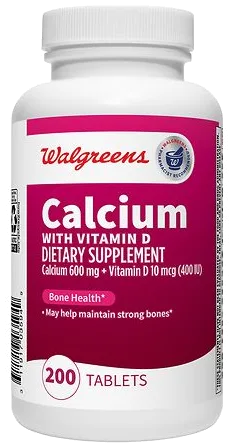
Finest Nutrition Calcium 600 + D3 Review
Finest Nutrition Calcium 600 + D3 is a Walgreens house-brand dietary supplement. Walgreens has since rebranded Finest Nutrition as "Walgreens" products. The supplement combines elemental calcium (600 mg per serving) with vitamin D3 (cholecalciferol). Retail listings show the D3 dose as 20 mcg (800 IU). It is sold mainly as tablets, with larger-count bottles for long-term use. Related Finest Nutrition calcium products come as softgels. The product is meant to support bone and teeth health and to help close gaps in dietary calcium intake. I found no ingredient panel for this exact product, so the details below are general and may not match the label. Calcium is the main mineral in bone. About 99% of the body's calcium is stored in the skeleton as hydroxyapatite crystals. These crystals give bone its hardness and also act as a reservoir. The remaining 1% circulates in blood and tissues. It is needed for nerve signaling, muscle contraction, blood clotting and cell signaling. The body keeps blood calcium in a narrow range. When dietary intake is too low, parathyroid hormone (PTH) is released. PTH draws calcium out of bone, which over time can lower bone density. A calcium supplement supplies an external source, so the body relies less on skeletal stores. Vitamin D3 is what makes calcium absorption efficient. Without enough vitamin D, the gut absorbs only about 10–15% of dietary calcium. With adequate vitamin D, absorption rises to roughly 30–40%. D3 is converted in the liver to 25-hydroxyvitamin D. The kidney then converts that to calcitriol, the active hormone. Calcitriol binds the vitamin D receptor in intestinal cells. This increases production of calcium-transport proteins, including TRPV6 channels and calbindin, which move calcium from the gut into the blood. Vitamin D also supports bone mineralization and muscle function. The calcium form matters for absorption. Calcium carbonate is the most common form in budget products. It contains the most elemental calcium per tablet, but it needs stomach acid, so it is best taken with food. Calcium citrate absorbs well with or without food. Absorption is also better in doses of 500 mg or less at a time. A 600 mg serving is therefore often split, or taken with a meal. Check the label for the actual form and serving size. Typical use is one tablet, or as directed on the label, usually with a meal. Calcium can interfere with some medicines, such as thyroid hormone, certain meds and meds, so these should be spaced apart. Excess calcium may cause constipation, gas or bloating. People with kidney stones, kidney disease or hypercalcemia, and anyone on meds, should talk to a clinician first. Total daily calcium from food and supplements should stay under established upper limits, generally 2,000–2,500 mg for adults.
We don’t sell supplements. We help you make decisions and get the best price.
Lowest prices
We may earn a commission from some store links. How we choose.
Finding the lowest prices at the stores now. This takes a few seconds.
Products with nearly the same formula (Matched on the main ingredients)
Study, Trial or Testing Result Summary
Members Only25 human studies · 7 improved
Vitamin D here comes to about 1,600 units a day, above the 700 to 800 units that worked in studies. In older adults, 700 to 800 units a day cut hip fractures by about a quarter, while 400 units did not help [1]. Other reviews found no clear drop in fractures [2], and in women after menopause without thinning bones a fracture benefit could not be confirmed [3]. Children whose mothers took vitamin D during pregnancy had denser bones [4]. Calcium here is about 1,200 milligrams a day. In women with thinning bones after menopause, calcium plus vitamin D slightly improved pelvic bone density but not spine or hip density, and did not reduce fractures [5]. Small older calcium trials showed no clear gain in bone mineral [6], though bone stayed stable over two years at 1,200 milligrams a day [7]. Higher dietary calcium was linked with denser bones in some surveys [8], sometimes only in women [9], and in another study it was unrelated to bone loss [10]. Overall the evidence is mixed: modest density gains, but no consistent fracture benefit. Animal and cell studies are never counted.
See all 25 studies →Hide the studies
- In 11 trials of 43,869 postmenopausal women with osteoporosis, calcium plus vitamin D modestly improved pelvic bone density but not spine, neck of femur or total hip density, and did not reduce fractures.The effects of combined calcium and vitamin D supplementation on bone mineral density and fracture risk in postmenopausa…
- This review of smartphone apps for osteoporosis self-management did not test vitamin D supplements and found no significant effect on vitamin D intake.Digital Health Technologies for Long-term Self-management of Osteoporosis: Systematic Review and Meta-analysis.
- In trials of older adults, 700 to 800 IU a day of vitamin D cut hip fracture risk by 26% and other nonvertebral fractures by 23%, while 400 IU a day gave no significant benefit.Fracture prevention with vitamin D supplementation: a meta-analysis of randomized controlled trials.
- Across nine studies, vitamin D3 did not significantly reduce nonvertebral or vertebral fractures versus placebo or calcium alone, with only a borderline trend toward fewer falls.The effect of cholecalciferol (vitamin D3) on the risk of fall and fracture: a meta-analysis.
- In 23 trials of 1,209 kidney transplant recipients, vitamin D analogues (2 trials, 51 patients) improved lumbar spine and femoral neck bone density versus no treatment, but no trial showed fewer fractures.Interventions for preventing bone disease in kidney transplant recipients: a systematic review of randomized controlled …
- In 18 small trials of 576 children with chronic kidney disease, vitamin D preparations lowered parathyroid hormone levels, but there were few data on growth or bone deformities and no clear differences between preparations.Interventions for metabolic bone disease in children with chronic kidney disease.
- One small trial of 39 people with sickle cell disease found vitamin D3 for six weeks raised blood vitamin D and reduced pain days versus placebo, but no bone outcomes were reported and the evidence was low quality.Vitamin D supplementation for sickle cell disease.
- In nine trials of postmenopausal women without osteoporosis, vitamin D raised blood vitamin D and improved some bone remodeling measures, but only one study found fewer fractures, so a fracture benefit could not be confirmed.Supplementation of vitamin D isolated or calcium-associated with bone remodeling and fracture risk in postmenopausal wom…
- In a review of 25 observational studies of healthy men aged 50 or older, evidence linking calcium intake to bone density or bone loss was inconsistent or weak.Risk factors for low BMD in healthy men age 50 years or older: a systematic review.
- In 500 elderly women with Alzheimer disease who all took 1000 IU of vitamin D2 plus calcium, adding risedronate for 18 months raised bone density 4.1% and cut hip fracture risk compared with placebo, but vitamin D itself was not tested alone and the paper was retracted.The prevention of hip fracture with risedronate and ergocalciferol plus calcium supplementation in elderly women with Al…
- Children whose mothers took 1000 IU of vitamin D3 daily during pregnancy had higher whole-body bone mineral content and density at ages 6-7 than children whose mothers took placebo.Pregnancy vitamin D supplementation and offspring bone mineral density in childhood follow-up of a randomized controlled…
- In 242 elderly men with Parkinson disease who all took 1000 IU of vitamin D2, adding risedronate for 2 years raised bone density, but vitamin D was not compared against placebo and the paper was retracted.Risedronate and ergocalciferol prevent hip fracture in elderly men with Parkinson disease.
- In 39 older women with severe osteoporosis, 1200 mg of calcium daily with or without 25-hydroxyvitamin D for two years kept bone mineral content stable in both groups, with improved bone mineralization rate in both groups.Histomorphometric effects of calcium or calcium plus 25-hydroxyvitamin D3 therapy in senile osteoporosis.
- In 40 postmenopausal women with wrist fracture, 1 g of calcium daily for one year had no significant effect on femur bone mineral content compared with placebo.Bone mineral content in women with Colles' fracture: effect of calcium supplementation.
- In 2904 US adults aged 60 and over, higher dietary calcium was linked with higher lumbar bone density, but this link held in women and not in men.Association between Dietary Calcium Intake and Bone Mineral Density in Older Adults.
- In 1479 elderly Japanese men, greater milk intake was linked with higher hip and femoral neck bone density and lower bone turnover, though this link weakened after accounting for calcium intake.Greater milk intake is associated with lower bone turnover, higher bone density, and higher bone microarchitecture index…
- In 1098 adults aged 65 and over, higher dietary calcium intake was linked with higher bone density at the hip and spine, while higher urinary sodium was linked with lower bone density.Dietary intake, blood pressure and osteoporosis.
- In 698 placebo-group women over 65 with osteopenia, averaging 886 mg of dietary calcium a day over 6 years, calcium intake was unrelated to bone loss at any site.Dietary Calcium Intake and Bone Loss Over 6 Years in Osteopenic Postmenopausal Women.
- In a survey of 452 women in Alaska, dietary calcium intake was low (about 306 mg a day on average), but the survey did not test calcium supplements, so it shows no effect of calcium on bone.Risk factors for osteoporosis in Alaska Native women: a cross-sectional survey.
- In Tuscany, Italy, most people who broke a hip from 2011 to 2015 were not taking vitamin D supplements, and only 30-35% were on cholecalciferol one year after the fracture; no bone outcome was measured against a comparison group.The use of cholecalciferol in patients with hip fracture.
- Among 173 adults aged 35 to 50, about a quarter had osteopenia; bone density correlated with exercise in women and in the opposite direction in men, and no calcium-specific result was reported.Bone Mineral Density Among Men and Women Aged 35 to 50 Years.
- In a 2-year cross-sectional study of 116 pre- and post-menopausal obese and non-obese women, daily vitamin D and calcium intake was low and osteoporosis was less common in obese women, though blood vitamin D levels were within normal range.Dietary Pattern and Bone Health in Pre and Post-menopausal Obese Women.
- In 52 Parkinson's patients compared with 52 matched controls, lower bone density was seen, and insufficient calcium intake was among the factors related to low bone density.Prevalence and risk factors of osteoporosis in patients with Parkinson's disease.
- In 70 people taking meds, a dedicated bone clinic found many with bone loss; early results showed bone density rose 3 to 5 percent with drug and lifestyle measures, including calcium and/or vitamin D in 44 people.Read the study on PubMed (10678299) →
- In 42 Iranian adults with hemophilia, low bone density was very common, and only cigarette smoking was significantly linked to it, not calcium intake.Bone mineral density in hemophilia patients.
Review Totals and Summary
Members Only53 reviews
This summary is based on a limited sample of what I could retrieve. It covers reviews of the Finest Nutrition and Walgreens-branded calcium and D3 line, including the closely related 1200 mg softgel on Amazon. I did not find a large body of reviews for the exact 600 + D3 tablet. Treat the themes below as indicative, not exhaustive. Customers mostly value that the product is a dependable, affordable way to meet a doctor's advice on calcium and vitamin D. One reviewer bought it for her mother after her physician recommended a high daily calcium dose. Shoppers like the value of large-count bottles that last many months. Walgreens also runs frequent buy-one-get-one promotions, which reinforces that cost advantage. Several people say they have bought it for years and trust the brand. Pill size comes up often, and opinions differ. Some buyers call the softgels large. Others say they are soft and gel-like and easy to manage, so they take them in the morning and evening after meals. Others describe them as small and easy to swallow. Dosing across two meals is a common routine, which fits the limits on how much calcium the body absorbs at once. The most notable complaint concerns changing formulations. One long-time buyer said an earlier version was largely free of gluten, grains and dairy. After a reorder, the product had several extra additives beyond a simple base, so she stopped buying it. People with dietary restrictions should check the current label. The Walgreens rebrand, with "new look, same quality" packaging, may also contribute to this kind of confusion. Packaging may vary between batches. Overall, satisfied customers describe a simple, low-cost, effective supplement with no complaints about side effects. Dissatisfied customers focus on inactive ingredients and changes in the product over time, not on effectiveness.
Biohacker Summary
Members Only8 of 10 recommend it
On calcium, the main ingredient, the panel is mostly lukewarm: three of ten recommend it, six are neutral, and one warns. Those who recommend it point to bone strength, with one giving a daily intake of 1,000 to 1,200 milligrams from food or supplements as calcium carbonate or calcium citrate, and another noting calcium also matters for nerves, muscles and the heart. Several neutral voices simply name food sources such as dairy, sardines and kale, and one is only considering whether he needs a supplement. The one caution is that calcium alone will not fix bone loss, because bone also depends on collagen and other minerals. Vitamin D is a smaller ingredient in this product, and nearly everyone on the panel recommends or takes it, often at higher doses than this product contains.
See all 10 biohackers →Hide the biohackers
Dr. Eric Berg · Calcium · warns
- Warns that bone loss cannot be fixed with just calcium, as bone is primarily collagen with other essential minerals.
- Dr. Berg warns that the recommended daily intake for vitamin D is based on a massive error and that the actual necessary amount is closer to 8,895 IU, with millions remaining deficient.
- Recommends getting vitamin D levels tested to ensure they are between 50 and 70, as vitamin D is intimately involved in regulating prostate size.
- Recommends taking at least 10,000 IUs of vitamin D3 every single day in the winter, stating it is the most important vitamin to lower cancer risk.
- Recommends vitamin D to support the immune system, aiming for blood levels between 80 to 100 ng per ml.
- Recommends taking no less than 10,000 IU's of vitamin D3 for osteoporosis, alongside magnesium and K2.
- Recommends increasing vitamin D to restore balance and support healthy blood pressure.
- States that a lack of vitamin D can potentially cause achy bones or crashing mood.
- States that vitamin D is intimately involved in the immune system and recommends taking at least 10,000 IUs each day.
- States that taking high doses of vitamin D3 for 14 days can improve mood, sleep, low back pain, skin issues, and blood pressure, as well as act as a natural anti-inflammatory and reduce susceptibility to sickness.
- Mentions that grass-fed liver has vitamin D.
- Dr. Berg includes calcium carbonate among the synthetic supplements to avoid.
- Warns against calcium carbonate, also known as limestone, stating that while it lowered hip fractures in a study, it also increased kidney stones and is not good for arteries, requiring the body to work hard to use it.
- Notes that tannins in tea bind calcium, blocking its absorption.
Siim Land · Calcium · neutral
- Lists dairy and sardines as sources of Calcium.
- Advises against taking vitamin D in the morning with other supplements because it is fat soluble and requires dietary fat for better absorption.
- Recommends taking Vitamin D with fat for better absorption.
- States that Vitamin D connects biology to light and that UVB reaching the skin enables its production.
- Thinks vitamin D has some of the strongest evidence and is worth considering.
- Notes that Vitamin K2 pairs well with vitamin D by regulating calcium and bone mineralization.
- Recommends taking vitamin D supplements with some fat to maximize its absorption, suggesting with food or a teaspoon of olive oil.
- Notes that taking vitamin D3 with a fat-containing meal resulted in 32% higher peak blood vitamin D levels.
- Recommends taking Vitamin D in the morning or at lunch with fat.
- Notes that Boron reduces calcium/magnesium loss.
- Notes that Boron improves vitamin D.
- Recommends Vitamin D because microglia contain Vitamin D receptors, and Vitamin D helps keep the immune system properly regulated, with low levels associated with greater neuroinflammation and a higher risk of autoimmune conditions.
- Recommends a high calcium intake for bone health.
- Places calcium supplementation in the 'bad tier' due to its association with increased cardiovascular events, recommending dairy or bones as easier ways to get calcium, though it can be useful for postmenopausal women with low bone density.
Thomas DeLauer · Calcium · neutral
- Notes that milk contains 120mg of calcium, while sardines contain 351mg, highlighting a 3x difference.
- Uses vitamin D3 in the fall and winter months when getting less sun, as it's important to supplement it then.
- Recommends taking a massive amount of vitamin D simultaneously with an early morning massive breakfast to help reset circadian rhythms and address hyperphagia.
- Recommends Vitamin D, stating that it has receptors throughout the brain and deficiency can quickly impact brain and mood.
- Takes supplemental vitamin D because he is skin sensitive and from northern latitudes, limiting his UV exposure.
- Recommends taking vitamin D on non-liver days to ensure both nutrients get proper receptor access.
- Takes Purity's liquid vitamin D3 with K2 because she is constantly inside during the day; D3 is for overall wellness and K2 helps the body absorb calcium properly.
- Recommends getting vitamin D, suggesting it can be obtained while walking.
- States that vitamin D is best obtained from the sun, but getting it from food definitely helps, and notes its role as a hormone influencing many cells.
- Recommends D3, suggesting a dose of 2000-4000 IU, and notes that MK-7 slowed bone loss over three years.
- Recommends vitamin D, especially for Hashimoto's, explaining that it drives T reg expansion to suppress autoimmune responses that attack the thyroid, and notes that vitamin D and selenium deficiencies often co-occur.
- Recommends getting calcium, along with vitamin D, zinc, and magnesium, from foods like sardines, as they are important for inflammatory pathways in the gut.
- Explains that eating sardines with their soft bones provides a serious hit of calcium, which is a perfect combination for bones and may contribute to satiety.
- Mentions that magnesium and calcium should not be taken together as they cancel each other out.
Dr. Mark Hyman · Calcium · recommends
- Notes that calcium is in bones but is also essential for nerves, muscles, and the heart, and low levels can affect muscle function and heart rhythm.
- Recommends Vitamin D for health, stating that amazing things happen when patients' vitamin D statuses reach optimal levels.
- Mentions vitamin D as an existing biomarker that plays a role in mental health, which Function Health includes in their measurements.
- Notes that vitamin D plays a role in immune function.
- Recommends checking vitamin D levels and states that if they had to pick one single intervention for immune health, vitamin D would be it.
- Dr. Hyman discusses vitamin D in relation to sun exposure patterns.
- States that vitamin D supplementation can help with oxidative stress.
- Mentions vitamin D as a key nutrient for supporting immune function.
- States that vitamin D is probably the single most important intervention for immune health, recommending levels of 45 to 70 and emphasizing testing to determine the right dose.
- Notes that rickets, which causes terrible bone deformities, is caused by vitamin D deficiency.
- Notes that vitamin D is an important nutrient for brain performance and aging, and that many people have gaps in these nutrients.
- States that green leafy vegetables are great sources of calcium.
- Notes that calcium needs are lower than advertised and that stress, soda, and excess sugar can drive calcium loss.
- Does not prescribe calcium supplements at all, teaching people to get it from whole foods instead, because calcium supplements don't work for building bones or preventing fractures, and it's bone quality, not density, that matters.
Dr. Rhonda Patrick · Calcium · neutral
- Mentions that kale delivers calcium, a micronutrient many diets fall short on.
- Vitamin D supplementation was linked to a 40% lower risk of dementia in an observational study of more than 12,000 older adults.
- Mentions that vitamin D also plays a role in maintaining muscle mass.
- Recommends ensuring adequate vitamin D intake for men's sperm health.
- Vitamin D and strength training alone did not, but adding them strengthened the effect on one clock, with the full combination slowing that measure by ~3.8 months.
- Lutein and zeaxanthin can also be obtained from certain multivitamins.
- Recommends Vitamin D, noting it regulates over 5% of the genome, including genes involved in immune defense, neurotransmitter synthesis, and longevity, and correcting deficiency may slow epigenetic aging.
- Uses Vitamin D3 as an example of a supplement that an AI model could track to see its impact on other metrics like glucose levels.
- Recommends Vitamin D, explaining that it regulates over 5% of the genome, including genes involved in immune defense, neurotransmitter synthesis, and longevity.
- Combining omega-3s with vitamin D and exercise has an additive effect, translating to ~3 months of slowed biological aging.
- The effect got stronger when omega-3 was combined with vitamin D and resistance training, with the full stack delaying phenotypic aging by about 3.8 months.
- Notes additional gaps in calcium.
- Reports that alcohol use disorder is associated with a 20-50% greater prevalence of Calcium deficiency.
- Around 38% doesn't meet the requirement for calcium.
Dave Asprey · Calcium · neutral
- Notes that when energy intake is too low for training demand, nutrient intake often falls short, especially for calcium, which is associated with reduced bone health.
- Takes Vitamin DAKE from Suppgrade Labs.
- Suggests that vitamin D supports brain health, muscle function, and focus.
- Host Dave Asprey explains why correcting a vitamin D deficiency still makes sense for male fertility, even though supplementation did not improve overall semen parameters in a randomized trial.
- States that currently, he is only taking vitamin C and vitamin D.
- Recommends vitamin D, noting it's actually a hormone and that most people are deficient, even those who take it, because they don't take enough.
- States that most people on the spectrum are low in vitamin D and need more of it, mentioning his own product, Vitam DAKNE, which contains real vitamin A.
- Dave Asprey recommends Vitamin D3 with K2, explaining D3 is a hormone made from sunlight and K2 directs calcium into bones, not arteries, highlighting its low cost, widespread deficiency, and the ability to test its effectiveness.
- Recommends Vitamin D as one of the most important supplements for overall health.
- Takes Vitamin DAKE from Suppgrade Labs because D3, A, K2, and E work together.
- Mentions taking vitamin D in the morning, comparing it to the daily dosing of testosterone.
- Explains that calcium provides the raw material for bones, but it isn't a standalone input and needs a whole system to be effective.
- Notes that people take calcium for their bones.
- Warns that taking calcium without vitamin D, A, and K2 can lead to calcium going into tissues, causing bone spurs and other issues, and recommends a two-to-one ratio of calcium to magnesium.
Ben Greenfield · Calcium · neutral
- Is considering whether he needs a calcium supplement because lead can displace calcium in bones, affecting bone strength.
- Notes that Vitamin D is actually a hormone and recommends patients aim for levels around 40 to 50, or even 60 for fracture healing, for optimal healing, as opposed to just above 20 which is considered normal.
- Mentions vitamin D as part of a bare-minimum protocol.
- Advises getting vitamin D levels between 60 and 100 nanograms per milliliter as a minimum step for overall health and to slow down heart disease.
- Has been taking Vitamin D3 K2 for over a decade.
- Notes that sunlight influences more than just vitamin D production.
- Recommends keeping vitamin D levels high, suggesting that a supplement is probably not a bad idea, especially given that many people are deficient due to spending most of their time indoors.
- Recommends getting enough vitamin D for blood pressure management.
- Recommends optimizing vitamin D levels to a serum score of around 50 to 80 nanograms per milliliter, as deficiency is linked to tinnitus volume and can assist with it.
- Recommends using hormone building blocks like vitamin D for hormone optimization.
- Mentions calcium as a common deficiency.
- Notes that vitamin D deficiency is the most common deficiency.
- Recommends adequate intake of calcium for bone strength.
- Is using calcium chloride mixed with PRP before injecting for the P-shot.
Peter Attia · Calcium · recommends
- Recommends calcium as one of the 'big three' micronutrients for bone health, suggesting a daily intake of 1,000 to 1,200 milligrams, which can be supplemented with calcium carbonate or calcium citrate.
- Lists vitamin D as one of her staple supplements.
- Notes that several studies show patients taking vitamin D can reduce TPO levels and prolong the honeymoon period of Hashimoto's disease.
- States that in mouse studies, there was a combined effect of alpha ketoglutarate with vitamin D for both sexes.
- Uses vitamin D as an example of how people might dismiss its efficacy due to failed clinical trials that didn't adjust the dose or measure levels.
- In mouse studies, Peter Attia's team found a combined effect of AKG with Vitamin D for both sexes.
- Suggests that supplementing with lots of vitamin D might help overcome the negative effects of phenytoin on bone health by improving calcium absorption, though he is unaware of studies on this.
- Recommends Vitamin D3 as one of the 'big three' micronutrients for bone health, suggesting a daily intake of 800 to 1,000 IU, which can be obtained through sunlight or supplementation.
- Explains that bone is 50 to 70% mineral, predominantly calcium, and that virtually all of the body's calcium is contained within bone, making bone important for calcium homeostasis.
- Suggests that supplementing with lots of vitamin D might overcome the negative effects of phenytoin on bone health by counteracting increased catabolism of vitamin D and subsequent decreased calcium absorption.
- Recommends vitamin D for people who tend to be vitamin D deficient, such as those living in Portland, Oregon.
- Discusses evaluating vitamin D, understanding deficiency, and optimal levels.
- Recommends calcium for bone health, stating that teenagers probably need about 1000 milligrams a day.
- Discusses bone acting as a reservoir for calcium and how resorption and formation release calcium into the blood when needed.
Bryan Johnson · Calcium · recommends
- Recommends calcium as a mineral that, along with phosphorus, magnesium, and boron, is deposited to fortify the bone structure after the collagen scaffold is in place.
- Takes 5000 IU of Vitamin D3 in the morning for general health.
- Takes 5000 IU of Vitamin D3 in the morning for general health.
- Mentions that the sunlight assessment claims low vitamin D levels cause the immune system to misfire, and notes that their vitamin D has been measured.
- Takes 5000 IU of Vitamin D3 in the morning for longevity.
- He takes 5000 IU of Vitamin D3 in the morning for general health.
- Takes 5000 IU of Vitamin D3 in the morning for general health.
- Takes 5,000 IU of Vitamin D3 in the morning for longevity.
- Takes 5,000 IU of Vitamin D3 in the morning.
- Takes 5,000 IU of Vitamin D3 in the morning.
- He takes 5000 IU of Vitamin D3 in the morning for general health.
- Agrees that a little extra calcium is probably okay, especially for women, to really hit home for bone mineral density.
- Recommends prioritizing calcium intake for postmenopausal women to help maintain bone density and reduce the risk of osteoporosis.
- Bryan Johnson takes Calcium daily as part of his Longevity Mix, which supports healthy bones and teeth.
Andrew Huberman · Calcium · neutral
- Discusses "hard water" and the role of magnesium and calcium in cardiovascular health.
- Notes that most people are probably deficient in vitamin D and benefit from supplementing, but there's no point in doing it unless you're deficient for most things.
- Takes 5,000 IU of Vitamin D3 in the morning for longevity.
- Takes 5000 IU of Vitamin D3 in the morning for general health.
- States that Vitamin D is one of the critical nutrients with the best evidence for cognitive function and reducing the risk of dementia.
- Takes 5000 IU of Vitamin D3 in the morning.
- He takes 5,000 IU of Vitamin D3 in the morning for overall health.
- Takes 5000 IU of Vitamin D3 in the morning.
- Takes 5,000 IU of Vitamin D3 in the morning for general health.
- Takes 5000 IU of Vitamin D3 every day for longevity.
- Takes 5,000 IU of Vitamin D3 in the morning.
- Adequate intake of calcium is vital for bone health.
RAL Summary
Members OnlyTier 4 for Bone Health
The review summary mainly describes other items in the line, such as the 1200 mg softgel, not this 600 mg plus D3 tablet, so those themes are set aside. Its reviews are set aside, so it is graded on its studies alone. Human studies support Calcium (5 of 15 human studies showed an improvement), but there are not yet enough reviews to confirm it (0).
- Emerging: not enough evidence to rank higher yet.
Where the evidence disagrees: 9 of the 25 human studies found no effect.
More Details
Members OnlyBody systems · Combine with · Possible side effects
Body systems: Skeletal system, Endocrine system
Combine with: For bone health, pair this with vitamin K2 (MK-7) to help direct calcium into bone rather than soft tissue, and magnesium (glycinate or citrate) which is needed for vitamin D activation and calcium balance. Boron, collagen peptides, and weight-bearing exercise with adequate protein further support bone density. Take calcium carbonate with food for better absorption and separate it from iron, meds, and certain meds by a few hours. If blood sugar support is the real goal, look at a separate product with berberine, chromium picolinate, alpha-lipoic acid, or cinnamon extract, and consult a healthcare provider, especially if taking meds.
Possible side effects: No major side effects reported.
Supplement Facts
Vitamin D3 800 IU · Calcium 600 mg
| Vitamin D3 | 800 IU | |
| Calcium | 600 mg |
Other ingredients: Contains 2% of:.
Directions: Adults, take one tablet twice daily with food or as directed by your physician. Warnings As with any supplement, if you are pregnant or nursing a baby, or are taking medication, consult your doctor before using this product.
Label source: NIH label database · Report a label change
Show entire label

More bone health products
Members OnlyThe highest ranked for the same goal
Read more
Our articles on this subject
- What Supplements and Vitamins Should Not Be Taken TogetherArticle · Sep 7, 2026
- When Is the Best Time to Take Vitamins and Supplements?Article · Jun 15, 2026
Graded November 5, 2026 by the Reverse Age Lab evidence engine, from human studies, real reviews and our biohacker panel. How we grade. Is this medical advice? No. Rala organizes the published evidence; go over any change with your doctor, especially if you take meds.
Privacy policyConsumer health dataAffiliate disclosureTermsDo Not Sell or Share My Personal InformationCookie settings