
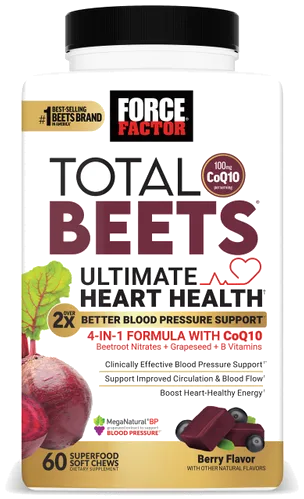
Force Factor Total Beets Ultimate Heart Health Blood Pressure Support Soft Chews with CoQ10, Beet Root Powder, MegaNatural®BP Grape Seed Extract, Blood Pressure Supplement for Circulation & Blood Flow, Black Cherry Review
This is a soft chew supplement sold as Force Factor Total Beets Ultimate Heart Health Blood Pressure Support, in Black Cherry flavor. The front of the package lists CoQ10, Beet Root Powder and MegaNatural®BP Grape Seed Extract. The serving size is 2 soft chews, and each container holds 30 servings. Per serving, the label prints 45 calories, 1 g total fat, 0.5 g saturated fat, 8 g total carbohydrate, 4 g total sugars, 4 g added sugars, 10 mg sodium, 20 mg niacin, 4 mg vitamin B6 and 50 mcg vitamin B12. It also lists the Total Beets Triple-Action Heart-Health Blend. The amount printed beside the blend in the facts panel reads 0. Other ingredients are tapioca syrup, raw cane sugar, palm oil, gum arabic, sunflower lecithin (an emulsifier), natural flavor, fruit and vegetable juice (for color), citric acid and sea salt. No directions are printed in the label text provided, so check the package for how to use it.
We don’t sell supplements. We help you make decisions and get the best price.
Lowest prices
We may earn a commission from some store links. How we choose.
We hold no current store prices for it yet: check the store.
- AmazonPrice at AmazonCheck price at Amazon (opens in a new tab)
Some links earn us a commission; price comes first, and a commission only decides the order of prices within 2%. As an Amazon Associate we earn from qualifying purchases.
Products with nearly the same formula (Matched on the main ingredients)
Study, Trial or Testing Result Summary
Members Only141 human studies · 50 improved
3 of these 141 human studies gave the ingredient by drip or injection, not by mouth.
Beetroot is the ingredient with the best support for blood pressure, but this product hides its amount inside a blend, so it is unknown whether it matches studied doses. In pooled trials, beetroot juice lowered the top number by about 3.6 points and the bottom number by 1.3 points, with bigger effects at higher doses and longer use [1]. In adults with high blood pressure the top number fell about 5 points, but the bottom number and all-day readings did not change [2][3]. Home and all-day monitoring often showed no clear change [4], and one review found benefit in healthy people but not in those with high blood pressure [5]. Niacin at full dose here mostly did not lower blood pressure in controlled trials, even at much higher doses [6][7][8]. Vitamin B6 also showed no change in a large, long trial [9]. Lowering was only seen at far higher doses with folic acid [10]. Vitamin B12 here is a trace amount. It helped dialysis patients only at 1000 micrograms with folate [11]. Larger trials found no blood pressure change [9][12]. Animal and cell studies are never counted.
See all 141 studies →Hide the studies
- In a review of 277 trials with about 992,000 adults, vitamin B6 supplements had no significant effect on death or cardiovascular disease outcomes such as heart attack and stroke.Effects of Nutritional Supplements and Dietary Interventions on Cardiovascular Outcomes: An Umbrella Review and Evidence…
- Across 25 trials of 131,134 people (5 using niacin), lowering a blood fat particle called apolipoprotein B did not predict heart risk better than standard cholesterol measures; blood pressure was not studied as an outcome for niacin.Meta-analysis of comparison of effectiveness of lowering apolipoprotein B versus low-density lipoprotein cholesterol and…
- In 18 trials of 69,515 people, niacin and similar drugs did not reduce heart-related deaths, though niacin reduced heart attacks and procedures to reopen arteries and caused more diabetes; worsening high blood pressure occurred with the other drug type, not niacin.Effects of HDL-modifiers on cardiovascular outcomes: a meta-analysis of randomized trials.
- Across 14 trials with 54,913 people, B vitamin supplementation slightly reduced stroke risk overall, with benefit seen mainly in people with systolic blood pressure above 130, but no clear benefit tied to vitamin B12 dose or blood level.Vitamin B supplementation, homocysteine levels, and the risk of cerebrovascular disease: a meta-analysis.
- Across 22 trials with 650 people in beetroot juice groups and 598 in control groups, beetroot juice lowered systolic blood pressure by 3.6 mmHg and diastolic by 1.3 mmHg, with larger effects for longer use and higher doses.The Nitrate-Independent Blood Pressure-Lowering Effect of Beetroot Juice: A Systematic Review and Meta-Analysis.
- Across eleven trials of 349 adults with high blood pressure, beetroot juice lowered clinic systolic blood pressure by about 5.3 mmHg versus placebo, but did not change diastolic or 24-hour blood pressure.Effects of beetroot juice on blood pressure in hypertension according to European Society of Hypertension Guidelines: A …
- Across thirteen trials of 325 adults taking nitrate or beetroot juice for 1 to 6 weeks, clinic systolic blood pressure fell by 4.1 mmHg and diastolic by 2.0 mmHg, but 24-hour and home monitoring showed no significant change.Medium-term effects of dietary nitrate supplementation on systolic and diastolic blood pressure in adults: a systematic …
- Across sixteen short crossover trials of 254 adults lasting 2 hours to 15 days, nitrate or beetroot juice lowered systolic blood pressure by 4.4 mmHg, while the diastolic drop of 1.1 mmHg was not significant.Inorganic nitrate and beetroot juice supplementation reduces blood pressure in adults: a systematic review and meta-anal…
- Across twelve trials of 246 adults lasting 1.5 hours to 28 days, nitrate or beetroot improved blood vessel function compared with placebo, with less benefit in older people and those at higher cardiometabolic risk.Effects of inorganic nitrate and beetroot supplementation on endothelial function: a systematic review and meta-analysis…
- Across seven trials of 218 adults with hypertension taking 70-250 mL of beetroot juice daily for 3 to 60 days, systolic blood pressure fell by about 5 mmHg versus control, but diastolic pressure did not significantly change.Nitrate Derived From Beetroot Juice Lowers Blood Pressure in Patients With Arterial Hypertension: A Systematic Review an…
- Across eight trials of 199 adults with obesity, dietary nitrate slightly lowered systolic blood pressure, cholesterol and triglycerides, but did not change diastolic blood pressure, body weight or body mass index.The effect of dietary nitrate on weight management: a systematic review and meta-analysis.
- In 150 people with chronic heart failure, combined synthetic B vitamins including pyridoxine slightly raised systolic, diastolic and central venous pressure while lowering heart rate and raising the heart's pumping fraction.B Vitamins as Adjunctive Treatment for Chronic Heart Failure.
- Pooling eight trials in people with chronic lung disease, nitrate-rich beetroot juice did not change systolic or diastolic blood pressure compared with placebo.Efficacy of dietary nitrate-rich beetroot juice supplementation in patients with chronic obstructive pulmonary disease (…
- Across 19 articles, inorganic nitrate modestly lowered systolic blood pressure by 2.4 mmHg in healthy people but did not lower blood pressure in people with hypertension.Regulatory effect of dietary nitrate on blood pressure: a meta-analysis of randomized controlled trials.
- Pooling eight placebo-controlled trials in people with heart failure with preserved ejection fraction, nitrate or nitrite lowered resting systolic blood pressure and diastolic and mean pressures, especially during exercise, but did not improve exercise capacity.Efficacy and safety of inorganic nitrate/nitrite supplementary therapy in heart failure with preserved ejection fraction…
- In five observational studies of 63,155 adults, higher habitual vegetable nitrate intake was linked to lower heart disease risk and death, with benefits leveling off at moderate intake; blood pressure was not measured directly.Associations between Vegetable Nitrate Intake and Cardiovascular Disease Risk and Mortality: A Systematic Review.
- Across twelve small studies of 321 adults with raised blood pressure, nitrate sources including beetroot juice gave mixed results, with some lowering blood pressure and others showing no change, so evidence was judged insufficient.Effectiveness of dietary inorganic nitrate for lowering blood pressure in hypertensive adults: a systematic review.
- This review reports that vitamin B6 lowered blood pressure in animal studies, but the abstract gives no human results for blood pressure.Is the anti-hypertensive effect of dietary supplements via aldehydes reduction evidence based? A systematic review.
- This review of kidney disease patients suggested folate and cobalamin may help in later disease stages, but very high B vitamin doses might worsen heart relaxation problems; blood pressure was not directly reported.Demand for Water-Soluble Vitamins in a Group of Patients with CKD versus Interventions and Supplementation-A Systematic …
- In a review of 12 crossover trials in older adults, beetroot-based dietary nitrate had mixed heart and blood vessel results: six trials found better blood pressure and blood flow, and six found no improvement.Performance and Health Benefits of Dietary Nitrate Supplementation in Older Adults: A Systematic Review.
- A review of 11 randomized trials on beetroot juice concluded it may reduce blood pressure in healthy and hypertensive adults, though the authors noted that factors such as sex and other beetroot compounds need further study.Dietary Nitrate from Beetroot Juice for Hypertension: A Systematic Review.
- A systematic review found beetroot juice may lower blood pressure through nitric oxide, but high nitrate intake from it may form cancer-linked compounds, and the evidence on risks is limited.The benefits and risks of beetroot juice consumption: a systematic review.
- In 2,919 older adults with high homocysteine, two years of vitamin B12 plus folic acid lowered homocysteine but did not change artery stiffness or carotid artery wall thickness compared with placebo.Effects of 2-year vitamin B12 and folic acid supplementation in hyperhomocysteinemic elderly on arterial stiffness and c…
- In 2,501 people with prior cardiovascular disease, taking 3 mg of vitamin B6 with folate and B12 daily for about 4.7 years did not change blood pressure compared with placebo.Effect of B-vitamins and n-3 PUFA supplementation for 5 years on blood pressure in patients with CVD.
- In 1,002 adults taking quercetin with small amounts of vitamin C and niacin for 12 weeks, average blood pressure fell slightly versus placebo, but overall effects on disease risk factors were negligible.Influence of quercetin supplementation on disease risk factors in community-dwelling adults.
- In 508 treated hypertensive men followed about 6.6 years, a lifestyle and drug program (niacin was one of several drugs) lowered deaths to 16.2% from 25.1% with usual care, but blood pressure change was not reported.Mortality rates in treated hypertensive men with additional risk factors are high but can be reduced: a randomized inter…
- In 506 people after gastric bypass surgery, remission of high blood pressure over 5 years did not differ between the two bypass limb lengths, and the longer limb needed more vitamin B12 supplementation; this was not a test of B12 for blood pressure.Impact of Biliopancreatic Limb Length (70 cm vs 120 cm), with Constant 150 cm Alimentary Limb, on Long-Term Weight Loss,…
- In 298 Gambian women, 12 weeks of a drink powder with 5.2 mcg vitamin B12 or a multivitamin lowered homocysteine but had no effect on blood pressure or pulse compared with no intervention.A novel nutritional supplement to reduce plasma homocysteine in nonpregnant women: A randomised controlled trial in The …
- In 231 adults with prehypertension or hypertension, 300 mg of potassium nitrate daily for 5 weeks raised blood nitrate but did not lower 24-hour blood pressure compared with placebo.Renal handling of nitrate in women and men with elevated blood pressure.
- In 158 healthy siblings of patients with early artery disease, 250 mg of vitamin B6 plus 5 mg folic acid daily for 2 years lowered systolic blood pressure by 3.7 mm Hg and diastolic by 1.9 mm Hg versus placebo.Long-term homocysteine-lowering treatment with folic acid plus pyridoxine is associated with decreased blood pressure bu…
- In 146 high-risk men with heart disease, 2.5 years of niacin plus colestipol led to regression of artery lesions in 39% versus 11% on usual care, and lower systolic blood pressure was linked with regression.Regression of coronary artery disease as a result of intensive lipid-lowering therapy in men with high levels of apolipo…
- In 143 men and women with heart disease, one year of a three-drug combination including niacin plus lifestyle changes cut metabolic syndrome from 32% to 6%, versus 44% to 30% with placebo and lifestyle; blood pressure was one component but was not reported separately.The effect of gemfibrozil, niacin and cholestyramine combination therapy on metabolic syndrome in the Armed Forces Regre…
- In 124 children with type 1 diabetes, 100 mg of vitamin B6 daily for 8 weeks improved blood vessel dilation to normal levels while placebo showed no change; blood pressure itself was not reported as an outcome.Folate and vitamin B6 rapidly normalize endothelial dysfunction in children with type 1 diabetes mellitus.
- In 105 kidney patients with long-standing diabetes or hypertension, 16 weeks of extended-release niacin added to a med raised HDL cholesterol and nitrate levels more than a med alone; blood pressure was not reported.Association of high-density lipoprotein cholesterol with improvement of endothelial dysfunction recovery in renovascular…
- In 104 adults with mild hypertension and high homocysteine, a B vitamin blend including 3 mg of B6 for 2 months lowered homocysteine more than high-dose folic acid, but blood pressure results were not reported.Nutraceutical approaches to homocysteine lowering in hypertensive subjects at low cardiovascular risk: a multicenter, ra…
- In a placebo-controlled trial of 81 people with COPD, 12 weeks of daily nitrate-rich beetroot juice (400 mg nitrate) lowered home systolic blood pressure by about 4.5 mmHg more than placebo juice and improved blood vessel function and walking distance.Oral nitrate supplementation improves cardiovascular risk markers in COPD: ON-BC, a randomised controlled trial.
- In 80 resistance-trained men taking a multi-ingredient pre-workout supplement containing 60 mg niacin for 8 weeks, resting heart rate and blood pressure did not differ from placebo.Effects of ingesting a pre-workout dietary supplement with and without synephrine for 8 weeks on training adaptations in…
- In a placebo-controlled crossover study of 75 younger and older adults, 2 weeks of nitrate-rich beetroot juice lowered average arterial pressure in older adults by about 4 mmHg but had no effect in younger adults; the abstract does not give the daily dose.Ageing modifies the oral microbiome, nitric oxide bioavailability and vascular responses to dietary nitrate supplementat…
- In 72 healthy volunteers given up to 50.1 mg nicotinic acid, there was no physiologically relevant change in blood pressure, pulse or skin temperature, though flushing was sometimes possible at higher doses.Investigation of niacin on parameters of metabolism in a physiologic dose: randomized, double-blind clinical trial with …
- In 66 adults with early-stage high blood pressure, 16 weeks of high-nitrate vegetable powder (about 400 mg nitrate daily) lowered systolic blood pressure no more than a low-nitrate powder.No Difference between the Efficacy of High-Nitrate and Low-Nitrate Vegetable Supplementation on Blood Pressure after 16 …
- In 61 overweight or obese adults with insulin resistance, 2 g a day of extended-release niacin for 16 weeks did not change blood fat composition; blood pressure benefits were linked to the omega-3 treatment, not niacin.Treatment with omega-3 fatty acid ethyl-ester alters fatty acid composition of lipoproteins in overweight or obese adult…
- In a randomised crossover trial of 58 adults with mild untreated hypertension, six weeks of a vegetarian diet lowered systolic blood pressure by about 5 mm Hg, while vitamin B12 intake decreased.Vegetarian diet in mild hypertension: a randomised controlled trial.
- In 51 dialysis patients with hard-to-control high blood pressure, taking 1000 mcg of methylcobalamin plus 800 mcg of L-methylfolate daily for 3 months lowered blood pressure and homocysteine more than no treatment.Efficacy of L-methylfolate and methylcobalamin in treating resistant hypertension associated with elevated serum homocys…
- In 49 hospital patients with raised lung artery pressure, a single dose of 100 mg or 500 mg niacin did not significantly change lung artery pressure after 1 hour, though there was a small non-significant drop with 500 mg.A randomized pilot study on the effect of niacin on pulmonary arterial pressure.
- In 48 male coronary artery disease patients, two weeks of red beetroot betalain supplement lowered systolic and diastolic blood pressure, along with cholesterol and homocysteine, compared with placebo.Effects of betalains on atherogenic risk factors in patients with atherosclerotic cardiovascular disease.
- In 40 young men, 8 weeks of a vitamin capsule containing 0.8 mg vitamin B12 lowered homocysteine but did not change endothelium-dependent blood vessel dilation compared with placebo.Hyperhomocysteinemia and endothelial function in young subjects: effects of vitamin supplementation.
- In 40 healthy adults, a single 450 ml dose of beetroot juice (about 5.5 mmol nitrate) improved performance on a serial subtraction cognitive task and changed brain blood flow compared with placebo; blood pressure was not reported as an outcome.Dietary nitrate modulates cerebral blood flow parameters and cognitive performance in humans: A double-blind, placebo-co…
- In a crossover trial of 38 young adults, a single dose of beetroot juice lowered resting systolic blood pressure by a similar amount in Black and White adults, but the effect was seen in males and not in females.Acute beetroot juice reduces blood pressure in young Black and White males but not females.
- In 37 dialysis patients, a vitamin cocktail including 100 mg of B6 daily for 8 weeks did not change blood pressure, oxidative stress or inflammation compared with placebo.Antioxidant therapy does not ameliorate oxidative stress and inflammation in patients with end-stage renal disease.
- In 37 people with heart risk factors, an 8-week plant-based diet fell short on vitamin B12 intake, and the analysis did not link vitamin B12 to blood pressure.Does a Plant-Based Diet Stand Out for Its Favorable Composition for Heart Health? Dietary Intake Data from a Randomized …
- In 37 adults with treated hypertension, a single 500 mL serving of beetroot juice (11.5 mmol nitrate) improved endothelial function and heart pumping measures compared with placebo; the abstract does not report a change in blood pressure itself.Acute Effects of Dietary Nitrate on Central Pressure and Endothelial Function in Hypertensive Patients: A Randomized, Pl…
- In 36 kidney transplant recipients with high homocysteine, 6 months of daily B6 (50 mg) with folic acid and B12 lowered homocysteine and improved blood vessel dilation compared with placebo; blood pressure results were not reported separately.Treatment of hyperhomocysteinemia and endothelial dysfunction in renal transplant recipients with B vitamins in the Chin…
- In 34 people with diabetic kidney disease, 12 weeks of daily pyridoxine (80 mg) with lipoic acid (800 mg) lowered systolic blood pressure, urinary albumin and an oxidative stress marker compared with placebo, but diastolic blood pressure did not change significantly.Effects of combined lipoic acid and pyridoxine on albuminuria, advanced glycation end-products, and blood pressure in di…
- Over 14 days, adding high-nitrate beetroot juice to calorie restriction in 29 overweight adults did not change blood pressure more than calorie restriction alone, though it improved some vascular and thinking test scores.Caloric Restriction (CR) Plus High-Nitrate Beetroot Juice Does Not Amplify CR-Induced Metabolic Adaptation and Improves …
- In 27 adults with treated hypertension, one week of beetroot juice raised nitrate levels several-fold but did not lower inflammatory markers; the abstract does not report a blood pressure result.Increased nitrate intake from beetroot juice does not alter soluble cellular adhesion molecules and circulating inflamma…
- In a randomized, double-blind trial of 25 healthy young adults, a single dose of a pre-workout supplement containing 60 mg of niacin produced no clinically significant change in blood pressure compared with placebo.Effects of acute ingestion of a pre-workout dietary supplement with and without p-synephrine on resting energy expenditu…
- In 25 people with stable COPD, 8 days of beetroot juice lowered blood pressure during exercise compared with black currant juice placebo, but did not improve exercise performance or lung gas exchange.Influence of dietary nitrate supplementation on lung function and exercise gas exchange in COPD patients.
- In 24 younger and older adults, a single 150 mL dose of nitrate-rich beetroot juice lowered systolic blood pressure in both age groups, and lowered diastolic blood pressure more in older adults, compared with placebo.Acute Supplementation with Nitrate-Rich Beetroot Juice Causes a Greater Increase in Plasma Nitrite and Reduction in Bloo…
- In 21 patients with peripheral artery disease, eight weeks of sodium nitrate reduced the systolic blood pressure rise during a cold pressor test, while placebo did not.Sodium nitrate supplementation improves blood pressure reactivity in patients with peripheral artery disease.
- In 20 healthy adults aged 60 to 75, 7 days of beetroot juice did not change resting or exercise blood pressure, heart function, or markers of inflammation and oxidative stress compared with placebo.Dietary nitrate does not modify blood pressure and cardiac output at rest and during exercise in older adults: a randomi…
- In 20 healthy older adults, about 4 weeks of beetroot juice lowered systolic blood pressure by about 6 mmHg and diastolic by about 4 mmHg, while the placebo group showed no change.The Effects of Beetroot Juice on Blood Pressure, Microvascular Function and Large-Vessel Endothelial Function: A Randomi…
- In 20 healthy young men, a single beetroot drink sped up finger warming after cold water immersion compared with water, but did not change the cold-induced narrowing of finger blood vessels during immersion.Influence of acute beetroot juice supplementation on cold-induced vasodilation and fingertip rewarming.
- In 19 adults with pulmonary hypertension who dropped in oxygen during exercise, 140 mL of nitrate-rich beetroot juice lowered mean arterial blood pressure by about 3.9 mm Hg compared with nitrate-depleted juice.Dietary nitrate supplementation enhances exercise capacity in WHO Group 3 pulmonary hypertension: a double-blind, placeb…
- In 18 untreated hypertensives, a single dose of nitrate-rich beetroot juice lowered office and ambulatory blood pressure and reduced the blood pressure rise during handgrip exercise compared with a nitrate-depleted juice.Dietary nitrate improves muscle microvascular reactivity and lowers blood pressure at rest and during isometric exercise…
- In 18 men with abdominal obesity, a single drink containing potassium nitrate did not change blood vessel widening or blood pressure over 4 hours compared with a placebo drink.Acute Effects of Inorganic Nitrate Intake on Brachial and Femoral Flow-Mediated Vasodilation, and on Carotid Artery Reac…
- In 16 Division I male baseball players, 11 weeks of daily red spinach extract (2 g, 180 mg nitrate) during offseason training had no effect on blood pressure or heart rate compared with placebo.Influence of Dietary Nitrate Supplementation on Physical Performance and Body Composition Following Offseason Training i…
- In 15 people with type 2 diabetes taking a med, 1500 mg daily of prolonged-release niacin for 20 weeks improved small artery widening and stiffness and lowered triglycerides by 47%, but did not change blood pressure.Read the study on PubMed (20667937) →
- In a small 3-month trial of 15 adults with metabolic syndrome, a supplement blend containing vitamin B6 plus a Mediterranean diet lowered triglycerides, LDL cholesterol and glucose more than diet alone, though the vitamin B6 amount was not stated and blood pressure was not reported as an outcome.Effect of MetioNac® in patients with metabolic syndrome who are at risk of metabolic dysfunction associated fatty liver …
- In 15 people with COPD, six days of concentrated beetroot juice lowered diastolic blood pressure compared with baseline, but systolic blood pressure and walking distance did not change compared with placebo.Dietary beetroot juice - effects on physical performance in COPD patients: a randomized controlled crossover trial.
- In 15 people with pulmonary arterial hypertension, one week of nitrate-rich beetroot juice raised lung and blood nitric oxide compared with placebo, but blood pressure was not reported as improved and right heart function showed only a trend.Effects of Oral Supplementation With Nitrate-Rich Beetroot Juice in Patients With Pulmonary Arterial Hypertension-Result…
- In 8 hemodialysis patients and 7 healthy volunteers, a single 70 mL dose of beetroot juice (400 mg nitrate) raised plasma nitrate and nitrite but did not change blood pressure.Plasma Nitrate and Nitrite Kinetics after Single Intake of Beetroot Juice in Adult Patients on Chronic Hemodialysis and …
- In 15 older adults with treated hypertension, about 800 mg of nitrate daily from beetroot juice for 4 weeks raised blood nitrate but did not change clinic, home, or 24-hour blood pressure compared with placebo juice.Increased nitrate intake from beetroot juice over 4 weeks affects nitrate metabolism, but not vascular function or blood…
- In 15 healthy men, a single 140 ml dose of nitrate-rich beetroot juice lowered systolic blood pressure by about 7 mmHg and diastolic by about 6 mmHg compared with placebo, though responses varied from person to person.Inter-individual differences in the blood pressure lowering effects of dietary nitrate: a randomised double-blind placeb…
- In animal experiments, the active form of vitamin B6 lowered blood pressure in hypertensive rats, but in a small trial of 14 adults with hypertension, 600 mg pyridoxine hydrochloride changed breathing response only in those with high chemoreflex sensitivity and blood pressure results were not reported for people.Vitamin B6 (Pyridoxal 5' Phosphate) antagonises carotid body P2X3 receptors in hypertension.
- In 14 normotensive adults, a single dose of beetroot juice reduced sympathetic nerve activity but did not change resting or handgrip blood pressure compared with placebo.Acute beetroot juice supplementation on sympathetic nerve activity: a randomized, double-blind, placebo-controlled proof…
- In 14 patients with sleep apnea, a single dose of inorganic nitrate from beetroot juice prevented the early-morning rise in systolic blood pressure seen with placebo.Acute inorganic nitrate supplementation and the hypoxic ventilatory response in patients with obstructive sleep apnea.
- In a small pilot study of 13 cancer survivors, nitrate supplementation for 7 days or a single dose did not change resting or exercise blood pressure compared with placebo; the abstract does not give the daily dose.Inorganic nitrate supplementation may improve diastolic function and the O2 cost of exercise in cancer survivors: a pilo…
- In 13 young women, a single dose of nitrate-rich beetroot juice taken 2.5 hours before intense interval cycling lowered heart rate and perceived exertion compared with placebo; the abstract does not report a blood pressure change.Acute effects of various doses of nitrate-rich beetroot juice on high-intensity interval exercise responses in women: a …
- In 12 people with heart failure and preserved ejection fraction, potassium nitrate over 2 weeks lowered systolic blood pressure by up to about 18 mmHg and improved exercise duration and quality of life, though peak oxygen uptake did not significantly improve.Pharmacokinetics and Pharmacodynamics of Inorganic Nitrate in Heart Failure With Preserved Ejection Fraction.
- In 12 healthy older adults, a single dose of nitrate-rich beetroot juice lowered systolic, diastolic and mean blood pressure 3 hours later, while the nitrate-depleted juice did not.Acute Effects of Nitrate-Rich Beetroot Juice on Blood Pressure, Hemostasis and Vascular Inflammation Markers in Healthy …
- In 12 young men, a single dose of beetroot juice left arm blood pressure unchanged and lowered central blood pressure by about 2 to 4 mmHg, at morning, afternoon, or evening, and did not improve exercise endurance.Influence of acute dietary nitrate supplementation timing on nitrate metabolism, central and peripheral blood pressure a…
- In 12 adults, beetroot juice (12.8 mmol nitrate) lowered diastolic blood pressure by about 2 mmHg compared with placebo after one dose, and muscle strength development improved after two weeks of daily use.Relationships between nitric oxide biomarkers and physiological outcomes following dietary nitrate supplementation.
- In 11 healthy adults, a single 250 ml beetroot drink with high nitrate lowered mean arterial pressure at 4 hours, but systolic and diastolic pressure did not consistently fall.Pharmacokinetics of Nitrate and Nitrite Following Beetroot Juice Drink Consumption.
- In 11 healthy adults, beetroot juice taken before 3 hours of sitting prevented the leg's artery function from declining, but the abstract reports no blood pressure result.Prior beetroot juice ingestion offsets endothelial dysfunction following prolonged sitting.
- In 11 men doing resistance training, a single dose of beetroot juice changed heart rate variability and lowered the internal training load compared with placebo, with a mixed pattern across measures.Beetroot Juice Produces Changes in Heart Rate Variability and Reduces Internal Load during Resistance Training in Men: A…
- A 10% nicotinic acid ointment applied to the hands did not reduce the rise in systolic blood pressure caused by cold exposure in 10 healthy volunteers, compared with placebo, although it eased cold-related pain.The effects of glyceryl trinitrate and nicotinic acid ointments during cold exposure.
- In 10 people with heart failure and reduced ejection fraction who completed the trial, 9 days of concentrated nitrate-rich beetroot juice did not change arterial blood pressure or exercise tolerance compared with nitrate-depleted juice.Dietary nitrate supplementation and exercise tolerance in patients with heart failure with reduced ejection fraction.
- In 10 healthy men, a single 55 mL shot of concentrated beetroot juice (about 5.76 mmol nitrate) lowered systolic blood pressure by about 5 mmHg and mean arterial pressure by about 3 to 4 mmHg, more than a non-concentrated juice, a beetroot flapjack, or beetroot crystals.Influence of dietary nitrate food forms on nitrate metabolism and blood pressure in healthy normotensive adults.
- In 10 moderately trained swimmers, 3 days of nitrate-rich beetroot juice (about 800 mg nitrate daily) lowered systolic blood pressure compared with nitrate-depleted juice, though swimming times did not change.No Effect of Beetroot Juice Supplementation on 100-m and 200-m Swimming Performance in Moderately Trained Swimmers.
- In 10 hypertensive postmenopausal women, a single dose of a nitrate-rich supplement did not change blood pressure at rest or during handgrip exercise compared with a nitrate-poor placebo, though it improved blood flow control during exercise.Impact of Acute Dietary Nitrate Supplementation during Exercise in Hypertensive Women.
- In 10 young adults, nitrate-rich beetroot juice with vitamin C lowered daily systolic blood pressure within that intervention, but no vascular differences were found between the three drink conditions.Effects of dietary nitrate and vitamin C co-ingestion on blood pressure and hand-grip strength in young adults.
- In 10 postmenopausal women taking 800 mg of dietary nitrate daily from beetroot juice for 2 weeks, time to fatigue during handgrip exercise increased compared with placebo, but the abstract does not report a blood pressure change.Dietary nitrate supplementation suppresses sympathetic neural responses to mechanoreflex activation during static handgr…
- In 9 healthy older adults given one dose of concentrated beetroot juice, blood pressure did not change compared with placebo, whether the dose was lower or higher.Dose-Response Effect of Dietary Nitrate on Muscle Contractility and Blood Pressure in Older Subjects: A Pilot Study.
- In 8 men, drinking 500 ml of beetroot juice daily for 6 days lowered systolic blood pressure compared with a blackcurrant placebo drink.Dietary nitrate supplementation reduces the O2 cost of low-intensity exercise and enhances tolerance to high-intensity e…
- In 8 adults, a single 350 ml dose of nitrate-rich beetroot juice over 24 hours lowered mean arterial blood pressure at rest, during walking, and during recovery compared with placebo.Beetroot supplementation improves the physiological responses to incline walking.
- In 8 people with chronic obstructive pulmonary disease, two weeks of daily nitrate-rich beetroot juice improved walking capacity but did not change ambulatory blood pressure compared with nitrate-depleted juice.Dietary nitrate improved exercise capacity in COPD but not blood pressure or pulmonary function: a 2 week, double-blind …
- In 7 healthy adults, 500 mg then 1000 mg of nicotinic acid daily for two weeks reduced insulin sensitivity but did not significantly change 24-hour systolic or diastolic blood pressure compared with placebo.Effects of nicotinic acid on insulin sensitivity and blood pressure in healthy subjects.
- In 7 healthy adults who drank a 25 ml shot of beetroot juice daily for 3 days, diastolic blood pressure fell from 71 to 66 mmHg, while skin reactive hyperaemia did not change.Cutaneous reactive hyperaemia is unaltered by dietary nitrate supplementation in healthy humans.
- In 6 healthy young men, 5 days of nitrate-rich beetroot juice (about 0.4 g nitrate) restored a blood vessel widening response during arm exercise under reduced pressure and improved exercise capacity compared with placebo juice.Dietary nitrate restores compensatory vasodilation and exercise capacity in response to a compromise in oxygen delivery …
- In men with heart disease and abnormal lipids, aggressive lipid-lowering with lovastatin or niacin plus colestipol slowed coronary artery narrowing, produced some regression, and reduced clinical events compared with conventional therapy, with benefits linked to lower systolic blood pressure.Effect of lovastatin or niacin combined with colestipol and regression of coronary atherosclerosis.
- In older adults taking dietary nitrate for 4 weeks, blood levels of an inflammatory protein fell, vascular function improved, and central systolic blood pressure was reduced compared with placebo.Modulation of circulating macrophage migration inhibitory factor in the elderly.
- Three days of beetroot juice with 0.45 g of nitrate per day lowered blood pressure during heat stress but not at rest, in a small study of people whose number is not stated in the abstract.Augmented reflex cutaneous vasodilatation following short-term dietary nitrate supplementation in humans.
- This placebo-controlled crossover trial tested sodium nitrate in patients with stable angina to see whether it improved heart muscle ischemia; the abstract does not report the results, the number of people, or the dose.A randomized double-blind placebo-controlled crossover trial of sodium nitrate in patients with stable angina INAS.
- In adults with type 2 diabetes, 8 weeks of beetroot juice containing nitrate lowered peripheral and central blood pressure compared with nitrate-depleted beetroot juice.Dietary Inorganic Nitrate/Nitrite Supplementation Reduces Central and Peripheral Blood Pressure in Patients With Type 2 …
- In healthy adults, a single 800 mg nitrate dose from beetroot powder lowered aortic systolic blood pressure, while brachial blood pressure was not changed by any of the tested doses (200, 400, or 800 mg).The dose-response effects of nitrate-rich beetroot ingestion on cardiovascular and endothelial function: a randomised co…
- In 193 kidney transplant recipients, 89 with high homocysteine took folic acid plus vitamin B12 for one year and their homocysteine fell, but the study did not report blood pressure results and found no group differences in hypertension.Treatment of hyperhomocysteinemia after renal transplantation.
- In 100 people with heart disease and low HDL cholesterol treated for 30 months, the drug combination including niacin did not improve blood vessel widening function, including in those with a history of high blood pressure.Effect of gemfibrozil +/- niacin +/- cholestyramine on endothelial function in patients with serum low-density lipoprote…
- In a small comparison of 60 pregnant women, those taking magnesium citrate with 40 mg vitamin B6 in the first half of pregnancy had blood pressure reported as normalized, though the study was not randomized and the effect of vitamin B6 alone cannot be separated out.EFFECTIVENESS OF THE MAGNESIUM APPLICATION IN OBSTETRICAL PRACTICE.
- In 59 healthy adults on a vegetarian diet, lower blood pressure went along with a pattern of more fibre, vitamins and minerals and less protein and vitamin B12, so the effect cannot be credited to vitamin B12.Nutrient intake, blood pressure, serum and urinary prostaglandins and serum thromboxane B2 in a controlled trial with a …
- A one-hour nicotinic acid infusion lowered mean blood pressure in 10 people with high blood pressure, from 105 to 100 mm Hg, but did not change it in 11 people with normal blood pressure.Hemodynamic effects of nicotinic acid infusion in normotensive and hypertensive subjects.
- In 19 HIV-infected adults with low good cholesterol, extended-release niacin titrated up to 1500 mg per night for 12 weeks improved blood vessel flow-mediated dilation compared with a no-treatment control group, though blood pressure was not measured and there was no placebo.Short-term effects of extended-release niacin on endothelial function in HIV-infected patients on stable antiretroviral …
- In 8 older adults with vitamin B12 deficiency, replacing vitamin B12 for 6 months reduced the blood pressure drop on standing up, compared with 8 matched people who had a different cause of the same problem.Orthostatic tolerance in older patients with vitamin B12 deficiency before and after vitamin B12 replacement.
- In 14 postmenopausal women taking beetroot juice with 800 mg nitrate per day for 4 days, blood pressure responses to handgrip, post-exercise ischemia, and cold pressor stress were no different from placebo.Effects of dietary nitrate on cardiovascular reactivity in normotensive postmenopausal women.
- In healthy young volunteers, a local forearm infusion of pyridoxine blunted the blood pressure and nerve response to handgrip exercise in a single session, compared with saline.Effect of P2 receptor blockade with pyridoxine on sympathetic response to exercise pressor reflex in humans.
- In 144 people with advanced ALS receiving 50 mg methylcobalamin injections twice weekly for up to 52 weeks, hypertension was reported as a rare adverse event in 0.7% of patients, and no blood pressure benefit was reported.Clinical safety of ultra-high-dose methylcobalamin in patients with amyotrophic lateral sclerosis: Open-label extension …
- In 46 adults with type 2 diabetes, 24 ml of concentrated beetroot juice daily for 12 weeks did not significantly change blood pressure compared with the control group after adjusting for baseline, although diastolic pressure fell within the juice group.Effects of concentrated beetroot juice consumption on glycemic control, blood pressure, and lipid profile in type 2 diab…
- In a small open-label randomized trial of 32 women planning pregnancy, 12 weeks of exercise plus daily beetroot juice was linked to lower standing diastolic blood pressure, but the control group also improved, so the juice's own effect is unclear.Beetroot juice, exercise, and cardiovascular function in women planning to conceive.
- In 20 people with essential hypertension, taking pyridoxine at 5 mg per kg of body weight daily for 4 weeks significantly lowered systolic and diastolic blood pressure, with no placebo group included.Effect of oral pyridoxine hydrochloride supplementation on arterial blood pressure in patients with essential hypertensi…
- In 53,150 Danish adults followed for 23 years, moderate vegetable nitrate intake of about 59 mg per day was linked to 2.58 mmHg lower systolic blood pressure and 15% lower cardiovascular disease risk compared with the lowest intake.Vegetable nitrate intake, blood pressure and incident cardiovascular disease: Danish Diet, Cancer, and Health Study.
- In a large US survey of adults (NHANES 2003-2020), higher vitamin B6 intake from food and supplements was linked to lower odds of coronary heart disease, though this study cannot prove cause and effect.Association between Vitamin E, Vitamin B6, and Vitamin B12 with coronary heart disease.
- In a large Chinese cohort followed for a median of 6.1 years, adults whose food niacin intake was about 14 to 17 mg per day had the lowest risk of developing high blood pressure, while both lower and higher intakes were linked to higher risk.Evaluation of Dietary Niacin and New-Onset Hypertension Among Chinese Adults.
- In 5218 women with prior heart or blood vessel disease, higher systolic blood pressure predicted more repeat heart events over about 6.5 years; this analysis did not test vitamin B12 itself.Blood pressure and risk of secondary cardiovascular events in women: the Women's Antioxidant Cardiovascular Study (WACS)…
- A 1998 national food survey in Germany found East Germans had higher vitamin B12 intake than West Germans, and East German men had higher mean systolic blood pressure than West German men.Food and nutrient intake in East and West Germany, 8 years after the reunification--The German Nutrition Survey 1998.
- In 988 Iranian adolescent girls, dietary nitrate intake was not significantly linked to blood pressure, though higher intake was associated with higher triglycerides, a result the authors call unexpected.Dietary nitrate intake and association with markers of cardiometabolic risk in Iranian female adolescents.
- In 919 adults in the InChianti cohort, those excreting at least 2 mmol of nitrate in urine over 24 hours had systolic blood pressure about 3.4 to 3.9 mmHg lower than those excreting under 1 mmol.Relationship Between Urinary Nitrate Excretion and Blood Pressure in the InChianti Cohort.
- In a cross-sectional survey of 125 older Chinese Americans in New York City, many did not meet the daily vitamin B6 recommendation, but blood pressure was not shown to be protected by diet or supplement use. Higher blood pressure was linked to eating more oils, sweets, meats, and grains.Diet, physical activity, and cardiovascular disease risk factors among older Chinese Americans living in New York City.
- In a prospective study of 79 pregnant women, those with nausea and vomiting had more gestational hypertension (15% vs 0%) than those without. The study did not test vitamin B6 for blood pressure, and the combined doxylamine and pyridoxine treatment was not shown to change blood pressure.Associations of Nausea and Vomiting of Pregnancy with Maternal and Fetal Outcomes.
- In 64 newly diagnosed sleep apnea patients, quality of life correlated with diastolic blood pressure, and morning-type patients had higher vitamin B12 intake, but no blood pressure improvement was studied.Quality of life, depression and dietary intake in Obstructive Sleep Apnea patients.
- In a cross-sectional study of 63 Brazilians with metabolic syndrome, blood pressure was not linked to homocysteine levels, and dietary vitamin B6 intake was not linked to homocysteine either. No vitamin B6 supplement was tested.Association of homocysteinemia with high concentrations of serum insulin and uric acid in Brazilian subjects with metabo…
- This retrospective case-control review of 61 overweight women found more high blood pressure in those with polycystic ovary syndrome, but it did not test niacin or any niacin dose for blood pressure.Nutritional and Metabolic Characteristics of Overweight Women with Polycystic Ovary Syndrome (PCOS): A Case-Control Stud…
- In a pilot study of 40 senior volunteers in Taiwan, mean blood pressure and other vascular risk markers were within normal ranges, and vegetarians had lower vitamin B12 levels than nonvegetarians.Vascular burden and brain aging in a senior volunteer cohort: A pilot study.
- In 34 hypertensive people, those taking long-term meds had higher homocysteine and lower folate than those not taking them, but blood vitamin B6 levels did not differ between the groups; no vitamin B6 was given and blood pressure was not an outcome.Read the study on PubMed (10498160) →
- In 30 women at delivery, vitamin B6 blood levels were lower in those with pre-eclampsia, and their newborns had lower cord blood levels; blood pressure was not an outcome measured with supplementation.Pyridoxal phosphate and hypertensive disorders of pregnancy.
- Twenty-one people with vitamin B12 deficiency showed a blunted blood pressure and heart response when tilted upright compared with 21 healthy controls, suggesting B12 deficiency can cause orthostatic blood pressure dysfunction.Autonomic dysfunction and hemodynamics in vitamin B12 deficiency.
- In 17 children with a genetic vitamin B12 processing disorder and high lung artery pressure, the pressure returned to normal within 18 months with metabolic and lung-targeted drug treatment.Reversible Pulmonary Hypertension in CblC Deficiency (MMACHC c.80 A>G): long-term outcomes of metabolic and PH-targeted …
- In 7 patients with dangerously low blood pressure after heart surgery that did not respond to standard drugs, high-dose hydroxocobalamin (a form of vitamin B12) raised mean arterial blood pressure or reduced the need for vasopressors, with no deaths or drug-related side effects.High-Dose Hydroxocobalamin for Refractory Vasoplegia Post Cardiac Surgery.
- This insurance claims analysis of patients with low good cholesterol and high triglycerides found that niacin and fibrate use rose after diagnosis but stayed below guideline expectations; it did not measure blood pressure or niacin doses.Niacin and fibrate use among patients with high triglycerides and low high-density lipoprotein cholesterol.
- In a Korean national health survey, niacin intake was linked to peptic ulcers only in the unadjusted analysis, and this link did not hold after adjusting for confounders; the study did not test niacin for blood pressure.Association of gastric and duodenal ulcers with anthropometry and nutrients: Korean National Health and Nutrition Examin…
- In 1637 Iranian adults followed for three years, dietary nutrient patterns that included niacin were not associated with changes in blood pressure or fasting blood glucose.Nutrient patterns and cardiometabolic risk factors among Iranian adults: Tehran lipid and glucose study.
- In 49 kidney patients treated with erythropoietin, vitamin B12 levels fell in 22% and blood pressure rose in half, but the study did not test vitamin B12 as a treatment for blood pressure.Subcutaneous erythropoietin in the treatment of renal anaemia.
- In mouse models of heart dysfunction, dietary nitrate raised circulating nitrite, reduced harmful oxidants and improved heart structure and function, while a small human case-control part linked low nitrite to heart thickening and blood vessel dysfunction.Inorganic nitrate attenuates cardiac dysfunction: roles for xanthine oxidoreductase and nitric oxide.
Review Totals and Summary
Members Only2,156 reviews · 89% positive
No written reviews read yet.
Biohacker Summary
Members Only10 of 10 recommend it
Beetroot is the main ingredient, and eight of the ten panelists spoke about it: four recommend it, three use it, one is neutral, and one warns. Most take it for nitric oxide and blood flow, either about 20 to 30 minutes before training or before a sauna session, and others use it for heart health, endurance, mental clarity, or fiber. Preferred forms are powder, extract, and concentrated capsules, which one panelist says hold a lot of nitrate with far fewer calories than juice, and one panelist takes about 1.5 to 2 tablespoons of extract daily. Pairings mentioned are cacao powder, which one panelist mixes with beetroot powder, and a sauna session. The one caution comes from a panelist who says most commercial beetroot products are dead beets with no nitrate and lots of oxalates, which he links to kidney stones and gout, and another notes the benefit shows in amateur athletes but is hard to reproduce in elite ones. Vitamin B12, niacin, and vitamin B6 are smaller ingredients in this product, and the panel mostly backs B12 for brain, mood, and energy while warning against B6 oversupplementation.
See all 10 biohackers →Hide the biohackers
Dr. Eric Berg · Beetroot · recommends
- States that beetroot powder can be mixed with cacao powder and that both substances increase nitric oxide, which is beneficial for arteries.
- Mentions that one can of sardines provides 348% of the daily Vitamin B12.
- Dr. Berg states that when nutrients like vitamin B12 are too low, fatigue and weakness can follow.
- Recommends Hydroxocobalamin (vitamin B12) for shingles pain relief.
- States that vitamin B6 is needed to absorb magnesium.
- States that expensive NAD+ supplements only turn into $5 niacin in the body and that research has shown niacin can actually raise NAD levels in the blood 5 to 8 times their baseline levels.
- Recommends cheap flush niacin, stating that it outperforms expensive NAD supplements and even IV drips in raising NAD levels in the blood.
- Dr. Berg lists pyridoxine hydrochloride as a synthetic vitamin to avoid.
- Recommends taking the natural form of vitamin B12, methylcobalamin, to support nerve regeneration, myelin production, and nerve growth factors.
- Notes that Vitamin B12 is intimately involved in the nervous system and may be behind sciatica and carpal tunnel syndrome.
- Recommends taking the active form of vitamin B6, pyridoxal-5-phosphate (P5P), for its benefits to the nervous system, including building the myelin sheath and protecting sensory nerve integrity.
- Notes that Vitamin B6 is intimately involved in the nervous system and may be behind sciatica and carpal tunnel syndrome.
- States that cheap niacin, which creates a flush, ends up more in the blood than expensive NAD versions, suggesting it is more effective for unhealthy individuals.
- Niacin is linked to several areas of physical and mental health. Studies have looked at its effects on cholesterol, the heart, liver health, schizophrenia, depression, and bipolar disorder.
Siim Land · Beetroot · uses
- States that beetroot is one of the boring foods from which he gets most of his fiber.
- Recommends beetroot for heart health.
- Includes beetroot powder in their supplement stack.
- Created Microvitamin, a supplement that bundled all the supplements he was taking, to help fund his a med trial.
- States that vitamin B12 deficiency is the most common reason for premature graying of hair and recommends fixing B12 status if it is deficient, as it gives a greater likelihood of reversing gray hair.
- Suggests that in the mornings, NAD supplements like niacinamide can help kickstart the circadian rhythm.
- Recommends Niacinamide for skin protection, explaining it works partly through NAD metabolism that the body uses against DNA damage and is found in protein sources.
- Mentions that only specific therapies like niacin can meaningfully reduce Lp(a).
- Notes that Niacin notoriously raises HDL cholesterol, but this increase does not lower the risk of heart disease events, and while it can be good in many cases, very high doses can affect liver function.
- Recommends niacin as a much cheaper and equally effective NAD booster compared to NMN and NR.
- Siim Land's mitochondrial cocktail, even with beetroot extract to increase nitrates, was okay for obesity, but it was synergized when all 10 ingredients were put together, and even more so when three were pulled out, leading to an unexpected synergistic effect to increase mitochondria in fat cells.
- Warns that niacin, an NAD precursor, can shorten sleep.
- Recommends taking 100-300 milligrams of niacin before a sauna session, as part of the Hubert protocol, to enhance sweating, vasodilation, and potentially detoxification and cardiovascular benefits.
- Warns that Niacin, especially at high doses like 2000 mg per day, can disrupt sleep by increasing energy levels too high, causing flushing, and reducing deep sleep while increasing shallow non-REM sleep.
Ben Greenfield · Beetroot · recommends
- Recommends taking beetroot, a pre-workout that vasodilates, about 30 minutes before a sauna session to induce more sweating and aid in detoxification.
- States that Nrf2 activators, when combined with something like niacin, may have a good effect on plaque progression.
- Recommends getting vitamin B12 tested and supplementing if deficient, as B12 deficiency can cause damage to the myelin coating around nerves, including cochlear nerves, and improve tinnitus severity scores.
- Mentions nicotinamide as an ingredient found in many NAD products and notes that niacinamide and nicotinamide are structurally the same.
- Believes the niacinamide approach, along with the NAMPT/salvage pathway angle, is underrated and deserves more attention.
- Mentions niacin as a natural approach that might be good for plaque regression.
- Notes that 10X Health System's methylene blue tablets plus light stack supports energy and recovery at the cellular level by promoting healthy metabolism through niacinamide.
- Uses Niacinamide as a clean building block for NAD+ as part of NAD Regen.
- Recommends priming the skin with niacinamide to reduce hyperpigmentation, noting its effectiveness in reducing hyperpigmentation by 50% in an ex-girlfriend's laser burn.
- Recommends Vitamin B6 for the conversion of tryptophan to serotonin and then melatonin in the pineal gland.
- Mentions that a deficiency in niacin could lead to handling far less alcohol due to its role in detoxifying acetaldehyde.
- Mentions niacin as a supplement that can really heat the body up, leading to more sweating and detox.
- Has been impressed with and uses Scandinavian Biolabs Bio-Pilen shampoo, conditioner, and serum, which contain ingredients like niacinamide, aloe vera, an amino acid complex, vanillyl butyl ether, zinc PCA, and Capilia Longa to help with hair growth, strength, and recovery.
- He recommends Vitamin B12, especially for kids on a vegan or vegetarian diet, as it is essential for nervous system development.
Thomas DeLauer · Beetroot · recommends
- Recommends beetroot extract capsules as concentrated nitrate sources that can boost nitric oxide with a fraction of the calories of beetroot juice, suggesting taking them 20 to 30 minutes before training.
- Recommends Vitamin B12 for mental health and mood, explaining its role in myelination and neurotransmitter production. They specifically recommend a liposomal and micellar form of methylcobalamin B12 for better absorption and to avoid toxicity.
- Uses niacin as part of their detoxification protocol, taking enough to flush about half an hour before a sauna session.
- Mentions that a single serving of sardines provides vitamin B12 at something like three to four times the daily needs.
- Recommends taking methylcobalamin as a methylated form of B vitamin for mitochondrial function.
- Discusses niacin as an essential vitamin involved in NAD production and known for its flushing effect as a vasodilator. He also mentions its role as an agonist for GPR109A receptors, which could potentially block fat mobilization.
- Recommends ensuring adequate vitamin B6 intake, as it is a required cofactor for cells to use absorbed magnesium and improves central nervous system relaxation when combined with magnesium.
- Recommends vitamin B6 to support GABA production and find balance for mental clarity.
- Recommends beetroot juice, citing a rodent model study that found it lowered oxidative stress, inflammation, and cellular damage in the liver, linked to higher NRF2 signaling.
- Notes that Niacin or Vitamin B3 can be good, but taking a lot can increase methylation, so it needs to be balanced.
- Warns that taking high doses of Niacin can put a lot of burden on the methylation system.
- Mentions B12 as a critical B vitamin for reducing homocysteine.
- Recommends beetroot juice for gut health, stating that even a little bit can lead to a massive transformation of the gut biome, significantly increasing Akkermansia muciniphila.
- Advises against taking vitamin B12 if one's diet already provides enough, suggesting a B complex or liver capsule instead for B vitamins.
Dave Asprey · Beetroot · warns
- States that most commercial beetroot products are "dead beets" and do not provide nitric oxide benefits, often containing no nitrate and being high in oxalates, which can lead to kidney stones, gout, sore joints, muscle pain, and bad skin.
- Recommends niacin, a form of vitamin B3, as one of the two most important raw materials for NAD+ production, found in foods like beef liver, chicken, turkey, and fish, or from supplements.
- States that Vitamin B12 is extremely important for every kind of brain function and recommends ensuring B12 levels are optimal, around 500, not just barely above normal.
- Dave Asprey recommends niacin, a form of vitamin B3, as one of the two most important raw materials for NAD+ production, found in foods like beef liver, chicken, turkey, and fish.
- Notes that niacin has been a standard longevity ingredient since the 1990s.
- Dave discusses how niacinamide compares as an NAD precursor.
- Dave explains that niacinamide is an old-school way to mildly elevate NAD levels, and it was the only way to raise NAD in the very early days.
- Used niacin for a while to address plaque in his arteries and high LP(a), but stopped because it caused high liver values and made him feel unwell, despite dropping his LP(a).
- Mentions Vitamin B6 as playing a role in methylation pathways.
- Recommends taking vitamin B12 if one has a deficiency.
- States that he has been using niacinamide for up to 20 years for longevity.
- Mentions that niacinamide is the very oldest way of raising NAD.
- Likes niacinamide, which is a precursor to NR and NMN.
- Warns that the synthetic form of vitamin B6 found in almost all multivitamins and energy drinks binds to B6 receptors for a thousand days, making them unavailable for the beneficial form.
Dr. Rhonda Patrick · Beetroot · recommends
- Recommends beetroot powder, specifically NOW brand beetroot extract, for immediately enhancing cognitive performance by increasing blood flow to the brain.
- Mentions that scientists figured out that niacin was the nutrient for pelagra.
- Warns that Vitamin B12 enhances light's melatonin-suppressing effects and should be avoided too close to bedtime.
- Rhonda's current supplement routine includes Beetroot extract.
- Has been taking about 1.5 to 2 tablespoons of NOW brand beetroot extract, noting improved clarity and sustained alertness similar to caffeine but without the side effects.
- Beetroot extract can reduce fatigue and enhance athletic and cognitive performance without relying on stimulants. It boosts nitric oxide (NO) production, improving oxygen delivery and blood flow to working muscles and the brain.
- States that beetroot juice might be the most underused legal performance enhancer in sports nutrition, with robust science and tangible results.
- Uses beetroot juice, noting it is well-studied for performance enhancement, particularly in endurance, and acts as a vasodilator to open up blood flow, with effects felt quickly and lasting about 3 hours.
- Discusses whether nitric oxide boosters like beetroot, citrulline, and arginine work.
- States that NAD can be synthesized from the three forms of niacin, also known as vitamin B3, found in foods like lean meats, legumes, and veggies.
- Notes that a med can cause vitamin B12 deficiency, especially as absorption decreases with age, and suggests a sublingual form or B12 injections for older individuals.
- Discusses the origin of Vitamin B12, suggesting it's a microorganism that propagates in the soil and that animals get it from eating dirt, which is why it's less available in modern, sanitized plant foods.
- Dr. Patrick states that people with a specific gene polymorphism in the NPF3 gene, which affects vitamin B6 levels, may need to increase their dietary intake of B6 and/or supplement with vitamin B6.
- Vitamin B6 can suppress the production of Advanced Glycation End products.
Peter Attia · Beetroot · neutral
- Mentions that beetroot concentrate is rich in nitrates, which the body converts into nitric oxide, helping with vasodilation and potentially boosting VO2 Max by about 5% in amateur athletes.
- Peter Attia's AVIA Skincare vitamin C serum also contains niacinamide, which is useful to apply to the skin right after washing.
- Discusses beetroot concentrates as a source of nitrate that the body converts to nitric oxide, which helps with vasodilation and can positively affect VO2 max in amateur athletes, but not in elite athletes.
- Discusses beetroot concentrates, which are rich in nitrates, and how the body converts these to nitric oxide, aiding vasodilation and blood circulation. He notes that while it has a positive effect on V2 Max in amateur athletes, it's hard to reproduce in elite athletes.
- Notes that deficiencies in certain vitamins and minerals, such as B12, can be a cause of hair loss in women.
- Used to prescribe niacin to many patients, primarily to raise HDL, lower APO B, triglycerides, LDL, and LP(a), but stopped after clinical trials showed minimal or disappointing effects on reducing cardiovascular events.
- Notes that niacin lowers LP little a but was not shown to have clinical benefit in outcome studies, and they are not currently using it.
- Recalls that a flush from niacin typically occurred with doses of a few grams.
- Explains that niacin does reduce Lp(a) levels, increase HDL, and lower triglycerides, but two large cardiovascular outcome trials have shown no cardiovascular benefits and many side effects, such as flushing. He concludes that the cost-to-benefit ratio does not support its use.
- He dives into data on the possible treatments for lowering Lp(a) such niacin, meds, and PCSK9 inhibitors.
- States that niacin is a dead drug and is not recommended by any guidelines, though some still selectively use it for Lp(a).
- Warns against taking high doses of nicotinamide (a form of niacin/vitamin B3) because it is an effective inhibitor of sirtuins, which are enzymes one wants to keep active for the purpose of raising NAD.
- Peter Atia notes that some people still argue niacin makes sense because it lowers LP little-a, but he advises against it, stating that it has a weak lowering effect of about 20% and that he knows many lipidologists who would not use it.
- Warns against niacin, stating that it causes acanthosis nigricans, worsens insulin resistance, and has numerous other side effects, despite lowering apoB. He recounts a patient who experienced a severe pruritic reaction, thinking he was going to die.
Andrew Huberman · Beetroot · uses
- Uses beetroot or beetroot juice or extract as a non-stimulant to enhance moderate to longer duration endurance performance, noting it's effective and won't ruin sleep.
- States that a deficiency in vitamin B12 can be terrible and lead to chronic fatigue-like syndromes, as many parts of mitochondria require B vitamins.
- Recommends taking methyl B12 as part of methylated B vitamins to lower homocysteine levels and reduce cardiovascular risk.
- Has been taking AG1 for over 10 years, once and often twice every day, to ensure he gets all necessary vitamins, minerals, probiotics, and adaptogens, considering it a nutritional insurance policy.
- Does not supplement B6 due to evidence that overs-supplementing vitamin B, especially B6, is problematic because of peripheral nerve damage.
- Reviews data on ingesting or topically applying niacinamide to improve skin's youthfulness and appearance, including reducing wrinkles, sagging, and pore size.
- Recommends niacinamide supplementation, a form of Vitamin B3, at 500 milligrams twice per day for a total of 1 gram daily, to increase ceramide production, improve skin moisture, reduce inflammation, balance oil production, and reduce the appearance of clogged pores and hyperpigmented spots.
- Has been taking AG1 since 2012 to ensure he gets enough vitamins, minerals, Prebiotic fiber, and other nutrients typically found in fruits and vegetables, providing nutritional insurance.
- Andrew Huberman started drinking AG1 in 2012 and still drinks it once or twice a day because it provides all his foundational nutritional needs, ensuring proper amounts of vitamins, minerals, probiotics, and fiber for optimal mental health, physical health, and performance.
- Notes that some people are exploring the use of P5P, a metabolite of vitamin B6 known to suppress prolactin, as a way to buffer the post-MDMA crash, though there are no human data yet.
- Recommends the consumption of B12 and other B vitamins, especially folate, as it has been shown to partially decrease cancer risk in people who ingest alcohol, though it does not completely offset it.
- Started taking AG1 in 2012 and still takes it once or twice a day because it covers foundational vitamin, mineral, and probiotic needs, and supports immune system function and a healthy gut microbiome.
- Recommends P5P, which is vitamin B6, as a dopamine agonist to help with low drive and motivation.
- He has been using Athletic Greens for over a decade to cover his vitamin and mineral bases and support his gut microbiome, immune system, gut-brain axis, and mental functions.
Dr. Mark Hyman · Niacin · neutral
- Explains that pellagra, which killed 100,000 Americans, was a niacin deficiency, a B vitamin.
- Optimized a child's nutrient status with vitamin B6, as the child had low B6 levels.
- States that vitamin B12 is a nutritional deficiency that impacts mental health.
- Recommends vitamin B6 with folate and B12 as supplements with strong evidence for PMS.
- Recommends vitamin B12 with vitamin B6 and folate as supplements with strong evidence for PMS.
- Believes that if functional testing is done to replete deficiencies like vitamin D and B12 before someone stops their medication, withdrawal symptoms can be completely eliminated.
- Mentions that repletion of vitamin B12 can help safely withdraw someone from meds and that simple vitamin B12 deficiencies are important to address in a depression workup.
- Lists Vitamin B12 as important for nerve health and energy.
- Lists niacin as a B vitamin cofactor that helps mitochondrial function.
- Mentions vitamin B12 as a core nutrient required for methylation, noting that deficiencies can lead to various health issues.
- Recommends supplementing with Vitamin B12 for hair follicle health and growth, especially for vegans, as many people are deficient.
- Recommends checking vitamin B12 levels as a first step before taking any supplements.
- Warns that meds (meds) block the absorption of vitamin B12, which requires stomach acid to be absorbed. Long-term B12 deficiency can lead to depression, neurological problems, and dementia.
- States that Vitamin B6, at 50 to 100, is important for estrogen metabolism.
Bryan Johnson · Vitamin B12 · uses
- States that Blueprint essential capsules and soft gels are packed with key vitamins and minerals needed for strong bone health.
- Recommends Niacinamide as a supplement for skin health, noting it is in the Blueprint stack.
- He uses Niacinamide, found in serums or moisturizers, morning and night, and takes 15 mg in Blueprint Essential Capsules.
RAL Summary
Members OnlyTier 3 for Blood Pressure
Tier 3 rests on 2,156 reviews with 89% positive and some study support from beetroot, which modestly lowers the top blood pressure number in pooled trials [1]. Its dose here is hidden in a blend, and the listed vitamins show little or no blood pressure effect [9][6].
- Vitamin B12: trace amount
- Beetroot: amount hidden in a blend
Where the evidence disagrees: 59 of the 141 human studies found no effect.
More Details
Members OnlyBody systems · Combine with · Possible side effects
Body systems: Cardiovascular system, Circulatory system
Combine with: Magnesium is often paired with beet-based products because both are linked to the relaxation of blood vessel walls, so they work along the same pathway. Potassium is often paired with them for the same reason, as it works with sodium in fluid and vessel balance. Garlic extract is often paired because it also supports nitric oxide signaling. Black pepper extract is often paired with plant compounds because it helps their absorption.
Possible side effects: Niacin can cause flushing, mainly at higher doses than in this product. Each serving also contains 4 grams of added sugar.
Supplement Facts
Includes 4g Added Sugars 0 · Niacin 20 mg · Vitamin B6 4 mg
| Calories | 45 | |
| Total Fat | 1 g | |
| Saturated Fat | 0.5 g | |
| Total Carbohydrate | 8 g | |
| Total Sugars | 4 g | |
| Includes 4g Added Sugars | ||
| Niacin | 20 mg | |
| Vitamin B6 | 4 mg | |
| Vitamin B12 | 50 mcg | |
| Sodium | 10 mg | |
| Total Beets Triple-Action Heart-Health Blend | 0 | † |
Other ingredients: Tapioca Syrup, Raw Cane Sugar, Palm Oil, Gum Arabic, Sunflower Lecithin (an emulsifier), Natural Flavor, Fruit and Vegetable Juice (Color), Citric Acid, Sea Salt.
Barcode (UPC) 810126661425 · Label source: Reverseagelab · Report a label change
Show entire label

More blood pressure products
Members OnlyThe highest ranked for the same goal
Read more
Our articles on this subject
- How to Lower Diastolic Blood Pressure for LongevityArticle · Sep 17, 2026
- DASH Diet for High Blood Pressure: What It Lowers, What to Eat, and How to StartArticle · Sep 19, 2026
Graded November 22, 2026 by the Reverse Age Lab evidence engine, from human studies, real reviews and our biohacker panel. How we grade. Is this medical advice? No. Rala organizes the published evidence; go over any change with your doctor, especially if you take meds.
Privacy policyConsumer health dataAffiliate disclosureTermsBrand and legal noticesDo Not Sell or Share My Personal InformationCookie settings