
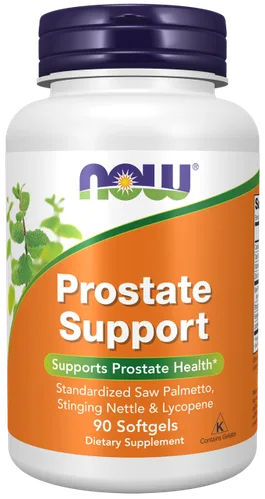
Healthy Items Prostasal PSA Formula 90 Review
Prostasal, also sold as PSA Formula 90, Quercetin Plus and Prostasol, is a prostate-support dietary supplement sold by Healthy Items. On the Healthy Items page, quoted in a forum thread, it is labelled a "Prostate Supplemental Aid" that "helps maintain a healthy prostate". It was listed at $75 against a $110 list price. UK reseller Natures Fix lists it as a proprietary blend of quercetin, magnesium, boron and nattokinase. It is sold in about 80-capsule bottles (the "90" is a legacy name) in a base of maltodextrin, syloid and magnesium stearate used as flow enhancers. The Natures Fix page lists it as soy-free and wheat-free. The product is not a drug. It has not been shown to treat or cure prostate disease, and the brand does not publish clinical trials on this exact formula. The mechanisms below are the general, proposed actions of its listed ingredients. - **Quercetin** is a plant flavonoid with antioxidant and anti-inflammatory activity. It is thought to temper inflammatory signalling, such as NF-κB and cytokines, in prostate tissue. Small studies of quercetin in chronic prostatitis and pelvic pain have reported symptom improvement. Laboratory work also suggests it may influence androgen-receptor signalling and cell growth. - **Nattokinase** is a fibrinolytic enzyme from fermented soy (natto). It is proposed to support healthy circulation and break down fibrin. In theory this may affect local tissue microcirculation. - **Boron** is a trace mineral associated with a med-hormone metabolism. It has been linked in observational and lab research to lower prostate-related markers. - **Magnesium** supports enzyme function, muscle relaxation and normal cellular signalling. The usage directions on the Natures Fix page describe a PSA-monitoring protocol. Users take 4 capsules daily for 2 months, then check PSA. If it has fallen satisfactorily, they drop to 3 capsules daily for 2 months, then to 2, rechecking PSA each time. PSA is a screening marker, not a diagnosis. Anyone with a rising PSA or a cancer diagnosis should use the supplement only under a physician's supervision. Nattokinase can interact with meds and antiplatelet drugs, and quercetin can interact with some medications.
We don’t sell supplements. We help you make decisions and get the best price.
Lowest prices
We may earn a commission from some store links. How we choose.
Finding the lowest prices at the stores now. This takes a few seconds.
Study, Trial or Testing Result Summary
Members OnlyHuman studies
We could not find study evidence to report for this product and the goal of male hormone health. The label and the store listing did not give the ingredients or their amounts, so we cannot tell which ingredients are in it or whether any are present at the doses used in research. No human studies on this goal were found for its ingredients, and no study references are available to cite. Because the formula is not known, we cannot say whether any ingredient is below a studied dose or hidden in a blend. No verified purchase reviews were counted. Forum discussions show hope mixed with caution, along with concern about the high price and the number of capsules taken each day. Some forum comments were about similar quercetin-based prostate formulas rather than this exact product. Forum members describe it as an add-on to medical care, not a replacement for it. Anyone considering it, especially men being followed for prostate concerns, should talk with their doctor first. Until the ingredient list and human studies are available, the evidence for this product remains thin. Animal and cell studies are never counted.
Review Totals and Summary
Members OnlyWhat buyers say
Public feedback on Prostasal is thin and mostly anecdotal, and it comes from patient forums rather than verified-purchase review sections. The Natures Fix retailer page had no reviews at all. Reports in prostate-cancer communities show curiosity and hope mixed with caution. One forum poster relayed a secondhand claim that a man had taken it for more than 15 years and brought his PSA down to 0.01. The poster was asking whether anyone had firsthand experience, and I found no verified follow-up confirming the claim. Others in related discussions of quercetin-based prostate formulas (such as "Protasol") said their doctors were open to trying it when PSA was rising. They described some patients having success, but gave no controlled evidence. People often hear about the product by word of mouth and then ask strangers online whether it works, which suggests few verified firsthand testimonials exist. Price is a recurring theme. The list price of about $110 per bottle, or $75 on the Healthy Items site, is high compared with generic quercetin or nattokinase. Resellers charge even more, around £95 in the UK. Users also have to take several capsules a day, up to four. At that dose a bottle lasts only about three weeks, so the ongoing cost adds up. Commenters also repeatedly note the lack of formal clinical proof. They suggest the supplement is an add-on to medical care rather than a replacement for it. Some forum members raised side-effect questions, mainly about interactions and tolerability, but I found no pattern of specific complaints. I found no feedback on pill size, taste or shipping speed. Overall, customers are hopeful, price-conscious and cautious, and few offer verified results.
Biohacker Summary
Members Only10 of 10 recommend it
The panel's main ingredient for this product is not covered by any statement, so everything below is about the smaller ingredients, and magnesium dominates them. Magnesium comes up for all ten panelists: six recommend it, three use it, and one is neutral. Most take it for sleep and prefer glycinate or threonate, with 400 mg of threonate before bed the most common dose; others cite muscle cramps, recovery, bone health, blood pressure and vitamin D function, and one aims for about a gram a day in supplements. It is paired with electrolyte drinks, potassium, vitamin B1 and vitamin D, and one panelist says it does not fix waking in the night. Saw palmetto and curcumin are smaller ingredients in this product, each mentioned by only a couple of panelists, and quercetin was mentioned by one; no one reported stopping or gave a safety caution.
See all 10 biohackers →Hide the biohackers
Dr. Rhonda Patrick · Magnesium · recommends
- Explains that magnesium helps the body activate and metabolize vitamin D, and that magnesium intake has been associated with lower odds of vitamin D deficiency and insufficiency.
- Mentions that getting too little magnesium may play a role in declining testosterone levels.
- Recommends getting enough magnesium, around 300–400 mg daily from diet and supplements, as it is an essential cofactor for vitamin D metabolism. Magnesium glycinate is a good form.
- Mentions magnesium as one of the micronutrients found in multivitamins that people often don't get enough of from their diets.
- Explains that magnesium helps control blood pressure by boosting the production of substances that relax blood vessels and improve cardiovascular health, citing a meta-analysis that found magnesium supplementation at an average dose of 368 mg per day notably lowers both systolic and diastolic blood pressure.
- Magnesium supplementation has lowered blood pressure in randomized controlled trials. An analysis of 34 trials involving over 2,000 participants found modest reductions in both systolic and diastolic pressure, with a median dose of 368 mg/day.
- Warns that some magnesium supplements make the dose look much larger than it really is and that labels can fool people.
- Mentions magnesium as an important nutrient component for testosterone.
- Warns that some supplement companies mislead consumers by listing the total compound weight of magnesium citrate as the elemental magnesium dose, when the actual elemental magnesium content is much lower, potentially around 44-66 milligrams.
- States there is not yet strong, consistent evidence that magnesium supplementation reliably improves sleep, noting that while some meta-analyses suggest it can improve sleep quality scores, sleep efficiency, and sleep duration, individual studies are inconsistent and several have found no meaningful effect.
- Curcumin may be one of the most powerful naturally occurring dietary compounds for lowering age-related inflammation. The phytosomal form is preferred because standard curcumin is rapidly broken down by the liver, while phytosomal delivery makes it far more bioavailable.
- Asks if curcumin can slow aging.
- Curcumin may be one of the most effective natural compounds for lowering age-related inflammation. The phytosomal form matters because standard curcumin is poorly absorbed and rapidly metabolized, while phytosomal delivery makes it much more bioavailable.
- Takes phytosomal curcumin daily because it is much more bioavailable than standard curcumin and human evidence suggests it is potent for lowering TNF-α, a major inflammatory cytokine linked to biological aging.
Dr. Eric Berg · Magnesium · recommends
- Recommends Magnesium glycinate, noting its high absorption rate compared to magnesium oxide, and its support for energy, sleep, muscle relaxation, and vitamin D function.
- Dr. Berg states that when nutrients like magnesium are too low, fatigue and weakness can follow.
- Recommends focusing on magnesium to support stronger bones if a neck hump is associated with osteoporosis.
- Explains that leg and calf cramps are most often caused by low magnesium, with leafy greens being a top source.
- States that magnesium is a cofactor that allows B1 to work more efficiently.
- States that magnesium is the most important mineral for energy production, as one cannot make energy without it.
- Magnesium is involved in 300 to 600 enzyme reactions, acts as a biological brake pedal, is the master controller over calcium, and is involved in making ATP, the energy currency of the body. It takes energy to go to sleep, and magnesium is required for relaxation and good sleep. Magnesium also helps balance cortisol levels and calm you.
- Dr. Eric Berg states that magnesium supports energy, muscle function, and sleep, and that most of it is stored inside cells, making deficiencies harder to detect with a standard blood test.
- Notes that magnesium could also be a factor in preventing muscle cramps.
- Recommends magnesium, specifically magnesium glycinate, stating it is key for D3 and K2 to work and is probably more important than calcium for building bone.
- Mentions that turmeric contains curcumin, which has been studied for its effects on inflammation, joint discomfort, mood, and blood sugar.
- Notes that Curcumin barely absorbs without black pepper.
- Dr. Eric Berg recommends adding more quercetin-rich foods such as red onions, capers, kale, dill, and radishes to your diet for seasonal allergies.
- Explains that the quercetin in onions decreases DHT, a powerful form of testosterone that is often the reason for hair loss.
Thomas DeLauer · Quercetin · recommends
- Recommends quercetin from food sources like capers and red onions, stating it inhibits the xanthine oxidase enzyme that produces uric acid.
- Recommends taking magnesium glycinate and threonate at night to act as a brake on the nervous system, block excitatory signaling, help wind down, and support serotonin and melatonin production for better sleep.
- Mentions that magnesium glycinate also helps a lot with sleep.
- Mentions that restless leg syndrome is often treated with magnesium, but states that the sensation is actually coming from three other issues.
- Uses Element's cans which contain 30 milligram magnesium, finding that electrolytes help his workout performance.
- Uses Element's 30 mg magnesium cans first thing in the morning to prime his day and help with workout performance.
- Recommends magnesium around the time one would normally break a fast to calm the brain and dull feelings of conditioned hunger.
- Notes that PET scans showed a significant reduction in amyloid plaque build-up in the group taking curcumin, suggesting fewer instances of Alzheimer's and dementia.
- Discusses a UCLA study where curcumin led to a 28% increase in cognitive function and a significant reduction in amyloid plaque buildup, suggesting less instance of Alzheimer's and dementia. He also mentions a study where curcumin helped mood as much as a med.
- Recommends magnesium, noting it is a cofactor for enzymes that build neurotransmitters, and deficiency can affect mood, happiness, and motivation.
- Notes that modern agricultural practices have led to soils depleted of trace minerals like magnesium, resulting in widespread magnesium deficiency.
- Uses Curcumin Gold in their recipe, stating it is amazing because it contains ginger oil, DHA, and curcumin, which work in harmony for the body to operate at its best, helping with inflammation and brain energy.
- Recommends taking some magnesium glycinate tonight to help calm down and sleep.
- Describes quercetin as 'unreal' and notes its high presence in apples and onions, stating it stabilizes mast cells to release less histamine.
Andrew Huberman · Magnesium · recommends
- Notes that Les Spellman's team includes 'Magnesium timed right' as part of their game plan to optimize recovery in unfavorable conditions.
- Discusses Magnesium Threonate as a tool for falling asleep.
- Takes 400 mg of Magnesium Threonate before bed for sleep.
- Uses Element, an electrolyte drink with sodium, magnesium, and potassium in correct ratios and no sugar, to ensure adequate hydration and electrolytes, especially when starting days fast or during physical exercise.
- Takes 400 mg of Magnesium L-Threonate before bed for sleep.
- Confirms that magnesium is absolutely important for cognitive function, noting studies show those with lower magnesium intakes tend to perform less well on cognitive function tests, and it's related to brain changes over time and dementia risk.
- Takes 400 mg of Double Wood Magnesium L-Threonate before bed for sleep.
- He takes 400 mg of Magnesium L-Threonate from Double Wood before bed for sleep.
- Takes 400 mg of Double Wood Magnesium L-Threonate before bed for sleep.
- Takes 400 mg of magnesium L-threonate before bed for sleep.
- Discusses curcumin as a supplement for prenatal care and sperm health.
- Does not recommend high-dose curcumin supplements for general use, suggesting it's only for specific purposes under a doctor's guidance to target excess inflammation.
- Notes that people are excited about the possible health benefits of curcumin, which is found in turmeric.
- Includes curcumin in his diet because it has been shown to stimulate GLP-1.
Dr. Mark Hyman · Magnesium · recommends
- Recommends magnesium breakthrough advanced ten from Biooptimizers, which is their most complete magnesium formula with 10 bioavailable forms and 550 milligrams of elemental magnesium, designed to support restful restorative sleep, muscle recovery, stress resilience, and metabolic health.
- Recommends considering magnesium glycinate before bed for nervous system support, deeper sleep quality, and to help the body transition into rest, and states that they take it every night.
- Explains that a lack of magnesium can cause muscles and nerves to malfunction, resulting in muscle weakness, twitching, and cramps.
- Recommends Magnesium Breakthrough Advanced 10 from Bioptimizers for restful sleep, muscle recovery, stress resilience, and metabolic health, especially during stressful times of the year.
- Recommends magnesium because it is involved in over 600 reactions in the body and up to 80% of people may have low levels that never get flagged on a standard blood test.
- Recommends magnesium as a basic supplement during detoxification to support pathways, help with constipation, and provide electrolytes.
- Recommends Magnesium Breakthrough Advanced 10 from Biooptimizers, which contains 10 bioavailable forms and 550 mg of elemental magnesium, to support restful sleep, restorative sleep, muscle recovery, stress resilience, and metabolic health.
- States that curcumin is great for immune support and is anti-inflammatory, suggesting making curries.
- Has recommended magnesium breakthrough from bioptimizers for years and now uses Magnesium Breakthrough Advanced 10 as part of his evening routine, especially during periods of travel, training, and higher stress, to support sleep, muscle recovery, and metabolic health.
- Recommends correcting nutrient deficiencies with magnesium.
- Recommends Magnesium Breakthrough Advance 10 from BiOptimizers, which has 10 bioavailable forms of magnesium and more elemental magnesium, as part of his evening routine for sleep, muscle recovery, and metabolic health.
- Mentions that curcumin has been studied for its anti-inflammatory effects, but emphasizes that no supplement can replace the daily signals created by sleep, nutrition, exercise, stress management, and metabolic health.
- Recommends curcumin as an anti-inflammatory supplement that can be helpful.
- States that curcumin helps to lower broader inflammatory levels in the body.
Dave Asprey · Magnesium · uses
- Looks at magnesium alongside protein to keep muscle for the long run.
- Suggests adding magnesium to help keep potassium in the system longer, as they work hand in hand.
- Mentions Triquetra Health is developing a new hair product using only the active part of saw palmetto to block dihydrotestosterone without the usual side effects.
- Mentions magnesium in the context of sleep but states that it doesn't address the core issue of waking up during the night.
- Says CallaCurcumin is like "mommy's little helper" and he takes it when he knows he's going to eat late at night, around 5:00 or 6:00, to avoid overeating.
- Suggests that magnesium may help slow aging, support cellular repair, and improve sleep.
- States that magnesium can affect how the body responds to a supplement.
- Recommends Tetrahydro Curcuminoids, stating they lower inflammation.
- Recommends fixing sleep with 300mg of Magnesium 101 before bed if diet and exercise aren't melting stubborn belly fat.
- Dave Asprey says his daily routine includes magnesium as part of a carefully developed combination for longevity.
- Recommends magnesium glycinate for sleep, stating that trials show it helps people fall asleep about 17 minutes faster and that he finds it incredibly effective.
- Mentions magnesium glycinate as one of the five gut-friendly, extensively researched ingredients in Kill Switch that helps with natural sleep.
- Dave Asprey recommends Magnesium Glycinate for sleep, noting human studies show it helps people fall asleep faster, is safe, and works on a fundamental aspect of health, unlike magnesium oxide which acts as a laxative.
- Recommends quercetin, found in foods like capers and red onions, as a plant compound that directly slows down the demolition crew inside cells, which destroys NAD+.
Ben Greenfield · Magnesium · uses
- Uses magnesium during surgery because it is neuroprotective.
- Says he is drinking LMNT, which contains sodium, potassium, and magnesium, and states that he actually drinks this stuff.
- States Saw Palmetto Extract is traditionally used to support healthy hair growth by working against the hormone that drives thinning.
- Mentions magnesium as part of a bare-minimum protocol.
- Advises getting red blood cell magnesium levels to the high end of the range as a minimum step for overall health and to slow down heart disease.
- Recommends supplementing with magnesium threonate if one is low in magnesium, as it crosses the blood-brain barrier and is demonstrated to increase hippocampus plasticity, theoretically making one smarter and improving memories.
- Uses Magnesium Breakthrough from BIOptimizers as part of their daily stack, taking four capsules in the evening to support relaxation, recovery, and a good night of sleep.
- Recommends Celtic Sea Salt's new electrolyte drink "Hydrate" for replacing electrolytes and trace minerals lost through sweat, noting it contains 70 naturally occurring trace minerals, plus magnesium, taurine, and potassium.
- Had heart palpitations when he was really overdoing magnesium, not knowing what he was taking.
- Recommends taking magnesium as a co-factor to increase vitamin D absorption.
- Notes a new study indicating that magnesium is a core dietary antioxidant closely associated with a reduced risk of accelerated biological aging.
- Mentions curcumin as another Nrf2 activator, but notes that sulforaphane outperforms it.
- States that their curcumin product affects the Nrf2 pathway by activating PKC delta, which phosphorylates Nrf2, allowing it to go into the nucleus, and works synergistically with sulforaphane.
- States that quercetin inhibits proteasome, which has an effect on Nrf2 activation.
Siim Land · Magnesium · recommends
- States that Magnesium can be a useful addition for some people for sleep.
- Recommends magnesium for sleep, especially deep sleep, and suggests trying better types like Threonate, Biscinate, or Torate, referencing a study where magnesium supplementation improved deep sleep.
- Recommends Magnesium for blood pressure, migraines and deficiency, based primarily on human research, especially randomized controlled trials showing measurable benefits.
- Recommends Curcumin for joint pain and inflammation, based primarily on human research, especially randomized controlled trials showing measurable benefits.
- Lists Magnesium as one of 15 supplements backed by human studies.
- Lists Curcumin as one of 15 supplements backed by human studies.
- States that magnesium is a fundamental mineral governing over 600 enzymes and metabolic reactions, and recommends that most people need at least 400-500 mg/d for health, with some needing up to 600 mg/d.
- Lists seafood and pumpkin seeds as sources of Magnesium.
- Mentions quercetin as a phytochemical that has been shown to stimulate GLP-1 expression directly, and also increase glucose uptake and insulin sensitivity.
- Thinks magnesium has some of the strongest evidence and is worth considering.
- Thinks curcumin has some of the strongest evidence and is worth considering.
- Recommends taking magnesium, specifically glycinate and threonate forms, 1 to 2 hours before bed for sleep benefits, noting that glycinate promotes relaxation and threonate crosses the blood-brain barrier for sleep quality and cognitive function.
- Notes that Boron reduces calcium/magnesium loss.
- Notes that magnesium is important for activating thiamine into its more biologically active form, and a magnesium deficiency can impair blood sugar regulation even with adequate thiamine intake.
Bryan Johnson · Magnesium · uses
- Takes 400 mg of Magnesium Threonate before bed for sleep.
- Takes 400 mg of Magnesium L-Threonate before bed for sleep.
- Takes 400 mg of Magnesium Threonate before bed for sleep.
- He takes 400 mg of Double Wood Magnesium L-Threonate before bed for sleep.
- Takes 400 mg of Magnesium L-Threonate before bed for sleep.
- Takes 400 mg of Magnesium Threonate before bed for sleep.
- Takes 400 mg of Magnesium L-Threonate before bed for sleep.
- Takes 400 mg of magnesium L-threonate before bed for sleep.
- He takes 400 mg of Magnesium L-Threonate before bed for sleep.
- Takes 400 mg of magnesium threonate before bed for sleep.
- Advises avoiding Curcumin during pregnancy.
Peter Attia · Magnesium · neutral
- Peter reviews the evidence for select off-label medications and supplements commonly used for sleep, including glycine, magnesium, ashwagandha, and phosphatidylserine.
- Suggests that zinc and magnesium could potentially help with vasodilation and sleep, particularly for women experiencing severe symptoms in the luteal phase.
- Peter discusses electrolytes and fiber and the ketogenic diet, specifically preventing magnesium loss.
- Recommends magnesium as one of the 'big three' micronutrients for bone health, suggesting a daily intake of 300 to 500 milligrams as a minimum, and personally aims for about a gram of supplemental magnesium.
- Recommends magnesium for optimizing bone mineral density, suggesting a daily intake of 300 to 500 milligrams as a minimum, but personally aims for about a gram.
- Quercetin, a bioactive flavonoid present in red wine, can impair alcohol metabolism.
- Takes a hardline view that most people do not have adequate or optimal levels of magnesium, and suboptimal levels will impede the metabolism of vitamin D because magnesium is a cofactor in its enzymatic conversion.
- Takes a hardline view that most people do not have adequate or optimal levels of magnesium, and suboptimal levels will impede vitamin D metabolism because magnesium is a co-factor in the enzymatic conversion of vitamin D.
- Takes magnesium as a straightforward supplement.
- Mentions that magnesium intake is often super low and impactful on testosterone levels.
- Discusses the important roles of magnesium in the body, how to determine if one might be deficient, the prevalence of magnesium deficiency, and its potential cognitive benefits.
- Notes that Quercetin is often given in combination with a med as an anti-senescent drug.
- Uses a specific nanoparticle version of curcumin at a reasonable dose, which may have anti-TNF alpha effects and help with inflammation.
- States that a well-absorbed curcumin with high-dose omega-3 is as good as or better than any a med and helps improve brain function, mood, cognition, and may reduce dementia.
RAL Summary
Members OnlyTier 4 for Hormone Balance for Men
Tier 4 fits because no ingredient information or human studies on this goal are available and there are no counted reviews, so the evidence is too thin to rank it higher.
- Emerging: not enough evidence to rank higher yet.
- No human studies on this goal for its ingredients.
More Details
Members OnlyBody systems · Combine with · Possible side effects
Body systems: Reproductive system, Urinary system
Combine with: For prostate and male hormone support, this formula pairs well with zinc (supports testosterone and prostate tissue), lycopene (antioxidant linked to prostate health), pumpkin seed extract (urinary comfort), nettle root (complements saw palmetto in reducing urinary symptoms), and vitamin D3 with K2. Selenium and green tea extract may add antioxidant support. If liver health is truly the goal, choose a separate product with milk thistle (silymarin), NAC, or alpha-lipoic acid, and consult a healthcare provider, especially if taking medications.
Possible side effects: No major side effects reported. Some forum members asked about drug interactions and tolerability, but no specific complaints were found.
Supplement Facts
Sugar 0 · Total Protein 1 g · Total Carbohydrates 1 g
| Calories | 1 | |
| Calories from Fat | 0 | |
| Sugar | 0 | † |
| Sodium | 10 mg | |
| Dietary Fiber | 50 mg | |
| Total Protein | 1 g | † |
| Total Carbohydrates | 1 g | |
| Magnesium Oxide | 200 mg | † |
| Saw Palmetto | 230 mg | † |
| Sterolin mix | 130 mg | † |
| Quercetin mix | 130 mg | † |
| Curcuminoid | 100 mg | † |
| Pygeum | 100 mg | † |
| Ginger | 40 mg | † |
| Ginseng | 20 mg | † |
| Reishi | 20 mg | † |
| Nattokinase | 10 mg | † |
| Boron Citrate | 4 mg | † |
Directions: Suggested Use: Take 2 capsules 2 times daily with or without food.
Barcode (UPC) 713757035903 · Label source: NIH label database · Report a label change
Show entire label
More hormone balance for men products
Members OnlyThe highest ranked for the same goal
Graded November 10, 2026 by the Reverse Age Lab evidence engine, from human studies, real reviews and our biohacker panel. How we grade. Is this medical advice? No. Rala organizes the published evidence; go over any change with your doctor, especially if you take meds.
Privacy policyConsumer health dataAffiliate disclosureTermsDo Not Sell or Share My Personal InformationCookie settings