
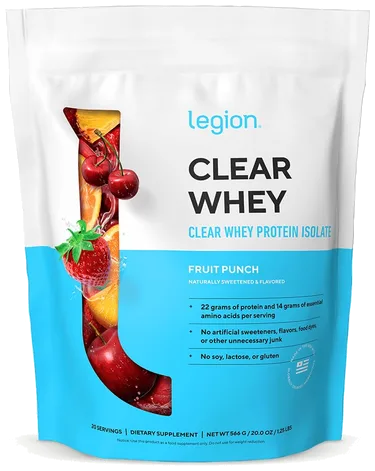
Legion Whey+ Review
Legion Whey+ Protein Isolate Grass Fed, Chocolate, 30 Servings is listed on Amazon as a grass-fed whey isolate, low calorie, non-GMO, sugar and lactose-free protein powder for muscle recovery, described as suitable for all, low carb and sugar free. The product page states it is sold in a 30-serving tub, with a Unit Count of 30.58 Ounce and an Item Weight of 1.9 pounds. The Item details list the Package Type as Pouch, the Model Name as Whey Protein Powder - Whey+ Isolate Protein Powder, and the Recommended Use as Dietary Supplement. The listed Allergen Information is Milk and Soy. The Top highlights list Brand Legion, Flavor Chocolate, Diet Type Gluten Free and Protein Source Whey. The About this item section says the product provides 22g of protein per scoop from whey isolate sourced from Truly Grass Fed certified Irish milk, with 0g sugar, 0g fat and 2g carbs. It states the product is naturally sweetened with 0g added sugar, and that the Chocolate flavor contains no artificial sweeteners, flavors or food dyes. It describes the whey as an isolate rather than a concentrate, gluten free and non-GMO, and notes that it contains milk and soy. It also says the product is ISO 17025 lab tested and LabDoor certified, analyzed by an accredited third-party lab and certified free of contaminants and banned substances. The listing further states 5.6g of BCAAs and 12g of essential amino acids in every 30-serving tub. The page lists a single-seller offer from Legion Athletics, Inc., shipped by Amazon, with a one-time price of $60.90 for the 30-serving size and a Subscribe and Save price of $54.81. A 60-serving size is listed at $129.99. The item is marked non-returnable due to food safety reasons, with refunds or replacements available for damaged or defective items. The brand is shown as a small business brand, and the product is listed under Health and Household and Sports Nutrition Whey Protein Powders. The page displays a rating of 4.3 out of 5 stars from 2,274 ratings. Other sellers are listed as offering new units from $60.40.
We don’t sell supplements. We help you make decisions and get the best price.
Lowest prices
We may earn a commission from some store links. How we choose.
Lowest cost per month first, in stock, at 1 serving a day. Checked Nov 8.
- WalmartLowest$29.98 a bottle$29.98/moBuy at Walmart (opens in a new tab)
- Target$49.99 a bottle$49.99/moBuy at Target (opens in a new tab)
- The Vitamin Shoppe$59.99 a bottle of 30 count$59.99/moBuy at The Vitamin Shoppe (opens in a new tab)
- AmazonPrice at AmazonCheck price at Amazon (opens in a new tab)
Also at: Legion · GNC. Some links earn us a commission; price comes first, and a commission only decides the order of prices within 2%. As an Amazon Associate we earn from qualifying purchases.
Study, Trial or Testing Result Summary
Members Only69 human studies · 29 improved
1 of these 69 human studies gave whey protein isolate by drip, not by mouth.
This product gives 20 grams of grass-fed whey isolate per serving, a full dose close to the roughly 21 grams that helped older adults keep leg muscle. A large 2024 pooled analysis of 78 trials in older adults doing strength training ranked whey as the best protein for building muscle mass, grip strength and walking speed [1]. Another 2024 analysis of 116 trials found milk proteins, including whey, improved muscle mass and strength alongside training, though no protein type improved physical performance tests [2]. In older adults with age-related muscle loss, whey increased muscle mass and walking speed [3], and an enriched whey drink added leg muscle but did not change grip strength [4]. In people who already lift weights, whey gave small extra gains in lean mass and strength [5]. The benefit depends on exercise. A one-year trial in adults over 65 found 20 grams twice daily without training did not build muscle or strength, while adding heavy strength training did [6]. Some smaller training trials found no extra gain over placebo, and whey and soy gave similar gains. Animal and cell studies are never counted.
See all 69 studies →Hide the studies
- Across 78 trials with 5272 older adults doing resistance training, whey protein was the best-ranked protein for boosting muscle mass, handgrip strength and walking speed.Comparative Efficacy of Different Protein Supplements on Muscle Mass, Strength, and Physical Indices of Sarcopenia among…
- Across 116 trials with 4711 adults doing resistance training, milk proteins including whey improved muscle mass and strength, but no protein type improved physical performance tests.Effects of Timing and Types of Protein Supplementation on Improving Muscle Mass, Strength, and Physical Performance in A…
- In 18 trials with 1341 older adults with or at risk of sarcopenia, adding protein supplements to exercise improved grip strength and muscle mass index but not walking mobility, and whey-based options looked promising but the evidence was very low certainty.Comparative effectiveness of protein or protein-related supplementation combined with resistance or functional exercise …
- In 10 trials with 1154 older adults with sarcopenia, whey protein increased muscle mass and gait speed, and with resistance training increased handgrip strength, while also lowering interleukin-6.Improving sarcopenia in older adults: a systematic review and meta-analysis of randomized controlled trials of whey prot…
- In 3 trials with 637 patients with sarcopenia, whey protein with leucine and vitamin D increased limb muscle mass, and improved strength and function when combined with exercise.Effects of Whey Protein, Leucine, and Vitamin D Supplementation in Patients with Sarcopenia: A Systematic Review and Met…
- In 7 trials with 591 older people with sarcopenia, adding whey protein to resistance training modestly increased muscle mass and handgrip strength, though the evidence quality was low to very low.Effectiveness of Whey Protein Supplementation during Resistance Exercise Training on Skeletal Muscle Mass and Strength i…
- In 7 trials with 472 older people with sarcopenia, strength training with whey protein or HMB increased fat-free mass and some performance measures, with whey plus training improving handgrip strength.Combined effects of strength training, whey protein, and HMB on sarcopenia in older people: A systematic review and meta…
- In 9 trials with 266 people doing resistance training for at least 6 weeks, whey and soy protein produced similar strength gains with no difference in lean mass change between them.No Difference Between the Effects of Supplementing With Soy Protein Versus Animal Protein on Gains in Muscle Mass and St…
- Across nine trials of 192 resistance-trained adults training for at least 6 weeks, whey protein alone or in multi-ingredient supplements gave small extra gains in lean mass and in upper and lower body strength compared with calorie-matched carbohydrate or non-whey protein.Effects of Whey Protein Alone or as Part of a Multi-ingredient Formulation on Strength, Fat-Free Mass, or Lean Body Mass…
- Across 13 controlled trials in young healthy adults, whey protein gave small to medium improvements in recovery of muscle function from under 24 hours to 96 hours after resistance training compared with control, though only half of the individual studies found a benefit.The Effect of Whey Protein Supplementation on the Temporal Recovery of Muscle Function Following Resistance Training: A …
- In postmenopausal women, whey protein improved biceps curl strength and leg lean mass only when combined with resistance training; without training it had no significant effect on strength or lean mass.Effect of Whey Protein Supplementation in Postmenopausal Women: A Systematic Review and Meta-Analysis.
- In a pooled analysis of trials in older adults, whey protein did not improve lean mass or strength overall but improved physical function, and it improved lean mass and function in frail or sarcopenic older adults, while adding vitamin D improved lean mass and strength.Whey Protein Supplementation with or without Vitamin D on Sarcopenia-Related Measures: A Systematic Review and Meta-Anal…
- In a network analysis of 51 trials in healthy adults, a single dose of whey protein after resistance exercise modestly raised the hourly rate of muscle protein building, and was the only protein source with a statistically significant effect, with best responses at 18 to 25 grams.Impact of different protein sources on acute muscle protein synthesis following resistance training: a systematic review…
- In older adults with sarcopenia, regular resistance exercise combined with daily essential amino acids or whey protein plus vitamin D maintained or increased muscle mass and lean mass, with added gains in strength, speed, and balance across 16 included studies.Exercise Programs Combined with Diet Supplementation Improve Body Composition and Physical Function in Older Adults with…
- A review of older adults with muscle loss suggests that leucine-enriched whey protein plus resistance training increases lean muscle mass, strength and physical performance.Enhancing Muscle Quality: Exploring Leucine and Whey Protein in Sarcopenic Individuals.
- In 380 sarcopenic older adults taking a vitamin D and leucine-enriched whey drink twice daily for 13 weeks, leg muscle mass and chair-stand performance improved more than with a control drink, but grip strength and overall physical performance did not differ.Effects of a vitamin D and leucine-enriched whey protein nutritional supplement on measures of sarcopenia in older adult…
- In sarcopenic older adults over 12 weeks, nutrition supplements with whey protein, fish oil and vitamin D raised muscle mass and grip strength and lowered fat mass compared with routine care.Effects of nutrition supplementation and physical exercise on muscle mass, muscle strength and fat mass among sarcopenic…
- Over one year in 208 healthy adults over 65, taking 20 g whey protein twice daily without exercise did not increase thigh muscle size or strength compared with a carbohydrate drink, whereas adding heavy resistance training did.The effect of daily protein supplementation, with or without resistance training for 1 year, on muscle size, strength, a…
- In 150 people with Parkinson disease or parkinsonism during a 30-day intensive rehabilitation program, twice-daily whey protein formula enriched with leucine and vitamin D improved walking distance over six minutes by about 18 meters more than standard hospital diet alone and preserved muscle mass.Muscle-targeted nutritional support for rehabilitation in patients with parkinsonian syndrome.
- In 150 people with cirrhosis followed for 12 months, branched-chain amino acids did not improve muscle strength or mass compared with whey protein, which was the control supplement.Branched-chain amino acid supplementation does not improve measures of sarcopenia in cirrhosis: results of a randomised …
- In sarcopenic elderly people over 12 weeks of exercise, 22 g whey protein with amino acids and vitamin D increased fat-free mass and grip strength and lowered C-reactive protein more than placebo.Whey protein, amino acids, and vitamin D supplementation with physical activity increases fat-free mass and strength, fu…
- In 128 healthy adults aged 65 and older, raising protein intake to 1.5 grams per kilogram of body weight daily with whey protein for 24 weeks did not improve muscle power, physical performance, or muscle mass compared with placebo, although blood IGF-1 levels were higher.Independent effects of whey protein and alkali supplementation on muscle health in healthy older adults: factorial rando…
- In 127 hospitalized older adults with sarcopenia, a whey-based formula with leucine and vitamin D twice daily during rehabilitation improved walking speed, physical performance, muscle mass and length of hospital stay compared with a control formula.Improving rehabilitation in sarcopenia: a randomized-controlled trial utilizing a muscle-targeted food for special medic…
- In 101 adults aged 55 and older doing 12 weeks of resistance and walking exercise, whey protein added no extra gain in strength or body composition compared with placebo.Changes in Strength, Mobility, and Body Composition Following Self-Selected Exercise in Older Adults.
- In older adults with sarcopenia, leucine-enriched whey taken after resistance training showed no group difference in muscle mass or strength at the end of 24 weeks, but at 24 weeks after training stopped the whey group kept more muscle mass and grip strength than the training-only group.De-Training Effects Following Leucine-Enriched Whey Protein Supplementation and Resistance Training in Older Adults with…
- In 80 obese older adults on a calorie-restricted diet with resistance training for 13 weeks, a supplement providing about 21 grams of whey protein plus leucine and vitamin D helped preserve leg muscle mass, which rose slightly while it fell in the control group.A high whey protein-, leucine-, and vitamin D-enriched supplement preserves muscle mass during intentional weight loss i…
- In 76 women after gastric bypass surgery, extra whey protein alone did not change lean body mass, but whey protein combined with 18 weeks of supervised strength training increased lower-limb strength more than usual care.Resistance Training and Protein Supplementation Increase Strength After Bariatric Surgery: A Randomized Controlled Trial…
- In adult childhood cancer survivors doing resistance training for 24 weeks, 21 g whey protein per day did not add lean mass or strength compared with placebo.Protein Supplementation and Resistance Training in Childhood Cancer Survivors.
- In 70 pre-frail and frail older adults over six months of exercise, twice-daily 20 g whey or rice protein drinks produced no group differences in gait speed, grip strength or physical performance, though whey caused more stomach symptoms.A Randomized Controlled Pilot Exercise and Protein Effectiveness Supplementation Study (EXPRESS) on Reducing Frailty Ris…
- In 68 previously untrained men doing 12 weeks of resistance training, post-workout whey protein gave a larger relative gain in fat-free mass and greater abdominal fat loss than carbohydrate alone, while muscle size and strength did not differ.The effects of whey protein with or without carbohydrates on resistance training adaptations.
- In 66 healthy older Danes followed for one year, daily whey protein supplementation did not change muscle protein synthesis rate or the muscle metabolome compared with an isocaloric carbohydrate control, with or without resistance training.Effect of 1-year daily protein supplementation and physical exercise on muscle protein synthesis rate and muscle metabol…
- In 63 adults doing about nine months of resistance training, whey protein supplements produced greater lean body mass gains (3.3 kg) than carbohydrate (2.3 kg) or soy protein (1.8 kg).Whey protein supplementation during resistance training augments lean body mass.
- In untrained young adults doing resistance training for 12 weeks, 19 g whey protein isolate daily gave the same gains in lean mass and strength as soy protein matched for leucine.No Significant Differences in Muscle Growth and Strength Development When Consuming Soy and Whey Protein Supplements Mat…
- In sarcopenic older adults over 6 months, a whey protein drink with vitamin D and E improved muscle mass, handgrip strength and quality of life more than a placebo drink.A high whey protein, vitamin D and E supplement preserves muscle mass, strength, and quality of life in sarcopenic older…
- In 60 prostate cancer patients on hormone therapy doing 20 weeks of resistance training, adding 31 g whey protein after exercise and at night gave no extra gain in muscle mass or strength compared with a placebo drink.Resistance Exercise Training Increases Muscle Mass and Strength in Prostate Cancer Patients on Androgen Deprivation Ther…
- In 54 healthy young men doing 12 weeks of resistance training, a 22 gram daily whey protein isolate supplement did not increase muscle fiber growth, muscle stem cell content, or new muscle nuclei compared with a placebo drink, and whey was no different from a soy-dairy blend.Protein Supplementation Does Not Affect Myogenic Adaptations to Resistance Training.
- In 45 community-dwelling Korean adults aged 65 and older, 38 grams daily of fermented whey protein for 10 weeks produced greater gains in skeletal muscle mass index and physical performance scores, and grip strength rose, than a dextrin placebo.Fermented Whey Protein Supplement Slows the Progression of Frailty and Sarcopenia Among Older Korean Adults: A Randomize…
- In 44 untrained adults doing eight weeks of low-volume cycling and resistance training, 40 g of whey protein after each session produced greater leg strength gains than a placebo drink.Protein Supplementation Increases Adaptations to Low-Volume, Intra-Session Concurrent Training in Untrained Healthy Adul…
- In 44 young untrained men doing resistance training for 12 weeks, 45 g daily of whey or a plant protein blend produced similar gains in muscle size, leg lean mass and strength.Similar effects between animal-based and plant-based protein blend as complementary dietary protein on muscle adaptation…
- In 40 active women doing 8 weeks of resistance training, all groups took whey protein and gained similar lean mass whether they ate on a time-restricted schedule or not, with or without HMB.Time-restricted feeding plus resistance training in active females: a randomized trial.
- In 36 healthy older men over 12 weeks, 25 g whey isolate twice daily without exercise did not increase strength or muscle mass, though it did improve gait speed.Effects of resistance exercise and whey protein supplementation on skeletal muscle strength, mass, physical function, an…
- In 33 young men doing 12 weeks of elbow flexor training, whey protein taken around each workout did not increase muscle size or strength compared with placebo.Whey protein does not enhance the adaptations to elbow flexor resistance training.
- In men doing supervised resistance exercise for 4 weeks on controlled meals, those taking whey protein isolate gained more muscle mass and strength than those taking placebo.Effects of Whey Protein Supplement on 4-Week Resistance Exercise-Induced Improvements in Muscle Mass and Isokinetic Musc…
- In 31 older adults over 12 weeks of resistance training, adding 20 g whey protein at breakfast and 20 g at dinner did not improve muscle strength or mass beyond placebo.Can supplemental protein to low-protein containing meals superimpose on resistance-training muscle adaptations in older …
- In 30 healthy elderly men, a single session of light-load leg exercise increased muscle protein synthesis, and this increase was the same whether they then took whey protein or a placebo drink.Light-load resistance exercise increases muscle protein synthesis and hypertrophy signaling in elderly men.
- In 27 adults aged 50 to 70 over 10 days, resistance training raised muscle protein synthesis, but whey-based and pea-based diets at 1.0 g per kg body weight per day produced the same results.Resistance training increases myofibrillar protein synthesis in middle-to-older aged adults consuming a typical diet wit…
- In 26 resistance-trained men taking 25 g whey twice daily, adding HMB or leucine over 12 weeks of training produced no difference in muscle size or strength between the two groups.Equivalent Hypertrophy and Strength Gains in β-Hydroxy-β-Methylbutyrate- or Leucine-supplemented Men.
- In 26 healthy young adults doing 10 weeks of resistance training, a multi-ingredient supplement containing 20 g whey twice daily gained more lean mass than a collagen placebo.The Effect of a Multi-ingredient Supplement on Resistance Training-induced Adaptations.
- In 26 adults doing 10 weeks of resistance training, a multi-ingredient supplement with whey produced greater growth of type II muscle fibers than collagen, but no difference in satellite cell or myonuclear measures.The Effect of Multi-Ingredient Protein versus Collagen Supplementation on Satellite Cell Properties in Males and Females…
- In 26 young Asian men with unhealthy body weight, four weeks of alternate-day fasting reduced body, fat and muscle mass, and adding 25 g of whey protein on fasting days did not reduce that muscle loss.Effects of Four Weeks of Alternate-Day Fasting with or Without Protein Supplementation-A Randomized Controlled Trial.
- In 25 cancer patients, a single 40 g high-leucine medical food containing whey raised muscle protein synthesis, while a casein-only medical food did not.Muscle protein synthesis in cancer patients can be stimulated with a specially formulated medical food.
- In 24 trained young men, 80 g of whey spread as 20 g every 3 hours after resistance exercise increased muscle protein building more than spreading it as smaller, more frequent doses or one large bolus.Timing and distribution of protein ingestion during prolonged recovery from resistance exercise alters myofibrillar prot…
- In 24 healthy older men, a 21 g leucine-enriched whey drink with vitamin D before breakfast for 6 weeks increased leg lean mass more than a placebo drink.Supplementing Breakfast with a Vitamin D and Leucine-Enriched Whey Protein Medical Nutrition Drink Enhances Postprandial…
- In 24 male master-age triathletes over 10 weeks, 20 g of whey protein daily did not improve muscle thickness compared with a carbohydrate control, and whey users saw a decrease in vastus medialis thickness.Effects of Supplementation with Beef or Whey Protein Versus Carbohydrate in Master Triathletes.
- In 22 people doing 12 weeks of knee extension training, a high-leucine whey protein drink with carbohydrate increased quadriceps muscle size by 7.3 percent versus 3.4 percent with carbohydrate alone, regardless of how the muscle was trained.Whey protein hydrolysate augments tendon and muscle hypertrophy independent of resistance exercise contraction mode.
- In 22 untrained young adults doing a 10-week resistance program, whey protein increased muscle thickness more than leucine-matched collagen peptides, though strength and power gains were similar.Whey Protein Supplementation Is Superior to Leucine-Matched Collagen Peptides to Increase Muscle Thickness During a 10-W…
- In 16 resistance-trained men over a 7-day intensified training block, whey protein added to a controlled diet did not change muscle protein synthesis or daily recovery measures compared with a control supplement.The Effect of Whey Protein Supplementation on Myofibrillar Protein Synthesis and Performance Recovery in Resistance-Trai…
- In postmenopausal women doing high-volume resistance training for 10 weeks, whey protein taken during training did not increase muscle strength or thickness more than maltodextrin placebo.Whey protein and high-volume resistance training in postmenopausal women.
- In 12 resistance-trained people, high-quality and low-quality protein supplements made no meaningful difference to how well strength and performance recovered after intense training.Effect of protein quality on recovery after intense resistance training.
- In 9 well-trained adults, whey protein hydrolysate taken before a carbohydrate-restricted endurance ride did not increase muscle protein synthesis compared with flavored water.Effects of protein intake prior to carbohydrate-restricted endurance exercise: a randomized crossover trial.
- In resistance-trained men doing an 11-week supervised weight program, whey protein gave greater strength gains and muscle growth than a carbohydrate-only control.Effects of whey isolate, creatine, and resistance training on muscle hypertrophy.
- This 8-week randomized trial compared whey protein isolate with rice protein isolate, both taken in large isocaloric doses after exercise, for effects on body composition and exercise performance; the abstract states the aim but does not report the results.The effects of 8 weeks of whey or rice protein supplementation on body composition and exercise performance.
- In older adults with frailty doing 14 weeks of resistance training, adding creatine to whey protein did not improve muscle function or body composition beyond whey protein alone.Resistance Training and Co-supplementation with Creatine and Protein in Older Subjects with Frailty.
- During three days of calorie restriction, whey protein taken after resistance exercise did not prevent a blunted growth-related hormone response, so the anabolic response to exercise stayed reduced.Caloric restriction induces anabolic resistance to resistance exercise.
- In 38 young men doing twice-weekly resistance training for 12 weeks, whey protein added to a mixed diet to reach 1.6 g protein per kg per day gave muscle and strength gains no different from soy protein added to a plant-based diet.High-Protein Plant-Based Diet Versus a Protein-Matched Omnivorous Diet to Support Resistance Training Adaptations: A Com…
- In 11 people with chronic tetraplegia doing 6 months of circuit training, strength rose similarly with or without whey protein, while arm aerobic capacity rose significantly only in the group that took whey right before and after exercise.Circuit training and protein supplementation in persons with chronic tetraplegia.
- In 56 sarcopenic older adults eating 1.2 to 1.5 g protein per kg per day for 12 weeks, a whey supplement improved walking speed more than extra protein from diet counseling, but muscle mass and grip strength did not differ between the groups.Effects of adequate dietary protein with whey protein, leucine, and vitamin D supplementation on sarcopenia in older adu…
- In 73 functionally limited adults aged 70 to 85 given whey protein or placebo with resistance exercise for 6 months, blood compounds linked to gut bacteria, fat-burning signaling, and insulin sensitivity were associated with physical function, but the abstract does not report a whey-specific gain in muscle.Metabolites related to gut bacterial metabolism, peroxisome proliferator-activated receptor-alpha activation, and insuli…
- In a cross-sectional study of 49 resistance-trained men, whey protein use was linked to lower body fat, but it was not linked to any difference in strength.Association between whey protein, regional fat mass, and strength in resistance-trained men: a cross-sectional study.
Review Totals and Summary
Members Only20,840 reviews · 91% positive
Customer feedback for Legion Whey+ consistently highlights several qualitative themes, painting a picture of a product that generally excels in taste, mixability, and digestibility, though its premium pricing is a recurring point of consideration. A predominant theme is the exceptional taste, with many customers describing the flavors as delicious, dessert-like, and a significant improvement over other protein powders. Specific flavors like Cinnamon Cereal, Salted Caramel, Red Velvet, and Dutch Chocolate frequently receive high praise for their authentic and enjoyable profiles, often noted for lacking the chalky or artificial aftertaste common in the supplement market. However, some users have found certain flavors, such as Banana Bread or particular vanilla and fruity cereal varieties, to be overly sweet or not as rich as anticipated, indicating that taste preference can be subjective across the diverse flavor range. Another highly lauded aspect is the product's mixability and texture. Customers frequently report that Legion Whey+ dissolves smoothly and effortlessly in various liquids, including water, milk, and even in recipes, without clumping or leaving a grainy residue. This ease of preparation contributes significantly to a more pleasant consumption experience, whether in a quick shake or incorporated into more complex culinary creations. The texture is often described as smooth and clean, further enhancing its appeal. Digestibility is a critical factor for many protein powder users, and Legion Whey+ receives strong positive feedback in this area. Numerous reviews emphasize that the product is gentle on the stomach, easy to digest, and does not cause the bloating, discomfort, or digestive issues that some individuals experience with other brands. This is particularly appreciated by those with sensitive digestive systems or mild lactose intolerance, who find it to be one of the few protein powders they can consume without adverse effects. Beyond these sensory attributes, customers value the perceived quality and transparency of Legion Whey+. The use of natural ingredients, grass-fed whey isolate, and the assurance of third-party testing for purity and contaminants resonate strongly with consumers seeking a "clean" supplement. Users often express confidence in the brand's commitment to avoiding artificial additives and providing a high-quality protein source for muscle recovery and overall health. Conversely, the most frequently mentioned drawback is the price point. Many customers acknowledge that while the quality, taste, and digestibility are superior, Legion Whey+ is often more expensive than competing protein powders. Despite this, a significant portion of the customer base indicates a willingness to pay the higher price due to the product's overall performance and the positive experience it provides, often becoming loyal repeat purchasers. The versatility of the powder, being easily incorporated into various foods and beverages beyond standard shakes, is also a frequently praised qualitative theme, allowing users to creatively meet their protein goals.
Biohacker Summary
Members Only10 of 10 recommend it
Most of the panel recommends or uses whey protein, with six of ten leaning toward recommending and several more using it daily. They take it to build and keep muscle, aid recovery, feel full, and steady blood sugar, and they often name leucine as the useful part. Daily totals range from about 1.2 to 1.6 grams per kilogram of body weight at the low end up to 1.9 to 3.2 grams at the high end, with some spreading it over three or four meals, and many blend it into smoothies, muffins, or breakfast with collagen. One panelist warns that many whey brands contain lead and other contaminants, so he favors products with public third-party testing, while another prefers a grass-fed, low-lactose isolate. Two of them stopped or cut back, one because he rarely drinks whey shakes and gets protein from food, and another who cut his animal protein after it coincided with high cholesterol and fatty liver, and a third saw his gut bacteria drop after eating animal protein; none of this changes that most of the group still backs getting plenty of protein.
See all 10 biohackers →Hide the biohackers
Dave Asprey · Whey Protein · neutral
- Mentions that algae provides protein.
- Discovered that to meditate with high focus for hours a day, one absolutely needs enough fat and some carbohydrate, and protein helps one last longer.
- Notes that protein burns 20-30% of its own calories just to digest, making it the most powerful diet lever for cutting visceral fat.
- Reversed his high cholesterol and fatty liver disease by limiting his excessive animal protein intake.
- Recommends eating protein first as part of a reset for insulin resistance.
- Recommends prioritizing animal protein because the body burns 20% to 30% of those calories just digesting them, which helps with cutting visceral fat.
- Recommends eating animal protein and animal fats because they help build muscle and hormones and provide satiety.
- Recommends consuming one gram of animal protein per pound of body weight, noting it can be challenging to achieve while traveling.
- Dave Asprey recommends eating good quality animal protein, aiming for about 1 gram per pound of body weight every day, to help burn calories during digestion and release satiety hormones.
- Notes that protein delivers amino acids and that low protein can contribute to a gap in essential amino acids.
Dr. Mark Hyman · Whey Protein · recommends
- Recommends building meals around quality protein to address autoimmune conditions.
- Recommends eating protein at every meal as part of a longevity starter pack.
- Recommends pairing coffee with protein, like eggs, to keep energy steady.
- Recommends having protein as part of improving meal composition for insulin resistance.
- Has her protein shot on the counter in the morning, ready to take, so she doesn't have a choice.
- Recommends ensuring adequate protein intake to address insulin resistance.
- Recommends filling meals with protein as part of their 10-Day Detox to help people feel satisfied.
- Encourages people to start with a simple foundation of quality protein for health.
- Highlights the importance of protein for nervous system regulation, explaining that it is packed with amino acids which are building blocks for neurotransmitters critical for balancing mood and stress.
- Recommends including a good source of protein at every meal to help balance blood sugar.
Thomas DeLauer · Whey Protein · uses
- Would consume protein shakes mixed with water before some workouts to preserve muscle, especially when trying to get shredded.
- Recommends adding protein to a meal to be genuinely anabolic for muscle building.
- States that protein spikes insulin, which is a good thing and different from how carbs spike insulin, making it one of the most anabolic foods.
- States that the gut lining's constant renewal requires an enormous amount of protein, amino acids, phospholipids, vitamins, and minerals.
- Recommends prioritizing protein, noting that 20-30% of calories from protein are used up as heat.
- Recommends consuming a bunch of protein as part of a massive breakfast to help manage hyperphagia.
- Warns against buying just any whey protein because many brands have been found to contain ridiculous amounts of lead and other contaminants, making the market 'sketchy'.
- Recommends a sugar-free protein bar over a candy bar, stating that it has a decent metabolic profile.
- Recommends Purity Protein as the cleanest protein on the market, noting its public third-party testing for over 200 contaminants and its simple five-ingredient profile.
- Consumes 18-20 grams of pure whey protein before lifting 30-50% of the time to boost resting metabolic rate and provide fuel without sugar or carbs.
Siim Land · Whey Protein · neutral
- Richard Morgan consumed approximately 112 g of protein daily at a body weight of 59 kg.
- Reduced his protein intake from around 2 g/kg to 1.4–1.6 g/kg.
- Recommends Protein powder for muscle growth and recovery, based primarily on human research, especially randomized controlled trials showing measurable benefits.
- Lists Protein powder as one of 15 supplements backed by human studies.
- Recommends eating approximately 1.6 grams of protein per kilogram of body weight daily.
- Recommends eating around 0.4 grams of protein per kilogram per meal, divided into three or four meals, to ensure net positive muscle protein synthesis.
- Notes that 30 g of isolated potato protein stimulated muscle protein synthesis similarly to 30 g of milk protein at rest and after resistance exercise in a 2022 randomized controlled trial.
- Recommends getting enough protein to help maintain muscle, especially in a calorie deficit, and as part of the best way to lose fat while maintaining muscle.
- Recommends eating enough protein for declining muscle mass and strength.
- Aims to increase protein intake in meals because Asian food in Singapore tends to be very carbohydrate-heavy and imbalanced.
Andrew Huberman · Whey Protein · uses
- Eats one or two David Bronze Bars per day as a snack to easily hit his protein goal without consuming excess calories.
- Discusses protein and food-based supplements.
- He mentions Dr. Layne Norton pointed to interesting data on potato protein as a potential great plant-based substitute for those avoiding whey-based protein.
- States that enough protein is critical for health.
- Confesses to loving the Mateina protein smoothie, which contains whey protein, collagen, pineapple, veggies, and Mateina, and suggests it's perfect for before or after workouts, as a healthy snack or meal replacement.
- Says he eats David protein bars, specifically the new bronze bar, and finds them to be the best tasting protein bars he's ever had.
- Personally eats one or two David Bronze Bars per day as a snack to easily hit his protein goal without consuming excess calories.
- Eats one or two David Bronze Bars per day as a snack to easily hit his protein goal of 1 gram of protein per pound of body weight without consuming excess calories.
- Takes 20 grams of whey protein in the morning for muscle.
- States that protein is a significant lever for muscle building, with benefits plateauing around 1.6 grams per kilogram of body weight, though some evidence suggests slightly higher amounts may offer a little more benefit.
Dr. Eric Berg · Whey Protein · neutral
- Dr. Eric Berg mentions that sardines are packed with protein, which supports brain health and metabolism.
- The amino acid leucine is important for muscle growth, but getting sufficient protein is just as essential for maintaining muscle mass.
- Recommends consuming high-quality animal protein in conjunction with other weight loss methods.
- Dr. Eric Berg recommends getting enough high-quality protein to maintain muscle, especially after menopause.
- Recommends high-quality protein as a way to lower blood sugar for better sleep.
- Notes that leucine comes from whey protein powder.
- Ideally recommends eating protein from meat, but if using a protein powder, to find one made from meat, or even dehydrated/freeze-dried meat slices.
- Recommends consuming high-quality animal protein as a source of leucine for muscle growth.
- Warns that most protein bars contain very low-quality protein and tons of sugar.
- Dr. Berg recommends consuming the right amount of protein to satisfy hunger and stop overeating, as it gives the body what it needs without converting to sugar or fat.
Ben Greenfield · Whey Protein · recommends
- Notes that a recent review found that protein stops muscle loss and starts muscle gains and muscle protein synthesis around 1.9 to 3.2 g per kg of body weight a day, and frequency is as important as getting that total amount daily.
- Recommends aiming for 0.8-1.2 g of protein per pound of body weight to help fill the space fat used to occupy under loose skin.
- Recommends Protein powder for optimizing muscle protein synthesis, recovery, and muscle maintenance.
- Recommends starting with protein for body remodeling.
- States that introducing high protein, around 1g/lb, can mitigate the negative effects of a caloric deficit on lean muscle mass and metabolism.
- Is considering adding a protein shake right after her workout to easily add 20-30 grams of protein to her daily intake.
- States that if he had cancer, he would limit protein based on the idea of an anabolic scenario potentially causing a tumor to grow.
- While animal protein sources and essential amino acids are still my #1 protein priority, it’s good to know that collagen still produces impactful results for multiple aspects of your biology.
- Personally consumes a whey protein shake post-workout.
- Recommends switching to a high-protein version of favorite foods like ramen as an effective short-term strategy to reduce subsequent energy intake, noting that eating more protein at breakfast reduces calorie intake at lunch.
Dr. Rhonda Patrick · Whey Protein · recommends
- Recommends supplementing with protein powders, especially those higher in leucine, to help achieve the recommended 1.2 grams of protein per kilogram body weight.
- If Dr. Rhonda Patrick needs fuel before training, they will have a homemade muffin made with whey protein.
- Focuses on protein, aiming for at least 1.2 g/kg daily and usually getting 1.3-1.4 g/kg.
- Rhonda's current diet includes a homemade blueberry, whey protein, and psyllium husk muffin as a pre-workout.
- Personally likes and recommends Nutra Cost grass-fed unflavored whey protein isolate for its high protein content, low lactose and fat, fewer calories, grass-fed source, organic nature, and lack of heavy metal contaminants.
- Recommends focusing on high-quality protein sources and aiming for 1.2 to 2.2 grams of protein per kilogram body weight, depending on training schedule, and timing some protein around workouts.
- Discusses the school of thought that eating too much protein accelerates aging and increases cancer risk, but also notes that maintaining muscle and strength is important for aging well, suggesting protein is not always protective or always harmful.
- States that adaptations from training require enough protein for recovery and rebuilding.
- Includes 1 scoop of protein powder in their daily smoothie.
- Emphasizes the importance of protein for muscle, bone, connective tissue, and brain health, stating that once you meet your protein needs, everything else becomes easier.
Bryan Johnson · Whey Protein · uses
- Includes protein in their breakfast.
- Went off protocol and ate animal protein for the first time in six years while traveling in Australia, which changed his gut microbiome, causing good bacteria to drop 61%.
- Consumes protein at 4:55 am.
- Includes 'protein' as part of their daily morning routine.
- For breakfast, Bryan Johnson blends protein, collagen, and extra virgin olive oil, targeting 130g of protein daily for skin, joints, and muscle maintenance and building.
- Recommends getting enough protein, specifically collagen, which acts as the framework for bone structure, suggesting a range between 1.2 g and 2.2 g per kilogram of body weight depending on activity levels.
- Agrees that consuming protein with carbohydrates post-workout is beneficial, as good data shows it's needed to prevent protein from being used for energy production instead of muscle protein synthesis.
- Consumes Blueprint Metabolic Protein daily, providing 27 grams of protein, as part of his plant-based approach to ensure a complete amino acid profile.
- Recommends having enough protein as part of a balanced diet to improve heart rate recovery.
- Is eating Blueprint's protein as part of their travel food.
Peter Attia · Whey Protein · stopped
- Used to worry about protein timing but now thinks about it less, especially since he doesn't consume whey protein shakes much, if at all, and tends to eat more of his protein.
- Recommends consuming 1.6 to 2.4 grams of protein per kilogram per day, or roughly a gram per pound of body weight, for muscle growth and preservation, especially for older or less active individuals, and aims for 40 to 50 grams of protein four times a day through meals or snacks.
- Notes that the full episode discusses the importance of protein.
- Recommends consuming enough protein, particularly around 130 to 150 grams per day, evenly spaced throughout the day, to maintain lean mass and improve muscle quality, especially when using GLP1 agonists.
- Learned that protein is really important and that if protein intake goes from 250 grams a day to 70-80 grams a day, a lot of muscle will be lost. He recommends a high protein intake, double the RDA, especially for athletes or those trying to gain muscle, to prevent sarcopenia and maintain lean body mass.
- Emphasizes the importance of getting enough protein, especially for an aging population, to combat sarcopenia. He recommends aiming for about one gram per pound of body weight daily and suggests using a food tracking app to monitor intake.
- Will look at interventions that can help improve muscle mass, including protein.
- Recommends that older adults might need a higher daily and per-meal protein dose of 30–40 grams to maximize muscle protein synthesis and increase or maintain muscle mass.
- Recommends around 1.6 g/kg/day of protein to maximize gains in muscle strength and fat-free mass, with potential benefits up to 2.2 g/kg/day for those aiming to fully optimize muscle growth and recovery.
- Peter recommends targeting 2g of protein per kg of body weight for muscle preservation and overall health, especially when trying to lose fat while preserving or gaining muscle.
RAL Summary
Members OnlyTier 2 for Muscle and Strength
Several large pooled analyses show whey improves muscle mass and strength when combined with strength training, at a dose matching this product, and over 20,000 reviews are 91% positive.
Where the evidence disagrees: 29 of the 69 human studies found no effect.
More Details
Members OnlyBody systems · Combine with · Possible side effects
Body systems: Musculoskeletal system
Combine with: To maximize muscle building and recovery, consider combining Whey+ with creatine monohydrate, which is proven to enhance strength and muscle mass. Adding a carbohydrate source post-workout can help replenish glycogen stores and improve protein absorption. Omega-3 fatty acids can support overall recovery by reducing inflammation, and a comprehensive multivitamin can ensure you're not deficient in any micronutrients essential for muscle growth and repair.
Possible side effects: No major side effects reported.
Supplement Facts
Includes 0g Added Sugars 0 g · Calcium 110 mg · Iron 0.2 mg
| Calories | 110 | |
| Total Fat | 1.5 g | 2% |
| Saturated Fat | 0.5 g | 3% |
| Total Carbohydrate | 4 g | 1% |
| Dietary Fiber | 1 g | 4% |
| Total Sugars | 1 g | † |
| Includes 0g Added Sugars | 0 g | 0% |
| Protein | 20 g | 40% |
| Calcium | 110 mg | 8% |
| Iron | 0.2 mg | 2% |
| Sodium | 350 mg | 15% |
| Potassium | 170 mg | 4% |
| Certified Grass-Fed Whey Protein Isolate | 23 g | † |
Other ingredients: Peanut Flour, Natural Flavor, Medium Chain Triglycerides Powder (as goMCT™), Sea Salt, Gum Blend (Guar Gum, Gum Acacia, Xanthan Gum), Stevia Leaf Extract.
Label source: Legionathletics · Report a label change
Show entire label
More muscle and strength products
Members OnlyThe highest ranked for the same goal
Read more
Our articles on this subject
Graded October 31, 2026 by the Reverse Age Lab evidence engine, from human studies, real reviews and our biohacker panel. How we grade. Is this medical advice? No. Rala organizes the published evidence; go over any change with your doctor, especially if you take meds.
Privacy policyConsumer health dataAffiliate disclosureTermsDo Not Sell or Share My Personal InformationCookie settings