
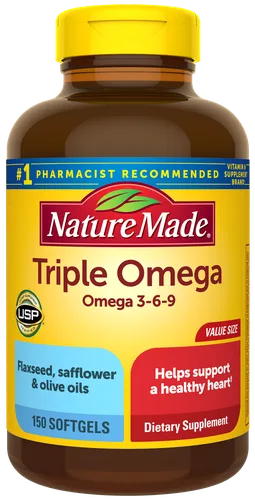
Nature Made Triple Omega Review
We don’t sell supplements. We help you make decisions and get the best price.
Lowest prices
We may earn a commission from some store links. How we choose.
Finding the lowest prices at the stores now. This takes a few seconds.
Study, Trial or Testing Result Summary
Members Only49 human studies · 12 improved
Omega-3 fats are present at a full daily dose, above the amount used in a positive study. In one placebo-controlled trial, 12 weeks of fish oil raised total testosterone in overweight and obese men compared with corn oil [1]. A large trial of 1850 older men who had had a heart attack found no change in testosterone with low-dose omega-3 margarine [2], and a small trial of 5 grams of fish oil daily for 30 days also found no change [3]. Surveys show mixed links between omega-3 intake and male hormones and cannot prove cause [4][5]. Vitamin E here is far below the doses studied. Those higher-dose trials mostly found no testosterone benefit, and one linked long-term use to slightly lower testosterone [6][7]. For omega-6 fats, the only trial in men found no change in testosterone [8]. Surveys disagree on whether more omega-6 helps or hurts [9][10]. For omega-9 fats, no supplement trial exists, and diet surveys disagree [10][11]. Overall, the evidence that this product supports male hormones is thin and mixed. Animal and cell studies are never counted.
See all 49 studies →Hide the studies
- In a review of 12 trials in women with polycystic ovary syndrome, vitamin E lowered testosterone and luteinizing hormone and raised follicle-stimulating hormone and progesterone, but this was in women, not men.Effect of vitamin E supplementation on cardiometabolic risk factors, inflammatory and oxidative markers and hormonal fun…
- Across eight trials in women with polycystic ovary syndrome, vitamin E lowered total testosterone and raised sex hormone-binding globulin, but this was in women, not men.Vitamin E supplementation improves testosterone, glucose- and lipid-related metabolism in women with polycystic ovary sy…
- This review of observational studies on dementia risk factors found no significant difference by APOE ε4 status for vitamin E intake and did not test vitamin E's effect on hormones.The role of APOE ε4 in modulating the relationship between non-genetic risk factors and dementia: a system review and me…
- A review of 28 pooled trial analyses in women with polycystic ovary syndrome found fish oil lowered insulin and insulin resistance and raised adiponectin, but testosterone reduction was reported for probiotics, not omega-3.Effects of nutrition on metabolic and endocrine outcomes in women with polycystic ovary syndrome: an umbrella review of …
- In 1850 older men who had had a heart attack, about 41 months of low-dose omega-3 margarine did not change total testosterone or the risk of testosterone deficiency compared with placebo.No effects of n-3 fatty acid supplementation on serum total testosterone levels in older men: the Alpha Omega Trial.
- In 200 older men, long-term alpha-tocopherol supplementation led to lower testosterone (539 vs 573 ng/dl) and androstenedione than placebo.Effects of long-term alpha-tocopherol supplementation on serum hormones in older men.
- In 143 men with infertility, three months of vitamin E (300 mg a day) with CoQ10 raised testosterone from baseline, though L-carnitine raised testosterone and luteinizing hormone more.Comparison of L-Carnitine vs. Coq10 and Vitamin E for idiopathic male infertility: a randomized controlled trial.
- In 128 women with benign breast disease, 150 to 600 IU of vitamin E daily for two months had no significant effect on testosterone or other hormones.The effect of vitamin E on mammary dysplasia: a double-blind study.
- In 90 men with unexplained low sperm count and motility, vitamin E 400 mg a day for 6 months did not significantly raise sperm concentration, and the abstract reports no testosterone result.Combination of vitamin E and clomiphene citrate in treating patients with idiopathic oligoasthenozoospermia: A prospecti…
- In 86 women with polycystic ovary syndrome, 8 weeks of vitamin E lowered total testosterone compared with placebo, but this was in women, not men.Hormonal and Metabolic Effects of Coenzyme Q10 and/or Vitamin E in Patients With Polycystic Ovary Syndrome.
- In 80 men with untreated prostate cancer, a daily supplement of vitamin E, selenium, vitamin C and coenzyme Q10 for 21 weeks did not change testosterone, dihydrotestosterone, luteinizing hormone, sex hormone binding globulin or PSA compared with placebo.Effect of a nutritional supplement containing vitamin E, selenium, vitamin c and coenzyme Q10 on serum PSA in patients w…
- In 68 women with polycystic ovary syndrome (not men), 400 IU vitamin E plus omega-3 for 12 weeks lowered insulin resistance and total and free testosterone compared with placebo.The Effects of Omega-3 Fatty Acids and Vitamin E Co-Supplementation on Indices of Insulin Resistance and Hormonal Parame…
- In 22 overweight and obese men (61 people total), 12 weeks of DHA-rich fish oil raised total testosterone compared with corn oil, with no effect in women.Dietary supplementation with docosahexaenoic acid rich fish oil increases circulating levels of testosterone in overweig…
- In 60 women with polycystic ovary syndrome (not men), a multinutrient supplement including vitamin E for 3 months lowered testosterone, anti-Mullerian hormone and the LH to FSH ratio.The impact of a standardized micronutrient supplementation on PCOS-typical parameters: a randomized controlled trial.
- In 60 infertile men given carob syrup or 200 mg vitamin E daily for 3 months, hormone levels did not differ between groups, and carob improved semen quality more than vitamin E.Comparison of the Effect of Ceratonia siliqua L. (Carob) Syrup and Vitamin E on Sperm Parameters, Oxidative Stress Index…
- In 60 women with polycystic ovary syndrome, 12 weeks of fish oil omega-3 plus vitamin D lowered total testosterone, inflammation and oxidative stress and improved mood scores more than placebo.The influences of vitamin D and omega-3 co-supplementation on clinical, metabolic and genetic parameters in women with p…
- In 51 women with polycystic ovary syndrome, 6 weeks of fish oil or flaxseed oil lowered triglycerides but did not reduce testosterone, while testosterone fell only in the soybean oil placebo group.Metabolic and endocrine effects of long-chain versus essential omega-3 polyunsaturated fatty acids in polycystic ovary s…
- In 15 men and 15 women given a single dose, EPA reduced platelet clumping in men and DHA did in women, and higher testosterone was linked to a bigger EPA effect, but testosterone itself was not shown to change.Gender-specific inhibition of platelet aggregation following omega-3 fatty acid supplementation.
- In a placebo-controlled trial of 400 IU vitamin E a day in men with raised prostate specific antigen, 28 completers had no change in testosterone or dehydroepiandrosterone compared with placebo, although vitamin E raised blood vitamin E levels.The modulation of prostate cancer risk with alpha-tocopherol: a pilot randomized, controlled clinical trial.
- In 28 abdominally obese middle-aged men, oleic acid was only a tracer to measure fat uptake; the study tested testosterone, not whether oleic acid changes hormones.Assimilation and mobilization of triglycerides in subcutaneous abdominal and femoral adipose tissue in vivo in men: effe…
- In 26 men (13 with normal blood pressure, 13 with high blood pressure) taking 5 g of omega-3 fish oil daily for 30 days, total and free testosterone did not change compared with placebo, though cholesterol worsened in the men with high blood pressure.Fish oil produces an atherogenic lipid profile in hypertensive men.
- In 24 hemodialysis patients taking 300 mg of vitamin E daily for 8 weeks, free testosterone, LH, and FSH did not change compared with placebo, though prolactin fell.Effect of vitamin E therapy on sexual functions of uremic patients in hemodialysis.
- In 13 professional basketball players, a 35-day antioxidant supplement (600 mg vitamin E plus vitamin C and beta-carotene) lowered blood fat peroxides by about 28%, but the abstract does not report a clear change in testosterone.Effects of alpha-tocopherol, beta-carotene and ascorbic acid on oxidative, hormonal and enzymatic exercise stress marker…
- In 11 healthy men, oleic acid was only a tracer in a test meal to track fat storage while hormones were lowered; the study did not test oleic acid's effect on hormones.Read the study on PubMed (29380951) →
- In 10 resistance-trained men given 6 g of conjugated linoleic acid daily for 3 weeks, total testosterone and sex hormone-binding globulin did not differ significantly from placebo before or after exercise, though cell experiments showed more testosterone release.Effect of conjugated linoleic acid on testosterone levels in vitro and in vivo after an acute bout of resistance exercis…
- In small crossover experiments in healthy men, 200 mg a day of vitamin E for 3 weeks did not change testosterone, although soy protein intake lowered blood vitamin E and the supplement restored it.Effects of soy protein on levels of remnant-like particles cholesterol and vitamin E in healthy men.
- In a double-blind dose-response study of women with premenstrual syndrome, alpha-tocopherol had no significant effect on testosterone, DHEA-S, estradiol or progesterone, though it improved symptoms.The effect of alpha-tocopherol on premenstrual symptomatology: a double-blind study. II. Endocrine correlates.
- In 17 middle-aged men given a testosterone injection (compared with 16 untreated men), oleic acid was only used as a tracer; the study tested testosterone's effect on fat storage, not whether oleic acid affects hormones.Assimilation of triglycerides in subcutaneous and intraabdominal adipose tissues in vivo in men: effects of testosterone…
- In 30 women with severe premenstrual syndrome, Efamol eased symptoms more than placebo, but it did not change blood levels of FSH, LH, prolactin, progesterone, estradiol or testosterone.Biochemical and clinical effects of treating the premenstrual syndrome with prostaglandin synthesis precursors.
- In 25 men with prostate cancer awaiting surgery, a low-fat diet with 30 g a day of flaxseed for about 34 days lowered total testosterone and cholesterol, but did not significantly change PSA in the whole group.Pilot study of dietary fat restriction and flaxseed supplementation in men with prostate cancer before surgery: explorin…
- In 17 women with polycystic ovary syndrome, a diet with more polyunsaturated fats for about six months did not change testosterone, free testosterone, or other sex hormones, though it raised fasting glucose; this study was in women, not men.Metabolic and endocrine effects of a polyunsaturated fatty acid-rich diet in polycystic ovary syndrome.
- In 76 men with low testosterone taking testosterone undecanoate by mouth in oleic acid for 9 weeks, 60 of the 66 men who finished the trial responded, and blood testosterone rose significantly.Clinical efficacy of testosterone undecanoate in male hypogonadism.
- In a large UK study of 72,817 adults, a metabolite pattern linked to high ultra-processed food intake, which included lower linoleic acid, had mixed relationships with testosterone and sex hormone-binding globulin levels.Association of ultra-processed food-related metabolites with selected biochemical markers in the UK Biobank.
- In a large US survey of adult men, only dietary docosapentaenoic acid was linked to higher testosterone overall, with positive links for some omega-3 types only in certain body weight groups; this cross-sectional design cannot prove cause.Association Between Dietary Intake of Omega-3 Fatty Acids and Serum Testosterone in Adult Males: Results From NHANES 201…
- In a large US survey of adults, several circulating free fatty acids were linked to lower testosterone, with oleic acid linked to it only in women.Examining the association between serum free fatty acids and blood levels of testosterone.
- In a large cancer screening trial cohort of 3409 women and men, vitamin E supplementation at different doses was linked to distinct changes in a med hormone pathway metabolites, though the abstract does not state a clear hormone benefit for men.Metabolomic Analysis of Vitamin E Supplement Use in the Prostate, Lung, Colorectal, and Ovarian Cancer Screening Trial.
- In a large group of young Danish men, those who took fish oil supplements had higher semen volume and larger testes, and lower follicle-stimulating and luteinizing hormone levels, than men who took none; this cross-sectional study cannot prove cause.Associations of Fish Oil Supplement Use With Testicular Function in Young Men.
- In a national survey of 859 men aged 65 and older, those with higher arachidonic acid (an omega-6 fat) in their red blood cell membranes had lower odds of low testosterone, though this was a snapshot association and not a supplement trial.Relationship of erithrocyte membrane polyunsaturated fatty acid composition with biochemical hypogonadism in aging male:…
- In healthy young Spanish men, higher omega-3 intake was linked to larger testicular volume, while higher monounsaturated fat and trans fat intake were linked to lower testosterone.Fatty acid intake in relation to reproductive hormones and testicular volume among young healthy men.
- In pregnant women, higher long-chain omega-3 intake was linked to lower testosterone and estradiol levels in umbilical cord blood, while total polyunsaturated fat intake was linked to higher cord estriol.Association of maternal fat and alcohol intake with maternal and umbilical hormone levels and birth weight.
- In 60 active smokers, 60 passive smokers and 60 non-smokers in Nigeria, both active and passive smokers had lower blood vitamin E and testosterone than non-smokers, which the authors link to higher oxidative stress and possible infertility risk.Fertility hormones and vitamin E in active and passive adult male smokers in Calabar, Nigeria.
- In a cross-sectional study of 178 healthy men aged 20 to 79, testosterone fell with age, and fish oil use was linked to higher vitamin D, but the abstract reports no link between fish oil and testosterone.The role of insulin-like growth factor I in age-related changes in calcium homeostasis in men.
- In 146 healthy Malay adults aged 28 to 69, a conjugated linoleic acid metabolite was lower with older age, and testosterone sulfate was lower with older age in both men and women, a cross-sectional association only.Metabolomics Profiling of Age-Associated Metabolites in Malay Population.
- In 69 Japanese men aged 43 to 88, higher intake of fish-derived EPA and DHA was linked to lower total testosterone; this cross-sectional study cannot prove cause.Relationships between types of fat consumed and serum estrogen and androgen concentrations in Japanese men.
- In 29 women with thyroid cancer and 20 healthy women, urinary androgen levels did not differ between groups, while urinary linoleic and arachidonic acid levels were lower in the cancer group; no men were studied.Read the study on PubMed (14643447) →
- In 16 men, lower blood testosterone went with more visceral fat, and fat uptake in visceral fat was tied to insulin resistance.The morphology and metabolism of intraabdominal adipose tissue in men.
- In 12 men, higher dietary monounsaturated fat intake was linked to higher resting testosterone levels, and resistance exercise raised testosterone afterward.Testosterone and cortisol in relationship to dietary nutrients and resistance exercise.
- In a large US national health survey of men, higher dietary monounsaturated fat intake was linked to lower odds of low testosterone in one analysis, but this link did not hold after adjusting for other factors, and only vitamin A intake remained significant.Environment-wide association study to comprehensively test and validate associations between nutrition and lifestyle fac…
- In 39 young athletes and sedentary people, about 4 grams a day of omega-3 fats for 8 weeks lowered oxidative stress and inflammation markers, but the abstract does not report any change in testosterone.Effect of 8-week n-3 fatty-acid supplementation on oxidative stress and inflammation in middle- and long-distance runnin…
Review Totals and Summary
Members OnlyWhat buyers say
No written reviews read yet.
Biohacker Summary
Members Only0 of 10 recommend it
In this product, omega-3 fatty acids are a smaller ingredient, yet all ten panelists spoke about them, and most of the panel recommends or uses them. They take them for heart health and triglycerides, brain function, lowering inflammation, slowing aging, sperm health, skin, and muscle building. Doses they give run from 1 gram a day up to 2 to 4 grams a day of combined EPA and DHA, with one noting it takes about 2 grams a day to raise a low omega-3 index. Several prefer oily fish such as salmon and sardines or fish oil, and one advises taking omega-3s with a fat-containing meal for better absorption. As a caution, one panelist says the research on hard heart disease outcomes is not very strong, and another warns that most people underdose because standard capsules hold little EPA and DHA. Vitamin E is also a smaller ingredient in this product, and the few who mentioned it use it for hair health or give it to their kids.
See all 10 biohackers →Hide the biohackers
Dr. Eric Berg · Omega-3 Fatty Acids · recommends
- Recommends wild-caught salmon as a healthy food to eat every day, noting it contains about 2000 mg of omega-3s in just 3 ounces.
- Recommends wild salmon as it is rich in omega-3 fatty acids, which help reduce inflammation and support brain health and cognitive function, especially important as one ages.
- Recommends DHA, an omega-3 fatty acid, as a natural remedy that, along with sweet wormwood, can trigger iron into an explosion to hit cancer.
- Dr. Eric Berg mentions that sardines are packed with omega-3 fatty acids, which support brain health and metabolism.
- Mentions that wild salmon, specifically half a fillet, has 970 mg of potassium, zero carbohydrates, a good amount of magnesium, and is loaded with omega-3 fatty acids.
- Mentions that grass-fed liver has vitamin E.
- Discusses what would happen if one consumed omega-3 fatty acids every day for 30 days, highlighting their benefits for brain health, heart health, and various conditions like dry eyes, dermatitis, and high blood pressure, as well as supporting calcium absorption and promoting better sleep.
- Dr. Berg states that synthetic vitamin E may be acceptable for short-term use, but long-term use can contribute to oxidative stress.
- Recommends getting plenty of omega-3 fatty acids to support joint and metabolic health.
- Recommends consuming foods rich in vitamin D, including fatty fish, to boost vitamin D levels.
- Recommends fatty fish as the best type of protein for inflammation.
- Warns against synthetic vitamin E (dl-alpha-tocopherol) for ongoing maintenance, citing a trial where it increased prostate cancer risk and explaining that it can become a free radical and starve out necessary protective forms of vitamin E.
- Recommends fatty fish, including salmon, mackerel, and sardines, as dietary sources of vitamin D.
- Recommends taking vitamin E to block the effects of grains.
Siim Land · Omega-3 Fatty Acids · recommends
- Recommends taking omega-3s, including EPA and DHA, with a fat-containing meal to increase absorption.
- Increased his omega-3 intake to achieve a higher omega-3 index, which is associated with greater insulin sensitivity and better metabolic health markers.
- Increased his omega-3 index to 9.5% and notes that omega-3s have strong evidence for reducing elevated triglycerides.
- Mentions that EPA and DHA Omega-3s support heart and brain function and can lower triglycerides, with a higher omega-3 index associated with lower heart disease, Alzheimer's and mortality risk.
- Recommends Omega-3s for triglycerides and cardiovascular health, based primarily on human research, especially randomized controlled trials showing measurable benefits.
- Recommends choosing an omega-3 supplement from a brand that uses independent third-party testing and publishes a recent certificate of analysis, verifying EPA and DHA amounts, and testing for heavy metals, contaminants, and oxidation markers.
- Lists Omega-3s as one of 15 supplements backed by human studies.
- Explains that omega-3s can alter mitochondrial membranes and have broader cardiometabolic effects, making mitochondria more responsive to cellular signaling and oxidative stress from exercise, but they don't increase maximal mitochondrial respiration.
- Notes that 75% of people aren't meeting the daily recommendation for omega-3s and that Japanese people eat 2-3x more omega-3s per day than Americans or Europeans, which reflects in their higher omega-3 index.
- Thinks omega-3s have some of the strongest evidence and are worth considering.
- Notes that oral vitamin E and C supplementation has been noted to increase the dose of UVB radiation from the sun needed to cause redness of the skin, suggesting increased resilience against sun damage. He also mentions a trial where a combination of slow-release vitamin C and vitamin E decreased the progression of carotid atherosclerosis in men.
- Mentions vitamin E in comparison to topical melatonin for oxidative defense, stating that melatonin would compete but is not as broadly validated clinically.
- States that the biggest evidence for multivitamin is that it improves cognition and enhances episodic memory in elderly people, who tend to have worse diets and are more likely to be deficient.
- Created Microvitamin, a supplement that bundled all the supplements he was taking, to help fund his a med trial.
Andrew Huberman · Omega-3 Fatty Acids · recommends
- AG1 is giving away a free bottle of omega-3 coenzyme Q10 with your first subscription.
- Mentions that AG1 is giving away a free bottle of Omega-3 co-enzyme Q10 with the first subscription to AG1 Pro.
- Discusses Omega-3 Fatty Acids and EPA.
- Mentions that AG1 is offering a free bottle of Omega-3 co-enzyme Q10 with a first subscription to AG1 Pro.
- Recommends a free bottle of Omega-3 co-enzyme Q10 with the first AG1 Pro subscription.
- Mentions Omega-3s in the context of the microbiome and processed foods.
- Recommends Omega-3 co-enzyme Q10, which is offered as a free bottle with the first AG1 Pro subscription.
- States that getting 1 to 3 grams of EPA essential fatty acid per day can improve mood and cognitive function, supporting focus and concentration.
- Discusses Omega-3 Fatty Acids.
- Discusses omega-3s, artificial sweeteners, fructose, and fats.
- Takes a multivitamin every day for longevity.
- Warns that high-dose supplementation of Vitamin E, when given to lung cancer patients, led to worse outcomes than control subjects, highlighting that it's not the same as ingesting it in food.
- Recommends Vitamin E as part of the AREDS2 supplementation for slowing the progression of dry macular degeneration.
- Mentions evidence suggesting that a combination of vitamin C and vitamin E can blunt hypertrophic adaptations because they are anti-inflammatory antioxidants.
Ben Greenfield · Vitamin E · neutral
- Mentions a recent study showing no significant increase in bleeding for patients on Vitamin E supplementation during open heart surgery, which was interesting for him to learn.
- Notes that omega-3s have solid research behind them for fertility.
- Recommends omega-3 fatty acids, specifically EPA and DHA, at 1 to 3 grams per day for better sperm morphology and motility, noting that sperm membranes are rich in polyunsaturated fatty acids.
- Recommends getting Omega-3 from oily fish such as sardines, anchovies, mackerel, herring, and salmon with skin.
- Discusses why fatty fish or fish oil may matter more than plant-based omega-3s if seed oils are in one's diet.
- Says that omega-3 fatty acids are a great way to feed the system and help with stress.
- Recommends testing for and replenishing omega-3 fatty acids if levels are low, as they can affect the ability to maintain or preserve muscle, especially for those on GLP-1s.
- Recommends including EPA from fatty fish or fish oil in one's diet, especially if seed oils are present in the diet.
- Notes a new study indicating that vitamin E is a core dietary antioxidant closely associated with a reduced risk of accelerated biological aging.
- Recommends Xtendlife's Tocotrienols Vitamin E for cardiovascular, brain, and healthy aging support, noting that research points to tocotrienols over alpha-tocopherol.
- Notes that B vitamins and Omega-3s work as a pair to support the brain, but not independently.
- Notes that the DO-Health study showed omega-3 had good effects, and it's a supplement people commonly take.
- Mentions that omega-3, vitamin D, and exercise all had good effects in the DO-Health study.
- Warns that high intake of omega-6 fatty acids or vegetable-based fatty acids can negatively impact mitochondrial membrane structure.
Thomas DeLauer · Omega-3 Fatty Acids · recommends
- Recommends fish oil supplements as an omega-3 source for gut health, as they help reduce inflammatory signaling while tissue repairs.
- Recommends high-dose omega-3s, specifically 2 to four grams of combined EPA and DHA daily, to lower hepatic fat output and improve chylomicron clearance, which helps with non-fasting triglycerides.
- Recommends omega-3s, specifically 4 grams a day, to boost the muscle building response by making muscle cell membranes work better for the mTor switch to fire, and specifically mentions Pury for their clean, third-party tested omega-3s.
- Recommends consuming more omega-3s to help balance the mitochondrial membrane, as it will absorb more omega-3s instead of omega-6s.
- Recommends consuming more omega-3s to drive down inflammation.
- Recommends omega-3s, stating that a meta-analysis found 1,000 mg significantly reduced liver fat by shutting down inflammatory signals that promote fat storage, and advises looking for a triglycerol form for better absorption and to avoid oxidation.
- Recommends fatty fish like salmon and sardines, aiming for two to three servings per week, especially around a workout, because their omega-3s, particularly DHA, increase BDNF expression.
- Considers omega-3s a fundamental for brain protection, recommending both dietary sources and supplementation for EPA and DHA, as they produce pro-resolving mediators to limit inflammation.
- Recommends timing omega-3 intake around workouts because they directly help build and keep muscle by making muscle more responsive to growth signals and fighting anabolic resistance as one ages.
- Mentions a causal link found between vitamin E and waking up in the middle of the night.
- Notes that Scandinavians consume fatty fish multiple times a week as part of their diet, contributing to their long lifespan and healthspan.
- Recommends using a multivitamin to ensure adequate micronutrient intake, especially when wholesome food is less available.
- Advises checking multivitamins because many contain 100, 200, or 300% of the daily value of selenium, which can contribute to excessive intake.
- Recommends vitamin E for protecting skin cell membranes, reducing oxidative stress, and preventing lipid damage, especially for those with high stress and low dietary intake.
Dave Asprey · Omega-3 Fatty Acids · recommends
- Suggests that omega-3s may help slow aging and support cellular repair.
- Dave Asprey's kids get a little bit of vitamin E every day, which helps to stabilize the bad oils they get when eating at restaurants.
- Recommends omega-3s, noting that 1 gram a day slowed epigenetic aging by up to 4 months in a randomized trial of people over 70.
- Warns against omega-6 oils, stating he hasn't intentionally had any in 20 years and attributes a significant positive difference in his health to avoiding them.
- Dave Asprey recommends Omega-3, citing a randomized trial showing 1g a day slowed epigenetic aging in older adults, but warns that most people underdose due to low EPA and DHA content in standard capsules.
- Recommends Vitamin E as one of the most important supplements for overall health.
- Takes Vitamin DAKE from Suppgrade Labs because D3, A, K2, and E work together.
- A review of 41 human studies testing interventions against newer-generation epigenetic clocks found favorable changes for exercise, caloric restriction, omega-3s, plant-rich diets, multivitamins, a med, pitavastatin, and ketamine.
- Includes vitamin K2 as a critical ingredient in Vitamin DAKE, stating that the body needs the right fat soluble vitamins for thousands of reactions.
- Recommends getting nutrients like omega-3s from real food or Vision 101 for eyesight.
- Dave Asprey mentions that a few studies associate high levels of omega-6 oils with increased susceptibility to oxidation and sunburn.
- Warns that omega-6 linoleic acid, found in seed oils, is converted into arachidonic acid in cells, which drives inflammation.
- Mentions Vitamin DAKE from Suppgrade Labs as a product that combines fat-soluble vitamins D, A, K, and E to work together.
- Recommends adding omega-3 fats to improve how neurons absorb and use nutrients like vitamin C.
Dr. Rhonda Patrick · Omega-3 Fatty Acids · neutral
- Mentions that EPA is an omega-3 examined in mortality analysis and found primarily in seafood.
- States that Omega-3 fatty acids are very important for sperm health.
- Omega-3s may help slow biological aging, with added benefits when combined with vitamin D and strength training. In a 3-year randomized trial of healthy, mostly active older adults, omega-3 alone slowed several DNA-based aging clocks.
- Recommends regular intake of omega-3 rich seafood and supplementation with omega-3 fatty acids if it's appropriate for one's lifestyle, as they are beneficial for the heart by resolving inflammation and preserving membrane fluidity.
- Notes that a 100 mg per day increase in omega-3 fatty acids was associated with lowering the risk of Alzheimer's disease and cognitive decline by 10%, and that it takes about two grams a day to get to a high omega-3 index if one has a low index.
- Practical habits to help keep chronic inflammation in check include getting enough omega-3s.
- States that Omega-3s, specifically EPA and DHA, may be the most potent naturally occurring dietary compounds for reducing inflammation, and that about 2 g/day of combined EPA and DHA can raise a low omega-3 index.
- Recommends fatty fish as a source of healthy fats for muscle gain.
- Mentions that an omega-3 supplement might not be working, and one would not know without taking the Omega-3 index test.
- Lutein and zeaxanthin can also be obtained from certain multivitamins.
- Recommends considering omega-3s to improve mood.
- Choosing a multivitamin that includes lutein and zeaxanthin ensures you get meaningful amounts every day.
- Notes that ~60% of Americans are low in vitamin E.
- Suggests avoiding a multivitamin if it contains biotin before a testosterone blood test to prevent confounding results.
Dr. Mark Hyman · Omega-3 Fatty Acids · neutral
- Mentions omega-3 fats as existing biomarkers that play a role in mental health, which Function Health includes in their measurements.
- Mentions that omega-3s are anti-inflammatory and helpful.
- Tries to supplement with omega-3s for psoriasis and considers them the one clearly clinically effective skin nutrient for skin, hair, and nails.
- Emphasizes the importance of focusing on omega-3s, noting that a national crisis of omega-3 deficiency exists and that low omega-3 levels are a significant problem, more so than omega-6s.
- Clarifies that the concept of omega-6 polyunsaturated fatty acids being pro-inflammatory, derived from molecular theories and animal research, does not hold true in humans.
- Consumes omega-3 fats through salmon at dinner.
- Notes that omega-3s are important nutrients for brain performance and aging, and that many people have gaps in these nutrients.
- Recommends omega-3 fats from wild fish, seafood, and certain nuts and seeds to fight inflammation.
- Mentions omega-3 fats as something that might be helpful for gut repair.
- Used omega-3 fats as part of a protocol to rebuild the gut microbiome and heal the gut of a nine-year-old girl with severe behavioral issues.
- Notes that patients who were very malnourished had extremely low vitamin E.
- States that omega-3 fats from fatty fish, flax, and walnuts help balance inflammatory pathways, but no supplement can replace daily signals from sleep, nutrition, exercise, stress management, and metabolic health.
- Explains that they compare omega-3s to omega-6 fats (arachidonic acid and linoleic acid) to calculate the omega-6 to omega-3 ratio, as an imbalance can shift the body toward a more inflammatory state and raise long-term disease risk.
- Lists Vitamin E as important for cell protection and anti-aging.
Peter Attia · Omega-3 Fatty Acids · neutral
- Peter and Michael explore the benefits of omega-3 fatty acids for cardiovascular trials and the challenge of delivering DHA to the brain.
- Mentions that some trials showing a benefit to PUFA were confounded by the inclusion of omega-3s, and argues that the literature on omega-3s is not super strong for decreasing hard cardiovascular disease endpoints.
- Took big doses of omega-3 postpartum to help maintain when she wasn't sitting down to eat full meals.
- Mentions consuming fatty fish, specifically sardines, as part of their diet, noting their high fat and protein content.
- Peter discusses how omega-3s from fish oil impact inflammation, heart health, and brain function, as well as the strengths and limitations of current research.
- Mentions the importance of DHA omega-3 fatty acids for neuronal membranes, which are concentrated in synapses and crucial for communication between neurons.
- Notes that there are some downsides to Vitamin E, including cardiovascular longitudinal risk and prostate cancer, and that discussions are needed with patients, especially those with diabetes or cirrhosis, due to studies indicating increased all-cause mortality depending on the dose.
- Peter Attia, involved in the American Urological Association Peyronie's guidelines, stated that vitamin E is not indicated for Peyronie's disease and should not be given.
- States that American Urological Association guidelines advise against giving vitamin E for Peyronie's disease as it is not indicated.
- Highlights the importance of DHA omega-3 fatty acids for neuronal membranes and communication between neurons, as they are concentrated in synapses.
- Discusses the mfsd2a transporter, which is specific to DHA in phospholipid form, and its role in blood-brain barrier integrity, noting that animal studies show disruption of this transporter causes significant breakdown of the blood-brain barrier and loss of omega-3 in the brain.
- Is unsure whether omega-6 polyunsaturated fats are inherently healthy or harmful, citing conflicting evidence from studies like the Minnesota coronary experiment.
- States that there is a very strong clinical impression that high doses of omega-3s help with dry eye, primarily from an anti-inflammatory standpoint.
- Notes that gamma linoleic acid, a type of omega-6 found in black currant seed oil, borage oil, or evening primrose oil, is very helpful in dry eye.
Bryan Johnson · Vitamin E · recommends
- Recommends adequate Vitamin E for hair health, noting it is in the Blueprint stack.
- Uses Vitamin E at 10 IU/ML in his custom topical hair formulation.
- Recommends Omega 3 fatty acids as a supplement for skin health, noting they are in the Blueprint stack.
- During menopause, Bryan Johnson recommends ensuring adequate omega-3s for brain health.
RAL Summary
Members OnlyTier 4 for Hormone Balance for Men
The evidence is thin and mixed. One small trial found fish oil raised testosterone [1], but a large trial found no change [2], and there are no reviews to confirm benefit, so the emerging tier fits.
- Emerging: not enough evidence to rank higher yet.
Where the evidence disagrees: 25 of the 49 human studies found no effect.
More Details
Members OnlyBody systems · Combine with · Possible side effects
Body systems: Endocrine system, Reproductive system, Cardiovascular system
Possible side effects: No major side effects reported. One small trial noted worse cholesterol in men with high blood pressure taking 5 grams of fish oil daily, a dose much higher than this product.
Supplement Facts
Vitamin E 4 IU · Omega-3 Fatty Acids 434 mg · Total Omega-6 Fatty Acids 276 mg
| Calories | 15 | |
| Total Fat | 1 g | |
| Vitamin E | 4 IU | |
| Omega-3 Fatty Acids | 434 mg | † |
| Total Omega-6 Fatty Acids | 276 mg | † |
| Total Omega-9 Fatty Acids | 170 mg | † |
Other ingredients: Fish Oil Concentrate, Flaxseed Oil, Safflower Oil, Gelatin, Olive Oil, Glycerin, Water, D-Alpha-Tocopherol, Soybean Oil, Tocopherols.
Directions: Suggested use: Take 1 softgel 3 times daily with a meal for optimal absorption. For easier swallowing, take with water before and during ingestion.
Label source: NIH label database · Report a label change
Show entire label

More hormone balance for men products
Members OnlyThe highest ranked for the same goal
Graded November 6, 2026 by the Reverse Age Lab evidence engine, from human studies, real reviews and our biohacker panel. How we grade. Is this medical advice? No. Rala organizes the published evidence; go over any change with your doctor, especially if you take meds.
Privacy policyConsumer health dataAffiliate disclosureTermsDo Not Sell or Share My Personal InformationCookie settings