
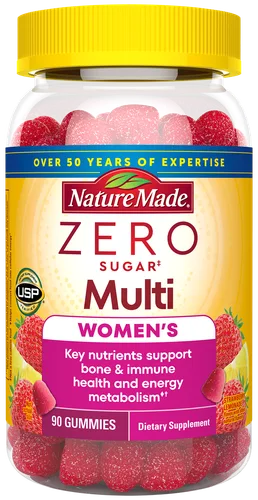
Nature Made Zero Sugar‡ Women's Multivitamin Gummies Review
We don’t sell supplements. We help you make decisions and get the best price.
Lowest prices
We may earn a commission from some store links. How we choose.
Finding the lowest prices at the stores now. This takes a few seconds.
Study, Trial or Testing Result Summary
Members Only361 human studies · 140 improved
2 of these 361 human studies gave the ingredient by drip, not by mouth.
This gummy has small amounts of many vitamins and minerals, so only a few match the doses tested for blood sugar. Vitamin D is at a full dose. In people with type 2 diabetes, it modestly lowered fasting blood sugar, long-term blood sugar and insulin resistance, most in people low in vitamin D [1][2]. A large five-year trial in older adults found no clear drop in diabetes risk [3]. Zinc reaches the studied dose at three gummies a day. In people with prediabetes, 20 milligrams daily for a year lowered fasting blood sugar and fewer people developed diabetes [4]. Another year-long trial found no change [5]. Chromium reaches a studied dose at two gummies. Pooled trials in type 2 diabetes found lower fasting and long-term blood sugar [6][7], but no effect was found in people without diabetes. Calcium reaches a studied dose at four gummies, and its support comes mostly from trials that paired it with vitamin D [8]. Vitamin C, vitamin E, vitamin B6, folate, vitamin B12 and biotin are well below the doses that helped in studies [9][10][11]. Better trials found that vitamin A did not change blood sugar [12]. Animal and cell studies are never counted.
See all 361 studies →Hide the studies
- In a review of 884 trials with about 884,000 people, beta-carotene (a vitamin A precursor) raised the risk of death from any cause, death from heart disease, and stroke, while vitamin A itself was not reported to help heart or diabetes risk.Micronutrient Supplementation to Reduce Cardiovascular Risk.
- In 23 trials of 60,194 older adults, niacin did not reduce the need for revascularization, and blood sugar outcomes for niacin were not reported.Lipid-Lowering Agents in Older Individuals: A Systematic Review and Meta-Analysis of Randomized Clinical Trials.
- Across ten cohort studies of 40,244 pregnancies, higher folate exposure was linked to a higher risk of gestational diabetes, especially during pregnancy and in Chinese women.Periconceptional folate and gestational diabetes mellitus: a systematic review and meta-analysis of cohort studies.
- This review compared diets of women with and without polycystic ovary syndrome and found only a tendency toward lower zinc intake in affected women; it did not test zinc supplements on blood sugar or heart health.Comparison of dietary and physical activity behaviors in women with and without polycystic ovary syndrome: a systematic …
- In 11 trials of 26,340 people without diabetes followed for about 3.6 years, those given niacin were about 34% more likely to develop diabetes than controls (725 of 13,121 versus 646 of 13,219).Niacin therapy and the risk of new-onset diabetes: a meta-analysis of randomised controlled trials.
- In 170 trials of 14,223 people with type 2 diabetes, vitamin E ranked best for lowering LDL cholesterol but with very low certainty, and it was not top-ranked for blood sugar.Comparative effects of vitamin and mineral supplements in the management of type 2 diabetes in primary care: A systemati…
- Across 53 trials of 9,443 pregnant women, vitamin D supplements lowered the risk of gestational diabetes by about 36% and improved blood sugar, blood fat, inflammation and oxidative stress markers.Dietary supplementation for gestational diabetes prevention and management: a meta-analysis of randomized controlled tri…
- In a pooled comparison of 79 trials with 5,501 women with polycystic ovary syndrome, chromium improved blood fat levels, antioxidant capacity and a reproductive hormone, but it was not singled out for blood sugar and several other markers did not differ from placebo.The effectiveness of nutritional supplements in improving polycystic ovary syndrome in women: a systematic review and ne…
- In 46 trials of 4,313 people with type 2 diabetes, vitamin D lowered HbA1c by 0.20 points, fasting glucose by 5 mg/dl and insulin resistance, most in people who were deficient and with high doses over a short time.What is the impact of vitamin D supplementation on glycemic control in people with type-2 diabetes: a systematic review …
- In 39 trials of 2,982 people with type 2 diabetes, vitamin D lowered fasting glucose, HbA1c by 0.30 points, insulin resistance and fasting insulin, especially with short-term high doses in deficient or overweight people.Efficacy of vitamin D supplementation on glycaemic control in type 2 diabetes: An updated systematic review and meta-ana…
- In 15 trials of 2,833 pregnant women, two trials of 219 women found no clear difference in gestational diabetes risk between vitamin D and placebo or no treatment, though the evidence was very low quality.Vitamin D supplementation for women during pregnancy.
- In a pooled comparison of 41 trials with 2,362 women with polycystic ovary syndrome, chromium lowered fasting insulin and insulin resistance versus placebo, and also lowered triglycerides and total cholesterol.Comparison of nutritional supplements in improving glycolipid metabolism and endocrine function in polycystic ovary synd…
- In 8 trials of 2,110 people with type 2 diabetes, niacin improved cholesterol and triglycerides but did not significantly change blood glucose or HbA1c (long-term blood sugar).Effectiveness of niacin supplementation for patients with type 2 diabetes: A meta-analysis of randomized controlled tria…
- In 8 trials with 1,580 people with prediabetes, vitamin D did not change HbA1c, fasting glucose or insulin resistance versus placebo but improved the 2-hour glucose tolerance test result.Association between vitamin D and prediabetes: A PRISMA-compliant meta-analysis.
- Across 22 randomized trials with 1447 people with type 2 diabetes, vitamin C lowered long-term blood sugar (HbA1c), fasting insulin and fasting blood sugar compared with no vitamin C, with the best results at 1000 mg or more per day for 12 weeks or longer.The effects of vitamin C supplementation on glycemic control in patients with type 2 diabetes: A systematic review and m…
- In 20 trials of 1,187 people with newly diagnosed type 1 diabetes, immunotherapies as a group modestly preserved insulin-producing cell function, but nicotinamide was only one of many agents and its separate effect was not reported.Immunotherapeutic agents in type 1 diabetes: a systematic review and meta-analysis of randomized trials.
- In 10 trials with 683 women with polycystic ovary syndrome, chromium lowered fasting insulin, cholesterol, triglycerides, inflammation and oxidative stress and raised insulin sensitivity versus placebo, and lowered insulin resistance more than a med.Therapeutic effects of chromium supplementation on women with polycystic ovarian syndrome: A systematic review and meta-…
- In 15 trials with 618 people, chromium did not change blood sugar or insulin in people without diabetes, and results in people with diabetes were inconclusive, with only one Chinese study showing benefit.Glucose and insulin responses to dietary chromium supplements: a meta-analysis.
- In 10 trials with 509 people with type 2 diabetes, chromium modestly lowered long-term blood sugar (HbA1c) but did not significantly change fasting blood sugar or blood fats versus placebo.Effect of Chromium Supplementation on Blood Glucose and Lipid Levels in Patients with Type 2 Diabetes Mellitus: a System…
- Pooling five trials of 445 people with type 2 diabetes who took biotin for 28 to 90 days, total cholesterol fell, but the changes in fasting blood sugar and triglycerides were not statistically clear, and insulin did not change.Influence of biotin intervention on glycemic control and lipid profile in patients with type 2 diabetes mellitus: A syst…
- In 6 trials with 351 women with polycystic ovary syndrome, chromium lowered insulin resistance but did not change fasting blood sugar or fasting insulin, and testosterone levels rose.Chromium supplementation in women with polycystic ovary syndrome: Systematic review and meta-analysis.
- Across five trials of 306 pregnant women with gestational diabetes, vitamin D plus calcium lowered fasting blood sugar, insulin and LDL cholesterol, but did not change total cholesterol or triglycerides.Influence of vitamin D-calcium on metabolic profile for gestational diabetes: a meta-analysis of randomized controlled t…
- Pooling three trials of 265 people with prediabetes taking 20-30 mg of zinc daily for 6-12 months, fasting blood glucose fell by about 11 mg/dL and 2-hour glucose fell by about 21 mg/dL.Zinc supplementation in prediabetes mellitus.
- In 10 trials of 211 people with recent-onset type 1 diabetes given nicotinamide, C-peptide (a sign of insulin production) was higher after one year than in controls, but insulin dose and HbA1c (long-term blood sugar) did not differ.Meta-analysis of nicotinamide treatment in patients with recent-onset IDDM. The Nicotinamide Trialists.
- In a pooled analysis of placebo-controlled trials of antioxidant fats, beta-carotene (a vitamin A precursor) lowered total cholesterol slightly, but no blood sugar benefit was reported for it.Antioxidant Lipid Supplement on Cardiovascular Risk Factors: A Systematic Review and Meta-Analysis.
- In a pooled analysis of randomized trials in people with type 2 diabetes taking meds, adding vitamin C significantly improved long-term blood sugar (HbA1c) and fasting blood sugar.Could nutrient supplements provide additional glycemic control in diabetes management? A systematic review and meta-anal…
- This review compared nutrient levels in people with diabetic foot ulcers and found differences mainly in vitamin D, magnesium and selenium, and did not test vitamin C supplements for blood sugar.The association between micronutrient levels and diabetic foot ulcer: A systematic review with meta-analysis.
- In a pooled comparison of vitamin, exercise and probiotic treatments in people with type 2 diabetes, vitamin C had the strongest effects on fasting blood sugar and insulin measures, though vitamin supplementation alone did not significantly improve long-term blood sugar (HbA1c).Network meta-analysis of the effects of combined exercise and vitamin intervention on insulin resistance and related ind…
- A pooled analysis of Iranian studies found vitamin D improved fasting glucose, HbA1c and insulin resistance in people with type 2 diabetes, while gestational diabetes showed gains only in insulin resistance.The effects of vitamin D supplementation on indices of glycemic control in Iranian diabetics: A systematic review and me…
- In 27 trials in pregnant women, vitamin D above 2000 IU a day lowered the risk of gestational diabetes by 30%, but did not change preterm birth or birth weight, and lower doses were enough to reduce preeclampsia.Vitamin D supplementation higher than 2000 IU/day compared to lower dose on maternal-fetal outcome: Systematic review an…
- In three placebo-controlled trials of adults with prediabetes, vitamin D cut the risk of developing type 2 diabetes by 15% over about 3 years and made a return to normal blood sugar 30% more likely.Vitamin D and Risk for Type 2 Diabetes in People With Prediabetes : A Systematic Review and Meta-analysis of Individual …
- An analysis of 15 meta-analyses of trials in women with polycystic ovary syndrome found vitamin D lowered triglycerides, total and LDL cholesterol, but did not change HDL cholesterol, insulin or body mass index.Effect of vitamin D supplementation on lipid profile, and hormonal functions in polycystic ovary syndrome: An umbrella s…
- In children with fatty liver, vitamin E lowered LDL and total cholesterol but raised fasting blood glucose when given for 12 months or less, with no change in fasting insulin or insulin resistance.Vitamin E in paediatric non-alcoholic fatty liver disease: a meta-analysis.
- In 12 trials in women with polycystic ovary syndrome, vitamin E lowered insulin resistance, triglycerides, LDL cholesterol and waist size.Effect of vitamin E supplementation on cardiometabolic risk factors, inflammatory and oxidative markers and hormonal fun…
- In 178 trials in adults with type 2 diabetes, vitamin E lowered HbA1c with low certainty, but not after poor-quality studies were excluded, and it did not improve fasting blood sugar or insulin resistance.Comparison of nutritional supplements for glycemic control in type 2 diabetes: A systematic review and network meta-anal…
- In 5 trials in people with diabetic kidney disease, vitamin E lowered HbA1c and serum creatinine compared with placebo, with no change in kidney filtration rate, urea or blood pressure.Effect of Vitamin E on Diabetic Nephropathy: A Meta-Analysis.
- A safety analysis of medicines withdrawn from the market found new-onset diabetes with niacin-laropiprant became a significant harm after marketing, with about one extra case per 390 people treated.Testing the usefulness of the number needed to treat to be harmed (NNTH) in benefit-risk evaluations: case study with me…
- Across 23 studies, brown seaweed lowered after-meal blood sugar, long-term blood sugar (HbA1c) and insulin resistance compared with controls, but did not change fasting blood sugar or insulin.Brown Seaweed Consumption as a Promising Strategy for Blood Glucose Management: A Comprehensive Meta-Analysis.
- Pooling 13 trials in people with type 2 diabetes using 42 to 1,000 micrograms daily for 30 to 120 days, chromium lowered fasting glucose by about 29 mg/dL and total cholesterol by about 6.7 mg/dL.[Chromium supplementation in patients with type 2 diabetes and high risk of type 2 diabetes: a meta-analysis of randomiz…
- Pooling 7 trials in women with polycystic ovary syndrome, chromium lowered body mass index, free testosterone and fasting insulin (in larger studies), but did not change total testosterone, hormone levels or hair growth score.Chromium supplementation and polycystic ovary syndrome: A systematic review and meta-analysis.
- Pooling 28 trials in people with type 2 diabetes, chromium supplements lowered fasting blood glucose by 19 mg/dl, long-term blood sugar (HbA1c) by 0.71%, insulin and insulin resistance compared with controls.Effects of chromium supplementation on glycemic control in patients with type 2 diabetes: a systematic review and meta-a…
- In 15 trials of people with type 2 diabetes taking 200 to 1000 micrograms of chromium daily, diastolic blood pressure and an oxidative stress marker fell, but body weight index, systolic blood pressure and liver enzymes did not change.Effects of chromium supplementation on blood pressure, body mass index, liver function enzymes and malondialdehyde in pa…
- A review of 16 reviews covering 250,569 pregnant women found low vitamin D linked to more gestational diabetes, and supplementation in women who already had gestational diabetes reduced some complications in them and their babies.Effects of vitamin D in pregnancy on maternal and offspring health-related outcomes: An umbrella review of systematic re…
- In a review of 49 trials on artery and heart valve calcification, the one folate plus vitamins B6 and B12 trial showed no slowing of calcification.Interventions to Attenuate Cardiovascular Calcification Progression: A Systematic Review of Randomized Clinical Trials.
- In nine trials of 363 women with polycystic ovary syndrome, magnesium alone did not improve blood sugar, but magnesium combined with vitamin E or other supplements improved insulin, insulin resistance, blood fats and a marker of inflammation.The effect of magnesium alone or its combination with other supplements on the markers of inflammation, OS and metabolis…
- A review of six studies in people with gum disease and diabetes found lower vitamin C levels in those with both conditions, but evidence on whether vitamin C supplements help was inconclusive.Possible Involvement of Vitamin C in Periodontal Disease-Diabetes Mellitus Association.
- This review of diet and diabetic eye disease found no link between vitamin C intake and diabetic retinopathy, and it did not measure blood sugar.Dietary Intake and Diabetic Retinopathy: A Systematic Review of the Literature.
- A review of 8 cohort studies and 11 trials found higher vitamin D status linked to lower type 2 diabetes risk, but supplements did not change blood sugar in people with normal glucose or established diabetes, and improved insulin resistance in two trials of people with glucose intolerance.Vitamin D and type 2 diabetes: a systematic review.
- A systematic review of 76 studies found the evidence on vitamin D in pregnancy too inconsistent and low quality to support firm conclusions about maternal blood pressure or blood sugar outcomes.Vitamin D supplementation in pregnancy: a systematic review.
- A broad review of edible oils found the evidence supports possible benefits of high alpha-tocopherol (vitamin E) content for long-term diseases, but gave no specific blood sugar results for vitamin E.How should we judge edible oils and fats? An umbrella review of the health effects of nutrient and bioactive components …
- A review of trials in women with polycystic ovary syndrome found vitamin E combined with other nutrients helped male hormone levels and inflammation, while inositol was best for blood sugar control.Nutraceuticals and polycystic ovary syndrome: a systematic review of the literature.
- A review of 21 studies on treating abnormal blood fats in people with diabetes covered nicotinic acid among several treatments, but the summary gives no results or numbers for niacin.Diabetes: managing dyslipidaemia.
- Studies of mothers' folate in pregnancy and child obesity or insulin resistance were inconsistent: in five human studies, one showed benefit, two harm and two were unclear.Maternal folate status and obesity/insulin resistance in the offspring: a systematic review.
- In animal and human studies of folate in pregnancy and offspring metabolism, excess folate harmed animal offspring, while in humans adequate folate showed no link or a protective effect.Maternal folate and metabolic programming of the offspring: A systematic review of the literature.
- In 17 studies, most randomized trials found folic acid supplements lowered fasting blood sugar, insulin and insulin resistance versus control, but trials were short and long-term blood sugar (HbA1c) was rarely measured.Folic Acid as a Potential Vitamin in Glycemic Control: A Systematic Review.
- In twelve studies of folic acid in pregnancy, high doses (800 mcg or more) or long use were linked to more gestational diabetes, while standard doses of about 400 mcg looked neutral or possibly protective.Folic Acid Supplementation and Risk of Gestational Diabetes Mellitus: A Systematic Review of the Literature.
- A review of clinical and animal studies suggested the brown seaweed Laminaria japonica may help with metabolic syndrome by reducing oxidative stress and inflammation, though no pooled human numbers were given.The Effect of Laminaria japonica on Metabolic Syndrome: A Systematic Review of Its Efficacy and Mechanism of Action.
- In a review of 14 studies, chromium reduced inflammatory markers in 12, but only three were human studies and their results were conflicting, so evidence in people with diabetes remains unclear.Potential roles of chromium on inflammatory biomarkers in diabetes: A Systematic.
- A review of randomized trials in people with type 2 diabetes using 50 to 1000 micrograms of chromium daily for 2 to 6 months found lower fasting glucose, insulin, long-term blood sugar and insulin resistance, mainly in longer studies.Chromium supplementation and type 2 diabetes mellitus: an extensive systematic review.
- In 29,133 male smokers given 20 mg of beta-carotene daily for a median of about 6 years, the rate of new type 2 diabetes was no different from those not taking it.Effect of alpha-tocopherol and beta-carotene supplementation on the incidence of type 2 diabetes.
- In 25,673 adults with vascular disease on meds, 2 g of extended-release niacin with laropiprant daily for about 3.9 years did not reduce major vascular events and increased serious problems with diabetes control by 3.7 percentage points and new diabetes diagnoses by 1.3 percentage points compared with placebo.Effects of extended-release niacin with laropiprant in high-risk patients.
- In 22,220 older US adults followed for about 5.3 years, 2000 IU of vitamin D3 daily did not significantly reduce type 2 diabetes risk compared with placebo, though pooling with prior trials showed a modest reduction.Vitamin D supplementation vs. placebo and incident type 2 diabetes in an ancillary study of the randomized Vitamin D and…
- In a New Zealand population study of children with islet cell antibodies, nicotinamide treatment was linked to a lower rate of type 1 diabetes over an average of 7.1 years of follow-up, though the confidence interval was wide.A population based strategy to prevent insulin-dependent diabetes using nicotinamide.
- In 19,053 adults with high blood pressure, adding folic acid to enalapril was projected to add about 1.75 months of lifetime stroke-free survival compared with enalapril alone.Estimated Stroke-Free Survival of Folic Acid Therapy for Hypertensive Adults: Projection Based on the CSPPT.
- In 9,541 people aged 55 or older at high risk of heart problems, 400 IU of vitamin E daily for an average of 4.5 years did not reduce heart attacks, strokes or cardiovascular deaths compared with placebo.Vitamin E supplementation and cardiovascular events in high-risk patients.
- In 5,522 older adults with vascular disease or diabetes, daily B6 (50 mg) with folic acid and B12 for about five years did not reduce major heart events versus placebo, though strokes were fewer and hospital stays for unstable angina were more frequent.Homocysteine lowering with folic acid and B vitamins in vascular disease.
- In 4,252 women at high heart risk and free of diabetes, daily B6 (50 mg) with folic acid and B12 for about 7 years did not lower the risk of developing type 2 diabetes compared with placebo.Effect of homocysteine-lowering treatment with folic Acid and B vitamins on risk of type 2 diabetes in women: a randomiz…
- In 2340 adults with mixed high cholesterol, 1 gram of extended-release niacin with laropiprant plus a med for 12 weeks improved lipids more than a med, but caused more flushing and higher blood glucose.Read the study on PubMed (22305632) →
- In 1,729 women planning pregnancy, an enhanced supplement including B6 raised vitamin levels and reduced deficiency markers, but this abstract reports no blood sugar result for the supplement.Maternal B-vitamin and vitamin D status before, during, and after pregnancy and the influence of supplementation preconc…
- In rural Nepal, children of mothers given folic acid during pregnancy showed no significant change in insulin resistance at ages 6 to 8, although low maternal vitamin B-12 was linked to higher insulin resistance in the children.Low maternal vitamin B-12 status is associated with offspring insulin resistance regardless of antenatal micronutrient s…
- In the VITAL trial, baseline blood sugar markers predicted later type 2 diabetes and heart disease, and randomization to vitamin D did not change those associations.Biomarkers of glucose-insulin homeostasis and incident type 2 diabetes and cardiovascular disease: results from the Vita…
- In 796 people with type 2 diabetes, extended-release niacin with laropiprant for 12 weeks lowered LDL cholesterol by 17.9% and triglycerides by 23.1% and raised HDL cholesterol by 23.2%, shifting blood fat particles to a less harmful pattern than placebo.Extended-release niacin/laropiprant effects on lipoprotein subfractions in patients with type 2 diabetes mellitus.
- In 796 people with type 2 diabetes, 12 weeks of extended-release niacin with laropiprant strengthened the link between apolipoprotein B and LDL or non-HDL cholesterol, though many people who met cholesterol goals still stayed above the apolipoprotein B goal.Effects of extended-release niacin/laropiprant on correlations between apolipoprotein B, LDL-cholesterol and non-HDL-cho…
- In 636 patients after coronary stenting, daily B6 (48 mg) with folic acid and B12 for six months led to more artery re-narrowing than placebo (34.5% vs 26.5%).Folate therapy and in-stent restenosis after coronary stenting.
- In 506 people after gastric bypass surgery, a longer bypass limb gave no extra weight loss or diabetes remission over five years but led to a greater need for vitamin B12 supplements; this study did not test B12 as a treatment.Impact of Biliopancreatic Limb Length (70 cm vs 120 cm), with Constant 150 cm Alimentary Limb, on Long-Term Weight Loss,…
- In 447 adults with poorly controlled type 2 diabetes, 90 days of chromium picolinate plus 2 mg biotin lowered long-term blood sugar (HbA1c) by 0.54% and fasting glucose more than placebo.Chromium picolinate and biotin combination improves glucose metabolism in treated, uncontrolled overweight to obese pati…
- In 348 adults with type 2 diabetes, 90 days of chromium plus 2 mg biotin lowered HbA1c and glucose versus placebo, and improved cholesterol in those with high cholesterol or taking meds.Combination of chromium and biotin improves coronary risk factors in hypercholesterolemic type 2 diabetes mellitus: a pl…
- In 307 infertile men, taking 1400 units of vitamin D3 plus 500 mg calcium daily for 150 days lowered fasting insulin and insulin resistance and raised HDL cholesterol compared with placebo.Vitamin D Supplementation Improves Fasting Insulin Levels and HDL Cholesterol in Infertile Men.
- In 297 retired teachers, 2 to 4 months of a combined antioxidant supplement including 500 mg of vitamin C daily had no significant effect on fasting blood sugar, blood pressure or cholesterol compared with placebo.The effect of antioxidant vitamin supplementation on traditional cardiovascular risk factors.
- In 279 people with both diabetes and tuberculosis, 600 mcg of vitamin A daily for 2 months did not change fasting or after-meal blood sugar compared with standard treatment alone.Adjunctive vitamin A and D for the glycaemic control in patients with concurrent type 2 diabetes and tuberculosis: a ran…
- In 243 people with prediabetes given vitamin D and/or 500 mg calcium daily for 24 weeks, insulin secretion rose, and those low in vitamin D improved pancreatic beta-cell function with vitamin D plus calcium.Effect of Vitamin D and/or Calcium Supplementation on Pancreatic β-Cell Function in Subjects with Prediabetes: A Randomi…
- In 240 people with recent unstable angina or a mild heart attack, 1 mg of folic acid daily with vitamins B12 and B6 for up to six months led to more deaths, repeat heart events and hospital stays than placebo.Folic acid-based intervention in non-ST elevation acute coronary syndromes.
- In 239 Italian adults with type 2 diabetes and low vitamin D, six months of vitamin D3 lowered fasting and after-meal glucose and HbA1c compared with placebo, and some patients needed less meds.Vitamin D3 supplementation improves glycemic control in type 2 diabetic patients: Results from an Italian clinical trial…
- In 214 people with type 2 diabetes and nerve damage, 3 mg of L-methylfolate daily with two other B vitamins for 24 weeks did not change the nerve vibration test but eased symptoms and lowered homocysteine compared with placebo.Metanx in type 2 diabetes with peripheral neuropathy: a randomized trial.
- In 200 adults with prediabetes, 20 mg of zinc daily for 12 months lowered fasting glucose, insulin resistance and cholesterol, and fewer developed type 2 diabetes than with placebo (11% vs 25%).Zinc supplementation in prediabetes: A randomized double-blind placebo-controlled clinical trial.
- In 180 adults with type 2 diabetes, taking 1000 mcg of chromium picolinate daily for 4 months lowered average blood sugar (HbA1c) and fasting and two-hour glucose compared with placebo, while also lowering insulin and total cholesterol.Elevated intakes of supplemental chromium improve glucose and insulin variables in individuals with type 2 diabetes.
- In a 12-month placebo-controlled trial of 173 African-American men with prediabetes and low vitamin D, weekly high-dose vitamin D2 raised vitamin D levels but did not improve insulin sensitivity or HbA1c compared with placebo.EFFECT OF HIGH-DOSE VITAMIN D REPLETION ON GLYCEMIC CONTROL IN AFRICAN-AMERICAN MALES WITH PREDIABETES AND HYPOVITAMINOS…
- In 166 sedentary adults with risk factors for metabolic syndrome taking 400 or 800 mcg of chromium with plant extracts for 12 weeks alongside exercise and diet, some measures such as blood vessel function, insulin sensitivity and blood fats improved more than placebo, though evidence was modest and mostly seen at 6 weeks.Effects of 12 Weeks of Chromium, Phyllanthus emblica Fruit Extract, and Shilajit Supplementation on Markers of Cardiomet…
- In 163 iodine-deficient overweight women, 200 mcg of iodine daily for 6 months lowered thyroid-stimulating hormone by 33% and cut high cholesterol rates (21.5% vs 34.8% of controls), but the abstract reports no clear blood sugar benefit.Iodine Supplementation Decreases Hypercholesterolemia in Iodine-Deficient, Overweight Women: A Randomized Controlled Tri…
- In 160 Saudi adults with prediabetes, a six-month lifestyle program improved fasting glucose and insulin resistance and raised vitamin C intake compliance, but vitamin C was not given as a supplement.Improvements in Glycemic, Micronutrient, and Mineral Indices in Arab Adults with Pre-Diabetes Post-Lifestyle Modificatio…
- In 155 adults with irritable bowel syndrome on a low starch and sugar diet or a low fermentable carbohydrate diet, folate levels rose and HbA1c fell after 4 weeks, with cholesterol and LDL also lowered on the low starch diet.Improved lipid and glycemic profile and vitamin D levels after a dietary intervention with SSRD and low FODMAP in IBS pa…
- In 110 siblings of patients with atherosclerotic disease, 250 mg of B6 plus folic acid for a year lowered homocysteine but did not change the heart risk marker ADMA; a second study of 41 people with diabetes used folic acid alone.No effect of B vitamins on ADMA levels in patients at increased cardiovascular risk.
- In 130 adults with type 2 diabetes on a med, vitamin D over 6 months improved HbA1c and lowered advanced oxidation protein products at 3 months with higher doses, but did not significantly change insulin resistance.The Effects of Vitamin D Supplementation on Metabolic and Oxidative Stress Markers in Patients With Type 2 Diabetes: A 6…
- In 124 children with type 1 diabetes, 100 mg of B6 daily for 8 weeks restored blood vessel dilation to normal versus no change with placebo, with no extra benefit from adding folate.Folate and vitamin B6 rapidly normalize endothelial dysfunction in children with type 1 diabetes mellitus.
- In 123 spa patients with poorly controlled diabetes over 4 weeks, blood sugar and blood fats improved mainly due to the controlled diet, with the largest drops in HbA1c and cholesterol in the group combining exercise and iodine brine.[Comparative study on the effect of diet, exercise and iodine balneotherapy on blood rheologic parameters in diabetics w…
- In 120 women with type 2 diabetes and obesity on a low-calorie diet, a vitamin-mineral complex containing B6 for 3 weeks lowered blood sugar more than diet alone (1.8 vs 1.2 mmol/l drop).[Assessment of efficiency of dietotherapy with addition of a vitamin-mineral complex in patients with diabetes mellitus …
- In hypercholesterolemic children, low-dose chromium polynicotinate or policosanol lowered cholesterol only when combined with glucomannan fiber over eight weeks, while chromium with starch alone had no lipid-lowering effect.Low dose chromium-polynicotinate or policosanol is effective in hypercholesterolemic children only in combination with g…
- In a placebo-controlled trial of 119 people with high cholesterol, a soluble fiber and folate-B vitamin combination for 8 weeks lowered LDL cholesterol by about 10% compared with placebo and reduced homocysteine.Fiber-multivitamin combination therapy: a beneficial influence on low-density lipoprotein and homocysteine.
- In 110 adults with pre-diabetes, six months of a lysine, zinc and vitamin C combination lowered blood sugar and HbA1c and fewer developed diabetes (7.3% vs 25.4% on placebo).Effects of the Lysulin™ supplementation on pre-diabetes: A randomized double-blind, placebo-controlled clinical trial.
- In 107 people after hip replacement surgery, vitamin C lowered pain, morphine use and inflammation and, unlike dexamethasone, was not linked to higher blood sugar; blood sugar was not improved compared with control.Efficacy of Vitamin C as Glucocorticoid Substitute for Reducing Pain and Inflammation After Total Hip Arthroplasty: A Ra…
- In 102 healthy men, replacing some red and processed meat with legumes for six weeks lowered cholesterol and weight and lowered vitamin B12 intake and status; B12 was not given as a supplement.Nutritional and health benefits of a partial substitution of red and processed meat with non-soy legumes: a 6-week rando…
- In 100 adults with type 2 diabetes, drinking vitamin D-fortified yogurt twice daily for 12 weeks improved fasting glucose, HbA1c, insulin sensitivity index and blood fats compared with plain yogurt, along with markers of blood vessel lining health.Regular consumption of vitamin D-fortified yogurt drink (Doogh) improved endothelial biomarkers in subjects with type 2 …
- In 100 people with fatty liver disease, 268 mg of alpha-tocopherol twice daily for 48 weeks lowered blood levels of several microRNAs linked to fat buildup in the liver, insulin resistance, oxidative stress and inflammation; delta-tocotrienol was more effective for two of them.Hepato-Protective Effects of Delta-Tocotrienol and Alpha-Tocopherol in Patients with Non-Alcoholic Fatty Liver Disease: …
- In 100 people with type 2 diabetes, a yogurt drink with vitamin D and calcium for 12 weeks lowered inflammation markers compared with the same drink without vitamin D (both had calcium).Improvement of vitamin D status resulted in amelioration of biomarkers of systemic inflammation in the subjects with typ…
- In 98 adults with prediabetes, 30 mg of zinc gluconate daily for up to 12 months did not change long-term blood sugar or fasting glucose compared with placebo.The effect of zinc supplementation on glucose homeostasis: a randomised double-blind placebo-controlled trial.
- In 92 adults with type 2 diabetes, 500 mcg of chromium picolinate daily for 4 months kept insulin resistance from rising and lowered the inflammation marker TNF-alpha, but fasting blood sugar, average blood sugar, and cholesterol did not change significantly.The effects of chromium and vitamin D3 co-supplementation on insulin resistance and tumor necrosis factor-alpha in type …
- In 90 people with fatty liver inflammation, vitamin E at 400 IU twice daily for 6 months modestly reduced liver fat and a marker of oxidative stress, but was less effective than the N-acetyl cysteine and a med combination and did not significantly change most other blood markers.New Approach Combination-Dosed Therapy for Nonalcoholic Steatohepatitis Versus Vitamin E: A Randomized Controlled Trial.
- In 90 people with recent type 1 diabetes, nicotinamide for 1 year produced more clinical remission than insulin alone, with remission lasting longer than in the other groups.Randomized trial comparing nicotinamide and nicotinamide plus cyclosporin in recent onset insulin-dependent diabetes (IM…
- In 90 people with type 2 diabetes on a med and nerve damage, 1000 mcg of methylcobalamin daily for one year raised B12 levels and improved nerve function, pain and quality of life compared with placebo, but did not significantly improve heart autonomic reflex tests.Vitamin B12 Supplementation in Diabetic Neuropathy: A 1-Year, Randomized, Double-Blind, Placebo-Controlled Trial.
- In a post hoc subgroup of 87 adults taking a multivitamin for 6 months, C-reactive protein, a marker of inflammation, was lower than with placebo, though folate itself was not linked to this change.Reduction of C-reactive protein levels through use of a multivitamin.
- In 87 malnourished children with long-lasting diarrhea, zinc sulfate at 3 mg per kg of body weight daily for 14 days did not improve weight gain or diarrhea recovery compared with placebo, and it lowered plasma copper; blood sugar and heart outcomes were not measured.Zinc supplementation in malnourished children with persistent diarrhea in Pakistan.
- In 86 women with polycystic ovary syndrome, 8 weeks of vitamin E alone did not significantly lower fasting blood sugar, though it did lower testosterone; blood sugar gains came from coenzyme Q10 alone or combined with vitamin E.Hormonal and Metabolic Effects of Coenzyme Q10 and/or Vitamin E in Patients With Polycystic Ovary Syndrome.
- In 85 people with type 2 diabetes, a four-ingredient tablet including B12 taken for 12 months improved nerve function, pain and quality of life compared with placebo, but not heart autonomic reflex tests.Efficacy and Safety of the Combination of Superoxide Dismutase, Alpha Lipoic Acid, Vitamin B12, and Carnitine for 12 Mon…
- In women with polycystic ovary syndrome, 1000 mcg of chromium picolinate daily for six months reduced insulin resistance and BMI and increased the chance of ovulation and regular periods compared with placebo.Chromium picolinate reduces insulin resistance in polycystic ovary syndrome: Randomized controlled trial.
- In 81 obese women with polycystic ovary syndrome, 5 mg folate daily for 8 weeks lowered homocysteine, insulin resistance and cholesterol compared with placebo, while 1 mg did not.Metabolic response to folate supplementation in overweight women with polycystic ovary syndrome: a randomized double-bli…
- In 80 teens with type 1 diabetes and early kidney damage, 12 weeks of a B complex including B12 lowered homocysteine, fasting blood sugar, HbA1c, triglycerides and cholesterol compared with placebo.Vitamin B complex supplementation as a homocysteine-lowering therapy for early stage diabetic nephropathy in pediatric p…
- In 78 overweight or obese adults, taking 1,000 IU of vitamin D3 daily for 12 weeks, with or without magnesium, did not improve glucose, insulin or insulin resistance compared with placebo.Combined vitamin D and magnesium supplementation does not influence markers of bone turnover or glycemic control: A rand…
- In 77 people with prediabetes, 300 mg of delta-tocotrienol daily for 12 weeks lowered fasting blood sugar, long-term blood sugar, insulin and insulin resistance more than placebo.Effects of delta-tocotrienol supplementation on glycaemic control in individuals with prediabetes: A randomized controll…
- In 76 obese children with fatty liver, 100 mg of vitamin E daily for one month improved insulin resistance and other measures compared with no treatment, though lifestyle changes worked better.Effect of lifestyle intervention on non-alcoholic fatty liver disease in Chinese obese children.
- In 75 people with type 2 diabetes, 4 months of a multivitamin with 200 mcg biotin did not change blood sugar control compared with placebo.Improving neuropathy scores in type 2 diabetic patients using micronutrients supplementation.
- In 73 adults with type 2 diabetes taking 1000 mcg of chromium picolinate daily for 6 months, 63% responded with better insulin sensitivity compared with 30% on placebo; baseline insulin sensitivity was the main predictor of response.Phenotype of subjects with type 2 diabetes mellitus may determine clinical response to chromium supplementation.
- In 70 overweight people with type 2 diabetes, 50 mg of zinc gluconate daily for 8 weeks lowered fasting blood sugar, HbA1c, insulin resistance, triglycerides and total cholesterol, and raised antioxidant enzyme activity compared with placebo.Effects of zinc supplementation on superoxide dismutase activity and gene expression, and metabolic parameters in overwe…
- In 69 adults with type 2 diabetes, 200 mg vitamin C plus 150 mg vitamin E daily for 3 months did not change cholesterol or triglyceride levels, while the group taking minerals plus vitamins showed a rise in good cholesterol.The impact of vitamin and/or mineral supplementation on lipid profiles in type 2 diabetes.
- In 68 overweight adults given free fruits and vegetables for 16 weeks, folate intake rose along with other nutrients, and insulin levels and body measurements trended better, but most other blood sugar and blood fat markers did not change.Increased intake of fruits and vegetables in overweight subjects: effects on body weight, body composition, metabolic ri…
- In obese adults with metabolic syndrome, 1000 mcg of chromium picolinate daily for 16 weeks did not improve insulin sensitivity, blood lipids or inflammation compared with placebo.Chromium picolinate does not improve key features of metabolic syndrome in obese nondiabetic adults.
- In 60 women with polycystic ovarian syndrome taking a med, adding B vitamins (including 500 mg a day of B6) for 12 weeks lowered homocysteine by about 21%, but insulin sensitivity did not differ between groups.Read the study on PubMed (15790610) →
- In 60 dialysis patients, daily B6, folate and B12 for 12 months lowered homocysteine by about 24 to 28%, but only 12% reached normal levels, and the higher dose did no better.[Efficacy and safety of two vitamin supplement regimens on homocysteine levels in hemodialysis patients. Prospective, ra…
- In 60 adults with type 2 diabetes and heart disease who were overweight, 5 mg of folate daily for 12 weeks reduced carotid artery thickness and improved blood sugar, insulin, insulin resistance and cholesterol compared with placebo.The Effects of Folate Supplementation on Carotid Intima-Media Thickness and Metabolic Status in Patients with Metabolic …
- In a placebo-controlled trial of 60 overweight or obese women, 5 mg of folate daily for 12 weeks improved insulin sensitivity and lowered inflammation and blood homocysteine, while the effect on cervical lesion recurrence was not significant.Effects of folate supplementation on recurrence and metabolic status of cervical intraepithelial neoplasia grade 2/3 in …
- In 60 women with gestational diabetes, 1000 mg calcium daily plus vitamin D for 6 weeks lowered caesarean rates (23% vs 63%) and newborn complications compared with placebo.Calcium plus vitamin D supplementation affects pregnancy outcomes in gestational diabetes: randomized, double-blind, pla…
- In 60 women with polycystic ovary syndrome, a combined magnesium, zinc, calcium and vitamin D supplement for 12 weeks lowered insulin, insulin resistance, triglycerides and total cholesterol compared with placebo.A Trial on The Effects of Magnesium-Zinc-Calcium-Vitamin D Co-Supplementation on Glycemic Control and Markers of Cardio-…
- In 60 women with gestational diabetes, a combined magnesium, zinc, calcium and vitamin D supplement for 6 weeks lowered inflammation and oxidative stress markers compared with placebo.The effects of magnesium-zinc-calcium-vitamin D co-supplementation on biomarkers of inflammation, oxidative stress and p…
- In adults with type 2 diabetes, 1000 mcg of chromium picolinate daily for three months shortened the QTc heart rhythm measure compared with placebo.Chromium supplementation shortens QTc interval duration in patients with type 2 diabetes mellitus.
- In 60 overweight adults without diabetes, a drink with 250 mcg of chromium picolinate and amino acids taken with a carbohydrate meal lowered the rise in blood sugar compared with placebo.A novel nutritional supplement containing amino acids and chromium decreases postprandial glucose response in a randomiz…
- In 56 outpatients with diabetes, 2 grams a day of vitamin C for 90 days lowered fasting blood sugar and HbA1c, cholesterol and triglycerides in those with non-insulin-dependent diabetes.Magnesium and ascorbic acid supplementation in diabetes mellitus.
- In 56 teens with obesity and insulin resistance, three months of myo-inositol with 5 mg zinc gluconate did not significantly improve the main insulin resistance score compared with placebo, though a post hoc analysis found lower insulin and insulin resistance in the most obese subgroup.Efficacy of myo-inositol and zinc on insulin resistance in a paediatric population with obesity.
- In 55 older women with type 2 diabetes, 400 mg a day of pyridoxamine for one year lowered HbA1c by 0.38 percentage points, while the placebo group showed no change.The Effects of the AGE Inhibitor Pyridoxamine on Bone in Older Women With Type 2 Diabetes: A Randomized Clinical Trial.
- In 54 overweight women with polycystic ovary syndrome, 200 mcg of chromium picolinate plus 1000 mg of carnitine daily for 12 weeks lowered weight, fasting blood sugar, insulin, insulin resistance, and triglycerides and LDL cholesterol more than placebo.Effects of Chromium and Carnitine Co-supplementation on Body Weight and Metabolic Profiles in Overweight and Obese Women…
- In 53 obese children and adolescents, 5 mg folic acid daily for 8 weeks raised folate and lowered homocysteine but did not improve blood vessel function compared with placebo.Folic acid does not improve endothelial function in obese children and adolescents.
- In 50 burn patients, a tube feeding recipe containing vitamin A among many other nutrients reduced wound infection and was linked to better glucose tolerance, though that glucose change was not statistically significant.Differential effects of three enteral dietary regimens on selected outcome variables in burn patients.
- In 50 people with diabetes, 500 mg vitamin C daily for 4 months did not change blood sugar, glycated hemoglobin, or blood fats compared with placebo.The effect of vitamin C supplementation on diabetic hyperlipidaemia: a double blind, crossover study.
- In 50 hemodialysis patients with high homocysteine, vitamin B6 at 25 mg or 100 mg daily, with B12 and folic acid, significantly lowered homocysteine, with no difference between the two doses.Comparative study of response to treatment with supraphysiologic doses of B-vitamins in hyperhomocysteinemic hemodialysi…
- In 50 obese children, 5 mg folic acid daily for 2 months lowered blood homocysteine, a cardiovascular risk marker, more than placebo, especially in boys and children with low folate.Effect of folic acid supplementation on plasma homocysteine in obese children: a randomized, double-blind, placebo-contr…
- In 50 people with metabolic syndrome, one month of vitamin B12 (500 mcg daily) plus folic acid after a month of placebo lowered insulin levels and insulin resistance by 27% and improved blood vessel function, while the placebo group did not change.Insulin resistance and endothelial function are improved after folate and vitamin B12 therapy in patients with metabolic…
- In a placebo-controlled trial of 50 pregnant women with gestational diabetes, 30 mg of elemental zinc daily for 6 weeks lowered high-sensitivity C-reactive protein and raised total antioxidant capacity, but did not change pregnancy outcomes.Zinc Supplementation and the Effects on Pregnancy Outcomes in Gestational Diabetes: a Randomized, Double-blind, Placebo-…
- In 49 pregnant women at risk for pre-eclampsia, 500 mg of calcium carbonate plus 200 IU of vitamin D3 daily for 9 weeks lowered fasting blood sugar and triglycerides compared with placebo, but did not change total, HDL or LDL cholesterol.Effect of calcium-vitamin D supplementation on metabolic profiles in pregnant women at risk for pre-eclampsia: a randomi…
- In 48 overweight men with type 2 diabetes taking a med, 5 mg of folic acid daily for 8 weeks lowered HbA1c, fasting glucose, insulin, and insulin resistance compared with placebo.Effect of folic acid supplementation on biochemical indices in overweight and obese men with type 2 diabetes.
- In 48 people with type 1 or type 2 diabetes, 10 days of sugar-free zinc gluconate lozenges did not change blood sugar control compared with placebo, and did not harm it.Sugar-free zinc gluconate glycine lozenges (Cold-Eeze) do not adversely affect glucose control in patients with type 1 o…
- In 48 postmenopausal women with type 2 diabetes, 40 mg per day of zinc for 12 weeks, given with flaxseed oil, did not significantly change glucose, insulin, HbA1c or HOMA-IR compared with placebo.Zinc transporter gene expression and glycemic control in post-menopausal women with Type 2 diabetes mellitus.
- In 46 young adults who exercised three times a week for 12 weeks, taking 250 or 500 mg of vitamin C before each session did not change blood sugar or cholesterol compared with no vitamin C.Ascorbic acid supplementation does not alter oxidative stress markers in healthy volunteers engaged in a supervised exer…
- In 46 postmenopausal women with insulin resistance, vitamin C alone or with resveratrol lowered markers of cell damage from oxidative stress, but insulin resistance did not change between groups.The Administration of Resveratrol and Vitamin C Reduces Oxidative Stress in Postmenopausal Women-A Pilot Randomized Clin…
- In 46 adults with fatty liver disease, 400 mcg of chromium picolinate daily for 3 months lowered triglycerides, insulin, insulin resistance, and inflammatory markers compared with placebo, without changing fasting blood sugar or HbA1c.A pilot study of the effects of chromium picolinate supplementation on serum fetuin-A, metabolic and inflammatory factor…
- In 44 people with type 2 diabetes who all took 53.6 mg of vitamin E daily, adding fish oil for 8 weeks did not change blood sugar control, so vitamin E itself was not tested against a control.Influence of fish oil supplementation on in vivo and in vitro oxidation resistance of low-density lipoprotein in type 2 …
- In 44 adults over 65 with low vitamin B12, 5 mg folate plus 500 mcg vitamin B12 daily for 8 weeks improved coronary blood flow reserve compared with placebo.Folic Acid and vitamin B12 supplementation improves coronary flow reserve in elderly subjects with vitamin B12 deficienc…
- In 43 people with poorly controlled type 2 diabetes, 4 weeks of chromium plus 2 mg biotin lowered blood sugar after a glucose drink by 9.7% while placebo rose 5.1%, and also improved fructosamine and triglycerides.The effect of chromium picolinate and biotin supplementation on glycemic control in poorly controlled patients with type…
- In 42 healthy Asian adults, eating two kiwifruit before breakfast daily for 7 weeks raised vitamin C intake but did not change fasting blood sugar or insulin compared with the control group.Metabolic and Blood Pressure Effects of Consuming Two Kiwifruit Daily for 7 Weeks: A Randomised Controlled Trial.
- In 42 overweight women on a four-week calorie-restricted diet, taking 40 mg of vitamin B6 daily with branched chain amino acids did not change weight loss compared with placebo, and the abstract reports no significant effect on blood sugar or heart risk markers.The Weight Loss Effects of Branched Chain Amino Acids and Vitamin B6: A Randomized Controlled Trial on Obese and Overwei…
- In 41 teenagers with poorly controlled type 1 diabetes, an antioxidant mix with vitamin C for 3 to 6 months did not improve blood antioxidant levels or oxidative stress compared with placebo, though blood sugar control improved similarly in both groups.Improved glycemic control either alone, or combined with antioxidant supplementation, fails to restore blood glutathione…
- In 40 healthy young men, 1,000 mg of vitamin C plus 400 IU of vitamin E daily for 4 weeks of training raised blood levels of vaspin, a marker linked to poorer insulin sensitivity, whereas levels fell in men who took no antioxidants.Serum vaspin concentrations are decreased after exercise-induced oxidative stress.
- In 40 young men, a daily vitamin capsule with 0.6 mg folic acid for 8 weeks lowered homocysteine but did not improve blood vessel dilation compared with placebo.Hyperhomocysteinemia and endothelial function in young subjects: effects of vitamin supplementation.
- In 40 adults with fatty liver disease, 1000 mcg of vitamin B12 daily for 12 weeks lowered homocysteine compared with placebo, but blood glucose and insulin resistance changes did not differ from placebo.The effects of vitamin B12 supplementation on metabolic profile of patients with non-alcoholic fatty liver disease: a ra…
- In 40 adults with newly diagnosed type 2 diabetes, 3 months of chromium-enriched brewer's yeast lowered fasting blood sugar and long-term blood sugar control markers more than placebo yeast, and also reduced cholesterol and triglycerides.Beneficial effect of chromium supplementation on glucose, HbA1C and lipid variables in individuals with newly onset type…
- In a placebo-controlled pilot trial of 37 hospitalized COVID-19 patients, a combined protocol including folate for up to 14 days did not shorten recovery time compared with placebo.Read the study on PubMed (35808843) →
- In a small trial of a whole-food plant-based diet, vitamin B12 intake fell short of recommendations, while HbA1c and blood glucose improved more than in controls; vitamin B12 itself was not supplemented.Does a Plant-Based Diet Stand Out for Its Favorable Composition for Heart Health? Dietary Intake Data from a Randomized …
- In 37 adults with type 2 diabetes taking a med drug, 1000 mcg of chromium picolinate daily for 6 months improved insulin sensitivity and average blood sugar and reduced weight gain and belly fat compared with placebo.Chromium picolinate supplementation attenuates body weight gain and increases insulin sensitivity in subjects with type …
- In 36 people with recent type 1 diabetes, nicotinamide for 1 year with or without a short course of deflazacort gave similar HbA1c, and the deflazacort group had higher C-peptide, a marker of insulin-producing cell function.Read the study on PubMed (7956639) →
- In 36 obese people with type 2 diabetes, 4 weeks of chromium plus biotin lowered the artery-clogging blood fat index, triglycerides, glucose and fructosamine compared with placebo.Chromium picolinate and biotin combination reduces atherogenic index of plasma in patients with type 2 diabetes mellitus…
- In 34 people with diabetic kidney disease, 80 mg of pyridoxine daily with 800 mg of lipoic acid for 12 weeks lowered systolic blood pressure and urinary albumin compared with placebo, along with a drop in a marker of oxidative stress, though blood sugar did not differ from placebo.Effects of combined lipoic acid and pyridoxine on albuminuria, advanced glycation end-products, and blood pressure in di…
- In 18 diabetic and 15 non-diabetic adults, 28 days of biotin lowered triglycerides and VLDL cholesterol but did not change blood glucose, insulin or cholesterol.Biotin supplementation reduces plasma triacylglycerol and VLDL in type 2 diabetic patients and in nondiabetic subjects w…
- In 32 adults with metabolic syndrome, 600 mcg of chromium with magnesium and zinc daily for 24 weeks did not change blood sugar, lipids, or blood pressure compared with placebo, though C-reactive protein fell more than with placebo.Effects of zinc, magnesium, and chromium supplementation on cardiometabolic risk in adults with metabolic syndrome: A do…
- In 31 people with type 2 diabetes, a combination of vitamin B1 and vitamin B6 for five months lowered DNA glycation in white blood cells, but vitamin B6 alone did not.Increased DNA-glycation in type 2 diabetic patients: the effect of thiamine and pyridoxine therapy.
- In 30 boys aged 6-10, six months of a fruit and vegetable concentrate raised beta-carotene and lowered insulin resistance in overweight boys and reduced abdominal fat compared with placebo.Insulin resistance and adiposity in relation to serum β-carotene levels.
- In a small feasibility trial of 30 people with early rheumatoid arthritis, individualized diet and exercise counselling produced only non-significant trends in LDL cholesterol and vitamin A intake over 6 months.Personalized diet and exercise recommendations in early rheumatoid arthritis: A feasibility trial.
- In 30 patients with hard-to-heal wounds, a multi-nutrient supplement taken for 4 weeks helped wounds heal and did not change blood glucose.Hard-to-heal wounds: a randomised trial of an oral proline-containing supplement to aid repair.
- In 30 men, 15 of them obese, 80 mg of vitamin C sprayed into the nose daily for 8 days acutely reduced the insulin response in the obese men, and the authors describe this as improved insulin sensitivity; food intake was not changed.Metabolic and Neuroenergetic Effects of Intranasal Vitamin C Application in the Human Brain.
- In 30 women with type 2 diabetes on a med, 400 IU of vitamin E daily for 12 weeks lowered insulin resistance and serum insulin compared with placebo.Read the study on PubMed (35291435) →
- In 30 elderly non-diabetic people with angina, 900 mg of vitamin E daily for 4 months lowered fasting and 2-hour insulin and triglycerides and raised glucose use in the clamp test compared with placebo, while blood glucose stayed similar.Chronic intake of pharmacological doses of vitamin E might be useful in the therapy of elderly patients with coronary he…
- In a placebo-controlled trial of 30 postmenopausal women, 15 mg daily of 5-methyltetrahydrofolate for three weeks reduced oxidative stress, lowered night-time blood pressure by about 5 mmHg, and improved insulin levels.Folate administration decreases oxidative status and blood pressure in postmenopausal women.
- In 28 healthy non-diabetic adults, 1 gram per day of vitamin C for 4 months did not change HbA1c, a three-month blood sugar marker, on any of three test methods.Read the study on PubMed (16698007) →
- In a placebo-controlled trial of 28 hemodialysis patients, extended-release nicotinic acid for 12 weeks lowered phosphorus within the treatment group but did not differ significantly from placebo, while HDL cholesterol rose 30% and blood sugar was unchanged.Effectiveness and safety of extended-release nicotinic acid for reducing serum phosphorus in hemodialysis patients.
- In 27 people with type 2 diabetes and early kidney disease, 250 mg a day of B6 for five months lowered HbA1c (average blood sugar) in the B6-only group and raised C-peptide in both treated groups.Plasma AGE-peptides and C-peptide in early-stage diabetic nephropathy patients on thiamine and pyridoxine therapy.
- In 26 healthy young adults, 220 mcg of chromium nicotinate daily for 90 days did not change fasting blood sugar, insulin, or cholesterol compared with placebo overall.Effects of chromium supplementation on fasting insulin levels and lipid parameters in healthy, non-obese young subjects.
- In 24 adults with hypertension, 600 mg of vitamin E daily for 4 weeks increased whole-body glucose uptake during a clamp test compared with placebo, along with higher glutathione ratios and intracellular magnesium.Effects of vitamin E and glutathione on glucose metabolism: role of magnesium.
- In 24 people with type 1 diabetes, 100 IU of vitamin E daily for 3 months lowered a blood clotting marker by 51 percent and a lipid peroxidation marker by 30 percent compared with placebo.Relationship of blood thromboxane-B2 (TxB2) with lipid peroxides and effect of vitamin E and placebo supplementation on …
- In 24 overweight adults with binge-eating disorder, 600 mcg of chromium picolinate daily for 6 months improved blood sugar control compared with placebo, but the higher 1000 mcg dose did not.A Double-Blind, Randomized Pilot Trial of Chromium Picolinate for Overweight Individuals with Binge-Eating Disorder: Eff…
- In 22 obese men, 8 weeks of extended-release niacin reduced insulin sensitivity compared with placebo, and fat tissue showed a microRNA change linked to insulin resistance.Niacin induces miR-502-3p expression which impairs insulin sensitivity in human adipocytes.
- In 20 children with obesity, six months of mixed carotenoids raised beta-carotene and adiponectin and reduced BMI z-score and fat under the skin compared with placebo; insulin resistance results were not clearly reported.Effects of Mixed Carotenoids on Adipokines and Abdominal Adiposity in Children: A Pilot Study.
- In a placebo-controlled trial of 20 men with metabolic syndrome, 1,500 mg of niacin for 6 weeks raised high-molecular-weight adiponectin 88% but worsened insulin sensitivity.Preferential increase in high-molecular weight adiponectin after niacin.
- In 20 men with metabolic syndrome, 2 g per day of Niaspan for 8 weeks lowered triglycerides but caused liver insulin resistance compared with placebo.Nicotinic acid effects on insulin sensitivity and hepatic lipid metabolism: an in vivo to in vitro study.
- In 20 overweight or obese adults, a nutraceutical with 30 mg vitamin B6 and 2.25 g leucine taken three times daily for four weeks improved insulin sensitivity and reduced oxidative and inflammatory markers compared with placebo.Effects of a leucine and pyridoxine-containing nutraceutical on fat oxidation, and oxidative and inflammatory stress in …
- In 20 adolescents, a single dose of a vitamin-fortified drink containing high B vitamins increased insulin and C-peptide release after a glucose drink and lowered insulin sensitivity by 28% compared with placebo.Metabolic consequences of discretionary fortified beverage consumption containing excessive vitamin B levels in adolesce…
- In a placebo-controlled crossover trial of 20 children with type 1 diabetes, folic acid doses of 0.5, 2, and 5 mg raised blood folate but did not improve blood vessel flow-mediated dilation compared with placebo.Folate fortification and supplementation do not provide vascular health benefits in type 1 diabetes.
- In 20 healthy adults, a meal with 5 g of brown seaweed lowered blood sugar, insulin and C-peptide responses and reduced appetite compared with a control meal.Effects of brown seaweeds on postprandial glucose, insulin and appetite in humans - A randomized, 3-way, blinded, cross-…
- In a small crossover trial of 20 healthy adults, a single seaweed meal did not change postprandial glucose, insulin, or triglyceride responses compared with a control meal, although it raised serum and urinary iodine.The impact of a minimally processed seaweed meal on the appearance of amino acids in the peripheral circulation in healt…
- In a double-blind crossover trial of 20 dialysis patients, zinc supplements markedly improved taste and appetite compared with placebo, but the abstract does not report a blood sugar result for supplemented patients.Hypogeusia and zinc depletion in chronic dialysis patients.
- In college wrestlers, 200 mcg of chromium picolinate daily for 14 weeks did not change body composition or performance beyond training alone or placebo.Chromium picolinate effects on body composition and muscular performance in wrestlers.
- In 18 people with diabetic nerve pain, 150 mg of vitamin B6 daily for four months relieved symptoms in 6 of 9 people, similar to 4 of 9 on placebo, and did not change fasting blood sugar.The influence of pyridoxine in diabetic peripheral neuropathy.
- In 16 adults with type 2 diabetes and low vitamin D, 12 weeks of vitamin D3 (280 mcg daily for 2 weeks, then 140 mcg daily) raised vitamin D levels but did not improve insulin sensitivity or HbA1c compared with placebo; there were only borderline gains in insulin secretion.Effects of 12 weeks high dose vitamin D3 treatment on insulin sensitivity, beta cell function, and metabolic markers in …
- In 15 people with type 2 diabetes, a daily pack with 500 mg vitamin C per pack plus Cassia tora fiber for 2 months showed only trend-level drops in total cholesterol versus placebo, with blood sugar unchanged.Effects of Cassia tora fiber supplement on serum lipids in Korean diabetic patients.
- In hypercholesterolemic adults, 200 mg daily of a tocotrienol-enriched palm oil fraction (a vitamin E family form, not alpha-tocopherol) lowered total cholesterol by 15 percent and LDL cholesterol by 8 percent over 4 weeks compared with corn oil.Lowering of serum cholesterol in hypercholesterolemic humans by tocotrienols (palmvitee).
- In 15 a med-treated people with type 2 diabetes, adding niacin up to 1,500 mg a day for 20 weeks improved small artery blood flow and compliance compared with no added treatment and cut triglycerides by 47%.Read the study on PubMed (20667937) →
- In 15 adults with metabolic syndrome, taking MetioNac for 3 months along with a Mediterranean diet lowered blood glucose, triglycerides and LDL cholesterol more than diet alone.Effect of MetioNac® in patients with metabolic syndrome who are at risk of metabolic dysfunction associated fatty liver …
- In 14 adults with type 2 diabetes on an energy-restricted diet, about 1200 mg of calcium daily from fat-free milk and other foods for 12 weeks reduced waist size, blood pressure, total and LDL cholesterol more than a lower-calcium phase.Effect of increased calcium consumption from fat-free milk in an energy-restricted diet on the metabolic syndrome and ca…
- In 14 obese young men, 100 mg a day of zinc sulfate for one month raised blood zinc and leptin but did not change insulin sensitivity compared with placebo.[Effect of oral zinc administration on insulin sensitivity, leptin and androgens in obese males].
- In 13 adults with type 2 diabetes and high cholesterol, 1.5 g of nicotinic acid three times daily for 8 weeks improved cholesterol and triglycerides but raised blood glucose and HbA1c and increased uric acid.Nicotinic acid as therapy for dyslipidemia in non-insulin-dependent diabetes mellitus.
- In 12 healthy men, the gut hormone GLP-2 released stored fat particles into the blood, raising triglycerides and apoB-48 compared with placebo.Glucagon-like peptide-2 regulates release of chylomicrons from the intestine.
- In 12 men with type 2 diabetes on a med, extended-release niacin for 12 weeks raised HDL cholesterol and apoA-I by slowing their breakdown, compared with a med alone.Read the study on PubMed (24285582) →
- In 11 a med-treated men with type 2 diabetes taking 1 to 2 grams of extended-release niacin daily for 12 weeks, lipoprotein(a) and other artery-clogging fat particles fell compared with control.Read the study on PubMed (26515419) →
- In 10 healthy men, 500 mg per day of vitamin C for 8 weeks improved the LDL to HDL cholesterol ratio but did not change fasting or 2-hour blood sugar, and the cholesterol gain was smaller than with Chyawanprash.Effect of Chyawanprash and vitamin C on glucose tolerance and lipoprotein profile.
- In 9 healthy young adults, 2 grams per day of vitamin C for 2 weeks raised blood sugar 1 hour after a glucose drink and delayed the insulin response compared with placebo.Megadose of vitamin C delays insulin response to a glucose challenge in normoglycemic adults.
- In 9 women with gestational diabetes, 2000 mg of vitamin C over an 8-day test period raised blood sugar about the same as a placebo capsule.Blood glucose rise following prenatal vitamins in gestational diabetes.
- In 9 people with type 1 diabetes, 1000 mg of vitamin E daily for 35 days reduced platelet clumping and a marker of platelet oxidative damage compared with placebo.Platelet function in type I diabetes: effects of supplementation with large doses of vitamin E.
- In 8 active men during intermittent high-intensity exercise, adding 400 mg of chromium picolinate to a carbohydrate drink did not improve running endurance beyond the carbohydrate drink alone.Effects of carbohydrate and chromium ingestion during intermittent high-intensity exercise to fatigue.
- In 7 well-trained male cyclists over 7 weeks, a multinutrient supplement containing pyridoxine-alpha-ketoglutarate did not change blood glucose or endurance compared with placebo.Tricarboxylic-acid-cycle intermediates and cycle endurance capacity.
- In healthy adults, 1 gram of vitamin C taken twice daily for 10 days prevented the drop in blood vessel function caused by a sugar drink, while placebo did not.Ascorbic acid prevents vascular dysfunction induced by oral glucose load in healthy subjects.
- Over 24 months, 4000 IU of vitamin D3 daily did not improve insulin sensitivity or insulin-producing cell function in overweight adults with prediabetes overall, though people starting with very low vitamin D levels (below 12 ng/mL) showed a benefit.Effects of Vitamin D Supplementation on Insulin Sensitivity and Secretion in Prediabetes.
- In children with fatty liver disease, hydroxytyrosol combined with vitamin E for about four months lowered interleukin-6 and a DNA damage marker, raised the anti-inflammatory marker interleukin-10, and improved triglyceride levels more than placebo.Antioxidant activity of Hydroxytyrosol and Vitamin E reduces systemic inflammation in children with paediatric NAFLD.
- In a double-blind randomized trial of early-onset insulin-dependent diabetes, nicotinamide did not induce remission or change beta-cell insulin secretion compared with placebo.Double-blind randomized trial of nicotinamide on early-onset diabetes.
- This placebo-controlled trial in children aged 3 to 12 who were at increased risk of type 1 diabetes gave sustained-release nicotinamide at 1.2 g per square meter of body surface; the abstract describes the trial design only and reports no results.Intervention with nicotinamide in pre-type 1 diabetes: the Deutsche Nikotinamid Interventionsstudie-DENIS.
- In a placebo-controlled trial of people with high cholesterol, extended-release niacin titrated up to 2,000 mg a day lowered LDL cholesterol by 16.7% and triglycerides by 34.5% and raised HDL cholesterol by 25.8%, while fasting blood sugar rose about 5%.Clinical trial experience with extended-release niacin (Niaspan): dose-escalation study.
- In obese children, folic acid supplementation raised blood folate but did not improve adiponectin, a hormone linked to blood vessel function.Adiponectin relates to smooth muscle function and folate in obese children.
- In a single test meal, adding 10 or 15 grams of soy fiber to a liquid feeding slowed gut transit and lowered blood folate absorption, but did not change blood sugar absorption.Apparent nutrient absorption and upper gastrointestinal transit with fiber-containing enteral feedings.
- In diabetics over a 4-week spa course, adding an iodine brine drink did not improve cholesterol, triglycerides or blood sugar beyond the diet-driven drops seen in both groups, though it raised plasma antioxidant enzyme activity.[Influence of an iodine-drinking cure on the antioxidative status of diabetic patients].
- In Tunisian adults with type 2 diabetes, 400 mcg of chromium daily for 6 months reduced a marker of lipid oxidation by about 14%, but blood sugar and HbA1c did not change significantly.Potential antioxidant effects of zinc and chromium supplementation in people with type 2 diabetes mellitus.
- In adults with type 2 diabetes and higher blood sugar, 1000 mcg of chromium daily for 6 months lowered markers of oxidative stress compared with placebo, while in euglycemic adults the effect ran in the opposite direction.Antioxidant effects of chromium supplementation with type 2 diabetes mellitus and euglycemic subjects.
- In women with polycystic ovary syndrome, 200 mcg of chromium picolinate daily improved blood sugar control compared with placebo, but did not improve ovulation or hormone levels.Effect of chromium supplementation on insulin resistance and ovarian and menstrual cyclicity in women with polycystic ov…
- In people with pre-diabetes, a daily tablet containing chromium picolinate with Ilex paraguariensis and white mulberry for three months lowered fasting glucose and triglycerides and improved insulin resistance compared with placebo.Ilex paraguariensis, white mulberry and chromium picolinate in patients with pre-diabetes.
- In adults with type 2 diabetes on a med, adding a supplement containing chromium picolinate, berberine, and hesperidin for 12 weeks lowered HbA1c and fasting blood sugar more than a med alone, and reduced markers of lipid peroxidation.Read the study on PubMed (34371883) →
- In adults aged 40 to 60 with uncontrolled type 2 diabetes, 200 mcg of daily chromium added to regular medication over four months lowered average long-term blood sugar and fasting blood sugar more than medication alone.A comparative study to assess the use of chromium in type 2 diabetes mellitus.
- In 100 Tunisian adults with type 2 diabetes and low vitamin D, three months of vitamin D supplementation raised vitamin D levels but did not significantly improve blood sugar control or insulin resistance.Influence of vitamin D supplementation on glycemic control in type 2 diabetics.
- In 100 women with polycystic ovary syndrome over 6 months, adding L-methylfolate to inositol and gymnemic acid lowered cholesterol and homocysteine more than inositol with folic acid, while blood sugar improved most with inositol plus gymnemic acid.Effects of myo-inositol, gymnemic acid, and L-methylfolate in polycystic ovary syndrome patients.
- In 70 patients with metabolic syndrome and impaired glucose tolerance taking 300 mcg of chromium-enriched yeast daily in a placebo-controlled trial, resting heart rate fell, but blood sugar, blood fats and other lab markers did not change.Chromium Supplementation Reduces Resting Heart Rate in Patients with Metabolic Syndrome and Impaired Glucose Tolerance.
- In 65 people with abnormal blood sugar taking a seaweed extract with chromium picolinate for 6 months against placebo, fasting and after-meal blood sugar, HbA1c and insulin resistance improved, and markers of inflammation dropped.Ascophyllum nodosum and Fucus vesiculosus on glycemic status and on endothelial damage markers in dysglicemic patients.
- In 59 adults at high risk of type 2 diabetes taking chromium picolinate for 6 months against placebo, blood sugar, insulin levels, insulin resistance and other measures did not improve.Chromium effects on glucose tolerance and insulin sensitivity in persons at risk for diabetes mellitus.
- In smokers and people with impaired glucose tolerance, a vitamin C infusion improved insulin sensitivity and blood vessel function, while controls showed no change.Insulin resistance and endothelial dysfunction in smokers: effects of vitamin C.
- In 44 healthy adults taking 200 mg of chromium daily for 8 weeks in a double-blind crossover trial against placebo, blood sugar control and blood fat levels improved, with higher good cholesterol and lower triglycerides, though total cholesterol did not change.Effect of chromium supplementation on glucose tolerance and lipid profile.
- In 43 men with diabetes taking chromium supplements for 4 months each in a double-blind crossover trial, fasting blood sugar, blood fats and blood sugar response to a meal were not changed compared with placebo.Effects of chromium and yeast supplements on carbohydrate and lipid metabolism in diabetic men.
- Vitamin A was used only as a tracer to label fat particles after a meal, not as a supplement. In 39 people, bezafibrate improved fat clearance in 15 of 23 men with low good cholesterol, while gemfibrozil and a med also cleared these fat particles better in their groups; the study does not report a dose or duration.Read the study on PubMed (9888646) →
- In 39 healthy young men, 1000 mg vitamin C plus 400 IU vitamin E daily for 4 weeks blocked the insulin-sensitivity gains that exercise otherwise produced.Antioxidants prevent health-promoting effects of physical exercise in humans.
- In a small case-control study of 18 people with type 2 diabetes, lower vitamin D was linked to more microvascular complications such as nerve, eye, and kidney damage.Vitamin D levels and microvascular complications in type 2 diabetes.
- In 36 people with recent-onset type 1 diabetes, 200 mg of nicotinamide daily alongside insulin over one year raised C-peptide (a measure of insulin-producing cell function) and gave lower HbA1c than insulin alone.Nicotinamide increases C-peptide secretion in patients with recent onset type 1 diabetes.
- In 30 men with metabolic syndrome, 6 weeks of 1500 mg extended-release niacin raised adiponectin, but the HOMA insulin-resistance index worsened by 42% versus placebo and endothelial function did not improve.Extended-release niacin raises adiponectin and leptin.
- In 26 relatives of type 1 diabetics randomized to nicotinamide or placebo, followed for about five years, nicotinamide kept insulin response normal and reduced diabetes onset, with no side effects reported.Nicotinamide protected first-phase insulin response (FPIR) and prevented clinical disease in first-degree relatives of t…
- In 11 people with diabetes and 11 without, taking 3 g of calcium lactate with a glucose drink raised insulin release only in those with diabetes, while intravenous calcium had no effect.Insulin secretion after oral calcium load.
- In 10 people with type 2 diabetes and 10 without, a vitamin C infusion into the arm artery at 24 mg per minute improved blood vessel widening in response to methacholine in the diabetic group only, while it had no effect in the non-diabetic group.Vitamin C improves endothelium-dependent vasodilation in patients with non-insulin-dependent diabetes mellitus.
- In 7 adults with type 2 diabetes, a 4-week combination of evening primrose oil, sardine oil, and 200 mg of vitamin E lowered fasting blood sugar and HbA1c compared with 11 people who did not take the oils, though the vitamin E effect cannot be separated from the oils.Evening primrose oil and fish oil in non-insulin-dependent-diabetes.
- In a small study of people with and without type 2 diabetes, taking biotin for 14 to 28 days raised enzyme activity in white blood cells but did not change blood glucose, insulin, triglycerides, or cholesterol.Effects of biotin on pyruvate carboxylase, acetyl-CoA carboxylase, propionyl-CoA carboxylase, and markers for glucose an…
- In 16 healthy older adults over 28 days, chromium alone did not change blood sugar, but chromium taken with nicotinic acid lowered glucose tolerance and fasting glucose.Evidence for synergism between chromium and nicotinic acid in the control of glucose tolerance in elderly humans.
- In 9 women taking oral contraceptives, a vitamin B6-deficient diet for 4 weeks worsened blood sugar handling after a glucose drink, and pyridoxine supplementation reversed the worsening; 4 controls showed no change.Effect of oral contraceptives and vitamin B6 deficiency on carbohydrate metabolism.
- In 13 healthy young men, a single meal with 400 or 800 mcg of chromium picolinate produced a lower blood sugar rise overall, which was only borderline significant, and a clear reduction in most responders.Effects of acute chromium supplementation on postprandial metabolism in healthy young men.
- In 12 normal-blood-sugar adults, bread made with chromium-enriched yeast produced a smaller rise in blood sugar after eating than white bread, though the study had no placebo group.Cr-enriched yeast: beyond fibers for the management of postprandial glycemic response to bread.
- In 10 adults with non-insulin-dependent diabetes, 200 mcg of trivalent chromium daily for 6 weeks did not significantly change glucose tolerance or fasting insulin compared with placebo.Effect of inorganic chromium supplementation on glucose tolerance, insulin response, and serum lipids in noninsulin-depe…
- In 8 adults, a high calcium and vitamin D breakfast did not change blood sugar or insulin responses after a later lunch compared with a low-calcium breakfast.Second meal effects of dietary calcium and vitamin D.
- In eight obese adults on a low-calorie, high-calcium diet, more carbohydrates were linked to better zinc balance and higher insulin, and thyroid hormone raised zinc loss, but blood sugar was not measured as an outcome.Changes in bone and muscle constituents during dieting for obesity.
- In 8 women with symptoms of low blood sugar, 200 mcg of chromium daily for three months eased symptoms and raised their lowest blood glucose readings after a glucose load in a double-blind crossover study.Effects of supplemental chromium on patients with symptoms of reactive hypoglycemia.
- In 7 healthy adults, a vitamin C infusion fully restored blood vessel widening that high insulin had impaired during a 4-hour insulin clamp, without affecting vessel response to a nitroglycerin control.Insulin causes endothelial dysfunction in humans: sites and mechanisms.
- In 7 men given oral nicotinic acid or placebo before cold water immersion, nicotinic acid lowered free fatty acids and altered fuel use, and blood glucose dropped more after immersion, but the study did not measure a heart or blood sugar health outcome.Free fatty acid availability and temperature regulation in cold water.
- In young adults with type 1 diabetes, 100 or 600 mg of vitamin C daily for 58 days normalized red blood cell sorbitol, a marker of sugar-related damage that was about double normal levels, regardless of blood sugar control.Vitamin C: an aldose reductase inhibitor that normalizes erythrocyte sorbitol in insulin-dependent diabetes mellitus.
- In high-risk relatives of people with type 1 diabetes, nicotinamide lowered immune signaling molecules (interferon-gamma) but did not prevent the disease.Nicotinamide reduces high secretion of IFN-gamma in high-risk relatives even though it does not prevent type 1 diabetes.
- In 2309 dialysis patients with high phosphate, calcium carbonate binders produced no significant difference in cardiovascular events compared with lanthanum carbonate over a median of about 3 years.Effect of Treating Hyperphosphatemia With Lanthanum Carbonate vs Calcium Carbonate on Cardiovascular Events in Patients …
- In 108 newly diagnosed type 2 diabetes patients, adding 300 mg of vitamin B6 daily to a med for four weeks produced larger drops in fasting blood sugar, HbA1c, insulin and insulin resistance than lifestyle changes alone; this open-label study did not directly compare the vitamin B6 group against a med alone.Assessing pyridoxine adjuvant therapy effects on blood glucose levels in type 2 diabetes: A randomized clinical trial.
- In adults with type 2 diabetes on standard medicines, adding 500 mcg daily of methylcobalamin for 8 weeks improved blood sugar control and insulin resistance more than standard treatment alone; folic acid alone and the combination were also tested.Folic acid and vitamin B12 supplementation in subjects with type 2 diabetes mellitus: A multi-arm randomized controlled …
- In an open-label trial of 70 children and teens with recent type 1 diabetes, nicotinamide for one year did not differ from calcitriol on residual insulin-producing function or HbA1c.The effects of calcitriol and nicotinamide on residual pancreatic beta-cell function in patients with recent-onset Type …
- In 50 people with Cushing's disease who were low in vitamin D, a single large vitamin D3 dose followed by six weeks of treatment improved insulin sensitivity and raised vitamin D levels, compared with their own starting values.Vitamin D Deficiency in Cushing's Disease: Before and After Its Supplementation.
- In 43 dialysis patients with type 2 diabetes, calcium carbonate binders allowed more aortic calcification over 12 months than lanthanum carbonate, mainly in patients with mild calcification at baseline.Evaluation of aortic calcification with lanthanum carbonate vs. calcium-based phosphate binders in maintenance hemodialy…
- In 30 people, including 10 with vitamin B12 deficiency anemia, HbA1c fell after 3 to 6 weeks of iron and vitamin B12 treatment, but the authors attribute this to changes in red blood cells rather than blood sugar control.Glycosylated haemoglobin (HbA1c) in iron- and vitamin B12 deficiency.
- In 24 adults taking fenofibrate, which raised homocysteine, adding folate for 3 months brought homocysteine back down to near baseline levels.Fenofibrate-induced hyperhomocysteinemia may be prevented by folate co-administration.
- In 15 men with metabolic syndrome, 6 weeks of extended-release niacin raised total adiponectin by 46% and the active high-molecular-weight form, but serum insulin also rose by 20%.Increased total and high-molecular weight adiponectin after extended-release niacin.
- In 15 healthy postmenopausal women, taking 7.5 mg of folic acid daily for one month improved blood vessel dilation by about 37%, along with a small rise in good cholesterol and drop in bad cholesterol.Endothelial function in post-menopausal women: effect of folic acid supplementation.
- In 14 HIV-positive adults with high cholesterol taking up to 2000 mg of extended-release niacin daily for 14 weeks, triglycerides and cholesterol fell, but 7 of 11 became glucose intolerant, 3 of them for the first time.Niacin in HIV-infected individuals with hyperlipidemia receiving potent antiretroviral therapy.
- In a small open pilot, 6 people at high risk of type 1 diabetes who took nicotinamide improved their insulin secretion, while untreated people declined; no side effects were seen.Nicotinamide treatment in subjects at high risk of developing IDDM improves insulin secretion.
- In 9 adolescents with type 1 diabetes, six weeks of combined vitamin C and vitamin E did not improve blood vessel function or other blood markers of vascular risk compared with before treatment.Effect of Vitamins C and E on Endothelial Function in Type 1 Diabetes Mellitus.
- In 8 people with human immunodeficiency virus on antiretroviral therapy, taking 1000 mcg of chromium picolinate daily for 8 weeks raised insulin sensitivity by about 25% on a clamp test, with some liver function abnormalities reported.Chromium picolinate for insulin resistance in subjects with HIV disease: a pilot study.
- In about 37,000 older Iowa women followed for 19 years, dietary vitamin B6 intake was not linked to risk of blood clots in the veins.Diet and incident venous thromboembolism: the Iowa Women's Health Study.
- In a 30-year cohort of 29,104 men, higher serum retinol was linked to 17-32% lower risk of death from heart and blood vessel disease and other causes compared with the lowest levels.Association between serum retinol and overall and cause-specific mortality in a 30-year prospective cohort study.
- In a 30-year study of 29,092 men, those with higher blood levels of vitamin E had lower overall death rates and lower death rates from heart disease and stroke, though this was observational and not a trial.Relationship Between Serum Alpha-Tocopherol and Overall and Cause-Specific Mortality.
- In a cohort of 25,505 middle-aged male smokers followed for about 10 years, dietary carotenoids and vitamin C were not associated with the risk of type 2 diabetes.Intake of antioxidants and risk of type 2 diabetes in a cohort of male smokers.
- In a large US survey of adults with diabetes followed for a median of 19.2 years, higher red blood cell folate was linked to higher all-cause and heart disease death, while in adults without diabetes high folate was mildly protective.Folate Status and Mortality in US Adults With Diabetes: A Nationally Representative Cohort Study.
- A genetic analysis of over 10,000 people in China found no causal link between genetically higher vitamin D levels and type 2 diabetes, prediabetes, or blood sugar measures.Vitamin D, prediabetes and type 2 diabetes: bidirectional Mendelian randomization analysis.
- In a large survey of Hispanic and Latino adults without diabetes, those eating the most vitamin D from food had lower insulin resistance, but their two-hour blood sugar after a glucose drink was higher, and HbA1c showed no link.Vitamin D, Calcium, Magnesium, and Potassium Consumption and Markers of Glucose Metabolism in the Hispanic Community Hea…
- In a national survey of 9939 US adults, those with diabetes ate about 7% more calcium than those without, but overall diets of the two groups did not differ substantially.Dietary intake of adults with and without diabetes: results from NHANES 2013-2016.
- In 7,700 adults with type 2 diabetes followed for years, low blood folate was linked to higher heart disease death risk, while the highest folate levels showed no extra risk reduction.Associations of Serum Folate and Vitamin B12 Levels With Cardiovascular Disease Mortality Among Patients With Type 2 Dia…
- In 6633 older adults with overweight or obesity and metabolic syndrome, higher dietary folate intake was linked to a lower metabolic syndrome score, lower fasting blood sugar and higher HDL cholesterol.Dietary folate intake and metabolic syndrome in participants of PREDIMED-Plus study: a cross-sectional study.
- In a cross-sectional survey of 5,804 adults in Zhejiang, older age, being overweight or obese, high blood pressure, and higher triglycerides were linked to greater diabetes risk; the abstract reports no vitamin A finding.Factors influencing type 2 diabetes in adults: a cross-sectional study.
- In a Chinese cohort of 5,543 adults followed for about 3.9 years, lower blood vitamin D was not linked to a higher risk of developing type 2 diabetes.25-Hydroxyvitamin D and Incidence of Type 2 Diabetes from a Chinese Cohort Study.
- In 5,488 women in the Women's Health Initiative, higher estimated beta-carotene intake was associated with somewhat lower risks of some heart outcomes and diabetes, but the differences were modest.Application of blood concentration biomarkers in nutritional epidemiology: example of carotenoid and tocopherol intake i…
- In a large Dutch cohort followed about 12 years, people with type 2 diabetes who had low dietary niacin and a certain SIRT1 gene variant had higher death rates, and smoking increased the risk further.SIRT1 genetic variation and mortality in type 2 diabetes: interaction with smoking and dietary niacin.
- In a case-control study of 4,443 Chinese adults, people with the highest blood chromium levels had about 42% lower odds of having newly diagnosed type 2 diabetes than those with the lowest levels.Inverse Association of Plasma Chromium Levels with Newly Diagnosed Type 2 Diabetes: A Case-Control Study.
- In a 23-year study of 3,648 young American adults, those with the highest chromium levels in their toenails were 20% less likely to develop metabolic syndrome than those with the lowest levels.Chromium exposure and incidence of metabolic syndrome among American young adults over a 23-year follow-up: the CARDIA T…
- In a large prospective cohort of pregnant women, those who ate more calcium before and early in pregnancy had a lower risk of gestational diabetes, with women in the top three intake quartiles (about 795 mg per day or more) about 42 percent less likely to develop it than women in the lowest quartile.Risk of gestational diabetes mellitus in relation to maternal dietary calcium intake.
- In 3,196 first-time mothers, folate supplementation raised blood folate, but women taking under 800 micrograms daily had more preeclampsia, and women who later developed gestational diabetes had higher blood folate levels.Maternal folate, one-carbon metabolism and pregnancy outcomes.
- In 2,160 people in Tehran, higher blood vitamin D levels were linked to lower insulin resistance and better blood sugar measures, though this study did not test supplements.The association of vitamin D levels and insulin resistance.
- In a Chinese study of 967 people with type 2 diabetes who had a stroke and 967 matched controls, higher blood levels of a vitamin B6 breakdown product were linked to higher stroke risk, while higher pyridoxal and pyridoxal phosphate levels were linked to lower risk.Plasma biomarkers of vitamin B6 homeostasis and the risk of stroke in individuals with type 2 diabetes: a nested case-co…
- In a 30-year study of 1,843 middle-aged men, the highest dietary beta-carotene intake was linked to a non-significant 16% lower stroke risk compared with the lowest intake, so the study did not show a clear protective effect.Dietary vitamin C, beta-carotene and 30-year risk of stroke: results from the Western Electric Study.
- In a survey of 1,698 adults with diabetes, a higher ratio of vitamin B6 breakdown product to active vitamin B6 was linked to higher odds of diabetic eye damage, though this cross-sectional study cannot show cause.Mediation of endothelial activation and stress index in the association between vitamin B6 turnover rate and diabetic re…
- In a cross-sectional study of 1571 Iranian adults, those eating the most high glycemic index foods met the recommended vitamin C intake less often, but this is a diet pattern association and not a supplement test.The association between dietary glycemic index, glycemic load and diet quality indices in Iranian adults: results from I…
- In 1,532 healthy non-pregnant young women in China, higher blood folate levels were linked to lower systolic and diastolic blood pressure, though this cross-sectional study cannot show cause and effect.Serum Folate Shows an Inverse Association with Blood Pressure in a Cohort of Chinese Women of Childbearing Age: A Cross-…
- In 1,530 US adults without diabetes, higher blood folate was linked to lower insulin resistance, with a 25% rise in folate associated with about 3% lower insulin resistance.Association between Serum Folate and Insulin Resistance among U.S. Nondiabetic Adults.
- In 1046 diabetic dialysis patients, blood levels of vitamin E were not independently linked to heart events, infection deaths, or overall death after adjustment for confounders.Low plasma α-tocopherol concentrations and adverse clinical outcomes in diabetic hemodialysis patients.
- In 998 US adults with type 2 diabetes, blood levels of vitamin E and vitamin C were not significantly linked to diabetic eye damage (retinopathy) once supplement users were removed from the analysis.Relations of serum ascorbic acid and alpha-tocopherol to diabetic retinopathy in the Third National Health and Nutrition…
- In 912 people from western India, low vitamin D was not associated with HbA1c or insulin resistance in either people with type 2 diabetes or non-diabetic controls.Does vitamin D play a significant role in type 2 diabetes?
- In a cross-sectional study of 237 Mesoamerican children and 524 of their parents, higher blood folate was linked to a worse metabolic risk score in children and a higher rate of metabolic syndrome in adults.B-vitamins and metabolic syndrome in Mesoamerican children and their adult parents.
- In a case-control study of 756 people undergoing colonoscopy, those with colorectal adenomas had lower calcium intake than those without, but the study's main finding concerned insulin and glucose levels, not calcium supplementation or blood sugar outcomes.Insulin resistance, apoptosis, and colorectal adenoma risk.
- In a cross-sectional study of 747 Chinese adults, higher blood levels of beta-carotene were linked to lower odds of diabetes, and alpha-carotene was linked to lower odds of diabetic eye damage in non-smokers.Serum Carotenoids and Risks of Diabetes and Diabetic Retinopathy in a Chinese Population Sample.
- In 677 pregnant women tested at 24-28 weeks, blood folate was not associated with gestational diabetes after adjustment; only total vitamin B12 showed a very slight protective link.Association of maternal folate and B12 vitamin status with gestational diabetes mellitus: Still an open issue.
- In 512 women aged 65 and older, retinol and most carotenoids showed no link to estradiol, while beta-carotene was inversely linked to estradiol; the study did not measure heart or blood sugar outcomes.Relationship between Carotenoids, Retinol, and Estradiol Levels in Older Women.
- In 463 women of childbearing age, those who met the recommended folate intake without exceeding their calorie needs were about 59% less likely to have high insulin resistance than those who did not.The consumption of micronutrients in relation to calorie intake and risk of insulin resistance.
- In 408 Iranian girls aged 12 to 18, serum zinc was only weakly correlated with dietary zinc intake, and this study did not test zinc supplementation; high serum copper, not zinc, was linked to higher fasting blood glucose.Serum and dietary zinc and copper in Iranian girls.
- In 360 Iranian women, higher diet-quality scores for vitamin A were associated with lower fasting blood sugar, though this cross-sectional study cannot show cause.The Association Between Fasting Blood Sugar and Index of Nutritional Quality in Adult Women.
- In pregnant South African women, vitamin D levels did not change between visits, while some vitamin D metabolites were linked to blood sugar and insulin measures in mixed directions.Longitudinal changes in vitamin D and its metabolites in pregnant South Africans.
- In 301 pregnant women in Pakistan, serum folate and red cell folate levels did not differ significantly between underweight, normal and overweight mothers, and the study did not report a folate effect on blood sugar.Maternal Nutrition during Early Pregnancy and Cardiometabolic Status of Neonates at Birth.
- In 235 people with type 2 diabetes, low vitamin D levels were not linked to diabetic eye damage or its severity.Is there any correlation between vitamin D insufficiency and diabetic retinopathy?
- In 234 young Indian military recruits, higher vitamin D was linked to lower fasting blood glucose, but not to insulin resistance, cholesterol, or triglycerides.Vitamin D, body mass composition and metabolic risk factors in healthy young Indians.
- In a cross-sectional study of 231 people, about 61% of whom had type 2 diabetes, high blood homocysteine was linked to thicker carotid artery walls only in people with diabetes, and higher red blood cell S-adenosylmethionine was linked to thinner artery walls mainly in people without diabetes. Vitamin B6 was measured but not given as a supplement.Plasma homocysteine and S-adenosylmethionine in erythrocytes as determinants of carotid intima-media thickness: differen…
- In 227 obese Mexican children and adolescents, those with low vitamin D had higher fasting insulin and insulin resistance than those with sufficient levels.Vitamin D status and its relation to insulin resistance in a Mexican pediatric population.
- In 205 pregnant women taking daily multivitamins, higher vitamin E intake from food during the second trimester was linked to lower fasting blood sugar, lower insulin resistance, and better insulin sensitivity later in pregnancy.Lower dietary vitamin E intake during the second trimester is associated with insulin resistance and hyperglycemia later…
- In 180 middle-aged adults, low vitamin D was linked to higher odds of type 2 diabetes, but higher vitamin D levels were also associated with higher blood sugar and insulin resistance measures, so the pattern was inconsistent.Association of vitamin D deficiency with insulin resistance in middle-aged type 2 diabetics.
- In 174 adults with prediabetes or normal glucose tolerance, higher levels of vitamin D binding protein were linked to nerve control of the heart and body fat, but this study did not test any vitamin D supplement.Vitamin D binding protein is related to cardiac autonomic function and metabolic status in prediabetes.
- In 170 people with severe obesity awaiting bariatric surgery, calcium intake was not significantly different from recommended levels only in women aged 51 to 70, while many had impaired glucose metabolism, and the study did not test whether calcium improved blood sugar or heart health.Dietary Intakes and Biochemical Parameters of Morbidly Obese Patients Prior to Bariatric Surgery.
- This study of a telephone weight-loss coaching service in adults with prediabetes did not test zinc supplementation; objectively measured weight and BMI changes over 12 months were modest, and nutrition and activity barely changed.Effectiveness of NSW health get healthy telephone coaching in adults screened from general practices.
- In this comparison of 100 people with diabetes and 45 matched people without diabetes, people with diabetes had much lower blood vitamin C levels, and the lowest levels were in those with eye damage from diabetes.Role of plasma ascorbate in diabetic microangiopathy.
- Adults with type 2 diabetes had lower vitamin E levels and higher oxidative stress markers in plasma than healthy controls.Relationships between plasma measures of oxidative stress and metabolic control in NIDDM.
- In 127 women with recurrent pregnancy loss, vitamin D levels were not significantly linked to insulin levels or insulin resistance, although women with higher insulin resistance had lower vitamin D.Glucose/insulin metabolism and vitamin D in women with recurrent pregnancy loss.
- People with type 2 diabetes had plasma chromium levels about 33% lower than healthy volunteers and urinary chromium almost double, suggesting chromium losses in diabetes.Chromium homeostasis in patients with type II (NIDDM) diabetes.
- In 125 older Chinese Americans, dietary intake and supplement use, including vitamin B6, did not show a protective link to cardiovascular risk factors, while vigorous exercise may lower risk.Diet, physical activity, and cardiovascular disease risk factors among older Chinese Americans living in New York City.
- In 106 people after acute pancreatitis, habitual carotene intake (alpha-carotene, beta-carotene, total carotene) was associated with insulin-producing cell function in those with new prediabetes or diabetes, but not with fasting glucose or insulin resistance; the direction of effect is not stated.Relationship between Habitual Intake of Vitamins and New-Onset Prediabetes/Diabetes after Acute Pancreatitis.
- In 106 adults, dietary vitamin E intake did not differ between people with and without fatty liver disease.The TyG Index, Dietary Vitamin E Intake, and LRP5 rs4988321 in Adults with MASLD: A Case-Control Study.
- In 100 adults with type 2 diabetes compared with 112 healthy adults, plasma ascorbic acid (vitamin C) was relatively higher in the diabetic group, while many of them had other vitamin and mineral deficiencies.Vitamins and trace metals status in non insulin dependent diabetes mellitus.
- In children with type 1 diabetes, folate was measured alongside aorta wall thickness, but the abstract reports no link between folate and this early marker of hardening of the arteries.Aortic intima media thickness is an early marker of atherosclerosis in children with type 1 diabetes mellitus.
- In a cross-sectional study of 96 Brazilian adults with fatty liver disease, most patients ate less vitamin C than recommended, but the study did not measure any effect on heart or blood sugar.Dietary patterns in Brazilian patients with nonalcoholic fatty liver disease: a cross-sectional study.
- In 86 adults in London, higher habitual folate intake was linked to a lower blood sugar peak after orange juice, but only after adjusting for other factors.Habitual nutrient intakes and postprandial glycaemic responses to glucose and orange juice among ethnically diverse adul…
- In 72 matched people, higher blood vitamin E was found in those with coronary artery disease, and it was not useful for judging heart disease risk once cholesterol was accounted for.Vitamin E compared with other potential risk factor concentrations in patients with and without coronary artery disease:…
- In 66 healthy adults, those with insulin resistance had lower blood homocysteine than others, and blood folate was not shown to raise homocysteine in this cross-sectional comparison; no supplement was given.Unexpected inverse relationship between insulin resistance and serum homocysteine in healthy subjects.
- Children with type 1 diabetes had lower vitamin A and higher retinol-binding protein than matched healthy children, and those with poor blood sugar control had more atherogenic lipid ratios.Vitamin A, retinol binding protein and lipids in type 1 diabetes mellitus.
- In 60 men, those with type 2 diabetes had larger rises in fatty particles in the blood after a fatty meal than healthy controls, but this did not separate diabetics with heart disease from those without it.Abnormal metabolism of postprandial lipoproteins in patients with non-insulin-dependent diabetes mellitus is not related…
- Adults with depression had lower folate intake and lower blood folic acid levels than matched controls, along with higher abdominal fat measures, though this was a nutrition comparison and not a supplement trial.Evaluation of Nutritional Status of Patients with Depression.
- In 57 people with type 2 diabetes and obesity, retinol (vitamin A) was less often low in those with kidney damage than in those without it, while higher blood beta-carotene was linked to lower blood sugar.[Vitamin supply of patients with type 2 diabetes mellitus complicated by nephropathy].
- In 20 young adults with type 2 diabetes, serum chromium was significantly lower than in 20 non-diabetic controls.Zinc, copper, iron, and chromium concentrations in young patients with type 2 diabetes mellitus.
- Children with type 1 diabetes had red blood cell folate levels similar to healthy siblings, while their blood vessel function was lower and inflammation markers were higher.Impaired endothelial function in preadolescent children with type 1 diabetes.
- In 21 patients with coronary artery disease, higher blood vitamin E levels were linked to better blood vessel widening in response to acetylcholine, a measure of vessel lining health.Plasma alpha-tocopherol and coronary endothelium-dependent vasodilator function.
- Higher blood vitamin C levels were linked to lower glycohemoglobin readings, so high vitamin C intake may make average blood sugar appear lower than it really is.Ascorbic acid, glycation, glycohemoglobin and aging.
- In large U.S. national surveys, adults with higher blood levels of vitamin C had lower odds of metabolic syndrome and insulin resistance, but this cross-sectional association does not show that vitamin C prevents these conditions.Serum antioxidant status is associated with metabolic syndrome among U.S. adults in recent national surveys.
- Men with type 2 diabetes had higher plasma folate than men with normal glucose tolerance, and folate levels rose alongside fasting glucose, body weight, and blood pressure.Plasma folate levels in men with type 2 diabetes.
- In obese women, lower vitamin B12 levels were linked to higher body mass index and more frequent deficiency, but vitamin B12 level was not correlated with insulin resistance.Evaluation of serum Vitamin B12 level and related nutritional status among apparently healthy obese female individuals.
- Urinary chromium excretion rose as pregnancy advanced, and in nine late-pregnancy women it usually fell after an intravenous glucose test, suggesting diet may not meet the higher chromium needs of pregnancy.Urinary chromium excretion during pregnancy and its relationship with intravenous glucose loading.
- In a large human cohort and diabetic mice, high methylmalonic acid was linked to heart damage even without vitamin B12 deficiency, and vitamin B12 supplementation did not lower methylmalonic acid in diabetic mice, even at high doses.Methylmalonate Overload Despite Glycemic Control Drives Diabetic Heart Damage.
- In pooled safety data from 12 trials of 11,310 patients lasting 12 to 52 weeks, niacin treatments caused more increased blood glucose reports than a med or placebo, but no increase in serious diabetes-related adverse events.Safety and tolerability of extended-release niacin-laropiprant: Pooled analyses for 11,310 patients in 12 controlled cli…
- Pooled trial data from 4,747 people showed extended-release niacin with laropiprant caused small rises in fasting blood glucose of about 4 mg/dL after 24 weeks, with safety similar to standard niacin.Safety of extended-release niacin/laropiprant in patients with dyslipidemia.
- In 4,010 kidney transplant recipients, the trial of folate and B12 was null, and people with diabetes had a 70% higher rate of non-cardiovascular death than those without.Infection and Malignancy Outweigh Cardiovascular Mortality in Kidney Transplant Recipients: Post Hoc Analysis of the FAV…
- In an uncontrolled 1992 report of 2,365 people with age-related conditions, most who received chelation therapy with chromium and antioxidants had good results, but chromium could not be assessed alone.Antioxidant therapy in the aging process.
- In hypertensive people with glucose intolerance, a single dose of vitamin C improved blood vessel dilation and reduced clot-related markers, but had no such effect in people with normal glucose metabolism.Influences of increased oxidative stress on endothelial function, platelets function, and fibrinolysis in hypertension a…
- In 38 people with type 2 diabetes and low zinc, zinc supplementation lowered a marker of oxidative DNA damage (8-OHdG) by 26% and raised serum zinc by 42%.Relationship Between Zinc Status and DNA Oxidative Damage in Patients with Type 2 Diabetes Mellitus.
- After a single vitamin A dose with a meal, people with type 2 diabetes had higher postprandial retinyl palmitate in smaller triglyceride-rich lipoproteins than people with normal glucose tolerance.Differences in postprandial lipemia between patients with normal glucose tolerance and noninsulin-dependent diabetes mel…
- In 19 insulin-dependent people with diabetes, a short hospital course of 2,000 mg vitamin C per day produced lower blood sugar readings across the day, but this effect was not statistically confirmed, and blood fats (triglycerides, cholesterol, free fatty acids, glycerol) were not changed.[The effect of high dosage vitamin C treatment on the carbohydrate and lipid metabolism in diabetics using insulin].
- After a 75 gram glucose drink in 14 healthy people, vitamin E levels in blood fell and white blood cell oxidative stress rose over 3 hours.Glucose challenge stimulates reactive oxygen species (ROS) generation by leucocytes.
- In 11 obese adults with type 2 diabetes, 600 mg of vitamin E daily for 3 months reduced how well insulin moved glucose out of the blood and worsened clot breakdown.Insulin action and fibrinolysis influenced by vitamin E in obese Type 2 diabetes mellitus.
- In five obese women with polycystic ovary syndrome, 1000 mcg of chromium picolinate taken without diet or activity changes improved how well their bodies cleared glucose by about 38 percent.Chromium picolinate improves insulin sensitivity in obese subjects with polycystic ovary syndrome.
- In 4 pregnant women with abnormal glucose tolerance, pyridoxine did not improve glucose tolerance, which contradicted an earlier report that suggested it did.Failure of pyridoxine to improve glucose tolerance in gestational diabetes mellitus.
- In three people with diabetes and severe nerve damage in the feet and legs, high-dose biotin taken for one to two years was followed by marked clinical and laboratory improvement within 4 to 8 weeks; this was an uncontrolled report of three patients.Biotin for diabetic peripheral neuropathy.
- In rats fed a high-sugar diet, vitamin D3 lowered blood glucose and improved insulin release during a glucose load, and lab work suggests this works by calming inflammation in insulin-producing cells.Vitamin D protects against high glucose-induced pancreatic β-cell dysfunction via AMPK-NLRP3 inflammasome pathway.
- In obese mice with heart failure, nicotinamide (a form of vitamin B3 that raises NAD+) restored protective cell-cleaning autophagy in the heart; the human part of the study was only a correlation with worse outcomes.NAD+ repletion restores cardioprotective autophagy and mitophagy in obesity-associated heart failure by suppressing exce…
Review Totals and Summary
Members OnlyWhat buyers say
No written reviews read yet.
Biohacker Summary
Members Only0 of 10 recommend it
All ten panelists spoke about zinc, the main ingredient, and none of them reported stopping it. Five of them use it and four recommend it, while one gives a warning tied to surgery. People take it for immune support, testosterone and sperm health, wound healing, gut lining (as zinc carnosine), sleep and circulation in women with severe symptoms before their period, and longevity. Doses came up a few times: 15 milligrams in the morning for longevity, 30 milligrams for men preparing for IVF, and a much larger daily amount for a week before surgery and two weeks after, for wound healing. One panelist pairs zinc with vitamin C for cold season, and another suggested pairing it with magnesium. Vitamin D, vitamin C and folate are smaller ingredients in this product, and most of the panel also speaks well of vitamin D.}</br>I need to correct that: here is the valid single-line JSON.</br>{
See all 10 biohackers →Hide the biohackers
Dr. Eric Berg · Zinc · recommends
- Recommends ensuring sufficient zinc intake because the prostate needs enough zinc for the conversion from testosterone to DHT to be smooth and optimized.
- Dr. Berg warns that the recommended daily intake for vitamin D is based on a massive error and that the actual necessary amount is closer to 8,895 IU, with millions remaining deficient.
- Recommends getting vitamin D levels tested to ensure they are between 50 and 70, as vitamin D is intimately involved in regulating prostate size.
- Recommends taking at least 10,000 IUs of vitamin D3 every single day in the winter, stating it is the most important vitamin to lower cancer risk.
- Recommends vitamin D to support the immune system, aiming for blood levels between 80 to 100 ng per ml.
- Mentions that lemon is loaded with vitamin C, and when combined with coffee, vitamin C significantly increases the bioavailability of antioxidants in the coffee.
- Recommends taking no less than 10,000 IU's of vitamin D3 for osteoporosis, alongside magnesium and K2.
- Recommends increasing vitamin D to restore balance and support healthy blood pressure.
- Dr. Berg states that Vitamin C helps fight biofilms and is essential for making collagen in gums, teeth, and capillaries.
- Warns that bone loss cannot be fixed with just calcium, as bone is primarily collagen with other essential minerals.
- Recommends taking zinc carnosine for an ulcer or some type of gastric problem.
- States that a lack of vitamin D can potentially cause achy bones or crashing mood.
- Recommends Vitamin C as a cofactor, especially for collagen.
- Notes that low vitamin A can lead to dry eyes, dry mouth, and night vision issues.
Andrew Huberman · Zinc · uses
- Zinc carnosine to support and improve the lining of your gut.
- Notes that AG1 Pro contains zinc carnosine to support and improve the lining of the gut.
- States that AG1 Pro contains zinc carnosine to support and improve the lining of the gut.
- Uses AG1 Pro, which contains zinc carnosine to support and improve the lining of the gut.
- States that AG1 Pro contains zinc carnosine to support and improve the lining of the gut, and he was already taking some of these ingredients separately.
- States that AG1 Pro includes zinc carnosine, which he was already taking separately, to support and improve the lining of the gut.
- Notes that most people are probably deficient in vitamin D and benefit from supplementing, but there's no point in doing it unless you're deficient for most things.
- Personally takes zinc carnosine, which is included in AG1 Pro to support and improve the lining of the gut.
- AG1 Pro has zinc carnosine to support and improve the lining of your gut. Some of these ingredients I personally was already taking separate from the AG1 formula.
- States that AG1 Pro contains zinc carnosine to support and improve the lining of your gut.
- Uses AG1 Pro, which contains zinc carnosine to support and improve the lining of the gut.
- Takes 5,000 IU of Vitamin D3 in the morning for longevity.
- Takes 5000 IU of Vitamin D3 in the morning for general health.
- States that Vitamin D is one of the critical nutrients with the best evidence for cognitive function and reducing the risk of dementia.
Ben Greenfield · Zinc · warns
- Ben Greenfield's formulation includes 30 grams of zinc a day, taken for one week before surgery and two weeks after, as it is an important cofactor for wound healing.
- Mentions a recent study showing no significant increase in bleeding for patients on Vitamin E supplementation during open heart surgery, which was interesting for him to learn.
- States that vitamin C is extremely important for collagen turnover and cites orthopedic data showing that 500 mg to 1 g of vitamin C can reduce the rate of complex regional pain in total knee replacements and wrist fractures.
- Notes that Vitamin D is actually a hormone and recommends patients aim for levels around 40 to 50, or even 60 for fracture healing, for optimal healing, as opposed to just above 20 which is considered normal.
- Notes that Vitamin A is a fat-soluble vitamin that supports healthy skin cell turnover.
- Mentions chromium as a secondary ingredient in blood sugar control products, along with vanadium and bittermelon extract.
- Mentions vitamin C as part of a bare-minimum protocol.
- Mentions vitamin D as part of a bare-minimum protocol.
- Advises getting vitamin D levels between 60 and 100 nanograms per milliliter as a minimum step for overall health and to slow down heart disease.
- Recommends taking sufficient iodine to ensure free T3 levels are right, which is important for the reverse calcium transport system.
- Recommends methylfolate as an active form of folate that the body can use directly without conversion.
- Emphasizes that zinc sufficiency is crucial for immunity because the thymus-derived peptide thymulin, which trains lymphocytes, requires zinc to be active.
- Notes that while vitamin C has significant value, the optimal dose is a vexed question, and high doses might not always be beneficial, potentially blunting the hormetic effects of exercise.
- Recommends adding zinc into one's stack because it is a co-factor for enzymes involved in testosterone synthesis and sperm maturation, and zinc deficiency is a reproducible cause of low sperm count.
Thomas DeLauer · Zinc · uses
- Adds zinc to their immunity duo because it helps them absorb vitamin C, considering the two together a fantastic combination for fall and winter.
- Recommends taking vitamin C along with collagen about an hour before a workout for connective tissue benefits.
- Uses vitamin C as part of their immunity duo, stating it is important for boosting the immune system, especially during cold and flu season.
- Uses vitamin D3 in the fall and winter months when getting less sun, as it's important to supplement it then.
- Recommends taking a massive amount of vitamin D simultaneously with an early morning massive breakfast to help reset circadian rhythms and address hyperphagia.
- Recommends Vitamin B12 for mental health and mood, explaining its role in myelination and neurotransmitter production. They specifically recommend a liposomal and micellar form of methylcobalamin B12 for better absorption and to avoid toxicity.
- Recommends zinc, noting it is a cofactor for enzymes that build neurotransmitters, and deficiency can affect mood, happiness, and motivation.
- Recommends Vitamin D, stating that it has receptors throughout the brain and deficiency can quickly impact brain and mood.
- Takes supplemental vitamin D because he is skin sensitive and from northern latitudes, limiting his UV exposure.
- Recommends taking vitamin D on non-liver days to ensure both nutrients get proper receptor access.
- Recommends consuming vitamin C to aid in NADPH recycling, which is necessary for glutathione to be reused after neutralizing oxidative stress.
- Mentions that more zinc could be beneficial for testosterone, but it's not working on the axis that most people need help with.
- Takes Purity's liquid liposomal vitamin C for immune support and overall wellness, finding it easy to add to water, juice, or take straight up due to its good taste.
- Takes Purity's liquid vitamin D3 with K2 because she is constantly inside during the day; D3 is for overall wellness and K2 helps the body absorb calcium properly.
Dave Asprey · Zinc · uses
- Developed a nonnano zinc sunscreen over five years, stating her skin is probably better now than it's ever been.
- Takes Vitamin DAKE from Suppgrade Labs.
- Suggests that vitamin D supports brain health, muscle function, and focus.
- Recommends taking vitamin C for better skin health.
- States that folate can affect how the body responds to a supplement.
- Host Dave Asprey explains why correcting a vitamin D deficiency still makes sense for male fertility, even though supplementation did not improve overall semen parameters in a randomized trial.
- States that currently, he is only taking vitamin C and vitamin D.
- States that currently, he is only taking vitamin C and vitamin D.
- Dave Asprey's kids get a little bit of vitamin E every day, which helps to stabilize the bad oils they get when eating at restaurants.
- Recommends vitamin D, noting it's actually a hormone and that most people are deficient, even those who take it, because they don't take enough.
- Emphasizes the importance of having enough zinc before trying advanced longevity strategies like peptides.
- States that most people on the spectrum are low in vitamin D and need more of it, mentioning his own product, Vitam DAKNE, which contains real vitamin A.
- Recommends real vitamin A for people on the spectrum, noting that many cannot convert plant vitamin A and need the good stuff he includes in his Vitam DAKNE product.
- Suggests that zinc has better safety and protective data than meds for reducing cardio respiratory risk.
Dr. Mark Hyman · Zinc · uses
- Gave a patient with psoriatic arthritis a little zinc, which contributed to significant improvement in her condition.
- Recommends Vitamin D for health, stating that amazing things happen when patients' vitamin D statuses reach optimal levels.
- Mentions vitamin D as an existing biomarker that plays a role in mental health, which Function Health includes in their measurements.
- Notes that taking folate can lower homocysteine levels, which has shown health benefits and physical improvements in brain scans in clinical trials.
- Notes that vitamin D plays a role in immune function.
- Notes that some people may need a little bit extra folate with a supplement.
- Mentions that vitamin A levels can be looked at to get a deep sense of what's happening with nutrient levels.
- Recommends vitamin C as a basic supplement during detoxification to help with inflammation and detoxification.
- Recommends checking vitamin D levels and states that if they had to pick one single intervention for immune health, vitamin D would be it.
- Dr. Hyman discusses vitamin D in relation to sun exposure patterns.
- States that vitamin D supplementation can help with oxidative stress.
- Dr. Hyman mentions vitamin C as an advanced therapy for skin repair.
- Mentions topical vitamin C as an antioxidant that can help skin with aging.
- Mentions that what they do when a cold comes on is not just vitamin C.
Dr. Rhonda Patrick · Zinc · recommends
- Notes that not getting enough zinc can affect testosterone, as zinc is very important for testosterone synthesis.
- Vitamin D supplementation was linked to a 40% lower risk of dementia in an observational study of more than 12,000 older adults.
- Mentions that vitamin D also plays a role in maintaining muscle mass.
- Recommends men take a 30 milligram zinc supplement for sperm health when preparing for IVF.
- Recommends ensuring adequate vitamin D intake for men's sperm health.
- Recommends ensuring adequate methyl folate intake, ideally through a prenatal vitamin, for women preparing for IVF.
- Vitamin D and strength training alone did not, but adding them strengthened the effect on one clock, with the full combination slowing that measure by ~3.8 months.
- Lutein and zeaxanthin can also be obtained from certain multivitamins.
- Lutein and zeaxanthin can also be obtained from certain multivitamins.
- Lutein and zeaxanthin can also be obtained from certain multivitamins.
- Lutein and zeaxanthin can also be obtained from certain multivitamins.
- Discusses findings from a meta-analysis on zinc supplementation, noting it improved insulin resistance, inflammation, and oxidative stress in people with diabetes or prediabetes, and explains its biological role in the pancreas.
- Recommends Vitamin D, noting it regulates over 5% of the genome, including genes involved in immune defense, neurotransmitter synthesis, and longevity, and correcting deficiency may slow epigenetic aging.
- Uses Vitamin D3 as an example of a supplement that an AI model could track to see its impact on other metrics like glucose levels.
Siim Land · Zinc · recommends
- States that deficiencies in nutrients such as zinc can impair normal immune regulation.
- Advises against taking vitamin D in the morning with other supplements because it is fat soluble and requires dietary fat for better absorption.
- Recommends taking Vitamin D with fat for better absorption.
- Recommends taking vitamin C with collagen to support joint collagen synthesis.
- States that Vitamin D connects biology to light and that UVB reaching the skin enables its production.
- States that vitamin C is needed for initiating collagen synthesis and that higher vitamin C intake appears to increase vitamin C content in the skin.
- Lists sauerkraut and fruit as sources of Vitamin C.
- Lists dairy and sardines as sources of Calcium.
- Lists liver and carrots as sources of Vitamin A.
- Thinks vitamin D has some of the strongest evidence and is worth considering.
- Notes that Vitamin K2 pairs well with vitamin D by regulating calcium and bone mineralization.
- Notes that Vitamin C is one of several supplements with human evidence.
- Recommends taking vitamin D supplements with some fat to maximize its absorption, suggesting with food or a teaspoon of olive oil.
- Notes that taking vitamin D3 with a fat-containing meal resulted in 32% higher peak blood vitamin D levels.
Bryan Johnson · Zinc · uses
- Takes 15 mg of Zinc in the morning for longevity.
- Takes 5000 IU of Vitamin D3 in the morning for general health.
- Takes 5000 IU of Vitamin D3 in the morning for general health.
- Mentions that the sunlight assessment claims low vitamin D levels cause the immune system to misfire, and notes that their vitamin D has been measured.
- Takes 5000 IU of Vitamin D3 in the morning for longevity.
- He takes 5000 IU of Vitamin D3 in the morning for general health.
- Takes 5000 IU of Vitamin D3 in the morning for general health.
- Takes 5,000 IU of Vitamin D3 in the morning for longevity.
- Takes 15 mg of Zinc in the morning.
- Takes 5,000 IU of Vitamin D3 in the morning.
- Takes 5,000 IU of Vitamin D3 in the morning.
- He takes 5000 IU of Vitamin D3 in the morning for general health.
- Takes 15 mg of Zinc in the morning for longevity.
- States that Blueprint essential capsules and soft gels are packed with key vitamins and minerals needed for strong bone health.
Peter Attia · Zinc · recommends
- Suggests that zinc and magnesium could potentially help with vasodilation and sleep, particularly for women experiencing severe symptoms in the luteal phase.
- Lists vitamin D as one of her staple supplements.
- Discusses the dangers of supplementing with high levels of iodine.
- Notes that several studies show patients taking vitamin D can reduce TPO levels and prolong the honeymoon period of Hashimoto's disease.
- Warns that high-dose iodine supplementation carries a risk of autoimmune thyroid disease, citing increased incidence in Japan due to higher dietary iodine intake.
- States that in mouse studies, there was a combined effect of alpha ketoglutarate with vitamin D for both sexes.
- Notes that in mouse studies, there was a combined effect of alpha ketoglutarate with vitamin A for male mice.
- Uses vitamin D as an example of how people might dismiss its efficacy due to failed clinical trials that didn't adjust the dose or measure levels.
- In mouse studies, Peter Attia's team found a combined effect of AKG with Vitamin D for both sexes.
- In mouse studies, Peter Attia's team found a combined effect of AKG with Vitamin A for male mice.
- Suggests that supplementing with lots of vitamin D might help overcome the negative effects of phenytoin on bone health by improving calcium absorption, though he is unaware of studies on this.
- Recommends Vitamin D3 as one of the 'big three' micronutrients for bone health, suggesting a daily intake of 800 to 1,000 IU, which can be obtained through sunlight or supplementation.
- Recommends calcium as one of the 'big three' micronutrients for bone health, suggesting a daily intake of 1,000 to 1,200 milligrams, which can be supplemented with calcium carbonate or calcium citrate.
- Suggests that supplementing with lots of vitamin D might overcome the negative effects of phenytoin on bone health by counteracting increased catabolism of vitamin D and subsequent decreased calcium absorption.
RAL Summary
Members OnlyTier 4 for Blood Sugar
Tier 4 fits because some ingredients have human study support at a full dose, mainly zinc, chromium and vitamin D [4][6][1]. No reviews were counted, so the higher tiers, which require reviews, are not reached.
Take 4 servings a day (8 gummies) to match the dose that worked in the studies.
- Emerging: not enough evidence to rank higher yet.
Where the evidence disagrees: 145 of the 361 human studies found no effect.
More Details
Members OnlyBody systems · Combine with · Possible side effects
Body systems: Endocrine system, Metabolic system, Cardiovascular system
Possible side effects: No major side effects reported at these doses. Niacin at far higher cholesterol-lowering doses worsened blood sugar control in studies, but that does not apply to the small amount here.
Supplement Facts
Includes 0 g Added Sugars 0 g · Sugar Alcohol 3 g · Vitamin A 450 mcg
| Calories | 20 | |
| Total Carbohydrate | 6 g | |
| Dietary Fiber | 1 g | |
| Total Sugars | 0 g | |
| Includes 0 g Added Sugars | 0 g | |
| Sugar Alcohol | 3 g | |
| Vitamin A | 450 mcg | |
| Vitamin C | 36 mg | |
| Vitamin D3 | 25 mcg | |
| Vitamin E | 15 mg | |
| Niacin | 8 mg | |
| Vitamin B6 | 2 mg | |
| Folate | 400 mcg DFE | |
| Vitamin B12 | 7.2 mcg | |
| Biotin | 150 mcg | |
| Calcium | 130 mg | |
| Iodine | 150 mcg | |
| Zinc | 5.6 mg | |
| Chromium | 17.5 mcg | |
| Sodium | 20 mg |
Other ingredients: Maltitol Syrup, Maltitol, Water, Soluble Corn Fiber, Less than 2% of Citric Acid, Pectin, Steviol Glycosides, Natural Flavors, Colors Added (Including Carmine).
Directions: Adults, chew 2 gummies daily. Keep out of reach of children. Store tightly closed, in a cool, dry place. Contents may settle over time.
Barcode (UPC) 031604006846 · Label source: Reverseagelab · Report a label change
Show entire label

More blood sugar products
Members OnlyThe highest ranked for the same goal
Read more
Our articles on this subject
- How to Lower Blood Sugar Naturally: A Comprehensive GuideArticle · Sep 9, 2026
- Intermittent Fasting: What the Human Trials Show for Weight, Blood Sugar and AgingArticle · Oct 29, 2026
Graded November 6, 2026 by the Reverse Age Lab evidence engine, from human studies, real reviews and our biohacker panel. How we grade. Is this medical advice? No. Rala organizes the published evidence; go over any change with your doctor, especially if you take meds.
Privacy policyConsumer health dataAffiliate disclosureTermsDo Not Sell or Share My Personal InformationCookie settings