Nestmann Avena Sativa Review
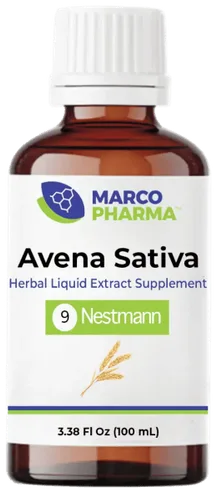
This Nestmann Avena Sativa label, DSLD ID 25221, is a liquid herbal extract supplement listed as a Botanical product with supplement form Liquid. The label was entered into DSLD on 25 September 2013 and is marked On Market. The net contents are 1.69 fl. Oz. (50 mL), the serving size is 0.15-0.9 mL, and there are 55 servings per container. The supplement facts list Mugwort, Valerian, European Vervain, St. John's Wort, Heather, White Nettle, Hops, Cowslip, Peppermint, Lemon Balm, Dill, Pulsatilla, Oat and Red Squill, each with Daily Value not established. Other ingredients are water and ethyl alcohol. The FDA statement of identity is Herbal Liquid Extract Supplement and the seal shown is MPI. Suggested use for adults is 30 drops in tepid water three times daily, with up to 1 teaspoon before bedtime. Children 6 years or older take 10 drops in water three to five times daily, and children up to 6 years old take 5 drops in water three to five times daily. Precautions include checking that the tamper evident ring is intact, keeping the product out of reach of children, and consulting a health professional if pregnant or breast-feeding. The label notes that cloudiness or sediment can occur in herbal products without altering effectiveness. It states Made in Germany by Nestmann Pharma in Zapfendorf/Bamberg and is distributed by Marco Pharma Int'l, Roseburg, OR.
We don’t sell supplements. We help you make decisions and get the best price.
Lowest prices
We may earn a commission from some store links. How we choose.
Finding the lowest prices at the stores now. This takes a few seconds.
Study, Trial or Testing Result Summary
Members Only124 human studies · 71 improved
9 of these 124 human studies gave the ingredient by inhaler, not by mouth.
This is a 14-herb liquid blend, and every ingredient amount is hidden, so no one can tell whether any herb reaches the dose used in studies. Lemon balm has the most consistent support: pooled trials found it lowered anxiety more than placebo [1], and 400 milligrams daily for 3 weeks eased stress and anxiety in distressed adults [2]. Valerian lowered anxiety over 8 weeks in adults with sleep complaints [3], but a pooled analysis found too little evidence that it reduces anxiety [4], and one 4-week trial in stressed adults found no difference from placebo [5]. St. John's wort lowered anxiety scores at 600 to 1050 milligrams daily, mostly in people with depression [6][7]. Hops extract at 200 milligrams daily lowered anxiety and stress in young adults [8], though a multi-ingredient product with hops did no better than placebo [9]. Oat extract eased the body's stress response only at the highest dose, with no change in mood [10]. Peppermint mainly helped as an inhaled oil before surgery [11]. Cowslip and dill each have only one weak study [12][13]. Pulsatilla has only mouse studies [14]. Mugwort, vervain, heather, white nettle and red squill have no human studies. Animal and cell studies are never counted.
See all 124 studies →Hide the studies
- A review of 60 studies (6,894 people) found valerian, especially whole root, could be a safe and effective herb for sleep and preventing related problems such as anxiety, with no severe side effects reported.Valerian Root in Treating Sleep Problems and Associated Disorders-A Systematic Review and Meta-Analysis.
- Across 27 trials of 3808 people with depression lasting 4 to 12 weeks, St John's wort worked about as well as standard meds and fewer people dropped out.Clinical use of Hypericum perforatum (St John's wort) in depression: A meta-analysis.
- Across 14 trials of 2270 people with depression, St. John's wort extract reduced depression scores and had fewer side effects than standard meds.Read the study on PubMed (36226689) →
- Across 30 studies in mild to moderate depression, 53.3% of people on St. John's Wort responded versus 32.7% on placebo, and it worked about as well as standard meds.[Meta-analysis of effectiveness and tolerability of treatment of mild to moderate depression with St. John's Wort].
- In a network analysis of 29 trials of herbs for anxiety, there was not enough evidence to confirm that valerian reduced anxiety compared with standard treatment or placebo.Medicinal herbs for the treatment of anxiety: A systematic review and network meta-analysis.
- Across 37 trials in adults with depression, St. John's wort beat placebo but results varied widely, with minimal benefit in some recent major depression trials, and it matched standard meds.St John's wort for depression.
- In four trials of major depression in people aged 60 and older, a Hypericum extract worked significantly better than placebo on depression scores.Phytopharmaceutical treatment of anxiety, depression, and dementia in the elderly: evidence from randomized, controlled …
- Across nine trials in people with epilepsy and depression, Shugan Jieyu capsules, which contain St John's wort, improved depression and lowered seizure frequency compared with the control treatments.Effectiveness of Shugan Jieyu capsules for psychiatric symptoms of epilepsy: a systematic review and meta-analysis.
- A pooled analysis of 21 studies of pregnant women found aromatherapy (including mint oils among others) reduced anxiety, nausea and vomiting, and improved sleep, though peppermint was not tested on its own.Effectiveness of aromatherapy on physiological and psychological symptoms during pregnancy: a systematic review and meta…
- In a network analysis of 29 trials in people with irritable bowel syndrome, small-intestinal release peppermint oil was among the treatments with the strongest anxiety-reducing effects.Read the study on PubMed (42470701) →
- Pooled randomized trials of people with anxiety or depression symptoms found lemon balm lowered anxiety and depression scores more than placebo without serious side effects, though results varied widely between studies.The effects of lemon balm (Melissa officinalis L.) on depression and anxiety in clinical trials: A systematic review and…
- In a review of oral sedation trials for anxious dental patients (327 people total), valerian 100 mg worked better than placebo and caused less change in heart rate and blood pressure, though study quality was limited.Effectiveness and safety of oral sedation in adult patients undergoing dental procedures: a systematic review.
- A review of controlled trials in generalized anxiety found isolated valerian studies suggesting possible use for anxiety, but few trials existed and they had serious design flaws.[Medicinal plants for the treatment of generalized anxiety disorder: a review of controlled clinical studies].
- A review of lab and human studies found valerian is among ten plant medicines that act on the brain's calming GABA system and may reduce anxiety with good safety.GABA-modulating phytomedicines for anxiety: A systematic review of preclinical and clinical evidence.
- A review of the evidence found St John's Wort supports treating mild-to-moderate depression, with only weak early evidence for seasonal affective disorder and none for other anxiety disorders.Kava and St. John's Wort: current evidence for use in mood and anxiety disorders.
- A review of 66 controlled studies of herbal medicines found a high level of evidence for St John's wort in major depression.Herbal medicine for depression, anxiety and insomnia: a review of psychopharmacology and clinical evidence.
- A ten-year update review of herbal medicines for mental health found high-quality evidence for St John's wort in major depression.Herbal medicines in the treatment of psychiatric disorders: 10-year updated review.
- A review of 52 randomised trials of plant products, including St John's Wort, found their effects on stress hormones in humans unclear; only ashwagandha showed a consistent morning cortisol-lowering effect.Modulation of the hypothalamic-pituitary-adrenal (HPA) axis by plants and phytonutrients: a systematic review of human t…
- In 620 adults with disturbed sleep, a blend with 75 mg valerian oil, 75 mg hops oil and 0.35 mg THC taken for 4 weeks improved sleep, anxiety, stress and well-being versus placebo, while the lower-botanical blend did not.A Randomized, Double-Blind, Placebo-Controlled Decentralized Trial to Assess Sleep, Health Outcomes, and Overall Well-Be…
- In 391 people with anxiety and insomnia, valerian taken for 4 weeks did not improve sleep more than placebo (kava also did not reduce anxiety more than placebo).An internet-based randomized, placebo-controlled trial of kava and valerian for anxiety and insomnia.
- In 348 outpatients with mild to moderate depression, three hypericin doses of a St. John's wort extract for 6 weeks all lowered depression scores by about half, with no significant difference between doses and no placebo group in the study.A double-blind randomised trial to investigate three different concentrations of a standardised fresh plant extract obta…
- In 324 adults with mild to moderate depression taking 250 mg of hypericum extract twice daily for 6 weeks, depression scores improved about as much as with imipramine, with fewer side effects and dropouts.Comparison of St John's wort and imipramine for treating depression: randomised controlled trial.
- In 317 pregnant women having amniocentesis, menthol aromatherapy did not reduce pain or anxiety compared with no aromatherapy.Reducing Pain and Anxiety during Second Trimester Genetic Amniocentesis Using Aromatic Therapy: A Randomized Trial.
- In 263 adults with moderate depression, 1050 mg of hypericum extract daily for 8 weeks reduced depression and anxiety scores more than placebo, about as well as imipramine, with fewer side effects than imipramine.Hypericum extract versus imipramine or placebo in patients with moderate depression: randomised multicentre study of tre…
- In 240 adults with mild to moderate depression, a St John's wort extract for 6 weeks was about as effective as a med, with a higher response rate on severity and far fewer side effects.Read the study on PubMed (10759336) →
- In 240 outpatients with mild to moderate depression, 500 mg daily of Ze 117 St. John's wort extract for 6 weeks gave a 60% response rate, compared with 40% on a med, with anxiety symptoms also falling notably.Differential therapy of mild to moderate depressive episodes (ICD-10 F 32.0; F 32.1) with St. John's wort.
- In 207 adults with borderline high cholesterol, 3 g a day of oat beta-glucan for 4 weeks lowered the severity of headache and feeling cold compared with the control drink and reduced fatigue versus baseline, while anxiety only trended lower (p = 0.059), so the results were mixed.Effect of Oat β-Glucan on Affective and Physical Feeling States in Healthy Adults: Evidence for Reduced Headache, Fatigu…
- In 200 adults with major depression taking a standardized St John's wort extract at 900 to 1200 mg daily for 8 weeks, depression scores improved no more than with placebo.Effectiveness of St John's wort in major depression: a randomized controlled trial.
- In 200 adults with mild or moderate depression with atypical features, 600 mg of St John's wort extract daily for 8 weeks improved anxiety and depression scores more than placebo, though the main percentage-reduction result only approached significance.St. John's wort extract LI160 for the treatment of depression with atypical features - a double-blind, randomized, and p…
- In 182 people with somatoform disorders, a 2-week herbal mix with butterbur, valerian, passionflower and lemon balm beat the same mix without butterbur and placebo for anxiety and depression, and the 3-herb mix without butterbur also beat placebo.Fixed herbal drug combination with and without butterbur (Ze 185) for the treatment of patients with somatoform disorder…
- In 178 older adults having hip or knee replacement, inhaling peppermint oil lowered anxiety scores over the first 2 days after surgery compared with saline, and also cut delirium (7.9% vs 19.1%) over 3 days.Effect of inhalation of peppermint essential oil aromatherapy on postoperative delirium in old patients following major …
- In 171 adults with mild insomnia, a multi-ingredient product containing hops taken for 2 weeks did not improve sleep, stress or anxiety more than placebo, as both groups improved similarly.Exploring the Effect of Lactium™ and Zizyphus Complex on Sleep Quality: A Double-Blind, Randomized Placebo-Controlled Tr…
- In 151 outpatients with somatoform disorders taking 600 mg daily of a St John's wort extract for 6 weeks, somatic anxiety fell significantly more than with placebo, and side effects were rare.St John's wort extract (LI 160) in somatoform disorders: results of a placebo-controlled trial.
- In 144 healthy volunteers, peppermint aroma improved memory and increased alertness compared with no aroma, but calmness was increased by ylang-ylang rather than peppermint.Modulation of cognitive performance and mood by aromas of peppermint and ylang-ylang.
- In 135 adults with major depression taking 900 mg daily of a standardized hypericum extract for 12 weeks, early improvement in general somatic symptoms predicted remission, while this link did not hold for those on placebo.The relationship between early changes in the HAMD-17 anxiety/somatization factor items and treatment outcome among depr…
- In 132 healthy adults aged 35 to 65, 430 to 1290 mg a day of green oat extract for 4 weeks improved working memory and multitasking and the highest dose reduced skin electrical response to a stressor, but mood did not change.Acute and Chronic Effects of Green Oat (Avena sativa) Extract on Cognitive Function and Mood during a Laboratory Stresso…
- In a placebo-controlled trial of 125 women with recurrent premenstrual symptoms, 600 mg of St. John's wort extract taken over two menstrual cycles showed a trend toward reducing anxiety symptoms compared with placebo, but the difference was not statistically significant.The significance of "nonsignificance" in randomized controlled studies: a discussion inspired by a double-blinded study …
- In a 3-month randomized trial of 122 overweight women with polycystic ovary syndrome, a multi-herb tablet containing St. John's wort plus lifestyle advice improved depression, anxiety and stress scores compared with lifestyle advice alone.Combined Lifestyle and Herbal Medicine in Overweight Women with Polycystic Ovary Syndrome (PCOS): A Randomized Controlle…
- In 114 care home residents with Alzheimer's disease and agitation, melissa aromatherapy was no better than placebo or donepezil at 4 or 12 weeks, though all groups improved.A double-blind placebo-controlled randomized trial of Melissa officinalis oil and donepezil for the treatment of agitati…
- In 106 women having laparoscopic gynecologic surgery, inhaling 2% peppermint oil improved anxiety scores over 48 hours and lowered nausea and vomiting (52.8% vs 73.6%) compared with saline.Effect of inhaled peppermint essential oil aromatherapy on postoperative nausea and vomiting in patients undergoing lapa…
- In 100 brain tumor surgery patients, inhaled peppermint oil (alone or with a scalp nerve block) lowered pain at 24 hours and improved recovery quality at 48 hours; anxiety scores were measured but results were not reported in the summary.The effect of scalp nerve block combined with inhaled peppermint essential oil on postoperative pain in patients undergo…
- In 100 adolescent girls with premenstrual syndrome, 1200 mg daily of lemon balm for 3 menstrual cycles led to lower psychosomatic symptom, anxiety and sleep disorder scores than placebo.Effect of Melissa officinalis capsule on the mental health of female adolescents with premenstrual syndrome: a clinical …
- In 100 healthy adults with emotional distress or poor sleep, 400 mg daily of lemon balm extract for 3 weeks improved mood, anxiety, stress, wellbeing and quality of life scores.The possible "calming effect" of subchronic supplementation of a standardised phospholipid carrier-based Melissa officin…
- In 100 women in labor, a single drink of boiled dill seed (10 g) led to fewer women with severe anxiety after delivery than routine oxytocin, and labor was shorter in the first stage.Effects of Boiled Dill Seed on Anxiety During Labor: A Randomized Clinical Trial.
- In 96 knee replacement patients given one capsule nightly starting two nights before surgery, the valerian and lemon balm combination reduced shivering versus placebo, but the drop in anxiety was not statistically significant.Comparison of the Effects of a Melissa officinalis L. and Valerian Combination With Clonidine on Anxiety, Hemodynamic Ch…
- In 96 adults with constipation-predominant irritable bowel syndrome, 1000 mg daily of a lemon balm, anise and rose formula for 4 weeks improved anxiety and depression scores compared with placebo.Effects of a traditional herbal formula containing Melissa officinalis, Pimpinella anisum, and Rosa damascena on anxiety…
- In 87 women having a breast biopsy, an orange-peppermint aromatherapy tab did not reduce anxiety more than placebo, whereas the lavender-sandalwood tab did.A Randomized Controlled Trial Provides Evidence to Support Aromatherapy to Minimize Anxiety in Women Undergoing Breast B…
- In a single-dose placebo-controlled trial of 82 healthy adults, 250 mg of St. John's wort improved short-term verbal memory and mood, while a 500 mg dose worsened digit span.The acute effect of Hypericum perforatum on short-term memory in healthy adults.
- In 80 adults with sleep complaints, valerian extract taken for 8 weeks lowered anxiety scores on days 14, 28 and 56 compared with placebo, and also improved sleep quality and reduced daytime sleepiness.Standardized Extract of Valeriana officinalis Improves Overall Sleep Quality in Human Subjects with Sleep Complaints: A …
- In 80 patients with chronic stable angina, 3 g of lemon balm daily for 8 weeks reduced depression, anxiety, stress and sleep disturbance scores more than placebo.The effects of Melissa officinalis supplementation on depression, anxiety, stress, and sleep disorder in patients with c…
- In 75 adults with insomnia, valerian root extract (2 x 300 mg daily for 4 weeks) improved sleep quality about as much as oxazepam, with no significant difference between the two; anxiety was a secondary outcome and no result for it was given in the abstract.[Efficacy and tolerability of Baldrian versus oxazepam in non-organic and non-psychiatric insomniacs: a randomised, doub…
- In 72 healthy men given a valerian-based herbal combination for 4 days before a stress test, self-reported anxiety responses were lower than with placebo or no treatment, while the cortisol stress response did not differ.Effects of a fixed herbal drug combination (Ze 185) to an experimental acute stress setting in healthy men - An explorat…
- In 72 emergency patients with acute coronary syndrome, inhaling two drops of lemon balm oil twice for 10 minutes lowered stress and heart rate briefly versus placebo at some time points, but overall mean changes between groups did not differ significantly.Effect of aromatherapy with Melissa essential oil on stress and hemodynamic parameters in acute coronary syndrome patien…
- In 71 adults with benign heart palpitations (55 finished), 500 mg of lemon balm leaf extract twice daily for 14 days reduced palpitation episodes and the number of anxious patients more than placebo.Heart palpitation relief with Melissa officinalis leaf extract: double blind, randomized, placebo controlled trial of ef…
- In 70 patients having a port catheter placed under light sedation, a lavender and peppermint scent patch did not shorten time to discharge readiness or reduce sedative, a med or anti-nausea medicine use compared with a placebo patch.Use of a Combination Lavender/Peppermint Aromatherapy Patch During Port Catheter Placement Under Monitored Anesthesia Ca…
- In 68 patients after lumbar disc surgery, breathing in five drops of peppermint oil for 10 minutes lowered pain and anxiety at the third and fourth hours after surgery compared with no intervention, but not at the second hour.Effects of inhalation of peppermint oil after lumbar discectomy surgery on pain and anxiety levels of patients: A random…
- In a randomized trial of 68 hemodialysis patients, inhaling lemon balm essential oil during dialysis three times a week for one month reduced anxiety and symptom burden more than inhaling sweet almond oil.The effectiveness of Melissa officinalis L. essential oil inhalation on anxiety and symptom burden of hemodialysis patie…
- In 64 stressed adults taking 100 mg of valerian root extract three times daily for 4 weeks, anxiety and stress scores improved in both groups with no significant difference from placebo, although brain wave connectivity changed more with valerian.Valerian extract alters functional brain connectivity: A randomized double-blind placebo-controlled trial.
- In 64 adults with impaired sleep, a combination of L-theanine, lemon balm, valerian, and saffron for 6 weeks did not improve sleep more than placebo.Effect of a nutraceutical combination on sleep quality among people with impaired sleep: a randomised, placebo-controlle…
- In 64 emergency room patients with acute coronary syndrome, inhaling peppermint oil for 1 hour led to lower anxiety scores than inhaling water (37.7 vs 42.6).The effect of aromatherapy with peppermint essential oil on anxiety of cardiac patients in emergency department: A place…
- In 60 adults with obsessive-compulsive disorder taking a St John's wort extract at 600 to 1800 mg daily for 12 weeks, symptoms improved no more than with placebo.St John's wort versus placebo in obsessive-compulsive disorder: results from a double-blind study.
- In 60 adults with type 2 diabetes and depressive symptoms, 700 mg per day of lemon balm extract for 12 weeks reduced depression and anxiety scores more than a placebo flour, though sleep quality did not change.The effects of melissa officinalis on depression and anxiety in type 2 diabetes patients with depression: a randomized d…
- In 54 patients having wisdom teeth removed, a Valeriana officinalis product lowered anxiety scores from before to after surgery, while placebo did not show a significant change.Effects of Passiflora incarnata and Valeriana officinalis in the control of anxiety due to tooth extraction: a randomize…
- In 54 adults, 5 g a day of oat flakes carrying probiotic bacteria for 12 weeks lowered an inflammation marker (hs-CRP) versus placebo and showed promising but not clearly significant changes in the stress hormone cortisol.Effect of Daily Lactococcus cremoris spp. Consumption Immobilized on Oat Flakes on Blood and Urine Biomarkers: A Randomi…
- In 52 children with possible teeth grinding during sleep, a homeopathic lemon balm preparation given in 30-day phases reduced grinding scores more than placebo, while anxiety and sleep diary results did not change.Homeopathic medicine of Melissa officinalis combined or not with Phytolacca decandra in the treatment of possible sleep …
- In 51 HIV patients taking efavirenz, 530 mg of valerian nightly for 4 weeks significantly improved sleep and anxiety compared with placebo.Effect of Valerian in Preventing Neuropsychiatric Adverse Effects of Efavirenz in HIV-Positive Patients: A Pilot Randomi…
- In 50 healthy adults, a single drink with a hops compound lowered a stress-related nervous system marker in saliva after a stress test versus placebo, but stress hormone cortisol did not differ.β-Eudesmol, an Oxygenized Sesquiterpene, Reduces the Increase in Saliva 3-Methoxy-4-Hydroxyphenylglycol After the "Trier…
- In 46 adolescents with chronic headaches, adding peppermint oil to a foot bath did not reduce pain or anxiety more than a foot bath alone.Randomized Trial Examining Efficacy of Mentha piperita in Reducing Chronic Headache Discomfort in Youth.
- In 28 people with chronic obstructive pulmonary disease and 14 healthy controls, sniffing an L-menthol scented patch reduced breathlessness, anxiety and fear during laboratory breathing resistance compared with a strawberry-scented placebo patch.Effect of Olfactory Stimulation by L-Menthol on Laboratory-Induced Dyspnea in COPD.
- In a 3-week placebo-controlled feasibility trial of 40 people with occasional sleep problems, a valerian-hops extract increased sleep duration by about 22 minutes per night compared with placebo, without changing daytime thinking or mood.Effects of a Valerian-Hops Extract Combination (Ze 91019) on Sleep Duration and Daytime Cognitive and Psychological Para…
- In 40 adults with social anxiety taking a St John's wort extract at 600 to 1800 mg daily for 12 weeks, social anxiety scores improved no more than with placebo.St. John's wort versus placebo in social phobia: results from a placebo-controlled pilot study.
- In a randomized, double-blind, placebo-controlled crossover trial of 39 people on dialysis, taking valerian for one month before sleep improved sleep quality, depression and state anxiety more than placebo; the dose was not stated.The Effects of Valerian on Sleep Quality, Depression, and State Anxiety in Hemodialysis Patients: A Randomized, Double-b…
- In 36 adults with generalized anxiety disorder, valepotriates averaging 81.3 mg daily for 4 weeks did not differ overall from placebo on the main anxiety scale, but reduced psychic anxiety symptoms, a preliminary finding in a very small sample.Effect of valepotriates (valerian extract) in generalized anxiety disorder: a randomized placebo-controlled pilot study.
- In 36 women with mild premenstrual syndrome, 900 mg daily of St John's wort over two-cycle periods improved physical and behavioral symptoms more than placebo, but mood and pain symptoms did not improve.The efficacy of Hypericum perforatum (St John's wort) for the treatment of premenstrual syndrome: a randomized, double-b…
- In 36 healthy young adults with at least mild symptoms, 0.2 g of hops dry extract daily for 4 weeks lowered anxiety, depression and stress scores more than placebo, with no change in morning cortisol.Effects of a hops (Humulus lupulus L.) dry extract supplement on self-reported depression, anxiety and stress levels in …
- In 31 healthy adults taking a multi-herb extract containing valerian for 14 days, tension and anxiety fell compared with placebo, and their body's stress responses to a mental task were milder.The chronic effects of a combination of herbal extracts (Euphytose®) on psychological mood state and response to a labor…
- In 28 adults with depression and anxiety, four weeks of St John's wort with kava reduced self-rated depression more than placebo in the first phase, but this was not repeated in the crossover phase and anxiety did not improve.St. John's wort and Kava in treating major depressive disorder with comorbid anxiety: a randomised double-blind placebo-…
- In 24 healthy adults given single doses of a lemon balm and valerian combination against placebo during a lab-induced stress test, the 600 mg dose eased anxiety, while the highest 1800 mg dose slightly raised anxiety at one session.Anxiolytic effects of a combination of Melissa officinalis and Valeriana officinalis during laboratory induced stress.
- In 20 anxious patients having wisdom teeth removed, a single 100 mg valerian capsule taken an hour before surgery gave comfort and relaxation with less somnolence than midazolam, though midazolam reduced physiological measures more.Assessment of Valeriana officinalis l. (Valerian) for Conscious Sedation of Patients During the Extraction of Impacted M…
- In 20 healthy men taking Jarsin for 7 days, the low dose raised evening salivary cortisol, the high dose did not, and melatonin was unchanged by either dose.Effect of sub-chronic treatment with Jarsin (extract of St John's wort, Hypericum perforatum) at two dose levels on even…
- In 20 healthy young adults, a single 600 mg dose of standardised lemon balm extract improved sustained attention, but higher doses reduced alertness and some memory measures while calmness rose at the lowest dose.Modulation of mood and cognitive performance following acute administration of Melissa officinalis (lemon balm).
- In 20 healthy young adults, a single 1600 mg dose of dried lemon balm leaf improved memory and increased calmness, while lower doses slowed some timed memory and visual processing tasks.Modulation of mood and cognitive performance following acute administration of single doses of Melissa officinalis (Lemo…
- In 19 healthy adults, 2 weeks of Hypericum extract at 300 mg twice daily did not change brain response to infused cortisol compared with placebo, though salivary cortisol was slightly lower.Effects of Hypericum extract (LI160) on the change of auditory evoked potentials by cortisol administration.
- In 18 healthy volunteers, a single 600 mg dose of standardised lemon balm extract increased self-rated calmness and reduced alertness during a laboratory stress task compared with placebo.Attenuation of laboratory-induced stress in humans after acute administration of Melissa officinalis (Lemon Balm).
- In 16 healthy volunteers, a herbal lozenge containing hops and other herbs changed brain wave activity in a pattern the authors interpreted as relaxation, compared with a placebo lozenge.Effects of lozenge containing lavender oil, extracts from hops, lemon balm and oat on electrical brain activity of volun…
- In a small subgroup of 14 late-perimenopausal women, a St. John's wort and chaste tree combination over 16 weeks reduced premenstrual-type symptoms, including anxiety, more than placebo did.Effects of a combination of Hypericum perforatum and Vitex agnus-castus on PMS-like symptoms in late-perimenopausal wome…
- In 14 healthy young men, a yoghurt breakfast with rolled oats did not change mood, fatigue or calmness over 3 hours compared with a low-calorie yoghurt.Short-term effect of macronutrient composition and glycemic index of a yoghurt breakfast on satiety and mood in healthy …
- In 13 healthy adults, 14 days of St John's wort at 900 mg per day did not change the calming or sedative effects of a single dose of the meds quazepam compared with placebo, though it did lower the drug's blood levels.Drug interaction between St John's Wort and quazepam.
- In 12 healthy men given a single dose of Jarsin 300 St. John's wort extract in a crossover design, growth hormone rose and prolactin fell compared with placebo, while cortisol was unchanged.Neuroendocrine evidence for dopaminergic actions of hypericum extract (LI 160) in healthy volunteers.
- In 12 healthy men given a single 600 mg dose of WS 5570 St. John's wort extract, cortisol rose compared with placebo, while growth hormone changed only at the 300 mg dose and prolactin did not change.Neuroendocrine effects of Hypericum extract WS 5570 in 12 healthy male volunteers.
- In 10 trained adolescent cyclists exercising in heat, rinsing the mouth with 0.01% menthol every 6 minutes improved cycling power but did not change fatigue or mood ratings compared with a placebo rinse.Effects of Menthol Mouth Rinsing on Performance and Surface EMG Activity During Heat-Stressed Cycling.
- Inhaling peppermint essential oil did not improve visual attention performance in healthy people compared with a control group, and only subjective ratings of the scent were linked to performance.The influence of essential oils on human vigilance.
- In two double-blind placebo-controlled crossover studies of healthy young adults, a standardized lemon balm drink or yoghurt generally improved mood and/or cognitive performance, though some doses showed behavioral costs and effects varied by food type.Anti-stress effects of lemon balm-containing foods.
- In a double-blind, placebo-controlled crossover study, 87% of people taking a lemon balm phytosome extract reported better sleep quality compared with 30% on placebo, and their insomnia scores dropped significantly.Effects of Melissa officinalis Phytosome on Sleep Quality: Results of a Prospective, Double-Blind, Placebo-Controlled, a…
- In healthy adults aged 40 to 65 with self-reported memory decline, a single 800 mg dose of green oat extract sped up task performance and improved word recall and planning compared with placebo; mood and stress were not measured.Acute effects of a wild green-oat (Avena sativa) extract on cognitive function in middle-aged adults: A double-blind, pl…
- In 54 healthy volunteers, seven days of valerian reduced blood pressure and heart rate reactions to a mental stress task and lowered how much pressure they felt, compared with controls.Effect of kava and valerian on human physiological and psychological responses to mental stress assessed under laborator…
- In 49 dependent young smokers abstaining from smoking for 48 hours, peppermint gum did not lower negative mood compared with no gum, whereas vanilla and baked apple cardamom gums did.The effect of chewing gum flavor on the negative affect associated with tobacco abstinence among dependent cigarette smo…
- A single 4-week trial of 36 people with generalised anxiety found valerian no better than placebo on anxiety scores, and there was not enough evidence to judge its effect.Valerian for anxiety disorders.
- In 30 stressed university students, drinking non-alcoholic beer with dinner for 2 weeks improved self-rated sleep quality and shortened time to fall asleep compared with a prior control week.Effect of non-alcoholic beer on Subjective Sleep Quality in a university stressed population.
- In 22 healthy women after a mental arithmetic stressor, citrus-peppermint mouthwashes lowered heart rate and raised heart rate variability more than plain water, while plain peppermint mouthwash did not clearly do so.Assessing the usability of aromatic mouthwashes in alleviating physiological stress responses.
- In 17 female nurses on night or rotating shifts, drinking 333 ml of hop-containing non-alcoholic beer with supper for 14 days shortened the time to fall asleep and reduced state anxiety compared with their own no-beer control period.The sedative effect of non-alcoholic beer in healthy female nurses.
- In 16 healthy volunteers, six tablets of a valerian, passion flower and St John's wort blend shifted resting brain-wave patterns toward those seen with calming drugs, without impairing thinking, compared with placebo.Early effect of NEURAPAS® balance on current source density (CSD) of human EEG.
- In 13 people doing short, repeated bouts of hard cycling, cooling the back of the neck with ice made them feel cooler and less exerted than no treatment, but a menthol spray did not clearly help feelings of stress, and neither treatment changed how long they could keep exercising.Effects of Intermittent Neck Cooling During Repeated Bouts of High-Intensity Exercise.
- In 12 healthy men given single high doses of St John's wort extract (600 to 1,200 mg), the extract increased the stress hormone ACTH compared with placebo, while cortisol and prolactin did not change significantly.Endocrinological effects of high-dose Hypericum perforatum extract WS 5570 in healthy subjects.
- In healthy volunteers, a single dose of St John's wort extract raised salivary cortisol and growth hormone and lowered prolactin compared with placebo, and in rats the extract raised brain serotonin and dopamine activity, but no calmness outcome was measured.Read the study on PubMed (11518072) →
- In a single-group study of 97 adults, 3 weeks of non-alcoholic beer containing 35 mg of matured hop bitter acids improved overall mood compared with baseline, along with sleep quality and work presenteeism. There was no separate control group.Effect of non-alcoholic beer containing matured hop bitter acids on mood states in healthy adults: A single-arm pilot st…
- In 24 people with stress-related insomnia, 600 mg of valerian daily for six weeks significantly reduced stress and improved sleep, without a placebo group for comparison.Kava and valerian in the treatment of stress-induced insomnia.
- In a small pilot study of 24 people with stress-related sleeplessness, a daily 600 mg valerian extract for 6 weeks significantly reduced stress, with no significant difference from kava; there was no placebo group.Stress-induced insomnia treated with kava and valerian: singly and in combination.
- In an open practice study of people with depression and anxiety, adding high-dose valerian to St John's wort relieved anxiety symptoms faster than St John's wort alone, with no significant side effects.Treating depression comorbid with anxiety--results of an open, practice-oriented study with St John's wort WS 5572 and v…
- In postmenopausal women taking a multi-herb formula containing valerian each evening for 8 weeks, anxiety and depression scores and sleep disturbance dropped, with anxiety scores down about 56 percent.Morning/evening menopausal formula relieves menopausal symptoms: a pilot study.
- In an online survey of 6798 Spanish college students, valerian was among the most used psychoactive substances, but the survey did not measure whether it helped with stress or calmness.Mental health and drug use in college students: Should we take action?
- In a retrospective review of 3,252 hospitalized psychiatric patients, those prescribed a herbal combination containing lemon balm had significantly fewer a med prescriptions than matched controls, with comparable clinical effectiveness.Read the study on PubMed (31985131) →
- In a Brazilian survey of 1221 primary care patients, valerian was the most cited herbal product, but the study measured usage and drug interactions rather than whether it helped anxiety or calmness.Use of herbal medicinal products among patients in primary health care in a Brazilian southeastern city: evidence from t…
- In 380 people with sleep problems, a German herbal combination containing cowslip reduced sleep disturbance by about 65 percent and overall complaints by about 59 percent over roughly three months, in an uncontrolled observational study with no placebo group.[Cardiodoron® bei Patienten mit Schlafstörungen - Ergebnisse einer prospektiven Beobachtungsstudie].
- In a postal survey of people with seasonal affective disorder, symptom scores fell substantially over eight weeks of Hypericum treatment, with and without light therapy, though there was no placebo group.Hypericum in seasonal affective disorder (SAD).
- In a survey of 201 college students, higher doses of products containing valerian were associated with self-reported anxiety; this was a survey of use, not a controlled test of benefit.Over-the-counter medication and herbal or dietary supplement use in college: dose frequency and relationship to self-rep…
- In an open study of 156 menopausal women taking a product containing a small amount of hop extract once daily for 12 weeks, sleep disturbance and other menopausal symptoms decreased.Improvement in menopausal symptoms with a nutritional product containing evening primrose oil, hop extract, saffron, try…
- In a multicenter observational study of 115 children aged 6 to 12 with nervous agitation, about 2 years of a plant combination containing valerian was followed by parents reporting less attention trouble, withdrawal, and anxiety, and most children had no or only mild symptoms at the end.Herbal triplet in treatment of nervous agitation in children.
- In a before-after study of 51 Spanish adults who were long-term daily a med users, a nurse-led tapering program over six months, with optional valerian or hydroxyzine support, was followed by better depression and anxiety scores in those who stopped a med; valerian was not studied alone, and the study had no control group.Read the study on PubMed (23237104) →
- In adults with adjustment insomnia taking up to four tablets of an eschscholtzia and valerian combination nightly for 4 weeks, insomnia scores fell about 30 percent, sleep improved, and anxiety scores dropped by about half.A combination of Eschscholtzia californica Cham. and Valeriana officinalis L. extracts for adjustment insomnia: A prospe…
- In 30 hospitalized cancer patients, nightly inhaled blend of lavender, orange and peppermint oils was followed by significantly lower anxiety and stress scores, though the study had no control group.Using Blended Aromatherapy for Anxiety and Stress Management in Patients Receiving Oncology Care.
- In dementia patients with insomnia, massage with valerian essential oil significantly raised serum serotonin levels, a sleep-related brain chemical, though sleep itself was not directly measured.Differences in Neurotransmitters Level as Biomarker on Sleep Effects in Dementia Patients with Insomnia after Essential …
- Canadian clinical guidelines based on systematic reviews recommend St. John's wort as a first- or second-line treatment for mild to moderate major depression, and as second-line adjunct treatment for moderate to severe depression.Canadian Network for Mood and Anxiety Treatments (CANMAT) 2016 Clinical Guidelines for the Management of Adults with Maj…
- In older adults, inhaling peppermint essential oil vapor produced an anxiety-reducing effect lasting more than 30 minutes, while its a med effect was weaker and did not last 30 minutes.[Influence of plant essential oils on older adults with anxiety and depression.].
Review Totals and Summary
Members Only7 reviews
If you retry the search, or send me the product label or a retailer URL, I can write both sections from real sources.
Biohacker Summary
Members Only6 of 10 recommend it
For St. John's wort, the main ingredient, five of the ten panelists spoke, and the group is split. One recommends it for low mood, citing a better benefit to harm balance than meds. Three are neutral: one mentions it as a herbal option some people use for sleep, one went through a phase of using it for people who did not want pharmaceutical options, and one calls it a good supplement but doubts the body needs it without testing. One warns that it can make birth control and meds work less well, so that is the main caution, and no doses or preferred forms were given. Valerian, a smaller ingredient in this product, drew mixed views on sleep, with some recommending it and others warning of next morning grogginess.
See all 9 biohackers →Hide the biohackers
Dr. Eric Berg · St. John's Wort · recommends
- Recommends St. John's wort as a natural a med to help improve the symptoms of depression.
- Suggests St. John's Wort as an alternative for depression, highlighting its better benefit-to-harm ratio compared to a med drugs.
- Recommends lemon balm tea as it works well when quitting coffee.
- Recommends adding lemon balm tea in the morning as another awesome thing when transitioning off coffee.
- Recommends lemon balm tea as one of the best weight loss drinks, noting it contains rosmarinic acid which increases GABA.
- Recommends consuming lemon balm tea 60 minutes before bed to lower cortisol, calm the nervous system, and promote better sleep, which in turn aids in fat burning.
- Notes that Wikipedia states there is insufficient evidence to recommend the use of dill for treating dysmenorrhea.
- Notes that St. John's wort works better than meds for depression, with 70% results compared to 60% for the drug, and fewer side effects.
- Recommends peppermint oil as a natural 5 alpha-reductase inhibitor for hair loss.
- Recommends smelling peppermint oil, noting it can increase sustained attention, improve reaction time, improve respiratory efficiency, and decrease tension headaches.
- Notes that St. John's wort affects both serotonin and dopamine, is an anti-inflammatory, and reduces cortisol, but doctors often recommend against it despite its few side effects.
- Recommends adding three drops of peppermint oil to a homemade anti-tartar toothpaste.
- Recommends trying lemon balm to help lose belly fat after menopause.
- Lists lemon balm as a really good adaptogen herb for menopause symptoms.
Dr. Mark Hyman · St. John's Wort · warns
- Mentions that St. John's wort can reduce the effectiveness of birth control and meds.
- Recommends lemon balm as an ingredient in Besper that helps the body relax.
- Mentions that ingredients like lemon balm in Vesper help the body relax.
- Notes that Valerian binds to separate allosteric sites on the GABA receptor, increasing the amount of GABA to bind.
- Uses peppermint oil in her products for its therapeutic effect of helping with sebum production.
- Lists peppermint essential oils as one of the substances that can weaken the lower esophageal sphincter, leading to acid reflux.
- Recommends adaptogenic herbs like ashwagandha, particularly at night, rhodiola, lemon balm, and catclaw for stress relief.
- Recommends lemon balm as an herbal supplement for deep sleep and relaxation, especially for those who are tired, wired, and stressed.
- Recommends valerian root as an herbal supplement for deep sleep and relaxation, especially for those who are tired, wired, and stressed.
- Mentions valerian root as an herb that can be helpful for sleep.
- Sometimes takes a supplement with herbs like valerian root to wind down before bed.
- Discusses a study funded by a pharmaceutical company that claimed St. John's Wort didn't work, but upon reading the study, it did work for all but the most severely depressed people.
- Uses fresh dill as an ingredient in a salmon recipe.
- Suggests trying valerian root as an herb that can be very helpful for sleep.
Ben Greenfield · St. John's Wort · neutral
- Mentions St. John's Wort as a natural herbal approach some people utilize for sleep.
- Notes that a recent study showed peppermint oil improved symptoms of irritable bowel syndrome by more than 63% compared to a placebo group.
- Says they like to put a little peppermint oil in the sauna for the aroma and for the lungs.
- Learned from Dr. John Morat to put peppermint oil on his taint right before breathwork.
- Stuffs the trout with herbs like dill.
- Suggests using valerian root as a compound to help shut down hardwired dopamine firing pathways for those with ruminating thoughts at night.
- Uses peppermint oil, rubbing a little on his stomach and putting a few drops in his water, finding it fantastic for problematic gut issues, especially when traveling.
- Notes that essential oil-based mouthwashes, such as those with peppermint, that do not contain antibacterial compounds would probably be okay.
- Ben Greenfield recommends valerian as an herbal supplement for insomnia.
- Tried Kolkurb, an active ingredient called Mar from hops extract, an hour before a meal and found it worked effectively to induce satiety, despite its extremely bitter taste.
- Ben Greenfield has tried Calocurb, an extract of bitter hops, multiple times after lunch and found he had to force himself to eat dinner due to appetite suppression.
- Mentions St. John's Wort as something that can help with quelling tobacco/nicotine addiction.
- Ben Greenfield and his sons harvest St. John's Wort to make a tincture, which he calls the "happy flower" and notes it contains compounds similar to meds without the side effects.
- Ben recommends lemon balm as an ideal herb for making tea, especially when combined with hot water, mint, and sage. He considers mint and lemon balm to be the two quintessential herbal medicines for tea.
Dave Asprey · St. John's Wort · neutral
- Went through a phase of using St. John's Wort, especially for people who didn't want to try pharmaceutical agents for depression.
- Recommends peppermint as a midwife remedy to help with nausea during pregnancy.
- Mentions that one can make an argument for St. John's Wort but emphasizes focusing on what the body needs.
- Recommends using lemon balm to aggressively prevent recurrent cold sores.
- Recommends using lemon balm to aggressively prevent recurrent cold sores associated with herpes simplex 1, especially for those at risk of Alzheimer's.
- Says he takes valerian root in capsule form before bed as one of his four natural sleep aids, noting that it smells bad but works.
- Dave Asprey's grandma and great-grandma would pick St. John's Wort from the side of the highway, dry it, and make tea, which he later learned is good for depression.
- Suggests taking enteric coated peppermint oil to reduce gas in the belly.
- Dave suggests that valerian root might increase deep sleep.
Thomas DeLauer · St. John's Wort · neutral
- Mentions St. John's Wort as a good supplement but questions if the body actually needs it without proper testing.
- Warns that valerian, like other common sleep supplements, does not directly address the physiological issues of body temperature and brain restlessness, instead only sedating the user.
- Warns against Valerian root for sleep, rating it as "decent" but not making his list, because while it can make one feel tired by inhibiting GABA breakdown, it often leads to grogginess and lack of motivation the next morning, essentially sedating rather than promoting true sleep.
- Recommends chamomile and lemon balm as hugely beneficial for a sedative-like effect that can make one feel calmer, especially if tart cherry juice is avoided due to sugar content.
- Warns that peppermint can trigger reflux because it soothes and relaxes the lower esophageal sphincter, allowing reflux to occur, despite being good for irritable bowel syndrome.
- Recommends peppermint, noting it contains the antioxidant luteolin, which has been shown to help brain fog.
- Recommends Hop Water, which contains water, hops, and nootropics like 5-HTP, as a solution for those who want to reduce alcohol consumption.
- Recommends Hop Water, a drink made from hops with nootropics, as a substitute for alcohol to give a buzz without the alcohol, and notes it is carried by Thrive Market.
- Drinks hop water, which is water made from hops that tastes a bit like beer and contains 5-HTP and nootropics to provide a fun buzz without damaging the body.
- Notes that while valerian root is interesting and somewhat powerful for sleep, he has seen data suggesting it can disrupt sleep after the first few hours.
- Mentions that some people lean into valerian root for sleep, and studies show tart cherry juice is comparable to it.
- Notes that the Bomar sleep product includes lemon balm, which almost instantly helps one feel calm.
- Recommends taking valerian root in a concentrated form over melatonin for improving deeper sleep.
- Recommends peppermint tea as tremendous for digestion and having powerful blood sugar modulating effects, suggesting it's perfect to help come down from a big carbohydrate meal.
Siim Land · Valerian · neutral
- Notes that there isn't much long-term research on substances like valerian root for sleep and anxiety, and replication is a problem due to varying product formulations. He also points out a lack of follow-up on people after they discontinue supplementation.
- Notes that there isn't much long-term research on substances like lemon balm for sleep and anxiety, and replication is a problem due to varying product formulations. He also points out a lack of follow-up on people after they discontinue supplementation.
- Recommends using essential oil mouthwashes, such as those with peppermint oil, rosemary oil, or clove oil, to improve the oral microbiome and fight bad bacteria and periodontal pathogens.
- Suggests adding a drop of peppermint or lemon essential oil to coconut oil pulling for good breath.
- Added a couple of drops of peppermint oil to his mouthwash because it has been shown to kill off P. gingivalis in vitro.
- Mentions valerian as a recommendation for stress management, but states he does not use it.
- Mentions lemon balm as a recommendation for anxiety.
- Mentions peppermint oil as a recommendation for IBS.
- States that peppermint tea improves digestion, reduces inflammation, and muscle pain.
Andrew Huberman · Valerian · uses
- Mentions valerian root as one of the clinically supported ingredients that can help you fall asleep, stay asleep, and wake up feeling more refreshed, and he has worked with AG1 to create a product that includes it.
- Mentions Valerian root as a clinically supported ingredient that can help people fall asleep, stay asleep, and wake up feeling more refreshed.
- States that valerian root is a clinically supported ingredient that can help one fall asleep, stay asleep, and wake up feeling more refreshed.
- Mentions valerian root as one of several clinically supported ingredients that can help people fall asleep, stay asleep, and wake up feeling more refreshed.
- Discusses peppermint as a tool for alertness.
- Huberman notes that sniffing peppermint and other minty scents can increase attention and create an arousal response, similar to ammonia salts but less intensely.
- States that Valerian root does not seem to hold up in terms of any sleep benefit whatsoever based on the data.
- Huberman mentions peppermint oil as something people suggest to massage into the scalp to increase blood flow for hair growth.
- Explains the evidence and mechanisms supporting the use of peppermint oil for headaches.
- Andrew Huberman, initially skeptical, found that essential plant oil preparations containing peppermint oil, with or without eucalyptus oil, significantly reduced the intensity of pain and increased cognitive performance during headaches when applied to the temples and forehead.
- States that the evidence is quite against Valerian root being a beneficial sleep aid, with most good studies finding no benefits on sleep metrics.
- Recommends peppermint for reducing nausea.
- Notes that the smell of peppermint can increase attention and create an arousal response, though not as intensely as ammonia salts.
- Notes that Valeriana officinalis has shown some improvement in hot flash symptoms and associated insomnia during menopause, based on double-blind placebo-controlled studies.
Dr. Rhonda Patrick · Valerian · recommends
- Recommends valerian as a better option for a sleep-promoting supplement.
- Recommends Valerian as a sleep supplement that promotes relaxation and reduces nighttime awakenings, offering meaningful improvements to sleep quality.
- States that Valerian is sedating and calming, and while it came closest to beating placebo for insomnia, the data still shows it does not.
Bryan Johnson · Peppermint · uses
- Is currently in the Penalty Box on doctor's orders to rest, and has made himself some peppermint tea.
RAL Summary
Members OnlyTier 4 for Stress and Calm
Several herbs here have human studies showing calmer mood, but all doses are hidden in a blend and there are no counted reviews, so the evidence for this product is thin. Emerging fits.
- Emerging: not enough evidence to rank higher yet.
- Valerian: amount hidden in a blend
- St. John's Wort: amount hidden in a blend
- Hops: amount hidden in a blend
- Cowslip: amount hidden in a blend
- Peppermint: amount hidden in a blend
- Lemon Balm: amount hidden in a blend
- Dill: amount hidden in a blend
- Pulsatilla: amount hidden in a blend
- Oat: amount hidden in a blend
Where the evidence disagrees: 28 of the 124 human studies found no effect.
More Details
Members OnlyBody systems · Combine with · Possible side effects
Body systems: Nervous system, Digestive system
Combine with: For calm and focus, pair oat straw with L-theanine for relaxed alertness, magnesium glycinate for nervous system and sleep support, and ashwagandha or rhodiola to help modulate stress response. Bacopa monnieri or lion's mane can add cognitive support, and B-complex vitamins (especially B6, B12, folate) support neurotransmitter synthesis. If the underlying aim is cellular and DNA repair, add targeted longevity ingredients separately: NMN or NR with resveratrol or pterostilbene, CoQ10 or PQQ for mitochondrial support, alpha-lipoic acid, and spermidine, along with omega-3s and vitamin D3/K2.
Possible side effects: Studies reported no serious side effects for valerian or lemon balm, and side effects were rare with St. John's wort. No reviews were available to add anything.
Supplement Facts
Mugwort 0 · Valerian 0 · European Vervain 0
| Mugwort | 0 | † |
| Valerian | 0 | † |
| European Vervain | 0 | † |
| St. John's Wort | 0 | † |
| Heather | 0 | † |
| White Nettle | 0 | † |
| Hops | 0 | † |
| Cowslip | 0 | † |
| Peppermint | 0 | † |
| Lemon Balm | 0 | † |
| Dill | 0 | † |
| Pulsatilla | 0 | † |
| Oat | 0 | † |
| Red Squill | 0 | † |
Other ingredients: Water, ethyl alcohol.
Directions: Suggested Use: Adults take 30 drops in tepid water three times daily. If needed, may take up to 1 teaspoon before bedtime. Children 6 years or older take 10 drops in water three to five times daily. Children up to 6 years old take 5 drops in water three to five times daily.
Label source: NIH label database · Report a label change
Show entire label

More stress products
Members OnlyThe highest ranked for the same goal
Read more
Our articles on this subject
- Supplements for Stress and Anxiety Relief: What the Evidence SupportsArticle · Oct 26, 2026
- The Four Pillars of Good Health: Diet, Exercise, Sleep and StressArticle · Mar 17, 2026
Graded November 5, 2026 by the Reverse Age Lab evidence engine, from human studies, real reviews and our biohacker panel. How we grade. Is this medical advice? No. Rala organizes the published evidence; go over any change with your doctor, especially if you take meds.
Privacy policyConsumer health dataAffiliate disclosureTermsDo Not Sell or Share My Personal InformationCookie settings