
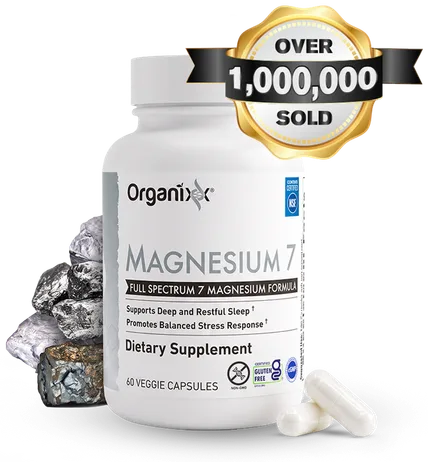
Organixx Magnesium 7 Review
Organixx Magnesium 7 Complex, Sleep & Muscle Support, 60 Caps is a capsule supplement that the listing describes as a unique blend of seven forms of magnesium in one convenient daily capsule. The seven forms named on the page are glycinate, citrate, malate, taurate, chelate, aspartate, and orotate, which the listing says are designed for broad-spectrum support and easy absorption. The page states that each serving delivers all of these magnesium types in chelated forms, so that the body can most easily assimilate the mineral and send it where it needs it most. The listing presents this as 100% chelated magnesium for superior absorption. The product is positioned for relaxation and muscle function. According to the page, magnesium plays a key role in normal muscle function and relaxation, helping support muscle comfort after daily activity and a relaxed, balanced mood. A separate bullet says magnesium also contributes to healthy heart, bone, and muscle function and helps support relaxation as part of an evening wind-down routine. Usage is stated on the page: take 2 capsules with your evening meal. The item highlight reads 7-type magnesium with glycinate, Vitamin B6 and Manganese Citrate, supporting relaxation, restful sleep, muscle and heart health. The product benefits field lists magnesium capsules for sleep support, muscle recovery, with vitamin B6 and manganese citrate and glycinate. Quality claims on the page include that Magnesium 7 does not contain magnesium oxide, chloride, hydroxide, sulfate, or stearate, that it is 100% non-GMO, and that it has no stearates, fillers, additives, artificial flavors, preservatives, colors, yeast, soy, sodium, or starch. The diet type is listed as vegan, the flavor as unflavored, and the item form as capsule. The sold-by seller is Organixx, shipped from Amazon, with a unit count of 60 count and an item weight of 2.08 ounces. The listing is marked as a small business brand. Subscribe and Save pricing is offered at $34.15 with 10 percent savings, and $32.26 with 15 percent savings on repeat deliveries.
We don’t sell supplements. We help you make decisions and get the best price.
Lowest prices
We may earn a commission from some store links. How we choose.
Finding the lowest prices at the stores now. This takes a few seconds.
Products with nearly the same formula (Matched on the main ingredients)
Study, Trial or Testing Result Summary
Members Only53 human studies · 22 improved
5 of these 53 human studies gave the ingredient by drip, not by mouth.
Magnesium is the main ingredient here, at a full dose of 500 mg a day, which is more than the daily recommended limit; members can take less. The evidence that magnesium calms stress or anxiety is suggestive but weak. In 126 adults with mild to moderate depression, 248 mg a day for 6 weeks improved anxiety scores more than no treatment, but there was no placebo group [1]. In 264 stressed adults with low magnesium, 300 mg a day for 8 weeks cut stress scores by about 42 percent, again without a placebo group [2]. A placebo-controlled trial in 49 adults found 350 mg a day for 24 weeks lowered the stress hormone cortisol [3]. A pooled analysis of 52 trials found only a small effect of magnesium on depression scores [4]. Other placebo-controlled trials found no clear benefit for sleep in older adults [5] or for anxiety in women with osteoporosis [6]. Vitamin B6 is present at only 2 mg, far below the 30 mg or more used in studies, so it should not be expected to add a benefit [2][7]. Manganese has no human studies for this goal. Animal and cell studies are never counted.
See all 53 studies →Hide the studies
- Pooling 52 trials with 4049 people, antioxidant supplements including magnesium improved depression scores (small effect for magnesium) and antioxidants overall improved anxiety.Protective role of antioxidant supplementation for depression and anxiety: A meta-analysis of randomized clinical trials…
- In a review of randomized trials of diet changes for depression and anxiety around pregnancy, iron, zinc and magnesium together were not better than placebo for depression symptoms.Dietary interventions for perinatal depression and anxiety: a systematic review and meta-analysis of randomized controll…
- A review of 14 trials in women found magnesium combined with vitamin B6 reduced premenstrual anxiety but magnesium alone had no effect, and it did not lower stress in women with painful periods.The impact of essential fatty acid, B vitamins, vitamin C, magnesium and zinc supplementation on stress levels in women:…
- A review of 18 studies in people prone to anxiety found some trials reporting less anxiety with magnesium (about half in anxious and premenstrual groups) but no effect after childbirth, and the evidence was poor in quality.The Effects of Magnesium Supplementation on Subjective Anxiety and Stress-A Systematic Review.
- A review of 32 articles on magnesium and mental health found mostly positive results for depression but mixed results overall, with a possible benefit in stressed patients and a need for better trials.The Role and the Effect of Magnesium in Mental Disorders: A Systematic Review.
- In 478 young adults given high-dose vitamin B6, B12 or placebo for 1 month, vitamin B6 reduced self-reported anxiety and strengthened visual surround suppression, with only a trend toward less depression.High-dose Vitamin B6 supplementation reduces anxiety and strengthens visual surround suppression.
- In 290 people with diabetes and insomnia, 2 months of magnesium, potassium or both significantly changed cortisol and melatonin levels and lowered insomnia severity compared with placebo.Effects of magnesium and potassium supplementation on insomnia and sleep hormones in patients with diabetes mellitus.
- In 267 adults given 100 mg vitamin B6 daily for 1 month, depression symptoms fell in those with mild or worse depression, but anxiety and stress scores showed no significant effects.High Dose Vitamin B6 Reduces Depression Symptoms.
- In 264 stressed adults with low magnesium, adding 30 mg vitamin B6 to magnesium for 8 weeks was no better than magnesium alone overall, but gave 24% greater stress reduction in those with severe stress.Superiority of magnesium and vitamin B6 over magnesium alone on severe stress in healthy adults with low magnesemia: A r…
- In 264 stressed adults, adding 30 mg vitamin B6 to magnesium for 8 weeks raised blood vitamin B6 but did not raise red blood cell magnesium any more than magnesium alone.Impact of magnesium supplementation, in combination with vitamin B6, on stress and magnesium status: secondary data from…
- In 171 adults with mild insomnia, a multi-ingredient blend including vitamin B6 taken for 2 weeks did not improve sleep, mood, anxiety or stress reactivity more than placebo.Exploring the Effect of Lactium™ and Zizyphus Complex on Sleep Quality: A Double-Blind, Randomized Placebo-Controlled Tr…
- In 157 adults with migraine in the emergency department, intravenous magnesium reduced pain about as much as two standard drugs, with no significant difference; this study did not test stress or calmness.MAGraine: Magnesium compared to conventional therapy for treatment of migraines.
- In 144 long-term a med users, magnesium aspartate compared with placebo did not significantly change the rate of stopping the drug; there were non-significant trends toward milder withdrawal and less rise in anxiety.Read the study on PubMed (9850822) →
- In 126 adults with mild-to-moderate depression, 6 weeks of 248 mg magnesium daily improved depression scores by 6.0 points and anxiety scores by 4.5 points more than no treatment, with effects seen within two weeks.Role of magnesium supplementation in the treatment of depression: A randomized clinical trial.
- In 120 adults with major depression, a combination of magnesium orotate, probiotics and coenzyme Q10 for 8 weeks reduced self-rated anxiety and stress more than placebo.Probiotics and magnesium orotate for the treatment of major depressive disorder: a randomised double blind controlled tr…
- In 114 patients having gallbladder surgery, a magnesium sulphate injection before anaesthesia improved recovery quality scores by 8 points versus saline on the first day after surgery, mainly through better physical comfort and independence.Intravenously injected lidocaine or magnesium improves the quality of early recovery after laparoscopic cholecystectomy:…
- In 103 healthy active adults, the evening supplement containing magnesium L-threonate for two weeks did not clearly improve stress or sleep, while the morning ashwagandha and rhodiola group did.Modulating stress and sleep through a multi-compound dietary supplement: a randomized, double-blind, placebo-controlled …
- In 100 adults over 51 with poor sleep, 320 mg magnesium daily for seven weeks improved sleep no more than placebo, though it lowered a blood marker of inflammation in those with high levels at the start.Magnesium supplementation improves indicators of low magnesium status and inflammatory stress in adults older than 51 ye…
- In 100 people doing strength-endurance training, 400 mg magnesium daily for 90 days improved heart rate variability measures of stress balance, while the control group showed no positive changes.[Long-term HRV analysis shows stress reduction by magnesium intake].
- In 100 moderately stressed adults, a single dose of magnesium with B vitamins, green tea and rhodiola raised relaxed-alert brain activity and reduced subjective stress, anxiety and mood disturbance during a social stress test versus placebo.A combination of green tea, rhodiola, magnesium and B vitamins modulates brain activity and protects against the effects…
- In 100 chronically stressed healthy adults, a combination of magnesium, B vitamins, rhodiola and L-theanine for 28 days reduced stress scores more than placebo.Effect of a Combination of Magnesium, B Vitamins, Rhodiola, and Green Tea (L-Theanine) on Chronically Stressed Healthy I…
- In 100 adults aged 18 to 45 with unsatisfying sleep, 2 g daily of magnesium L-threonate for 6 weeks improved overall cognition, reaction time, resting heart rate and heart rate variability versus placebo, but not general wellbeing or objective sleep measures.The effects of magnesium L-threonate (Magtein®) on cognitive performance and sleep quality in adults: a randomised, doub…
- In 90 fibromyalgia patients (60 finished), 80 mg vitamin B6 daily did not improve pain, disease severity, anxiety or depression more than placebo.Effect of vitamin B6 on pain, disease severity, and psychological profile of fibromyalgia patients; a randomized, double…
- In 66 children aged 2 to 5 having eye surgery, magnesium given through a drip during anaesthesia did not reduce confusion and agitation when waking up or pain compared with saline; 84% of the magnesium group and 79% of the control group had emergence delirium.Effect of magnesium supplementation on emergence delirium and postoperative pain in children undergoing strabismus surge…
- In 65 adults with coeliac disease, daily B vitamins including 3 mg pyridoxine for 6 months improved well-being, including anxiety and depressed mood in those with poor well-being, and lowered homocysteine by 34%.Clinical trial: B vitamins improve health in patients with coeliac disease living on a gluten-free diet.
- In 65 people with chronic fatigue syndrome, a daily capsule blend with 1.05 mg vitamin B6 for 36 weeks improved cognitive fatigue versus baseline, but the blend's effect on anxiety was not reported.Yeast Beta-Glucan Supplementation with Multivitamins Attenuates Cognitive Impairments in Individuals with Myalgic Enceph…
- In 61 adults with type 1 diabetes, a supplement containing magnesium plus saffron taken for 6 months did not differ from the same supplement without saffron except for lower triglycerides; the magnesium effect itself was not tested and diabetes distress did not differ between groups.Effect of Crocus sativus Extract Supplementation in the Metabolic Control of People with Diabetes Mellitus Type 1: A Dou…
- In 52 men having robotic prostate surgery, magnesium given through a drip during surgery lowered blood pressure rises, cortisol (a stress hormone) over 24 hours, painkiller needs and later pain compared with saline.Beneficial Effects of Intravenous Magnesium Administration During Robotic Radical Prostatectomy: A Randomized Controlled…
- In 49 overweight middle-aged adults, 350 mg of magnesium daily for 24 weeks lowered the amount of the stress hormone cortisol in 24-hour urine compared with placebo.Long-term magnesium supplementation improves glucocorticoid metabolism: A post-hoc analysis of an intervention trial.
- In 44 women taking 50 mg vitamin B6 plus 200 mg magnesium daily for one cycle, anxiety-related premenstrual symptoms fell modestly versus placebo, though there was no overall difference between treatments.A synergistic effect of a daily supplement for 1 month of 200 mg magnesium plus 50 mg vitamin B6 for the relief of anxie…
- In 44 postmenopausal women with osteoporosis given zoledronate with or without 200 mg of oral magnesium daily for 3 months, magnesium did not significantly change pain, anxiety, depression or sleep quality 1 year later.Quantitative sensory testing of pain in osteoporosis: a pilot randomized clinical trial with magnesium supplementation.
- In 43 stressed adults (35 analysed), a combination herbal supplement with magnesium and chromium for 15 days improved mood, trait anxiety and working memory under stress versus placebo.Effects of a Scutellaria baicalensis/Crataegus laevigata, magnesium and chromium supplement on stressed individuals: A r…
- In 42 women taking a multi-ingredient supplement containing vitamin B6 for 3 months, mood improved within the supplement group but not compared with placebo.Effects of the PREMEN-CALM® in the Management of the Premenstrual Syndrome: A Randomized, Double-Blind, Placebo-Controll…
- In 38 women taking 200 mg magnesium oxide daily for two menstrual cycles, there was no effect in the first month, but in the second month fluid retention symptoms fell more than with placebo; anxiety was not reported as improved.Magnesium supplementation alleviates premenstrual symptoms of fluid retention.
- In 35 people with sleep problems, a magnesium (200 mg) plus melatonin coffee pod for 4 weeks improved sleep measures and anger-hostility scores more than placebo, though average sleep quality stayed poor.The effects of melatonin and magnesium in a novel supplement delivery system on sleep scores, body composition and metab…
- In 32 healthy adults taking a high-dose B vitamin supplement for 6 months, blood B6 and B12 rose and homocysteine fell, but brain metabolite changes were not significant and stress or calmness was not directly measured.The Effect of a High-Dose Vitamin B Multivitamin Supplement on the Relationship between Brain Metabolism and Blood Bioma…
- In 24 women having hysterectomy, intravenous magnesium around surgery reduced meds needs but postoperative anxiety scores were similar to placebo.Magnesium infusion reduces perioperative pain.
- In 22 women with fibromyalgia, a Mediterranean diet enriched with 60 mg magnesium and 60 mg tryptophan for 16 weeks reduced trait anxiety, mood disturbance, eating disorder scores and body image dissatisfaction versus standard diet, but did not improve sleep.Psychological and Sleep Effects of Tryptophan and Magnesium-Enriched Mediterranean Diet in Women with Fibromyalgia.
- In a small 1981 trial of 20 depressed patients, pyridoxine combined with L-tryptophan worked no better than a med maprotiline over 2 to 4 weeks.The clinical significance of disordered renal excretion of xanthurenic acid in depressive patients.
- In stressed adults with low magnesium taking 30 mg vitamin B6 plus 300 mg magnesium daily for 8 weeks, anxiety and depression scores improved from baseline, similar to magnesium alone.Effect of magnesium and vitamin B6 supplementation on mental health and quality of life in stressed healthy adults: Post…
- In depressed patients, 125 mg pyridoxine taken three times daily with L-tryptophan for 2 or 4 weeks did not change blood tryptophan levels, and blood tryptophan did not correlate with anxiety or depression scores.Kinetics of L-tryptophan in depressive patients: a possible correlation between the plasma concentrations of L-tryptopha…
- In fibromyalgia patients given 100 mg magnesium daily for 1 month, overall stress scores did not differ from placebo, but those with mild or moderate stress improved significantly and pain also decreased.Short-Term Magnesium Therapy Alleviates Moderate Stress in Patients with Fibromyalgia: A Randomized Double-Blind Clinica…
- In 80 patients with alcoholic delirium, adding magnesium sulfate to standard sedation shortened delirium to 3.4 days versus 5.4 days with standard care alone, and combining it with dexmedetomidine (a sedative) shortened it further to 1.1 days; this was not a study of stress or calmness in healthy people.Use of a combination of dexmedetomidine and magnesium sulfate as a multimodal approach to the treatment of alcoholic del…
- In 60 people after open-heart surgery, 500 mg magnesium daily for five days led to lower anxiety and depression and better sleep quality than routine care alone.Effect of short-term magnesium supplementation on anxiety, depression and sleep quality in patients after open-heart sur…
- In 86 pregnant women with moderate morning sickness, pyridoxine 40 mg daily for 3 weeks was given to both groups, and adding 8 mindfulness therapy sessions over 3 weeks improved nausea, vomiting, anxiety, depression and pregnancy distress compared with pyridoxine alone; this open-label trial does not isolate any effect of pyridoxine itself.A RCT of psychotherapy in women with nausea and vomiting of pregnancy.
- In 46 women with mild to moderate anxiety, taking a combined saffron, ashwagandha, tryptophan and vitamin B6 supplement (two tablets daily) for 12 weeks lowered anxiety scores, though the open-label design and COVID-19 lockdown may have affected the result. The vitamin B6 dose was not stated.Effectiveness of a Saffron and Withania Supplement on Mood in Women With Mild-to-Moderate Anxiety During the COVID-19 Lo…
- In 34 children with Tourette syndrome or tic disorder and anxiety, an L-theanine and vitamin B6 supplement reduced tics more than psychoeducation alone, while both groups had lower anxiety.Use of Nutritional Supplements Based on L-Theanine and Vitamin B6 in Children with Tourette Syndrome, with Anxiety Disor…
- In nine healthy men, 14 days of magnesium aspartate led to lower cortisol levels during an hour of exercise and the usual exercise rise in cortisol and aldosterone was not seen.Plasma aldosterone, cortisol and electrolyte concentrations in physical exercise after magnesium supplementation.
- In a retrospective review of 9,439 insomnia patients at a Chinese medicine hospital in Shenzhen, vitamin B6 was among the commonly prescribed drugs (about 4.76 percent of patients), but the study did not measure whether it improved sleep or calmness.A Cross-Sectional Study on the Drug Use of Insomnia in a Chinese Medicine Hospital in Shenzhen.
- In a cross-sectional study of 3362 Iranian adults, lower vitamin B6 intake from food was linked to higher odds of depression and anxiety in women but not in men. This study cannot show that B6 causes these effects.Higher vitamin B6 intake is associated with lower depression and anxiety risk in women but not in men: A large cross-sec…
- In a survey of 1,388 older adults, higher dietary magnesium intake was linked to less cognitive decline, including among those with impaired sense of smell; stress or calmness was not measured.The effect of dietary magnesium intake on cognitive decline related to olfactory impairment in older adults: a cross-sec…
- In 141 middle-aged adults, those with better diets had higher magnesium intake and better attention scores, and higher diet scores went with fewer mood problems and lower perceived stress, but the two diet groups did not differ significantly on mood or stress.Self-Reported Diet Quality Differentiates Nutrient Intake, Blood Nutrient Status, Mood, and Cognition: Implications for …
- In 49 patients with long-term low parathyroid hormone after surgery, calcium and magnesium supplement use affected symptom scores in a dose-dependent way, but the abstract ties the rise in depression and anxiety scores to calcitriol, not magnesium.The Influence of Conventional Treatment on Symptoms and Complaints in Patients With Chronic Postsurgical Hypoparathyroid…
Review Totals and Summary
Members Only10,113 reviews · 91% positive
Organixx Magnesium 7 capsules get strongly positive feedback, with about 7,577 ratings across the stores that sell it. Most buyers praise it for sleep and night-time cramps, and the main drawbacks are stomach upset for a few people and price. **What buyers say it did for them:** Sleep comes up most. Buyers say they fall asleep faster and stay asleep longer. One says it is "more effective than any other natural sleep remedies," and another reports "falling asleep, faster and staying asleep longer." Night-time cramps are the next most common benefit. One reviewer who had leg cramps 2-10 times a night wrote "Since starting Mag7, they're gone!" Some also mention calmer mood and less anxiety ("lessening my anxiety"), better morning energy, more regular bowel movements, and relief from aches and joint pain. One long-term user says "I can feel the difference when I don't take it." **What buyers complain about:** The main complaint is digestive. One 1-star reviewer says it "gives me diarrhea" and could not tolerate it even after cutting the dose to one pill a day or less often. A 4-star reviewer found two capsules at once "too strong, causing diarrhea," and now takes one with breakfast and one at bedtime. Other buyers report no bowel problems at all. One reviewer wished the blend included threonate, though still recommended it as a first choice. **Taste, smell, pill size or form:** Reviewers don't say anything about taste, smell or capsule size. The page summaries note praise for the blend of several magnesium forms, and one buyer calls it "highly absorbable." **Value for money:** Price is the one recurring caveat in the store summary, which describes the product as affordable in some ways but pricey at times. One buyer who tried a free sample calls it "Worth the investment." Several describe it as a household staple they never want to run out of. **Who it seems to suit and who it did not:** It seems to suit people who want help with sleep, night-time cramps or general magnesium support, and especially people who have tried other magnesium products without success. One reviewer says they have "never had an oral magnesium product work so well," and others say none compared. Many are long-term repeat buyers, and couples often take it together. It did not suit the reviewer whose digestion could not handle it at any dose. Those with sensitive digestion may want to note that one buyer needed to split the dose. **Pages and forms left out:** The eBay page had no product ratings or written reviews, only seller feedback about shipping and packaging, so it adds nothing about the capsules. No reviews of other forms such as gummies or powder are included here.
Biohacker Summary
Members Only9 of 10 recommend it
Seven of the ten panelists recommend magnesium and the rest use it or stay neutral, so the panel leans clearly in favor. Sleep is the most common reason, along with muscle cramps and recovery, blood pressure, bone health and vitamin D function. The panel prefers glycinate for absorption and threonate for sleep and the brain, and four of them take 400 mg of threonate before bed. Others suggest 300 to 500 mg a day from food and supplements, with a few aiming higher, and some pair it with electrolytes like sodium and potassium or with vitamin D and B1. One panelist says magnesium does not fix waking up during the night, and manganese is only a smaller ingredient in this product that one panelist mentioned in passing.
See all 10 biohackers →Hide the biohackers
Dr. Rhonda Patrick · Magnesium · recommends
- Explains that magnesium helps the body activate and metabolize vitamin D, and that magnesium intake has been associated with lower odds of vitamin D deficiency and insufficiency.
- Mentions that getting too little magnesium may play a role in declining testosterone levels.
- Recommends getting enough magnesium, around 300–400 mg daily from diet and supplements, as it is an essential cofactor for vitamin D metabolism. Magnesium glycinate is a good form.
- Mentions magnesium as one of the micronutrients found in multivitamins that people often don't get enough of from their diets.
- Explains that magnesium helps control blood pressure by boosting the production of substances that relax blood vessels and improve cardiovascular health, citing a meta-analysis that found magnesium supplementation at an average dose of 368 mg per day notably lowers both systolic and diastolic blood pressure.
- Magnesium supplementation has lowered blood pressure in randomized controlled trials. An analysis of 34 trials involving over 2,000 participants found modest reductions in both systolic and diastolic pressure, with a median dose of 368 mg/day.
- Warns that some magnesium supplements make the dose look much larger than it really is and that labels can fool people.
- Mentions magnesium as an important nutrient component for testosterone.
- Warns that some supplement companies mislead consumers by listing the total compound weight of magnesium citrate as the elemental magnesium dose, when the actual elemental magnesium content is much lower, potentially around 44-66 milligrams.
- States there is not yet strong, consistent evidence that magnesium supplementation reliably improves sleep, noting that while some meta-analyses suggest it can improve sleep quality scores, sleep efficiency, and sleep duration, individual studies are inconsistent and several have found no meaningful effect.
- Dr. Patrick states that people with a specific gene polymorphism in the NPF3 gene, which affects vitamin B6 levels, may need to increase their dietary intake of B6 and/or supplement with vitamin B6.
- Vitamin B6 can suppress the production of Advanced Glycation End products.
- Dr. Rhonda Patrick explores high-dose vitamin B6.
- Notes that very high doses of vitamin B6 can overcome a specific mutation in the ornithine aminotransferase enzyme, preventing progressive blindness.
Dr. Eric Berg · Magnesium · recommends
- Recommends Magnesium glycinate, noting its high absorption rate compared to magnesium oxide, and its support for energy, sleep, muscle relaxation, and vitamin D function.
- Dr. Berg states that when nutrients like magnesium are too low, fatigue and weakness can follow.
- Recommends focusing on magnesium to support stronger bones if a neck hump is associated with osteoporosis.
- Explains that leg and calf cramps are most often caused by low magnesium, with leafy greens being a top source.
- States that magnesium is a cofactor that allows B1 to work more efficiently.
- States that magnesium is the most important mineral for energy production, as one cannot make energy without it.
- Magnesium is involved in 300 to 600 enzyme reactions, acts as a biological brake pedal, is the master controller over calcium, and is involved in making ATP, the energy currency of the body. It takes energy to go to sleep, and magnesium is required for relaxation and good sleep. Magnesium also helps balance cortisol levels and calm you.
- States that vitamin B6 is needed to absorb magnesium.
- Dr. Eric Berg states that magnesium supports energy, muscle function, and sleep, and that most of it is stored inside cells, making deficiencies harder to detect with a standard blood test.
- Notes that magnesium could also be a factor in preventing muscle cramps.
- Recommends magnesium, specifically magnesium glycinate, stating it is key for D3 and K2 to work and is probably more important than calcium for building bone.
- Dr. Berg lists pyridoxine hydrochloride as a synthetic vitamin to avoid.
- Recommends taking the active form of vitamin B6, pyridoxal-5-phosphate (P5P), for its benefits to the nervous system, including building the myelin sheath and protecting sensory nerve integrity.
- Notes that Vitamin B6 is intimately involved in the nervous system and may be behind sciatica and carpal tunnel syndrome.
Thomas DeLauer · Magnesium · recommends
- Recommends taking magnesium glycinate and threonate at night to act as a brake on the nervous system, block excitatory signaling, help wind down, and support serotonin and melatonin production for better sleep.
- Mentions that magnesium glycinate also helps a lot with sleep.
- Mentions that restless leg syndrome is often treated with magnesium, but states that the sensation is actually coming from three other issues.
- Uses Element's cans which contain 30 milligram magnesium, finding that electrolytes help his workout performance.
- Uses Element's 30 mg magnesium cans first thing in the morning to prime his day and help with workout performance.
- Recommends magnesium around the time one would normally break a fast to calm the brain and dull feelings of conditioned hunger.
- Recommends magnesium, noting it is a cofactor for enzymes that build neurotransmitters, and deficiency can affect mood, happiness, and motivation.
- Notes that modern agricultural practices have led to soils depleted of trace minerals like magnesium, resulting in widespread magnesium deficiency.
- Recommends taking some magnesium glycinate tonight to help calm down and sleep.
- Mentions that magnesium in pumpkin seeds relaxes bronchial smooth muscle.
- Recommends ensuring adequate vitamin B6 intake, as it is a required cofactor for cells to use absorbed magnesium and improves central nervous system relaxation when combined with magnesium.
- Recommends vitamin B6 to support GABA production and find balance for mental clarity.
- States that a small serving of maple syrup contains 125% of the daily value of manganese.
- Mentions B12 as a critical B vitamin for reducing homocysteine.
Andrew Huberman · Magnesium · recommends
- Notes that Les Spellman's team includes 'Magnesium timed right' as part of their game plan to optimize recovery in unfavorable conditions.
- Discusses Magnesium Threonate as a tool for falling asleep.
- Takes 400 mg of Magnesium Threonate before bed for sleep.
- Uses Element, an electrolyte drink with sodium, magnesium, and potassium in correct ratios and no sugar, to ensure adequate hydration and electrolytes, especially when starting days fast or during physical exercise.
- Takes 400 mg of Magnesium L-Threonate before bed for sleep.
- Confirms that magnesium is absolutely important for cognitive function, noting studies show those with lower magnesium intakes tend to perform less well on cognitive function tests, and it's related to brain changes over time and dementia risk.
- Takes 400 mg of Double Wood Magnesium L-Threonate before bed for sleep.
- He takes 400 mg of Magnesium L-Threonate from Double Wood before bed for sleep.
- Takes 400 mg of Double Wood Magnesium L-Threonate before bed for sleep.
- Takes 400 mg of magnesium L-threonate before bed for sleep.
- Does not supplement B6 due to evidence that overs-supplementing vitamin B, especially B6, is problematic because of peripheral nerve damage.
- Notes that some people are exploring the use of P5P, a metabolite of vitamin B6 known to suppress prolactin, as a way to buffer the post-MDMA crash, though there are no human data yet.
- Recommends P5P, which is vitamin B6, as a dopamine agonist to help with low drive and motivation.
- Described how some people take vitamin B6 to reduce prolactin levels and thereby reduce the duration of the refractory period, but he is not suggesting anyone do this.
Dr. Mark Hyman · Magnesium · recommends
- Recommends magnesium breakthrough advanced ten from Biooptimizers, which is their most complete magnesium formula with 10 bioavailable forms and 550 milligrams of elemental magnesium, designed to support restful restorative sleep, muscle recovery, stress resilience, and metabolic health.
- Recommends considering magnesium glycinate before bed for nervous system support, deeper sleep quality, and to help the body transition into rest, and states that they take it every night.
- Explains that a lack of magnesium can cause muscles and nerves to malfunction, resulting in muscle weakness, twitching, and cramps.
- Recommends Magnesium Breakthrough Advanced 10 from Bioptimizers for restful sleep, muscle recovery, stress resilience, and metabolic health, especially during stressful times of the year.
- Recommends magnesium because it is involved in over 600 reactions in the body and up to 80% of people may have low levels that never get flagged on a standard blood test.
- Recommends magnesium as a basic supplement during detoxification to support pathways, help with constipation, and provide electrolytes.
- Recommends Magnesium Breakthrough Advanced 10 from Biooptimizers, which contains 10 bioavailable forms and 550 mg of elemental magnesium, to support restful sleep, restorative sleep, muscle recovery, stress resilience, and metabolic health.
- Has recommended magnesium breakthrough from bioptimizers for years and now uses Magnesium Breakthrough Advanced 10 as part of his evening routine, especially during periods of travel, training, and higher stress, to support sleep, muscle recovery, and metabolic health.
- Recommends correcting nutrient deficiencies with magnesium.
- Recommends Magnesium Breakthrough Advance 10 from BiOptimizers, which has 10 bioavailable forms of magnesium and more elemental magnesium, as part of his evening routine for sleep, muscle recovery, and metabolic health.
- Optimized a child's nutrient status with vitamin B6, as the child had low B6 levels.
- Recommends vitamin B6 with folate and B12 as supplements with strong evidence for PMS.
- Believes that if functional testing is done to replete deficiencies like vitamin D and B12 before someone stops their medication, withdrawal symptoms can be completely eliminated.
- States that Vitamin B6, at 50 to 100, is important for estrogen metabolism.
Dave Asprey · Magnesium · uses
- Looks at magnesium alongside protein to keep muscle for the long run.
- Mentions that algae provides manganese.
- Suggests adding magnesium to help keep potassium in the system longer, as they work hand in hand.
- Mentions magnesium in the context of sleep but states that it doesn't address the core issue of waking up during the night.
- Suggests that magnesium may help slow aging, support cellular repair, and improve sleep.
- States that magnesium can affect how the body responds to a supplement.
- Recommends fixing sleep with 300mg of Magnesium 101 before bed if diet and exercise aren't melting stubborn belly fat.
- Dave Asprey says his daily routine includes magnesium as part of a carefully developed combination for longevity.
- Recommends magnesium glycinate for sleep, stating that trials show it helps people fall asleep about 17 minutes faster and that he finds it incredibly effective.
- Mentions magnesium glycinate as one of the five gut-friendly, extensively researched ingredients in Kill Switch that helps with natural sleep.
- Emphasizes the importance of having enough manganese before trying advanced longevity strategies like peptides.
- Dave Asprey recommends Magnesium Glycinate for sleep, noting human studies show it helps people fall asleep faster, is safe, and works on a fundamental aspect of health, unlike magnesium oxide which acts as a laxative.
- Mentions Vitamin B6 as playing a role in methylation pathways.
- Explains that manganese is crucial for the proper function of SOD in the mitochondria, and without it, SOD will grab iron and become pro-inflammatory. Algae has the highest concentration of manganese.
Ben Greenfield · Magnesium · uses
- Uses magnesium during surgery because it is neuroprotective.
- Says he is drinking LMNT, which contains sodium, potassium, and magnesium, and states that he actually drinks this stuff.
- Mentions magnesium as part of a bare-minimum protocol.
- Advises getting red blood cell magnesium levels to the high end of the range as a minimum step for overall health and to slow down heart disease.
- Recommends supplementing with magnesium threonate if one is low in magnesium, as it crosses the blood-brain barrier and is demonstrated to increase hippocampus plasticity, theoretically making one smarter and improving memories.
- Uses Magnesium Breakthrough from BIOptimizers as part of their daily stack, taking four capsules in the evening to support relaxation, recovery, and a good night of sleep.
- Recommends Celtic Sea Salt's new electrolyte drink "Hydrate" for replacing electrolytes and trace minerals lost through sweat, noting it contains 70 naturally occurring trace minerals, plus magnesium, taurine, and potassium.
- Had heart palpitations when he was really overdoing magnesium, not knowing what he was taking.
- Recommends taking magnesium as a co-factor to increase vitamin D absorption.
- Notes a new study indicating that magnesium is a core dietary antioxidant closely associated with a reduced risk of accelerated biological aging.
- Recommends Vitamin B6 for the conversion of tryptophan to serotonin and then melatonin in the pineal gland.
- Discusses new research on how the body can absorb manganese straight from the air through the lungs.
- He mentions that manganese is an essential nutrient, but too much of it can harm the brain, citing welders who get harmful levels of manganese buildup from breathing it in.
- Lists vitamin B6 as a vitamin that, when combined with others, has a neuroprotective effect on the brain.
Siim Land · Magnesium · recommends
- States that Magnesium can be a useful addition for some people for sleep.
- Recommends magnesium for sleep, especially deep sleep, and suggests trying better types like Threonate, Biscinate, or Torate, referencing a study where magnesium supplementation improved deep sleep.
- Recommends Magnesium for blood pressure, migraines and deficiency, based primarily on human research, especially randomized controlled trials showing measurable benefits.
- Lists Magnesium as one of 15 supplements backed by human studies.
- States that magnesium is a fundamental mineral governing over 600 enzymes and metabolic reactions, and recommends that most people need at least 400-500 mg/d for health, with some needing up to 600 mg/d.
- Lists seafood and pumpkin seeds as sources of Magnesium.
- Thinks magnesium has some of the strongest evidence and is worth considering.
- Recommends taking magnesium, specifically glycinate and threonate forms, 1 to 2 hours before bed for sleep benefits, noting that glycinate promotes relaxation and threonate crosses the blood-brain barrier for sleep quality and cognitive function.
- Notes that Boron reduces calcium/magnesium loss.
- Notes that magnesium is important for activating thiamine into its more biologically active form, and a magnesium deficiency can impair blood sugar regulation even with adequate thiamine intake.
- Travels with Upgraded Formulas' potassium, manganese, boron, and zinc, considering them fundamental minerals he is usually deficient in.
- Mentions that insufficient vitamin B6 can raise prolactin levels.
- Recommends B12 for vegans, noting it is a standard vitamin found in animal products.
- Is experimenting with serine plus vitamin B6 to impact homocysteine levels, a mechanistic hypothesis he is testing.
Bryan Johnson · Magnesium · uses
- Takes 400 mg of Magnesium Threonate before bed for sleep.
- Takes 400 mg of Magnesium L-Threonate before bed for sleep.
- Takes 400 mg of Magnesium Threonate before bed for sleep.
- He takes 400 mg of Double Wood Magnesium L-Threonate before bed for sleep.
- Takes 400 mg of Magnesium L-Threonate before bed for sleep.
- Takes 400 mg of Magnesium Threonate before bed for sleep.
- Takes 400 mg of Magnesium L-Threonate before bed for sleep.
- Takes 400 mg of magnesium L-threonate before bed for sleep.
- He takes 400 mg of Magnesium L-Threonate before bed for sleep.
- Takes 400 mg of magnesium threonate before bed for sleep.
Peter Attia · Magnesium · neutral
- Peter reviews the evidence for select off-label medications and supplements commonly used for sleep, including glycine, magnesium, ashwagandha, and phosphatidylserine.
- Suggests that zinc and magnesium could potentially help with vasodilation and sleep, particularly for women experiencing severe symptoms in the luteal phase.
- Peter discusses electrolytes and fiber and the ketogenic diet, specifically preventing magnesium loss.
- Recommends magnesium as one of the 'big three' micronutrients for bone health, suggesting a daily intake of 300 to 500 milligrams as a minimum, and personally aims for about a gram of supplemental magnesium.
- Recommends magnesium for optimizing bone mineral density, suggesting a daily intake of 300 to 500 milligrams as a minimum, but personally aims for about a gram.
- Takes a hardline view that most people do not have adequate or optimal levels of magnesium, and suboptimal levels will impede the metabolism of vitamin D because magnesium is a cofactor in its enzymatic conversion.
- Takes a hardline view that most people do not have adequate or optimal levels of magnesium, and suboptimal levels will impede vitamin D metabolism because magnesium is a co-factor in the enzymatic conversion of vitamin D.
- Takes magnesium as a straightforward supplement.
- Mentions that magnesium intake is often super low and impactful on testosterone levels.
- Discusses the important roles of magnesium in the body, how to determine if one might be deficient, the prevalence of magnesium deficiency, and its potential cognitive benefits.
RAL Summary
Members OnlyTier 3 for Stress and Calm
More Details
Members OnlyBody systems · Combine with · Possible side effects
Body systems: Nervous system, Endocrine system, Digestive system, Muscular system
Combine with: For its intended purpose of relaxation, stress and sleep support, magnesium pairs well with L-theanine, ashwagandha, glycine, vitamin B6 (P5P) and vitamin D3/K2, which aid magnesium utilization and calm the nervous system. For fast heartburn relief, look instead to a true antacid such as calcium carbonate or magnesium hydroxide, or to alginate-based products (sodium alginate), which form a protective raft over stomach contents. For longer-term support, consider DGL licorice, zinc-carnosine, aloe vera juice or slippery elm. Check with a healthcare provider if heartburn is frequent or persistent, since magnesium can interact with some medications and acid reducers.
Possible side effects: Some buyers report diarrhea or stomach upset, sometimes eased by splitting the dose. Studies reported no major side effects.
Supplement Facts
Vitamin B6 2 mg · Elemental Magnesium 500 mg · Manganese 1 mg
| Vitamin B6 | 2 mg | |
| Elemental Magnesium | 500 mg | † |
| Manganese | 1 mg |
Other ingredients: Cellulose, Plant, Nu-Mag.
Directions: Suggest use: Take 2 capsules with your evening meal.
Barcode (UPC) 851335007871 · Label source: NIH label database · Report a label change
Show entire label
More stress products
Members OnlyThe highest ranked for the same goal
Read more
Our articles on this subject
- Supplements for Stress and Anxiety Relief: What the Evidence SupportsArticle · Oct 26, 2026
- The Four Pillars of Good Health: Diet, Exercise, Sleep and StressArticle · Mar 17, 2026
Graded November 11, 2026 by the Reverse Age Lab evidence engine, from human studies, real reviews and our biohacker panel. How we grade. Is this medical advice? No. Rala organizes the published evidence; go over any change with your doctor, especially if you take meds.
Privacy policyConsumer health dataAffiliate disclosureTermsDo Not Sell or Share My Personal InformationCookie settings