

revly Vegetarian Women's Probiotic 50 Billion CFU Review
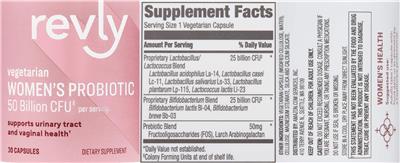
Revly Vegetarian Women's Probiotic 50 Billion CFU is a once-daily dietary supplement for vaginal and urinary tract health. It was sold under Amazon's Revly label and has since been rebranded Amazon Basics. Retail listings describe a vegetarian capsule with a seven-strain blend of Lactobacillus and Bifidobacteria. The Walmart listing states that each capsule has 50 billion CFU (colony-forming units) at the end of shelf life. That total is split into 25 billion CFU of a Lactococcus/Lactobacillus blend and 25 billion CFU of a Bifidobacterium blend. The directions are one capsule daily with food, stored cool and dry away from direct sunlight. Listings sell it in 30-count and 60-count sizes. How it works: the mechanisms below are the general ones established for these genera, not claims specific to this brand's own research. A healthy vaginal microbiome is dominated by Lactobacillus species. They ferment glycogen into lactic acid, which keeps vaginal pH around 3.5 to 4.5. That acidity discourages the overgrowth of opportunistic organisms such as Gardnerella, Candida and uropathogenic E. coli. Some Lactobacillus strains also produce hydrogen peroxide and bacteriocins, which are antimicrobial compounds. They compete with pathogens for epithelial adhesion sites and nutrients, forming a protective biofilm-like layer on mucosal surfaces. Orally ingested strains must survive stomach acid and bile. They then colonize the gut, and the gut is the main reservoir for organisms that can reach the urogenital tract. Bifidobacteria support the intestinal barrier and produce short-chain fatty acids such as acetate. They also help modulate local immune signaling. The aim is to shift the gut flora so that fewer uropathogens migrate to the urethra and vagina. The high CFU count is meant to give strains a better chance of surviving transit and establishing themselves. A higher count does not guarantee better results, because the specific strain matters more than the total number. The vegetarian capsule shell means no gelatin. An eBay listing also flags the product as alcohol-free. Probiotics are dietary supplements, so they are not intended to diagnose, treat or cure any disease. Anyone with recurrent infections, pregnancy, or a compromised immune system should check with a clinician first.
We don’t sell supplements. We help you make decisions and get the best price.
Lowest prices
We may earn a commission from some store links. How we choose.
Finding the lowest prices at the stores now. This takes a few seconds.
Study, Trial or Testing Result Summary
Members Only107 human studies · 63 improved
This probiotic hides its two bacteria blends, so the amount of each strain is unknown. Its prebiotic is only 50 milligrams, far below studied doses. Lactic acid bacteria blends mostly helped in trials. A two-strain blend gave more overall relief than placebo in adults with irritable bowel syndrome without constipation, with less pain and swelling [1]. A multi-strain blend eased symptoms in people with celiac disease [2]. A blend improved stool consistency in constipation [3]. Other trials found no benefit for bloating [4] or overall symptoms [5], and one found less gas but not less pain [6]. Bifidobacterium also mostly helped. Reviews found mixes with Lactobacillus raised the number of people who responded [7] and improved symptoms [8]. One large review found possible pain relief but no bloating benefit, with low certainty [9]. Single-strain trials eased pain, bloating and gas [10], improved diarrhea-type symptoms [11] and normalized stools [12]. Prebiotics helped bloating and gas at gram doses [13], but reviews found no clear benefit for irritable bowel syndrome [14]. Because the strains and amounts are hidden and the prebiotic is a trace amount, these results may not apply to this product. Animal and cell studies are never counted.
See all 107 studies →Hide the studies
- Across 82 trials with 10,332 adults with irritable bowel syndrome, Bifidobacterium strains may reduce abdominal pain (low certainty), but no benefit for bloating was shown for them and overall evidence was low to very low certainty.Efficacy of Probiotics in Irritable Bowel Syndrome: Systematic Review and Meta-analysis.
- Across 52 placebo-controlled trials in 6289 people with irritable bowel syndrome, probiotics relieved symptoms, but the effect of prebiotics stayed uncertain because too few trials were available.Efficacy of probiotics, prebiotics and synbiotics in irritable bowel syndrome: a systematic review and meta-analysis of …
- In 33 trials with 4321 people with irritable bowel syndrome, probiotics improved overall symptoms versus placebo, but evidence for prebiotics was too scarce to draw conclusions.Efficacy and Safety of Probiotics, Prebiotics and Synbiotics in the Treatment of Irritable Bowel Syndrome: A systematic …
- In 21 trials with 1807 children with functional abdominal pain, probiotics helped but prebiotics and synbiotics showed no significant benefit.Comparative efficacy of probiotic, prebiotic, and synbiotic interventions in children with functional abdominal pain dis…
- In 14 trials with 1,695 irritable bowel syndrome patients, multispecies probiotics combining Lactobacillus and Bifidobacterium at suitable doses raised the number of people who responded, with no severe side effects reported.Efficacy of different probiotic protocols in irritable bowel syndrome: A network meta-analysis.
- In 18 trials with 1,309 children with functional abdominal pain, probiotics may increase treatment success over placebo (50% vs 33%) but not complete pain resolution, with low to very low certainty and no strain-specific conclusions.Probiotics for management of functional abdominal pain disorders in children.
- In 16 trials with 1251 adults with chronic constipation, 66% responded to fiber versus 41% on control, with best results at over 10 g a day for at least 4 weeks, though gas was higher with fiber.The Effect of Fiber Supplementation on Chronic Constipation in Adults: An Updated Systematic Review and Meta-Analysis of…
- In 15 trials with 1087 children with constipation, bowel movements per week did not differ from placebo, while prebiotics and synbiotics may help stool consistency and abdominal pain, though the evidence is very low to low certainty.Efficacy and Safety of Probiotics, Prebiotics and Synbiotics for the Treatment of Functional Constipation in Children: S…
- In 11 trials with 729 adults with irritable bowel syndrome or similar disorders, prebiotics did not improve symptoms versus placebo (54% vs 63% responded) but raised bifidobacteria, and inulin-type fibers worsened gas.Prebiotics in irritable bowel syndrome and other functional bowel disorders in adults: a systematic review and meta-anal…
- In five trials of irritable bowel syndrome, Bifidobacterium infantis alone did not ease pain or bloating, but composite probiotics containing it reduced abdominal pain and bloating.Efficacy of Bifidobacterium infantis 35624 in patients with irritable bowel syndrome: a meta-analysis.
- In ten studies of probiotics taken before or after colonoscopy, bloating and abdominal pain did not differ significantly from control.Utilization of Probiotics in Relieving Post-Colonoscopy Gastrointestinal Symptoms: A Systematic Review and Meta-Analysis…
- Across 54 probiotic trials in adults with irritable bowel syndrome, probiotics improved symptoms compared with placebo, with Bifidobacterium and Lactobacillus strains most prominent and no serious side effects reported.The Efficacy of Probiotics, Prebiotics, Synbiotics, and Fecal Microbiota Transplantation in Irritable Bowel Syndrome: A …
- In a review of 43 trials in adults with irritable bowel syndrome or chronic constipation, probiotics helped, but prebiotic trials were too few to draw any firm conclusions.Efficacy of prebiotics, probiotics, and synbiotics in irritable bowel syndrome and chronic idiopathic constipation: syst…
- In a review of trials in adults with irritable bowel syndrome, data on prebiotics were too sparse to draw conclusions.Read the study on PubMed (30294792) →
- Across 17 studies of people with inflammatory bowel disease, kestose helped bring on remission in ulcerative colitis and germinated barley showed a trend toward preventing relapse, but most other prebiotics did no better than control, and inulin-type prebiotics caused more gas and bloating.Prebiotics for Induction and Maintenance of Remission in Inflammatory Bowel Disease: Systematic Review and Meta-Analysis…
- In 24 trials with 1390 children with functional abdominal pain, no studies of prebiotics were found and fiber supplements other than guar gum showed no clear effect, so data were inconclusive.Nonpharmacologic treatment of functional abdominal pain disorders: a systematic review.
- In healthy infants, Bifidobacterium lactis Bb12 formula had no effect on stool frequency or consistency, though with Streptococcus thermophilus it lowered colic or irritability; Bifidobacterium longum BL999 had no effect.To add or not to add probiotics to infant formulae? An updated systematic review.
- A review of controlled trials found probiotics had an overall positive link to lactose intolerance symptoms depending on strain and dose, but only one study tested a prebiotic, so more trials are needed.Effects of Prebiotic and Probiotic Supplementation on Lactase Deficiency and Lactose Intolerance: A Systematic Review of…
- In adults receiving pelvic radiotherapy, dietary counselling with or without supplements had varying effects on gut side effects, with some studies reporting less diarrhea, so the evidence remains inconclusive.The effect of nutritional interventions involving dietary counselling on gastrointestinal toxicities in adults receiving…
- An umbrella review of 128 systematic reviews found selective benefits from probiotics, prebiotics and synbiotics, including in bowel disorders, but effects varied by strain, population and condition, and prebiotics were not separated out.Efficacy and Safety of Probiotics, Prebiotics, and Synbiotics: An Umbrella Review of Systematic Reviews and Meta-Analysi…
- In healthy volunteers over three winter seasons, daily synbiotic products improved bowel regularity and reduced bloating compared with placebo, and also shortened respiratory infections.A new chance of preventing winter diseases by the administration of synbiotic formulations.
- In 362 women with irritable bowel syndrome over 4 weeks, Bifidobacterium infantis 35624 at 100 million cfu beat placebo for abdominal pain, bloating, straining and gas, while the lower and higher doses did not.Efficacy of an encapsulated probiotic Bifidobacterium infantis 35624 in women with irritable bowel syndrome.
- In 330 adults with irritable bowel syndrome, 10 billion CFU a day of Bifidobacterium lactis UABla-12 for 6 weeks reduced abdominal pain and symptom severity and normalized stool consistency better than placebo, with 28.2% being significant pain responders.Lactobacillus acidophilus DDS-1 and Bifidobacterium lactis UABla-12 Improve Abdominal Pain Severity and Symptomology in …
- In 290 people with diarrhea-predominant irritable bowel syndrome, a Bifidobacterium quadruple tablet for 4 weeks improved both abdominal pain and diarrhea in 67.6% versus 36.6% on placebo.The Short-Term Efficacy of Bifidobacterium Quadruple Viable Tablet in Patients With Diarrhea-Predominant Irritable Bowel…
- In 251 adults with irritable bowel syndrome, Bifidobacterium longum R0175 or a Lactobacillus strain for 8 weeks did not change symptom severity differently from placebo, though quality of life improved from baseline.Efficacy of Lactobacillus paracasei HA-196 and Bifidobacterium longum R0175 in Alleviating Symptoms of Irritable Bowel S…
- In 250 adults with functional constipation, a Bifidobacterium lactis HN019 and Lactobacillus rhamnosus HN001 formula for 4 weeks showed no group difference in bowel movement frequency, though stool softness scores rose in the treated groups but not in placebo.Effects of dietary fibers or probiotics on functional constipation symptoms and roles of gut microbiota: a double-blinde…
- In 229 adults with functional constipation, 4.69 billion CFU daily of B. lactis HN019 for 8 weeks did not increase complete bowel movements more than placebo.Eight-Week Supplementation With Bifidobacterium lactis HN019 and Functional Constipation: A Randomized Clinical Trial.
- In 228 adults with functional constipation, 28 days of B. lactis HN019 at 1 billion or 10 billion CFU daily did not change the primary colonic transit outcome versus placebo, though a post hoc subgroup with fewer than 3 bowel movements per week had more weekly bowel movements.Effects of 28-day Bifidobacterium animalis subsp. lactis HN019 supplementation on colonic transit time and gastrointesti…
- In 200 adults with non-constipated irritable bowel syndrome, a two-strain probiotic blend taken for 84 days gave more global symptom improvement than placebo (19.3% vs 8.9% at day 28), with less pain and distension and better quality of life.Probiotic Blend of Lactobacillus acidophilus LA-5 and Bifidobacterium animalis ssp. Lactis BB-12 in Non-constipated Irri…
- In 200 adults with diarrhea-predominant IBS, a live bifidobacterium strain taken daily for 12 weeks lowered symptom severity more than placebo.A randomized double-blind, placebo-controlled trial to evaluate the safety and efficacy of live Bifidobacterium longum C…
- In 195 people with ulcerative colitis in remission, one daily Bifidobacterium breve fermented milk for 48 weeks did not reduce relapse compared with placebo.Efficacy of Bifidobacterium breve Fermented Milk in Maintaining Remission of Ulcerative Colitis.
- In 180 adults with constipation-predominant IBS, 4 grams daily of a bifidobacterium lactis probiotic for 4 weeks improved stool frequency and IBS symptom severity compared with placebo, but stool consistency and quality of life did not change.Acacia fiber or probiotic supplements to relieve gastrointestinal complaints in patients with constipation-predominant I…
- In a placebo-controlled trial of 159 healthy travellers, a galacto-oligosaccharide prebiotic mixture significantly reduced the incidence and duration of travellers' diarrhoea compared with placebo maltodextrin, with less abdominal pain and better quality of life reported.A double-blind, placebo-controlled, randomized human study assessing the capacity of a novel galacto-oligosaccharide mix…
- In 156 constipated adults with bloating, a five-strain probiotic blend taken for 2 weeks did not beat placebo on bloating or other main measures, though a follow-up analysis showed less flatulence.The effect of a probiotic blend on gastrointestinal symptoms in constipated patients: a double blind, randomised, placeb…
- In children aged 4 to 18 with functional constipation, a synbiotic powder taken for 4 weeks led to more complete benefit than placebo (66.7% vs 28.3%), with more weekly bowel movements and less belly pain.Investigation of the efficacy of synbiotics in the treatment of functional constipation in children: a randomized double…
- In 132 middle-aged and older adults with chronic constipation, a 28-day multi-strain probiotic produced far more complete bowel movements and less bloating than placebo, with 88 percent of the probiotic group responding versus 26 percent of the placebo group.A multi-strain probiotic formulation alleviates chronic constipation in middle-aged and older adults: A randomized, doub…
- In 121 children aged 3 to 12 taking amoxicillin or amoxicillin-clavulanate, adding Bifidobacterium breve PRL2020 cut the rate of diarrhea by about 70 percent compared with the control group, and bifidobacteria levels recovered better in the gut.Read the study on PubMed (42234385) →
- In 120 toddlers with respiratory illness, 12 weeks of Bifidobacterium infantis YLGB-1496 was safe and led to fewer reports of stomachache, abdominal pain and diarrhea than the control group.Safety and Tolerance of Bifidobacterium longum subsp. Infantis YLGB-1496 in Toddlers with Respiratory Symptoms.
- In 117 adults after acute diverticulitis, adding Bifidobacterium infantis 35624 to mesalamine for 12 weeks did not reduce gastrointestinal symptoms more than mesalamine alone.A randomized controlled study of mesalamine after acute diverticulitis: results of the DIVA trial.
- In 112 adults with lower gastrointestinal symptoms, an 8-week multistrain probiotic containing Bifidobacterium lactis gave greater overall symptom relief than placebo, with less abdominal pain and bloating.Validity and safety of ID-JPL934 in lower gastrointestinal symptom improvement.
- In 110 adults recovering from heart valve surgery, taking a Bifidobacterium animalis probiotic for 14 days reduced abdominal pain, bloating and constipation scores compared with placebo and shortened the time to return of normal bowel function.Bifidobacterium animalis subsp. lactis LPL-RH improves postoperative gastrointestinal symptoms and nutrition indexes by …
- In 109 people with celiac disease and ongoing irritable bowel-type symptoms, 6 weeks of a multispecies probiotic reduced symptom severity more than placebo, with treatment success in 15.3% vs 3.8%.Clinical and Microbiological Effect of a Multispecies Probiotic Supplementation in Celiac Patients With Persistent IBS-t…
- In 100 people with irritable bowel syndrome, a four-strain probiotic taken for 4 weeks was no better than placebo at relieving symptoms (42.6% vs 42.3% improved), though abdominal pain fell more with the probiotic.A double blind randomized controlled trial of a probiotic combination in 100 patients with irritable bowel syndrome.
- In 100 colorectal cancer patients receiving chemotherapy, a postoperative probiotic combination including Bifidobacterium reduced chemotherapy-related gastrointestinal complications, especially diarrhea, compared with placebo.Postoperative Probiotics Administration Attenuates Gastrointestinal Complications and Gut Microbiota Dysbiosis Caused by…
- In 100 adults over 4 weeks, two multi-strain probiotic formulations improved gastrointestinal symptoms and increased Bifidobacterium, with the higher-dose formulation showing greater gut microbiome changes.Effects of Two Compound Probiotic Formulations on Gastrointestinal Symptoms and Gut Microbiota: A 4-Week Randomized, Dou…
- In 95 adults with irritable bowel syndrome, 4 weeks of probiotic raised Lactobacillus and Streptococcus levels, but gut bacteria at baseline did not predict who improved, and symptom results were not reported here.Gut microbiota associations with diet in irritable bowel syndrome and the effect of low FODMAP diet and probiotics.
- In 88 adults with diarrhea-predominant irritable bowel syndrome, Bifico capsules at 0.48 g twice daily for 4 weeks improved symptom scores and stool characteristics, with 73.8% reporting a total effective response; adding acupoint plaster to Bifico gave a larger benefit.[Acupoint application therapy for diarrhea-predominant irritable bowel syndrome with spleen deficiency and dampness rete…
- In adults with diarrhea-predominant irritable bowel syndrome, 24 grams of pectin daily for 6 weeks reduced symptom scores and stool looseness more than placebo, raised beneficial gut bifidobacteria, and normalized an inflammatory cytokine ratio.[Efficacy of pectin in the treatment of diarrhea predominant irritable bowel syndrome].
- In 83 adults with bloating, abdominal pain, or gas, 2 weeks of 2.75 g daily of a galactooligosaccharide prebiotic reduced those symptoms more than placebo, though it did not change bowel movement frequency or stool consistency.Effect of a prebiotic galactooligosaccharide mixture (B-GOS®) on gastrointestinal symptoms in adults selected from a gen…
- In 80 people with irritable bowel syndrome, 8 weeks of a two-strain Lactobacillus acidophilus mixture did not beat placebo on abdominal pain but reduced gas (flatus) and the combined symptom score.A 2-strain mixture of Lactobacillus acidophilus in the treatment of irritable bowel syndrome: A placebo-controlled rando…
- In 80 breastfed infants, 21 days of Bifidobacterium infantis EVC001 at 1.8 to 2.8 times 10 to the 10th power per day was well tolerated and led to fewer watery stools and better-formed stools compared with lactation support alone.Safety and tolerability of Bifidobacterium longum subspecies infantis EVC001 supplementation in healthy term breastfed i…
- In 80 adults with diarrhea-predominant irritable bowel syndrome, a multi-strain synbiotic with fructooligosaccharides taken for eight weeks significantly improved overall symptom severity, global improvement, flatulence, and bowel habit compared with placebo, and was well tolerated.The Effectiveness of Synbiotic Preparation Containing Lactobacillus and Bifidobacterium Probiotic Strains and Short Chai…
- In 78 adults with functional constipation, 4 weeks of a spore-forming probiotic blend improved incomplete evacuation, pain before defecation and stool consistency compared with placebo.Effects of a spore-forming probiotic blend on bowel habits and physical well-being in adults with functional constipatio…
- In 71 children with irritable bowel syndrome, 4 weeks of Bifidobacterium lactis B94 at 5 billion CFU twice daily improved belching, bloating after meals and constipation more than prebiotic fiber alone.Efficacy of synbiotic, probiotic, and prebiotic treatments for irritable bowel syndrome in children: A randomized contro…
- In adults with irritable bowel syndrome, adding 1.8 grams per day of galactooligosaccharides to a restricted diet gave adequate symptom relief to 67% of participants after 4 weeks, compared with 30% on a sham diet with placebo.Faecal and urine metabolites, but not gut microbiota, may predict response to low FODMAP diet in irritable bowel syndrom…
- In 61 adults with diarrhoea-predominant irritable bowel syndrome, 8 weeks of Bifidobacterium breve Bif195 did not improve the main irritable bowel symptom score compared with placebo, although it did lower fatigue scores.Eight weeks of treatment with probiotic Bifidobacterium breve, Bif195 lowers fatigue scores in patients with diarrhoea-p…
- In 60 healthy stressed Japanese adults, 4 weeks of a three-strain probiotic blend reduced diarrhea-related problems and improved mental health scores compared with placebo.A probiotic blend improves defecation, mental health, and productivity in healthy Japanese volunteers under stressful si…
- In 60 very low birth weight preterm infants, Infloran probiotic given until 6 weeks or discharge did not reduce serious necrotizing enterocolitis compared with standard feeding alone, and no adverse effects such as flatulence or diarrhea were seen.Effect of oral probiotics supplementation in the prevention of necrotizing enterocolitis among very low birth weight pre…
- In 60 people with stomach and bowel symptoms after gastric bypass surgery, two weeks of Bifidobacterium longum BB536 twice daily improved gas, bloating, belching, heartburn and abdominal pain scores, though it was compared with digestive enzymes rather than placebo.Effect of probiotics on postoperative quality of gastric bypass surgeries: a prospective randomized trial.
- In 60 healthy adults with mild digestive complaints, a heat-treated bifidobacterium postbiotic for 8 weeks caused minimal change in GI symptoms but lowered total and non-HDL cholesterol compared with placebo.Effect of Postbiotic Bifidobacterium longum CECT 7347 on Gastrointestinal Symptoms, Serum Biochemistry, and Intestinal M…
- In 60 adults with chronic constipation, a multispecies capsule containing Bifidobacterium and Lactobacillus strains for 29 days led to 100% of users having at least 3 complete bowel movements per week, versus 7.69% on placebo, with greater relief of abdominal pain and bloating.Probiotics for chronic constipation: A randomized, prospective, placebo-controlled study.
- In constipated women, 15 grams per day of inulin and partially hydrolyzed guar gum for 3 weeks gave bowel results no better than maltodextrin placebo, although it lowered a harmful gut bacteria group.Microbiota benefits after inulin and partially hydrolized guar gum supplementation: a randomized clinical trial in const…
- In 60 adults with diarrhea-predominant irritable bowel syndrome, 4 weeks of a xyloglucan and xylo-oligosaccharide product produced normal stools in 87% of users versus 0% on placebo, and abdominal pain and bloating also improved.Efficacy and safety of Gelsectan for diarrhoea-predominant irritable bowel syndrome: A randomised, crossover clinical tr…
- In 51 adults with irritable bowel syndrome with constipation, adding an inulin, choline and silymarin supplement to a constipation diet for 8 weeks produced greater improvement in abdominal pain and bloating than the diet alone, though changes in bowel movements were not statistically different between groups.Inulin, Choline and Silymarin in the Treatment of Irritable Bowel Syndrome with Constipation-Randomized Case-Control Stu…
- In 50 adults with irritable bowel syndrome with constipation, a daily jelly with 8 g of agave fructans for four weeks increased bowel movements versus placebo, without a laxative effect, and improved quality of life and reduced anxiety and depression.The Effects of Agave Fructans in a Functional Food Consumed by Patients with Irritable Bowel Syndrome with Constipation:…
- In 48 children with irritable bowel syndrome, a three-strain Bifidobacterium mixture taken for 6 weeks fully resolved abdominal pain in more children than placebo and improved quality of life in 48% versus 17% on placebo, though these benefits were not seen in children with functional dyspepsia.A Mixture of 3 Bifidobacteria Decreases Abdominal Pain and Improves the Quality of Life in Children With Irritable Bowel…
- In 44 adults with IBS and mild to moderate anxiety or depression, a bifidobacterium probiotic for 6 weeks reduced depression scores and brain reactions to negative images compared with placebo, but did not change anxiety or IBS symptoms.Probiotic Bifidobacterium longum NCC3001 Reduces Depression Scores and Alters Brain Activity: A Pilot Study in Patients …
- In 40 older adults with Parkinson's disease and gut complaints, three months of a probiotic tablet twice daily improved abdominal pain and bloating about as much as trimebutine, but did not significantly improve constipation with incomplete emptying.Nonmotor gastrointestinal disorders in older patients with Parkinson's disease: is there hope?
- In 40 people with functional gut disorders and gas, 4 weeks of a galactooligosaccharide prebiotic supplement reduced symptoms about as much as a low-FODMAP diet, with the benefit lasting 2 weeks after stopping, though gas reduction was not significant in the prebiotic group.Effects of Prebiotics vs a Diet Low in FODMAPs in Patients With Functional Gut Disorders.
- In 39 adults with functional diarrhea and high fecal calprotectin, an eight-week synbiotic increased formed stools and bowel movement satisfaction, while calprotectin fell but did not differ significantly from placebo.A Randomized, Double-Blind, Placebo-Controlled Trial to Evaluate the Effects of Multi-Strain Synbiotic in Patients with …
- In 35 adults with IBS, a daily bifidobacterium probiotic for 6 weeks was linked to higher blood butyric acid, which tracked with lower anxiety and depression scores compared with placebo.Metabolome-associated psychological comorbidities improvement in irritable bowel syndrome patients receiving a probiotic…
- In 35 adults with irritable bowel syndrome without constipation, a multistrain probiotic with vitamin D for 12 weeks improved stool frequency and consistency compared with placebo and reduced a gut barrier marker (zonulin).Multistrain Probiotics Plus Vitamin D Improve Gut Barrier Function and Gut Microbiota Composition in Irritable Bowel Syn…
- In 34 people with irritable bowel syndrome, eating sauerkraut daily for 6 weeks improved symptom scores in both the pasteurized and unpasteurized groups, with no difference between them; there was no placebo group.Lacto-fermented sauerkraut improves symptoms in IBS patients independent of product pasteurisation - a pilot study.
- In people who had a polyp removed, 3 grams per day of barley beta-glucan in bread for 3 months lowered bloating and abdominal pain scores compared with placebo bread, though only 20 of 33 finished.Impact of beta-glucan on the faecal microbiota of polypectomized patients: a pilot study.
- In 30 people with diarrhoea-predominant irritable bowel syndrome, 4 weeks of probiotic fermented milk lowered small bowel leakiness and overall symptom scores, but did not change colon permeability.Clinical trial: effect of active lactic acid bacteria on mucosal barrier function in patients with diarrhoea-predominant…
- In 30 autistic children, a six-week galactooligosaccharide prebiotic changed gut bacteria and improved some behavior measures, while lower abdominal pain and bowel movement scores were linked to the exclusion diets rather than the prebiotic.A prebiotic intervention study in children with autism spectrum disorders (ASDs).
- In 30 healthy adults taking inulin, psyllium reduced early gut gas production compared with placebo, but methylcellulose did not show a comparable effect over 24 hours.A randomised, placebo-controlled trial in healthy humans of modified cellulose or psyllium evaluating the role of gelati…
- In 25 people with irritable bowel syndrome, one month of the probiotic with vitamin B6 cut abdominal pain by 49% and bloating by 36% versus about 4% and a 7% increase on placebo, and improved stool consistency.Effects of Bifidobacterium longum BB536 and Lactobacillus rhamnosus HN001 in IBS patients.
- In 24 people who poorly digest lactose, yogurt culture cut hydrogen gas output by 27% and combined with lactase by 46% versus placebo, and the combination reduced flatulence and abdominal pain.A combination of acid lactase from Aspergillus oryzae and yogurt bacteria improves lactose digestion in lactose maldiges…
- In 23 lactose-intolerant adults with lingering gut symptoms, 30 days of a Bifidobacterium and Lactobacillus blend with vitamin B6 reduced bloating and eased constipation compared with placebo.Effects of Bifidobacterium longum and Lactobacillus rhamnosus on Gut Microbiota in Patients with Lactose Intolerance and…
- In people with irritable bowel syndrome, inulin alone produced more gas than placebo in a single test drink, while adding psyllium cut that gas to a level no different from placebo.Psyllium reduces inulin-induced colonic gas production in IBS: MRI and in vitro fermentation studies.
- In 14 children with gut dysmotility, Crohn's disease, or mild short bowel syndrome, a formula with added fiber made stools softer and normalized the extremes of stool consistency, but stool frequency did not change compared with the fiber-free formula.Tolerance of an enteral formula with insoluble and prebiotic fiber in children with compromised gastrointestinal functio…
- In 13 healthy adults, a single two-day dose of 37.6 g daily of arabinoxylan-oligosaccharides increased gut gas production and postmeal bloating compared with maltodextrin, without changing stomach filling capacity.The effect of arabinoxylooligosaccharides on gastric sensory-motor function and nutrient tolerance in man.
- In a small preliminary trial of people with systemic nickel allergy on a low-nickel diet, Lactobacillus reuteri improved gut symptoms related to meals and stool type.Probiotic supplementation in systemic nickel allergy syndrome patients: study of its effects on lactic acid bacteria pop…
- In a double-blind placebo-controlled trial of healthy adults with minor diarrhea-predominant irritable bowel symptoms, 12 weeks of Lactobacillus brevis KB290 with beta-carotene improved abdominal pain and stool frequency and raised the anti-inflammatory cytokine interleukin-10 compared with placebo.Effect of combined consumption of Lactobacillus brevis KB290 and β-carotene on minor diarrhoea-predominant irritable bow…
- In adults with functional constipation taking a daily probiotic sachet for 30 days, stool frequency and quality improved, though the three groups did not differ significantly from each other and only one mild adverse event occurred.The effect of probiotics on functional constipation in adults: A randomized, double-blind controlled trial.
- In adults with functional constipation, eight weeks of daily Bifidobacterium lactis HN019 did not increase complete bowel movements more than placebo.Effect of an 8-Week Bifidobacterium lactis HN019 Supplementation on Functional Constipation: A Multi-Center, Triple-Blin…
- In a placebo-controlled trial of people with excessive intestinal gas, Bifidobacterium longum CCFM1319 improved flatulence symptoms and increased a beneficial gut bacterium.Gut microbiota and metabolic alterations in participants with flatulence identify Faecalibacterium prausnitzii as a key …
- In healthy adults aged 25 to 65, 8 g per day of xylo-oligosaccharides for 21 days increased bowel movements per day compared with maltodextrin, without changing bloating, abdominal pain, or flatulence.Xylo-oligosaccharides alone or in synbiotic combination with Bifidobacterium animalis subsp. lactis induce bifidogenesis…
- In adults including older people with constipation, 10 grams per day of a yacon-based product in juice for 30 days increased bowel movements and softened stool more than maltodextrin control.Yacon-Based Product in the Modulation of Intestinal Constipation.
- In 188 adults with functional gut symptoms, one capsule daily of a 5-strain probiotic blend for 30 days led 85.1% of patients to report better overall gut well-being, with no safety signals, though there was no control group.An Open-label, Multicenter Study to Assess the Efficacy and Safety of a Novel Probiotic Blend in Patients With Functiona…
- In 120 people with irritable bowel syndrome, 4 weeks of personalized prebiotic and probiotic supplements reduced symptom severity overall, with the largest gains in constipation and diarrhea types and no clear gain in the mixed type; there was no open-label control group.Effect of Personalized Prebiotic and Probiotic Supplements on the Symptoms of Irritable Bowel Syndrome: An Open-Label, S…
- In 99 adults eating 50 grams of personalized prebiotic granola daily for 8 weeks, stool volume rose and mood improved, but bloating and gas got worse, in an uncontrolled before-and-after study.Effectiveness of personalized granola tailored to the gut microbiota for improving gut environment and mood states.
- In healthy adults eating a high-fiber diet that normally causes gas, 4 weeks of a fermented milk product with probiotic bacteria reduced gas sensations and the number of daily gas releases compared with before the product was taken.A Fermented Milk Product with B. Lactis CNCM I-2494 and Lactic Acid Bacteria Improves Gastrointestinal Comfort in Respon…
- In a single-group study of 64 children and adolescents with irritable bowel syndrome, 1 billion CFU of Bifidobacterium longum 35624 daily for 12 weeks produced clinically meaningful improvement in 96.6 percent of participants, though symptoms returned during a two-week washout.Effects of Bifidobacterium longum 35624 in Children and Adolescents with Irritable Bowel Syndrome.
- In 62 adults with symptoms after a bowel infection, adding a probiotic capsule twice daily for two weeks to standard treatment led to more symptom relief and lower gut inflammation, with benefits still present six months later.[The effectiveness of a probiotic containing Bifidobacterium longum BB-46 and Enterococcus faecium ENCfa-68 in the treat…
- In 54 adults with irritable bowel syndrome with diarrhea or a med-associated diarrhea, one 350 mg capsule per day for 21 days lowered diarrhea and abdominal pain scores and improved gut bacteria balance, though there was no control group.Read the study on PubMed (37801459) →
- In an open-label trial of 45 people with inflammatory bowel disease, 400 mL of kefir a day for 4 weeks lowered inflammation blood markers in Crohn's disease patients and reduced bloating in the last 2 weeks, though the abstract reports no overall symptom benefit.Effect of administering kefir on the changes in fecal microbiota and symptoms of inflammatory bowel disease: A randomize…
- In 46 adults with uncomplicated diverticular disease, a symbiotic mixture taken 10 ml three times daily for 6 months kept 68% of patients free of symptoms, in an open-label study without a control group.Probiotics in diverticular disease of the colon: an open label study.
- In 30 people with stable Parkinson's disease and constipation, 12 weeks of a probiotic plus inulin fiber product improved non-movement symptoms and bowel movement frequency, in an open-label study with no control group.Synbiotic supplementation may globally improve non-motor symptoms in patients with stable Parkinson's disease: results f…
- In an open, uncontrolled study of 23 infants aged 10 days to 2 months, a prebiotic-containing formula was well tolerated over 28 days, with stool frequency falling from about 2.5 to 1.8 per day, though three infants had possibly related side effects such as rash, colic or constipation.Growth and Tolerance Assessment of a Lutein-fortified Infant Formula.
- In 21 healthy adults taking a seven-strain probiotic daily for 60 days, flatulence decreased and levels of gas-producing methane-associated gut microbes fell, in an uncontrolled paired study.Methanobrevibacter attenuation via probiotic intervention reduces flatulence in adult human: A non-randomised paired-des…
- In 20 older adults, 15 g per day of yeast mannans for two weeks produced a non-significant trend toward more stools per day, a rise in stool frequency among those with one or fewer stools per day, and a small increase in cramping and bloating, with no change in gas or other symptoms.Yeast mannans promote laxation and specifically modulate microbiota composition in older adults: An open-label pilot stu…
- In 18 autistic children, a fecal transplant protocol with a med pretreatment cut stomach and bowel symptoms by about 80% and raised Bifidobacterium levels, with effects lasting 8 weeks after treatment ended; this was an open-label study without a placebo group.Microbiota Transfer Therapy alters gut ecosystem and improves gastrointestinal and autism symptoms: an open-label study.
- In 10 adults with active Crohn's disease, combined probiotics and 9.9 g per day of psyllium over about 13 months led to clinical improvement in seven patients, with significantly lower disease activity scores and no adverse events.High dose probiotic and prebiotic cotherapy for remission induction of active Crohn's disease.
- In a retrospective review of 584 user experiences with four multispecies probiotic products taken for two weeks, perceived quality of life rose and stomach symptoms fell, though the study had no control group.Multispecies probiotics promote perceived human health and wellbeing: insights into the value of retrospective studies o…
- In 42 adults with irritable bowel syndrome, 1 billion CFU of Bifidobacterium longum 35624 taken daily for 12 weeks significantly reduced abdominal pain, bloating and stool problems, with some patients reaching remission by the third month and benefits lasting a month after stopping.[Long-term probiotic administration for irritable bowel syndrome: a legal need].
Review Totals and Summary
Members Only27 reviews
Written feedback for this exact product is sparse in publicly searchable sources, so I can't honestly report a broad set of themes. The only text I found was a single eBay review from 2020. That reviewer called it a great product at a good price, and the eBay page tagged it with "good value" and "good quality." The Walmart page lists about 22 seller reviews but showed no readable comments. Amazon showed no review text for it, only sales signals such as "800+ bought" on the brand page. So the only theme I can source is value for money. The product is a store-brand probiotic with a high CFU count at a modest price. The Walmart listing showed $39.86 for the 30-count, but that was a third-party price and may not be typical. I did not find sourced complaints about pill size, taste, digestive upset or lack of results, and I won't make any up. In the wider women's-probiotic category, buyers often mention three things. They notice gas or bloating in the first week or two. They disagree about whether a supplement noticeably changed urinary or vaginal comfort, since effects are subjective and slow. They also ask whether the capsules need refrigeration. That is category-level context, not feedback on this product. For real customer sentiment, the best next step is to read the verified-purchase reviews on the current Amazon Basics One Daily Women's Probiotic page. They are probably pooled under that name now. I couldn't retrieve them.
Biohacker Summary
Members Only7 of 10 recommend it
Bifidobacterium, the main ingredient, drew mostly neutral comments from the panel, and only one of them recommended it, saying it is a good bacteria to include in probiotics. Six of the ten panelists spoke about it, mainly describing what it may do. They linked it to the gut messenger GABA, which one said acts as a mild sedative and can reduce irritability, and to brain chemistry and anxiety-like behavior. They also linked it to digestive complaints such as gas, bloating, diarrhea and constipation, and to less belly fat and better blood pressure in one study of menopausal women. Nobody gave a dose or a preferred form, and nobody named a pairing for it. Cautions were limited: one panelist said it helps make dopamine, which can be a problem in kids with ADHD, and another warned that too much of certain probiotics can cause brain fog. Lactobacillus is a smaller ingredient in this product, and two of the panel recommended it, mainly for digestion and for lowering microplastics in the blood.
See all 8 biohackers →Hide the biohackers
Dr. Mark Hyman · Bifidobacterium · neutral
- Notes that Bifidobacterium is important in regulating dopamine, which can be problematic in kids with ADHD.
- Recommends bifidobacterium as a good bacteria to include in probiotics.
- Recommends lactobacillus as a good bacteria to include in probiotics.
- Mentions that many bacteria, including bifidobacterium, can help produce GABA in the gut, which is a relaxation neurotransmitter.
- Mentions bifidobacterium as one of the three classes of probiotics, along with lactobacillus and streptococcus, that have been predominantly used in food products in Japan, Europe, and North America.
- Notes that lactobacillus was broken into about 200 subclasses and renamed two years ago, so the term is not really used anymore.
- Notes that people who age very badly have a lot of lactobacillus in their small bowel, and their aging paper found lactobacillus in the small bowel to be a sign of unhealthy older people.
- Cites a study where Bifidobacterium plantarum lactase combined with xyloglucan (a non-digestible fiber) significantly improved healing and resolved symptoms in ulcerative colitis patients.
- Notes that Lactobacillus species are often missing or in low concentration in patients with inflammatory bowel disease, and replacing them yields huge benefits.
- Notes that people with OCD tend to be low in some Bifidobacterium species.
- References a study showing that giving pregnant women lactobacillus during pregnancy and babies after birth led to far less eczema, asthma, and allergies.
- Notes that VSL#3 contains strains of Bifidobacterium that are low in patients and helpful in healing the gut lining and mucosa.
- Notes that VSL#3 contains strains of Lactobacillus that are low in patients and helpful in healing the gut lining and mucosa.
- Uses Bifidobacterium at 450 million twice a day, which they included in a published protocol for ozone, because the bacteria itself directly interacts negatively with and kills the virus.
Ben Greenfield · Bifidobacterium · neutral
- Notes that during a wild food diet, bacteria associated with dairy-heavy diets, like Bifidobacterium, dropped significantly.
- Notes that IM8health includes a full prebiotic blend for the gut.
- Ben Greenfield's guest notes that Ben Greenfield's Bifidobacterium levels are low, which is common in most people who take the test.
- Mentions that probiotic formulations including Bifidobacterium have shown a direct neurochemical effect on the central nervous system that affected anxiety-like behaviors.
- Mentions that probiotic formulations including lactobacillus have shown a direct neurochemical effect on the central nervous system that affected anxiety-like behaviors.
- Highlights that a specific Lactobacillus species may help counter the effects of bacteria known to produce a lot of gas, especially methane, and recommends choosing a probiotic with this species if gas issues are present.
- Highlights that a specific lactobacillus species may help counter the effects of gas-producing bacteria, especially methane, for digestive health.
- Recommends taking Bifidobacterium, a histamine-lowering probiotic, prior to or immediately after consuming wine to help degrade histamine and improve sleep.
- Is working with UCLA on a form of lactobacillus called lactobacillus four-five-six, which can colonize the gut from the small intestine through the colon and is showing in second phase trials to stay fully present through the feces.
Peter Attia · Bifidobacterium · neutral
- States that bifidobacterium, found in yogurts and probiotics, is most well-documented for its impact on GI symptoms such as gas, bloating, diarrhea, and constipation.
- States that lactobacillus, found in yogurts and probiotics, is most well-documented for its impact on GI symptoms such as gas, bloating, diarrhea, and constipation.
Andrew Huberman · Bifidobacterium · neutral
- States that bifidobacterium can give rise to increases in GABA levels, an inhibitory neurotransmitter that acts as a mild sedative and can reduce irritability.
- Warns that taking excessive amounts of certain probiotics, like lactobacillus, can lead to brain fog and an inability to focus.
- Mentions a study where women who were obese and hypertensive in menopause, and had visceral fat, saw a decrease in visceral fat and improvements in blood pressure when supplementing with lactobacillus and bifidobacterium.
- States that lactobacillus can give rise to increases in GABA levels, an inhibitory neurotransmitter that acts as a mild sedative and can reduce irritability.
- Mentions a study where Lactobacillus and Bifidobacterium supplementation in obese, hypertensive menopausal women led to decreased visceral fat and improved blood pressure.
- Mentions a study where Lactobacillus and Bifidobacterium supplementation in obese, hypertensive menopausal women led to decreased visceral fat and improved blood pressure.
Thomas DeLauer · Bifidobacterium · neutral
- Discusses Bifidobacterium, noting that more of this bacteria seems to be correlated with less visceral fat and that a specific strain was shown to significantly reduce visceral fat in a study.
- Mentions a study showing that intermittent fasting usually leads to an increase in lactobacillus, a widely studied species that puts one in a good spot when improved.
- Discusses how lactobacillus is linked to a decrease in lipopolysaccharide leakage, which can improve insulin sensitivity and affect the brain's perception of hunger and satiety, and can also increase glucagon-like peptide 1.
- States that lactobacillus, a type of probiotic, shows signs of reducing lipopolysaccharides, which are inflammatory compounds from gram-negative bacteria.
- Notes that introducing the right forms of lactobacillus bacteria made it possible for the brain to combine logic and emotion in the best possible ways, by increasing communication between the emotional part of the brain and the prefrontal cortex.
Dr. Eric Berg · Bifidobacterium · neutral
- States that a lack of Bifidobacterium in the digestive system can lead to problems with brain chemistry.
- Recommends taking Lactobacillus for constipation, and also notes it is good for diarrhea.
- Explains that lactobacillus is a common microbe that lives in and around the body, part of the microbiome, and can help in many ways, including with IBS, colic, intestinal inflammation, gastritis, stomach pain, hay fever, allergies, candida, liver disease, gallbladder problems, constipation, diarrhea, arthritis, C diff, vaginal yeast infections, and UTIs.
- Recommends consuming foods containing the lactobacillus Bifidobacterium microbe, as it can create serious benefits for someone who is depressed by helping to make neurotransmitters like GABA and serotonin.
- Lists lactobacillus as a new remedy for rheumatoid arthritis.
- Recommends lactobacillus as a microbe that can reduce oxalates by 40 to 60%.
- States that a lack of lactobacillus in the digestive system can lead to problems with brain chemistry.
- Explains that friendly bacteria like lactobacillus in the large bowel produce lactic acid, which is important for acidifying the colon.
- Imbalances in gut microbiota can diminish beneficial bacteria such as Lactobacillus, which plays a crucial role in maintaining a healthy balance of microorganisms within the gut and preventing candida overgrowth.
Dave Asprey · Lactobacillus · recommends
- Dave Asprey recommends lactobacillus, noting that studies show it reduced microplastics in the blood by 82 percent.
- Notes that lactobacillus, found in yogurt and L. reuteri in kimchi, has been shown to decrease microplastics in blood by 82%, likely by helping to break them down and aiding the body in their removal.
- Notes that some women with high levels of lactobacillus can be exposed to HSV, HPV, and HIV without becoming infected, but still doesn't recommend it as a weapon against STDs.
Dr. Rhonda Patrick · Lactobacillus · neutral
- Explains that Lactobacillus and Bifidobacter are beneficial microbes, and fibers generally increase both, which are thought to make short-chain fatty acids that boost the immune system.
RAL Summary
Members OnlyTier 4 for Digestion and Bloating
Probiotic blends of Lactobacillus and Bifidobacterium often help sensitive bowels in trials [7], but this product hides its strain amounts in blends and has only a trace of prebiotic, and there are no counted reviews, so the evidence for this product is thin.
- Emerging: not enough evidence to rank higher yet.
- Proprietary Lactobacillus/Lactococcus Blend: amount hidden in a blend
- Bifidobacterium: amount hidden in a blend
Where the evidence disagrees: 22 of the 107 human studies found no effect.
More Details
Members OnlyBody systems · Combine with · Possible side effects
Body systems: Digestive system
Combine with: For cellular and DNA repair support, pair this probiotic with ingredients that act more directly on aging pathways. Examples are NMN or nicotinamide riboside for NAD+ support, trans-resveratrol or pterostilbene for sirtuin activation, and CoQ10 or PQQ for mitochondrial function. Alpha-lipoic acid, astaxanthin, and vitamin C and E offer antioxidant protection against oxidative DNA damage. Methylated B vitamins (folate, B12) support DNA methylation and repair. Magnesium and zinc are cofactors for DNA repair enzymes. A prebiotic fiber such as inulin or partially hydrolyzed guar gum can help the probiotic strains thrive, and omega-3 fish oil supports healthy inflammatory balance. Check with a healthcare provider before starting new supplements, especially if you take medications or are pregnant.
Possible side effects: Studies reported no serious side effects; fiber and inulin-type prebiotics raised gas in some trials.
Supplement Facts
Proprietary Lactobacillus/Lactococcus Blend 0 · Proprietary Bifidobacterium Blend 0 · Prebiotic Blend 50 mg
| Proprietary Lactobacillus/Lactococcus Blend | 0 | † |
| Proprietary Bifidobacterium Blend | 0 | † |
| Prebiotic Blend | 50 mg | † |
Other ingredients: Modified Cellulose, Water, Cellulose, Magnesium Stearate, Silica, Calcium Silicate.
Directions: Suggested use: Adults take 1 capsule with food daily, or as directed by a healthcare professional.
Label source: NIH label database · Report a label change
Show entire label
More digestion and bloating products
Members OnlyThe highest ranked for the same goal
Read more
Our articles on this subject
- How to Improve Gut Health Naturally: Fiber, Foods and the Probiotic Strains With Human TrialsArticle · Sep 15, 2026
- Best Probiotic for Bloating: The Strains With Human Trials, and How to Choose OneArticle · Oct 27, 2026
Graded November 6, 2026 by the Reverse Age Lab evidence engine, from human studies, real reviews and our biohacker panel. How we grade. Is this medical advice? No. Rala organizes the published evidence; go over any change with your doctor, especially if you take meds.
Privacy policyConsumer health dataAffiliate disclosureTermsDo Not Sell or Share My Personal InformationCookie settings