
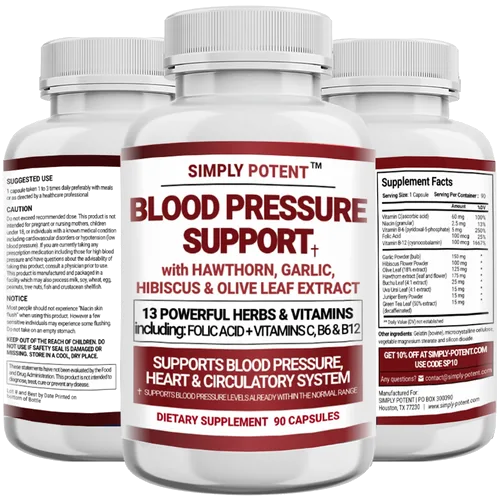
SIMPLY POTENT Blood Pressure Support Review
Blood Pressure Support Supplement for Cholesterol & Heart Health is a capsule product from Simply Potent, sold in a bottle of 90 capsules for $26.99. The product page describes it as a powerful blend of more than 13 natural ingredients meant to support healthy blood pressure levels, heart health, and brain health. The brand describes it as a natural, herbal option for people who want to support normal blood pressure and help lower high blood pressure. Each 690 mg serving is listed as containing 13 vitamins, herbs, and extracts. The listed components include Vitamin C, Niacin, Vitamin B-6, Folic Acid, Vitamin B-12, Garlic Powder, Hibiscus Flower Powder, Olive Leaf, Hawthorn Extract, Buchu Leaf, Uva Ursi Leaf, Juniper Berry Powder, and Green Tea Leaf. The page explains the role of several ingredients. Niacin is described as a natural vasodilator that helps widen blood vessels. Vitamin C and folic acid are said to help relax blood vessels and improve blood flow. Vitamins B6 and B12 are described as helping to control homocysteine levels in the blood. Vitamins C and B6, olive leaf, hibiscus, and hawthorn extracts are presented as having properties associated with blood pressure, while garlic and niacin are described as natural vasodilators. Uva ursi and juniper berry are said to help the body remove excess fluid. The page also says the formula is intended to support circulation, capillary health, and heart and blood vessel function, and that it may help support cholesterol, triglycerides, and cellular oxidation. The product is presented as suitable for both women and men. The page states that the supplement is manufactured in the USA in an FDA inspected, GMP certified facility, and that it is gluten free and non GMO. The brand also presents the product with a buy risk free message. Suggested use in the FAQ is one to three tablets with meals or as directed by a healthcare professional. The FAQ further advises that pregnant and nursing mothers, children under 18, and people with a known medical condition, including hypertension or cardiovascular disorders, should consult a physician before taking the supplement. The page includes a legal disclaimer stating that the statements have not been evaluated by the Food and Drug Administration and that the product is not intended to diagnose, treat, cure, or prevent any disease. Subscription and bulk purchase options are available on the page, with discounts for multiple bottles and recurring deliveries.
We don’t sell supplements. We help you make decisions and get the best price.
Lowest prices
Finding the lowest prices at the stores now. This takes a few seconds.
Products with nearly the same formula (Matched on the main ingredients)
Study, Trial or Testing Result Summary
Members Only370 human studies · 190 improved
17 of these 370 human studies gave the ingredient by drip or injection, not by mouth.
At three capsules a day, the main herbs come at or above the doses studied. Garlic has the strongest support: across 108 trials, it lowered the top blood pressure number by about 3.7 points and the bottom by about 2 [1]. Drops were larger in people with high blood pressure [2]. Hibiscus lowered pressure more than placebo across 26 trials [3], by about 6.7 and 4.4 points in people with mild to moderate high pressure [4]. Olive leaf lowered both numbers across 30 trials [5]. Hawthorn results are mixed: one trial found lower pressure [6], but another found no clear effect [7]. Green tea is well below the studied dose, though at studied amounts it lowered pressure slightly [8]. The vitamins add little for this goal. A pooled analysis found that vitamin C and folic acid did not change blood pressure [9]. Niacin [10] and vitamin B6 [11] showed no benefit in controlled trials. Vitamin B12 helped in one small trial [12] but not in larger ones [11]. Buchu, uva ursi and juniper have no human studies for this goal. Animal and cell studies are never counted.
See all 370 studies →Hide the studies
- In a review of 277 trials with about 992,000 adults, vitamin B6 supplements had no significant effect on death or cardiovascular disease outcomes such as heart attack and stroke.Effects of Nutritional Supplements and Dietary Interventions on Cardiovascular Outcomes: An Umbrella Review and Evidence…
- Across 25 trials of 131,134 people (5 using niacin), lowering a blood fat particle called apolipoprotein B did not predict heart risk better than standard cholesterol measures; blood pressure was not studied as an outcome for niacin.Meta-analysis of comparison of effectiveness of lowering apolipoprotein B versus low-density lipoprotein cholesterol and…
- Across 22 trials with 82,723 people, folic acid cut stroke risk by 11%, with bigger benefit where foods are not fortified with folic acid, at low doses, and when vitamin B12 was low.Meta-analysis of folic acid efficacy trials in stroke prevention: Insight into effect modifiers.
- In 18 trials of 69,515 people, niacin and similar drugs did not reduce heart-related deaths, though niacin reduced heart attacks and procedures to reopen arteries and caused more diabetes; worsening high blood pressure occurred with the other drug type, not niacin.Effects of HDL-modifiers on cardiovascular outcomes: a meta-analysis of randomized trials.
- Across 14 trials with 54,913 people, B vitamin supplementation slightly reduced stroke risk overall, with benefit seen mainly in people with systolic blood pressure above 130, but no clear benefit tied to vitamin B12 dose or blood level.Vitamin B supplementation, homocysteine levels, and the risk of cerebrovascular disease: a meta-analysis.
- In a pooled analysis of 22 trials of about 36,000 pregnant women, vitamin C alone or with vitamin E did not prevent high blood pressure in pregnancy, though a mix of L-arginine and vitamins B, C and E lowered preeclampsia.Nutritional supplements for preventing preeclampsia: A network meta-analysis.
- Across 108 randomized trials with 7137 adults, garlic lowered systolic blood pressure by about 3.7 mmHg and diastolic by about 2 mmHg, along with improvements in cholesterol, blood sugar, inflammation and oxidative stress markers.Effects of Garlic Supplementation on Cardiovascular Risk Factors in Adults: A Comprehensive Updated Systematic Review an…
- In ten trials of 6533 pregnant women, mostly vitamin C plus E, antioxidants did not significantly reduce preeclampsia and more women needed meds.Antioxidants for preventing pre-eclampsia.
- Across 145 trials with 5205 people, foods and supplements rich in flavan-3-ols (about 586 mg a day, including tea) lowered office blood pressure by 2.8/2.0 mmHg, with larger drops in people with high blood pressure.Impact of flavan-3-ols on blood pressure and endothelial function in diverse populations: a systematic review and meta-a…
- In 23 placebo-controlled trials of 2218 adults with high blood pressure, vitamin C did not significantly change blood pressure; only vitamin E lowered systolic pressure.Effect of vitamin B2, vitamin C, vitamin D, vitamin E and folic acid in adults with essential hypertension: a systematic…
- Across 26 randomized trials with 1797 people, hibiscus lowered systolic and diastolic blood pressure more than placebo or other teas, and the effect was similar to meds, with larger effects in people over 50 and in trials lasting over four weeks.Efficacy and safety of Hibiscus sabdariffa in cardiometabolic health: An overview of reviews and updated dose-response m…
- Across 30 randomized trials with 1,726 people, olive leaf supplements lowered systolic and diastolic blood pressure, along with cholesterol, body weight and one inflammation marker, while olive pomace showed no consistent benefit.A GRADE-assessed systematic review and meta-analysis of randomized controlled trials evaluating the effects of olive lea…
- In 25 trials with 1476 people, long-term tea drinking lowered blood pressure by 1.8/1.4 mmHg, and green tea lowered it by 2.1/1.7 mmHg, with the clearest effect after 12 weeks or more.Effects of tea intake on blood pressure: a meta-analysis of randomised controlled trials.
- In 13 randomized trials with 1205 people with mild-to-moderate high blood pressure, hibiscus lowered systolic pressure by 6.67 and diastolic by 4.35 mmHg versus placebo, but did not work in those with metabolic syndrome and was not better than meds.Efficacy of Hibiscus sabdariffa on Reducing Blood Pressure in Patients With Mild-to-Moderate Hypertension: A Systematic …
- In 20 trials with 970 people, garlic lowered systolic blood pressure by 5.1 mmHg and diastolic by 2.5 mmHg versus placebo, with larger drops of 8.7 and 6.1 mmHg in people with hypertension.Garlic Lowers Blood Pressure in Hypertensive Individuals, Regulates Serum Cholesterol, and Stimulates Immunity: An Updat…
- In 11 trials with 821 people lasting at least three months, green tea lowered blood pressure by about 3.2/3.4 mmHg, but only a few small trials contributed and results were not stable.Green and black tea for the primary prevention of cardiovascular disease.
- In 12 randomized trials with 703 adults lasting up to 12 weeks, olive leaf extract was linked to better blood pressure in 2 trials, plus better lipids, inflammation markers and glucose handling, but low-dose extract favored the control group for fasting glucose.Olive leaf extract effect on cardiometabolic risk factors: a systematic review and meta-analysis of randomized clinical …
- In 9 trials with 680 healthy people, green tea lowered systolic blood pressure by 2.99 mmHg and diastolic by 0.95 mmHg compared with controls.Effect of Green Tea on Blood Pressure in Healthy Individuals: A Meta-Analysis.
- In eight trials of 614 people with high blood pressure, vitamin C lowered systolic pressure by about 4 mm Hg and diastolic by about 2 mm Hg versus controls.Effects of vitamin C supplementation on essential hypertension: A systematic review and meta-analysis.
- In nine trials with 584 people with high blood pressure, aged garlic extract lowered systolic pressure by about 4 mmHg and diastolic by about 1.4 mmHg, with significant effects only at doses over 1200 mg a day.Effects of aged garlic extract on blood pressure in hypertensive patients: A systematic review and meta-analysis of rand…
- In 11 randomized trials with 503 people lasting 3 to 12 weeks, lemon verbena extract (alone or with hibiscus) lowered systolic blood pressure by 8.59 mmHg and diastolic by 3.73 mmHg, but this was mostly not a hibiscus-only test.The effect of Lippia Citriodora (LC) extract on cardiometabolic risk factors: a systematic review and meta-analysis.
- In eight trials with 415 people using one garlic powder, systolic pressure fell more than with placebo but the diastolic reduction was slightly smaller, and the authors judged the evidence insufficient to recommend it routinely.A meta-analysis of the effect of garlic on blood pressure.
- In five randomized trials with 390 people, hibiscus lowered systolic blood pressure by 7.58 mmHg and diastolic by 3.53 mmHg compared with controls, with larger effects in those with higher starting pressure.Effect of sour tea (Hibiscus sabdariffa L.) on arterial hypertension: a systematic review and meta-analysis of randomize…
- In seven randomized trials with 362 adults, sour tea lowered systolic blood pressure by 4.71 mmHg and diastolic by 4.08 mmHg, and also modestly lowered fasting blood sugar.The efficacy of sour tea (Hibiscus sabdariffa L.) on selected cardiovascular disease risk factors: A systematic review a…
- In one trial of 349 women with preeclampsia, adding green tea compound EGCG to nifedipine cut the time to blood pressure control by about 14 minutes, though certainty was low.Polyphenols for the Prevention or Management of Preeclampsia: A Systematic Review and Meta-Analysis.
- In five tea trials with 343 people lasting a median of 4 weeks, tea had no significant effect on blood pressure compared with controls.Effect of cocoa and tea intake on blood pressure: a meta-analysis.
- In 5 trials with 325 adults with prehypertension or hypertension, 500 mg a day lowered systolic blood pressure by about 5.8 mmHg over at least 8 weeks, but the 1,000 mg comparisons showed no significant blood pressure change versus placebo.Olive leaf extract effect on cardiometabolic profile among adults with prehypertension and hypertension: a systematic re…
- Pooling four placebo-controlled trials of 221 adults with low blood pressure, a hawthorn and camphor combination raised both top and bottom blood pressure numbers compared with placebo, which is the intended effect for low blood pressure.The combination of hawthorn extract and camphor significantly increases blood pressure: A meta-analysis and systematic r…
- In 150 people with chronic heart failure, combined synthetic B vitamins including pyridoxine slightly raised systolic, diastolic and central venous pressure while lowering heart rate and raising the heart's pumping fraction.B Vitamins as Adjunctive Treatment for Chronic Heart Failure.
- In 29 trials with a typical dose of 500 mg daily for 8 weeks, vitamin C lowered systolic blood pressure by about 3.8 mm Hg and diastolic by about 1.5 mm Hg.Effects of vitamin C supplementation on blood pressure: a meta-analysis of randomized controlled trials.
- In 17 trials, garlic lowered systolic blood pressure by 3.75 mmHg and diastolic by 3.39 mmHg versus controls, with the systolic effect seen in people with high blood pressure but not those with normal pressure.Effect of garlic on blood pressure: a meta-analysis.
- In seven placebo-controlled trials in people with high blood pressure, garlic lowered systolic pressure by 6.7 mmHg and diastolic by 4.8 mmHg versus placebo, with no serious side effects.Garlic for hypertension: A systematic review and meta-analysis of randomized controlled trials.
- A pooled analysis of 22 trials found garlic lowered total and LDL cholesterol more with lower doses and longer use, but the abstract reports no blood pressure result.The association of garlic intake and cardiovascular risk factors: A systematic review and meta-analysis.
- Across 17 randomized trials, hibiscus lowered systolic blood pressure by 7.10 mmHg versus placebo, most in people with high starting pressure, with reductions similar to medication.A systematic review and meta-analysis of the effects of Hibiscus sabdariffa on blood pressure and cardiometabolic marker…
- In a review of 133 flavonoid trials, green tea lowered LDL cholesterol but no blood pressure effect of green tea was reported, while acute black tea raised blood pressure.Flavonoids, flavonoid-rich foods, and cardiovascular risk: a meta-analysis of randomized controlled trials.
- Four trials with 390 adults with high blood pressure found hibiscus lowered pressure more than black tea but less than meds, though most trials were short and poor quality so the evidence was not reliable.The effectiveness of Hibiscus sabdariffa in the treatment of hypertension: a systematic review.
- One trial of 100 pregnant women of uncertain quality found no clear difference between garlic and placebo in gestational high blood pressure or pre-eclampsia, and garlic caused more odour.Garlic for preventing pre-eclampsia and its complications.
- Two trials in 87 people with high blood pressure suggested garlic lowered systolic pressure by about 10-12 mmHg and diastolic by 6-9 mmHg more than placebo, but the evidence was too imprecise and no heart outcomes were reported.Garlic for the prevention of cardiovascular morbidity and mortality in hypertensive patients.
- A Cochrane review found only one small trial of 60 adults with type 2 diabetes given Roselle extract for 8 weeks, and it showed no clear blood pressure change versus placebo, with very low certainty evidence.Roselle for hypertension in adults.
- A review of mostly observational studies found higher vitamin C levels linked to lower blood pressure, but the few small trials gave unclear results.Vitamin C and blood pressure--an overview.
- This review reports that vitamin B6 lowered blood pressure in animal studies, but the abstract gives no human results for blood pressure.Is the anti-hypertensive effect of dietary supplements via aldehydes reduction evidence based? A systematic review.
- A review of animal and human studies found excess folate in pregnancy was linked to metabolic problems in offspring in animals, while human studies of adequate folate showed no harm and sometimes a protective effect.Maternal folate and metabolic programming of the offspring: A systematic review of the literature.
- This review of kidney disease patients suggested folate and cobalamin may help in later disease stages, but very high B vitamin doses might worsen heart relaxation problems; blood pressure was not directly reported.Demand for Water-Soluble Vitamins in a Group of Patients with CKD versus Interventions and Supplementation-A Systematic …
- A review of eight meta-analyses found garlic lowered systolic blood pressure in 7 and diastolic blood pressure in 6, though results varied between trials so caution is advised.An umbrella review of garlic intake and risk of cardiovascular disease.
- This review found that garlic use can reduce blood pressure, cholesterol and inflammatory markers, with no pooled numbers or participant counts given.Garlic: A systematic review of the effects on cardiovascular diseases.
- A broad review of many herbs for heart disease lists garlic (Allium sativum) among herbs identified to treat cardiovascular disease, but it gives no garlic-specific blood pressure results, and the authors say more rigorous trials are needed.A Systematic Review of Herbal Interventions for the Management of Cardiovascular Diseases.
- A review of trials in adults with fatty liver disease found garlic helped blood sugar, blood fats and liver measures, but only ginger and sour tea were credited with blood pressure benefits, not garlic.Systematic Review of the Effects of Plant-Based Foods on Metabolic Outcomes in Adults with MASLD and Comorbidities Such …
- This review of earlier meta-analyses found hibiscus was linked to a 7.58 mmHg lower systolic blood pressure, though results varied a lot between trials.Phytonutrient supplements and metabolic biomarkers of cardiovascular disease: An umbrella review of meta-analyses of cli…
- A review of trials in people with metabolic syndrome found green tea lowered body mass index and waist size and improved blood fats, but it reported blood pressure benefits only for cocoa, not green tea.Effects of dietary polyphenols on metabolic syndrome features in humans: a systematic review.
- A review of 23 systematic reviews found that about 2 cups of unsweetened tea a day was linked to lower blood pressure, cholesterol and inflammation markers, though many studies were small.Tea intake and cardiovascular disease: an umbrella review.
- In 20,702 Chinese adults with high blood pressure, folic acid 0.8 mg daily plus enalapril for about 4.5 years lowered first stroke (2.7% vs 3.4%) compared with enalapril alone.Efficacy of folic acid therapy in primary prevention of stroke among adults with hypertension in China: the CSPPT random…
- In 20,702 adults with high blood pressure taking folic acid 0.8 mg daily with enalapril for about 4.5 years, first stroke risk fell 31% in those with high cholesterol (2.7% vs 4.0%) but not in those with low cholesterol.Folic Acid Therapy Reduces the First Stroke Risk Associated With Hypercholesterolemia Among Hypertensive Patients.
- In 20,702 adults with high blood pressure, folic acid 0.8 mg daily for about 4.5 years reduced first ischemic stroke in those with low folate and B12 (2.3% vs 3.6%), with effects varying by gene type.Interaction of serum vitamin B12 and folate with MTHFR genotypes on risk of ischemic stroke.
- In 20,424 adults with high blood pressure, folic acid 0.8 mg daily for about 4.5 years cut stroke risk by 27% in people with CC/CT gene types and high homocysteine.Homocysteine and Stroke Risk: Modifying Effect of Methylenetetrahydrofolate Reductase C677T Polymorphism and Folic Acid …
- In 19,644 adults with high blood pressure, folic acid 0.8 mg daily for about 4.5 years cut first stroke risk by 51% in men with high serum calcium (6.5% to 3.0%), but not in men with lower calcium or in women.Interaction of serum calcium and folic acid treatment on first stroke in hypertensive males.
- In 18,775 first-time pregnant women in northern China given daily folic acid, iron-folic acid or multiple micronutrients, starting folic acid early or later made no significant difference to pregnancy high blood pressure, though early multiple micronutrients did lower it.Effects of prenatal micronutrients supplementation timing on pregnancy-induced hypertension: Secondary analysis of a dou…
- In a trial of about 17,800 pregnant women in China, iron-folic acid and multiple micronutrient supplements did not significantly lower pregnancy-induced hypertension compared with folic acid alone overall, but a reduction was seen in women aged 20 to 24.Micronutrient supplementation during pregnancy and the risk of pregnancy-induced hypertension: A randomized clinical tri…
- In 15,364 adults with high blood pressure, 0.8 mg folic acid plus enalapril daily for a median of 4.4 years slowed the rise in uric acid slightly more than enalapril alone, and fewer people developed new high uric acid (15.0% vs 16.3%).Folic acid therapy reduces serum uric acid in hypertensive patients: a substudy of the China Stroke Primary Prevention T…
- In 10,789 Chinese adults with high blood pressure, adding 0.8 mg folic acid to enalapril daily for about 4.2 years cut first stroke by 73% in those with low platelets and high homocysteine, with no significant effect in the low-risk group.Platelet Count Affects Efficacy of Folic Acid in Preventing First Stroke.
- In 10,154 low-risk first-time pregnant women, daily 1000 mg vitamin C plus vitamin E from weeks 9 to 16 did not reduce pregnancy-related high blood pressure complications versus placebo.Vitamins C and E to prevent complications of pregnancy-associated hypertension.
- In 4,814 pregnant women, antioxidants including vitamin C did not significantly lower high blood pressure disorders overall (3.55% vs 4.18%), but risk was lower in women with high-risk factors (3.81% vs 7.14%).Effect of antioxidants on amelioration of high-risk factors inducing hypertensive disorders in pregnancy.
- This report on 4107 kidney transplant recipients from the folic acid trial describes blood pressure control at baseline: 69% did not meet the blood pressure target, and 44% of those on meds had uncontrolled hypertension, so it does not show any effect of folic acid on blood pressure.Inadequacy of cardiovascular risk factor management in chronic kidney transplantation - evidence from the FAVORIT study.
- In 2,919 older adults with high homocysteine, two years of vitamin B12 plus folic acid lowered homocysteine but did not change artery stiffness or carotid artery wall thickness compared with placebo.Effects of 2-year vitamin B12 and folic acid supplementation in hyperhomocysteinemic elderly on arterial stiffness and c…
- In 2647 pregnant women, daily 1 g vitamin C plus vitamin E did not reduce gestational high blood pressure and increased fetal loss or newborn death and early membrane rupture.An international trial of antioxidants in the prevention of preeclampsia (INTAPP).
- In 2,501 people with prior cardiovascular disease, taking 3 mg of vitamin B6 with folate and B12 daily for about 4.7 years did not change blood pressure compared with placebo.Effect of B-vitamins and n-3 PUFA supplementation for 5 years on blood pressure in patients with CVD.
- In 1,320 pregnant Ghanaian women, blood pressure at 36 weeks did not differ between those given iron and folic acid, multiple micronutrients or lipid-based supplements.Maternal Blood Pressure in Relation to Prenatal Lipid-Based Nutrient Supplementation and Adverse Birth Outcomes in a Gha…
- In 1,002 adults taking quercetin with small amounts of vitamin C and niacin for 12 weeks, average blood pressure fell slightly versus placebo, but overall effects on disease risk factors were negligible.Influence of quercetin supplementation on disease risk factors in community-dwelling adults.
- In 707 pregnant women with chronic high blood pressure or prior preeclampsia, daily vitamin C 1,000 mg plus vitamin E did not reduce preeclampsia (13.8% vs 15.6% with placebo).Antioxidant therapy to prevent preeclampsia: a randomized controlled trial.
- In 621 people treated for hypertension, 12 weeks of olive leaf extract lowered 24-hour systolic blood pressure by 6.4 mmHg from baseline versus 1.5 mmHg with placebo, and also improved lipids, inflammation and body weight.Efficacy of olive leaf extracts in controlling blood pressure in hypertensive patients: a double-blind randomized clinic…
- In 508 treated hypertensive men followed about 6.6 years, a lifestyle and drug program (niacin was one of several drugs) lowered deaths to 16.2% from 25.1% with usual care, but blood pressure change was not reported.Mortality rates in treated hypertensive men with additional risk factors are high but can be reduced: a randomized inter…
- In 506 people after gastric bypass surgery, remission of high blood pressure over 5 years did not differ between the two bypass limb lengths, and the longer limb needed more vitamin B12 supplementation; this was not a test of B12 for blood pressure.Impact of Biliopancreatic Limb Length (70 cm vs 120 cm), with Constant 150 cm Alimentary Limb, on Long-Term Weight Loss,…
- In Chinese adults with mild to moderate hypertension, 0.4 or 0.8 mg of folic acid added to enalapril for 8 weeks did not lower blood pressure more than enalapril alone.Efficacy of folic acid and enalapril combined therapy on reduction of blood pressure and plasma glucose: a multicenter, …
- In 480 Chinese adults with mild or moderate high blood pressure taking enalapril with 0.4 or 0.8 mg of folic acid daily for 8 weeks, serum folate rose in all groups; the abstract does not report a blood pressure result.Effect of folic acid intervention on the change of serum folate level in hypertensive Chinese adults: do methylenetetrah…
- In a placebo-controlled trial of 428 women carrying twins, high-dose folic acid (4.0 to 5.1 mg daily) was not significantly linked to preeclampsia after adjustment, though the unadjusted rate was higher than with placebo (17.2% vs 9.9%).Effect of high-dose folic acid supplementation on the prevention of preeclampsia in twin pregnancy.
- In 350 pregnant women with severe pre-eclampsia, adding green tea compound EGCG to nifedipine brought blood pressure under control faster (31 vs 45 minutes) and delayed the next hypertensive crisis (7.2 vs 4.1 hours) compared with placebo.Epigallocatechin gallate enhances treatment efficacy of oral nifedipine against pregnancy-induced severe pre-eclampsia: …
- In 298 Gambian women, 12 weeks of a drink powder with 5.2 mcg vitamin B12 or a multivitamin lowered homocysteine but had no effect on blood pressure or pulse compared with no intervention.A novel nutritional supplement to reduce plasma homocysteine in nonpregnant women: A randomised controlled trial in The …
- In 297 retired teachers, 2 to 4 months of daily vitamin C 500 mg with vitamin E and beta-carotene did not change blood pressure, cholesterol or blood sugar compared with placebo.The effect of antioxidant vitamin supplementation on traditional cardiovascular risk factors.
- In Japanese adults with atrophic gastritis, 5 years of vitamin C at 50 mg or 500 mg daily did not lower blood pressure; systolic pressure rose about 6 mm Hg in both groups.Lack of long-term effect of vitamin C supplementation on blood pressure.
- In 240 Japanese adults with belly-fat obesity, 12 weeks of green tea with 583 mg catechins daily lowered systolic blood pressure more than 96 mg catechins did in those starting at 130 mm Hg or higher, and also reduced body fat and LDL cholesterol.A green tea extract high in catechins reduces body fat and cardiovascular risks in humans.
- In 200 hypertensive patients drinking green tea for 4 months, blood pressure and pulse pressure fell and left ventricular enlargement decreased, with blood pressure returning to baseline after stopping green tea.Regular consumption of green tea improves pulse pressure and induces regression of left ventricular hypertrophy in hyper…
- In 199 men with localised prostate cancer taking a capsule blend containing green tea for 6 months, blood pressure did not differ from placebo.A double-blind, placebo-controlled randomised trial evaluating the effect of a polyphenol-rich whole food supplement on …
- In adults with stage I or II hypertension, 250 mg of anthocyanins from hibiscus extract daily for 4 weeks lowered blood pressure by about 17/12 mmHg and was effective in 65% of people, though less than a med.Read the study on PubMed (17315307) →
- In a 2018 trial of 160 first-pregnancy women, taking 1000 mg a day of vitamin C with vitamin E from 20 to 24 weeks of pregnancy was linked to fewer cases of preeclampsia (high blood pressure in pregnancy) than iron alone, 5% versus 17.5%. The abstract's blood pressure figures are internally inconsistent, so the blood pressure effect is unclear.Investigating the preventive effect of vitamins C and E on preeclampsia in nulliparous pregnant women.
- In 158 healthy siblings of patients with early artery disease, 250 mg of vitamin B6 plus 5 mg folic acid daily for 2 years lowered systolic blood pressure by 3.7 mm Hg and diastolic by 1.9 mm Hg versus placebo.Long-term homocysteine-lowering treatment with folic acid plus pyridoxine is associated with decreased blood pressure bu…
- In 146 high-risk men with heart disease, 2.5 years of niacin plus colestipol led to regression of artery lesions in 39% versus 11% on usual care, and lower systolic blood pressure was linked with regression.Regression of coronary artery disease as a result of intensive lipid-lowering therapy in men with high levels of apolipo…
- In 143 men and women with heart disease, one year of a three-drug combination including niacin plus lifestyle changes cut metabolic syndrome from 32% to 6%, versus 44% to 30% with placebo and lifestyle; blood pressure was one component but was not reported separately.The effect of gemfibrozil, niacin and cholestyramine combination therapy on metabolic syndrome in the Armed Forces Regre…
- In 143 people with mild heart failure taking hawthorn berry extract for 8 weeks, exercise capacity was higher than with placebo, but changes in the blood pressure-heart rate product favored hawthorn without reaching statistical significance.A randomised double blind placebo controlled clinical trial of a standardised extract of fresh Crataegus berries (Cratae…
- In 136 people with mild heart failure, 8 weeks of hawthorn extract improved the pressure-heart rate product during exercise compared with placebo, whose group worsened.[Crataegus Special Extract WS 1442. Assessment of objective effectiveness in patients with heart failure (NYHA II)].
- In 134 Egyptian adults with grade 1 hypertension, a hibiscus and olive leaf product taken twice daily for 8 weeks lowered blood pressure by about 15/9.6 mmHg, similar to captopril.Antihypertensive efficacy and safety of a standardized herbal medicinal product of Hibiscus sabdariffa and Olea europaea…
- In a placebo-controlled trial of 133 men at increased risk of prostate cancer, 600 mg daily green tea catechin (EGCG) capsules for 6 months were well tolerated, but the abstract reports no blood pressure result.ProDiet: A Phase II Randomized Placebo-controlled Trial of Green Tea Catechins and Lycopene in Men at Increased Risk of …
- In 126 people with high homocysteine and high blood pressure, folic acid 0.8 mg daily added to levamlodipine for 24 weeks, with the dose adjusted by gene type, lowered blood pressure more than levamlodipine plus placebo.Effects of individualized administration of folic acid on prothrombotic state and vascular endothelial function with H-t…
- In 125 adults with hypertension, bissap calyx capsules (320 mg twice daily) lowered systolic blood pressure by about 11 mmHg over 4 weeks, less than ramipril, and 21% of those taking bissap normalized their blood pressure.Clinical efficacy of African traditional medicines in hypertension: A randomized controlled trial with Combretum micrant…
- In 124 children with type 1 diabetes, 100 mg of vitamin B6 daily for 8 weeks improved blood vessel dilation to normal levels while placebo showed no change; blood pressure itself was not reported as an outcome.Folate and vitamin B6 rapidly normalize endothelial dysfunction in children with type 1 diabetes mellitus.
- In 120 healthy adults taking Sunrouge green tea extract with about 324 mg EGCG daily for 12 weeks, blood pressure rose, while eyestrain improved in some subgroups.A Randomized, Placebo-Controlled Study on the Safety and Efficacy of Daily Ingestion of Green Tea (Camellia sinensis L.)…
- In workers with chronic lead poisoning, 1200 mcg of allicin from garlic three times daily for four weeks significantly lowered systolic blood pressure, with lead levels falling about as much as with d-penicillamine and fewer side effects.Comparison of therapeutic effects of garlic and d-Penicillamine in patients with chronic occupational lead poisoning.
- In 111 healthy adults taking a standardized green tea capsule twice a day for 3 weeks, blood pressure fell compared with placebo, and markers of inflammation and oxidative stress also improved.Standardized capsule of Camellia sinensis lowers cardiovascular risk factors in a randomized, double-blind, placebo-cont…
- In 108 adults with abdominal obesity and mild metabolic syndrome, 1000 mg of hibiscus extract daily for 12 weeks did not change blood pressure compared with placebo.Efficacy of Hibiscus sabdariffa L. extract on metabolic parameters in participants with abdominal obesity and mild metab…
- In 105 kidney patients with long-standing diabetes or hypertension, 16 weeks of extended-release niacin added to a med raised HDL cholesterol and nitrate levels more than a med alone; blood pressure was not reported.Association of high-density lipoprotein cholesterol with improvement of endothelial dysfunction recovery in renovascular…
- In 104 adults with mild hypertension and high homocysteine, a B vitamin blend including 3 mg of B6 for 2 months lowered homocysteine more than high-dose folic acid, but blood pressure results were not reported.Nutraceutical approaches to homocysteine lowering in hypertensive subjects at low cardiovascular risk: a multicenter, ra…
- In 100 first-time pregnant women at high risk of preeclampsia, 800 mg per day of garlic tablets in the third trimester did not change blood pressure compared with placebo, but it reduced the occurrence of high blood pressure alone, not preeclampsia.The effect of garlic tablet on plasma lipids and platelet aggregation in nulliparous pregnants at high risk of preeclamp…
- In 100 mildly hypertensive adults with type 2 diabetes, drinking three cups of green tea daily for four weeks lowered systolic blood pressure from 119.4 to 114.8 mmHg and diastolic from 78.9 to 75.3 mmHg, though the abstract reports only within-group changes and no between-group comparison.The effect of green tea and sour tea on blood pressure of patients with type 2 diabetes: a randomized clinical trial.
- In 100 moderately stressed adults given a single course of a magnesium, B vitamin, green tea and rhodiola combination before a stress test, the abstract reports no blood pressure result, so no blood pressure benefit was shown.A combination of green tea, rhodiola, magnesium and B vitamins modulates brain activity and protects against the effects…
- In 97 women with polycystic ovary syndrome and metabolic syndrome, 1000 mg daily of garlic tablets for 8 weeks lowered systolic blood pressure by 5.2% and diastolic by 6.1% compared with placebo.Efficacy of garlic (Allium sativum) on metabolic syndrome components in women with polycystic ovary syndrome: randomized…
- In 96 adults at risk of high blood pressure, two freeze-dried garlic extract capsules daily for 8 weeks lowered systolic and diastolic blood pressure more than placebo and raised blood nitric oxide levels.Randomized, double-blind clinical trial evaluating the impact of freeze-dried garlic extract capsules on blood pressure,…
- In 96 healthy adults, 8 weeks of a grapefruit, bitter orange and olive leaf extract combination lowered systolic and diastolic blood pressure versus placebo and improved cholesterol, oxidative stress and inflammation markers.Effect of a Combination of Citrus Flavones and Flavanones and Olive Polyphenols for the Reduction of Cardiovascular Dise…
- In 93 adults at higher heart risk, taking 2400 mg of aged garlic extract daily for one year significantly lowered systolic blood pressure from about 148 to 140 mmHg, compared with placebo, and also slowed coronary calcium buildup and lowered IL-6.The effect of aged garlic extract on the atherosclerotic process - a randomized double-blind placebo-controlled trial.
- In 92 adults with mild high blood pressure, hawthorn extract three times daily for over 4 months lowered both systolic and diastolic blood pressure after 3 months compared with placebo.Antihypertensive effect of Iranian Crataegus curvisepala Lind.: a randomized, double-blind study.
- In 90 adults with metabolic syndrome, 1600 mg of garlic powder daily for three months lowered systolic and diastolic blood pressure more than placebo, along with improvements in triglycerides, insulin resistance and waist size.Effects of garlic powder supplementation on metabolic syndrome components, insulin resistance, fatty liver index, and ap…
- In a randomized trial of 90 hypertensive patients drinking hibiscus tea or black tea twice daily for 15 days, blood lipid levels and kidney and electrolyte measures did not change meaningfully; the study did not report blood pressure results.The effect of hibiscus sabdariffa on lipid profile, creatinine, and serum electrolytes: a randomized clinical trial.
- In two trials of 40 and 48 women with chronic low blood pressure, a camphor-hawthorn combination raised blood pressure and improved attention and thinking tasks within minutes compared with placebo.The effect of Camphor-Crataegus berry extract combination on blood pressure and mental functions in chronic hypotension-…
- In overweight or obese men aged 40 to 65, taking 800 mg per day of epigallocatechin gallate for 8 weeks lowered diastolic blood pressure compared with placebo, though the change was modest.Effects of dietary supplementation with the green tea polyphenol epigallocatechin-3-gallate on insulin resistance and as…
- In 85 people with mild or moderate high blood pressure, 600 mg per day of long-acting garlic tablets lowered both systolic and diastolic pressure more than placebo, and a higher dose of 2400 mg added no further benefit.[Hypotensive effect of long-acting garlic tablets allicor (a double-blind placebo-controlled trial)].
- In 84 men with mild or moderate high blood pressure, 600 mg per day of time-released garlic tablets for 8 weeks lowered systolic pressure by about 7 mm Hg and diastolic pressure by about 4 mm Hg, more than placebo.Time-released garlic powder tablets lower systolic and diastolic blood pressure in men with mild and moderate arterial h…
- In 80 resistance-trained men taking a multi-ingredient pre-workout supplement containing 60 mg niacin for 8 weeks, resting heart rate and blood pressure did not differ from placebo.Effects of ingesting a pre-workout dietary supplement with and without synephrine for 8 weeks on training adaptations in…
- In 80 people with heart disease risk, 2 grams per day of garlic powder for 60 days significantly lowered systolic blood pressure, along with improving cholesterol and body mass index.Supplementation of garlic and coriander seed powder: Impact on body mass index, lipid profile and blood pressure of hype…
- In 80 women with polycystic ovary syndrome, 800 mg of garlic daily for 8 weeks lowered cholesterol but did not significantly change diastolic blood pressure, and the systolic blood pressure drop was only a trend.The effect of garlic (Allium sativum) supplementation on the lipid parameters and blood pressure levels in women with po…
- In 80 newly diagnosed Nigerians with mild to moderate hypertension, hibiscus drink for 4 weeks lowered blood pressure compared with placebo, with effects similar to or greater than hydrochlorothiazide.Effect of Hibiscus sabdariffaon blood pressure and electrolyte profile of mild to moderate hypertensive Nigerians: A com…
- In 80 adults with type 1 hypertension, a hibiscus and lemon verbena extract taken daily for 84 days reduced daytime blood pressure, especially systolic, compared with placebo.A Randomized, Double-Blind, Placebo-Controlled Trial to Determine the Effectiveness of a Polyphenolic Extract (Hibiscus …
- In 80 women aged 50 to 80, a camphor-hawthorn combination gave a short-term rise in blood pressure and better thinking performance than placebo.D-camphor-crataegus berry extract combination increases blood pressure and cognitive functioning in the elderly - a rand…
- In 79 adults with coronary artery disease, a 12-month DASH diet lowered a blood marker of inflammation (MCP-1) compared with no diet change, and people who ate more vitamin C had lower MCP-1 levels, but vitamin C was not given as a separate supplement.Usefulness of MCP-1 Chemokine in the Monitoring of Patients with Coronary Artery Disease Subjected to Intensive Dietary …
- In 79 people with uncontrolled high blood pressure taking medication, 480 mg daily of aged garlic extract for 12 weeks lowered systolic blood pressure by about 11.8 mmHg compared with placebo; one-capsule dosing did not differ from placebo.Aged garlic extract reduces blood pressure in hypertensives: a dose-response trial.
- In 79 people with type 2 diabetes mostly on medication, 1200 mg daily hawthorn extract for 16 weeks lowered diastolic blood pressure more than placebo, but there was no significant difference in systolic pressure.Read the study on PubMed (16762125) →
- In 78 Nigerians with mild to moderate hypertension, 4 weeks of hibiscus extract reduced the stress hormone aldosterone by about 32% compared with placebo, similar to a med, but did not significantly change renin or the enzyme ACE.Read the study on PubMed (26600645) →
- In 78 adults with mild chronic heart failure, 600 mg a day of hawthorn extract for 8 weeks lowered systolic blood pressure and heart rate more than placebo and increased exercise capacity.Efficacy of the Hawthorn (Crataegus) preparation LI 132 in 78 patients with chronic congestive heart failure defined as …
- In 77 overweight or obese adults with mildly high cholesterol, 500 mg a day of olive leaf extract for 8 weeks did not change blood pressure or blood lipids compared with placebo.The effect of olive leaf extract on cardiovascular health markers: a randomized placebo-controlled clinical trial.
- In a 12-week placebo-controlled trial of 75 healthy adults with normal cholesterol, 10.8 mg per day of alliin from garlic powder tablets did not change blood pressure, arterial stiffness, or cholesterol compared with placebo.Effect of garlic (Allium sativum) powder tablets on serum lipids, blood pressure and arterial stiffness in normo-lipidae…
- In a 12-week placebo-controlled trial of 75 adults with grade I hypertension, 250 mg per day of aged black garlic did not significantly change total cholesterol, LDL, HDL, or triglycerides compared with placebo.Effects of aged black garlic (ABG10+®) on lipoprotein subclass composition in Grade I hypertension: a randomized, triple…
- In 75 adults with mild to moderate hypertension, a daily hibiscus calyx infusion for 4 weeks lowered systolic blood pressure from about 139 to 124 mmHg, with blood pressure lowering similar to captopril, and about 79% of patients reached the target drop in blood pressure.Effectiveness and tolerability of a standardized extract from Hibiscus sabdariffa in patients with mild to moderate hype…
- In 72 healthy volunteers given up to 50.1 mg nicotinic acid, there was no physiologically relevant change in blood pressure, pulse or skin temperature, though flushing was sometimes possible at higher doses.Investigation of niacin on parameters of metabolism in a physiologic dose: randomized, double-blind clinical trial with …
- In 72 adults with mild kidney disease and high blood pressure, 350 mg of roselle extract twice daily for 90 days added to valsartan lowered blood pressure in both groups, and only the roselle group showed a significant drop in cholesterol.Roselle (Hibiscus sabdariffa L.) extract as an adjunct to valsartan in patients with mild chronic kidney disease: A doub…
- In people with type 2 diabetes and dyslipidemia, 300 mg garlic tablets taken twice daily for 12 weeks lowered total and LDL cholesterol and raised HDL compared with placebo, with no change in triglycerides; blood pressure was not reported.Effects of garlic on dyslipidemia in patients with type 2 diabetes mellitus.
- In 70 adults with mildly to moderately high blood pressure, 12 weeks of olive leaf extract plus potassium lowered home morning systolic blood pressure by 5.4 mmHg more than placebo and improved cholesterol and insulin sensitivity.Effects of a combination of olive leaf extract and potassium on blood pressure in participants with mild to moderate hyp…
- In 67 adults with high cholesterol, 250 mg of aged black garlic extract daily for 6 weeks lowered diastolic blood pressure by about 5.9 mm Hg compared with placebo, mainly in men with diastolic pressure above 75.Effects of an Optimized Aged Garlic Extract on Cardiovascular Disease Risk Factors in Moderate Hypercholesterolemic Subj…
- In 66 adults with borderline diabetes or diabetes, a daily green tea extract with 544 mg polyphenols for 2 months lowered systolic and diastolic blood pressure within the group, but these values did not differ significantly from the control group.Randomized controlled trial for an effect of green tea consumption on insulin resistance and inflammation markers.
- In 65 adults with diabetes, 2400 mg of aged garlic extract daily for one year showed only a non-significant trend toward lower left ventricular heart muscle mass compared with placebo, and the abstract reports no blood pressure improvement.Aged garlic extract reduces left ventricular myocardial mass in patients with diabetes: A prospective randomized control…
- In 65 pre-hypertensive and mildly hypertensive adults, drinking three cups of hibiscus tea daily for 6 weeks lowered systolic blood pressure more than placebo tea.Hibiscus sabdariffa L. tea (tisane) lowers blood pressure in prehypertensive and mildly hypertensive adults.
- In 61 overweight or obese adults with insulin resistance, 2 g a day of extended-release niacin for 16 weeks did not change blood fat composition; blood pressure benefits were linked to the omega-3 treatment, not niacin.Treatment with omega-3 fatty acid ethyl-ester alters fatty acid composition of lipoproteins in overweight or obese adult…
- In 61 Chinese adults with mild high blood pressure or high blood fats, a hawthorn fruit drink for 8 weeks did not change blood pressure significantly compared with placebo; systolic pressure rose with both drinks.Effects of Hawthorn Fruit Extract Drink in Chinese Patients With Mild Hypertension and/or Hyperlipidaemia: A Randomized,…
- In 60 adults with type 2 diabetes and mild hypertension, drinking hibiscus sour tea twice daily for one month lowered systolic blood pressure, while black tea raised it.The effects of sour tea (Hibiscus sabdariffa) on hypertension in patients with type II diabetes.
- In 60 adults with high-normal blood pressure or stage I hypertension, 8 weeks of a supplement containing hibiscus, magnesium, orthosiphon and hawthorn lowered systolic blood pressure by about 3 mmHg and diastolic by about 3 mmHg more than placebo, and reduced the inflammation marker hs-CRP.Effect of dietary supplementation with Diuripres® on blood pressure, vascular health, and metabolic parameters in indivi…
- In 60 men with slightly high blood pressure, 6 weeks of olive leaf extract (136 mg oleuropein daily) lowered daytime and 24-hour blood pressure and also lowered cholesterol, triglycerides and one inflammation marker compared with a control.Impact of phenolic-rich olive leaf extract on blood pressure, plasma lipids and inflammatory markers: a randomised contr…
- In 60 adults with high blood pressure, 12 weeks of olive leaf extract tablets lowered inflammation markers compared with placebo but did not change blood sugar, liver or kidney measures; blood pressure results were not reported in the abstract.Effects of Olive Leaf Extract on Metabolic Response, Liver and Kidney Functions and Inflammatory Biomarkers in Hypertens…
- In 60 adults with borderline blood sugar, a daily green tea extract with 456 mg catechins for 2 months lowered HbA1c and gave a borderline drop in diastolic blood pressure, with no change in systolic blood pressure.Randomized controlled trial for an effect of green tea-extract powder supplementation on glucose abnormalities.
- In a double-blind crossover trial of 58 healthy young adults in a polluted city in China, one week of 2000 mg a day of vitamin C was linked to a 3.4% lower systolic blood pressure compared with placebo. Inflammation markers (IL-6, TNF-alpha, CRP) also fell.Vascular benefits of vitamin C supplementation against fine particulate air pollution in healthy adults: A double-blind …
- In a randomised crossover trial of 58 adults with mild untreated hypertension, six weeks of a vegetarian diet lowered systolic blood pressure by about 5 mm Hg, while vitamin B12 intake decreased.Vegetarian diet in mild hypertension: a randomised controlled trial.
- In healthy adults, a single dose of fermented garlic extract containing nitrite produced significant changes in blood pressure and blood flow within 30 to 60 minutes compared with placebo; long-term effects were not studied.Effects of Fermented Garlic Extract Containing Nitric Oxide Metabolites on Blood Flow in Healthy Participants: A Randomi…
- In 58 healthy adults eating yoghurt with 40 mg of green tea extract for 4 weeks, blood pressure did not change compared with placebo yoghurt.Impact of Bifidobacterium animalis subsp. lactis BB-12 and, Lactobacillus acidophilus LA-5-containing yoghurt, on fecal …
- In a 12-week double-blind placebo-controlled trial of 57 adults with slightly high blood pressure, aged garlic extract significantly lowered blood pressure, especially diastolic, and improved arterial elasticity by 21.6%.Effects of aged garlic extract on arterial elasticity in a placebo-controlled clinical trial using EndoPAT™ technology.
- In 57 overweight young men, six weeks of aerobic exercise plus green tea lowered systolic and diastolic blood pressure, and the combination gave better cardiovascular results than either alone.The Effect of Six-Week Aerobic Exercise Combined with ease max Incr2Green Tea Consumption on PON1 and VOand Apelin, Bloo…
- In 56 outpatients with diabetes, 2 g per day of ascorbic acid taken for 90 days did not show a reported blood pressure benefit, although it improved blood sugar control in people with non-insulin-dependent diabetes.Magnesium and ascorbic acid supplementation in diabetes mellitus.
- In 56 overweight or obese adults taking 500 mg daily of a hibiscus and lemon verbena polyphenol extract for two months, systolic blood pressure improved in the overweight group but changes were more modest in the obese group.Differential effects of a combination of Hibiscus sabdariffa and Lippia citriodora polyphenols in overweight/obese subje…
- In 56 adults with systolic blood pressure of 130 or higher, 8 weeks of 440 mg olive extract daily lowered blood pressure no more than placebo did.Evaluation of the effect of olive extracts on blood pressure and cardiovascular health markers in adults: Findings from …
- In 56 obese adults with high blood pressure, taking 379 mg of green tea extract daily for 3 months lowered both blood pressure readings compared with placebo, and also lowered inflammation markers.Green tea extract reduces blood pressure, inflammatory biomarkers, and oxidative stress and improves parameters associat…
- In 55 adults with obesity who had lost weight, eating green tea extract enriched rye bread for 12 weeks kept blood pressure lower than eating control rye bread.Effects of rye bread enriched with green tea extract on weight maintenance and the characteristics of metabolic syndrome…
- In 55 overweight or obese adults, 12 weeks of a multi-ingredient supplement containing 500 mg green tea extract, compared with placebo, reduced weight and fat mass; the abstract does not report any blood pressure result.Novel Multi-Ingredient Supplement Facilitates Weight Loss and Improves Body Composition in Overweight and Obese Individu…
- In a randomized trial of 54 adults with moderate hypertension, sour tea lowered systolic blood pressure by 11.2% and diastolic blood pressure by 10.7% after about 2 weeks, and blood pressure rose again within 3 days of stopping.The effect of sour tea (Hibiscus sabdariffa) on essential hypertension.
- In 54 overweight adults, a hibiscus and lemon verbena polyphenol supplement over about 60 days was associated with lower blood pressure and heart rate compared with placebo.Hibiscus and lemon verbena polyphenols modulate appetite-related biomarkers in overweight subjects: a randomized control…
- In 54 young adults with normal blood pressure, four doses of 20 drops of a camphor and hawthorn berry combination raised blood pressure more than placebo within a single session.The effects of repeated administration of camphor-crataegus berry extract combination on blood pressure and on attention…
- In 51 dialysis patients with hard-to-control high blood pressure, taking 1000 mcg of methylcobalamin plus 800 mcg of L-methylfolate daily for 3 months lowered blood pressure and homocysteine more than no treatment.Efficacy of L-methylfolate and methylcobalamin in treating resistant hypertension associated with elevated serum homocys…
- In 50 pregnant women with high blood pressure, 1000 mg vitamin C plus vitamin E from the second trimester did not prevent preeclampsia or worsening of hypertension compared with no supplement.Vitamin C and E supplementation does not reduce the risk of superimposed PE in pregnancy.
- In 50 adults with high blood pressure, a single intravenous dose of vitamin C was used only as a test of blood vessel response, and after 12 weeks of aliskiren or ramipril the vitamin C no longer improved blood vessel relaxation in the aliskiren group and did not change it in the ramipril group.Effect of aliskiren treatment on endothelium-dependent vasodilation and aortic stiffness in essential hypertensive patie…
- In 50 adults whose high blood pressure was not controlled by medication, 960 mg of aged garlic extract daily for 12 weeks lowered systolic blood pressure by about 10 mm Hg more than placebo.Aged garlic extract lowers blood pressure in patients with treated but uncontrolled hypertension: a randomised controlle…
- In 50 adults given 1.06 g of green tea extract once, small blood vessel tone changed depending on COMT genotype, and diastolic blood pressure showed a non-significant trend to rise more than with placebo.The impact of the catechol-O-methyltransferase genotype on vascular function and blood pressure after acute green tea in…
- In 50 adults with type 2 diabetes, 300 mg EGCG daily for 2 months lowered diastolic blood pressure and mean arterial pressure compared with the control group, and also raised total antioxidant capacity.Effects of epigallocatechin-3-gallate of Camellia sinensis leaves on blood pressure, lipid profile, atherogenic index of…
- In 49 hospital patients with raised lung artery pressure, a single dose of 100 mg or 500 mg niacin did not significantly change lung artery pressure after 1 hour, though there was a small non-significant drop with 500 mg.A randomized pilot study on the effect of niacin on pulmonary arterial pressure.
- In 48 adults with resistant high blood pressure and high cholesterol, 500 mg of vitamin C daily for eight weeks did not lower blood pressure compared with placebo, while a med did.Read the study on PubMed (15609886) →
- In 48 pregnant women, a combination of inositols, folic acid and manganese over 60 days improved cholesterol and blood sugar but did not change blood pressure compared with placebo.Myo-inositol, D-chiro-inositol, folic acid and manganese in second trimester of pregnancy: a preliminary investigation.
- In 48 people with orthostatic hypotension, a single dose of a camphor and hawthorn berry drop combination reduced the blood pressure fall on standing versus placebo, with the largest dose giving significant effects.Camphor-Crataegus berry extract combination dose-dependently reduces tilt induced fall in blood pressure in orthostatic …
- In 47 Tanzanian adults with elevated blood pressure, 5 mg folic acid added to beetroot juice for 60 days lowered systolic blood pressure by 6.1 mmHg, while beetroot juice alone lowered it more and placebo did not change it.Nitrate-Rich Beetroot Juice Reduces Blood Pressure in Tanzanian Adults with Elevated Blood Pressure: A Double-Blind Rand…
- In 47 adults with mild high blood pressure, garlic powder for 12 weeks lowered diastolic blood pressure more than placebo, falling from 102 to 89 mmHg, and also reduced cholesterol and triglycerides.Hypertension and hyperlipidaemia: garlic helps in mild cases.
- In 46 overweight middle-aged men, 12 weeks of olive leaf extract improved insulin sensitivity but had no effect on 24-hour blood pressure compared with placebo.Olive (Olea europaea L.) leaf polyphenols improve insulin sensitivity in middle-aged overweight men: a randomized, place…
- In 46 women on a low-calorie diet for about 12 weeks, green tea extract gave no better blood measures or blood pressure than placebo; blood pressure improved only with modest weight loss.Metabolic effects of green tea and of phases of weight loss.
- In 46 obese adults taking 379 mg of green tea extract daily for 3 months, blood pressure was measured but the abstract reports no blood pressure change, while cholesterol and triglycerides fell compared with placebo.Effects of green tea supplementation on elements, total antioxidants, lipids, and glucose values in the serum of obese p…
- In 44 middle-aged women with high-normal or stage 1 hypertension, three weeks of green tea extract followed by six weeks of resistance training lowered office systolic blood pressure more than the control group, with larger drops when combined with training.Interaction effect of green tea consumption and resistance training on office and ambulatory cardiovascular parameters i…
- Eating two kiwifruit daily at breakfast for 7 weeks lowered systolic blood pressure by 2.7 mmHg compared with the control group, but this difference was not statistically significant.Metabolic and Blood Pressure Effects of Consuming Two Kiwifruit Daily for 7 Weeks: A Randomised Controlled Trial.
- In 42 healthy adults with high cholesterol, 900 mg daily of standardized garlic powder for 12 weeks lowered total and LDL cholesterol compared with placebo but did not change blood pressure.Can garlic reduce levels of serum lipids? A controlled clinical study.
- In 41 healthy young adults, an antioxidant cocktail with vitamin C taken before a high-sodium meal did not change blood pressure or blood vessel function compared with placebo.Antioxidant cocktail following a high-sodium meal does not affect vascular function in young, healthy adult humans: a ra…
- In a crossover trial of 41 men with moderately high cholesterol, 7.2 g per day of aged garlic extract over about 6 months lowered systolic blood pressure by 5.5% and diastolic blood pressure modestly, along with small cholesterol drops.A double-blind crossover study in moderately hypercholesterolemic men that compared the effect of aged garlic extract an…
- In a randomized double-blind trial of 40 surgical patients, a 3 g intravenous dose of vitamin C given during surgery did not change blood pressure or heart rate compared with saline. It did reduce postoperative pain, but that was not the goal of this review.Effect of intravenous vitamin C on postoperative pain in uvulopalatopharyngoplasty with tonsillectomy.
- In 40 people with high cholesterol, 900 mg of garlic powder daily for about four months lowered blood pressure more than placebo, along with lower total cholesterol and triglycerides.Therapy with garlic: results of a placebo-controlled, double-blind study.
- In 40 adults with metabolic syndrome, 500 mg of hibiscus calyx powder daily for 4 weeks lowered systolic blood pressure more than placebo.Evaluation of the effects of roselle (Hibiscus sabdariffa L.) on oxidative stress and serum levels of lipids, insulin an…
- In 40 adults with mild heart failure, 12 weeks of hawthorn extract WS 1442 gave a larger drop in heart workload than placebo and a borderline gain in exercise tolerance, with no safety concerns.Clinical efficacy of crataegus extract WS 1442 in congestive heart failure NYHA class II.
- In 40 obese Japanese children drinking a catechin-rich green tea beverage daily for 24 weeks, overall fat and heart risk measures did not differ from the control group, but children with higher starting values had greater drops in systolic blood pressure and LDL cholesterol.Catechin safely improved higher levels of fatness, blood pressure, and cholesterol in children.
- In 40 healthy adults and adults with metabolic syndrome, 4 weeks of a green tea extract confection (890 mg catechins daily) did not change blood pressure compared with placebo.A green tea extract confection decreases circulating endotoxin and fasting glucose by improving gut barrier function but…
- In 39 adults with hypertension, 500 mg of vitamin C daily for one month reduced systolic and mean blood pressure compared with placebo, although it did not improve blood vessel flexibility.Effect of ascorbic acid treatment on conduit vessel endothelial dysfunction in patients with hypertension.
- In a placebo-controlled crossover trial, 39 healthy adults who drank 200 ml of roselle drink daily for 6 months had lower blood pressure, higher antioxidant levels, and improved skin moisture, though skin redness also increased.Improvement on blood pressure and skin using roselle drink: A clinical trial.
- In a randomized, double-blind crossover trial of 38 adults, 8 weeks of a daily combined antioxidant pill containing 500 mg vitamin C lowered systolic blood pressure compared with placebo, with a significant drop in people on meds and a non-significant drop in people with normal blood pressure.Combination oral antioxidant supplementation reduces blood pressure.
- In 38 adults over 50 with low blood pressure on standing, one week of a camphor and hawthorn berry drop combination taken three times daily reduced the blood pressure drop more than placebo, though a single dose did not reach significance.A randomized trial of Korodin Herz-Kreislauf-Tropfen as add-on treatment in older patients with orthostatic hypotension.
- In 38 overweight postmenopausal women who walked three times a week, taking 300 mg a day of epigallocatechin gallate for 12 weeks significantly lowered resting heart rate compared with placebo.Can EGCG reduce abdominal fat in obese subjects?
- In 37 dialysis patients, a combination including 250 mg of vitamin C daily for eight weeks did not change blood pressure compared with placebo.Antioxidant therapy does not ameliorate oxidative stress and inflammation in patients with end-stage renal disease.
- In 37 people with heart risk factors, an 8-week plant-based diet fell short on vitamin B12 intake, and the analysis did not link vitamin B12 to blood pressure.Does a Plant-Based Diet Stand Out for Its Favorable Composition for Heart Health? Dietary Intake Data from a Randomized …
- In 36 healthy men taking nitroglycerin for 7 days, an intravenous dose of vitamin C fully restored blood vessel relaxation in those on nitroglycerin plus placebo but caused no change in those also taking a med, and blood pressure response was not studied for vitamin C.Read the study on PubMed (21185507) →
- In 36 kidney transplant recipients with high homocysteine, 6 months of daily B6 (50 mg) with folic acid and B12 lowered homocysteine and improved blood vessel dilation compared with placebo; blood pressure results were not reported separately.Treatment of hyperhomocysteinemia and endothelial dysfunction in renal transplant recipients with B vitamins in the Chin…
- In 36 adults with high blood pressure, 650 mg of fermented garlic extract in dark chocolate daily for 6 weeks did not change blood pressure compared with placebo.Evaluating the effects of dark chocolate formulated with micro-encapsulated fermented garlic extract on cardio-metabolic…
- In 36 adults with mild high blood pressure, 500 mg of hawthorn extract daily for 10 weeks did not differ significantly from placebo, though diastolic pressure showed a non-significant trend downward.Promising hypotensive effect of hawthorn extract: a randomized double-blind pilot study of mild, essential hypertension.
- In 34 people with diabetic kidney disease, 12 weeks of daily pyridoxine (80 mg) with lipoic acid (800 mg) lowered systolic blood pressure, urinary albumin and an oxidative stress marker compared with placebo, but diastolic blood pressure did not change significantly.Effects of combined lipoic acid and pyridoxine on albuminuria, advanced glycation end-products, and blood pressure in di…
- In 34 people with high cholesterol taking meds, 5 mg of folic acid daily for 4 weeks improved the widening of the brachial artery during blood flow, while placebo did not.Read the study on PubMed (15616416) →
- In 34 healthy adults given 2.4 to 7.2 grams of aged garlic extract daily, platelet clumping and sticking were reduced at higher doses, while other platelet measures changed only slightly; blood pressure was not the main measure.Aged garlic extract, a modulator of cardiovascular risk factors: a dose-finding study on the effects of AGE on platelet …
- In 33 healthy men taking 714 mg per day of green tea polyphenols for 3 weeks, blood pressure and most heart risk markers did not change compared with placebo.Daily consumption of an aqueous green tea extract supplement does not impair liver function or alter cardiovascular dise…
- In 31 mildly hypertensive adults, vitamin C at 500, 1000 or 2000 mg daily lowered systolic blood pressure by about 4.5 mm Hg and diastolic by about 2.8 mm Hg after one month, with no added benefit from the higher doses.A randomized, double-blind, controlled trial of vitamin C in the management of hypertension and lipids.
- In 31 healthy adults drinking a green tea catechin, caffeine and calcium beverage for 3 days, blood pressure and heart rate did not differ from placebo, although energy expenditure rose.Effect of a thermogenic beverage on 24-hour energy metabolism in humans.
- In 30 adults aged 45 to 70 with type 2 diabetes, 500 mg of vitamin C daily for four weeks lowered systolic blood pressure by about 10 mm Hg and diastolic by about 4 mm Hg more than placebo.Ascorbic acid reduces blood pressure and arterial stiffness in type 2 diabetes.
- In a randomized crossover study of 15 adults with high blood pressure and 15 with normal blood pressure, a single intra-arterial vitamin C infusion improved blood vessel dilation in response to acetylcholine and nitroprusside, while N-acetylcysteine did not.Superoxide scavenging effects of N-acetylcysteine and vitamin C in subjects with essential hypertension.
- In a small trial of 23 people with early rheumatoid arthritis who finished a six-month diet and exercise coaching program, blood pressure and other heart measures did not show a meaningful change compared with usual care.Personalized diet and exercise recommendations in early rheumatoid arthritis: A feasibility trial.
- In a placebo-controlled trial of 30 healthy postmenopausal women, 15 mg daily active folate for 3 weeks lowered oxidative stress and reduced night-time blood pressure by about 5 mmHg compared with placebo.Folate administration decreases oxidative status and blood pressure in postmenopausal women.
- In 30 children aged 8 to 18 with high cholesterol, taking 900 mg of garlic extract daily for 8 weeks did not lower blood pressure compared with placebo.Garlic extract therapy in children with hypercholesterolemia.
- In 30 people with mild heart failure, taking one hawthorn extract capsule twice daily for 8 weeks improved exercise heart workload and symptom scores more than placebo, and blood pressure fell mildly in both groups.[Crataegus Special Extract WS 1442 in NYHA II heart failure. A placebo controlled randomized double-blind study].
- In 30 sedentary hypertensive women, 3 weeks of green tea extract followed by 6 weeks of resistance training did not produce a clear blood pressure benefit beyond the training effects on pain and blood pressure responses.Changes in pain following an interaction period of resistance training and green tea extract consumption in sedentary hy…
- In 30 healthy adults given a single post-lunch drink containing a green tea blend, systolic blood pressure did not rise compared with caffeine, but the study did not show a blood pressure benefit over placebo.Effects of the active botanical blend "WKUP GT" on attention and cognitive functions after lunch in healthy volunteers.
- In 30 obese adults taking 150 mg of green tea EGCG twice a day for 8 weeks, systolic and diastolic blood pressure decreased compared with placebo.Epigallocatechin gallate enhances sympathetic heart rate variability and decreases blood pressure in obese subjects: a r…
- In 29 women at low cardiovascular risk, 2400 mg of aged garlic extract daily for one year lowered the inflammation marker IL-6 compared with placebo, but blood pressure was not reported as a improved outcome in the abstract.Aged Garlic Extract Reduces IL-6: A Double-Blind Placebo-Controlled Trial in Females with a Low Risk of Cardiovascular D…
- In 28 older adults at risk of heart disease, a single 2.4 gram dose of aged garlic extract lowered systolic blood pressure relative to placebo and improved blood flow in small vessels.Improved microvascular reactivity after aged garlic extract intake is not mediated by hydrogen sulfide in older adults a…
- In 28 adults with mild to moderate high cholesterol, 900 mg of Kwai garlic powder daily for 12 weeks did not change blood pressure or blood lipids compared with placebo.On the effect of garlic on plasma lipids and lipoproteins in mild hypercholesterolaemia.
- In 28 individuals, a single serving of a ready-to-drink thermogenic beverage containing green tea extract raised systolic and diastolic blood pressure by about 3.5 mmHg each compared with placebo, while staying within normal ranges.Effects of a ready-to-drink thermogenic beverage on resting energy expenditure, hemodynamic function, and subjective out…
- In 27 trained male runners, 12.3 mg of garlic oil daily for 16 weeks did not produce a statistically significant change in blood pressure compared with placebo.A randomized trial of the effects of garlic oil upon coronary heart disease risk factors in trained male runners.
- In a randomized, double-blind trial of 25 healthy young adults, a single dose of a pre-workout supplement containing 60 mg of niacin produced no clinically significant change in blood pressure compared with placebo.Effects of acute ingestion of a pre-workout dietary supplement with and without p-synephrine on resting energy expenditu…
- In 25 men at low cardiovascular risk, one 250 mL hibiscus drink with breakfast did not significantly lower systolic or diastolic blood pressure over 4 hours compared with water, although it improved artery widening after a meal.Acute Effects of Hibiscus Sabdariffa Calyces on Postprandial Blood Pressure, Vascular Function, Blood Lipids, Biomarkers…
- In 23 mildly overweight adults, a single capsule of a caffeine, bitter orange and green tea product did not change heart rate or blood pressure compared with placebo.Effect of acute administration of an herbal preparation on blood pressure and heart rate in humans.
- In 21 obese children aged 8 to 12, 500 mg of vitamin C taken for 45 days lowered mean blood pressure compared with placebo, and improved blood vessel widening during mental stress.Vitamin C restores blood pressure and vasodilator response during mental stress in obese children.
- In 21 men with untreated hypertension, a single 5 mg dose of folic acid improved baroreceptor sensitivity, the body's blood pressure reflex control, compared with placebo.Folic Acid improves baroreceptor sensitivity in hypertension.
- In 21 prehypertensive or mildly hypertensive adults, hawthorn extract at three doses taken twice daily for 3.5 days showed no dose-related change in artery dilation or blood pressure compared with placebo.Effect of hawthorn standardized extract on flow mediated dilation in prehypertensive and mildly hypertensive adults: a r…
- In a small placebo-controlled crossover study of 20 overweight adults, a single hibiscus drink taken with a high-carbohydrate breakfast did not change blood pressure, though it improved memory recall and blunted the rise in blood sugar after meals.Acute effects of Hibiscus sabdariffa on blood pressure and cognitive function.
- In 20 overweight men given a single dose of a combined bitter orange, green tea and guarana capsule, energy use did not change overall, and the abstract does not report a blood pressure change.Metabolic and physiological effects of ingesting extracts of bitter orange, green tea and guarana at rest and during tre…
- In 20 obese women with prehypertension, 4 weeks of 1500 mg green tea extract daily lowered 24-hour, daytime and nighttime systolic blood pressure compared with placebo, while diastolic pressure did not change.Short-term Effects of Green Tea on Blood Pressure, Endothelial Function, and Metabolic Profile in Obese Prehypertensive …
- In a small placebo-controlled study of 19 people with heart disease taking meds, 4 ml a day of aged garlic extract for one year slowed the growth of calcium in the coronary arteries compared with placebo, where calcium rose by 22 percent on average, versus a 7.5 percent rise on garlic.Read the study on PubMed (15475033) →
- In 18 hypertensive adults taking a polyphenol blend containing 100 mg green tea extract for 28 days, diastolic blood pressure fell by about 4 mm Hg compared with placebo, while systolic pressure did not change.A combination of isolated phytochemicals and botanical extracts lowers diastolic blood pressure in a randomized controll…
- In 18 recreationally resistance-trained young men, a single 600 mg green tea-based supplement dose increased blood flow after exercise compared with placebo, but the study did not report a blood pressure benefit.Higher doses of a green tea-based supplement increase post-exercise blood flow following an acute resistance exercise bo…
- In 17 adults with high homocysteine, 8 weeks of 10 mg daily folic acid improved blood vessel dilation compared with placebo, though blood pressure was not measured.Folic acid improves arterial endothelial function in adults with hyperhomocystinemia.
- In 8 people with high blood pressure and 8 healthy volunteers, a single intra-arterial infusion of vitamin C improved blood vessel response in the arm, but the abstract does not report any change in blood pressure, and vitamin C did not add to the vessel benefit from two months of a med.Read the study on PubMed (12164090) →
- In 16 healthy women taking a lutein complex containing 500 mg of vitamin C daily for three weeks, systolic and diastolic blood pressure fell from baseline, and diastolic pressure dropped more than with placebo; the complex also contained other ingredients, so the vitamin C effect cannot be separated out.Lutein Complex Supplementation Increases Ocular Blood Flow Biomarkers in Healthy Subjects.
- In 15 people with type 2 diabetes taking a med, 1500 mg daily of prolonged-release niacin for 20 weeks improved small artery widening and stiffness and lowered triglycerides by 47%, but did not change blood pressure.Read the study on PubMed (20667937) →
- In a small 3-month trial of 15 adults with metabolic syndrome, a supplement blend containing vitamin B6 plus a Mediterranean diet lowered triglycerides, LDL cholesterol and glucose more than diet alone, though the vitamin B6 amount was not stated and blood pressure was not reported as an outcome.Effect of MetioNac® in patients with metabolic syndrome who are at risk of metabolic dysfunction associated fatty liver …
- In animal experiments, the active form of vitamin B6 lowered blood pressure in hypertensive rats, but in a small trial of 14 adults with hypertension, 600 mg pyridoxine hydrochloride changed breathing response only in those with high chemoreflex sensitivity and blood pressure results were not reported for people.Vitamin B6 (Pyridoxal 5' Phosphate) antagonises carotid body P2X3 receptors in hypertension.
- In 14 men taking capsules of green tea and guarana extracts with epigallocatechin gallate and caffeine, 24-hour blood pressure rose compared with placebo, with a significant rise only in diastolic pressure.Effects of encapsulated green tea and Guarana extracts containing a mixture of epigallocatechin-3-gallate and caffeine o…
- In 14 adults, a single dose of L-theanine blunted the blood pressure rise caused by mental tasks in people with a strong blood pressure response to stress, and reduced tension and anxiety scores.Effects of L-theanine or caffeine intake on changes in blood pressure under physical and psychological stresses.
- In 13 healthy adults given a single dose of concentrated green tea extract with nadolol, blood pressure and pulse rate did not change significantly, although the extract lowered nadolol blood levels.Role of (-)-epigallocatechin gallate in the pharmacokinetic interaction between nadolol and green tea in healthy volunte…
- In 12 healthy men, a single 500 mg green tea extract tablet did not change blood pressure or heart rate compared with placebo over 4 hours.The effect of caffeine, green tea and tyrosine on thermogenesis and energy intake.
- A 10% nicotinic acid ointment applied to the hands did not reduce the rise in systolic blood pressure caused by cold exposure in 10 healthy volunteers, compared with placebo, although it eased cold-related pain.The effects of glyceryl trinitrate and nicotinic acid ointments during cold exposure.
- In 10 healthy adults, 600 mg a day of garlic powder for two weeks, compared with placebo, made their blood fats less prone to oxidation by 34 percent, though cholesterol levels did not change. Blood pressure was not measured.Garlic supplementation and lipoprotein oxidation susceptibility.
- In 10 healthy volunteers, drinking green tea for 14 days greatly lowered blood levels of the meds nadolol and reduced its effect on systolic blood pressure.Green tea ingestion greatly reduces plasma concentrations of nadolol in healthy subjects.
- In 7 healthy adults, 500 mg then 1000 mg of nicotinic acid daily for two weeks reduced insulin sensitivity but did not significantly change 24-hour systolic or diastolic blood pressure compared with placebo.Effects of nicotinic acid on insulin sensitivity and blood pressure in healthy subjects.
- In a double-blind crossover study of healthy men, a single 2 gram intravenous dose of vitamin C given before a high-blood-sugar challenge prevented the rise in artery stiffness and central aortic blood pressure that the high sugar otherwise caused.Protective effects of ascorbic acid on arterial hemodynamics during acute hyperglycemia.
- In a single-dose study, vitamin C lowered blood pressure in people with high blood pressure and in some people with diabetes, but had no effect in healthy people at the 6 mmol dose given.Anti-oxidants show an anti-hypertensive effect in diabetic and hypertensive subjects.
- In healthy adults taking 1 g of ascorbic acid twice daily for 10 days, blood pressure and heart rate did not change compared with placebo, although vitamin C did protect blood vessel response after a sugar load.Ascorbic acid prevents vascular dysfunction induced by oral glucose load in healthy subjects.
- In heat-exposed workers, a daily 130 mg vitamin C tablet plus a hawthorn drink for 40 days lowered systolic and diastolic blood pressure compared with a control group and reduced a marker of oxidative stress.Effect of vitamin C and hawthorn beverage formula on blood pressure and oxidative stress in heat-exposed workers: a clus…
- In healthy adults given an intravenous fat infusion, co-infused ascorbic acid lowered a blood oxidative stress marker but did not reduce the increase in beat-to-beat blood pressure variability caused by the fat infusion.Lipid Infusion Enhances Sympathetic Transduction via Redox-Sensitive Pathways.
- In men with heart disease and abnormal lipids, aggressive lipid-lowering with lovastatin or niacin plus colestipol slowed coronary artery narrowing, produced some regression, and reduced clinical events compared with conventional therapy, with benefits linked to lower systolic blood pressure.Effect of lovastatin or niacin combined with colestipol and regression of coronary atherosclerosis.
- In women with polycystic ovary syndrome, 6 months of myoinositol combined with folic acid improved cholesterol regardless of body weight, while a med lowered fasting glucose only in overweight women; folic acid was not tested alone.Read the study on PubMed (41363914) →
- In adults with high blood pressure and abnormal blood fats, garlic tablets taken daily for 24 weeks at several doses from 0.3 to 1.5 grams improved cholesterol, triglycerides, LDL and HDL compared with placebo; blood pressure was not reported in the abstract.Analysis of dose and duration dependent effects of Allium sativum Linn and other hypocholesterolemic agents exhibited on…
- In adults with grade I high blood pressure already taking meds, a daily low dose of 0.25 mg of S-allyl-cysteine from aged black garlic extract for 12 weeks lowered systolic blood pressure by about 1.8 mmHg compared with placebo.Antihypertensive Effects of an Optimized Aged Garlic Extract in Subjects with Grade I Hypertension and Antihypertensive …
- In adults with slightly high cholesterol, an 8-week supplement containing garlic and onion extract improved blood pressure, along with lowering LDL cholesterol compared with control.LDL-Cholesterol-Lowering Effects of a Dietary Supplement Containing Onion and Garlic Extract Used in Healthy Volunteers.
- In a 12-week randomized trial in people with narrowed leg arteries, 800 mg per day of garlic powder increased walking distance more than placebo, and diastolic blood pressure, platelet clumping, and cholesterol also decreased significantly.Effects of garlic coated tablets in peripheral arterial occlusive disease.
- In a 10-month placebo-controlled trial in a subgroup of moderately high cholesterol men, 7.2 g per day of aged garlic extract reduced platelet clumping and platelet sticking to fibrinogen by about 30% compared with placebo, and showed a trend toward less oxidation of blood fats.Changes in platelet function and susceptibility of lipoproteins to oxidation associated with administration of aged garl…
- In adults with metabolic syndrome, 100 mg of hibiscus extract powder daily for one month lowered blood glucose, total cholesterol and triglycerides, but this study did not report blood pressure results.Effects of Hibiscus sabdariffa extract powder and preventive treatment (diet) on the lipid profiles of patients with met…
- In adults with stage 1 hypertension, 500 mg of olive leaf extract twice daily for 8 weeks lowered systolic pressure by about 11.5 mmHg, a drop not significantly different from the 13.7 mmHg drop with captopril.Olive (Olea europaea) leaf extract effective in patients with stage-1 hypertension: comparison with Captopril.
- A beetroot and hawthorn supplement taken twice daily for 30 days raised blood nitrite and nitrate and lowered high triglycerides in 72 percent of people with elevated levels, compared with their own starting levels; blood pressure was not reported.All-natural nitrite and nitrate containing dietary supplement promotes nitric oxide production and reduces triglycerides…
- In adolescents with low blood pressure, a single 20-drop dose of a camphor and hawthorn berry combination raised blood pressure significantly more than placebo, with no serious side effects.Blood Pressure and Cognitive Performance After a Single Administration of a Camphor-Crataegus Combination in Adolescents…
- In overweight and obese men taking two 530 mg decaffeinated green tea extract capsules daily for 6 weeks, blood pressure did not change compared with placebo, although body weight decreased slightly.Health effects of green tea catechins in overweight and obese men: a randomised controlled cross-over trial.
- In obese adults taking green tea's main compound EGCG for 8 weeks, fasting triglycerides and both systolic and diastolic blood pressure fell compared with their starting values, though the abstract does not report a placebo comparison.Epigallocatechin gallate decreases plasma triglyceride, blood pressure, and serum kisspeptin in obese human subjects.
- In 210 people with stage 1 high blood pressure, garlic tablets given for 24 weeks lowered systolic and diastolic blood pressure more than placebo or atenolol, with larger doses and longer use giving greater drops.Effects of Allium sativum (garlic) on systolic and diastolic blood pressure in patients with essential hypertension.
- In 193 kidney transplant recipients, 89 with high homocysteine took folic acid plus vitamin B12 for one year and their homocysteine fell, but the study did not report blood pressure results and found no group differences in hypertension.Treatment of hyperhomocysteinemia after renal transplantation.
- In a pilot study of 121 adults with high blood pressure, starting at 10 g of hibiscus decoction daily for 6 weeks, 61.8% of the treated group reached blood pressure under 140/90, compared with 6.7% of controls.Hibiscus sabdariffa, a Treatment for Uncontrolled Hypertension. Pilot Comparative Intervention.
- In 108 people taking 3000 mg of ascorbic acid daily for 14 days, the vitamin reduced systolic blood pressure reactivity to a public speaking and arithmetic stressor in some groups, but the protective effect depended on cannabis, tobacco and caffeine use.Cannabis, tobacco, and caffeine use modify the blood pressure reactivity protection of ascorbic acid.
- In 100 people with heart disease and low HDL cholesterol treated for 30 months, the drug combination including niacin did not improve blood vessel widening function, including in those with a history of high blood pressure.Effect of gemfibrozil +/- niacin +/- cholestyramine on endothelial function in patients with serum low-density lipoprote…
- In 68 men on a controlled diet, those with higher blood vitamin C levels had lower diastolic blood pressure one month later, with the lowest-vitamin-C quarter averaging about 7 mm Hg higher than the highest quarter.Ascorbic acid status and subsequent diastolic and systolic blood pressure.
- In pregnant women with hypertensive disease, a combined treatment that included folic acid among other drugs and vitamins was followed by less gestosis and better newborn outcomes than in a control group, though folic acid's own effect cannot be separated out.[Basic and metabolic therapy of hypertensive disease in pregnant women].
- In a small comparison of 60 pregnant women, those taking magnesium citrate with 40 mg vitamin B6 in the first half of pregnancy had blood pressure reported as normalized, though the study was not randomized and the effect of vitamin B6 alone cannot be separated out.EFFECTIVENESS OF THE MAGNESIUM APPLICATION IN OBSTETRICAL PRACTICE.
- In 59 healthy adults on a vegetarian diet, lower blood pressure went along with a pattern of more fibre, vitamins and minerals and less protein and vitamin B12, so the effect cannot be credited to vitamin B12.Nutrient intake, blood pressure, serum and urinary prostaglandins and serum thromboxane B2 in a controlled trial with a …
- In 46 adults with stage 1 hypertension, two cups of hibiscus sour tea daily for one month, alongside lifestyle advice, produced a larger drop in systolic and diastolic blood pressure than lifestyle advice alone.Effect of hibiscus sabdariffa on blood pressure in patients with stage 1 hypertension.
- In 40 borderline hypertensive monozygotic twins, 1000 mg per day of olive leaf extract for 8 weeks significantly lowered blood pressure compared with lifestyle advice alone, while 500 mg per day had no clear effect on blood pressure.Food supplementation with an olive (Olea europaea L.) leaf extract reduces blood pressure in borderline hypertensive mon…
- In a placebo-controlled crossover trial of 37 adults with high-normal or borderline blood pressure, 500 mg olive leaf extract twice daily (with green coffee and beetroot extracts) for 6 weeks had no significant effect on 24-hour blood pressure or other measures compared with placebo.Antihypertensive potential of combined extracts of olive leaf, green coffee bean and beetroot: a randomized, double-blin…
- In 33 healthy adults given a single dose of green tea (0.05 g per kg body weight) or black tea in separate weeks, both teas changed the shape of the radial pulse wave, with green tea producing the larger change in higher harmonics, but the study did not show a clear blood pressure benefit.Effect of Black Tea and Green Tea on the Radial Pulse Spectrum in Healthy Humans.
- In 30 people with mildly high blood pressure, a nutraceutical blend containing folic acid lowered 24-hour blood pressure only when Orthosiphon stamineus was added, not on the blend alone over 4 weeks.Nutraceuticals for blood pressure control in patients with high-normal or grade 1 hypertension.
- In 30 adults with essential hypertension, about 3 months of an aqueous olive leaf extract significantly lowered blood pressure, with only minor changes in blood tests and no side effects reported; the trial was small and the comparison with placebo was limited.[A clinical trial of a titrated Olea extract in the treatment of essential arterial hypertension].
- In 27 men with coronary artery disease, 5 mg of folic acid daily for 6 weeks improved forearm resistance vessel reactivity, but only in those whose homocysteine dropped by more than 2 micromoles per liter.Effects of folate treatment and homocysteine lowering on resistance vessel reactivity in atherosclerotic subjects.
- In 24 hypertensive women, three weeks of green tea extract (about 75 mg EGCG per dose, twice daily) did not change systolic or diastolic blood pressure or heart rate after resistance exercise, but it gave a more favorable mean arterial pressure and rate pressure product response during the hour after exercise.The effect of three weeks green tea extract consumption on blood pressure, heart rate responses to a single bout resista…
- In 23 young adults, ascorbic acid delivered through the skin increased blood flow in the skin, suggesting oxidative stress limits vessel dilation in Black participants.Mechanisms of Elevated Cutaneous Vascular Tone in College-Aged Black Individuals.
- In 22 healthy adult men, 300 mg of vitamin C daily for three weeks did not change resting or after-exercise blood pressure compared with placebo.Lung function and treadmill performance of smoking and nonsmoking males receiving ascorbic acid supplements.
- A one-hour nicotinic acid infusion lowered mean blood pressure in 10 people with high blood pressure, from 105 to 100 mm Hg, but did not change it in 11 people with normal blood pressure.Hemodynamic effects of nicotinic acid infusion in normotensive and hypertensive subjects.
- In 20 young men, 8 weeks of a vitamin capsule with folic acid lowered homocysteine but did not improve blood vessel dilation compared with placebo.Hyperhomocysteinemia and endothelial function in young subjects: effects of vitamin supplementation.
- In 19 HIV-infected adults with low good cholesterol, extended-release niacin titrated up to 1500 mg per night for 12 weeks improved blood vessel flow-mediated dilation compared with a no-treatment control group, though blood pressure was not measured and there was no placebo.Short-term effects of extended-release niacin on endothelial function in HIV-infected patients on stable antiretroviral …
- In 18 elderly women with metabolic syndrome, 2 grams of rosella tea twice daily for 21 days significantly lowered systolic and diastolic blood pressure compared with the pre-treatment baseline, alongside changes in weight, blood sugar and cholesterol.Action Mechanism of Rosella (Hibiscus sabdariffa L.) Used to Treat Metabolic Syndrome in Elderly Women.
- In 8 older adults with vitamin B12 deficiency, replacing vitamin B12 for 6 months reduced the blood pressure drop on standing up, compared with 8 matched people who had a different cause of the same problem.Orthostatic tolerance in older patients with vitamin B12 deficiency before and after vitamin B12 replacement.
- A single intravenous vitamin C infusion did not change baseline blood pressure in healthy young and older men, though it improved baroreflex sensitivity (a heart-rate reflex to blood pressure changes) in older men.Ascorbic acid increases cardiovagal baroreflex sensitivity in healthy older men.
- In 14 adults with high blood pressure, a vitamin C infusion into the arm improved blood vessel widening, which was impaired at baseline, but had no effect in healthy controls. This was a short infusion study, not an oral supplement trial, and it measured vessel function rather than blood pressure.Vitamin C improves endothelium-dependent vasodilation by restoring nitric oxide activity in essential hypertension.
- A single high 30 mg dose of folic acid lowered mean arterial blood pressure and improved blood flow to poorly functioning heart muscle in 14 patients with heart disease, compared with placebo.High-dose folic acid acutely improves coronary vasodilator function in patients with coronary artery disease.
- In 13 adults with high-normal or mildly high blood pressure, 7 days of five cups of green tea a day did not significantly change 24-hour blood pressure compared with caffeine, although a single cup briefly raised blood pressure.Effects on blood pressure of drinking green and black tea.
- In a diet study, people whose blood vitamin C dropped the most during a low-vitamin-C month had the highest blood pressure one month later, with the lowest-vitamin-C quarter averaging about 7 mm Hg higher diastolic pressure than the highest quarter.Ascorbic acid, blood pressure, and the American diet.
- In people with peripheral artery disease, a single high-dose intravenous vitamin C infusion cut by about half the rise in blood pressure during low-intensity leg exercise.Oxidative stress contributes to the augmented exercise pressor reflex in peripheral arterial disease patients.
- In healthy young volunteers, a local forearm infusion of pyridoxine blunted the blood pressure and nerve response to handgrip exercise in a single session, compared with saline.Effect of P2 receptor blockade with pyridoxine on sympathetic response to exercise pressor reflex in humans.
- In a 4-week double-blind placebo-controlled study, 800 mg per day of garlic powder lowered diastolic blood pressure by 9.5%, reduced platelet clumping, raised skin blood flow by 47.6%, and lowered blood glucose by 11.6%.Effect of garlic on thrombocyte aggregation, microcirculation, and other risk factors.
- In a clinical trial of people with high blood pressure, 8 weeks of Benifuuki tea lowered blood pressure more than green tea without this added compound, with equal amounts of tea catechins consumed.Antihypertensive effect of Benifuuki tea containing O-methylated EGCG.
- In healthy young men, taking green tea catechin tablets 30 minutes before 200 mg of caffeine blunted the caffeine-driven rise in blood pressure and in stress hormones such as noradrenaline.(-)-Epigallocatechin-3-O-gallate (EGCG) attenuates the hemodynamics stimulated by caffeine through decrease of catechola…
- In an uncontrolled pilot of 663 adults with high blood pressure, 2 months of olive leaf and fruit extract (100 mg oleuropein and 20 mg hydroxytyrosol daily) lowered systolic and diastolic blood pressure by about 13 and 7 mmHg, with minor side effects in 3.2 percent.Supplementation Effect of a Combination of Olive (Olea europea L.) Leaf and Fruit Extracts in the Clinical Management of…
- In 144 people with advanced ALS receiving 50 mg methylcobalamin injections twice weekly for up to 52 weeks, hypertension was reported as a rare adverse event in 0.7% of patients, and no blood pressure benefit was reported.Clinical safety of ultra-high-dose methylcobalamin in patients with amyotrophic lateral sclerosis: Open-label extension …
- In 79 young adults with grade I or II hypertension taking meds, adding a daily flavonoid mix of dark chocolate, dried apple and green tea (about 426 mg epicatechin) for 6 months lowered systolic and diastolic pressure by an extra 5 and 4 mmHg compared with medicine alone, and reduced C-reactive protein in all groups.Dietary flavonoids added to pharmacological antihypertensive therapy are effective in improving blood pressure.
- In 40 people with metabolic syndrome, raw crushed garlic taken twice daily for 4 weeks lowered systolic and diastolic blood pressure, though there was no placebo group.Effect of Raw Crushed Garlic (Allium sativum L.) on Components of Metabolic Syndrome.
- In 30 people with advanced type 2 diabetes, a six-herb formula containing garlic taken for 40 days did not change blood pressure.Safety and efficacy of a polyherbal formulation for the management of dyslipidemia and hyperglycemia in patients with ad…
- In 30 younger and older adults who drank two cups of green tea daily for 14 days, systolic blood pressure fell in both age groups, with no control group for comparison.Assessing the effects of a short-term green tea intervention in skin microvascular function and oxygen tension in older …
- In 20 people with essential hypertension, taking pyridoxine at 5 mg per kg of body weight daily for 4 weeks significantly lowered systolic and diastolic blood pressure, with no placebo group included.Effect of oral pyridoxine hydrochloride supplementation on arterial blood pressure in patients with essential hypertensi…
- In 20 healthy adults given a single oral dose of hibiscus calyx extract, mean blood pressure, heart rate and cardiac workload were lower than without it, in lying, sitting and standing positions.The Effect of Acute Administration of the Aqueous Calyx Extract of Hibiscus sabdariffa on Blood pressure, Heart rate and…
- In 19 young adults with skin allergy who followed an eight-week low-calorie diet with vitamin C at 250% of the daily requirement, systolic blood pressure dropped significantly, though vitamin C was not tested alone.Low-energy diet in atopic dermatitis patients: clinical findings and DNA damage.
- In 12 children with heart muscle disease and stiff heart filling, a year of green tea extract catechin improved heart relaxation and increased the volume of blood the heart filled and pumped, with no significant side effects reported.Green tea extract catechin improves cardiac function in pediatric cardiomyopathy patients with diastolic dysfunction.
- In healthy people with normal cholesterol, 5 mL of aged garlic extract daily for 13 weeks reduced blood platelet clumping; blood pressure was not reported.Dietary supplementation with aged garlic extract inhibits ADP-induced platelet aggregation in humans.
- In a preliminary study of pre-hypertensive and hypertensive volunteers taking 1600 mg per day of olive leaf extract, systolic and diastolic blood pressure decreased and nitric oxide rose, with improved LDL oxidation lag time.[HYPOTENSIVE EFFECT OF AN EXTRACT OF BIOACTIVE COMPOUNDS OF OLIVE LEAVES: PRELIMINARY CLINICAL STUDY].
- In a large cohort of Chinese pregnant women, taking 400 mcg of folic acid daily in early pregnancy was not protective and was linked to slightly higher rates of gestational hypertension and preeclampsia.Folic acid supplementation during early pregnancy and the risk of gestational hypertension and preeclampsia.
- In three large cohorts from China and the UK, people who ate garlic almost every day had lower odds of hypertension and other chronic diseases, but these observational results cannot prove garlic caused the difference.Dietary Pattern of Garlic and Risk of Chronic Diseases: Evidence From Three Large-Scale Cohorts.
- Among 83,882 women followed about 14 years, taking 400 mcg or more of supplemental folic acid daily was one of six low-risk habits linked to lower hypertension incidence; the effect of folic acid alone was not separated out.Diet and lifestyle risk factors associated with incident hypertension in women.
- In a large cross-sectional study of 76,673 adults in Southwest China, green tea drinkers had systolic blood pressure about 1.2 to 3.0 mmHg lower than non-drinkers, and overall tea drinking was linked to a 10 percent lower chance of high blood pressure.The association between tea consumption and blood pressure in the adult population in Southwest China.
- In a cohort of over 63,000 Singaporean Chinese followed about 9.5 years, daily black or green tea drinkers had only slightly higher hypertension risk, which disappeared after adjusting for caffeine, while higher caffeine intake was linked to a 16% higher risk.Coffee, tea, caffeine, and risk of hypertension: The Singapore Chinese Health Study.
- In a large US survey of adults (NHANES 2003-2020), higher vitamin B6 intake from food and supplements was linked to lower odds of coronary heart disease, though this study cannot prove cause and effect.Association between Vitamin E, Vitamin B6, and Vitamin B12 with coronary heart disease.
- In 22,812 adults in Tianjin, China, eating raw garlic two or more times a day was linked to lower odds of prehypertension (odds ratio 0.69) compared with eating it three times a week or less; this was a cross-sectional study so it cannot show cause and effect.Raw garlic consumption is inversely associated with prehypertension in a large-scale adult population.
- Among 20,688 Chinese adults with hypertension, all of whom took enalapril with or without folic acid, higher self-reported psychological stress was linked to more strokes; folic acid's effect was not separately assessed.Self-Perceived Psychological Stress and Risk of First Stroke in Treated Hypertensive Patients.
- Over a median of 18.9 years in 18,609 Japanese adults, green tea intake was not associated with cardiovascular death at any blood pressure level, while heavy coffee intake was linked to higher cardiovascular death in people with severe high blood pressure.Coffee and Green Tea Consumption and Cardiovascular Disease Mortality Among People With and Without Hypertension.
- In a large Chinese cohort followed for a median of 6.1 years, adults whose food niacin intake was about 14 to 17 mg per day had the lowest risk of developing high blood pressure, while both lower and higher intakes were linked to higher risk.Evaluation of Dietary Niacin and New-Onset Hypertension Among Chinese Adults.
- In a birth cohort of 10,041 pregnant women in China, those who took folic acid supplements had a lower risk of preeclampsia (a pregnancy-related blood pressure disorder) than non-users.Folic acid supplementation and dietary folate intake, and risk of preeclampsia.
- In a prospective study of 6633 premenopausal women followed for about 4 years, drinking green tea at least once a day was linked to a 35 percent lower risk of developing high blood pressure compared with almost never drinking it.Green tea intake and the risk of hypertension in premenopausal women: the TCLSIH cohort study.
- In 6,343 Korean adults, higher blood folate levels were not significantly linked to lower blood pressure or lower odds of hypertension.Serum folate levels and hypertension.
- In 5218 women with prior heart or blood vessel disease, higher systolic blood pressure predicted more repeat heart events over about 6.5 years; this analysis did not test vitamin B12 itself.Blood pressure and risk of secondary cardiovascular events in women: the Women's Antioxidant Cardiovascular Study (WACS)…
- In 4,853 pregnant women in China, taking 800 mcg or more of folic acid daily from before pregnancy through mid-pregnancy was linked to a higher risk of gestational hypertension.Folic Acid Supplement Use and Increased Risk of Gestational Hypertension.
- A 1998 national food survey in Germany found East Germans had higher vitamin B12 intake than West Germans, and East German men had higher mean systolic blood pressure than West German men.Food and nutrient intake in East and West Germany, 8 years after the reunification--The German Nutrition Survey 1998.
- In 3,511 kidney transplant recipients with high homocysteine, higher urine albumin levels were linked to more graft failure, heart events, and deaths; this analysis did not test folic acid's effect.Albuminuria and Allograft Failure, Cardiovascular Disease Events, and All-Cause Death in Stable Kidney Transplant Recipi…
- In 3,196 nulliparous women, taking less than 800 mcg of folic acid daily at 15 weeks of pregnancy was linked to more preeclampsia (10.3%) than taking none (6.1%) or 800 mcg or more (5.4%), while folic acid use was not clearly tied to gestational hypertension.Maternal folate, one-carbon metabolism and pregnancy outcomes.
- In 3116 American adults with hypertension followed for about 16 years, both low and high blood folate were linked to higher cardiovascular death risk compared with moderate levels.Association between serum folate and cardiovascular deaths among adults with hypertension.
- Among 2942 Chinese adults followed for 5 years, high intakes of plant nitrate together with vitamin C or polyphenols were linked to the largest drop in systolic blood pressure.Dietary Intakes of Plant and Animal Nitrate and 5-Year Blood Pressure Changes.
- In over 2,000 older Chinese adults, drinking more than 3 cups of tea a day was linked to gut bacteria changes in men, and one bacterium was linked to lower odds of high blood pressure, though this is an association and not proof of benefit.Tea Consumption and Gut Microbiome in Older Chinese Adults.
- In a 30-year study of 1,843 middle-aged men, higher dietary vitamin C intake was linked to a modest, non-significant lower stroke risk, with no firm evidence of benefit.Dietary vitamin C, beta-carotene and 30-year risk of stroke: results from the Western Electric Study.
- In a large U.S. national survey of women aged 50 to 64, uninsured women had blood pressure similar to insured women, though they ate less vitamin C and were more likely to smoke.Health insurance status and cardiovascular disease risk factors among 50-64-year-old U.S. women: findings from the Third…
- In 1569 Japanese residents, the highest vitamin C intake tertile was linked to 43% lower risk of high home blood pressure.Fruit and vegetable consumption and the risk of hypertension determined by self measurement of blood pressure at home: t…
- In 1,532 normotensive Chinese women planning pregnancy, higher blood folate levels were linked to lower systolic and diastolic blood pressure, though this cross-sectional study cannot show cause.Serum Folate Shows an Inverse Association with Blood Pressure in a Cohort of Chinese Women of Childbearing Age: A Cross-…
- In 1,398 adults in rural India, low folate was linked to prehypertension and high homocysteine to hypertension, yet higher folate levels were paradoxically correlated with higher blood pressure.Micronutrient Deficiencies and Association With Hypertension: The Role of Folate, Vitamin B12, and Homocysteine.
- In a large observational study of 1,011 adults with mild heart failure, a hawthorn extract taken for 24 weeks was followed by better exercise tolerance, lower blood pressure, fewer ankle swellings, and good tolerability, though there was no control group.[High-dose Crataegus extract WS 1442 in the treatment of NYHA stage II heart failure].
- In 493 women followed about 18 years, pregnancy levels of folate were not linked to mid-life blood pressure in the abstract; higher vitamin B12 and higher copper and manganese were linked to lower blood pressure or lower hypertension risk.Pregnancy Metal Mixtures and Blood Pressure and Hypertension in Mid-Life: A Prospective U.S. Cohort Study.
- In a German retrospective review of 490 patients with low blood pressure on standing, a hawthorn and camphor drop product was linked to more symptom improvement and a larger rise in systolic blood pressure than control drugs, with few side effects.[Efficacy and safety of a herbal drug containing hawthorn berries and D-camphor in hypotension and orthostatic circulato…
- In 335 Chinese adults with high blood pressure, drinking one cup of green tea or less per day was linked to lower odds of high homocysteine, while drinking more than three cups per day was linked to higher odds; this study did not measure blood pressure itself.The Association Between Tea Consumption and Hyperhomocysteine in Chinese Hypertensive Patients.
- In 266 adults on dialysis, those whose blood pressure rose during treatment had lower folic acid levels than those without this rise, though this study cannot show that low folic acid causes it.Forecast post-dialysis blood pressure in hemodialysis patients with intradialytic hypertension.
- In 220 hypertensive adults in Algeria, drinking olive leaf infusion twice a day for six weeks was associated with significant reductions in systolic and diastolic blood pressure compared with a control group.Health status, risk factors and effects of olive leaf extract infusion (Olea europaea L.) on blood pressure in a hyperte…
- In 212 people with mild heart failure followed in a non-randomized cohort over 8 weeks, the homeopathic hawthorn preparation was as good as standard meds treatment on most measures but did not reduce blood pressure as much.Efficacy of a homeopathic Crataegus preparation compared with usual therapy for mild (NYHA II) cardiac insufficiency: re…
- A survey of 167 free-living older adults in Crete, Greece, found vitamin C intake well above the recommended level, but high blood pressure was common and the survey did not test whether vitamin C affects blood pressure.Nutrition status of the elderly in Anogia, Crete, Greece.
- In a cross-sectional survey of 125 older Chinese Americans in New York City, many did not meet the daily vitamin B6 recommendation, but blood pressure was not shown to be protected by diet or supplement use. Higher blood pressure was linked to eating more oils, sweets, meats, and grains.Diet, physical activity, and cardiovascular disease risk factors among older Chinese Americans living in New York City.
- In a prospective study of 79 pregnant women, those with nausea and vomiting had more gestational hypertension (15% vs 0%) than those without. The study did not test vitamin B6 for blood pressure, and the combined doxylamine and pyridoxine treatment was not shown to change blood pressure.Associations of Nausea and Vomiting of Pregnancy with Maternal and Fetal Outcomes.
- In 40 children with fainting spells from vasovagal syncope and 24 healthy children, blood folate levels did not differ significantly between the groups, though lower folate was linked to longer episodes.Serum pyridoxine, folate, cobalamin, and homocysteine levels in children presenting with vasovagal syncope.
- In 64 newly diagnosed sleep apnea patients, quality of life correlated with diastolic blood pressure, and morning-type patients had higher vitamin B12 intake, but no blood pressure improvement was studied.Quality of life, depression and dietary intake in Obstructive Sleep Apnea patients.
- In a cross-sectional study of 63 Brazilians with metabolic syndrome, blood pressure was not linked to homocysteine levels, and dietary vitamin B6 intake was not linked to homocysteine either. No vitamin B6 supplement was tested.Association of homocysteinemia with high concentrations of serum insulin and uric acid in Brazilian subjects with metabo…
- This retrospective case-control review of 61 overweight women found more high blood pressure in those with polycystic ovary syndrome, but it did not test niacin or any niacin dose for blood pressure.Nutritional and Metabolic Characteristics of Overweight Women with Polycystic Ovary Syndrome (PCOS): A Case-Control Stud…
- In 60 male workers, plasma vitamin C was not linked to early artery thickening in the neck or leg arteries.Determinants of femoral and carotid artery atherosclerosis.
- In a pilot study of 40 senior volunteers in Taiwan, mean blood pressure and other vascular risk markers were within normal ranges, and vegetarians had lower vitamin B12 levels than nonvegetarians.Vascular burden and brain aging in a senior volunteer cohort: A pilot study.
- In 34 hypertensive people, those taking long-term meds had higher homocysteine and lower folate than those not taking them, but blood vitamin B6 levels did not differ between the groups; no vitamin B6 was given and blood pressure was not an outcome.Read the study on PubMed (10498160) →
- In 32 hypertensive patients taking a combination product (Ifanosine, 3.5 mg three times a day) for 30 days, systolic and diastolic blood pressure fell without serious side effects, though this uncontrolled observational study cannot establish cause.Ifanosine: Olea europaea L. and Hyphaene thebaica L. combination, from traditional utilization to rational formulation: …
- In 30 women at delivery, vitamin B6 blood levels were lower in those with pre-eclampsia, and their newborns had lower cord blood levels; blood pressure was not an outcome measured with supplementation.Pyridoxal phosphate and hypertensive disorders of pregnancy.
- In a retrospective study of 30 adults with metabolic syndrome taking a quince, olive leaf and amaranth supplement for at least 12 weeks, total and LDL cholesterol fell, but blood pressure was not reported as an outcome.Retrospective Analysis of a Quince, Olive Leaf, and Amaranth Nutraceutical in Patients with Metabolic Syndrome.
- Twenty-one people with vitamin B12 deficiency showed a blunted blood pressure and heart response when tilted upright compared with 21 healthy controls, suggesting B12 deficiency can cause orthostatic blood pressure dysfunction.Autonomic dysfunction and hemodynamics in vitamin B12 deficiency.
- In 19 patients with transthyretin heart amyloidosis, 12 months of green tea or green tea extract was followed by stable heart wall thickness and a 12.5% average drop in heart muscle mass in those scanned, with lower cholesterol; the abstract does not report blood pressure.Green tea halts progression of cardiac transthyretin amyloidosis: an observational report.
- In 17 children with a genetic vitamin B12 processing disorder and high lung artery pressure, the pressure returned to normal within 18 months with metabolic and lung-targeted drug treatment.Reversible Pulmonary Hypertension in CblC Deficiency (MMACHC c.80 A>G): long-term outcomes of metabolic and PH-targeted …
- In 7 patients with dangerously low blood pressure after heart surgery that did not respond to standard drugs, high-dose hydroxocobalamin (a form of vitamin B12) raised mean arterial blood pressure or reduced the need for vasopressors, with no deaths or drug-related side effects.High-Dose Hydroxocobalamin for Refractory Vasoplegia Post Cardiac Surgery.
- In a case series of 4 children with pulmonary hypertension from vitamin C deficiency, all improved rapidly after vitamin C replacement, with full resolution within 3 months.Pulmonary Hypertension Associated With Vitamin C Deficiency Is Rapidly Reversible.
- In an observational study of Scottish districts, stroke hospital admissions were linked to higher blood pressure and less fruit eating, and vitamin C intake was reported to explain the gap between men and women, but blood pressure itself was not shown to be affected by vitamin C.Population risk factors for hospitalization for stroke in Scotland.
- This insurance claims analysis of patients with low good cholesterol and high triglycerides found that niacin and fibrate use rose after diagnosis but stayed below guideline expectations; it did not measure blood pressure or niacin doses.Niacin and fibrate use among patients with high triglycerides and low high-density lipoprotein cholesterol.
- In a Korean national health survey, niacin intake was linked to peptic ulcers only in the unadjusted analysis, and this link did not hold after adjusting for confounders; the study did not test niacin for blood pressure.Association of gastric and duodenal ulcers with anthropometry and nutrients: Korean National Health and Nutrition Examin…
- In a cost-effectiveness analysis based on a trial of 20,702 Chinese adults with hypertension, adding 0.8 mg daily folic acid to enalapril over about 4.5 years reduced first stroke and was projected to be cost-effective compared with enalapril alone.Cost-effectiveness of folic acid therapy for primary prevention of stroke in patients with hypertension.
- A projection using data from 19,053 Chinese adults with hypertension estimated that 0.8 mg daily folic acid with enalapril gives an average lifetime gain of about 1.75 months of stroke-free survival compared with enalapril alone, with larger gains in some subgroups.Estimated Stroke-Free Survival of Folic Acid Therapy for Hypertensive Adults: Projection Based on the CSPPT.
- In 1637 Iranian adults followed for three years, dietary nutrient patterns that included niacin were not associated with changes in blood pressure or fasting blood glucose.Nutrient patterns and cardiometabolic risk factors among Iranian adults: Tehran lipid and glucose study.
- In a 6-month study of 112 adults with fatty blood lipid problems, Allicor garlic tablets (300 or 600 mg per day depending on group) produced a moderate lowering of blood fats and an antioxidant effect, with the study estimating reduced ten-year risk of fatal heart complications; blood pressure results were not reported in the abstract.[Effects of garlic allicor tablets on lipid metabolism and risk of fatal cardiovascular complications in patients with a…
- In a non-randomized study of 100 adults, 50 with moderate high blood pressure, regular roselle drinking for 4 weeks lowered systolic and diastolic blood pressure, pulse pressure and heart rate, and reduced heart enlargement in some hypertensive patients; the effects returned to baseline within 4 weeks after stopping.Effects of Roselle on arterial pulse pressure and left ventricular hypertrophy in hypertensive patients.
- In 49 kidney patients treated with erythropoietin, vitamin B12 levels fell in 22% and blood pressure rose in half, but the study did not test vitamin B12 as a treatment for blood pressure.Subcutaneous erythropoietin in the treatment of renal anaemia.
- In a pilot study of 38 adults with uncontrolled high blood pressure drinking hibiscus tea (10 g daily, raised to 20 g if needed), 38% reached the target blood pressure and 65% had a systolic drop of at least 10 mmHg, with no control group.Treating Uncontrolled Hypertension with Hibiscus sabdariffa When Standard Treatment Is Insufficient: Pilot Intervention.
- In 31 adults with metabolic syndrome taking hibiscus calyx polyphenols at 125 mg per kg of body weight daily for 4 weeks, blood pressure was significantly reduced; the abstract does not describe a placebo group.Hibiscus sabdariffa extract lowers blood pressure and improves endothelial function.
- In a before-and-after study of 30 healthy adults drinking 200 ml of roselle calyx beverage morning and evening for 30 days, systolic and diastolic blood pressure both decreased significantly, with no serious side effects.Effect of the roselle (Hibiscus sabdariffa L.) calyces drink on the physiological parameters of healthy adult subjects.
- In 14 healthy adults, a single dose of hibiscus calyx extract (15 mg per kg of body weight) dampened the rise in blood pressure, heart rate and heart workload caused by a step test, compared with the same test without the extract.The hypotensive effect of the aqueous calyx extract of Hibiscus sabdariffa may occur through the attenuation of Autonomi…
- In healthy men, a single dose of aqueous hibiscus extract for 3 hours changed metabolism and gene activity in ways linked to blood vessel protection and blood pressure control, including lower cortisol and higher levels of a vasodilator, though blood pressure itself was not reported as a measured outcome.The acute impact of polyphenols from Hibiscus sabdariffa in metabolic homeostasis: an approach combining metabolomics an…
Review Totals and Summary
Members Only157 reviews · 94% positive
Across the stores, this blood pressure capsule carries about 157 ratings and is mostly well liked. Many buyers report better readings, but a clear minority had problems with bottles that arrived damaged or smelled wrong. **What buyers say it did for them:** The most common praise is better blood pressure numbers. One said "my top number reads normal at home these days." Another wrote "my numbers looked the best they've been in years at my physical." Several say they cut back or stopped meds with their doctor's approval. A few mention fewer pressure headaches: "i'm not getting those pressure headaches anymore." Smaller mentions include lower cholesterol, more energy in workouts, less stress and better immunity. One eBay reviewer reported a 16-point drop in about ten days, while others said it took a few months. **What they complain about:** The most serious complaints are about the bottle on arrival. Several buyers said the safety seal was already broken, and one said "DIDNT FEEL COMFORTABLE TAKING THEM." Others described capsules "stuck together in a clump," an odd chemical smell, or a batch that "smells off compared to the last bottle." One store page also mentions a bottle about a third empty and discolored capsules. Some got no benefit: "Did not see any results, no changes found with this product." One buyer gave it about a week and saw no change. An eBay reviewer said there is no way to know whether it helps, and another warned that it contains niacin, which causes flushing in people who react to it. **Taste, smell, pill size and form:** Buyers who commented on ease said the capsules go down without trouble. "easy to take no bad smell or taste." Another liked "just one capsule instead of juggling a bunch of different pills." The smell complaints above appear to be about particular bottles, not the product in general. **Value for money:** Opinions are mixed. Some call it affordable: "budget friendly." eBay reviewers also praise the price and value. Others feel the bottle runs out sooner than they would like. One said it "doesn't last quite as long as I'd like at the recommended dose," and a store summary mentions few pills for the price. Another buyer said a bottle stretches to roughly two months. **Who it seems to suit and who it did not:** It seems to suit people watching their blood pressure who want a simple one-capsule routine, and those willing to give it weeks or months. One couple said "they really do make a big difference" after trying similar products that did not work as well. It suited less well anyone who wants quick, noticeable change within a week, and anyone sensitive to niacin. Buyers should also inspect the seal and the capsules on arrival. Reviews of other product forms were left out, and this summary covers the capsules only.
Biohacker Summary
Members Only10 of 10 recommend it
Garlic is the main ingredient, and the panel leans positive: of the ten, five use it, three recommend it, one is neutral, and one warns. Those who speak to blood pressure say aged garlic extract and garlic in general have shown measurable benefits, and others take it for gut health, with one pairing it with avocado in the same meal. One panelist takes a 600 milligram garlic capsule whenever he takes a certain supplement, and notes capsules are cheap and do not cause bad breath. On the caution side, one panelist said eating a lot of garlic left his brain feeling less sharp, and another flagged a real bleeding risk for anyone on meds, while one panelist said he does not eat garlic at all. Hibiscus tea was mentioned by only one panelist, who said people have had luck with it for blood pressure but that severe high blood pressure calls for meds, and vitamin C is a smaller ingredient in this product that many on the panel recommend.
See all 10 biohackers →Hide the biohackers
Dr. Mark Hyman · Garlic · recommends
- Recommends garlic as a fibrous food to heal the gut.
- Recommends vitamin C as a basic supplement during detoxification to help with inflammation and detoxification.
- Dr. Hyman mentions vitamin C as an advanced therapy for skin repair.
- Mentions topical vitamin C as an antioxidant that can help skin with aging.
- Mentions that what they do when a cold comes on is not just vitamin C.
- Eats a lot of garlic and includes it in his chicken soup and a special drink because it is an antimicrobial and antiviral.
- Recommends ensuring adequate vitamin C intake on a regular basis for immune support, stating it's important for healthy immune function despite mixed data on its effectiveness for colds.
- Mentions that vitamin C was the very first vitamin discovered, isolated, and synthesized in 1932, and its deficiency caused scurvy.
- Mentions that EGCG from green tea activates thermogenesis, contributing to calorie burning.
- Explains that pellagra, which killed 100,000 Americans, was a niacin deficiency, a B vitamin.
- Recommends nutrient-dense foods rich in vitamin C, such as guavas and parsley, to reduce inflammation.
- Used intravenous vitamin C cocktails to help him detoxify and recover from chronic fatigue.
- Optimized a child's nutrient status with vitamin B6, as the child had low B6 levels.
- States he was using green tea to stimulate the NRF2 pathway and open up detox.
Dr. Eric Berg · Garlic · neutral
- Garlic supports detoxification, contains allicin, is antimicrobial, supports a healthy heart, supports healthy blood pressure, may have anticancer benefits, supports healthy gut microbes, and is a potent anti-inflammatory.
- Mentions that lemon is loaded with vitamin C, and when combined with coffee, vitamin C significantly increases the bioavailability of antioxidants in the coffee.
- Dr. Berg states that Vitamin C helps fight biofilms and is essential for making collagen in gums, teeth, and capillaries.
- Recommends Vitamin C as a cofactor, especially for collagen.
- States that high doses of vitamin C, like 2 to 4 grams, can greatly reduce inflammation and support the immune system.
- States that expensive NAD+ supplements only turn into $5 niacin in the body and that research has shown niacin can actually raise NAD levels in the blood 5 to 8 times their baseline levels.
- Highly recommends taking natural food vitamin C, about 500 mg, at the first sign of a cold.
- Suggests pairing green tea with lemon for better absorption.
- Dr. Eric Berg recommends adding garlic to eggs to support satiety, antioxidant potential, cardiovascular, and liver health.
- Recommends mixing one drop of garlic with five drops of povidone iodine for a wart and skin tag remedy, suggesting to crush the garlic.
- Recommends cheap flush niacin, stating that it outperforms expensive NAD supplements and even IV drips in raising NAD levels in the blood.
- Dr. Berg lists pyridoxine hydrochloride as a synthetic vitamin to avoid.
- Recommends taking the active form of vitamin B6, pyridoxal-5-phosphate (P5P), for its benefits to the nervous system, including building the myelin sheath and protecting sensory nerve integrity.
- Notes that Vitamin B6 is intimately involved in the nervous system and may be behind sciatica and carpal tunnel syndrome.
Siim Land · Garlic · recommends
- Recommends Aged garlic extract for blood pressure and cholesterol, based primarily on human research, especially randomized controlled trials showing measurable benefits.
- States that green tea is very effective for visceral fat loss due to its polyphenol content.
- Recommends taking vitamin C with collagen to support joint collagen synthesis.
- Personally drinks 2 cups of green tea a day and made it one of the small changes while reducing his visceral fat.
- Mentions that green tea's EGCG has stimulated autophagy in cultured liver cells and mouse experiments by increasing AMPK.
- States that vitamin C is needed for initiating collagen synthesis and that higher vitamin C intake appears to increase vitamin C content in the skin.
- Consumed more polyphenol-rich foods, including green tea, to reduce visceral fat.
- Lists Aged garlic extract as one of 15 supplements backed by human studies.
- Mentions that he drank green tea, which targets visceral fat, as one of the things he did to reduce visceral fat.
- Lists sauerkraut and fruit as sources of Vitamin C.
- Drinks 1-3 cups of green tea a day, noting that there are multiple lines of evidence suggesting it improves various health markers and may have longevity benefits.
- States that green tea is one of the healthiest beverages in the world, improving cardiovascular disease risk factors, heart health, metabolic health markers, targeting all hallmarks of aging, reducing visceral fat, and being associated with lower mortality.
- When dropping his visceral fat, Siim Land drank around one to three cups of green tea per day, usually in the morning and before exercise, and believes it contributed to visceral fat loss.
- Says garlic is an old food with health benefits, especially good for lipids and the immune system.
Andrew Huberman · Garlic · uses
- Makes it a point to ingest a 600 milligram capsule of garlic anytime they take Alpha-GPC to offset potential increases in TMAO.
- Drinks green tea and believes it has very positive cognitive benefits in terms of focus.
- He suggests taking 600 milligrams of garlic, which contains allicin, to inhibit TMAO production, especially when taking Alpha GPC regularly, and notes that garlic capsules are inexpensive and don't cause bad breath.
- Uses Athletic Greens AG1 in the morning for gut health.
- Takes a multivitamin every day for longevity.
- Recommends taking a prenatal vitamin that has folic acid before getting pregnant to optimize nutrients for pregnancy.
- Recommends AG1, a vitamin, mineral, and probiotic drink, and notes that for a limited time, a subscription comes with additional supplements.
- States that a deficiency in vitamin B12 can be terrible and lead to chronic fatigue-like syndromes, as many parts of mitochondria require B vitamins.
- Takes an extra gram of vitamin C a day for its effects on immunity and potential synergy with collagen.
- Found the Met RX Big 100 Bar to be 'magic' on the trail because it's a hunk of calories with protein and fortified with vitamins and minerals, despite being something they would never eat in normal life.
- Started taking AG1 in 2012 and still takes it every single day to ensure he meets his quota for daily vitamins and minerals and to support gut health, which is critical for proper brain function, immune system, and neurotransmitter production.
- Has been taking AG1 daily since 2012 because it is the highest quality and most complete foundational nutritional supplement, ensuring he gets all necessary vitamins, minerals, and micronutrients for daily health.
- Has been drinking AG1 since 2012, finding it difficult to get enough vitamins, minerals, micronutrients, and adaptogens from diet alone. He finds that taking AG1 daily improves all aspects of his health, including physical and mental health, performance, recovery from exercise, and immune system strength, and also notices more mental clarity and energy.
- Recommends AG1 as the highest quality and most complete foundational nutritional supplement, containing vitamins, minerals, probiotics, prebiotics, and adaptogens to cover dietary gaps and support a demanding life.
Thomas DeLauer · Garlic · recommends
- Recommends using garlic along with avocado in the same meal to feed the same microbes and compound the positive effects on gut health.
- Now rotates green tea with coffee, having green tea for two days, then coffee for two days, to maintain energy and benefit from different antioxidant profiles. He previously focused too much on green tea and neglected coffee.
- Combines MCT oil with matcha green tea in a cognitive cocktail, finding that green tea provides more mental benefits than coffee for focus and calm energy.
- Recommends taking vitamin C along with collagen about an hour before a workout for connective tissue benefits.
- Uses vitamin C as part of their immunity duo, stating it is important for boosting the immune system, especially during cold and flu season.
- Recommends Vitamin B12 for mental health and mood, explaining its role in myelination and neurotransmitter production. They specifically recommend a liposomal and micellar form of methylcobalamin B12 for better absorption and to avoid toxicity.
- Explains that green tea's catechin benefits often diminish in the intestines, with less than 20% surviving digestion, but adding citrus can reclaim these benefits by about 5x.
- Recommends adding citrus, specifically lemon, to green tea to reclaim the benefits of catechins, as it can leave 80% of them intact.
- Warns that synthetic folic acid supplements may not convert effectively in many people due to a gene variant, potentially blocking cellular folate uptake and masking B12 deficiencies.
- Recommends consuming vitamin C to aid in NADPH recycling, which is necessary for glutathione to be reused after neutralizing oxidative stress.
- Takes Purity's liquid liposomal vitamin C for immune support and overall wellness, finding it easy to add to water, juice, or take straight up due to its good taste.
- Notes that garlic's allicin converts to hydrogen sulfide, which relaxes vessel walls.
- Compares the Vitamin C content of oranges (53mg) to guava (228mg), noting guava has 4x more.
- Recommends sipping green tea while walking fasted in the morning to help extend the fat oxidation window.
Dave Asprey · Garlic · warns
- Likes garlic but notices their brain feels less sharp when they eat a lot of it, even tracking the effect with EEG, and advises using it strategically, especially if it affects cognition.
- Recommends taking vitamin C for better skin health.
- States that currently, he is only taking vitamin C and vitamin D.
- Warns that very high doses of EGCG or green tea extract could cause harm to the liver.
- Host Dave Asprey separates what the human data actually supports regarding raw garlic, modest blood pressure and cholesterol effects, real antimicrobial properties, and a genuine bleeding-risk caution for anyone on meds, from the unproven parasite-cleanse and brain fog claims driving the trend online.
- Dave Asprey reflects on how new research clarifies the mechanism behind IV vitamin C's anti-cancer effect, vindicating a decades-old idea that was dismissed for the wrong reasons.
- Warns that folic acid is not the same as folate and that the body processes them differently.
- Notes that plain Vitamin C isn't enough and that most people never think to check for a specific ingredient that makes it work.
- Recommends niacin, a form of vitamin B3, as one of the two most important raw materials for NAD+ production, found in foods like beef liver, chicken, turkey, and fish, or from supplements.
- Dave Asprey recommends taking maybe a gram of vitamin C a day in divided doses, noting that plasma levels peak around 250 milligrams twice a day.
- Recommends Qualia Vitamin C Plus, highlighting its combination of seven forms of vitamin C with 250 mg of citrus bioflavonoids, which helps with absorption and use for building collagen and a strong immune system.
- Warns that taking too much vitamin C can raise oxalate levels, emphasizing that everything has risk and reward.
- States that Vitamin B12 is extremely important for every kind of brain function and recommends ensuring B12 levels are optimal, around 500, not just barely above normal.
- Recommends Vitamin C as the real biological fix for deep focus issues, explaining how the brain hoards it at levels 100 times higher than blood and how to bypass the blood-brain barrier.
Dr. Rhonda Patrick · Garlic · uses
- Rhonda's current diet includes a homemade salad dressing made with avocado, garlic, apple cider vinegar, and olive oil.
- Recommends a combination of methyl folate and folic acid, as folic acid has been shown to reduce neural tube defects.
- Lutein and zeaxanthin can also be obtained from certain multivitamins.
- Recommends nutrients like vitamin C for men to prioritize sperm mitochondrial health.
- Dr. Rhonda Patrick's daughter chugs an Emergency fizzy drink in the morning to ensure she gets some vitamin C and micronutrients before school.
- Choosing a multivitamin that includes lutein and zeaxanthin ensures you get meaningful amounts every day.
- Notes that ~35% of Americans are low in vitamin C.
- Recommends increasing vitamin C intake if concerned about skin aging, noting it is an essential cofactor for collagen synthesis.
- Warns that Vitamin B12 enhances light's melatonin-suppressing effects and should be avoided too close to bedtime.
- Suggests avoiding a multivitamin if it contains biotin before a testosterone blood test to prevent confounding results.
- Multiple randomized controlled trials show older adults taking a standard multivitamin (like Centrum Silver) had measurable improvements in processing speed, cognition, and episodic memory.
- Currently takes the Pure Encapsulations O.N.E Multivitamin.
- Rhonda's current supplement routine includes Vitamin C.
- Suggests that if someone is an 'immuno-ager,' they might want to take garlic to help with their immune system.
Ben Greenfield · Hibiscus · neutral
- Notes that people have had luck with hibiscus tea as a natural option for blood pressure, but emphasizes that pharmaceuticals should be used if hypertension is severe.
- States that vitamin C is extremely important for collagen turnover and cites orthopedic data showing that 500 mg to 1 g of vitamin C can reduce the rate of complex regional pain in total knee replacements and wrist fractures.
- Mentions vitamin C as part of a bare-minimum protocol.
- Warns that folic acid is an inactive form of folate that the body cannot efficiently convert, meaning one won't get the full benefit.
- Notes that while vitamin C has significant value, the optimal dose is a vexed question, and high doses might not always be beneficial, potentially blunting the hormetic effects of exercise.
- States that Nrf2 activators, when combined with something like niacin, may have a good effect on plaque progression.
- Notes that IV vitamin C has been used for decades for cancer patients with almost no standardization and that he receives many questions about its effectiveness and combination with chemo.
- Noted that too much folic acid doesn't necessarily help her due to her MTHFR gene.
- Drinks green tea in the morning as part of her quiet time.
- Recommends Vitamin C for skin repair post-tattoo.
- Recommends getting vitamin B12 tested and supplementing if deficient, as B12 deficiency can cause damage to the myelin coating around nerves, including cochlear nerves, and improve tinnitus severity scores.
- Recommends root spices like garlic for use on the AIP diet.
- Mentions nicotinamide as an ingredient found in many NAD products and notes that niacinamide and nicotinamide are structurally the same.
- States that Nuchido Time Plus includes green tea extract for its high level of EGCG, which inhibits the methylating enzyme NNMT, ensuring nicotinamide is recycled rather than excreted.
Bryan Johnson · Garlic · uses
- Uses garlic as part of their breakfast.
- Eats garlic for breakfast.
- Takes Athletic Greens AG1 in the morning for gut health.
- Uses garlic, noting it has been shown to lower blood pressure and help the immune system.
- States that Blueprint essential capsules and soft gels are packed with key vitamins and minerals needed for strong bone health.
- Uses Vitamin C as an example of how it would be great if people knew that when they took it, it had a measurable amount and wasn't polluted, which is what Brian ensures with his products.
- Applies vitamin C after showering.
- Includes one odor-free garlic pill in his Blueprint stack.
- Adds one peeled clove of garlic to his Super Veggie for heart and immune health.
- Takes 250 milligrams of Vitamin C.
- Includes garlic in his Super Veggie meal, which he eats at 7 AM.
- Takes garlic for liver enzymes and cholesterol management, and also eats it daily as part of his super veggie.
- Includes garlic in his daily 'Super Veggie' breakfast for its nutrient density.
- Uses chopped garlic in his Super Veggies.
Peter Attia · Garlic · uses
- States that he does not eat garlic.
- Recommends vitamin C as an important molecule for skin, noting its role as a precursor for collagen synthesis, a powerful antioxidant, and a regulator of complexion for even skin tone.
- Tried a vitamin C serum mixed with ferulic acid but stopped using it because she hated the smell. She notes that topical application of vitamin C far exceeds the levels achievable by ingestion for skin benefits.
- Peter Attia's AVIA Skincare vitamin C serum also contains niacinamide, which is useful to apply to the skin right after washing.
- States that folic acid is important for anyone trying to get pregnant.
- Notes that deficiencies in certain vitamins and minerals, such as B12, can be a cause of hair loss in women.
- States that vitamin C deficiency is associated with an elevated risk of cataract, but supplementation to supranormal levels has not been shown to protect against cataract formation.
- Mentions the elimination of scurvy through the work of James Lind and the eventual understanding that it was due to vitamin C, initially thought to be just citrus.
- Used to prescribe niacin to many patients, primarily to raise HDL, lower APO B, triglycerides, LDL, and LP(a), but stopped after clinical trials showed minimal or disappointing effects on reducing cardiovascular events.
- Notes that niacin lowers LP little a but was not shown to have clinical benefit in outcome studies, and they are not currently using it.
- Recalls that a flush from niacin typically occurred with doses of a few grams.
- Explains that niacin does reduce Lp(a) levels, increase HDL, and lower triglycerides, but two large cardiovascular outcome trials have shown no cardiovascular benefits and many side effects, such as flushing. He concludes that the cost-to-benefit ratio does not support its use.
- He dives into data on the possible treatments for lowering Lp(a) such niacin, meds, and PCSK9 inhibitors.
- Notes that while vitamin C deficiency is associated with an elevated risk of cataract, supplementation to supranormal levels has been conclusively shown not to protect against cataract formation.
RAL Summary
Members OnlyTier 2 for Blood Pressure
Garlic and hibiscus at full doses have several large pooled analyses showing lower blood pressure [1][3]. With 157 reviews, 94% of them positive, this meets the rules for tier 2.
Take 3 servings a day (3 capsules) to match the dose that worked in the studies.
Where the evidence disagrees: 134 of the 370 human studies found no effect.
More Details
Members OnlyBody systems · Combine with · Possible side effects
Body systems: Cardiovascular system, Kidneys and urinary system
Combine with: For blood pressure support, this product pairs well with magnesium (glycinate or citrate), potassium from food or a modest supplement, CoQ10, omega-3 fish oil, and beetroot or nitrate-rich extracts to support vascular tone and nitric oxide. Taurine and L-citrulline may further support healthy vessel function. Check with a doctor before combining with meds, meds, or potassium if you have kidney issues. For fast heartburn relief, a separate product is more appropriate, such as calcium carbonate antacids, alginate (sodium alginate) formulas, or a short-term H2 blocker, used as directed. For longer-term digestive comfort, consider DGL licorice, zinc-carnosine, or aloe vera, keeping them separate from this cardiovascular formula.
Possible side effects: Niacin can cause flushing at higher doses, and one reviewer warned about it. Some buyers reported damaged seals, clumped capsules or an odd smell in particular bottles.
Supplement Facts
Vitamin C 60 mg · Niacin, Granular 2.5 mg · Vitamin B6 5 mg
| Vitamin C | 60 mg | |
| Niacin, Granular | 2.5 mg | |
| Vitamin B6 | 5 mg | |
| Folic Acid | 100 mcg | |
| Vitamin B12 | 100 mcg | |
| Garlic, Powder | 150 mg | † |
| Hibiscus, Powder | 100 mg | † |
| Olive Leaf Extract | 125 mg | † |
| Hawthorn Flower, Leaf Extract | 175 mg | † |
| Buchu Leaf Extract | 25 mg | † |
| Uva-Ursi Leaf Extract | 15 mg | † |
| Juniper, Powder | 15 mg | † |
| Green Tea Leaf Extract, Decaffeinated | 15 mg | † |
Other ingredients: Bovine Gelatin, Microcrystalline Cellulose, Magnesium Stearate, Silicon Dioxide.
Directions: Suggested use 1 capsule taken 1 to 3 times daily preferably with meals or as directed by a healthcare professional.
Label source: NIH label database · Report a label change
Show entire label

More blood pressure products
Members OnlyThe highest ranked for the same goal
Read more
Our articles on this subject
- How to Lower Diastolic Blood Pressure for LongevityArticle · Sep 17, 2026
- DASH Diet for High Blood Pressure: What It Lowers, What to Eat, and How to StartArticle · Sep 19, 2026
Graded November 4, 2026 by the Reverse Age Lab evidence engine, from human studies, real reviews and our biohacker panel. How we grade. Is this medical advice? No. Rala organizes the published evidence; go over any change with your doctor, especially if you take meds.
Privacy policyConsumer health dataTermsDo Not Sell or Share My Personal InformationCookie settings