
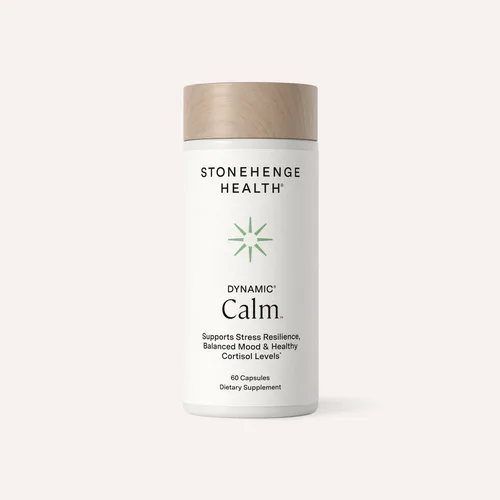
Stonehenge Health Add 6 Bottles of Dynamic Calm Review
Stonehenge Health's Dynamic Calm is presented as a stress and cortisol support supplement built around 600 mg of clinically studied KSM-66 Ashwagandha. The page says the formula combines this ingredient with six complementary botanicals and minerals to support the body's natural stress response, promote calm without drowsiness, and help maintain a balanced mood. The listed benefits include supporting a healthy cortisol response, supporting the body's natural stress response, promoting calm without drowsiness, supporting better sleep quality and helping users fall asleep faster, helping maintain a balanced mood, daily mental and physical stress support, promoting calmness and relaxation, and supporting feelings of happiness and optimism. The page describes the product as not a sedative, and says it is intended to provide functional calm that lets users stay sharp and present through the day while supporting restful sleep that ongoing stress can disrupt. The brand states that the formula is meant to help the body recalibrate its cortisol response rather than simply mask stress. The recommended use is two capsules daily, with one capsule taken with lunch and one with dinner, or as directed by a healthcare professional. The page states that a bottle of sixty capsules is a full 30-day supply. The FAQ says the midday and afternoon routine aligns with the body's natural cortisol rhythm without disrupting the normal sleep-wake cycle. The page also says L-theanine may produce noticeable effects within one to two hours of the first dose, and that clinical research on KSM-66 Ashwagandha at 600 mg shows meaningful reductions in cortisol over 60 days of daily use. A doctor recommendation section names KSM-66 Ashwagandha, magnesium, L-theanine, Rhodiola, Lemon Balm, and Holy Basil as well-regarded ingredients. The brand offers a 90-day 100 percent money-back guarantee, and the page offers subscription and one-time purchase options with bundles of one, three, and six bottles. The page advises consulting a physician before use for people who are pregnant, nursing, under 18, on medication, or who have a medical condition.
We don’t sell supplements. We help you make decisions and get the best price.
Lowest prices
We may earn a commission from some store links. How we choose.
Finding the lowest prices at the stores now. This takes a few seconds.
Study, Trial or Testing Result Summary
Members Only240 human studies · 178 improved
31 of these 240 human studies gave the ingredient by drip or inhaler, not by mouth.
Ashwagandha, the main ingredient, is at a full dose of 600 mg and has the strongest support here. Pooled trials found it lowered stress, anxiety and the stress hormone cortisol compared with placebo, with the best stress effect at 300 to 600 mg a day, though results varied between trials [1][2][3]. An 8-week trial found 600 mg daily lowered stress and anxiety more than placebo [4]. Lemon balm reaches a studied dose at three servings a day. Trials found it improved mood, anxiety and stress [5][6]. Rhodiola reaches a studied dose at two servings a day. It reduced burnout and stress in placebo-controlled trials [7]. L-theanine is at a full dose, but its stress benefit was modest and its anxiety results were inconsistent [8][9]. Holy basil, lavender and magnesium are all below the doses that were studied. At full doses, holy basil eased stress [10] and lavender oil capsules eased anxiety [11]. The evidence for magnesium was mixed [12][13]. Animal and cell studies are never counted.
See all 240 studies →Hide the studies
- Across 100 trials with 28,637 adults with anxiety, most anxiety drugs beat placebo, and silexan, the lavender oil product, was highly effective, as well tolerated as placebo and had fewer side effects than placebo.Comparative efficacy and acceptability of anxiolytic drugs for the treatment of anxiety disorders: a systematic review a…
- Pooling trials, lavender inhalation, massage and oral Silexan 80 mg a day for at least 6 weeks all reduced anxiety scores compared with controls, though most trials had a high risk of bias.Effects of lavender on anxiety: A systematic review and meta-analysis.
- Pooling 52 trials with 4049 people, antioxidant supplements including magnesium improved depression scores (small effect for magnesium) and antioxidants overall improved anxiety.Protective role of antioxidant supplementation for depression and anxiety: A meta-analysis of randomized clinical trials…
- In 44 trials with 3,419 people with anxiety, essential oils lowered anxiety scores, and lavender lowered state anxiety by about 5.4 points and trait anxiety by about 5.5 points.Essential oils for treating anxiety: a systematic review of randomized controlled trials and network meta-analysis.
- In 20 trials with 1,717 adults awaiting surgery, aromatherapy, with lavender oil among the most used, significantly reduced anxiety before surgery compared with placebo, usual care or no treatment.The effectiveness of aromatherapy on preoperative anxiety in adults: A systematic review and meta-analysis of randomized…
- Across 23 placebo-controlled trials with 1706 adults, ashwagandha lowered the stress hormone cortisol and raised serotonin compared with placebo, though results varied a lot between trials.Hormonal Modulation with Withania somnifera: Systematic Review and Meta-Analysis of Randomized-controlled Trials.
- In five placebo-controlled trials with 1,213 adults with anxiety, Silexan 80 mg a day for 10 weeks reduced anxiety more than placebo with similar side effects.Efficacy of Silexan in patients with anxiety disorders: a meta-analysis of randomized, placebo-controlled trials.
- Across 31 placebo-controlled trials with 1168 people, a single 200 mg dose of L-theanine improved attention and reaction time, but its stress-lowering effect was modest and depended on studies with a high risk of bias, and anxiety results were inconsistent.Cognitive and affective effects of L-Theanine: a systematic review and meta-analysis of 31 randomized trials.
- Across 12 randomized trials with 1002 adults, ashwagandha reduced anxiety and stress compared with placebo, with the best stress effect at 300-600 mg a day, but the certainty of the evidence was low.Does Ashwagandha supplementation have a beneficial effect on the management of anxiety and stress? A systematic review a…
- In three placebo-controlled trials with 697 people with mild anxiety, Silexan 80 mg a day for 10 weeks lowered anxiety scores by about 3.8 points more than placebo, with similar side effects.Efficacy of Silexan in subthreshold anxiety: meta-analysis of randomised, placebo-controlled trials.
- In five studies with 645 people taking Silexan 80 mg or 160 mg, the 160 mg dose lowered anxiety scores the most, and 80 mg worked about like a med, though differences from placebo were not clearly significant.Efficacy and safety of lavender essential oil (Silexan) capsules among patients suffering from anxiety disorders: A netw…
- Across 9 randomized trials with 558 patients, ashwagandha lowered perceived stress, anxiety scores and blood cortisol compared with placebo, and four trials reported mild to moderate side effects.Effects of Ashwagandha (Withania Somnifera) on stress and anxiety: A systematic review and meta-analysis.
- Across 5 randomized trials with 400 adults, ashwagandha extract modestly improved sleep and anxiety compared with placebo, with larger effects at 600 mg or more a day and for 8 weeks or longer, but did not change quality of life.Effect of Ashwagandha (Withania somnifera) extract on sleep: A systematic review and meta-analysis.
- Across 5 placebo-controlled trials with 254 people, ashwagandha reduced anxiety scores and improved several sleep measures, though results varied widely between trials.Safety and efficacy of Withania somnifera for anxiety and insomnia: Systematic review and meta-analysis.
- In a review of randomized trials of diet changes for depression and anxiety around pregnancy, iron, zinc and magnesium together were not better than placebo for depression symptoms.Dietary interventions for perinatal depression and anxiety: a systematic review and meta-analysis of randomized controll…
- In a comparison of 29 trials of medicinal herbs for anxiety, ashwagandha lowered anxiety scores more than placebo, but the trials were small so the results are preliminary.Medicinal herbs for the treatment of anxiety: A systematic review and network meta-analysis.
- Across 22 randomized trials in adults, ashwagandha reduced stress, anxiety and depression, with a dose-related effect on stress, but the trials differed a lot from one another.Effects of ashwagandha (Withania somnifera) on mental health in adults: A systematic review and dose-response meta-analy…
- Pooled randomized trials of people with anxiety or depression symptoms found lemon balm lowered anxiety and depression scores more than placebo without serious side effects, though results varied widely between studies.The effects of lemon balm (Melissa officinalis L.) on depression and anxiety in clinical trials: A systematic review and…
- A review of plant adaptogens including Rhodiola reported benefits for chronic fatigue, cognitive impairment and immune protection, though human trials are limited and stress calmness was not specifically measured.Plant Adaptogens-History and Future Perspectives.
- In 11 placebo-controlled studies, L-theanine combined with caffeine moderately improved alertness and attention switching within 2 hours of a dose, with calmness and anxiety outcomes not clearly shown.Acute effects of tea constituents L-theanine, caffeine, and epigallocatechin gallate on cognitive function and mood: a s…
- Across five placebo-controlled trials in people with anxiety disorders, 80 mg a day of lavender oil for 10 weeks reduced physical anxiety symptoms, pain, insomnia and fatigue more than placebo.Therapeutic effects of Silexan on somatic symptoms and physical health in patients with anxiety disorders: A meta-analys…
- In a meta-analysis of 34 studies, inhaled aromatherapy improved sleep problems such as insomnia, and single lavender inhalation had the largest effect among single aromas.A systematic literature review and meta-analysis of the clinical effects of aroma inhalation therapy on sleep problems.
- In a meta-analysis of randomized trials, lavender was superior to placebo or no treatment in reducing anxiety and depression, with a smaller effect on systolic blood pressure.Effects of Lavender on Anxiety, Depression, and Physiological Parameters: Systematic Review and Meta-Analysis.
- Across five placebo-controlled trials in people with mild or diagnosed anxiety, 80 mg a day of lavender oil for 10 weeks reduced depressed mood more than placebo.Beneficial effects of Silexan on co-occurring depressive symptoms in patients with subthreshold anxiety and anxiety diso…
- In a meta-analysis of people with cancer, aromatherapy reduced anxiety compared with control, and lavender aromatherapy showed the largest effect in subgroup analysis, while depression did not improve.The Effects of Aromatherapy on Anxiety and Depression in People With Cancer: A Systematic Review and Meta-Analysis.
- Pooled trials in older adults showed aromatherapy improved sleep quality and depression, with lavender alone working best, but the effect on anxiety needs further study.Effects of aromatherapy on sleep quality in older adults: A meta-analysis.
- In a meta-analysis of 21 studies of pregnant women, aromatherapy reduced maternal anxiety, and lavender was suggested to improve sleep quality, though more high-quality studies are needed.Effectiveness of aromatherapy on physiological and psychological symptoms during pregnancy: a systematic review and meta…
- A review of 22 studies found stress-related cortisol responses were most consistent with low-ratio matcha preparations and not with isolated compounds, with low-certainty evidence overall.A CE/TA-stratified systematic review and evidence map of matcha and green tea bioactives in endocrine stress regulation:…
- A review of 14 trials in women found magnesium combined with vitamin B6 reduced premenstrual anxiety but magnesium alone had no effect, and it did not lower stress in women with painful periods.The impact of essential fatty acid, B vitamins, vitamin C, magnesium and zinc supplementation on stress levels in women:…
- A review of 18 studies in people prone to anxiety found some trials reporting less anxiety with magnesium (about half in anxious and premenstrual groups) but no effect after childbirth, and the evidence was poor in quality.The Effects of Magnesium Supplementation on Subjective Anxiety and Stress-A Systematic Review.
- A review of 32 articles on magnesium and mental health found mostly positive results for depression but mixed results overall, with a possible benefit in stressed patients and a need for better trials.The Role and the Effect of Magnesium in Mental Disorders: A Systematic Review.
- A review of herbal medicines for psychiatric conditions described ashwagandha as having preliminary encouraging evidence in mood and anxiety disorders, but not high-quality evidence.Herbal medicines in the treatment of psychiatric disorders: 10-year updated review.
- A review of 30 human studies found ashwagandha root appeared effective and safe for chronic stress, anxiety and insomnia, with mostly mild side effects, and called for larger well-designed trials.Safety and clinical effectiveness of Withania Somnifera (Linn.) Dunal root in human ailments.
- A review of 256 papers on plant-based brain supports concluded that ashwagandha modulates anxiety and social-related thinking, though results across plants were inconsistent.Plant-derived nootropics and human cognition: A systematic review.
- A review of 9 trials in stressed adults taking ashwagandha for about 30 to 112 days found it lowered cortisol (a stress hormone) without significant side effects, but long-term effects were not studied.Effects of Withania somnifera on Cortisol Levels in Stressed Human Subjects: A Systematic Review.
- A review of lab, animal and human studies of ten plant remedies including lemon balm found evidence of calming effects on anxiety with good safety, but it did not give lemon balm-specific results.GABA-modulating phytomedicines for anxiety: A systematic review of preclinical and clinical evidence.
- A review of herbal medicines for psychiatric disorders said Rhodiola rosea may help depression but there is not yet enough solid clinical evidence and more research is needed.Herbal medicines in the treatment of psychiatric disorders: a systematic review.
- A review of controlled trials of herbal medicines for depression, anxiety and sleep found early positive evidence for Rhodiola rosea on depression, but many studies had not been repeated.Herbal medicine for depression, anxiety and insomnia: a review of psychopharmacology and clinical evidence.
- A review of 52 randomized trials of plants on stress hormones, including Rhodiola rosea, found the effects on stress hormone activity unclear for most plants, with only ashwagandha showing a consistent cortisol-lowering effect.Modulation of the hypothalamic-pituitary-adrenal (HPA) axis by plants and phytonutrients: a systematic review of human t…
- A review of 24 randomized trials (5 on Rhodiola rosea, at 290-1500 mg daily for 3-16 weeks) reported reduced stress and anxiety, better sleep and cognition, though trials were small and varied.Clinical evidence for the adaptogenic effects of Withania somnifera and Rhodiola rosea - A systematic review with molecu…
- A review of 21 studies found green tea reduced anxiety and improved memory and attention, with the cognitive benefits seen mainly when L-theanine and caffeine were taken together.Green tea effects on cognition, mood and human brain function: A systematic review.
- A review of 9 controlled trials suggested 200 to 400 mg a day of L-theanine may reduce stress and anxiety in people under stressful conditions, though larger and longer studies are needed.The Effects of Green Tea Amino Acid L-Theanine Consumption on the Ability to Manage Stress and Anxiety Levels: a Systema…
- A review of 11 randomized trials found L-theanine reduced psychiatric symptoms more than control in people with schizophrenia, anxiety disorders and ADHD.The effects of L-theanine supplementation on the outcomes of patients with mental disorders: a systematic review.
- A systematic review of single-herb trials found lavender produced anxiety and depression benefits comparable to standard anxiolytics and meds, but the authors said larger trials are needed.Herbal medicine for depression and anxiety: A systematic review with assessment of potential psycho-oncologic relevance.
- In a systematic review of 33 studies, aromatherapy, most often with lavender, was reported to reduce anxiety and pain during labor, though the review did not pool results.The Effectiveness of Aromatherapy in the Management of Labor Pain and Anxiety: A Systematic Review.
- In placebo-controlled trials in people with anxiety, Silexan improved sleep, and over 98% of that effect came from its anxiety-reducing effect.Effect of anxiolytic drug silexan on sleep - a narrative review.
- In a pooled analysis of 925 adults with generalized anxiety disorder taking 160 mg of Silexan lavender oil daily for 10 weeks, anxiety scores improved more than with placebo, and the 80 mg dose showed benefit in only one trial and the pooled analysis.Silexan in generalized anxiety disorder: investigation of the therapeutic dosage range in a pooled data set.
- In 539 adults with generalized anxiety disorder, 160 mg of Silexan lavender oil daily for 10 weeks reduced anxiety more than placebo, with 60.3% of the 160 mg group having at least a 50% drop in anxiety score; 80 mg also beat placebo and side effects were similar to placebo.Read the study on PubMed (24456909) →
- In 498 adults with mild to moderate depression, 80 mg of silexan daily for 8 weeks reduced depressive symptoms and functional impairment more than placebo and was well tolerated.Lavender oil preparation Silexan is effective in mild-to-moderate major depression: a randomized, placebo- and reference…
- In a randomized trial of 350 female dental patients, inhaling 2% lavender vapor reduced dental anxiety and pain scores more than inhaling water vapor.Dental pain perception and emotional changes: on the relationship between dental anxiety and olfaction.
- In a cluster randomized trial of 340 dental patients, waiting in a room scented with lavender lowered their current anxiety compared with no scent, though future dental anxiety was unchanged.The effects of lavender scent on dental patient anxiety levels: a cluster randomised-controlled trial.
- In a placebo-controlled trial of 318 adults with mixed anxiety and depression, 80 mg of silexan daily for 10 weeks gave greater improvement in anxiety and depression than placebo and was safe.Efficacy of Silexan in mixed anxiety-depression--A randomized, placebo-controlled trial.
- In 290 people with diabetes and insomnia, 2 months of magnesium, potassium or both significantly changed cortisol and melatonin levels and lowered insomnia severity compared with placebo.Effects of magnesium and potassium supplementation on insomnia and sleep hormones in patients with diabetes mellitus.
- In 264 stressed adults with low blood magnesium, 300 mg magnesium daily for 8 weeks cut stress scores by about 42%, and adding vitamin B6 was no better overall but helped more in those with severe stress; there was no placebo group.Superiority of magnesium and vitamin B6 over magnesium alone on severe stress in healthy adults with low magnesemia: A r…
- In 221 adults with anxiety disorder not otherwise specified, 80 mg of Silexan lavender oil daily for 10 weeks reduced anxiety and improved sleep quality more than placebo, with 76.9% of the Silexan group becoming responders compared with 49.1% on placebo.Silexan, an orally administered Lavandula oil preparation, is effective in the treatment of 'subsyndromal' anxiety disor…
- In 212 people with anxiety, 80 mg of silexan daily for 10 weeks improved sleep compared with placebo, and this sleep benefit was almost entirely explained by reduced anxiety.Beneficial effects of Silexan on sleep are mediated by its anxiolytic effect.
- In 200 adults having MRI scans, lavender aromatherapy plus music reduced anxiety more than routine care, but aromatherapy alone did not differ significantly from music alone.Effects of aromatherapy and music therapy on patients' anxiety during MRI examinations: a randomized controlled trial.
- In 186 stressed adults over 60 days, full-spectrum ashwagandha root reduced perceived stress, anxiety and improved sleep quality compared with placebo, with no change in mental alertness.Effects of multi-herb and ashwagandha root formulas on stress modulation: a randomized, double-blind, placebo-controlled…
- In 183 community-dwelling older adults, inhaling three drops of 1.5% lavender essential oil nightly for 30 nights reduced depression, anxiety, and stress compared with a distilled water control, with benefits still present one month later.The effects of Lavender and Chamomile essential oil inhalation aromatherapy on depression, anxiety and stress in older c…
- In 182 patients with somatoform disorders, a 2-week herbal combination including lemon balm reduced anxiety and depression more than placebo, with the butterbur-containing version working best and no serious adverse events.Fixed herbal drug combination with and without butterbur (Ze 185) for the treatment of patients with somatoform disorder…
- In 170 adults with anxiety-related restlessness and disturbed sleep, 80 mg of Silexan lavender oil daily for 10 weeks reduced anxiety more than placebo, with 48.8% of the Silexan group becoming responders (at least a 50% drop in anxiety score) compared with 33.3% on placebo.Efficacy of orally administered Silexan in patients with anxiety-related restlessness and disturbed sleep--A randomized,…
- In 161 young cadets, a single dose of Rhodiola rosea extract (two doses tested) produced a clearly greater antifatigue effect on mental work than placebo, with no difference between doses.A randomized trial of two different doses of a SHR-5 Rhodiola rosea extract versus placebo and control of capacity for m…
- In a randomized trial of 160 heart surgery patients, lavender aromatherapy reduced surgical site pain versus control, while overall anxiety did not differ between groups at the main comparison.The effect of aromatherapy with rose and lavender on anxiety, surgical site pain, and extubation time after open-heart s…
- In 157 adults with migraine in the emergency department, intravenous magnesium reduced pain about as much as two standard drugs, with no significant difference; this study did not test stress or calmness.MAGraine: Magnesium compared to conventional therapy for treatment of migraines.
- In 150 people with general stress, 1200 mg a day of holy basil extract for six weeks reduced total stress symptom scores more than placebo, about 39% more improvement, with no side effects reported.Efficacy of an Extract of Ocimum tenuiflorum (OciBest) in the Management of General Stress: A Double-Blind, Placebo-Cont…
- In 145 patients before colonoscopy, lavender inhalation improved post-procedure comfort but its effect on anxiety was not statistically significant.The Effect of Precolonoscopy Lavender Inhalation on Patient Anxiety and Comfort: A Randomized, Controlled, Double-Blinde…
- In 144 long-term a med users, magnesium aspartate compared with placebo did not significantly change the rate of stopping the drug; there were non-significant trends toward milder withdrawal and less rise in anxiety.Read the study on PubMed (9850822) →
- In an 8-week placebo-controlled trial of 141 adults with stress and anxiety, 600 mg per day of a proprietary ashwagandha root extract lowered perceived stress and anxiety scores more than placebo.A proprietary herbal extract of ashwagandha root for stress and anxiety in healthy adults: a randomized, double-blind, t…
- In 140 healthy volunteers, a daily spread with L-theanine, 5-hydroxytryptophan and GABA for 10 days improved memory, well-being and mood scores, but anxiety and depression scales did not change significantly.[Clinical evaluation of the efficacy of innovative spread of a given fatty acid composition enriched by adaptogens].
- In a 60-day placebo-controlled trial of 135 adults with functional constipation, a herbal blend containing ashwagandha root reduced depression and anxiety symptoms and lowered cortisol and IL-6 compared with placebo.A Novel Herbal Composition Alleviates Functional Constipation, Reduces Gastrointestinal Transit Time, and Improves Bowel…
- In an 8-week placebo-controlled trial of 135 women aged 45 to 65, a combination of ashwagandha and Shatavari root extracts improved menopause symptoms and mood more than placebo; the ashwagandha dose was not reported separately.Efficacy and safety of Shatavari root extract (Asparagus racemosus) for menopausal symptoms: a randomized, double-blind,…
- In 135 healthy adults with elevated stress, a once-daily sustained-release Ashwagandha root extract capsule (150 mg or 300 mg) for 60 days reduced perceived stress by about 39 to 42 percent and improved sleep quality and well-being compared with placebo, with no safety concerns reported.Efficacy and safety of Ashwagandha root extract sustained-release (AshwaSR) capsules in healthy adult, stressed subjects…
- In 130 stressed healthy adults, taking one 300 mg sustained-release ashwagandha capsule daily for 90 days improved memory and focus, lowered stress, and improved sleep quality compared with placebo.Efficacy and Safety of Ashwagandha Root Extract on Cognitive Functions in Healthy, Stressed Adults: A Randomized, Double…
- In 126 adults with mild-to-moderate depression, 6 weeks of 248 mg magnesium daily improved depression scores by 6.0 points and anxiety scores by 4.5 points more than no treatment, with effects seen within two weeks.Role of magnesium supplementation in the treatment of depression: A randomized clinical trial.
- In a randomized trial of 126 patients having wisdom tooth removal, lavender oil inhalation was followed by significant post-operative blood pressure changes and high patient satisfaction, while the authors concluded it reduced perioperative anxiety.Influence of lavender oil inhalation on vital signs and anxiety: A randomized clinical trial.
- In 126 children having tooth extraction, inhaling lavender oil for 3 minutes lowered anxiety and pain scores afterward compared with no inhalation.Can lavender oil inhalation help to overcome dental anxiety and pain in children? A randomized clinical trial.
- In 120 adults with major depression, a combination of magnesium orotate, probiotics and coenzyme Q10 for 8 weeks reduced self-rated anxiety and stress more than placebo.Probiotics and magnesium orotate for the treatment of major depressive disorder: a randomised double blind controlled tr…
- In 120 healthy young adults, a single 200 mg dose of L-theanine, with or without arginine, lowered the rise in a stress marker in saliva after a stress test compared with placebo.Effect of Combined Ingestion of L-Theanine and L-Arginine for Short-Term Psychological Stress in Young Adults: A Randomi…
- In 118 patients before colonoscopy or endoscopy, lavender inhalation did not reduce state anxiety more than an inert oil placebo.Aromatherapy and reducing preprocedural anxiety: A controlled prospective study.
- In a randomized placebo-controlled trial of 118 nurses, two hours daily of rose scent for four weeks reduced job stress compared with placebo, while the abstract reports no clear lavender-specific benefit.Effects of rose and lavender scents on nurses' job stress: A randomized controlled trial.
- In 116 patients with mild to moderate COVID-19, a 10-day multi-herb syrup that included lavender did not improve anxiety, insomnia, or other symptoms more than placebo.Effects of Iranian Polyherbal Syrup (Zufa syrup) on oxygen saturation and clinical symptoms in suspected patients with C…
- In 114 patients having gallbladder surgery, a magnesium sulphate injection before anaesthesia improved recovery quality scores by 8 points versus saline on the first day after surgery, mainly through better physical comfort and independence.Intravenously injected lidocaine or magnesium improves the quality of early recovery after laparoscopic cholecystectomy:…
- In 114 care home residents with Alzheimer's disease and agitation, melissa aromatherapy was no better than placebo or donepezil at 4 or 12 weeks, though all groups improved.A double-blind placebo-controlled randomized trial of Melissa officinalis oil and donepezil for the treatment of agitati…
- In 103 healthy active adults, the evening supplement containing magnesium L-threonate for two weeks did not clearly improve stress or sleep, while the morning ashwagandha and rhodiola group did.Modulating stress and sleep through a multi-compound dietary supplement: a randomized, double-blind, placebo-controlled …
- In 100 adults over 51 with poor sleep, 320 mg magnesium daily for seven weeks improved sleep no more than placebo, though it lowered a blood marker of inflammation in those with high levels at the start.Magnesium supplementation improves indicators of low magnesium status and inflammatory stress in adults older than 51 ye…
- In 100 people doing strength-endurance training, 400 mg magnesium daily for 90 days improved heart rate variability measures of stress balance, while the control group showed no positive changes.[Long-term HRV analysis shows stress reduction by magnesium intake].
- In 100 moderately stressed adults, a single dose of magnesium with B vitamins, green tea and rhodiola raised relaxed-alert brain activity and reduced subjective stress, anxiety and mood disturbance during a social stress test versus placebo.A combination of green tea, rhodiola, magnesium and B vitamins modulates brain activity and protects against the effects…
- In 100 chronically stressed healthy adults, a combination of magnesium, B vitamins, rhodiola and L-theanine for 28 days reduced stress scores more than placebo.Effect of a Combination of Magnesium, B Vitamins, Rhodiola, and Green Tea (L-Theanine) on Chronically Stressed Healthy I…
- In 100 adults aged 18 to 45 with unsatisfying sleep, 2 g daily of magnesium L-threonate for 6 weeks improved overall cognition, reaction time, resting heart rate and heart rate variability versus placebo, but not general wellbeing or objective sleep measures.The effects of magnesium L-threonate (Magtein®) on cognitive performance and sleep quality in adults: a randomised, doub…
- In a 24-week placebo-controlled trial of 100 adults, 600 mg per day of ashwagandha root extract reduced perceived stress more than placebo, along with greater weight loss.Efficacy and safety of Ashwagandha (Withania somnifera) root extract on stress and weight management in adults: a prospe…
- In 100 adolescent girls with premenstrual syndrome, 1200 mg daily of lemon balm for 3 menstrual cycles led to lower psychosomatic symptom, anxiety and sleep disorder scores than placebo.Effect of Melissa officinalis capsule on the mental health of female adolescents with premenstrual syndrome: a clinical …
- In 100 healthy adults with emotional distress or poor sleep, 400 mg daily of lemon balm extract for 3 weeks improved mood, anxiety, stress, wellbeing and quality of life scores.The possible "calming effect" of subchronic supplementation of a standardised phospholipid carrier-based Melissa officin…
- In a double-blind trial of 100 women after cesarean delivery, inhaled lavender oil lowered anxiety and pain compared with distilled water, with no reported side effects.Aromatherapy Using Lavender Oil Effectiveness on Pain and Anxiety After C-Section: A Randomized Controlled Trial.
- In 98 adults with chronic stress, ashwagandha extract at 125, 250, or 500 mg daily for 8 weeks reduced perceived stress, with the lowest dose already effective.Effects of Withania somnifera Extract in Chronically Stressed Adults: A Randomized Controlled Trial.
- In 97 adults watching anxiety-provoking film clips, a single dose of oral lavender oil capsules gave mixed results: a trend toward less anxiety under low-anxiety conditions and a benefit in women mainly on heart rate variability, with no clear anxiety reduction during high-anxiety clips.Effects of orally administered lavender essential oil on responses to anxiety-provoking film clips.
- In 96 adults with constipation-predominant irritable bowel syndrome, 1000 mg daily of a lemon balm, anise and rose formula for 4 weeks improved anxiety and depression scores compared with placebo.Effects of a traditional herbal formula containing Melissa officinalis, Pimpinella anisum, and Rosa damascena on anxiety…
- In 96 knee replacement patients, a valerian and lemon balm capsule taken from two nights before surgery cut shivering as well as clonidine, but the drop in anxiety was not statistically significant.Comparison of the Effects of a Melissa officinalis L. and Valerian Combination With Clonidine on Anxiety, Hemodynamic Ch…
- In 96 breast cancer patients receiving chemotherapy, lavender aromatherapy massage improved sleep quality, anxiety, and pain over four weeks compared with a sweet almond oil massage, but did not change depression or cognitive function.Effect of aromatherapy massage with lavender essential oil on sleep quality, pain, and mental and psychiatric disorders …
- In 92 healthy adults exposed to a stress task, lavender aroma improved working memory afterward compared with placebo aromas, though part of the effect depended on how pleasant the scent was perceived to be.Aroma Effects on Physiologic and Cognitive Function Following Acute Stress: A Mechanism Investigation.
- In 90 adults with mild to moderate stress, taking 125 mg of the Zenroot ashwagandha formulation once daily for 84 days reduced stress and anxiety, improved mood and sleep quality more than placebo, and caused no related side effects.A New Ashwagandha Formulation (Zenroot™) Alleviates Stress and Anxiety Symptoms While Improving Mood and Sleep Quality: …
- In 90 people with sleep apnea and low mood treated for 3 months, Rhodiola added to a breathing machine lowered anxiety and depression scores and oxidative stress, but Rhodiola alone raised anxiety and depression scores.[Effects of rhodiola rosea on oxidative stress and negative emotional states in patients with obstructive sleep apnea].
- In a randomized trial of 90 orthognathic surgery patients, one hour of lavender oil inhalation before surgery at 0.1 mL or 0.3 mL did not reduce presurgical anxiety compared with no oil.Effect of Lavender Oil Inhalation on Reducing Presurgical Anxiety in Orthognathic Surgery Patients.
- In 90 depressed patients receiving electroconvulsive therapy, inhaling lavender essential oil before treatment reduced anxiety compared with routine care, with scores falling significantly from before to after the intervention.Effectiveness of aromatherapy with inhaled lavender essential oil and breathing exercises on ECT-related anxiety in depr…
- In 85 children aged 6 to 12, 150 mg of ashwagandha gummies twice daily for 8 weeks improved several measures of attention and memory and parent-reported sleep compared with placebo gummies.A clinical assessment of the therapeutic effects of Ashwagandha root extract on cognitive performance, sleep, and fatigu…
- In a 12-week randomized trial of 81 employees with moderate to severe anxiety, a naturopathic package including 600 mg per day of ashwagandha reduced anxiety more than standard psychotherapy, though ashwagandha was not tested alone.Naturopathic care for anxiety: a randomized controlled trial ISRCTN78958974.
- In 80 healthy adults and adults with insomnia, taking ashwagandha root extract for 8 weeks improved sleep measures more than placebo, with the larger benefit in people with insomnia.Clinical evaluation of the pharmacological impact of ashwagandha root extract on sleep in healthy volunteers and insomni…
- In 80 patients with chronic stable angina, 3 g of lemon balm daily for 8 weeks reduced depression, anxiety, stress and sleep disturbance scores more than placebo.The effects of Melissa officinalis supplementation on depression, anxiety, stress, and sleep disorder in patients with c…
- In 80 young adults, a single 200 mg dose of L-theanine before a virtual reality active shooter drill and mental challenge did not change saliva stress markers, heart rate or anxiety scores compared with placebo.Impact of L-theanine and L-tyrosine on markers of stress and cognitive performance in response to a virtual reality base…
- In 80 patients scheduled for breast surgery, inhaling lavender oil lowered state anxiety scores, while the control group showed no significant change.Effect of Lavender Oil on the Anxiety of Patients Before Breast Surgery.
- In a randomized trial of 80 patients, smelling lavender oil for 15 minutes before a bone marrow biopsy lowered anxiety scores compared with a water-only control.The Effect of Lavender Aroma on Anxiety of Patients Having Bone Marrow Biopsy.
- In 78 women undergoing urodynamic testing, lavender aromatherapy reduced anxiety more than placebo during the procedure, though pain levels did not differ between groups.Lavender Aromatherapy for Anxiety and Pain During Multichannel Urodynamics: A Randomized Controlled Pilot Trial.
- In a randomized trial of 77 university students, inhaled lavender oil aromatherapy over three menstrual cycles reduced premenstrual syndrome symptoms, including anxiety and depressed mood, more than in the control group.Effect of aromatherapy on coping with premenstrual syndrome: A randomized controlled trial.
- In 73 young adults after an anxiety-provoking task, lavender scent did not change heart rate or temperature but was linked to better mood ratings than rosemary scent, with vigor higher than rosemary and fatigue lower than control.Scent and mood state following an anxiety-provoking task.
- In 72 healthy men, a herbal combination containing lemon balm taken for 4 days reduced self-reported anxiety during an acute stress test versus placebo, without changing the stress hormone cortisol response.Effects of a fixed herbal drug combination (Ze 185) to an experimental acute stress setting in healthy men - An explorat…
- In 72 emergency patients with acute coronary syndrome, inhaling two drops of lemon balm oil twice for 10 minutes lowered stress and heart rate briefly versus placebo at some time points, but overall mean changes between groups did not differ significantly.Effect of aromatherapy with Melissa essential oil on stress and hemodynamic parameters in acute coronary syndrome patien…
- In 71 adults with benign heart palpitations (55 finished), 500 mg of lemon balm leaf extract twice daily for 14 days reduced palpitation episodes and the number of anxious patients more than placebo.Heart palpitation relief with Melissa officinalis leaf extract: double blind, randomized, placebo controlled trial of ef…
- In 70 adults with mild to moderate anxiety and depression, taking 500 mg of ashwagandha root extract with piperine once daily for 90 days improved anxiety, depression, sleep, and quality of life more than placebo, along with higher serum serotonin.A Standardized Withania somnifera (Linn.) Root Extract with Piperine Alleviates the Symptoms of Anxiety and Depression b…
- In 70 patients receiving chemotherapy, lavender oil aromatherapy was compared with tea tree oil and no oil; state anxiety did not differ between groups, but trait anxiety and sleep quality changed significantly in the lavender group.Aromatherapy: The Effect of Lavender on Anxiety and Sleep Quality in Patients Treated With Chemotherapy.
- In a randomized trial of 68 hemodialysis patients, inhaling lemon balm essential oil during dialysis three times a week for one month reduced anxiety and symptom burden more than inhaling sweet almond oil.The effectiveness of Melissa officinalis L. essential oil inhalation on anxiety and symptom burden of hemodialysis patie…
- In 66 children aged 2 to 5 having eye surgery, magnesium given through a drip during anaesthesia did not reduce confusion and agitation when waking up or pain compared with saline; 84% of the magnesium group and 79% of the control group had emergence delirium.Effect of magnesium supplementation on emergence delirium and postoperative pain in children undergoing strabismus surge…
- In 66 people with a recent schizophrenia flare taking 1,000 mg daily of a standardized Ashwagandha extract for 12 weeks, perceived stress fell more than with placebo, along with symptom improvements and minimal side effects.Adjunctive Use of a Standardized Extract of Withania somnifera (Ashwagandha) to Treat Symptom Exacerbation in Schizophre…
- In 66 people with schizophrenia taking 1,000 mg daily of a standardized Ashwagandha extract for 12 weeks, depression and anxiety symptoms improved more than with placebo, with mild and transient side effects.Effects of a standardized extract of Withania somnifera (Ashwagandha) on depression and anxiety symptoms in persons with…
- In 66 children aged 9 to 12 having an endoscopy, inhaling lavender oil before the procedure produced lower state anxiety than the comparison groups, although trait anxiety did not differ.The effect of lavender oil on anxiety before endoscopy in children: A randomized controlled trial.
- In 64 adults under chronic stress, taking 300 mg of ashwagandha root extract twice daily for 60 days significantly reduced stress and anxiety scores and serum cortisol compared with placebo.A prospective, randomized double-blind, placebo-controlled study of safety and efficacy of a high-concentration full-spe…
- In 64 adults with impaired sleep taking a combination containing lemon balm, L-theanine, valerian and saffron for 6 weeks, sleep quality and sleep measures did not improve more than with placebo.Effect of a nutraceutical combination on sleep quality among people with impaired sleep: a randomised, placebo-controlle…
- In 63 elderly people with diabetes, four weeks of lavender aromatherapy inhalation improved cognitive function, anxiety, and sleep quality, while anxiety rose in the control group.The effect of lavender and rosemary aromatherapy application on cognitive functions, anxiety, and sleep quality in the e…
- In 61 adults with type 1 diabetes, a supplement containing magnesium plus saffron taken for 6 months did not differ from the same supplement without saffron except for lower triglycerides; the magnesium effect itself was not tested and diabetes distress did not differ between groups.Effect of Crocus sativus Extract Supplementation in the Metabolic Control of People with Diabetes Mellitus Type 1: A Dou…
- In 60 stressed adults taking 240 mg of a standardized ashwagandha extract daily for 60 days, anxiety scores fell more than with placebo, and morning cortisol dropped more as well.An investigation into the stress-relieving and pharmacological actions of an ashwagandha (Withania somnifera) extract: A…
- In 60 adults with insomnia and anxiety, taking 300 mg of ashwagandha root extract twice daily for 10 weeks shortened time to fall asleep, improved sleep quality and sleep efficiency, and reduced anxiety more than placebo.Efficacy and Safety of Ashwagandha (Withania somnifera) Root Extract in Insomnia and Anxiety: A Double-blind, Randomized…
- In 60 stressed healthy adults, taking 125 mg of ashwagandha root extract twice daily for 8 weeks significantly reduced stress scores and cortisol compared with placebo, and improved sleep quality.Adaptogenic and Anxiolytic Effects of Ashwagandha Root Extract in Healthy Adults: A Double-blind, Randomized, Placebo-co…
- In 60 college students taking 700 mg of full spectrum ashwagandha root extract daily for 30 days, students reported less stress, better sleep, more energy, and clearer thinking than placebo takers.The Perceived Impact of Ashwagandha on Stress, Sleep Quality, Energy, and Mental Clarity for College Students: Qualitati…
- In 60 college students, 700 mg of ashwagandha root extract daily for 30 days improved sleep and reduced food cravings more than placebo, while the stress difference was not statistically significant.The Impact of Ashwagandha on Stress, Sleep Quality, and Food Cravings in College Students: Quantitative Analysis of a Do…
- In 60 women aged 45 to 55 with menopausal symptoms, Ashwagandha root extract taken for 8 weeks reduced menopausal symptoms, hot flashes and perceived stress more than placebo, and improved quality of life.A prospective, randomized, double-blind, placebo-controlled study on efficacy and safety of Ashwagandha root extract (Wi…
- In a 60-day placebo-controlled trial of 60 adults with stress, anxiety and hypertension, 600 mg per day of Ashwagen reduced anxiety, stress and cortisol more than placebo, with no serious adverse events.Safety and efficacy of ashwagen (a standardized withania somnifera extract) in stress and anxiety with hypertension and …
- In 60 adults with type 2 diabetes and depressive symptoms, 700 mg per day of lemon balm extract for 12 weeks reduced depression and anxiety scores more than a placebo flour, though sleep quality did not change.The effects of melissa officinalis on depression and anxiety in type 2 diabetes patients with depression: a randomized d…
- In 60 people with stress-related fatigue, 576 mg a day of rhodiola extract for 28 days reduced burnout scores, improved attention and lowered the cortisol stress response on waking more than placebo.A randomised, double-blind, placebo-controlled, parallel-group study of the standardised extract shr-5 of the roots of R…
- In 60 people with schizophrenia or schizoaffective disorder taking antipsychotics, 400 mg daily of theanine for 8 weeks reduced anxiety and positive symptoms more than placebo, and it was well tolerated.L-theanine relieves positive, activation, and anxiety symptoms in patients with schizophrenia and schizoaffective disord…
- In 60 patients in a coronary intensive care unit, inhaling 2% lavender essential oil for 15 days improved sleep quality and reduced anxiety compared with a control group that did not inhale it.Effects of aromatherapy on sleep quality and anxiety of patients.
- In 60 elderly adults, drinking lavender herbal tea (2 g teabag, twice daily) for 2 weeks reduced depression and anxiety scores more than a control group that received no placebo.The effect of lavender herbal tea on the anxiety and depression of the elderly: A randomized clinical trial.
- In 59 healthy young adults taking 225 mg of liposomal ashwagandha daily for 30 days, some memory and attention tests improved and feelings of tension and fatigue decreased compared with placebo.Acute and Repeated Ashwagandha Supplementation Improves Markers of Cognitive Function and Mood.
- In 58 children and adolescents with mild attention-deficit/hyperactivity disorder, 300 mg daily of Ashwagandha root extract for 8 weeks improved attention and executive function, plus sleep and anxiety scores, compared with placebo, with a favorable safety profile.Efficacy and safety of ashwagandha root extract in children and adolescents with mild attention-deficit/hyperactivity di…
- In 58 middle-aged adults with hypertension, daily 15-minute inhalations of lavender essential oil for 7 days reduced anxiety and fatigue, improved sleep quality, and lowered systolic and diastolic blood pressure more than an almond oil placebo.Short- and long-term effects of inhaled lavender essential oil on anxiety, fatigue, blood pressure, and sleep quality in…
- In aging overweight men with mild fatigue, ashwagandha extract for 8 weeks raised DHEA-S and testosterone more than placebo, but fatigue and vigor did not differ significantly from placebo.A Randomized, Double-Blind, Placebo-Controlled, Crossover Study Examining the Hormonal and Vitality Effects of Ashwagand…
- In 56 team sports athletes during pre-season training, 600 mg daily of Ashwagandha root extract for 6 weeks kept the stress hormone cortisol from rising as it did with placebo, and improved recovery feelings and leg jump performance in some groups.Ashwagandha Root Extract Stabilises Physiological Stress Responses in Male and Female Team Sports Athletes During Pre-Se…
- In 56 healthy young physicians on night duty, one daily tablet of rhodiola extract for two weeks improved mental performance and reduced fatigue compared with placebo in a crossover trial.Rhodiola rosea in stress induced fatigue--a double blind cross-over study of a standardized extract SHR-5 with a repeate…
- In a six-week trial of 56 people with depression and anxiety, a lavender and dodder syrup improved depression about as much as citalopram, and by week six it lowered anxiety scores more than citalopram.Lavender and dodder combined herbal syrup versus citalopram in major depressive disorder with anxious distress: A double…
- In 54 healthy adults taking 500 mg of a standardized ashwagandha root extract daily for 60 days, perceived stress and anxiety improved more than with placebo, along with concentration and multitasking scores.A standardized Ashwagandha root extract alleviates stress, anxiety, and improves quality of life in healthy adults by mo…
- In a randomized trial of 54 children aged 6 to 11, inhaling lavender-neroli oil before and during dental numbing injections lowered anxiety and pain compared with a scent-free mask.Lavender-Neroli Aromatherapy for Reducing Dental Anxiety and Pain in Children During Anesthesia: A Two-Arm Randomized Co…
- In 52 men having robotic prostate surgery, magnesium given through a drip during surgery lowered blood pressure rises, cortisol (a stress hormone) over 24 hours, painkiller needs and later pain compared with saline.Beneficial Effects of Intravenous Magnesium Administration During Robotic Radical Prostatectomy: A Randomized Controlled…
- In 52 adults under chronic stress, taking 300 mg of ashwagandha root extract twice daily for 8 weeks improved stress, food cravings, and happiness scores and produced weight management benefits more than placebo.Body Weight Management in Adults Under Chronic Stress Through Treatment With Ashwagandha Root Extract: A Double-Blind, R…
- In 52 children with possible teeth grinding during sleep, a homeopathic lemon balm preparation given in 30-day phases reduced grinding scores more than placebo, while anxiety and sleep diary results did not change.Homeopathic medicine of Melissa officinalis combined or not with Phytolacca decandra in the treatment of possible sleep …
- In 50 healthy athletes, taking 300 mg of ashwagandha root extract twice daily for 8 weeks improved maximum oxygen uptake and recovery scores more than placebo.A double-blind, randomized, placebo-controlled trial on the effect of Ashwagandha (Withania somnifera dunal.) root extra…
- In 49 overweight middle-aged adults, 350 mg of magnesium daily for 24 weeks lowered the amount of the stress hormone cortisol in 24-hour urine compared with placebo.Long-term magnesium supplementation improves glucocorticoid metabolism: A post-hoc analysis of an intervention trial.
- In 49 women undergoing breast reconstruction surgery, lavender oil given during hospital stay produced no better anxiety, depression, sleep, or pain outcomes than a coconut oil placebo.The Effect of Lavender Oil on Perioperative Pain, Anxiety, Depression, and Sleep after Microvascular Breast Reconstructi…
- In 48 adults with functional constipation, a blend of ashwagandha root and okra extract for 14 days improved constipation symptoms, sleep quality and stress more than placebo, and lowered interleukin-6 and cortisol.A blend of Withania somnifera (L.) Dunal root and Abelmoschus esculentus (L.) Moench fruit extracts relieves constipatio…
- In 48 healthy adults, a single 200 mg dose of theanine did not significantly change mood, anxiety or alertness compared with placebo, though it did lower the blood pressure rise caused by caffeine and slowed reaction time on one task.Time for tea: mood, blood pressure and cognitive performance effects of caffeine and theanine administered alone and tog…
- In 48 women after cesarean birth, lavender aromatherapy did not reduce anxiety more than placebo, but women using it reported higher comfort than those given placebo.A Pilot Randomized Control Trial to Assess the Impact of Lavender on Anxiety and Comfort After Cesarean Birth and the Ba…
- In 46 adults with generalized anxiety disorder taking meds, 450-900 mg of L-theanine daily for 8 weeks did not reduce anxiety more than placebo, though it improved sleep satisfaction scores.L-theanine in the adjunctive treatment of generalized anxiety disorder: A double-blind, randomised, placebo-controlled t…
- In a randomized trial of 45 newborns, lavender oil massage lowered pain and stress scores and improved behavior scores more than a lavender bath or no treatment.Effects of Aromatherapy on Pain, Stress, and Behaviors of Newborns: A Randomized Controlled Trial.
- In 44 postmenopausal women with osteoporosis given zoledronate with or without 200 mg of oral magnesium daily for 3 months, magnesium did not significantly change pain, anxiety, depression or sleep quality 1 year later.Quantitative sensory testing of pain in osteoporosis: a pilot randomized clinical trial with magnesium supplementation.
- In 44 thyroid cancer patients having radioactive iodine therapy, drinking holy basil tea after each meal for four days reduced anxiety scores more than drinking water.Benefits of basil tea for patients with differentiated thyroid cancer during radioiodine therapy: A randomized controlle…
- In 43 stressed adults (35 analysed), a combination herbal supplement with magnesium and chromium for 15 days improved mood, trait anxiety and working memory under stress versus placebo.Effects of a Scutellaria baicalensis/Crataegus laevigata, magnesium and chromium supplement on stressed individuals: A r…
- In 42 women with premenstrual syndrome, a combination supplement containing Rhodiola taken for 3 months improved mood within the supplement group, but showed no difference from placebo between groups.Effects of the PREMEN-CALM® in the Management of the Premenstrual Syndrome: A Randomized, Double-Blind, Placebo-Controll…
- In 40 people with generalized anxiety disorder who were also taking meds, 1,000 mg daily of Ashwagandha root extract for 6 weeks reduced anxiety scores more than placebo, with no side effects observed.Assessment of the Efficacy of Withania somnifera Root Extract in Patients with Generalized Anxiety Disorder: A Randomize…
- In 40 people with schizophrenia or schizoaffective disorder taking 400 mg daily of theanine for 8 weeks, changes in blood BDNF and cortisol-to-DHEAS ratio were linked to symptom improvement, though this was an association analysis.Serum levels of brain-derived neurotrophic factor and cortisol to sulfate of dehydroepiandrosterone molar ratio associat…
- In 40 people with schizophrenia taking antipsychotics, 400 mg daily of L-theanine plus 50 mg pregnenolone for 8 weeks reduced negative symptoms and anxiety compared with placebo.Add-On Pregnenolone with L-Theanine to Antipsychotic Therapy Relieves Negative and Anxiety Symptoms of Schizophrenia: An…
- In 39 adults, drinking test matcha with a high theanine content lowered anxiety compared with placebo matcha, and the study notes that caffeine can counteract theanine's effect.Stress-Reducing Function of Matcha Green Tea in Animal Experiments and Clinical Trials.
- In 39 working adults with poor sleep, a 4-week RLX2 supplement containing L-theanine improved sleep quality scores compared with placebo, though the L-theanine dose was not stated.Effect of Alpha-S1-Casein Tryptic Hydrolysate and L-Theanine on Poor Sleep Quality: A Double Blind, Randomized Placebo-C…
- In 38 women taking 200 mg magnesium oxide daily for two menstrual cycles, there was no effect in the first month, but in the second month fluid retention symptoms fell more than with placebo; anxiety was not reported as improved.Magnesium supplementation alleviates premenstrual symptoms of fluid retention.
- In 35 people with sleep problems, a magnesium (200 mg) plus melatonin coffee pod for 4 weeks improved sleep measures and anger-hostility scores more than placebo, though average sleep quality stayed poor.The effects of melatonin and magnesium in a novel supplement delivery system on sleep scores, body composition and metab…
- In a double-blind trial of 35 postmenopausal women with insomnia over 29 days, lavender oil inhalation did not improve sleep quality more than sunflower oil placebo, although both groups improved over time.Lavender essential oil on postmenopausal women with insomnia: Double-blind randomized trial.
- In 34 healthy adults aged 18-40, a single L-theanine drink reduced self-reported stress from a multitasking mental task compared with placebo, measured one hour after dosing.Anti-Stress, Behavioural and Magnetoencephalography Effects of an L-Theanine-Based Nutrient Drink: A Randomised, Double-…
- In 34 candidates for nose surgery, inhaling lavender before surgery reduced anxiety and lowered systolic and diastolic blood pressure and heart rate more than in the control group.The Effect of Lavender on Anxiety and Hemodynamic Status Before Septorhinoplasy and Rhinoplasty.
- In 30 people, one week of SHR-5 Rhodiola rosea reduced self-reported fatigue compared with placebo, and also lowered ultra-weak photon emission from the hands.The influence of adaptogens on ultraweak biophoton emission: a pilot-experiment.
- In 30 older adults with cognitive decline, two months of a combined nutraceutical containing L-theanine improved memory test scores and perceived stress compared with placebo; the L-theanine dose was not stated.Short-Term Impact of a Combined Nutraceutical on Cognitive Function, Perceived Stress and Depression in Young Elderly wi…
- In a 4-week placebo-controlled trial of 30 healthy adults taking 200 mg per day, L-theanine improved stress-related symptoms, sleep quality, and verbal fluency and executive function compared with placebo.Effects of L-Theanine Administration on Stress-Related Symptoms and Cognitive Functions in Healthy Adults: A Randomized …
- In 30 healthy adults with moderate stress, 400 mg daily of theanine for 28 days reduced perceived stress and improved reaction time on a Stroop test, with some sleep changes, compared with placebo.Safety and Efficacy of AlphaWave® L-Theanine Supplementation for 28 Days in Healthy Adults with Moderate Stress: A Rando…
- In 30 healthy students given a stressful arithmetic task, lavender aroma lowered a salivary stress marker (chromogranin A) 10 minutes later, while cortisol did not change.Effect of lavender aroma on salivary endocrinological stress markers.
- In a double-blind trial of 28 heart surgery patients, two lavender oils applied to the skin over two days produced different stress reductions, with one about twice as effective as the other.Aromatherapy.
- In 26 healthy young men, 600 mg daily of Rhodiola rosea extract for 4 weeks sped up simple and choice reaction times compared with placebo, but did not change endurance exercise capacity or hormone levels.Effects of Rhodiola rosea supplementation on mental performance, physical capacity, and oxidative stress biomarkers in h…
- In 24 women having hysterectomy, intravenous magnesium around surgery reduced meds needs but postoperative anxiety scores were similar to placebo.Magnesium infusion reduces perioperative pain.
- In 24 healthy volunteers, a single 600 mg dose of a lemon balm and valerian combination reduced anxiety during a laboratory stress task, but the highest dose of 1800 mg increased anxiety and all doses worsened some task performance.Anxiolytic effects of a combination of Melissa officinalis and Valeriana officinalis during laboratory induced stress.
- In 24 female taekwondo athletes with premenstrual syndrome, 500 mg daily of Rhodiola rosea extract for 10 days reduced premenstrual symptoms and reaction time compared with placebo, and lowered perceived exertion after exercise.Short-term Rhodiola rosea supplementation improves premenstrual symptoms, reaction time, and perceived exertion in femal…
- In 22 women with fibromyalgia, a Mediterranean diet enriched with 60 mg magnesium and 60 mg tryptophan for 16 weeks reduced trait anxiety, mood disturbance, eating disorder scores and body image dissatisfaction versus standard diet, but did not improve sleep.Psychological and Sleep Effects of Tryptophan and Magnesium-Enriched Mediterranean Diet in Women with Fibromyalgia.
- In 20 healthy young adults, a single 600 mg dose of standardised lemon balm extract improved sustained attention, but higher doses reduced alertness and some memory measures while calmness rose at the lowest dose.Modulation of mood and cognitive performance following acute administration of Melissa officinalis (lemon balm).
- In 20 healthy young adults, a single 1600 mg dose of dried lemon balm leaf improved memory and increased calmness, while lower doses slowed some timed memory and visual processing tasks.Modulation of mood and cognitive performance following acute administration of single doses of Melissa officinalis (Lemo…
- In 20 pharmacy students, 200 mg of theanine twice daily during a stressful practice period lowered self-rated stress and a stress-linked salivary enzyme compared with placebo.Anti-stress effect of theanine on students during pharmacy practice: positive correlation among salivary α-amylase activ…
- In 20 pharmacy students over 10 days, drinking low-caffeine green tea providing about 15 mg of theanine daily lowered subjective stress and blunted the rise in a salivary stress marker compared with placebo tea.Anti-stress Effect of Green Tea with Lowered Caffeine on Humans: A Pilot Study.
- In 20 middle-aged adults, 7 days of low-caffeine green tea (which keeps more theanine) lowered a salivary stress marker and improved sleep quality compared with standard green tea.Reduced Stress and Improved Sleep Quality Caused by Green Tea Are Associated with a Reduced Caffeine Content.
- In 18 healthy volunteers, a single 600 mg dose of standardised lemon balm extract increased self-rated calmness and reduced alertness during a laboratory stress task compared with placebo.Attenuation of laboratory-induced stress in humans after acute administration of Melissa officinalis (Lemon Balm).
- A single dose of 3 mg per kg body weight of Rhodiola rosea taken one hour before exercise let 18 people finish a bicycle time trial slightly faster and rate their effort as lower than placebo.The effects of an acute dose of Rhodiola rosea on endurance exercise performance.
- In 16 healthy volunteers, sucking a lozenge containing lemon balm with lavender, hops and oat increased brain wave patterns linked to relaxation compared with placebo, though this was an electrical measure rather than a clinical outcome.Effects of lozenge containing lavender oil, extracts from hops, lemon balm and oat on electrical brain activity of volun…
- In 16 healthy volunteers, a single 200 mg dose of L-theanine did not reduce anticipatory anxiety under experimentally induced anxiety, though it showed some relaxing effect at rest.Read the study on PubMed (15378679) →
- In 14 adults under mental stress, L-theanine blunted the blood pressure rise in high-responders and reduced tension-anxiety mood scores compared with placebo; the dose was not stated.Effects of L-theanine or caffeine intake on changes in blood pressure under physical and psychological stresses.
- In 13 healthy volunteers, a single 400 mg dose of ashwagandha extract improved working memory, sustained attention and reaction speed compared with placebo over six hours.Effects of Acute Ashwagandha Ingestion on Cognitive Function.
- In a placebo-controlled study of 12 adults given a mental arithmetic stress task, L-theanine reduced heart rate and salivary immunoglobulin A responses to stress compared with placebo.L-Theanine reduces psychological and physiological stress responses.
- In 12 elite wrestlers, 3 mg/kg of L-theanine combined with caffeine improved performance and reduced anxiety compared with placebo, while L-theanine alone was not reported to show a clear anxiety benefit.Performance-enhancing effects of caffeine and L-Theanine among Iranian elite wrestlers: a focus on cognitive and specifi…
- In nine children with autism, a high L-theanine tea showed only sporadic improvements in balance and sleep, while a high GABA tea gave more consistent gains; the L-theanine dose was not stated.A double-blind, placebo-controlled, randomised-designed GABA tea study in children diagnosed with autism spectrum condit…
- In stressed adults with low magnesium, 8 weeks of 300 mg magnesium daily, with or without vitamin B6, significantly improved anxiety, depression and quality of life scores from baseline, mostly in the first 4 weeks; there was no placebo group.Effect of magnesium and vitamin B6 supplementation on mental health and quality of life in stressed healthy adults: Post…
- In fibromyalgia patients given 100 mg magnesium daily for 1 month, overall stress scores did not differ from placebo, but those with mild or moderate stress improved significantly and pain also decreased.Short-Term Magnesium Therapy Alleviates Moderate Stress in Patients with Fibromyalgia: A Randomized Double-Blind Clinica…
- In overweight adults with high stress and fatigue, 400 mg of ashwagandha daily for 12 weeks did not reduce perceived stress more than placebo, but it did reduce fatigue more than placebo and increased heart rate variability.Exploring the efficacy and safety of a novel standardized ashwagandha (Withania somnifera) root extract (Witholytin®) in…
- In healthy adults, 300 mg a day of holy basil leaf extract for 30 days improved several memory and reaction-time measures more than placebo; cortisol and anxiety improved over time only in the holy basil group, but the difference from placebo was not significant.Holy basil (Ocimum sanctum Linn.) leaf extract enhances specific cognitive parameters in healthy adult volunteers: A pla…
- In two double-blind placebo-controlled crossover studies of healthy young adults, a standardized lemon balm drink or yoghurt generally improved mood and/or cognitive performance, though some doses showed behavioral costs and effects varied by food type.Anti-stress effects of lemon balm-containing foods.
- In a double-blind, placebo-controlled crossover study, 87% of people taking a lemon balm phytosome extract reported better sleep quality compared with 30% on placebo, and their insomnia scores dropped significantly.Effects of Melissa officinalis Phytosome on Sleep Quality: Results of a Prospective, Double-Blind, Placebo-Controlled, a…
- In a double-blind, placebo-controlled pilot of students during a 20-day exam period, the SHR-5 Rhodiola rosea extract reduced mental fatigue and improved neuro-motor tests and physical fitness more than placebo, though the dose was probably too low.A double-blind, placebo-controlled pilot study of the stimulating and adaptogenic effect of Rhodiola rosea SHR-5 extract…
- In a crossover study of moderately stressed healthy adults, a single 200 mg dose of theanine increased frontal alpha brain wave activity and lowered salivary cortisol more than placebo after a stress task.A Randomized, Triple-Blind, Placebo-Controlled, Crossover Study to Investigate the Efficacy of a Single Dose of AlphaWav…
- In an 8-week placebo-controlled trial, a combined walnut peptide and theanine supplement improved self-reported sleep quality and sleep duration in adults with sleep disturbance; the theanine dose alone was not reported.Walnut peptide and theanine combination ameliorates sleep disorders: a multi-species study including a human trial.
- Over six weeks, a lavender oil capsule (silexan) reduced generalized anxiety by about 45%, an amount similar to a med lorazepam, with no sedation reported.A multi-center, double-blind, randomised study of the Lavender oil preparation Silexan in comparison to Lorazepam for ge…
- In patients with essential hypertension, aromatherapy with lavender oil through inhalation and foot massage lowered blood pressure, heart rate, serum cortisol, and subjective anxiety.The Effect of Aromatherapy on Blood Pressure and Stress Responses by Inhalation and Foot Massage in Patients With Essent…
- In a randomized trial of people with a permanent colostomy, lavender oil use improved odor, adjustment, anxiety, and quality of life compared with standard care.Effects of lavender oil on odor elimination, ostomy adjustment and quality of life in patients with permanent colostomy:…
- In 200 dental patients waiting for treatment, ambient lavender odor reduced anxiety and improved mood compared with a no-odor control condition.Ambient odors of orange and lavender reduce anxiety and improve mood in a dental office.
- In 80 patients with alcoholic delirium, adding magnesium sulfate to standard sedation shortened delirium to 3.4 days versus 5.4 days with standard care alone, and combining it with dexmedetomidine (a sedative) shortened it further to 1.1 days; this was not a study of stress or calmness in healthy people.Use of a combination of dexmedetomidine and magnesium sulfate as a multimodal approach to the treatment of alcoholic del…
- In 80 mildly anxious adults, 400 mg a day of rhodiola extract for 14 days reduced self-reported anxiety, stress, anger, confusion and depression compared with no treatment, with no change in thinking tests.The Effects of Rhodiola rosea L. Extract on Anxiety, Stress, Cognition and Other Mood Symptoms.
- In 60 people after open-heart surgery, 500 mg magnesium daily for five days led to lower anxiety and depression and better sleep quality than routine care alone.Effect of short-term magnesium supplementation on anxiety, depression and sleep quality in patients after open-heart sur…
- In 36 people shown stressful film clips, a single 200 mg dose of L-theanine sharpened one type of visual attention and altered another, while counteracting the effects of caffeine when taken together.Caffeine and theanine exert opposite effects on attention under emotional arousal.
- In 35 adults with generalized anxiety, 1000 mg a day of holy basil leaf extract for 60 days reduced anxiety, stress and depression scores and improved attention.Controlled programmed trial of Ocimum sanctum leaf on generalized anxiety disorders.
- In 28 healthy volunteers, a single 500 mg dose of Rhodiola rosea extract prevented a brain plasticity reduction induced by electrical stimulation, but did not change cortical excitability.Exploring the effect of adaptogenic Rhodiola Rosea extract on neuroplasticity in humans.
- In a small crossover trial of 25 adults, lavender aroma and lavender hand massage lowered anxiety in women, with oxytocin rising in women after aromatherapy, while men's anxiety fell whether or not lavender was used.Sex differences in the effects of aromatherapy on anxiety and salivary oxytocin levels.
- In 20 young men taking 432 mg of SHR-5 Rhodiola rosea daily during 8 days of heat training, the Rhodiola group showed no extra benefit over placebo in endurance, heart rate, stress hormones or perceived exertion.Influence of Rhodiola rosea on the heat acclimation process in young healthy men.
- In 18 college archers given L-theanine or a placebo before a competition, the L-theanine group reported lower pre-competition anxiety and lower saliva stress markers at some time points.Effects of supplement L-theanine on cognitive anxiety, salivary alpha-amylase, and cortisol in archery competition.
- In 120 adults aged 50 to 89 with physical and cognitive complaints, a Rhodiola rosea and vitamin combination taken for 12 weeks was followed by significant improvement in symptoms and faster scores on a digit connection test, with 81 percent of patients rated very good or good by physicians; the study had no placebo group.Efficacy and tolerability of a Rhodiola rosea extract in adults with physical and cognitive deficiencies.
- In an open-label trial of 118 outpatients with burnout symptoms, 400 mg daily of Rhodiola rosea extract for 12 weeks clearly improved most burnout and stress outcome measures, with low rates of adverse events.Multicenter, open-label, exploratory clinical trial with Rhodiola rosea extract in patients suffering from burnout sympt…
- In an open-label study of 101 people with life-stress symptoms, 200 mg twice daily of Rhodiola rosea extract for 4 weeks produced clinically relevant improvements in stress symptoms, and it was generally well tolerated.Therapeutic effects and safety of Rhodiola rosea extract WS® 1375 in subjects with life-stress symptoms--results of an o…
- In 100 people with prolonged or chronic fatigue, 400 mg of Rhodiola rosea extract daily for 8 weeks produced significant fatigue improvement in an uncontrolled open-label trial, with favorable safety.Rhodiola rosea in Subjects with Prolonged or Chronic Fatigue Symptoms: Results of an Open-Label Clinical Trial.
- In 70 pregnant women, 300 mg of ashwagandha root extract twice daily for 12 weeks, added to iron therapy, raised hemoglobin more than iron therapy alone, lowered perceived stress and improved sleep, with no adverse events.Efficacy and safety of Ashwagandha (Withania somnifera) root extract in pregnant women: a prospective, randomized, compa…
- In an open-label trial of 50 patients with neurasthenia, PTSD or somatization disorder, 80 mg of lavender oil (Silexan) daily for 6 weeks reduced restlessness, depressed mood and anxiety, and improved sleep and mental health scores, with mostly mild side effects.Phase II trial on the effects of Silexan in patients with neurasthenia, post-traumatic stress disorder or somatization d…
- In 49 hospital staff, inhaling a blend of essential oils including lavender from sticks for 2 months improved well-being and reduced anxiety and perceived stress compared with a 2-month period without oils, in an open-label crossover study.The Efficacy of Aromatherapy on Well-Being and Stress.
- In an open-label 12-week study of 46 women with mild to moderate anxiety, a saffron and ashwagandha supplement reduced anxiety scores, though the ashwagandha amount was not reported separately and there was no placebo group.Effectiveness of a Saffron and Withania Supplement on Mood in Women With Mild-to-Moderate Anxiety During the COVID-19 Lo…
- In 34 children with Tourette syndrome and anxiety, an L-theanine and vitamin B6 supplement reduced tics and anxiety more than psychoeducation alone in an open-label trial, though both groups improved and placebo-controlled trials are still needed.Use of Nutritional Supplements Based on L-Theanine and Vitamin B6 in Children with Tourette Syndrome, with Anxiety Disor…
- In an open-label study of 20 adults with major depression, 250 mg of L-theanine daily added to their medication for 8 weeks was linked to lower depression, anxiety and sleep scores and better attention and memory tests, though there was no placebo group.Effects of chronic l-theanine administration in patients with major depressive disorder: an open-label study.
- In 10 adults with generalized anxiety disorder, 340 mg of Rhodiola rosea extract daily for 10 weeks significantly lowered anxiety ratings, with mostly mild side effects such as dizziness and dry mouth; there was no control group.A pilot study of Rhodiola rosea (Rhodax) for generalized anxiety disorder (GAD).
- In nine healthy men, 14 days of magnesium aspartate led to lower cortisol levels during an hour of exercise and the usual exercise rise in cortisol and aldosterone was not seen.Plasma aldosterone, cortisol and electrolyte concentrations in physical exercise after magnesium supplementation.
- In a retrospective review of 3,252 hospitalized psychiatric patients, those prescribed a herbal combination containing lemon balm had significantly fewer a med prescriptions than matched controls, with comparable clinical effectiveness.Read the study on PubMed (31985131) →
- In a survey of 1,388 older adults, higher dietary magnesium intake was linked to less cognitive decline, including among those with impaired sense of smell; stress or calmness was not measured.The effect of dietary magnesium intake on cognitive decline related to olfactory impairment in older adults: a cross-sec…
- In 141 middle-aged adults, those with better diets had higher magnesium intake and better attention scores, and higher diet scores went with fewer mood problems and lower perceived stress, but the two diet groups did not differ significantly on mood or stress.Self-Reported Diet Quality Differentiates Nutrient Intake, Blood Nutrient Status, Mood, and Cognition: Implications for …
- In a retrospective review of 50 people with various anxiety disorders taking silexan long term, anxiety symptoms resolved in 35 people, and no side effects were reported.Real-world outcomes of long-term use of silexan in patients with anxiety disorders: a single-centre experience.
- In 49 patients with long-term low parathyroid hormone after surgery, calcium and magnesium supplement use affected symptom scores in a dose-dependent way, but the abstract ties the rise in depression and anxiety scores to calcitriol, not magnesium.The Influence of Conventional Treatment on Symptoms and Complaints in Patients With Chronic Postsurgical Hypoparathyroid…
- In an observational study of 45 adults with mild to moderate depression, taking a rhodiola and saffron combination (154 mg rhodiola per tablet, two tablets daily) for 6 weeks was followed by a significant drop in depression scores, and 85.4% of patients reported improvement. The study had no placebo group.A preliminary assessment of a combination of rhodiola and saffron in the management of mild-moderate depression.
- In foreign students during an academic load, the Rhodiola rosea preparation rhodaxon increased physical work capacity, reduced psychic fatigue and situational anxiety, and improved general condition.[The effect of the preparation rodakson on the psychophysiological and physical adaptation of students to an academic lo…
- Lavender and rosemary essential oil sachets lowered test anxiety scores and pulse rates in graduate nursing students facing exams.The effects of lavender and rosemary essential oils on test-taking anxiety among graduate nursing students.
Review Totals and Summary
Members Only96 reviews · 100% positive
**Overall picture:** The feedback is uniformly positive, with buyers describing a calmer, more manageable day and better sleep. All of it comes from six testimonials on the brand's own site. The page says the featured customers are compensated and that extreme results are not typical, so treat it as promotional rather than a balanced sample. Only the capsules are covered here, and no other forms appeared in the material. **What buyers say it did for them:** The most common claim is calmer handling of stress. One person said, "My resilience to stress has improved 100%," and another described feeling "calmer in the morning when I wake up." Several mention less irritability, such as "I no longer get as heated so quickly" and "I wasn't as quick-tempered." Others describe clearer thinking and focus, including "clarity and objectivity" for tackling work projects without feeling overwhelmed. Sleep comes up often: one reviewer now sleeps "through the whole night," and another has been "falling asleep faster." Two reviewers say their cortisol levels improved, but they give no details on how this was measured. **What they complain about:** There are no complaints in this material. The written feedback does not mention side effects, and nothing negative appears in the testimonials. This reflects how the testimonials were selected. It does not show that no one has had problems. **Taste, smell, pill size or form:** Nothing is said about taste, smell, capsule size or how easy the capsules are to swallow, so I can't tell you anything on this from the feedback. **Value for money:** Cost is not discussed in the testimonials. One reviewer says she has "no intention of stopping its use" and has recommended it to others. That suggests she is satisfied, but it is not a statement about price. The listing is for a six-bottle bundle, and the feedback gives no way to judge whether that is good value. **Who it seems to suit and who it did not:** The reviewers are busy people under steady pressure, including a nurse, a person caring for aging parents and adult children, someone managing stress at work, and a person juggling work and family. Several say they wanted a natural option for stress or poor sleep. One said she had tried other supplements and yoga without a noticeable difference before this. Timing is mentioned in two cases: improvements within "a couple of weeks" and after 14 days. The page itself says results may take extended time on the supplement. No one reports that it did not suit them, so the feedback can't tell us who might not benefit. **Bottom line:** Buyers who wrote in credit it with calmer days, less irritability and easier sleep. The evidence is a small, brand-selected, compensated set with nothing on taste, size, side effects or price. Weigh it with that in mind.
Biohacker Summary
Members Only10 of 10 recommend it
Ashwagandha, the main ingredient, gets a mostly positive read from the panel: five of the ten recommend it, one uses it, and four are neutral but still describe real effects. People take it for stress, anxiety, better sleep, lower cortisol, and, in two cases, a testosterone boost. Doses mentioned include 250 milligrams a day, and a range of 120 to 1,000 milligrams taken for at least 6 weeks, with most studies using 400 to 600 milligrams. One panelist prefers standardized extracts such as KSM-66 or Sensoril, another says a real standardized extract at a real dose is needed, and one finds it only a little bit helpful for sleep and not right for everyone. Magnesium is a smaller ingredient in this product, and the panel mostly takes it for sleep, with forms like threonate and glycinate favored and two of them warning that labels can overstate the real magnesium dose.
See all 10 biohackers →Hide the biohackers
Dr. Mark Hyman · Ashwagandha · recommends
- Lists ashwagandha as an herb that can help lower anxiety or depression symptoms.
- Recommends considering magnesium glycinate before bed for nervous system support, deeper sleep quality, and to help the body transition into rest, and states that they take it every night.
- Recommends Magnesium Breakthrough Advanced 10 from Bioptimizers for restful sleep, muscle recovery, stress resilience, and metabolic health, especially during stressful times of the year.
- Recommends magnesium because it is involved in over 600 reactions in the body and up to 80% of people may have low levels that never get flagged on a standard blood test.
- Recommends magnesium as a basic supplement during detoxification to support pathways, help with constipation, and provide electrolytes.
- Dr. Hyman recommends using lavender with an Epsom salt bath at night as a lifestyle recommendation to help mitigate detox symptoms.
- Recommends Magnesium Breakthrough Advanced 10 from Biooptimizers, which contains 10 bioavailable forms and 550 mg of elemental magnesium, to support restful sleep, restorative sleep, muscle recovery, stress resilience, and metabolic health.
- Has recommended magnesium breakthrough from bioptimizers for years and now uses Magnesium Breakthrough Advanced 10 as part of his evening routine, especially during periods of travel, training, and higher stress, to support sleep, muscle recovery, and metabolic health.
- Recommends correcting nutrient deficiencies with magnesium.
- Recommends Magnesium Breakthrough Advance 10 from BiOptimizers, which has 10 bioavailable forms of magnesium and more elemental magnesium, as part of his evening routine for sleep, muscle recovery, and metabolic health.
- Has recommended Magnesium Breakthrough from Bio Optimizers for years and now uses Magnesium Breakthrough Advanced 10 as part of his evening routine, especially during periods of travel, training, and higher stress, to support sleep, muscle recovery, and metabolic health.
- Recommends Magnesium Breakthrough Advance 10 from Bio Optimizers, which contains 10 bioavailable forms of magnesium, as it plays a critical role in sleep recovery, stress regulation, and muscle function, and has become part of his evening routine, especially during periods of travel, training, and higher stress.
- Recommends lemon balm as an ingredient in Besper that helps the body relax.
- Mentions that ingredients like lemon balm in Vesper help the body relax.
Dr. Eric Berg · Ashwagandha · recommends
- Recommends ashwagandha, suggesting 250 milligrams per day over time to increase stress tolerance and help the cortisol receptor.
- Dr. Eric Berg states that magnesium supports energy, muscle function, and sleep, and that most of it is stored inside cells, making deficiencies harder to detect with a standard blood test.
- Notes that magnesium could also be a factor in preventing muscle cramps.
- Recommends magnesium, specifically magnesium glycinate, stating it is key for D3 and K2 to work and is probably more important than calcium for building bone.
- Recommends increasing magnesium to restore balance and support healthy blood pressure.
- Dr. Eric Berg suggests that magnesium could help support deeper, more restful sleep.
- Recommends Magnesium Glycinate, noting that the combination of magnesium and glycine is helpful for connective tissue, sleep, and reducing stress.
- Recommends taking magnesium 90 minutes to 2 hours before bedtime to support better sleep.
- Suggests that magnesium glycinate can help support the missing 'break pads' on the nervous system, which contribute to constant pain.
- Taking 400 mg of magnesium glycinate daily may also help support brain health during menopause.
- Warns against magnesium oxide because it is poorly absorbed, with only about 4% absorption, and can cause diarrhea, despite being commonly used in research and supplements due to its low cost.
- Rates Ashwagandha on a scale from 1 to 10.
- Lists ashwagandha as one of the best ways to lower luteinizing hormone, which goes too high as people age and is related to dementia.
- Notes that some people take ashwagandha or other adaptogens to help calm them down when they assume their problem is cortisol, and sometimes it works.
Siim Land · Ashwagandha · recommends
- Recommends Ashwagandha for stress, sleep and performance, based primarily on human research, especially randomized controlled trials showing measurable benefits.
- States that Magnesium can be a useful addition for some people for sleep.
- Recommends magnesium for sleep, especially deep sleep, and suggests trying better types like Threonate, Biscinate, or Torate, referencing a study where magnesium supplementation improved deep sleep.
- Recommends Magnesium for blood pressure, migraines and deficiency, based primarily on human research, especially randomized controlled trials showing measurable benefits.
- Lists Ashwagandha as one of 15 supplements backed by human studies.
- Lists Magnesium as one of 15 supplements backed by human studies.
- States that magnesium is a fundamental mineral governing over 600 enzymes and metabolic reactions, and recommends that most people need at least 400-500 mg/d for health, with some needing up to 600 mg/d.
- Lists seafood and pumpkin seeds as sources of Magnesium.
- Notes that Ashwagandha is one of several supplements with human evidence.
- Thinks magnesium has some of the strongest evidence and is worth considering.
- Recommends taking magnesium, specifically glycinate and threonate forms, 1 to 2 hours before bed for sleep benefits, noting that glycinate promotes relaxation and threonate crosses the blood-brain barrier for sleep quality and cognitive function.
- Notes that Boron reduces calcium/magnesium loss.
- Notes that magnesium is important for activating thiamine into its more biologically active form, and a magnesium deficiency can impair blood sugar regulation even with adequate thiamine intake.
- States that ashwagandha, unless contaminated, is not going to raise liver enzymes.
Thomas DeLauer · Ashwagandha · recommends
- Recommends ashwagandha extract, noting a study where 57 overweight men over 40 saw a 14.7% increase in testosterone and an 18% increase in DHEA over 16 weeks, suggesting it removes the cortisol block suppressing the entire hormonal cascade.
- Uses Element's cans which contain 30 milligram magnesium, finding that electrolytes help his workout performance.
- Uses Element's 30 mg magnesium cans first thing in the morning to prime his day and help with workout performance.
- Recommends magnesium around the time one would normally break a fast to calm the brain and dull feelings of conditioned hunger.
- Recommends magnesium, noting it is a cofactor for enzymes that build neurotransmitters, and deficiency can affect mood, happiness, and motivation.
- Notes that modern agricultural practices have led to soils depleted of trace minerals like magnesium, resulting in widespread magnesium deficiency.
- Recommends taking some magnesium glycinate tonight to help calm down and sleep.
- Mentions that magnesium in pumpkin seeds relaxes bronchial smooth muscle.
- Compares magnesium content, stating bananas have 32mg and pumpkin seeds have 156mg per ounce, a 5x difference.
- Mentions ashwagandha as part of a full testosterone protocol, supporting production through different pathways.
- Recommends Magnesium glycinate, stating that 200-400mg elemental helps with sleep as glycine cools the body and magnesium calms.
- Notes that magnesium sits on the NMDA receptor and regulates excitatory transmission, in the context of feeling stressed.
- Recommends ashwagandha, noting it modulates the HPA axis and dropped cortisol by approximately 23% in 60 days, but advises cycling it, especially if feeling emotionally numb.
- Cautions against Ashwagandha due to its potential for emotional numbing effects.
Ben Greenfield · Ashwagandha · neutral
- Ashwagandha, taken as 120–1,000 mg for at least 6 weeks, with most studies providing a dose of 400–600 mg/d, can lower cortisol levels, improve sleep quality, and enhance cognitive resilience for athletes during challenging phases consisting of high-volume resistance training.
- Uses magnesium during surgery because it is neuroprotective.
- Says he is drinking LMNT, which contains sodium, potassium, and magnesium, and states that he actually drinks this stuff.
- Mentions magnesium as part of a bare-minimum protocol.
- Advises getting red blood cell magnesium levels to the high end of the range as a minimum step for overall health and to slow down heart disease.
- Recommends supplementing with magnesium threonate if one is low in magnesium, as it crosses the blood-brain barrier and is demonstrated to increase hippocampus plasticity, theoretically making one smarter and improving memories.
- Uses Magnesium Breakthrough from BIOptimizers as part of their daily stack, taking four capsules in the evening to support relaxation, recovery, and a good night of sleep.
- Recommends Celtic Sea Salt's new electrolyte drink "Hydrate" for replacing electrolytes and trace minerals lost through sweat, noting it contains 70 naturally occurring trace minerals, plus magnesium, taurine, and potassium.
- Had heart palpitations when he was really overdoing magnesium, not knowing what he was taking.
- Recommends taking magnesium as a co-factor to increase vitamin D absorption.
- Notes that ashwagandha is an ingredient in MTE.
- Notes a new study indicating that magnesium is a core dietary antioxidant closely associated with a reduced risk of accelerated biological aging.
- Mentions Ashwagandha as a supplement people cycle through when still sleeping poorly, suggesting it might not be addressing the true sleep problem.
- Notes that ashwagandha is a nightshade herb, but it is taken as a supplement and not used for cooking.
Dave Asprey · Ashwagandha · neutral
- Dave Asprey notes that ashwagandha, when taken as a real standardized extract at a real dose, genuinely lowers cortisol and shows effects on stress and sleep quality in randomized trials, but lacks polysomnography data.
- Mentions magnesium in the context of sleep but states that it doesn't address the core issue of waking up during the night.
- Suggests that magnesium may help slow aging, support cellular repair, and improve sleep.
- States that magnesium can affect how the body responds to a supplement.
- Recommends fixing sleep with 300mg of Magnesium 101 before bed if diet and exercise aren't melting stubborn belly fat.
- Dave Asprey says his daily routine includes magnesium as part of a carefully developed combination for longevity.
- Recommends magnesium glycinate for sleep, stating that trials show it helps people fall asleep about 17 minutes faster and that he finds it incredibly effective.
- Mentions magnesium glycinate as one of the five gut-friendly, extensively researched ingredients in Kill Switch that helps with natural sleep.
- Dave Asprey recommends Magnesium Glycinate for sleep, noting human studies show it helps people fall asleep faster, is safe, and works on a fundamental aspect of health, unlike magnesium oxide which acts as a laxative.
- Dave Asprey recommends adding 300 or 400 mg of magnesium glycinate before bed to improve deep sleep quality, support growth hormone release, and burn visceral fat while asleep.
- Mentions magnesium glycinate as one of the extensively researched ingredients in Kill Switch that helps with natural sleep.
- Dave Asprey discusses ashwagandha as part of an adaptogen trio that works together for stress response and human performance.
- Mentions ashwagandha as an adaptogen in MTE that helps blunt the cortisol spike.
- Advises against ashwagandha for low cortisol, stating that salt and water are needed instead.
Peter Attia · Ashwagandha · neutral
- Peter reviews the evidence for select off-label medications and supplements commonly used for sleep, including glycine, magnesium, ashwagandha, and phosphatidylserine.
- Peter reviews the evidence for select off-label medications and supplements commonly used for sleep, including glycine, magnesium, ashwagandha, and phosphatidylserine.
- Suggests that zinc and magnesium could potentially help with vasodilation and sleep, particularly for women experiencing severe symptoms in the luteal phase.
- Finds ashwagandha a little bit helpful for sleep, though notes it may not be for everyone.
- Finds ashwagandha "a little bit helpful" for sleep, but notes that it may not be for everyone.
- Peter discusses electrolytes and fiber and the ketogenic diet, specifically preventing magnesium loss.
- Recommends magnesium as one of the 'big three' micronutrients for bone health, suggesting a daily intake of 300 to 500 milligrams as a minimum, and personally aims for about a gram of supplemental magnesium.
- Recommends magnesium for optimizing bone mineral density, suggesting a daily intake of 300 to 500 milligrams as a minimum, but personally aims for about a gram.
- Finds ashwagandha a little bit helpful for sleep, but notes it may not be for everyone.
- States that the data for ashwagandha are weak.
- Discusses the current evidence for ashwagandha's effects on sleep, stress, and anxiety.
- Mentions ashwagandha as an evergreen shrub historically used in traditional Indian medicine for indications such as sleep, stress, and immune health.
- Takes a hardline view that most people do not have adequate or optimal levels of magnesium, and suboptimal levels will impede the metabolism of vitamin D because magnesium is a cofactor in its enzymatic conversion.
- Takes a hardline view that most people do not have adequate or optimal levels of magnesium, and suboptimal levels will impede vitamin D metabolism because magnesium is a co-factor in the enzymatic conversion of vitamin D.
Andrew Huberman · Ashwagandha · recommends
- He shares science-based tools for modulating aggression, including supplementation with ashwagandha.
- Discusses Magnesium Threonate as a tool for falling asleep.
- Takes 400 mg of Magnesium Threonate before bed for sleep.
- Uses Element, an electrolyte drink with sodium, magnesium, and potassium in correct ratios and no sugar, to ensure adequate hydration and electrolytes, especially when starting days fast or during physical exercise.
- Takes 400 mg of Magnesium L-Threonate before bed for sleep.
- Confirms that magnesium is absolutely important for cognitive function, noting studies show those with lower magnesium intakes tend to perform less well on cognitive function tests, and it's related to brain changes over time and dementia risk.
- Takes 400 mg of Double Wood Magnesium L-Threonate before bed for sleep.
- He takes 400 mg of Magnesium L-Threonate from Double Wood before bed for sleep.
- Takes 400 mg of Double Wood Magnesium L-Threonate before bed for sleep.
- Takes 400 mg of magnesium L-threonate before bed for sleep.
- Takes 400 mg of Magnesium Threonate before bed for sleep.
- Warns that while ashwagandha is a potent inhibitor of cortisol, chronic supplementation for longer than two weeks can disrupt other hormone and neurotransmitter pathways, so it should be used with a two-week break after two weeks of use.
- Advises caution regarding lavender due to its endocrine properties.
- Recommends Ashwagandha as a supplement to reduce cortisol.
Dr. Rhonda Patrick · Ashwagandha · recommends
- Recommends Ashwagandha supplementation, specifically standardized for withanolides (KSM-66 at 5% or Sensoril at 10%), to indirectly boost testosterone by reducing cortisol levels, and also to improve anxiety, stress resilience, and sleep quality.
- Magnesium supplementation has lowered blood pressure in randomized controlled trials. An analysis of 34 trials involving over 2,000 participants found modest reductions in both systolic and diastolic pressure, with a median dose of 368 mg/day.
- Warns that some magnesium supplements make the dose look much larger than it really is and that labels can fool people.
- Mentions magnesium as an important nutrient component for testosterone.
- Warns that some supplement companies mislead consumers by listing the total compound weight of magnesium citrate as the elemental magnesium dose, when the actual elemental magnesium content is much lower, potentially around 44-66 milligrams.
- States there is not yet strong, consistent evidence that magnesium supplementation reliably improves sleep, noting that while some meta-analyses suggest it can improve sleep quality scores, sleep efficiency, and sleep duration, individual studies are inconsistent and several have found no meaningful effect.
- States that magnesium may help modestly lower blood pressure by playing an important role in regulating vascular tone and influencing calcium signaling, with studies showing a reduction in systolic and diastolic blood pressure by 2 mmHg at a dose of around 370 mg/day for about 3 months.
- Recommends considering magnesium to improve mood.
- Recommends Magnesium, stating that roughly half of Americans don’t get enough and it is a cofactor for over 300 biological processes, including DNA repair and energy production.
- Mentions that kale delivers magnesium, a micronutrient many diets fall short on.
- Recommends Magnesium, stating it is a cofactor for over 300 biological processes, including DNA repair, energy production, and sleep regulation.
- Recommends Lavender as a sleep supplement that promotes relaxation and reduces nighttime awakenings, offering meaningful improvements to sleep quality.
- Recommends ashwagandha, specifically patented extracts like Sensoril or KSM66 standardized to sufficient quantities of withanolides, for its indirect effect on testosterone by suppressing cortisol and stress response, which can be beneficial for anxious individuals and improve sleep.
- Is very bullish on Ashwagandha, citing meta-analyses showing improved lean mass, strength, sleep, and stress management. He notes it also raises testosterone but not enough to explain the lean mass changes.
Bryan Johnson · Ashwagandha · uses
- Drinks his Blueprint longevity mix with additional morning supplements, including ashwagandha.
- Takes 400 mg of Magnesium Threonate before bed for sleep.
- Takes 400 mg of Magnesium L-Threonate before bed for sleep.
- Takes 400 mg of Magnesium Threonate before bed for sleep.
- He takes 400 mg of Double Wood Magnesium L-Threonate before bed for sleep.
- Takes 400 mg of Magnesium L-Threonate before bed for sleep.
- Takes 400 mg of Magnesium Threonate before bed for sleep.
- Takes 400 mg of Magnesium L-Threonate before bed for sleep.
- Takes 400 mg of magnesium L-threonate before bed for sleep.
- He takes 400 mg of Magnesium L-Threonate before bed for sleep.
- Takes 400 mg of magnesium threonate before bed for sleep.
- States that Blueprint Ashwagandha can be used to stabilize mood.
- Mentions that Ashwagandha is included in the LA Longevity Mix, which condenses his 100 daily pills into a drink.
- Mentions ashwagandha as a potential therapy that could positively influence sperm health.
RAL Summary
Members OnlyTier 3 for Stress and Calm
All 96 counted reviews are positive, and full-dose ashwagandha has strong human evidence for lowering stress and anxiety [1][4]. That fits tier 3, which needs over 50 reviews, two thirds positive, and some study support.
Take 3 servings a day (6 capsules) to match the dose that worked in the studies.
Where the evidence disagrees: 22 of the 240 human studies found no effect.
More Details
Members OnlyBody systems · Combine with · Possible side effects
Body systems: Nervous system, Endocrine system
Combine with: For thyroid support, pair this with selenium (selenomethionine, about 100-200 mcg), which supports T4-to-T3 conversion and antioxidant protection of the thyroid. Zinc (8-15 mg) and iodine (only if intake is low and after consulting a clinician, since excess can worsen autoimmune thyroid conditions) are also key. Vitamin D3 with K2, iron (only if ferritin is low) and L-tyrosine can support thyroid hormone synthesis. Ashwagandha may help stress-related thyroid and cortisol balance, but use it cautiously with hyperthyroidism or meds. For calming and sleep, Dynamic Calm can be stacked with glycine or B-complex vitamins. Separate magnesium from a med by at least 4 hours, and consult a healthcare provider before combining supplements with meds.
Possible side effects: Four ashwagandha trials reported mild to moderate side effects, and lavender oil and lemon balm were as well tolerated as placebo. The testimonials mention no side effects.
Supplement Facts
Magnesium 45 mg · KSM-66® Ashwagandha 600 mg · Holy Basil 200 mg
| Magnesium | 45 mg | |
| KSM-66® Ashwagandha | 600 mg | † |
| Holy Basil | 200 mg | † |
| Lemon Balm | 120 mg | † |
| Rhodiola rosea | 145 mg | † |
| L-theanine | 100 mg | † |
| Lavender | 10 mg | † |
Other ingredients: Vegetable Capsule (Hypromellose), MCC, Silica.
Directions: Take 2 Capsules Daily With Water
Label source: Reverseagelab · Report a label change
Show entire label

More stress products
Members OnlyThe highest ranked for the same goal
Read more
Our articles on this subject
- Supplements for Stress and Anxiety Relief: What the Evidence SupportsArticle · Oct 26, 2026
- The Four Pillars of Good Health: Diet, Exercise, Sleep and StressArticle · Mar 17, 2026
Graded November 5, 2026 by the Reverse Age Lab evidence engine, from human studies, real reviews and our biohacker panel. How we grade. Is this medical advice? No. Rala organizes the published evidence; go over any change with your doctor, especially if you take meds.
Privacy policyConsumer health dataAffiliate disclosureTermsDo Not Sell or Share My Personal InformationCookie settings