
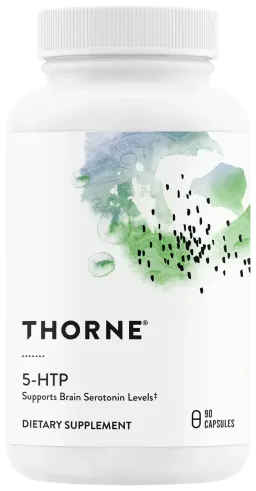
Thorne 5-Hydroxytryptophan Review
Thorne 5-HTP is a capsule supplement that combines 5-hydroxytryptophan with pyridoxal 5'-phosphate, the active form of vitamin B6. The page explains that 5-hydroxytryptophan is a metabolite the body naturally produces when it converts the essential amino acid L-tryptophan into serotonin, the neurotransmitter associated with restful sleep and a positive mood. Thorne states that its formula optimizes this conversion by pairing 5-HTP with vitamin B6, which the page describes as a necessary cofactor for serotonin creation. The product is presented as supporting stress management, restful sleep, a positive mood, and balanced serotonin levels. The page lists benefits including support for the synthesis of serotonin in the central nervous system, benefit for discomfort associated with fatigue, and help to mitigate sugar cravings. Features listed include good absorption, the ability to cross the blood-brain barrier, and the option to take the capsules with meals without reducing effectiveness. The page names three groups who may benefit: people looking for support for positive mood and stress management, individuals experiencing stress who need sleep support as a result, and people on weight management programs looking for support with carbohydrate cravings. The Why Thorne section says the formula reflects the scientific rigor Thorne is known for, with each ingredient carefully selected, clinically studied, and tested through multiple rounds of quality control for purity, potency, and consistency. The product is also described as third-party tested and certified to verify that the contents match the label and contain no unsafe levels of contaminants such as heavy metals, pesticides, and microorganisms. The ingredient panel lists 100 mg of 5-Hydroxytryptophan and 6.8 mg of Vitamin B6 per serving of two capsules, with 45 servings per container, and other ingredients of leucine, microcrystalline cellulose, silicon dioxide, and hypromellose capsule. The page also carries warnings: the product is contraindicated for anyone with a history of hypersensitivity to its ingredients, pregnant or nursing users should not use it, and 5-HTP should be used with caution alongside a med, an MAO inhibitor, or other a med medication. The purchase options show a one-time price of 39 dollars for 90 capsules, or 35.10 dollars with a subscription at 10 percent off, with additional savings for multiple subscriptions and HSA or FSA eligibility noted.
We don’t sell supplements. We help you make decisions and get the best price.
Lowest prices
Finding the lowest prices at the stores now. This takes a few seconds.
Products with nearly the same formula (Matched on the main ingredients)
Study, Trial or Testing Result Summary
Members Only78 human studies · 44 improved
5 of these 78 human studies gave the ingredient by drip, not by mouth.
5-hydroxytryptophan is the main ingredient, and this product gives a full studied dose. A pooled look at 13 studies in people with depression found about 65 percent reached remission, though few studies had placebo groups and results varied widely [1]. In 60 people with a first episode of depression, 8 weeks lowered depression scores about as much as a med [2]. In 30 older adults, 100 milligrams daily for 12 weeks improved depression and memory scores compared with no supplement [3]. In 25 people with Parkinson's disease, 50 milligrams daily improved depression scores more than placebo but not apathy [4]. However, in 166 people with bowel disease and fatigue, 200 milligrams daily did not improve depression, anxiety or stress more than placebo [5], and a multi-ingredient product containing it did no better than placebo in 158 depressed adults [6]. Vitamin B6 is also at a full dose, with mixed results. One month of high-dose B6 cut depression symptoms in adults with at least mild symptoms [7] and lowered anxiety in young adults [8]. B6 with other B vitamins helped older adults on a med reach remission [9] and lowered major depression in stroke survivors [10], but showed no benefit in 4331 older women [11] or in a pooled review of 16 trials [12]. Animal and cell studies are never counted.
See all 78 studies →Hide the studies
- Across 16 trials with 6276 people without severe nerve disease or true B12 deficiency, B12 alone or B complex (with or without B6) did not improve thinking or depression symptoms.Effects of Vitamin B12 Supplementation on Cognitive Function, Depressive Symptoms, and Fatigue: A Systematic Review, Met…
- Two small trials of 64 people with depression (one of 5-HTP, one of tryptophan) showed better results than placebo, though the quality of the evidence was too low to judge effectiveness.Are tryptophan and 5-hydroxytryptophan effective treatments for depression? A meta-analysis.
- In a pooled analysis of observational studies, people with the highest dietary vitamin B6 intake had 19% lower risk of depression than those with the lowest, significant in women but not in men.Associations of dietary vitamin B1, vitamin B2, vitamin B6, and vitamin B12 with the risk of depression: a systematic re…
- Across 13 studies in people with depression, about 65% reached remission on 5-HTP, but few studies had placebo groups and results varied widely.Effects of 5-hydroxytryptophan on distinct types of depression: a systematic review and meta-analysis.
- Pooling two small trials of 64 people with depression, 5-HTP or tryptophan worked better than placebo, but the evidence was too weak to be conclusive.Tryptophan and 5-hydroxytryptophan for depression.
- Pooling two small trials of 64 people with depression, 5-HTP or tryptophan worked better than placebo, but the evidence was too weak to be conclusive.Tryptophan and 5-hydroxytryptophan for depression.
- In a review of 14 trials in women, magnesium plus vitamin B6 reduced premenstrual anxiety and B6 alone reduced anxiety in older women, but magnesium alone had no effect and stress from painful periods was not affected.The impact of essential fatty acid, B vitamins, vitamin C, magnesium and zinc supplementation on stress levels in women:…
- In 4331 older women taking B6 with folic acid and B12 daily for about 7 years, depression risk was no different from placebo.Effect of long-term supplementation with folic acid and B vitamins on risk of depression in older women.
- In young adults given high-dose vitamin B6 for one month, self-reported anxiety fell compared with placebo and depression showed a trend toward reduction.High-dose Vitamin B6 supplementation reduces anxiety and strengthens visual surround suppression.
- In 348 adults in a food-based heart health program, depression scores fell more than in the control group over 6 months, and higher dietary vitamin B6 intake was linked to lower depression scores.Coronary Health Improvement Project (CHIP) is associated with improved nutrient intake and decreased depression.
- In 273 stroke survivors followed about 7 years, daily B6 with folic acid and B12 lowered the hazard of major depression versus placebo (18.4% vs 23.3%).B-vitamins reduce the long-term risk of depression after stroke: The VITATOPS-DEP trial.
- In 267 adults given 100 mg vitamin B6 daily for one month, those with mild or worse depression symptoms at the start had a large reduction in depression versus placebo, with no effects on anxiety or stress.High Dose Vitamin B6 Reduces Depression Symptoms.
- In 264 stressed adults with low magnesium over 8 weeks, adding B6 to magnesium was not better than magnesium alone overall, but gave 24% greater stress improvement in those with severe stress.Superiority of magnesium and vitamin B6 over magnesium alone on severe stress in healthy adults with low magnesemia: A r…
- In a secondary analysis of 264 people taking magnesium with or without 30 mg vitamin B6 for 8 weeks, adding vitamin B6 did not further raise magnesium levels, and this analysis did not report a separate mood or stress effect of vitamin B6.Impact of magnesium supplementation, in combination with vitamin B6, on stress and magnesium status: secondary data from…
- In 171 adults with mild insomnia, a two-week multi-ingredient blend containing vitamin B6 did not improve sleep or mood and anxiety more than placebo, as both groups improved similarly.Exploring the Effect of Lactium™ and Zizyphus Complex on Sleep Quality: A Double-Blind, Randomized Placebo-Controlled Tr…
- In 166 people with inactive inflammatory bowel disease and fatigue, 200 mg daily of 5-HTP for 8 weeks did not improve fatigue or depression, anxiety and stress scores more than placebo.Effect of 5-Hydroxytryptophan on Fatigue in Quiescent Inflammatory Bowel Disease: A Randomized Controlled Trial.
- In 158 adults with major depression, a multi-ingredient supplement containing 5-HTP for 8 weeks did not beat placebo (40% responded versus 51% on placebo).Nutraceuticals for major depressive disorder- more is not merrier: An 8-week double-blind, randomised, controlled trial.
- In 158 adults with major depression taking a multi-ingredient supplement with 5-HTP for 8 weeks, rises in blood omega-3 levels tracked with fewer depressive symptoms, but the effect of 5-HTP itself was not isolated.EPA and DHA as markers of nutraceutical treatment response in major depressive disorder.
- In 153 adults aged 50 or over with major depression taking citalopram, adding vitamin B6 with B12 and folic acid for 52 weeks did not improve remission at 12 weeks but led to more remission over the year (85.5% vs 75.8%) and less relapse.Read the study on PubMed (25257064) →
- In a placebo-controlled trial of 129 young adults, a high-dose multivitamin taken for one year improved mood in women, and the mood gains were linked to better pyridoxine status.Vitamin supplementation for 1 year improves mood.
- In 124 women starting a low-dose birth control pill, 150 mg of vitamin B6 daily for 30 days did not reduce depression, irritability or other side effects significantly more than placebo.Effect of vitamin B6 on the side effects of a low-dose combined oral contraceptive.
- In a placebo-controlled trial of 90 adults with fibromyalgia, 80 mg of vitamin B6 daily did not improve anxiety, depression, or other psychological measures more than placebo, although scores improved in both groups.Effect of vitamin B6 on pain, disease severity, and psychological profile of fibromyalgia patients; a randomized, double…
- In 83 men recovering from heroin addiction, a combination of 5-HTP, tyrosine, lecithin and glutamine reduced tension, anxiety, depression, anger and fatigue and improved vigor more than placebo by day 6.Neurotransmitter-precursor-supplement intervention for detoxified heroin addicts.
- In a placebo-controlled trial of 81 pregnant women at risk of postpartum depression, 80 mg of vitamin B6 daily from week 28 of pregnancy lowered depression scores compared with placebo.Can Vitamin B6 Help to Prevent Postpartum Depression? A Randomized Controlled Trial.
- In 76 healthy men aged 70 to 79, 20 mg of pyridoxine daily for 3 months did not change mood compared with placebo, though it modestly improved long-term memory.Vitamin B-6 supplementation in elderly men: effects on mood, memory, performance and mental effort.
- In a 6-month trial of 68 malnourished older adults, an intensive nutrition program led by a dietitian improved depression scores and cognitive function more than standard care, and raised vitamin B6 intake through diet; the vitamin B6 dose itself was not set as a supplement.Intensive dietary intervention by a dietitian as a case manager among community dwelling older adults: the EDIT study.
- In 66 hospitalized people with manic bipolar disorder taking lithium, 40 mg of daily vitamin B6 for 8 weeks improved mood scores more than placebo.Efficacy of vitamins B1 and B6 as an adjunctive therapy to lithium in bipolar-I disorder: A double-blind, randomized, pl…
- In 65 adults with coeliac disease on a gluten-free diet, a daily combined vitamin pill containing 3 mg of vitamin B6 for 6 months improved general well-being compared with placebo, especially anxiety and low mood.Clinical trial: B vitamins improve health in patients with coeliac disease living on a gluten-free diet.
- In 65 people with chronic fatigue, a daily capsule with 1.05 mg of vitamin B6 plus beta-glucan for 36 weeks improved cognitive fatigue, but anxiety and depression outcomes were not reported as improved.Yeast Beta-Glucan Supplementation with Multivitamins Attenuates Cognitive Impairments in Individuals with Myalgic Enceph…
- In 60 people with a first episode of depression, 5-HTP for 8 weeks reduced depression scores about as much as a med, and 22 of 30 (73%) responded.Read the study on PubMed (23380314) →
- In 58 depressed patients, 5-HTP alone did not improve mood significantly more than placebo, while 5-HTP combined with L-deprenil did.Read the study on PubMed (6448885) →
- In a double-blind trial of 55 women with premenstrual mood changes, 150 mg of vitamin B6 daily for two months improved some symptoms such as dizziness and behavior changes, but many emotional symptoms remained, and the authors urged caution because of possible toxicity at low doses.The effects of vitamin B6 supplementation on premenstrual symptoms.
- In 50 people with a manic episode of bipolar disorder taking lithium, 80 mg of vitamin B6 daily for 8 weeks did not improve mood more than placebo, and memory and thinking test scores were slightly lower in the vitamin B6 group.The efficacy of vitamin B6 as an adjunctive therapy to lithium in improving the symptoms of acute mania in patients with…
- In 50 elderly people with depression, 100 mg of 5-HTP combined with dihydroergocristine for 60 days improved depression and mental performance, while placebo showed no change.Effects of a levo-5-hydroxytryptophan-dihydroergocristine combination on depression and neuropsychic performance: a doub…
- In 45 adults with anxiety disorders, 5-hydroxytryptophan produced a moderate reduction in symptoms, less than clomipramine, and did not improve associated depressive symptoms.Effect of a serotonin precursor and uptake inhibitor in anxiety disorders; a double-blind comparison of 5-hydroxytryptop…
- In 44 women over one menstrual cycle, 50 mg of vitamin B6 taken with 200 mg of magnesium reduced anxiety-related premenstrual symptoms more than placebo, though the effect was modest and vitamin B6 alone was not separately shown to help.A synergistic effect of a daily supplement for 1 month of 200 mg magnesium plus 50 mg vitamin B6 for the relief of anxie…
- In a placebo-controlled pilot of 42 women with premenstrual syndrome, a multi-ingredient supplement containing vitamin B6 improved mood within the group over three months, but it did not beat placebo.Effects of the PREMEN-CALM® in the Management of the Premenstrual Syndrome: A Randomized, Double-Blind, Placebo-Controll…
- In a randomized crossover trial of 32 women who completed it, 50 mg of pyridoxine daily for three months reduced emotional premenstrual symptoms such as depression, irritability and tiredness compared with placebo.Pyridoxine (vitamin B6) and the premenstrual syndrome: a randomized crossover trial.
- In a 12-week randomized trial of 30 older adults in Singapore, taking 100 mg per day of 5-hydroxytryptophan improved memory test scores and depression scores compared with no supplement.The Impact of 5-Hydroxytryptophan Supplementation on Cognitive Function and Mood in Singapore Older Adults: A Randomized…
- In 27 overweight women, a sublingual spray of plant extracts containing 5-hydroxytryptophan, used five times a day for 2 months, increased feelings of satiety more than placebo did.Satiety and amino-acid profile in overweight women after a new treatment using a natural plant extract sublingual spray …
- In a double-blind trial of 26 hospitalized people with depression, 300 mg per day of L-5-hydroxytryptophan added to chlorimipramine for 28 days gave better results than chlorimipramine with placebo.Treatment of depression with L-5-hydroxytryptophan combined with chlorimipramine, a double-blind study.
- In a placebo-controlled crossover trial of 25 people with Parkinson's disease, 50 mg per day of 5-hydroxytryptophan for 4 weeks improved depression scores more than placebo but did not improve apathy.Efficacy and safety of 5-hydroxytryptophan on depression and apathy in Parkinson's disease: a preliminary finding.
- In 20 people with depression, pyridoxine plus L-tryptophan and a med maprotiline produced no differences in outcome at 2 or 4 weeks.The clinical significance of disordered renal excretion of xanthurenic acid in depressive patients.
- In 15 people with schizophrenia or schizoaffective disorder, vitamin B6 added to their medicines (raised to 400 mg daily over 9 weeks) did not improve psychotic symptoms more than placebo.Vitamin B6 as add-on treatment in chronic schizophrenic and schizoaffective patients: a double-blind, placebo-controlled…
- Single intravenous doses of 5-hydroxytryptophan (10, 20, or 40 mg) did not trigger panic or anxiety in 7 people with panic disorder or 7 healthy controls, though higher doses caused more nausea, dizziness, and fatigue.Behavioral, neuroendocrine and biochemical effects of different doses of 5-HTP in panic disorder.
- In 8 college women taking birth control pills, 100 mg of vitamin B6 daily for 4 weeks lowered depression scores by 20% compared with an 11% rise on placebo (p = 0.046).Vitamin B6 Supplementation Reduces Symptoms of Depression in College Women Taking Oral Contraceptives: A Randomized, Dou…
- In children taking levetiracetam who had behavior side effects, adding pyridoxine led to improvement in those side effects within about 9 days, and no pyridoxine toxicity was seen.Pyridoxine Add-On Treatment for the Control of Behavioral Adverse Effects Induced by Levetiracetam in Children: A Case-C…
- Over 8 weeks, stressed adults taking magnesium with 30 mg vitamin B6 or magnesium alone both had reduced depression and anxiety scores, and only the combination gave greater gains in perceived physical activity capacity at week 4.Effect of magnesium and vitamin B6 supplementation on mental health and quality of life in stressed healthy adults: Post…
- In depressed patients, 125 mg of pyridoxine three times daily with L-tryptophan for 2 to 4 weeks did not change blood tryptophan levels, and no link to mood scores was found.Kinetics of L-tryptophan in depressive patients: a possible correlation between the plasma concentrations of L-tryptopha…
- In 1011 Cambodian women using birth control pills, those given daily vitamin B6 (577 women) reported less depression, nausea and headache than women given usual care without placebo (434 women).Supplementation with vitamin B6 reduces side effects in Cambodian women using oral contraception.
- In 140 healthy volunteers, 45 g daily of a spread with 5-HTP, theanine and GABA for 10 days improved well-being, mood and memory scores, though mood also rose in the control group.[Clinical evaluation of the efficacy of innovative spread of a given fatty acid composition enriched by adaptogens].
- In 47 adults with major depression who had not responded to cyclic meds, L-5-hydroxytryptophan produced no improvement, while tranylcypromine helped about half of patients.Read the study on PubMed (3146891) →
- In 38 women with premenstrual tension and 38 symptom-free controls, vitamin B6 given in a double-blind crossover during the luteal phase did not significantly improve premenstrual symptoms compared with placebo.Platelet serotonin uptake and effects of vitamin B6-treatment in premenstrual tension.
- In 31 patients with chronic headache, 400 mg daily of L-5-hydroxytryptophan for 2 months reduced headache frequency and severity more than placebo, but the difference was not statistically significant.Serotonin precursors in chronic primary headache. A double-blind cross-over study with L-5-hydroxytryptophan vs. placebo…
- In a double-blind trial of 30 adults with depression, 5-hydroxytryptophan with benzerazide worked about as well as imipramine, with different side effects: stomach upset from 5-hydroxytryptophan and dry mouth and tremor from imipramine.The treatment of depression with L-5-hydroxytryptophan versus imipramine. Results of two open and one double-blind study…
- In a double-blind study of 30 hospitalized people with depression, adding L-5-hydroxytryptophan to the drug nialamide led to fuller recovery and faster onset than nialamide alone.5-Hydroxytryptophan (5-HTP) and a MAOI (nialamide) in the treatment of depressions. A double-blind controlled study.
- In 23 male submariners on a 3-month patrol, 0.5 mg daily vitamin B6 did not change mood depression compared with placebo, and mood scores did not track vitamin B6 status.Decreased vitamin B-6 status of submariners during prolonged patrol.
- A single 200 mg oral dose of 5-HTP did not raise growth hormone in 8 depressed patients, 4 schizophrenic patients, 4 manic patients, or 4 normal controls, so it was not useful as a marker for depression.Interest of 5-hydroxytryptophan (5-HTP) as a neuroendocrine marker in depressive illness. A negative report.
- In 19 obese women taking 8 mg/kg daily of 5-HTP for five weeks versus placebo, mood did not change, though food intake and weight fell.The effects of oral 5-hydroxytryptophan administration on feeding behavior in obese adult female subjects.
- In 12 adults with coeliac disease and depressive symptoms, 80 mg of daily oral vitamin B6 for 6 months lowered depression scores on a personality test, after gluten withdrawal alone had not changed them.Reversal of psychopathology in adult coeliac disease with the aid of pyridoxine (vitamin B6).
- In a double-blind single-patient trial of a man with Lesch-Nyhan syndrome, 5-hydroxytryptophan reduced involuntary movements and caused sedation but did not improve mood or self-harm over seven two-week blocks.Double-blind clinical trial of 5-hydroxytryptophan in a case of Lesch-Nyhan syndrome.
- In elderly people taking 2 mg of vitamin B6 daily for one year, psychological well-being scores improved slightly compared with placebo.Vitamin B6 status of Finnish elderly. Comparison with Dutch younger adults and elderly. The effect of supplementation.
- Intravenous L-5-hydroxytryptophan in healthy adults produced a clear lift in mood over several hours, followed by a return to normal mood, in a study that used blinded comparisons.Intravenous L-5-hydroxytryptophan in normal subjects: an interdisciplinary precursor loading study. Part II: profile of …
- In a study of people whose depression did not respond to older meds, L-5-hydroxytryptophan alone did not appear to help, while the drug tranylcypromine helped 26 of 45 patients.Tranylcypromine in depression resistant to cyclic antidepressions.
- A single 200 mg oral dose of 5-hydroxytryptophan raised serum cortisol more in unmedicated patients with affective disorders than in controls, and the size of the rise tracked depression severity and suicidality.Effect of 5-hydroxytryptophan on serum cortisol levels in major affective disorders. II. Relation to suicide, psychosis,…
- In 86 pregnant women with moderate nausea and vomiting, adding 3 weeks of mindfulness-based therapy to pyridoxine (40 mg daily) and medical care reduced anxiety and depression more than pyridoxine and medical care alone, and the gains held at 1 month; the benefit is attributed to the therapy, since both groups took pyridoxine.A RCT of psychotherapy in women with nausea and vomiting of pregnancy.
- In an open-label study of 46 women with mild to moderate anxiety, a saffron, ashwagandha, tryptophan and vitamin B6 supplement taken for 12 weeks lowered anxiety scores, though there was no control group and the lockdown may have influenced results.Effectiveness of a Saffron and Withania Supplement on Mood in Women With Mild-to-Moderate Anxiety During the COVID-19 Lo…
- In an open-label pilot of 15 women whose depression did not respond to standard meds, 8 weeks of 5-hydroxytryptophan plus creatine lowered depression scores by an average of 60%, with no serious side effects; a placebo-controlled trial is still needed.An Open-Label Pilot Study of Combined Augmentation With Creatine Monohydrate and 5-Hydroxytryptophan for Selective Serot…
- In 10 children with bipolar spectrum disorder, an 8-week open-label multinutrient supplement was well tolerated and raised blood vitamin B6 levels, with open-label mood outcomes described as encouraging.Nutritional and safety outcomes from an open-label micronutrient intervention for pediatric bipolar spectrum disorders.
- In nine schizophrenia patients with minor depression, 150 mg of pyridoxine daily for 4 weeks markedly improved depression in two of them.[Antidepressive effect of pyridoxine (vitamin B6) in neuroleptic-treated schizophrenic patients with co-morbid minor dep…
- In an open trial, 6 of 7 adults with depression related to Parkinson's disease improved on oral 5-hydroxytryptophan, and their spinal fluid serotonin breakdown product rose on repeat testing.The relationship of serotonin to depression in Parkinson's disease.
- In 3,362 Iranian adults, lower dietary vitamin B6 intake was linked to higher odds of depression and anxiety, most clearly in women; this is an association and does not prove that more vitamin B6 prevents these conditions.Higher vitamin B6 intake is associated with lower depression and anxiety risk in women but not in men: A large cross-sec…
- In a retrospective review of 240 children with epilepsy taking levetiracetam, those also taking vitamin B6 were less likely to stop the drug because of behavior and mood side effects, and many who stayed on it reported better behavior with B6.Vitamin B6 decreases the risk of levetiracetam discontinuation in children with epilepsy: A retrospective study.
- In a large national survey (NHANES 2005-2014), vitamin B6 intake was only trivially associated with depression after adjusting for confounders, so no meaningful link was found.Associations between vitamin intake and depression severity: A cross-sectional analysis of NHANES 2005-2014.
- In a 1978 Russian study of 48 adults with depression, pyridoxine (vitamin B6) treatment produced a positive effect on depressive symptoms, along with higher noradrenaline excretion.[Effect of pyridoxine on the psychopathology and pathochemistry of involutional depressions].
- In 26 healthy adults given 5-HTP by IV infusion, mood rose in a consistent pattern over time, alongside growth hormone changes.Intravenous L-5-hydroxytryptophan in normal subjects: an interdisciplinary precursor loading study. Part 1: Implications…
- In healthy adults given intravenous 5-hydroxytryptophan, mood elevation occurred in 8 of 11 subjects, and growth hormone release followed the same time course.Intravenous L-5-hydroxytryptophan in normal subjects: an interdisciplinary precursor loading study. Part III: Neuroendoc…
- In healthy adults given 5-HTP by IV infusion over 34 to 35 experiments, mood rose for up to four hours in step with growth hormone peaks.Mood elevation and pituitary stimulation after i.v. l-5-HTP in normal subjects: Evidence for a common serotoninergic mec…
Review Totals and Summary
Members Only6,508 reviews · 91% positive
Thorne 5-Hydroxytryptophan has a strongly positive reputation, with about 4,381 ratings across the stores and most written feedback praising it for sleep and mood. A few buyers found the effect small, and some objected to the added vitamin B6. **What buyers say it did for them:** Sleep is the most common benefit. Buyers describe falling asleep faster and staying asleep. One says, "I've been able to sleep through the night and wake up rested." Another says it "magically wards off bad dreams 95% of the time." Mood is the second theme, with people reporting a steadier, lifted mood. One writes, "My mood is a lot more stable, more energized." Some reviewers also report fewer food cravings and less hunger, such as "little craving for junky, carbohydrate-laden foods." A few combined it with Thorne's PharmaGABA-250 or magnesium glycinate and were pleased with the results. One reviewer noticed a difference within a week, and another says a husband slept better after a few days. **What they complain about:** The main complaint is the vitamin B6 in the formula. One one-star reviewer says, "You added b6 which i already take," and will not rebuy. On Vitacost, a long-term user believes the B6 caused severe hip neuropathy that eased after switching to a 5-HTP product without B6. The Supplement Facts panel lists B6 at 6.8 mg per two capsules, or 400% of the daily value. Others found the effect weak: "effectiveness is marginal for me." One calls it only "Helps a little bit with a mood," and another reports mixed results, a mild improvement in relaxation that is "not an immediate or dramatic effect." One reviewer saw little change in mood but did get better sleep. **Taste, smell, pill size, form:** Reviewers say the capsules are easy to swallow and cause no stomach upset or morning grogginess. One notes "no stomach ache" and "no bad taste." A Vitacost reviewer describes the ingredients as clean, with no unnecessary fillers. The 90-count bottle is said to last a long time. Another reviewer points out that the 50 mg capsule size lets you adjust the dose. Reviews of other forms of the product were left out. **Value for money:** Opinion is split. A Vitacost reviewer calls the price fair for the brand, and one repeat buyer is on a third re-order. One reviewer finds it "quite costly product, given that the dosage is small," and needs two or three capsules a day to feel a mood effect. Another values it because few brands make 5-HTP. **Who it seems to suit and who it did not:** It seems to suit people looking for sleep help, steadier mood, or less craving, and fans of the Thorne brand. One person says it avoided the morning drowsiness they got from a med PM. Another uses it to maintain serotonin levels alongside other medication, and a postpartum mom says it helped her avoid raising her a med dose. It suited people who want B6 included, as one reviewer says it "includes the b6 necessary for optimum results." It did not suit people who already take B6 or want to avoid it, those with B6 concerns, or those who need a stronger effect per capsule. One reviewer cautions that results vary and that it is not something to approach casually.
Biohacker Summary
Members Only4 of 10 recommend it
Nobody on the panel spoke about 5-hydroxytryptophan itself, so there is nothing from them on why to take it, which form to choose, what dose to use or what to pair it with. The only ingredient they discussed is vitamin B6, a smaller ingredient in this product. On B6, three of the eight who spoke recommend it, mainly for nervous system support, making serotonin and melatonin, and helping the body use magnesium, and the preferred form is the active one called P5P. Three others warn, citing nerve damage from too much, a synthetic form to avoid, or caution when formulating, and one of them stopped supplementing B6 for that reason. The remaining two are neutral, with one mentioning its role in methylation and the other noting that low B6 can raise prolactin.
See all 8 biohackers →Hide the biohackers
Dr. Eric Berg · Vitamin B6 · warns
- Dr. Berg lists pyridoxine hydrochloride as a synthetic vitamin to avoid.
- Recommends taking the active form of vitamin B6, pyridoxal-5-phosphate (P5P), for its benefits to the nervous system, including building the myelin sheath and protecting sensory nerve integrity.
- Notes that Vitamin B6 is intimately involved in the nervous system and may be behind sciatica and carpal tunnel syndrome.
- States that high vitamin B6 levels can be linked to peripheral neuropathy.
- Mentions vitamin B6 as a required cofactor for Vitamin D to be properly absorbed and used by the body.
- States that Vitamin D needs K2, magnesium, zinc, B6, boron, and even vitamin A to do its job, emphasizing that vitamins rarely work alone.
- Recommends P5P as the active form of vitamin B6, advising against pyridoxine HCl which is inactive and may not convert properly due to genetic issues.
- Warns that unconverted vitamin B6 can accumulate in the body and affect the nervous system, worsening nerve pain, especially if the liver is sluggish, bile is insufficient, or glutathione is low. He advises not to exceed 50 mg per day.
- Mentions that if one doesn’t have enough vitamin B6, it may seem that magnesium is not working.
- Mentions that vitamin B6 is necessary for magnesium to get into cells.
Dr. Mark Hyman · Vitamin B6 · uses
- Optimized a child's nutrient status with vitamin B6, as the child had low B6 levels.
- Recommends vitamin B6 with folate and B12 as supplements with strong evidence for PMS.
- Believes that if functional testing is done to replete deficiencies like vitamin D and B12 before someone stops their medication, withdrawal symptoms can be completely eliminated.
- States that Vitamin B6, at 50 to 100, is important for estrogen metabolism.
- Recommends Vitamin B6 to support histamine metabolism and gave it to a patient two times a day to help her body break down histamine.
- Dr. Hyman recommends vitamin B6 for easing PMS symptoms, stating it is important for estrogen metabolism.
- Advises moving away from some over-the-counter gummy vitamins due to their high sugar content, which can lead to kids consuming a mouthful of sugar.
- Dr. Hyman highlights the importance of B12, B6, and folate, noting that high homocysteine levels, which indicate inadequate function of these B vitamins, are associated with high blood pressure and diabetes in pregnancy.
- Notes that deficiencies in nutrients like vitamin B6 can cause low magnesium.
- Recommends B6 as a methylating vitamin needed for detoxification.
Thomas DeLauer · Vitamin B6 · recommends
- Recommends ensuring adequate vitamin B6 intake, as it is a required cofactor for cells to use absorbed magnesium and improves central nervous system relaxation when combined with magnesium.
- Recommends vitamin B6 to support GABA production and find balance for mental clarity.
- Mentions B12 as a critical B vitamin for reducing homocysteine.
- Notes that depending on one's diet, adding a good multivitamin might be beneficial, specifically recommending a methylated multivitamin for better absorption and utilization.
- Says his kids love taking Hiya multivitamins because they are sweetened with monk fruit and have no sugar, making it a fun ritual for them.
- Thomas DeLauer, a dad of two young kids, recommends Hiaa Kids Multivitamins as a fun and beneficial chewable multivitamin, sweetened with monk fruit, that helps establish a good routine for kids.
- Warns against taking synthetic Vitamin B6 (pyridoxine or pyridoxine HCL) because it can cause peripheral neuropathy and clogs B6 receptors for a long time.
- Says that while he's not the biggest fan of giving kids a bunch of supplements, he understands his kids don't always eat everything he wants them to, and Hyatt multivitamins help them get additional vitamins. He also says his kids love them and he probably eats more of them than his kids do.
- Discusses that Vitamin B6 is beneficial for eyesight and can reduce the risk of advanced macular degeneration, likely by helping to break down homocysteine which can damage eye vessels.
- Notes that the multivitamin he takes uses methylcobalamin for B12, which he considers superior to cyanocobalamin, a cheap shortcut.
Dave Asprey · Vitamin B6 · neutral
- Mentions Vitamin B6 as playing a role in methylation pathways.
- Warns that the synthetic form of vitamin B6 found in almost all multivitamins and energy drinks binds to B6 receptors for a thousand days, making them unavailable for the beneficial form.
- Says they would take a bunch of their Wild Lights Vitamin B6 if they had to eat almonds, to try and pass them.
- Warns about formulating with Vitamin B6.
- Identifies P5P, a bioactive form of vitamin B6, as a great cofactor for melatonin production, helping the body naturally produce the hormone.
- Recommends feeding the tryptophan pathway with vitamin B6, as it is depleted by birth control and its depletion can lead to depression.
- Mentions P5P in the context of epigenetic alterations, comparing it to vitamin B6.
- Recommends supplementing with Vitamin B6 if homocysteine levels are high, indicating a methylation issue or B12/folate deficiency.
Ben Greenfield · Vitamin B6 · recommends
- Recommends Vitamin B6 for the conversion of tryptophan to serotonin and then melatonin in the pineal gland.
- Lists vitamin B6 as a vitamin that, when combined with others, has a neuroprotective effect on the brain.
- Leland ensures adequate Vitamin B6 for patients to optimize endogenous melatonin production.
- Ben recommends HIYA Kids Multivitamin as a pediatrician-approved, superpowered chewable multi that is zero sugar, non-GMO, vegan, dairy-free, allergy-free, gelatin-free, and nut-free, formulated with 12 organic fruits and veggies and 15 essential vitamins and minerals.
- Warns that most typical children's vitamins are basically candy in disguise, containing two teaspoons of sugar, unhealthy chemicals, and gummy junk that growing kids should never eat.
- Ben mentions that tryptophan and vitamin B6 are necessary to produce melatonin.
- States that up to 85% of the vitamin B6 made in the body can be produced by species in the gut, highlighting the gut's role as a 'small pharmacy' for vitamin production.
- States that they use some vitamin B6.
- Explains that Vitamin B6 (P5P) helps with about 30 of magnesium's enzymatic reactions, including serotonin and dopamine manufacturing, and is involved in the absorption of magnesium.
- Ben recommends Thorne Vitamin B Complex for healing nerve damage.
Siim Land · Vitamin B6 · neutral
- Mentions that insufficient vitamin B6 can raise prolactin levels.
- Recommends B12 for vegans, noting it is a standard vitamin found in animal products.
- Is experimenting with serine plus vitamin B6 to impact homocysteine levels, a mechanistic hypothesis he is testing.
- Takes 1 gram of Vitamin B6 from DoNotAge in the morning for longevity.
- Mentions vitamin B6 as another example where the principle of metabolic conversions from plant to animal forms applies, with genetic variations affecting the ability to get B6 from plant foods.
Andrew Huberman · Vitamin B6 · warns
- Does not supplement B6 due to evidence that overs-supplementing vitamin B, especially B6, is problematic because of peripheral nerve damage.
- Notes that some people are exploring the use of P5P, a metabolite of vitamin B6 known to suppress prolactin, as a way to buffer the post-MDMA crash, though there are no human data yet.
- Recommends P5P, which is vitamin B6, as a dopamine agonist to help with low drive and motivation.
- Described how some people take vitamin B6 to reduce prolactin levels and thereby reduce the duration of the refractory period, but he is not suggesting anyone do this.
- Mentions Vitamin B6 as a mild prolactin inhibitor.
- Huberman states that he used to take a couple hundred milligrams of vitamin B6 after major events to offset the post-achievement low, noting it seemed to have a positive effect, but advises caution for those with diabetic neuropathy.
- Notes that some people are exploring the use of P5P, a metabolite of vitamin B6 known to suppress prolactin, as a way to buffer the post-MDMA crash, but there are no human data yet.
- He mentions that B6 and NMN are where the Krebs cycle starts to kick in, and all B vitamins basically run that entire circle.
Dr. Rhonda Patrick · Vitamin B6 · recommends
- Dr. Patrick states that people with a specific gene polymorphism in the NPF3 gene, which affects vitamin B6 levels, may need to increase their dietary intake of B6 and/or supplement with vitamin B6.
- Vitamin B6 can suppress the production of Advanced Glycation End products.
- Dr. Rhonda Patrick explores high-dose vitamin B6.
- Notes that very high doses of vitamin B6 can overcome a specific mutation in the ornithine aminotransferase enzyme, preventing progressive blindness.
RAL Summary
Members OnlyTier 3 for Mood
More Details
Members OnlyBody systems · Combine with · Possible side effects
Body systems: Nervous system
Combine with: For mood support, 5-HTP is often paired with vitamin B6 (as P5P) to help convert it to serotonin, plus magnesium glycinate, vitamin D3 and omega-3 fish oil for neurotransmitter and mood balance. L-theanine or saffron extract can complement it for emotional balance. If the real goal is male hormone support, look instead at a different product with zinc, magnesium, vitamin D3, boron, ashwagandha, or tongkat ali, and consider testing testosterone levels first. Do not combine 5-HTP with meds, meds, MAOIs, St. John's wort, or other serotonergic drugs without medical supervision, because of the risk of serotonin syndrome.
Possible side effects: The studies given report no major side effects. One reviewer believed the added vitamin B6 caused nerve pain in the hip that eased after switching to a product without B6.
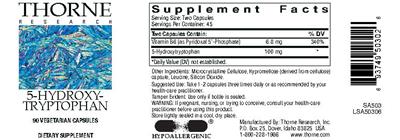
Supplement Facts
Vitamin B6 6.8 mg · 5-HTP 100 mg
| Vitamin B6 | 6.8 mg | |
| 5-HTP | 100 mg | † |
Other ingredients: Microcrystalline Cellulose, Hypromellose, Leucine, Silicon Dioxide.
Directions: Suggested use: Take 1-2 capsules three times daily or as recommended by your healthcare practitioner.
Barcode (UPC) 693749503026 · Label source: NIH label database · Report a label change
Show entire label

More mood products
Members OnlyThe highest ranked for the same goal
Read more
Our articles on this subject
- Supplements for Stress and Anxiety Relief: What the Evidence SupportsArticle · Oct 26, 2026
- Joe Rogan's Supplement Stack, Reviewed: What He Takes, What It Costs, and What the Evidence SupportsArticle · Sep 27, 2026
Graded November 5, 2026 by the Reverse Age Lab evidence engine, from human studies, real reviews and our biohacker panel. How we grade. Is this medical advice? No. Rala organizes the published evidence; go over any change with your doctor, especially if you take meds.
Privacy policyConsumer health dataTermsDo Not Sell or Share My Personal InformationCookie settings