
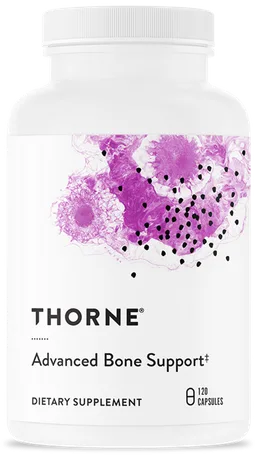
Thorne Advanced Bone Support Review
Advanced Bone Support is a Thorne calcium and vitamin D formula with select B vitamins and minerals, designed to add bone support to a daily routine. The product is presented as providing well-absorbed calcium, magnesium and vitamin D to support strong bones, along with added B vitamins for healthy methylation and boron for estrogen metabolism. The page explains that bone health declines with age, and that some groups are especially at risk, particularly women after menopause, who may face concerns about bone density. Thorne lists several benefits: it supports strong, healthy bones with a comprehensive mineral and vitamin formula; it provides calcium as dicalcium malate and magnesium as dimagnesium malate for enhanced absorption and higher mineral concentration; magnesium is described as promoting bone density by supporting parathyroid hormone function and calcium transport; vitamin D3 is said to enhance calcium absorption; and boron is described as aiding vitamin D and estrogen metabolism. The active forms of vitamins B6 as pyridoxal 5 prime phosphate, B12 as methylcobalamin, and folate as L-methylfolate are said to support methylation and help maintain normal homocysteine levels, which the page links to bone matrix integrity. The formula is noted to be made without vitamin K, to support individuals on meds who are asked to avoid vitamin K. The page identifies women, especially after menopause, who begin losing more bone than they build as they age, as a primary group who can benefit. Adults aged 18 to 35 may benefit from building strong bones early to create a higher peak bone mass and protect against later loss. Individuals with risk factors for poor bone health are also named, including smoking, a sedentary lifestyle, low body weight or small frame size, eating disorders or other poor nutrition habits, excessive sugar, caffeine or alcohol intake, and long-term use of meds or anticonvulsants. Each serving is 2 capsules and each container holds 60 servings, with the product sold in a 120 capsule count at a listed price of $29 one time, or $26.10 with a subscription that carries a 10 percent discount. The page notes that subscriptions can be set to deliver every two weeks, monthly, every 45 days, every two months, every three months or every four months, with free shipping within the contiguous United States. The warnings section states that the product is contraindicated in anyone with a history of hypersensitivity to any of its ingredients. People who are pregnant are advised to consult a health-care practitioner before using it. The page also cautions that 5-methyltetrahydrofolate is not recommended alongside a med cancer therapy, although it is said not to interfere with the anti-inflammatory activity of a med for psoriasis or rheumatoid arthritis. Finally, the page notes that gas, bloating or diarrhea may occur in some individuals taking magnesium supplements, and that these effects can resolve when the amount is reduced.
We don’t sell supplements. We help you make decisions and get the best price.
Lowest prices
We may earn a commission from some store links. How we choose.
Finding the lowest prices at the stores now. This takes a few seconds.
Study, Trial or Testing Result Summary
Members Only78 human studies · 21 improved
2 of these 78 human studies gave the ingredient by drip or injection, not by mouth.
The calcium and vitamin D in this product have mixed support for bone health. A large review of trials in women with thinning bones after menopause found that calcium plus vitamin D slightly improved pelvic bone density but not spine or hip density, and did not cut fractures [1]. Vitamin D at 700 to 800 units a day lowered hip and other fractures in older adults in one review [2], but another review of nine studies found no clear drop in fractures [3]. Small calcium trials showed no clear bone gain [4][5]. Folate, vitamin B12 and vitamin B6 did not reduce fractures or change bone density in large trials [6][7][8], and the vitamin B6 dose here is well below the one small trial that helped, which used a special form [9]. The only boron study in pills used a multi-ingredient tablet without a placebo, so the gain cannot be credited to boron [10]. Magnesium has only animal implant studies, not supplement trials in people [11]. Animal and cell studies are never counted.
See all 78 studies →Hide the studies
- In 59 mostly observational studies of children, vegetarians and vegans ate more folate but had lower bone mineral content, so higher folate intake did not translate into better bone health.Lacto-ovo-vegetarian and vegan diets in children and adolescents: a systematic review and meta-analysis of nutritional a…
- In 11 trials of 43,869 postmenopausal women with osteoporosis, calcium plus vitamin D modestly improved pelvic bone density but not spine, neck of femur or total hip density, and did not reduce fractures.The effects of combined calcium and vitamin D supplementation on bone mineral density and fracture risk in postmenopausa…
- Across 14 randomized trials with 34,700 people, B vitamin supplements including folate did not reduce fractures or change bone density, and bone resorption marker levels actually rose.B vitamins and bone health: a meta-analysis with trial sequential analysis of randomized controlled trials.
- This review of smartphone apps for osteoporosis self-management did not test vitamin D supplements and found no significant effect on vitamin D intake.Digital Health Technologies for Long-term Self-management of Osteoporosis: Systematic Review and Meta-analysis.
- In trials of older adults, 700 to 800 IU a day of vitamin D cut hip fracture risk by 26% and other nonvertebral fractures by 23%, while 400 IU a day gave no significant benefit.Fracture prevention with vitamin D supplementation: a meta-analysis of randomized controlled trials.
- Across nine studies, vitamin D3 did not significantly reduce nonvertebral or vertebral fractures versus placebo or calcium alone, with only a borderline trend toward fewer falls.The effect of cholecalciferol (vitamin D3) on the risk of fall and fracture: a meta-analysis.
- In six studies of postmenopausal women, folate levels were lower in women with osteoporosis than in controls, but the difference was not statistically significant.Association of homocysteine, vitamin B12, and folate with bone mineral density in postmenopausal women: a meta-analysis.
- In 17 studies, postmenopausal women with osteoporosis had lower folate levels than controls, but this is an association and not a test of folate supplements.Oxidative Stress-Related Biomarkers in Postmenopausal Osteoporosis: A Systematic Review and Meta-Analyses.
- Across 36 studies, postmenopausal women with osteoporosis had lower folate levels than controls, but this is an association and not a test of folate supplements.Correlation of oxidative stress-related biomarkers with postmenopausal osteoporosis: a systematic review and meta-analys…
- In 23 trials of 1,209 kidney transplant recipients, vitamin D analogues (2 trials, 51 patients) improved lumbar spine and femoral neck bone density versus no treatment, but no trial showed fewer fractures.Interventions for preventing bone disease in kidney transplant recipients: a systematic review of randomized controlled …
- In 18 small trials of 576 children with chronic kidney disease, vitamin D preparations lowered parathyroid hormone levels, but there were few data on growth or bone deformities and no clear differences between preparations.Interventions for metabolic bone disease in children with chronic kidney disease.
- Nine small, poor-quality trials of folic acid in 331 people with epilepsy found no effect on seizures or other outcomes; the only bone benefit reported was from vitamin D, not folate.Vitamins for epilepsy.
- One small trial of 39 people with sickle cell disease found vitamin D3 for six weeks raised blood vitamin D and reduced pain days versus placebo, but no bone outcomes were reported and the evidence was low quality.Vitamin D supplementation for sickle cell disease.
- In nine trials of postmenopausal women without osteoporosis, vitamin D raised blood vitamin D and improved some bone remodeling measures, but only one study found fewer fractures, so a fracture benefit could not be confirmed.Supplementation of vitamin D isolated or calcium-associated with bone remodeling and fracture risk in postmenopausal wom…
- In 141 studies of adults, plant-based eaters had higher folate intake but lower bone mineral density and bone turnover markers than meat-eaters, so no bone benefit was linked to folate.Nutrient Intake and Status in Adults Consuming Plant-Based Diets Compared to Meat-Eaters: A Systematic Review.
- In 18 mostly cross-sectional studies, vegan children ate more folate yet one study found lower bone mineral content, so folate intake showed no bone benefit.Health aspects of vegan diets among children and adolescents: a systematic review and meta-analyses.
- A review of ten studies of people after weight-loss surgery found no folate data by race and did not test folate for bone health; bone loss was not evaluated by race, and fracture results were mixed.Racial disparities in selected micronutrient deficiencies after bariatric surgery: A systematic review.
- A review of 17 studies found the effect of vitamin B12 on bone density and fracture risk is unclear and results were inconsistent.Vitamin B12, bone mineral density and fracture risk in adults: A systematic review.
- In a review of 25 observational studies of healthy men aged 50 or older, evidence linking calcium intake to bone density or bone loss was inconsistent or weak.Risk factors for low BMD in healthy men age 50 years or older: a systematic review.
- A review of eight studies found that adding boric acid and other medicines to gum-pocket cleaning gave better clinical and X-ray bone defect results in gum furcation defects than cleaning alone.Local drug delivery in the treatment of furcation defects in periodontitis: a systematic review.
- In 8,164 people with recent stroke or mini-stroke, a daily tablet of vitamin B6 (25 mg) with folic acid and B12 for a median 2.8 years did not significantly reduce osteoporotic fractures compared with placebo (1.64% vs 1.91%).The effect of homocysteine-lowering with B-vitamins on osteoporotic fractures in patients with cerebrovascular disease: …
- In 4,810 women at high cardiovascular risk, daily folic acid 2.5 mg with B6 and B12 over about 7.3 years did not reduce nonspine fractures or change bone turnover markers.Effect of Combination Folic Acid, Vitamin B6 , and Vitamin B12 Supplementation on Fracture Risk in Women: A Randomized, …
- In 2,919 adults aged 65 or older with high homocysteine, 400 mcg folic acid plus B12 daily for 2 years did not significantly reduce osteoporotic fractures (4.2% vs 5.1% on placebo); cancer cases were higher in the treated group.Effect of daily vitamin B-12 and folic acid supplementation on fracture incidence in elderly individuals with an elevate…
- In 1,298 older adults followed about 5 to 7 years after 2-3 years of folic acid 400 mcg plus B12, there was no effect on fractures overall, though people with high homocysteine may have had fewer fractures.Long-term effects of folic acid and vitamin-B12 supplementation on fracture risk and cardiovascular disease: Extended fo…
- In about 1,100 older adults with high homocysteine, 400 mcg folic acid plus B12 daily for 2 years did not change bone density or heel ultrasound measures compared with placebo, apart from a small possible gain in those over 80 who took it faithfully.Effect of Vitamin B12 and Folic Acid Supplementation on Bone Mineral Density and Quantitative Ultrasound Parameters in O…
- In 628 older Japanese stroke patients with paralysis, 5 mg folate plus mecobalamin daily for 2 years lowered hip fractures (10 vs 43 per 1000 patient-years); this publication has been retracted.Effect of folate and mecobalamin on hip fractures in patients with stroke: a randomized controlled trial.
- In 500 elderly women with Alzheimer disease who all took 1000 IU of vitamin D2 plus calcium, adding risedronate for 18 months raised bone density 4.1% and cut hip fracture risk compared with placebo, but vitamin D itself was not tested alone and the paper was retracted.The prevention of hip fracture with risedronate and ergocalciferol plus calcium supplementation in elderly women with Al…
- Children whose mothers took 1000 IU of vitamin D3 daily during pregnancy had higher whole-body bone mineral content and density at ages 6-7 than children whose mothers took placebo.Pregnancy vitamin D supplementation and offspring bone mineral density in childhood follow-up of a randomized controlled…
- In 276 healthy older adults given 1 mg of folate with vitamins B-12 and B-6 or placebo for 2 years, homocysteine fell but blood markers of bone formation and bone breakdown did not differ from placebo.Lowering homocysteine with B vitamins has no effect on biomarkers of bone turnover in older persons: a 2-y randomized co…
- In 242 elderly men with Parkinson disease who all took 1000 IU of vitamin D2, adding risedronate for 2 years raised bone density, but vitamin D was not compared against placebo and the paper was retracted.Risedronate and ergocalciferol prevent hip fracture in elderly men with Parkinson disease.
- In 242 pregnant Peruvian women all given iron and 250 mcg folic acid, the comparison was zinc added or not; folic acid itself was not tested alone, so its effect on bone is not assessed.Randomized controlled trial of prenatal zinc supplementation and fetal bone growth.
- In 205 adults aged 50 and over, 2 years of daily low-dose B6 (10 mg) with folic acid, B12 and riboflavin did not change bone density overall, but slowed hip bone loss in those with lower B12 levels.A 2-Year Randomized Controlled Trial With Low-Dose B-Vitamin Supplementation Shows Benefits on Bone Mineral Density in A…
- In 194 older adults having spinal surgery for osteoporotic spine fractures, adding a facet joint injection that included vitamin B12 lowered pain and disability scores only during the first month compared with surgery alone, and it did not measure bone health.Can Additional Facet Joint Block Improve the Clinical Outcome of Kyphoplasty for Acute Osteoporotic Vertebral Compressio…
- In 124 adults low in vitamins D and B12, a combined supplement raised blood levels of both vitamins and 37.1% reached adequate levels versus 29.4% with separate pills, but bone health itself was not measured.Effects of a Novel Dispersible Supplement Containing 2500 IU of Vitamin D and 1000 µg of B12 in Restoring Vitamin D and …
- In 100 women on a 12-week weight-loss diet, folate levels rose on both diets, but bone turnover markers increased 8-12% and this study did not test folate as a bone treatment.Effect of an energy-restricted, high-protein, low-fat diet relative to a conventional high-carbohydrate, low-fat diet on…
- In 93 older adults, one year of B6 (50 mg) with folic acid, B12, vitamin D3 and calcium did not improve bone turnover beyond what vitamin D3 and calcium alone achieved.One year B and D vitamins supplementation improves metabolic bone markers.
- In 92 aged care residents, a daily multivitamin for 6 months raised blood folate and vitamin D and improved heel bone ultrasound compared with placebo, but the effect cannot be attributed to folate alone.Multivitamin supplementation improves nutritional status and bone quality in aged care residents.
- In 89 adults eating plant-based or animal meats for 8 weeks, higher dietary B6 intake in the plant-based group came with only a marginal bone density change and no change in bone turnover markers.Micronutrient intake and status of adults consuming plant-based meat analogues or animal-based meats as primary protein …
- In 72 adults with high blood fats, a year of daily fortified milk containing B6 among other nutrients raised bone formation markers such as osteocalcin by 22%, but the effect of B6 alone cannot be separated.Improvement of bone formation biomarkers after 1-year consumption with milk fortified with eicosapentaenoic acid, docosa…
- In 70 patients with rheumatoid arthritis, adding moxibustion to a med and folic acid over 4 weeks lowered a bone breakdown marker and raised a bone-protective factor compared with the drugs alone.Mechanistic study on the reduction of TNF-α and β-CTX levels in RA patients by moxibustion combined with western medicat…
- In 60 free-living adults, 563 mcg per day of folic acid in fortified mineral water for 8 weeks raised serum folate and lowered homocysteine, while calcium-related bone measures changed only indirectly.Mineral water fortified with folic acid, vitamins B6, B12, D and calcium improves folate status and decreases plasma hom…
- In 55 older women with type 2 diabetes, pyridoxamine (a vitamin B6 form) at 200 mg twice daily for one year raised femoral neck bone density by 2.6% versus a 0.9% loss on placebo, and bone formation marker rise was borderline versus placebo.The Effects of the AGE Inhibitor Pyridoxamine on Bone in Older Women With Type 2 Diabetes: A Randomized Clinical Trial.
- In 47 osteoporotic adults over 1 year, a daily B-vitamin combination with 2.5 mg folate lowered homocysteine but had no consistent effect on bone density or bone turnover markers compared with placebo.The effect of B-vitamins on biochemical bone turnover markers and bone mineral density in osteoporotic patients: a 1-yea…
- In 42 Parkinson's patients taking levodopa with low bone density, 5 mg of folic acid plus vitamin B12 daily for 12 months increased lumbar spine bone density by 4.4% more than control.Homocysteine-lowering therapy or antioxidant therapy for bone loss in Parkinson's disease.
- In 40 postmenopausal women with osteoporosis, 1 mg folic acid daily for 6 months produced significant between-group differences in osteocalcin and a bone breakdown marker, though the direction of change was not clearly stated and homocysteine did not significantly fall.Effect of folic acid on bone metabolism: a randomized double blind clinical trial in postmenopausal osteoporotic women.
- In 39 older women with severe osteoporosis, 1200 mg of calcium daily with or without 25-hydroxyvitamin D for two years kept bone mineral content stable in both groups, with improved bone mineralization rate in both groups.Histomorphometric effects of calcium or calcium plus 25-hydroxyvitamin D3 therapy in senile osteoporosis.
- In 39 people with gum disease, boric acid gel placed in gum pockets alongside deep cleaning reduced X-ray bone defect depth by about 37% over 6 months versus about 3% with placebo gel.Clinical efficacy of subgingivally-delivered 0.75% boric acid gel as an adjunct to mechanotherapy in chronic periodontit…
- In 31 older women with high homocysteine, a daily folic acid and vitamin B12 supplement for 4 months lowered homocysteine but did not change bone turnover markers compared with placebo.Folic acid and vitamin B(12) supplementation lowers plasma homocysteine but has no effect on serum bone turnover markers…
- In 28 female college students over one year, athletes had a slight rise in bone density and sedentary students a slight fall, while boron changed blood phosphorus and magnesium and urinary boron; no clear bone benefit from boron itself was reported.Effects of boron supplementation on bone mineral density and dietary, blood, and urinary calcium, phosphorus, magnesium,…
- In 48 gum furcation defects, boric acid gel with deep cleaning gave about 17% bone fill over 6 months versus about 3% with placebo gel.Boric acid gel as local drug delivery in the treatment of class II furcation defects in chronic periodontitis: a randomi…
- In athletic and sedentary women taking boron supplements, serum phosphorus fell compared with placebo and serum magnesium rose, with modest effects on mineral status; bone density was not reported in this study.Effect of boron supplementation on blood and urinary calcium, magnesium, and phosphorus, and urinary boron in athletic a…
- In 40 postmenopausal women with wrist fracture, 1 g of calcium daily for one year had no significant effect on femur bone mineral content compared with placebo.Bone mineral content in women with Colles' fracture: effect of calcium supplementation.
- In 334 postmenopausal women with osteopenia, taking the vitrum osteomag tablet (which contains 250 mcg boron per tablet) for 12 months raised bone mineral density by about 1.5% in the lumbar spine, while the control group lost bone, though the trial was open-label and not placebo-controlled.[Vitrum osteomag in prevention of osteoporosis in postmenopausal women: results of the comparative open multicenter tria…
- In 56 hemodialysis patients, 60 mg of intravenous vitamin B6 after each dialysis session for 6 months lowered bone turnover markers compared with controls and may blunt bone response to parathyroid hormone.Intravenous Vitamin B6 Increases Resistance to Erythropoiesis-Stimulating Agents in Hemodialysis Patients: A Randomized …
- Among 4766 older adults followed for a median of 12.6 years, low blood folate predicted hip fracture in women only, while high homocysteine predicted hip fracture in both women and men.Plasma homocysteine, folate, and vitamin B 12 and the risk of hip fracture: the hordaland homocysteine study.
- In 2904 US adults aged 60 and over, higher dietary calcium was linked with higher lumbar bone density, but this link held in women and not in men.Association between Dietary Calcium Intake and Bone Mineral Density in Older Adults.
- In a US national survey of 2297 adults, higher dietary folate intake was linked to lower odds of osteoporosis, most clearly in women and people over 60.Association between dietary folate intake and the risk of osteoporosis in adults: a cross-sectional study.
- In 1700 Danish postmenopausal women, low dietary vitamin B6 intake mattered for bone density only in women with a certain gene variant and in the lowest intake quartile, and riboflavin was the only significant predictor.Are effects of MTHFR (C677T) genotype on BMD confined to women with low folate and riboflavin intake? Analysis of food r…
- In 1479 elderly Japanese men, greater milk intake was linked with higher hip and femoral neck bone density and lower bone turnover, though this link weakened after accounting for calcium intake.Greater milk intake is associated with lower bone turnover, higher bone density, and higher bone microarchitecture index…
- In 1241 Scottish women followed for about 6.6 years, dietary vitamin B6 showed no significant link to bone density on its own; only riboflavin intake interacted with a gene variant to affect bone density.Methylenetetrahydrofolate reductase polymorphism interacts with riboflavin intake to influence bone mineral density.
- In 1098 adults aged 65 and over, higher dietary calcium intake was linked with higher bone density at the hip and spine, while higher urinary sodium was linked with lower bone density.Dietary intake, blood pressure and osteoporosis.
- In 702 Italian adults aged 65 to 94 followed for about 4 years, low blood folate was linked to higher fracture risk, but higher folate levels gave no further protection against fractures.Folate, but not homocysteine, predicts the risk of fracture in elderly persons.
- In 698 placebo-group women over 65 with osteopenia, averaging 886 mg of dietary calcium a day over 6 years, calcium intake was unrelated to bone loss at any site.Dietary Calcium Intake and Bone Loss Over 6 Years in Osteopenic Postmenopausal Women.
- In 615 children treated for acute lymphoblastic leukemia, a common variant in a folate-related gene was linked to higher rates of bone fractures and bone death (osteonecrosis), but folate levels themselves were not linked to the variant.A thymidylate synthase polymorphism is associated with increased risk for bone toxicity among children treated for acute…
- In a survey of 452 women in Alaska, dietary calcium intake was low (about 306 mg a day on average), but the survey did not test calcium supplements, so it shows no effect of calcium on bone.Risk factors for osteoporosis in Alaska Native women: a cross-sectional survey.
- In Tuscany, Italy, most people who broke a hip from 2011 to 2015 were not taking vitamin D supplements, and only 30-35% were on cholecalciferol one year after the fracture; no bone outcome was measured against a comparison group.The use of cholecalciferol in patients with hip fracture.
- Among 173 adults aged 35 to 50, about a quarter had osteopenia; bone density correlated with exercise in women and in the opposite direction in men, and no calcium-specific result was reported.Bone Mineral Density Among Men and Women Aged 35 to 50 Years.
- In 161 postmenopausal women, higher blood folate was linked to higher lumbar spine bone density, while homocysteine and vitamin B12 were not, though this cross-sectional association does not show folate causes stronger bones.Relation of homocysteine, folate, and vitamin B12 to bone mineral density of postmenopausal women.
- In 117 kidney transplant recipients, bone density was not related to blood folate or homocysteine levels, and bone density fell in more than 87 percent of patients.Evaluation of the Relationship Between Homocysteine, Parathormone, Vitamin D3, and Bone Mineral Densitometry in Recipien…
- In a 2-year cross-sectional study of 116 pre- and post-menopausal obese and non-obese women, daily vitamin D and calcium intake was low and osteoporosis was less common in obese women, though blood vitamin D levels were within normal range.Dietary Pattern and Bone Health in Pre and Post-menopausal Obese Women.
- In 52 Parkinson's patients compared with 52 matched controls, lower bone density was seen, and insufficient calcium intake was among the factors related to low bone density.Prevalence and risk factors of osteoporosis in patients with Parkinson's disease.
- Over 4 years in 99 women aged 35 to 65, higher usual folate intake was linked to slower radius bone loss only in postmenopausal women not taking calcium, and calcium intake itself was the main factor.Relationships between usual nutrient intake and bone-mineral content of women 35-65 years of age: longitudinal and cross…
- In 94 people having hip replacement for arthritis, those with high homocysteine had lower vitamin B6 levels, but their bone density and bone strength did not differ from those with normal homocysteine.Hyperhomocysteinemia is not associated with reduced bone quality in humans with hip osteoarthritis.
- In 90 poorly nourished epileptic children on anticonvulsants, only a few had low folate, and height problems were not linked to abnormal mineral levels.Folate and mineral metabolism in poorly nourished epileptic children.
- In 83 children with leukemia, those carrying gene variants affecting folate processing (MTHFR and MTRR) had lower bone density than those without them, and carrying two or more of these variants was linked to the lowest bone density. This study did not test folate supplements.Germline variation in the MTHFR and MTRR genes determines the nadir of bone density in pediatric acute lymphoblastic leu…
- In 70 people taking meds, a dedicated bone clinic found many with bone loss; early results showed bone density rose 3 to 5 percent with drug and lifestyle measures, including calcium and/or vitamin D in 44 people.Read the study on PubMed (10678299) →
- In 42 Iranian adults with hemophilia, low bone density was very common, and only cigarette smoking was significantly linked to it, not calcium intake.Bone mineral density in hemophilia patients.
- In 15 children with homocystinuria, osteoporosis was a common finding at diagnosis, and most children did not respond to high-dose pyridoxine or to a low-methionine diet with folate supplementation.Clinical and biochemical studies in homocystinuria.
Review Totals and Summary
Members Only1,645 reviews · 92% positive
Thorne Advanced Bone Support capsules are rated very positively overall, across about 1,164 ratings in the stores. Most buyers praise the ingredients and the brand. The recurring complaints are that the capsules are big and that a few people had stomach trouble. **What buyers say it did for them:** Many are still waiting to see results, but some report benefits. One says "My nails are stronger and hoot my bones too." Others used it while recovering from a stress fracture, a fractured vertebra, or back surgery. One reviewer took it "before and after my back surgery." Another with a stomach that handles supplements badly said it "made a huge positive difference in my regularity." Several say it is too soon to judge: "It will be a while before I know it works." Others report no side effects. **What they complain about:** The main complaint is capsule size, with some people saying the capsules were hard to swallow. One said they "are HUGE and hard to swallow," and started avoiding them. Another had "stomach aches and constipation for days," and a third said "The pill upset my stomach." One reviewer wanted more magnesium and mentioned a restless leg. Another said the Thorne website "never works," so they buy in stores. Store summaries add that the only critical comments concerned capsule size and swallowing. **Size, taste and swallowing:** Opinions are split. Some find them easy: "easy to swallow capsules," and "much easier to swallow than the Citracal pills." Others say you need a full glass of water, and one warns that capsules can stick to the tongue and throat. One reviewer advises taking them with food. A store summary notes the capsules have no taste or smell. **Value for money:** Most call it a bit expensive but worthwhile. One said "A little pricy, but great company and great formulas." Another said "worth the money." One buyer found the price about the same on Amazon, with more convenience. Buyers also cite purity testing and quality control, and one store summary mentions NSF certification. **Who it suits and who it did not:** It seems to suit people who care about clean, plant-based ingredients and a trusted brand, and people with osteoporosis concerns or recovering from fractures or surgery. Some take it alongside magnesium and D/K2. One reviewer said their doctor recommended it because of a sensitive stomach, and another mentioned a mother over 70 whose doctor approved. It suited people with sensitive stomachs less well when they struggled with the large capsule, and those who find big pills hard to swallow may want to avoid it. Reviews of other forms of this product were left out; this summary covers the capsules only.
Biohacker Summary
Members Only10 of 10 recommend it
Vitamin D, the main ingredient, gets a mostly positive response, with about half the panel saying they use it and most of the rest recommending it. People take it for general health, immune support, brain and muscle function, and in fall and winter when sun is scarce. Doses mentioned include 5000 IU of vitamin D3 in the morning from two of them, and one who suggests at least 10,000 IU a day in winter. Several advise testing blood levels and aiming for roughly 40 to 100 ng per ml depending on the person. Two panelists said to take it with dietary fat or a meal for better absorption, and one said it is not worth taking for most purposes unless you are deficient. Magnesium is a smaller ingredient in this product, and the panel mostly takes it for sleep, with one cautioning that labels can make the dose look larger than it is.
See all 10 biohackers →Hide the biohackers
Dr. Eric Berg · Vitamin D · warns
- Dr. Berg warns that the recommended daily intake for vitamin D is based on a massive error and that the actual necessary amount is closer to 8,895 IU, with millions remaining deficient.
- Recommends getting vitamin D levels tested to ensure they are between 50 and 70, as vitamin D is intimately involved in regulating prostate size.
- Recommends taking at least 10,000 IUs of vitamin D3 every single day in the winter, stating it is the most important vitamin to lower cancer risk.
- Recommends vitamin D to support the immune system, aiming for blood levels between 80 to 100 ng per ml.
- Dr. Eric Berg states that magnesium supports energy, muscle function, and sleep, and that most of it is stored inside cells, making deficiencies harder to detect with a standard blood test.
- Notes that magnesium could also be a factor in preventing muscle cramps.
- Recommends taking no less than 10,000 IU's of vitamin D3 for osteoporosis, alongside magnesium and K2.
- Recommends increasing vitamin D to restore balance and support healthy blood pressure.
- Recommends magnesium, specifically magnesium glycinate, stating it is key for D3 and K2 to work and is probably more important than calcium for building bone.
- Recommends increasing magnesium to restore balance and support healthy blood pressure.
- Warns that bone loss cannot be fixed with just calcium, as bone is primarily collagen with other essential minerals.
- States that a lack of vitamin D can potentially cause achy bones or crashing mood.
- Dr. Eric Berg suggests that magnesium could help support deeper, more restful sleep.
- Recommends Magnesium Glycinate, noting that the combination of magnesium and glycine is helpful for connective tissue, sleep, and reducing stress.
Dave Asprey · Vitamin D · uses
- Takes Vitamin DAKE from Suppgrade Labs.
- Mentions magnesium in the context of sleep but states that it doesn't address the core issue of waking up during the night.
- Suggests that vitamin D supports brain health, muscle function, and focus.
- Suggests that magnesium may help slow aging, support cellular repair, and improve sleep.
- States that magnesium can affect how the body responds to a supplement.
- States that folate can affect how the body responds to a supplement.
- Host Dave Asprey explains why correcting a vitamin D deficiency still makes sense for male fertility, even though supplementation did not improve overall semen parameters in a randomized trial.
- States that currently, he is only taking vitamin C and vitamin D.
- Recommends fixing sleep with 300mg of Magnesium 101 before bed if diet and exercise aren't melting stubborn belly fat.
- Dave Asprey says his daily routine includes magnesium as part of a carefully developed combination for longevity.
- Recommends vitamin D, noting it's actually a hormone and that most people are deficient, even those who take it, because they don't take enough.
- Recommends magnesium glycinate for sleep, stating that trials show it helps people fall asleep about 17 minutes faster and that he finds it incredibly effective.
- States that most people on the spectrum are low in vitamin D and need more of it, mentioning his own product, Vitam DAKNE, which contains real vitamin A.
- Mentions magnesium glycinate as one of the five gut-friendly, extensively researched ingredients in Kill Switch that helps with natural sleep.
Siim Land · Vitamin D · recommends
- Advises against taking vitamin D in the morning with other supplements because it is fat soluble and requires dietary fat for better absorption.
- Recommends taking Vitamin D with fat for better absorption.
- States that Magnesium can be a useful addition for some people for sleep.
- States that Vitamin D connects biology to light and that UVB reaching the skin enables its production.
- Recommends magnesium for sleep, especially deep sleep, and suggests trying better types like Threonate, Biscinate, or Torate, referencing a study where magnesium supplementation improved deep sleep.
- Boron is a mineral that helps with bone density and vitamin D utilization, and also helps to increase free testosterone by reducing SHBG.
- Recommends Magnesium for blood pressure, migraines and deficiency, based primarily on human research, especially randomized controlled trials showing measurable benefits.
- Lists Magnesium as one of 15 supplements backed by human studies.
- States that boron is a superstar when it comes to hormone and bone optimization.
- States that magnesium is a fundamental mineral governing over 600 enzymes and metabolic reactions, and recommends that most people need at least 400-500 mg/d for health, with some needing up to 600 mg/d.
- Lists seafood and pumpkin seeds as sources of Magnesium.
- Lists dairy and sardines as sources of Calcium.
- Thinks vitamin D has some of the strongest evidence and is worth considering.
- Notes that Vitamin K2 pairs well with vitamin D by regulating calcium and bone mineralization.
Ben Greenfield · Vitamin D · recommends
- Notes that Vitamin D is actually a hormone and recommends patients aim for levels around 40 to 50, or even 60 for fracture healing, for optimal healing, as opposed to just above 20 which is considered normal.
- Uses magnesium during surgery because it is neuroprotective.
- Says he is drinking LMNT, which contains sodium, potassium, and magnesium, and states that he actually drinks this stuff.
- Mentions vitamin D as part of a bare-minimum protocol.
- Advises getting vitamin D levels between 60 and 100 nanograms per milliliter as a minimum step for overall health and to slow down heart disease.
- Mentions magnesium as part of a bare-minimum protocol.
- Advises getting red blood cell magnesium levels to the high end of the range as a minimum step for overall health and to slow down heart disease.
- Recommends methylfolate as an active form of folate that the body can use directly without conversion.
- Recommends supplementing with magnesium threonate if one is low in magnesium, as it crosses the blood-brain barrier and is demonstrated to increase hippocampus plasticity, theoretically making one smarter and improving memories.
- Uses Magnesium Breakthrough from BIOptimizers as part of their daily stack, taking four capsules in the evening to support relaxation, recovery, and a good night of sleep.
- Has been taking Vitamin D3 K2 for over a decade.
- Recommends Celtic Sea Salt's new electrolyte drink "Hydrate" for replacing electrolytes and trace minerals lost through sweat, noting it contains 70 naturally occurring trace minerals, plus magnesium, taurine, and potassium.
- Had heart palpitations when he was really overdoing magnesium, not knowing what he was taking.
- Notes that sunlight influences more than just vitamin D production.
Dr. Mark Hyman · Vitamin D · recommends
- Recommends Vitamin D for health, stating that amazing things happen when patients' vitamin D statuses reach optimal levels.
- Recommends considering magnesium glycinate before bed for nervous system support, deeper sleep quality, and to help the body transition into rest, and states that they take it every night.
- Mentions vitamin D as an existing biomarker that plays a role in mental health, which Function Health includes in their measurements.
- Recommends Magnesium Breakthrough Advanced 10 from Bioptimizers for restful sleep, muscle recovery, stress resilience, and metabolic health, especially during stressful times of the year.
- Notes that taking folate can lower homocysteine levels, which has shown health benefits and physical improvements in brain scans in clinical trials.
- Notes that vitamin D plays a role in immune function.
- Notes that some people may need a little bit extra folate with a supplement.
- Recommends magnesium because it is involved in over 600 reactions in the body and up to 80% of people may have low levels that never get flagged on a standard blood test.
- Recommends magnesium as a basic supplement during detoxification to support pathways, help with constipation, and provide electrolytes.
- Recommends checking vitamin D levels and states that if they had to pick one single intervention for immune health, vitamin D would be it.
- Dr. Hyman discusses vitamin D in relation to sun exposure patterns.
- States that vitamin D supplementation can help with oxidative stress.
- Recommends Magnesium Breakthrough Advanced 10 from Biooptimizers, which contains 10 bioavailable forms and 550 mg of elemental magnesium, to support restful sleep, restorative sleep, muscle recovery, stress resilience, and metabolic health.
- Mentions vitamin D as a key nutrient for supporting immune function.
Thomas DeLauer · Vitamin D · uses
- Uses vitamin D3 in the fall and winter months when getting less sun, as it's important to supplement it then.
- Uses Element's cans which contain 30 milligram magnesium, finding that electrolytes help his workout performance.
- Uses Element's 30 mg magnesium cans first thing in the morning to prime his day and help with workout performance.
- Recommends magnesium around the time one would normally break a fast to calm the brain and dull feelings of conditioned hunger.
- Recommends taking a massive amount of vitamin D simultaneously with an early morning massive breakfast to help reset circadian rhythms and address hyperphagia.
- Recommends Vitamin B12 for mental health and mood, explaining its role in myelination and neurotransmitter production. They specifically recommend a liposomal and micellar form of methylcobalamin B12 for better absorption and to avoid toxicity.
- Recommends Vitamin D, stating that it has receptors throughout the brain and deficiency can quickly impact brain and mood.
- Recommends magnesium, noting it is a cofactor for enzymes that build neurotransmitters, and deficiency can affect mood, happiness, and motivation.
- Takes supplemental vitamin D because he is skin sensitive and from northern latitudes, limiting his UV exposure.
- Notes that modern agricultural practices have led to soils depleted of trace minerals like magnesium, resulting in widespread magnesium deficiency.
- Recommends taking vitamin D on non-liver days to ensure both nutrients get proper receptor access.
- Recommends taking some magnesium glycinate tonight to help calm down and sleep.
- Takes Purity's liquid vitamin D3 with K2 because she is constantly inside during the day; D3 is for overall wellness and K2 helps the body absorb calcium properly.
- Mentions that magnesium in pumpkin seeds relaxes bronchial smooth muscle.
Bryan Johnson · Vitamin D · uses
- Takes 5000 IU of Vitamin D3 in the morning for general health.
- Takes 400 mg of Magnesium Threonate before bed for sleep.
- Takes 5000 IU of Vitamin D3 in the morning for general health.
- Takes 400 mg of Magnesium L-Threonate before bed for sleep.
- Mentions that the sunlight assessment claims low vitamin D levels cause the immune system to misfire, and notes that their vitamin D has been measured.
- Takes 5000 IU of Vitamin D3 in the morning for longevity.
- Takes 400 mg of Magnesium Threonate before bed for sleep.
- Takes 2 mg of Boron in the morning for longevity.
- He takes 5000 IU of Vitamin D3 in the morning for general health.
- He takes 400 mg of Double Wood Magnesium L-Threonate before bed for sleep.
- Takes 5000 IU of Vitamin D3 in the morning for general health.
- Takes 400 mg of Magnesium L-Threonate before bed for sleep.
- Takes 5,000 IU of Vitamin D3 in the morning for longevity.
- Takes 400 mg of Magnesium Threonate before bed for sleep.
Dr. Rhonda Patrick · Vitamin D · neutral
- Vitamin D supplementation was linked to a 40% lower risk of dementia in an observational study of more than 12,000 older adults.
- Magnesium supplementation has lowered blood pressure in randomized controlled trials. An analysis of 34 trials involving over 2,000 participants found modest reductions in both systolic and diastolic pressure, with a median dose of 368 mg/day.
- Warns that some magnesium supplements make the dose look much larger than it really is and that labels can fool people.
- Mentions that vitamin D also plays a role in maintaining muscle mass.
- Mentions magnesium as an important nutrient component for testosterone.
- Recommends ensuring adequate vitamin D intake for men's sperm health.
- Warns that some supplement companies mislead consumers by listing the total compound weight of magnesium citrate as the elemental magnesium dose, when the actual elemental magnesium content is much lower, potentially around 44-66 milligrams.
- Recommends ensuring adequate methyl folate intake, ideally through a prenatal vitamin, for women preparing for IVF.
- Vitamin D and strength training alone did not, but adding them strengthened the effect on one clock, with the full combination slowing that measure by ~3.8 months.
- States there is not yet strong, consistent evidence that magnesium supplementation reliably improves sleep, noting that while some meta-analyses suggest it can improve sleep quality scores, sleep efficiency, and sleep duration, individual studies are inconsistent and several have found no meaningful effect.
- Lutein and zeaxanthin can also be obtained from certain multivitamins.
- States that magnesium may help modestly lower blood pressure by playing an important role in regulating vascular tone and influencing calcium signaling, with studies showing a reduction in systolic and diastolic blood pressure by 2 mmHg at a dose of around 370 mg/day for about 3 months.
- Recommends considering magnesium to improve mood.
- Recommends Vitamin D, noting it regulates over 5% of the genome, including genes involved in immune defense, neurotransmitter synthesis, and longevity, and correcting deficiency may slow epigenetic aging.
Andrew Huberman · Vitamin D · neutral
- Notes that most people are probably deficient in vitamin D and benefit from supplementing, but there's no point in doing it unless you're deficient for most things.
- Discusses Magnesium Threonate as a tool for falling asleep.
- Takes 5,000 IU of Vitamin D3 in the morning for longevity.
- Takes 400 mg of Magnesium Threonate before bed for sleep.
- Uses Element, an electrolyte drink with sodium, magnesium, and potassium in correct ratios and no sugar, to ensure adequate hydration and electrolytes, especially when starting days fast or during physical exercise.
- Takes 5000 IU of Vitamin D3 in the morning for general health.
- States that Vitamin D is one of the critical nutrients with the best evidence for cognitive function and reducing the risk of dementia.
- Takes 400 mg of Magnesium L-Threonate before bed for sleep.
- Confirms that magnesium is absolutely important for cognitive function, noting studies show those with lower magnesium intakes tend to perform less well on cognitive function tests, and it's related to brain changes over time and dementia risk.
- Takes 5000 IU of Vitamin D3 in the morning.
- Takes 400 mg of Double Wood Magnesium L-Threonate before bed for sleep.
- He takes 5,000 IU of Vitamin D3 in the morning for overall health.
- He takes 400 mg of Magnesium L-Threonate from Double Wood before bed for sleep.
- Takes 5000 IU of Vitamin D3 in the morning.
Peter Attia · Vitamin D · uses
- Lists vitamin D as one of her staple supplements.
- Peter reviews the evidence for select off-label medications and supplements commonly used for sleep, including glycine, magnesium, ashwagandha, and phosphatidylserine.
- Suggests that zinc and magnesium could potentially help with vasodilation and sleep, particularly for women experiencing severe symptoms in the luteal phase.
- Notes that several studies show patients taking vitamin D can reduce TPO levels and prolong the honeymoon period of Hashimoto's disease.
- Peter discusses electrolytes and fiber and the ketogenic diet, specifically preventing magnesium loss.
- States that in mouse studies, there was a combined effect of alpha ketoglutarate with vitamin D for both sexes.
- Uses vitamin D as an example of how people might dismiss its efficacy due to failed clinical trials that didn't adjust the dose or measure levels.
- In mouse studies, Peter Attia's team found a combined effect of AKG with Vitamin D for both sexes.
- Suggests that supplementing with lots of vitamin D might help overcome the negative effects of phenytoin on bone health by improving calcium absorption, though he is unaware of studies on this.
- Recommends Vitamin D3 as one of the 'big three' micronutrients for bone health, suggesting a daily intake of 800 to 1,000 IU, which can be obtained through sunlight or supplementation.
- Recommends magnesium as one of the 'big three' micronutrients for bone health, suggesting a daily intake of 300 to 500 milligrams as a minimum, and personally aims for about a gram of supplemental magnesium.
- Recommends calcium as one of the 'big three' micronutrients for bone health, suggesting a daily intake of 1,000 to 1,200 milligrams, which can be supplemented with calcium carbonate or calcium citrate.
- Suggests that supplementing with lots of vitamin D might overcome the negative effects of phenytoin on bone health by counteracting increased catabolism of vitamin D and subsequent decreased calcium absorption.
- Recommends magnesium for optimizing bone mineral density, suggesting a daily intake of 300 to 500 milligrams as a minimum, but personally aims for about a gram.
RAL Summary
Members OnlyTier 3 for Bone Health
The tier rests on a calcium survey of 2,904 people that only linked dietary calcium with bone density in women and did not test a supplement, while the calcium and vitamin D trials themselves are mixed. So it is graded Tier 3, lower than the rules alone gave.
Where the evidence disagrees: 38 of the 78 human studies found no effect.
More Details
Members OnlyBody systems · Combine with · Possible side effects
Body systems: Skeletal system, Digestive system
Combine with: For bone health, pair this with vitamin K2 (MK-7) to help direct calcium into bone, magnesium (glycinate or citrate) for bone matrix and calcium balance, and adequate protein and collagen peptides for structural support. Boron and vitamin C may also support bone metabolism. Weight-bearing exercise is a key complement. For fast heartburn relief, a separate product is more appropriate, such as an antacid (calcium carbonate chewables or magnesium/aluminum hydroxide) or an alginate like sodium alginate, with DGL licorice as a soothing option. Note that long-term acid-suppressing medications can reduce calcium absorption, so calcium citrate is often preferred in that case. Consult a healthcare provider about persistent heartburn or before combining supplements with medications.
Possible side effects: Some buyers reported stomach upset and constipation, and many found the large capsules hard to swallow. In one folate and vitamin B12 trial, cancer cases were higher in the treated group.
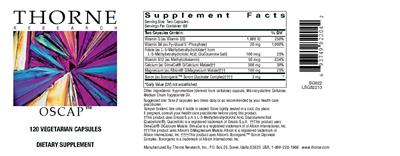
Supplement Facts
Vitamin D 25 mcg · Vitamin B6 20 mg · Folate 166.6 mcg DFE
| Vitamin D | 25 mcg | |
| Vitamin B6 | 20 mg | |
| Folate | 166.6 mcg DFE | |
| Vitamin B12 | 50 mcg | |
| Calcium | 300 mg | |
| Magnesium | 100 mg | |
| Boron | 3 mg | † |
Other ingredients: Hypromellose, Medium Chain Triglyceride Oil.
Directions: Suggested use: Take 2 capsules two times daily or as recommended by your health-care practitioner.
Barcode (UPC) 693749822042 · Label source: NIH label database · Report a label change
Show entire label

More bone health products
Members OnlyThe highest ranked for the same goal
Read more
Our articles on this subject
- What Supplements and Vitamins Should Not Be Taken TogetherArticle · Sep 7, 2026
- When Is the Best Time to Take Vitamins and Supplements?Article · Jun 15, 2026
Graded November 6, 2026 by the Reverse Age Lab evidence engine, from human studies, real reviews and our biohacker panel. How we grade. Is this medical advice? No. Rala organizes the published evidence; go over any change with your doctor, especially if you take meds.
Privacy policyConsumer health dataAffiliate disclosureTermsDo Not Sell or Share My Personal InformationCookie settings