
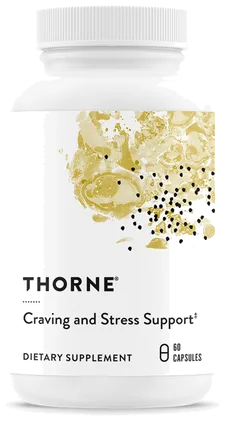
Thorne Craving and Stress Support Review
Thorne Craving and Stress Support (formerly Relora Plus) is a vegan, gluten-free dietary supplement sold as 60 capsules, or 30 servings. Thorne says it combines two plant extracts with six B vitamins to provide nutritional support for a modern, over-stressed lifestyle. The two plant extracts are the proprietary Relora blend and magnolia/phellodendron bark. Thorne positions the product for people who feel occasional stress and who eat in response to it, especially sweets and caffeine. I did not retrieve the label's exact doses, so none are given here. How it works, according to the retailer and manufacturer copy: - **Stress and cortisol.** The retailer page explains that chronic stress can raise cortisol output from the adrenal glands. Cortisol helps the body respond to stress, but when it stays elevated it can lead to adverse changes in mood, sleep and eating habits. - **Botanical action.** Thorne says the botanical ingredients promote a balanced cortisol rhythm, which helps reduce occasional anxious feelings and stress-related eating. The plant extracts are thought to act on the stress axis and on calming, GABA-related pathways. This is the usual explanation for magnolia bark and similar botanicals, and I did not confirm it in Thorne's own copy. It would explain why the supplement may ease tension without acting as a stimulant. - **B vitamins.** The six B vitamins, including the active folate 5-MTHF, support neurotransmitter synthesis and energy metabolism. Nutritional status is a factor in mood and in how the body handles stress. The active forms of the vitamins avoid the need for conversion in the body. - **Appetite and mood.** Stress-driven cortisol swings are linked to emotional eating and sugar cravings. Easing the stress response may therefore reduce the urge to snack, and it supports a more positive mood. The retailer notes that people who are occasionally anxious and eat when stressed can have trouble maintaining an optimal weight. The product is therefore marketed for weight management as well as for relaxation. It is not a drug and is not intended to treat any condition. People who are pregnant or nursing, take sedatives or other medications, or have a medical condition should talk to a clinician first. Magnolia-type botanicals can add to sedatives. One more point for buyers: a Walmart reviewer in 2026 said the product was no longer available. Check current availability and any reformulation before ordering.
We don’t sell supplements. We help you make decisions and get the best price.
Lowest prices
We may earn a commission from some store links. How we choose.
Finding the lowest prices at the stores now. This takes a few seconds.
Study, Trial or Testing Result Summary
Members Only55 human studies · 22 improved
1 of these 55 human studies gave the ingredient by drip, not by mouth.
At the dose members are told to take, vitamin B6 has mixed results for calm. In 478 young adults, one month of high-dose B6 reduced self-reported anxiety [1]. In 267 adults, 100 mg daily for one month did not change anxiety or stress [2]. Adding 30 mg of B6 to magnesium was no better overall, though it helped people with severe stress [3]. Folate, also at a full dose, did not lower the stress hormone cortisol in large trials of pregnant women [4][5][6]. A B-vitamin multivitamin did not reduce perceived stress in healthy adults [7]. Folate does help depression when added to meds, which is a separate goal. Thiamine here is well below the 100 mg that eased perceived stress in one small trial alongside riboflavin [8]. Vitamin B12 alone did not reduce anxiety or stress [2]. Riboflavin and niacin have only small or mixed studies, often in mixtures [9]. A single 100 mg dose of niacin increased panic symptoms before a speech [10]. The two plant extracts sit in a 500 mg proprietary blend, with no amounts shown and no studies given here. Animal and cell studies are never counted.
See all 55 studies →Hide the studies
- In a pooled analysis of 192 trials with 17,437 depressed adults, adding folate to a med treatment reduced depressive symptoms more than meds alone.Comparative efficacy and tolerability of nutraceuticals for depressive disorder: A systematic review and network meta-an…
- In a pooled analysis of 17 placebo-controlled trials in 629 people with obsessive-compulsive and related disorders, only one trial tested folic acid, and no single compound other than N-acetylcysteine and lithium beat placebo for overall symptoms, and none improved anxiety scores.Mitochondrial modulators for obsessive-compulsive and related disorders: a systematic review and meta-analysis.
- In three randomized trials with 247 people with depression, adding folate to other treatment lowered depression scores by a further 2.65 points at 10 weeks, while folate alone did not differ from trazodone.Folate for depressive disorders: systematic review and meta-analysis of randomized controlled trials.
- Expert guidelines weakly recommended methylfolate as an add-on for depression but did not support folic acid used alone, and found no nutraceutical with enough evidence for anxiety disorders.Clinician guidelines for the treatment of psychiatric disorders with nutraceuticals and phytoceuticals: The World Federa…
- Across 20 randomized trials covering 2,256 adults with depression or anxiety, B vitamins (including thiamine) and vitamin D lowered depression scores when added to standard treatment, but anxiety evidence was limited to vitamin D.Efficacy of B-vitamins and vitamin D therapy in improving depressive and anxiety disorders: a systematic review of rando…
- In three trials with 247 people with depression, adding folate to other treatment lowered depression scores by a further 2.65 points, but folate alone was no better than a med trazodone.Folate for depressive disorders.
- A review of 14 trials in women found that folate did not reduce anxiety in older women, whereas vitamin B6 did; the number of people and the doses for folate were not stated.The impact of essential fatty acid, B vitamins, vitamin C, magnesium and zinc supplementation on stress levels in women:…
- A review of 20 articles found that folic acid intake, along with healthy diets, magnesium, fatty acids and fish, was linked to less depression.Evidence of the Importance of Dietary Habits Regarding Depressive Symptoms and Depression.
- A review of 60 studies on nutrition in bipolar disorder found that folic acid, along with omega-3 fats, seafood and zinc, seemed linked to better symptoms.Nutrition and bipolar disorder: a systematic review.
- In 20,688 adults with high blood pressure given enalapril with or without folic acid for about 4.5 years, higher self-reported stress was linked to more strokes, but the analysis did not test whether folic acid reduced stress.Self-Perceived Psychological Stress and Risk of First Stroke in Treated Hypertensive Patients.
- In 1,391 pregnant women in rural Malawi, salivary cortisol did not differ between those given lipid-based supplements, multiple micronutrients or iron-folic acid throughout pregnancy.Maternal cortisol and stress are associated with birth outcomes, but are not affected by lipid-based nutrient supplement…
- In 1,320 pregnant Ghanaian women, cortisol at 36 weeks did not differ between the iron plus folic acid group and the groups given multiple micronutrients or lipid-based supplements.Late-Pregnancy Salivary Cortisol Concentrations of Ghanaian Women Participating in a Randomized Controlled Trial of Pren…
- In a randomized trial of 737 pregnant women in Nepal, folic acid alone did not change the stress hormone cortisol, while a multiple micronutrient supplement containing folic acid lowered cortisol compared with a vitamin A control.Antenatal micronutrient supplementation and third trimester cortisol and erythropoietin concentrations.
- In 478 young adults given high-dose vitamin B6, B12 or placebo for 1 month, vitamin B6 reduced self-reported anxiety and strengthened visual surround suppression, with only a trend toward less depression.High-dose Vitamin B6 supplementation reduces anxiety and strengthens visual surround suppression.
- Children of mothers given a lipid-based nutrient supplement or iron and folic acid during pregnancy showed no difference in stress hormone levels or telomere length at 4 to 6 years of age.Impact of a nutritional supplement during gestation and early childhood on child salivary cortisol, hair cortisol, and t…
- In 360 Chinese middle school students given fortified milk or plain milk for six months, the fortified milk group reported less test anxiety and better academic scores, and were much less likely to have low vitamin B2, though the effect cannot be attributed to riboflavin alone.Micronutrient-Fortified Milk and Academic Performance among Chinese Middle School Students: A Cluster-Randomized Control…
- In 267 adults given 100 mg vitamin B6 daily for 1 month, depression symptoms fell in those with mild or worse depression, but anxiety and stress scores showed no significant effects.High Dose Vitamin B6 Reduces Depression Symptoms.
- In 264 stressed adults with low magnesium, adding 30 mg vitamin B6 to magnesium for 8 weeks was no better than magnesium alone overall, but gave 24% greater stress reduction in those with severe stress.Superiority of magnesium and vitamin B6 over magnesium alone on severe stress in healthy adults with low magnesemia: A r…
- In 264 stressed adults, adding 30 mg vitamin B6 to magnesium for 8 weeks raised blood vitamin B6 but did not raise red blood cell magnesium any more than magnesium alone.Impact of magnesium supplementation, in combination with vitamin B6, on stress and magnesium status: secondary data from…
- In 213 sepsis survivors given intravenous thiamine with vitamin C and hydrocortisone for up to 4 days, outcomes at 6 months were not better than placebo, with lower immediate memory scores and higher odds of post-traumatic stress disorder.Read the study on PubMed (36853612) →
- In 171 adults with mild insomnia, a multi-ingredient blend including vitamin B6 taken for 2 weeks did not improve sleep, mood, anxiety or stress reactivity more than placebo.Exploring the Effect of Lactium™ and Zizyphus Complex on Sleep Quality: A Double-Blind, Randomized Placebo-Controlled Tr…
- In 150 adults with tension headaches and fatigue, adding a combination tablet containing riboflavin to standard treatment for 25 days reduced headaches, anxiety, depression and sleep problems more than standard treatment alone, but riboflavin's own effect cannot be separated out.[Results of the observational program CITOTREK (use of the drug CITOflavin in Tablets) in patients with tension headache…
- In 138 healthy adults aged 20 to 50 taking a B-vitamin multivitamin for 16 weeks, perceived stress did not differ from placebo, and cortisol on waking showed only a near-significant increase.The effects of multivitamin supplementation on diurnal cortisol secretion and perceived stress.
- In 124 university students given a single 100 mg dose of niacin or a sugar pill before giving a speech, those taking niacin reported more panic symptoms afterward than those taking the placebo.Niacin biological challenge: A paradigm to evaluate social concerns.
- In 90 fibromyalgia patients (60 finished), 80 mg vitamin B6 daily did not improve pain, disease severity, anxiety or depression more than placebo.Effect of vitamin B6 on pain, disease severity, and psychological profile of fibromyalgia patients; a randomized, double…
- In 83 nursing students with premenstrual syndrome, a one-hour nutrition education session reduced symptom scores including anxiety and irritability over four months, but this was a diet intervention and not riboflavin supplementation.The effect of nutrition education on premenstrual syndrome: Randomized controlled study.
- In 65 adults with coeliac disease, daily B vitamins including 3 mg pyridoxine for 6 months improved well-being, including anxiety and depressed mood in those with poor well-being, and lowered homocysteine by 34%.Clinical trial: B vitamins improve health in patients with coeliac disease living on a gluten-free diet.
- In 65 people with chronic fatigue syndrome, a daily capsule blend with 1.05 mg vitamin B6 for 36 weeks improved cognitive fatigue versus baseline, but the blend's effect on anxiety was not reported.Yeast Beta-Glucan Supplementation with Multivitamins Attenuates Cognitive Impairments in Individuals with Myalgic Enceph…
- In a 12-week placebo-controlled pilot of 59 adults with chronic stress, a supplement combining amino acids and micronutrients, which also raised blood folic acid, reduced perceived stress more than placebo.Impact of a Specific Amino Acid Composition with Micronutrients on Well-Being in Subjects with Chronic Psychological Str…
- In 55 adults with metabolic syndrome on a six-month calorie-restricted diet, people who increased their folate intake and lowered their blood level of a lipid oxidation marker had larger improvements in depressive symptoms, though the study did not test folate as a supplement against placebo.Longitudinal relationship of diet and oxidative stress with depressive symptoms in patients with metabolic syndrome afte…
- In 44 women taking 50 mg vitamin B6 plus 200 mg magnesium daily for one cycle, anxiety-related premenstrual symptoms fell modestly versus placebo, though there was no overall difference between treatments.A synergistic effect of a daily supplement for 1 month of 200 mg magnesium plus 50 mg vitamin B6 for the relief of anxie…
- In 43 people taking 100 mg of vitamin B1 plus 100 mg of vitamin B2 daily for 4 weeks, perceived stress, sleep quality and daytime sleepiness improved compared with placebo, but anxiety did not change significantly.Impact of Vitamin B1 and Vitamin B2 Supplementation on Anxiety, Stress, and Sleep Quality: A Randomized, Double-Blind, P…
- In 42 women taking a multi-ingredient supplement containing vitamin B6 for 3 months, mood improved within the supplement group but not compared with placebo.Effects of the PREMEN-CALM® in the Management of the Premenstrual Syndrome: A Randomized, Double-Blind, Placebo-Controll…
- In 32 healthy adults taking a high-dose B vitamin supplement for 6 months, blood B6 and B12 rose and homocysteine fell, but brain metabolite changes were not significant and stress or calmness was not directly measured.The Effect of a High-Dose Vitamin B Multivitamin Supplement on the Relationship between Brain Metabolism and Blood Bioma…
- In a small 1981 trial of 20 depressed patients, pyridoxine combined with L-tryptophan worked no better than a med maprotiline over 2 to 4 weeks.The clinical significance of disordered renal excretion of xanthurenic acid in depressive patients.
- In 20 healthy adults, 3 mg vitamin B12 for two weeks altered sleep and daily rhythms, and only methylcobalamin had an alerting effect while also shortening sleep.Effects of vitamin B12 on performance and circadian rhythm in normal subjects.
- In healthy middle-aged adults, taking 1520 mg of a nicotinamide and D-ribose blend twice daily for 7 days raised blood NAD levels, lowered morning stress hormone (cortisol) compared with placebo, and reduced fatigue and improved concentration compared with baseline.A Combination of Nicotinamide and D-Ribose (RiaGev) Is Safe and Effective to Increase NAD+ Metabolome in Healthy Middle-…
- In stressed adults with low magnesium taking 30 mg vitamin B6 plus 300 mg magnesium daily for 8 weeks, anxiety and depression scores improved from baseline, similar to magnesium alone.Effect of magnesium and vitamin B6 supplementation on mental health and quality of life in stressed healthy adults: Post…
- In depressed patients, 125 mg pyridoxine taken three times daily with L-tryptophan for 2 or 4 weeks did not change blood tryptophan levels, and blood tryptophan did not correlate with anxiety or depression scores.Kinetics of L-tryptophan in depressive patients: a possible correlation between the plasma concentrations of L-tryptopha…
- In 86 pregnant women with moderate morning sickness, pyridoxine 40 mg daily for 3 weeks was given to both groups, and adding 8 mindfulness therapy sessions over 3 weeks improved nausea, vomiting, anxiety, depression and pregnancy distress compared with pyridoxine alone; this open-label trial does not isolate any effect of pyridoxine itself.A RCT of psychotherapy in women with nausea and vomiting of pregnancy.
- In 78 adults with burning mouth pain, adding Danzhixiaoyao pills to methylcobalamin tablets for 6 weeks lowered pain and depression scores more than methylcobalamin alone, but anxiety scores did not differ between groups; the study does not isolate the effect of vitamin B12.Efficacy of Danzhixiaoyao tablets combined with methylcobalamin tablets in the treatment of burning mouth syndrome: an o…
- In 46 women with mild to moderate anxiety, taking a combined saffron, ashwagandha, tryptophan and vitamin B6 supplement (two tablets daily) for 12 weeks lowered anxiety scores, though the open-label design and COVID-19 lockdown may have affected the result. The vitamin B6 dose was not stated.Effectiveness of a Saffron and Withania Supplement on Mood in Women With Mild-to-Moderate Anxiety During the COVID-19 Lo…
- In 34 children with Tourette syndrome or tic disorder and anxiety, an L-theanine and vitamin B6 supplement reduced tics more than psychoeducation alone, while both groups had lower anxiety.Use of Nutritional Supplements Based on L-Theanine and Vitamin B6 in Children with Tourette Syndrome, with Anxiety Disor…
- In 11 adults with depression, 10 days of magnetic stimulation to the left front of the brain raised blood levels of riboflavin-5'-monophosphate (an active form of vitamin B2) and changed other blood compounds; the study did not give riboflavin itself and did not test calmness or stress.The changes in metabolomics profile induced by intermittent theta burst stimulation in major depressive disorder: an exp…
- In a 24-week open trial of 10 Japanese schizophrenia patients, high-dose pyridoxamine (not thiamine) was tested, and thiamine was only used to stop Wernicke-like side effects in two patients, so it did not test thiamine's effect on mood or calm.Pyridoxamine: A novel treatment for schizophrenia with enhanced carbonyl stress.
- In a retrospective review of 9,439 insomnia patients at a Chinese medicine hospital in Shenzhen, vitamin B6 was among the commonly prescribed drugs (about 4.76 percent of patients), but the study did not measure whether it improved sleep or calmness.A Cross-Sectional Study on the Drug Use of Insomnia in a Chinese Medicine Hospital in Shenzhen.
- In a cross-sectional study of 3362 Iranian adults, lower vitamin B6 intake from food was linked to higher odds of depression and anxiety in women but not in men. This study cannot show that B6 causes these effects.Higher vitamin B6 intake is associated with lower depression and anxiety risk in women but not in men: A large cross-sec…
- In a survey of 741 Iranian girls aged 12 to 18, eating more antioxidants from the whole diet was linked to lower odds of depression, but thiamine was not measured on its own.Dietary total anti-oxidant capacity is inversely related to the prevalence of depression in adolescent girls.
- In 330 adults with epilepsy in western China, dietary thiamine intake was not linked to drug-resistant epilepsy; only folate intake showed a link.Dietary vitamin B9 intake linked to drug-resistant epilepsy risk in western Chinese adults: exploring underlying metabol…
- In 181 female students, following a Nordic-style diet that was higher in thiamine and other vitamins was linked to lower stress and anxiety scores, though thiamine was not studied on its own and the link was mainly with vegetable intake.Impact of a Nordic diet on psychological function in young students.
- In 159 bereaved men, higher blood vitamin B12 levels were linked to lower distress, less depression and anxiety, and fewer symptoms of major depression.Cobalamin level is related to self-reported and clinically rated mood and to syndromal depression in bereaved HIV-1(+) a…
- In a retrospective chart review of 146 adolescents and children given 15 mg per day of L-methylfolate calcium, it was well tolerated, and 22.5% of treated patients reported a positive subjective experience while 5.4% reported a negative one; the study did not measure stress or calmness against a control group.L-Methylfolate Calcium Supplementation in Adolescents and Children: A Retrospective Analysis.
- In a survey of 115 adults with type 2 diabetes, higher dietary thiamine (vitamin B1) intake was linked to lower depression scores, though this survey cannot show cause and effect.Impact of micronutrients on anxiety-depressive disorders in type 2 diabetics.
- In 28 men, 14 with alcohol use disorder and 14 without, thiamine intake from a three-day diet record was lower in the alcohol use disorder group, and no clear link was found between stress hormone activity and nutrition status.HPA-Axis Activity and Nutritional Status Correlation in Individuals with Alcohol Use Disorder.
- A genetic analysis using large population databases suggested that genetically predicted higher vitamin B1 levels were associated with lower dementia risk, but this is a computer-based association study and not a direct trial.Mendelian Randomization Uncovers Potential Repurposable Medications for Neuropsychiatric Disorders.
Review Totals and Summary
Members Only8,060 reviews · 83% positive
Customers most often praise the product for taking the edge off stress without sedation. Reviewers describe feeling less tense and call it a way to "quell that underlying hum of modern stress." Several say it offsets the jittery feeling from coffee. Others say it keeps their mood steady over long use. One iHerb reviewer reported steady mood after about a year. Another said the benefits only became clear after about three months. This suggests the effect builds gradually and is not instant. The second theme is fewer cravings, especially for sugar and caffeine. Reviewers report that sweets stop pulling at them as often, and some noticed this within a couple of days. Many describe it as a help with emotional or stress eating, as part of a broader routine and not a cure. Sleep and relaxation come up often. iHerb summaries note that many users report feeling relaxed and sleeping better. Some Walmart reviewers say it helped with sleep and stress over several months. A few people say it helped them during menopause. One reviewer said it works as well as a prescription anti-anxiety drug. That is an anecdotal claim and not evidence. Trust in the brand is another common point. Buyers cite Thorne's purity, quality and reliability. Several are long-term repeat purchasers who have used it for years. They also like the vegan-friendly formula. Criticisms are fewer. Some people notice no effect on cravings and take it for stress alone. A small group gives middling ratings, and a few give one star. In the Walmart ratings, about 15% gave three stars and about 6% gave one star. Reviewers rarely explain why, and the complaints that do appear are about a lack of results. The most notable recent complaint is about supply. One long-term user loved the product but was upset that it was no longer available. Reviewers also raise individual variation, and some say it should be combined with lifestyle changes.
Biohacker Summary
Members Only10 of 10 recommend it
Folate, the main ingredient, gets a mostly favorable view: five of the ten panelists say they recommend it, and the other five are neutral but still describe real uses for it. People take it to lower homocysteine, to support brain, mitochondrial and hearing health, to cover low levels, and to support pregnancy, including preparing for IVF. Most who name a form prefer methylfolate, the active form, over synthetic folic acid, and one says the body can use it without conversion. One panelist takes the lower of two available strengths of methylfolate once a day, and others pair it with methylated B12 or a high dose B supplement, while one notes that dark leafy greens are a good food source. No one reports stopping it or gives a caution about folate itself, though one notes that some people absorb certain forms poorly and another that birth control pills deplete it; the B vitamins and niacin are smaller ingredients in this product, with most of the panel favoring B12 and niacin.
See all 10 biohackers →Hide the biohackers
Dr. Mark Hyman · Folate · neutral
- Notes that taking folate can lower homocysteine levels, which has shown health benefits and physical improvements in brain scans in clinical trials.
- Notes that some people may need a little bit extra folate with a supplement.
- Explains that pellagra, which killed 100,000 Americans, was a niacin deficiency, a B vitamin.
- Optimized a child's nutrient status with folate, as the child had low folate levels and was not eating greens.
- Optimized a child's nutrient status with vitamin B6, as the child had low B6 levels.
- Notes that a med depletes folate.
- States that folate is a nutritional deficiency that impacts mental health.
- States that vitamin B12 is a nutritional deficiency that impacts mental health.
- Recounts giving a patient with MCI high-dose methylfolate, along with B12 shots and B6, which completely cured her MCI.
- Recommends folate with vitamin B6 and B12 as supplements with strong evidence for PMS.
- Recommends vitamin B6 with folate and B12 as supplements with strong evidence for PMS.
- Recommends vitamin B12 with vitamin B6 and folate as supplements with strong evidence for PMS.
- Explains that folate metabolism is very involved in neurotransmitter function and mood, and that folate can be a treatment for some cases of depression, especially for those with MTHFR genetic variants.
- Believes that if functional testing is done to replete deficiencies like vitamin D and B12 before someone stops their medication, withdrawal symptoms can be completely eliminated.
Dr. Eric Berg · Folate · neutral
- Notes that birth control pills deplete the body of folate, which is needed for the brain to make serotonin.
- States that taking Vitamin B1 might help with swollen legs and ankles.
- States that expensive NAD+ supplements only turn into $5 niacin in the body and that research has shown niacin can actually raise NAD levels in the blood 5 to 8 times their baseline levels.
- Dr. Eric Berg states that vitamin B1 supports the nerve function and energy production involved in the brain's response to changes in hearing, which plays a major role in tinnitus.
- Dr. Berg suggests that supporting vitamin B1 intake may help address the stress behind bloating.
- Recommends cheap flush niacin, stating that it outperforms expensive NAD supplements and even IV drips in raising NAD levels in the blood.
- Dr. Berg lists pyridoxine hydrochloride as a synthetic vitamin to avoid.
- Recommends taking the fat-soluble version of vitamin B1, benfotiamine, to support blood flow to the nerves and counter complications of diabetes.
- Notes that Vitamin B1 is intimately involved in the nervous system and may be behind sciatica and carpal tunnel syndrome.
- Recommends taking the active form of vitamin B6, pyridoxal-5-phosphate (P5P), for its benefits to the nervous system, including building the myelin sheath and protecting sensory nerve integrity.
- Notes that Vitamin B6 is intimately involved in the nervous system and may be behind sciatica and carpal tunnel syndrome.
- Recommends taking the natural form of vitamin B12, methylcobalamin, to support nerve regeneration, myelin production, and nerve growth factors.
- Notes that Vitamin B12 is intimately involved in the nervous system and may be behind sciatica and carpal tunnel syndrome.
- Recommends vitamin B1 as a way to lower blood sugar for better sleep.
Dave Asprey · Folate · neutral
- States that folate can affect how the body responds to a supplement.
- Recommends methylfolate as a better option than folic acid.
- Recommends niacin, a form of vitamin B3, as one of the two most important raw materials for NAD+ production, found in foods like beef liver, chicken, turkey, and fish, or from supplements.
- States that Vitamin B12 is extremely important for every kind of brain function and recommends ensuring B12 levels are optimal, around 500, not just barely above normal.
- Dave Asprey notes that 80% of their clients have a problem absorbing certain forms of folate, and when the exact form of folate or folinic acid is dialed in, clients experience shifts, with the brain waking up as one of the first improvements.
- Dave Asprey recommends niacin, a form of vitamin B3, as one of the two most important raw materials for NAD+ production, found in foods like beef liver, chicken, turkey, and fish.
- Notes that niacin has been a standard longevity ingredient since the 1990s.
- Dave breaks down why a daily stack of taurine, B6, folate, and B12 works for motivation when either ingredient alone doesn't.
- Dave discusses how niacinamide compares as an NAD precursor.
- Dave explains that niacinamide is an old-school way to mildly elevate NAD levels, and it was the only way to raise NAD in the very early days.
- Used niacin for a while to address plaque in his arteries and high LP(a), but stopped because it caused high liver values and made him feel unwell, despite dropping his LP(a).
- Warns that many people who take methylfolate experience muscle tension and anxiety from it, suggesting it's not always the right form for methylation issues.
- Mentions Vitamin B6 as playing a role in methylation pathways.
- Recommends taking vitamin B12 if one has a deficiency.
Ben Greenfield · Folate · recommends
- Recommends methylfolate as an active form of folate that the body can use directly without conversion.
- States that Nrf2 activators, when combined with something like niacin, may have a good effect on plaque progression.
- Recommends bioavailable folate, not synthetic folic acid, as folate deficiencies seem to impact hearing health in older individuals.
- Recommends getting vitamin B12 tested and supplementing if deficient, as B12 deficiency can cause damage to the myelin coating around nerves, including cochlear nerves, and improve tinnitus severity scores.
- Mentions nicotinamide as an ingredient found in many NAD products and notes that niacinamide and nicotinamide are structurally the same.
- Recommends introducing methylfolate into the diet to address high homocysteine levels.
- Believes the niacinamide approach, along with the NAMPT/salvage pathway angle, is underrated and deserves more attention.
- Would refine the guidelines to include clearer distinctions between synthetic folic acid and natural folate.
- Mentions niacin as a natural approach that might be good for plaque regression.
- Notes that some people do better on certain forms of B12, B complexes, SAM E, and methylated folates, specifically five methyl folates, for methylation.
- Notes that 10X Health System's methylene blue tablets plus light stack supports energy and recovery at the cellular level by promoting healthy metabolism through niacinamide.
- Uses Niacinamide as a clean building block for NAD+ as part of NAD Regen.
- Recommends priming the skin with niacinamide to reduce hyperpigmentation, noting its effectiveness in reducing hyperpigmentation by 50% in an ex-girlfriend's laser burn.
- Recommends Vitamin B6 for the conversion of tryptophan to serotonin and then melatonin in the pineal gland.
Dr. Rhonda Patrick · Folate · recommends
- Recommends ensuring adequate methyl folate intake, ideally through a prenatal vitamin, for women preparing for IVF.
- Warns that Vitamin B12 enhances light's melatonin-suppressing effects and should be avoided too close to bedtime.
- Notes that dark leafy greens are a great source of folate.
- Explains that alcohol consumption can lead to a deficiency in thiamine (Vitamin B1), which is essential for nerve function and brain health, by impairing its absorption and inhibiting its utilization.
- States that for his mother, who is homozygous for MTHFR, methyl folate along with a high dose B supplement is necessary to prevent her homocysteine and blood pressure from going high.
- Notes that thiamine, a type of B vitamin, was used in combination with intravenous vitamin C and hydrocortisone in a study for sepsis patients, which decreased the risk of organ failure and death.
- Notes that studies suggest intravenous vitamin C alone or in combination with other treatments like thiamine can decrease the risk of organ failure and mortality in patients diagnosed with sepsis.
- States that NAD can be synthesized from the three forms of niacin, also known as vitamin B3, found in foods like lean meats, legumes, and veggies.
- Dr. Patrick mentions that her smoothie is rich in folate, which is required for producing thymine and prevents DNA strand breaks.
- Notes that a med can cause vitamin B12 deficiency, especially as absorption decreases with age, and suggests a sublingual form or B12 injections for older individuals.
- Discusses the origin of Vitamin B12, suggesting it's a microorganism that propagates in the soil and that animals get it from eating dirt, which is why it's less available in modern, sanitized plant foods.
- Has experimented with L-methylfolate in the past to lower homocysteine, as he is a poor methylator.
- Dr. Patrick states that studies have shown supplementing with 5-methyltetrahydrofolate can successfully circumvent some shortcomings of MTHFR gene polymorphisms and lower homocysteine levels.
- Dr. Patrick states that people with a specific gene polymorphism in the NPF3 gene, which affects vitamin B6 levels, may need to increase their dietary intake of B6 and/or supplement with vitamin B6.
Thomas DeLauer · Folate · recommends
- Recommends taking methylfolate as a methylated form of B vitamin for mitochondrial function.
- Recommends Vitamin B12 for mental health and mood, explaining its role in myelination and neurotransmitter production. They specifically recommend a liposomal and micellar form of methylcobalamin B12 for better absorption and to avoid toxicity.
- Uses niacin as part of their detoxification protocol, taking enough to flush about half an hour before a sauna session.
- Warns against conventional cereal, describing it as extruded, sugared, and then sprayed with vitamins that were destroyed during its making.
- Warns against conventional cereal, describing it as extruded, sugared, and then sprayed with vitamins that were destroyed during its making.
- Mentions that a single serving of sardines provides vitamin B12 at something like three to four times the daily needs.
- Recommends taking methylcobalamin as a methylated form of B vitamin for mitochondrial function.
- Discusses niacin as an essential vitamin involved in NAD production and known for its flushing effect as a vasodilator. He also mentions its role as an agonist for GPR109A receptors, which could potentially block fat mobilization.
- Recommends methylfolate as a runner-up for insulin resistance, especially for individuals with the MTHFR variant, as it directly enters the methylation cycle without conversion.
- Recommends ensuring adequate vitamin B6 intake, as it is a required cofactor for cells to use absorbed magnesium and improves central nervous system relaxation when combined with magnesium.
- Recommends vitamin B6 to support GABA production and find balance for mental clarity.
- Notes that Niacin or Vitamin B3 can be good, but taking a lot can increase methylation, so it needs to be balanced.
- Mentions folate as a critical B vitamin for reducing homocysteine.
- Warns that taking high doses of Niacin can put a lot of burden on the methylation system.
Siim Land · Folate · neutral
- States that Homocysteine levels can often be improved through adequate folate intake.
- Created Microvitamin, a supplement that bundled all the supplements he was taking, to help fund his a med trial.
- States that vitamin B12 deficiency is the most common reason for premature graying of hair and recommends fixing B12 status if it is deficient, as it gives a greater likelihood of reversing gray hair.
- Suggests that in the mornings, NAD supplements like niacinamide can help kickstart the circadian rhythm.
- Recommends Niacinamide for skin protection, explaining it works partly through NAD metabolism that the body uses against DNA damage and is found in protein sources.
- Mentions that only specific therapies like niacin can meaningfully reduce Lp(a).
- Notes that Niacin notoriously raises HDL cholesterol, but this increase does not lower the risk of heart disease events, and while it can be good in many cases, very high doses can affect liver function.
- Places Thiamine, Vitamin B1, in the 'good' tier for its benefits in blood sugar regulation and energy metabolism, noting that he personally takes bentothiamine occasionally, especially when consuming many carbohydrates.
- Recommends niacin as a much cheaper and equally effective NAD booster compared to NMN and NR.
- Warns that niacin, an NAD precursor, can shorten sleep.
- Recommends taking 100-300 milligrams of niacin before a sauna session, as part of the Hubert protocol, to enhance sweating, vasodilation, and potentially detoxification and cardiovascular benefits.
- Warns that Niacin, especially at high doses like 2000 mg per day, can disrupt sleep by increasing energy levels too high, causing flushing, and reducing deep sleep while increasing shallow non-REM sleep.
- Discusses Niacinamide as a form of vitamin B3 that can increase NAD+ levels, but notes it's not as effective as NMN or NR for longevity and can cause flushing.
- Notes that Brian's folate levels are over 20, which is too high and above the reference range, possibly due to supplementation.
Andrew Huberman · Folate · recommends
- States that B12, folate, and iron are essential to mitochondrial function and if deficient, mitochondria will not function properly, which is consistent with the mitochondrial theory of neuropsychiatric disorders.
- States that a deficiency in vitamin B12 can be terrible and lead to chronic fatigue-like syndromes, as many parts of mitochondria require B vitamins.
- Recommends taking methyl folate as part of methylated B vitamins to lower homocysteine levels and reduce cardiovascular risk.
- Recommends taking methyl B12 as part of methylated B vitamins to lower homocysteine levels and reduce cardiovascular risk.
- Mentions that Riboflavin (Vitamin B2) hits cytochrome 2 in the mitochondrial electron transport chain, contributing to energy production.
- Takes methyl folate because elevated levels of homocysteine are associated with negative outcomes, and taking methyl folate is known to lower homocysteine. This might lower ADMA and SDMA and raise nitric oxide synthesis, potentially impacting vascular disease.
- Has been taking AG1 for over 10 years, once and often twice every day, to ensure he gets all necessary vitamins, minerals, probiotics, and adaptogens, considering it a nutritional insurance policy.
- Does not supplement B6 due to evidence that overs-supplementing vitamin B, especially B6, is problematic because of peripheral nerve damage.
- Reviews data on ingesting or topically applying niacinamide to improve skin's youthfulness and appearance, including reducing wrinkles, sagging, and pore size.
- Recommends niacinamide supplementation, a form of Vitamin B3, at 500 milligrams twice per day for a total of 1 gram daily, to increase ceramide production, improve skin moisture, reduce inflammation, balance oil production, and reduce the appearance of clogged pores and hyperpigmented spots.
- Has been taking AG1 since 2012 to ensure he gets enough vitamins, minerals, Prebiotic fiber, and other nutrients typically found in fruits and vegetables, providing nutritional insurance.
- Andrew Huberman started drinking AG1 in 2012 and still drinks it once or twice a day because it provides all his foundational nutritional needs, ensuring proper amounts of vitamins, minerals, probiotics, and fiber for optimal mental health, physical health, and performance.
- Notes that some people are exploring the use of P5P, a metabolite of vitamin B6 known to suppress prolactin, as a way to buffer the post-MDMA crash, though there are no human data yet.
- Discusses folate as a potential factor in mitigating cancer risk, particularly in relation to alcohol consumption.
Peter Attia · Folate · recommends
- Highlights folate supplementation as a significant practical progress in nutrition science, which has radically reduced spinabifida.
- Peter Attia's AVIA Skincare vitamin C serum also contains niacinamide, which is useful to apply to the skin right after washing.
- Notes that deficiencies in certain vitamins and minerals, such as B12, can be a cause of hair loss in women.
- Takes Jarrow methylfolate to keep homocysteine levels below nine, taking the lower of two available strengths once a day.
- Takes Jarrow methylfolate, a methylated version, once a day at the lower of two strengths, to keep homocysteine levels below nine.
- Mentions that in a mouse model for obesity, the amount of folate given to the mother mouse during pregnancy affects the epigenetics of her offspring, leading to changes in coat color and obesity.
- Personally takes methylfolate to help get homocysteine into the desired zone and prefers the Jarrow brand.
- Used to prescribe niacin to many patients, primarily to raise HDL, lower APO B, triglycerides, LDL, and LP(a), but stopped after clinical trials showed minimal or disappointing effects on reducing cardiovascular events.
- Notes that niacin lowers LP little a but was not shown to have clinical benefit in outcome studies, and they are not currently using it.
- Recalls that a flush from niacin typically occurred with doses of a few grams.
- Explains that niacin does reduce Lp(a) levels, increase HDL, and lower triglycerides, but two large cardiovascular outcome trials have shown no cardiovascular benefits and many side effects, such as flushing. He concludes that the cost-to-benefit ratio does not support its use.
- He dives into data on the possible treatments for lowering Lp(a) such niacin, meds, and PCSK9 inhibitors.
- States that niacin is a dead drug and is not recommended by any guidelines, though some still selectively use it for Lp(a).
- Takes methyl folate as a supplement.
Bryan Johnson · Folate · recommends
- Recommends supplementing with folate for brain health for both the mother and the baby during pregnancy.
- States that Blueprint essential capsules and soft gels are packed with key vitamins and minerals needed for strong bone health.
- Recommends Niacinamide as a supplement for skin health, noting it is in the Blueprint stack.
- He uses Niacinamide, found in serums or moisturizers, morning and night, and takes 15 mg in Blueprint Essential Capsules.
RAL Summary
Members OnlyTier 4 for Stress and Calm
The tier rests on folate meta-analyses showing improvement, but the folate studies given for stress and calmness found no benefit; the improvement was for depression, a separate goal. So it is graded Tier 4, lower than the rules alone gave.
Take 3 servings a day (6 capsules) to match the dose that worked in the studies.
- Emerging: not enough evidence to rank higher yet.
Where the evidence disagrees: 18 of the 55 human studies found no effect.
More Details
Members OnlyBody systems · Combine with · Possible side effects
Body systems: Nervous system, Endocrine system
Combine with: For regularity, pair this product with agents that target bowel function. Soluble fiber such as psyllium husk or partially hydrolyzed guar gum adds stool bulk and softness, so take it with plenty of water. Magnesium citrate or magnesium glycinate draws water into the bowel and relaxes the gut muscles. Probiotics such as Bifidobacterium lactis BB-12 or B. lactis HN019 have evidence for improving transit time. Kiwifruit extract or prunes (sorbitol) can also help gentle motility. Staying hydrated, eating more fiber, and exercising regularly all support long-term regularity. The Craving and Stress Support formula can still be taken alongside these if stress or sugar cravings are also a concern, since stress can disrupt gut function. Consult a healthcare provider if constipation is persistent.
Possible side effects: A single 100 mg dose of niacin increased panic symptoms in one trial, though this product has 10 mg per serving. No other major side effects reported.
Supplement Facts
Thiamine 10 mg · Riboflavin 10 mg · Niacin 10 mg
| Thiamine | 10 mg | |
| Riboflavin | 10 mg | |
| Niacin | 10 mg | |
| Vitamin B6 | 10 mg | |
| Folate | 334 mcg DFE | |
| Vitamin B12 | 100 mcg | |
| Proprietary Blend | 500 mg | † |
Other ingredients: Hypromellose, Microcrystalline Cellulose, Calcium Laurate, Silicon Dioxide.
Directions: Suggested Use: Take 2 capsules daily or as recommended by your health-care practitioner.
Barcode (UPC) 693749048091 · Label source: NIH label database · Report a label change
Show entire label


More stress products
Members OnlyThe highest ranked for the same goal
Read more
Our articles on this subject
- Folate vs Folic Acid: What the Studies Show About Each FormArticle · Oct 29, 2026
- Supplements for Stress and Anxiety Relief: What the Evidence SupportsArticle · Oct 26, 2026
Graded November 6, 2026 by the Reverse Age Lab evidence engine, from human studies, real reviews and our biohacker panel. How we grade. Is this medical advice? No. Rala organizes the published evidence; go over any change with your doctor, especially if you take meds.
Privacy policyConsumer health dataAffiliate disclosureTermsDo Not Sell or Share My Personal InformationCookie settings