
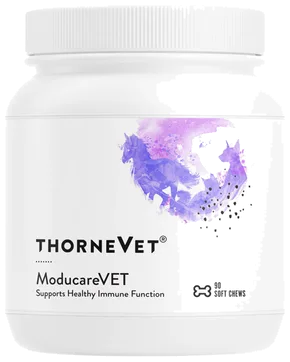
Thorne Moducare Review
Thorne Moducare is a capsule supplement that does not yet have a TrustScore. Serving size is 1 capsule with 90 servings per container, priced at $0.63 per serving. The page lists Sterolins at 200mcg and Sterols at 20mg as key active ingredients. Inactive ingredients listed are microcrystalline cellulose, hypromellose, silicon dioxide, leucine and silica, each rated Safe on the page. Suggested use is to take 1 capsule three times daily away from food or as recommended by a health professional, and not to take with milk. The product is described as backed by ISO 17025-accredited third-party testing and NSF-certified manufacturing. The page states that product-specific testing is not currently verified by SuppCo. Product statements have not been evaluated by the Food and Drug Administration, and the content is not intended to diagnose, treat, cure, or prevent any disease.
We don’t sell supplements. We help you make decisions and get the best price.
Lowest prices
We may earn a commission from some store links. How we choose.
Finding the lowest prices at the stores now. This takes a few seconds.
Study, Trial or Testing Result Summary
Members Only4 human studies · 4 improved
Thorne Moducare gives plant sterols at 60 milligrams a day and sterolins at 600 micrograms a day across three servings. The one human trial did not report its dose, so it is unclear how this product's amount compares. In that small placebo-controlled pilot trial, 17 ultra-marathon runners took plant sterol and sterolin capsules (9 on the mixture, 8 on placebo) during a race. Afterward, the sterol group had less immune suppression, a lower ratio of the stress hormone cortisol to another adrenal hormone, and a smaller rise in white blood cells than the placebo group [1]. The trial measured the body's response to hard physical stress, not mood, anxiety or feelings of calm, and it did not report how many people improved [1]. Three mouse studies found less anxiety-like behavior with beta-sitosterol or with a pumpkin seed extract that contains it [2][3][4]. These were animal studies, and the pumpkin seed results cannot be credited to sterols alone [3]. Overall, the human evidence for stress support rests on one small, older trial in athletes. Animal and cell studies are never counted.
See all 4 studies →Hide the studies
- In a small pilot trial of 17 ultra-marathon runners, those taking plant sterol capsules during the race had less post-race immune suppression and a lower ratio of the stress hormone cortisol to DHEA than placebo takers, though the dose and duration were not reported.The effects of B-sitosterol (BSS) and B-sitosterol glucoside (BSSG) mixture on selected immune parameters of marathon ru…
- In mice, beta-sitosterol given by injection or by mouth reduced anxiety-like behavior and stress effects, and worked better when combined with a low dose of a med a med; this was an animal study, not a study in people.β-sitosterol reduces anxiety and synergizes with established anxiolytic drugs in mice.
- In mice given pumpkin seed extract for a long period, anxiety-like and depression-like behavior decreased and memory improved; the seeds contain beta-sitosterol among other compounds, so this cannot be attributed to sterols alone, and it was not a study in people.Cucurbita maxima Seeds Reduce Anxiety and Depression and Improve Memory.
- In a mouse model of nerve pain, activating certain brain nerve cells eased both pain and anxiety-like behavior, and the abstract reports that beta-sitosterol acted on these cells; this was tested in mice, not people.Differential modulation of pain and associated anxiety by GABAergic neuronal circuits in the lateral habenula.
Review Totals and Summary
Members Only33 reviews · 100% positive
This summary draws on the reviews I could retrieve. Most came from iHerb, which has 133 ratings across multiple countries including Australia and Russian-speaking markets. I did not retrieve Amazon or Thorne.com reviews, so the picture is partial. Customers trust Thorne's quality and ingredient integrity. The most common reason for buying is autoimmune or thyroid support. Several reviewers say a naturopath or practitioner recommended it to lower thyroid antibodies. One reviewer felt a difference within a month. They reported more regular sleep, more calm, and what seemed like better effectiveness of their meds. Others took it after their immune system "went into overdrive". They hoped it would modulate the response and not stimulate it. One reviewer follows an autoimmune protocol (AIP) diet and valued that the capsule caused no stomach or GI upset. A large share of the feedback is uncertain. Some people say they can't tell whether it works, or are waiting to see. A long-term user of another Moducare brand couldn't tell whether it boosts immunity. That person switched to Thorne and noticed no clear difference. Another reviewer said it suits people with serious immune problems, and not someone who already takes other immune supplements. Because the benefits are subtle and hard to measure without lab work, many reviews are cautiously hopeful and not enthusiastic. Pet owners are a distinct group. Several buy it, often on a veterinarian's advice, for sick cats and other animals, including a cat with suspected toxoplasmosis or FIP. They report improvement but admit that good food and care may also contribute. They plan to keep giving it. The main complaints are practical. The dosing schedule of three times daily on an empty stomach is hard to keep to. It is harder still for people taking other medications or supplements at set times. Cost is the other recurring theme. It is seen as expensive, but many say it is worth it for the perceived benefit. Shipping and packaging get praise, including fast delivery to Australia and attractive packaging. Some reviews are rewarded or incentivized, so treat the praise with some caution.
Biohacker Summary
Members Only2 of 10 recommend it
The panel is split on plant sterols, the main ingredient in this product, and only one of the ten clearly recommends them now. Most speakers are neutral and mention them mainly as a way to lower LDL cholesterol by blocking cholesterol absorption in the gut, and they point to food sources such as nuts, seeds, beans, avocado and shiitake mushrooms. One panelist recommends them and says 2 grams a day can lower LDL by about 10 percent, either from a supplement or from food, while another has said he took 2 grams twice a day. Two panelists warn against supplementing them, saying they can be more harmful than cholesterol, can build up in people who absorb a lot of them, and may harm red blood cells, and one of them advises monitoring blood levels. One panelist is wary of sterols added to processed foods and prefers natural sources, and two others have only mentioned them in passing.
See all 8 biohackers →Hide the biohackers
Dr. Eric Berg · Plant Sterols · neutral
- Notes that plant sterols can bring down LDL.
- Notes that avocado oil contains phytosterols.
- Mentions that palm oil contains phytosterols, which are precursors to a med hormones like cortisol, helping to fight stress.
- Mentions that avocado contains phytosterols.
Andrew Huberman · Plant Sterols · neutral
- Mentions that plant sterols were a big focus of her lab at McGill for cholesterol reduction and reducing the risk of cardiovascular disease.
Dr. Mark Hyman · Plant Sterols · recommends
- Recommends plant sterols and stanols, as these compounds can help block cholesterol absorption in the intestine.
- Mentions that plant sterols, which come from food like soy, can be very helpful in lowering LDL cholesterol and balancing lipids.
- States that they sometimes use plant sterols as part of their overall care.
- Notes that plants have phytosterols and other antioxidants not found in beef.
- Recommends plant sterols, stating that 2 grams a day can lower LDL cholesterol by 10%, and they can be taken as a supplement or obtained from foods like beans, legumes, nuts, and seeds.
- Is trying plant sterols to see if they can replace meds for managing his cholesterol.
- Notes that plants contain phytosterols, which are helpful, antioxidant, anti-inflammatory, and may protect against cancer.
- Is trying plant sterols to see if he can use them to replace meds for high cholesterol.
Dr. Rhonda Patrick · Plant Sterols · warns
- Warns against using phytosterols to lower cholesterol, as they can be more atherogenic than cholesterol, especially if a patient has a defective ATP binding cassette and absorbs a lot of them.
- Discusses the risks of using phytosterols to lower cholesterol.
Thomas DeLauer · Sterols · neutral
- Notes that shiitake contains sterols that slow down the absorption of cholesterol from the gut.
- Mentions that shiitake mushrooms contain specific sterols that stop the absorption of cholesterol through the gut.
- Recommends phytosterols, found in sacha inchi, because they compete with cholesterol for absorption in the gut, thereby limiting how much cholesterol enters the bloodstream.
Siim Land · Plant Sterols · neutral
- Mentions plant sterols and stanols as a recommendation for cholesterol management.
Ben Greenfield · Plant Sterols · neutral
- Lists Phytosterols as bioactive compounds.
- Natural plant sterol sources have good evidence for helping lower small oxidized cholesterol particles, though Ben Greenfield is not a fan of them being added to processed foods.
- Recommends phytosterols, found in seeds, nuts, fruits, and vegetables, and often in high-dose antioxidant supplements, for controlling stress, especially for those engaged in intense physical activities that may require more than dietary intake.
- Recommends stepping up plant intake, specifically raw nuts and raw seeds, as they are high in plant sterols which can be effective at alleviating allergic symptoms.
- Believes that a 3, 6, 9 plus plant sterol supplement, if comprised of natural linoleic acid forms of omega-6s, would be fine and the plant sterols would not be an issue.
Peter Attia · Plant Sterols · warns
- Warns that putting phytosterols into red blood cell membranes can lead to hemolytic anemias and abnormal red blood cell structures, as red blood cells need cholesterol, not phytosterols, to stay healthy.
- Warns against supplementing phytosterols, especially for hyper-absorbers, as evolution did not want them in the body and they can lead to phytosterol toxicity in humans. He advises monitoring phytosterols in the bloodstream.
- Takes 2 grams of plant sterols twice a day for cholesterol.
RAL Summary
Members OnlyTier 4 for Stress and Calm
One small human trial found a gentler stress hormone response to physical stress [1], and the rest of the support comes from mouse studies. With only 33 reviews counted, the evidence is too thin to rank higher than emerging.
- Emerging: not enough evidence to rank higher yet.
More Details
Members OnlyBody systems · Combine with · Possible side effects
Body systems: Immune system, Endocrine system, Nervous system
Combine with: For stress support, pair this with magnesium glycinate for relaxation and sleep, L-theanine for calm focus, and omega-3 fish oil (EPA/DHA) to support mood and lower inflammation. If the real goal is cellular and DNA repair, add NAD+ precursors (NMN or nicotinamide riboside), trans-resveratrol, CoQ10 or ubiquinol for mitochondrial support, and spermidine or urolithin A for cellular renewal. Add zinc and selenium for DNA repair enzyme function, and consider phosphatidylserine for evening cortisol control. Check with a clinician if you take thyroid, sedative or immunosuppressant medication, because ashwagandha can interact with them.
Possible side effects: No major side effects reported. One reviewer noted no stomach upset, and the main complaints were the three-times-daily empty-stomach dosing and the cost.
Supplement Facts
Sterols 20 mg · Sterolins 200 mcg
| Sterols | 20 mg | † |
| Sterolins | 200 mcg | † |
Other ingredients: Hypromellose, Microcrystalline Cellulose, Leucine, Silicon Dioxide.
Directions: Suggested use: Take 1 capsule three times daily away from food or as recommended by a health-care practitioner. Do not take with milk.
Barcode (UPC) 693749633020 · Label source: NIH label database · Report a label change
Show entire label


More stress products
Members OnlyThe highest ranked for the same goal
Read more
Our articles on this subject
- Supplements for Stress and Anxiety Relief: What the Evidence SupportsArticle · Oct 26, 2026
- The Four Pillars of Good Health: Diet, Exercise, Sleep and StressArticle · Mar 17, 2026
Graded November 5, 2026 by the Reverse Age Lab evidence engine, from human studies, real reviews and our biohacker panel. How we grade. Is this medical advice? No. Rala organizes the published evidence; go over any change with your doctor, especially if you take meds.
Privacy policyConsumer health dataAffiliate disclosureTermsDo Not Sell or Share My Personal InformationCookie settings