
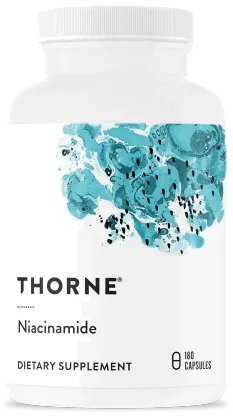
Thorne Niacinamide Review
Thorne Niacinamide is presented as a form of vitamin B3, a water-soluble vitamin with several functions throughout the body, including the creation of NAD+, a key molecule that provides cellular energy and regulates healthy aging. The page explains that niacinamide helps transform the food you eat into energy for your cells, which in turn regulate metabolic processes and maintain brain health and skin health. As part of the vitamin B3 family, niacinamide is described as a non-flushing form of niacin, also commonly known as nicotinamide. The product is listed with the key ingredient Niacin (as Niacinamide) and a serving size of one capsule, with 180 servings per container. The label lists 500mg of niacin as niacinamide per capsule, with hypromellose derived from cellulose as the capsule material and calcium laurate as the other ingredient. The page lists several benefits, including support for healthy joint cartilage tissue, maintenance of healthy skin, support for NAD+ and optimal cellular energy production, antioxidant protection against free radicals, and enhancement of a positive mood and a sense of calm. Features described include a non-flushing form of vitamin B3, in which temporary reddening of the skin is a common but harmless side effect of niacin, while the niacinamide form does not cause blood vessel dilation or flushing. The page calls niacinamide a well-absorbed and widely studied form of water-soluble vitamin B3 and one of the B vitamin precursors to NAD+. It names three groups who may benefit: people living, working, or playing in sunny environments for skin protection, individuals seeking antioxidant protection from everyday exposure to pollutants, and those aiming to optimize their mental energy and mood. The Why Thorne section states that the product is formulated with the scientific rigor the brand is known for, that each ingredient is carefully selected, clinically studied, and tested through multiple rounds of quality control to ensure purity, potency, and consistency, and that the brand is trusted by health-care practitioners. A separate section says the product has been third-party tested and certified to verify that what is in the package matches the label and to confirm it contains no unsafe levels of contaminants such as heavy metals, pesticides, and microorganisms. The warnings section states that the product is contraindicated in an individual with a history of hypersensitivity to any of its ingredients. It advises anyone who is pregnant to consult a health-care practitioner before using the product. The page also states there are no known adverse interactions or contraindications at the publication date. The price is listed at $26 for 180 capsules, or $23.40 with a subscription that saves 10 percent, with additional savings for subscribing to multiple products and options to deliver every two weeks up to every four months. Free shipping is noted as available within the contiguous United States for subscriptions, and the product is noted as eligible for HSA or FSA payment.
We don’t sell supplements. We help you make decisions and get the best price.
Lowest prices
We may earn a commission from some store links. How we choose.
Finding the lowest prices at the stores now. This takes a few seconds.
Study, Trial or Testing Result Summary
Members Only7 human studies · 6 improved
All the studies we found tested niacinamide applied to the skin as a cream or serum, not capsules taken by mouth like this product. None tested a swallowed dose, so it is unknown whether 500 milligrams by mouth helps wrinkles, elasticity or hydration. In 30 healthy Japanese women, a 4 percent niacinamide cream used on one side of the face for 8 weeks reduced eye-area wrinkles more than a plain cream, with marked or moderate improvement in 64 percent of the women [1]. In 20 healthy volunteers, a niacinamide cream used for 28 days reduced water loss through the skin and thickened its outer layer [2]. In 91 women with dark skin patches, a vitamin B3 serum and cream used for 6 months improved hydration, radiance and fine wrinkles, but there was no placebo comparison [3]. In 29 adults with acne scars, microneedling with a niacinamide serum improved texture and deep hydration, without a control group [4]. In 40 acne patients, skin hydration improved just as much with a plain cream as with a niacinamide moisturizer [5]. Animal and cell studies are never counted.
See all 7 studies →Hide the studies
- In 91 women with melasma (dark skin patches), a serum and cream containing vitamin B3 used for 6 months improved skin hydration, radiance and fine wrinkles, alongside a lower melasma score, with no comparison against a placebo.A Novel Dermocosmetic Routine Containing Vitamin B3 and 2-Mercaptonicotinyl Glycine Significantly Improves Melasma After…
- In 40 acne patients using anti-acne medication for 8 weeks, a ceramide and niacinamide moisturizer improved acne lesions more than a plain cream, but skin hydration improved similarly with both creams.Efficacy of ceramides and niacinamide-containing moisturizer versus hydrophilic cream in combination with topical anti-a…
- In 30 healthy Japanese women with eye-area wrinkles, a 4% niacinamide cosmetic used for 8 weeks on one side of the face reduced wrinkles more than a control cosmetic, with marked or moderate improvement in 64% of the women.Evaluation of anti-wrinkle effects of a novel cosmetic containing niacinamide.
- In 20 healthy volunteers, a niacinamide cream applied twice daily to the forearm for 28 days reduced water loss through the skin and increased the thickness of the outer skin layer compared with untreated and vehicle-treated sites.Influence of niacinamide containing formulations on the molecular and biophysical properties of the stratum corneum.
- In 43 adults with mild to moderate acne on the trunk, an 8-week niacinamide lotion improved acne severity, lowered skin redness, and shifted the skin bacteria toward more balance. It was well tolerated, but the study did not measure wrinkles, elasticity, or hydration.A new topical biotechnological phytocomplex for truncal mild-moderate acne restores skin microbiota balance.
- In 30 adults with oily skin, an 8-week niacinamide emulsion reduced acne, blackheads, and enlarged pores, and reduced skin oil. The study had no control group and did not measure wrinkles, elasticity, or hydration.The clinical efficacy of a new emulsion for acne and conspicuous facial pore amelioration.
- In 29 adults with acne scars, four microneedling sessions with a serum containing niacinamide over about 4 months improved skin texture, scar appearance, and deep skin hydration. The study had no control group.Pbserum Specific Acne Scars®: a cutting-edge approach utilizing triple enzymatic synergy combined with microneedling for…
Review Totals and Summary
Members Only4,667 reviews · 91% positive
Buyers of Thorne Niacinamide capsules are mostly happy, with about 4,667 ratings across the stores and the large majority at 4 or 5 stars. Only a few people said it did nothing for them. Reviews of other forms of the product were left out, and this summary covers the capsules only. **What buyers say it did for them:** Skin is the most common reason people buy it, and Amazon shoppers most often mention improved skin and a clearer complexion. Several buyers took it on a dermatologist's advice. One said it was "really helpful in the healing process" after skin cancer surgery. Another buyer simply says "so far so good" for skin. A few buyers mention sleep, such as "Aids in deep restful sleep." Vitacost's summary adds joints, mood, heart health and feeling better overall, and Amazon's says some people find it helps with sleep. Several Amazon buyers also say it lowers blood pressure. **What buyers complain about:** The complaints are few. One buyer wrote "It does not work for me at all," while adding that everyone is different. Another liked the product but had a problem with delivery, saying Thorne "Should send to PO Boxes." Amazon's summary says some buyers got headaches as a side effect, and one warns the product is not recommended for people with low blood pressure. Another buyer reported "No side effects." One is still waiting to judge results, noting that things like this can take a few months. **Capsule size, form and taste:** Buyers like the capsules. One says they are "smaller capsules easier to swallow," and Amazon's summary also calls them easy to swallow. Vitacost's summary describes them as mid-size, quick to dissolve in water, and sold in a handy container of 180 capsules. Amazon buyers also like the non-flushing formula. The same Vitacost buyer says people who cannot swallow capsules can open them and mix the powder into water. No store summary raises a complaint about taste. **Value for money:** Opinions are positive but sparse. One buyer calls it a "Great price, and great product," and the subscription setup was described as fast and easy. Amazon's summary says customers consider it good value. A Vitacost buyer says you get what you pay for. **Who it seems to suit:** It suits people who want a trusted, high-quality brand, especially those following a dermatologist's suggestion for skin. Buyers repeatedly say they trust Thorne's quality: "I trust Thorne that they offer the highest quality supplements." One chose it because it was the only product they found with endorsements from credible medical reviewers. It also suits people who find large pills hard to swallow. It was less suited to the buyer who saw no effect, to anyone who gets headaches from it, to people with low blood pressure (according to one Amazon buyer), and to anyone who needs delivery to a PO box.
Biohacker Summary
Members Only6 of 10 recommend it
Niacinamide, the main ingredient here, gets a mostly positive but mixed reception, with four of the ten panelists recommending it, two saying they use it, and the rest neutral. The most common reason is raising NAD, a molecule the body uses for energy, with several calling it a cheap alternative to pricier NAD products; others take it for skin health, and one recommended 500 milligrams twice a day for skin. Forms vary: some favor flush niacin, others niacinamide as a gentler option, and it shows up in skin serums and creams as well as pills. One uses enough niacin to flush before a sauna session, and others pair it with lion's mane, methylene blue, or a longevity stack. Cautions include high doses straining the body's methylation system and affecting the liver, and one panelist stopped prescribing niacin after large trials showed no heart benefit and many side effects such as flushing.
See all 10 biohackers →Hide the biohackers
Dr. Eric Berg · Niacin · recommends
- States that expensive NAD+ supplements only turn into $5 niacin in the body and that research has shown niacin can actually raise NAD levels in the blood 5 to 8 times their baseline levels.
- Recommends cheap flush niacin, stating that it outperforms expensive NAD supplements and even IV drips in raising NAD levels in the blood.
- States that cheap niacin, which creates a flush, ends up more in the blood than expensive NAD versions, suggesting it is more effective for unhealthy individuals.
- Niacin is linked to several areas of physical and mental health. Studies have looked at its effects on cholesterol, the heart, liver health, schizophrenia, depression, and bipolar disorder.
- Mentions that thicker white lines in a different location on nails are usually because of a vitamin B3 (niacin) deficiency.
- Niacin has been studied for its connection to cholesterol, heart health, mood disorders, and liver function.
- Flushing niacin is the form used to support balanced cholesterol levels, while no-flush versions do not provide the same benefits.
- Recommends Niacin as a top natural remedy for cholesterol.
- Recommends Niacin for anything related to cholesterol.
- States that niacin significantly lowers LDL and raises HDL.
Dr. Mark Hyman · Niacin · neutral
- Explains that pellagra, which killed 100,000 Americans, was a niacin deficiency, a B vitamin.
- Lists niacin as a B vitamin cofactor that helps mitochondrial function.
- Uses niacinamide as part of a compounded acne cream.
- Notes that 55-year-olds stacking psilocybin with niacin and lion's mane showed faster reaction times in a study.
- Has pioneered the Stamets Stack, which includes Niacin, and has conducted research on its use for neurodegenerative disorders like Parkinson's and Alzheimer's, seeing objective changes.
- Uses niacin (nicotinic acid) at high doses, up to 2,000 milligrams a day, under medical supervision, to lower small LDL particles when standard meds are insufficient.
- States that various forms of vitamin B3, including niacin, make a difference, especially with energy in the recovery stage.
- Mentions niacin, or vitamin B3, as something that might help lower triglycerides.
- Recounts that Abraham Hoffer, a Canadian psychiatrist, gave high doses of niacin to schizophrenia patients, and many improved.
- Recommends niacin (vitamin B3) as a supplement to lower triglycerides, lower LDL cholesterol, and raise HDL cholesterol, but advises working with a provider to get a slow-release form to manage hot flashes.
Thomas DeLauer · Niacin · uses
- Uses niacin as part of their detoxification protocol, taking enough to flush about half an hour before a sauna session.
- Discusses niacin as an essential vitamin involved in NAD production and known for its flushing effect as a vasodilator. He also mentions its role as an agonist for GPR109A receptors, which could potentially block fat mobilization.
- Notes that Niacin or Vitamin B3 can be good, but taking a lot can increase methylation, so it needs to be balanced.
- Warns that taking high doses of Niacin can put a lot of burden on the methylation system.
- Recommends occasionally taking a little bit of niacin, a B3 vitamin, as it is a great precursor for NAD and helps with energy manufacturing.
- Notes that nicotinamide, niacin, NMN, and NR all have essentially the same effect on NAD when taken orally, with NMN and NR likely breaking down into nicotinamide and niacin in the gut.
- Explains that Nicotinoyl GABA can cross the blood-brain barrier by piggybacking with Niacin (B3), increasing the likelihood of GABA getting into the brain.
- Mentions niacinamide as a compound that helps with vasodilation and can potentially lower blood pressure and heart rate, as it was used in a study as a comparison.
- Explains that liver helps convert tryptophan into Niacin (Vitamin B3), which is vital for numerous energy pathways and the regulation of homocysteine, potentially offering protective properties for arteries.
- Mentions that nutritional yeast is a rich source of niacin, and sometimes one can experience a niacin flush, feeling red and flush.
Ben Greenfield · Niacin · neutral
- States that Nrf2 activators, when combined with something like niacin, may have a good effect on plaque progression.
- Mentions nicotinamide as an ingredient found in many NAD products and notes that niacinamide and nicotinamide are structurally the same.
- Believes the niacinamide approach, along with the NAMPT/salvage pathway angle, is underrated and deserves more attention.
- Mentions niacin as a natural approach that might be good for plaque regression.
- Notes that 10X Health System's methylene blue tablets plus light stack supports energy and recovery at the cellular level by promoting healthy metabolism through niacinamide.
- Uses Niacinamide as a clean building block for NAD+ as part of NAD Regen.
- Recommends priming the skin with niacinamide to reduce hyperpigmentation, noting its effectiveness in reducing hyperpigmentation by 50% in an ex-girlfriend's laser burn.
- Mentions that a deficiency in niacin could lead to handling far less alcohol due to its role in detoxifying acetaldehyde.
- Mentions niacin as a supplement that can really heat the body up, leading to more sweating and detox.
- Has been impressed with and uses Scandinavian Biolabs Bio-Pilen shampoo, conditioner, and serum, which contain ingredients like niacinamide, aloe vera, an amino acid complex, vanillyl butyl ether, zinc PCA, and Capilia Longa to help with hair growth, strength, and recovery.
Dave Asprey · Niacin · recommends
- Recommends niacin, a form of vitamin B3, as one of the two most important raw materials for NAD+ production, found in foods like beef liver, chicken, turkey, and fish, or from supplements.
- Dave Asprey recommends niacin, a form of vitamin B3, as one of the two most important raw materials for NAD+ production, found in foods like beef liver, chicken, turkey, and fish.
- Notes that niacin has been a standard longevity ingredient since the 1990s.
- Dave discusses how niacinamide compares as an NAD precursor.
- Dave explains that niacinamide is an old-school way to mildly elevate NAD levels, and it was the only way to raise NAD in the very early days.
- Used niacin for a while to address plaque in his arteries and high LP(a), but stopped because it caused high liver values and made him feel unwell, despite dropping his LP(a).
- States that he has been using niacinamide for up to 20 years for longevity.
- Mentions that niacinamide is the very oldest way of raising NAD.
- Likes niacinamide, which is a precursor to NR and NMN.
- Takes niacinamide, along with NR and NMN, for longevity, believing it provides similar performance for NAD levels.
Siim Land · Niacin · recommends
- Suggests that in the mornings, NAD supplements like niacinamide can help kickstart the circadian rhythm.
- Recommends Niacinamide for skin protection, explaining it works partly through NAD metabolism that the body uses against DNA damage and is found in protein sources.
- Mentions that only specific therapies like niacin can meaningfully reduce Lp(a).
- Notes that Niacin notoriously raises HDL cholesterol, but this increase does not lower the risk of heart disease events, and while it can be good in many cases, very high doses can affect liver function.
- Recommends niacin as a much cheaper and equally effective NAD booster compared to NMN and NR.
- Warns that niacin, an NAD precursor, can shorten sleep.
- Recommends taking 100-300 milligrams of niacin before a sauna session, as part of the Hubert protocol, to enhance sweating, vasodilation, and potentially detoxification and cardiovascular benefits.
- Warns that Niacin, especially at high doses like 2000 mg per day, can disrupt sleep by increasing energy levels too high, causing flushing, and reducing deep sleep while increasing shallow non-REM sleep.
- Discusses Niacinamide as a form of vitamin B3 that can increase NAD+ levels, but notes it's not as effective as NMN or NR for longevity and can cause flushing.
- Mentions that Niacin is known to raise HDL cholesterol, but this does not lower the risk of heart disease events. He considers it a good supplement for many cases, noting that very high doses can affect liver function, and its benefits mostly stop at increased HDL cholesterol.
Peter Attia · Niacin · uses
- Peter Attia's AVIA Skincare vitamin C serum also contains niacinamide, which is useful to apply to the skin right after washing.
- Used to prescribe niacin to many patients, primarily to raise HDL, lower APO B, triglycerides, LDL, and LP(a), but stopped after clinical trials showed minimal or disappointing effects on reducing cardiovascular events.
- Notes that niacin lowers LP little a but was not shown to have clinical benefit in outcome studies, and they are not currently using it.
- Recalls that a flush from niacin typically occurred with doses of a few grams.
- Explains that niacin does reduce Lp(a) levels, increase HDL, and lower triglycerides, but two large cardiovascular outcome trials have shown no cardiovascular benefits and many side effects, such as flushing. He concludes that the cost-to-benefit ratio does not support its use.
- He dives into data on the possible treatments for lowering Lp(a) such niacin, meds, and PCSK9 inhibitors.
- States that niacin is a dead drug and is not recommended by any guidelines, though some still selectively use it for Lp(a).
- Warns against taking high doses of nicotinamide (a form of niacin/vitamin B3) because it is an effective inhibitor of sirtuins, which are enzymes one wants to keep active for the purpose of raising NAD.
- Peter Atia notes that some people still argue niacin makes sense because it lowers LP little-a, but he advises against it, stating that it has a weak lowering effect of about 20% and that he knows many lipidologists who would not use it.
- Warns against niacin, stating that it causes acanthosis nigricans, worsens insulin resistance, and has numerous other side effects, despite lowering apoB. He recounts a patient who experienced a severe pruritic reaction, thinking he was going to die.
Andrew Huberman · Niacin · neutral
- Reviews data on ingesting or topically applying niacinamide to improve skin's youthfulness and appearance, including reducing wrinkles, sagging, and pore size.
- Recommends niacinamide supplementation, a form of Vitamin B3, at 500 milligrams twice per day for a total of 1 gram daily, to increase ceramide production, improve skin moisture, reduce inflammation, balance oil production, and reduce the appearance of clogged pores and hyperpigmented spots.
Dr. Rhonda Patrick · Niacin · neutral
- States that NAD can be synthesized from the three forms of niacin, also known as vitamin B3, found in foods like lean meats, legumes, and veggies.
Bryan Johnson · Niacin · recommends
- Recommends Niacinamide as a supplement for skin health, noting it is in the Blueprint stack.
- He uses Niacinamide, found in serums or moisturizers, morning and night, and takes 15 mg in Blueprint Essential Capsules.
RAL Summary
Members OnlyTier 4 for Younger-Looking Skin for Women
Every study behind the grade tested niacinamide cream or serum applied to the skin, not niacinamide capsules taken by mouth, so there is no study support for this oral product and the evidence is thin. So it is graded Tier 4, lower than the rules alone gave.
- Emerging: not enough evidence to rank higher yet.
Where the evidence disagrees: 1 of the 7 human studies found no effect.
More Details
Members OnlyBody systems · Combine with · Possible side effects
Body systems: Skin
Combine with: For vision, pair niacinamide with nutrients that have stronger evidence: lutein and zeaxanthin (macular pigment support), astaxanthin (eye fatigue and antioxidant protection), zinc with copper (AREDS2 formula), vitamin C and vitamin E (antioxidant support), and omega-3 DHA/EPA (retinal and dry-eye support). Bilberry or saffron extract may add further support. If you are using niacinamide for skin or NAD+ support, it combines well with vitamin D, magnesium, and other B vitamins such as riboflavin. Consult a clinician before high-dose niacinamide, especially with liver conditions or glaucoma treatment.
Possible side effects: The studies reported no side effects; some buyers reported headaches, and one warned it may not suit people with low blood pressure.
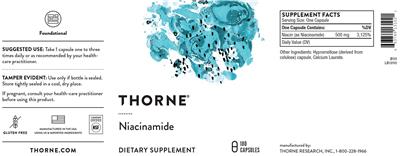
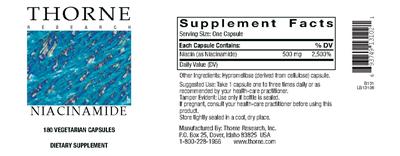
Supplement Facts
Niacin 500 mg
| Niacin | 500 mg |
Other ingredients: Hypromellose, Calcium Laurate.
Directions: Suggested use: Take 1 capsule one to three times daily or as recommended by your healthcare practitioner.
Barcode (UPC) 693749131021 · Label source: NIH label database · Report a label change
Show entire label
More younger-looking skin for women products
Members OnlyThe highest ranked for the same goal
Read more
Our articles on this subject
Graded November 6, 2026 by the Reverse Age Lab evidence engine, from human studies, real reviews and our biohacker panel. How we grade. Is this medical advice? No. Rala organizes the published evidence; go over any change with your doctor, especially if you take meds.
Privacy policyConsumer health dataAffiliate disclosureTermsDo Not Sell or Share My Personal InformationCookie settings