
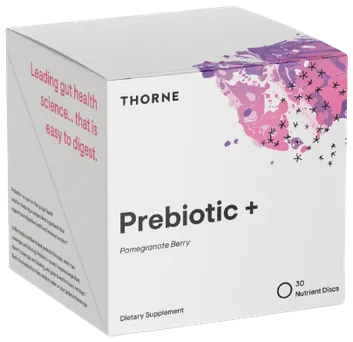
Thorne Research Prebiotic + Pomegranate Berry Review
Thorne Prebiotic+ Pomegranate Berry is presented as a delicious, easy-to-mix powder that provides prebiotic fiber to support gut health and a balanced microbiome. The page says the formula combines prebiotics with a pomegranate berry flavor for a refreshing taste, helping to nourish beneficial gut bacteria and promote digestive health. The product is described as free from gluten, dairy, and artificial additives, and as an ideal choice for people looking to support digestive and immune health naturally. Key features listed on the page are: supports gut health and a balanced microbiome; contains prebiotic fiber to nourish beneficial gut bacteria; refreshing pomegranate berry flavor; free from gluten, dairy, and artificial preservatives; and convenient sachets for easy use. The page shows the product as out of stock, with a Notify Me option, and states delivery to Dubai, UAE, fulfilled by MedX Fleet, with pharmacist fulfilment and temperature controlled delivery. No ingredients list, serving size, barcode, or written customer reviews appear on this page.
We don’t sell supplements. We help you make decisions and get the best price.
Lowest prices
We may earn a commission from some store links. How we choose.
Finding the lowest prices at the stores now. This takes a few seconds.
Study, Trial or Testing Result Summary
Members Only87 human studies · 65 improved
No study has tested this product or its main ingredients alone for gas, bloating or irregularity. PreforPro, a blend of bacteria-targeting viruses, has no direct human evidence on file for this goal. The studies listed for it tested live bacteria products, which eased pain and bloating in irritable bowel syndrome with low confidence [1], or tested other strains [2][3]. Pomegranate is present at 50 mg, well below the 400 mg used in a large trial where a blend of pomegranate extract and probiotics improved bloating, gas, discomfort and regularity [4]. A diet with pomegranate juice and sumac eased stomach symptoms in people with COVID-19 [5], but a herbal blend including pomegranate did no better than placebo in diarrhea-type irritable bowel [6]. For elderberry, one small trial of a mix with aronia, probiotics and fiber improved quality of life in irritable bowel syndrome, but elderberry's own share of the effect cannot be separated [7]. Green tea extract has no human studies for this goal. Animal and cell studies are never counted.
See all 87 studies →Hide the studies
- Across 82 trials of 10,332 adults with irritable bowel syndrome, some probiotics eased symptoms such as pain and bloating compared with placebo, but confidence in the evidence was low to very low for most results.Efficacy of Probiotics in Irritable Bowel Syndrome: Systematic Review and Meta-analysis.
- Across 81 trials of 9,253 adults with irritable bowel syndrome, several specific probiotic strains and mixtures beat placebo for symptom severity, quality of life, abdominal pain, and bloating, though the benefit varied by strain and by outcome.Outcome-Specific Efficacy of Different Probiotic Strains and Mixtures in Irritable Bowel Syndrome: A Systematic Review a…
- In 3,122 children, adding probiotics to a med treatment for Helicobacter pylori raised cure rates and reduced side effects such as diarrhea and bloating compared with placebo.Efficacy and safety of probiotic-supplemented triple therapy for eradication of Helicobacter pylori in children: a syste…
- Pooled trials across eight gut diseases found probiotics beneficial overall, including for irritable bowel syndrome, though some species such as Lactobacillus acidophilus showed no benefit.A meta-analysis of probiotic efficacy for gastrointestinal diseases.
- Pooling 10 placebo-controlled trials in people with irritable bowel syndrome, some probiotic species (including Bifidobacterium longum) reduced pain, bloating and gas, but quality of life did not clearly improve.Effect of probiotic species on irritable bowel syndrome symptoms: A bring up to date meta-analysis.
- In three winter trials of healthy volunteers (237, 234 and 250 people), synbiotic blends improved bowel function, with less bloating and more regular movements, and shortened and eased respiratory infections compared with placebo.A new chance of preventing winter diseases by the administration of synbiotic formulations.
- In 438 children taking meds, Lactobacillus plantarum LP299V during meds and for a week after did not reduce loose stools (39% vs 44.5% on placebo) or abdominal symptoms compared with placebo.Read the study on PubMed (28438377) →
- In 350 adults with self-reported bloating or indigestion, a daily synbiotic containing 400 mg pomegranate extract plus probiotics for 6 weeks improved digestive quality of life, bloating, gas, abdominal discomfort and regularity versus placebo, with 72.3% reporting never or rarely bloating versus 55.9% on placebo.A Randomized, Placebo-Controlled Trial Evaluating Multi-Species Synbiotic Supplementation for Bloating, Gas, and Abdomin…
- In 300 healthy adults with hard stools and irregular bowel movements, 30 days of either probiotic blend increased weekly bowel movements and eased stool consistency and bloating compared with placebo.The use of probiotics in healthy volunteers with evacuation disorders and hard stools: a double-blind, randomized, place…
- In 295 adults starting iron tablets for iron deficiency anaemia, taking Lactobacillus plantarum 299v during the first month cut stomach side effects and treatment stopping, and iron levels rose more over three months.Improved gastrointestinal tolerance and iron status via probiotic use in iron deficiency anaemia patients initiating ora…
- In healthy infants fed formula for about 4 months, milk oligosaccharides with or without probiotics gave normal growth and more frequent, softer stools, with no difference in parent-reported gas, spitting up or colic, though doctor-diagnosed colic was higher without probiotics.Growth and safety evaluation of infant formulae containing oligosaccharides derived from bovine milk: a randomized, doub…
- In 229 pelvic cancer patients receiving radiation, overall moderate-to-severe diarrhea did not differ significantly from placebo, but at 60 days 35% of the standard-dose probiotic group were free of it versus 17% on placebo.A randomized double-blind controlled trial: impact of probiotics on diarrhea in patients treated with pelvic radiation.
- In 214 adults with irritable bowel syndrome, one capsule daily of Lactobacillus plantarum 299v for 4 weeks lowered pain and bloating more than placebo, and 78.1% rated the effect excellent or good versus 8.1% on placebo.Clinical trial: Lactobacillus plantarum 299v (DSM 9843) improves symptoms of irritable bowel syndrome.
- In 200 adults with diarrhea-predominant irritable bowel syndrome, 12 weeks of live or heat-treated Bifidobacterium longum cut symptom scores by about 174-178 points versus 60 with placebo, with better stool consistency and quality of life.A randomized double-blind, placebo-controlled trial to evaluate the safety and efficacy of live Bifidobacterium longum C…
- In 200 adults with non-constipated irritable bowel syndrome, a two-strain probiotic for 84 days gave more overall improvement than placebo and lowered pain and distension, with the first gain seen at day 28 (19.3% vs 8.9% responders).Probiotic Blend of Lactobacillus acidophilus LA-5 and Bifidobacterium animalis ssp. Lactis BB-12 in Non-constipated Irri…
- In 182 outpatients with COVID-19, a diet with pomegranate juice and sumac alongside standard care reduced symptoms including diarrhea, nausea, vomiting and abdominal pain more than standard care alone.The Effect of Pomegranate Juice and Sumac Consumption in the Treatment of Outpatients with COVID-19.
- In 150 adults with functional constipation, Bacillus coagulans Unique IS2 (2 billion spores) plus lactulose daily for 4 weeks improved stool consistency and reduced incomplete evacuation and pain sooner than lactulose alone, though stool frequency was not significantly different by the end.Effect of Bacillus coagulans Unique IS2 with Lactulose on Functional Constipation in Adults: a Double-Blind Placebo Cont…
- In 141 children aged 4-12 with irritable bowel syndrome, Bacillus coagulans Unique IS2 once daily for 8 weeks reduced pain, bloating, gas and straining and improved stool consistency more than placebo.Efficacy of Bacillus coagulans Unique IS2 in treatment of irritable bowel syndrome in children: a double blind, randomis…
- In 138 adults with irritable bowel syndrome after an infection, 14 days of a probiotic with Bifidobacterium longum and Enterococcus faecium restored lactose digestion and eased symptoms in 70.8% of the probiotic group, while 68.4% of the placebo group had no benefit.[Lactase deficiency in patients with postinfectious irritable bowel syndrome and the role of intestinal microflora in it…
- In 136 adults with irritable bowel syndrome, 2 billion CFU of Bacillus coagulans Unique IS2 daily for 8 weeks reduced abdominal pain and increased complete spontaneous bowel movements compared with placebo.Randomized clinical trial: the effect of probiotic Bacillus coagulans Unique IS2 vs. placebo on the symptoms management …
- In 123 adults with irritable bowel syndrome, symptom scores did not differ from placebo during the 12 weeks, but at week 16 follow-up more people improved on Bifidobacterium lactis (43.8%) and Bacillus coagulans (52.9%) than on placebo (20.5%).The Efficacy and Safety of Single-Strain Probiotic Formulations Containing Bifidobacterium lactis or Bacillus coagulans …
- In 120 patients with irritable bowel syndrome, Lactobacillus plantarum 299v did not relieve abdominal pain, bloating or incomplete emptying more than placebo.Role of Lactobacillus plantarum 299v versus Placebo in symptomatic improvement of irritable bowel syndrome patients.
- In 120 adults after heart surgery, Lactobacillus plantarum 24-7 twice daily for ten days improved bloating and hard stools versus placebo, though the overall digestive symptom score did not reach significance.Lactobacillus plantarum 24-7 improves postoperative bloating and hard stools by modulating intestinal microbiota in pati…
- In 115 children with functional abdominal pain, a Bacillus coagulans and fructo-oligosaccharide synbiotic twice daily for 4 weeks gave a higher pain response than placebo after treatment (60% vs 39.5%), but the difference was not significant at week 12.Synbiotic containing Bacillus coagulans and fructo-oligosaccharides for functional abdominal pain in children.
- In 112 adults with lower gut symptoms, an eight-week probiotic blend gave more overall symptom relief than placebo, with greater reductions in abdominal pain and bloating.Validity and safety of ID-JPL934 in lower gastrointestinal symptom improvement.
- In a randomized placebo-controlled trial of 109 people with irritable bowel syndrome, 4 weeks of quadruple-coated probiotics gave greater overall symptom relief than placebo, with the clearest benefit in women and in people with constipation-predominant symptoms.Efficacy of Quadruple-coated Probiotics in Patients With Irritable Bowel Syndrome: A Randomized, Double-blind, Placebo-c…
- In 100 adults with long-term constipation, 2 billion CFU a day of Bacillus coagulans Unique IS2 for 4 weeks increased bowel movements, and 98% of the probiotic group reached normal stool consistency versus 74% on placebo.Bacillus coagulans Unique IS2 in Constipation: A Double-Blind, Placebo-Controlled Study.
- In 100 people with irritable bowel syndrome, Bacillus coagulans BCP92 taken for 12 weeks improved symptom severity, digestive symptom frequency, stool consistency and stress compared with the control group, with no change in an inflammation marker (interleukin-6).Role of Bacillus coagulans (Heyndrickxia coagulans)BCP92 in managing irritable bowel syndrome: A randomized, double-blin…
- In 80 healthy breastfed infants, 21 days of Bifidobacterium infantis was well tolerated with no difference in gas or other symptoms, and stools were fewer and better formed than in infants not given it.Safety and tolerability of Bifidobacterium longum subspecies infantis EVC001 supplementation in healthy term breastfed i…
- In 80 healthy children aged 6 to 8, 1 billion CFU a day of Bacillus coagulans GBI-30, 6086 for three months reduced the rate of flatulence and several respiratory symptoms compared with placebo.Bacillus coagulans GBI-30, 6068 decreases upper respiratory and gastrointestinal tract symptoms in healthy Mexican schol…
- In 78 adults with functional constipation, a spore-forming probiotic blend (including Weizmannia coagulans) for 4 weeks improved incomplete evacuation, abdominal pain before defecation, stool consistency and physical functioning compared with placebo.Effects of a spore-forming probiotic blend on bowel habits and physical well-being in adults with functional constipatio…
- In 70 adults with irritable bowel syndrome, 4 weeks of either probiotic blend cut abdominal pain by about 45-49% and symptom severity by about 56%, versus 29.5% and 14.4% with placebo.Probiotics in the treatment of irritable bowel syndrome.
- In 70 adults with functional gas and bloating, 2 billion spores of Bacillus coagulans MTCC 5856 daily for 4 weeks significantly reduced indigestion, gas and bloating scores compared with placebo and was well tolerated.The effects of Bacillus coagulans MTCC 5856 on functional gas and bloating in adults: A randomized, double-blind, placeb…
- In 66 healthy adults over 3 weeks, probiotic fermented milk raised gut lactobacilli and bifidobacteria, but adding inulin caused more digestive symptoms, especially gas.The effect of probiotic fermented milk and inulin on the functions and microecology of the intestine.
- In 61 adults with bloating and gas but no bowel diagnosis, a Bacillus coagulans product taken for 4 weeks improved abdominal pain and total gut symptom scores compared with placebo, but most other measures showed no clear difference because placebo response was strong.A prospective, randomized, double-blind, placebo-controlled parallel-group dual site trial to evaluate the effects of a …
- In 61 adults with irritable bowel syndrome symptoms and inflammatory bowel disease, a four-strain probiotic over 3 months did not significantly outperform placebo in reducing symptom scores, though 45 percent of the probiotic group reached the primary improvement target.Four-strain probiotic exerts a positive effect on irritable bowel syndrome symptoms occurring in inflammatory bowel dise…
- In 61 adults with diarrhea-predominant irritable bowel syndrome, 4 weeks of a two-strain spore-forming probiotic improved abdominal pain and stool consistency more than placebo.Effects of a Bacillus subtilis HU58 and Heyndrickxia faecalis SC208 spore-forming probiotic formula on gastrointestinal …
- In 60 adults with irritable bowel syndrome, 4 weeks of a rose-hip drink with Lactobacillus plantarum DSM 9843 cut flatulence more than placebo but did not change bloating.Alteration of intestinal microflora is associated with reduction in abdominal bloating and pain in patients with irritab…
- In 60 gastric bypass patients with digestive complaints, 2 weeks of probiotics or digestive enzymes improved gas, bloating, belching and abdominal pain scores, with no placebo group.Effect of probiotics on postoperative quality of gastric bypass surgeries: a prospective randomized trial.
- In a placebo-controlled trial of 60 adults with acute diarrhea and abdominal discomfort, Bacillus coagulans LBSC shortened diarrhea and eased abdominal pain compared with placebo; this strain was not PreforPro, so it is indirect evidence.A prospective, interventional, randomized, double-blind, placebo-controlled clinical study to evaluate the efficacy and …
- In a placebo-controlled trial of 60 adults with gastrointestinal discomfort, a three-strain Bacillus probiotic blend over about 5 weeks improved bloating, belching, and overall dyspepsia scores compared with placebo; this blend was not PreforPro, so it is indirect evidence.A prospective, randomized, double-blind, placebo-controlled, parallel-group study to evaluate the efficacy and safety of…
- In 60 healthy adults with mild digestive symptoms, 8 weeks of heat-treated Bifidobacterium longum changed digestive symptoms little compared with placebo, though cholesterol fell and butyrate-producing bacteria rose.Effect of Postbiotic Bifidobacterium longum CECT 7347 on Gastrointestinal Symptoms, Serum Biochemistry, and Intestinal M…
- In 59 children with chronic constipation, yogurt with Bifidobacterium longum improved stool frequency, abdominal pain and defecation pain more than plain yogurt in a crossover trial of two 5-week phases.Pediatric functional constipation treatment with Bifidobacterium-containing yogurt: a crossover, double-blind, controlle…
- In 59 overweight adults, 1 gram daily of Lactobacillus plantarum GKM3 for four weeks increased bowel movements and eased reflux, nausea, belly pain, and constipation compared with placebo.Impact of probiotic Lactobacillus plantarum GKM3 on gastrointestinal health in overweight and obese individuals: A rando…
- In 56 healthy adults, 3 weeks of a kefir-derived probiotic reduced abdominal pain and bloating in men compared with placebo and shifted gut bacteria.Putative Probiotic Strains Isolated from Kefir Improve Gastrointestinal Health Parameters in Adults: a Randomized, Singl…
- In a pilot trial of 52 adults with diarrhea-predominant irritable bowel syndrome, taking Bacillus coagulans GBI-30 daily for 8 weeks significantly reduced the average number of daily bowel movements compared with placebo.Effects of a proprietary Bacillus coagulans preparation on symptoms of diarrhea-predominant irritable bowel syndrome.
- In 52 adults with irritable bowel syndrome, a simethicone and Bacillus coagulans combination taken three times daily after meals for 4 weeks reduced bloating and discomfort more than placebo.A randomized double-blind placebo-controlled clinical trial on efficacy and safety of association of simethicone and Bac…
- In 50 adults with diarrhea-dominant irritable bowel syndrome, 8 weeks of a seven-strain probiotic mixture gave adequate overall symptom relief to 48% of people versus 12% on placebo and improved stool consistency.The effect of a multispecies probiotic mixture on the symptoms and fecal microbiota in diarrhea-dominant irritable bowel…
- In 50 people with diarrhea-predominant irritable bowel syndrome, 2 billion CFU daily for about 8 weeks reduced abdominal pain, bloating, diarrhea and stool frequency compared with placebo.The role of Weizmannia (Bacillus) coagulans LMG S-31876 in treating IBS-diarrhea.
- In 49 adults with irritable bowel syndrome, a six-strain probiotic taken twice daily for four weeks relieved symptoms in 68 percent of users versus 37.5 percent on placebo, with less bloating and abdominal pain.Effect of multispecies probiotics on irritable bowel syndrome: a randomized, double-blind, placebo-controlled trial.
- In 48 healthy adults, drinking a fermented rose-hip and oat drink containing Lactobacillus plantarum DSM 9843 for 3 weeks increased stool volume and reduced flatulence compared with a plain rose-hip drink, with the bacteria recovered in stool.Survival of Lactobacillus plantarum DSM 9843 (299v), and effect on the short-chain fatty acid content of faeces after in…
- In 47 adults with irritable bowel syndrome, 2 months of a combination of elderberry and aronia extracts, probiotics and fiber improved quality of life (largest gain in dysphoria) and raised stool short-chain fatty acids compared with placebo, though the effect of elderberry alone cannot be separated from the other ingredients.Effects of a polyphenol-rich extract blend, probiotics, and hydrolyzed fiber on quality of life and gut health markers i…
- In 44 adults with irritable bowel syndrome, Bacillus coagulans GBI-30 6086 taken daily for 8 weeks significantly reduced abdominal pain and bloating from baseline, though the placebo comparison was limited by baseline differences between groups.Bacillus coagulans significantly improved abdominal pain and bloating in patients with IBS.
- In 44 adults with irritable bowel syndrome and mild to moderate anxiety or depression, Bifidobacterium longum NCC3001 for 6 weeks reduced depression scores more than placebo but did not change irritable bowel symptoms.Probiotic Bifidobacterium longum NCC3001 Reduces Depression Scores and Alters Brain Activity: A Pilot Study in Patients …
- In 40 people with irritable bowel syndrome, a liquid probiotic (Lactobacillus plantarum 299V) for 4 weeks resolved abdominal pain in all treated patients versus 11 on placebo, and 95% of treated patients improved overall versus 15% on placebo.A controlled, double-blind, randomized study on the efficacy of Lactobacillus plantarum 299V in patients with irritable …
- In 40 adults with depression and irritable bowel syndrome, 2 billion CFU of Bacillus coagulans MTCC 5856 daily for 90 days improved depression scores and bowel-related quality of life more than placebo, and reduced a blood marker of inflammation.Bacillus coagulans MTCC 5856 for the management of major depression with irritable bowel syndrome: a randomised, double-…
- In 40 adults with irritable bowel syndrome, 80 days of Bacillus coagulans LBSC improved bloating, cramping, abdominal pain, bowel symptoms and stool consistency compared with placebo.Efficacy and safety of Bacillus coagulans LBSC in irritable bowel syndrome: A prospective, interventional, randomized, d…
- In 36 adults with diarrhea-predominant irritable bowel syndrome, 2 billion CFU a day of Bacillus coagulans MTCC 5856 for 90 days reduced bloating, diarrhea, abdominal pain and stool frequency more than placebo.Bacillus coagulans MTCC 5856 supplementation in the management of diarrhea predominant Irritable Bowel Syndrome: a doubl…
- In 35 cancer patients on home tube feeding, 2 x 10^10 CFU of a probiotic (Lactobacillus plantarum 299v) daily for 4 weeks reduced vomiting and flatulence and raised serum albumin more than placebo, but quality of life and overall nutritional status did not differ.Effects of 4 weeks of Lactobacillus plantarum 299v supplementation on nutritional status, enteral nutrition tolerance, a…
- In 32 people with diarrhea-predominant irritable bowel syndrome, a herbal blend including pomegranate taken twice daily for 4 weeks did not improve symptoms more than placebo.Efficacy and safety of Ayurvedic herbs in diarrhoea-predominant irritable bowel syndrome: A randomised controlled crosso…
- In 30 people with diarrhea-predominant irritable bowel syndrome, 4 weeks of probiotic fermented milk lowered small bowel permeability and overall symptom scores.Clinical trial: effect of active lactic acid bacteria on mucosal barrier function in patients with diarrhoea-predominant…
- In 27 adults with diarrhea-predominant irritable bowel syndrome, four weeks of Lactiplantibacillus plantarum GTB1 gave more global symptom relief than placebo (94% vs 63%), reduced bloating and abdominal pain, and firmed stools.Effect of Oral Intake of Lactiplantibacillus plantarum APsulloc 331261 (GTB1TM) on Diarrhea-Predominant Irritable Bowel …
- In 25 adults with irritable bowel syndrome, one month of a Bifidobacterium and Lactobacillus blend with vitamin B6 reduced abdominal pain, bloating, and overall severity more than one month of placebo in a crossover design.Effects of Bifidobacterium longum BB536 and Lactobacillus rhamnosus HN001 in IBS patients.
- In 24 adults prone to constipation, 2 weeks of Bifidobacterium longum BB536 changed bowel movement frequency differently between people, and gut bacteria and metabolite profiles predicted who responded.Integrated gut microbiome and metabolome analyses identified fecal biomarkers for bowel movement regulation by Bifidobac…
- In 15 people who poorly absorb lactose, milk containing Bifidobacterium longum grown on lactose caused less hydrogen production and less gas than control milk.Improvement of lactose digestion in humans by ingestion of unfermented milk containing Bifidobacterium longum.
- In 12 patients with irritable bowel syndrome in a 4-week crossover trial, Lactobacillus plantarum 299V did not change symptoms or colonic fermentation compared with placebo, though breath hydrogen after lactulose was lower.Effect of Lactobacillus plantarum 299v on colonic fermentation and symptoms of irritable bowel syndrome.
- In volunteers with stress-related symptoms, a probiotic sachet taken for three weeks significantly reduced stomach pain and nausea compared with placebo, though it did not change other stress symptoms or sleep.Probiotic food supplement reduces stress-induced gastrointestinal symptoms in volunteers: a double-blind, placebo-contro…
- In people with nontyphoid Salmonella infection, Lactobacillus plantarum 299 v did not speed clearance of the infection or shorten symptoms compared with placebo, and its effects on gas and stool symptoms varied by sex.Effects of probiotic intake and gender on nontyphoid Salmonella infection.
- In adults with irritable bowel syndrome, eight weeks of Lactobacillus plantarum 299v at 10 billion CFU daily gave no more abdominal pain or quality of life relief than placebo.Randomized clinical trial: effect of Lactobacillus plantarum 299 v on symptoms of irritable bowel syndrome.
- In adults with functional constipation, two multi-strain probiotic sachets taken daily for 30 days did not differ significantly from each other in bowel movement frequency or stool quality.The effect of probiotics on functional constipation in adults: A randomized, double-blind controlled trial.
- In a placebo-controlled trial of adults with flatulence, Bifidobacterium longum CCFM1319 increased beneficial Faecalibacterium prausnitzii bacteria and improved gas-related symptoms.Gut microbiota and metabolic alterations in participants with flatulence identify Faecalibacterium prausnitzii as a key …
- In 70 people with irritable bowel syndrome, adding Bifidobacterium longum W11 to a med rifaximin gave greater symptom improvement at 2 months than rifaximin alone, though the physician's opinion did not confirm it.Role of gut microflora and probiotic effects in the irritable bowel syndrome.
- In 30 adults with moderate to severe irritable bowel syndrome, a rectal enema of the ReFerm oat-based postbiotic twice daily for 14 days reduced immune mast cell activity in colon biopsies, while the placebo enema did not.ReFerm®: a postbiotic fermented oat gruel composition is reducing mast cell degranulation in the colon of patients with …
- In 636 people with constipation-type irritable bowel syndrome, taking 3 g daily of a symbiotic for at least 36 days increased stool frequency and reduced moderate-to-severe bloating and abdominal pain. The study was open and uncontrolled.Effect of a symbiotic preparation on the clinical manifestations of irritable bowel syndrome, constipation-variant. Resu…
- In 64 children and adolescents aged 8 to 18 with irritable bowel syndrome, taking 1 billion CFU of Bifidobacterium longum 35624 daily for 12 weeks in an open-label study improved gastrointestinal symptoms, with 96.6% reaching a clinically meaningful improvement; the gains faded during a two-week break.Effects of Bifidobacterium longum 35624 in Children and Adolescents with Irritable Bowel Syndrome.
- In 62 adults with post-infection irritable bowel syndrome, adding Bifiform to standard treatment for about 2 weeks improved symptoms and reduced bowel inflammation, with benefits still present 6 months later.[The effectiveness of a probiotic containing Bifidobacterium longum BB-46 and Enterococcus faecium ENCfa-68 in the treat…
- In 38 adults with kidney disease taking a three-strain probiotic blend for six months, bloating and gas scores improved, stool formation got better, and blood markers of inflammation dropped, though there was no placebo group.Effect of a Probiotic Combination in an Experimental Mouse Model and Clinical Patients With Chronic Kidney Disease: A Pi…
- In a 30-day uncontrolled study of 26 people with irritable bowel syndrome, a four-strain probiotic capsule taken twice daily lowered symptom scores by 71% in those who also had small intestine bacterial overgrowth, compared with 11% in those without it.Effect of a Preparation of Four Probiotics on Symptoms of Patients with Irritable Bowel Syndrome: Association with Intes…
- In 20 pregnant women with functional constipation, a daily six-strain probiotic taken for four weeks raised bowel movements from about 3.1 to 6.7 per week, and reduced blockage sensations, straining and abdominal pain. The study was uncontrolled, so a placebo-controlled trial is still needed.Is a multispecies probiotic mixture effective in constipation during pregnancy? 'A pilot study'.
- In an open-label trial, 15 adults with irritable bowel syndrome who took the VSL#3 probiotic for 4 or 8 weeks had fewer abdominal pain episodes, and there was no control group.Probiotic VSL#3 Treatment Reduces Colonic Permeability and Abdominal Pain Symptoms in Patients With Irritable Bowel Synd…
- In a case-control study of 289 people, healthy controls ate pomegranate and other functional foods more often than people with digestive diseases, but this association does not prove that pomegranate protects against these diseases.Increased Functional Foods' Consumption and Mediterranean Diet Adherence May Have a Protective Effect in the Appearance …
- In a 42-day real-world study of 246 adults with diarrhea-predominant or mixed irritable bowel syndrome taking a probiotic plus vitamin D sachet daily, 62.9% of the 89 patients with usable data had a clinically meaningful symptom drop, and symptom relief tracked with better quality of life, anxiety and depression scores.Probiotics plus vitamin D in irritable bowel syndrome: a prospective multicentric non-interventional study.
- In 221 adults with irritable bowel syndrome taking one capsule of Lactobacillus plantarum 299v daily for up to 12 weeks in routine clinical care, overall symptom scores fell significantly, with the largest drops in abdominal pain, gas and constipation severity.[Treatment of IBS with Lactobacillus plantarum 299v: Therapeutic success increases with length of treatment - real-life …
- In a survey of 160 patients with digestive disorders in Algeria, about 7.8% reported using pomegranate as a herbal remedy, but the survey measured no effects on symptoms.A survey into the utilization of probiotics and medicinal plants among individuals afflicted with gastrointestinal disor…
- In 42 adults with irritable bowel syndrome, taking one capsule (1 billion CFU) of Bifidobacterium longum 35624 daily for 12 weeks significantly reduced abdominal pain, bloating, and stool problems, and some patients went into remission by the third month; the benefits lasted about one month after stopping.[Long-term probiotic administration for irritable bowel syndrome: a legal need].
- In a pilot study of 41 infants with colic, a tyndallized Bacillus coagulans and simethicone mixture given for 28 days was followed by at least a 50% reduction in crying time in 89% of infants, with no relevant side effects reported; the study had no placebo group.Efficacy of a mixture of simethicone and tyndallized bacillus coagulans in infant colic: a pilot study on behalf of Ital…
- In an uncontrolled observational study of 38 adults with functional bowel disorders, a Bacillus coagulans product called PROBACI taken twice daily for 4 weeks was followed by significant improvements in abdominal pain, bloating, and overall symptom scores, with the greatest benefit in people with constipation-dominant symptoms.Bacillus coagulans (PROBACI) in treating constipation-dominant functional bowel disorders.
Review Totals and Summary
Members Only112 reviews · 88% positive
I could only find a limited set of reviews. The clearest source was the iHerb page, which had about 87 ratings, and many of its written reviews were short. Please treat the themes below as a small sample rather than a complete picture. Taste and dissolving behavior dominate the feedback. Several customers like the pomegranate berry flavor and call it easy enough to drink, though one noted it turns slightly bitter at the end of the glass. Others find the taste unpleasant. One reviewer said it was terrible and they could not finish it. Dissolving gets mixed comments. One person said it takes about a minute to dissolve in cold water and tastes good enough. Another found it difficult to dissolve and also disliked the taste. People like the convenience and the format. Reviewers describe the discs as easy to take and gentle on the digestive system. They also like the packaging for travel. One user admitted they forget to take it consistently, which suggests a daily-drink habit takes some effort. Tolerability is mostly positive, with little mention of the bloating or gas that people often complain about with fiber prebiotics. One reviewer did report feeling dizzy after taking it. That is a single report, but it is worth knowing about. Trust in the brand comes up repeatedly. Reviewers call Thorne a very high-quality company and recommend the product as a good prebiotic. Few reviewers describe specific measurable results, such as changes in digestion or regularity. Praise therefore centers on quality, gentleness and flavor rather than dramatic benefits. Overall, customers who like it value the gentle, travel-friendly format and the fruity taste. Those who dislike it object mainly to the flavor, the bitter finish and the dissolving time. Some listings also show the product as unavailable or discontinued, which may frustrate loyal buyers.
Biohacker Summary
Members Only9 of 10 recommend it
The statements give no information on the main ingredient, the prebiotic, so there is nothing to report from the panel about it. The rest of the talk is about the smaller ingredients in this product, and pomegranate drew the most comment with a mixed verdict. Two of the panel recommend or use it, one drinks 60 mL of the juice in a pudding, while others point out that people vary widely in how much urolithin A their gut bacteria make from it, and one stopped eating it because the seeds gave him sore joints from oxalates and sugar. Green tea is another smaller ingredient in this product, and several panelists drink it for focus, fat loss or gut health, often with lemon, though one warns that very high doses of the extract could harm the liver.
See all 10 biohackers →Hide the biohackers
Siim Land · Green Tea · recommends
- States that green tea is very effective for visceral fat loss due to its polyphenol content.
- Personally drinks 2 cups of green tea a day and made it one of the small changes while reducing his visceral fat.
- Mentions that green tea's EGCG has stimulated autophagy in cultured liver cells and mouse experiments by increasing AMPK.
- Consumed more polyphenol-rich foods, including green tea, to reduce visceral fat.
- Mentions that he drank green tea, which targets visceral fat, as one of the things he did to reduce visceral fat.
- Drinks 1-3 cups of green tea a day, noting that there are multiple lines of evidence suggesting it improves various health markers and may have longevity benefits.
- States that green tea is one of the healthiest beverages in the world, improving cardiovascular disease risk factors, heart health, metabolic health markers, targeting all hallmarks of aging, reducing visceral fat, and being associated with lower mortality.
- When dropping his visceral fat, Siim Land drank around one to three cups of green tea per day, usually in the morning and before exercise, and believes it contributed to visceral fat loss.
- Drank 2–3 cups of green tea per day to reduce visceral fat.
- Reduced visceral fat by adding 2 cups of green tea per day.
- Pomegranate seeds are one of Siim Land's go-to fruits.
- Recommends elderberry, stating it has many compounds that strengthen immunity.
- Loves pomegranates because they are loaded with urolithin, which she tries to get in food form for longevity.
- Lists pomegranate as a food that contains nitrates and helps with nitric oxide production.
Thomas DeLauer · Green Tea · uses
- Now rotates green tea with coffee, having green tea for two days, then coffee for two days, to maintain energy and benefit from different antioxidant profiles. He previously focused too much on green tea and neglected coffee.
- Combines MCT oil with matcha green tea in a cognitive cocktail, finding that green tea provides more mental benefits than coffee for focus and calm energy.
- Explains that green tea's catechin benefits often diminish in the intestines, with less than 20% surviving digestion, but adding citrus can reclaim these benefits by about 5x.
- Recommends adding citrus, specifically lemon, to green tea to reclaim the benefits of catechins, as it can leave 80% of them intact.
- Recommends consuming pomegranates consistently, even daily, to develop the gut bacteria, specifically Akkermansia, that can extract Urolithin A from them.
- Recommends sipping green tea while walking fasted in the morning to help extend the fat oxidation window.
- Recommends one to three small cups of green tea, ideally in the morning, as consistent consumption over two to three weeks increases BDNF due to EGCG.
- Recommends pomegranate for lung health, noting that ellagitannins provide airway antioxidant defense.
- Recommends switching to a good quality green tea first thing in the morning because it is lower in caffeine and contains theanine, which has a cortisol-blunting effect, balancing out the stimulation.
- Highlights that elderberry contains 2,670mg of polyphenols per 100 calories, stating that nothing else comes close.
- Recommends an elderberry blend for those looking for more of an immune effect, stating that 'this stuff's awesome'.
- Recommends pomegranates to support specific bacteria that produce butyrate.
- Recommends green tea, mentioning its EGCG content.
- Would want green tea for its EGCG, which is a good antioxidant, especially for managing stress.
Dr. Eric Berg · Elderberry · recommends
- Recommends black elderberry as a very effective remedy for the first sign of a cold, noting it's a powerful immune modulator that helps regulate an overreacting immune system and decrease the duration and intensity of infection.
- Suggests pairing green tea with lemon for better absorption.
- Recommends a new product called black elderberry with added zinc and vitamin D, which combines four essential immune support nutrients, and advises taking three per day with meals.
- Recommends pomegranate seeds as a top food to help increase nitric oxide.
- Suggests incorporating anti-cancer foods like green tea to help prevent pancreatic cancer.
- Recommends consuming pomegranate seeds to increase nitric oxide.
- Recommends replacing coffee with green tea.
- Recommends pomegranate seeds as a potent heart healer, especially for decreasing the risk of plaque, supercharging nitric oxide, and helping to reduce blood pressure.
- Mentions green tea as an ingredient that can bring something different to the table for liver health.
- Recommends replacing coffee with green tea as a step towards improving energy levels and brain functioning.
- Recommends drinking green tea for EGCG, which benefits many things, from weight loss to cancer prevention.
- Dr. Eric Berg recommends green tea as a home remedy to help prevent hair loss and regrow hair.
- L-theanine is an amino acid that occurs naturally in green and black tea leaves. Dr. Eric Berg encourages viewers to find out more about the benefits of L-theanine and green tea.
- Recommends pomegranates as they are rich in ellagic acid, known for its anticancer properties, protecting DNA from damage and decreasing inflammation and oxidative stress.
Ben Greenfield · Pomegranate · neutral
- Questions the efficacy of pomegranate extract for plaque melting, asking how an enzyme can get through stomach acid and if the gut bacteria can utilize its chemical trash to make K.
- Drinks green tea in the morning as part of her quiet time.
- Mentions pomegranates as a food that increases angiogenesis, as outlined in Dr. William Lee's book 'Eat to Beat Disease'.
- Notes that 1,000 mg of urolithin A is equivalent to juicing 60 pomegranates, which would also result in a lot of sugar.
- States that Nuchido Time Plus includes green tea extract for its high level of EGCG, which inhibits the methylating enzyme NNMT, ensuring nicotinamide is recycled rather than excreted.
- Suggests that one could do a carnivore diet and still have a cup of green tea in the morning to introduce hormetic stressors.
- Mentions that daily pomegranate juice has been shown in clinical research to slow arterial plaque progression and support healthy blood pressure.
- Revisits the powerful heart-protective hack of adding pomegranate juice to one's routine to help reduce arterial plaque and lower blood pressure.
- Recommends consuming 50 ml of pomegranate juice daily for plaque reduction, lower blood pressure, and reduced LDL oxidation, citing studies showing it can reverse plaque accumulation and improve antioxidant status.
- Recommends green tea as part of a morning fat loss strategy to increase fatty acid oxidation when consumed in a fasted state.
- Mentions that pomegranate was known as the royal fruit of the Bible and that the average pomegranate contains 613 seeds, the same number of commandments in the Old Testament.
- States that healing leaves taste like black tea or green tea.
- Mentions that juicing 30 pomegranates would provide 500 milligrams of Urolithin A, highlighting the impracticality of getting sufficient amounts from food alone due to the high sugar content and effort involved.
- Includes green tea extract in their Lumat blue product along with methylene blue, phycocyanin, riboflavin, lutein, and quercetin.
Dave Asprey · Pomegranate · stopped
- Would have to eat a ridiculous pile of pomegranates every day to get enough Urolithin A, and they are not doing that.
- Warns that very high doses of EGCG or green tea extract could cause harm to the liver.
- Notes that pomegranates contain compounds that gut bacteria convert into urolithin A, which activates mitophagy through a unique biological pathway.
- Dave notes that eating pomegranates or taking cheap pomegranate extract does not work for most people to produce urolithin A.
- Dave Asprey used to eat pomegranates from his backyard tree but would get sore joints because pomegranate seeds have a lot of oxalates and sugar.
- Mentions green tea as a source of EGCG but notes it also contains oxalates.
- Discusses the massive problem with trying to get Urolithin A from pomegranates, as only 30% of people have the right gut bacteria to even make it.
- Mentions that one would need six cups of pomegranate juice a day to hit the minimum effective dose of Urolithin A.
- Notes that pomegranates have been used by Persian and Greek doctors for thousands of years to improve vitality, and modern science is finally catching up to why.
- Notes that pomegranates have been associated with longevity and ancient doctors used them to improve vitality, but only about 30% of people can produce urolithin A from them.
- Warns that green tea depletes folic acid and may not be advisable during pregnancy, or at least should be taken with folic acid.
- Mentions that pomegranate juice is another substance that can reverse plaque.
- Warns that drinking pomegranate juice to get enough urolithin A is not effective due to the high sugar content and the fact that 60-70% of people lack the necessary gut bacteria to convert it.
- Mentions that green tea contains oxalate, though it is lower than black tea and matcha.
Dr. Mark Hyman · Green Tea · neutral
- Mentions that EGCG from green tea activates thermogenesis, contributing to calorie burning.
- States he was using green tea to stimulate the NRF2 pathway and open up detox.
- Mentions that pomegranate juice has been known for a long time to be healthy and confer health benefits, but the mechanism was not clear until ellagitannins and their metabolism into urolithin A by the microbiome were discovered.
- Mentions that green tea has super beneficial effects on Akkermansia muciniphila, a keystone species that protects the gut lining, prevents leaky gut, reduces inflammation, and helps metabolic health.
- Mentions that pomegranate has super beneficial effects on Akkermansia muciniphila, a keystone species that protects the gut lining, prevents leaky gut, reduces inflammation, and helps metabolic health.
- Uses pomegranates, specifically 1 tbsp of 100% pomegranate juice, for their polyphenols and beneficial phytonutrients without spiking blood sugar, to feed Akkermansia muciniphila.
- Lists green tea extract as a phytochemical that helps mitochondrial function.
- Was given green tea as part of a program to rehab his gut and rebuild bacteria.
- Was given pomegranate as part of a program to rehab his gut and rebuild bacteria.
- Dr. Hyman notes that pomegranates are a food containing polyphenols that the gut microbiome can convert into Urolithin A.
- Mentions green tea extract as another NRF2 activator.
- States he took pomegranate in high doses every day in concentrates to regrow his Akkermansia when he had colitis.
- Recommends green tea as a source of catechins, which have been shown to reduce the incidence of influenza and common cold symptoms.
- Mentions that green tea can modify the expression of genes, which in turn affects stress response and mental health.
Andrew Huberman · Green Tea · uses
- Drinks green tea and believes it has very positive cognitive benefits in terms of focus.
- Uses Athletic Greens AG1 in the morning for gut health.
- Takes a couple of green tea capsules in the morning.
- Includes green tea in his diet because its EGCG compound has been shown to stimulate GLP-1.
- Says he takes Athletic Greens AG1 every morning to cover his foundational nutritional needs.
- Has been taking Athletic Greens, now called AG1, since 2012, once or twice a day, for the probiotics it provides for gut health.
- Mentions green tea extract as one of many herbal compounds that people claim can increase hair growth, but notes a lack of robust clinical studies.
- Has been taking Athletic Greens since 2012 and still takes it once or twice a day for probiotics and gut health.
- Thanks Athletic Greens AG1 for sponsoring the episode.
- Huberman has been taking Athletic Greens AG1 once or twice a day since 2012 because it covers all his nutritional bases, including probiotics important for the gut-brain axis.
Dr. Rhonda Patrick · Pomegranate · neutral
- Explains that pomegranate contains polyphenols called ellagitannins, which gut bacteria convert into Urolithin A, but there's significant individual variation in how much Urolithin A people actually produce from eating it.
- Some people produce urolithin A after eating pomegranates and walnuts, but others need to supplement directly.
- Dr. Patrick mentions that catechins and polyphenols are found in things like green tea, dark chocolate, turmeric, blueberries, and other purple pigmented fruits and vegetables, as well as red wine.
- Recommends eating pomegranate, especially the arils and the bitter pith, as it is the best source of ellagitannins, which are precursors to urolithin A, and the food matrix improves bioavailability and increases beneficial gut bacteria.
- Dr. Rhonda Patrick notes that pomegranates are foods rich in ellagitannins, which gut microbes can convert into urolithin A.
- Notes that catechins in green tea have antioxidant, anti-inflammatory, and anticarcinogenic properties, and their bioavailability can be increased by adding vitamin C.
- Notes that a "green" calorie-restricted Mediterranean diet was enriched with polyphenols from green tea and mankai, and greater intake of polyphenol-rich foods like mankai and green tea further enhanced benefits for brain health.
- Mentions plant polyphenols found in green tea as beneficial hormetic stressors that activate the body's stress response mechanisms.
- Notes that green tea, containing EGCG, activates FOXO3, which combats cellular aging.
Bryan Johnson · Pomegranate · uses
- Uses pomegranate juice as an ingredient in Nutty Pudding.
- Takes Athletic Greens AG1 in the morning for gut health.
- Uses pomegranate seeds because they have unique polyphenols that protect cholesterol from oxidation, which improves blood flow.
- Finishes his Nutty Pudding with 60 mL of pomegranate juice for antioxidants and heart health.
- Includes pomegranate juice in his Nutty Pudding, which he consumes an hour after his Super Veggie.
- Has pomegranate seeds in his fridge.
- Includes pomegranate juice in his 'Nutty Pudding' as part of his fat profile for the third meal of the day.
- Bryan Johnson uses 60 ml of pomegranate juice in his Nutty Pudding.
Peter Attia · Green Tea · neutral
- Explains that green tea extract was tested due to popular reputation and traditional medicine claims, but it did not extend the lifespan of animals in their studies.
RAL Summary
Members OnlyTier 4 for Digestion and Bloating
The tier rests on 81 studies of live bacteria products, none of which tested PreforPro, so they cannot count as human evidence for this product's prebiotic ingredient. So it is graded Tier 4, lower than the rules alone gave.
- Emerging: not enough evidence to rank higher yet.
Where the evidence disagrees: 11 of the 87 human studies found no effect.
More Details
Members OnlyBody systems · Combine with · Possible side effects
Body systems: Digestive system
Combine with: For gut health, pair it with a multi-strain probiotic (Lactobacillus and Bifidobacterium) for a synbiotic effect, plus digestive support such as L-glutamine, zinc carnosine, or digestive enzymes if needed. Start inulin at a low dose and increase gradually to limit gas and bloating, and drink plenty of water. If the user's true goal is cellular and DNA repair, stack targeted ingredients instead: NMN or NR with trans-resveratrol or pterostilbene for NAD+ and sirtuin support, quercetin and fisetin for senescent cell support, CoQ10 or PQQ for mitochondrial function, urolithin A (the gut-derived metabolite of pomegranate ellagitannins) for mitophagy, and magnesium, vitamin D3/K2, and omega-3s as foundational support.
Possible side effects: No major side effects reported in the studies; one reviewer reported dizziness, and some disliked the taste or bitter finish.
Supplement Facts
NordicElderberry 100 mg · Greenselect 100 mg · Pomegranate Whole Fruit Extract 50 mg
| NordicElderberry | 100 mg | † |
| Greenselect | 100 mg | † |
| Pomegranate Whole Fruit Extract | 50 mg | † |
| PreforPro | 15 mg | † |
Other ingredients: Cellulose, Powder, Flavors, Glycerin, Medium Chain Triglyceride Oil, Microcrystalline Cellulose, Pullulan, Quillaja Extract, Oat Fiber, Stevia Leaf Extract, Xylitol, Water, Purified, Acerola, Powder.
Directions: Each dissolvable disc mixes easily in water or your preferred beverage. 03 Drop disc in 02 Stir/shake until dissolved 01 Enjoy Suggested use Drop one disc in 6-8 ounces preferred liquid, let disc dissolve, then stir well. Drink daily or as recommended by your health professional.
Barcode (UPC) 693749011293 · Label source: NIH label database · Report a label change
Show entire label

More digestion and bloating products
Members OnlyThe highest ranked for the same goal
Read more
Our articles on this subject
- How to Improve Gut Health Naturally: Fiber, Foods and the Probiotic Strains With Human TrialsArticle · Sep 15, 2026
- Best Probiotic for Bloating: The Strains With Human Trials, and How to Choose OneArticle · Oct 27, 2026
Graded November 6, 2026 by the Reverse Age Lab evidence engine, from human studies, real reviews and our biohacker panel. How we grade. Is this medical advice? No. Rala organizes the published evidence; go over any change with your doctor, especially if you take meds.
Privacy policyConsumer health dataAffiliate disclosureTermsDo Not Sell or Share My Personal InformationCookie settings