
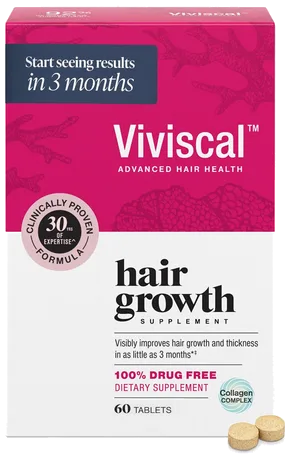
Viviscal Hair Growth Supplement for Women Review
Viviscal Hair Growth Supplements for Women offer a scientifically-backed solution designed to nourish thinning hair and promote existing hair growth, leading to visibly thicker and healthier-looking hair in as little as three months. This acclaimed supplement is formulated with the proprietary AminoMar™ collagen complex, a key ingredient that has been rigorously studied in ten clinical trials involving both women and men. With over 30 years of expertise, Viviscal has successfully assisted millions of women in reclaiming the vitality and fullness of their hair. The 100% drug-free formula is a blend of powerful AminoMar™ collagen complex alongside essential hair-healthy vitamins and minerals, including Biotin, Vitamin C, Iron, and Zinc. This unique combination works from within to address various factors that can impact hair health, such as stress, hormonal fluctuations, nutritional deficiencies, the natural aging process, menopause, post-pregnancy changes, hereditary predispositions, UV radiation exposure, and harsh hair treatments, all of which can contribute to thinning and excessive shedding. Viviscal's commitment to research is evident, with its effectiveness proven through extensive clinical testing conducted worldwide. The supplements are designed to be taken as two tablets daily with food and water, with optimal results typically observed after a consistent regimen of three to six months. It is important to note that while Viviscal is generally safe when used as directed, it is not suitable for individuals with a seafood allergy, pregnant or nursing women, or those under the age of 18. Consulting a healthcare professional is advised for anyone currently taking other medications. The product is versatile and effective for all hair types, providing a comprehensive approach to internal hair nourishment. Should the regimen be discontinued, the benefits experienced will gradually diminish as the natural hair growth cycle progresses. Viviscal stands as a trusted choice for women seeking to combat hair thinning and enhance overall hair health and thickness.
We don’t sell supplements. We help you make decisions and get the best price.
Lowest prices
Lowest cost per month first, in stock, at 2 tablets a day. Checked Nov 3.
- ViviscalLowest$25.00 a bottle$25.00/moBuy at Viviscal (opens in a new tab)
- AmazonPrice at AmazonCheck price at Amazon (opens in a new tab)
Some links earn us a commission; price comes first, and a commission only decides the order of prices within 2%. As an Amazon Associate we earn from qualifying purchases.
Products with nearly the same formula (Matched on the main ingredients)
Study, Trial or Testing Result Summary
Members Only55 human studies · 34 improved
3 of these 55 human studies gave the ingredient by drip or injection, not by mouth.
The rules ranked this product mainly on niacin. In a 2005 trial of 60 women with female pattern hair loss, niacin creams on the scalp gave fuller hair than placebo over 6 months [1]. A niacinamide shampoo routine also cut shedding [2]. However, those studies applied niacin to the scalp, so it is unclear how this product's niacin tablet compares. Iron mainly helped women who were low in iron. In one study, 8 weeks of iron improved hair loss in 84.2 percent of anemic women who had it [3]. Women with hair loss often have low iron stores [4]. The marine complex has only one small study without a comparison group. That study used many products at once and did not name this complex [5]. Biotin here is well below the 1.25 milligrams that reduced hair fall in a trial [6]. Zinc is below the 50 milligrams that helped women with polycystic ovary syndrome [7]. Calcium is below the 1000 milligrams studied [8]. Vitamin C on its own has no good hair evidence [9]. Millet seed did not prevent hair loss during chemotherapy [10]. Horsetail has no human studies. Animal and cell studies are never counted.
See all 55 studies →Hide the studies
- Across 36 studies of 10,029 women, those with nonscarring hair loss had lower ferritin (iron stores) than women without hair loss, and about 21% had very low ferritin, but this did not test iron supplements directly.Iron Deficiency and Nonscarring Alopecia in Women: Systematic Review and Meta-Analysis.
- In a pooled analysis of 17 trials with 1,098 chemotherapy patients, scalp cooling reduced hair loss but millet seed (Panicum miliaceum) and other interventions did not significantly reduce it.Efficacy of interventions for prevention of chemotherapy-induced alopecia: a systematic review and meta-analysis.
- A review of 17 studies with 61,332 people, mostly women, found that higher iron levels (along with vitamin D) were linked to less hair loss, though the authors say more research is needed.Assessing the relationship between dietary factors and hair health: A systematic review.
- A review of 16 trials in 768 people with patchy hair loss (alopecia areata) found the evidence does not support taking zinc sulphate by mouth.Systemic treatments for alopecia areata: A systematic review.
- A review of 49 articles on micronutrients and pattern hair loss found that low iron was linked to more hair loss and supplementation showed potential benefit, but the evidence was not consistent and some studies found no link.Micronutrients and Androgenetic Alopecia: A Systematic Review.
- A review of 30 studies of supplements for hair loss in people without known deficiency listed zinc among the nutrients with higher-quality evidence of potential benefit, with rare and mild side effects.Evaluation of the Safety and Effectiveness of Nutritional Supplements for Treating Hair Loss: A Systematic Review.
- In 225 men and women with pattern hair loss, adding one daily capsule containing vitamin C plus saw palmetto, pumpkin extract and cystine to minoxidil and a med for 6 months gave great improvement in 36.5% versus 25% with the drugs alone.Impact of a Novel Dietary Supplement on Efficacy of Pharmacological Treatments for Androgenic Alopecia: A Real-Life, Mul…
- In 200 men with male pattern baldness, daily 1% zinc pyrithione shampoo for 26 weeks gave a modest, sustained rise in hair count versus placebo shampoo, about half the effect of 5% minoxidil.The effects of minoxidil, 1% pyrithione zinc and a combination of both on hair density: a randomized controlled trial.
- In 105 adults (97 finished) taking 1.25 mg of plant-derived biotin daily for 90 days, hair fall dropped, hair grew faster by about 0.55 mm a day, and nails and skin elasticity improved, with no side effects reported.The Role of Sesbania grandiflora-Derived Biotin and Bambusa arundinacea-Derived Silica Extracts in Promoting Hair, Skin,…
- In 83 people with hair loss, a daily multi-ingredient tablet containing iron added to usual hair-loss drugs for 12 weeks gave better photo-rated improvement than drugs alone (50% vs 23% reached a score of 2 or more); iron's separate effect was not tested.Efficacy and tolerability of an oral supplement containing amino acids, iron, selenium, and marine hydrolyzed collagen i…
- In 62 men with male pattern hair loss, a foam containing a niacin ester plus other ingredients applied twice daily for 6 months reduced the share of resting-phase hairs more than the vehicle foam, but hair density gains did not differ between groups.Reduction of telogen rate and increase of hair density in androgenetic alopecia by a cosmetic product: Results of a rand…
- In 50 people with diffuse hair loss, six weekly injections of 5 mg biotin with dexpanthenol from either of two brands reduced hair fall and increased hair density, with no placebo group for comparison.Efficacy of intramuscular injections of biotin and dexpanthenol in the treatment of diffuse hair loss: A randomized, dou…
- In 48 women with polycystic ovary syndrome, 50 mg of zinc daily for 8 weeks reduced hair loss compared with placebo (41.7% vs 12.5%), along with lower excess hair growth and a blood marker of oxidative damage.Effects of Zinc Supplementation on Endocrine Outcomes in Women with Polycystic Ovary Syndrome: a Randomized, Double-Blin…
- In 40 people with pattern hair loss or shedding, a zinc and arginine lotion for 23 weeks reduced hair pulled out and improved hair growth measures compared with placebo lotion.A new combination of molecules for the treatment of androgenetic alopecia and telogen effluvium: a double-blind randomiz…
- In men and women with self-perceived hair thinning, a scalp shampoo and leave-on regimen containing niacinamide and other ingredients used for 24 weeks reduced hair shedding and increased total hair count compared with a placebo shampoo.Scalp application of antioxidants improves scalp condition and reduces hair shedding in a 24-week randomized, double-bli…
- In menopausal women given 1000 mg calcium plus vitamin D3 daily for six months, hair shedding was significantly reduced compared with placebo, and skin hydration and elasticity improved when collagen was added.Calcium and Vitamin D Supplementation with and Without Collagen on Bone Density and Skin Elasticity in Menopausal Women-…
- In 116 premenopausal female blood donors with iron deficiency but no anaemia, 16 weeks of iron supplements raised ferritin from 7.12 to 25.2 ng/ml and resolved symptoms including hair loss, compared with retrospective controls; hair loss was one of several symptoms, not the main goal.A pilot iron substitution programme in female blood donors with iron deficiency without anaemia.
- In 60 women with female pattern hair loss, topical niacin derivatives applied for 6 months increased hair fullness on blinded photo analysis more than placebo.A pilot study evaluating the efficacy of topically applied niacin derivatives for treatment of female pattern alopecia.
- Topical melatonin in vitamin C-based nanovesicles was reported to increase hair thickness and density and reduce hair loss in people with pattern hair loss compared with melatonin solution, but vitamin C here served as a carrier and the number of participants was not stated.Melatonin vitamin C-based nanovesicles for treatment of androgenic alopecia: Design, characterization and clinical appra…
- In women with temporary diffuse hair loss, 180 days of a multi-nutrient supplement that included biotin improved hair loss, volume and density, and did so more fully than a different supplement, but the biotin dose was not stated and there was no placebo group.Comparative evaluation between two nutritional supplements in the improvement of telogen effluvium.
- In an open-label study of 1000 adults with pattern hair loss, a micronutrient serum containing niacinamide applied monthly for six months was associated with significant improvements in hair density and hair growth, with no major side effects reported; the study had no control group and the niacinamide dose was not stated.The Efficacy and Safety of Dr. SKS Hair Booster Serum (a Cocktail of Micronutrients and Multivitamins) in Adult Males an…
- In 1,000 women with polycystic ovary syndrome and thinning hair, a monthly niacinamide-containing scalp serum given without a control group increased terminal hair counts and hair shaft thickness and reduced fine vellus hair over 6 months.Efficacy of Dr. SKS Hair Booster Serum in the Treatment of Female Pattern Alopecia in Patients With PCOS: An Open-Label,…
- In 112 people with light diffuse hair loss taking a supplement containing biotin for 12 weeks, hair loss fell by 59% and hair density rose, with 90% of participants perceiving better hair growth and appearance, in an open-label study without a control group.Effectiveness, Tolerability, and Acceptance of a Food Supplement in the Management of Non-Illness-Related Hair Loss and …
- In a single-group trial of 101 breast cancer patients, a daily scalp lotion containing a zinc complex did not prevent chemotherapy-induced hair loss, though hair may have recovered somewhat sooner.The utility of DHL-HisZnNa, a novel antioxidant, against anticancer agent-induced alopecia in breast cancer patients: a …
- In 35 women with iron deficiency anemia, 8 weeks of oral ferrous sulfate improved hair loss in 84.2% of those with the symptom, and resolved restless legs and cheilitis.Iron Deficiency in Menstruating Adult Women: Much More than Anemia.
- In a clinic series of 18,918 Asian men with male pattern hair loss treated with a combination that included niacin, digital photos showed improvement after 6 to 12 months, with 96% and 80% of patients reporting satisfaction; the study had no control group and combined several treatments.Androgenetic Alopecia Treatment in Asian Men.
- In a retrospective review of 2851 women with telogen effluvium, a type of hair shedding, low iron levels were common, with iron deficiency found in 29.5% of those tested and low ferritin in 46.5%; the abstract reports no control group.Retrospective Review of 2851 Female Patients With Telogen Effluvium: A Single-Center Experience.
- In 554 non-anemic French menstruating women, low iron stores (ferritin 20 or less) were linked to recent hair loss, with about twice the odds of reporting it.Non-anemic iron deficiency: correlations between symptoms and iron status parameters.
- In a retrospective review of 210 people with female or male pattern hair loss compared with 210 matched healthy people, iron stores (serum ferritin) were lower in the hair loss patients, especially premenopausal women, suggesting iron may play a role in hair loss.Iron plays a certain role in patterned hair loss.
- In a case-control study of 42 young adults with diffuse hair loss and 230 matched controls, dietary calcium intake was not linked to hair loss, while higher protein intake was the only nutrient directly associated with it.[Evaluation of the role of dietary intake in the occurrence of alopecia].
- In newborn screening of 246 infants with biotinidase deficiency in Ontario, two children who stopped biotin developed hair loss, along with abnormal gait, skin rashes and developmental delay.Biotinidase deficiency: Spectrum of molecular, enzymatic and clinical information from newborn screening Ontario, Canada…
- Among 156 women who had sleeve gastrectomy, 1000 mcg of biotin daily for 3 months gave little benefit: only 5 of 22 women with biotin deficiency (23%) reported a clear reduction in hair loss, with no significant difference compared with those without deficiency.Hair Loss After Sleeve Gastrectomy and Effect of Biotin Supplements.
- In a case-control study of 100 people recovering from COVID-19, those with telogen effluvium (excess hair shedding) reported using vitamin C less often than controls, which the authors suggest may mean vitamin C helps prevent post-COVID hair loss, though this is only an association.Post Covid telogen effluvium: the diagnostic value of serum ferritin biomarker and the preventive value of dietary suppl…
- In a study of 100 women with non-scarring hair loss, average ferritin (iron store) levels were lower than in the control group (20.47 versus 27.87), with a statistically significant difference; this publication is marked as retracted.The Association of Serum Ferritin Levels With Non-scarring Alopecia in Women.
- In 84 cancer patients, 900 mg of millet taken daily during chemotherapy was linked to less severe hair loss with cisplatin-based regimens compared with chemotherapy alone, but no statistically significant benefit was seen with anthracycline regimens.A case-control study of Panicum Miliaceum in the treatment of cancer chemotherapy-induced alopecia.
- In children on valproic acid, hair loss and skin rash improved after daily oral biotin 10 mg, which was given as a supplement to patients with low biotinidase activity.Low serum biotinidase activity in children with valproic acid monotherapy.
- Japanese adults with alopecia areata reported higher vitamin C intake from food than matched healthy controls, but this dietary survey shows only an association and does not test vitamin C as a treatment.Dietary Habits in Japanese Patients with Alopecia Areata.
- In a case-control study of 60 women, those with diffuse hair shedding had much lower ferritin (about 16 vs 60 ng/mL) than women without hair loss, and low ferritin at 30 or below was strongly tied to hair shedding.Iron status in diffuse telogen hair loss among women.
- In 48 men with androgenetic alopecia treated with 5% minoxidil for 4 months, those with a plasma zinc level above 10 micromoles per liter were more likely to respond with more hair density and thickness in the crown area.Plasma Zinc Levels in Males with Androgenetic Alopecia as Possible Predictors of the Subsequent Conservative Therapy's E…
- Infants fed only hydrolysate formula, which contained little biotin, had low blood biotin, and one of them developed hair loss linked to biotin deficiency.Low serum biotin in Japanese children fed with hydrolysate formula.
- In a review of 25 children with short anagen syndrome, a condition where hair does not grow long, biotin alone or with topical minoxidil was reported to be an effective treatment.Short anagen syndrome: A case series and algorithm for diagnosis.
- In five men with male pattern hair loss, a topical solution containing 0.2% biotin along with minoxidil and a med was judged successful for all five over 6 months, with moderately thicker hair and higher hair density in photographs.Read the study on PubMed (32023218) →
- In a study of children taking valproic acid, three girls who lost hair had their hair loss disappear within about 3 months of taking 10 mg of biotin daily.Serum biotinidase activity in children treated with valproic acid and carbamazepine.
- Three children with valproic acid-related hair loss and normal blood biotin levels had their alopecia resolve within 3 months of taking 10 mg of oral biotin daily.The influence of valproic acid and carbamazepine treatment on serum biotin and zinc levels and on biotinidase activity.
- In a family study of people with partial biotinidase deficiency, one child who was not initially given biotin developed hair loss, hypotonia and a skin rash, and these resolved after biotin therapy; the abstract does not give the dose or duration.Partial biotinidase deficiency: clinical and biochemical features.
- In primary care patients with alopecia, adding an automatic ferritin test found iron deficiency in about 28% of women, but the study did not test whether iron treatment improved hair.Alopecia and Iron Deficiency: An Interventional Pilot Study in Primary Care to Improve the Request of Ferritin.
- In 30 people with alopecia areata and 31 healthy controls, blood iron was higher in the alopecia group, and the authors concluded that prescribing iron is fruitless for this condition while low zinc and manganese were linked to it.Alopecia Areata Different View; Heavy Metals.
- In a 24-week single-study trial, 38 women with thinning hair received AI-personalized kits of topical serums, shampoos, oral supplements and marine collagen peptides; among the 27 who finished, hair growth, coverage and thickness improved, 88.9% reported overall hair improvement, and no adverse events were reported. The abstract does not name AminoMar specifically and gives no control group.Artificial Intelligence-Based Personalization of Treatment Regimen for Hair Loss: A 6-Month Clinical Trial.
- A leave-on product containing niacinamide with other ingredients increased the thickness of individual scalp hairs by 2 to 5 micrometers in laboratory testing, which the authors suggest may help thinning hair.A novel cosmetic approach to treat thinning hair.
- A topical adenosine complex containing 2% niacinamide increased hair thickness by 10.32% and hair density by 6.20% after about 4 months in people with male or female pattern hair loss, and minoxidil produced smaller gains in the same study.Hair Thickness Growth Effect of Adenosine Complex in Male-/Female-Patterned Hair Loss via Inhibition of Androgen Recepto…
- A product combining nicotinamide and related forms with a green tea compound increased hair density and growth over 24 weeks in men and women, and in lab tests it boosted energy production in hair-related cells; the abstract gives no participant count or control group.Hair growth enhancement via mitochondrial activation by Mito-activator complex.
- In people with zinc deficiency skin disease, hair changes and hair loss can occur, and severe cases were treated with intravenous or high-dose oral zinc, but the abstract reports no measured hair outcome after treatment.[Zinc deficiency dermatoses. Etiology, clinical aspects and treatment].
- In newborn mice, skin lotion containing ferrous ferric chloride stimulated skin cell growth and hair growth and markedly reduced alopecia hair loss.Ferrous ferric chloride stimulates the skin cell function and hair growth in mice.
- In a mouse study, pups nursed by mothers with low iron delivery in milk developed anemia and hair loss on the trunk, which recovered after weaning; giving the mothers iron by injection improved their pups' anemia and development.Maternal intestinal HIF-2α is necessary for sensing iron demands of lactation in mice.
- In mice, iron nanoparticles made from a Blumea eriantha plant extract pushed hair follicles into the growth phase, though less effectively than the minoxidil control.In vivo and in vitro hair growth-promoting effect of silver and iron nanoparticles synthesized via Blumea eriantha DC pl…
Review Totals and Summary
Members Only37,624 reviews · 80% positive
Customer feedback for Viviscal Hair Growth Supplements for Women overwhelmingly highlights the product's remarkable effectiveness in addressing thinning hair and promoting new growth. Many users, initially skeptical after trying various other solutions without success, report experiencing significant improvements within a relatively short timeframe, often noting a visible difference in as little as two weeks for reduced shedding and more pronounced results within two to three months of consistent use. A recurring theme among positive reviews is the dramatic decrease in hair loss and shedding, with some describing their previous hair loss as "tumbleweeds" and then observing only a few strands after starting Viviscal. Beyond just reducing shedding, customers frequently praise the supplement for stimulating new hair growth and increasing overall hair thickness. Users have shared compelling testimonies, including visible new hair appearing along receding hairlines and part lines, contributing to a fuller and healthier appearance. This efficacy extends to various underlying causes of hair thinning, with individuals successfully combating hair loss linked to stress, the natural aging process, and even significant mental health challenges. The sentiment of trust and loyalty is strong, as evidenced by multiple customers who have been using Viviscal for years, some for over two decades, and continue to be delighted with the sustained benefits. These long-term users often refer to the product as "pure gold" and "absolutely fantastic," indicating its consistent performance over time. The ease of incorporating the tablets into a daily routine is also appreciated, although one reviewer did mention a "little unpleasant taste" as a minor drawback. Overall, the qualitative feedback underscores Viviscal's reputation as a highly recommended and clinically effective supplement for women seeking to achieve thicker, healthier, and more abundant hair.
Biohacker Summary
Members Only10 of 10 recommend it
Niacin gets a mixed but mostly favorable response from the panel: four of the ten recommend it, two say they use it, and four stay neutral. Those who recommend it link it to raising NAD, with one preferring cheap flush niacin and another pointing to food sources like beef liver, chicken, turkey and fish, and two others pointing to niacinamide for skin health or to kick-start the morning body clock. One panelist takes enough niacin to flush about half an hour before a sauna session as part of a detox routine, and another uses a skin serum that contains niacinamide. The neutral voices mostly review data on skin appearance, deficiency, or NAD production without giving a verdict, no doses were given, and nobody reported stopping it. Zinc, vitamin C, iron and calcium are smaller ingredients in this product, with zinc the most praised of them, though one panelist warns that too much iron can be damaging.
See all 10 biohackers →Hide the biohackers
Dr. Eric Berg · Niacin · recommends
- States that expensive NAD+ supplements only turn into $5 niacin in the body and that research has shown niacin can actually raise NAD levels in the blood 5 to 8 times their baseline levels.
- Recommends ensuring sufficient zinc intake because the prostate needs enough zinc for the conversion from testosterone to DHT to be smooth and optimized.
- Identifies iron as the Achilles' heel of cancer, as it is needed for its DNA to replicate.
- Mentions that lemon is loaded with vitamin C, and when combined with coffee, vitamin C significantly increases the bioavailability of antioxidants in the coffee.
- Dr. Berg states that Vitamin C helps fight biofilms and is essential for making collagen in gums, teeth, and capillaries.
- Warns that bone loss cannot be fixed with just calcium, as bone is primarily collagen with other essential minerals.
- Recommends taking zinc carnosine for an ulcer or some type of gastric problem.
- Recommends Vitamin C as a cofactor, especially for collagen.
- Emphasizes the importance of zinc for decreasing viral replication and recommends taking 40 to 60 mg every single day.
- States that high doses of vitamin C, like 2 to 4 grams, can greatly reduce inflammation and support the immune system.
- Notes that birth control pills deplete the body of zinc, which is needed for the brain to make serotonin.
- Added zinc to his creatine product because a deficiency in zinc might make creatine not work as well.
- Mentions that grass-fed liver is loaded with zinc.
- Recommends zinc to enhance testosterone.
Dr. Mark Hyman · Niacin · neutral
- Explains that pellagra, which killed 100,000 Americans, was a niacin deficiency, a B vitamin.
- Mentions iron as an existing biomarker that plays a role in mental health, which Function Health includes in their measurements.
- Recommends vitamin C as a basic supplement during detoxification to help with inflammation and detoxification.
- Dr. Hyman mentions vitamin C as an advanced therapy for skin repair.
- Mentions topical vitamin C as an antioxidant that can help skin with aging.
- Gave a patient with psoriatic arthritis a little zinc, which contributed to significant improvement in her condition.
- Mentions that what they do when a cold comes on is not just vitamin C.
- Recommends ensuring adequate vitamin C intake on a regular basis for immune support, stating it's important for healthy immune function despite mixed data on its effectiveness for colds.
- Recommends ensuring adequate zinc intake on a regular basis for immune support, noting some data on zinc lozenges for early cold.
- Mentions that vitamin C was the very first vitamin discovered, isolated, and synthesized in 1932, and its deficiency caused scurvy.
- Recommends correcting nutrient deficiencies with zinc.
- Recommends nutrient-dense foods rich in vitamin C, such as guavas and parsley, to reduce inflammation.
- Recommends nutrient-dense foods rich in zinc, such as pumpkin seeds and oysters, to reduce inflammation.
- Used intravenous vitamin C cocktails to help him detoxify and recover from chronic fatigue.
Thomas DeLauer · Niacin · uses
- Uses niacin as part of their detoxification protocol, taking enough to flush about half an hour before a sauna session.
- Recommends taking vitamin C along with collagen about an hour before a workout for connective tissue benefits.
- Uses vitamin C as part of their immunity duo, stating it is important for boosting the immune system, especially during cold and flu season.
- Adds zinc to their immunity duo because it helps them absorb vitamin C, considering the two together a fantastic combination for fall and winter.
- Recommends zinc, noting it is a cofactor for enzymes that build neurotransmitters, and deficiency can affect mood, happiness, and motivation.
- Recommends consuming vitamin C to aid in NADPH recycling, which is necessary for glutathione to be reused after neutralizing oxidative stress.
- Mentions that more zinc could be beneficial for testosterone, but it's not working on the axis that most people need help with.
- Takes Purity's liquid liposomal vitamin C for immune support and overall wellness, finding it easy to add to water, juice, or take straight up due to its good taste.
- Compares the Vitamin C content of oranges (53mg) to guava (228mg), noting guava has 4x more.
- Compares zinc content, noting salmon has under 1mg while oysters have 74mg per 100g, a 70x difference.
- Compares iron content in spinach (2.7mg) and beef (2.6mg), but emphasizes that beef's heme iron absorbs at about 25%, while spinach's non-heme iron absorbs at 2-8%.
- Notes that milk contains 120mg of calcium, while sardines contain 351mg, highlighting a 3x difference.
- Recommends keeping zinc levels topped off because it is a critical cofactor for over 300 enzymes and is important for immune cells, testosterone, and wound healing.
- Recommends 15 mg of supplemental zinc if oysters are not realistic, but emphasizes that food source zinc is better as it comes with natural cofactors like copper and selenium.
Ben Greenfield · Niacin · neutral
- States that Nrf2 activators, when combined with something like niacin, may have a good effect on plaque progression.
- Ben Greenfield's formulation includes 30 grams of zinc a day, taken for one week before surgery and two weeks after, as it is an important cofactor for wound healing.
- States that vitamin C is extremely important for collagen turnover and cites orthopedic data showing that 500 mg to 1 g of vitamin C can reduce the rate of complex regional pain in total knee replacements and wrist fractures.
- Mentions vitamin C as part of a bare-minimum protocol.
- Emphasizes that zinc sufficiency is crucial for immunity because the thymus-derived peptide thymulin, which trains lymphocytes, requires zinc to be active.
- Notes that while vitamin C has significant value, the optimal dose is a vexed question, and high doses might not always be beneficial, potentially blunting the hormetic effects of exercise.
- Recommends adding zinc into one's stack because it is a co-factor for enzymes involved in testosterone synthesis and sperm maturation, and zinc deficiency is a reproducible cause of low sperm count.
- He mentions zinc as a supplement with real human data behind it for male fertility.
- Zinc may support both testosterone and sperm count.
- Notes that IV vitamin C has been used for decades for cancer patients with almost no standardization and that he receives many questions about its effectiveness and combination with chemo.
- Warns that he was taking so much zinc without realizing it because it was in five different things he was taking, and he couldn't pinpoint the problem.
- Recommends supplementing with zinc if deficient, as multiple trials show significant symptom reduction of tinnitus in zinc-deficient individuals.
- Recommends Vitamin C for skin repair post-tattoo.
- Recommends testing for and replenishing iron if levels are low, as it can affect the ability to maintain or preserve muscle, especially for those on GLP-1s.
Dave Asprey · Niacin · recommends
- Recommends niacin, a form of vitamin B3, as one of the two most important raw materials for NAD+ production, found in foods like beef liver, chicken, turkey, and fish, or from supplements.
- Recommends taking vitamin C for better skin health.
- States that currently, he is only taking vitamin C and vitamin D.
- Developed a nonnano zinc sunscreen over five years, stating her skin is probably better now than it's ever been.
- Emphasizes the importance of having enough zinc before trying advanced longevity strategies like peptides.
- Suggests that zinc has better safety and protective data than meds for reducing cardio respiratory risk.
- Dave Asprey reflects on how new research clarifies the mechanism behind IV vitamin C's anti-cancer effect, vindicating a decades-old idea that was dismissed for the wrong reasons.
- Notes that plain Vitamin C isn't enough and that most people never think to check for a specific ingredient that makes it work.
- Dave Asprey recommends taking maybe a gram of vitamin C a day in divided doses, noting that plasma levels peak around 250 milligrams twice a day.
- Recommends Qualia Vitamin C Plus, highlighting its combination of seven forms of vitamin C with 250 mg of citrus bioflavonoids, which helps with absorption and use for building collagen and a strong immune system.
- Warns that taking too much vitamin C can raise oxalate levels, emphasizing that everything has risk and reward.
- Warns that if a doctor diagnoses anemia, one should not assume they just need more iron, as low hemoglobin doesn't always mean low iron and the issue can sometimes be how well the body is using iron.
- Notes that when energy intake is too low for training demand, nutrient intake often falls short, especially for iron, which is associated with impaired recovery.
- Notes that when energy intake is too low for training demand, nutrient intake often falls short, especially for calcium, which is associated with reduced bone health.
Siim Land · Niacin · recommends
- Suggests that in the mornings, NAD supplements like niacinamide can help kickstart the circadian rhythm.
- Recommends taking vitamin C with collagen to support joint collagen synthesis.
- States that vitamin C is needed for initiating collagen synthesis and that higher vitamin C intake appears to increase vitamin C content in the skin.
- Mentions that iron is a mineral necessary for making collagen.
- Lists sauerkraut and fruit as sources of Vitamin C.
- Lists dairy and sardines as sources of Calcium.
- Notes that Vitamin C is one of several supplements with human evidence.
- States that excess iron promotes oxidative stress and inflammation, which increases heart disease risk.
- Notes that Boron reduces calcium/magnesium loss.
- States that deficiencies in nutrients such as zinc can impair normal immune regulation.
- Notes that researchers found vitamin C alleviates ferro-aging, a process of iron overload and lipid peroxidation that drives aging, and that it directly inhibited ACSL4, a protein driving ferro-aging.
- States that Vitamin C has a central role in aging and longevity, and that in monkeys, oral vitamin C slowed ovarian aging during a 3.3-year study.
- States that vitamin C is one of the most important vitamins for staying healthy and aging well, and that intakes of 200 to 400 mg a day from food or supplements largely saturates plasma and neutrophils in most healthy adults. He also recommends spreading out the vitamin C across the day to avoid oversaturation.
- Mentions vitamin C in comparison to topical melatonin for oxidative defense, stating that melatonin would compete but is not as broadly validated clinically.
Peter Attia · Niacin · uses
- Peter Attia's AVIA Skincare vitamin C serum also contains niacinamide, which is useful to apply to the skin right after washing.
- Suggests that zinc and magnesium could potentially help with vasodilation and sleep, particularly for women experiencing severe symptoms in the luteal phase.
- Recommends calcium as one of the 'big three' micronutrients for bone health, suggesting a daily intake of 1,000 to 1,200 milligrams, which can be supplemented with calcium carbonate or calcium citrate.
- Explains that bone is 50 to 70% mineral, predominantly calcium, and that virtually all of the body's calcium is contained within bone, making bone important for calcium homeostasis.
- Recommends vitamin C as an important molecule for skin, noting its role as a precursor for collagen synthesis, a powerful antioxidant, and a regulator of complexion for even skin tone.
- Tried a vitamin C serum mixed with ferulic acid but stopped using it because she hated the smell. She notes that topical application of vitamin C far exceeds the levels achievable by ingestion for skin benefits.
- Recommends iron supplements for women of reproductive age who are iron deficient.
- Warns that biotin, found in many supplements, can completely obscure findings and render a non-LCMS test for estradiol and testosterone irrelevant due to interference with ELISA-based assays.
- Recommends calcium for bone health, stating that teenagers probably need about 1000 milligrams a day.
- Discusses bone acting as a reservoir for calcium and how resorption and formation release calcium into the blood when needed.
- Notes that deficiencies in certain vitamins and minerals, such as iron, can be a cause of hair loss in women.
- Discusses the AREDS formula, which initially included C and beta-carotene with zinc and copper, and later replaced beta-carotene with lutein and zeaxanthin, showing it could delay or reduce the conversion of mild to severe macular degeneration.
- States that vitamin C deficiency is associated with an elevated risk of cataract, but supplementation to supranormal levels has not been shown to protect against cataract formation.
- Mentions the elimination of scurvy through the work of James Lind and the eventual understanding that it was due to vitamin C, initially thought to be just citrus.
Andrew Huberman · Niacin · neutral
- Reviews data on ingesting or topically applying niacinamide to improve skin's youthfulness and appearance, including reducing wrinkles, sagging, and pore size.
- Zinc carnosine to support and improve the lining of your gut.
- Notes that AG1 Pro contains zinc carnosine to support and improve the lining of the gut.
- States that AG1 Pro contains zinc carnosine to support and improve the lining of the gut.
- Uses AG1 Pro, which contains zinc carnosine to support and improve the lining of the gut.
- States that AG1 Pro contains zinc carnosine to support and improve the lining of the gut, and he was already taking some of these ingredients separately.
- States that AG1 Pro includes zinc carnosine, which he was already taking separately, to support and improve the lining of the gut.
- Personally takes zinc carnosine, which is included in AG1 Pro to support and improve the lining of the gut.
- AG1 Pro has zinc carnosine to support and improve the lining of your gut. Some of these ingredients I personally was already taking separate from the AG1 formula.
- States that AG1 Pro contains zinc carnosine to support and improve the lining of your gut.
- Uses AG1 Pro, which contains zinc carnosine to support and improve the lining of the gut.
- States that Iron is one of the critical nutrients with the best evidence for cognitive function and reducing the risk of dementia.
- Takes a multivitamin every day for longevity.
- Mentions biotin.
Dr. Rhonda Patrick · Niacin · neutral
- States that NAD can be synthesized from the three forms of niacin, also known as vitamin B3, found in foods like lean meats, legumes, and veggies.
- Notes that not getting enough zinc can affect testosterone, as zinc is very important for testosterone synthesis.
- Recommends men take a 30 milligram zinc supplement for sperm health when preparing for IVF.
- Lutein and zeaxanthin can also be obtained from certain multivitamins.
- Discusses findings from a meta-analysis on zinc supplementation, noting it improved insulin resistance, inflammation, and oxidative stress in people with diabetes or prediabetes, and explains its biological role in the pancreas.
- Mentions that kale delivers calcium, a micronutrient many diets fall short on.
- Recommends nutrients like zinc for men to prioritize sperm mitochondrial health.
- Recommends nutrients like vitamin C for men to prioritize sperm mitochondrial health.
- Dr. Rhonda Patrick's daughter chugs an Emergency fizzy drink in the morning to ensure she gets some vitamin C and micronutrients before school.
- Recently found out he needed to get on an iron supplement and noticed he gets less sore in his training after taking it.
- Choosing a multivitamin that includes lutein and zeaxanthin ensures you get meaningful amounts every day.
- Advises that menstruating women should ensure they are getting enough iron.
- Notes that ~35% of Americans are low in vitamin C.
- Notes additional gaps in calcium.
Bryan Johnson · Niacin · recommends
- Recommends Niacinamide as a supplement for skin health, noting it is in the Blueprint stack.
- Has had low iron for 11 years and despite eating meat and trying all forms of iron supplementation at different times and sequences, none of it worked to raise his iron or ferritin levels.
- Had low iron for 11 years, with ferritin averaging 38 ng/mL, and has finally boosted it back to healthy levels.
- Takes 15 mg of Zinc in the morning for longevity.
- Takes 15 mg of Zinc in the morning.
- Takes 15 mg of Zinc in the morning for longevity.
- Recommends calcium as a mineral that, along with phosphorus, magnesium, and boron, is deposited to fortify the bone structure after the collagen scaffold is in place.
- Agrees that a little extra calcium is probably okay, especially for women, to really hit home for bone mineral density.
- Uses Vitamin C as an example of how it would be great if people knew that when they took it, it had a measurable amount and wasn't polluted, which is what Brian ensures with his products.
- Applies vitamin C after showering.
- Mentions biotin as an example of an ingredient that AG1 lists with a specific dose, but then contrasts it with other ingredients in proprietary blends where doses are not disclosed.
- Bryan Johnson's baseline measurements showed low zinc, which was easy to fix by adjusting her protocol and supplements.
- Takes 10 milligrams of heme iron to get his iron levels up, as they are borderline.
- Takes 250 milligrams of Vitamin C.
RAL Summary
Members OnlyTier 2 for Hair Growth
Tier 2 because two controlled trials of niacin showed clear improvement, the largest with 60 women showing fuller hair than placebo [1], and 80 percent of 37,634 reviews are positive. Most other ingredients are below studied doses or have weak or mixed evidence.
Where the evidence disagrees: 15 of the 55 human studies found no effect.
More Details
Members OnlyBody systems · Combine with · Possible side effects
Body systems: Skin, hair and nails, Blood
Combine with: To further enhance hair health and growth, consider combining Viviscal with supplements like marine collagen peptides to provide additional building blocks for hair structure. Omega-3 fatty acids can support scalp health and reduce inflammation, which is beneficial for hair follicles. Additionally, a high-quality silica supplement, often derived from horsetail extract, can strengthen hair strands and improve elasticity. Zinc is another essential mineral for hair tissue growth and repair, and a Vitamin D supplement may be beneficial, as low levels have been linked to hair loss.
Possible side effects: No major side effects reported.
Supplement Facts
Vitamin C Powder and Ascorbic Acid) 59 mg · Niacin 12 mg NE · Biotin 120 mcg
| Vitamin C (from Acerola (fruit) Powder and Ascorbic Acid) | 59 mg | 65% |
| Niacin (as Niacinamide) | 12 mg NE | 75% |
| Biotin | 120 mcg | 400% |
| Calcium | 60 mg | 5% |
| Iron (from Ferrous Fumarate) | 10 mg | 56% |
| Zinc (from Zinc Oxide) | 11 mg | 100% |
| AminoMar Marine Complex (collagen Type II and Oyster Extract Powder) | 450 mg | † |
| Horsetail Extract (leaf & stem) | 36.7 mg | † |
| Millet Seed Extract | 7.5 mg | † |
Directions: Take 1 tablet twice daily for 3 to 6 months. Best taken with water after a meal. Do not exceed the recommended daily intake.
Label source: Heb · Report a label change
Show entire label
More hair growth products
Members OnlyThe highest ranked for the same goal
Read more
Our articles on this subject
Graded October 24, 2026 by the Reverse Age Lab evidence engine, from human studies, real reviews and our biohacker panel. How we grade. Is this medical advice? No. Rala organizes the published evidence; go over any change with your doctor, especially if you take meds.
Privacy policyConsumer health dataTermsDo Not Sell or Share My Personal InformationCookie settings