
Adora Multivitamin for Kids Rich Milk Chocolate Review
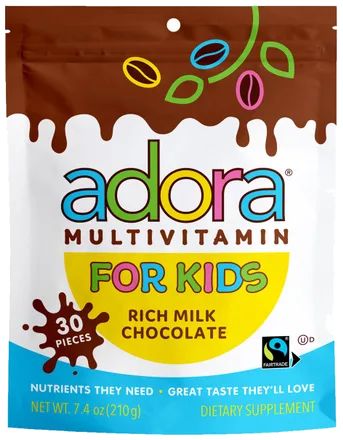
Adora Multivitamin for Kids Rich Milk Chocolate is a multivitamin and mineral supplement listed in the DSLD database under DSLD ID 284015, with the data sourced from NIH in February 2023. The product is made in the USA by Thompson Brands LLC in Meriden, CT, and its net contents are listed as 30 pieces, 7.4 ounces (210 grams). The label states it is intended for children 4 or more years of age and is labeled kosher (OU D, Kosher Dairy). The listed serving size is 7 grams, with 30 servings per container, and the suggested use is one piece daily, taken with food. The label says children under age 4 should not take it, that it should be consumed as a dietary supplement, and that parents should consult a healthcare provider before using it. The formula statement describes the product as made with rich milk chocolate and says it helps ensure kids get the nutrients they need for healthy growth and development. It notes that vitamins A, C and E help maintain a strong immune system, vitamin D supports bone health, and the product also contains B vitamins. The supplement facts panel lists per serving 35 calories, 2 g total fat, 4 g total carbohydrates, 4 g total sugars, 2 g added sugars, and vitamins and minerals including vitamin A at 400 mcg (44% DV), vitamin C at 20 mg (23% DV), vitamin D at 20 mcg (100% DV), vitamin E at 12 mg (80% DV), folate at 400 mcg (100% DV), vitamin B12 at 2.4 mcg (100% DV), biotin at 30 mcg (100% DV), iodine at 45 mcg (30% DV), and zinc at 1 mg (9% DV). Other ingredients are listed as sugar, milk, cocoa butter, chocolate liquor, soy lecithin and vanilla extract. Allergen precautions state that the product contains milk and soy and is made in a facility that processes tree nuts. The storage instruction is to keep it in a cool, dry place to prevent chocolate from melting, with no refrigeration required, and to keep it out of reach of children and pets. The label also carries a Fairtrade statement noting that Fairtrade cocoa, sugar and vanilla are used, with mass balance applied to match Fairtrade sourcing, for a total of 78.5 percent. Marketing lines read Nutrients they need and Great taste they'll love, with a reminder to try the brand's probiotic product. The FDA disclaimer states that the statements have not been evaluated by the Food and Drug Administration and that the product is not intended to diagnose, treat, cure or prevent any disease. The page lists market status as not checked yet.
We don’t sell supplements. We help you make decisions and get the best price.
Lowest prices
We may earn a commission from some store links. How we choose.
Finding the lowest prices at the stores now. This takes a few seconds.
Study, Trial or Testing Result Summary
Members Only10 human studies · 5 improved
The only ingredient on this label with study findings is calcium, listed at 7 grams a day, an unclear amount that is above the recommended daily limit, so members can take less. There is little good evidence that calcium supports the immune system. In the largest trial, 374 people with stomach inflammation from a bacterial infection took calcium carbonate for 16 weeks, and it did not reduce inflammation or tissue damage compared with placebo [1]. In 93 healthy adults given single doses, 500 milligrams of calcium ascorbate raised some immune measures compared with plain vitamin C, but 250 milligrams made no difference, and this form also supplies vitamin C [2]. A report on five people with dengue fever who took calcium with vitamin D described faster recovery, but there was no comparison group [3]. In several other trials, calcium was only the background treatment or the placebo, and the benefits came from zinc, multivitamins or immune drugs [4][5][6]. The store listing also names vitamin D3 and magnesium, but no amounts or study findings were given for them here. Overall, calcium itself has not been shown to strengthen immunity. Animal and cell studies are never counted.
See all 10 studies →Hide the studies
- This review of human trials in healthy adults found that inulin-type fibers helped gut bacteria and calcium absorption, but it did not test calcium supplements for immune support.The Prebiotic Potential of Inulin-Type Fructans: A Systematic Review.
- In 374 people with stomach inflammation from H. pylori, calcium carbonate alone for 16 weeks did not reduce inflammation or tissue damage compared with placebo, while tetracycline and triple therapy did.Anti-inflammatory and tissue-protectant drug effects: results from a randomized placebo-controlled trial of gastritis pa…
- In 100 people with chronic hives, both groups took calcium gluconate and other drugs for 4 weeks, and adding proteoglycan gave better results and raised interferon gamma, so the benefit was not from calcium.Effects of combination of mizolastine and proteoglycan on chronic urticaria: a randomized controlled trial.
- In 93 healthy adults given single doses, 500 mg of calcium ascorbate increased some immune measures such as neutrophil function and natural killer cells compared with ascorbic acid, but 250 mg showed no differences.Comparative Effectiveness of Ascorbic Acid vs. Calcium Ascorbate Ingestion on Pharmacokinetic Profiles and Immune Biomar…
- In 56 young children with shigellosis, both groups received a multivitamin with calcium for 2 weeks; calcium was not tested on its own, so the immune gains seen came from added zinc, not calcium.Effect of zinc supplementation on immune and inflammatory responses in pediatric patients with shigellosis.
- In 56 children with shigellosis, adding zinc to multivitamins plus calcium for 14 days improved antibody response and B cell levels versus multivitamins plus calcium alone, so the effect was from zinc and not calcium.Effects of zinc supplementation as adjunct therapy on the systemic immune responses in shigellosis.
- In 44 people with tuberculosis, a multivitamin and trace element supplement reduced sputum-positive cases at two months (2 of 22 vs 7 of 22) compared with a calcium placebo, so calcium was the control and not the treatment.Nutrient supplementation as adjunct therapy in pulmonary tuberculosis.
- In 15 healthy men given a single 1000 mg dose, calcium ascorbate with vitamin C metabolites gave higher white blood cell vitamin C at 24 hours than plain vitamin C, with no plasma difference.Vitamin C metabolites, independent of smoking status, significantly enhance leukocyte, but not plasma ascorbate concentr…
- In children with recurrent pus-forming infections, calcium gluconate was used as the placebo for 6 months; 39% of that group improved versus 68% on the immune drugs, so calcium was not the treatment being tested.[Controlled randomized clinical trials of immunomodulators diucifon and sodium nucleinate in children with recurrent sup…
- Five people with dengue fever who took calcium carbonate plus vitamin D3 by mouth improved overall and had shorter symptoms, with no comparison group.Clinical response in patients with dengue fever to oral calcium plus vitamin D administration: study of 5 cases.
Review Totals and Summary
Members Only200 reviews
Public feedback on this specific kids' multivitamin is sparse. The Amazon listing had only a single rating, and Adora's other chocolate supplements have more reviews. The kids' chocolate multivitamin reviewer called the product a "lifesaver" for a child who refuses gummies, tablets and swallowing pills. This is the main theme: parents of picky children value that the chocolate format gets the vitamin taken without a daily fight. The reviewer also praised the taste. The reviewer had two complaints. The first was price: they found it expensive for a 30-day supply, and the brand's own price is about $16.99. The second was that the packaging is not child-resistant. Because the product looks and tastes like candy, the reviewer said it has to be stored out of reach to prevent overeating. This is a safety concern for parents with young children. Reviews of Adora's sibling product, the milk chocolate calcium disks sold at Walmart, show a similar pattern. Reviewers say they like it because it tastes like real chocolate, and they prefer it to large, heavy calcium tablets they would otherwise skip. That suggests the brand's taste and ease of use carry across its range. Grocery-retailer ratings for another Adora product were mixed, at 3.9 stars from 10 ratings, with a couple of one-star ratings. I could not see the reasons for those low ratings. Overall, parents praise taste, acceptance by fussy children and the absence of a pill-swallowing struggle. They complain about cost and the lack of child-safe packaging. Availability may also be a problem, since the manufacturer's page showed the product as sold out. Because the sample is so small, treat these themes as tentative rather than a reliable picture of the wider customer base.
Biohacker Summary
Members Only9 of 10 recommend it
The panel is split on calcium, the main ingredient here, with three of ten recommending it, six neutral, and one cautious, and several mix praise for calcium with doubts about pills. Those in favor, including one who suggests about 1,000 milligrams a day for teenagers, take it for bone strength, and one suggests calcium carbonate or calcium citrate as supplement forms. Several others prefer food sources such as sardines, dairy and leafy greens, and one tries to buy multivitamins with little or no calcium. Cautions came up repeatedly: concerns about heart and artery effects, kidney stones, calcium going into soft tissues without vitamin D, A and K2, and not taking it with magnesium. One panelist advises stopping calcium supplements, and another takes a calcium and magnesium pill, while one recommends a two to one ratio of calcium to magnesium.
See all 10 biohackers →Hide the biohackers
Dr. Eric Berg · Calcium · warns
- Warns that bone loss cannot be fixed with just calcium, as bone is primarily collagen with other essential minerals.
- Dr. Berg includes calcium carbonate among the synthetic supplements to avoid.
- Warns against calcium carbonate, also known as limestone, stating that while it lowered hip fractures in a study, it also increased kidney stones and is not good for arteries, requiring the body to work hard to use it.
- Notes that tannins in tea bind calcium, blocking its absorption.
- Indicates that horizontal thin white lines near the base of the nails are indicative of low calcium.
- Warns that calcium carbonate can build up in the arteries and kidneys and increase the risk of a heart attack.
- Dr. Berg mentions that fermented dairy contains vital nutrients, including calcium.
- States that calcium and magnesium are intrinsically linked and work in combination with vitamin D to support the body's calcium balance.
- Explains that calcium triggers muscle contraction, while magnesium is needed to relax the muscles afterward.
- Warns that too much calcium can cause high blood pressure by causing arterial contraction.
Siim Land · Calcium · neutral
- Lists dairy and sardines as sources of Calcium.
- Notes that Boron reduces calcium/magnesium loss.
- Recommends a high calcium intake for bone health.
- Places calcium supplementation in the 'bad tier' due to its association with increased cardiovascular events, recommending dairy or bones as easier ways to get calcium, though it can be useful for postmenopausal women with low bone density.
- Mentions that eating enough calcium matters for bone density, but states that it alone won't transform bone density.
- Warns that calcium is linked to a higher risk of heart disease, though people with low calcium status and intake can take it safely.
- Warns that calcium supplements increase the risk of heart disease by raising blood calcium levels too high, leading to hypercalcemia and more calcium being stored in the arteries, and also increase the risk of arrhythmias.
- Warns against calcium supplementation for most people due to its association with increased cardiovascular events, but notes it can be useful for postmenopausal women with low bone density who don't consume dairy.
- Discusses Calcium as a supplement.
- Recommends consuming calcium from dairy, tofu, leafy greens, and bones, as it is a key nutrient required for ATP synthase in mitochondrial energy production.
Thomas DeLauer · Calcium · neutral
- Notes that milk contains 120mg of calcium, while sardines contain 351mg, highlighting a 3x difference.
- Recommends getting calcium, along with vitamin D, zinc, and magnesium, from foods like sardines, as they are important for inflammatory pathways in the gut.
- Explains that eating sardines with their soft bones provides a serious hit of calcium, which is a perfect combination for bones and may contribute to satiety.
- Mentions that magnesium and calcium should not be taken together as they cancel each other out.
- Tries to get multivitamins without calcium or with a low amount, as he believes supplemental calcium impacts the absorption of other vitamins and minerals and is not as beneficial as hyped. He cautions against it for most people due to the risk of coronary artery calcification.
- Recommends getting calcium from dairy sources like milk, yogurt, kefir, and cheese in the morning to support neurotransmitter synchronization crucial for deep and REM sleep, noting that low dietary calcium is linked to insomnia.
- Warns that calcium competes with magnesium for the same absorption channels, advising to separate magnesium intake from calcium supplements or dairy by at least an hour or two.
- Recommends providing the body with adequate dietary calcium, not a calcium supplement, to ensure a clean, strong spark for efficient insulin release.
- Warns that calcium and magnesium should not be taken together as they cancel each other out, though some products use delayed absorption to mitigate this.
- Warns that most people consume too much calcium relative to magnesium, which can disrupt the balance needed for proper bodily function, comparing it to an electrical circuit.
Dr. Mark Hyman · Calcium · recommends
- Notes that calcium is in bones but is also essential for nerves, muscles, and the heart, and low levels can affect muscle function and heart rhythm.
- States that green leafy vegetables are great sources of calcium.
- Notes that calcium needs are lower than advertised and that stress, soda, and excess sugar can drive calcium loss.
- Does not prescribe calcium supplements at all, teaching people to get it from whole foods instead, because calcium supplements don't work for building bones or preventing fractures, and it's bone quality, not density, that matters.
- Warns that acid blockers inhibit calcium absorption.
- Lists calcium as another important nutrient that people can be tested for and measured.
- States that high doses of calcium supplementation in the elderly were not really impacting bone density, as osteopenic patients still became osteoporotic.
- Warns that meds (meds) impair the absorption of calcium, which increases the risk of hip fractures and osteoporosis.
- Recommends calcium citrate, about 600 milligrams a day, for bone health, noting that much can also be obtained from diet through leafy greens, sesame seeds, tahini, and chia seeds.
- Dr. Hyman notes that while calcium deficiency is not common in terms of blood levels, insufficient intake can lead to osteoporosis as the body pulls calcium from bones. He advises caution with calcium supplementation due to potential heart issues.
Dr. Rhonda Patrick · Calcium · neutral
- Mentions that kale delivers calcium, a micronutrient many diets fall short on.
- Notes additional gaps in calcium.
- Reports that alcohol use disorder is associated with a 20-50% greater prevalence of Calcium deficiency.
- Around 38% doesn't meet the requirement for calcium.
- Takes a calcium-magnesium pill because he believes people tend to be short of both and that the body cares about the ratio of these similar molecules.
- States that 1,000 milligrams of calcium per day is the recommended intake for bone density, and supplementation is an option if this requirement is not met.
- Takes a calcium, vitamin K2, and vitamin D combination supplement in the morning, providing about 600 mg of calcium and another 1,000 IUs of vitamin D.
- Dr. Rhonda Patrick discusses calcium needs.
Dave Asprey · Calcium · neutral
- Notes that when energy intake is too low for training demand, nutrient intake often falls short, especially for calcium, which is associated with reduced bone health.
- Explains that calcium provides the raw material for bones, but it isn't a standalone input and needs a whole system to be effective.
- Notes that people take calcium for their bones.
- Warns that taking calcium without vitamin D, A, and K2 can lead to calcium going into tissues, causing bone spurs and other issues, and recommends a two-to-one ratio of calcium to magnesium.
- Recommends taking calcium citrate during a high oxalate meal to bind the oxalate in the gut.
- Notes that people often take calcium for bone health.
- Believes calcium supplements are overrated, as most people need more vitamin K2 and vitamin D instead.
- Advises taking iron and calcium separately because they will bind together.
- Takes extra calcium to help deal with the burden when eating chocolate or anything with higher levels of oxalates.
- Discusses calcium citrate as a counter to oxalate crystals, specifically when consumed through dairy, but questions if it's the primary form of calcium in dairy.
Ben Greenfield · Calcium · neutral
- Is considering whether he needs a calcium supplement because lead can displace calcium in bones, affecting bone strength.
- Mentions calcium as a common deficiency.
- Recommends adequate intake of calcium for bone strength.
- Is using calcium chloride mixed with PRP before injecting for the P-shot.
- Advises people to stop taking calcium supplements as part of the Root Cause Protocol.
- Warns that in high doses, calcium without the right cofactors can raise cardiovascular risk by contributing to arterial calcification instead of bone strength, and may increase the risk of osteoporosis.
- Explains that 10X separates calcium and zinc into different micro beads, releasing them at different rates and locations in the digestive tract to prevent competition and optimize absorption.
- Covers calcium as a key supplement for kids.
- Warns of calcium deficiency on a carnivore diet, as there is not an appreciable amount in meat, and recommends eating fish with bones or taking a calcium supplement or bone mineral matrix.
- Notes that excess calcium intake can contribute to calcium buildup in the arteries.
Peter Attia · Calcium · recommends
- Recommends calcium as one of the 'big three' micronutrients for bone health, suggesting a daily intake of 1,000 to 1,200 milligrams, which can be supplemented with calcium carbonate or calcium citrate.
- Explains that bone is 50 to 70% mineral, predominantly calcium, and that virtually all of the body's calcium is contained within bone, making bone important for calcium homeostasis.
- Recommends calcium for bone health, stating that teenagers probably need about 1000 milligrams a day.
- Discusses bone acting as a reservoir for calcium and how resorption and formation release calcium into the blood when needed.
- Notes that bone is 50 to 70 percent mineral, with calcium being the predominant mineral, and virtually all of the body's calcium is contained within bone.
- Recommends getting about a gram of calcium a day from organic bone meal, which provides calcium hydroxyapatite, the form humans are meant to consume.
- Suggests that calcium is one of the other signals involved in regulating mitochondrial number, beyond AMPK activation.
- States that in postmenopausal women not on estrogen, calcium and vitamin D have no protective effect against hip fracture because the problem is not the shell of the bone, which is fed by calcium and vitamin D, but the internal girder network.
- Notes that compelling evidence links calcium to reduced risk of osteoporosis, which can impact mortality from specific causes.
Bryan Johnson · Calcium · recommends
- Recommends calcium as a mineral that, along with phosphorus, magnesium, and boron, is deposited to fortify the bone structure after the collagen scaffold is in place.
- Agrees that a little extra calcium is probably okay, especially for women, to really hit home for bone mineral density.
- Recommends prioritizing calcium intake for postmenopausal women to help maintain bone density and reduce the risk of osteoporosis.
- Bryan Johnson takes Calcium daily as part of his Longevity Mix, which supports healthy bones and teeth.
Andrew Huberman · Calcium · neutral
- Discusses "hard water" and the role of magnesium and calcium in cardiovascular health.
RAL Summary
Members OnlyTier 4 for Immune Health
The evidence that calcium itself supports immunity is thin, because in most of the trials counted as positive calcium was only the placebo or background treatment [4][5], and no reviews were counted. Thin evidence with no reviews fits the emerging tier.
- Emerging: not enough evidence to rank higher yet.
Where the evidence disagrees: 3 of the 10 human studies found no effect.
More Details
Members OnlyBody systems · Combine with · Possible side effects
Body systems: Immune system, Skeletal system
Combine with: For a child, this multivitamin works best alongside a balanced diet with adequate protein, calcium-rich foods, and omega-3 sources such as fish, and with pediatrician guidance on any additional supplements. For general immune and bone support, vitamin D3 with K2 or a calcium supplement may be considered if dietary intake is low, and a probiotic can support gut and immune health. If the real goal is muscle building in an adult, this product is not suitable; look instead at whey or plant protein, creatine monohydrate, EAAs/leucine, magnesium, and vitamin D3, alongside resistance training and sufficient calories.
Possible side effects: No major side effects reported in the studies. One reviewer noted the packaging is not child-resistant and the candy-like chocolate should be stored out of reach to prevent children overeating it.
Supplement Facts
Total Carbohydrates 4 g · Vitamin A 400 mcg · Vitamin C 20 mg
| Calories | 35 | |
| Total Fat | 2 g | |
| Total Carbohydrates | 4 g | |
| Protein | 1 g | |
| Vitamin A | 400 mcg | |
| Vitamin C | 20 mg | |
| Vitamin D | 20 mcg | |
| Vitamin E | 12 mg | |
| Thiamine | 0.2 mg | |
| Riboflavin | 0.2 mg | |
| Niacin | 4 mg | |
| Vitamin B6 | 1.2 mg | |
| Folate | 400 mcg | |
| Vitamin B12 | 2.4 mcg | |
| Biotin | 30 mcg | |
| Pantothenic Acid | 2 mg | |
| Iodine | 45 mcg | |
| Zinc | 1 mg |
Other ingredients: Sugar, Milk, Cocoa Butter, Chocolate Liquor, Soy Lecithin, Vanilla Extract.
Directions: Suggested use: Children 4 years and older, consume one piece daily. Should be taken with food. Not for children under age 4. To be consumed as a dietary supplement. Consult your healthcare provider before using.
Barcode (UPC) 748689302366 · Label source: NIH label database · Report a label change
Show entire label
More immune health products
Members OnlyThe highest ranked for the same goal
Read more
Our articles on this subject
- What Supplements and Vitamins Should Not Be Taken TogetherArticle · Sep 7, 2026
- When Is the Best Time to Take Vitamins and Supplements?Article · Jun 15, 2026
Graded November 7, 2026 by the Reverse Age Lab evidence engine, from human studies, real reviews and our biohacker panel. How we grade. Is this medical advice? No. Rala organizes the published evidence; go over any change with your doctor, especially if you take meds.
Privacy policyConsumer health dataAffiliate disclosureTermsDo Not Sell or Share My Personal InformationCookie settings