
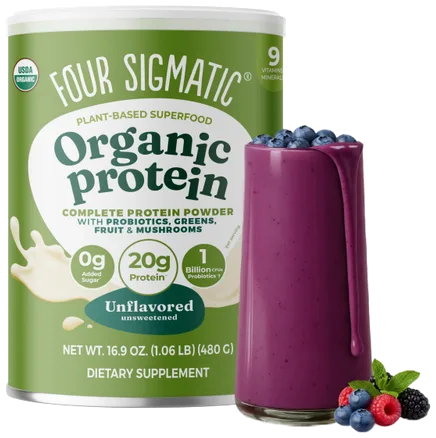
Four Sigmatic Plant Based Superfood Organic Protein (Natural Flavor) Review
Four Sigmatic Plant Based Superfood Organic Protein (Natural Flavor) is a meticulously crafted nutritional supplement designed to support holistic well-being beyond conventional protein powders. This organic, plant-based protein blend distinguishes itself by integrating a powerful array of functional mushrooms, adaptogens, prebiotics, probiotics, and nutrient-dense greens and fruits, all while maintaining a clean, natural profile. The "Natural Flavor" variant offers a creamy, neutral taste with a subtle hint of cinnamon, making it a versatile addition to various beverages and recipes without artificial sweeteners or flavors. At its core, the supplement delivers 18-20 grams of complete protein per serving, derived from a synergistic blend of organic brown rice, pea, and hemp proteins. This multi-source approach ensures a comprehensive amino acid profile essential for muscle repair, growth, and overall tissue maintenance. The protein content also contributes significantly to satiety, helping individuals feel fuller for longer and supporting healthy weight management. What truly elevates this product is its "superfood" matrix. The Organic Mushroom Blend features potent extracts from Turkey Tail, Lion's Mane, Reishi, Chaga, and Cordyceps. These functional mushrooms are renowned for their adaptogenic properties, helping the body adapt to stress and promoting balance. Lion's Mane, for instance, is celebrated for its potential to support cognitive function and focus, while Reishi and Turkey Tail are key players in bolstering immune health. The inclusion of adaptogens like Ashwagandha and Eleuthero further aids in stress management and contributes to sustained energy levels without the jitters often associated with stimulants. Digestive health is addressed through a dedicated blend featuring organic yacon powder, a natural prebiotic, and 1 billion CFU of *Bacillus subtilis* (DE111®), a well-researched probiotic. This combination works to nourish beneficial gut bacteria, support a healthy microbiome, and facilitate efficient nutrient absorption, thereby contributing to smoother digestion and overall gut well-being. Complementing these benefits is the Organic Greens & Fruit Blend, which includes moringa, kale, wheatgrass, beet root, and blueberry powder. These ingredients provide a natural boost of vitamins, minerals, and antioxidants, further enhancing the body's immune defenses and overall vitality. Four Sigmatic's commitment to purity is evident in its formulation, which is certified organic, gluten-free, vegan, and rigorously tested for toxins. It contains no gums, fillers, or artificial ingredients, ensuring a clean and easily digestible supplement that supports recovery, gut health, and sustained energy for a balanced lifestyle.
We don’t sell supplements. We help you make decisions and get the best price.
Lowest prices
Finding the lowest prices at the stores now. This takes a few seconds.
Study, Trial or Testing Result Summary
Members Only28 human studies · 18 improved
1 of these 28 human studies gave the ingredient by drip, not by mouth.
Every ingredient in this powder sits in a blend with no amount shown, so we cannot tell whether any of them reaches the doses used in studies. Pea protein, the main protein, has mixed results. In young men lifting weights for 12 weeks, 50 grams a day gave only a trend toward bigger arm muscles, though the weakest men gained clearly more than with placebo [1]. In new exercisers it raised strength by 16.1 percent, similar to whey [2]. A pooled analysis found a single dose after exercise did not significantly boost muscle building [3]. Short trials in older adults found no change in strength or mass [4][5]. Ashwagandha raised strength in pooled trials, but those used 300 to 600 milligrams a day, and the amount here is unknown [6][7]. Cinnamon gave small lean mass gains at 500 milligrams to 1.5 grams a day [8][9]. Cordyceps was only tested mixed with other ingredients, with mixed results [10][11]. Hemp protein, eleuthero and reishi have been tested only in animals [12][13][14]. Chia, pumpkin and coconut protein, lion's mane, turkey tail and chaga have no studies for this goal. Animal and cell studies are never counted.
See all 28 studies →Hide the studies
- Across 20 randomized trials with 1,249 adults, ashwagandha increased muscle strength and testosterone compared with controls, especially in physically active people, but did not change body weight or body fat.Effects of Withania somnifera (L.) Dunal (Ashwagandha) on cognitive and physical function in adults: a systematic review…
- In three trials with 161 healthy adults doing resistance training, ashwagandha gave larger gains in bench press, leg strength and chest size than placebo, but not body fat, and the strength results lost significance in stricter analysis and the evidence was low certainty.Adjunctive Ashwagandha (Withania somnifera) Supplementation and Resistance-Training Adaptations in Healthy Adults: A Sys…
- In a pooled analysis of 51 trials in healthy adults, a single dose of pea protein after resistance exercise ranked second highest for boosting muscle protein building but the effect was not statistically significant (only whey was).Impact of different protein sources on acute muscle protein synthesis following resistance training: a systematic review…
- A review of 24 trials (19 on ashwagandha, doses 120-1000 mg daily for 3-16 weeks) reported benefits including increased muscle strength and recovery, though trials were small and varied.Clinical evidence for the adaptogenic effects of Withania somnifera and Rhodiola rosea - A systematic review with molecu…
- In 161 young men doing 12 weeks of resistance training, 50 g of pea protein daily gave only a trend toward more biceps thickness overall, but in the weakest participants it raised thickness significantly more than placebo (+20.2% vs +8.6%), similar to whey.Pea proteins oral supplementation promotes muscle thickness gains during resistance training: a double-blind, randomized…
- In 84 recreationally active adults aged 25-50, 300 mg a day of sustained release ashwagandha for 90 days led to bigger gains in bench press strength and oxygen uptake than placebo.Efficacy and safety of a sustained release ashwagandha root extract capsules on muscle strength and cardiorespiratory en…
- In 80 healthy men and women doing resistance training, 600 mg a day of ashwagandha root extract for 8 weeks improved strength, arm, chest and thigh size, and endurance more than placebo.Effects of Ashwagandha ( Withania somnifera) standardized root extract on physical endurance and VO 2max in healthy adul…
- In 62 overweight or obese adults with prediabetes, 1.2 grams a day of a cinnamon, chromium and carnosine blend for 4 months raised the share of body weight that was fat-free mass compared with placebo, though body weight did not change.A Dietary Supplement Containing Cinnamon, Chromium and Carnosine Decreases Fasting Plasma Glucose and Increases Lean Mas…
- In 60 casual golfers, 8 weeks of a daily mixed protein containing pea protein improved golf driving distance, grip strength and push-ups versus placebo, but body composition did not change; pea protein's own effect cannot be separated.Effect of mixed protein supplementation on golf performance and muscle function: a randomized, double-blind, placebo-con…
- In 57 young men starting resistance training, 600 mg a day of ashwagandha root extract for 8 weeks gave greater gains in strength, arm and chest size, testosterone and fat loss than placebo.Examining the effect of Withania somnifera supplementation on muscle strength and recovery: a randomized controlled tria…
- In 57 overweight men aged 40-70, 8 weeks of ashwagandha raised testosterone and DHEA-S more than placebo, but fatigue, vigor and sexual well-being did not differ between groups; muscle was not measured.A Randomized, Double-Blind, Placebo-Controlled, Crossover Study Examining the Hormonal and Vitality Effects of Ashwagand…
- In 56 team sport athletes, 600 mg a day of ashwagandha for 42 days improved recovery scores in women and jump height in men, but pull-up gains occurred in both ashwagandha and placebo groups.Ashwagandha Root Extract Stabilises Physiological Stress Responses in Male and Female Team Sports Athletes During Pre-Se…
- In 48 young male military cadets, 1.5 grams a day of cinnamon for 6 weeks, alone or with interval training, increased lean body mass compared with the control group, and cinnamon with training gave the largest rise in irisin.Effects of Tabata-style functional training and cinnamon supplementation on army combat fitness test performance, serum …
- In 47 active older adults, 13 days of 25 g daily pea protein did not reduce muscle damage after a long walk and did not change muscle strength, mass or soreness, whereas whey lowered a muscle damage marker.Supplementation with Whey Protein, but Not Pea Protein, Reduces Muscle Damage Following Long-Distance Walking in Older A…
- In 45 older men, a single 20 g soy-pea protein blend (with or without added leucine) did not raise muscle protein building rates above resting levels, and rates were the same as with whey.Ingestion of 20 g of a Plant-derived Protein Blend With and Without Added Leucine or Whey Protein Does not Increase Musc…
- In 38 recreationally active men doing resistance training, 500 mg a day of ashwagandha extract for 12 weeks produced larger squat and bench press strength gains than placebo.Effects of an Aqueous Extract of Withania somnifera on Strength Training Adaptations and Recovery: The STAR Trial.
- In 32 adults doing resistance training for 28 days, 20 g of pea protein plus a probiotic increased muscle thickness, bench press strength and power more than pea protein alone, so the benefit is attributed to the probiotic.Gut microbiota modulation and amino acid absorption by Lactiplantibacillus plantarum TWK10 in pea protein ingestion: TWK…
- In 30 female footballers, 600 mg a day of ashwagandha for 28 days improved perceived recovery and sleep quality versus placebo, but the abstract reports no clear strength gains.Effects of Root Extract of Ashwagandha (Withania somnifera) on Perception of Recovery and Muscle Strength in Female Athl…
- In 27 adults aged 50 to 70 doing leg resistance training for 10 days, a pea protein-based diet gave the same muscle protein building rates as a whey-based diet, with no change in strength or muscle structure from diet.Resistance training increases myofibrillar protein synthesis in middle-to-older aged adults consuming a typical diet wit…
- In 24 healthy young men, a single dose of a supplement containing cordyceps extract and other ingredients did not improve jump height, leg strength, or muscle endurance compared with placebo.Effects of a supplement designed to increase ATP levels on muscle strength, power output, and endurance.
- In 24 recreational athletes doing interval training for 3 weeks, a multi-ingredient powder containing cordyceps raised lean body mass by about 1.2 kg while the placebo group did not change significantly.The effects of a pre-workout supplement containing caffeine, creatine, and amino acids during three weeks of high-intens…
- In 22 adults with prediabetes and metabolic syndrome, 500 mg a day of water-soluble cinnamon extract for 12 weeks increased lean mass by about 1.1% compared with placebo.Effects of a water-soluble cinnamon extract on body composition and features of the metabolic syndrome in pre-diabetic m…
- In 21 active young men doing resistance and interval training for 14 weeks, a supplement containing cordyceps and rhodiola did not improve body composition or strength more than placebo.Effects of Concurrent Training and a Multi-Ingredient Performance Supplement Containing Rhodiola rosea and Cordyceps sin…
- In 14 young sedentary adults doing endurance training for 8 weeks, a rhodiola and cordyceps supplement (20 mg per kg body weight daily) improved body composition, including lower-leg muscle mass, more than placebo, but did not change blood fats or oxidative stress.Rhodiola/Cordyceps-Based Herbal Supplement Promotes Endurance Training-Improved Body Composition But Not Oxidative Stres…
- In sedentary adults doing weekly resistance training for 84 days, pea protein improved whole-body strength by 16.1% and gave muscle gains comparable to whey, with no significant difference between the two.Efficacy of Pea Protein Supplementation in Combination with a Resistance Training Program on Muscle Performance in a Sed…
- In healthy volunteers taking 500 mg of ashwagandha extract daily for 60 days, cycling distance and speed improved more than with placebo, and grip strength, muscle mass and inflammation markers trended in a favorable direction.Evaluation of Withania somnifera (L.) Dunal (Ashwagandha) on Physical Performance, Biomarkers of Inflammation, and Muscl…
- In 18 healthy young volunteers taking ashwagandha capsules with doses raised from 750 to 1250 mg daily over 30 days, grip, leg and back strength increased significantly, with no placebo group for comparison.Exploratory study to evaluate tolerability, safety, and activity of Ashwagandha (Withania somnifera) in healthy voluntee…
- In a national survey of 3,514 older Korean adults, women who ate protein from legumes (a food group that includes pea) were less likely to have low grip strength; this study did not test pea protein supplements.Relationship between protein intake and grip strength in qualitative and quantitative aspects among the elderly in Korea…
Review Totals and Summary
Members Only1,473 reviews · 80% positive
This summary provides customer feedback on "Four Sigmatic Plant Based Superfood Organic Protein (Natural Flavor)," which has garnered about 1473 ratings across various stores. The product generally receives positive feedback, with 80% of customers who left star ratings giving it 4 or 5 stars. **What Buyers Say It Did For Them** Customers frequently highlight the product's positive impact on their well-being and dietary goals. Many find it "easy on the stomach," making it a comfortable option for daily consumption. Reviewers also noted its broader benefits, stating it was "beneficial for my diet and my lifestyle" and helped them achieve specific nutritional targets, such as hitting 30g of protein per meal. **What They Complain About** The primary complaint among customers revolves around the taste of the natural flavor. While some enjoy it, others found it less appealing, with one reviewer specifically mentioning, "This one tastes chalky." This suggests that the natural flavor might not suit all palates, especially those accustomed to or preferring flavored protein powders. **Taste, Form, and Size** The taste of the natural flavor is a point of division. While some customers describe it as "great tasting" and "delicious in smoothies or baked goods," others found it chalky. The product's form factor and size are generally well-received, with comments praising its "convenient size" and overall packaging. Many users find it versatile, easily incorporating it into "smoothies or baked goods" to enhance flavor and nutritional content. **Value for Money** The provided reviews do not offer specific comments regarding the product's value for money. **Who It Seems to Suit and Who It Did Not** This protein powder appears to be a good fit for individuals prioritizing high-quality, plant-based ingredients and ease of digestion. It suits those who are "happy with this brand" and appreciate a product that is "good quality" and made with "great ingredients." It is particularly well-suited for those who mix their protein into smoothies or baked goods, where the natural flavor can be complemented or masked. However, it may not be ideal for those who are sensitive to chalky textures or who strongly "prefer chocolate flavor" or other sweetened protein options, as the natural flavor might not meet their expectations when consumed plain.
Biohacker Summary
Members Only9 of 10 recommend it
Most of the panel recommends or uses protein, with seven of ten recommending it and two more using it, though their statements are about whey protein and protein powders in general, and a few mention pea protein or ashwagandha as well. They take it for muscle growth, recovery and maintenance, for feeling full, for steadier blood sugar and as an easy way to hit a daily protein goal, with targets such as 1.2 grams per kilogram of body weight or about 1 gram per pound. Forms they like include whey isolate, grass-fed unflavored whey, goat whey and protein in smoothies, muffins and bars, and doses range from 18 to 20 grams before lifting to 40 to 50 grams in a smoothie. One panelist cut his intake from around 2 to 1.4 to 1.6 grams per kilogram, one stopped animal protein after his cholesterol and fatty liver improved, one rarely drinks whey shakes now and eats more of his protein from food, and one said eating animal protein after years without it changed his gut bacteria. Ashwagandha is a smaller ingredient in this product, and the few who spoke on it recommend it for stress and sleep.
See all 10 biohackers →Hide the biohackers
Dr. Mark Hyman · Whey Protein · recommends
- Recommends eating protein at every meal as part of a longevity starter pack.
- Recommends pairing coffee with protein, like eggs, to keep energy steady.
- Recommends having protein as part of improving meal composition for insulin resistance.
- Recommends adding cinnamon to coffee as a way to enjoy fall flavors without the high sugar content.
- Has her protein shot on the counter in the morning, ready to take, so she doesn't have a choice.
- Recommends ensuring adequate protein intake to address insulin resistance.
- Lists ashwagandha as an herb that can help lower anxiety or depression symptoms.
- Recommends filling meals with protein as part of their 10-Day Detox to help people feel satisfied.
- Encourages people to start with a simple foundation of quality protein for health.
- Highlights the importance of protein for nervous system regulation, explaining that it is packed with amino acids which are building blocks for neurotransmitters critical for balancing mood and stress.
- Recommends including a good source of protein at every meal to help balance blood sugar.
- Includes goat whey in a berry smoothie for breakfast.
- Recommends chaga mushrooms for their powerful immune-boosting and anti-cancer compounds.
- Recommends reishi mushrooms for their powerful immune-boosting and anti-cancer compounds.
Thomas DeLauer · Whey Protein · neutral
- States that protein spikes insulin, which is a good thing and different from how carbs spike insulin, making it one of the most anabolic foods.
- States that the gut lining's constant renewal requires an enormous amount of protein, amino acids, phospholipids, vitamins, and minerals.
- Recommends 1500 milligrams of Lion's Mane around the time one would normally break a fast to help change brain wiring and override conditioned hunger.
- Recommends prioritizing protein, noting that 20-30% of calories from protein are used up as heat.
- Recommends consuming a bunch of protein as part of a massive breakfast to help manage hyperphagia.
- Warns against buying just any whey protein because many brands have been found to contain ridiculous amounts of lead and other contaminants, making the market 'sketchy'.
- Recommends a sugar-free protein bar over a candy bar, stating that it has a decent metabolic profile.
- Recommends Purity Protein as the cleanest protein on the market, noting its public third-party testing for over 200 contaminants and its simple five-ingredient profile.
- Consumes 18-20 grams of pure whey protein before lifting 30-50% of the time to boost resting metabolic rate and provide fuel without sugar or carbs.
- Recommends whey protein, specifically whey protein isolate, for increasing the body's master detoxification molecule, glutathione, which directly affects fatty liver and insulin resistance.
- Recommends ashwagandha extract, noting a study where 57 overweight men over 40 saw a 14.7% increase in testosterone and an 18% increase in DHEA over 16 weeks, suggesting it removes the cortisol block suppressing the entire hormonal cascade.
- Recommends Four Sigmatic's new protein coffee, highlighting its third-party testing, protein, creatine, lion's mane, collagen, and yacon root fiber for satiety, gut support, and brain function.
- Recommends Four Sigmatic's new protein coffee, highlighting its third-party testing, protein, creatine, lion's mane, collagen, and yacon root fiber for satiety, gut support, and brain function.
- Includes hemp protein in their berry smoothie as part of their detoxification protocol to provide some protein.
Andrew Huberman · Whey Protein · uses
- Eats one or two David Bronze Bars per day as a snack to easily hit his protein goal without consuming excess calories.
- Discusses protein and food-based supplements.
- He mentions Dr. Layne Norton pointed to interesting data on potato protein as a potential great plant-based substitute for those avoiding whey-based protein.
- States that enough protein is critical for health.
- Confesses to loving the Mateina protein smoothie, which contains whey protein, collagen, pineapple, veggies, and Mateina, and suggests it's perfect for before or after workouts, as a healthy snack or meal replacement.
- Says he eats David protein bars, specifically the new bronze bar, and finds them to be the best tasting protein bars he's ever had.
- Personally eats one or two David Bronze Bars per day as a snack to easily hit his protein goal without consuming excess calories.
- Eats one or two David Bronze Bars per day as a snack to easily hit his protein goal of 1 gram of protein per pound of body weight without consuming excess calories.
- Takes 20 grams of whey protein in the morning for muscle.
- States that protein is a significant lever for muscle building, with benefits plateauing around 1.6 grams per kilogram of body weight, though some evidence suggests slightly higher amounts may offer a little more benefit.
- He shares science-based tools for modulating aggression, including supplementation with ashwagandha.
- Warns that while ashwagandha is a potent inhibitor of cortisol, chronic supplementation for longer than two weeks can disrupt other hormone and neurotransmitter pathways, so it should be used with a two-week break after two weeks of use.
- Recommends cinnamon as a tool to reduce blood sugar cravings.
- Warns that cinnamon contains a med, which can be toxic at high levels, so one should not ingest more than about a teaspoon to a teaspoon and a half per day to avoid exceeding the problematic threshold.
Dr. Eric Berg · Whey Protein · neutral
- Dr. Eric Berg mentions that sardines are packed with protein, which supports brain health and metabolism.
- Recommends turkey tail extract, noting that turkey tail mushroom enhances the natural killer cells of the immune system, which target viruses and cancer.
- The amino acid leucine is important for muscle growth, but getting sufficient protein is just as essential for maintaining muscle mass.
- Recommends consuming high-quality animal protein in conjunction with other weight loss methods.
- Dr. Eric Berg recommends getting enough high-quality protein to maintain muscle, especially after menopause.
- Recommends ashwagandha, suggesting 250 milligrams per day over time to increase stress tolerance and help the cortisol receptor.
- Recommends high-quality protein as a way to lower blood sugar for better sleep.
- Notes that leucine comes from whey protein powder.
- Ideally recommends eating protein from meat, but if using a protein powder, to find one made from meat, or even dehydrated/freeze-dried meat slices.
- Recommends consuming high-quality animal protein as a source of leucine for muscle growth.
- Warns that most protein bars contain very low-quality protein and tons of sugar.
- Recommends adding a pinch of cinnamon to water daily, stating that it mimics insulin and activates insulin receptors, making cells more sensitive to insulin to help regulate blood sugar.
- Recommends consuming cinnamon to block the effects of grains.
- Dr. Berg recommends consuming the right amount of protein to satisfy hunger and stop overeating, as it gives the body what it needs without converting to sugar or fat.
Ben Greenfield · Whey Protein · recommends
- Notes that a recent review found that protein stops muscle loss and starts muscle gains and muscle protein synthesis around 1.9 to 3.2 g per kg of body weight a day, and frequency is as important as getting that total amount daily.
- Recommends aiming for 0.8-1.2 g of protein per pound of body weight to help fill the space fat used to occupy under loose skin.
- Recommends Protein powder for optimizing muscle protein synthesis, recovery, and muscle maintenance.
- Recommends starting with protein for body remodeling.
- Ashwagandha, taken as 120–1,000 mg for at least 6 weeks, with most studies providing a dose of 400–600 mg/d, can lower cortisol levels, improve sleep quality, and enhance cognitive resilience for athletes during challenging phases consisting of high-volume resistance training.
- States that introducing high protein, around 1g/lb, can mitigate the negative effects of a caloric deficit on lean muscle mass and metabolism.
- Is considering adding a protein shake right after her workout to easily add 20-30 grams of protein to her daily intake.
- States that if he had cancer, he would limit protein based on the idea of an anabolic scenario potentially causing a tumor to grow.
- While animal protein sources and essential amino acids are still my #1 protein priority, it’s good to know that collagen still produces impactful results for multiple aspects of your biology.
- Mentions Cordyceps as an ingredient in gummies designed for energy, along with low-dose CBD and CBG.
- Personally consumes a whey protein shake post-workout.
- Notes that ashwagandha is an ingredient in MTE.
- Notes that eleuthero is an ingredient in MTE.
- Mentions Ashwagandha as a supplement people cycle through when still sleeping poorly, suggesting it might not be addressing the true sleep problem.
Dave Asprey · Whey Protein · recommends
- Discovered that to meditate with high focus for hours a day, one absolutely needs enough fat and some carbohydrate, and protein helps one last longer.
- Notes that protein burns 20-30% of its own calories just to digest, making it the most powerful diet lever for cutting visceral fat.
- Reversed his high cholesterol and fatty liver disease by limiting his excessive animal protein intake.
- Recommends eating protein first as part of a reset for insulin resistance.
- Recommends prioritizing animal protein because the body burns 20% to 30% of those calories just digesting them, which helps with cutting visceral fat.
- Dave Asprey notes that ashwagandha, when taken as a real standardized extract at a real dose, genuinely lowers cortisol and shows effects on stress and sleep quality in randomized trials, but lacks polysomnography data.
- Recommends eating animal protein and animal fats because they help build muscle and hormones and provide satiety.
- Recommends consuming one gram of animal protein per pound of body weight, noting it can be challenging to achieve while traveling.
- Dave Asprey recommends eating good quality animal protein, aiming for about 1 gram per pound of body weight every day, to help burn calories during digestion and release satiety hormones.
- Notes that scientists are studying Reishi for its effect on longevity, immune balance, cellular resilience, and telomere preservation.
- Notes that protein delivers amino acids and that low protein can contribute to a gap in essential amino acids.
- Advises how to stack glutathione with protein.
- Recommends Reishi for longevity, stating that it supports mitochondria, protects telomeres, reduces inflammation, and helps cells stay resilient.
- Recommends Chaga for longevity, stating that it supports mitochondria, protects telomeres, reduces inflammation, and helps cells stay resilient.
Siim Land · Whey Protein · uses
- Reduced his protein intake from around 2 g/kg to 1.4–1.6 g/kg.
- Recommends Protein powder for muscle growth and recovery, based primarily on human research, especially randomized controlled trials showing measurable benefits.
- Recommends Ashwagandha for stress, sleep and performance, based primarily on human research, especially randomized controlled trials showing measurable benefits.
- Lists Protein powder as one of 15 supplements backed by human studies.
- Lists Ashwagandha as one of 15 supplements backed by human studies.
- Notes that Ashwagandha is one of several supplements with human evidence.
- Recommends eating approximately 1.6 grams of protein per kilogram of body weight daily.
- Recommends eating around 0.4 grams of protein per kilogram per meal, divided into three or four meals, to ensure net positive muscle protein synthesis.
- Notes that 30 g of isolated potato protein stimulated muscle protein synthesis similarly to 30 g of milk protein at rest and after resistance exercise in a 2022 randomized controlled trial.
- Recommends getting enough protein to help maintain muscle, especially in a calorie deficit, and as part of the best way to lose fat while maintaining muscle.
- Recommends eating enough protein for declining muscle mass and strength.
- States that ashwagandha, unless contaminated, is not going to raise liver enzymes.
- Aims to increase protein intake in meals because Asian food in Singapore tends to be very carbohydrate-heavy and imbalanced.
- Stopped taking ashwagandha because it immediately caused a mouth sore.
Dr. Rhonda Patrick · Whey Protein · recommends
- Recommends supplementing with protein powders, especially those higher in leucine, to help achieve the recommended 1.2 grams of protein per kilogram body weight.
- If Dr. Rhonda Patrick needs fuel before training, they will have a homemade muffin made with whey protein.
- Focuses on protein, aiming for at least 1.2 g/kg daily and usually getting 1.3-1.4 g/kg.
- Rhonda's current diet includes a homemade blueberry, whey protein, and psyllium husk muffin as a pre-workout.
- Personally likes and recommends Nutra Cost grass-fed unflavored whey protein isolate for its high protein content, low lactose and fat, fewer calories, grass-fed source, organic nature, and lack of heavy metal contaminants.
- Recommends focusing on high-quality protein sources and aiming for 1.2 to 2.2 grams of protein per kilogram body weight, depending on training schedule, and timing some protein around workouts.
- Discusses the school of thought that eating too much protein accelerates aging and increases cancer risk, but also notes that maintaining muscle and strength is important for aging well, suggesting protein is not always protective or always harmful.
- States that adaptations from training require enough protein for recovery and rebuilding.
- Includes 1 scoop of protein powder in their daily smoothie.
- Emphasizes the importance of protein for muscle, bone, connective tissue, and brain health, stating that once you meet your protein needs, everything else becomes easier.
- Identifies plant-based protein powders, especially pea protein, and cocoa-flavored varieties as the worst culprits for heavy metal contamination.
- Warns that plant-based protein powders were the worst offenders, containing on average 9x the lead of dairy-based proteins and 2x the lead of beef-based proteins.
Bryan Johnson · Whey Protein · uses
- Includes protein in their breakfast.
- Went off protocol and ate animal protein for the first time in six years while traveling in Australia, which changed his gut microbiome, causing good bacteria to drop 61%.
- Consumes protein at 4:55 am.
- Uses pea protein as an ingredient in Nutty Pudding.
- Includes 'protein' as part of their daily morning routine.
- For breakfast, Bryan Johnson blends protein, collagen, and extra virgin olive oil, targeting 130g of protein daily for skin, joints, and muscle maintenance and building.
- Drinks his Blueprint longevity mix with additional morning supplements, including ashwagandha.
- Recommends getting enough protein, specifically collagen, which acts as the framework for bone structure, suggesting a range between 1.2 g and 2.2 g per kilogram of body weight depending on activity levels.
- States that Blueprint Ashwagandha can be used to stabilize mood.
- Agrees that consuming protein with carbohydrates post-workout is beneficial, as good data shows it's needed to prevent protein from being used for energy production instead of muscle protein synthesis.
- Consumes Blueprint Metabolic Protein daily, providing 27 grams of protein, as part of his plant-based approach to ensure a complete amino acid profile.
- Consumes Blueprint Longevity Protein daily as part of his strategy to achieve a complete amino acid profile, noting it provides 26 grams of protein.
- Recommends having enough protein as part of a balanced diet to improve heart rate recovery.
- For breakfast, Bryan Johnson has Blueprint longevity protein and Berry nut mix.
Peter Attia · Whey Protein · stopped
- Used to worry about protein timing but now thinks about it less, especially since he doesn't consume whey protein shakes much, if at all, and tends to eat more of his protein.
- Recommends consuming 1.6 to 2.4 grams of protein per kilogram per day, or roughly a gram per pound of body weight, for muscle growth and preservation, especially for older or less active individuals, and aims for 40 to 50 grams of protein four times a day through meals or snacks.
- Peter reviews the evidence for select off-label medications and supplements commonly used for sleep, including glycine, magnesium, ashwagandha, and phosphatidylserine.
- Notes that the full episode discusses the importance of protein.
- Recommends consuming enough protein, particularly around 130 to 150 grams per day, evenly spaced throughout the day, to maintain lean mass and improve muscle quality, especially when using GLP1 agonists.
- Learned that protein is really important and that if protein intake goes from 250 grams a day to 70-80 grams a day, a lot of muscle will be lost. He recommends a high protein intake, double the RDA, especially for athletes or those trying to gain muscle, to prevent sarcopenia and maintain lean body mass.
- Uses cinnamon in his keto mousse in the evening.
- Finds ashwagandha a little bit helpful for sleep, though notes it may not be for everyone.
- Emphasizes the importance of getting enough protein, especially for an aging population, to combat sarcopenia. He recommends aiming for about one gram per pound of body weight daily and suggests using a food tracking app to monitor intake.
- Finds ashwagandha "a little bit helpful" for sleep, but notes that it may not be for everyone.
- Will look at interventions that can help improve muscle mass, including protein.
- Recommends that older adults might need a higher daily and per-meal protein dose of 30–40 grams to maximize muscle protein synthesis and increase or maintain muscle mass.
- Recommends around 1.6 g/kg/day of protein to maximize gains in muscle strength and fat-free mass, with potential benefits up to 2.2 g/kg/day for those aiming to fully optimize muscle growth and recovery.
- Peter recommends targeting 2g of protein per kg of body weight for muscle preservation and overall health, especially when trying to lose fat while preserving or gaining muscle.
RAL Summary
Members OnlyTier 3 for Muscle and Strength
This tier rests on 80 percent positive ratings from 1,475 reviews, because every studied ingredient is hidden in a blend and the human evidence for pea protein is mixed [1][3]. Ashwagandha's strength benefit is real in trials but depends on doses this label does not show [6].
- Hemp Protein: amount hidden in a blend
- Ashwagandha: amount hidden in a blend
- Eleuthero: amount hidden in a blend
- Reishi: amount hidden in a blend
- Cinnamon: amount hidden in a blend
Where the evidence disagrees: 6 of the 28 human studies found no effect.
More Details
Members OnlyBody systems · Combine with · Possible side effects
Body systems: Musculoskeletal system, Endocrine system, Digestive system
Combine with: To further support the goal of Reverse Aging / Cellular & DNA Repair, consider combining this protein with supplements known for their direct impact on cellular longevity and repair pathways. NAD+ precursors like NMN or NR can boost cellular energy and sirtuin activity, crucial for DNA repair. Potent antioxidants such as Resveratrol, Astaxanthin, or CoQ10 can help combat oxidative stress, a major contributor to cellular aging. Additionally, collagen peptides can support the structural integrity of tissues, while methylated B-vitamins and TMG can aid in methylation processes vital for gene expression and DNA maintenance.
Possible side effects: No major side effects reported.
Supplement Facts
Organic Pea Protein Powder 0 · Organic Hemp Protein Powder 0 · Organic Chia Protein Powder 0
| Organic Pea Protein Powder | 0 | † |
| Organic Hemp Protein Powder | 0 | † |
| Organic Chia Protein Powder | 0 | † |
| Organic Pumpkin Protein Powder | 0 | † |
| Organic Coconut Protein Powder | 0 | † |
| Organic Ashwagandha | 0 | † |
| Organic Eleuthero | 0 | † |
| Organic Cordyceps | 0 | † |
| Organic Lion's Mane | 0 | † |
| Organic Reishi | 0 | † |
| Organic Turkey Tail | 0 | † |
| Organic Chaga | 0 | † |
| Organic Lucuma | 0 | † |
| Organic Coconut Palm Sugar | 0 | † |
| Pink Himalayan Salt | 0 | † |
| Organic Cinnamon | 0 | † |
| Organic Monk Fruit | 0 | † |
Barcode (UPC) 816897021598 · Label source: Amazon · Report a label change
Show entire label

More muscle and strength products
Members OnlyThe highest ranked for the same goal
Read more
Our articles on this subject
Graded October 24, 2026 by the Reverse Age Lab evidence engine, from human studies, real reviews and our biohacker panel. How we grade. Is this medical advice? No. Rala organizes the published evidence; go over any change with your doctor, especially if you take meds.
Privacy policyConsumer health dataTermsDo Not Sell or Share My Personal InformationCookie settings