
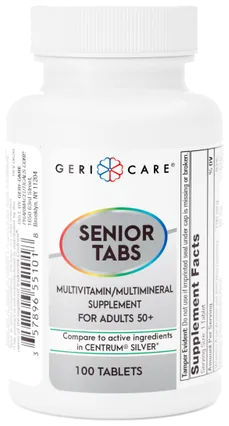
Geri-Care Senior Tabs Review
This Amazon page sells the GeriCare Senior Tab 50+ Multivitamin and Minerals Tablets, shown as a 100 Count (Pack of 2) option, with 200 count listed in the measurements. The product details list the brand as GeriCare, item form as tablet, primary supplement type as minerals and multivitamin, flavor as unflavored, and product benefits as immune support. The age range is listed as adult, the specific use as overall, and the number of items as 2. The manufacturer part number is 551-01-GCP-2pk. The item is sold by Geri-Care Pharmaceuticals Corp. and shipped by Amazon. The About this item section describes a comprehensive formula in which each tablet contains a broad spectrum of vitamins and minerals, including vitamin D, B vitamins, antioxidants, and essential minerals such as calcium and zinc. It states that the tablet is rich in calcium, vitamin D, and magnesium to help maintain strong and healthy bones. It says the product is packed with antioxidants such as vitamin C, E, and selenium to help combat oxidative stress and promote a healthy immune system. It notes that B vitamins play a role in energy metabolism and help with fatigue and overall vitality. It describes vitamin E and B-complex vitamins as supporting cognitive function and brain health. It mentions minerals like magnesium and potassium to support muscle function, and it says the product incorporates key nutrients for digestive support, promoting nutrient absorption and a healthy gut. The allergen information is listed as nut free. The best sellers rank is shown as number 193,158 in Health and Household and number 2,075 in Multivitamins. The page shows a one-time price of $13.99 and a Subscribe and Save price of $12.59 with 15 percent savings, with a per count price of $0.07. The item is non-returnable due to food safety reasons, although damaged or defective items may be refunded or replaced with an image of the item and its defects. The page shows a 4.8 out of 5 star rating from 28 ratings and is marked as an Amazon's Choice item. The ingredients section on this page shows only the word Multi and does not print a full ingredient list, so the complete supplement facts are not available from this page alone. Buyers can compare this listing with other multivitamin products shown on the page, such as Centrum Minis Silver and Centrum Silver Women's, which appear in the related items section.
We don’t sell supplements. We help you make decisions and get the best price.
Lowest prices
We may earn a commission from some store links. How we choose.
Finding the lowest prices at the stores now. This takes a few seconds.
Products with nearly the same formula (Matched on the main ingredients)
Study, Trial or Testing Result Summary
Members Only293 human studies · 104 improved
2 of these 293 human studies gave the ingredient by drip or injection, not by mouth.
Vitamin D is the main bone ingredient here at a full dose. In older adults, 700 to 800 units a day cut hip fractures by about a quarter [1], but other reviews found no clear drop in fractures [2], and calcium plus vitamin D improved only pelvic bone density in women with thinning bones [3]. Zinc reaches a full dose at two tablets a day. In one trial, zinc with calcium, manganese and copper stopped spine bone loss in women past menopause [4]. Phosphorus also reaches a full dose at two tablets, but its clear benefit was seen only in premature babies [5]. Several helpful ingredients are well below studied doses. Vitamin K is 30 micrograms against 180 micrograms that slowed bone loss [6], and lycopene, vitamin E and potassium are only trace amounts [7][8][9]. Calcium is low next to trial doses, and even those trials showed little benefit [10]. Some ingredients do not help: folate and other B vitamins did not reduce fractures [11], and high vitamin A intake was linked to more hip fractures [12]. Animal and cell studies are never counted.
See all 293 studies →Hide the studies
- In 13 cohort studies of about 384,000 people, higher dietary vitamin A intake did not change fracture risk, although vitamin E intake and combined antioxidant vitamins were linked to fewer fractures.Dietary vitamin A, C, and E intake and subsequent fracture risk at various sites: A meta-analysis of prospective cohort …
- In about 319,000 adults, higher retinol and vitamin A intake was linked to slightly lower total fracture risk but higher hip fracture risk, and low blood retinol was linked to higher hip fracture risk.The Effect of Vitamin A on Fracture Risk: A Meta-Analysis of Cohort Studies.
- Across 12 prospective studies of about 292,000 people, high vitamin A or retinol intake raised hip fracture risk by about 29-40%, and both high and low blood retinol raised risk, while total fracture risk did not differ.The relationship between vitamin A and risk of fracture: meta-analysis of prospective studies.
- In nine studies of about 190,500 people, eating 1.76-14.3 mg a day of beta-carotene was linked to about a one-third lower risk of any fracture and 37% lower hip fracture risk.Effects of β-carotene intake on the risk of fracture: a Bayesian meta-analysis.
- In five observational studies of 80,982 people, those with the highest dietary vitamin K intake had about 22% lower fracture risk than those with the lowest.Vitamin K intake and the risk of fractures: A meta-analysis.
- In 59 studies of 48,626 children, vegetarian and vegan children ate more vitamin C than meat-eaters but had lower bone mineral content, so the review did not link vitamin C intake to better bone health.Lacto-ovo-vegetarian and vegan diets in children and adolescents: a systematic review and meta-analysis of nutritional a…
- In 11 trials of 43,869 postmenopausal women with osteoporosis, calcium plus vitamin D modestly improved pelvic bone density but not spine, neck of femur or total hip density, and did not reduce fractures.The effects of combined calcium and vitamin D supplementation on bone mineral density and fracture risk in postmenopausa…
- Across 14 randomized trials with 34,700 people, B vitamin supplements including folate did not reduce fractures or change bone density, and bone resorption marker levels actually rose.B vitamins and bone health: a meta-analysis with trial sequential analysis of randomized controlled trials.
- This review of smartphone apps for osteoporosis self-management did not test vitamin D supplements and found no significant effect on vitamin D intake.Digital Health Technologies for Long-term Self-management of Osteoporosis: Systematic Review and Meta-analysis.
- Across six observational studies of 10,807 people, higher dietary vitamin C intake was linked to a 27% lower risk of hip fracture, and each extra 50 mg per day was linked to about 5% lower risk.Dietary vitamin C intake and the risk of hip fracture: a dose-response meta-analysis.
- In trials of older adults, 700 to 800 IU a day of vitamin D cut hip fracture risk by 26% and other nonvertebral fractures by 23%, while 400 IU a day gave no significant benefit.Fracture prevention with vitamin D supplementation: a meta-analysis of randomized controlled trials.
- Across 16 trials of 6,425 postmenopausal women, vitamin K2 improved lower spine bone density and lowered undercarboxylated osteocalcin, with no overall fracture reduction unless one outlier study was excluded and no extra side effects.Efficacy of vitamin K2 in the prevention and treatment of postmenopausal osteoporosis: A systematic review and meta-anal…
- Across 43 trials of 5,184 women after menopause, vitamin E ranked best at lowering a blood marker of bone breakdown (CTX), though doses and durations were not stated.Effects of dietary supplements on bone turnover markers in women after menopause: a network meta-analysis.
- In eight trials of 971 people, vitamin K combined with vitamin D increased total bone density and lowered undercarboxylated osteocalcin, with doses under 500 mcg per day working well.The combination effect of vitamin K and vitamin D on human bone quality: a meta-analysis of randomized controlled trials…
- A review of small, poor-quality trials of vitamins in people with epilepsy found thiamine helped thinking skills but did not assess bone health; the bone benefit seen was from vitamin D, not thiamine.Vitamins for epilepsy.
- In 13 studies, high intake of total vitamin A or retinol raised hip fracture risk while high intake of some carotenoids lowered it, and total fracture risk was unaffected.Vitamin A and Bone Fractures: Systematic Review and Meta-Analysis.
- Across nine studies, vitamin D3 did not significantly reduce nonvertebral or vertebral fractures versus placebo or calcium alone, with only a borderline trend toward fewer falls.The effect of cholecalciferol (vitamin D3) on the risk of fall and fracture: a meta-analysis.
- A review of 18 mostly cross-sectional studies found vegan children and adolescents ate less riboflavin (vitamin B2) than omnivores, and single studies suggested lower bone mineral content, but it did not test riboflavin supplements for bone health.Health aspects of vegan diets among children and adolescents: a systematic review and meta-analyses.
- In six studies of postmenopausal women, folate levels were lower in women with osteoporosis than in controls, but the difference was not statistically significant.Association of homocysteine, vitamin B12, and folate with bone mineral density in postmenopausal women: a meta-analysis.
- In 17 studies, postmenopausal women with osteoporosis had lower folate levels than controls, but this is an association and not a test of folate supplements.Oxidative Stress-Related Biomarkers in Postmenopausal Osteoporosis: A Systematic Review and Meta-Analyses.
- Across 36 studies, postmenopausal women with osteoporosis had lower folate levels than controls, but this is an association and not a test of folate supplements.Correlation of oxidative stress-related biomarkers with postmenopausal osteoporosis: a systematic review and meta-analys…
- Across 14 studies, potassium bicarbonate and potassium citrate lowered calcium loss and a bone breakdown marker more than potassium chloride did, with no effect on bone density or bone formation markers.The effect of supplementation with alkaline potassium salts on bone metabolism: a meta-analysis.
- A review of 16 studies of 1,573 adults more than 100 days after stem cell transplant or with graft versus host disease found mixed results for vitamin D and calcium on bone density, with very low certainty, and no clear bone findings for vitamin A.Micronutrient requirements for stem cell transplantation patients > 100 days after transplant and during graft versus ho…
- In 23 trials of 1,209 kidney transplant recipients, vitamin D analogues (2 trials, 51 patients) improved lumbar spine and femoral neck bone density versus no treatment, but no trial showed fewer fractures.Interventions for preventing bone disease in kidney transplant recipients: a systematic review of randomized controlled …
- A review of five reviews covering 588 patients with jaw bone death found that pentoxifylline plus tocopherol led to recovery in 62% of radiation-related cases and all drug-related cases, but the evidence was low quality and vitamin E was not tested alone.Is the use of Pentoxifylline and Tocopherol effective in the treatment of Osteoradionecrosis of the jaws or for the trea…
- In 18 small trials of 576 children with chronic kidney disease, vitamin D preparations lowered parathyroid hormone levels, but there were few data on growth or bone deformities and no clear differences between preparations.Interventions for metabolic bone disease in children with chronic kidney disease.
- In three small trials of 70 people with cystic fibrosis, it is very uncertain whether vitamin K changes bone density, though undercarboxylated osteocalcin fell.Vitamin K supplementation for cystic fibrosis.
- One small trial of 39 people with sickle cell disease found vitamin D3 for six weeks raised blood vitamin D and reduced pain days versus placebo, but no bone outcomes were reported and the evidence was low quality.Vitamin D supplementation for sickle cell disease.
- This review of ten studies of weight-loss surgery patients found African Americans had more vitamin A deficiency than White patients, but bone loss was not assessed by race and fracture results were mixed.Racial disparities in selected micronutrient deficiencies after bariatric surgery: A systematic review.
- In a review of 14 studies in adults, vitamin C improved gum bleeding in gingivitis but not in periodontitis, and it did not improve loss of the bone around the teeth.The Relationship between Vitamin C and Periodontal Diseases: A Systematic Review.
- In a review of 141 studies, plant-based eaters had higher vitamin C intake yet lower bone turnover markers and, in vegans, lower bone density, so vitamin C was not shown to help bone health.Nutrient Intake and Status in Adults Consuming Plant-Based Diets Compared to Meat-Eaters: A Systematic Review.
- In a review of 11 mostly animal studies, vitamin C seemed to speed bone formation in animals, but this was not seen in human studies and no dose could be recommended.Clinical effect of vitamin C supplementation on bone healing: A systematic review.
- In a review of nutrient supplements for dental implants, vitamin C helped soft tissue healing but did not directly affect how well the implant joined with bone.Assessing the influence of nutritional supplements on osseointegration outcomes in dental implantology: a systematic rev…
- In nine trials of postmenopausal women without osteoporosis, vitamin D raised blood vitamin D and improved some bone remodeling measures, but only one study found fewer fractures, so a fracture benefit could not be confirmed.Supplementation of vitamin D isolated or calcium-associated with bone remodeling and fracture risk in postmenopausal wom…
- A review of eight studies (five animal, one cell, two human) found vitamin E, especially tocotrienol, lowered inflammation markers tied to bone loss.Therapeutic effect of Vitamin E in preventing bone loss: An evidence-based review.
- A literature review of mostly case series found pentoxifylline plus tocopherol relieved pain and was linked to new bone formation in drug-related jaw bone death.Pentoxifylline and tocopherol protocol to treat medication-related osteonecrosis of the jaw: A systematic literature rev…
- In 11 mostly uncontrolled studies of jaw bone death after radiation, pentoxifylline plus tocopherol gave healthy mucosal coverage in 16.6% to 100% of patients, with no standard dose.Pentoxifylline and tocopherol for the treatment of osteoradionecrosis of the jaws. A systematic review.
- A review of 27 meta-analyses found vitamin E intake was linked to lower fracture risk among many outcomes, though most of the evidence was low or very low quality.Vitamin E intake and multiple health outcomes: an umbrella review.
- A review of Japanese trials reports vitamin K2 and K1 were linked to maintained or higher bone density and fewer fractures, though a larger trial with fractures as the main outcome is still needed.[Vitamin K2].
- In a review of seven trials of at least two years in postmenopausal women, high-dose vitamin K1 and K2 improved femoral neck bone strength indices and reduced clinical fractures despite little change in bone density.High-dose vitamin K supplementation reduces fracture incidence in postmenopausal women: a review of the literature.
- In five trials in postmenopausal women, vitamin K1 cut clinical fractures versus placebo in one good trial, while the K2 trials were poorly reported with mixed results and the larger one showed no reduced vertebral fractures.Vitamin K to prevent fractures in older women: systematic review and economic evaluation.
- This review looked at vitamin K levels, diet and supplements in relation to bone health, but the abstract says findings across studies were conflicting and unclear.Vitamin K and osteoporosis: Myth or reality?
- This review of ten studies on vitamin K for osteoporosis in postmenopausal women did not report clear results in its abstract, so the size of any benefit is not stated.The Anti-osteoporosis Effects of Vitamin K in Postmenopausal Women.
- A review of 17 studies found the effect of vitamin B12 on bone density and fracture risk is unclear and results were inconsistent.Vitamin B12, bone mineral density and fracture risk in adults: A systematic review.
- In a review of 25 observational studies of healthy men aged 50 or older, evidence linking calcium intake to bone density or bone loss was inconsistent or weak.Risk factors for low BMD in healthy men age 50 years or older: a systematic review.
- A guideline based on a systematic review covering how to order and prepare intravenous nutrition, including calcium and phosphate amounts for newborn bone mineralization, but the abstract gives no results on bone health.A.S.P.E.N. clinical guidelines: parenteral nutrition ordering, order review, compounding, labeling, and dispensing.
- A review of 90 observational studies in women after menopause linked low levels of several nutrients, including lycopene, to more illness such as osteoporosis, but it did not test lycopene on bone directly and could not pool the data.A systematic review on the impact of nutrition and possible supplementation on the deficiency of vitamin complexes, iron…
- In 8,164 people with recent stroke or mini-stroke, a daily tablet of vitamin B6 (25 mg) with folic acid and B12 for a median 2.8 years did not significantly reduce osteoporotic fractures compared with placebo (1.64% vs 1.91%).The effect of homocysteine-lowering with B-vitamins on osteoporotic fractures in patients with cerebrovascular disease: …
- In 4,810 women at high cardiovascular risk, daily folic acid 2.5 mg with B6 and B12 over about 7.3 years did not reduce nonspine fractures or change bone turnover markers.Effect of Combination Folic Acid, Vitamin B6 , and Vitamin B12 Supplementation on Fracture Risk in Women: A Randomized, …
- In 2,919 adults aged 65 or older with high homocysteine, 400 mcg folic acid plus B12 daily for 2 years did not significantly reduce osteoporotic fractures (4.2% vs 5.1% on placebo); cancer cases were higher in the treated group.Effect of daily vitamin B-12 and folic acid supplementation on fracture incidence in elderly individuals with an elevate…
- Among 2,322 adults exposed to asbestos who took high-dose retinol for up to 16 years, there was no increase or decrease in fracture risk, while beta-carotene slightly lowered fracture risk in men.No dose-dependent increase in fracture risk after long-term exposure to high doses of retinol or beta-carotene.
- In 1,298 older adults followed about 5 to 7 years after 2-3 years of folic acid 400 mcg plus B12, there was no effect on fractures overall, though people with high homocysteine may have had fewer fractures.Long-term effects of folic acid and vitamin-B12 supplementation on fracture risk and cardiovascular disease: Extended fo…
- In about 1,100 older adults with high homocysteine, 400 mcg folic acid plus B12 daily for 2 years did not change bone density or heel ultrasound measures compared with placebo, apart from a small possible gain in those over 80 who took it faithfully.Effect of Vitamin B12 and Folic Acid Supplementation on Bone Mineral Density and Quantitative Ultrasound Parameters in O…
- In 998 adults taking high-dose retinol (7.5 mg daily) for years, blood retinol levels were not linked to the risk of any fracture or osteoporotic fracture.Plasma retinol and total carotenes and fracture risk after long-term supplementation with high doses of retinol.
- In 722 haemodialysis patients with high blood phosphate, modified-release nicotinamide (250-1500 mg a day) added to phosphate binders lowered phosphate more than placebo at 24 weeks, but the difference was gone by 52 weeks, and it raised risks of low platelets, itching, anaemia and diarrhoea.Modified-release nicotinamide for the treatment of hyperphosphataemia in haemodialysis patients: 52-week efficacy and sa…
- In 628 older Japanese stroke patients with paralysis, 5 mg folate plus mecobalamin daily for 2 years lowered hip fractures (10 vs 43 per 1000 patient-years); this publication has been retracted.Effect of folate and mecobalamin on hip fractures in patients with stroke: a randomized controlled trial.
- In 500 elderly women with Alzheimer disease who all took 1000 IU of vitamin D2 plus calcium, adding risedronate for 18 months raised bone density 4.1% and cut hip fracture risk compared with placebo, but vitamin D itself was not tested alone and the paper was retracted.The prevention of hip fracture with risedronate and ergocalciferol plus calcium supplementation in elderly women with Al…
- In 481 Danish men and women aged 60-74, taking 100, 200 or 300 micrograms of selenium yeast daily for 5 years did not change any of the four bone turnover markers compared with placebo.Long-Term Selenium-Yeast Supplementation Does Not Affect Bone Turnover Markers: A Randomized Placebo-Controlled Trial.
- Children whose mothers took 1000 IU of vitamin D3 daily during pregnancy had higher whole-body bone mineral content and density at ages 6-7 than children whose mothers took placebo.Pregnancy vitamin D supplementation and offspring bone mineral density in childhood follow-up of a randomized controlled…
- In 452 men and women aged 60-80 who also took calcium and vitamin D, 500 micrograms a day of vitamin K1 for 3 years did not change bone density at the hip, spine or whole body compared with no vitamin K1.Effect of vitamin K supplementation on bone loss in elderly men and women.
- In 440 postmenopausal women with low bone density, 5 mg a day of vitamin K1 for 2 to 4 years did not change bone density compared with placebo, though fewer women had clinical fractures (9 versus 20), a small secondary finding.Vitamin K supplementation in postmenopausal women with osteopenia (ECKO trial): a randomized controlled trial.
- In 379 healthy older adults, 500 mcg per day of phylloquinone for 3 years did not change inflammatory markers or bone density changes compared with no supplement.Vitamin K, circulating cytokines, and bone mineral density in older men and women.
- In 325 postmenopausal women, 45 mg per day of menatetrenone for 3 years increased bone mineral content and femoral neck width compared with placebo and kept hip bone strength unchanged, though overall bone density was not changed.Vitamin K2 supplementation improves hip bone geometry and bone strength indices in postmenopausal women.
- In 276 healthy older adults given 1 mg of folate with vitamins B-12 and B-6 or placebo for 2 years, homocysteine fell but blood markers of bone formation and bone breakdown did not differ from placebo.Lowering homocysteine with B vitamins has no effect on biomarkers of bone turnover in older persons: a 2-y randomized co…
- In 266 postmenopausal women followed for 24 months, neither blood pressure responses nor salt intake predicted bone density or bone breakdown changes, and alkali treatment had no effect on bone.No evidence that the skeletal non-response to potassium alkali supplements in healthy postmenopausal women depends on bl…
- In 244 healthy postmenopausal women, 180 mcg of MK-7 daily for 3 years slowed the age-related loss of bone mineral density in the lumbar spine and femoral neck compared with placebo.Three-year low-dose menaquinone-7 supplementation helps decrease bone loss in healthy postmenopausal women.
- In 244 adults aged 50 and older, 3 months of potassium bicarbonate lowered bone turnover markers (low dose) and urinary calcium (both doses) compared with placebo, with no effect on strength.Potassium Bicarbonate Supplementation Lowers Bone Turnover and Calcium Excretion in Older Men and Women: A Randomized Do…
- In 242 elderly men with Parkinson disease who all took 1000 IU of vitamin D2, adding risedronate for 2 years raised bone density, but vitamin D was not compared against placebo and the paper was retracted.Risedronate and ergocalciferol prevent hip fracture in elderly men with Parkinson disease.
- In 242 pregnant Peruvian women all given iron and 250 mcg folic acid, the comparison was zinc added or not; folic acid itself was not tested alone, so its effect on bone is not assessed.Randomized controlled trial of prenatal zinc supplementation and fetal bone growth.
- In 233 older adults given potassium bicarbonate for 12 weeks, urine citrate rose but was not a reliable stand-in for acid levels when judging bone turnover.Association of Urinary Citrate With Acid-Base Status, Bone Resorption, and Calcium Excretion in Older Men and Women.
- In 223 people with advanced gum disease, rinsing the gum pockets with 0.1% povidone iodine during deep cleaning gave shallower pockets, more gum attachment gain and fewer treatment failures than cleaning alone, though this is a topical dental use rather than a bone health outcome.The use of PVP-iodine as an adjunct to non-surgical treatment of chronic periodontitis.
- In 220 children aged 8 to 12, six months of a multi-micronutrient supplement (including vitamin B2) gave higher bone mineral content and bone density in the forearm than placebo, but riboflavin's own effect cannot be separated out.[Study on the effect of micronutrients supplementation on health status of children].
- In 219 healthy young and older adults, 1000 mcg per day of phylloquinone for 2 weeks raised vitamin K levels about tenfold and lowered undercarboxylated osteocalcin, a vitamin K status marker, but did not change other bone turnover markers.Vitamin K supplementation reduces serum concentrations of under-gamma-carboxylated osteocalcin in healthy young and elde…
- In 210 postmenopausal women, a skin-applied estradiol and progesterone regimen that also included vaginal lutein, minerals and vitamin D raised spine bone density more than placebo over 1 to 5 years, but lutein was not tested on its own.New aspects of postmenopausal osteoporosis treatment with micronized estradiol and progesterone.
- In 205 adults aged 50 or older, two years of a low-dose B-vitamin combination including 5 mg riboflavin did not change bone density overall, but slowed hip bone loss compared with placebo in people with lower vitamin B12 levels.A 2-Year Randomized Controlled Trial With Low-Dose B-Vitamin Supplementation Shows Benefits on Bone Mineral Density in A…
- In 201 healthy older adults, 60 mEq of potassium citrate daily for 24 months raised lumbar spine bone density by 1.7% more than placebo and improved bone structure.Effect of potassium citrate on bone density, microarchitecture, and fracture risk in healthy older adults without osteop…
- In 194 older adults having spinal surgery for osteoporotic spine fractures, adding a facet joint injection that included vitamin B12 lowered pain and disability scores only during the first month compared with surgery alone, and it did not measure bone health.Can Additional Facet Joint Block Improve the Clinical Outcome of Kyphoplasty for Acute Osteoporotic Vertebral Compressio…
- In 189 people having wisdom tooth surgery, a 1% povidone iodine mouthwash before surgery lowered the rate of dry socket (a painful healing problem of the jaw bone) compared with no mouthwash.The efficacy of 1% Betadine mouthwash on the incidence of dry socket after mandibular third molar surgery.
- In 186 adults, a 30-day DASH diet lowered bone turnover markers and lower sodium reduced calcium excretion, but this tested a whole diet rather than potassium alone.The DASH diet and sodium reduction improve markers of bone turnover and calcium metabolism in adults.
- In 181 postmenopausal women aged 50 to 60, 1 mg per day of vitamin K1 added to minerals and vitamin D for 3 years reduced femoral neck bone loss compared with placebo, but did not change lumbar spine bone loss.Vitamin K1 supplementation retards bone loss in postmenopausal women between 50 and 60 years of age.
- In 171 adults aged 50 and older, 67.5 mmol per day of potassium chloride for 3 months did not significantly change bone breakdown or calcium excretion, whereas bicarbonate did.Treatment with potassium bicarbonate lowers calcium excretion and bone resorption in older men and women.
- In 170 postmenopausal women, potassium bicarbonate lowered urine calcium loss for up to 36 months at all doses compared with placebo.Long-term persistence of the urine calcium-lowering effect of potassium bicarbonate in postmenopausal women.
- In 161 postmenopausal women with low bone mass, 30 mEq per day of potassium chloride for 12 months was the comparison group and spine bone density fell by about 1%, while potassium citrate raised it.Partial neutralization of the acidogenic Western diet with potassium citrate increases bone mass in postmenopausal women…
- In 156 growth-retarded preschool children given vitamin A with calcium for 12 months, weight gain improved but bone age maturity was not affected.Effect of micronutrient supplementation on the growth of preschool children in China.
- In a 12-month placebo-controlled trial of 148 postmenopausal women, 375 mcg of vitamin K2 (MK-7) daily cut undercarboxylated osteocalcin, a bone marker, by about 70% compared with a small change on placebo.Vitamin K2 (menaquinone-7) increases plasma adiponectin but does not affect insulin sensitivity in postmenopausal women:…
- In a 3-year placebo-controlled trial of 142 postmenopausal women with low bone mass, 375 mcg daily of menaquinone-7 added to calcium and vitamin D raised carboxylated osteocalcin but did not change bone mineral density or bone structure compared with placebo.The effect of vitamin MK-7 on bone mineral density and microarchitecture in postmenopausal women with osteopenia, a 3-ye…
- In 124 adults low in vitamins D and B12, a combined supplement raised blood levels of both vitamins and 37.1% reached adequate levels versus 29.4% with separate pills, but bone health itself was not measured.Effects of a Novel Dispersible Supplement Containing 2500 IU of Vitamin D and 1000 µg of B12 in Restoring Vitamin D and …
- In 123 people on dialysis, 360 mcg of MK-7 daily for 2 years prevented lumbar spine bone loss compared with placebo but sped up bone loss in the distal radius, so the authors do not recommend it for bone protection.Vitamin K supplementation and bone mineral density in dialysis: results of the double-blind, randomized, placebo-control…
- In a placebo-controlled trial of 120 adults, 100 mcg daily of menaquinone-7 for 12 weeks improved the activation of the bone protein osteocalcin compared with placebo, and a dose-finding trial suggested 100 mcg or more is needed.Low-Dose Daily Intake of Vitamin K(2) (Menaquinone-7) Improves Osteocalcin γ-Carboxylation: A Double-Blind, Randomized C…
- In 120 postmenopausal women with low bone density, 50 or 200 micrograms of selenite daily for 26 weeks did not change bone turnover, bone density, physical performance or grip strength compared with placebo.Effect of selenium supplementation on musculoskeletal health in older women: a randomised, double-blind, placebo-control…
- Female endurance athletes who took vitamin K1 or placebo for two years lost similar amounts of hip bone density, and vitamin K did not prevent the bone loss.Factors affecting bone loss in female endurance athletes: a two-year follow-up study.
- In 110 healthy children and adults, MK-7 supplements improved vitamin K status most in people who were most deficient, and adults over 40 may benefit, though bone outcomes were not directly measured.Vitamin K status in healthy volunteers.
- In 105 postmenopausal women with osteoporosis taking meds, 1 mg of vitamin K1 daily for 18 months did not change bone density or bone turnover compared with placebo, though it had a small effect on some hip shape measures.Read the study on PubMed (37338608) →
- In people with an overactive thyroid followed for 10 years, bone density was no different between those treated with radioactive iodine and those on long-term methimazole.Effect of long-term continuous methimazole treatment of hyperthyroidism: comparison with radioiodine.
- In 102 diabetic patients with implant gum disease, a riboflavin gel applied locally for six months lowered bleeding, but light-activated therapy reduced probing depth and marginal bone loss more; the study does not address oral riboflavin.Clinical and radiographic peri-implant outcomes with riboflavin loaded Poly-L-glycolic acid nanoparticles incorporated i…
- In 100 women on a 12-week weight-loss diet, folate levels rose on both diets, but bone turnover markers increased 8-12% and this study did not test folate as a bone treatment.Effect of an energy-restricted, high-protein, low-fat diet relative to a conventional high-carbohydrate, low-fat diet on…
- In healthy postmenopausal women in India, 6 months of lycopene (8 mg, with antioxidant strength equal to 24 mg lycopene) raised blood lycopene and a bone formation marker (P1NP) compared with placebo, while a bone breakdown marker fell slightly but not significantly.Cardiovascular and Osteoporosis Protection at Menopause with Lycopene: A Placebo-Controlled Double-Blind Randomized Clin…
- In 99 women aged 35 to 65 followed for 4 years, higher vitamin C intake was linked to greater ulna bone mineral content in postmenopausal women at the start, but it was not linked to bone loss over time.Relationships between usual nutrient intake and bone-mineral content of women 35-65 years of age: longitudinal and cross…
- In a 1-year randomized double-blind trial of 94 lung and heart transplant recipients, 180 mcg daily of menaquinone-7 gave a favorable change in lumbar spine bone density compared with placebo, though the difference was borderline in the overall group.Dietary vitamin K2 supplement improves bone status after lung and heart transplantation.
- In 93 older adults, one year of B6 (50 mg) with folic acid, B12, vitamin D3 and calcium did not improve bone turnover beyond what vitamin D3 and calcium alone achieved.One year B and D vitamins supplementation improves metabolic bone markers.
- In 92 aged care residents, a daily multivitamin for 6 months raised blood folate and vitamin D and improved heel bone ultrasound compared with placebo, but the effect cannot be attributed to folate alone.Multivitamin supplementation improves nutritional status and bone quality in aged care residents.
- In 90 older adults given 400 IU of vitamin E plus 500 or 1,000 mg of vitamin C for 12 months, the higher vitamin C group had less oxidative damage linked to hip bone loss than placebo.Supplementation of ascorbic acid and alpha-tocopherol is useful to preventing bone loss linked to oxidative stress in el…
- In 89 adults eating plant-based or animal meats for 8 weeks, the plant-based group had higher thiamine intake, but thiamine was not tested on its own and bone markers did not clearly change.Micronutrient intake and status of adults consuming plant-based meat analogues or animal-based meats as primary protein …
- In 88 postmenopausal women with knee osteoarthritis, adding vitamin E to home exercise for 24 weeks gave no extra benefit over exercise alone for symptoms, strength or walking; the abstract mentions a between-group difference in bone density but does not say which direction.Additive effects of active vitamin D3 or vitamin E administration on therapeutic lower-limb home exercise for knee osteo…
- In 86 preterm infants, adding vitamin A (1500 IU daily) and vitamin K2 for 12 months led to higher spine and thigh bone density and greater height scores than vitamin D and K1 alone.Efficacy of combined supplementation of vitamins A/D/K1/K2 on the growth and development of preterm infants: A randomize…
- Adults with Crohn's disease who took 1000 micrograms of vitamin K1 daily with calcium and vitamin D for a year had no better bone turnover or bone density than those on placebo, apart from a small gain in forearm bone mass.Effect of phylloquinone (vitamin K1) supplementation for 12 months on the indices of vitamin K status and bone health in…
- In 84 adults and seniors over 12 days, molybdenum-enriched lettuce lowered a bone breakdown marker and parathyroid hormone and raised vitamin D, but a molybdenum tablet had no effect on bone markers.The Role of Consumption of Molybdenum Biofortified Crops in Bone Homeostasis and Healthy Aging.
- In 83 postmenopausal women with low bone density, 40 mEq of potassium citrate daily for one year lowered bone turnover markers but did not change hip or spine bone density versus placebo.POTASSIUM CITRATE DECREASES BONE RESORPTION IN POSTMENOPAUSAL WOMEN WITH OSTEOPENIA: A RANDOMIZED, DOUBLE-BLIND CLINICAL…
- In 80 healthy men, 7576 mcg (25,000 IU) of retinol palmitate daily for 6 weeks did not change blood markers of bone formation or breakdown compared with placebo.Short-term vitamin A supplementation does not affect bone turnover in men.
- In 72 adults with high blood fats, a year of daily fortified milk containing B6 among other nutrients raised bone formation markers such as osteocalcin by 22%, but the effect of B6 alone cannot be separated.Improvement of bone formation biomarkers after 1-year consumption with milk fortified with eicosapentaenoic acid, docosa…
- In elderly hip fracture patients over 4 months, vitamin K1, calcium and vitamin D raised blood vitamin K1 levels but did not change bone turnover markers compared with usual care.Effects of nutritional intervention upon bone turnover in elderly hip fracture patients. Randomized controlled trial.
- In 70 patients with rheumatoid arthritis, adding moxibustion to a med and folic acid over 4 weeks lowered a bone breakdown marker and raised a bone-protective factor compared with the drugs alone.Mechanistic study on the reduction of TNF-α and β-CTX levels in RA patients by moxibustion combined with western medicat…
- In 68 people with type 2 diabetes and heart disease, 360 mcg of vitamin K2 daily for 6 months did not slow vertebral bone density loss compared with placebo.Six months vitamin K treatment does not affect systemic arterial calcification or bone mineral density in diabetes melli…
- In 67 workers exposed to fluoride compounds, a combined treatment including iodine-bromide baths normalized cartilage and bone metabolism, but the effect of iodine alone cannot be separated.[The use of magnetic-laser therapy in the combined treatment of osteoarthrosis in workers exposed to inorganic fluoride …
- In 64 people with non-cancerous goiter, radioactive iodine for 2 years caused no change in bone density, while the comparison thyroid hormone treatment caused bone loss.Read the study on PubMed (11238476) →
- In 60 adults with type 2 diabetes, 200 mcg per day of menaquinone-7 for 12 weeks did not change body composition, including bone mass, compared with placebo.The effect of menaquinone-7 supplementation on dp-ucMGP, PIVKAII, inflammatory markers, and body composition in type 2 d…
- In 60 free-living adults, 563 mcg per day of folic acid in fortified mineral water for 8 weeks raised serum folate and lowered homocysteine, while calcium-related bone measures changed only indirectly.Mineral water fortified with folic acid, vitamins B6, B12, D and calcium improves folate status and decreases plasma hom…
- In 60 postmenopausal women, a high-salt diet for 4 weeks raised urine calcium and a bone breakdown marker, and potassium citrate prevented these increases.Potassium citrate prevents increased urine calcium excretion and bone resorption induced by a high sodium chloride diet.
- In 60 postmenopausal women aged 50 to 60, 4 months of lycopene from juice or capsules (30 to 70 mg a day) lowered oxidative stress and a bone breakdown marker (NTx) significantly more than placebo.Supplementation with the antioxidant lycopene significantly decreases oxidative stress parameters and the bone resorptio…
- In 59 postmenopausal women, 2 years of calcium plus zinc (15 mg), manganese and copper stopped spine bone loss (+1.48%) while the placebo group lost 3.53%; calcium alone or trace minerals alone did not differ significantly from placebo.Spinal bone loss in postmenopausal women supplemented with calcium and trace minerals.
- In 55 older women with type 2 diabetes, pyridoxamine (a vitamin B6 form) at 200 mg twice daily for one year raised femoral neck bone density by 2.6% versus a 0.9% loss on placebo, and bone formation marker rise was borderline versus placebo.The Effects of the AGE Inhibitor Pyridoxamine on Bone in Older Women With Type 2 Diabetes: A Randomized Clinical Trial.
- In 52 postmenopausal women with low bone density, 400 IU a day of mixed tocopherol for 12 weeks prevented the rise in a bone breakdown marker that occurred with placebo.Effect of Vitamin E Supplement on Bone Turnover Markers in Postmenopausal Osteopenic Women: A Double-Blind, Randomized, …
- In 52 older men and women, potassium citrate (60 or 90 mmol a day) for 6 months lowered urine calcium and a bone breakdown marker versus placebo, and the 90 mmol dose improved calcium balance.Potassium citrate supplementation results in sustained improvement in calcium balance in older men and women.
- In older adults, 60 mmol per day of potassium chloride with a thiazide a med lowered urine calcium, but potassium bicarbonate lowered it about twice as much.Comparative effects of potassium chloride and bicarbonate on thiazide-induced reduction in urinary calcium excretion.
- In 50 healthy postmenopausal women, 12 weeks of eating 9 or more servings of vegetables, herbs and fruit lowered urine calcium loss in both diet groups, but bone turnover markers fell only in the group eating specific bone-protective foods.Increased intake of selected vegetables, herbs and fruit may reduce bone turnover in post-menopausal women.
- After pancreas surgery, half or more of patients had low vitamin B1 over time, and the trial did not show a thiamine effect on bone metabolism.Micronutritional status after pylorus preserving duodenopancreatectomy: analysis of data from a randomized controlled tr…
- In 47 osteoporotic adults over 1 year, a daily B-vitamin combination with 2.5 mg folate lowered homocysteine but had no consistent effect on bone density or bone turnover markers compared with placebo.The effect of B-vitamins on biochemical bone turnover markers and bone mineral density in osteoporotic patients: a 1-yea…
- In 46 dialysis patients, fish oil plus wheat germ oil (0.765 mg vitamin E) for 4 months raised blood calcium compared with placebo but did not change other bone or inflammation markers.The impact of fish oil and wheat germ oil combination on mineral-bone and inflammatory markers in maintenance hemodialys…
- In 44 postmenopausal women with low bone density taking an antioxidant blend with alpha lipoic acid and vitamin E for one year, bone density was slightly better than with calcium and vitamin D alone, though the difference was barely significant.Oral supplementation with antioxidant agents containing alpha lipoic acid: effects on postmenopausal bone mass.
- In 42 Parkinson's patients taking levodopa with low bone density, 5 mg of folic acid plus vitamin B12 daily for 12 months increased lumbar spine bone density by 4.4% more than control.Homocysteine-lowering therapy or antioxidant therapy for bone loss in Parkinson's disease.
- In 42 people with mildly raised blood pressure, potassium chloride for 4 weeks did not change bone turnover markers, while potassium bicarbonate lowered urinary calcium and a bone breakdown marker.Effects of potassium chloride and potassium bicarbonate on endothelial function, cardiovascular risk factors, and bone t…
- In a 2-year placebo-controlled trial of 40 children with galactosemia, daily vitamin K1 with calcium and vitamin D3 raised lumbar spine bone mineral content, and this gain was seen only in the younger, prepubertal children.Effect of calcium, vitamins K1 and D3 on bone in galactosemia.
- In 40 postmenopausal women with osteoporosis, 1 mg folic acid daily for 6 months produced significant between-group differences in osteocalcin and a bone breakdown marker, though the direction of change was not clearly stated and homocysteine did not significantly fall.Effect of folic acid on bone metabolism: a randomized double blind clinical trial in postmenopausal osteoporotic women.
- In 40 osteopenic women taking calcium and vitamin D, potassium citrate for 6 months lowered bone breakdown markers more than placebo, with the largest drops in women with low urinary citrate.Potassium Citrate Supplementation Decreases the Biochemical Markers of Bone Loss in a Group of Osteopenic Women: The Res…
- In 39 older women with severe osteoporosis, 1200 mg of calcium daily with or without 25-hydroxyvitamin D for two years kept bone mineral content stable in both groups, with improved bone mineralization rate in both groups.Histomorphometric effects of calcium or calcium plus 25-hydroxyvitamin D3 therapy in senile osteoporosis.
- In 36 prehypertensive adults, 3 grams a day of sodium chloride lowered a bone-regulating hormone (FGF23) but also lowered blood phosphate and increased calcium lost in urine, so effects on bone minerals were mixed.Effects of Potassium or Sodium Supplementation on Mineral Homeostasis: A Controlled Dietary Intervention Study.
- In 34 older women over 6 months, 600 mg vitamin E plus 1000 mg vitamin C daily kept lumbar spine bone density stable, while the placebo group lost bone density.Effect of antioxidants combined to resistance training on BMD in elderly women: a pilot study.
- In 33 healthy older men doing 12 weeks of strength training, taking 235 mg vitamin E plus 1000 mg vitamin C daily blunted the bone density gains seen with placebo, especially at the hip.High doses of vitamin C plus E reduce strength training-induced improvements in areal bone mineral density in elderly me…
- In a 14-week placebo-controlled pilot of 33 postmenopausal women, a combination including 1000 mcg of vitamin K1 per day lowered serum osteocalcin, a bone turnover marker, by about 31% while placebo raised it by 19%.Hop rho iso-alpha acids, berberine, vitamin D3 and vitamin K1 favorably impact biomarkers of bone turnover in postmenopa…
- Postmenopausal women who took 200 or 500 micrograms of vitamin K1 daily for six weeks improved their vitamin K levels, but their bone turnover markers did not change compared with placebo.Effect of phylloquinone supplementation on biochemical markers of vitamin K status and bone turnover in postmenopausal w…
- In 31 older women with high homocysteine, a daily folic acid and vitamin B12 supplement for 4 months lowered homocysteine but did not change bone turnover markers compared with placebo.Folic acid and vitamin B(12) supplementation lowers plasma homocysteine but has no effect on serum bone turnover markers…
- In 30 preterm children followed after randomised newborn calcium and phosphorus supplementation, the extra minerals did not change how mature their baby or adult teeth were, and tooth maturity did not match bone mineral status.Maturation of primary and permanent teeth in preterm infants.
- In 30 kidney transplant patients with acidosis treated for 12 months, potassium chloride (the control) preserved bone structure less well than potassium citrate, and bone density did not differ.Correction of metabolic acidosis with potassium citrate in renal transplant patients and its effect on bone quality.
- In 30 adults, adding 1000 mg per day of potassium as a gluconate supplement for 16 days lowered urinary calcium loss compared with the basal diet, while potassium from potatoes did not.Short-Term Supplemental Dietary Potassium from Potato and Potassium Gluconate: Effect on Calcium Retention and Urinary p…
- In 25 postmenopausal women who finished a controlled diet study, 53 mg of zinc a day for 90 days did not harm bone or mineral balance through copper changes, but raised urinary bone breakdown markers, lowered calcitonin and reduced magnesium balance, while very low zinc (3 mg) also caused unfavorable hormone and bone marker changes.A moderately high intake compared to a low intake of zinc depresses magnesium balance and alters indices of bone turnove…
- In 12 calcium stone-forming men and 12 healthy men, a five-hour ammonium chloride acid load raised blood calcium and caused large urinary calcium loss, more so in stone-formers, suggesting possible harm to bone metabolism.Effect of acute acid loading on acid-base and calcium metabolism.
- In 24 gastric bypass patients, 2 weeks of an effervescent potassium calcium citrate supplement reduced bone breakdown markers compared with placebo, with serum markers falling about 22 percent.Biochemical control of bone loss and stone-forming propensity by potassium-calcium citrate after bariatric surgery.
- Postmenopausal women who ate 450 micrograms of vitamin K1 daily for a few weeks had a modest drop in a bone breakdown marker, but bone formation and mineral handling did not change.Dietary phylloquinone depletion and repletion in postmenopausal women: effects on bone and mineral metabolism.
- In 20 healthy men during 60 days of bed rest, an antioxidant cocktail with 168 mg a day of vitamin E did not change bone resorption or formation markers compared with no supplement.Antioxidant Supplementation Does Not Affect Bone Turnover Markers During 60 Days of 6° Head-Down Tilt Bed Rest: Results …
- In 20 healthy men during 60 days of bed rest, an antioxidant supplement containing 168 mg vitamin E did not reduce the bone density or structure losses seen in the unsupplemented control group.Effects of antioxidant supplementation on bone mineral density, bone mineral content and bone structure in healthy men d…
- In 20 postmenopausal women with osteoporosis and wrist fractures, two weeks of vitamin K supplements corrected a defect in how bone protein osteocalcin was activated, and the benefit was still detectable four weeks later.Carboxylation of osteocalcin in post-menopausal osteoporotic women following vitamin K and D supplementation.
- In 19 healthy older adults over 41 days, potassium bicarbonate versus placebo reduced protein-driven urinary nitrogen loss and was associated with higher calcium absorption.Potassium bicarbonate attenuates the urinary nitrogen excretion that accompanies an increase in dietary protein and may …
- In 17 healthy postmenopausal women, adding sodium chloride to usual diets over three weeks increased urinary calcium loss in a dose-dependent way, and the authors estimated this could deplete calcium stores over ten years, a possible osteoporosis risk.Sodium chloride supplementation and urinary calcium excretion in postmenopausal women.
- In a one-year randomized pilot of 16 a med-treated patients, adding vitamin K2 to risedronate gave no extra reduction in bone turnover markers beyond risedronate alone.Read the study on PubMed (20190467) →
- In 15 young adults in a crossover study, hydrogenated vitamin K (dihydrophylloquinone) at 200 mcg per day for 10 days was less absorbed than regular phylloquinone and had no measurable effect on markers of bone formation or breakdown.Effects of a hydrogenated form of vitamin K on bone formation and resorption.
- In 14 healthy young women fasting for 4 days, bone formation markers fell in both groups, and the potassium chloride control group also showed higher calcium release from bone, with calcium and parathyroid hormone changes.Decreased bone formation and increased mineral dissolution during acute fasting in young women.
- In 9 healthy adults, a single 15 mg dose of retinyl palmitate lowered serum calcium and blunted the calcium rise caused by vitamin D, in a double-blind crossover study.Vitamin A antagonizes calcium response to vitamin D in man.
- In 8 healthy men on 14 days of bed rest, a high-salt diet increased bone breakdown markers by 43 to 50 percent and worsened protein loss compared with a low-salt diet.High sodium chloride intake exacerbates immobilization-induced bone resorption and protein losses.
- In 8 healthy men eating a high-salt diet, taking potassium bicarbonate for 10 days lowered urinary calcium by 12 percent and a bone breakdown marker by 8 percent compared with high salt alone.Alkaline salts to counteract bone resorption and protein wasting induced by high salt intake: results of a randomized co…
- In 8 young men, a high salt diet that raised acid load did not lower glucocorticoid activity as expected, which the authors suggest could add to bone breakdown risk on long-term acidifying diets.Glucocorticoid activity and metabolism with NaCl-induced low-grade metabolic acidosis and oral alkalization: results of …
- Adding retinol to platelet-rich fibrin in gum bone defects gave only a small, not clinically meaningful extra gain in bone fill at 6 months, which faded by 9 months.Retinol-Augmented PRF Versus PRF Alone in Periodontal Regeneration: A Randomized Clinical Trial.
- Elderly Chilean adults with thin hip bones who took a multi-nutrient supplement containing 60 micrograms of vitamin K daily for a year saw no change in bone density compared with the usual supplement, although their vitamin D rose and some bone turnover markers fell.Effect of a nutritional supplementation on bone health in Chilean elderly subjects with femoral osteoporosis.
- In a 6-month randomized trial of Indian premenopausal women aged 25 to 44, a daily protein beverage fortified with 55 mcg of vitamin K, plus calcium and vitamin D, lowered bone turnover markers compared with a non-fortified placebo drink.Randomised Controlled Trial of Nutritional Supplement on Bone Turnover Markers in Indian Premenopausal Women.
- In very-low-birthweight babies given 50 mg of phosphate daily, none developed X-ray signs of rickets, while 42% of the unsupplemented control babies showed bone changes.Prenatal deficiency of phosphate, phosphate supplementation, and rickets in very-low-birthweight infants.
- Over 2 years, young Chinese women aged 20 to 35 who drank milk powder with 80 mcg of vitamin K1 and 1000 mg calcium did not gain more bone density than the control group, which received nothing.Milk supplementation and bone health in young adult chinese women.
- Elderly women with Parkinson's disease and low vitamin D who took 45 mg of vitamin K2 daily for a year had bone density in the hand that rose slightly, while untreated women lost bone, and fewer of the treated women broke a hip; this paper has been retracted.Amelioration of osteoporosis by menatetrenone in elderly female Parkinson's disease patients with vitamin D deficiency.
- In 108 stroke patients with vitamin D and K deficiency, 45 mg of menatetrenone daily for 12 months raised bone density on the paralyzed side by 4.3% while untreated patients lost 4.7%.Menatetrenone ameliorates osteopenia in disuse-affected limbs of vitamin D- and K-deficient stroke patients.
- In 100 adults with closed fractures, taking polaprezinc (a zinc-carnosine compound) 75 mg twice daily for 12 weeks alongside standard care led to faster bone healing on X-ray, less pain and about one week shorter healing time than standard care alone, with no serious side effects.Evaluation of effectiveness and safety of polaprezinc as an adjuvant therapy in enhancing fracture healing in adults wit…
- In 66 women with early breast cancer, about 40 months of a synthetic vitamin A-like drug (fenretinide) did not change forearm bone density compared with untreated women, though bone breakdown markers showed a slight upward trend.Effect of fenretinide on bone mineral density and metabolism in women with early breast cancer.
- In 66 very low birth weight infants, 3 mmol per kg per day of sodium chloride for 6 weeks raised phosphate and protein levels and growth, suggesting better bone mineralization.Sodium supplementation in very low birth weight infants fed on their own mothers milk: II. Effects on protein and bone m…
- After long-bone surgery, patients who took a daily antioxidant tablet containing 300 mcg of vitamin A for 1 to 2 weeks had higher bone-healing markers and lower oxidative stress than patients on usual care alone.Oxidative stress and bone markers in plasma of patients with long-bone fixative surgery: role of antioxidants.
- People with a spinal bone overgrowth condition had blood retinol levels similar to matched controls, so retinol did not explain the condition.[Forestier disease and metabolism disorders. A prospective controlled study of 25 cases].
- In adolescent girls with goiter, one year of iodine alone (the control group) showed bone density and bone turnover changes similar to girls given thyroid hormone plus iodine, so iodine's own effect on bone was not isolated.Read the study on PubMed (20205099) →
- In 40 postmenopausal women with wrist fracture, 1 g of calcium daily for one year had no significant effect on femur bone mineral content compared with placebo.Bone mineral content in women with Colles' fracture: effect of calcium supplementation.
- In a small pilot study of 39 postmenopausal women, eating lycopene-rich tomato sauce prevented the bone density loss seen in the control group and lowered a bone turnover marker more (18% vs 8.5%).Lycopene and bone: an in vitro investigation and a pilot prospective clinical study.
- In 30 young trained runners restricted to very low activity for 364 days, daily salt and water supplements increased bone mineralization, whereas those with inactivity alone lost bone mineralization.Bone mineralization and plasma concentrations of electrolytes in healthy subjects after exposure to hypokinesia and hype…
- In 22 postmenopausal women with low bone density taking potassium citrate for three months, urinary markers of bone breakdown fell, while healthy control women showed no change.Effects of potassium citrate supplementation on bone metabolism.
- In 21 patients with fibrodysplasia ossificans progressiva taking a med at 1 to 2 mg/kg per day, new bone growth in previously unaffected body regions was lower than in an external control group, but flare-ups occurred in 27% of already affected regions, so caution is advised.Read the study on PubMed (9577419) →
- In 20 people with medication-related jaw bone death, adding pentoxifylline and tocopherol (vitamin E) to surgery and platelet-rich fibrin was associated with better clinical and radiographic healing than the same treatment without it.Treatment protocol for medication-related osteonecrosis of the jaws: stages I and II-based on a pharmacological and surg…
- In 18 postmenopausal women, potassium citrate alone for 2 weeks did not change bone turnover compared with placebo, but adding calcium citrate lowered bone resorption markers by about 20 percent.Effects of potassium alkali and calcium supplementation on bone turnover in postmenopausal women.
- In 17 astronauts, controlled diets with high or low ratios of animal protein to potassium did not change bone breakdown markers during spaceflight.Dietary acid load and bone turnover during long-duration spaceflight and bed rest.
- In 9 healthy adults, neutralizing diet acid with bicarbonate for 7 days increased calcium retention and lowered bone breakdown markers, and reduced cortisol, compared with the usual acidic diet.Neutralization of Western diet inhibits bone resorption independently of K intake and reduces cortisol secretion in huma…
- Young men taking a med for cystic acne for 6 months lost bone density at the Ward triangle of the hip compared with healthy controls, with no change in calcium metabolism.Read the study on PubMed (10456346) →
- In healthy volunteers, menaquinone-7 was absorbed well and fully activated osteocalcin, a bone protein, more completely than synthetic vitamin K1, but no bone density or fracture outcome was measured.Vitamin K-containing dietary supplements: comparison of synthetic vitamin K1 and natto-derived menaquinone-7.
- In healthy women given 1 mg of vitamin K daily, bone-related blood markers changed in some women, and in women who lost the most urinary calcium, calcium loss fell by about 30%; the abstract was truncated and the results are mixed.Vitamin K-induced changes in markers for osteoblast activity and urinary calcium loss.
- In 109 postmenopausal women with osteoporosis, 45 mg of menatetrenone daily for 6 months raised active bone-building osteocalcin compared with calcium aspartate, but urinary bone-breakdown marker NTX also rose, so the effect on bone turnover was mixed.Short-term menatetrenone therapy increases gamma-carboxylation of osteocalcin with a moderate increase of bone turnover …
- In 56 hemodialysis patients, 60 mg of intravenous vitamin B6 after each dialysis session for 6 months lowered bone turnover markers compared with controls and may blunt bone response to parathyroid hormone.Intravenous Vitamin B6 Increases Resistance to Erythropoiesis-Stimulating Agents in Hemodialysis Patients: A Randomized …
- In 54 people with hard-to-heal jaw bone death after radiation, a combination of 1000 IU daily vitamin E with pentoxifylline and clodronate for an average of about 16 months was followed by improvement in all patients, with exposed bone shrinking and complete recovery in a median of 9 months.Complete restoration of refractory mandibular osteoradionecrosis by prolonged treatment with a pentoxifylline-tocopherol…
- In 53 breast cancer patients taking 200 mg per day of the synthetic retinoid fenretinide for 42 months, the drug was well tolerated, and the abstract reports no bone-specific improvement.Long-term tolerability of fenretinide (4-HPR) in breast cancer patients.
- In 47 patients with bone tumors or joint infections, iodine-coated titanium implants prevented infection in 20 of 21 patients and cleared infection in treated patients, with good bone ingrowth and no thyroid abnormalities reported over a mean follow-up of about 30 months.Antimicrobial megaprostheses supported with iodine.
- In 18 acne patients taking a med at 1.0 mg per kg daily for 4 months, 3 showed abnormal bone scan uptake and growth-plate activity decreased, while 15 psoriasis patients taking etretinate showed no bone changes; this is a retinoid drug study, not a vitamin A supplement trial.Bone-scintigraphic examinations in patients treated with retinoids: a prospective study.
- Postmenopausal women with osteoporotic fractures who took 5 mg of vitamin K2 daily cut their undercarboxylated osteocalcin, a marker of low vitamin K, by about three-quarters, and 45 mg gave no further gain.Maximal dose-response of vitamin-K2 (menaquinone-4) on undercarboxylated osteocalcin in women with osteoporosis.
- In 23 postmenopausal women, one month on a lycopene-restricted diet lowered blood lutein plus zeaxanthin and raised a marker of bone breakdown, though lycopene was the main change.Dietary restriction of lycopene for a period of one month resulted in significantly increased biomarkers of oxidative st…
- Patients with severe motor and intellectual disabilities who received vitamin K1 food-based therapy for three months had better vitamin K status, but bone formation and breakdown markers both rose, so the bone effect is unclear.Nutritional Therapy with Vitamin K1 Is Effective in the Improvement of Vitamin K Status and Bone Turnover Markers in Pat…
- In 18 patients with jawbone death after radiation, a combination of 1000 IU vitamin E and pentoxifylline for 6 to 24 months led to bone healing in all patients by 6 months, with 16 of 18 fully recovering; there was no control group.Major healing of refractory mandible osteoradionecrosis after treatment combining pentoxifylline and tocopherol: a phase…
- In 11 patients with severe acne taking oral a med for six months, bone turnover markers and serum calcium dropped within days, with parathyroid hormone rising, and these changes reversed to baseline with continued treatment; bone density and X-rays showed no significant change.Read the study on PubMed (9689293) →
- In 10 healthy adults, one week of a diet with about 606 mg more phosphorus from additives raised FGF23, osteopontin and osteocalcin and lowered sclerostin, which suggests disturbed bone metabolism.Impact of Phosphorus-Based Food Additives on Bone and Mineral Metabolism.
- In 10 adults with distal renal tubular acidosis taking potassium citrate for one year, bone mineral density rose at the hip and bone formation normalized.Bone histology and bone mineral density after correction of acidosis in distal renal tubular acidosis.
- In 8 female elite athletes, one month of 10 mg daily vitamin K raised bone-building markers by about 15-20% and lowered bone-breakdown markers by about 20-25%, with no placebo group for comparison.Improved bone metabolism in female elite athletes after vitamin K supplementation.
- A genetic analysis of about 427,000 people found that higher genetically predicted blood alpha-tocopherol (a form of vitamin E) was linked to higher bone mineral density, but not to lower odds of any fracture.Circulating Alpha-Tocopherol Levels, Bone Mineral Density, and Fracture: Mendelian Randomization Study.
- In a large Singapore cohort followed for about 14 years, dietary thiamine was not related to hip fracture risk, while higher vitamin B6 intake was linked to lower risk in women.Dietary B vitamin intake and risk of hip fracture: the Singapore Chinese Health Study.
- In a large US survey of 15,923 adults, higher urinary metal levels were linked to greater osteoporosis risk, with cadmium the main contributor; molybdenum was not singled out as a significant factor.Disentangling the Relationship Between Urinary Metal Exposure and Osteoporosis Risk Across a Broad Population: A Compreh…
- In a European cohort of 14,803 middle-aged and older adults, higher dietary lutein plus zeaxanthin was linked to better heel bone density in women, and women with higher intake had a lower risk of wrist fracture.Carotenoid dietary intakes and plasma concentrations are associated with heel bone ultrasound attenuation and osteoporot…
- In a large US population survey of adults, higher blood manganese was linked to lower bone density in the femoral neck and whole body, most clearly in women aged 50 to 70; this cross-sectional design cannot show cause and effect.Relationship between blood manganese and bone mineral density and bone mineral content in adults: A population-based cro…
- In a Korean national survey of 8022 adults aged 30 to 75, higher dietary lutein plus zeaxanthin was linked to better hip bone density, but only in men.Association between Dietary Carotenoid Intake and Bone Mineral Density in Korean Adults Aged 30-75 Years Using Data from…
- In 5491 US adults from a national survey, dietary lutein plus zeaxanthin was not reported as significantly linked to fracture risk, while beta-carotene and lycopene were.Dietary carotenoid intake and fracture risk based on NHANES 2013-2018 data: a propensity score matching.
- In adults aged 65 and older followed for a median of 13 years, both the lowest and highest dietary niacin intakes (average daily intake of about 32.6 mg overall) were linked to a higher risk of hip fracture, while niacin showed only a weak, non-significant trend toward higher hip bone density and no link to whole-body bone density or body composition.Association of Dietary Niacin Intake With Incident Hip Fracture, BMD, and Body Composition: The Cardiovascular Health St…
- Among 4766 older adults followed for a median of 12.6 years, low blood folate predicted hip fracture in women only, while high homocysteine predicted hip fracture in both women and men.Plasma homocysteine, folate, and vitamin B 12 and the risk of hip fracture: the hordaland homocysteine study.
- In 2904 US adults aged 60 and over, higher dietary calcium was linked with higher lumbar bone density, but this link held in women and not in men.Association between Dietary Calcium Intake and Bone Mineral Density in Older Adults.
- In a cross-sectional study of 2,831 Chinese adults aged about 60, higher blood levels of other carotenoids (beta-cryptoxanthin, lycopene, alpha-carotene) were linked to higher bone density, but the abstract reports no significant link for lutein with zeaxanthin.Greater serum carotenoid concentration associated with higher bone mineral density in Chinese adults.
- In a US national survey of 2297 adults, higher dietary folate intake was linked to lower odds of osteoporosis, most clearly in women and people over 60.Association between dietary folate intake and the risk of osteoporosis in adults: a cross-sectional study.
- In a case-control study of 2140 Chinese adults aged 55 to 80, those in the highest quartile of lutein plus zeaxanthin intake had about 60 percent lower odds of hip fracture than those in the lowest quartile.Higher dietary carotenoid intake associated with lower risk of hip fracture in middle-aged and elderly Chinese: A matche…
- In a US national survey of 2053 adults aged 50 and older, higher dietary lutein plus zeaxanthin was linked to lower odds of vertebral fracture in men without a fracture history, while beta-carotene showed the stronger link in women.Association between dietary carotenoid intake and vertebral fracture in people aged 50 years and older: a study based on…
- In 2,016 Danish perimenopausal women followed for 5 years, dietary vitamin A intake was not linked to bone mineral density or fracture risk.No effect of vitamin A intake on bone mineral density and fracture risk in perimenopausal women.
- In 1991 South Korean postmenopausal women, those with both metabolic syndrome and low bone density had the lowest riboflavin intake, but this survey did not test riboflavin itself.Coexistence of metabolic syndrome and osteopenia associated with social inequalities and unhealthy lifestyle among postm…
- In 1,819 Saudi adolescents, dietary thiamine and protein intake explained only about 4% of the variation in vitamin D levels among those with biochemical bone softening, and no bone benefit was shown.Association of bone mineralization markers with dietary nutrient intake in adolescents with and without biochemical oste…
- In 1700 Danish postmenopausal women, low dietary vitamin B6 intake mattered for bone density only in women with a certain gene variant and in the lowest intake quartile, and riboflavin was the only significant predictor.Are effects of MTHFR (C677T) genotype on BMD confined to women with low folate and riboflavin intake? Analysis of food r…
- In 1479 elderly Japanese men, greater milk intake was linked with higher hip and femoral neck bone density and lower bone turnover, though this link weakened after accounting for calcium intake.Greater milk intake is associated with lower bone turnover, higher bone density, and higher bone microarchitecture index…
- In a national survey of 1,467 Korean postmenopausal women, those who got less vitamin B2 than the recommended average had higher odds of osteoporosis.Poor Socioeconomic and Nutritional Status Are Associated with Osteoporosis in Korean Postmenopausal Women: Data from the…
- In a survey of 1351 Korean males aged 10 to 25, those whose diet was highest in milk, cereal and whole grains (a pattern linked to higher vitamin C intake) were less likely to have low bone mineral density than those with the lowest scores.Milk-cereal and whole-grain dietary patterns protect against low bone mineral density among male adolescents and young a…
- In 1241 Scottish women aged 45 to 54 followed for about 6.6 years, higher dietary riboflavin was linked to better bone mineral density only in women with a specific gene variant, and not overall.Methylenetetrahydrofolate reductase polymorphism interacts with riboflavin intake to influence bone mineral density.
- In 1098 adults aged 65 and over, higher dietary calcium intake was linked with higher bone density at the hip and spine, while higher urinary sodium was linked with lower bone density.Dietary intake, blood pressure and osteoporosis.
- In a cross-sectional US survey of 1,031 middle-aged and older adults, higher urinary levels of a mix of 11 metals, including molybdenum, were linked to lower hip bone density, more strongly in men; molybdenum was not analyzed on its own.Sex-specific associations of urinary mixed-metal concentrations with femoral bone mineral density among older people: an…
- In 878 middle-aged and older adults, blood lutein was positively correlated with femoral neck strength, but after adjustment only zeaxanthin remained significant.Associations between blood antioxidant levels and femoral neck strength.
- In 874 older adults followed for 4 years, higher dietary lutein plus zeaxanthin intake was linked to less bone loss at the hip in men, but not at other bone sites.Inverse association of carotenoid intakes with 4-y change in bone mineral density in elderly men and women: the Framingh…
- In 702 Italian adults aged 65 to 94 followed for about 4 years, low blood folate was linked to higher fracture risk, but higher folate levels gave no further protection against fractures.Folate, but not homocysteine, predicts the risk of fracture in elderly persons.
- In 698 placebo-group women over 65 with osteopenia, averaging 886 mg of dietary calcium a day over 6 years, calcium intake was unrelated to bone loss at any site.Dietary Calcium Intake and Bone Loss Over 6 Years in Osteopenic Postmenopausal Women.
- In 615 children treated for acute lymphoblastic leukemia, a common variant in a folate-related gene was linked to higher rates of bone fractures and bone death (osteonecrosis), but folate levels themselves were not linked to the variant.A thymidylate synthase polymorphism is associated with increased risk for bone toxicity among children treated for acute…
- In a survey of 452 women in Alaska, dietary calcium intake was low (about 306 mg a day on average), but the survey did not test calcium supplements, so it shows no effect of calcium on bone.Risk factors for osteoporosis in Alaska Native women: a cross-sectional survey.
- In 401 young military recruits, eating more of a diet pattern rich in calcium, potassium, and protein before training was linked to stronger, denser shinbones.A dietary pattern rich in calcium, potassium, and protein is associated with tibia bone mineral content and strength in …
- In 387 healthy older European men, higher selenium status was linked to higher bone mineral density, independent of thyroid function.Selenium Status Is Positively Associated with Bone Mineral Density in Healthy Aging European Men.
- In 346 patients who had contrast CT scans, a dual-energy CT method measured bone density well compared with quantitative CT; iodine here was a contrast agent, and the abstract does not report a bone effect of iodine intake.Opportunistic screening for osteoporosis using enhanced images based on dual-energy computed tomography material decompo…
- In a case-control study of 329 white women, recent dietary vitamin C intake was not linked to hip fracture risk, while more teenage recreational activity was linked to lower risk.A case-control study of hip fracture: evaluation of selected dietary variables and teenage physical activity.
- In 293 healthy middle-aged adults, higher lutein plus zeaxanthin intake was linked to fewer knee cartilage defects, but not to changes in bone size or bone marrow lesions.Effect of antioxidants on knee cartilage and bone in healthy, middle-aged subjects: a cross-sectional study.
- In Tuscany, Italy, most people who broke a hip from 2011 to 2015 were not taking vitamin D supplements, and only 30-35% were on cholecalciferol one year after the fracture; no bone outcome was measured against a comparison group.The use of cholecalciferol in patients with hip fracture.
- In 214 community adults, higher dietary lutein plus zeaxanthin was linked to fewer bone marrow lesions and cartilage defects in the hip.Association Between Dietary Intake of Antioxidants and Prevalence of Femoral Head Cartilage Defects and Bone Marrow Lesi…
- In a small Australian study of 205 adults, higher dietary lutein plus zeaxanthin was linked to greater bone mass in premenopausal women only.Dietary carotenoid intake as a predictor of bone mineral density.
- In a cross-sectional study of 200 young adults aged 18 to 25, higher body weight category and higher physical activity were linked to bone density measured at the heel, while the abstract reports no bone result for phosphorus intake itself, which was only described as high in typical diets.Analysis of lifestyle and bone mineralization in a population of Spanish young adults.
- In a study of 190 adults aged 50 to 70, people with normal thinking ability and those with mild cognitive impairment had comparable bone density measures, and thiamine (vitamin B1) intake differed between groups only in men.Comparison of Eating Habits, Body Composition and Densitometric Parameters between Subjects with Normal Cognitive Functi…
- Among 173 adults aged 35 to 50, about a quarter had osteopenia; bone density correlated with exercise in women and in the opposite direction in men, and no calcium-specific result was reported.Bone Mineral Density Among Men and Women Aged 35 to 50 Years.
- In 164 women including athletes and dancers, higher dietary zinc, calcium, vitamin D and magnesium intakes were linked to greater bone density.Influence of dietetic and anthropometric factors and of the type of sport practised on bone density in different groups …
- In a food-questionnaire survey of 164 adults who had survived childhood leukemia, fewer than 30 percent met recommended intakes of potassium, calcium, vitamin D, or magnesium, a possible bone health concern; no supplement was tested.Nutritional intake of long-term survivors of childhood acute lymphoblastic leukemia: evidence for bone health interventi…
- In 161 postmenopausal women, higher blood folate was linked to higher lumbar spine bone density, while homocysteine and vitamin B12 were not, though this cross-sectional association does not show folate causes stronger bones.Relation of homocysteine, folate, and vitamin B12 to bone mineral density of postmenopausal women.
- In a case-control study of 99 people with Crohn's disease and 56 controls, low vitamin K intake was more common in Crohn's patients with metabolic bone disease, but this study did not test giving vitamin K.Risk factors for metabolic bone disease in Crohn's disease patients.
- In 151 postmenopausal Iranian women, a higher overall antioxidant-exposure score that included lycopene intake was linked to lower odds of lumbar spine osteoporosis, but lycopene was not studied alone and the score was not associated with hip (femoral neck) osteoporosis.Oxidative balance score and risk of osteoporosis among postmenopausal Iranian women.
- In postmenopausal women, vitamin K lowered urinary calcium loss in a subgroup with high calcium loss, while long-term blood-thinning treatment that blocks vitamin K was linked to more calcium loss in young men than in untreated controls.Read the study on PubMed (8435316) →
- Adults with celiac disease on a gluten-free diet had iodine intake below recommended levels, similar to non-celiac adults, and the study did not test iodine's effect on bone.Nutritional Status in Spanish Adults with Celiac Disease Following a Long-Term Gluten-Free Diet Is Similar to Non-Celiac…
- In 125 young female distance runners followed for two years, higher potassium intake from food was linked to greater gains in hip and whole-body bone density.Nutritional factors that influence change in bone density and stress fracture risk among young female cross-country runn…
- In a cross-sectional study of 124 postmenopausal women, a dietary pattern high in thiamine and other nutrients (not thiamine alone) was linked to lower odds of low bone density (osteopenia), but not osteoporosis.Nutrient Patterns and Risk of Osteopenia in Postmenopausal Women.
- In men with HIV, higher zinc intake was linked to more muscle mass but not to better bone density, while selenium intake was linked to better lumbar bone density.Zinc and selenium indicators and their relation to immunologic and metabolic parameters in male patients with human immu…
- Higher maternal vitamin A (retinol) in mid-pregnancy was linked to lower spine bone mineral content at age nine in boys, but not girls, and no link was found for maternal vitamin D.Maternal vitamin A and D status in second and third trimester of pregnancy and bone mineral content in offspring at nine…
- In 117 kidney transplant recipients, bone density was not related to blood folate or homocysteine levels, and bone density fell in more than 87 percent of patients.Evaluation of the Relationship Between Homocysteine, Parathormone, Vitamin D3, and Bone Mineral Densitometry in Recipien…
- In a 2-year cross-sectional study of 116 pre- and post-menopausal obese and non-obese women, daily vitamin D and calcium intake was low and osteoporosis was less common in obese women, though blood vitamin D levels were within normal range.Dietary Pattern and Bone Health in Pre and Post-menopausal Obese Women.
- In 110 adults with treated celiac disease, blood vitamin B2 showed no significant relationship with bone mineral density at any measured site in women.B-vitamin status in relation to bone mineral density in treated celiac disease patients.
- In 107 women aged 25 to 70, higher blood lycopene was linked to lower bone breakdown marker NTx only in those with one PON1 gene variant, and to higher fat oxidation in those with another variant.Paraoxonase 1 polymorphisms 172T→A and 584A→G modify the association between serum concentrations of the antioxidant lyc…
- In 105 patients with osteoporosis, blood vitamin B2 was measured, but the reported links to spinal fractures were for vitamin B12 and vitamin B9, not riboflavin.Vitamin B12 as a novel risk biomarker of spinal fractures.
- In 104 people with rotator cuff tears, those who also had osteoporosis had higher blood vitamin E levels than those without osteoporosis, but this was a comparison of blood levels, not a supplement trial, so it does not show that vitamin E helps or harms bone.The role of vitamin D on rotator cuff tear with osteoporosis.
- In 52 Parkinson's patients compared with 52 matched controls, lower bone density was seen, and insufficient calcium intake was among the factors related to low bone density.Prevalence and risk factors of osteoporosis in patients with Parkinson's disease.
- In 101 postmenopausal women, higher riboflavin intake from diet was positively correlated with spine bone mineral density.The Relationship between Nutrient Patterns and Bone Mineral Density in Postmenopausal Women.
- In South African preschool children with excess vitamin A stores, higher liver vitamin A reserves were linked to lower height, weight, and weight-for-height scores, and bone breakdown fell after a single 200,000 IU vitamin A dose given over 4 weeks.Chronic and acute hypervitaminosis A are associated with suboptimal anthropometric measurements in a cohort of South Afr…
- In 94 adults with chronic stroke, thiamine intake was below recommended levels but was not linked to hip bone density; protein, fiber and magnesium intake were.Relationship Between Nutritional Factors and Hip Bone Density in Individuals with Chronic Stroke.
- In 94 people having hip replacement for arthritis, those with high homocysteine had lower vitamin B6 levels, but their bone density and bone strength did not differ from those with normal homocysteine.Hyperhomocysteinemia is not associated with reduced bone quality in humans with hip osteoarthritis.
- In 92 Mexican postmenopausal women, those with low bone mineral density reported lower lycopene consumption than those with normal bone density, based on a food questionnaire.A Multi-Omic Analysis for Low Bone Mineral Density in Postmenopausal Women Suggests a RELATIONSHIP between Diet, Metabol…
- In 90 poorly nourished epileptic children on anticonvulsants, only a few had low folate, and height problems were not linked to abnormal mineral levels.Folate and mineral metabolism in poorly nourished epileptic children.
- In 83 children with leukemia, those carrying gene variants affecting folate processing (MTHFR and MTRR) had lower bone density than those without them, and carrying two or more of these variants was linked to the lowest bone density. This study did not test folate supplements.Germline variation in the MTHFR and MTRR genes determines the nadir of bone density in pediatric acute lymphoblastic leu…
- In 80 fairly healthy older adults attending a day hospital, bone mass and vitamin C levels both fell with age, but the two did not track together, so low vitamin C did not appear to cause osteoporosis in old age.Vitamin C and osteoporosis in old age.
- In a cross-sectional study of 36 vegans and 36 omnivores, vegans had lower bone ultrasound readings and lower urinary iodine, and urinary iodine was among the biomarkers linked to bone health; iodine was not given as a supplement.Vegan Diet and Bone Health-Results from the Cross-Sectional RBVD Study.
- In 70 people taking meds, a dedicated bone clinic found many with bone loss; early results showed bone density rose 3 to 5 percent with drug and lifestyle measures, including calcium and/or vitamin D in 44 people.Read the study on PubMed (10678299) →
- In 70 premenopausal women, those with coeliac disease had lower phosphorus intake than healthy controls, but bone mineral density did not differ between the groups.Bone Health in Premenopausal Women with Coeliac Disease: An Observational Study.
- In 66 premenopausal women taking calcium, vitamin A intake was one of several variables linked to whole-body bone density change over 18 months, while it was not significant at the femur sites.Nutrients, body composition and exercise are related to change in bone mineral density in premenopausal women.
- In 66 adults with type 1 diabetes, higher zinc intake from food was linked to higher levels of osteocalcin, a bone-building marker.Zinc intake and biochemical markers of bone turnover in type 1 diabetes.
- In 63 healthy young adults, higher levels of lutein and zeaxanthin measured in the retina were related to greater bone density in the hip and lower spine.The Macular Carotenoids Lutein and Zeaxanthin Are Related to Increased Bone Density in Young Healthy Adults.
- In 60 people with jaw bone death after radiation, a conservative plan including vitamin E, pentoxifylline and hyperbaric oxygen fully resolved the condition in half of patients, compared with 83% after surgery, though pain relief was reported in 70% versus 90%.Comparison of Effectiveness of Conservative and Surgical Management of Osteoradionecrosis: A Clinical Study.
- In 59 postmenopausal women, blood lycopene was lower in those with osteoporosis, while lutein was not singled out as linked to bone status.Serum carotenoid concentrations in postmenopausal women from the United States with and without osteoporosis.
- In 42 Iranian adults with hemophilia, low bone density was very common, and only cigarette smoking was significantly linked to it, not calcium intake.Bone mineral density in hemophilia patients.
- Finnish elite ski jumpers and controls had similar riboflavin intake, and the ski jumpers had higher bone density in the lumbar spine and hip.Nutritional status of the Finnish elite ski jumpers.
- In 38 prematurely born Finnish children followed to age 6 to 7, bone density was within normal range; some very premature infants had received 1000 IU of vitamin A daily in early feeding, but the study did not measure vitamin A's separate effect, and slower weight gain in the first year was linked to higher bone mineral content.Determinants of bone mineral density in prematurely born children aged 6-7 years.
- In 33 postmenopausal women aged 50 to 60, those with higher blood lycopene from their diet had lower protein oxidation and lower NTx, a marker of bone breakdown.Lycopene consumption decreases oxidative stress and bone resorption markers in postmenopausal women.
- In a retrospective review of 27 people with jaw bone death after radiation, treatment with PENTOCLO (which includes vitamin E) led to healing in 16 patients, with healing taking a median of 82 days.Medical treatment of osteoradionecrosis of the mandible by PENTOCLO: preliminary results.
- In 27 people with jaw bone death after radiation, daily PENTOCLO (which includes vitamin E) reduced exposed bone by 92% at 24 months, and 76.5% of patients were cured after a mean of about 9.6 months.Efficacy of pentoxifylline-tocopherol-clodronate in mandibular osteoradionecrosis.
- Patients who took etretinate for 2 years or longer, a synthetic vitamin A derivative, had significantly lower bone mineral density at several sites than matched controls.Osteoporosis is a toxic effect of long-term etretinate therapy.
- In 19 elderly women after femoral neck fracture surgery, measured riboflavin intake fell short of recommended levels in hospital.A nutrient survey in elderly women with femoral neck fractures.
- In patients with obesity and cardiovascular disease, those with osteopenia more often had raised urinary vitamin B2 excretion than those without osteopenia.[Vitamin status and bone mineral density at patients with adiposity and the cardiovascular pathology].
- In a large US national survey of adults aged 50 and older, the highest intake of lutein plus zeaxanthin from food was linked to lower odds of osteoporosis, though this link was only marginally significant.Dietary carotenoid intake and osteoporosis: the National Health and Nutrition Examination Survey, 2005-2018.
- In a national US survey, blood lutein plus zeaxanthin was only marginally linked to vertebral fracture risk and was not significantly linked to hip fracture risk.Associations of serum vitamins, carotenoids, and retinyl esters with risk of hip and spine fractures.
- In 42 middle-aged and older Japanese adults, 28 mg of thiamine daily for one month lowered a bone breakdown marker, though this single-group pilot had no control group.Effect of vitamin B1 supplementation on bone turnover markers in adults: an exploratory single-arm pilot study.
- In 15 children with homocystinuria, osteoporosis was a common finding at diagnosis, and most children did not respond to high-dose pyridoxine or to a low-methionine diet with folate supplementation.Clinical and biochemical studies in homocystinuria.
- In 5 healthy men on prolonged bed rest, potassium phosphate supplements (1327 mg phosphorus daily) prevented the rise in urinary calcium but did not prevent calcaneus bone mineral loss.The effect of supplemental oral phosphate on the bone mineral changes during prolonged bed rest.
- In children with cystic fibrosis, higher vitamin K intake was linked to bone markers, suggesting possible bone health benefits, though the study details were limited.Vitamin K supplementation in cystic fibrosis.
- Genetically predicted selenium levels had no causal effect on osteoporosis risk in a Mendelian randomization study.Causal Effect of Selenium Levels on Osteoporosis: A Mendelian Randomization Study.
- Genetically predicted selenium levels showed no significant causal link to risk of osteonecrosis of the femoral head in a Mendelian randomization study of people of European descent.Genetic determinants of micronutrient levels and their causal impact on osteonecrosis of the femoral head: A 2-sample Me…
- In metabolic balance studies, low salt intake (100 mmol per day) was linked to negative calcium and magnesium balance, suggesting sodium is released from bone with these minerals, so the authors warn that unnecessary salt restriction may harm health.Dietary Salt (Sodium Chloride) Requirement and Adverse Effects of Salt Restriction in Humans.
- In a study of 28 young male goats, restricting dietary phosphorus for 6 to 8 weeks lowered bone mineral content and density and impaired bone remodelling, so this animal result does not show a benefit for bone health in humans.Influence of N- and/or P-restriction on bone metabolism in young goats.
Review Totals and Summary
Members Only38 reviews · 100% positive
Across the stores, Geri-Care Senior Tabs show 29 ratings in total, but the themes below come from the written reviews that could be read on their pages, and only one store, Carewell, was included, with just one written review readable there. What buyers praise: The single written review comes from a verified buyer who gave 5 stars and recommended the product. They said they really like the vitamin and that it contains enough nutrients to cover the essentials without megadoses. The page also reports that 100% of reviewers recommend it, but that figure rests on one response, so it should not be read as a broad consensus. What buyers complain about: No complaints appear in the readable text. The page also shows a separate entry with a 0.0 star rating and no written text. That is not a written review, so it was not counted as feedback and says nothing about problems. Who it seems to suit: The only signal is from the reviewer's comment, which suggests it may suit people who want a multivitamin covering the basics at a modest dose rather than high-potency amounts. The reviewer did not say anything about their own age or health situation, so any further guess about who it is for would go beyond what was written. Form, size and ingredients: Two customer questions on the page add practical detail. When asked what the ingredients are, the Carewell team answered by listing the active ingredients (the list itself was not carried into the summary, so check the product page for specifics). When asked about tablet size, the team said the tablets are roughly half an inch long, about the size of a large pea. That is useful for anyone who has trouble swallowing pills, though no reviewer commented on how easy or hard they are to swallow. Taste, side effects, results and value: The written review does not mention taste, side effects, or results over time, and nothing was said about price or value for money. Those questions remain unanswered by the readable feedback. Other forms: No reviews of gummies, capsules or powder were included in what was read, so nothing had to be left out on that account; this summary covers the tablets only. Overall: with only one readable written review, the picture is very thin. The one reviewer was happy with the nutrient coverage and the modest dose, and the question-and-answer entries describe a fairly large, pea-sized tablet of about half an inch. Anyone wanting evidence on tolerability, taste or long-term benefit will need to look elsewhere, because the readable reviews do not address those topics.
Biohacker Summary
Members Only9 of 10 recommend it
This product is a multivitamin and mineral tablet with no single main ingredient, so every ingredient here is a smaller ingredient in this product, and the panel's comments are best read by what came up most. Magnesium drew the most attention, with most of the panel recommending or using it, mainly at night for sleep, in forms such as glycinate and threonate, and one panelist takes 400 mg of threonate before bed. Vitamin D was recommended or used by about half the panel, who advise taking it in the morning with fat for better absorption, one citing 5000 IU of D3, and several pair it with vitamin K2 so calcium goes to the bones rather than the arteries. Vitamin C was recommended by a few for collagen and joint support, and zinc was described as helpful for sleep and testosterone, though one panelist warned that too much zinc can cause a copper deficiency. One panelist cautioned that extra biotin is often added and not always needed, and another prefers getting potassium from food rather than supplements.
See all 10 biohackers →Hide the biohackers
Dr. Eric Berg · Phosphorus · neutral
- Lists phosphorus as an ingredient found in sardines.
- Notes that sardines are rich in selenium, which binds with mercury.
- Lists Vitamin D as an ingredient found in sardines.
- Mentions that one can of sardines provides 348% of the daily Vitamin B12.
- States that one can of sardines contains 382 mg of calcium.
- Recommends using povidone-iodine daily with a small bandage for skin tags and warts, stating it may help deactivate the virus behind these growths.
- Mentions that the body relies on healthy fats to absorb essential vitamins like A, D, E, and K, which help support skin health, moisture, and normal cell function.
- Recommends selenium as a trace mineral, noting that modern farming practices deplete it from the soil, leading to low levels in crops.
- Recommends Vitamin D3 because it's nearly impossible to get enough from food and most people don't get enough sun, advising to aim for blood levels of at least 50 to 80 ng/mL.
- Dr. Berg states that when nutrients like vitamin D are too low, fatigue and weakness can follow.
- Dr. Berg states that when nutrients like vitamin B12 are too low, fatigue and weakness can follow.
- Warns against calcium supplements, citing studies that link them to a higher risk of heart attack, especially in postmenopausal women, and suggests getting calcium from dairy instead.
- Recommends iodine as a trace mineral, noting that modern farming practices deplete it from the soil, leading to low levels in crops.
- Dr. Eric Berg states that 80% of the body's iodine is concentrated in the thyroid, but other tissues like breast tissue, reproductive organs, and stomach also rely on iodine to function properly, emphasizing the importance of getting enough iodine even with a normally functioning thyroid.
Dr. Rhonda Patrick · Vitamin D · neutral
- Notes that vitamin D from sunlight, food, or supplements needs to undergo conversions in the liver and kidneys to become its active hormone form, calcitriol.
- Explains that magnesium helps the body activate and metabolize vitamin D, and that magnesium intake has been associated with lower odds of vitamin D deficiency and insufficiency.
- Mentions that getting too little magnesium may play a role in declining testosterone levels.
- Mentions that getting too little zinc may play a role in declining testosterone levels, and that zinc helps the body make testosterone.
- States that Vitamin D supplementation has been associated with a 40% lower dementia risk, and low levels are linked to a 50 to 80% higher risk.
- Recommends getting enough magnesium, around 300–400 mg daily from diet and supplements, as it is an essential cofactor for vitamin D metabolism. Magnesium glycinate is a good form.
- Mentions magnesium as one of the micronutrients found in multivitamins that people often don't get enough of from their diets.
- Mentions vitamin K as one of the micronutrients found in multivitamins that people often don't get enough of from their diets.
- Mentions folate as one of the micronutrients found in multivitamins that people often don't get enough of from their diets.
- Explains that magnesium helps control blood pressure by boosting the production of substances that relax blood vessels and improve cardiovascular health, citing a meta-analysis that found magnesium supplementation at an average dose of 368 mg per day notably lowers both systolic and diastolic blood pressure.
- Magnesium supplementation has lowered blood pressure in randomized controlled trials. An analysis of 34 trials involving over 2,000 participants found modest reductions in both systolic and diastolic pressure, with a median dose of 368 mg/day.
- Recommends getting adequate vitamin D, noting that people taking vitamin D supplements have a 40% lower risk of dementia, while those with lower vitamin D have a 50-80% higher risk.
- Warns that some magnesium supplements make the dose look much larger than it really is and that labels can fool people.
- Vitamin D supplementation was linked to a 40% lower risk of dementia in an observational study of more than 12,000 older adults.
Dave Asprey · Vitamin K · recommends
- Explains that Vitamin K2 acts as a traffic cop for calcium, waving it into bones and away from arteries, and that grass-fed butter is one of the only foods with a real amount of K2.
- Mentions that algae provides manganese.
- Looks at magnesium alongside protein to keep muscle for the long run.
- Suggests adding magnesium to help keep potassium in the system longer, as they work hand in hand.
- Mentions that most places put in extra biotin for hair growth, suggesting it's not always necessary or beneficial.
- Explains that potassium helps open a gate, allowing creatine to slip through and cross the blood-brain barrier more effectively.
- Recounts a doctor telling him in his 20s that vitamin C would kill him.
- Takes Vitamin DAKE from Suppgrade Labs.
- Mentions magnesium in the context of sleep but states that it doesn't address the core issue of waking up during the night.
- Suggests that magnesium may help slow aging, support cellular repair, and improve sleep.
- Suggests that vitamin D supports brain health, muscle function, and focus.
- Recommends taking vitamin C for better skin health.
- States that magnesium can affect how the body responds to a supplement.
- States that folate can affect how the body responds to a supplement.
Thomas DeLauer · Vitamin C · recommends
- Recommends whole food vitamin C, found in kiwi fruit, citrus, and bell peppers, to help clear uric acid by competing at kidney transporters, preventing reabsorption.
- Recommends taking magnesium glycinate and threonate at night to act as a brake on the nervous system, block excitatory signaling, help wind down, and support serotonin and melatonin production for better sleep.
- Recommends taking Vitamin K2 with Vitamin D3 in the morning, along with morning fats, to ensure calcium is directed to the bones and not deposited in arteries or soft tissue.
- Recommends taking Vitamin D3 in the morning, between 6:00 and 10:00 a.m., to align with the body's natural metabolic activation phase and sunlight-triggered vitamin D production.
- Mentions that magnesium glycinate also helps a lot with sleep.
- Mentions that restless leg syndrome is often treated with magnesium, but states that the sensation is actually coming from three other issues.
- Recommends Element electrolytes, noting they are focused on sodium first, then potassium, then magnesium, helping with sending signals and hydrating tissue.
- Uses Element's cans which contain 30 milligram magnesium, finding that electrolytes help his workout performance.
- Uses Element's cans which contain 100 milligram potassium, finding that electrolytes help his workout performance.
- Recommends taking vitamin C along with collagen about an hour before a workout for connective tissue benefits.
- Uses Element's 30 mg magnesium cans first thing in the morning to prime his day and help with workout performance.
- Uses Element's 100 mg potassium cans first thing in the morning to prime his day and help with workout performance.
- Uses vitamin C as part of their immunity duo, stating it is important for boosting the immune system, especially during cold and flu season.
- Recommends magnesium around the time one would normally break a fast to calm the brain and dull feelings of conditioned hunger.
Andrew Huberman · Zinc · neutral
- Notes that AG1 Pro contains zinc carnosine to support and improve the lining of the gut.
- Notes that Les Spellman's team includes 'Magnesium timed right' as part of their game plan to optimize recovery in unfavorable conditions.
- Zinc carnosine to support and improve the lining of your gut.
- Notes that AG1 Pro contains zinc carnosine to support and improve the lining of the gut.
- Discusses Magnesium Threonate as a tool for falling asleep.
- States that AG1 Pro contains zinc carnosine to support and improve the lining of the gut.
- Uses AG1 Pro, which contains zinc carnosine to support and improve the lining of the gut.
- States that AG1 Pro contains zinc carnosine to support and improve the lining of the gut, and he was already taking some of these ingredients separately.
- States that AG1 Pro includes zinc carnosine, which he was already taking separately, to support and improve the lining of the gut.
- Notes that most people are probably deficient in vitamin D and benefit from supplementing, but there's no point in doing it unless you're deficient for most things.
- Personally takes zinc carnosine, which is included in AG1 Pro to support and improve the lining of the gut.
- AG1 Pro has zinc carnosine to support and improve the lining of your gut. Some of these ingredients I personally was already taking separate from the AG1 formula.
- States that AG1 Pro contains zinc carnosine to support and improve the lining of your gut.
- Takes 400 mg of Magnesium Threonate before bed for sleep.
Dr. Mark Hyman · Magnesium · recommends
- Recommends magnesium breakthrough advanced ten from Biooptimizers, which is their most complete magnesium formula with 10 bioavailable forms and 550 milligrams of elemental magnesium, designed to support restful restorative sleep, muscle recovery, stress resilience, and metabolic health.
- Consumes Zetopia's Atlantic salmon to get Vitamin D, particularly in the winter months, as it is one of the few foods that provides both Omega-3s and Vitamin D.
- Recommends considering magnesium glycinate before bed for nervous system support, deeper sleep quality, and to help the body transition into rest, and states that they take it every night.
- Explains that a lack of magnesium can cause muscles and nerves to malfunction, resulting in muscle weakness, twitching, and cramps.
- Mentions that the body makes vitamin D from sunlight exposure, and a deficiency can hinder calcium absorption, which is crucial for strong bones.
- Explains that zinc is important for the body's repair crew, helping to heal damaged tissue, and a deficiency can lead to cuts and wounds taking longer to heal.
- Recommends Vitamin D for health, stating that amazing things happen when patients' vitamin D statuses reach optimal levels.
- Recommends Magnesium Breakthrough Advanced 10 from Bioptimizers for restful sleep, muscle recovery, stress resilience, and metabolic health, especially during stressful times of the year.
- Mentions vitamin D as an existing biomarker that plays a role in mental health, which Function Health includes in their measurements.
- Notes that taking folate can lower homocysteine levels, which has shown health benefits and physical improvements in brain scans in clinical trials.
- Notes that vitamin D plays a role in immune function.
- Notes that some people may need a little bit extra folate with a supplement.
- Mentions that vitamin A levels can be looked at to get a deep sense of what's happening with nutrient levels.
- Warns that potassium bromate, a dough conditioner banned in the EU, UK, and Canada, is still allowed in U.S. bread.
Siim Land · Vitamin D · recommends
- Advises against taking vitamin D in the morning with other supplements because it is fat soluble and requires dietary fat for better absorption.
- Recommends taking Vitamin D with fat for better absorption.
- Recommends taking vitamin C with collagen to support joint collagen synthesis.
- States that Magnesium can be a useful addition for some people for sleep.
- States that Vitamin D connects biology to light and that UVB reaching the skin enables its production.
- States that vitamin C is needed for initiating collagen synthesis and that higher vitamin C intake appears to increase vitamin C content in the skin.
- Mentions that copper is a mineral necessary for making collagen.
- Recommends magnesium for sleep, especially deep sleep, and suggests trying better types like Threonate, Biscinate, or Torate, referencing a study where magnesium supplementation improved deep sleep.
- Notes that Vitamin K2 helps activate proteins involved in bone mineralization and calcium regulation.
- Mentions that prunes contain vitamin K, which is a factor in their ability to help with bone density.
- Recommends Magnesium for blood pressure, migraines and deficiency, based primarily on human research, especially randomized controlled trials showing measurable benefits.
- Recommends Vitamin K2 for bone health and calcium metabolism, based primarily on human research, especially randomized controlled trials showing measurable benefits.
- Lists Magnesium as one of 15 supplements backed by human studies.
- Lists Vitamin K2 as one of 15 supplements backed by human studies.
Ben Greenfield · Copper · neutral
- Mentions that overshooting zinc can lead to a copper deficiency, highlighting the interplay between these elements.
- Uses magnesium during surgery because it is neuroprotective.
- Ben Greenfield's formulation includes 30 grams of zinc a day, taken for one week before surgery and two weeks after, as it is an important cofactor for wound healing.
- Mentions a recent study showing no significant increase in bleeding for patients on Vitamin E supplementation during open heart surgery, which was interesting for him to learn.
- States that vitamin C is extremely important for collagen turnover and cites orthopedic data showing that 500 mg to 1 g of vitamin C can reduce the rate of complex regional pain in total knee replacements and wrist fractures.
- Notes that Vitamin D is actually a hormone and recommends patients aim for levels around 40 to 50, or even 60 for fracture healing, for optimal healing, as opposed to just above 20 which is considered normal.
- Says he is drinking LMNT, which contains sodium, potassium, and magnesium, and states that he actually drinks this stuff.
- Says he is drinking LMNT, which contains sodium, potassium, and magnesium, and states that he actually drinks this stuff.
- Notes that Vitamin A is a fat-soluble vitamin that supports healthy skin cell turnover.
- Mentions magnesium as part of a bare-minimum protocol.
- Advises getting red blood cell magnesium levels to the high end of the range as a minimum step for overall health and to slow down heart disease.
- Mentions vitamin C as part of a bare-minimum protocol.
- Mentions vitamin D as part of a bare-minimum protocol.
- Advises getting vitamin D levels between 60 and 100 nanograms per milliliter as a minimum step for overall health and to slow down heart disease.
Bryan Johnson · Vitamin K · uses
- Takes 90 mcg of Vitamin K2 in the morning for general health.
- Takes 5000 IU of Vitamin D3 in the morning for general health.
- Takes 400 mg of Magnesium Threonate before bed for sleep.
- Takes 5000 IU of Vitamin D3 in the morning for general health.
- Takes 400 mg of Magnesium L-Threonate before bed for sleep.
- Mentions that the sunlight assessment claims low vitamin D levels cause the immune system to misfire, and notes that their vitamin D has been measured.
- Takes 100 mcg of Vitamin K2 in the morning for longevity.
- Takes 5000 IU of Vitamin D3 in the morning for longevity.
- Takes 400 mg of Magnesium Threonate before bed for sleep.
- Takes 15 mg of Zinc in the morning for longevity.
- He takes 100 mcg of Vitamin K2 in the morning for general health.
- He takes 5000 IU of Vitamin D3 in the morning for general health.
- He takes 400 mg of Double Wood Magnesium L-Threonate before bed for sleep.
- Takes 5000 IU of Vitamin D3 in the morning for general health.
Peter Attia · Potassium · recommends
- States there is some evidence that increasing dietary potassium through potassium-rich foods like bananas and potatoes, rather than supplements, can lower blood pressure.
- Peter reviews the evidence for select off-label medications and supplements commonly used for sleep, including glycine, magnesium, ashwagandha, and phosphatidylserine.
- Suggests that zinc and magnesium could potentially help with vasodilation and sleep, particularly for women experiencing severe symptoms in the luteal phase.
- Lists vitamin D as one of her staple supplements.
- Suggests that zinc and magnesium could potentially help with vasodilation and sleep, particularly for women experiencing severe symptoms in the luteal phase.
- Discusses the dangers of supplementing with high levels of iodine.
- Notes that several studies show patients taking vitamin D can reduce TPO levels and prolong the honeymoon period of Hashimoto's disease.
- Warns that high-dose iodine supplementation carries a risk of autoimmune thyroid disease, citing increased incidence in Japan due to higher dietary iodine intake.
- Notes that several studies show patients taking selenium can reduce TPO levels and prolong the honeymoon period of Hashimoto's disease.
- Peter discusses electrolytes and fiber and the ketogenic diet, specifically preventing magnesium loss.
- States that in mouse studies, there was a combined effect of alpha ketoglutarate with vitamin D for both sexes.
- Notes that in mouse studies, there was a combined effect of alpha ketoglutarate with vitamin A for male mice.
- Uses vitamin D as an example of how people might dismiss its efficacy due to failed clinical trials that didn't adjust the dose or measure levels.
- In mouse studies, Peter Attia's team found a combined effect of AKG with Vitamin D for both sexes.
RAL Summary
Members OnlyTier 4 for Bone Health
Tier 4 fits: the human evidence for the full-dose ingredients, mainly vitamin D, is mixed, most other bone ingredients are below studied doses, and 48 reviews is too few for a higher tier [1][2].
Take 2 servings a day (2 tablets) to match the dose that worked in the studies.
- Emerging: not enough evidence to rank higher yet.
Where the evidence disagrees: 130 of the 293 human studies found no effect.
More Details
Members OnlyBody systems · Combine with · Possible side effects
Body systems: Skeletal system
Combine with: For bone health, pair this with vitamin K2 (MK-7) to direct calcium into bone rather than soft tissue, and magnesium (glycinate or citrate) for calcium metabolism and vitamin D activation. Boron and a collagen peptide supplement can further support bone matrix, and weight-bearing exercise with adequate protein helps maintain bone density. If you have thyroid concerns, use a separate thyroid-specific formula containing selenium, iodine (only if advised by a clinician), and zinc, and take calcium at least 4 hours apart from meds such as a med. Consult your healthcare provider before combining supplements.
Possible side effects: No major side effects reported at these doses; studies linked high vitamin A or retinol intake to a higher risk of hip fracture.
Supplement Facts
Vitamin A 750 mcg · Vitamin C 60 mg · Vitamin D 25 mcg
| Vitamin A | 750 mcg | |
| Vitamin C | 60 mg | |
| Vitamin D | 25 mcg | |
| Vitamin E | 22.5 mg | |
| Vitamin K | 30 mcg | |
| Thiamine | 1.5 mg | |
| Riboflavin | 1.7 mg | |
| Niacin | 20 mg | |
| Vitamin B6 | 3 mg | |
| Folate | 680 mcg DFE | |
| Vitamin B12 | 25 mcg | |
| Biotin | 30 mcg | |
| Pantothenic Acid | 10 mg | |
| Calcium | 220 mg | |
| Phosphorus | 20 mg | |
| Iodine | 150 mcg | |
| Magnesium | 50 mg | |
| Zinc | 11 mg | |
| Selenium | 19 mcg | |
| Copper | 0.5 mg | |
| Manganese | 2.3 mg | |
| Chromium | 50 mcg | |
| Molybdenum | 45 mcg | |
| Chloride | 72 mg | |
| Potassium | 80 mg | |
| Lutein | 250 mcg | † |
| Lycopene | 300 mcg | † |
Other ingredients: Cellulose, Gelatin, Stearic Acid, Croscarmellose Sodium, Crospovidone, Starch, Acacia, Maltodextrin, Hypromellose, Polydextrose, Citric Acid, Magnesium Stearate, Titanium Dioxide, Silica, Sodium Lauryl Sulfate, Sucrose, Mannitol, Povidone, Talc, Triglycerides, Sodium Ascorbate, Tocopherols, Glucose, Sodium Benzoate, Corn Oil, Sorbic Acid, BHT, FD&C Blue #2 Lake, FD&C Red #40 Lake, FD&C Yellow #6 Lake.
Directions: Suggested use: Adults - One tablet daily as a dietary supplement, preferably with a meal, or as recommended by your health professional.
Barcode (UPC) 357896551018 · Label source: NIH label database · Report a label change
Show entire label
More bone health products
Members OnlyThe highest ranked for the same goal
Read more
Our articles on this subject
- Peter Attia's Supplement List: What He Takes and What the Trials SayArticle · Sep 20, 2026
Graded November 10, 2026 by the Reverse Age Lab evidence engine, from human studies, real reviews and our biohacker panel. How we grade. Is this medical advice? No. Rala organizes the published evidence; go over any change with your doctor, especially if you take meds.
Privacy policyConsumer health dataAffiliate disclosureTermsDo Not Sell or Share My Personal InformationCookie settings