
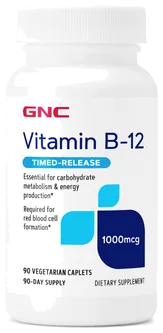
GNC Preventive Nutrition GNC Vitamin B-12 1000 mcg Review
We don’t sell supplements. We help you make decisions and get the best price.
Lowest prices
In stock, lowest price first. Checked Nov 16.
- GNC$11.99 a bottleThe store does not state the bottle size, so there is no cost per month.Buy at GNC (opens in a new tab)
Study, Trial or Testing Result Summary
Members Only115 human studies · 37 improved
1 of these 115 human studies gave the ingredient by injection, not by mouth.
Vitamin B12, the main ingredient at a full 1000 microgram dose, has weak and mixed evidence for blood pressure. In 51 dialysis patients with hard-to-control high blood pressure, 1000 micrograms of B12 plus a form of folate for 3 months lowered blood pressure more than no treatment [1]. Larger trials found no benefit. In 2,501 people with prior heart disease, about 4.7 years of B vitamins including B12 did not change blood pressure [2]. B12 drinks in 298 women [3] and a vitamin pill in 37 dialysis patients [4] also did not lower it. B12 with folic acid in 2,919 older adults did not change artery stiffness [5]. Calcium appears in a small amount per tablet. Calcium has lowered pregnancy-related high blood pressure [6] and slightly lowered blood pressure outside pregnancy by about 1 to 2 points [7][8], mostly at higher doses. Rice bran lowered blood pressure in people with metabolic syndrome [9], but trials used grams a day, such as 30 grams [10], far more than the trace amount here, and 15 grams showed no change in one study [11]. Animal and cell studies are never counted.
See all 115 studies →Hide the studies
- Across 130 trials with about 112,900 pregnant women, calcium supplements lowered the risk of preeclampsia or pregnancy-related high blood pressure (odds ratio 0.71) compared with controls.Comparative effectiveness of prophylactic strategies for preeclampsia: a network meta-analysis of randomized controlled …
- In 50 trials with about 57,800 pregnant women, calcium cut the risk of gestational high blood pressure versus placebo (odds ratio 0.55), and calcium plus a med cut it further (odds ratio 0.12).The preventive effects of different interventions on gestational hypertension: incidence and network meta-analysis.
- Across 14 trials with 54,913 people, B vitamin supplementation slightly reduced stroke risk overall, with benefit seen mainly in people with systolic blood pressure above 130, but no clear benefit tied to vitamin B12 dose or blood level.Vitamin B supplementation, homocysteine levels, and the risk of cerebrovascular disease: a meta-analysis.
- In 23 population studies with 38,950 people, higher dietary calcium was linked to slightly lower blood pressure, but the effect was small and the authors did not recommend going above the recommended intake to treat or prevent high blood pressure.Epidemiologic association between dietary calcium intake and blood pressure: a meta-analysis of published data.
- In 18 trials with 3,140 people with normal blood pressure, calcium supplements lowered systolic blood pressure by about 1.4 mmHg and diastolic by about 1.5 mmHg versus placebo or control, with larger effects in people under 35.Calcium supplementation for prevention of primary hypertension.
- In 18 trials with 3,140 people with normal blood pressure, calcium supplements lowered systolic blood pressure by about 1.4 mmHg and diastolic by about 1.5 mmHg versus placebo or control, with larger effects in people under 35.Calcium supplementation for prevention of primary hypertension.
- In 16 trials with 3,048 people with normal blood pressure, calcium supplements lowered systolic blood pressure by about 1.4 mmHg and diastolic by about 1 mmHg, with the largest effect at more than 1,500 mg a day.Calcium supplementation for prevention of primary hypertension.
- Across 40 trials with 2,492 non-pregnant people, calcium supplements averaging 1,200 mg a day lowered top blood pressure by about 1.9 mm Hg and bottom blood pressure by about 1 mm Hg, with slightly larger drops in people with low calcium intake.Blood pressure response to calcium supplementation: a meta-analysis of randomized controlled trials.
- Across 26 randomized trials with 1255 people with metabolic syndrome, rice bran lowered systolic blood pressure by about 3.3 mmHg and diastolic by about 3.1 mmHg compared with controls.Effects of Rice Bran Supplementation on Metabolic Syndrome-Related Parameters: A Systematic Review and Meta-Analysis.
- Across 22 trials with 1,231 people, calcium lowered top blood pressure by about 0.9 mm Hg but did not significantly change bottom blood pressure, and the authors said the effect was too small to support using calcium to prevent or treat high blood pressure.Dietary calcium and blood pressure: a meta-analysis of randomized clinical trials.
- In 13 trials with 485 adults with high blood pressure followed 8 to 15 weeks, calcium lowered systolic pressure by 2.5 mmHg but not diastolic pressure, and the authors judged the evidence weak because of poor trial quality.Calcium supplementation for the management of primary hypertension in adults.
- In 150 people with chronic heart failure, synthetic B vitamins including cyanocobalamin slightly raised systolic, diastolic and central venous pressure while lowering heart rate and raising heart pumping function.B Vitamins as Adjunctive Treatment for Chronic Heart Failure.
- Across 8 trials, calcium plus vitamin D did not significantly lower top blood pressure but did significantly lower bottom blood pressure compared with control, with the biggest drop in young adults.Effect of Calcium and Vitamin D Co-supplementation on Blood Pressure: A Systematic Review and Meta-Analysis.
- This review of kidney disease patients suggested folate and cobalamin may help in later disease stages, but very high B vitamin doses might worsen heart relaxation problems; blood pressure was not directly reported.Demand for Water-Soluble Vitamins in a Group of Patients with CKD versus Interventions and Supplementation-A Systematic …
- Nine good-quality trials in pregnant women found that at least 1 g of calcium a day modestly reduced high blood pressure (risk ratio 0.80), with the largest benefit in women at high risk or with low calcium intake.Calcium supplementation during pregnancy for preventing hypertensive disorders and related problems.
- Ten good-quality trials in pregnant women found that at least 1 g of calcium a day modestly reduced high blood pressure (risk ratio 0.81), with the largest benefit in women at high risk or with low calcium intake.Calcium supplementation during pregnancy for preventing hypertensive disorders and related problems.
- Eleven good-quality trials in pregnant women found that at least 1 g of calcium a day modestly reduced high blood pressure (risk ratio 0.81), with the largest benefit in women at high risk or with low calcium intake.Calcium supplementation during pregnancy for preventing hypertensive disorders and related problems.
- A review of calcium-rich mineral water noted that some studies showed lower blood pressure, but gave no numbers and said more research is needed.Exploring the Potential Benefits of Natural Calcium-Rich Mineral Waters for Health and Wellness: A Systematic Review.
- A review of 34 studies in pregnant women found calcium supplements were linked to less and milder gestational high blood pressure and preeclampsia, with the strongest benefit at 1.5 to 2 grams a day.Calcium Supplementation in Pregnancy: A Systematic Review of Clinical Studies.
- A review of 15 small, short studies of oat fibre, rice bran and unripe banana flour found rice bran consistently improved blood lipids, but blood pressure effects were not clearly reported for rice bran.Clinical and mechanistic evidence on metabolic effects of oat β-glucan, rice bran, and unripe banana flour: a systematic…
- In 4589 healthy first-time pregnant women, 2 g of calcium daily from mid-pregnancy to delivery did not reduce preeclampsia (6.9% vs 7.3% with placebo) or change average blood pressure.Trial of calcium to prevent preeclampsia.
- In 2,919 older adults with high homocysteine, two years of vitamin B12 plus folic acid lowered homocysteine but did not change artery stiffness or carotid artery wall thickness compared with placebo.Effects of 2-year vitamin B12 and folic acid supplementation in hyperhomocysteinemic elderly on arterial stiffness and c…
- In 2,501 people with prior cardiovascular disease, about 4.7 years of daily B vitamins including 20 mcg vitamin B12 did not change blood pressure compared with placebo.Effect of B-vitamins and n-3 PUFA supplementation for 5 years on blood pressure in patients with CVD.
- In 1194 first-time pregnant women, 2 g of calcium daily from week 20 of pregnancy lowered high blood pressure disorders of pregnancy (9.8% vs 14.8% with placebo).Calcium supplementation to prevent hypertensive disorders of pregnancy.
- In 791 non-pregnant women with previous pre-eclampsia, 500 mg of calcium a day for 12 weeks lowered top blood pressure by 3.1 mm Hg more than placebo, while the bottom blood pressure difference was not significant.The effect of calcium supplementation on blood pressure in non-pregnant women with previous pre-eclampsia: A randomized …
- In 698 healthy adults with high-normal blood pressure, 1 g of calcium daily for 6 months did not significantly change blood pressure compared with placebo, though white women might have benefited.Lack of blood pressure effect with calcium and magnesium supplementation in adults with high-normal blood pressure. Resu…
- In 524 healthy first-time pregnant women, 2 g of calcium daily lowered preeclampsia (4.0% vs 12.0% with placebo) and blood pressure at the end of the study, though this paper was later retracted.Calcium supplementation for the prevention of pre-eclampsia.
- In 506 people after gastric bypass surgery, remission of high blood pressure over 5 years did not differ between the two bypass limb lengths, and the longer limb needed more vitamin B12 supplementation; this was not a test of B12 for blood pressure.Impact of Biliopancreatic Limb Length (70 cm vs 120 cm), with Constant 150 cm Alimentary Limb, on Long-Term Weight Loss,…
- In 298 Gambian women, 12 weeks of a drink powder with 5.2 mcg vitamin B12 or a multivitamin lowered homocysteine but had no effect on blood pressure or pulse compared with no intervention.A novel nutritional supplement to reduce plasma homocysteine in nonpregnant women: A randomised controlled trial in The …
- In 260 pregnant teenagers with low calcium intake, 2000 mg of calcium daily from 20 weeks of pregnancy until delivery cut preeclampsia to 3.2% versus 15.5% on placebo and lowered systolic blood pressure by 9.1 and diastolic by 6.0 mmHg.Calcium supplementation and the risk of preeclampsia in Ecuadorian pregnant teenagers.
- In 201 first-time pregnant women, 2 g of calcium daily from 20 weeks until delivery lowered pregnancy-induced high blood pressure to 8.24% versus 29.03% on placebo.Calcium supplementation and prevention of pregnancy induced hypertension.
- In 180 middle-aged and older men, 18 months of milk fortified with 1,000 mg calcium and 800 IU vitamin D3 daily did not lower blood pressure or blood lipids compared with control.Effects of a multi-modal resistance exercise program and calcium-vitamin D3 fortified milk on blood pressure and blood l…
- In 130 women with pregnancy-related high blood pressure, adding low-dose a med to labetalol plus vitamin E and calcium lowered blood pressure more than without a med, but the effect of calcium itself was not tested.Read the study on PubMed (36933245) →
- In 125 adults with mild untreated high blood pressure, 6 months of calcium (1000 mg daily), alone or combined with potassium or magnesium, did not lower blood pressure more than placebo.Combinations of potassium, calcium, and magnesium supplements in hypertension.
- In 116 African American adolescents, 1.5 g of calcium daily for 8 weeks lowered diastolic blood pressure by about 1.9 mm Hg, mostly in those with low dietary calcium, with no effect on systolic pressure.Dietary calcium, calcium supplementation, and blood pressure in African American adolescents.
- In 104 people with mild high blood pressure and high homocysteine, two months of a combined supplement with 5 mcg vitamin B12 lowered homocysteine more than high-dose folic acid, but blood pressure was not reported as an outcome.Nutraceutical approaches to homocysteine lowering in hypertensive subjects at low cardiovascular risk: a multicenter, ra…
- In 101 fifth-grade children, 600 mg of calcium daily for 12 weeks lowered systolic blood pressure by 1.8 mm Hg versus placebo, though this was not statistically significant overall; the effect was larger in children with low calcium intake and diastolic pressure barely changed.Effect of calcium supplementation on blood pressure in children.
- In 100 adults with high-normal blood pressure or mild hypertension, a rice bran supplement for 12 weeks gave lower systolic blood pressure than placebo (p = 0.0497), with no serious side effects.Rice Bran Supplement Containing A Functional Substance, the Novel Peptide Leu-Arg-Ala, has Anti-Hypertensive Effects: A …
- In a triple-blind randomized trial of 98 postmenopausal women with hypertension, 8 weeks of calcium and vitamin D supplements raised systolic and diastolic blood pressure measured over 24 hours, with the largest rise in women taking calcium channel blockers.The effect of calcium and vitamin D supplements on blood pressure in postmenopausal women: myth or reality?
- In 95 people with mild high blood pressure or normal pressure, calcium carbonate at 10 or 20 mmol daily did not lower blood pressure compared with placebo, and the few apparent responders did not respond again on rechallenge.Effect of calcium carbonate on blood pressure in normotensive and hypertensive people.
- In 94 free-living adults who completed the study, a high-calcium diet rich in low-fat dairy foods for 4 weeks raised systolic blood pressure by about 3 mm Hg compared with a moderate-sodium DASH-type diet, while diastolic pressure did not change significantly.Blood pressure response to dietary modifications in free-living individuals.
- In 80 resistance-trained men, an 8-week multi-ingredient pre-workout supplement containing 70 mg of vitamin B12 did not change resting blood pressure or heart rate compared with placebo.Effects of ingesting a pre-workout dietary supplement with and without synephrine for 8 weeks on training adaptations in…
- In a randomized, placebo-controlled crossover trial of 70 adults (43 with hypertension, 27 without), 1000 mg of elemental calcium daily for 8 weeks did not significantly change blood lipids in the hypertensive group, and the abstract reports no blood pressure result; normotensive adults with mildly high cholesterol had a small drop in total cholesterol.Plasma lipids and hypertension: response to calcium supplementation.
- In 61 overweight or obese adults with high cholesterol, 30 g a day of defatted rice bran for 12 weeks lowered systolic blood pressure from 126.2 to 120.6 mmHg and diastolic from 80.9 to 77.2 mmHg.Effect of defatted rice bran supplementation on metabolic parameters and inflammatory status in overweight/obese adults …
- In a randomised crossover trial of 58 adults with mild untreated hypertension, six weeks of a vegetarian diet lowered systolic blood pressure by about 5 mm Hg, while vitamin B12 intake decreased.Vegetarian diet in mild hypertension: a randomised controlled trial.
- In 57 young adults, 1 g of calcium daily for 22 weeks lowered diastolic blood pressure by 5.6% in women and 9% in men compared with placebo.Reduction of blood pressure with calcium supplementation in young adults.
- In 51 dialysis patients with hard-to-control high blood pressure, taking 1000 mcg of methylcobalamin plus 800 mcg of L-methylfolate daily for 3 months lowered blood pressure and homocysteine more than no treatment.Efficacy of L-methylfolate and methylcobalamin in treating resistant hypertension associated with elevated serum homocys…
- In 51 adults with mild essential hypertension, 1 gram of daily oral calcium for 8 weeks lowered systolic blood pressure by up to 6 mm Hg and diastolic by up to 3 mm Hg compared with placebo.[Effect of an oral calcium supplement in the treatment of slight-to- moderate essential arterial hypertension].
- In 51 obese Japanese men, a rice bran extract for 12 weeks lowered LDL cholesterol more than placebo, but blood pressure was not reported as improved.Rice bran extract containing acylated steryl glucoside fraction decreases elevated blood LDL cholesterol level in obese …
- In 49 women with chronic high blood pressure, taking 2 g of calcium plus low-dose a med from mid-pregnancy until delivery did not significantly reduce preeclampsia compared with placebo.Read the study on PubMed (24728212) →
- In 47 adults with HIV, rice bran arabinoxylan for 6 months lowered systolic blood pressure while it rose in the placebo group.Cardiovascular, endothelial function, and immune markers in response to treatment with a polysaccharide in HIV+ adults i…
- In 46 normotensive and hypertensive adults, 1.5 g per day of calcium carbonate for 8 weeks did not change blood pressure overall versus placebo, though Black and salt-sensitive subjects showed a significant drop.The blood pressure effects of calcium supplementation in humans of known sodium responsiveness.
- In 40 young men, 8 weeks of a vitamin capsule containing 0.8 mg vitamin B12 lowered homocysteine but did not change endothelium-dependent blood vessel dilation compared with placebo.Hyperhomocysteinemia and endothelial function in young subjects: effects of vitamin supplementation.
- In 40 postmenopausal women, a single 1 g calcium citrate dose made the systolic blood pressure drop after breakfast smaller than placebo, by 6 to 9 points over 4 to 6 hours.Acute effects of calcium supplements on blood pressure: randomised, crossover trial in postmenopausal women.
- In 37 dialysis patients, a daily antioxidant pill containing 250 mcg of vitamin B12 with other vitamins for 8 weeks did not lower blood pressure, inflammation, or oxidative stress compared with placebo.Antioxidant therapy does not ameliorate oxidative stress and inflammation in patients with end-stage renal disease.
- In 37 people with heart risk factors, an 8-week plant-based diet fell short on vitamin B12 intake, and the analysis did not link vitamin B12 to blood pressure.Does a Plant-Based Diet Stand Out for Its Favorable Composition for Heart Health? Dietary Intake Data from a Randomized …
- In 36 kidney transplant recipients with high homocysteine, taking 1000 mcg vitamin B12 daily with folic acid and vitamin B6 for 6 months, versus placebo, lowered homocysteine and improved blood vessel widening.Treatment of hyperhomocysteinemia and endothelial dysfunction in renal transplant recipients with B vitamins in the Chin…
- In 32 healthy men given 2 grams of calcium a day for 16 weeks, standing systolic blood pressure fell more than with placebo, but lying blood pressure did not differ between groups.Dietary calcium, blood pressure and cell membrane cation transport systems in males.
- In 30 high-risk pregnant women, 2 grams of daily calcium from 28 to 32 weeks of pregnancy reduced pre-eclampsia cases from 7 to 1 compared with placebo, but did not meaningfully change pregnancy-related high blood pressure, which was only delayed by about 3 weeks.Supplementary calcium in prevention of pre-eclampsia.
- In 28 healthy postmenopausal women, one year of 2,000 mg daily calcium supplements did not change blood pressure compared with placebo.Dietary calcium intake and blood pressure in normotensive subjects.
- In 25 healthy, active young adults, a single dose of a pre-workout supplement containing vitamin B12 (as methylcobalamin) produced no clinically significant change in blood pressure or heart rate compared with placebo.Effects of acute ingestion of a pre-workout dietary supplement with and without p-synephrine on resting energy expenditu…
- In 24 overweight adults on a calorie-restricted diet for 8 weeks, systolic blood pressure fell in both rice bran groups, but the two groups did not differ and there was no non-bran comparison.Pigmented rice bran and plant sterol combination reduces serum lipids in overweight and obese adults.
- In 20 adults with untreated mild to moderate high blood pressure, 2 grams of daily calcium for 12 weeks did not lower blood pressure compared with placebo.Effect of oral calcium supplementation on blood pressure in patients with previously untreated hypertension: a randomise…
- In an 18-person double-blind crossover trial, 1600 mg of elemental calcium daily for one month did not lower blood pressure in adults with mild to moderate untreated hypertension compared with placebo.Does oral calcium supplementation lower high blood pressure? A double blind study.
- In a crossover placebo-controlled trial of 18 people with mild essential hypertension, 1 g daily of oral calcium for 15 weeks lowered standing systolic pressure compared with placebo, but no other blood pressure change was significant, and the authors concluded it was not useful for most people with mild hypertension.Controlled trial of long-term oral calcium supplementation in essential hypertension.
- In 16 obese women who each ate three high-fat test meals, 500 mg of supplemental calcium or 547 mg of dietary calcium did not change blood pressure or small blood vessel function compared with a low-calcium meal.No difference in acute effects of supplemental v. dietary calcium on blood pressure and microvascular function in obese …
- In 400 pregnant women, 375 mg of calcium plus 1,200 IU of vitamin D daily from 20-24 weeks lowered blood pressure in women without toxaemia, but toxaemia rates (6% versus 9%) did not differ significantly.Effect of calcium and vitamin D supplementation on toxaemia of pregnancy.
- In 193 kidney transplant recipients, 89 with high homocysteine took folic acid plus vitamin B12 for one year and their homocysteine fell, but the study did not report blood pressure results and found no group differences in hypertension.Treatment of hyperhomocysteinemia after renal transplantation.
- In a 60-woman trial (retracted publication), adding calcium carbonate with vitamin D3 to routine prenatal care was linked to lower blood pressure at delivery and fewer hypertensive disorders than routine care alone.The Efficacy of Calcium Carbonate-Vitamin D3 in Pregnant Women for the Prevention of Hypertensive Disorders in Pregnancy…
- In 59 healthy adults on a vegetarian diet, lower blood pressure went along with a pattern of more fibre, vitamins and minerals and less protein and vitamin B12, so the effect cannot be credited to vitamin B12.Nutrient intake, blood pressure, serum and urinary prostaglandins and serum thromboxane B2 in a controlled trial with a …
- In 50 free-living volunteers, 1,150 mg of daily dietary calcium from dairy for 6 months lowered systolic blood pressure compared with an orange juice control, though the result was not strongly significant and diastolic blood pressure did not change.Dietary calcium. A method of lowering blood pressure.
- In 38 hypertensive and normotensive adults who gave up caffeine for two weeks, calcium handling changed, but the abstract does not report any blood pressure outcome.Interactions between dietary calcium and caffeine consumption on calcium metabolism in hypertensive humans.
- In 24 men with mildly high cholesterol, 11.8 g of fiber from rice bran daily for 4 weeks did not change blood pressure.Comparative effects of three cereal brans on plasma lipids, blood pressure, and glucose metabolism in mildly hypercholes…
- In 8 older adults with vitamin B12 deficiency, replacing vitamin B12 for 6 months reduced the blood pressure drop on standing up, compared with 8 matched people who had a different cause of the same problem.Orthostatic tolerance in older patients with vitamin B12 deficiency before and after vitamin B12 replacement.
- In 144 people with advanced ALS receiving 50 mg methylcobalamin injections twice weekly for up to 52 weeks, hypertension was reported as a rare adverse event in 0.7% of patients, and no blood pressure benefit was reported.Clinical safety of ultra-high-dose methylcobalamin in patients with amyotrophic lateral sclerosis: Open-label extension …
- In 50 adults with metabolic syndrome, 15 grams of brown rice bran powder daily for 8 weeks added to a standard diet lowered LDL and total cholesterol more than the standard diet alone, but blood pressure did not change.Supplementing the standard diet with brown rice bran powder might effectively improve the metabolic syndrome characteris…
- In a large US national survey of 33,640 people, vitamin B12 intake had little correlation with coronary heart disease, while vitamin E and B6 showed protective associations.Association between Vitamin E, Vitamin B6, and Vitamin B12 with coronary heart disease.
- In a large US survey of adults, calcium intake alone was not linked to hypertension, but low sodium with high calcium, magnesium and potassium intake, and calcium at dietary goals in men, were linked to lower odds of hypertension.Association of dietary calcium, magnesium, sodium, and potassium intake and hypertension: a study on an 8-year dietary i…
- In over 6,000 Chinese adults eating mostly plant-based diets, low dietary calcium intake was not consistently linked to blood pressure or hypertension, though higher intake was linked to lower risk of prehypertension in women.Association of Habitually Low Intake of Dietary Calcium with Blood Pressure and Hypertension in a Population with Predom…
- In 5218 women with prior heart or blood vessel disease, higher systolic blood pressure predicted more repeat heart events over about 6.5 years; this analysis did not test vitamin B12 itself.Blood pressure and risk of secondary cardiovascular events in women: the Women's Antioxidant Cardiovascular Study (WACS)…
- A 1998 national food survey in Germany found East Germans had higher vitamin B12 intake than West Germans, and East German men had higher mean systolic blood pressure than West German men.Food and nutrient intake in East and West Germany, 8 years after the reunification--The German Nutrition Survey 1998.
- In a study of 2711 European adolescents, thin teens had lower systolic blood pressure than teens of normal weight, and their vitamin B12 levels were higher.Clinical and physical characteristics of thinness in adolescents: the HELENA study.
- In a cross-sectional study of 2,352 adults, higher dietary calcium was linked to lower systolic blood pressure and less hypertension only in people with low vitamin D levels; the link was not seen in people with sufficient vitamin D.Interaction between Vitamin D Status and Calcium Intake in Association with Blood Pressure and Hypertension.
- In 1,928 Japanese men aged 40 to 69, higher dietary calcium intake was linked to lower systolic blood pressure in each population studied, while the link to diastolic pressure was not statistically significant.Calcium intake and blood pressure in seven Japanese populations.
- In a cross-sectional study of 1,398 adults in rural India, 30.7% had vitamin B12 deficiency, and higher homocysteine, which fell as B12 rose, was linked to hypertension, though folate showed a paradoxical positive link to blood pressure.Micronutrient Deficiencies and Association With Hypertension: The Role of Folate, Vitamin B12, and Homocysteine.
- In 1098 older adults, dietary calcium was linked to better bone density, and this study did not report a calcium link to blood pressure.Dietary intake, blood pressure and osteoporosis.
- In a random sample of 976 people in Cape Peninsula, hypertensive adults had lower calcium intakes than normotensive adults, but this cross-sectional survey did not test calcium supplementation and so cannot show that calcium lowers blood pressure.Hypertension in the coloured population of the Cape Peninsula.
- Among adolescent girls followed for up to five years, higher dietary calcium and dairy intake, especially cheese, were linked to lower blood pressure.Dairy food consumption, blood pressure and retinal microcirculation in adolescents.
- In 788 older adults, a 10% rise in diastolic blood pressure was linked to about 2.7% lower levels of active vitamin B12 transport protein, while vitamin B complex supplement users had about 20% higher levels than non-users.Correlates of serum holo-Transcobalamin in the elderly general population.
- In 662 children with high cholesterol, higher dietary calcium intake was linked to lower blood pressure over 3 years, but this observational study cannot prove cause.Nutrient intake and blood pressure in the Dietary Intervention Study in Children.
- In 619 Japanese adults aged 40 and older, higher dietary calcium was linked to lower odds of hypertension only in those with vitamin D levels above 20 ng/mL, not in those with lower levels.Dietary Calcium Intake and Hypertension: Importance of Serum Concentrations of 25-Hydroxyvitamin D.
- In 500 children with obesity, vitamin B12 levels were normal and not linked to obesity severity; children taking a med had slightly lower levels, and hypertension was present in 14.8%.Read the study on PubMed (41848903) →
- In 417 Indian adolescents, blood pressure was weakly lower with higher dietary calcium, while body fat was strongly linked to higher blood pressure.Association of Dietary Calcium Intake and Body Fat with Hypertension in Indian Adolescents.
- In a cross-sectional study of 347 Brazilian children aged 8 and 9, higher dietary calcium intake was linked to lower systolic and diastolic blood pressure, though most children ate less calcium than recommended.Dietary calcium intake is inversely associated with blood pressure in Brazilian children.
- In 268 older adults with low bone density taking 500 mg of calcium citrate daily for up to one year, systolic blood pressure fell by about 3 mmHg on average, though the study had no control group.Evaluating adherence, tolerability and safety of oral calcium citrate in elderly osteopenic subjects: a real-life non-in…
- In a retrospective case series of 195 people with heart attack but non-blocked coronary arteries, vitamin B12 levels were significantly lower than in controls with non-occlusive coronary artery disease.Identification of risk factors in myocardial infarction with non-obstructive coronary arteries.
- In a cross-sectional study of 176 adults over 50, those who followed a long Orthodox Christian fasting diet had lower blood pressure than non-fasters, though they also ate less vitamin B12 from food.Does Religious Fasting Have a Protective Role against Metabolic Syndrome in Individuals Aged >50 Years?
- A descriptive survey of 167 free-living elderly Greeks found high blood pressure to be common and calcium intake above half of the US recommended allowance, but it did not test any calcium supplement or report a blood pressure effect of calcium.Nutrition status of the elderly in Anogia, Crete, Greece.
- In a retrospective study of 80 people with persistent dizziness and 81 healthy controls, high blood pressure was more common in the dizziness group; vitamin B12 levels were measured but no B12 result is reported in the abstract.Potential risk factors of persistent postural-perceptual dizziness: a pilot study.
- In 125 older Chinese Americans in New York City, many did not get enough vitamin B12 from their diet, and diet and supplement use were not linked to better heart health or lower blood pressure.Diet, physical activity, and cardiovascular disease risk factors among older Chinese Americans living in New York City.
- In 109 people with lymphatic filariasis in Ghana, blood pressure was among the strongest predictors of disease progression, and 81.7% had inadequate vitamin B12 intake.Nutritional predictors of lymphatic filariasis progression: Insights from a machine learning approach.
- In 98 pregnant women with chronic hypertension, adherence to calcium carbonate was low (59% non-adherent), and preeclampsia rates did not differ between adherent and non-adherent women.Read the study on PubMed (41341951) →
- In 90 adults with phenylketonuria, 7 had hypertension and 4 had vitamin B12 deficiency, and the authors found no differences in most vascular risk factors.Cardiometabolic and Nutritional Morbidities of a Large, Adult, PKU Cohort from Andalusia.
- In 64 newly diagnosed sleep apnea patients, quality of life correlated with diastolic blood pressure, and morning-type patients had higher vitamin B12 intake, but no blood pressure improvement was studied.Quality of life, depression and dietary intake in Obstructive Sleep Apnea patients.
- In 31 women with restless legs syndrome and 31 matched women, vitamin B12 was lower in the restless legs group, while the small difference in diastolic blood pressure was not statistically significant.Serum endocan levels in women with restless legs syndrome.
- In 50 postmenopausal women taking thyroid hormone tablets, taking calcium carbonate within 2 hours of the tablet raised thyroid-stimulating hormone, blood pressure, cholesterol and fasting glucose over about 2.3 years; separating the calcium by 6 to 8 hours was associated with lower levels.L-thyroxine malabsorption due to calcium carbonate impairs blood pressure, total cholesterolemia, and fasting glycemia.
- In 49 hypertensive women, calcium intake and salivary calcium did not differ across blood sugar groups, though salivary calcium correlated with systolic blood pressure in the prediabetes and diabetes groups.Salivary Calcium Level and Its Correlation with Salivary pH, Salivary Volume, and Calcium Intake in Hypertensive Female …
- In a pilot study of 40 senior volunteers in Taiwan, mean blood pressure and other vascular risk markers were within normal ranges, and vegetarians had lower vitamin B12 levels than nonvegetarians.Vascular burden and brain aging in a senior volunteer cohort: A pilot study.
- In a retrospective study of 35 adults in shock, a single hydroxocobalamin dose did not change blood pressure over the following 24 hours.Effects of a single bolus of hydroxocobalamin on hemodynamics in vasodilatory shock.
- Twenty-one people with vitamin B12 deficiency showed a blunted blood pressure and heart response when tilted upright compared with 21 healthy controls, suggesting B12 deficiency can cause orthostatic blood pressure dysfunction.Autonomic dysfunction and hemodynamics in vitamin B12 deficiency.
- In 17 children with a genetic vitamin B12 processing disorder and high lung artery pressure, the pressure returned to normal within 18 months with metabolic and lung-targeted drug treatment.Reversible Pulmonary Hypertension in CblC Deficiency (MMACHC c.80 A>G): long-term outcomes of metabolic and PH-targeted …
- In 7 patients with dangerously low blood pressure after heart surgery that did not respond to standard drugs, high-dose hydroxocobalamin (a form of vitamin B12) raised mean arterial blood pressure or reduced the need for vasopressors, with no deaths or drug-related side effects.High-Dose Hydroxocobalamin for Refractory Vasoplegia Post Cardiac Surgery.
- In 49 kidney patients treated with erythropoietin, vitamin B12 levels fell in 22% and blood pressure rose in half, but the study did not test vitamin B12 as a treatment for blood pressure.Subcutaneous erythropoietin in the treatment of renal anaemia.
- A review of 19 calcium supplement trials found most showed no significant blood pressure effect, and pooled estimates suggested only a small reduction of about 1.8 mmHg in systolic pressure, so the authors called the evidence suggestive but not conclusive.Calcium and blood pressure. An epidemiologic perspective.
- In a human test, people who ate refined rice bran for 8 weeks had lower waistline, blood pressure, fasting blood sugar, blood sugar control marker and triglycerides, though the abstract does not report group size or a placebo comparison.A clinical empirical study on the role of refined rice bran in the prevention and improvement of metabolic syndrome.
Review Totals and Summary
Members Only16,000 reviews · 95% positive
Extensive customer reviews and qualitative feedback are currently being aggregated for this product. Check back soon for a detailed sentiment analysis.
Biohacker Summary
Members Only7 of 10 recommend it
Vitamin B12 and calcium are both main ingredients here, and the panel leans toward recommending them, with calcium getting more mixed advice. For vitamin B12, four of the ten recommend it, mainly for brain function, mood, nerve protection and fixing a deficiency, and they say low levels bring fatigue and weakness; one suggests a liposomal and micellar methylcobalamin form, another a sublingual form or injections for older people, and one advises getting levels tested and aiming for around 500. One panelist warns against taking B12 too close to bedtime, and several name sardines, liver and other animal foods as good sources. For calcium, four of the ten recommend it for bone strength, with one giving 1,000 to 1,200 milligrams a day as calcium carbonate or calcium citrate, and others pointing to dairy, sardines, kale and leafy greens as food sources. Cautions on calcium come from one who warns against calcium supplements over heart attack risk and another who says it should be paired with vitamins D, A and K2 and magnesium at a two to one ratio to keep it out of soft tissues. Rice bran is a smaller ingredient in this product, and only one panelist mentioned it, as a food he eats for longevity.
See all 10 biohackers →Hide the biohackers
Dr. Eric Berg · Vitamin B12 · neutral
- Vitamin B12 is described as important for making DNA, red blood cells, and the myelin sheath that protects the nerves. Grass-finished beef liver, certain seafood, and other animal products such as grass-finished beef are named as some of the best sources.
- Mentions that one can of sardines provides 348% of the daily Vitamin B12.
- States that one can of sardines contains 382 mg of calcium.
- Dr. Berg states that when nutrients like vitamin B12 are too low, fatigue and weakness can follow.
- Warns against calcium supplements, citing studies that link them to a higher risk of heart attack, especially in postmenopausal women, and suggests getting calcium from dairy instead.
- Recommends focusing on calcium to support stronger bones if a neck hump is associated with osteoporosis.
- Mentions calcium as not being the most important mineral.
- Recommends Hydroxocobalamin (vitamin B12) for shingles pain relief.
- Warns against calcium carbonate, calling it limestone and the worst source of calcium, stating it takes 12 steps to be converted in the body and is like eating rocks.
- Warns that bone loss cannot be fixed with just calcium, as bone is primarily collagen with other essential minerals.
- Dr. Berg includes calcium carbonate among the synthetic supplements to avoid.
- Recommends taking the natural form of vitamin B12, methylcobalamin, to support nerve regeneration, myelin production, and nerve growth factors.
- Notes that Vitamin B12 is intimately involved in the nervous system and may be behind sciatica and carpal tunnel syndrome.
- Warns against calcium carbonate, also known as limestone, stating that while it lowered hip fractures in a study, it also increased kidney stones and is not good for arteries, requiring the body to work hard to use it.
Thomas DeLauer · Vitamin B12 · recommends
- Recommends Vitamin B12 for mental health and mood, explaining its role in myelination and neurotransmitter production. They specifically recommend a liposomal and micellar form of methylcobalamin B12 for better absorption and to avoid toxicity.
- Notes that milk contains 120mg of calcium, while sardines contain 351mg, highlighting a 3x difference.
- Recommends getting calcium, along with vitamin D, zinc, and magnesium, from foods like sardines, as they are important for inflammatory pathways in the gut.
- Mentions that a single serving of sardines provides vitamin B12 at something like three to four times the daily needs.
- Explains that eating sardines with their soft bones provides a serious hit of calcium, which is a perfect combination for bones and may contribute to satiety.
- Recommends taking methylcobalamin as a methylated form of B vitamin for mitochondrial function.
- Mentions that magnesium and calcium should not be taken together as they cancel each other out.
- Tries to get multivitamins without calcium or with a low amount, as he believes supplemental calcium impacts the absorption of other vitamins and minerals and is not as beneficial as hyped. He cautions against it for most people due to the risk of coronary artery calcification.
- Recommends getting calcium from dairy sources like milk, yogurt, kefir, and cheese in the morning to support neurotransmitter synchronization crucial for deep and REM sleep, noting that low dietary calcium is linked to insomnia.
- Warns that calcium competes with magnesium for the same absorption channels, advising to separate magnesium intake from calcium supplements or dairy by at least an hour or two.
- Recommends providing the body with adequate dietary calcium, not a calcium supplement, to ensure a clean, strong spark for efficient insulin release.
- Warns that calcium and magnesium should not be taken together as they cancel each other out, though some products use delayed absorption to mitigate this.
- Warns that most people consume too much calcium relative to magnesium, which can disrupt the balance needed for proper bodily function, comparing it to an electrical circuit.
- Advises against taking vitamin B12 if one's diet already provides enough, suggesting a B complex or liver capsule instead for B vitamins.
Siim Land · Calcium · neutral
- Lists dairy and sardines as sources of Calcium.
- Lists rice bran as a food high in spermidine, providing 5 mg per 100g, which he consumes for longevity.
- Notes that Boron reduces calcium/magnesium loss.
- Created Microvitamin, a supplement that bundled all the supplements he was taking, to help fund his a med trial.
- States that vitamin B12 deficiency is the most common reason for premature graying of hair and recommends fixing B12 status if it is deficient, as it gives a greater likelihood of reversing gray hair.
- Recommends a high calcium intake for bone health.
- Places calcium supplementation in the 'bad tier' due to its association with increased cardiovascular events, recommending dairy or bones as easier ways to get calcium, though it can be useful for postmenopausal women with low bone density.
- Mentions that eating enough calcium matters for bone density, but states that it alone won't transform bone density.
- Warns that calcium is linked to a higher risk of heart disease, though people with low calcium status and intake can take it safely.
- Warns that calcium supplements increase the risk of heart disease by raising blood calcium levels too high, leading to hypercalcemia and more calcium being stored in the arteries, and also increase the risk of arrhythmias.
- Warns against calcium supplementation for most people due to its association with increased cardiovascular events, but notes it can be useful for postmenopausal women with low bone density who don't consume dairy.
- Discusses Calcium as a supplement.
- Recommends consuming calcium from dairy, tofu, leafy greens, and bones, as it is a key nutrient required for ATP synthase in mitochondrial energy production.
- Takes 1 gram of Vitamin B12 from DoNotAge in the morning for longevity.
Dr. Mark Hyman · Calcium · recommends
- Notes that calcium is in bones but is also essential for nerves, muscles, and the heart, and low levels can affect muscle function and heart rhythm.
- States that vitamin B12 is a nutritional deficiency that impacts mental health.
- Recommends vitamin B12 with vitamin B6 and folate as supplements with strong evidence for PMS.
- States that green leafy vegetables are great sources of calcium.
- Mentions that repletion of vitamin B12 can help safely withdraw someone from meds and that simple vitamin B12 deficiencies are important to address in a depression workup.
- Lists Vitamin B12 as important for nerve health and energy.
- Notes that calcium needs are lower than advertised and that stress, soda, and excess sugar can drive calcium loss.
- Does not prescribe calcium supplements at all, teaching people to get it from whole foods instead, because calcium supplements don't work for building bones or preventing fractures, and it's bone quality, not density, that matters.
- Warns that acid blockers inhibit calcium absorption.
- Lists calcium as another important nutrient that people can be tested for and measured.
- States that high doses of calcium supplementation in the elderly were not really impacting bone density, as osteopenic patients still became osteoporotic.
- Mentions vitamin B12 as a core nutrient required for methylation, noting that deficiencies can lead to various health issues.
- Recommends supplementing with Vitamin B12 for hair follicle health and growth, especially for vegans, as many people are deficient.
- Recommends checking vitamin B12 levels as a first step before taking any supplements.
Ben Greenfield · Vitamin B12 · recommends
- Recommends getting vitamin B12 tested and supplementing if deficient, as B12 deficiency can cause damage to the myelin coating around nerves, including cochlear nerves, and improve tinnitus severity scores.
- Is considering whether he needs a calcium supplement because lead can displace calcium in bones, affecting bone strength.
- Mentions calcium as a common deficiency.
- Recommends adequate intake of calcium for bone strength.
- Is using calcium chloride mixed with PRP before injecting for the P-shot.
- Advises people to stop taking calcium supplements as part of the Root Cause Protocol.
- Recommends rice bran as a rich source of B vitamins.
- Warns that in high doses, calcium without the right cofactors can raise cardiovascular risk by contributing to arterial calcification instead of bone strength, and may increase the risk of osteoporosis.
- Explains that 10X separates calcium and zinc into different micro beads, releasing them at different rates and locations in the digestive tract to prevent competition and optimize absorption.
- He recommends Vitamin B12, especially for kids on a vegan or vegetarian diet, as it is essential for nervous system development.
- Covers calcium as a key supplement for kids.
- Mentions that blood testing for an energy crisis would include nutritional things like a vitamin B12 level.
- Ben Greenfield consumes vitamin B12 as part of the Update Energy Drink.
- Warns of calcium deficiency on a carnivore diet, as there is not an appreciable amount in meat, and recommends eating fish with bones or taking a calcium supplement or bone mineral matrix.
Dave Asprey · Vitamin B12 · recommends
- States that Vitamin B12 is extremely important for every kind of brain function and recommends ensuring B12 levels are optimal, around 500, not just barely above normal.
- Notes that when energy intake is too low for training demand, nutrient intake often falls short, especially for calcium, which is associated with reduced bone health.
- Explains that calcium provides the raw material for bones, but it isn't a standalone input and needs a whole system to be effective.
- Notes that people take calcium for their bones.
- Warns that taking calcium without vitamin D, A, and K2 can lead to calcium going into tissues, causing bone spurs and other issues, and recommends a two-to-one ratio of calcium to magnesium.
- Recommends taking calcium citrate during a high oxalate meal to bind the oxalate in the gut.
- Notes that people often take calcium for bone health.
- Recommends taking vitamin B12 if one has a deficiency.
- Believes calcium supplements are overrated, as most people need more vitamin K2 and vitamin D instead.
- Advises taking iron and calcium separately because they will bind together.
- Takes extra calcium to help deal with the burden when eating chocolate or anything with higher levels of oxalates.
- Dave Asprey notes that it's almost impossible to get vitamin B12 in a vegan diet, and it's primarily found in animal meat.
- Discusses calcium citrate as a counter to oxalate crystals, specifically when consumed through dairy, but questions if it's the primary form of calcium in dairy.
- Clarifies that Vitamin B12 is completely different from Vitamin B3 and is involved in different pathways, so there is no overlap with NAD pathways.
Dr. Rhonda Patrick · Calcium · neutral
- Mentions that kale delivers calcium, a micronutrient many diets fall short on.
- Notes additional gaps in calcium.
- Warns that Vitamin B12 enhances light's melatonin-suppressing effects and should be avoided too close to bedtime.
- Reports that alcohol use disorder is associated with a 20-50% greater prevalence of Calcium deficiency.
- Notes that a med can cause vitamin B12 deficiency, especially as absorption decreases with age, and suggests a sublingual form or B12 injections for older individuals.
- Discusses the origin of Vitamin B12, suggesting it's a microorganism that propagates in the soil and that animals get it from eating dirt, which is why it's less available in modern, sanitized plant foods.
- Around 38% doesn't meet the requirement for calcium.
- Takes a calcium-magnesium pill because he believes people tend to be short of both and that the body cares about the ratio of these similar molecules.
- Describes a study where female mice fed a diet high in B vitamins, folic acid, and vitamin B12 three weeks before pregnancy had offspring that no longer had yellow fur and were not predisposed to obesity and cancer.
- States that 1,000 milligrams of calcium per day is the recommended intake for bone density, and supplementation is an option if this requirement is not met.
- Takes a calcium, vitamin K2, and vitamin D combination supplement in the morning, providing about 600 mg of calcium and another 1,000 IUs of vitamin D.
- Dr. Rhonda Patrick discusses calcium needs.
- Dr. Rhonda Patrick explores vitamin B12 and autism risk.
- She takes methyl B12 as part of her Thorne multivitamin, which helps keep her homocysteine levels below 9 micromoles per liter.
Andrew Huberman · Vitamin B12 · neutral
- States that a deficiency in vitamin B12 can be terrible and lead to chronic fatigue-like syndromes, as many parts of mitochondria require B vitamins.
- Recommends taking methyl B12 as part of methylated B vitamins to lower homocysteine levels and reduce cardiovascular risk.
- Has been taking AG1 for over 10 years, once and often twice every day, to ensure he gets all necessary vitamins, minerals, probiotics, and adaptogens, considering it a nutritional insurance policy.
- Has been taking AG1 since 2012 to ensure he gets enough vitamins, minerals, Prebiotic fiber, and other nutrients typically found in fruits and vegetables, providing nutritional insurance.
- Andrew Huberman started drinking AG1 in 2012 and still drinks it once or twice a day because it provides all his foundational nutritional needs, ensuring proper amounts of vitamins, minerals, probiotics, and fiber for optimal mental health, physical health, and performance.
- Discusses "hard water" and the role of magnesium and calcium in cardiovascular health.
- Recommends the consumption of B12 and other B vitamins, especially folate, as it has been shown to partially decrease cancer risk in people who ingest alcohol, though it does not completely offset it.
- Started taking AG1 in 2012 and still takes it once or twice a day because it covers foundational vitamin, mineral, and probiotic needs, and supports immune system function and a healthy gut microbiome.
- He has been using Athletic Greens for over a decade to cover his vitamin and mineral bases and support his gut microbiome, immune system, gut-brain axis, and mental functions.
- Recommends Methyl B12 as part of methylated B vitamins to lower homocysteine and reduce cardiovascular risk.
- Adequate intake of calcium is vital for bone health.
Peter Attia · Calcium · recommends
- Recommends calcium as one of the 'big three' micronutrients for bone health, suggesting a daily intake of 1,000 to 1,200 milligrams, which can be supplemented with calcium carbonate or calcium citrate.
- Explains that bone is 50 to 70% mineral, predominantly calcium, and that virtually all of the body's calcium is contained within bone, making bone important for calcium homeostasis.
- Recommends calcium for bone health, stating that teenagers probably need about 1000 milligrams a day.
- Discusses bone acting as a reservoir for calcium and how resorption and formation release calcium into the blood when needed.
- Notes that deficiencies in certain vitamins and minerals, such as B12, can be a cause of hair loss in women.
- Notes that bone is 50 to 70 percent mineral, with calcium being the predominant mineral, and virtually all of the body's calcium is contained within bone.
- Recommends getting about a gram of calcium a day from organic bone meal, which provides calcium hydroxyapatite, the form humans are meant to consume.
- Suggests that calcium is one of the other signals involved in regulating mitochondrial number, beyond AMPK activation.
- States that in postmenopausal women not on estrogen, calcium and vitamin D have no protective effect against hip fracture because the problem is not the shell of the bone, which is fed by calcium and vitamin D, but the internal girder network.
- Explains that when a person is not responding to traditional B vitamins, they will step it up and give them methylcobalamin B12.
- Notes that compelling evidence links calcium to reduced risk of osteoporosis, which can impact mortality from specific causes.
- Notes that Ryan Lochte was suspended for a doping rule violation after a social media post showed him taking vitamin B12 in an illegal way, by IV infusion.
Bryan Johnson · Vitamin B12 · uses
- States that Blueprint essential capsules and soft gels are packed with key vitamins and minerals needed for strong bone health.
- Recommends calcium as a mineral that, along with phosphorus, magnesium, and boron, is deposited to fortify the bone structure after the collagen scaffold is in place.
- Agrees that a little extra calcium is probably okay, especially for women, to really hit home for bone mineral density.
- Calcium is described as a mineral that deposits into the collagen scaffolding to harden and strengthen bone. Food sources and supplementation are recommended.
- Bryan Johnson uses Calcium, an essential mineral that supports healthy bones and teeth.
- Recommends calcium at 1,200 mg daily for women during the follicular phase, depending on dietary intake.
- Recommends prioritizing calcium intake for postmenopausal women to help maintain bone density and reduce the risk of osteoporosis.
RAL Summary
Members OnlyTier 4 for Blood Pressure
The main ingredient, vitamin B12, mostly showed no effect on blood pressure in human trials, and the stronger calcium evidence comes from a much smaller amount of calcium than this product's main ingredient and does not report a percent of people who improved. So it is graded Tier 4, lower than the rules alone gave.
Take 3 servings a day (3 tablets) to match the dose that worked in the studies.
- Emerging: not enough evidence to rank higher yet.
Where the evidence disagrees: 53 of the 115 human studies found no effect.
More Details
Members OnlyBody systems · Combine with · Possible side effects
Body systems: Cardiovascular system, Blood
Combine with: Combine with a healthy diet and lifestyle.
Possible side effects: No major side effects reported.
Supplement Facts
Vitamin B-12 1000 mcg · Calcium 180 mg · Rice Bran Powder 100 mcg
| Vitamin B-12 | 1,000 mcg | † |
| Calcium | 180 mg | |
| Rice Bran Powder | 100 mcg | † |
Other ingredients: Dicalcium Phosphate, Microcrystalline Cellulose and Less than 2%: Croscarmellose Sodium, Magnesium Stearate Vegetable Source, Stearic Acid Vegetable Source.
Directions: As a dietary supplement, take one tablet daily.
Label source: Reverseagelab · Report a label change
Show entire label

More blood pressure products
Members OnlyThe highest ranked for the same goal
Read more
Our articles on this subject
- How to Lower Diastolic Blood Pressure for LongevityArticle · Sep 17, 2026
- DASH Diet for High Blood Pressure: What It Lowers, What to Eat, and How to StartArticle · Sep 19, 2026
Graded November 28, 2026 by the Reverse Age Lab evidence engine, from human studies, real reviews and our biohacker panel. How we grade. Is this medical advice? No. Rala organizes the published evidence; go over any change with your doctor, especially if you take meds.
Privacy policyConsumer health dataAffiliate disclosureTermsBrand and legal noticesDo Not Sell or Share My Personal InformationCookie settings