
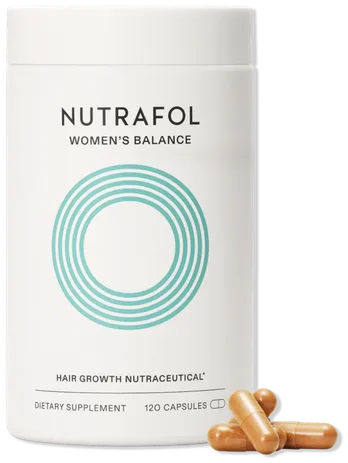
Nutrafol Women Hair Growth Nutraceutical Review
Nutrafol Women Hair Growth Nutraceutical is a capsule supplement. A serving is 4 capsules, and each container holds 30 servings. The label lists per serving: Vitamin A 1500 mcg RAE, Vitamin C 100 mg, Vitamin D 62.5 mcg, Vitamin E 2.6 mg, Biotin 2500 mcg, Calcium 60 mg, Iodine 225 mcg, Zinc 20 mg and Selenium 200 mcg. It also lists Synergen Complex Plus at 1.96 g and Nutrafol Blend at 480 mg. A serving has 10 calories, 2 g total carbohydrate, 1 g protein, 5 mg sodium and 35 mg potassium. The other ingredients are vegetable capsule (hypromellose), maltodextrin, tricalcium phosphate, silicon dioxide, organic rice hulls and pea starch. No directions are printed in the label details. Buyers most often mention changes in their hair, such as thicker hair and less shedding, and some say they dislike the taste. Others mention delivery delays and the price.
We don’t sell supplements. We help you make decisions and get the best price.
Lowest prices
We may earn a commission from some store links. How we choose.
Lowest cost per month first, in stock, at 4 capsules a day. Checked Nov 14.
- WalmartLowest$17.68 a bottle$17.68/moBuy at Walmart (opens in a new tab)
Also at: Nutrafol
Products with nearly the same formula (Matched on the main ingredients)
Study, Trial or Testing Result Summary
Members Only96 human studies · 46 improved
2 of these 96 human studies gave the ingredient by injection, not by mouth.
The main support for this product comes from studies of its own branded blends. A pooled analysis of 19 trials with 1,658 people with pattern hair loss found the Nutrafol plant extracts increased hair density compared with placebo [1]. Another pooled analysis found about 7 more thick hairs per square centimeter in women at 24 weeks [2]. In 70 women around menopause, six months of use raised hair counts and cut shedding by 32% [3]. In 40 women with thinning hair, the Synergen Complex supplement gave more hairs than placebo at three and six months, with no side effects reported [4]. A third pooled analysis found more growing-phase hair, though total hair count did not differ [5]. Biotin is at a full dose; a trial in 105 adults found a lower daily amount reduced hair fall [6]. Selenium is at a full dose and reduced hair loss in 64 women with polycystic ovary syndrome [7], but too much selenium causes hair loss, with an adult upper limit of 255 micrograms a day. Zinc reaches a full dose at two servings a day [8]. Vitamin A, vitamin E and calcium are below the doses studied. High-dose vitamin A has been linked to hair loss [9]. Animal and cell studies are never counted.
See all 96 studies →Hide the studies
- Pooled across 102 studies of people with patchy autoimmune hair loss and healthy controls, vitamin D deficiency was far more common in those with hair loss, but no vitamin D was given so this does not show a treatment effect.Comorbid Conditions Associated with Alopecia Areata: A Systematic Review and Meta-analysis.
- Across 23 studies with 3374 people with non-scarring hair loss and 7296 healthy controls, those with hair loss had lower vitamin D and more deficiency, but supplementation was not tested directly.Serum 25 hydroxyvitamin D in non-scarring alopecia: A systematic review and meta-analysis.
- Pooling 27 studies (1,315 patients and 7,181 healthy people), selenium levels in people with alopecia areata did not differ significantly from healthy controls or by disease severity, and no selenium was given.Selenium levels and skin diseases: systematic review and meta-analysis.
- Pooling 113 studies of 7,014 people with immune-related skin diseases, blood selenium was lower in psoriasis and atopic dermatitis; the abstract does not report a selenium difference for alopecia areata, and no selenium was given.Trace Elements and Risk of Immune-Mediated Skin Disease: A Systematic Review and Meta-analysis.
- Across 34 papers with 4931 people, those with patchy hair loss had lower vitamin D levels and higher odds of deficiency than healthy people, but no vitamin D was tested as a treatment.Association Between Serum Trace Elements Level and Alopecia Areata: A Systematic Review and Meta-Analysis.
- In a pooled analysis of 19 trials with 1,658 people with pattern hair loss, Nutrafol's standardized plant extracts increased hair density and terminal hair density compared with placebo, and doctors rated hair regrowth higher.Effects of dietary supplements on androgenetic alopecia: a systematic review and network meta-analysis.
- In a pooled analysis of 14 studies with 967 adults with hair loss, oral supplements including Nutrafol increased growing-phase hair density and reduced resting-phase hair compared with placebo, though total hair count did not differ significantly.Evaluating the Effectiveness of Commercial Oral Supplements for Hair Growth: A Systematic Review and Meta-Analysis.
- Pooling 10 studies of 764 people, those with alopecia areata had lower blood selenium and zinc than healthy people, but no selenium was given so treatment benefit is unknown.Changes of serum trace elements level in patients with alopecia areata: A meta-analysis.
- A pooled analysis of 87 observational studies found vitamin D deficiency was more common in people with alopecia areata, but it did not test whether taking vitamin D helps hair.Comorbidities in alopecia areata: A systematic review and meta-analysis.
- Pooled across 91 studies, people with patchy hair loss had lower blood vitamin D than healthy matched controls, but no vitamin D treatment was tested.Biomarkers in alopecia Areata: A systematic review and meta-analysis.
- Pooled studies showed people with patchy or female pattern hair loss had lower vitamin D levels and more deficiency than controls, but supplementation was not tested and needs further study.Vitamin D deficiency in non-scarring and scarring alopecias: a systematic review and meta-analysis.
- In a pooled analysis of 17 placebo-controlled trials, Nutrafol increased terminal hair density in women by about 7 hairs per square centimeter at 24 weeks, with regrowth slowing after 12 weeks.Hair regrowth treatment efficacy and resistance in androgenetic alopecia: A systematic review and continuous Bayesian ne…
- A review of 17 studies with 61332 people, mostly women, found higher vitamin D levels were linked to less hair loss, though further research is needed.Assessing the relationship between dietary factors and hair health: A systematic review.
- A review of 16 trials in 768 people with patchy hair loss (alopecia areata) found the evidence does not support taking zinc sulphate by mouth.Systemic treatments for alopecia areata: A systematic review.
- A review of 49 articles on vitamins and minerals in genetic hair loss found the strongest links for B vitamins, vitamin D, iron and zinc, with vitamin A not highlighted and evidence described as inconsistent.Micronutrients and Androgenetic Alopecia: A Systematic Review.
- A review of 165 articles on off-label skin uses found evidence that topical vitamin D was ineffective for alopecia areata and for hair loss caused by chemotherapy.Off-label uses of topical vitamin D in dermatology: a systematic review.
- In a review of 30 studies of supplements for hair loss in people without known deficiency, vitamin D3 had only low-quality evidence suggesting it improved hair loss.Evaluation of the Safety and Effectiveness of Nutritional Supplements for Treating Hair Loss: A Systematic Review.
- In a 3-month trial of 450 men with low sperm count, alopecia (hair loss) improved better in groups whose regimen included a vitamin E soft capsule, but vitamin E was given in every group and its effect on hair cannot be separated from the other treatments.[Treating oligospermia patients of Shen-essence deficiency syndrome by 3 different treatment programs: a clinical observ…
- In 283 people with resected lung cancer, taking 300,000 IU of vitamin A daily for at least a year caused mild, self-resolving hair loss in under 10% of those treated.Safety of high-dose vitamin A. Randomized trial on lung cancer chemoprevention.
- In 225 men and women with pattern hair loss, adding one daily capsule containing vitamin C plus saw palmetto, pumpkin extract and cystine to minoxidil and a med for 6 months gave great improvement in 36.5% versus 25% with the drugs alone.Impact of a Novel Dietary Supplement on Efficacy of Pharmacological Treatments for Androgenic Alopecia: A Real-Life, Mul…
- In 200 men with male pattern baldness, daily 1% zinc pyrithione shampoo for 26 weeks gave a modest, sustained rise in hair count versus placebo shampoo, about half the effect of 5% minoxidil.The effects of minoxidil, 1% pyrithione zinc and a combination of both on hair density: a randomized controlled trial.
- In 181 people after lung cancer surgery, 300,000 IU of vitamin A daily caused hair loss at a low frequency alongside skin dryness.Lung cancer chemoprevention with retinol palmitate. Preliminary data from a randomized trial on stage Ia non small-cell …
- In 124 men having heart surgery, iodine applied to the chest wound edges (with glove change and pads) cut skin bacteria contamination from 61% to 14.5%, but the study did not test iodine for hair growth or hair health.Prevention of Surgical Site Contamination With Cutibacterium acnes During Cardiac Surgery: A Randomized Clinical Trial.
- In 105 adults (97 finished) taking 1.25 mg of plant-derived biotin daily for 90 days, hair fall dropped, hair grew faster by about 0.55 mm a day, and nails and skin elasticity improved, with no side effects reported.The Role of Sesbania grandiflora-Derived Biotin and Bambusa arundinacea-Derived Silica Extracts in Promoting Hair, Skin,…
- In 97 people with severe psoriasis taking a vitamin A-like drug for a year, four stopped because of side effects, mainly hair loss.Systemic treatment of psoriasis with an oral retinoic acid derivative (Ro 10-9359).
- In 47 people with diffuse hair loss in a double-blind trial (plus 36 in a pilot), daily retinol 18,000 IU with L-cystine and gelatin lowered the share of resting hairs and improved growing hairs, while the placebo group did not improve.[Low dosage retinol and L-cystine combination improve alopecia of the diffuse type following long-term oral administrati…
- In 83 people with pattern hair loss or chronic shedding, adding a daily multi-ingredient tablet containing selenium to drug treatment for 12 weeks gave better hair improvement scores than drugs alone, with 50% versus 23% reaching a score of 2 or more.Efficacy and tolerability of an oral supplement containing amino acids, iron, selenium, and marine hydrolyzed collagen i…
- In 75 people with patchy alopecia areata, adding topical vitamin D3 to microneedling gave more hair regrowth than microneedling alone, though bimatoprost worked better right after treatment.Combined microneedling with topical vitamin D3 or bimatoprost versus microneedling alone in the treatment of alopecia ar…
- In 70 menopausal-stage women with thinning hair, taking Nutrafol Women's Balance for 6 months increased terminal and total hair counts and reduced shedding by 32% compared with placebo.A Randomized, Double-Blind, Placebo-Controlled Study of a Nutraceutical Supplement for Promoting Hair Growth in Perimeno…
- In 64 women with polycystic ovary syndrome, 200 micrograms of selenium daily for 8 weeks reduced alopecia compared with placebo, along with lower inflammation and oxidative stress markers.Selenium Supplementation and the Effects on Reproductive Outcomes, Biomarkers of Inflammation, and Oxidative Stress in W…
- In 62 men with pattern hair loss, a zinc-containing foam used twice daily for 6 months reduced the share of resting-phase hairs more than the dummy foam, but hair density gain did not differ between groups.Reduction of telogen rate and increase of hair density in androgenetic alopecia by a cosmetic product: Results of a rand…
- In a randomized trial of 60 people with scalp alopecia areata, topical calcipotriol and narrowband UVB both improved hair loss scores and blood vitamin D3 levels after 3 months, while placebo did not.Topical calcipotriol vs narrowband ultraviolet B in treatment of alopecia areata: a randomized-controlled trial.
- In 60 adults with patchy alopecia areata, vitamin D3 injected into the bald patches every 4 weeks for up to 3 sessions improved hair regrowth significantly more than saline injections.Intralesional vitamin D3 in treatment of alopecia areata: A randomized controlled clinical trial.
- In a randomized trial of 60 people with localized alopecia areata, a topical vitamin D analogue combined with a potent a med worked about as well as a superpotent a med alone, with fewer side effects, while tacrolimus gave the least improvement.Comparative evaluation of the efficacy of topical tacrolimus 0.03% and topical calcipotriol 0.005% mixed with betamethas…
- In 50 people with diffuse hair loss, six weekly injections of 5 mg biotin with dexpanthenol from either of two brands reduced hair fall and increased hair density, with no placebo group for comparison.Efficacy of intramuscular injections of biotin and dexpanthenol in the treatment of diffuse hair loss: A randomized, dou…
- In 48 women with polycystic ovary syndrome, 50 mg of zinc daily for 8 weeks reduced hair loss compared with placebo (41.7% vs 12.5%), along with lower excess hair growth and a blood marker of oxidative damage.Effects of Zinc Supplementation on Endocrine Outcomes in Women with Polycystic Ovary Syndrome: a Randomized, Double-Blin…
- In a half-head trial of 42 people with alopecia applying 1% bexarotene gel twice daily for 24 weeks, 5 people (12%) regrew at least half their hair on the treated side, and the gel was well tolerated, though the trial had no placebo group.Phase I/II randomized bilateral half-head comparison of topical bexarotene 1% gel for alopecia areata.
- In 40 people with pattern hair loss or shedding, a zinc and arginine lotion for 23 weeks reduced hair pulled out and improved hair growth measures compared with placebo lotion.A new combination of molecules for the treatment of androgenetic alopecia and telogen effluvium: a double-blind randomiz…
- In 40 women with self-perceived thinning hair, taking a Synergen Complex supplement for 6 months led to significantly more terminal and vellus hairs than placebo at day 90 and day 180, with better blinded hair growth and quality ratings and no reported adverse events.A Six-Month, Randomized, Double-Blind, Placebo-Controlled Study Evaluating the Safety and Efficacy of a Nutraceutical Su…
- In 38 people with hair loss, 100 mg of mixed tocotrienols (a vitamin E form) daily for 8 months raised hair count by 34.5% versus a 0.1% decrease with placebo, though hair weight did not change.Effects of tocotrienol supplementation on hair growth in human volunteers.
- In 34 people with psoriasis given a vitamin A-like drug with light therapy, only one person had diffuse hair loss, after 8 weeks on etretinate.A double-blind comparison of acitretin and etretinate in combination with bath PUVA in the treatment of extensive psoria…
- In a randomized trial of breast cancer patients receiving chemotherapy, pretreatment with topical calcipotriol did not reduce chemotherapy-related hair loss compared with vehicle.'Atrophic telogen effluvium' from cytotoxic drugs and a randomized controlled trial to investigate the possible protecti…
- In menopausal women given 1000 mg calcium plus vitamin D3 daily for six months, hair shedding was significantly reduced compared with placebo, and skin hydration and elasticity improved when collagen was added.Calcium and Vitamin D Supplementation with and Without Collagen on Bone Density and Skin Elasticity in Menopausal Women-…
- In men and women with self-perceived hair thinning, a zinc-containing shampoo and leave-on treatment for 24 weeks reduced hair shedding and increased hair count compared with placebo shampoo.Scalp application of antioxidants improves scalp condition and reduces hair shedding in a 24-week randomized, double-bli…
- In 291 people with psoriasis taking a vitamin A-like drug, 14% had to stop because of hair loss, nail infection or raised liver enzymes.[Oral psoriasis treatment with a new aromatic retinoid (Ro 10-9359): a multi-centre controlled study of 291 patients (pr…
- In 39 people with severe thallium salt poisoning, adding deferasirox to standard treatment, which included potassium-iron hexacyanoferrate and intravenous potassium, sped thallium removal and improved liver and kidney function, but the abstract reports no outcome for hair loss, which was only described as a symptom of the poisoning. This is a retracted publication.Complexions therapy and severe intoxication by Thallium salts.
- In 31 ovarian cancer patients on chemotherapy, 200 mcg of selenium daily for up to 3 months was followed by a significant decrease in hair loss, along with less flatulence, weakness and loss of appetite.Selenium as an element in the treatment of ovarian cancer in women receiving chemotherapy.
- Topical melatonin in vitamin C-based nanovesicles was reported to increase hair thickness and density and reduce hair loss in people with pattern hair loss compared with melatonin solution, but vitamin C here served as a carrier and the number of participants was not stated.Melatonin vitamin C-based nanovesicles for treatment of androgenic alopecia: Design, characterization and clinical appra…
- In women with temporary diffuse hair loss, 180 days of a multi-nutrient supplement that included biotin improved hair loss, volume and density, and did so more fully than a different supplement, but the biotin dose was not stated and there was no placebo group.Comparative evaluation between two nutritional supplements in the improvement of telogen effluvium.
- In a six-month open-label study of 252 adults with thinning hair, taking these botanical hair supplements was associated with thicker hair shafts, less hair breakage and shedding, and better self-rated hair health, though there was no control group.A 6-Month, Prospective, Multi-arm Study for the Efficacy of Standardized Nutraceuticals to Improve Hair Fiber Thickness …
- In 112 people with light diffuse hair loss taking a supplement containing biotin for 12 weeks, hair loss fell by 59% and hair density rose, with 90% of participants perceiving better hair growth and appearance, in an open-label study without a control group.Effectiveness, Tolerability, and Acceptance of a Food Supplement in the Management of Non-Illness-Related Hair Loss and …
- In a single-group trial of 101 breast cancer patients, a daily scalp lotion containing a zinc complex did not prevent chemotherapy-induced hair loss, though hair may have recovered somewhat sooner.The utility of DHL-HisZnNa, a novel antioxidant, against anticancer agent-induced alopecia in breast cancer patients: a …
- In a 6-month single-blind study of 98 men and women of diverse ethnicities with mild to moderate hair thinning, Nutrafol capsules improved investigator-rated hair growth and density by week 24, with about 80% of participants showing significant benefit, but the study had no placebo group.A Prospective Six-month Single-blind Study Evaluating Changes in Hair Growth and Quality Using a Nutraceutical Supplemen…
- In a 6-month single-blind study of 95 women on a plant-based diet, Nutrafol Women's Vegan Capsules increased terminal hair counts and improved hair strength and quality, though the study had no placebo group.A Prospective, Multi-Center Study to Evaluate the Safety and Efficacy of a Vegan Nutraceutical to Improve Hair Growth an…
- In a 12-week retrospective study of 48 people with mild-to-moderate alopecia areata, twice-daily topical calcipotriol produced a total response in 69.2% of patients, with significant reduction in hair loss scores.Topical Calcipotriol Therapy for Mild-to-Moderate Alopecia Areata: A Retrospective Study.
- In 27 people with generalized psoriasis given an oral synthetic retinoid with ultraviolet light, hair loss occurred in 4 people as a side effect, so hair loss was a harm in this study.[Retinoid-selective ultraviolet phototherapy (SUP) in psoriasis].
- In 25 people with severe psoriasis taking an oral synthetic retinoid for several months, diffuse hair loss was one of the main side effects, so hair loss was a harm rather than a benefit.[Oral treatment of severe psoriasis with a new aromatic retinoid (Ro 10-9359) (author's transl)].
- In 20 women with hair thinning from telogen effluvium, a tablet containing selenium with amino acids and other nutrients over 6 months was reported to improve hair density and diameter on scalp imaging, with no uncontrolled comparison group.Oral supplementation in female telogen effluvium: a clinical and instrumental objective evidence of efficacy and tolerab…
- In people with moderate to severe acne taking a med for 3 months, hair growth measurements did not change in a statistically significant way.Read the study on PubMed (30350907) →
- In a large uncontrolled clinic series of 18,918 Asian men with male pattern hair loss, a combination treatment that included a med, minoxidil and an injected solution containing retinyl palmitate (a form of vitamin A) was followed by visible improvement in all patients on photographs, with 80 percent satisfied at 12 months; vitamin A was not tested alone.Androgenetic Alopecia Treatment in Asian Men.
- In a study of 519 Mexican children aged 10 to 18, boys who ate less selenium than recommended had later development of pubic hair, genitals and testicles, while no link was found in girls; hair itself was not measured.Dietary Intake of Selenium in Relation to Pubertal Development in Mexican Children.
- In a case-control study of 42 young adults with diffuse hair loss and 230 matched controls, dietary calcium intake was not linked to hair loss, while higher protein intake was the only nutrient directly associated with it.[Evaluation of the role of dietary intake in the occurrence of alopecia].
- In newborn screening of 246 infants with biotinidase deficiency in Ontario, two children who stopped biotin developed hair loss, along with abnormal gait, skin rashes and developmental delay.Biotinidase deficiency: Spectrum of molecular, enzymatic and clinical information from newborn screening Ontario, Canada…
- In an outbreak of 201 cases from a contaminated liquid selenium supplement, about 72% reported hair loss, and 29% still had hair loss after 90 days or longer.Acute selenium toxicity associated with a dietary supplement.
- Among 156 women who had sleeve gastrectomy, 1000 mcg of biotin daily for 3 months gave little benefit: only 5 of 22 women with biotin deficiency (23%) reported a clear reduction in hair loss, with no significant difference compared with those without deficiency.Hair Loss After Sleeve Gastrectomy and Effect of Biotin Supplements.
- In a case-control study of 100 people recovering from COVID-19, those with telogen effluvium (excess hair shedding) reported using vitamin C less often than controls, which the authors suggest may mean vitamin C helps prevent post-COVID hair loss, though this is only an association.Post Covid telogen effluvium: the diagnostic value of serum ferritin biomarker and the preventive value of dietary suppl…
- In women six months after bariatric surgery, those with less hair loss had higher zinc and iron intake, while the abstract reports no selenium difference between the mild and severe hair loss groups.[Alopecia in women with severe and morbid obesity who undergo bariatric surgery].
- In children on valproic acid, hair loss and skin rash improved after daily oral biotin 10 mg, which was given as a supplement to patients with low biotinidase activity.Low serum biotinidase activity in children with valproic acid monotherapy.
- Blood vitamin E levels were not different between 37 people with alopecia and 34 healthy controls, although beta-carotene was lower and lipid peroxidation higher in the alopecia group.Antioxidants and lipid peroxidation status in the blood of patients with alopecia.
- In 70 Japanese adults with alopecia areata, higher dietary retinol intake was linked to more severe hair loss on the severity score, but this food-questionnaire study cannot show that retinol causes the hair loss.Dietary Habits in Japanese Patients with Alopecia Areata.
- In a retrospective review of 66 Black women with hair loss, 69.6 percent reported clinical improvement using a compounded topical minoxidil that contained a retinoid, compared with 45 percent using over-the-counter minoxidil.Enhanced Clinical Outcomes and Treatment Adherence in Patients Using Compounded Topical Minoxidil to Treat Androgenetic …
- People with alopecia areata, psoriasis or vitiligo had significantly lower blood and tissue vitamin E and PON1 levels than 15 healthy controls.The antioxidant role of paraoxonase 1 and vitamin E in three autoimmune diseases.
- People with alopecia areata had significantly lower serum vitamin E than 30 healthy controls, and this level did not differ by disease severity.Investigation of ischaemia-modified albumin and antioxidant vitamins and minerals levels in alopecia areata patients and…
- In 48 men with androgenetic alopecia treated with 5% minoxidil for 4 months, those with a plasma zinc level above 10 micromoles per liter were more likely to respond with more hair density and thickness in the crown area.Plasma Zinc Levels in Males with Androgenetic Alopecia as Possible Predictors of the Subsequent Conservative Therapy's E…
- In 17 girls with anorexia nervosa, 14 had a hair shaft defect called pili torti, which the authors linked to high vitamin A intake and raised blood vitamin A levels; 15 healthy girls had no such defect.Acquired pili torti--a structural hair shaft defect in anorexia nervosa.
- Infants fed only hydrolysate formula, which contained little biotin, had low blood biotin, and one of them developed hair loss linked to biotin deficiency.Low serum biotin in Japanese children fed with hydrolysate formula.
- In a review of 25 children with short anagen syndrome, a condition where hair does not grow long, biotin alone or with topical minoxidil was reported to be an effective treatment.Short anagen syndrome: A case series and algorithm for diagnosis.
- In 6 infants with selenium deficiency, alopecia with pseudoalbinism resolved within 1 to 2 months after selenite treatment restored serum selenium levels.Clinical features of selenium deficiency in infants receiving long-term nutritional support.
- In five men with male pattern hair loss, a topical solution containing 0.2% biotin along with minoxidil and a med was judged successful for all five over 6 months, with moderately thicker hair and higher hair density in photographs.Read the study on PubMed (32023218) →
- In a study of children taking valproic acid, three girls who lost hair had their hair loss disappear within about 3 months of taking 10 mg of biotin daily.Serum biotinidase activity in children treated with valproic acid and carbamazepine.
- Three children with valproic acid-related hair loss and normal blood biotin levels had their alopecia resolve within 3 months of taking 10 mg of oral biotin daily.The influence of valproic acid and carbamazepine treatment on serum biotin and zinc levels and on biotinidase activity.
- A genetic analysis (Mendelian randomization) of large Finnish populations suggested that higher alpha-tocopherol levels are linked to lower risk of androgenetic and alopecia areata; this is association evidence, not a supplement trial.Elucidating causal relationships of diet-derived circulating antioxidants and the risk of non-scarring alopecia: A Mende…
- In a family study of people with partial biotinidase deficiency, one child who was not initially given biotin developed hair loss, hypotonia and a skin rash, and these resolved after biotin therapy; the abstract does not give the dose or duration.Partial biotinidase deficiency: clinical and biochemical features.
- In a study of Finnish people with hair loss (alopecia), blood, red cell, hair and urine selenium levels were not different from those of the normal population, though a few patients had low serum selenium, which matches low selenium in the Finnish diet.Element concentrations in serum, erythrocytes, hair and urine of alopecia patients.
- In a neurosurgery report of more than 1000 patients over three years, skipping a full head shave and disinfecting with tincture of iodine was associated with temporary partial hair loss in three patients.[Pre-operative non-shaving for neurosurgical operations (author's transl)].
- In 560 people with seborrheic dermatitis using a selenium sulfide shampoo for about 21 days, scalp symptoms improved, but women showed less improvement in hair loss and hair quality than men.Effectiveness and tolerance of medicated shampoo containing selenium sulfide and salicylic acid in patients with seborrh…
- In 42 healthy men and women with hair fall, using a hair serum that contained selenium along with other ingredients every day for 90 days improved hair growth rate and hair density compared with the start, but the study had no placebo group and cannot show whether selenium itself caused the effect.Clinical Study to Evaluate the Efficacy and Safety of a Hair Serum Product in Healthy Adult Male and Female Volunteers w…
- In 32 people with cystic fibrosis, sodium selenite at about 4 mcg per kg daily for 3 months caused mild hair loss in 3 patients, along with anorexia and nausea.[The value of selenotherapy in patients with mucoviscidosis].
- In a multicentre psoriasis study, a retinoid taken by mouth caused diffuse hair loss on trichogram testing in 27 patients, usually starting around weeks five to eight, and the hair loss improved after the dose was lowered or stopped.[Hair growth, liver function and light sensitivity during oral retinoid therapy for psoriasis (author's transl)].
- In 20 cancer patients given doxorubicin chemotherapy, high-dose alpha-tocopherol (vitamin E) did not prevent hair loss; 90% had severe hair loss and 10% moderate.High-dose alpha-tocopherol as a preventive of doxorubicin-induced alopecia.
- In 15 people with psoriatic arthritis taking etretinate, skin and joint symptoms improved, but hair loss was common among those treated and remained tolerable.Tigason (etretinate) treatment in psoriatic arthritis.
- In 13 people aged 50 to 70 taking 25,000 IU of retinol daily for 9 months, two people had mild skin dryness, headaches, or hair loss, and blood chemistry did not change significantly.Pharmacokinetics and metabolism of retinol administered at a chemopreventive level to normal subjects.
- In mice prone to hair scarring, the amount of vitamin A in the diet changed the disease, and the 28 IU per gram diet increased follicular damage or scarring in some experiments; this was not tested in people.Retinoid metabolism is altered in human and mouse cicatricial alopecia.
- After five days of topical tretinoin, 43% of people in this androgenetic alopecia cohort who were predicted to respond poorly to minoxidil became responders to it.Tretinoin enhances minoxidil response in androgenetic alopecia patients by upregulating follicular sulfotransferase enzy…
- In people with zinc deficiency skin disease, hair changes and hair loss can occur, and severe cases were treated with intravenous or high-dose oral zinc, but the abstract reports no measured hair outcome after treatment.[Zinc deficiency dermatoses. Etiology, clinical aspects and treatment].
- A European food safety opinion names hair loss as the early warning sign of too much selenium, with the upper limit for adults set at 255 micrograms a day.Scientific opinion on the tolerable upper intake level for selenium.
Review Totals and Summary
Members Only21,586 reviews · 80% positive
Nutrafol Women Hair Growth Nutraceutical carries about 21586 ratings across the stores that sell it, and 64% of the starred reviews give 4 or 5 stars. Buyers who like it talk about changes in their hair, while the low scores come mostly from delivery problems and from one buyer who saw no change. **What buyers say it did for them:** Several buyers report changes in their hair. One says they saw "thicker hair and less shedding at 2 months" even though the product says to allow three to six months. Another writes "my hair is starting come back" after the first bottle. A third reports that hair and nails are growing after one week. One buyer calls it an "Amazing product which really works to grow hair as advertised," and another says it helped their thinning hair. **What they complain about:** Some of the complaints are about the store, not the capsules. One buyer says items shipped by the store were delayed, arriving days after the promised date. Another says "Never received it. Need a refund." One buyer says it "doesn't work as advertised." Others give middle ratings because they have used it for only a month and cannot judge yet, with one planning to review again after a couple of months. **Taste, smell, pill size or form:** Only taste comes up. One buyer says "i dont like the taste but i love the results." The reviews say nothing about smell or pill size. **Value for money:** Price gave at least one buyer pause. They were "hesitant to buy these because of the price point" but ended up calling it "Worth every penny!!!" No other buyer comments on cost. **Who it seems to suit and who it did not:** The happiest buyers are people dealing with thinning hair or shedding, and those who kept going for a couple of months or a full bottle. One buyer who lives in a dry place and notices breakage is a month in and says "I have hope that it's working," so they keep buying. The buyer who found it did not work as advertised is the clearest case of it not suiting someone. Buyers only a month in say it is too early to tell.
Biohacker Summary
Members Only8 of 10 recommend it
This product has no single main ingredient on the panel's record, so the group's comments are spread across several smaller ingredients in this product, with vitamin D drawing the most attention. Vitamin D came up for most of the panel: several recommend it or take it, one takes 5000 IU of D3 in the morning for general health and longevity, and others advise taking it with dietary fat for better absorption or aiming for higher blood levels for healing. Zinc was mentioned by most of them as well, with one taking 15 mg in the morning for longevity, another using a high daily dose around surgery and flagging it with a warning, and others linking it to gut lining, wound repair and sleep. Vitamin C was recommended by three of them, usually paired with collagen before a workout or for joint and skin support, while potassium was favored mainly from foods or electrolyte drinks, and one panelist warned about taking high levels of iodine and another said extra biotin is often unnecessary.
See all 10 biohackers →Hide the biohackers
Dr. Eric Berg · Selenium · neutral
- Notes that sardines are rich in selenium, which binds with mercury.
- Lists Vitamin D as an ingredient found in sardines.
- States that one can of sardines contains 382 mg of calcium.
- Recommends using povidone-iodine daily with a small bandage for skin tags and warts, stating it may help deactivate the virus behind these growths.
- Mentions that the body relies on healthy fats to absorb essential vitamins like A, D, E, and K, which help support skin health, moisture, and normal cell function.
- Recommends selenium as a trace mineral, noting that modern farming practices deplete it from the soil, leading to low levels in crops.
- Recommends Vitamin D3 because it's nearly impossible to get enough from food and most people don't get enough sun, advising to aim for blood levels of at least 50 to 80 ng/mL.
- Dr. Berg states that when nutrients like vitamin D are too low, fatigue and weakness can follow.
- Warns against calcium supplements, citing studies that link them to a higher risk of heart attack, especially in postmenopausal women, and suggests getting calcium from dairy instead.
- Recommends iodine as a trace mineral, noting that modern farming practices deplete it from the soil, leading to low levels in crops.
- Dr. Eric Berg states that 80% of the body's iodine is concentrated in the thyroid, but other tissues like breast tissue, reproductive organs, and stomach also rely on iodine to function properly, emphasizing the importance of getting enough iodine even with a normally functioning thyroid.
- Introduces his new product, Plant-based Iodine Icelandic Sea Kelp, which he uses and recommends taking one vegetable capsule delivering 200 micrograms of plant-based iodine in the morning.
- Warns against generic multivitamins, stating they are often full of fillers and synthetics.
- Warns against generic multivitamins, stating they are often full of fillers and synthetics.
Dr. Rhonda Patrick · Vitamin D · neutral
- Notes that vitamin D from sunlight, food, or supplements needs to undergo conversions in the liver and kidneys to become its active hormone form, calcitriol.
- Mentions that getting too little zinc may play a role in declining testosterone levels, and that zinc helps the body make testosterone.
- States that Vitamin D supplementation has been associated with a 40% lower dementia risk, and low levels are linked to a 50 to 80% higher risk.
- Recommends getting adequate vitamin D, noting that people taking vitamin D supplements have a 40% lower risk of dementia, while those with lower vitamin D have a 50-80% higher risk.
- Vitamin D supplementation was linked to a 40% lower risk of dementia in an observational study of more than 12,000 older adults.
- Mentions that vitamin D also plays a role in maintaining muscle mass.
- Notes that not getting enough zinc can affect testosterone, as zinc is very important for testosterone synthesis.
- Recommends ensuring adequate vitamin D intake for men's sperm health.
- Recommends men take a 30 milligram zinc supplement for sperm health when preparing for IVF.
- Vitamin D and strength training alone did not, but adding them strengthened the effect on one clock, with the full combination slowing that measure by ~3.8 months.
- Lutein and zeaxanthin can also be obtained from certain multivitamins.
- Lutein and zeaxanthin can also be obtained from certain multivitamins.
- Lutein and zeaxanthin can also be obtained from certain multivitamins.
- Lutein and zeaxanthin can also be obtained from certain multivitamins.
Thomas DeLauer · Vitamin C · recommends
- Recommends whole food vitamin C, found in kiwi fruit, citrus, and bell peppers, to help clear uric acid by competing at kidney transporters, preventing reabsorption.
- Recommends taking Vitamin D3 in the morning, between 6:00 and 10:00 a.m., to align with the body's natural metabolic activation phase and sunlight-triggered vitamin D production.
- Recommends Element electrolytes, noting they are focused on sodium first, then potassium, then magnesium, helping with sending signals and hydrating tissue.
- Uses Element's cans which contain 100 milligram potassium, finding that electrolytes help his workout performance.
- Recommends taking vitamin C along with collagen about an hour before a workout for connective tissue benefits.
- Uses Element's 100 mg potassium cans first thing in the morning to prime his day and help with workout performance.
- Uses vitamin C as part of their immunity duo, stating it is important for boosting the immune system, especially during cold and flu season.
- Uses vitamin D3 in the fall and winter months when getting less sun, as it's important to supplement it then.
- Adds zinc to their immunity duo because it helps them absorb vitamin C, considering the two together a fantastic combination for fall and winter.
- Recommends taking a massive amount of vitamin D simultaneously with an early morning massive breakfast to help reset circadian rhythms and address hyperphagia.
- Recommends Vitamin D, stating that it has receptors throughout the brain and deficiency can quickly impact brain and mood.
- Recommends zinc, noting it is a cofactor for enzymes that build neurotransmitters, and deficiency can affect mood, happiness, and motivation.
- Takes supplemental vitamin D because he is skin sensitive and from northern latitudes, limiting his UV exposure.
- Recommends taking vitamin D on non-liver days to ensure both nutrients get proper receptor access.
Andrew Huberman · Zinc · neutral
- Notes that AG1 Pro contains zinc carnosine to support and improve the lining of the gut.
- Zinc carnosine to support and improve the lining of your gut.
- Notes that AG1 Pro contains zinc carnosine to support and improve the lining of the gut.
- States that AG1 Pro contains zinc carnosine to support and improve the lining of the gut.
- Uses AG1 Pro, which contains zinc carnosine to support and improve the lining of the gut.
- States that AG1 Pro contains zinc carnosine to support and improve the lining of the gut, and he was already taking some of these ingredients separately.
- States that AG1 Pro includes zinc carnosine, which he was already taking separately, to support and improve the lining of the gut.
- Notes that most people are probably deficient in vitamin D and benefit from supplementing, but there's no point in doing it unless you're deficient for most things.
- Personally takes zinc carnosine, which is included in AG1 Pro to support and improve the lining of the gut.
- AG1 Pro has zinc carnosine to support and improve the lining of your gut. Some of these ingredients I personally was already taking separate from the AG1 formula.
- States that AG1 Pro contains zinc carnosine to support and improve the lining of your gut.
- Takes 5,000 IU of Vitamin D3 in the morning for longevity.
- Uses Element, an electrolyte drink with sodium, magnesium, and potassium in correct ratios and no sugar, to ensure adequate hydration and electrolytes, especially when starting days fast or during physical exercise.
- Takes 5000 IU of Vitamin D3 in the morning for general health.
Dr. Mark Hyman · Vitamin D · uses
- Consumes Zetopia's Atlantic salmon to get Vitamin D, particularly in the winter months, as it is one of the few foods that provides both Omega-3s and Vitamin D.
- Mentions that the body makes vitamin D from sunlight exposure, and a deficiency can hinder calcium absorption, which is crucial for strong bones.
- Explains that zinc is important for the body's repair crew, helping to heal damaged tissue, and a deficiency can lead to cuts and wounds taking longer to heal.
- Recommends Vitamin D for health, stating that amazing things happen when patients' vitamin D statuses reach optimal levels.
- Mentions vitamin D as an existing biomarker that plays a role in mental health, which Function Health includes in their measurements.
- Notes that vitamin D plays a role in immune function.
- Mentions that vitamin A levels can be looked at to get a deep sense of what's happening with nutrient levels.
- Warns that potassium bromate, a dough conditioner banned in the EU, UK, and Canada, is still allowed in U.S. bread.
- Recommends vitamin C as a basic supplement during detoxification to help with inflammation and detoxification.
- Recommends checking vitamin D levels and states that if they had to pick one single intervention for immune health, vitamin D would be it.
- Dr. Hyman discusses vitamin D in relation to sun exposure patterns.
- States that vitamin D supplementation can help with oxidative stress.
- Gave a patient with psoriatic arthritis a little zinc, which contributed to significant improvement in her condition.
- Dr. Hyman mentions vitamin C as an advanced therapy for skin repair.
Dave Asprey · Biotin · warns
- Mentions that most places put in extra biotin for hair growth, suggesting it's not always necessary or beneficial.
- Explains that potassium helps open a gate, allowing creatine to slip through and cross the blood-brain barrier more effectively.
- Recounts a doctor telling him in his 20s that vitamin C would kill him.
- Takes Vitamin DAKE from Suppgrade Labs.
- Suggests that vitamin D supports brain health, muscle function, and focus.
- Recommends taking vitamin C for better skin health.
- Host Dave Asprey explains why correcting a vitamin D deficiency still makes sense for male fertility, even though supplementation did not improve overall semen parameters in a randomized trial.
- States that currently, he is only taking vitamin C and vitamin D.
- States that currently, he is only taking vitamin C and vitamin D.
- Dave Asprey's kids get a little bit of vitamin E every day, which helps to stabilize the bad oils they get when eating at restaurants.
- Developed a nonnano zinc sunscreen over five years, stating her skin is probably better now than it's ever been.
- Recommends vitamin D, noting it's actually a hormone and that most people are deficient, even those who take it, because they don't take enough.
- States that most people on the spectrum are low in vitamin D and need more of it, mentioning his own product, Vitam DAKNE, which contains real vitamin A.
- Emphasizes the importance of having enough zinc before trying advanced longevity strategies like peptides.
Siim Land · Vitamin D · recommends
- Advises against taking vitamin D in the morning with other supplements because it is fat soluble and requires dietary fat for better absorption.
- Recommends taking Vitamin D with fat for better absorption.
- Recommends taking vitamin C with collagen to support joint collagen synthesis.
- States that Vitamin D connects biology to light and that UVB reaching the skin enables its production.
- States that vitamin C is needed for initiating collagen synthesis and that higher vitamin C intake appears to increase vitamin C content in the skin.
- Lists sauerkraut and fruit as sources of Vitamin C.
- Lists potatoes and fruit as sources of Potassium.
- Lists dairy and sardines as sources of Calcium.
- Lists liver and carrots as sources of Vitamin A.
- Thinks vitamin D has some of the strongest evidence and is worth considering.
- Notes that Vitamin K2 pairs well with vitamin D by regulating calcium and bone mineralization.
- Notes that Vitamin C is one of several supplements with human evidence.
- Recommends taking vitamin D supplements with some fat to maximize its absorption, suggesting with food or a teaspoon of olive oil.
- Notes that taking vitamin D3 with a fat-containing meal resulted in 32% higher peak blood vitamin D levels.
Ben Greenfield · Zinc · warns
- Ben Greenfield's formulation includes 30 grams of zinc a day, taken for one week before surgery and two weeks after, as it is an important cofactor for wound healing.
- Mentions a recent study showing no significant increase in bleeding for patients on Vitamin E supplementation during open heart surgery, which was interesting for him to learn.
- States that vitamin C is extremely important for collagen turnover and cites orthopedic data showing that 500 mg to 1 g of vitamin C can reduce the rate of complex regional pain in total knee replacements and wrist fractures.
- Notes that Vitamin D is actually a hormone and recommends patients aim for levels around 40 to 50, or even 60 for fracture healing, for optimal healing, as opposed to just above 20 which is considered normal.
- Says he is drinking LMNT, which contains sodium, potassium, and magnesium, and states that he actually drinks this stuff.
- Notes that Vitamin A is a fat-soluble vitamin that supports healthy skin cell turnover.
- Mentions vitamin C as part of a bare-minimum protocol.
- Mentions vitamin D as part of a bare-minimum protocol.
- Advises getting vitamin D levels between 60 and 100 nanograms per milliliter as a minimum step for overall health and to slow down heart disease.
- Recommends taking sufficient iodine to ensure free T3 levels are right, which is important for the reverse calcium transport system.
- Recommends taking sufficient selenium to ensure free T3 levels are right, which is important for the reverse calcium transport system.
- Emphasizes that zinc sufficiency is crucial for immunity because the thymus-derived peptide thymulin, which trains lymphocytes, requires zinc to be active.
- Notes that while vitamin C has significant value, the optimal dose is a vexed question, and high doses might not always be beneficial, potentially blunting the hormetic effects of exercise.
- Recommends adding zinc into one's stack because it is a co-factor for enzymes involved in testosterone synthesis and sperm maturation, and zinc deficiency is a reproducible cause of low sperm count.
Bryan Johnson · Vitamin D · uses
- Takes 5000 IU of Vitamin D3 in the morning for general health.
- Takes 5000 IU of Vitamin D3 in the morning for general health.
- Mentions that the sunlight assessment claims low vitamin D levels cause the immune system to misfire, and notes that their vitamin D has been measured.
- Takes 5000 IU of Vitamin D3 in the morning for longevity.
- Takes 15 mg of Zinc in the morning for longevity.
- He takes 5000 IU of Vitamin D3 in the morning for general health.
- Takes 5000 IU of Vitamin D3 in the morning for general health.
- Takes 5,000 IU of Vitamin D3 in the morning for longevity.
- Takes 5,000 IU of Vitamin D3 in the morning.
- Takes 15 mg of Zinc in the morning.
- Takes 5,000 IU of Vitamin D3 in the morning.
- He takes 5000 IU of Vitamin D3 in the morning for general health.
- Takes 15 mg of Zinc in the morning for longevity.
- Recommends calcium as a mineral that, along with phosphorus, magnesium, and boron, is deposited to fortify the bone structure after the collagen scaffold is in place.
Peter Attia · Potassium · recommends
- States there is some evidence that increasing dietary potassium through potassium-rich foods like bananas and potatoes, rather than supplements, can lower blood pressure.
- Lists vitamin D as one of her staple supplements.
- Suggests that zinc and magnesium could potentially help with vasodilation and sleep, particularly for women experiencing severe symptoms in the luteal phase.
- Discusses the dangers of supplementing with high levels of iodine.
- Notes that several studies show patients taking vitamin D can reduce TPO levels and prolong the honeymoon period of Hashimoto's disease.
- Warns that high-dose iodine supplementation carries a risk of autoimmune thyroid disease, citing increased incidence in Japan due to higher dietary iodine intake.
- Notes that several studies show patients taking selenium can reduce TPO levels and prolong the honeymoon period of Hashimoto's disease.
- States that in mouse studies, there was a combined effect of alpha ketoglutarate with vitamin D for both sexes.
- Notes that in mouse studies, there was a combined effect of alpha ketoglutarate with vitamin A for male mice.
- Uses vitamin D as an example of how people might dismiss its efficacy due to failed clinical trials that didn't adjust the dose or measure levels.
- In mouse studies, Peter Attia's team found a combined effect of AKG with Vitamin D for both sexes.
- In mouse studies, Peter Attia's team found a combined effect of AKG with Vitamin A for male mice.
- Suggests that supplementing with lots of vitamin D might help overcome the negative effects of phenytoin on bone health by improving calcium absorption, though he is unaware of studies on this.
- Recommends Vitamin D3 as one of the 'big three' micronutrients for bone health, suggesting a daily intake of 800 to 1,000 IU, which can be obtained through sunlight or supplementation.
RAL Summary
Members OnlyTier 2 for Hair Growth
More Details
Members OnlyBody systems · Combine with · Possible side effects
Body systems: Skin and hair, Endocrine system, Immune system
Combine with: Copper is often paired with zinc, because the zinc in this product is a high amount and zinc intake draws down the body's copper. Pantothenic acid, also called vitamin B5, is often paired with biotin because the two share the same route into cells, so having both keeps that route from favoring one. Both pairings are made to keep a main ingredient from crowding out another nutrient.
Possible side effects: The trials of the blend reported no or rare mild side effects. High doses of vitamin A and selenium can cause hair loss, and one buyer disliked the taste.
Supplement Facts
Vitamin A 1500 mcg RAE · Vitamin C 100 mg · Vitamin D 62.5 mcg
| Calories | 10 | |
| Total Carbohydrate | 2 g | |
| Protein | 1 g | |
| Vitamin A | 1,500 mcg RAE | |
| Vitamin C | 100 mg | |
| Vitamin D | 62.5 mcg | |
| Vitamin E | 2.6 mg | |
| Biotin | 2,500 mcg | |
| Calcium | 60 mg | |
| Iodine | 225 mcg | |
| Zinc | 20 mg | |
| Selenium | 200 mcg | |
| Sodium | 5 mg | |
| Potassium | 35 mg | |
| Synergen Complex Plus | 1.96 g | † |
| Nutrafol Blend | 480 mg | † |
Other ingredients: Vegetable Capsule (Hypromellose), Maltodextrin, Tricalcium Phosphate, Silicon Dioxide, Organic Rice Hulls, Pea Starch.
Label source: Reverseagelab · Report a label change
Show entire label

More hair growth products
Members OnlyThe highest ranked for the same goal
Read more
Our articles on this subject
- Nature Made vs Nature's Bounty: Every Product We Graded, Side by SideArticle · Nov 2, 2026
Graded November 14, 2026 by the Reverse Age Lab evidence engine, from human studies, real reviews and our biohacker panel. How we grade. Is this medical advice? No. Rala organizes the published evidence; go over any change with your doctor, especially if you take meds.
Privacy policyConsumer health dataAffiliate disclosureTermsDo Not Sell or Share My Personal InformationCookie settings