
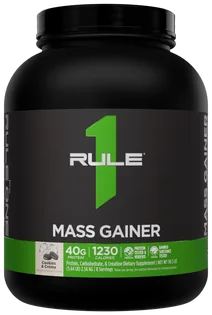
Rule 1 Mass Gainer Review
We don’t sell supplements. We help you make decisions and get the best price.
Lowest prices
We may earn a commission from some store links. How we choose.
Finding the lowest prices at the stores now. This takes a few seconds.
Products with nearly the same formula (Matched on the main ingredients)
Study, Trial or Testing Result Summary
Members OnlyHuman studies
This product is a mass gainer powder, a high calorie shake meant to help people gain weight and muscle. The label lists only the product name, Mass Gainer, at 325 grams per serving, with no breakdown of the individual ingredients or their amounts. We were given no human studies that tested this product or any of its ingredients for blood pressure or heart health. Because the ingredients are not listed, we cannot say whether any of them are present at a dose that has been studied for this goal. The customer reviews we counted are mostly positive, but no written reviews could be read. That means we do not know whether any buyer mentioned blood pressure at all. Most people buy a product like this for weight gain, not for heart health. For now, there is no research support for using this product to manage blood pressure, and members looking for help with blood pressure should not rely on it for that purpose. Animal and cell studies are never counted.
Review Totals and Summary
Members Only178 reviews · 87% positive
Extensive customer reviews and qualitative feedback are currently being aggregated for this product. Check back soon for a detailed sentiment analysis.
Biohacker Summary
Members Only0 of 10 recommend it
Every ingredient here is a smaller ingredient in this product, and creatine drew the most comment, from nine of the ten panelists. Most of them recommend or use it for muscle, strength and brain health, and the doses they give are 5 grams a day (one said 5 to 10 grams), with one noting that a small brain study used 20 grams a day but was preliminary. They take it in the morning or with a meal, mix it with water or a smoothie, and one pairs it with potassium and sodium; cautions include that it may disrupt sleep if taken late, that one panelist skips it on some days, and that one said the gain in lean mass may be water retention. Sodium and potassium came up as electrolytes, with a few panelists using or recommending electrolyte drinks, though one prefers getting potassium from food rather than supplements. Calcium and iron drew mostly cautions, as one panelist warns against supplements for both and another with low iron said no form of iron supplement raised his levels.
See all 10 biohackers →Hide the biohackers
Dr. Eric Berg · Calcium · neutral
- States that one can of sardines contains 382 mg of calcium.
- Warns against calcium supplements, citing studies that link them to a higher risk of heart attack, especially in postmenopausal women, and suggests getting calcium from dairy instead.
- Warns against iron supplements, suggesting instead to get iron from red meat or liver.
- Dr. Berg states that when nutrients like iron are too low, fatigue and weakness can follow.
- Recommends potassium as an important electrolyte, noting that most people get less than half of the 4700 mg RDA.
- Recommends focusing on calcium to support stronger bones if a neck hump is associated with osteoporosis.
- Highly recommends 5g per day of creatine monohydrate, noting that it may be one of the fastest acting meds ever studied and can improve depression by addressing the brain's energy failure.
- Does not recommend taking iron supplements or cooking in iron skillets because the body has no mechanism of getting rid of iron unless one donates blood or is a menstruating female.
- Recommends creatine, especially for brain energy, memory, focus, concentration, and reaction time, noting that plant-based diets provide almost zero dietary creatine.
- Warns against calcium carbonate, calling it limestone and the worst source of calcium, stating it takes 12 steps to be converted in the body and is like eating rocks.
- Identifies iron as the Achilles' heel of cancer, as it is needed for its DNA to replicate.
- States that people need more potassium than any other mineral, yet most people aren’t getting enough.
- Explains that potassium is essential for peristalsis, the pumping action through the colon, and without it, things can sit there, leading to constipation.
- Discusses the benefits of creatine, especially for those over 50, and how it can support healthy aging.
Thomas DeLauer · Creatine · neutral
- Notes that while the body can make creatine, meat eaters have far higher levels because creatine is only found in meats, suggesting that consuming it leads to more optimal levels.
- Recommends Element electrolytes, mentioning new flavors and sparkling cans with half the sodium, and suggests a lemonade iced tea flavor with caffeine is perfect in the morning.
- Recommends Create's German Creapure creatine, noting it makes his brain feel better and helps him feel more in control on fasting days.
- Recommends Element electrolytes, noting they are focused on sodium first, then potassium, then magnesium, helping with sending signals and hydrating tissue.
- Recommends Element electrolytes, noting they are focused on sodium first, then potassium, then magnesium, helping with sending signals and hydrating tissue.
- Recommends giving any iron intervention a couple of months before deciding if it works, and suggests increasing heme iron through red meat or liver intake.
- Is no longer doing super low doses of creatine, finding that the 'magic starts after 10 or 15 g' for fat loss, performance, muscle, strength, and energy. He previously thought low doses were okay but now believes bigger doses are more effective.
- Uses Element's 500 mg sodium cans first thing in the morning to prime his day and enhance workout performance, noting that the pump is often driven by sodium.
- Uses Element's cans which contain 100 milligram potassium, finding that electrolytes help his workout performance.
- Uses and recommends supplementing creatine to take the burden off the body's natural glycine production, which in turn frees up glycine for other vital functions like sleep and connective tissue repair. He specifically mentions using Klean Athlete's unflavored stick packs and gummies made with pure German Creapure creatine.
- Uses Element's 500 mg sodium cans first thing in the morning to prime his day and help with workout performance and pump.
- Uses Element's 100 mg potassium cans first thing in the morning to prime his day and help with workout performance.
- Recommends using Creapure creatine, specifically the powder form during fasting days, to maintain mental alertness and feel more in control.
- States that creatine is a must for those over 30 or 40, as it significantly increases lean mass and strength when combined with resistance training, and directly stimulates satellite cells for faster muscle repair.
Andrew Huberman · Creatine · neutral
- Notes that AG1 Pro contains 5g of creatine monohydrate to support muscle strength, performance, and brain health.
- Discusses creatine in the context of its dose, benefits, and safety.
- Each serving of AG1 Pro has 5 g of creatine monohydrate to support muscle strength and performance, as well as brain health.
- Notes that AG1 Pro contains 5 grams of creatine monohydrate to support muscle strength and performance, as well as brain health.
- Mentions creatine in a discussion about supplement use.
- Notes that AG1 Pro contains 5 grams of creatine monohydrate to support muscle strength, performance, and brain health.
- Uses AG1 Pro, which contains 5 grams of creatine monohydrate to support muscle strength, performance, and brain health.
- Ingests 5 grams per day of creatine monohydrate, noting its role in improving cognitive performance by supporting brain networks involved in focus and concentration.
- Notes that AG1 Pro contains 5 grams of creatine monohydrate to support muscle strength, performance, and brain health, and he was already taking some of these ingredients separately.
- Notes that AG1 Pro includes 5 grams of creatine monohydrate, which he was already taking separately, to support muscle strength, performance, and brain health.
- Uses Element, an electrolyte drink with sodium, magnesium, and potassium in correct ratios and no sugar, to ensure adequate hydration and electrolytes, especially when starting days fast or during physical exercise.
- Uses Element, an electrolyte drink with sodium, magnesium, and potassium in correct ratios and no sugar, to ensure adequate hydration and electrolytes, especially when starting days fast or during physical exercise.
- States that Iron is one of the critical nutrients with the best evidence for cognitive function and reducing the risk of dementia.
- Uses Element, which contains potassium in the correct ratios, to ensure proper hydration and electrolyte intake for brain and body function.
Dr. Rhonda Patrick · Creatine · neutral
- Notes that 20 g/day of Creatine for 8 weeks increased brain creatine by 11% and improved several cognitive measures in a small Alzheimer’s pilot study, calling it promising but preliminary.
- Discusses emerging research on creatine, noting pilot studies where 20g of creatine monohydrate daily for two months improved brain creatine levels and cognitive function in Alzheimer's patients, suggesting it may help a stressed brain.
- Notes that lowering sodium intake can help individuals improve their vascular system and blood flow, which is beneficial if hypertension contributes to cognitive problems.
- Creatine may help women in perimenopause maintain more consistent sleep when combined with strength training.
- Creatine is a supplement most women should be taking, especially post-menopause. It makes productive training slightly more productive.
- Advises limiting sodium, ideally closer to 1,500 mg/day and not above 2,300 mg/day, for a diet linked to longer life.
- Mentions that kale delivers calcium, a micronutrient many diets fall short on.
- Recommends Creatine monohydrate, noting it is one of the most studied supplements for strength and performance, with 10 g/day being a baseline for brain benefits and higher-dose research showing benefits under sleep deprivation.
- Warns that most people get too much sodium.
- Recommends getting enough potassium, noting that most people get too much sodium and not enough potassium.
- Mentions that he takes a lot of creatine as part of his validated health interventions.
- Says he puts creatine in his coffee.
- Mentions that a certain creatine dose makes one feel like they slept 8 hours.
- Rhonda takes 5 grams of Creatine daily for muscle.
Dave Asprey · Creatine · neutral
- Dave and Phil examine creatine dosing, hydration, electrolytes, absorption, and why creatine supplementation can influence kidney-related blood test results.
- Loves creatine and believes it is the very best, stating that every study he looks at supports its benefits. He recommends a dose of 5 to 10 grams daily, noting that higher doses are not necessarily more useful for most people and can lead to problems.
- Suggests adding sodium to help keep potassium in the system longer, as they work hand in hand.
- Explains that potassium helps open a gate, allowing creatine to slip through and cross the blood-brain barrier more effectively.
- Suggests that creatine supports brain health and muscle function.
- Warns that plain creatine can lead to flatness, fogginess, and bloating if hydration and minerals are not dialed in, because it pulls water into muscle cells.
- Dave and Michael examine emerging research on creatine supplementation and sleep deprivation, including whether creatine can temporarily support cognitive performance after insufficient sleep.
- Warns that while a big dose of creatine can overcome sleep deprivation, using it daily to intentionally sleep only 5 hours is dangerous, as it allows one to push further before hitting a wall, making the eventual crash worse.
- States that creatine is great for the brain and focus, acting like a battery for cells, and he takes it every single morning. He advises taking 10 to 15 grams a day for brain benefits and dissolving it in hot liquid.
- Takes 10 grams of creatine daily in his Danger Coffee, noting that creatine may do a lot more than support muscle and brain function, and that the immune system needs energy too.
- Takes 10 grams of creatine daily in his Danger Coffee, noting that new research found creatine fuels dendritic cells, helping them activate killer T cells inside tumors, and in mice, daily creatine supplementation also slowed tumor growth.
- Adds creatine to their black coffee at the start of their day as part of a habit stack.
- Recommends that people who feel bad try more sodium, as it often works, especially for those with low blood pressure and anxiety.
- They get into why ketosis works better when you cycle in and out of it, how sodium and electrolytes play a bigger role in insulin resistance than most people realize.
Siim Land · Creatine · recommends
- Recommends mixing creatine with water or any beverage, noting that taking it with a meal, especially one with carbohydrates and protein, may slightly increase muscle creatine uptake.
- Recommends taking Creatine any time but warns it might keep you awake if taken too late in the evening.
- Does not take creatine every day because he doesn't want to build more muscle strength, is not deficient in creatine, and is interested in avoiding its VO2 max inhibiting effects.
- Mentions an Alzheimer’s pilot study that found increased brain creatine and improvements in some cognitive test scores after 20 g/day for eight weeks, though it involved only 20 people and no placebo group.
- Mentions that sodium is a mineral necessary for making collagen.
- Mentions that iron is a mineral necessary for making collagen.
- States that creatine supports muscle strength, power, and energy availability.
- Recommends Creatine for strength, muscle and cognition, based primarily on human research, especially randomized controlled trials showing measurable benefits.
- Lists Creatine as one of 15 supplements backed by human studies.
- Notes that creatine acts as an energy buffer supplement, increasing exercise capacity, power, and strength, but it doesn't increase mitochondrial count or biogenesis.
- Lists potatoes and fruit as sources of Potassium.
- Lists dairy and sardines as sources of Calcium.
- States that creatine monohydrate tends to be the best and most consistent form of creatine, and it is the cheapest yet most evidence-based for increasing muscle, power, and strength.
- Decided to try taking a half dose of creatine, around 15 grams per day, for recovery from sleep deprivation, and found it worked pretty similar to the larger dose he took before.
Dr. Mark Hyman · Iron · neutral
- States that iron helps red blood cells carry oxygen, and a deficiency can make one feel like they are running on low power mode.
- Has her creatine on the counter in the morning, ready to take, so she doesn't have a choice.
- Mentions iron as an existing biomarker that plays a role in mental health, which Function Health includes in their measurements.
- Includes creatine in a berry smoothie for breakfast.
- Warns that potassium bromate, a dough conditioner banned in the EU, UK, and Canada, is still allowed in U.S. bread.
- Includes creatine in their smoothie for muscle and brain support.
- Says creatine is one of the few supplements they return to again and again, supporting the rapid energy system used by muscle, and emerging research is exploring its role in brain health, cognition, and healthy aging.
- Uses creatine, stating there's no significant downside for healthy individuals and it helps the brain and muscles.
- Notes that a woman patient had very low iron.
- States that they get the whole picture when it comes to iron, looking at ferritin, iron reserves, iron in the blood, iron saturation, and iron binding capacity to spot problems before full-blown anemia.
- States that potassium plays a critical role in nerve signaling and muscle contraction, especially in the heart, and low levels can lead to dangerous irregular heart rhythms.
- States that sodium is essential for fluid balance, nerve signaling, and muscle function, and that low levels can cause weakness, confusion, and dizziness, while high levels may indicate dehydration or too much salt.
- Notes that calcium is in bones but is also essential for nerves, muscles, and the heart, and low levels can affect muscle function and heart rhythm.
- Dr. Mark Hyman's AI, based on his labs, is telling him to cool it on the creatine a little bit.
Ben Greenfield · Potassium · uses
- Says he is drinking LMNT, which contains sodium, potassium, and magnesium, and states that he actually drinks this stuff.
- Says he is drinking LMNT, which contains sodium, potassium, and magnesium, and states that he actually drinks this stuff.
- Discusses a study that suggests creatine causes cancer, but explains why the study's methodology makes its findings not applicable to the average creatine user.
- States that creatine isn’t a med and that 5g a day builds lean mass safely.
- Notes that in middle-aged and older adults, creatine increases muscle mass even without exercise.
- Notes that creatine is a trending topic regarding its potential to help with the thymus and immunity in general.
- Mentions creatine as something that helps keep healthy mitochondria efficient.
- Recommends Creatine, stating that research supports its use for building up the energy stores muscles use for short, hard efforts like heavy sets.
- States that creatine comes from glycine and arginine, is found naturally in red meat and fish, is not a controlled substance, and no sports organization bans it.
- Uses creatine, specifically Zenos CreaPure gummies, blending four gummies into their smoothie for a total of 10g each morning, noting its benefits for strength, workouts, cognitive performance, skin health, and healthy aging.
- Notes that creatine can help mitigate the negative effects of a caloric deficit on lean muscle mass and metabolism.
- Has talked before about creatine as a supplement that seems to assist with sleep deprivation.
- Recommends Celtic Sea Salt's new electrolyte drink 'Hydrate' for replenishing electrolytes and trace minerals lost through sweat, noting it contains 70 naturally occurring trace minerals, magnesium, taurine, and potassium, with no added sugar, artificial colors, or synthetic ingredients.
- Notes that while sodium is known to affect blood pressure, the balance between sodium and magnesium is also important, and isolated sodium chloride in ultra-processed foods is more problematic than sodium from other sources.
Bryan Johnson · Creatine · uses
- Takes 5 grams of Creatine in the morning for muscle.
- Warns that creatine did not build muscle or burn fat in a study, attributing the observed 'lean mass' increase to water retention rather than new contractile fibers.
- Mentions that $630,000 of elite Blueprint creatine was stolen earlier this year and a new batch just came off the line.
- Takes 5 grams of Creatine in the morning for muscle.
- Has had low iron for 11 years and despite eating meat and trying all forms of iron supplementation at different times and sequences, none of it worked to raise his iron or ferritin levels.
- Had low iron for 11 years, with ferritin averaging 38 ng/mL, and has finally boosted it back to healthy levels.
- Takes 5 grams of Creatine in the morning for muscle.
- He takes 5 g of Creatine in the morning for muscle.
- Takes 5 grams of Creatine in the morning for muscle.
- Takes 5 grams of Creatine in the morning for muscle.
- Takes 5 grams of Creatine in the morning for muscle.
- Takes 5 grams of creatine in the morning for muscle.
- Warns that Taco Bell's beefy five-layer burrito contains 1,290 mg of sodium, almost maxing out the daily reasonable consumption recommended by the American Heart Association, and that sodium increases blood volume, putting pressure on blood vessels.
- Warns against excess sodium, stating it can negatively affect the ability to absorb and hold onto calcium intake.
Peter Attia · Sodium · neutral
- Peter discusses lifestyle factors impacting blood pressure, including sodium.
- States there is some evidence that increasing dietary potassium through potassium-rich foods like bananas and potatoes, rather than supplements, can lower blood pressure.
- Peter discusses creatine as a key nutritional factor that supports muscle growth.
- Universally recommends creatine as one of the few supplements that consistently demonstrates benefits for strength, power, and muscle mass, acting as a phosphate donor to generate ATP.
- Mentions that the full episode covers the benefits of creatine supplementation.
- The episode covers the benefits of creatine supplementation.
- Notes that creatine pulls water into the cell and can help with fluid in the right places, indirectly supporting performance. He also mentions that creatine might benefit women more by reducing actual bloating and pulling water into the cell, especially during the luteal phase.
- Mentions that dietary sodium guidelines are around 5 grams per day, but some newer information suggests 8 to 10 grams might be acceptable before concern.
- Is reloading on creatine and will redo his resting metabolic rate measurement.
- Peter Attia covers creatine supplementation.
- Notes that initial research on creatine's effects on the brain using 5 grams a day did not seem to get creatine into the brain effectively, leading to potentially misleading conclusions in cognition literature.
- Rhonda became fascinated with creatine, a well-studied, safe, and effective supplement for improving exercise performance, and discusses its overlooked benefits for cognition and brain health.
- Warns against creatine gummies, stating that third-party testing found essentially no creatine monohydrate in 95% of them, and that it's challenging to get active ingredients into gummies due to heat degradation and the large amount of gummies needed for an effective dose.
- Recommends calcium as one of the 'big three' micronutrients for bone health, suggesting a daily intake of 1,000 to 1,200 milligrams, which can be supplemented with calcium carbonate or calcium citrate.
RAL Summary
Members OnlyTier 4 for Blood Pressure
The rules placed this product in tier 3, which needs some study support, but no human studies on blood pressure were given for any of its ingredients, so the evidence is thin and supports tier 4 at most. So it is graded Tier 4, lower than the rules alone gave.
- Emerging: not enough evidence to rank higher yet.
- No human studies on this goal for its ingredients.
More Details
Members OnlyBody systems · Combine with · Possible side effects
Body systems: Cardiovascular system, Digestive system, Muscular system
Combine with: Combine with a healthy diet and lifestyle.
Possible side effects: No major side effects reported.
Supplement Facts
Includes 10g Added Sugars 10 g · Calcium 360 mg · Iron 8 mg
| Calories | 1,260 | |
| Total Fat | 8 g | |
| Saturated Fat | 4 g | |
| Cholesterol | 160 mg | |
| Total Carbohydrate | 254 g | |
| Dietary Fiber | 7 g | |
| Total Sugars | 14 g | |
| Includes 10g Added Sugars | 10 g | |
| Protein | 40 g | |
| Calcium | 360 mg | |
| Iron | 8 mg | |
| Sodium | 350 mg | |
| Potassium | 1,240 mg | |
| Creatine Monohydrate | 1 g | † |
Other ingredients: Carbohydrate Blend (Maltodextrin, Organic Rice Bran, Pea Starch [Carb10®]), Protein Blend (Whey Protein Concentrate, Whey Protein Isolate, Whey Protein Hydrolysate), Cocoa (Processed with Alkali), Contains 2% or Less of Natural and Artificial Flavors, Guar Gum, Sucralose, Acesulfame Potassium, Stevia Leaf Extract, Soy Lecithin, Sunflower Lecithin. Contains: Milk and Soy.
Directions: Mix about two heaping scoops (325g) of Mass Gainer with approx. 22-24 oz. (651-710 ml) of water, milk or your favorite beverage in a blender or large shaker cup. Use after workouts, between meals, or before bed to increase daily protein and caloric intake.
Barcode (UPC) 196671004369 · Label source: Reverseagelab · Report a label change
Show entire label

More blood pressure products
Members OnlyThe highest ranked for the same goal
Read more
Our articles on this subject
- How to Lower Diastolic Blood Pressure for LongevityArticle · Sep 17, 2026
- DASH Diet for High Blood Pressure: What It Lowers, What to Eat, and How to StartArticle · Sep 19, 2026
Graded November 14, 2026 by the Reverse Age Lab evidence engine, from human studies, real reviews and our biohacker panel. How we grade. Is this medical advice? No. Rala organizes the published evidence; go over any change with your doctor, especially if you take meds.
Privacy policyConsumer health dataAffiliate disclosureTermsDo Not Sell or Share My Personal InformationCookie settings