
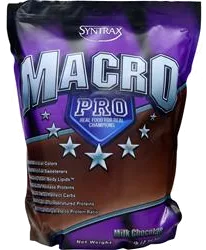
Syntrax MacroPro Milk Chocolate Review
Syntrax MacroPro Milk Chocolate is a powdered drink mix in a milk chocolate flavor. The serving size is printed as 41 to 123 grams, and each container holds 18 servings. Per serving the label lists 490 calories, 35 g protein, 68 g total carbohydrates, 10 g total fat, 75 mg cholesterol, 240 mg sodium, 420 mg calcium, 510 mg potassium, 1.6 mg iron and 0.9 mcg vitamin D. The other ingredients start with palatinose, highly branched superdextrin and soluble corn fiber, followed by whey protein concentrate, micellar casein, egg white protein, high-oleic sunflower oil and MCT oil. It also contains cocoa powder, natural and artificial flavors, salt, acesulfame potassium and sucralose. The printed directions say to mix one scoop with 4 to 6 oz of water or milk for 30 to 60 seconds to decrease daily calories, or three scoops with 12 to 16 oz of water or milk to increase daily calories. The label notes that milk adds extra calories, and says to use it two to three times per day depending on your needs and goals.
We don’t sell supplements. We help you make decisions and get the best price.
Lowest prices
We may earn a commission from some store links. How we choose.
We found no store selling it right now.
Products with nearly the same formula (Matched on the main ingredients)
Study, Trial or Testing Result Summary
Members Only91 human studies · 35 improved
10 of these 91 human studies gave the ingredient by drip, not by mouth.
This chocolate protein shake provides calcium at a full studied dose, but most of the blood sugar support for calcium comes from studies that paired it with vitamin D, so calcium's own share is unclear. In 307 men, vitamin D plus 500 milligrams of calcium daily lowered fasting insulin and insulin resistance [1]. In 243 people with prediabetes, vitamin D and/or calcium improved insulin release [2]. In pregnant women, calcium plus vitamin D lowered fasting blood sugar [3][4]. Higher dietary calcium was linked to less pregnancy diabetes [5]. The vitamin D here is far below the studied dose. At higher doses, vitamin D modestly lowered blood sugar in type 2 diabetes [6][7], but a large five year trial found no significant drop in diabetes risk [8]. Iron is not supported for blood sugar, and extra iron before pregnancy was linked to more pregnancy diabetes [9]. The potassium studies mostly used hospital drips during heart surgery, so they do not show that potassium supplements help [10]. Animal and cell studies are never counted.
See all 91 studies →Hide the studies
- Across 53 trials of 9,443 pregnant women, vitamin D supplements lowered the risk of gestational diabetes by about 36% and improved blood sugar, blood fat, inflammation and oxidative stress markers.Dietary supplementation for gestational diabetes prevention and management: a meta-analysis of randomized controlled tri…
- In 46 trials of 4,313 people with type 2 diabetes, vitamin D lowered HbA1c by 0.20 points, fasting glucose by 5 mg/dl and insulin resistance, most in people who were deficient and with high doses over a short time.What is the impact of vitamin D supplementation on glycemic control in people with type-2 diabetes: a systematic review …
- In 39 trials of 2,982 people with type 2 diabetes, vitamin D lowered fasting glucose, HbA1c by 0.30 points, insulin resistance and fasting insulin, especially with short-term high doses in deficient or overweight people.Efficacy of vitamin D supplementation on glycaemic control in type 2 diabetes: An updated systematic review and meta-ana…
- In 15 trials of 2,833 pregnant women, two trials of 219 women found no clear difference in gestational diabetes risk between vitamin D and placebo or no treatment, though the evidence was very low quality.Vitamin D supplementation for women during pregnancy.
- In 8 trials with 1,580 people with prediabetes, vitamin D did not change HbA1c, fasting glucose or insulin resistance versus placebo but improved the 2-hour glucose tolerance test result.Association between vitamin D and prediabetes: A PRISMA-compliant meta-analysis.
- Across 9 trials of 1029 heart bypass surgery patients, a glucose-insulin-potassium infusion cut heart attacks during surgery and the need for heart-supporting drugs, but raised the risk of irregular heartbeat (atrial fibrillation) after surgery.[Effect of perioperative glucose-insulin-potassium infusions on the prognosis in patients undergoing coronary artery byp…
- Across five trials of 306 pregnant women with gestational diabetes, vitamin D plus calcium lowered fasting blood sugar, insulin and LDL cholesterol, but did not change total cholesterol or triglycerides.Influence of vitamin D-calcium on metabolic profile for gestational diabetes: a meta-analysis of randomized controlled t…
- A pooled analysis of Iranian studies found vitamin D improved fasting glucose, HbA1c and insulin resistance in people with type 2 diabetes, while gestational diabetes showed gains only in insulin resistance.The effects of vitamin D supplementation on indices of glycemic control in Iranian diabetics: A systematic review and me…
- In 27 trials in pregnant women, vitamin D above 2000 IU a day lowered the risk of gestational diabetes by 30%, but did not change preterm birth or birth weight, and lower doses were enough to reduce preeclampsia.Vitamin D supplementation higher than 2000 IU/day compared to lower dose on maternal-fetal outcome: Systematic review an…
- In three placebo-controlled trials of adults with prediabetes, vitamin D cut the risk of developing type 2 diabetes by 15% over about 3 years and made a return to normal blood sugar 30% more likely.Vitamin D and Risk for Type 2 Diabetes in People With Prediabetes : A Systematic Review and Meta-analysis of Individual …
- An analysis of 15 meta-analyses of trials in women with polycystic ovary syndrome found vitamin D lowered triglycerides, total and LDL cholesterol, but did not change HDL cholesterol, insulin or body mass index.Effect of vitamin D supplementation on lipid profile, and hormonal functions in polycystic ovary syndrome: An umbrella s…
- A network analysis in people with type 2 diabetes found vitamin D was best of the vitamins for lowering HbA1c, with 4,100 to 7,500 IU a day giving the biggest gain in insulin resistance.Network meta-analysis of the effects of combined exercise and vitamin intervention on insulin resistance and related ind…
- A review of 86 meta-analyses found that eating less heme iron was linked to a higher risk of type 2 diabetes, though this was dietary intake and not a supplement.Risk factors for type 2 diabetes mellitus: An exposure-wide umbrella review of meta-analyses.
- A review of 16 reviews covering 250,569 pregnant women found low vitamin D linked to more gestational diabetes, and supplementation in women who already had gestational diabetes reduced some complications in them and their babies.Effects of vitamin D in pregnancy on maternal and offspring health-related outcomes: An umbrella review of systematic re…
- A review of 8 cohort studies and 11 trials found higher vitamin D status linked to lower type 2 diabetes risk, but supplements did not change blood sugar in people with normal glucose or established diabetes, and improved insulin resistance in two trials of people with glucose intolerance.Vitamin D and type 2 diabetes: a systematic review.
- A systematic review of 76 studies found the evidence on vitamin D in pregnancy too inconsistent and low quality to support firm conclusions about maternal blood pressure or blood sugar outcomes.Vitamin D supplementation in pregnancy: a systematic review.
- In a review of studies of women with past pregnancy diabetes, higher intake of total and heme iron was linked to poorer diabetes outcomes in observational studies.The Role of Diet in the Prevention of Diabetes among Women with Prior Gestational Diabetes: A Systematic Review of Inter…
- A review of 34 meta-analyses found heme iron intake was linked to a higher risk of type 2 diabetes, while evidence quality for most outcomes was low, so no firm conclusions could be drawn.Iron intake and multiple health outcomes: Umbrella review.
- In 22,220 older US adults followed for about 5.3 years, 2000 IU of vitamin D3 daily did not significantly reduce type 2 diabetes risk compared with placebo, though pooling with prior trials showed a modest reduction.Vitamin D supplementation vs. placebo and incident type 2 diabetes in an ancillary study of the randomized Vitamin D and…
- In 1,729 women planning pregnancy, iron was given in both supplements, so its own effect on blood sugar could not be separated; this report only covered vitamin levels.Maternal B-vitamin and vitamin D status before, during, and after pregnancy and the influence of supplementation preconc…
- In 940 heart attack patients treated with angioplasty, a glucose-insulin-potassium infusion did not change heart damage enzyme levels or average pumping function, though fewer had severely reduced pumping function (12% vs 18%).The impact of glucose-insulin-potassium infusion in acute myocardial infarction on infarct size and left ventricular eje…
- In the VITAL trial, baseline blood sugar markers predicted later type 2 diabetes and heart disease, and randomization to vitamin D did not change those associations.Biomarkers of glucose-insulin homeostasis and incident type 2 diabetes and cardiovascular disease: results from the Vita…
- In 307 infertile men, taking 1400 units of vitamin D3 plus 500 mg calcium daily for 150 days lowered fasting insulin and insulin resistance and raised HDL cholesterol compared with placebo.Vitamin D Supplementation Improves Fasting Insulin Levels and HDL Cholesterol in Infertile Men.
- In 243 people with prediabetes given vitamin D and/or 500 mg calcium daily for 24 weeks, insulin secretion rose, and those low in vitamin D improved pancreatic beta-cell function with vitamin D plus calcium.Effect of Vitamin D and/or Calcium Supplementation on Pancreatic β-Cell Function in Subjects with Prediabetes: A Randomi…
- In 239 Italian adults with type 2 diabetes and low vitamin D, six months of vitamin D3 lowered fasting and after-meal glucose and HbA1c compared with placebo, and some patients needed less meds.Vitamin D3 supplementation improves glycemic control in type 2 diabetic patients: Results from an Italian clinical trial…
- In 203 people with advanced kidney disease, ferric citrate for about 9 months raised iron markers and lowered phosphate, but blood sugar was not reported.A Pilot Randomized Trial of Ferric Citrate Coordination Complex for the Treatment of Advanced CKD.
- In 191 people with type 2 diabetes and kidney disease, a low-iron diet slowed kidney decline over about 4 years, but this was not about iron supplements or blood sugar.A low-iron-available, polyphenol-enriched, carbohydrate-restricted diet to slow progression of diabetic nephropathy.
- In a 12-month placebo-controlled trial of 173 African-American men with prediabetes and low vitamin D, weekly high-dose vitamin D2 raised vitamin D levels but did not improve insulin sensitivity or HbA1c compared with placebo.EFFECT OF HIGH-DOSE VITAMIN D REPLETION ON GLYCEMIC CONTROL IN AFRICAN-AMERICAN MALES WITH PREDIABETES AND HYPOVITAMINOS…
- In 160 Saudi adults with prediabetes, a six-month lifestyle program improved blood sugar and diet, including iron intake, but iron itself was not tested as a treatment.Improvements in Glycemic, Micronutrient, and Mineral Indices in Arab Adults with Pre-Diabetes Post-Lifestyle Modificatio…
- In 141 diabetic patients having heart bypass surgery, tight blood sugar control with glucose-insulin-potassium lowered blood sugar, atrial fibrillation (17% vs 42%), hospital stay, repeat heart ischemia and wound infections, and improved 2-year survival.Tight glycemic control in diabetic coronary artery bypass graft patients improves perioperative outcomes and decreases r…
- In 130 adults with type 2 diabetes on a med, vitamin D over 6 months improved HbA1c and lowered advanced oxidation protein products at 3 months with higher doses, but did not significantly change insulin resistance.The Effects of Vitamin D Supplementation on Metabolic and Oxidative Stress Markers in Patients With Type 2 Diabetes: A 6…
- In 100 adults with type 2 diabetes, drinking vitamin D-fortified yogurt twice daily for 12 weeks improved fasting glucose, HbA1c, insulin sensitivity index and blood fats compared with plain yogurt, along with markers of blood vessel lining health.Regular consumption of vitamin D-fortified yogurt drink (Doogh) improved endothelial biomarkers in subjects with type 2 …
- In 100 people with type 2 diabetes, a yogurt drink with vitamin D and calcium for 12 weeks lowered inflammation markers compared with the same drink without vitamin D (both had calcium).Improvement of vitamin D status resulted in amelioration of biomarkers of systemic inflammation in the subjects with typ…
- In 90 aortic valve surgery patients, a large initial dose of a potassium-enriched heart-protecting solution gave shorter reperfusion time and lower heart damage enzyme (CK-MB) than glucose-insulin-potassium.Initial large-dose administration of modified St. Thomas' solution.
- In 78 overweight or obese adults, taking 1,000 IU of vitamin D3 daily for 12 weeks, with or without magnesium, did not improve glucose, insulin or insulin resistance compared with placebo.Combined vitamin D and magnesium supplementation does not influence markers of bone turnover or glycemic control: A rand…
- In 60 women with gestational diabetes, 1000 mg calcium daily plus vitamin D for 6 weeks lowered caesarean rates (23% vs 63%) and newborn complications compared with placebo.Calcium plus vitamin D supplementation affects pregnancy outcomes in gestational diabetes: randomized, double-blind, pla…
- In 60 women with polycystic ovary syndrome, a combined magnesium, zinc, calcium and vitamin D supplement for 12 weeks lowered insulin, insulin resistance, triglycerides and total cholesterol compared with placebo.A Trial on The Effects of Magnesium-Zinc-Calcium-Vitamin D Co-Supplementation on Glycemic Control and Markers of Cardio-…
- In 60 women with gestational diabetes, a combined magnesium, zinc, calcium and vitamin D supplement for 6 weeks lowered inflammation and oxidative stress markers compared with placebo.The effects of magnesium-zinc-calcium-vitamin D co-supplementation on biomarkers of inflammation, oxidative stress and p…
- In 49 pregnant women at risk for pre-eclampsia, 500 mg of calcium carbonate plus 200 IU of vitamin D3 daily for 9 weeks lowered fasting blood sugar and triglycerides compared with placebo, but did not change total, HDL or LDL cholesterol.Effect of calcium-vitamin D supplementation on metabolic profiles in pregnant women at risk for pre-eclampsia: a randomi…
- In 47 patients with acute coronary syndromes undergoing stenting, glucose-insulin-potassium infusion prevented the rise in heart antioxidant enzyme activity seen with saline, suggesting less oxidative stress in the heart.The effect of glucose-insulin-potassium treatment on myocardial oxidative stress in patients with acute coronary syndrom…
- In 32 heart attack patients over 48 hours, modified glucose-insulin-potassium blunted the rise in blood free fatty acids and myoglobin compared with saline and potassium, without changing blood glucose.Effect of modified glucose-insulin-potassium on free fatty acids, matrix metalloproteinase, and myoglobin in ST-elevatio…
- In a small feasibility trial of 30 people with early rheumatoid arthritis, a diet and exercise counseling program produced only non-significant trends toward higher iron intake over six months, with high dropout.Personalized diet and exercise recommendations in early rheumatoid arthritis: A feasibility trial.
- In 30 heart surgery patients, glucose-insulin-potassium improved blood oxygen levels in the central veins and liver but did not change the inflammation markers C3a and IL-6.Insulin (GIK) improves central mixed and hepatic venous oxygenation in clinical cardiac surgery.
- In 28 men with type 2 diabetes and high ferritin, removing iron through three blood draws lowered long-term blood sugar by 0.6% and improved blood vessel function, but the effect faded by 12 months.Blood letting in high-ferritin type 2 diabetes: effects on vascular reactivity.
- In 24 patients with suspected heart attack, a glucose-insulin-potassium infusion over 48 hours lowered total blood free fatty acids and shifted their makeup in a way the authors linked to better heart cell membrane stability.Glucose-insulin-potassium induced alterations in individual plasma free fatty acids in patients with acute myocardial in…
- In 20 heart attack patients having emergency angioplasty, glucose-insulin-potassium infusion gave lower blood free fatty acid levels at 24 hours than standard care.Effect of glucose-insulin-potassium infusion on plasma free fatty acid concentrations in patients undergoing primary per…
- In 20 patients having mitral valve replacement, an infusion of insulin, glucose and potassium before surgery left more energy-storing compounds in the heart muscle after blocked blood flow than plain Ringer's lactate fluid did.Improvement of cardiac preservation by preoperative high insulin supply.
- In 16 adults with type 2 diabetes and low vitamin D, 12 weeks of vitamin D3 (280 mcg daily for 2 weeks, then 140 mcg daily) raised vitamin D levels but did not improve insulin sensitivity or HbA1c compared with placebo; there were only borderline gains in insulin secretion.Effects of 12 weeks high dose vitamin D3 treatment on insulin sensitivity, beta cell function, and metabolic markers in …
- In 14 adults with type 2 diabetes on an energy-restricted diet, about 1200 mg of calcium daily from fat-free milk and other foods for 12 weeks reduced waist size, blood pressure, total and LDL cholesterol more than a lower-calcium phase.Effect of increased calcium consumption from fat-free milk in an energy-restricted diet on the metabolic syndrome and ca…
- Over 24 months, 4000 IU of vitamin D3 daily did not improve insulin sensitivity or insulin-producing cell function in overweight adults with prediabetes overall, though people starting with very low vitamin D levels (below 12 ng/mL) showed a benefit.Effects of Vitamin D Supplementation on Insulin Sensitivity and Secretion in Prediabetes.
- Patients given a glucose, insulin and potassium infusion before mitral valve replacement had higher heart muscle glycogen, and those with higher levels had less low blood pressure, fewer serious heart rhythm problems and fewer serious complications after surgery.Effects of preoperative glucose-insulin-potassium on myocardial glycogen levels and on complications of mitral valve rep…
- In 100 Tunisian adults with type 2 diabetes and low vitamin D, three months of vitamin D supplementation raised vitamin D levels but did not significantly improve blood sugar control or insulin resistance.Influence of vitamin D supplementation on glycemic control in type 2 diabetics.
- In 90 pregnant women, iron-containing supplements and a food powder gave similar fasting blood sugar, all within normal range.[The clinical use of MOM nutrient powder in pregnant women].
- In a small case-control study of 18 people with type 2 diabetes, lower vitamin D was linked to more microvascular complications such as nerve, eye, and kidney damage.Vitamin D levels and microvascular complications in type 2 diabetes.
- In 11 people with diabetes and 11 without, taking 3 g of calcium lactate with a glucose drink raised insulin release only in those with diabetes, while intravenous calcium had no effect.Insulin secretion after oral calcium load.
- In 8 adults, a high calcium and vitamin D breakfast did not change blood sugar or insulin responses after a later lunch compared with a low-calcium breakfast.Second meal effects of dietary calcium and vitamin D.
- In 2309 dialysis patients with high phosphate, calcium carbonate binders produced no significant difference in cardiovascular events compared with lanthanum carbonate over a median of about 3 years.Effect of Treating Hyperphosphatemia With Lanthanum Carbonate vs Calcium Carbonate on Cardiovascular Events in Patients …
- In 60 people with metabolic syndrome and iron overload followed for one year, managing blood sugar, blood pressure, and other metabolic problems did not normalize ferritin, and only those with ferritin below 450 micrograms per liter at baseline normalized iron overload.[Correction of insulin resistance syndrome does not cause normalisation of hyperferritinaemia].
- In 50 people with Cushing's disease who were low in vitamin D, a single large vitamin D3 dose followed by six weeks of treatment improved insulin sensitivity and raised vitamin D levels, compared with their own starting values.Vitamin D Deficiency in Cushing's Disease: Before and After Its Supplementation.
- In 45 dialysis patients, giving less intravenous iron over six months kept hemoglobin stable while ferritin and iron saturation fell.Targets for adapting intravenous iron dose in hemodialysis: a proof of concept study.
- In 43 dialysis patients with type 2 diabetes, calcium carbonate binders allowed more aortic calcification over 12 months than lanthanum carbonate, mainly in patients with mild calcification at baseline.Evaluation of aortic calcification with lanthanum carbonate vs. calcium-based phosphate binders in maintenance hemodialy…
- In adults with thalassaemia, about one third of patients had better blood sugar control after 24 to 36 months of intensive iron chelation therapy, which the authors linked to lower liver iron.Glucose metabolism disorders improvement in patients with thalassaemia major after 24-36 months of intensive chelation t…
- A genetic analysis of over 10,000 people in China found no causal link between genetically higher vitamin D levels and type 2 diabetes, prediabetes, or blood sugar measures.Vitamin D, prediabetes and type 2 diabetes: bidirectional Mendelian randomization analysis.
- In a large survey of Hispanic and Latino adults without diabetes, those eating the most vitamin D from food had lower insulin resistance, but their two-hour blood sugar after a glucose drink was higher, and HbA1c showed no link.Vitamin D, Calcium, Magnesium, and Potassium Consumption and Markers of Glucose Metabolism in the Hispanic Community Hea…
- In a national survey of 9939 US adults, those with diabetes ate about 7% more calcium than those without, but overall diets of the two groups did not differ substantially.Dietary intake of adults with and without diabetes: results from NHANES 2013-2016.
- In a US survey of 5970 adults with diabetes followed for mortality, average dietary iron of about 14 mg a day was linked to the lowest all-cause death risk in the middle intake band, with a higher risk seen with more iron in men and a possible protective pattern in women.Dietary iron intake predicts all-cause and cardiovascular mortality in patients with diabetes.
- In a Chinese cohort of 5,543 adults followed for about 3.9 years, lower blood vitamin D was not linked to a higher risk of developing type 2 diabetes.25-Hydroxyvitamin D and Incidence of Type 2 Diabetes from a Chinese Cohort Study.
- In a 5-year follow-up of 4,409 apparently healthy Japanese men, those with the lowest blood potassium levels (within the normal range) were more likely to develop type 2 diabetes than those with the highest levels; this study measured blood potassium and did not test potassium supplements.Low serum potassium levels and risk of type 2 diabetes: the Toranomon Hospital Health Management Center Study 1 (TOPICS …
- In a large prospective cohort of pregnant women, those who ate more calcium before and early in pregnancy had a lower risk of gestational diabetes, with women in the top three intake quartiles (about 795 mg per day or more) about 42 percent less likely to develop it than women in the lowest quartile.Risk of gestational diabetes mellitus in relation to maternal dietary calcium intake.
- In a cohort of 3289 Chinese pregnant women, both low and high early-pregnancy serum iron were linked to higher gestational diabetes risk, and taking iron supplements before pregnancy was linked to about 57% higher risk.Iron-Related Factors in Early Pregnancy and Subsequent Risk of Gestational Diabetes Mellitus: the Ma'anshan Birth Cohort…
- In 2,160 people in Tehran, higher blood vitamin D levels were linked to lower insulin resistance and better blood sugar measures, though this study did not test supplements.The association of vitamin D levels and insulin resistance.
- In 2,019 people with type 2 diabetes, anemia and kidney disease on placebo, hemoglobin stayed stable over about 2.3 years without regular anemia drug treatment.Hemoglobin stability in patients with anemia, CKD, and type 2 diabetes: an analysis of the TREAT (Trial to Reduce Cardio…
- In 912 people from western India, low vitamin D was not associated with HbA1c or insulin resistance in either people with type 2 diabetes or non-diabetic controls.Does vitamin D play a significant role in type 2 diabetes?
- In 806 patients with acute coronary syndrome, higher circulating catalytic iron at baseline was linked to higher 30-day death rates.Impact of catalytic iron on mortality in patients with acute coronary syndrome exposed to iodinated radiocontrast-The Is…
- In a case-control study of 756 people undergoing colonoscopy, those with colorectal adenomas had lower calcium intake than those without, but the study's main finding concerned insulin and glucose levels, not calcium supplementation or blood sugar outcomes.Insulin resistance, apoptosis, and colorectal adenoma risk.
- Among 566 pregnant women, lower glycemic diets were linked to better micronutrient intake, but most women still got less iron than recommended from food alone.Dietary micronutrient intake during pregnancy is a function of carbohydrate quality.
- In 476 Iranian adults with type 2 diabetes, those with the highest overall oxidative balance score, which included dietary iron as one of 18 components, had lower HbA1c and fasting glucose than those with the lowest score; iron was not studied alone.Higher oxidative balance score is associated with better glycemic control among Iranian adults with type-2 diabetes.
- In pregnant South African women, vitamin D levels did not change between visits, while some vitamin D metabolites were linked to blood sugar and insulin measures in mixed directions.Longitudinal changes in vitamin D and its metabolites in pregnant South Africans.
- In 263 people without diabetes, iron deficiency anemia was linked to lower HbA1c than in healthy controls, and HbA1c rose slightly, not significantly, after iron therapy.HbA1c level decreases in iron deficiency anemia.
- In 235 people with type 2 diabetes, low vitamin D levels were not linked to diabetic eye damage or its severity.Is there any correlation between vitamin D insufficiency and diabetic retinopathy?
- In 234 young Indian military recruits, higher vitamin D was linked to lower fasting blood glucose, but not to insulin resistance, cholesterol, or triglycerides.Vitamin D, body mass composition and metabolic risk factors in healthy young Indians.
- In 227 obese Mexican children and adolescents, those with low vitamin D had higher fasting insulin and insulin resistance than those with sufficient levels.Vitamin D status and its relation to insulin resistance in a Mexican pediatric population.
- In 180 middle-aged adults, low vitamin D was linked to higher odds of type 2 diabetes, but higher vitamin D levels were also associated with higher blood sugar and insulin resistance measures, so the pattern was inconsistent.Association of vitamin D deficiency with insulin resistance in middle-aged type 2 diabetics.
- In 174 adults with prediabetes or normal glucose tolerance, higher levels of vitamin D binding protein were linked to nerve control of the heart and body fat, but this study did not test any vitamin D supplement.Vitamin D binding protein is related to cardiac autonomic function and metabolic status in prediabetes.
- In 170 people with severe obesity awaiting bariatric surgery, calcium intake was not significantly different from recommended levels only in women aged 51 to 70, while many had impaired glucose metabolism, and the study did not test whether calcium improved blood sugar or heart health.Dietary Intakes and Biochemical Parameters of Morbidly Obese Patients Prior to Bariatric Surgery.
- In 127 women with recurrent pregnancy loss, vitamin D levels were not significantly linked to insulin levels or insulin resistance, although women with higher insulin resistance had lower vitamin D.Glucose/insulin metabolism and vitamin D in women with recurrent pregnancy loss.
- In a cross-sectional study of 114 people with chronic pancreatitis, dietary iron intake differed in people with new diabetes or prediabetes, but the study found no correlation between iron intake and blood sugar markers; magnesium showed the links.Association between dietary mineral intake and new onset diabetes/pre-diabetes after chronic pancreatitis.
- In a case-control study of 52 pregnant women with gestational diabetes and 50 without, serum ferritin was higher in the women with gestational diabetes, and their triglycerides were also higher.Gestational diabetes mellitus and iron supplement; effects on pregnancy outcome.
- In a study of 34 people with beta-thalassemia and 33 healthy controls, fasting proinsulin was higher in the thalassemia patients, and the level rose with body iron stores (serum ferritin and liver iron), suggesting early insulin-producing cell strain from iron overload.Disproportionately elevated fasting proinsulin levels in normoglycemic patients with thalassemia major are correlated to…
- In 52 episodes of diabetic ketoacidosis treated with slow intravenous insulin, most of whom also received potassium phosphate, no hypoglycemia or induced low potassium occurred, and the authors judged the method safe.Low-dose intravenous insulin in the treatment of diabetic ketoacidosis.
- In rats fed a high-sugar diet, vitamin D3 lowered blood glucose and improved insulin release during a glucose load, and lab work suggests this works by calming inflammation in insulin-producing cells.Vitamin D protects against high glucose-induced pancreatic β-cell dysfunction via AMPK-NLRP3 inflammasome pathway.
Review Totals and Summary
Members OnlyWhat buyers say
No written reviews read yet.
Biohacker Summary
Members Only9 of 10 recommend it
On calcium, the main ingredient, the panel is mostly neutral: seven of ten mention it without clearly recommending it, and three recommend it. Those three say it matters for bones, nerves, muscles and the heart, and one gives a daily intake of 1,000 to 1,200 milligrams, which can come from calcium carbonate or calcium citrate. The rest mostly point to food sources such as sardines, dairy, milk and kale, and one is weighing a supplement because lead can displace calcium in bones. Another notes that low energy intake in hard training often leaves calcium short. Vitamin D, iron and potassium are smaller ingredients in this product, and vitamin D is the one the panel talks about most, with several taking 5,000 IU in the morning, ideally with fat, while one panelist stopped iron after years of supplements failed to raise his levels.
See all 10 biohackers →Hide the biohackers
Dr. Eric Berg · Calcium · neutral
- States that one can of sardines contains 382 mg of calcium.
- Dr. Berg states that Vitamin D helps maintain healthy skin, support cell repair, and protect against oxidative damage.
- Recommends Vitamin D3, especially, for reducing plaque in arteries.
- Notes that Italian pasta isn't enriched with iron, suggesting that enrichment with iron might be a negative factor.
- Criticizes the mainstream limit of 99 milligrams for potassium supplements, stating it's based on a weak 1972 study that incorrectly attributed problems to potassium chloride instead of a med.
- Recommends Vitamin D3, noting it's a hormonal precursor involved in a med hormones, and suggests a minimum dose of 10,000 IUs, preferably with K2.
- Discusses Vitamin D in relation to prostate health.
- Lists Vitamin D as a natural cancer remedy.
- Lists Vitamin D as an ingredient found in sardines.
- Warns against calcium supplements, citing studies that link them to a higher risk of heart attack, especially in postmenopausal women, and suggests getting calcium from dairy instead.
- Recommends Vitamin D3 because it's nearly impossible to get enough from food and most people don't get enough sun, advising to aim for blood levels of at least 50 to 80 ng/mL.
- Dr. Berg states that when nutrients like vitamin D are too low, fatigue and weakness can follow.
- Warns against iron supplements, suggesting instead to get iron from red meat or liver.
- Dr. Berg states that when nutrients like iron are too low, fatigue and weakness can follow.
Siim Land · Calcium · neutral
- Lists dairy and sardines as sources of Calcium.
- Advises against taking vitamin D in the morning with other supplements because it is fat soluble and requires dietary fat for better absorption.
- Recommends taking Vitamin D with fat for better absorption.
- States that Vitamin D connects biology to light and that UVB reaching the skin enables its production.
- Mentions that iron is a mineral necessary for making collagen.
- Lists potatoes and fruit as sources of Potassium.
- Thinks vitamin D has some of the strongest evidence and is worth considering.
- Notes that Vitamin K2 pairs well with vitamin D by regulating calcium and bone mineralization.
- States that excess iron promotes oxidative stress and inflammation, which increases heart disease risk.
- Recommends taking vitamin D supplements with some fat to maximize its absorption, suggesting with food or a teaspoon of olive oil.
- Notes that taking vitamin D3 with a fat-containing meal resulted in 32% higher peak blood vitamin D levels.
- Recommends taking Vitamin D in the morning or at lunch with fat.
- Notes that Boron reduces calcium/magnesium loss.
- Notes that Boron improves vitamin D.
Thomas DeLauer · Calcium · neutral
- Notes that milk contains 120mg of calcium, while sardines contain 351mg, highlighting a 3x difference.
- Recommends taking Vitamin D3 in the morning, between 6:00 and 10:00 a.m., to align with the body's natural metabolic activation phase and sunlight-triggered vitamin D production.
- Recommends Element electrolytes, noting they are focused on sodium first, then potassium, then magnesium, helping with sending signals and hydrating tissue.
- Recommends giving any iron intervention a couple of months before deciding if it works, and suggests increasing heme iron through red meat or liver intake.
- Uses Element's cans which contain 100 milligram potassium, finding that electrolytes help his workout performance.
- Uses Element's 100 mg potassium cans first thing in the morning to prime his day and help with workout performance.
- Uses vitamin D3 in the fall and winter months when getting less sun, as it's important to supplement it then.
- Recommends taking a massive amount of vitamin D simultaneously with an early morning massive breakfast to help reset circadian rhythms and address hyperphagia.
- Recommends Vitamin D, stating that it has receptors throughout the brain and deficiency can quickly impact brain and mood.
- Takes supplemental vitamin D because he is skin sensitive and from northern latitudes, limiting his UV exposure.
- Recommends taking vitamin D on non-liver days to ensure both nutrients get proper receptor access.
- Takes Purity's liquid vitamin D3 with K2 because she is constantly inside during the day; D3 is for overall wellness and K2 helps the body absorb calcium properly.
- Compares iron content in spinach (2.7mg) and beef (2.6mg), but emphasizes that beef's heme iron absorbs at about 25%, while spinach's non-heme iron absorbs at 2-8%.
- Recommends getting vitamin D, suggesting it can be obtained while walking.
Dr. Mark Hyman · Calcium · recommends
- Notes that calcium is in bones but is also essential for nerves, muscles, and the heart, and low levels can affect muscle function and heart rhythm.
- Consumes Zetopia's Atlantic salmon to get Vitamin D, particularly in the winter months, as it is one of the few foods that provides both Omega-3s and Vitamin D.
- Mentions that the body makes vitamin D from sunlight exposure, and a deficiency can hinder calcium absorption, which is crucial for strong bones.
- States that iron helps red blood cells carry oxygen, and a deficiency can make one feel like they are running on low power mode.
- Recommends Vitamin D for health, stating that amazing things happen when patients' vitamin D statuses reach optimal levels.
- Mentions vitamin D as an existing biomarker that plays a role in mental health, which Function Health includes in their measurements.
- Mentions iron as an existing biomarker that plays a role in mental health, which Function Health includes in their measurements.
- Notes that vitamin D plays a role in immune function.
- Warns that potassium bromate, a dough conditioner banned in the EU, UK, and Canada, is still allowed in U.S. bread.
- Recommends checking vitamin D levels and states that if they had to pick one single intervention for immune health, vitamin D would be it.
- Dr. Hyman discusses vitamin D in relation to sun exposure patterns.
- States that vitamin D supplementation can help with oxidative stress.
- Mentions vitamin D as a key nutrient for supporting immune function.
- States that vitamin D is probably the single most important intervention for immune health, recommending levels of 45 to 70 and emphasizing testing to determine the right dose.
Dr. Rhonda Patrick · Calcium · neutral
- Mentions that kale delivers calcium, a micronutrient many diets fall short on.
- Explains that while heme iron is essential at low levels, too much is very pro-inflammatory and pro-oxidant, damaging the pancreas and beta cells that produce insulin, and is linked to type 2 diabetes.
- States that people taking vitamin D supplements have a 40% lower risk of dementia, and those with lower vitamin D levels have a 50 to 80% higher risk of dementia.
- Notes that vitamin D from sunlight, food, or supplements needs to undergo conversions in the liver and kidneys to become its active hormone form, calcitriol.
- States that Vitamin D supplementation has been associated with a 40% lower dementia risk, and low levels are linked to a 50 to 80% higher risk.
- Recommends getting adequate vitamin D, noting that people taking vitamin D supplements have a 40% lower risk of dementia, while those with lower vitamin D have a 50-80% higher risk.
- Vitamin D supplementation was linked to a 40% lower risk of dementia in an observational study of more than 12,000 older adults.
- Mentions that vitamin D also plays a role in maintaining muscle mass.
- Recommends ensuring adequate vitamin D intake for men's sperm health.
- Vitamin D and strength training alone did not, but adding them strengthened the effect on one clock, with the full combination slowing that measure by ~3.8 months.
- Lutein and zeaxanthin can also be obtained from certain multivitamins.
- Recommends Vitamin D, noting it regulates over 5% of the genome, including genes involved in immune defense, neurotransmitter synthesis, and longevity, and correcting deficiency may slow epigenetic aging.
- Recommends getting enough potassium, noting that most people get too much sodium and not enough potassium.
- Recently found out he needed to get on an iron supplement and noticed he gets less sore in his training after taking it.
Dave Asprey · Calcium · neutral
- Notes that when energy intake is too low for training demand, nutrient intake often falls short, especially for calcium, which is associated with reduced bone health.
- Warns that guessing one's vitamin D levels from sun exposure is a bad bet, as even after six weeks in Hawaii, their 25(OH)D levels were still low.
- Explains that potassium helps open a gate, allowing creatine to slip through and cross the blood-brain barrier more effectively.
- Takes Vitamin DAKE from Suppgrade Labs.
- Suggests that vitamin D supports brain health, muscle function, and focus.
- Host Dave Asprey explains why correcting a vitamin D deficiency still makes sense for male fertility, even though supplementation did not improve overall semen parameters in a randomized trial.
- States that currently, he is only taking vitamin C and vitamin D.
- Recommends vitamin D, noting it's actually a hormone and that most people are deficient, even those who take it, because they don't take enough.
- States that most people on the spectrum are low in vitamin D and need more of it, mentioning his own product, Vitam DAKNE, which contains real vitamin A.
- Dave Asprey recommends Vitamin D3 with K2, explaining D3 is a hormone made from sunlight and K2 directs calcium into bones, not arteries, highlighting its low cost, widespread deficiency, and the ability to test its effectiveness.
- Recommends Vitamin D as one of the most important supplements for overall health.
- Takes Vitamin DAKE from Suppgrade Labs because D3, A, K2, and E work together.
- Warns that if a doctor diagnoses anemia, one should not assume they just need more iron, as low hemoglobin doesn't always mean low iron and the issue can sometimes be how well the body is using iron.
- Notes that when energy intake is too low for training demand, nutrient intake often falls short, especially for iron, which is associated with impaired recovery.
Ben Greenfield · Calcium · neutral
- Is considering whether he needs a calcium supplement because lead can displace calcium in bones, affecting bone strength.
- Notes that Vitamin D is actually a hormone and recommends patients aim for levels around 40 to 50, or even 60 for fracture healing, for optimal healing, as opposed to just above 20 which is considered normal.
- Says he is drinking LMNT, which contains sodium, potassium, and magnesium, and states that he actually drinks this stuff.
- Mentions vitamin D as part of a bare-minimum protocol.
- Advises getting vitamin D levels between 60 and 100 nanograms per milliliter as a minimum step for overall health and to slow down heart disease.
- Has been taking Vitamin D3 K2 for over a decade.
- Recommends Celtic Sea Salt's new electrolyte drink 'Hydrate' for replenishing electrolytes and trace minerals lost through sweat, noting it contains 70 naturally occurring trace minerals, magnesium, taurine, and potassium, with no added sugar, artificial colors, or synthetic ingredients.
- Notes that sunlight influences more than just vitamin D production.
- Recommends keeping vitamin D levels high, suggesting that a supplement is probably not a bad idea, especially given that many people are deficient due to spending most of their time indoors.
- Recommends getting enough vitamin D for blood pressure management.
- Recommends optimizing vitamin D levels to a serum score of around 50 to 80 nanograms per milliliter, as deficiency is linked to tinnitus volume and can assist with it.
- Recommends testing for and replenishing iron if levels are low, as it can affect the ability to maintain or preserve muscle, especially for those on GLP-1s.
- Recommends using hormone building blocks like vitamin D for hormone optimization.
- Notes that one can eat iron-rich foods or supplement with iron, but still feel exhausted if iron is not the missing piece, emphasizing that focusing on a single mineral in isolation can support a number on a lab test rather than the system itself.
Peter Attia · Calcium · recommends
- Recommends calcium as one of the 'big three' micronutrients for bone health, suggesting a daily intake of 1,000 to 1,200 milligrams, which can be supplemented with calcium carbonate or calcium citrate.
- States there is some evidence that increasing dietary potassium through potassium-rich foods like bananas and potatoes, rather than supplements, can lower blood pressure.
- Lists vitamin D as one of her staple supplements.
- Notes that several studies show patients taking vitamin D can reduce TPO levels and prolong the honeymoon period of Hashimoto's disease.
- States that in mouse studies, there was a combined effect of alpha ketoglutarate with vitamin D for both sexes.
- Uses vitamin D as an example of how people might dismiss its efficacy due to failed clinical trials that didn't adjust the dose or measure levels.
- In mouse studies, Peter Attia's team found a combined effect of AKG with Vitamin D for both sexes.
- Suggests that supplementing with lots of vitamin D might help overcome the negative effects of phenytoin on bone health by improving calcium absorption, though he is unaware of studies on this.
- Recommends Vitamin D3 as one of the 'big three' micronutrients for bone health, suggesting a daily intake of 800 to 1,000 IU, which can be obtained through sunlight or supplementation.
- Explains that bone is 50 to 70% mineral, predominantly calcium, and that virtually all of the body's calcium is contained within bone, making bone important for calcium homeostasis.
- Suggests that supplementing with lots of vitamin D might overcome the negative effects of phenytoin on bone health by counteracting increased catabolism of vitamin D and subsequent decreased calcium absorption.
- Recommends vitamin D for people who tend to be vitamin D deficient, such as those living in Portland, Oregon.
- Recommends iron supplements for women of reproductive age who are iron deficient.
- Discusses evaluating vitamin D, understanding deficiency, and optimal levels.
Bryan Johnson · Calcium · recommends
- Recommends calcium as a mineral that, along with phosphorus, magnesium, and boron, is deposited to fortify the bone structure after the collagen scaffold is in place.
- Takes 5000 IU of Vitamin D3 in the morning for longevity.
- Takes 5000 IU of Vitamin D3 in the morning for general health.
- Takes 5000 IU of Vitamin D3 in the morning for general health.
- Has had low iron for 11 years and despite eating meat and trying all forms of iron supplementation at different times and sequences, none of it worked to raise his iron or ferritin levels.
- Had low iron for 11 years, with ferritin averaging 38 ng/mL, and has finally boosted it back to healthy levels.
- Mentions that the sunlight assessment claims low vitamin D levels cause the immune system to misfire, and notes that their vitamin D has been measured.
- Takes 5000 IU of Vitamin D3 in the morning for longevity.
- He takes 5000 IU of Vitamin D3 in the morning for general health.
- Takes 5000 IU of Vitamin D3 in the morning for general health.
- Takes 5,000 IU of Vitamin D3 in the morning for longevity.
- Takes 5,000 IU of Vitamin D3 in the morning.
- Takes 5,000 IU of Vitamin D3 in the morning.
- Agrees that a little extra calcium is probably okay, especially for women, to really hit home for bone mineral density.
Andrew Huberman · Calcium · neutral
- Discusses "hard water" and the role of magnesium and calcium in cardiovascular health.
- Notes that most people are probably deficient in vitamin D and benefit from supplementing, but there's no point in doing it unless you're deficient for most things.
- Takes 5,000 IU of Vitamin D3 in the morning for longevity.
- Uses Element, an electrolyte drink with sodium, magnesium, and potassium in correct ratios and no sugar, to ensure adequate hydration and electrolytes, especially when starting days fast or during physical exercise.
- Takes 5000 IU of Vitamin D3 in the morning for general health.
- States that Vitamin D is one of the critical nutrients with the best evidence for cognitive function and reducing the risk of dementia.
- States that Iron is one of the critical nutrients with the best evidence for cognitive function and reducing the risk of dementia.
- Takes 5000 IU of Vitamin D3 in the morning.
- He takes 5,000 IU of Vitamin D3 in the morning for overall health.
- Takes 5000 IU of Vitamin D3 in the morning.
- Takes 5,000 IU of Vitamin D3 in the morning for general health.
- Takes 5000 IU of Vitamin D3 every day for longevity.
- Takes 5,000 IU of Vitamin D3 in the morning.
- Uses Element, which contains potassium in the correct ratios, to ensure proper hydration and electrolyte intake for brain and body function.
RAL Summary
Members OnlyTier 4 for Blood Sugar
Calcium has some trial support, mostly when combined with vitamin D, but there are only 10 reviews and just 60% are positive, so the evidence is thin and the signals disagree.
- Emerging: not enough evidence to rank higher yet.
Where the evidence disagrees: 40 of the 91 human studies found no effect.
More Details
Members OnlyBody systems · Combine with · Possible side effects
Body systems: Endocrine system, Cardiovascular system, Metabolic system
Combine with: For Heart and Blood, this product is often paired with omega-3 fish oil, since both are taken as part of a daily nutrition routine and the oil works on blood fat pathways. For Sugar, it is often paired with chromium and with berberine, which both act on the same glucose handling pathway. Magnesium is often paired with it too, because the body uses magnesium up when processing carbohydrates.
Possible side effects: No major side effects reported in the studies for these amounts. Extra iron was linked to a higher risk of pregnancy diabetes, and potassium drips during heart surgery raised the risk of irregular heartbeat.
Supplement Facts
Total Carbohydrates 68 g · Vitamin D 0.9 mcg · Calcium 420 mg
| Calories | 490 | |
| Total Fat | 10 g | |
| Cholesterol | 75 mg | |
| Sodium | 240 mg | |
| Total Carbohydrates | 68 g | |
| Protein | 35 g | |
| Vitamin D | 0.9 mcg | |
| Calcium | 420 mg | |
| Iron | 1.6 mg | |
| Potassium | 510 mg |
Other ingredients: Palatinose, Highly Branched Superdextrin, soluble Corn Fiber, Whey Protein Concentrate, Ultrafiltered, Undenatured, Micellar Casein, Ultrafiltered, Undenatured, Egg White Protein, Undenatured, high-Oleic Sunflower Oil, MCT Oil, Food Starch, Modified, Sodium Caseinate, Mono & Diglycerides, Dipotassium Phosphate, Lecithin, Sodium Silicoaluminate, Vitamin E, Cocoa, Powder, Natural & Artificial Flavors, Salt, Lecithin, Acesulfame Potassium, Sucralose.
Directions: Suggested use: to decrease daily calories, vigorously mix one scoop of macro pro per 4-6 oz of water or milk for 30-60 seconds. To increase daily calories, vigorously mix three scoops of macro pro per 12-16 oz of water or milk for 30-60 seconds. Note the extra calories when combined with milk. Consume macro pro two to three times per day depending on your needs and goals. Macro pro mixes instantly with a spoon and tastes great… guaranteed!
Barcode (UPC) 810007540771 · Label source: NIH label database · Report a label change
Show entire label
More blood sugar products
Members OnlyThe highest ranked for the same goal
Read more
Our articles on this subject
- How to Lower Blood Sugar Naturally: A Comprehensive GuideArticle · Sep 9, 2026
- Intermittent Fasting: What the Human Trials Show for Weight, Blood Sugar and AgingArticle · Oct 29, 2026
Graded November 18, 2026 by the Reverse Age Lab evidence engine, from human studies, real reviews and our biohacker panel. How we grade. Is this medical advice? No. Rala organizes the published evidence; go over any change with your doctor, especially if you take meds.
Privacy policyConsumer health dataAffiliate disclosureTermsBrand and legal noticesDo Not Sell or Share My Personal InformationCookie settings