
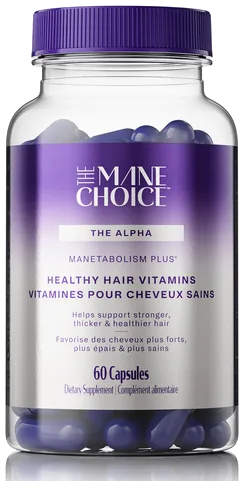
The Mane Choice Manetabolism Plus Review
The Mane Choice Manetabolism Plus is a hair, skin and nail style vitamin sold as capsules. The serving size is 2 capsules, and each container holds 30 servings. Per serving, the label lists Vitamin A 8150 IU, Vitamin C 100 mg, Vitamin D3 400 IU, Vitamin E 15 IU and Vitamin K1 80 mcg. The B vitamins are Thiamine 5 mg, Riboflavin 5 mg, Niacin 10 mg, Vitamin B6 5 mg, Folic Acid 400 mcg, Vitamin B12 100 mcg, Biotin 5000 mcg and Pantothenic Acid 50 mg. The minerals are Calcium 100 mg, Magnesium 50 mg, Zinc 10 mg, Selenium 50 mcg and Copper 1 mg. There is also a Proprietary Blend of 1085 mg. Other ingredients are Gelatin, Cellulose and Magnesium Stearate. The printed directions say to start by taking a before picture of your hair. For adults, take 2 capsules a day with food. They can be taken at the same time or at separate times. Buyers most often write about hair and nails, with many happy long term users. The most common complaint is a recent change in the formula, and some say the newer version did not work as well for them.
We don’t sell supplements. We help you make decisions and get the best price.
Lowest prices
We may earn a commission from some store links. How we choose.
Finding the lowest prices at the stores now. This takes a few seconds.
Study, Trial or Testing Result Summary
Members Only123 human studies · 49 improved
4 of these 123 human studies gave the ingredient by injection, not by mouth.
The main hair ingredient at a full dose is biotin. In a 2025 randomized trial of 105 adults, 1.25 mg of biotin daily for 90 days reduced hair fall and sped hair growth, with no side effects reported [1]. Small reports found 10 mg of biotin daily cleared hair loss in children on a seizure medicine [2][3]. But in 156 women after weight-loss surgery, 1000 micrograms daily helped only 23% of those low in biotin [4]. Most other ingredients are below studied doses or have unclear evidence. Zinc helped at 50 mg in women with polycystic ovary syndrome [5], but this product gives 10 mg. Vitamin E helped at 100 mg of tocotrienols [6], far above the 15 units here. Selenium reached the studied 200 micrograms only at four servings a day [7]. Niacin was tested only as scalp products mixed with other ingredients, not as a pill [8]. Folic acid and vitamin B12 showed no clear hair benefit [9][10]. High doses of vitamin A are linked to hair loss rather than growth [11]. The contents of the 1085 mg proprietary blend were not reviewed. Animal and cell studies are never counted.
See all 123 studies →Hide the studies
- Pooled across 102 studies of people with patchy autoimmune hair loss and healthy controls, vitamin D deficiency was far more common in those with hair loss, but no vitamin D was given so this does not show a treatment effect.Comorbid Conditions Associated with Alopecia Areata: A Systematic Review and Meta-analysis.
- Across 23 studies with 3374 people with non-scarring hair loss and 7296 healthy controls, those with hair loss had lower vitamin D and more deficiency, but supplementation was not tested directly.Serum 25 hydroxyvitamin D in non-scarring alopecia: A systematic review and meta-analysis.
- Pooling 27 studies (1,315 patients and 7,181 healthy people), selenium levels in people with alopecia areata did not differ significantly from healthy controls or by disease severity, and no selenium was given.Selenium levels and skin diseases: systematic review and meta-analysis.
- Pooling 113 studies of 7,014 people with immune-related skin diseases, blood selenium was lower in psoriasis and atopic dermatitis; the abstract does not report a selenium difference for alopecia areata, and no selenium was given.Trace Elements and Risk of Immune-Mediated Skin Disease: A Systematic Review and Meta-analysis.
- Across 34 papers with 4931 people, those with patchy hair loss had lower vitamin D levels and higher odds of deficiency than healthy people, but no vitamin D was tested as a treatment.Association Between Serum Trace Elements Level and Alopecia Areata: A Systematic Review and Meta-Analysis.
- Across 18 studies of 2,538 people after weight-loss surgery, 57% had hair loss, and those with lower blood folic acid levels were more likely to lose hair, but no supplement was given.Hair Loss After Metabolic and Bariatric Surgery: a Systematic Review and Meta-analysis.
- Pooling 10 studies of 764 people, those with alopecia areata had lower blood selenium and zinc than healthy people, but no selenium was given so treatment benefit is unknown.Changes of serum trace elements level in patients with alopecia areata: A meta-analysis.
- A pooled analysis of 87 observational studies found vitamin D deficiency was more common in people with alopecia areata, but it did not test whether taking vitamin D helps hair.Comorbidities in alopecia areata: A systematic review and meta-analysis.
- Pooled across 91 studies, people with patchy hair loss had lower blood vitamin D than healthy matched controls, but no vitamin D treatment was tested.Biomarkers in alopecia Areata: A systematic review and meta-analysis.
- Pooled studies showed people with patchy or female pattern hair loss had lower vitamin D levels and more deficiency than controls, but supplementation was not tested and needs further study.Vitamin D deficiency in non-scarring and scarring alopecias: a systematic review and meta-analysis.
- A review of 17 studies with 61332 people, mostly women, found higher vitamin D levels were linked to less hair loss, though further research is needed.Assessing the relationship between dietary factors and hair health: A systematic review.
- A review of 16 trials in 768 people with patchy hair loss (alopecia areata) found the evidence does not support taking zinc sulphate by mouth.Systemic treatments for alopecia areata: A systematic review.
- A review of 49 articles on vitamins and minerals in genetic hair loss found the strongest links for B vitamins, vitamin D, iron and zinc, with vitamin A not highlighted and evidence described as inconsistent.Micronutrients and Androgenetic Alopecia: A Systematic Review.
- A review of 165 articles on off-label skin uses found evidence that topical vitamin D was ineffective for alopecia areata and for hair loss caused by chemotherapy.Off-label uses of topical vitamin D in dermatology: a systematic review.
- In a review of 30 studies of supplements for hair loss in people without known deficiency, vitamin D3 had only low-quality evidence suggesting it improved hair loss.Evaluation of the Safety and Effectiveness of Nutritional Supplements for Treating Hair Loss: A Systematic Review.
- In a 3-month trial of 450 men with low sperm count, alopecia (hair loss) improved better in groups whose regimen included a vitamin E soft capsule, but vitamin E was given in every group and its effect on hair cannot be separated from the other treatments.[Treating oligospermia patients of Shen-essence deficiency syndrome by 3 different treatment programs: a clinical observ…
- In 283 people with resected lung cancer, taking 300,000 IU of vitamin A daily for at least a year caused mild, self-resolving hair loss in under 10% of those treated.Safety of high-dose vitamin A. Randomized trial on lung cancer chemoprevention.
- In 225 men and women with pattern hair loss, adding one daily capsule containing vitamin C plus saw palmetto, pumpkin extract and cystine to minoxidil and a med for 6 months gave great improvement in 36.5% versus 25% with the drugs alone.Impact of a Novel Dietary Supplement on Efficacy of Pharmacological Treatments for Androgenic Alopecia: A Real-Life, Mul…
- In 200 men with male pattern baldness, daily 1% zinc pyrithione shampoo for 26 weeks gave a modest, sustained rise in hair count versus placebo shampoo, about half the effect of 5% minoxidil.The effects of minoxidil, 1% pyrithione zinc and a combination of both on hair density: a randomized controlled trial.
- In 181 people after lung cancer surgery, 300,000 IU of vitamin A daily caused hair loss at a low frequency alongside skin dryness.Lung cancer chemoprevention with retinol palmitate. Preliminary data from a randomized trial on stage Ia non small-cell …
- In 105 adults (97 finished) taking 1.25 mg of plant-derived biotin daily for 90 days, hair fall dropped, hair grew faster by about 0.55 mm a day, and nails and skin elasticity improved, with no side effects reported.The Role of Sesbania grandiflora-Derived Biotin and Bambusa arundinacea-Derived Silica Extracts in Promoting Hair, Skin,…
- In 97 people with severe psoriasis taking a vitamin A-like drug for a year, four stopped because of side effects, mainly hair loss.Systemic treatment of psoriasis with an oral retinoic acid derivative (Ro 10-9359).
- In 47 people with diffuse hair loss in a double-blind trial (plus 36 in a pilot), daily retinol 18,000 IU with L-cystine and gelatin lowered the share of resting hairs and improved growing hairs, while the placebo group did not improve.[Low dosage retinol and L-cystine combination improve alopecia of the diffuse type following long-term oral administrati…
- In 83 people with pattern hair loss or chronic shedding, adding a daily multi-ingredient tablet containing selenium to drug treatment for 12 weeks gave better hair improvement scores than drugs alone, with 50% versus 23% reaching a score of 2 or more.Efficacy and tolerability of an oral supplement containing amino acids, iron, selenium, and marine hydrolyzed collagen i…
- In 75 people with patchy alopecia areata, adding topical vitamin D3 to microneedling gave more hair regrowth than microneedling alone, though bimatoprost worked better right after treatment.Combined microneedling with topical vitamin D3 or bimatoprost versus microneedling alone in the treatment of alopecia ar…
- In 73 women with hair loss followed for 4 months, calcium pantothenate (alone or with zinc sulfate) was compared with zinc alone and minoxidil; the combination slightly raised hair count and satisfaction reached 85%, but hair thickness did not significantly change in the combination group and there was no placebo group.Comparing the Effects of Zinc Sulfate, Calcium Pantothenate, Their Combination and Minoxidil Solution Regimens on Contro…
- In 64 women with polycystic ovary syndrome, taking magnesium for 10 weeks did not significantly change hair loss (alopecia) compared with placebo, although quality of life improved.The effects of magnesium supplementation on abnormal uterine bleeding, alopecia, quality of life, and acne in women with…
- In 64 women with polycystic ovary syndrome, 200 micrograms of selenium daily for 8 weeks reduced alopecia compared with placebo, along with lower inflammation and oxidative stress markers.Selenium Supplementation and the Effects on Reproductive Outcomes, Biomarkers of Inflammation, and Oxidative Stress in W…
- In 62 men with male pattern hair loss, a foam containing a niacin ester plus other ingredients applied twice daily for 6 months reduced the share of resting-phase hairs more than the vehicle foam, but hair density gains did not differ between groups.Reduction of telogen rate and increase of hair density in androgenetic alopecia by a cosmetic product: Results of a rand…
- In a randomized trial of 60 people with scalp alopecia areata, topical calcipotriol and narrowband UVB both improved hair loss scores and blood vitamin D3 levels after 3 months, while placebo did not.Topical calcipotriol vs narrowband ultraviolet B in treatment of alopecia areata: a randomized-controlled trial.
- In 60 adults with patchy alopecia areata, vitamin D3 injected into the bald patches every 4 weeks for up to 3 sessions improved hair regrowth significantly more than saline injections.Intralesional vitamin D3 in treatment of alopecia areata: A randomized controlled clinical trial.
- In a randomized trial of 60 people with localized alopecia areata, a topical vitamin D analogue combined with a potent a med worked about as well as a superpotent a med alone, with fewer side effects, while tacrolimus gave the least improvement.Comparative evaluation of the efficacy of topical tacrolimus 0.03% and topical calcipotriol 0.005% mixed with betamethas…
- In 50 people with diffuse hair loss, six weekly injections of 5 mg biotin with dexpanthenol from either of two brands reduced hair fall and increased hair density, with no placebo group for comparison.Efficacy of intramuscular injections of biotin and dexpanthenol in the treatment of diffuse hair loss: A randomized, dou…
- In 48 women with polycystic ovary syndrome, 50 mg of zinc daily for 8 weeks reduced hair loss compared with placebo (41.7% vs 12.5%), along with lower excess hair growth and a blood marker of oxidative damage.Effects of Zinc Supplementation on Endocrine Outcomes in Women with Polycystic Ovary Syndrome: a Randomized, Double-Blin…
- In a half-head trial of 42 people with alopecia applying 1% bexarotene gel twice daily for 24 weeks, 5 people (12%) regrew at least half their hair on the treated side, and the gel was well tolerated, though the trial had no placebo group.Phase I/II randomized bilateral half-head comparison of topical bexarotene 1% gel for alopecia areata.
- In 40 people with pattern hair loss or shedding, a zinc and arginine lotion for 23 weeks reduced hair pulled out and improved hair growth measures compared with placebo lotion.A new combination of molecules for the treatment of androgenetic alopecia and telogen effluvium: a double-blind randomiz…
- In 38 people with hair loss, 100 mg of mixed tocotrienols (a vitamin E form) daily for 8 months raised hair count by 34.5% versus a 0.1% decrease with placebo, though hair weight did not change.Effects of tocotrienol supplementation on hair growth in human volunteers.
- In 34 people with psoriasis given a vitamin A-like drug with light therapy, only one person had diffuse hair loss, after 8 weeks on etretinate.A double-blind comparison of acitretin and etretinate in combination with bath PUVA in the treatment of extensive psoria…
- In a randomized trial of breast cancer patients receiving chemotherapy, pretreatment with topical calcipotriol did not reduce chemotherapy-related hair loss compared with vehicle.'Atrophic telogen effluvium' from cytotoxic drugs and a randomized controlled trial to investigate the possible protecti…
- In men and women with self-perceived hair thinning, a scalp shampoo and leave-on regimen containing niacinamide and other ingredients used for 24 weeks reduced hair shedding and increased total hair count compared with a placebo shampoo.Scalp application of antioxidants improves scalp condition and reduces hair shedding in a 24-week randomized, double-bli…
- In menopausal women given 1000 mg calcium plus vitamin D3 daily for six months, hair shedding was significantly reduced compared with placebo, and skin hydration and elasticity improved when collagen was added.Calcium and Vitamin D Supplementation with and Without Collagen on Bone Density and Skin Elasticity in Menopausal Women-…
- In 291 people with psoriasis taking a vitamin A-like drug, 14% had to stop because of hair loss, nail infection or raised liver enzymes.[Oral psoriasis treatment with a new aromatic retinoid (Ro 10-9359): a multi-centre controlled study of 291 patients (pr…
- In 60 women with female pattern hair loss, topical niacin derivatives applied for 6 months increased hair fullness on blinded photo analysis more than placebo.A pilot study evaluating the efficacy of topically applied niacin derivatives for treatment of female pattern alopecia.
- In 46 women with diffuse hair loss, daily vitamin B6 injections for 20 to 30 days improved hair condition in a number of women and reduced hair loss, especially the telogenic (resting-phase) type, while calcium pantothenate showed no clear benefit.[Evaluation of vitamin B6 and calcium pantothenate effectiveness on hair growth from clinical and trichographic aspects …
- In 31 ovarian cancer patients on chemotherapy, 200 mcg of selenium daily for up to 3 months was followed by a significant decrease in hair loss, along with less flatulence, weakness and loss of appetite.Selenium as an element in the treatment of ovarian cancer in women receiving chemotherapy.
- Topical melatonin in vitamin C-based nanovesicles was reported to increase hair thickness and density and reduce hair loss in people with pattern hair loss compared with melatonin solution, but vitamin C here served as a carrier and the number of participants was not stated.Melatonin vitamin C-based nanovesicles for treatment of androgenic alopecia: Design, characterization and clinical appra…
- In women with hair shedding (telogen effluvium), a combination supplement containing thiamine nitrate taken for 180 days improved hair loss, volume and density on clinical evaluation, but at 90 days it did not improve hair shine or strength, and scalp imaging showed no significant improvement, unlike the other supplement it was compared with.Comparative evaluation between two nutritional supplements in the improvement of telogen effluvium.
- In 1,000 men and women with androgenetic alopecia, a monthly scalp serum containing thiamine and other micronutrients for six months reduced hair fall and increased hair growth and hair density, with 95% of patients satisfied and no major adverse events reported; the study had no comparison group.The Efficacy and Safety of Dr. SKS Hair Booster Serum (a Cocktail of Micronutrients and Multivitamins) in Adult Males an…
- In 1,000 women aged 25 to 50 with polycystic ovary syndrome and female pattern hair loss, a monthly scalp serum containing thiamine and other micronutrients for six months increased hair shaft diameter, terminal hair counts and hair growth rate, with no adverse events recorded; the study had no comparison group.Efficacy of Dr. SKS Hair Booster Serum in the Treatment of Female Pattern Alopecia in Patients With PCOS: An Open-Label,…
- In an open-label pilot of 1000 people, scalp injections of a growth factor mixture that included copper tripeptide reduced hair fall in 83% on a hair pull test, with no placebo group to compare against.Intradermal injections of a hair growth factor formulation for enhancement of human hair regrowth - safety and efficacy …
- In 112 people with light diffuse hair loss taking a supplement containing biotin for 12 weeks, hair loss fell by 59% and hair density rose, with 90% of participants perceiving better hair growth and appearance, in an open-label study without a control group.Effectiveness, Tolerability, and Acceptance of a Food Supplement in the Management of Non-Illness-Related Hair Loss and …
- In a single-group trial of 101 breast cancer patients, a daily scalp lotion containing a zinc complex did not prevent chemotherapy-induced hair loss, though hair may have recovered somewhat sooner.The utility of DHL-HisZnNa, a novel antioxidant, against anticancer agent-induced alopecia in breast cancer patients: a …
- In a 12-week retrospective study of 48 people with mild-to-moderate alopecia areata, twice-daily topical calcipotriol produced a total response in 69.2% of patients, with significant reduction in hair loss scores.Topical Calcipotriol Therapy for Mild-to-Moderate Alopecia Areata: A Retrospective Study.
- In 48 men with pattern hair loss treated for 4 months with topical minoxidil and correction of nutrient imbalances, blood folic acid level did not separate responders from non-responders. Zinc was the only nutrient that did.Plasma Zinc Levels in Males with Androgenetic Alopecia as Possible Predictors of the Subsequent Conservative Therapy's E…
- In 27 people with generalized psoriasis given an oral synthetic retinoid with ultraviolet light, hair loss occurred in 4 people as a side effect, so hair loss was a harm in this study.[Retinoid-selective ultraviolet phototherapy (SUP) in psoriasis].
- In 25 people with severe psoriasis taking an oral synthetic retinoid for several months, diffuse hair loss was one of the main side effects, so hair loss was a harm rather than a benefit.[Oral treatment of severe psoriasis with a new aromatic retinoid (Ro 10-9359) (author's transl)].
- In people with moderate to severe acne taking a med for 3 months, hair growth measurements did not change in a statistically significant way.Read the study on PubMed (30350907) →
- In women treated for androgen-related hair loss with cyproterone acetate and ethinyl estradiol for 6 months, vitamin B12 fell significantly, while serum folic acid stayed within the normal range.Reduced serum vitamin B12 levels during oral cyproterone-acetate and ethinyl-oestradiol therapy in women with diffuse an…
- In a large uncontrolled clinic series of 18,918 Asian men with male pattern hair loss, a combination treatment that included a med, minoxidil and an injected solution containing retinyl palmitate (a form of vitamin A) was followed by visible improvement in all patients on photographs, with 80 percent satisfied at 12 months; vitamin A was not tested alone.Androgenetic Alopecia Treatment in Asian Men.
- In a review of 2,851 women with telogen effluvium, folic acid deficiency was rare (0.6%), and the study pointed to ferritin and vitamin B12 as the more important findings.Retrospective Review of 2851 Female Patients With Telogen Effluvium: A Single-Center Experience.
- In a rural Indian clinic of 1,992 people, recurrent scalp hair loss was one of several signs of vitamin B12 deficiency, and adding vitamin powder to food raised blood levels, but the abstract does not report hair improving.Diagnostic Signs and Symptoms of Cyanocobalamin Deficiency at Rural Setting in India: Novel Method of Supplementation.
- In a retrospective review of 973 people with telogen effluvium (excessive hair shedding), only 2.5% had low folate, and folate levels were not related to the share of hair in the growth phase.Micronutrient Deficiencies and Digital Computerized Phototrichogram Analysis in Telogen Effluvium: a Retrospective Corre…
- Children with alopecia areata had lower vitamin B12 levels (233.5 vs 356.7 pg/mL) than matched healthy controls, and low B12 was an independent risk factor.Risk Factors for Pediatric Alopecia Areata: Clinical and Biochemical Findings from a Case - Control Study.
- In a study of 519 Mexican children aged 10 to 18, boys who ate less selenium than recommended had later development of pubic hair, genitals and testicles, while no link was found in girls; hair itself was not measured.Dietary Intake of Selenium in Relation to Pubertal Development in Mexican Children.
- In 477 lung cancer patients on pemetrexed chemotherapy, a modified program with 400 mcg daily folic acid plus vitamin B12 injections caused no significant difference in hair loss compared with the traditional program.Efficacies and adverse reactions of modified vitamin supplement programs before pemetrexed chemotherapy as a second-line…
- In a 3-year follow-up of 313 people after weight-loss surgery, hair loss was the most common nutritional symptom, but the abstract reports no hair outcome tied to vitamin B12 supplementation.Pragmatic strategy for vitamin and micronutrient supplementation after metabolic and bariatric surgery.
- In 289 people with female pattern hair loss, vitamin B9 (folate) was lower in the more severe group, but after adjustment for demographics this was not a predictor of severity.Factors Associated with the Severity of Female Pattern Hair Loss: A Retrospective Study.
- In a case-control study of 42 young adults with diffuse hair loss and 230 matched controls, dietary calcium intake was not linked to hair loss, while higher protein intake was the only nutrient directly associated with it.[Evaluation of the role of dietary intake in the occurrence of alopecia].
- In a prospective cohort of 261 people after weight-loss surgery, folic acid rose with routine supplementation over 6 months, but folic acid levels were not consistently linked to hair loss, while low iron was.Comparative Analysis of Postoperative Hair Loss and Micronutrient Deficiencies After One-Anastomosis Gastric Bypass Vers…
- In newborn screening of 246 infants with biotinidase deficiency in Ontario, two children who stopped biotin developed hair loss, along with abnormal gait, skin rashes and developmental delay.Biotinidase deficiency: Spectrum of molecular, enzymatic and clinical information from newborn screening Ontario, Canada…
- In an outbreak of 201 cases from a contaminated liquid selenium supplement, about 72% reported hair loss, and 29% still had hair loss after 90 days or longer.Acute selenium toxicity associated with a dietary supplement.
- In 200 women with polycystic ovary syndrome, a supplement containing myo-inositol, magnesium and folic acid taken for 6 months significantly reduced hirsutism (excess body hair) scores, though the study was retrospective and uncontrolled.Association of Myo-Inositol and Microlipodispersed Magnesium in Androgen-Dependent Dermatological Diseases: A Retrospect…
- In a study of 100 women with hair loss and 100 healthy women, the women with hair loss had lower blood folate (6.17 vs 6.96 ng/mL), along with lower iron, vitamin D and vitamin B12.Quantitative Analysis of Selected Circulating Hematological Biomarkers, Essential Minerals, Vitamins, and Thyroid Hormon…
- Among 156 women who had sleeve gastrectomy, 1000 mcg of biotin daily for 3 months gave little benefit: only 5 of 22 women with biotin deficiency (23%) reported a clear reduction in hair loss, with no significant difference compared with those without deficiency.Hair Loss After Sleeve Gastrectomy and Effect of Biotin Supplements.
- Serum folate levels in 68 people with scarring alopecia were similar to 68 healthy controls, so folate did not appear to play a role in this type of hair loss.Micronutrient levels and thyroid functions in scarring alopecias: Do they play a role in disease pathogenesis?
- In 75 people with alopecia areata and 54 controls, folate, vitamin B12 and homocysteine levels did not differ between the groups.Serum holotranscobalamine, vitamin B12, folic acid and homocysteine levels in alopecia areata patients.
- In 125 women with androgenetic hair loss, vitamin B12 was abnormal in only 5 percent of women, and B12 was not part of the treatment studied.[Hormonal diagnosis in so-called androgenetic alopecia in the female].
- In 113 people with hair loss after COVID-19, 20.4 percent had vitamin B12 deficiency, but the study did not test whether B12 treatment improved hair.Telogen Effluvium Following Coronavirus Disease-2019 Infection: A Retrospective Study of 113 Cases.
- In a single-center review of skin problems after liver transplant, one patient with hair loss caused by low blood magnesium was given a daily oral magnesium supplement; the abstract does not report how this patient's hair responded.Dermatologic complications after liver transplantation: a single-center experience.
- In 54 people with diffuse hair loss and 55 healthy controls, blood folate levels were similar between the groups, while ferritin and vitamin D were lower in those with hair loss.Serum ferritin and vitamin D levels should be evaluated in patients with diffuse hair loss prior to treatment.
- In 108 women with diffuse hair loss, folic acid levels were within normal limits and did not relate to phototrichogram findings; ferritin was the marker that stood out.Evaluation of the relationship of digital phototrichogram findings of patients with diffuse hair loss with blood TSH, fe…
- In a case-control study of 100 people recovering from COVID-19, those with telogen effluvium (excess hair shedding) reported using vitamin C less often than controls, which the authors suggest may mean vitamin C helps prevent post-COVID hair loss, though this is only an association.Post Covid telogen effluvium: the diagnostic value of serum ferritin biomarker and the preventive value of dietary suppl…
- In a retrospective study of 100 adults with alopecia areata, low folic acid was one of several factors linked to more hair loss episodes during follow-up. Folic acid was not given.Evaluating the Effect of the Demographic, Trichoscopic and Laboratory Characteristics on The Recurrence of Alopecia Area…
- In women six months after bariatric surgery, those with less hair loss had higher zinc and iron intake, while the abstract reports no selenium difference between the mild and severe hair loss groups.[Alopecia in women with severe and morbid obesity who undergo bariatric surgery].
- In a cross-sectional study of 50 men with male pattern hair loss and 25 healthy men, all patients had low blood folic acid, but their hair loss rate was not explained by folic acid levels.A Cross-sectional Study of Plasma Trace Elements and Vitamins Content in Androgenetic Alopecia in Men.
- In children on valproic acid, hair loss and skin rash improved after daily oral biotin 10 mg, which was given as a supplement to patients with low biotinidase activity.Low serum biotinidase activity in children with valproic acid monotherapy.
- Blood vitamin E levels were not different between 37 people with alopecia and 34 healthy controls, although beta-carotene was lower and lipid peroxidation higher in the alopecia group.Antioxidants and lipid peroxidation status in the blood of patients with alopecia.
- In 70 Japanese adults with alopecia areata, higher dietary retinol intake was linked to more severe hair loss on the severity score, but this food-questionnaire study cannot show that retinol causes the hair loss.Dietary Habits in Japanese Patients with Alopecia Areata.
- In 70 children with chemotherapy-induced hair loss, adding a cystine, yeast and vitamin B5 supplement to topical minoxidil gave thicker hair than minoxidil alone, with only 3 mild side effects reported.Topical minoxidil and dietary supplement for the treatment of chemotherapy-induced alopecia in childhood: a retrospectiv…
- In a retrospective review of 66 Black women with hair loss, 69.6 percent reported clinical improvement using a compounded topical minoxidil that contained a retinoid, compared with 45 percent using over-the-counter minoxidil.Enhanced Clinical Outcomes and Treatment Adherence in Patients Using Compounded Topical Minoxidil to Treat Androgenetic …
- After bariatric surgery in adolescents, 5 of 61 developed folate deficiency and 12 of 61 had temporary hair loss during the first postoperative year; folic acid was not given as a treatment.Excellent Short- and Medium-term Result of Bariatric Surgery in Adolescence. A Single Center Study.
- In a small study of 29 adults with alopecia areata and 32 healthy controls, people with alopecia areata had lower red blood cell folate, and lower levels tracked with more extensive hair loss. Folic acid was not given.Evaluation of Serum Homocysteine, High-Sensitivity CRP, and RBC Folate in Patients with Alopecia Areata.
- People with alopecia areata, psoriasis or vitiligo had significantly lower blood and tissue vitamin E and PON1 levels than 15 healthy controls.The antioxidant role of paraoxonase 1 and vitamin E in three autoimmune diseases.
- People with alopecia areata had significantly lower serum vitamin E than 30 healthy controls, and this level did not differ by disease severity.Investigation of ischaemia-modified albumin and antioxidant vitamins and minerals levels in alopecia areata patients and…
- In 36 people, ingestion of environmental copper and other toxic metals was linked to diffuse hair loss, and the hair cycle disruption rose with the amount of metal found in blood and urine.Toxic effects of metals from the environment on hair growth and structure.
- In 17 girls with anorexia nervosa, 14 had a hair shaft defect called pili torti, which the authors linked to high vitamin A intake and raised blood vitamin A levels; 15 healthy girls had no such defect.Acquired pili torti--a structural hair shaft defect in anorexia nervosa.
- Infants fed only hydrolysate formula, which contained little biotin, had low blood biotin, and one of them developed hair loss linked to biotin deficiency.Low serum biotin in Japanese children fed with hydrolysate formula.
- In a review of 25 children with short anagen syndrome, a condition where hair does not grow long, biotin alone or with topical minoxidil was reported to be an effective treatment.Short anagen syndrome: A case series and algorithm for diagnosis.
- In 14 children with methylmalonic acidemia treated with vitamin B12 and carnitine, the abstract reports general improvement but does not report hair outcomes specifically.[Diagnosis and treatment of methylmalonic acidemia in 14 cases].
- In 6 infants with selenium deficiency, alopecia with pseudoalbinism resolved within 1 to 2 months after selenite treatment restored serum selenium levels.Clinical features of selenium deficiency in infants receiving long-term nutritional support.
- In five men with male pattern hair loss, a topical solution containing 0.2% biotin along with minoxidil and a med was judged successful for all five over 6 months, with moderately thicker hair and higher hair density in photographs.Read the study on PubMed (32023218) →
- In a study of children taking valproic acid, three girls who lost hair had their hair loss disappear within about 3 months of taking 10 mg of biotin daily.Serum biotinidase activity in children treated with valproic acid and carbamazepine.
- Three children with valproic acid-related hair loss and normal blood biotin levels had their alopecia resolve within 3 months of taking 10 mg of oral biotin daily.The influence of valproic acid and carbamazepine treatment on serum biotin and zinc levels and on biotinidase activity.
- A genetic analysis (Mendelian randomization) of large Finnish populations suggested that higher alpha-tocopherol levels are linked to lower risk of androgenetic and alopecia areata; this is association evidence, not a supplement trial.Elucidating causal relationships of diet-derived circulating antioxidants and the risk of non-scarring alopecia: A Mende…
- In a retrospective study of people with telogen effluvium, the authors highlighted vitamin D, ferritin and zinc deficiencies, and did not report folate as a notable finding.Vitamin and Mineral Deficiencies in Patients With Telogen Effluvium: A Retrospective Cross-Sectional Study.
- In a family study of people with partial biotinidase deficiency, one child who was not initially given biotin developed hair loss, hypotonia and a skin rash, and these resolved after biotin therapy; the abstract does not give the dose or duration.Partial biotinidase deficiency: clinical and biochemical features.
- In a study of Finnish people with hair loss (alopecia), blood, red cell, hair and urine selenium levels were not different from those of the normal population, though a few patients had low serum selenium, which matches low selenium in the Finnish diet.Element concentrations in serum, erythrocytes, hair and urine of alopecia patients.
- In 560 people with seborrheic dermatitis using a selenium sulfide shampoo for about 21 days, scalp symptoms improved, but women showed less improvement in hair loss and hair quality than men.Effectiveness and tolerance of medicated shampoo containing selenium sulfide and salicylic acid in patients with seborrh…
- In 42 healthy men and women with hair fall, using a hair serum that contained selenium along with other ingredients every day for 90 days improved hair growth rate and hair density compared with the start, but the study had no placebo group and cannot show whether selenium itself caused the effect.Clinical Study to Evaluate the Efficacy and Safety of a Hair Serum Product in Healthy Adult Male and Female Volunteers w…
- In 32 people with cystic fibrosis, sodium selenite at about 4 mcg per kg daily for 3 months caused mild hair loss in 3 patients, along with anorexia and nausea.[The value of selenotherapy in patients with mucoviscidosis].
- In a multicentre psoriasis study, a retinoid taken by mouth caused diffuse hair loss on trichogram testing in 27 patients, usually starting around weeks five to eight, and the hair loss improved after the dose was lowered or stopped.[Hair growth, liver function and light sensitivity during oral retinoid therapy for psoriasis (author's transl)].
- In 20 cancer patients given doxorubicin chemotherapy, high-dose alpha-tocopherol (vitamin E) did not prevent hair loss; 90% had severe hair loss and 10% moderate.High-dose alpha-tocopherol as a preventive of doxorubicin-induced alopecia.
- In 20 women with telogen effluvium taking a tablet with amino acids, trace minerals and vitamin B5 for 6 months, trichoscopy showed hair improvement in 17 and no one stopped due to side effects. The study had no control group.Oral supplementation in female telogen effluvium: a clinical and instrumental objective evidence of efficacy and tolerab…
- In 15 people with psoriatic arthritis taking etretinate, skin and joint symptoms improved, but hair loss was common among those treated and remained tolerable.Tigason (etretinate) treatment in psoriatic arthritis.
- In 13 people aged 50 to 70 taking 25,000 IU of retinol daily for 9 months, two people had mild skin dryness, headaches, or hair loss, and blood chemistry did not change significantly.Pharmacokinetics and metabolism of retinol administered at a chemopreventive level to normal subjects.
- In mice prone to hair scarring, the amount of vitamin A in the diet changed the disease, and the 28 IU per gram diet increased follicular damage or scarring in some experiments; this was not tested in people.Retinoid metabolism is altered in human and mouse cicatricial alopecia.
- After five days of topical tretinoin, 43% of people in this androgenetic alopecia cohort who were predicted to respond poorly to minoxidil became responders to it.Tretinoin enhances minoxidil response in androgenetic alopecia patients by upregulating follicular sulfotransferase enzy…
- A leave-on product containing niacinamide with other ingredients increased the thickness of individual scalp hairs by 2 to 5 micrometers in laboratory testing, which the authors suggest may help thinning hair.A novel cosmetic approach to treat thinning hair.
- A topical adenosine complex containing 2% niacinamide increased hair thickness by 10.32% and hair density by 6.20% after about 4 months in people with male or female pattern hair loss, and minoxidil produced smaller gains in the same study.Hair Thickness Growth Effect of Adenosine Complex in Male-/Female-Patterned Hair Loss via Inhibition of Androgen Recepto…
- A product combining nicotinamide and related forms with a green tea compound increased hair density and growth over 24 weeks in men and women, and in lab tests it boosted energy production in hair-related cells; the abstract gives no participant count or control group.Hair growth enhancement via mitochondrial activation by Mito-activator complex.
- In people with zinc deficiency skin disease, hair changes and hair loss can occur, and severe cases were treated with intravenous or high-dose oral zinc, but the abstract reports no measured hair outcome after treatment.[Zinc deficiency dermatoses. Etiology, clinical aspects and treatment].
- A European food safety opinion names hair loss as the early warning sign of too much selenium, with the upper limit for adults set at 255 micrograms a day.Scientific opinion on the tolerable upper intake level for selenium.
- In a rat study lasting 6 weeks, a combination of arginine silicate inositol complex with the higher dose of magnesium biotinate (325 micrograms per rat per day) increased hair density and the share of hair in the growth phase compared with shaved controls, but this was an animal study, not a human trial.Effects of a Combination of Arginine Silicate Inositol Complex and a Novel Form of Biotin on Hair and Nail Growth in a R…
Review Totals and Summary
Members Only1,013 reviews · 84% positive
Across the stores that sell it, The Mane Choice Manetabolism Plus carries about 1013 ratings, and the written feedback leans positive, with 75% of the starred reviews giving 4 or 5. The reviews are split on one thing, a change in the formula. **What buyers say it did for them.** Happy buyers talk about hair and nails. One says her nails are "long, strong, and healthy" when she uses it, and that she saw a difference within the first month back on it. Another says her hair is shinier and fuller feeling and that the thinning near her crown is nearly gone, though she uses other hair products alongside it. A long term user, four years in, says her hair is no longer considered fine. Another reviewer reports hair growing faster after adding workouts and more water. A newer user has only seen less hair falling out after a little over a month. **What they complain about.** The main complaint is the new formula. One reviewer says the label looks different and the new version has fewer ingredients. She says the earlier one worked and the new one does not. Another took it for four months and measured about half an inch of growth a month, which she calls "pretty average". She had no side effects, but she calls it a waste of money. A third buyer compared a new and an old bottle side by side because of the talk about the change. **Taste, smell, pill size or form.** The reviews say little about this. It comes as capsules, and one reviewer mentions that the new formula bottles had purple pills. Nobody comments on taste or smell. **Value for money.** Opinions differ. One buyer calls it "a great product for the price" and another picked it up on sale. The unhappy reviewer says it was not worth the cost, and one who liked the old formula says she found a substitute. **Who it seems to suit and who it did not.** Long term users and people watching for less shedding or stronger nails are the most pleased. One reviewer with PCOS says she noticed a change after a month. Buyers hoping for clearly faster growth, and loyal buyers of the old formula, are the ones who were let down. One reviewer started with one capsule a day alongside a multivitamin and plans to ask her doctor about taking more.
Biohacker Summary
Members Only9 of 10 recommend it
The panel is split on biotin, the main ingredient: two of the ten recommend it, four stay neutral, and four warn. Those who recommend it take it for hair, with one tying it to keratin and strong hair and naming eggs, almonds and salmon as food sources, and the other pointing to hair follicle health and growth. Two of the warnings concern blood tests, since biotin can throw off hormone results such as testosterone and estrogen, so they advise avoiding it before that testing. The other two warnings say biotin is overhyped, with one saying enough protein is probably more useful for hair, skin and nails and the other noting that many places add extra biotin for hair growth that may not be needed. No one gave a biotin dose, and the neutral panelists mostly just mentioned it, with one saying low biotin often shows up as thinning hair. Magnesium is a smaller ingredient in this product and drew the most comment, mainly for sleep and taken at night.
See all 10 biohackers →Hide the biohackers
Dave Asprey · Biotin · warns
- Mentions that most places put in extra biotin for hair growth, suggesting it's not always necessary or beneficial.
- Explains that Vitamin K2 acts as a traffic cop for calcium, waving it into bones and away from arteries, and that grass-fed butter is one of the only foods with a real amount of K2.
- Looks at magnesium alongside protein to keep muscle for the long run.
- Suggests adding magnesium to help keep potassium in the system longer, as they work hand in hand.
- Recounts a doctor telling him in his 20s that vitamin C would kill him.
- Takes Vitamin DAKE from Suppgrade Labs.
- Mentions magnesium in the context of sleep but states that it doesn't address the core issue of waking up during the night.
- Suggests that magnesium may help slow aging, support cellular repair, and improve sleep.
- Suggests that vitamin D supports brain health, muscle function, and focus.
- Recommends taking vitamin C for better skin health.
- States that magnesium can affect how the body responds to a supplement.
- Host Dave Asprey explains why correcting a vitamin D deficiency still makes sense for male fertility, even though supplementation did not improve overall semen parameters in a randomized trial.
- Recommends taking vitamin K2 with vitamin D to keep calcium in the bones, and suggests kids also take it for stronger bones.
- Recommends Vitamin K2, stating it supports healthy calcium metabolism.
Dr. Eric Berg · Biotin · neutral
- States that thinning hair often indicates low biotin, which is required to produce keratin for hair, skin, and nails.
- Notes that sardines are rich in selenium, which binds with mercury.
- Lists Vitamin D as an ingredient found in sardines.
- Mentions that one can of sardines provides 348% of the daily Vitamin B12.
- States that one can of sardines contains 382 mg of calcium.
- Mentions that the body relies on healthy fats to absorb essential vitamins like A, D, E, and K, which help support skin health, moisture, and normal cell function.
- Recommends selenium as a trace mineral, noting that modern farming practices deplete it from the soil, leading to low levels in crops.
- Recommends Vitamin D3 because it's nearly impossible to get enough from food and most people don't get enough sun, advising to aim for blood levels of at least 50 to 80 ng/mL.
- Dr. Berg states that when nutrients like vitamin D are too low, fatigue and weakness can follow.
- Dr. Berg states that when nutrients like vitamin B12 are too low, fatigue and weakness can follow.
- Warns against calcium supplements, citing studies that link them to a higher risk of heart attack, especially in postmenopausal women, and suggests getting calcium from dairy instead.
- Warns against generic multivitamins, stating they are often full of fillers and synthetics.
- Warns against generic multivitamins, stating they are often full of fillers and synthetics.
- Warns against generic multivitamins, stating they are often full of fillers and synthetics.
Thomas DeLauer · Biotin · warns
- Thinks biotin is a little overhyped, suggesting that consuming adequate protein is probably more effective for hair, skin, and nails. He notes that some people might be deficient, especially if consuming a lot of eggs with avidin, but doesn't consider it the 'Mecca of perfect hair'.
- Recommends whole food vitamin C, found in kiwi fruit, citrus, and bell peppers, to help clear uric acid by competing at kidney transporters, preventing reabsorption.
- Recommends taking magnesium glycinate and threonate at night to act as a brake on the nervous system, block excitatory signaling, help wind down, and support serotonin and melatonin production for better sleep.
- Recommends taking Vitamin K2 with Vitamin D3 in the morning, along with morning fats, to ensure calcium is directed to the bones and not deposited in arteries or soft tissue.
- Recommends taking Vitamin D3 in the morning, between 6:00 and 10:00 a.m., to align with the body's natural metabolic activation phase and sunlight-triggered vitamin D production.
- Mentions that magnesium glycinate also helps a lot with sleep.
- Mentions that restless leg syndrome is often treated with magnesium, but states that the sensation is actually coming from three other issues.
- Uses Element's cans which contain 30 milligram magnesium, finding that electrolytes help his workout performance.
- Recommends taking vitamin C along with collagen about an hour before a workout for connective tissue benefits.
- Uses Element's 30 mg magnesium cans first thing in the morning to prime his day and help with workout performance.
- Uses vitamin C as part of their immunity duo, stating it is important for boosting the immune system, especially during cold and flu season.
- Recommends magnesium around the time one would normally break a fast to calm the brain and dull feelings of conditioned hunger.
- Uses vitamin D3 in the fall and winter months when getting less sun, as it's important to supplement it then.
- Adds zinc to their immunity duo because it helps them absorb vitamin C, considering the two together a fantastic combination for fall and winter.
Andrew Huberman · Biotin · neutral
- Mentions biotin.
- Notes that AG1 Pro contains zinc carnosine to support and improve the lining of the gut.
- Notes that Les Spellman's team includes 'Magnesium timed right' as part of their game plan to optimize recovery in unfavorable conditions.
- Zinc carnosine to support and improve the lining of your gut.
- Notes that AG1 Pro contains zinc carnosine to support and improve the lining of the gut.
- Discusses Magnesium Threonate as a tool for falling asleep.
- States that AG1 Pro contains zinc carnosine to support and improve the lining of the gut.
- Uses AG1 Pro, which contains zinc carnosine to support and improve the lining of the gut.
- States that AG1 Pro contains zinc carnosine to support and improve the lining of the gut, and he was already taking some of these ingredients separately.
- States that AG1 Pro includes zinc carnosine, which he was already taking separately, to support and improve the lining of the gut.
- Notes that most people are probably deficient in vitamin D and benefit from supplementing, but there's no point in doing it unless you're deficient for most things.
- Personally takes zinc carnosine, which is included in AG1 Pro to support and improve the lining of the gut.
- AG1 Pro has zinc carnosine to support and improve the lining of your gut. Some of these ingredients I personally was already taking separate from the AG1 formula.
- States that AG1 Pro contains zinc carnosine to support and improve the lining of your gut.
Siim Land · Biotin · neutral
- Siim Land's company has published papers and filed patents for improvement in mitochondria in the skin using their core mitochondrial approach and other things like biotin.
- Advises against taking vitamin D in the morning with other supplements because it is fat soluble and requires dietary fat for better absorption.
- Recommends taking Vitamin D with fat for better absorption.
- Recommends taking vitamin C with collagen to support joint collagen synthesis.
- States that Magnesium can be a useful addition for some people for sleep.
- States that Vitamin D connects biology to light and that UVB reaching the skin enables its production.
- States that vitamin C is needed for initiating collagen synthesis and that higher vitamin C intake appears to increase vitamin C content in the skin.
- Mentions that copper is a mineral necessary for making collagen.
- Recommends magnesium for sleep, especially deep sleep, and suggests trying better types like Threonate, Biscinate, or Torate, referencing a study where magnesium supplementation improved deep sleep.
- Notes that Vitamin K2 helps activate proteins involved in bone mineralization and calcium regulation.
- Mentions that prunes contain vitamin K, which is a factor in their ability to help with bone density.
- Recommends Magnesium for blood pressure, migraines and deficiency, based primarily on human research, especially randomized controlled trials showing measurable benefits.
- Recommends Vitamin K2 for bone health and calcium metabolism, based primarily on human research, especially randomized controlled trials showing measurable benefits.
- Lists Magnesium as one of 15 supplements backed by human studies.
Dr. Rhonda Patrick · Biotin · warns
- Advises avoiding biotin-containing supplements before a testosterone blood test as they can cross-detect with estrogens and confound results.
- Notes that vitamin D from sunlight, food, or supplements needs to undergo conversions in the liver and kidneys to become its active hormone form, calcitriol.
- Explains that magnesium helps the body activate and metabolize vitamin D, and that magnesium intake has been associated with lower odds of vitamin D deficiency and insufficiency.
- Mentions that getting too little magnesium may play a role in declining testosterone levels.
- Mentions that getting too little zinc may play a role in declining testosterone levels, and that zinc helps the body make testosterone.
- States that Vitamin D supplementation has been associated with a 40% lower dementia risk, and low levels are linked to a 50 to 80% higher risk.
- Recommends getting enough magnesium, around 300–400 mg daily from diet and supplements, as it is an essential cofactor for vitamin D metabolism. Magnesium glycinate is a good form.
- Mentions magnesium as one of the micronutrients found in multivitamins that people often don't get enough of from their diets.
- Mentions vitamin K as one of the micronutrients found in multivitamins that people often don't get enough of from their diets.
- Explains that magnesium helps control blood pressure by boosting the production of substances that relax blood vessels and improve cardiovascular health, citing a meta-analysis that found magnesium supplementation at an average dose of 368 mg per day notably lowers both systolic and diastolic blood pressure.
- Magnesium supplementation has lowered blood pressure in randomized controlled trials. An analysis of 34 trials involving over 2,000 participants found modest reductions in both systolic and diastolic pressure, with a median dose of 368 mg/day.
- Recommends getting adequate vitamin D, noting that people taking vitamin D supplements have a 40% lower risk of dementia, while those with lower vitamin D have a 50-80% higher risk.
- Warns that some magnesium supplements make the dose look much larger than it really is and that labels can fool people.
- Vitamin D supplementation was linked to a 40% lower risk of dementia in an observational study of more than 12,000 older adults.
Peter Attia · Biotin · warns
- Warns that biotin, found in many supplements, can completely obscure findings and render a non-LCMS test for estradiol and testosterone irrelevant due to interference with ELISA-based assays.
- Peter reviews the evidence for select off-label medications and supplements commonly used for sleep, including glycine, magnesium, ashwagandha, and phosphatidylserine.
- Suggests that zinc and magnesium could potentially help with vasodilation and sleep, particularly for women experiencing severe symptoms in the luteal phase.
- Lists vitamin D as one of her staple supplements.
- Suggests that zinc and magnesium could potentially help with vasodilation and sleep, particularly for women experiencing severe symptoms in the luteal phase.
- Notes that several studies show patients taking vitamin D can reduce TPO levels and prolong the honeymoon period of Hashimoto's disease.
- Notes that several studies show patients taking selenium can reduce TPO levels and prolong the honeymoon period of Hashimoto's disease.
- Peter discusses electrolytes and fiber and the ketogenic diet, specifically preventing magnesium loss.
- States that in mouse studies, there was a combined effect of alpha ketoglutarate with vitamin D for both sexes.
- Notes that in mouse studies, there was a combined effect of alpha ketoglutarate with vitamin A for male mice.
- Uses vitamin D as an example of how people might dismiss its efficacy due to failed clinical trials that didn't adjust the dose or measure levels.
- In mouse studies, Peter Attia's team found a combined effect of AKG with Vitamin D for both sexes.
- In mouse studies, Peter Attia's team found a combined effect of AKG with Vitamin A for male mice.
- Suggests that supplementing with lots of vitamin D might help overcome the negative effects of phenytoin on bone health by improving calcium absorption, though he is unaware of studies on this.
Ben Greenfield · Biotin · recommends
- Recommends biotin (Vitamin B7) for supporting keratin production and strengthening hair, noting it can be found in eggs, almonds, and salmon.
- Mentions that overshooting zinc can lead to a copper deficiency, highlighting the interplay between these elements.
- Uses magnesium during surgery because it is neuroprotective.
- Ben Greenfield's formulation includes 30 grams of zinc a day, taken for one week before surgery and two weeks after, as it is an important cofactor for wound healing.
- Mentions a recent study showing no significant increase in bleeding for patients on Vitamin E supplementation during open heart surgery, which was interesting for him to learn.
- States that vitamin C is extremely important for collagen turnover and cites orthopedic data showing that 500 mg to 1 g of vitamin C can reduce the rate of complex regional pain in total knee replacements and wrist fractures.
- Notes that Vitamin D is actually a hormone and recommends patients aim for levels around 40 to 50, or even 60 for fracture healing, for optimal healing, as opposed to just above 20 which is considered normal.
- Says he is drinking LMNT, which contains sodium, potassium, and magnesium, and states that he actually drinks this stuff.
- Notes that Vitamin A is a fat-soluble vitamin that supports healthy skin cell turnover.
- Mentions magnesium as part of a bare-minimum protocol.
- Advises getting red blood cell magnesium levels to the high end of the range as a minimum step for overall health and to slow down heart disease.
- Mentions vitamin C as part of a bare-minimum protocol.
- Mentions vitamin D as part of a bare-minimum protocol.
- Advises getting vitamin D levels between 60 and 100 nanograms per milliliter as a minimum step for overall health and to slow down heart disease.
Dr. Mark Hyman · Biotin · recommends
- Recommends supplementing with biotin for hair follicle health and growth.
- Recommends magnesium breakthrough advanced ten from Biooptimizers, which is their most complete magnesium formula with 10 bioavailable forms and 550 milligrams of elemental magnesium, designed to support restful restorative sleep, muscle recovery, stress resilience, and metabolic health.
- Consumes Zetopia's Atlantic salmon to get Vitamin D, particularly in the winter months, as it is one of the few foods that provides both Omega-3s and Vitamin D.
- Recommends considering magnesium glycinate before bed for nervous system support, deeper sleep quality, and to help the body transition into rest, and states that they take it every night.
- Explains that a lack of magnesium can cause muscles and nerves to malfunction, resulting in muscle weakness, twitching, and cramps.
- Mentions that the body makes vitamin D from sunlight exposure, and a deficiency can hinder calcium absorption, which is crucial for strong bones.
- Explains that zinc is important for the body's repair crew, helping to heal damaged tissue, and a deficiency can lead to cuts and wounds taking longer to heal.
- Recommends Vitamin D for health, stating that amazing things happen when patients' vitamin D statuses reach optimal levels.
- Recommends Magnesium Breakthrough Advanced 10 from Bioptimizers for restful sleep, muscle recovery, stress resilience, and metabolic health, especially during stressful times of the year.
- Mentions vitamin D as an existing biomarker that plays a role in mental health, which Function Health includes in their measurements.
- Notes that vitamin D plays a role in immune function.
- Mentions that vitamin A levels can be looked at to get a deep sense of what's happening with nutrient levels.
- Recommends magnesium because it is involved in over 600 reactions in the body and up to 80% of people may have low levels that never get flagged on a standard blood test.
- Recommends magnesium as a basic supplement during detoxification to support pathways, help with constipation, and provide electrolytes.
Bryan Johnson · Biotin · neutral
- Mentions biotin as an example of an ingredient that AG1 lists with a specific dose, but then contrasts it with other ingredients in proprietary blends where doses are not disclosed.
- Takes 90 mcg of Vitamin K2 in the morning for general health.
- Takes 5000 IU of Vitamin D3 in the morning for general health.
- Takes 400 mg of Magnesium Threonate before bed for sleep.
- Takes 5000 IU of Vitamin D3 in the morning for general health.
- Takes 400 mg of Magnesium L-Threonate before bed for sleep.
- Mentions that the sunlight assessment claims low vitamin D levels cause the immune system to misfire, and notes that their vitamin D has been measured.
- Takes 100 mcg of Vitamin K2 in the morning for longevity.
- Takes 5000 IU of Vitamin D3 in the morning for longevity.
- Takes 400 mg of Magnesium Threonate before bed for sleep.
- Takes 15 mg of Zinc in the morning for longevity.
- He takes 100 mcg of Vitamin K2 in the morning for general health.
- He takes 5000 IU of Vitamin D3 in the morning for general health.
- He takes 400 mg of Double Wood Magnesium L-Threonate before bed for sleep.
RAL Summary
Members OnlyTier 3 for Hair Growth
The tier rests on niacin studies that tested scalp creams, foams and serums mixed with other ingredients, not niacin taken by mouth at 10 mg, and niacin is a minor ingredient here rather than the product's main hair ingredient, biotin. So it is graded Tier 3, lower than the rules alone gave.
Where the evidence disagrees: 63 of the 123 human studies found no effect.
More Details
Members OnlyBody systems · Combine with · Possible side effects
Body systems: Skin, hair and nails
Combine with: For members: iron is often paired with this product's vitamin C, because vitamin C helps the body absorb iron from plant foods. Collagen peptides are often paired with vitamin C as well, since the body uses up vitamin C when it builds collagen. L-lysine is often paired with iron, because lysine helps iron uptake and both are drawn on by hair follicle cells. Each pairing is made for absorption or for shared use.
Possible side effects: Reviewers mention no side effects. At four servings a day vitamin A and selenium rise toward amounts that studies link to hair loss when taken in excess, so members should not exceed the directed dose.
Supplement Facts
Vitamin A 8150 IU · Vitamin C 100 mg · Vitamin D3 400 IU
| Vitamin A | 8,150 IU | |
| Vitamin C | 100 mg | |
| Vitamin D3 | 400 IU | |
| Vitamin E | 15 IU | |
| Vitamin K1 | 80 mcg | |
| Thiamine | 5 mg | |
| Riboflavin | 5 mg | |
| Niacin | 10 mg | |
| Vitamin B6 | 5 mg | |
| Folic Acid | 400 mcg | |
| Vitamin B12 | 100 mcg | |
| Biotin | 5,000 mcg | |
| Pantothenic Acid | 50 mg | |
| Calcium | 100 mg | |
| Magnesium | 50 mg | |
| Zinc | 10 mg | |
| Selenium | 50 mcg | |
| Copper | 1 mg | |
| Proprietary Blend | 1,085 mg | † |
Other ingredients: Gelatin, Cellulose, Magnesium Stearate.
Directions: Directions: Start by taking a before picture of your hair. For adults, take 2 capsules a day with food. Can be taken at the same time or at separate times.
Barcode (UPC) 850093005044 · Label source: NIH label database · Report a label change
Show entire label
More hair growth products
Members OnlyThe highest ranked for the same goal
Read more
Our articles on this subject
Graded November 15, 2026 by the Reverse Age Lab evidence engine, from human studies, real reviews and our biohacker panel. How we grade. Is this medical advice? No. Rala organizes the published evidence; go over any change with your doctor, especially if you take meds.
Privacy policyConsumer health dataAffiliate disclosureTermsDo Not Sell or Share My Personal InformationCookie settings