
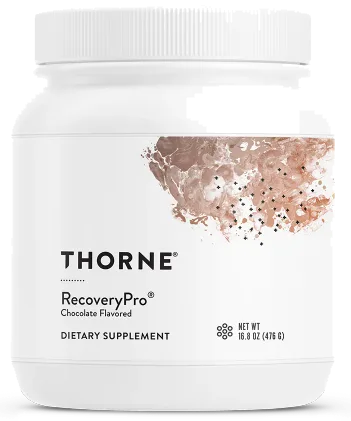
Thorne RecoveryPro Review
Thorne RecoveryPro is a chocolate-flavored nighttime recovery powder built around a synergistic blend of four ingredients intended to moderate stress, support restful sleep, and optimize nighttime muscle recovery. The page describes it as a blend of whey protein, tryptophan, magnesium bisglycinate, and PharmaGABA that promotes restful sleep and optimizes recovery in a great-tasting chocolate-flavored powder. It is NSF Certified for Sport and the page states it is tested for banned substances, with every batch of an NSF Certified for Sport product tested for compliance with label claims and for the absence of nearly 300 substances banned by many major athletic organizations. The product is aimed at elite athletes, high school athletes, and weekend warriors who need to fully recover so they can be ready for tomorrow's training. Serving size is one scoop, 39.6 g, mixed with 8 ounces of hot or cold water, and the page suggests taking it around bedtime as part of an evening recovery routine. The label lists 13 grams of whey protein per serving, described as hydrolyzed whey protein concentrate, along with 390 mg of L-Tryptophan, 125 mg of magnesium as magnesium bisglycinate, 100 mg of Gamma-Aminobutyric Acid from PharmaGABA, 88 mg calcium, 253 mg sodium, and 265 mg potassium. The page says there are 12 servings per container. The benefits listed include muscle repair support from whey protein, clinical study references for nighttime consumption in moderating stress, improving morning alertness, and supporting memory, the role of tryptophan and magnesium bisglycinate in restful sleep, cysteine linked to athletic performance, branched-chain amino acids for muscle repair, and magnesium bisglycinate shown to relax smooth and skeletal muscle. The product is gluten free and made with natural colors and flavors according to the page. Allergen notes state it contains milk and soy, with the warnings listing milk-derived hydrolyzed whey protein concentrate, lactose and sodium caseinate, and soy-derived lecithin. The warnings also include a California Proposition 65 lead notice and advise that anyone pregnant, nursing, or trying to conceive should not use it. The page reports no known adverse interactions at publication date. Thorne presents the formula as backed by scientific rigor, clinically studied ingredients, and multiple rounds of quality control for purity, potency, and consistency, and says it is trusted by health-care practitioners.
We don’t sell supplements. We help you make decisions and get the best price.
Lowest prices
We may earn a commission from some store links. How we choose.
Finding the lowest prices at the stores now. This takes a few seconds.
Products with nearly the same formula (Matched on the main ingredients)
Study, Trial or Testing Result Summary
Members Only52 human studies · 20 improved
1 of these 52 human studies gave the ingredient by drip, not by mouth.
The best support for muscle building here comes from gamma-aminobutyric acid, which this product provides at the studied dose of 100 milligrams. In a placebo-controlled trial of 21 healthy men lifting weights twice a week for 12 weeks, adding 100 milligrams a day to whey protein led to a greater gain in lean mass than whey protein alone [1]. A larger single dose raised growth hormone after weight training, but that study did not measure muscle growth [2]. Magnesium reaches the studied dose only at two scoops a day. A pooled analysis of 14 trials found it did not meaningfully improve muscle strength or power, though people low in magnesium might benefit [3]. A trial of 250 milligrams a day in overweight women found no added strength or lean mass [4]. In one small trial of young adults doing leg training, those taking magnesium gained more thigh strength [5]. Calcium on its own did not build muscle in trials or reviews [6][7]. Potassium did not improve muscle power or mass in older adults [8][9]. Evidence for tryptophan comes mostly from observational links, and the one small supplement trial showed no benefit [10][11]. The whey protein base was not graded here. Animal and cell studies are never counted.
See all 52 studies →Hide the studies
- Pooling 14 trials of 542 athletes, healthy adults, elderly people and alcoholics, magnesium did not significantly improve muscle strength, torque or power, though it may help people who are low in magnesium such as the elderly.The effect of magnesium supplementation on muscle fitness: a meta-analysis and systematic review.
- Across seven trials of 349 older people with weak bones and low muscle, strength training raised muscle mass, grip strength and protein intake, but calcium intake did not change significantly.Effects of Strength Training on Body Composition, Physical Performance, and Protein or Calcium Intake in Older People wi…
- In a review of nine reviews covering 128 studies, calcium supplements had only modest effects on bone mineral content and no muscle benefit was reported for calcium itself, though cheese and yogurt were linked to better grip strength.Nutrients and food supplements for the prevention of musculoskeletal diseases: an umbrella review.
- In a review of 45 mostly cross-sectional studies in older adults, no link was found between calcium and muscle mass, strength, physical performance or sarcopenia.Minerals and Sarcopenia in Older Adults: An Updated Systematic Review.
- A review of 91 studies on diet and supplement compounds, including GABA, for muscle loss with obesity or diabetes reported that these compounds consistently improved muscle mass, strength and mitochondrial function, but GABA was not assessed on its own.Bioactive Nutritional Components Within the Planetary Health Diet for Preventing Sarcopenic Obesity and Diabetic Sarcope…
- In 1434 children aged 6 to 9, two years of an after-school program with 380 mg daily calcium-rich snacks and exercise raised bone stiffness in one group but did not change muscle strength or vertical jump.Beat osteoporosis - nourish and exercise skeletons (BONES): a group randomized controlled trial in children.
- In 244 men and women aged 50 and older, 3 months of potassium bicarbonate lowered bone turnover and calcium loss in urine but had no significant effect on muscle strength or function compared with placebo.Potassium Bicarbonate Supplementation Lowers Bone Turnover and Calcium Excretion in Older Men and Women: A Randomized Do…
- In 156 older women with low muscle mass, 1500 mg daily of calcium-HMB for 12 weeks did not add to the effects of resistance training on muscle quality compared with placebo.β-Hydroxy-β-Methylbutyrate Supplementation May Not Enhance Additional Effects of Exercise on Muscle Quality in Older Wom…
- In 148 men aged 70 and over with low testosterone, 20 weeks of calcium, vitamin D and protein with resistance training and testosterone improved chair stand performance versus no intervention, but calcium's own effect could not be separated.Beneficial effects of exercise, testosterone, vitamin D, calcium and protein in older men-A randomized clinical trial.
- In 128 healthy adults aged 65 and older, 24 weeks of potassium bicarbonate did not improve muscle power, physical performance or muscle mass compared with placebo, though blood levels of a growth hormone marker (IGF-1) were higher.Independent effects of whey protein and alkali supplementation on muscle health in healthy older adults: factorial rando…
- In 105 older outpatients at risk of malnutrition, a nutrient-rich drink for 12 weeks raised calcium intake and increased muscle mass in women, but muscle strength and physical performance did not differ from standard care.The effect of 12-weeks Nutritional supplementation on Nutritional Intake and Status among Indonesian Older Outpatients w…
- In 98 adults over 50, drinking 1 liter a day of calcium and magnesium-rich mineral water for 12 months raised muscle mass relative to height and lowered falls at 6 months, but did not change physical performance scores.Efficacy of a Naturally Calcium and Magnesium-Rich Mineral Water on Musculoskeletal Fragility: A Randomized, Double-Blin…
- In 83 vitamin D-deficient middle-aged women, 250 mg magnesium daily plus weekly vitamin D for 8 weeks improved handgrip strength and walking-test time and lowered a blood inflammation marker, but did not change body composition or knee strength.Randomized Study of the Effects of Vitamin D and Magnesium Co-Supplementation on Muscle Strength and Function, Body Comp…
- In 74 middle-aged overweight women, 250 mg magnesium oxide daily for 8 weeks did not produce greater gains in muscle strength, function or lean mass than placebo.Does magnesium supplementation improve body composition and muscle strength in middle-aged overweight women? A double-bl…
- In 59 patients with alcoholic liver disease, 6 weeks of magnesium had no effect on muscle strength or mass compared with placebo, as both groups improved.Magnesium supplementation and muscle function in patients with alcoholic liver disease: a randomized, placebo-controlled…
- In 59 older adults averaging about 80 years, a combination supplement containing magnesium improved muscle mass, all muscle function tests and inflammation markers compared with placebo.A Patented Dietary Supplement (Hydroxy-Methyl-Butyrate, Carnosine, Magnesium, Butyrate, Lactoferrin) Is a Promising Ther…
- In 51 people with Parkinson's disease, magnesium was used as the comparison to whey protein for 4 weeks, and the two groups did not differ in changes in walking and movement tests.Can we add whey protein supplementation in patients with Parkinson's disease without interfering with levodopa response?
- In 49 chronic heavy-drinking adults, 6 weeks of oral magnesium raised muscle strength significantly while placebo produced no change.Oral magnesium supplementation improves metabolic variables and muscle strength in alcoholics.
- In 46 adults with moderate-to-severe lung disease (COPD), 8 weeks of a daily 250 ml whey drink fortified with magnesium and vitamin C increased muscle mass index, body protein and handgrip strength compared with the control group, and lowered an inflammation marker.Fortified whey beverage for improving muscle mass in chronic obstructive pulmonary disease: a single-blind, randomized c…
- In 44 children and teens with cystic fibrosis, 300 mg of magnesium daily for 8 weeks improved breathing muscle strength much more than placebo in a crossover trial.Oral magnesium supplementation in children with cystic fibrosis improves clinical and functional variables: a double-bli…
- In 43 malnourished people with liver cirrhosis, 3 g a day of calcium HMB for 12 weeks did not change fat-free mass compared with the supplement without it, though handgrip strength trended upward.Randomized Clinical Trial: Effects of β-Hydroxy-β-Methylbutyrate (HMB)-Enriched vs. HMB-Free Oral Nutritional Supplement…
- In 40 young men doing 8 weeks of resistance training, calcium HMB did not improve muscle thickness, strength or power more than placebo.Leucine Metabolites Do Not Enhance Training-induced Performance or Muscle Thickness.
- In 40 resistance-trained young men over 8 weeks of training, calcium HMB did not reduce training-related inflammation or change muscle thickness or strength compared with placebo.Leucine metabolites do not attenuate training-induced inflammation in young resistance trained men.
- In 26 healthy young adults doing 10 weeks of resistance training, a supplement with whey protein, leucine, creatine, calcium citrate and vitamin D twice daily increased lean body mass more than placebo (+4.1 vs +2.8 kg), but calcium's own effect cannot be separated.The Effect of a Multi-ingredient Supplement on Resistance Training-induced Adaptations.
- Over 10 weeks of resistance training, a multi-ingredient supplement containing calcium citrate increased the size of fast muscle fibers more than a collagen control, though calcium's effect could not be separated from the other ingredients.The Effect of Multi-Ingredient Protein versus Collagen Supplementation on Satellite Cell Properties in Males and Females…
- In 24 older adults, a single dose of 3 g calcium beta-hydroxy-beta-methylbutyrate added to 40 g whey boosted muscle protein synthesis in older women and reduced muscle protein breakdown, but the effect was not seen in men.The Effect of β-Hydroxy-β-Methyl Butyrate (HMB) upon Acute Fed-State Muscle Protein Turnover in Older Men and Women: A R…
- In 21 healthy men doing resistance training twice weekly for 12 weeks, 100 mg of daily GABA added to whey protein led to a greater gain in whole body fat-free mass than whey protein alone.Oral Supplementation Using Gamma-Aminobutyric Acid and Whey Protein Improves Whole Body Fat-Free Mass in Men After Resis…
- In 14 older adults with impaired physical function, 32 days of a supplement giving 207.5 mg niacin equivalents a day (tryptophan, nicotinic acid and nicotinamide) did not improve muscle mitochondrial function or exercise efficiency compared with a control product.NAD+-Precursor Supplementation With L-Tryptophan, Nicotinic Acid, and Nicotinamide Does Not Affect Mitochondrial Functio…
- In 12 male weight trainers, a single dose of potassium-magnesium aspartate taken before a resistance workout did not lower blood ammonia or improve bench press performance to failure compared with vitamin C.Effect of acute potassium-magnesium aspartate supplementation on ammonia concentrations during and after resistance trai…
- In 11 resistance-trained men, a single 3 g dose of GABA raised growth hormone levels at rest and after resistance exercise compared with placebo, but muscle growth was not measured.Growth hormone isoform responses to GABA ingestion at rest and after exercise.
- In 7 children on peritoneal dialysis, 3 months of amino acid dialysis did not significantly increase lean body mass compared with glucose dialysis, though appetite improved in most children.Effects of 3-month amino acid dialysis compared to dextrose dialysis in children on continuous ambulatory peritoneal dia…
- In people having hip replacement surgery, a pain-relief cocktail that included magnesium sulfate and sodium bicarbonate reduced pain and morphine use and improved early walking, while the abstract does not report muscle strength results.Effects of a Modified Long-Acting Cocktail on Analgesia and Enhanced Recovery After Total Hip Arthroplasty: A Double-Bli…
- In 66 adolescent girls, about 1300 mg daily calcium from milk for 12 weeks did not change body composition or muscle performance, though resistance training did improve them and milk with training improved bone density.Resistance Training and Milk-Substitution Enhance Body Composition and Bone Health in Adolescent Girls.
- In 26 untrained young adults doing 7 weeks of leg strength training, those taking magnesium gained more thigh strength than those on placebo (211 vs 174 Nm).Effect of magnesium supplementation on strength training in humans.
- In a large UK study of adults around age 64, people eating more magnesium had stronger handgrip in both sexes.Associations between diet and handgrip strength: a cross-sectional study from UK Biobank.
- In 2,610 older Chinese adults followed for 4 years, a serum amino acid pattern including tryptophan was linked to lower sarcopenia risk in men, but this link disappeared after adjusting for confounders.Serum Amino Acids Patterns and 4-Year Sarcopenia Risk in Community-Dwelling Chinese Older Adults.
- In 2,570 women, higher dietary magnesium was linked with more muscle mass and greater leg explosive power, but not with grip strength.Dietary Magnesium Is Positively Associated With Skeletal Muscle Power and Indices of Muscle Mass and May Attenuate the A…
- In a cross-sectional study of 2532 older adults, higher oral magnesium intake was associated with lower odds of sarcopenia in a dose-dependent pattern, even after full adjustment.Association between oral intake magnesium and sarcopenia: a cross-sectional study.
- In 1,140 Asian adults with type 2 diabetes followed for up to 7.9 years, higher baseline tryptophan was linked to lower odds of losing skeletal muscle mass.Amino acid profile of skeletal muscle loss in type 2 diabetes: Results from a 7-year longitudinal study in asians.
- In 1,140 older adults in Qingdao, China, those with the highest dietary tryptophan intake had lower odds of sarcopenia (OR 0.10, 95% CI 0.01 to 0.87), though this was an observational association and the trend was not statistically significant.Branched chain and other amino acid intakes are inversely associated with sarcopenia among community elders in Qingdao, …
- In 766 black and white adolescents, lower dietary magnesium intake was associated with higher CRP and lower fat-free mass, and almost none of the teens met the recommended magnesium intake.Magnesium Intake, C-Reactive Protein, and Muscle Mass in Adolescents.
- In 392 adults with knee osteoarthritis, higher dietary potassium intake was linked to greater lower limb muscle strength over 24 months.Associations of Dietary Macroelements with Knee Joint Structures, Symptoms, Quality of Life, and Comorbid Conditions in …
- In 352 Mexican adolescents followed for 1.6 to 3.5 years, a group of blood metabolites that included tryptophan breakdown products was linked to changes in muscle mass, with associations differing between boys and girls.Metabolomics reveals sex-specific pathways associated with changes in adiposity and muscle mass in a cohort of Mexican a…
- In 246 older Chinese men, higher blood tryptophan was linked to better handgrip strength, while glycine showed the opposite pattern.Specific lysophosphatidylcholine and acylcarnitine related to sarcopenia and its components in older men.
- In Malawian adults who had severe childhood malnutrition, higher tryptophan was linked to greater lean mass 7 years later, but this link was absent in controls.Childhood Malnutrition and Association of Lean Mass with Metabolome and Hormone Profile in Later Life.
- In a nested case-control study of 128 older adults, higher blood tryptophan levels were linked to a lower 2-year risk of impaired leg function (odds ratio 0.64), but this was observational and not a supplement trial.Plasma Amino Acids and Risk of Impaired Lower-Extremity Function and Role of Dietary Intake: A Nested Case-Control Study…
- In 53 Chinese men and women aged 18 to 35, calcium intake was similar across age and sex groups, and the study found only correlations between bone, body composition, and muscle strength, with no intervention tested.Muscle-Bone Interactions in Chinese Men and Women Aged 18-35 Years.
- In a retrospective study of 52 middle-aged Chinese women, 12 weeks of a combined supplement with 75 mg magnesium plus vitamin D3, K2, B6 and B12 lowered high-sensitivity CRP, body weight and body fat, with no adverse events reported; muscle gain was not measured and magnesium's own effect could not be separated out.Effects of 12-Week Multiple Micronutrient Supplementation on Immune Function, Body Weight, and Metabolic Parameters in M…
- In a small pilot of 20 men aged about 82, plasma tryptophan was lower in those with severe muscle loss than in matched controls, suggesting it may be a biomarker of severe sarcopenia rather than a proven cause.Metabolomic profiles to explore biomarkers of severe sarcopenia in older men: A pilot study.
- In elite male basketball, handball and volleyball players, higher magnesium intake from diet was linked with better trunk, grip, jumping and leg strength test scores.Magnesium intake is associated with strength performance in elite basketball, handball and volleyball players.
- Lower blood tryptophan was seen in men with sarcopenia in a discovery cohort, but tryptophan was not among the markers the authors identified as useful biomarkers for sarcopenia.Amino acid metabolites as potential circulating biomarkers for sarcopenia.
- Six volunteers training intensely in a hot climate on a daily potassium intake of 100 mEq ended up with a mean potassium deficit of 517 mEq, mostly from sweating, while lean body mass rose.Pathophysiology of intense physical conditioning in a hot climate. I. Mechanisms of potassium depletion.
Review Totals and Summary
Members Only317 reviews · 84% positive
Buyers mostly like Thorne RecoveryPro, praising the chocolate taste and its use as an evening recovery drink, though the price for a small tub is the main complaint. It carries about 204 ratings across the stores, and the written reviews lean strongly positive. **What buyers say it did for them:** Many use it as a bedtime drink after training and say it helps them relax and sleep. One reviewer says it will "really do make me feel relaxed and help me fall asleep." Another calls it the "night time recovery protein" and says it helps with sleep and getting enough protein after a hard day. One buyer said it makes them feel good after exercise. Store summaries add reports of less post-workout soreness, and one store's page summary mentions better sleep. Not everyone noticed an effect: one buyer wrote "I can't tell if it's doing anything." A store summary notes that another buyer is still waiting to see how it works over the long run. **What they complain about:** The complaints are the number of servings and the protein level. One buyer was "surprised that there was only 12 servings in this entire tub." The same reviewer found 13g of protein lower than expected for a sports recovery product and won't buy again. Another buyer said they wished it were "more concentrated with more than 12 servings." One reviewer noted it "stays a little lumpy," though a store summary says others find it mixes smoothly into water, milk or yogurt. **Taste, texture and form:** This is the strongest theme. This is a chocolate powder, and buyers often drink it as hot chocolate. Reviewers say it is "Great tasting, and easily digestible" and "the best chocolate shake out there." One says the flavor and texture are wonderful and that it "does not upset my stomach at all." A store summary describes the chocolate as not too sweet. One buyer likes it as a sweet, creamy evening treat. One reviewer called the scoop "huge." **Value for money:** Price is the main reservation. One buyer wrote "Fifty-four dollars for TWELVE servings?" and said they could buy the sleep ingredients and protein separately for about half the price for 30 days. A store summary says one reviewer calls it the most expensive recovery shake they know of. Another finds it steep but worth a splurge for in-between nights. **Who it suits and who it did not:** It seems to suit people who train hard and want a pleasant, gentle-on-the-stomach drink in the evening, combining protein with a wind-down routine. One review says a father and son both enjoy it near bedtime on gym days. One buyer has used it for years. It suited less well people who want a high-protein, high-serving tub for the money, or who want clear proof of benefit. Those buyers found the value weak. Reviews of other forms of this product (gummies, capsules) were left out, and this summary covers the powder only.
Biohacker Summary
Members Only10 of 10 recommend it
Magnesium is a smaller ingredient in this product, yet all ten panelists spoke about it, and most of them recommend it or take it themselves, mainly for sleep. Several take it before bed, with four preferring the threonate form (400 mg doses) and two naming glycinate, while others use it in electrolyte drinks to support workouts and hydration, especially when fasting. Other reasons given include muscle function and cramps, stress, bone health, blood pressure, and detox support, and daily targets cited run from 300 to 600 mg. Three panelists stayed neutral, one saying it does not fix waking up at night and another saying the evidence for sleep is inconsistent, and one warned that labels can make the real dose look larger than it is. Potassium and tryptophan are smaller ingredients in this product, with a few panelists backing potassium for constipation, blood pressure and workouts, and one favoring food sources over supplements.
See all 10 biohackers →Hide the biohackers
Dr. Mark Hyman · Magnesium · uses
- Recommends considering magnesium glycinate before bed for nervous system support, deeper sleep quality, and to help the body transition into rest, and states that they take it every night.
- Recommends Magnesium Breakthrough Advanced 10 from Bioptimizers for restful sleep, muscle recovery, stress resilience, and metabolic health, especially during stressful times of the year.
- Warns that potassium bromate, a dough conditioner banned in the EU, UK, and Canada, is still allowed in U.S. bread.
- Recommends magnesium because it is involved in over 600 reactions in the body and up to 80% of people may have low levels that never get flagged on a standard blood test.
- Recommends magnesium as a basic supplement during detoxification to support pathways, help with constipation, and provide electrolytes.
- Recommends Magnesium Breakthrough Advanced 10 from Biooptimizers, which contains 10 bioavailable forms and 550 mg of elemental magnesium, to support restful sleep, restorative sleep, muscle recovery, stress resilience, and metabolic health.
- Has recommended magnesium breakthrough from bioptimizers for years and now uses Magnesium Breakthrough Advanced 10 as part of his evening routine, especially during periods of travel, training, and higher stress, to support sleep, muscle recovery, and metabolic health.
- Recommends correcting nutrient deficiencies with magnesium.
- Recommends Magnesium Breakthrough Advance 10 from BiOptimizers, which has 10 bioavailable forms of magnesium and more elemental magnesium, as part of his evening routine for sleep, muscle recovery, and metabolic health.
- Has recommended Magnesium Breakthrough from Bio Optimizers for years and now uses Magnesium Breakthrough Advanced 10 as part of his evening routine, especially during periods of travel, training, and higher stress, to support sleep, muscle recovery, and metabolic health.
- Recommends Magnesium Breakthrough Advance 10 from Bio Optimizers, which contains 10 bioavailable forms of magnesium, as it plays a critical role in sleep recovery, stress regulation, and muscle function, and has become part of his evening routine, especially during periods of travel, training, and higher stress.
- States that potassium plays a critical role in nerve signaling and muscle contraction, especially in the heart, and low levels can lead to dangerous irregular heart rhythms.
- Notes that calcium is in bones but is also essential for nerves, muscles, and the heart, and low levels can affect muscle function and heart rhythm.
- Notes that meds flush out potassium.
Dave Asprey · Magnesium · neutral
- Mentions magnesium in the context of sleep but states that it doesn't address the core issue of waking up during the night.
- Suggests that magnesium may help slow aging, support cellular repair, and improve sleep.
- States that magnesium can affect how the body responds to a supplement.
- Recommends fixing sleep with 300mg of Magnesium 101 before bed if diet and exercise aren't melting stubborn belly fat.
- Dave Asprey says his daily routine includes magnesium as part of a carefully developed combination for longevity.
- Recommends magnesium glycinate for sleep, stating that trials show it helps people fall asleep about 17 minutes faster and that he finds it incredibly effective.
- Mentions magnesium glycinate as one of the five gut-friendly, extensively researched ingredients in Kill Switch that helps with natural sleep.
- Dave Asprey recommends Magnesium Glycinate for sleep, noting human studies show it helps people fall asleep faster, is safe, and works on a fundamental aspect of health, unlike magnesium oxide which acts as a laxative.
- Dave Asprey recommends adding 300 or 400 mg of magnesium glycinate before bed to improve deep sleep quality, support growth hormone release, and burn visceral fat while asleep.
- Mentions magnesium glycinate as one of the extensively researched ingredients in Kill Switch that helps with natural sleep.
- Recommends tryptophan, an amino acid from high-quality complete animal protein sources like turkey, as a raw material for NAD+ production.
- Recalls when tryptophan was taken out of health food stores due to a contaminated baby formula study, not because of tryptophan itself.
- Notes that when energy intake is too low for training demand, nutrient intake often falls short, especially for calcium, which is associated with reduced bone health.
- Explains that calcium provides the raw material for bones, but it isn't a standalone input and needs a whole system to be effective.
Dr. Eric Berg · Magnesium · neutral
- Dr. Eric Berg states that magnesium supports energy, muscle function, and sleep, and that most of it is stored inside cells, making deficiencies harder to detect with a standard blood test.
- States that people need more potassium than any other mineral, yet most people aren’t getting enough.
- Notes that magnesium could also be a factor in preventing muscle cramps.
- Explains that potassium is essential for peristalsis, the pumping action through the colon, and without it, things can sit there, leading to constipation.
- Recommends magnesium, specifically magnesium glycinate, stating it is key for D3 and K2 to work and is probably more important than calcium for building bone.
- Recommends increasing magnesium to restore balance and support healthy blood pressure.
- Explains that the normal requirements for potassium are 4,700 mg every single day, and that very few people get half of that amount. They describe potassium's role in the sodium potassium pump, which is essential for cellular electricity, muscle contraction, and heart function. Deficiency can lead to tiredness, muscle cramps, heart palpitations, or rising blood pressure.
- Recommends increasing potassium to restore balance and support healthy blood pressure.
- Warns that bone loss cannot be fixed with just calcium, as bone is primarily collagen with other essential minerals.
- Dr. Eric Berg suggests that magnesium could help support deeper, more restful sleep.
- Recommends Magnesium Glycinate, noting that the combination of magnesium and glycine is helpful for connective tissue, sleep, and reducing stress.
- Recommends taking magnesium 90 minutes to 2 hours before bedtime to support better sleep.
- Suggests that magnesium glycinate can help support the missing 'break pads' on the nervous system, which contribute to constant pain.
- States that potassium is the most important electrolyte and that most people are not getting enough of it, needing around 4,700 mg daily, or even more, to avoid issues like fatigue, muscle cramps, heart palpitations, high blood pressure, and fluid retention.
Ben Greenfield · Magnesium · uses
- Uses magnesium during surgery because it is neuroprotective.
- Says he is drinking LMNT, which contains sodium, potassium, and magnesium, and states that he actually drinks this stuff.
- Says he is drinking LMNT, which contains sodium, potassium, and magnesium, and states that he actually drinks this stuff.
- Mentions magnesium as part of a bare-minimum protocol.
- Advises getting red blood cell magnesium levels to the high end of the range as a minimum step for overall health and to slow down heart disease.
- Recommends supplementing with magnesium threonate if one is low in magnesium, as it crosses the blood-brain barrier and is demonstrated to increase hippocampus plasticity, theoretically making one smarter and improving memories.
- Uses Magnesium Breakthrough from BIOptimizers as part of their daily stack, taking four capsules in the evening to support relaxation, recovery, and a good night of sleep.
- Recommends Celtic Sea Salt's new electrolyte drink "Hydrate" for replacing electrolytes and trace minerals lost through sweat, noting it contains 70 naturally occurring trace minerals, plus magnesium, taurine, and potassium.
- Recommends Celtic Sea Salt's new electrolyte drink 'Hydrate' for replenishing electrolytes and trace minerals lost through sweat, noting it contains 70 naturally occurring trace minerals, magnesium, taurine, and potassium, with no added sugar, artificial colors, or synthetic ingredients.
- Had heart palpitations when he was really overdoing magnesium, not knowing what he was taking.
- Recommends taking magnesium as a co-factor to increase vitamin D absorption.
- Notes a new study indicating that magnesium is a core dietary antioxidant closely associated with a reduced risk of accelerated biological aging.
- Is considering whether he needs a calcium supplement because lead can displace calcium in bones, affecting bone strength.
- Mentions calcium as a common deficiency.
Dr. Rhonda Patrick · Magnesium · neutral
- Magnesium supplementation has lowered blood pressure in randomized controlled trials. An analysis of 34 trials involving over 2,000 participants found modest reductions in both systolic and diastolic pressure, with a median dose of 368 mg/day.
- Warns that some magnesium supplements make the dose look much larger than it really is and that labels can fool people.
- Mentions magnesium as an important nutrient component for testosterone.
- Warns that some supplement companies mislead consumers by listing the total compound weight of magnesium citrate as the elemental magnesium dose, when the actual elemental magnesium content is much lower, potentially around 44-66 milligrams.
- States there is not yet strong, consistent evidence that magnesium supplementation reliably improves sleep, noting that while some meta-analyses suggest it can improve sleep quality scores, sleep efficiency, and sleep duration, individual studies are inconsistent and several have found no meaningful effect.
- States that magnesium may help modestly lower blood pressure by playing an important role in regulating vascular tone and influencing calcium signaling, with studies showing a reduction in systolic and diastolic blood pressure by 2 mmHg at a dose of around 370 mg/day for about 3 months.
- Recommends considering magnesium to improve mood.
- Recommends Magnesium, stating that roughly half of Americans don’t get enough and it is a cofactor for over 300 biological processes, including DNA repair and energy production.
- Mentions that kale delivers magnesium, a micronutrient many diets fall short on.
- Mentions that kale delivers calcium, a micronutrient many diets fall short on.
- Recommends Magnesium, stating it is a cofactor for over 300 biological processes, including DNA repair, energy production, and sleep regulation.
- Recommends getting enough potassium, noting that most people get too much sodium and not enough potassium.
- Notes additional gaps in calcium.
- Reports that alcohol use disorder is associated with a 20-50% greater prevalence of Calcium deficiency.
Thomas DeLauer · Magnesium · uses
- Uses Element's cans which contain 30 milligram magnesium, finding that electrolytes help his workout performance.
- Uses Element's cans which contain 100 milligram potassium, finding that electrolytes help his workout performance.
- Uses Element's 30 mg magnesium cans first thing in the morning to prime his day and help with workout performance.
- Uses Element's 100 mg potassium cans first thing in the morning to prime his day and help with workout performance.
- Recommends magnesium around the time one would normally break a fast to calm the brain and dull feelings of conditioned hunger.
- Recommends magnesium, noting it is a cofactor for enzymes that build neurotransmitters, and deficiency can affect mood, happiness, and motivation.
- Notes that modern agricultural practices have led to soils depleted of trace minerals like magnesium, resulting in widespread magnesium deficiency.
- Recommends taking some magnesium glycinate tonight to help calm down and sleep.
- Mentions that magnesium in pumpkin seeds relaxes bronchial smooth muscle.
- Compares magnesium content, stating bananas have 32mg and pumpkin seeds have 156mg per ounce, a 5x difference.
- Notes that milk contains 120mg of calcium, while sardines contain 351mg, highlighting a 3x difference.
- Recommends Magnesium glycinate, stating that 200-400mg elemental helps with sleep as glycine cools the body and magnesium calms.
- Notes that magnesium sits on the NMDA receptor and regulates excitatory transmission, in the context of feeling stressed.
- Recommends Element's ready-to-drink sparkling electrolyte drinks as a low or zero-calorie soda replacement that provides 1,000 milligrams of sodium, 200 milligrams of potassium, and 60 milligrams of magnesium.
Siim Land · Magnesium · recommends
- States that Magnesium can be a useful addition for some people for sleep.
- Recommends magnesium for sleep, especially deep sleep, and suggests trying better types like Threonate, Biscinate, or Torate, referencing a study where magnesium supplementation improved deep sleep.
- Recommends Magnesium for blood pressure, migraines and deficiency, based primarily on human research, especially randomized controlled trials showing measurable benefits.
- Lists Magnesium as one of 15 supplements backed by human studies.
- States that magnesium is a fundamental mineral governing over 600 enzymes and metabolic reactions, and recommends that most people need at least 400-500 mg/d for health, with some needing up to 600 mg/d.
- Lists seafood and pumpkin seeds as sources of Magnesium.
- Lists potatoes and fruit as sources of Potassium.
- Lists dairy and sardines as sources of Calcium.
- Thinks magnesium has some of the strongest evidence and is worth considering.
- Recommends taking magnesium, specifically glycinate and threonate forms, 1 to 2 hours before bed for sleep benefits, noting that glycinate promotes relaxation and threonate crosses the blood-brain barrier for sleep quality and cognitive function.
- Notes that Boron reduces calcium/magnesium loss.
- Notes that Boron reduces calcium/magnesium loss.
- Notes that magnesium is important for activating thiamine into its more biologically active form, and a magnesium deficiency can impair blood sugar regulation even with adequate thiamine intake.
- Notes that bananas have potassium but there are at least 8 other foods with more potassium than bananas.
Andrew Huberman · Magnesium · neutral
- Discusses Magnesium Threonate as a tool for falling asleep.
- Takes 400 mg of Magnesium Threonate before bed for sleep.
- Recommends tryptophan-rich foods to improve serotonin and mood.
- Notes that tryptophan is an amino acid precursor to serotonin synthesis and that many foods enriched in tryptophan can lead to net increases in serotonin, impacting feelings of well-being.
- Uses Element, an electrolyte drink with sodium, magnesium, and potassium in correct ratios and no sugar, to ensure adequate hydration and electrolytes, especially when starting days fast or during physical exercise.
- Uses Element, an electrolyte drink with sodium, magnesium, and potassium in correct ratios and no sugar, to ensure adequate hydration and electrolytes, especially when starting days fast or during physical exercise.
- Takes 400 mg of Magnesium L-Threonate before bed for sleep.
- Confirms that magnesium is absolutely important for cognitive function, noting studies show those with lower magnesium intakes tend to perform less well on cognitive function tests, and it's related to brain changes over time and dementia risk.
- Takes 400 mg of Double Wood Magnesium L-Threonate before bed for sleep.
- He takes 400 mg of Magnesium L-Threonate from Double Wood before bed for sleep.
- Takes 400 mg of Double Wood Magnesium L-Threonate before bed for sleep.
- Takes 400 mg of magnesium L-threonate before bed for sleep.
- Takes 400 mg of Magnesium Threonate before bed for sleep.
- Uses Element, which contains potassium in the correct ratios, to ensure proper hydration and electrolyte intake for brain and body function.
Bryan Johnson · Magnesium · uses
- Takes 400 mg of Magnesium Threonate before bed for sleep.
- Takes 400 mg of Magnesium L-Threonate before bed for sleep.
- Takes 400 mg of Magnesium Threonate before bed for sleep.
- He takes 400 mg of Double Wood Magnesium L-Threonate before bed for sleep.
- Takes 400 mg of Magnesium L-Threonate before bed for sleep.
- Takes 400 mg of Magnesium Threonate before bed for sleep.
- Takes 400 mg of Magnesium L-Threonate before bed for sleep.
- Takes 400 mg of magnesium L-threonate before bed for sleep.
- He takes 400 mg of Magnesium L-Threonate before bed for sleep.
- Takes 400 mg of magnesium threonate before bed for sleep.
- Recommends calcium as a mineral that, along with phosphorus, magnesium, and boron, is deposited to fortify the bone structure after the collagen scaffold is in place.
- Agrees that a little extra calcium is probably okay, especially for women, to really hit home for bone mineral density.
Peter Attia · Potassium · recommends
- States there is some evidence that increasing dietary potassium through potassium-rich foods like bananas and potatoes, rather than supplements, can lower blood pressure.
- Peter reviews the evidence for select off-label medications and supplements commonly used for sleep, including glycine, magnesium, ashwagandha, and phosphatidylserine.
- Suggests that zinc and magnesium could potentially help with vasodilation and sleep, particularly for women experiencing severe symptoms in the luteal phase.
- Peter discusses electrolytes and fiber and the ketogenic diet, specifically preventing magnesium loss.
- Recommends magnesium as one of the 'big three' micronutrients for bone health, suggesting a daily intake of 300 to 500 milligrams as a minimum, and personally aims for about a gram of supplemental magnesium.
- Recommends calcium as one of the 'big three' micronutrients for bone health, suggesting a daily intake of 1,000 to 1,200 milligrams, which can be supplemented with calcium carbonate or calcium citrate.
- Recommends magnesium for optimizing bone mineral density, suggesting a daily intake of 300 to 500 milligrams as a minimum, but personally aims for about a gram.
- Explains that bone is 50 to 70% mineral, predominantly calcium, and that virtually all of the body's calcium is contained within bone, making bone important for calcium homeostasis.
- Recommends calcium for bone health, stating that teenagers probably need about 1000 milligrams a day.
- Discusses bone acting as a reservoir for calcium and how resorption and formation release calcium into the blood when needed.
- Takes a hardline view that most people do not have adequate or optimal levels of magnesium, and suboptimal levels will impede the metabolism of vitamin D because magnesium is a cofactor in its enzymatic conversion.
- Takes a hardline view that most people do not have adequate or optimal levels of magnesium, and suboptimal levels will impede vitamin D metabolism because magnesium is a co-factor in the enzymatic conversion of vitamin D.
- Takes magnesium as a straightforward supplement.
- Mentions that magnesium intake is often super low and impactful on testosterone levels.
RAL Summary
Members OnlyTier 2 for Muscle and Strength
A controlled trial found that gamma-aminobutyric acid at this product's 100 milligram dose, added to whey protein during weight training, increased lean mass more than whey alone [1]. In addition, 83% of 327 reviews are positive.
Where the evidence disagrees: 22 of the 52 human studies found no effect.
More Details
Members OnlyBody systems · Combine with · Possible side effects
Body systems: Muscular system, Nervous system, Endocrine system
Combine with: To fit its true purpose of muscle recovery and building, pair it with creatine monohydrate (3-5 g daily) for strength and lean mass, and with magnesium glycinate and omega-3 fish oil (EPA/DHA) to reduce exercise-related soreness and inflammation. Vitamin D3 with K2 supports muscle and bone function, and an electrolyte or carbohydrate source after intense training can help replenish glycogen. If blood sugar support is also a goal, add a separate glycemic product such as berberine, chromium picolinate, or alpha-lipoic acid, ideally after consulting a healthcare provider, especially if you take meds.
Possible side effects: No major side effects reported. Buyers say it is easy on the stomach, and some find it relaxing near bedtime.
Supplement Facts
Includes 2 g Added Sugars 0 · Calcium 88 mg · Magnesium 125 mg
| Calories | 140 | |
| Total Fat | 6 g | |
| Saturated Fat | 5 g | |
| Cholesterol | 10 mg | |
| Total Carbohydrate | 9 g | |
| Dietary Fiber | 4 g | |
| Total Sugars | 4 g | |
| Includes 2 g Added Sugars | ||
| Protein | 13 g | |
| Calcium | 88 mg | |
| Magnesium | 125 mg | |
| Sodium | 253 mg | |
| Potassium | 265 mg | |
| Hydrolyzed Whey Protein Concentrate, Lecithin | 15.9 g | † |
| L-Tryptophan | 390 mg | † |
| Gamma-Aminobutyric Acid (GABA) | 100 mg | † |
Other ingredients: Creamer (Coconut Oil, Lactose, Sodium Caseinate, Dipotassium Phosphate and Silicon Dioxide), Organic Cocoa Powder, Tapioca Maltodextrin, Chocolate Flavor, Sea Salt, Xanthan Gum, Guar Gum†††, Monk Fruit concentrate, Evaporated Cane Juice Sugar, Organic Rice Fiber.
Directions: Mix one scoop (39.6 g) in 8 ounces of either hot or cold water around bedtime.
Label source: Reverseagelab · Report a label change
Show entire label
More muscle and strength products
Members OnlyThe highest ranked for the same goal
Read more
Our articles on this subject
- Supplements for Stress and Anxiety Relief: What the Evidence SupportsArticle · Oct 26, 2026
- Peter Attia's Supplement List: What He Takes and What the Trials SayArticle · Sep 20, 2026
Graded November 6, 2026 by the Reverse Age Lab evidence engine, from human studies, real reviews and our biohacker panel. How we grade. Is this medical advice? No. Rala organizes the published evidence; go over any change with your doctor, especially if you take meds.
Privacy policyConsumer health dataAffiliate disclosureTermsDo Not Sell or Share My Personal InformationCookie settings