
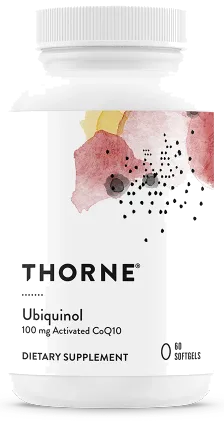
Thorne Ubiquinol Review
Thorne Ubiquinol is a softgel supplement that provides Kaneka Ubiquinol, a patented and clinically studied form of coenzyme Q10. The page describes ubiquinol as the body's most prevalent active form of CoQ10 and says it supports mitochondrial energy production, cardiovascular function, and reproductive health. Each gelcap contains 100 mg of Kaneka Ubiquinol, and the container holds 60 gelcaps with a serving size of one gelcap. The listed price is $78 for 60 gelcaps, or $70.20 with a subscription that saves 10 percent. The page explains that CoQ10 exists in two forms, ubiquinone and ubiquinol. Both forms move electrons along the electron transport chain, and the body converts between them, but this ability declines with age. Thorne states that its ubiquinol provides the active antioxidant form and does not need conversion before use, which it presents as the premium option for antioxidant benefits and healthy aging. The benefits listed include protection against oxidative stress associated with premature aging, support for muscle health in older adults, and help in regenerating vitamin E. For heart health, the page lists support for cardiovascular function, healthy circulation, vasodilation, nitric oxide bioavailability, and protection of LDL cholesterol from oxidative damage. For cellular energy, it cites support for ATP production and healthy mitochondrial function. For reproductive health, it says the product supports healthy egg and sperm development. The page describes the product as an easy-to-take softgel that is smaller than traditional CoQ10 supplements. It states that Kaneka Ubiquinol has been the subject of more than 85 research studies and that clinical use has shown a rapid rise in blood CoQ10 levels within four weeks of daily use. The intended users include adults seeking advanced antioxidant support, people who want cardiovascular support, men and women interested in fertility, current CoQ10 users wanting the active form, and adults whose CoQ10 levels or conversion ability has declined with age. The page notes that blood levels of CoQ10 peak between ages 20 and 30. The product is listed as third-party tested to confirm that the contents match the label and that it contains no unsafe levels of heavy metals, pesticides, or microorganisms. The warnings state that the product is contraindicated for anyone with a history of hypersensitivity to its ingredients, and that people who are pregnant should consult a health-care practitioner before use. The page reports no known adverse interactions at publication.
We don’t sell supplements. We help you make decisions and get the best price.
Lowest prices
We may earn a commission from some store links. How we choose.
Finding the lowest prices at the stores now. This takes a few seconds.
Study, Trial or Testing Result Summary
Members Only57 human studies · 40 improved
This product itself was tested in a human study.
Ubiquinol is the active form of coenzyme Q10. This product gives 100 milligrams per serving, and the daily amount studied here, 200 milligrams, counts as a full dose. A 2007 review of 12 trials in 362 people with high blood pressure found coenzyme Q10 lowered the upper number by up to 17 points and the lower number by up to 10 points, without significant side effects [1]. In 83 adults with high upper pressure, 60 milligrams twice a day for 12 weeks lowered it by about 18 points [2]. In 74 adults with type 2 diabetes, 200 milligrams a day for 12 weeks lowered both numbers more than a dummy pill [3]. In 32 young male athletes, 600 milligrams of ubiquinol a day for 11 days lowered the lower number, but it did not reduce muscle damage [4]. That dose is far higher than this product's serving, and the people were young and healthy. Not all results agree. A review of two trials in 50 people with high blood pressure found no clear effect [5]. A review of 7 trials in 356 people with diabetes found no change in pressure [6]. In 111 adults aged 60 and older, 200 milligrams of ubiquinol a day for 90 days did not change heart health measures [7]. Animal and cell studies are never counted.
See all 57 studies →Hide the studies
- In 1,364 people with acute viral myocarditis across 16 trials over about 5 weeks, adding trimetazidine to coenzyme Q10 improved overall treatment effectiveness and heart function compared with coenzyme Q10 alone.Combination of trimetazidine and coenzyme Q10 for the treatment of acute viral myocarditis: a systematic review and meta…
- In 1,259 people with dilated cardiomyopathy across 14 trials, coenzyme Q10 at 150 mg a day gave the largest gain in heart pumping function compared with conventional treatment, though the evidence was low certainty.Comparative effectiveness of dietary supplements in dilated cardiomyopathy: a systematic review and network meta-analysi…
- Across 12 trials of 362 people with high blood pressure, coenzyme Q10 lowered systolic pressure by up to 17 mm Hg and diastolic by up to 10 mm Hg without significant side effects.Coenzyme Q10 in the treatment of hypertension: a meta-analysis of the clinical trials.
- In 356 people with diabetes across 7 placebo-controlled trials lasting at least 12 weeks, coenzyme Q10 did not change blood pressure, though it lowered triglycerides.Effects of coenzyme Q10 supplementation on metabolic profile in diabetes: a systematic review and meta-analysis.
- In 10 trials with 277 people with chronic heart failure taking 60 to 200 mg daily for 1 to 6 months, coenzyme Q10 raised heart pumping function (ejection fraction) by 3.7% on average.The impact of coenzyme Q10 on systolic function in patients with chronic heart failure.
- In three placebo-controlled trials of 96 people with high blood pressure lasting at least 3 weeks, coenzyme Q10 lowered systolic pressure by 11 mm Hg and diastolic by 7 mm Hg, but the authors considered the evidence uncertain.Blood pressure lowering efficacy of coenzyme Q10 for primary hypertension.
- In two placebo-controlled trials of 50 people with high blood pressure, coenzyme Q10 did not significantly change systolic or diastolic blood pressure.Blood pressure lowering efficacy of coenzyme Q10 for primary hypertension.
- Pooling 8 trials in congestive heart failure, coenzyme Q10 improved stroke volume, cardiac output, ejection fraction and related heart measures compared with placebo.Treatment of congestive heart failure with coenzyme Q10 illuminated by meta-analyses of clinical trials.
- In 14 trials of 1067 mostly older men with heart disease or high blood pressure, coenzyme Q10 helped heart failure and lowered inflammation, but its effects on high blood pressure were inconclusive.Coenzyme Q10 as Adjunctive Therapy for Cardiovascular Disease and Hypertension: A Systematic Review.
- Across eight published trials in people with high blood pressure, coenzyme Q10 lowered systolic blood pressure by an average of 16 mm Hg and diastolic by 10 mm Hg, with no significant side effects.Systematic review of effect of coenzyme Q10 in physical exercise, hypertension and heart failure.
- In 443 healthy elderly people given selenium and coenzyme Q10 for four years, heart-related deaths over 12 years were lower (28.1% vs 38.7% on placebo), including in those with high blood pressure.Still reduced cardiovascular mortality 12 years after supplementation with selenium and coenzyme Q10 for four years: A v…
- In 216 adults with heart failure with preserved ejection fraction, 12 weeks of ubiquinol (600 mg daily) and/or d-ribose improved symptoms, ejection fraction and heart strain markers, though blood pressure was not measured as an outcome.Effects of Ubiquinol and/or D-ribose in Patients With Heart Failure With Preserved Ejection Fraction.
- In 131 adults with borderline high blood pressure, a daily multi-ingredient supplement containing coenzyme Q10 for 3 months lowered cholesterol and blood sugar more than diet alone, but blood pressure did not change.The Effects of a New Generation of Nutraceutical Compounds on Lipid Profile and Glycaemia in Subjects with Pre-hypertens…
- In patients with acute viral myocarditis, coenzyme Q10 alone lowered inflammation and oxidative stress markers compared with baseline, and combining it with trimetazidine worked better than either alone; blood pressure was not reported.Combination Therapy With Coenzyme Q10 and Trimetazidine in Patients With Acute Viral Myocarditis.
- In 111 adults aged 60 and older, 200 mg of ubiquinol daily for 90 days raised blood CoQ10 fourfold but did not change cardiovascular health measures compared with placebo.Effect of Ubiquinol on Cognitive Function, Blood Pressure, Arterial Stiffness, and Biomarkers of Oxidative Stress and In…
- In 105 people with combined dyslipidemia, adding 200 mg a day of coenzyme Q10 to a med and omega-3 therapy for 3 months lowered systolic blood pressure and inflammatory markers more than a med plus omega-3 alone.Read the study on PubMed (28541926) →
- In 101 adults with abnormal cholesterol, taking 120 mg of coenzyme Q10 daily for 24 weeks lowered systolic and diastolic blood pressure more than placebo, along with improvements in cholesterol and blood sugar.Treatment of coenzyme Q10 for 24 weeks improves lipid and glycemic profile in dyslipidemic individuals.
- In 88 people with metabolic syndrome, coenzyme Q10 for 12 weeks did not change systolic or diastolic blood pressure compared with placebo.Effects of curcumin and/or coenzyme Q10 supplementation on metabolic control in subjects with metabolic syndrome: a rand…
- In an 8-week placebo-controlled trial of 86 women with polycystic ovary syndrome, coenzyme Q10 with or without vitamin E significantly lowered systolic blood pressure, while diastolic pressure fell significantly only with the combination.Independent and Additive Effects of Coenzyme Q10 and Vitamin E on Cardiometabolic Outcomes and Visceral Adiposity in Wom…
- In 85 people with kidney disease, 200 mg of coenzyme Q10 daily for 8 weeks did not lower blood pressure compared with placebo, though it increased heart rate; omega-3 fats did lower blood pressure.The effects of [omega]3 fatty acids and coenzyme Q10 on blood pressure and heart rate in chronic kidney disease: a rando…
- In 83 adults with isolated systolic hypertension, 60 milligrams of coenzyme Q10 twice daily for 12 weeks lowered systolic blood pressure by an average of 17.8 millimeters of mercury.Randomized, double-blind, placebo-controlled trial of coenzyme Q10 in isolated systolic hypertension.
- In 80 adults with type 2 diabetes and high cholesterol, 200 milligrams a day of coenzyme Q10 for 12 weeks significantly lowered systolic blood pressure compared with placebo.Combined effect of coenzyme Q10 and fenofibrate on forearm microcirculatory function in type 2 diabetes.
- In 74 adults with type 2 diabetes, 200 milligrams a day of coenzyme Q10 for 12 weeks lowered systolic and diastolic blood pressure more than placebo did.Coenzyme Q10 improves blood pressure and glycaemic control: a controlled trial in subjects with type 2 diabetes.
- In 74 adults with type 2 diabetes and stiff heart filling, 200 mg daily of coenzyme Q10 for 6 months lowered 24-hour diastolic blood pressure compared with placebo, though it did not improve heart filling.Hemodynamic effects of fenofibrate and coenzyme Q10 in type 2 diabetic subjects with left ventricular diastolic dysfunct…
- In 74 adults with chronic kidney disease, 200 mg daily of coenzyme Q10 for 8 weeks did not lower blood pressure, while omega-3 fats did.n-3 fatty acids reduce plasma 20-hydroxyeicosatetraenoic acid and blood pressure in patients with chronic kidney disease…
- In 60 adults with mild high blood pressure, 100 mg of coenzyme Q10 daily for 12 weeks lowered interleukin-6 and high-sensitivity C-reactive protein and raised adiponectin compared with placebo; blood pressure changes were not reported.The Effect of Coenzyme Q10 Supplementation on Pro-Inflammatory Factors and Adiponectin in Mildly Hypertensive Patients: …
- In a placebo-controlled trial of 60 burn patients, 300 mg of coenzyme Q10 daily for 10 days did not produce significant changes in blood pressure or inflammation compared with placebo, although serum albumin rose.Coenzyme Q10 supplementation in burn patients: a double-blind placebo-controlled randomized clinical trial.
- In 59 hypertensive adults with coronary artery disease on meds, 120 mg daily of coenzyme Q10 for 8 weeks lowered blood pressure more than a B vitamin complex.Effect of hydrosoluble coenzyme Q10 on blood pressures and insulin resistance in hypertensive patients with coronary art…
- In people with weakened heart pumping from coronary artery disease, 300 mg of coenzyme Q10 daily for 8 weeks improved blood vessel widening and mitochondrial function compared with placebo, but did not change blood pressure.Reversal of mitochondrial dysfunction by coenzyme Q10 supplement improves endothelial function in patients with ischaemi…
- In 41 people with weakened heart pumping undergoing bypass surgery, a supplement containing coenzyme Q10, carnitine, and taurine raised heart tissue levels of these nutrients and reduced left ventricular end-diastolic volume compared with placebo.Nutritional supplementation with MyoVive repletes essential cardiac myocyte nutrients and reduces left ventricular size …
- In 32 young male kendo athletes, 600 mg of ubiquinol daily for 11 days led to lower diastolic blood pressure than placebo during a 4-day training camp, but it did not reduce exercise-induced muscle damage.Effect of reduced coenzyme Q10 (ubiquinol) supplementation on blood pressure and muscle damage during kendo training cam…
- In 30 elderly adults with heart failure, a placebo-controlled trial of a multiple micronutrient capsule containing Coenzyme Q10 over 9 months reduced heart chamber volumes, raised heart pumping strength, and improved quality-of-life scores, while the placebo group did not improve; the Coenzyme Q10 dose was not stated separately.The effect of micronutrient supplementation on quality-of-life and left ventricular function in elderly patients with ch…
- In 30 people with metabolic syndrome and uncontrolled blood pressure, 100 mg of coenzyme Q10 twice daily for 12 weeks did not significantly lower 24-hour blood pressure compared with placebo.A randomized, double-blind, placebo-controlled crossover study of coenzyme Q10 therapy in hypertensive patients with the…
- In 26 healthy young adults, a single 50 mg dose of coenzyme Q10 caused a small, short-lived rise in systolic blood pressure compared with placebo.Electrocardiographic and hemodynamic effects of coenzyme Q10 in healthy individuals: a double-blind, randomized controll…
- In 23 adults with chronic heart failure, 100 mg of coenzyme Q10 three times daily for 4 weeks improved peak oxygen uptake and blood vessel function compared with placebo; blood pressure was not reported in the abstract.Coenzyme Q10 and exercise training in chronic heart failure.
- In 21 people with chronic heart failure, 100 mg of coenzyme Q10 three times daily for 4 weeks improved heart muscle contraction and peak oxygen use compared with placebo.Coenzyme Q10 improves contractility of dysfunctional myocardium in chronic heart failure.
- In 18 people with chronic kidney disease, 20 mg a day of mitochondria-targeted ubiquinol for 4 weeks improved blood vessel dilation and prevented a rise in artery pressure, but did not change overall systolic blood pressure or exercise capacity compared with placebo.Effects of a mitochondrial-targeted ubiquinol on vascular function and exercise capacity in chronic kidney disease: a ra…
- In 18 endurance athletes, 1 milligram per kilogram of body weight of coenzyme Q10 daily for 4 weeks did not change blood pressure during or after cycling tests.Does exogenous coenzyme Q10 affect aerobic capacity in endurance athletes?
- In 104 adults with metabolic syndrome, a red yeast rice and coenzyme Q10 supplement added to diet for 2 months lowered systolic blood pressure by 5.2 mmHg versus 3.0 mmHg with diet alone, along with greater cholesterol reductions; the coenzyme Q10 dose alone was not stated.Effect of Monacolin K and COQ10 supplementation in hypertensive and hypercholesterolemic subjects with metabolic syndrom…
- In 66 adults with high blood pressure and high cholesterol, a daily blend containing coenzyme Q10 with other ingredients for 6 months lowered 24-hour systolic blood pressure more than diet alone.Nutraceuticals for Serum Lipid and Blood Pressure Control in Hypertensive and Hypercholesterolemic Subjects at Low Cardi…
- In 30 children with a heart valve condition and weakened heart pumping under strain, coenzyme Q10 therapy restored a normal heart stretch response.Recovery of the Frank-Starling mechanism by coenzyme Q10 in patients with load-induced contractility depression.
- In 17 people with congestive heart failure, 30 mg a day of coenzyme Q10 for 6 weeks did not improve heart pumping, while taurine did in a comparison group.Usefulness of taurine in chronic congestive heart failure and its prospective application.
- In stable heart failure patients, adding a Pycnogenol and coenzyme Q10 combination to standard care for 12 weeks improved heart pumping function, walking distance, and swelling, and lowered blood pressure compared with the control group; 9 of 32 treated patients improved one heart failure class.Investigation of Pycnogenol® in combination with coenzymeQ10 in heart failure patients (NYHA II/III).
- In 892 adults with hypertension, 100 mg of CoQ10 daily for 12 months added to standard care was linked to fewer heart attacks than standard care alone in this open-label trial.Role of Coenzyme Q10 in Prophylaxis of Myocardial Infarction.
- In 109 adults with high blood pressure, adding coenzyme Q10 (average 225 mg daily) to existing medicines was followed by improved blood pressure and heart function, and many people were able to reduce their meds; the study had no placebo group and the length of follow-up was not stated.Treatment of essential hypertension with coenzyme Q10.
- In an open-label study of people with very high triglycerides, adding 150 mg of coenzyme Q10 daily for 6 weeks lowered blood pressure during fenofibrate treatment and during omega-3 fatty acid treatment, alongside other lipid changes.Possible role of ubiquinone in the treatment of massive hypertriglyceridemia resistant to PUFA and fibrates.
- In 26 adults with high blood pressure, taking 50 mg of coenzyme Q10 twice daily for 10 weeks lowered systolic pressure from about 164 to 147 mmHg and diastolic pressure from about 98 to 86 mmHg, with no placebo group for comparison.Coenzyme Q10 in essential hypertension.
- In 17 adults with congestive heart failure, 4 months of coenzyme Q10 improved functional class and heart pumping measures, and systolic blood pressure fell by about 4%; there was no placebo group and the dose was not stated.The clinical and hemodynamic effects of coenzyme Q10 in congestive cardiomyopathy.
- In 11 adults with moderate to severe heart failure, 60 milligrams a day of coenzyme Q10 added to usual treatment for about 8 months was linked to better symptoms, quality of life, and heart chamber measurements in most patients.[Efficacy of ubidecarenone in the treatment of patients with cardiac insufficiency].
- In 8 patients receiving adriamycin chemotherapy, 50 milligrams a day of coenzyme Q10 was linked to fewer signs of heart dysfunction than in earlier patients given adriamycin without it.Adriamycin cardiotoxicity: early detection by systolic time interval and possible prevention by coenzyme Q10.
- In five adults with high blood pressure, coenzyme Q10 treatment for 3 to 5 months lowered blood pressure in most patients, though there was no control group.Bioenergetics in clinical medicine. VIII. Adminstration of coenzyme Q10 to patients with essential hypertension.
- In 1,191 people with heart failure from ischemic heart disease, blood coenzyme Q10 levels were not an independent predictor of survival or other outcomes after adjustment; no supplement was given.Read the study on PubMed (20883926) →
- In 424 adults with various heart conditions including high blood pressure, adding coenzyme Q10 (average 242 mg daily) over an average of 17.8 months was followed by improved heart function and most patients moving up at least one heart-failure class, and 43% reduced their cardiac medicines; there was no placebo group.Usefulness of coenzyme Q10 in clinical cardiology: a long-term study.
- In 20 patients with a genetic CoQ10 defect, blood pressure fell 6 to 12 months after kidney transplant, and protein in the urine decreased with CoQ10 plus a med; there was no control group to separate CoQ10's effect.COQ8B nephropathy: Early detection and optimal treatment.
- In 7 people with symptomatic orthostatic hypotension, about 257 mg of CoQ10 daily for 10 months reduced the systolic blood pressure drop on standing from 30 to 7 mm Hg in this uncontrolled case series.Coenzyme Q10 Supplementation in Orthostatic Hypotension and Multiple-System Atrophy: A Report on 7 Cases.
- In people whose heart filling worsened on a med, coenzyme Q10 supplementation improved heart relaxation measurements on Doppler echocardiography.Read the study on PubMed (15541254) →
- In a small study of people with heart failure, taking 100 mg of coenzyme Q10 daily for 7 months improved heart pumping function on echocardiography, heart size on chest x-ray, and symptoms.Role of metabolic therapy in cardiovascular disease.
Review Totals and Summary
Members Only62 reviews · 96% positive
Across the stores there are 59 ratings in total (the summary says Thorne shows 7 ratings, which I could not reconcile with the 59 figure), and the themes below come from the written reviews that could be read on their pages. Only one store page was summarized, and seven written reviews were readable on it. No other forms of the product (gummies, capsules, powder) were mentioned in those reviews, so nothing had to be left out on that account. What buyers praise: The reviews are uniformly positive about the product itself, and they are short. The most detailed one, from Renee K., says the buyer researched several brands and ingredient lists before choosing Thorne Ubiquinol and found it the best option. Susan M. highlights the active form of the nutrient, saying she is happy to be taking a CoQ10 her body can use. That matches the page's own claim that ubiquinol is the active antioxidant form and does not need conversion in the body. Keith D. and Robert M. each leave a brief statement of satisfaction, calling the product excellent, without naming a specific benefit. What buyers complain about: Nothing about the product. No review mentions a problem with softgel size, taste, price, delivery or results. One review, from Brian R., is not about this product at all. The reviewer says they sent a question about a different product and are still waiting for a reply, so it reflects customer service on another item rather than on Thorne Ubiquinol. Only four of the seven reviews speak to the softgels themselves. Who it seems to suit: Buyers who compare brands and read ingredient lists carefully, and who want ubiquinol, the active form of CoQ10, rather than a form the body has to convert. The reviews do not say anything more specific about age, health goals or other buyer types. Taste, form and value: The reviews do not describe taste, softgel size, or price, so nothing can be said on those points beyond the absence of complaints. The form that matters to reviewers is the active ubiquinol itself. Effects and duration: Because the reviews are so brief, they do not describe effects on energy, heart health or fertility, and they do not report how long the buyer used the product. Praise rests on the choice of ingredient and overall satisfaction rather than on measured results. Other details: Each review carries a Verified Buyer label, and all are dated between September and October 2026. Overall, the written feedback shows satisfied buyers who valued the active ubiquinol form and felt it was a strong choice after comparison. With only four product-specific reviews readable, this is a small sample of short comments, so it says little about specific benefits, taste or value.
Biohacker Summary
Members Only7 of 10 recommend it
Our biohacker panel has not discussed this product’s ingredients yet.
RAL Summary
Members OnlyTier 3 for Blood Pressure
62 reviews are 97% positive, and most human studies of coenzyme Q10, including ubiquinol, show lower blood pressure [1][2][4]. Some trials found no effect, so the support is real but mixed, which fits tier 3.
This product itself was tested in a human study.
Where the evidence disagrees: 13 of the 57 human studies found no effect.
More Details
Members OnlyBody systems · Combine with · Possible side effects
Body systems: Cardiovascular system
Combine with: For cardiovascular support, Ubiquinol pairs well with omega-3 fish oil (EPA/DHA), magnesium (glycinate or taurate), and, if the person takes meds, a discussion with their clinician about CoQ10 depletion. For mitochondrial and cellular aging support, consider combining it with PQQ, NAD+ precursors such as nicotinamide riboside or NMN, alpha-lipoic acid, and acetyl-L-carnitine. For antioxidant and DNA-protective support, add vitamin E (mixed tocopherols), vitamin C, and selenium. Take it with a fat-containing meal for best absorption, and check with a healthcare provider if you use meds or meds.
Possible side effects: A review of 12 trials reported no significant side effects, and the readable reviews mention no problems.
Supplement Facts
Kaneka® Ubiquinol 100 mg
| Kaneka® Ubiquinol | 100 mg | † |
Other ingredients: Medium Chain Triglycerides, Softgel (Gelatin (bovine), Glycerin (vegetable source), Purified Water, Annatto (color)), Beeswax, Sunflower Lecithin.
Directions: Take 1 softgel one to two times daily or as recommended by your health-care practitioner.
Label source: Reverseagelab · Report a label change
Show entire label

More blood pressure products
Members OnlyThe highest ranked for the same goal
Read more
Our articles on this subject
- How to Lower Diastolic Blood Pressure for LongevityArticle · Sep 17, 2026
- DASH Diet for High Blood Pressure: What It Lowers, What to Eat, and How to StartArticle · Sep 19, 2026
Graded November 6, 2026 by the Reverse Age Lab evidence engine, from human studies, real reviews and our biohacker panel. How we grade. Is this medical advice? No. Rala organizes the published evidence; go over any change with your doctor, especially if you take meds.
Privacy policyConsumer health dataAffiliate disclosureTermsDo Not Sell or Share My Personal InformationCookie settings