
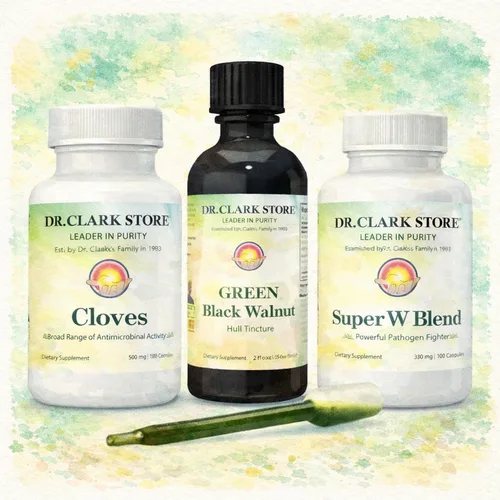
Dr. Clark Store Fungal Fighter 400 mg Review
Dr. Clark Store Fungal Fighter 400 mg is a dietary supplement sold in capsule form. Each container holds 120 servings, and one serving is 1 capsule. The label lists three main ingredients per serving: Betaine Hydrochloride 150 mg, Calcium Undecylenate 150 mg and Berberine Hydrochloride 50 mg. The other ingredients printed on the label are gelatin capsules and rice flour. Because the capsule shell is made with gelatin, that is worth noting for anyone checking the ingredient list in the store. The directions as printed read: Suggested Use: Take 1 capsule, or as directed by a healthcare professional. With 1 capsule per serving and 120 servings per container, the bottle holds 120 capsules in total. The three active ingredients add up to 350 mg per capsule, with the rest of the content coming from the rice flour and the capsule shell. This listing reports only what the supplement facts panel and the directions state, so you can compare the amounts and the ingredient list with other labels on the shelf.
We don’t sell supplements. We help you make decisions and get the best price.
Lowest prices
We may earn a commission from some store links. How we choose.
Finding the lowest prices at the stores now. This takes a few seconds.
Study, Trial or Testing Result Summary
Members Only2 human studies · 2 improved
Of the three ingredients in this product, only berberine has human research for small-intestine bacterial balance. A 2025 pooled analysis of 30 randomized trials with 1,552 adults who had bacterial overgrowth in the small intestine ranked berberine highest among 12 treatments for clearing the overgrowth. The authors say direct head-to-head trials are still needed to confirm this [1]. A 2026 pooled analysis of 19 randomized trials with 1,489 people with diarrhea-type irritable bowel syndrome found that adding berberine to gut-brain medicines improved treatment response and lowered symptom scores, including abdominal pain and bloating, compared with control groups [2]. The trials in that second analysis were small and of limited quality [2]. Neither analysis reported the dose used, so it is not known whether the 50 milligrams of berberine in this product matches the amounts studied [1][2]. The other two ingredients, betaine hydrochloride and calcium undecylenate, each at 150 milligrams, have no human studies for this goal in our records, so their benefit is unknown. Animal and cell studies are never counted.
See all 2 studies →Hide the studies
- A pooled analysis of 30 randomized trials with 1,552 adults with small intestinal bacterial overgrowth ranked berberine highest among 12 treatments for clearing the overgrowth, though the authors say the results need confirming in direct head-to-head trials.Comparative efficacy of diverse therapeutic regimens for small intestinal bacterial overgrowth: a systematic network met…
- A pooled analysis of 19 randomized trials with 1,489 people with diarrhea-predominant irritable bowel syndrome found that berberine added to gut-brain-targeted medicines improved treatment response and lowered symptom scores, including abdominal pain and bloating, compared with controls, but the studies were small and of limited quality.A meta-analysis of berberine combined with brain-gut axis-targeted agents for diarrhoea-predominant irritable bowel synd…
Review Totals and Summary
Members OnlyWhat buyers say
No written reviews read yet.
Biohacker Summary
Members Only8 of 10 recommend it
Most of the panel recommends or uses berberine, mainly for blood sugar control and insulin sensitivity, with several also citing cholesterol, heart health, sleep, and gut benefits. Two of them take 500 mg with meals, and one said he felt fine on up to 750 mg or a gram with a large carbohydrate-rich meal; some also like dihydroberberine, a form that supports the same energy pathway, and one suggested it if eating fruit later in the day. Cautions came up often: taking it on an empty stomach can cause low blood sugar, headaches, dizziness, and blurred vision, one panelist warned about combining it with other glucose lowering products and urged talking to a doctor, one said it is poorly absorbed with no lifespan data, and another is skeptical because he sees little evidence behind most supplement claims. One panelist stopped using it when his diet changed, and another skipped it for a time because of headaches and carbohydrate cravings, though he later returned to taking it with meals. Betaine is a smaller ingredient in this product, and three of the panel use or recommend it in the form of betaine hydrochloride to support stomach acid and digestion.
See all 9 biohackers →Hide the biohackers
Thomas DeLauer · Berberine · recommends
- Recommends berberine as a metabolic reset, driving up AMPK to improve insulin sensitivity and dialing down fat and fructose processing in the liver that increases uric acid.
- Mentions dihydroberberine as a component that can be used to optimize and support the AMPK pathway, helping to tune it up and have a higher baseline.
- Has found berberine to be very helpful for some of his patients who are night snackers, especially those with a sweet tooth.
- Recommends berberine if one is going to have fruit later in the day, as it specifically restores the AMPK-driven fat suppression.
- Recommends Dihydroberberine to improve mitochondrial performance and turn up the AMPK dial.
- Recommends Berberine, stating that 500mg taken three times with meals has shown comparable results to a med in dropping HbA1c and fasting glucose.
- Would start taking berberine because it helps with high glucose.
- Would start taking trimethylglycine (TMG), also known as betaine, due to increasing evidence of its benefits for insulin resistance and its ability to increase fat oxidation.
- Mentions dihydroberberine or berberine as a powerful tool to upregulate activity, especially in the context of optimizing pathways to support key areas of change like hormone health.
- Likes berberine for people who are insulin resistant, noting it helps lower blood glucose spikes when taken with meals. He cautions against taking it on an empty stomach due to potential nausea or hypoglycemia.
- Recommends berberine in occasional doses for general blood sugar regulation, noting it activates AMPK, similar to a med, triggering glucose clearing, and has shown efficacy in reducing HbA1c and improving gut microbiome for glucose uptake.
- Recommends TMG (trimethylglycine or betaine) for improving body composition and insulin sensitivity, and for supporting methylation pathways that keep the endothelium healthy, complementing the shear stress benefits of walking.
- Recommends TMG, also known as betaine, to aid the liver's ability to clear excess cortisol from the system.
- Highlights trimethylglycine (betaine) from beets as a powerful methyl donor that helps the liver break down homocysteine, takes the load off the liver, and is required for carnitine creation, which is crucial for fat burning and addressing fatty liver.
Dr. Eric Berg · Berberine · recommends
- Recommends adding berberine as another natural remedy to the combination for cancer.
- Dr. Eric Berg states that Berberine combined with a lower-carb diet may help support healthy blood sugar levels and reduce cravings over time.
- Notes that some people add berberine, which supports healthy blood glucose and makes one insulin resistant.
- States he added 500 mg of betaine to his creatine product because it helps the body make more creatine.
- Recommends betaine hydrochloride for constant bloating and gas, especially if it's due to low stomach acid.
- Recommends taking berberine to block the effects of grains.
- Recommends taking betaine hydrochloride if an antacid was taken.
- Suggests incorporating anti-cancer foods like berberine to help prevent pancreatic cancer.
- Recommends betaine hydrochloride for heartburn or indigestion, stating it increases stomach acidification and can be taken in multiple pills before a meal.
- States that Betaine hydrochloride can help to restore stomach acid, but warns it should be avoided if one has a stomach ulcer.
- Recommends taking berberine, stating it is very beneficial for type 2 diabetes.
- Dr. Eric Berg states that berberine may support blood sugar, but it should not be treated as an equivalent substitute for other treatments.
- Lists berberine as an epigenetic factor that may help with cancer prevention.
- Betaine hydrochloride is an amino acid found naturally in foods, including beets, spinach, beef, and shrimp. It's an excellent natural remedy for increasing stomach acid. Dr. Eric Berg recommends consuming either betaine hydrochloride or apple cider vinegar before each meal.
Siim Land · Berberine · recommends
- Recommends berberine as a herbal supplement that increases fat metabolism, lowers mTor and blood sugar, making it a good combination for increased autophagy, and notes that meta-analyses show it reduces blood sugar, promotes weight loss, and decreases cholesterol.
- Recommends Berberine for blood sugar and cholesterol, based primarily on human research, especially randomized controlled trials showing measurable benefits.
- Lists Berberine as one of 15 supplements backed by human studies.
- Advises caution when using berberine with glycine, as it is a glucose-lowering medication.
- Is skeptical about most supplements, including berberine, because he doesn't see any evidence to back up their claims, which are often based on personal testimonials.
- Mentions berberine as a compound that can increase autophagy, but notes it doesn't come close to exercise in effectiveness.
- He takes 500 mg of berberine with meals for blood sugar control.
- Would take berberine for pre-diabetes.
- Advises caution with berberine due to its antibacterial effects and potential to change the microbiome, especially if one doesn't have gut problems.
- States that berberine also showed a lifespan extension in their hands.
- Recommends getting trimethylglycine (TMG), also known as betaine, from whole foods like beetroot, shrimps, spinach, wheat germ, wheat bran, mushrooms, and various vegetables to support DNA methylation.
- Recommends TMG (trimethylglycine or betaine) for longevity and DNA methylation, especially for poor methylators who might need up to 2000-3000 milligrams per day, while those with good methylation genes might not need to supplement if they eat TMG-rich foods.
- States that betaine, or trimethylglycine, has been shown to decrease plasma homocysteine levels, with supplementation of at least 4 grams a day for a minimum of six weeks being effective.
Dr. Rhonda Patrick · Berberine · neutral
- Notes that berberine is a promising compound for cardiovascular health, with potential benefits spanning lipid metabolism, artery health, and the gut microbiome.
- Notes that berberine lowers LDL cholesterol in randomized trials and is interested in its connection to ApoB, artery plaque, and the gut microbiome.
- Notes that berberine has been on their radar for glucose control for years, and a new study on a biooptimized form of berberine showed reductions in fasting glucose, improved glucose tolerance, and an increase in fasting.
- Recommends berberine for atherosclerosis, noting it has a more compelling evidence base, showing reduction in plaque formation and improvement in LDL, HbA1c, and glucose regulation.
- Recommends Berberine for optimizing blood glucose, noting that meta-analyses show it reduces fasting glucose and HbA1c in people with type 2 diabetes.
- Notes that Berberine may not have the same inhibitory effect on muscular hypertrophy and strength gains as a med, but there are currently no studies to support or refute this.
- Discusses ideal dosing for berberine.
- Notes that berberine is also effective for blood glucose regulation, similar to apple cider vinegar.
- States that berberine is undoubtedly effective for improving insulin sensitivity.
- Mentions betaine or trimethylglycine as something that may improve power output during exercise.
- Discusses berberine, noting it is a mitochondrial toxin and an analog of a med, and mentions a systematic review suggesting it was beneficial in lowering LDL cholesterol and reducing a med myopathy.
Dave Asprey · Berberine · recommends
- Recommends berberine as a good alternative to a med for longevity, citing its similar pathway effects without the downsides and its positive impact on the microbiome.
- Dave Asprey discusses berberine as a plant compound that genuinely lowers blood glucose, comparable to a med in some trials, but notes its poor absorption and lack of lifespan data, classifying it as a glucose drug, not a longevity drug.
- Notes that berberine supports sleep optimization, ketosis, and blocks a cancer growth pathway most drugs cannot touch.
- Recommends taking betaine HCL (stomach acid) with meals to improve protein absorption, as stomach acid decreases with age.
- Takes stomach acid, betaine HCL, and enzymes to help digest food, which he says speeds healing and resilience.
- Prefers a med over berberine, stating there is more data for a med, though berberine might be useful for diabetics.
- Dave Asprey and his guests reveal how berberine can improve metabolism, regulate dopamine, and protect the brain, and can rival meds.
- Mentions that GL Perfect contains bioavailable berberine, which is 250 times more bioavailable than normal.
- States that if you take Pepsid, you have to take betaine and enzymes to counteract the digestion-ruining effects, and also suggests taking a little betaine with a meal to help with nutrient absorption.
- Takes berberine when he eats carbs to help manage blood sugar levels.
- Recommends always taking Betaine HCL, which is stomach acid, with food when taking Pepcid AC for long COVID protocols, as it's necessary for the Pepcid to work effectively.
- Recommends taking betaine HCL religiously with every meal during protocols that block histamine response to prevent gut problems from lack of stomach acid.
- Notes that Intellx DNA provides information on what doses of berberine, such as two grams, were used in studies to improve blood sugars, emphasizing that a small amount won't have the same effect as a larger dose.
- Mentions needing 72 milligrams of Berberine as part of personalized supplements.
Dr. Mark Hyman · Berberine · uses
- Takes 500 mg of Berberine with meals for blood sugar control.
- Recommends berberine to help with insulin resistance.
- Uses Betaine HCl to provide stomach acid, which helps digest food and reduce SIBO.
- Mentions that berberine may be helpful for people with insulin resistance and that he uses it in his practice.
- Suggests that betaine hydrochloride can be used to acidify the digestive system, helping to relieve digestive problems associated with chronic pancreatic insufficiency.
- Recommends betaine, found in beets, quinoa, spinach, and regeneratively raised beef and turkey, for supporting methylation.
- Recommends taking berberine as a natural way to increase GLP-1.
- Used an herbal regimen that included berberine as part of a combination product to treat a patient's dysbiosis and yeast overgrowth.
- Recommends Betaine HCL to increase stomach acid and help with food digestion.
- Mentions that berberine can affect certain genes.
- States that berberine helps with blood sugar regulation, insulin resistance, and cardiac health.
- Mentions berberine as one of many phytochemicals that influence the AMPK pathway and have similar benefits to a med.
- Recommends berberine as helpful for insulin resistance and regulating blood sugar.
- States that berberine has effects and they try it when dealing with tough, desperate patients.
Andrew Huberman · Berberine · uses
- Takes 500 mg of berberine with meals to help with blood glucose.
- Dr. Huberman states he will skip berberine because it gives him brutal headaches, makes him crave carbohydrates, and drops his blood sugar.
- Discusses berberine and other potent molecules for regulating blood glucose.
- Warns that berberine is a serious step and one should talk to their doctor about it, as taking it on an empty stomach can cause hypoglycemia, brutal headaches, dizziness, and impaired vision; however, when taken with a large, carbohydrate-rich meal, he felt fine on up to 750 mg or a gram.
- Mentions the use of fasting-related supplements, including berberine.
- Huberman warns that if you take berberine without ingesting carbohydrates, many people, including himself, experience a splitting headache due to becoming hypoglycemic, as it is a glucose clearing agent.
- States that berberine can further support fat loss and discusses its impact on insulin.
- Mentions berberine as a compound, derived from a plant, that is in growing use for reducing blood glucose and is very potent at doing so.
- Warns that berberine can decrease testosterone levels, and that people often take it for blood sugar or longevity without considering this side effect.
- Huberman does not take berberine because it gives him brutal headaches, which he attributes to its effect of lowering blood glucose.
- Discusses betaine as a potential alternative for creatine non-responders, taken at 1 to 3 grams per day, which helps with amino acid synthesis and energy shunting.
- Mentions that there is some evidence that betaine, also called trimethylglycine, can improve lean mass and power output.
- Notes that many people who have difficulty adjusting their gut pH and microbiota have benefited from taking betaine HCL pepsin tablets or capsules during meals, starting with one or two and experimenting to find a comfortable level.
- Andrew Huberman recommends betaine for creatine non-responders, suggesting a dose of one to three grams per day to help with amino acid synthesis and shunting of energy.
Ben Greenfield · Berberine · recommends
- States that berberine is great for sleep, upregulating serotonin and dopamine, and that their bioavailable berberine product is taken by 75% of users for sleep, even though it was created for blood glucose management.
- Now uses berberine as a natural strategy instead of a med and as a natural insulin-sensitizer.
- Offers berberine as a natural alternative for better blood sugar control.
- Recommends berberine or dihydroberberine as a powerful insulin sensitizing agent and a good alternative to a med, noting its comparable hemoglobin A1c reductions in some type 2 diabetes trials.
- Berberine was mentioned in a study as a biofilm disruptor that can improve microbial access and affect outcomes in SIBO and methane-dominant cases.
- Uses Dihydroberberine as part of the Neuro Regenerate product to protect mitochondria, stabilize energy, and sustain cognitive output.
- Recommends Dihydroberberine as a powerful antioxidant in Neuro Regenerate to support mitochondria and fuel clean, crash-free mental energy.
- Mentions the report recommends taking 500 mg of berberine to address ETBF activity.
- Mentions berberine as something that can enhance fatty acid oxidation and white adipose to brown fat tissue conversion.
- Recommends the regular use of berberine to help nuke bacterial overgrowth in the gut for those with FODMAP sensitivity.
- Recommends taking trimethylglycine, also known as betaine, beforehand with NAD IVs to stave off gastric distress and sympathetic nervous system stimulation.
- Recommends betaine hydrochloride, three a day, one per meal, to help with digestion and nutrient absorption.
- Notes that combining blood flow restriction with a blood flow precursor like betaine results in significantly greater training benefits.
- Recommends Thorne ResveraCel as a good source of resveratrol, noting it combines resveratrol with nicotinamide riboside, quercetin, and betaine to support cellular function and methylation, which are affected by EMF.
Peter Attia · Berberine · stopped
- Used to take berberine, which he called "poor man's a med," to buffer blood glucose and feel less sick after ingesting large amounts of calories on a cheat day, but stopped when he no longer followed the Slow Carb Diet.
- Uses berberine in clinical practice as a weak inhibitor of the enzyme PCSK9, which can help a subset of patients who overexpress PCSK9 and have high LDL cholesterol.
- Suggests Thorne as the brand for berberine when recommending it to patients.
- Uses berberine in clinical practice as a weak inhibitor of the enzyme PCSK9, which can help lower LDL cholesterol in a subset of people who overexpress PCSK9.
- Uses berberine in clinical practice because it is a weak inhibitor of the enzyme PCSK9, which degrades LDL receptors. He finds it effective for a subset of patients who overexpress PCSK9 and have high LDL, and he will prescribe it to see if it helps without prior testing.
- Shares insights about berberine.
- Used to take Berberine for longevity but stopped because he didn't see enough evidence.
RAL Summary
Members OnlyTier 4 for Gut Bacteria Balance
More Details
Members OnlyBody systems · Combine with · Possible side effects
Body systems: Digestive system
Combine with: For small-intestine bacterial balance, pancreatic enzymes are often paired with this product's ingredients because they act on the same digestive pathway, breaking down food so less is left for gut bacteria. Peppermint oil is often paired with it for the same area of concern. Ginger is often paired with it because it acts on gut movement, which matters for occasional bloating and irregularity. Zinc carnosine is often paired with it for the gut lining.}
Possible side effects: No major side effects reported.
Supplement Facts
Betaine Hydrochloride 150 mg · Calcium Undecylenate 150 mg · Berberine Hydrochloride 50 mg
| Betaine Hydrochloride | 150 mg | † |
| Calcium Undecylenate | 150 mg | † |
| Berberine Hydrochloride | 50 mg | † |
Other ingredients: Gelatin Capsules, Rice Flour.
Directions: Suggested Use: Take 1 capsule, or as directed by a healthcare professional.
Barcode (UPC) 652384105088 · Label source: NIH label database · Report a label change
Show entire label
More gut bacteria balance products
Members OnlyThe highest ranked for the same goal
Read more
Our articles on this subject
- Probiotics for Gut Health: The Complete GuideArticle · Mar 17, 2026
- Best Probiotic for Bloating: The Strains With Human Trials, and How to Choose OneArticle · Oct 27, 2026
Graded November 15, 2026 by the Reverse Age Lab evidence engine, from human studies, real reviews and our biohacker panel. How we grade. Is this medical advice? No. Rala organizes the published evidence; go over any change with your doctor, especially if you take meds.
Privacy policyConsumer health dataAffiliate disclosureTermsDo Not Sell or Share My Personal InformationCookie settings