
Dr. Morse's Cellular Botanicals GI Broom Fine Powdered Blend Review
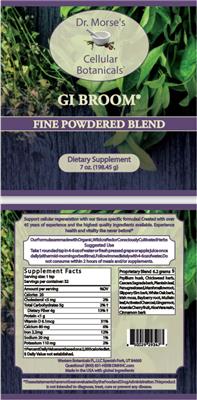
GI Broom Fine Powdered Blend is a dietary supplement from Dr. Morse's Cellular Botanicals, listed in the NIH Dietary Supplement Label Database (DSLD ID 302929) with a date entered of 22 November 2023 and market status On Market. The product is classified with the supplement form Powder and the product type Other Combinations. Its dietary claim is listed as All Other, Structure/Function, and its intended target group is Adults (18 - 50 Years). The net contents are 7 ounces (198.45 grams). The label lists a serving size of 1 teaspoon with 32 servings per container. Per serving the label lists 20 calories, less than 5 mg cholesterol (2% DV), 5 g total carbohydrates (2% DV), 4 g dietary fiber (13% DV), less than 1 g protein, 6.1 mcg vitamin D (31% DV), 80 mg calcium (6% DV), 2.2 mg iron (12% DV), 20 mg sodium (1% DV), and 110 mg potassium (2% DV). A proprietary blend of 6.2 g is listed, containing psyllium husk, chickweed, cascara sagrada, plantain, fenugreek, marshmallow, slippery elm, white oak, irish moss, bayberry, mullein, activated charcoal, ginger, acerola cherry, aloe vera, and cinnamon. The suggested use is to take 1 rounded teaspoon in 4-6 oz of water or fresh pressed grape or apple juice once daily, either mid-morning or bedtime, followed immediately by 4-6 oz of water. The label advises not to consume within 2 hours of meals and or supplements. The FDA statement of identity is Dietary Supplement. The label includes the standard FDA disclaimer that statements have not been evaluated by the Food and Drug Administration and that the product is not intended to diagnose, treat, cure or prevent any disease. The formulation statements say the brand supports cellular regeneration with its tissue specific formulas, were created with over 45 years of experience, are made in the USA with global ingredients, and are made with organic, wildcrafted or consciously cultivated herbs. The manufacturer is listed as Western Botanicals FL, LLC, Spanish Fork, UT. The page also lists other labels from the same brand, including GI Renew (1 - Normal) Capsules, and other labels that share an ingredient. This page is a label record only and does not show a retail price, a barcode number, or customer reviews.
We don’t sell supplements. We help you make decisions and get the best price.
Lowest prices
We may earn a commission from some store links. How we choose.
Finding the lowest prices at the stores now. This takes a few seconds.
Study, Trial or Testing Result Summary
Members Only76 human studies · 22 improved
4 of these 76 human studies gave the ingredient by drip, not by mouth.
This product's main ingredients, including psyllium husk and cascara sagrada, sit inside a 6.2 gram proprietary blend with no stated amounts, and no study findings on them were provided, so their effect on regularity cannot be judged here. The listed nutrients are all small amounts, well below the doses studied. For calcium, large five-year trials found that 1 gram or 1200 milligrams a day led to more constipation than placebo [1][2], and a two-year trial in men found no difference [3]. Small trials at 500 milligrams a day found no change in stool frequency [4][5]. Benefits seen in constipated children came from calcium polycarbophil, a fiber, not plain calcium [6]. Iron does not help regularity and tends to cause constipation at much higher doses [7][8]. No trial has tested vitamin D alone for constipation, and a review in children found it did not help [9]. No study has tested potassium for regularity [10]. Overall, the evidence given does not show this product helps with regularity. Animal and cell studies are never counted.
See all 76 studies →Hide the studies
- In 33 trials of 4558 women after childbirth, oral iron probably raised the risk of constipation compared with intravenous iron (moderate-certainty evidence from 10 trials, 1798 women).Treatment for women with postpartum iron deficiency anaemia.
- In 15 trials of women with anaemia after childbirth, oral iron caused more constipation than intravenous iron (odds ratio for intravenous iron 0.08).Oral vs intravenous iron therapy for postpartum anemia: a systematic review and meta-analysis.
- In 594 people with iron deficiency anaemia, daily and alternate-day oral iron raised haemoglobin equally, but alternate-day dosing caused fewer side effects such as altered bowel habits.Daily versus alternate day oral iron therapy in iron deficiency anemia: a systematic review.
- A review of 15 trials in children with cerebral palsy found vitamin D helped low vitamin D levels, but only probiotics, prebiotics, synbiotics or magnesium were reported to help constipation, so vitamin D showed no constipation benefit.Dietary and nutritional interventions in children with cerebral palsy: A systematic literature review.
- In 11 studies of children with iron deficiency anaemia, constipation was a reported side effect of iron, and was significantly less common in groups given lactoferrin.Lactoferrin as treatment for iron-deficiency anemia in children: a systematic review.
- In 1471 healthy older women given 1 g a day of calcium citrate for 5 years, constipation was more common than with placebo.Randomized controlled trial of calcium in healthy older women.
- In 1460 women over 70 given 1200 mg a day of calcium carbonate for 5 years, constipation was the only side effect that rose (13.4% with calcium versus 9.1% with placebo).Effects of calcium supplementation on clinical fracture and bone structure: results of a 5-year, double-blind, placebo-c…
- In 1,095 people with iron deficiency, 60 days of iron protein succinylate (120 mg iron daily) caused constipation in 19 people, versus 23 with controlled-release ferrous sulphate (105 mg iron daily); neither treatment was tested as a constipation relief.Iron protein succinylate in the treatment of iron deficiency: controlled, double-blind, multicenter clinical trial on ov…
- In 502 children with iron deficiency given iron for 60 days, the protein-bound iron caused fewer side effects than the comparison iron (6 vs 14 reports of constipation).Controlled, double-blind, multicenter clinical trial of iron protein succinylate in the treatment of iron deficiency in …
- In 493 toddlers followed from 9 to 18 months, iron-fortified formula did not change rates of constipation, diarrhea or infections compared with cow's milk or low-iron formula.Clinical safety of iron-fortified formulas.
- In 482 pregnant women taking low-dose iron from mid-pregnancy to delivery, 20-60 mg of iron as fumarate did not change digestive complaints, 80 mg raised constipation and laxative use, and ferrous bisglycinate caused the fewest complaints.Low-Dose Prophylactic Oral Iron Supplementation (Ferrous Fumarate, Ferrous Bisglycinate, and Ferrous Sulphate) in Pregna…
- In pregnant women taking 20 to 80 mg of ferrous iron (as fumarate) daily from about 18 weeks of pregnancy onward, gastrointestinal symptoms including constipation were no more frequent and did not depend on the dose.Side effects of oral iron prophylaxis in pregnancy--myth or reality?
- In 378 adults with chronic kidney disease taking ferric citrate for up to 16 weeks, constipation was more common than with placebo (18.4% vs 10.1%).Safety and efficacy of ferric citrate in patients with nondialysis-dependent chronic kidney disease.
- In 370 pregnant women, taking iron twice weekly caused significantly less constipation, nausea and vomiting than taking it daily.Impact of twice weekly versus daily iron supplementation during pregnancy on maternal and fetal haematological indices: …
- In 323 healthy men given 600 or 1200 mg of calcium a day for 2 years, constipation was no different from placebo.Randomized controlled trial of calcium supplementation in healthy, nonosteoporotic, older men.
- In 278 one-year-old infants given ferrous sulfate or placebo for 3 months, iron caused no more side effects than placebo, and constipation was reported less often with iron (1%) than placebo (9%).Lack of adverse side effects of oral ferrous sulfate therapy in 1-year-old infants.
- In 232 adults with chronic kidney disease and iron deficiency anemia, 16 weeks of ferric citrate raised hemoglobin, but constipation was reported more often than with placebo (18.8% vs 12.9%).Effects of Ferric Citrate in Patients with Nondialysis-Dependent CKD and Iron Deficiency Anemia.
- In 230 hemodialysis patients over 12 weeks, ferric citrate caused less constipation than sevelamer but more diarrhea.A randomized trial of JTT-751 versus sevelamer hydrochloride in patients on hemodialysis.
- In 227 breast cancer survivors given a 12-month program of Mediterranean diet, exercise and vitamin D, constipation scores fell slightly, but the effect cannot be credited to vitamin D alone and the vitamin D dose was not stated.Quality of Life in Women Diagnosed with Breast Cancer after a 12-Month Treatment of Lifestyle Modifications.
- In two studies of 169 healthy infants, the formula without palm olein produced softer stools and more frequent stooling than the palm olein formula, which may ease parents' concerns about constipation with iron-fortified formula.Formula tolerance in postbreastfed and exclusively formula-fed infants.
- In a randomized study of 150 pregnant women with iron deficiency anemia treated for 12 weeks, constipation and abdominal colicky pain were significantly less common with the amino acid chelated iron than with ferrous fumarate.Amino acid chelated iron versus an iron salt in the treatment of iron deficiency anemia with pregnancy: A randomized con…
- In a randomized crossover trial of 135 pregnant women, a 35 mg iron prenatal supplement caused about 30% less constipation than a 60 mg iron supplement.A randomized cross over trial of tolerability and compliance of a micronutrient supplement with low iron separated from …
- In 130 pregnant women with iron deficiency anemia, two iron tablets over 30 days caused similar constipation rates (about 29%) and similar side effects, with no difference between them.Comparison between Iberet Folic® and Zincofer® in treatment of iron deficiency anaemia in pregnancy.
- In 120 pregnant women over 6 months, 24 mg of iron as ferrous bisglycinate with folinic acid caused significantly fewer reports of constipation, nausea and bloating than 66 mg of ferrous fumarate.Efficacy and Safety of Ferrous Bisglycinate and Folinic Acid in the Control of Iron Deficiency in Pregnant Women: A Rand…
- In postpartum women taking 600 mg of ferrous fumarate daily for 4 weeks, about 75% reported at least one side effect, and constipation from the iron was linked to stopping the iron, with adding folic acid making no difference.A randomized controlled trial examining the addition of folic acid to iron supplementation in the treatment of postpartu…
- In a randomized trial of 105 infants from 4 to 12 months, iron gluconate caused constipation and other side effects more often than iron polymaltose, at 47% versus 25%.Iron polymaltose versus ferrous gluconate in the prevention of iron deficiency anemia of infancy.
- In 103 pregnant women, four iron supplements were compared, and constipation and vomiting were more frequent with the lower-dose iron group.A comparative trial of haematinic supplements in pregnancy.
- In 100 people with functional constipation, 1 litre a day of sulfate-rich mineral water increased bowel movements more than tap water at 3 weeks, but the difference was gone by 6 weeks.Effects of Sulfate-Rich Mineral Water on Functional Constipation: A Double-Blind, Randomized, Placebo-Controlled Study.
- In 100 pregnant women with iron deficiency anemia, 30 days of bovine lactoferrin (100 mg twice daily) raised iron levels as well as ferrous sulfate and caused significantly less constipation.Efficacy and tolerability of oral bovine lactoferrin compared to ferrous sulfate in pregnant women with iron deficiency …
- In 100 African American dialysis patients followed for 52 weeks, the iron-based binder sucroferric oxyhydroxide caused diarrhea and discolored stools, while sevelamer caused constipation, so bowel regularity was not improved by iron.Long-term efficacy and safety of sucroferric oxyhydroxide in African American dialysis patients.
- In 100 people having hip or knee replacement surgery, oral ferrous sulfate caused nausea, diarrhea or constipation in 52% of people versus 2% with intravenous iron.Preoperative Epoetin-α with Intravenous or Oral Iron for Major Orthopedic Surgery: A Randomized Controlled Trial.
- In 84 peritoneal dialysis patients followed for up to 52 weeks, the iron-based binder sucroferric oxyhydroxide caused diarrhea and discolored stools, while sevelamer caused constipation, so iron did not clearly improve regularity.One-year efficacy and safety of the iron-based phosphate binder sucroferric oxyhydroxide in patients on peritoneal dialy…
- In 75 people with kidney disease and iron deficiency anemia, taking ferrous sulfate 325 mg three times daily for 6 weeks caused more constipation than intravenous iron did.A randomized controlled trial of oral versus intravenous iron in chronic kidney disease.
- In children with cerebral palsy and iron deficiency anemia, constipation was more likely with 4 weeks of iron hydroxide polymaltose complex than with lactoferrin, which also raised blood iron measures more effectively.Lactoferrin versus iron hydroxide polymaltose complex for the treatment of iron deficiency anemia in children with cereb…
- In 64 gynecologic cancer patients on platinum chemotherapy, 200 mg of iron given intravenously after each infusion caused much less constipation than 200 mg three times daily of oral ferrous fumarate (3.1% versus 40.6%).Prevention of blood transfusion with intravenous iron in gynecologic cancer patients receiving platinum-based chemothera…
- In postpartum women, two intravenous iron infusions of 500 mg each caused fewer gastrointestinal side effects, including constipation, than 210 mg of oral ferrous sulfate daily over 4 weeks.Low-dose ferric carboxymaltose vs. oral iron for improving hemoglobin levels in postpartum East Asian women: A randomize…
- In 28 constipated children given calcium polycarbophil for 1 month, constipation resolved in 43% and improved in another 21%.The intestinal ecosystem in chronic functional constipation.
- In a randomized crossover trial of 38 women, 50 mg chelated iron showed a non-significant trend toward less constipation than ferrous sulfate over two weeks per product.Tolerability of iron: a comparison of bis-glycino iron II and ferrous sulfate.
- In 35 adults with irritable bowel syndrome without constipation, a probiotic plus vitamin D product for 12 weeks improved stool frequency and consistency compared with placebo, though the vitamin D dose was not stated and the trial was small.Multistrain Probiotics Plus Vitamin D Improve Gut Barrier Function and Gut Microbiota Composition in Irritable Bowel Syn…
- In two small crossover studies of 15 and 17 healthy young adults, 500 mg a day of elemental calcium as carbonate or phosphate for two weeks did not change stool frequency.Calcium phosphate supplementation increases faecal Lactobacillus spp. in a randomised trial of young adults.
- In 27 healthy women taking 500 mg a day of calcium as carbonate or phosphate for 2 weeks each, stool frequency and form did not change.Calcium Supplementation Does Not Contribute to Constipation in Healthy Women.
- In 24 adults with low parathyroid function, calcium citrate caused less constipation than calcium carbonate over 1 month of each.Calcium Citrate Versus Calcium Carbonate in the Management of Chronic Hypoparathyroidism: A Randomized, Double-Blind, Cr…
- In 23 people with irritable bowel syndrome, 6 grams a day of calcium polycarbophil for six months was preferred over placebo by 15 of 21 (71%) who expressed a preference, and it improved ease of stool passage, including in 79% of those with constipation.Calcium polycarbophil compared with placebo in irritable bowel syndrome.
- In 21 people with an ileal pouch after ulcerative colitis surgery, 3 grams a day of calcium polycarbophil for six months did not change stool frequency or consistency versus control, but nighttime soiling improved, and two people had stools too firm with difficulty passing them.Effect of calcium polycarbophil on bowel function after restorative proctocolectomy for ulcerative colitis: a randomized…
- In 16 people with an ileoanal pouch, 1.5 grams a day of calcium for two months reduced daytime and nighttime stool frequency compared with placebo and reduced use of antidiarrhoea medicine (4 vs 9 patients).Influence of dietary calcium supplements on ileoanal pouch function and cytokinetics.
- In 8 people, 6 g a day of calcium carbonate for 3 weeks did not change intestinal transit time but increased daily stool output.Effect of calcium carbonate and aluminum hydroxide on human intestinal function.
- In preterm infants given 7.5 mg of elemental iron daily for 14 weeks, a trivalent polysaccharide iron complex and ferrous sulphate were both well tolerated, with constipation slightly more common on ferrous sulphate but not significantly so.Iron supplementation in preterm infants: a study comparing the effect and tolerance of a Fe2+ and a nonionic FeIII compo…
- In a placebo-controlled trial of pregnant women, 60 mg of elemental iron daily did not change the rate of constipation compared with placebo.Prevention of iron deficiency anemia in adolescent and adult pregnancies.
- In a double-blind study of regular blood donors, the heme plus non-heme iron supplement caused significantly less constipation than a 60 mg non-heme iron supplement, while restoring iron status equally well.Side effects of iron supplements in blood donors: superior tolerance of heme iron.
- In pregnant women taking 100 mg of iron as ferrous gluconate daily, 33% reported stool softening, and adding magnesium aspartate raised that figure to 50%, which is useful because pregnancy often brings constipation.Therapeutic availability of iron administered orally as the ferrous gluconate together with magnesium-L-aspartate hydroc…
- In 285 healthy 1-month-old infants fed for about 2 weeks, formulas with 12 mg/L iron produced more green stools than low-iron formulas, and stool frequency and consistency were not shown to improve regularity by iron.Effect of infant formula on stool characteristics of young infants.
- In 57 adults with long-term constipation, calcium polycarbophil softened stools and eased passing them compared with placebo over 4 weeks of treatment, and doctors rated it very good or good in 91% of cases.[Calcium polycarbophil in clinical practice. The therapy of constipation].
- In 43 people with celiac disease and anemia, 30 mg of daily sucrosomial iron for about 90 days caused less constipation and abdominal discomfort than standard iron sulfate.Sucrosomial Iron Supplementation in Anemic Patients with Celiac Disease Not Tolerating Oral Ferrous Sulfate: A Prospecti…
- In 40 pregnant or postpartum women with iron-deficiency anemia treated for 30 days, the liquid ferrous gluconate group reported no side effects, including constipation, while the solid iron groups had gastrointestinal side effects and dropouts.[Effectiveness and tolerability of oral liquid ferrous gluconate in iron-deficiency anemia in pregnancy and in the immed…
- In institutionalized older and chronically ill patients, 81% of those taking dioctyl calcium sulfosuccinate improved on constipation, a significant gain over placebo, while the sodium form (Colace) did not beat placebo.Treatment of constipation in geriatric and chronically ill patients: a comparison.
- In a 12-week open-label trial of 217 people on dialysis who completed the study, ferric citrate caused constipation in 1.7% of people versus 7.4% taking sevelamer carbonate, though it more often caused diarrhea and dark stools.Efficacy and Safety of Ferric Citrate on Hyperphosphatemia among Chinese Patients with Chronic Kidney Disease Undergoing…
- In 80 children aged one month to 6 years given Actiferol Fe, parents reported constipation in 10% and harder stools in 20%, and most children tolerated it well.[Tolerability of iron preparation Actiferol Fe® in children treated for iron deficiency anemia].
- In 56 peritoneal dialysis patients taking 1.5 to 6 g per day of ferric citrate for 12 weeks, constipation and diarrhea were the most common side effects, though mostly mild.JTT-751 for treatment of patients with hyperphosphatemia on peritoneal dialysis.
- In 55 hemodialysis patients taking about 4.5 to 6 grams a day of ferric citrate as a phosphate binder for 4 weeks, 15% reported constipation, and 69% reported stool discoloration, so this iron compound did not improve regularity.The safety and tolerability of ferric citrate as a phosphate binder in dialysis patients.
- In 50 pregnant women taking the Bio-fer iron supplement for one month, the number reporting constipation fell from 17 to 8, a statistically significant change.[Efficacy and tolerance of a dietary iron supplement (Bio-fer) in pregnancy anemia].
- In 50 people with mild-to-moderate COVID-19 taking a supplement containing sodium ferrous citrate for 14 days, about 23% had gastrointestinal side effects including constipation, decreased appetite, and vomiting.Safety and efficacy of 5-aminolevulinic acid phosphate/iron in mild-to-moderate coronavirus disease 2019: A randomized e…
- In 33 anemic rural patients given 100 mg elemental iron twice daily at home for 90 days, occasional constipation was reported by 3 patients, and one patient stopped because of vomiting.Feasibility of "directly observed home-based twice-daily iron therapy" (DOHBIT) for management of anemia in rural patien…
- In overweight or obese adults taking meds that loosens stools, 1 g of calcium carbonate over 3 days did not change stool frequency or consistency compared with no supplement.Investigation and Management of Stool Frequency and Consistency Associated With SGLT1 Inhibition by Reducing Dietary Car…
- In 13 hospitalized heart failure patients with iron deficiency, intravenous iron (about 1269 mg total over 3 to 4 days) was given without a control group, and constipation was reported among a few minor side effects.Effects of an accelerated intravenous iron regimen in hospitalized patients with advanced heart failure and iron deficie…
- In a small single-group pilot of 10 homeless women taking alternate iron supplements for three months, constipation was reported only twice by two women across about 12 visits each, so it was rare.Side effects of alternative iron supplementation: a pilot study.
- In a cohort of over 100,000 US veterans nearing dialysis, taking oral iron supplements was associated with higher laxative use, a sign of constipation burden.Laxative use in patients with advanced chronic kidney disease transitioning to dialysis.
- In a review of 500 children with developmental delay, about 22% had constipation, but the study did not test iron's effect on bowel regularity.Growth and nutritional risk in children with developmental delay.
- In 230 Lebanese adults, blood vitamin D levels were not linked to irritable bowel symptoms, including constipation scores; this cross-sectional study did not test supplementation.Association between Serum Vitamin D and Irritable Bowel Syndrome Symptoms in a Sample of Adults.
- Adults with chronic constipation from intestinal motility disorders had lower vitamin D levels than 86 matched healthy people, and low vitamin D was linked to higher odds of the disorder; supplementation was not tested.Chronic functional constipation is strongly linked to vitamin D deficiency.
- Over the second six months of life, infants given whole cow milk or iron-fortified formula had similar rates of constipation, although the cow milk group had lower iron stores.Consequences of starting whole cow milk at 6 months of age.
- In a retrospective audit of 150 pregnant women in regional New South Wales, constipation was a common side effect of oral iron, though dosing and compliance were poorly documented.Retrospective audit compares screening and treatment of pregnancy-related anaemia in regional New South Wales with Austr…
- Adolescents with irritable bowel syndrome who had lower vitamin D levels had more severe symptoms and missed more school, but the study did not test vitamin D supplementation.Association of the Vitamin D Level and Quality of School Life in Adolescents with Irritable Bowel Syndrome.
- In 42 Chinese patients with a genetic kidney salt-wasting disorder, constipation was a common symptom, and potassium chloride with indomethacin corrected low blood potassium, but the study does not report whether constipation improved with potassium.Thirteen novel CLCNKB variants and genotype/phenotype association study in 42 Chinese patients with Bartter syndrome typ…
- In a small study of 19 children with alcohol-related prenatal exposure, constipation was common (about 26%), but potassium was not given or tested as a treatment, so this study does not show whether potassium helps regularity.Inappropriate feeding behaviors and dietary intakes in children with fetal alcohol spectrum disorder or probable prenata…
- In seven young elite swimmers with cerebral palsy, a personalized nutrition plan with supplements over 6 months was associated with constipation scores falling to zero in those affected at the start; vitamin D was one of several changes and there was no control group.Feasibility and clinical impact of a tailored nutritional protocol in pediatric elite athletes with cerebral palsy: A pi…
- Children with chronic functional constipation had significantly lower vitamin D levels than children without it, but the study did not test vitamin D supplementation.Screening of vitamin D deficiency in children with chronic functional constipation.
Review Totals and Summary
Members Only29 reviews · 98% positive
Public customer feedback for this product is very sparse. Many retailer pages show no reviews. The one review I found, on an aggregator page for the capsule version, was enthusiastic. Because of that, I can't offer a reliable summary of global customer opinion, and the themes below are tentative. The reviewer calls it an absolute must-have. They use it as a "rescue" after eating junk food, taking it to help the body eliminate smoothly. They also say that paired with a fruit-heavy diet it cleans out the GI tract thoroughly. The praise therefore centers on perceived effectiveness for bowel movements and on its use alongside Dr. Morse's diet philosophy. I found no verified complaints. Based on how similar fiber, cascara and charcoal blends are generally described, the likely concerns would be loose stools, cramping, a gritty or earthy texture in powder form, and the price. I did not see any customers report these for this product, so treat them as guesses and not as findings. I also found no independent professional analyses, lab tests or clinical studies of this exact formula. Retailer copy is promotional and uses soft "supports digestive health" language. For a fuller picture, check larger retail listings or forums, such as the brand's own store, Amazon, or Reddit communities on Dr. Morse's protocols. I could not reach those with my search. Reviews there may mention how quickly it works, how strong it is, taste and mixability, and any digestive discomfort.
Biohacker Summary
Members Only9 of 10 recommend it
Calcium is the main ingredient, and the panel is lukewarm on it: three of ten recommend it, while most others simply mention it without advising for or against. Those who recommend it describe it as a key mineral for bones, and also for nerves, muscles and the heart, with one suggesting 1,000 to 1,200 milligrams a day, which can come from calcium carbonate or calcium citrate. Several panelists point to food sources instead, such as dairy, sardines and kale, and one is weighing whether he needs a supplement at all. One panelist cautions that bone loss cannot be fixed with calcium alone, since bone also depends on collagen and other minerals, and another notes that diets and low energy intake often fall short on calcium. Vitamin D, iron and potassium are smaller ingredients in this product, and the panel mostly talks about vitamin D, with several taking about 5,000 IU a day.
See all 10 biohackers →Hide the biohackers
Dr. Eric Berg · Calcium · warns
- Warns that bone loss cannot be fixed with just calcium, as bone is primarily collagen with other essential minerals.
- Dr. Berg warns that the recommended daily intake for vitamin D is based on a massive error and that the actual necessary amount is closer to 8,895 IU, with millions remaining deficient.
- Recommends getting vitamin D levels tested to ensure they are between 50 and 70, as vitamin D is intimately involved in regulating prostate size.
- Recommends taking at least 10,000 IUs of vitamin D3 every single day in the winter, stating it is the most important vitamin to lower cancer risk.
- Recommends vitamin D to support the immune system, aiming for blood levels between 80 to 100 ng per ml.
- Identifies iron as the Achilles' heel of cancer, as it is needed for its DNA to replicate.
- States that people need more potassium than any other mineral, yet most people aren’t getting enough.
- Explains that potassium is essential for peristalsis, the pumping action through the colon, and without it, things can sit there, leading to constipation.
- Recommends taking no less than 10,000 IU's of vitamin D3 for osteoporosis, alongside magnesium and K2.
- Recommends increasing vitamin D to restore balance and support healthy blood pressure.
- Explains that the normal requirements for potassium are 4,700 mg every single day, and that very few people get half of that amount. They describe potassium's role in the sodium potassium pump, which is essential for cellular electricity, muscle contraction, and heart function. Deficiency can lead to tiredness, muscle cramps, heart palpitations, or rising blood pressure.
- Recommends increasing potassium to restore balance and support healthy blood pressure.
- States that a lack of vitamin D can potentially cause achy bones or crashing mood.
- States that vitamin D is intimately involved in the immune system and recommends taking at least 10,000 IUs each day.
Siim Land · Calcium · neutral
- Lists dairy and sardines as sources of Calcium.
- Advises against taking vitamin D in the morning with other supplements because it is fat soluble and requires dietary fat for better absorption.
- Recommends taking Vitamin D with fat for better absorption.
- States that Vitamin D connects biology to light and that UVB reaching the skin enables its production.
- Mentions that iron is a mineral necessary for making collagen.
- Lists potatoes and fruit as sources of Potassium.
- Thinks vitamin D has some of the strongest evidence and is worth considering.
- Notes that Vitamin K2 pairs well with vitamin D by regulating calcium and bone mineralization.
- States that excess iron promotes oxidative stress and inflammation, which increases heart disease risk.
- Recommends taking vitamin D supplements with some fat to maximize its absorption, suggesting with food or a teaspoon of olive oil.
- Notes that taking vitamin D3 with a fat-containing meal resulted in 32% higher peak blood vitamin D levels.
- Recommends taking Vitamin D in the morning or at lunch with fat.
- Notes that Boron reduces calcium/magnesium loss.
- Notes that Boron improves vitamin D.
Thomas DeLauer · Calcium · neutral
- Notes that milk contains 120mg of calcium, while sardines contain 351mg, highlighting a 3x difference.
- Uses Element's cans which contain 100 milligram potassium, finding that electrolytes help his workout performance.
- Uses Element's 100 mg potassium cans first thing in the morning to prime his day and help with workout performance.
- Uses vitamin D3 in the fall and winter months when getting less sun, as it's important to supplement it then.
- Recommends taking a massive amount of vitamin D simultaneously with an early morning massive breakfast to help reset circadian rhythms and address hyperphagia.
- Recommends Vitamin D, stating that it has receptors throughout the brain and deficiency can quickly impact brain and mood.
- Takes supplemental vitamin D because he is skin sensitive and from northern latitudes, limiting his UV exposure.
- Recommends taking vitamin D on non-liver days to ensure both nutrients get proper receptor access.
- Takes Purity's liquid vitamin D3 with K2 because she is constantly inside during the day; D3 is for overall wellness and K2 helps the body absorb calcium properly.
- Compares iron content in spinach (2.7mg) and beef (2.6mg), but emphasizes that beef's heme iron absorbs at about 25%, while spinach's non-heme iron absorbs at 2-8%.
- Recommends getting vitamin D, suggesting it can be obtained while walking.
- States that vitamin D is best obtained from the sun, but getting it from food definitely helps, and notes its role as a hormone influencing many cells.
- Recommends D3, suggesting a dose of 2000-4000 IU, and notes that MK-7 slowed bone loss over three years.
- Recommends Element's ready-to-drink sparkling electrolyte drinks as a low or zero-calorie soda replacement that provides 1,000 milligrams of sodium, 200 milligrams of potassium, and 60 milligrams of magnesium.
Dr. Mark Hyman · Calcium · recommends
- Notes that calcium is in bones but is also essential for nerves, muscles, and the heart, and low levels can affect muscle function and heart rhythm.
- Recommends Vitamin D for health, stating that amazing things happen when patients' vitamin D statuses reach optimal levels.
- Mentions vitamin D as an existing biomarker that plays a role in mental health, which Function Health includes in their measurements.
- Mentions iron as an existing biomarker that plays a role in mental health, which Function Health includes in their measurements.
- Notes that vitamin D plays a role in immune function.
- Warns that potassium bromate, a dough conditioner banned in the EU, UK, and Canada, is still allowed in U.S. bread.
- Recommends checking vitamin D levels and states that if they had to pick one single intervention for immune health, vitamin D would be it.
- Dr. Hyman discusses vitamin D in relation to sun exposure patterns.
- States that vitamin D supplementation can help with oxidative stress.
- Mentions vitamin D as a key nutrient for supporting immune function.
- States that vitamin D is probably the single most important intervention for immune health, recommending levels of 45 to 70 and emphasizing testing to determine the right dose.
- Notes that rickets, which causes terrible bone deformities, is caused by vitamin D deficiency.
- Notes that vitamin D is an important nutrient for brain performance and aging, and that many people have gaps in these nutrients.
- Notes that a woman patient had very low iron.
Dr. Rhonda Patrick · Calcium · neutral
- Mentions that kale delivers calcium, a micronutrient many diets fall short on.
- Vitamin D supplementation was linked to a 40% lower risk of dementia in an observational study of more than 12,000 older adults.
- Mentions that vitamin D also plays a role in maintaining muscle mass.
- Recommends ensuring adequate vitamin D intake for men's sperm health.
- Vitamin D and strength training alone did not, but adding them strengthened the effect on one clock, with the full combination slowing that measure by ~3.8 months.
- Lutein and zeaxanthin can also be obtained from certain multivitamins.
- Recommends Vitamin D, noting it regulates over 5% of the genome, including genes involved in immune defense, neurotransmitter synthesis, and longevity, and correcting deficiency may slow epigenetic aging.
- Uses Vitamin D3 as an example of a supplement that an AI model could track to see its impact on other metrics like glucose levels.
- Recommends Vitamin D, explaining that it regulates over 5% of the genome, including genes involved in immune defense, neurotransmitter synthesis, and longevity.
- Recommends getting enough potassium, noting that most people get too much sodium and not enough potassium.
- Combining omega-3s with vitamin D and exercise has an additive effect, translating to ~3 months of slowed biological aging.
- The effect got stronger when omega-3 was combined with vitamin D and resistance training, with the full stack delaying phenotypic aging by about 3.8 months.
- Recently found out he needed to get on an iron supplement and noticed he gets less sore in his training after taking it.
- Advises that menstruating women should ensure they are getting enough iron.
Dave Asprey · Calcium · neutral
- Notes that when energy intake is too low for training demand, nutrient intake often falls short, especially for calcium, which is associated with reduced bone health.
- Takes Vitamin DAKE from Suppgrade Labs.
- Suggests that vitamin D supports brain health, muscle function, and focus.
- Host Dave Asprey explains why correcting a vitamin D deficiency still makes sense for male fertility, even though supplementation did not improve overall semen parameters in a randomized trial.
- States that currently, he is only taking vitamin C and vitamin D.
- Recommends vitamin D, noting it's actually a hormone and that most people are deficient, even those who take it, because they don't take enough.
- States that most people on the spectrum are low in vitamin D and need more of it, mentioning his own product, Vitam DAKNE, which contains real vitamin A.
- Dave Asprey recommends Vitamin D3 with K2, explaining D3 is a hormone made from sunlight and K2 directs calcium into bones, not arteries, highlighting its low cost, widespread deficiency, and the ability to test its effectiveness.
- Recommends Vitamin D as one of the most important supplements for overall health.
- Takes Vitamin DAKE from Suppgrade Labs because D3, A, K2, and E work together.
- Mentions taking vitamin D in the morning, comparing it to the daily dosing of testosterone.
- Warns that if a doctor diagnoses anemia, one should not assume they just need more iron, as low hemoglobin doesn't always mean low iron and the issue can sometimes be how well the body is using iron.
- Notes that when energy intake is too low for training demand, nutrient intake often falls short, especially for iron, which is associated with impaired recovery.
- Explains that calcium provides the raw material for bones, but it isn't a standalone input and needs a whole system to be effective.
Ben Greenfield · Calcium · neutral
- Is considering whether he needs a calcium supplement because lead can displace calcium in bones, affecting bone strength.
- Notes that Vitamin D is actually a hormone and recommends patients aim for levels around 40 to 50, or even 60 for fracture healing, for optimal healing, as opposed to just above 20 which is considered normal.
- Says he is drinking LMNT, which contains sodium, potassium, and magnesium, and states that he actually drinks this stuff.
- Mentions vitamin D as part of a bare-minimum protocol.
- Advises getting vitamin D levels between 60 and 100 nanograms per milliliter as a minimum step for overall health and to slow down heart disease.
- Has been taking Vitamin D3 K2 for over a decade.
- Recommends Celtic Sea Salt's new electrolyte drink 'Hydrate' for replenishing electrolytes and trace minerals lost through sweat, noting it contains 70 naturally occurring trace minerals, magnesium, taurine, and potassium, with no added sugar, artificial colors, or synthetic ingredients.
- Notes that sunlight influences more than just vitamin D production.
- Recommends keeping vitamin D levels high, suggesting that a supplement is probably not a bad idea, especially given that many people are deficient due to spending most of their time indoors.
- Recommends getting enough vitamin D for blood pressure management.
- Recommends optimizing vitamin D levels to a serum score of around 50 to 80 nanograms per milliliter, as deficiency is linked to tinnitus volume and can assist with it.
- Recommends testing for and replenishing iron if levels are low, as it can affect the ability to maintain or preserve muscle, especially for those on GLP-1s.
- Recommends using hormone building blocks like vitamin D for hormone optimization.
- Notes that one can eat iron-rich foods or supplement with iron, but still feel exhausted if iron is not the missing piece, emphasizing that focusing on a single mineral in isolation can support a number on a lab test rather than the system itself.
Peter Attia · Calcium · recommends
- Recommends calcium as one of the 'big three' micronutrients for bone health, suggesting a daily intake of 1,000 to 1,200 milligrams, which can be supplemented with calcium carbonate or calcium citrate.
- States there is some evidence that increasing dietary potassium through potassium-rich foods like bananas and potatoes, rather than supplements, can lower blood pressure.
- Lists vitamin D as one of her staple supplements.
- Notes that several studies show patients taking vitamin D can reduce TPO levels and prolong the honeymoon period of Hashimoto's disease.
- States that in mouse studies, there was a combined effect of alpha ketoglutarate with vitamin D for both sexes.
- Uses vitamin D as an example of how people might dismiss its efficacy due to failed clinical trials that didn't adjust the dose or measure levels.
- In mouse studies, Peter Attia's team found a combined effect of AKG with Vitamin D for both sexes.
- Suggests that supplementing with lots of vitamin D might help overcome the negative effects of phenytoin on bone health by improving calcium absorption, though he is unaware of studies on this.
- Recommends Vitamin D3 as one of the 'big three' micronutrients for bone health, suggesting a daily intake of 800 to 1,000 IU, which can be obtained through sunlight or supplementation.
- Explains that bone is 50 to 70% mineral, predominantly calcium, and that virtually all of the body's calcium is contained within bone, making bone important for calcium homeostasis.
- Suggests that supplementing with lots of vitamin D might overcome the negative effects of phenytoin on bone health by counteracting increased catabolism of vitamin D and subsequent decreased calcium absorption.
- Recommends vitamin D for people who tend to be vitamin D deficient, such as those living in Portland, Oregon.
- Recommends iron supplements for women of reproductive age who are iron deficient.
- Discusses evaluating vitamin D, understanding deficiency, and optimal levels.
Bryan Johnson · Calcium · recommends
- Recommends calcium as a mineral that, along with phosphorus, magnesium, and boron, is deposited to fortify the bone structure after the collagen scaffold is in place.
- Takes 5000 IU of Vitamin D3 in the morning for general health.
- Takes 5000 IU of Vitamin D3 in the morning for general health.
- Has had low iron for 11 years and despite eating meat and trying all forms of iron supplementation at different times and sequences, none of it worked to raise his iron or ferritin levels.
- Had low iron for 11 years, with ferritin averaging 38 ng/mL, and has finally boosted it back to healthy levels.
- Mentions that the sunlight assessment claims low vitamin D levels cause the immune system to misfire, and notes that their vitamin D has been measured.
- Takes 5000 IU of Vitamin D3 in the morning for longevity.
- He takes 5000 IU of Vitamin D3 in the morning for general health.
- Takes 5000 IU of Vitamin D3 in the morning for general health.
- Takes 5,000 IU of Vitamin D3 in the morning for longevity.
- Takes 5,000 IU of Vitamin D3 in the morning.
- Takes 5,000 IU of Vitamin D3 in the morning.
- He takes 5000 IU of Vitamin D3 in the morning for general health.
- Agrees that a little extra calcium is probably okay, especially for women, to really hit home for bone mineral density.
Andrew Huberman · Calcium · neutral
- Discusses "hard water" and the role of magnesium and calcium in cardiovascular health.
- Notes that most people are probably deficient in vitamin D and benefit from supplementing, but there's no point in doing it unless you're deficient for most things.
- Takes 5,000 IU of Vitamin D3 in the morning for longevity.
- Uses Element, an electrolyte drink with sodium, magnesium, and potassium in correct ratios and no sugar, to ensure adequate hydration and electrolytes, especially when starting days fast or during physical exercise.
- Takes 5000 IU of Vitamin D3 in the morning for general health.
- States that Vitamin D is one of the critical nutrients with the best evidence for cognitive function and reducing the risk of dementia.
- States that Iron is one of the critical nutrients with the best evidence for cognitive function and reducing the risk of dementia.
- Takes 5000 IU of Vitamin D3 in the morning.
- He takes 5,000 IU of Vitamin D3 in the morning for overall health.
- Takes 5000 IU of Vitamin D3 in the morning.
- Takes 5,000 IU of Vitamin D3 in the morning for general health.
- Takes 5000 IU of Vitamin D3 every day for longevity.
- Takes 5,000 IU of Vitamin D3 in the morning.
- Uses Element, which contains potassium in the correct ratios, to ensure proper hydration and electrolyte intake for brain and body function.
RAL Summary
Members OnlyTier 4 for Regularity: Long-Term Relief
Human studies support Calcium (6 of 15 human studies showed an improvement), but there are not yet enough reviews to confirm it (29). The final check notes: The tier cites calcium as study support, but the calcium studies show plain calcium does not relieve constipation (the benefits came from calcium polycarbophil, a fiber), and calcium is only a trace nutrient here, not the product's main ingredient.
- Emerging: not enough evidence to rank higher yet.
Where the evidence disagrees: 40 of the 76 human studies found no effect.
More Details
Members OnlyBody systems · Combine with · Possible side effects
Body systems: Digestive system
Combine with: For its intended purpose of regularity, take it with plenty of water and consider magnesium citrate or glycinate for gentle bowel support, a probiotic such as Lactobacillus or Bifidobacterium strains, and aloe or ginger for gut comfort. Separate it from medications and other supplements by 1 to 2 hours, since fiber can reduce absorption. If muscle building is the real goal, use different products: whey or plant protein (20 to 40 g per serving), creatine monohydrate (3 to 5 g daily), leucine or EAAs, vitamin D3 with K2, magnesium and omega-3s, together with resistance training and adequate calories.
Possible side effects: At much higher doses than in this product, calcium and iron supplements raised constipation in trials. No side effects were reported in reviews, since no written reviews could be read.
Supplement Facts
Total Carbohydrates 5 g · Vitamin D 6.1 mcg · Calcium 80 mg
| Calories | 20 | |
| Cholesterol | 5 mg | |
| Total Carbohydrates | 5 g | |
| Protein | 1 g | |
| Vitamin D | 6.1 mcg | |
| Calcium | 80 mg | |
| Iron | 2.2 mg | |
| Sodium | 20 mg | |
| Potassium | 110 mg | |
| Proprietary Blend | 6.2 g | † |
Directions: Suggested Use Take 1 rounded tsp in 4-6 oz of water or fresh pressed grape or apple juice once daily (either mid-morning or bedtime). Follow Immediately with4-6oz of water. Do not consume within 2 hours of meals and/or supplements.
Label source: NIH label database · Report a label change
Show entire label
More regularity: long-term relief products
Members OnlyThe highest ranked for the same goal
Read more
Our articles on this subject
- What Supplements and Vitamins Should Not Be Taken TogetherArticle · Sep 7, 2026
- When Is the Best Time to Take Vitamins and Supplements?Article · Jun 15, 2026
Graded November 6, 2026 by the Reverse Age Lab evidence engine, from human studies, real reviews and our biohacker panel. How we grade. Is this medical advice? No. Rala organizes the published evidence; go over any change with your doctor, especially if you take meds.
Privacy policyConsumer health dataAffiliate disclosureTermsDo Not Sell or Share My Personal InformationCookie settings