
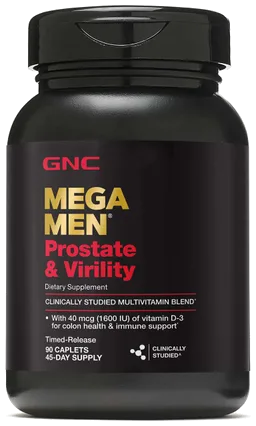
GNC Mega Men Mega Men Review
GNC Mega Men Energy & Metabolism Multivitamin for Men, 180 Count is a men's multivitamin in caplet form, listed as unflavored and gluten free, and sold under the GNC brand. The page highlight line reads: Clinically Studied Antioxidants Support Energy Production, Colon and Prostate Health, Calorie Burning, and Mental Sharpness. The listing describes it as a clinically studied men's multivitamin formula shown to work better than a basic multivitamin. It states the formula is shown to improve levels of key B vitamins essential for energy production and helps support colon and prostate health. It also says it contains a combination of thermogenic ingredients that may support calorie burning and mental sharpness. The formula is said to be packed with antioxidants to help fight free radicals that can be produced during intense exercise. The item details list product benefits as men's multivitamin with caffeine and B vitamins to support energy production and metabolism. The special ingredients named are Zinc, Thiamin, Riboflavin, Biotin, Vitamin B-12, Capsicum, Black Pepper, and Caffeine. The specific use is listed as supports overall health and wellness, and the age range is listed as All. The package contains 180 count with one item. The listing describes the GNC Mega Men and Women's Ultra Mega multivitamin complex as created with the vitamins and minerals needed to live well, and says they are clinically proven to make you feel better. The page notes the item is non-returnable due to food safety reasons, though a damaged or defective item may be refunded or replaced. The product is sold by Pattern. and ships from Amazon, with a list price of $47.99 and a current price of $40.64. Subscribe and Save pricing shows $36.58 on a subscription. The manufacturer is GNC and the manufacturer part number is GNCMEGAMAN.
Study, Trial or Testing Result Summary
Members Only189 human studies · 47 improved
6 of these 189 human studies gave the ingredient by drip or injection, not by mouth.
For male hormones the evidence behind this multivitamin is mixed and mostly weak. At a full dose, selenium at 200 micrograms raised testosterone in a large trial of infertile men [1], but trials in healthy and active men found no change [2][3][4]. Vitamin A with iron sped up growth and puberty in boys with delayed puberty [5], though beta carotene did not change testosterone in adults [6]. Magnesium raised testosterone in one small trial of men who trained [7], but a large review did not find it effective [8]. Most trials found vitamin D does not raise testosterone [9][10]. Vitamin E is well below the studied dose here, and trials mostly showed no rise, with one showing slightly lower testosterone [11]. Zinc is below the 50 milligram dose that helped men on dialysis [12], and pooled trials found no change [13]. Folate showed no hormone change in pooled trials [13]. The amino acid and antioxidant blends are small and their makeup is not shown; amino acid trials mostly found no testosterone change [14][15]. Animal and cell studies are never counted.
See all 189 studies →Hide the studies
- Across 31 trials with 1999 people with antipsychotic-induced high prolactin, adding high-dose vitamin B6 lowered prolactin significantly in those with levels above 50 ng/ml, but no treatment beat placebo when levels were below 50 ng/ml.Pharmacological treatment strategies for antipsychotic-induced hyperprolactinemia: a systematic review and network meta-…
- In 14 trials of 1342 infertile men, antioxidants were not better than clomiphene for sperm concentration and hormone levels, and the evidence overall was low quality and insufficient to support routine use of these drugs.Pharmacological non-hormonal treatment options for male infertility: a systematic review and network meta-analysis.
- In a pooled review of 15 trials of men and women with chronic kidney disease, oral zinc raised testosterone in one small study of 20 patients, but zinc added to dialysis fluid did not, and luteinizing and follicle-stimulating hormones did not change.Interventions for treating sexual dysfunction in patients with chronic kidney disease.
- In a review of 12 trials in women with polycystic ovary syndrome, vitamin E lowered testosterone and luteinizing hormone and raised follicle-stimulating hormone and progesterone, but this was in women, not men.Effect of vitamin E supplementation on cardiometabolic risk factors, inflammatory and oxidative markers and hormonal fun…
- Across eight trials in women with polycystic ovary syndrome, vitamin E lowered total testosterone and raised sex hormone-binding globulin, but this was in women, not men.Vitamin E supplementation improves testosterone, glucose- and lipid-related metabolism in women with polycystic ovary sy…
- This review of observational studies on dementia risk factors found no significant difference by APOE ε4 status for vitamin E intake and did not test vitamin E's effect on hormones.The role of APOE ε4 in modulating the relationship between non-genetic risk factors and dementia: a system review and me…
- Pooling six trials of men with reduced fertility, folate plus zinc did not change testosterone, inhibin B or follicle-stimulating hormone compared with placebo, though sperm concentration and shape improved.The Effect of Folate and Folate Plus Zinc Supplementation on Endocrine Parameters and Sperm Characteristics in Sub-Ferti…
- In seven placebo-controlled trials in men with unexplained infertility, L-carnitine and N-acetylcysteine improved sperm concentration, shape and movement, and L-carnitine raised testosterone, with no significant change in other hormones.Meta-analysis of the efficacy and safety of L-carnitine and N-acetylcysteine monotherapy for male idiopathic infertility…
- In a review of 14 trials in people with chronic kidney disease, oral zinc improved testosterone but zinc added to dialysis fluid did not, and luteinizing and follicle-stimulating hormones were unchanged.Treatment options for sexual dysfunction in patients with chronic kidney disease: a systematic review of randomized cont…
- A review of vitamin D and fertility reported that in men vitamin D is linked with semen quality and androgen status and that treatment might increase testosterone, though the evidence was limited.Vitamin D and fertility: a systematic review.
- A review of seven reviews of drug and supplement treatments in people aged 65 and older found vitamin D improved muscle strength and physical performance, especially in women with low vitamin D levels, but it did not test hormone levels in men; testosterone, not vitamin D, was the treatment found helpful for older men.Pharmacological Interventions to Improve Muscle Mass, Muscle Strength and Physical Performance in Older People: An Umbre…
- A review of mostly observational studies in middle-aged and older men found low vitamin D linked to depression and to lower testosterone, but it did not show that supplements raise testosterone.Vitamin D, testosterone and depression in middle-aged and elderly men: a systematic review.
- A review of 52 studies of supposed testosterone boosters, including 10 on vitamin D3, found that most, including vitamin D, did not raise total testosterone compared with placebo.Do "testosterone boosters" really increase serum total testosterone? A systematic review.
- A review of seven controlled studies of men treated with radioactive iodine for thyroid cancer found that sex hormones (FSH and LH) rose within months and usually normalized by 18 months, testosterone did not drop significantly, and repeated or high cumulative doses raised the risk of lasting testicular problems.A systematic review of the gonadal effects of therapeutic radioactive iodine in male thyroid cancer survivors.
- A scoping review of 26 human studies found that both too little and too much iodine may harm male reproductive health, including testosterone and semen quality, and results on iodine supplements were mixed with limited evidence.A Scoping Review on Iodine Status and Fertility: Results From Human Studies.
- A review of 105 trials on ingredients in male testosterone and erectile supplements, including zinc, found limited evidence overall, with many ingredients having contradicting or lacking evidence.A systematic review and evidence-based analysis of ingredients in popular male testosterone and erectile dysfunction sup…
- A review of 6 placebo-controlled trials in physically active people found selenium at 180 to 240 micrograms a day lowered a marker of fat damage and raised an antioxidant enzyme, but had no significant effect on testosterone or athletic performance.The Role of Selenium Mineral Trace Element in Exercise: Antioxidant Defense System, Muscle Performance, Hormone Response…
- In 468 infertile men, 200 micrograms of selenium daily for 26 weeks (alone or with N-acetyl-cysteine) lowered follicle-stimulating hormone and raised testosterone and inhibin B compared with placebo, and improved semen quality.Efficacy of selenium and/or N-acetyl-cysteine for improving semen parameters in infertile men: a double-blind, placebo c…
- In 368 men with an infertile marriage, 9 months of vitamin C or mesterolone gave similar pregnancy rates in their wives, so neither was better.Randomised trial of mesterolone versus vitamin C for male infertility. Scottish Infertility Group.
- In 294 mostly male adults over 18 months, a high-polyphenol green Mediterranean diet lowered morning cortisol more than standard healthy diet advice, and cortisol drops went along with better testosterone, blood sugar and inflammation markers.Long-term green-Mediterranean diet may favor fasting morning cortisol stress hormone; the DIRECT-PLUS clinical trial.
- In 282 men given high-dose vitamin D or placebo for 6 to 12 months, vitamin D did not change total or free testosterone, even in men with low vitamin D.Supplementation with vitamin D does not increase serum testosterone levels in healthy males.
- In 228 vitamin D deficient young men, six months of vitamin D with or without calcium did not change muscle strength or testosterone compared with placebo.Vitamin D and calcium supplementation, skeletal muscle strength and serum testosterone in young healthy adult males: Ran…
- In 200 older men, long-term alpha-tocopherol supplementation led to lower testosterone (539 vs 573 ng/dl) and androstenedione than placebo.Effects of long-term alpha-tocopherol supplementation on serum hormones in older men.
- In three small trials of 184 men in total, daily vitamin D of 600 to 2000 IU for 6 to 16 weeks raised vitamin D blood levels but did not raise testosterone.Vitamin D supplementation and testosterone concentrations in male human subjects.
- In 148 men aged 70 and over with low testosterone, the combination of testosterone injections, strength training and vitamin D, calcium and protein improved chair stand performance over 20 weeks, but the effect of vitamin D alone could not be separated.Beneficial effects of exercise, testosterone, vitamin D, calcium and protein in older men-A randomized clinical trial.
- In a one-year follow-up of 148 older men with low testosterone, only the group given testosterone plus strength training (with calcium, vitamin D and protein supplements) improved chair stand performance and fatigue; calcium's own effect was not separated.Testosterone and resistance training improved physical performance and reduced fatigue in frail older men: 1 year follow…
- In 143 men with infertility, three months of vitamin E (300 mg a day) with CoQ10 raised testosterone from baseline, though L-carnitine raised testosterone and luteinizing hormone more.Comparison of L-Carnitine vs. Coq10 and Vitamin E for idiopathic male infertility: a randomized controlled trial.
- In 143 boys aged 16 to 18, 1000 mg of calcium carbonate daily for 13 months increased bone mineral and height compared with placebo, with no significant interaction with plasma testosterone.Calcium supplementation increases stature and bone mineral mass of 16- to 18-year-old boys.
- In 103 healthy people and 33 dialysis patients given vitamin D or placebo for 12 weeks, vitamin D raised blood vitamin D levels but did not change testosterone.Serum Testosterone Levels Are Not Modified by Vitamin D Supplementation in Dialysis Patients and Healthy Subjects.
- In 133 men with advanced heart failure and low vitamin D, 4000 IU daily for 3 years did not prevent the decline in testosterone compared with placebo.Vitamin D supplementation does not prevent the testosterone decline in males with advanced heart failure: the EVITA tria…
- In 128 women with benign breast disease, 150 to 600 IU of vitamin E daily for two months had no significant effect on testosterone or other hormones.The effect of vitamin E on mammary dysplasia: a double-blind study.
- In 102 boys aged about 14 to 15 with delayed puberty, six months of vitamin A (6000 IU per week) plus iron sped up growth more than no treatment (9.3 vs 4.0 cm per year) and brought on puberty within 12 months, similar to hormone treatment.Vitamin A and iron supplementation is as efficient as hormonal therapy in constitutionally delayed children.
- In 100 healthy men with normal testosterone, 20,000 IU of vitamin D3 per week for 12 weeks did not change testosterone, and it slightly worsened a measure of insulin sensitivity.Vitamin D and Testosterone in Healthy Men: A Randomized Controlled Trial.
- In 100 middle-aged men with low testosterone, 20,000 IU of vitamin D3 per week for 12 weeks did not change testosterone or other hormone levels compared with placebo.Effects of vitamin D supplementation on androgens in men with low testosterone levels: a randomized controlled trial.
- In 59 adults with high blood fats and 36 healthy adults, 300 mg per day of beta-carotene for 30 days did not change testosterone or estradiol levels compared with wheat germ oil.Read the study on PubMed (8010332) →
- In 90 men with unexplained low sperm count and motility, vitamin E 400 mg a day for 6 months did not significantly raise sperm concentration, and the abstract reports no testosterone result.Combination of vitamin E and clomiphene citrate in treating patients with idiopathic oligoasthenozoospermia: A prospecti…
- In 88 male heart transplant patients all given calcium and vitamin D, about 24% had low testosterone and lower bone density, and adding testosterone for 1 to 2 years did not significantly raise bone density.[Effect of immunosuppression-induced hypogonadism on bone metabolism after heart transplantation].
- In 87 fertile and subfertile men given folic acid and zinc for 26 weeks, testosterone, follicle-stimulating hormone and inhibin B did not change versus placebo, although sperm concentration rose in subfertile men.Does folic acid and zinc sulphate intervention affect endocrine parameters and sperm characteristics in men?
- In 86 women with polycystic ovary syndrome, 8 weeks of vitamin E lowered total testosterone compared with placebo, but this was in women, not men.Hormonal and Metabolic Effects of Coenzyme Q10 and/or Vitamin E in Patients With Polycystic Ovary Syndrome.
- In 84 women with polycystic ovary syndrome, 90 mcg of vitamin K2 (menaquinone-7) daily for 8 weeks lowered dihydrotestosterone and free androgen index and raised sex hormone binding globulin compared with placebo.Beneficial health effects of Menaquinone-7 on body composition, glycemic indices, lipid profile, and endocrine markers i…
- In 80 men with untreated prostate cancer, 21 weeks of a supplement containing vitamin C with vitamin E, selenium and coenzyme Q10 did not change testosterone or other hormone levels compared with placebo.Effect of a nutritional supplement containing vitamin E, selenium, vitamin c and coenzyme Q10 on serum PSA in patients w…
- In 70 women with polycystic ovary syndrome, 50 mg daily of soy isoflavones for 12 weeks lowered insulin resistance, free androgen index and oxidative stress marker malondialdehyde versus placebo.The Effects of Soy Isoflavones on Metabolic Status of Patients With Polycystic Ovary Syndrome.
- In 68 women with polycystic ovary syndrome (not men), 400 IU vitamin E plus omega-3 for 12 weeks lowered insulin resistance and total and free testosterone compared with placebo.The Effects of Omega-3 Fatty Acids and Vitamin E Co-Supplementation on Indices of Insulin Resistance and Hormonal Parame…
- In 64 postmenopausal women, 8 ounces of pomegranate juice daily for 3 weeks did not change sex hormones overall, though normal weight women showed lower estrone and testosterone.Effects of Pomegranate Juice on Hormonal Biomarkers of Breast Cancer Risk.
- In 62 infertile men, taking vitamin D3 by mouth did not change total testosterone, luteinizing hormone, follicle stimulating hormone, or semen parameters compared with placebo, though sex hormone binding globulin fell in the vitamin D group.Evaluation of the effect of vitamin D3 supplementation on quantitative and qualitative parameters of spermograms and hor…
- In 60 infertile men with thick, slow-to-liquefy semen, the vitamin C plus chymotrypsin control group improved less (76.7% effective) and had less testosterone benefit than the herbal decoction group (93.3%).[Shenfu Qiangjing decoction improves non-inflammatory and non-liquefied semen in kidney-yang deficiency men].
- In 60 women with polycystic ovary syndrome, taking vitamin D with fish oil for 12 weeks lowered blood testosterone compared with placebo, and also lowered inflammation and oxidative stress markers.The influences of vitamin D and omega-3 co-supplementation on clinical, metabolic and genetic parameters in women with p…
- In 60 women with polycystic ovary syndrome, 50,000 IU of vitamin D every 2 weeks plus a probiotic for 12 weeks lowered total testosterone, hirsutism, and inflammation and oxidative stress markers compared with placebo.Vitamin D and probiotic co-supplementation affects mental health, hormonal, inflammatory and oxidative stress parameters…
- In 60 overweight women with polycystic ovary syndrome and vitamin D deficiency, 50,000 IU of vitamin D3 per week for 12 weeks lowered total testosterone and hirsutism scores compared with placebo.Androgens and hirsutism score of overweight women with polycystic ovary syndrome improved after vitamin D treatment: A r…
- In 60 women with polycystic ovary syndrome (not men), a multinutrient supplement including vitamin E for 3 months lowered testosterone, anti-Mullerian hormone and the LH to FSH ratio.The impact of a standardized micronutrient supplementation on PCOS-typical parameters: a randomized controlled trial.
- In 60 infertile men given carob syrup or 200 mg vitamin E daily for 3 months, hormone levels did not differ between groups, and carob improved semen quality more than vitamin E.Comparison of the Effect of Ceratonia siliqua L. (Carob) Syrup and Vitamin E on Sperm Parameters, Oxidative Stress Index…
- In 60 vitamin D-deficient women with polycystic ovary syndrome, vitamin K (90 mcg) with vitamin D and calcium twice daily for 8 weeks lowered free testosterone and DHEAS and improved antioxidant markers compared with placebo, with no change in inflammation markers.The Effects of Vitamin D-K-Calcium Co-Supplementation on Endocrine, Inflammation, and Oxidative Stress Biomarkers in Vit…
- In 60 women with polycystic ovary syndrome, 200 mg daily of ellagic acid for 8 weeks lowered total testosterone, insulin resistance, oxidative stress and inflammation markers versus placebo.Randomized double blind clinical trial evaluating the Ellagic acid effects on insulin resistance, oxidative stress and s…
- In 55 men with urinary symptoms and prostate enlargement, 240 micrograms of selenium plus silymarin daily for 6 months lowered PSA and improved urinary symptoms but had no effect on blood testosterone.Use of selenium-silymarin mix reduces lower urinary tract symptoms and prostate specific antigen in men.
- In 55 women with polycystic ovary syndrome, 100 mg coenzyme Q10 daily for 12 weeks lowered total testosterone, DHEAS, inflammation and oxidative stress and raised sex hormone-binding globulin compared with placebo (women, not men).The effects of coenzyme Q10 supplementation on metabolic profiles and parameters of mental health in women with polycyst…
- In 54 overweight men on a weight loss program, 3,332 IU of vitamin D daily for 1 year raised total testosterone from about 10.7 to 13.4 nmol/L, while placebo showed no change.Effect of vitamin D supplementation on testosterone levels in men.
- In 53 young male Estonian conscripts, 1200 IU of vitamin D3 daily over 7 months during winter kept more men out of critically low vitamin D levels but did not change testosterone or hand grip strength compared with placebo.Seven-month wintertime supplementation of 1200 IU vitamin D has no effect on hand grip strength in young, physically act…
- In 50 infertile men, 600 mg daily of N-acetyl-cysteine for 3 months was followed by higher testosterone, lower pituitary hormones, and lower oxidative stress markers compared with their own pre-treatment levels, though the study had no placebo group.Effects of N-acetyl-cysteine supplementation on sperm quality, chromatin integrity and level of oxidative stress in infe…
- In infertile men taking zinc 10 mg combined with D-aspartic acid and ubiquinol daily for 3 months, total testosterone and progressive sperm motility rose significantly compared with before treatment.Evaluation of in vivo supplementation of 2660 mg D-aspartic acid and 200 mg ubiquinol and 10 mg zinc on different semen …
- In 46 active men, 2000 IU of vitamin D3 daily for 12 weeks significantly lowered serum total testosterone in the vitamin D group, while aerobic capacity and anaerobic power improved.Effects of vitamin D3 supplementation for 12 weeks on serum levels of anabolic hormones, anaerobic power, and aerobic pe…
- In 44 infertile men, 600 mg lipoic acid daily for 12 weeks lowered semen oxidative stress and raised antioxidant enzyme activity, but the changes in testosterone and other reproductive hormones were not significant.Effect of lipoic acid supplementation on gene expression and activity of glutathione S-transferase enzyme in infertile m…
- In 42 men, 300 micrograms of selenium daily for 48 weeks had no effect on blood androgen levels or semen quality compared with placebo.Selenium supplementation does not affect testicular selenium status or semen quality in North American men.
- In 37 men with prostate cancer, a 6-week multi-ingredient supplement including selenium lowered testosterone and DHT compared with placebo, which was the intended effect in this cancer setting but a reduction in male hormones.Dietary intervention in prostate cancer patients: PSA response in a randomized double-blind placebo-controlled study.
- In 37 men after prostate surgery, 240 micrograms of selenium plus silymarin daily for 6 months had no influence on testosterone, though it lowered cholesterol and improved quality of life.The safety and efficacy of a silymarin and selenium combination in men after radical prostatectomy - a six month placebo…
- In 36 elite male rowers given 3,000 IU of vitamin D3 daily for 8 weeks, vitamin D blood levels rose and blood counts held steady, but testosterone and cortisol did not differ from the control group.Effects of Vitamin D Supplementation on Haematological Values and Muscle Recovery in Elite Male Traditional Rowers.
- In 36 healthy men given 247 mcg of selenium-enriched yeast daily for 9 months, blood testosterone, dihydrotestosterone and their ratio did not change compared with placebo, though antioxidant glutathione levels rose and prostate-specific antigen dipped slightly.Influence of selenium-enriched yeast supplementation on biomarkers of oxidative damage and hormone status in healthy adu…
- In 30 older men recovering from COVID-19, 2000 IU of vitamin D daily for 6 weeks lowered creatine kinase, a muscle damage marker, versus placebo, but physical tests showed no significant gains.Effect of Vitamin D Supplementation on Muscle Status in Old Patients Recovering from COVID-19 Infection.
- In 30 healthy young men, a single 10 g dose of arginine raised growth hormone and thyroid-stimulating hormone at 24 hours versus placebo, but did not change testosterone, cortisol or mood.Effects of acute arginine supplementation on neuroendocrine, metabolic, cardiovascular, and mood outcomes in younger men…
- In men with low-risk prostate cancer on active surveillance, 1000 mg of pomegranate extract daily for one year lowered a DNA damage marker and androgen receptor expression in prostate tissue, with no change in IGF-1 and no significant toxicity.A phase II randomized placebo-controlled trial of pomegranate fruit extract in men with localized prostate cancer underg…
- In a placebo-controlled trial of 400 IU vitamin E a day in men with raised prostate specific antigen, 28 completers had no change in testosterone or dehydroepiandrosterone compared with placebo, although vitamin E raised blood vitamin E levels.The modulation of prostate cancer risk with alpha-tocopherol: a pilot randomized, controlled clinical trial.
- In 24 hemodialysis patients taking 300 mg of vitamin E daily for 8 weeks, free testosterone, LH, and FSH did not change compared with placebo, though prolactin fell.Effect of vitamin E therapy on sexual functions of uremic patients in hemodialysis.
- In 24 sprinters during winter training, 200 mg of tangeretin daily for 4 weeks kept serum testosterone stable while the placebo group's testosterone fell, and it lowered cortisol.[Effects of the combination of tangeretin and whey protein on testosterone and cortisol in sprinters at winter training …
- In 24 adolescent male soccer players, 300 mg daily of coenzyme Q10 for 14 days better preserved the testosterone to cortisol ratio and lowered cortisol and oxidative stress than placebo, while taurine showed different effects on inflammation.Practical Nutritional Strategies to Attenuate Physiological Stress in Adolescent Soccer Players: A Comparative Trial of …
- In 21 men with idiopathic osteoporosis, 1000 mg daily calcium carbonate alone produced no change in bone density over 12 months. Adding weekly nandrolone raised bone density early, but it fell back to near baseline by 12 months, and testosterone levels dropped.Nandrolone decanoate for men with osteoporosis.
- In 20 men on hemodialysis, 50 mg of zinc daily for 6 months raised testosterone and sperm count and lowered luteinizing and follicle-stimulating hormones, with better libido and potency, unlike placebo.Effect of oral zinc therapy on gonadal function in hemodialysis patients. A double-blind study.
- In 20 healthy young adults, l-arginine did not improve muscle recovery after hard resistance exercise, and the testosterone to cortisol ratio did not differ from placebo.l-Arginine supplementation does not improve muscle function during recovery from resistance exercise.
- In 20 male power athletes over 10 weeks, leucine at 50 mg per kg body weight daily kept blood leucine from falling, but the abstract reports no testosterone benefit; testosterone rose then fell during training in all subjects.Leucine supplementation and serum amino acids, testosterone, cortisol and growth hormone in male power athletes during t…
- In 20 healthy men, eating soya flour scones providing about 120 mg isoflavones daily for 6 weeks lowered serum testosterone compared with wheat scones, while two markers of oxidative stress improved.Dietary supplements of soya flour lower serum testosterone concentrations and improve markers of oxidative stress in men…
- In 18 male dialysis patients with sexual dysfunction and normal prolactin, oral zinc acetate for 6 months raised blood zinc but did not change testosterone, sex hormone binding globulin, gonadotrophins, sperm counts or erections compared with placebo; 1 of 9 on zinc reported better sexual function.Zinc deficiency and hyperprolactinaemia are not reversible causes of sexual dysfunction in uraemia.
- In 17 healthy young men doing 12 weeks of heavy resistance training, an essential amino acid formula with HMB increased resting and exercise-induced testosterone and resting growth hormone and lowered pre-exercise cortisol more than placebo.Effects of amino acids supplement on physiological adaptations to resistance training.
- In 16 male climbers, 3 g daily of D-aspartic acid for 2 weeks did not change testosterone, free testosterone or luteinizing hormone compared with placebo.Short-Term d-Aspartic Acid Supplementation Does Not Affect Serum Biomarkers Associated With the Hypothalamic-Pituitary-G…
- In 14 obese young men, 100 mg a day of zinc sulfate for one month raised zinc and leptin levels but did not change androgens or insulin sensitivity compared with placebo.[Effect of oral zinc administration on insulin sensitivity, leptin and androgens in obese males].
- In 14 men on kidney dialysis, 6 weeks of zinc chloride added to the dialysis fluid did not change testosterone, gonadotrophin levels or sexual function compared with placebo.Absence of a therapeutic effect of zinc in the sexual dysfunction of haemodialysed patients.
- In 13 professional basketball players, 35 days of an antioxidant supplement containing 32 mg beta-carotene lowered lipid peroxides by about 28%, and the authors suggest it may partly explain hormone and enzyme stress patterns, though the abstract reports no significant hormone change.Effects of alpha-tocopherol, beta-carotene and ascorbic acid on oxidative, hormonal and enzymatic exercise stress marker…
- In 12 older men given testosterone or placebo for 6 months, amino acid feeding raised muscle protein synthesis but showed no added benefit on top of testosterone; the study did not test amino acids as a way to raise hormones.Differential anabolic effects of testosterone and amino acid feeding in older men.
- In 12 male cyclists over 6 days of intense training, protein and leucine after exercise did not substantially change testosterone but lowered pre-exercise cortisol by 21% by day 6 versus control.Effect of post-exercise protein-leucine feeding on neutrophil function, immunomodulatory plasma metabolites and cortisol…
- In 11 healthy men on a controlled diet for 120 days, high selenium intake of 297 mcg per day left serum androgen levels unchanged, although it lowered sperm motility.Effects of dietary selenium on sperm motility in healthy men.
- In 9 untrained young men, a single 6 g dose of citrulline malate did not change the testosterone to cortisol ratio or muscle recovery compared with placebo.Citrulline Malate Does Not Improve Muscle Recovery after Resistance Exercise in Untrained Young Adult Men.
- In 9 elite weightlifters, pomegranate juice before training lowered the acute rise in testosterone compared with placebo, and it lowered homocysteine during 48 hours of recovery.Effects of natural polyphenol-rich pomegranate juice on the acute and delayed response of Homocysteine and steroidal hor…
- In 9 healthy adults, 42 mg of enzymatically modified isoquercitrin taken with soy protein for 7 days lowered oxidative stress and raised testosterone compared with soy protein alone, in a small crossover study.Enzymatically modified isoquercitrin in soy protein temporarily enhanced the plasma amino-acid concentrations, antioxida…
- In 8 dialysis men with low zinc, zinc given during dialysis improved potency in all four treated men and brought low testosterone back to normal in the two who had low levels, while placebo did not help.Reversal of uraemic impotence by zinc.
- In 8 men, a single dose of an amino acid, creatine and energy supplement taken before resistance exercise modestly improved high-intensity endurance but did not change testosterone or growth hormone responses compared with placebo.Effects of an amino acid/creatine energy supplement on the acute hormonal response to resistance exercise.
- In 8 resistance-trained men, a pre-exercise drink containing branched chain amino acids and other ingredients raised growth hormone 15 minutes after a squat session compared with maltodextrin placebo, and raised insulin right after, while testosterone and cortisol results were not reported as improvements.Effect of a pre-exercise energy supplement on the acute hormonal response to resistance exercise.
- In 8 resistance-trained men, 4 weeks of a branched chain amino acid-rich supplement led to higher testosterone and lower cortisol and muscle damage marker levels than placebo during high-intensity training.Amino acid supplements and recovery from high-intensity resistance training.
- In small crossover experiments in healthy men, 200 mg a day of vitamin E for 3 weeks did not change testosterone, although soy protein intake lowered blood vitamin E and the supplement restored it.Effects of soy protein on levels of remnant-like particles cholesterol and vitamin E in healthy men.
- In a double-blind dose-response study of women with premenstrual syndrome, alpha-tocopherol had no significant effect on testosterone, DHEA-S, estradiol or progesterone, though it improved symptoms.The effect of alpha-tocopherol on premenstrual symptomatology: a double-blind study. II. Endocrine correlates.
- In men after varicocele surgery, 6 months of folic acid plus zinc sulphate raised inhibin B and seminal antioxidant activity, with the abstract not describing clear changes in testosterone.Effect of folic acid and zinc sulphate on endocrine parameters and seminal antioxidant level after varicocelectomy.
- In 100 infertile men, 6 months of a daily multi-ingredient antioxidant supplement that included vitamin C raised follicle-stimulating hormone, luteinizing hormone and testosterone from baseline, with no change in the control group, but sperm motility did not improve significantly.Do antioxidants improve serum sex hormones and total motile sperm count in idiopathic infertile men?
- In 66 men with low or subclinical hypogonadism and low vitamin D, three months of calcidiol raised vitamin D levels and lowered parathyroid hormone, while cholecalciferol did not; testosterone was not reported as an outcome.Late-onset hypogonadism: beyond testosterone.
- In 44 overweight or obese women with polycystic ovary syndrome, 45 ml concentrated pomegranate juice daily for 8 weeks lowered testosterone versus no intervention, with no change in inflammation or oxidative stress (women, not men).The effect of concentrated pomegranate juice on biomarkers of inflammation, oxidative stress, and sex hormones in overwe…
- In 11 young men fed controlled diets, 35 days on very low zinc (1.4 mg a day) lowered testosterone (26.9 to 21.9 nmol/L) and semen volume compared with 10.4 mg a day, showing testosterone drops when zinc is depleted.Effects of dietary zinc depletion on seminal volume and zinc loss, serum testosterone concentrations, and sperm morpholo…
- In 10 active men taking 20 mg of biotin daily for 2 weeks, high biotin levels in urine caused lab tests for human chorionic gonadotropin to read falsely low, so the hormone itself was not shown to change.Impact of Biotin Supplementation on Human Chorionic Gonadotropin Immunoassays Utilizing Biotin-Streptavidin Binding Meth…
- In men who were sedentary or practiced tae kwon do, 4 weeks of magnesium at 10 mg per kilogram of body weight raised free and total testosterone, with larger increases in those who exercised.Effects of magnesium supplementation on testosterone levels of athletes and sedentary subjects at rest and after exhaust…
- In men with liver cirrhosis and impotence or low sex hormones, zinc sulfate taken for 6 to 8 months did not work better than placebo, and testosterone levels did not change.Effect of the administration of zinc sulfate on hypogonadism and impotence in patients with chronic stable hepatic cirrh…
- In adult men with sickle cell anemia, oral zinc supplementation raised serum testosterone compared with placebo and corrected their androgen deficiency.Effect of zinc supplementation on serum testosterone level in adult male sickle cell anemia subjects.
- In 186 women with polycystic ovary syndrome, a six-month daily compound containing myo-inositol, L-tyrosine, selenium, chromium and 0.2 mg folic acid was followed by ovulation in many women and a weight decrease in one subgroup, but the study had no control group and included no men.Efficacy of the synergic action of myoinositol, tyrosine, selenium and chromium in women with PCOS.
- In 100 men on hemodialysis, 250 mg of zinc sulfate daily for 6 weeks raised testosterone and luteinizing hormone levels, though the authors judged the effect on sexual dysfunction unclear; there was no placebo group.Impact of oral zinc therapy on the level of sex hormones in male patients on hemodialysis.
- In 99 women with polycystic ovary syndrome taking 4000 IU of vitamin D daily for 6 months, spironolactone and pioglitazone lowered leptin more than a med, though this open-label study had no placebo group.Read the study on PubMed (32053841) →
- In 35 men with low sperm counts, 100 mg of processed Shilajit twice daily for 90 days was followed by higher testosterone and FSH and lower semen oxidative stress marker levels, with no placebo group to compare against.Clinical evaluation of spermatogenic activity of processed Shilajit in oligospermia.
- In 26 infertile men given 1,500 mcg of methylcobalamin daily for 4 to 24 weeks, sperm measures improved in about half, while serum LH, FSH and testosterone were unchanged; 42% were judged improved overall.[Clinical experience with methylcobalamin (CH3-B12) for male infertility].
- In 15 men with obesity-related low testosterone, a supplement containing folic acid taken twice daily for 3 months, alongside exercise, raised testosterone and improved body composition and insulin sensitivity, with no control group.Positive effects of dietary supplementation with nutraceuticals on male subclinical hypogonadism: a pilot study.
- In 10 sedentary young men taking zinc sulfate at 3 mg per kg of body weight daily for 4 weeks, testosterone levels were higher after supplementation, and zinc appeared to prevent the drop in testosterone seen after exercise; there was no placebo group.Effect of fatiguing bicycle exercise on thyroid hormone and testosterone levels in sedentary males supplemented with ora…
- In a large cancer screening trial cohort of 3409 women and men, vitamin E supplementation at different doses was linked to distinct changes in a med hormone pathway metabolites, though the abstract does not state a clear hormone benefit for men.Metabolomic Analysis of Vitamin E Supplement Use in the Prostate, Lung, Colorectal, and Ovarian Cancer Screening Trial.
- In a large US national health survey of men, higher manganese exposure was associated with about 15% higher odds of testosterone deficiency, especially in men aged 45 to 50 and in obese men.Toxic metals and trace elements, markers of inflammation, and hyperandrogenemia in women and testosterone deficiency in …
- In a follow-up analysis of 2118 men with heart disease who were in a niacin trial, men with low testosterone (30% of the group) had a higher risk of heart attack, stroke or heart death over about 3 years than men with normal testosterone, and the study did not test whether niacin changed testosterone.Testosterone concentrations and risk of cardiovascular events in androgen-deficient men with atherosclerotic cardiovascu…
- In about 1,940 US men, higher blood selenium was linked to a higher free androgen index but lower SHBG; this is an association from a population survey, not a supplement trial.Association of blood metals with serum sex hormones in adults: A cross-sectional study.
- In 1136 Chinese men, higher manganese in semen was linked to lower sperm concentration, while the study did not report a manganese link to male sex hormones.The association between metal exposure and semen quality in Chinese males: The mediating effect of androgens.
- In 1,060 children aged 6 to 19 from a national survey, a metal pattern high in blood manganese was linked with higher estradiol and lower testosterone-to-estradiol ratio in girls aged 12 to 19, while mixture links were not significant in boys.Exposure to metals and the disruption of sex hormones in 6-19 years old children: An exploration of mixture effects.
- In 1059 US children and adolescents aged 6 to 19, higher molybdenum exposure was one of several metals linked to lower total testosterone and estradiol.Read the study on PubMed (39739052) →
- In a case-control study of 388 women with polycystic ovary syndrome and 465 controls, higher follicular fluid manganese was linked with lower polycystic ovary syndrome risk, partly through the luteinizing to follicle-stimulating hormone ratio.The association between metal exposure in follicular fluid and PCOS risk in reproductive-aged women: Mediating Roles of …
- In 815 pregnant women in Puerto Rico, blood manganese was associated with a small rise in sex hormone binding globulin, while arsenic and nickel were the metals linked with lower testosterone.Association of biomarkers of exposure to metals and metalloids with maternal hormones in pregnant women from Puerto Rico…
- In a national survey of 687 men, copper's association with testosterone weakened after adjustment for other factors, so no clear effect on male hormones was found.Serum Minerals and Male Age-related Hypogonadism: Multimodal Evidence Decoding Associations and Intervention Strategies.
- In a large observational study of 654 men with infertility, high blood uric acid was linked to lower testosterone, higher luteinizing hormone, and lower vitamin C (ascorbic acid) in seminal fluid; this study did not give vitamin C as a supplement.Effects of high serum uric acid levels on oxidative stress levels and semen parameters in male infertile patients.
- In 533 pregnant women in China, higher levels of manganese measured in the placenta were linked to lower testosterone levels in umbilical cord blood.Read the study on PubMed (38733803) →
- In 511 Chinese men from an infertility clinic, higher urinary molybdenum was linked to a lower ratio of total testosterone to luteinizing hormone.Associations of urinary metal levels with serum hormones, spermatozoa apoptosis and sperm DNA damage in a Chinese popula…
- In 484 US men in NHANES 2011 to 2012, higher urinary molybdenum was linked to lower serum testosterone, though a suggestive quartile trend was only significant at quintiles.Biomarkers of exposure to molybdenum and other metals in relation to testosterone among men from the United States Natio…
- In 399 men aged 65 and older, higher blood magnesium was independently linked to higher total testosterone and growth factor levels, though this observational association does not show that magnesium intake raises testosterone.Magnesium and anabolic hormones in older men.
- In a cross-sectional study of 251 welders and 100 office workers, occupational manganese exposure was linked with higher prolactin and, in a structural model, lower testosterone.Effect of manganese exposure on the neuroendocrine system in welders.
- In 336 healthy middle-aged Germans, plasma vitamin B12 was one of several factors linked to homocysteine levels, which were higher in men mainly due to differences in fat-free mass and estradiol; vitamin B12 was not given as a supplement.Factors explaining the difference of total homocysteine between men and women in the European Investigation Into Cancer …
- In a case-control study of 160 pregnant women with preeclampsia and 160 with normal deliveries, lower blood manganese was linked with preeclampsia, and manganese was linked with lower estradiol and cortisol; no testosterone link was reported for manganese.A study on the mediating role of serum hormones in the effects of heavy metals on preeclampsia.
- In 314 men aged 50 and older with testosterone deficiency, blood magnesium was not reported as linked to depressive symptoms; only manganese and chromium showed a significant correlation.The Relationship between Selected Bioelements and Depressiveness Associated with Testosterone Deficiency Syndrome in Agi…
- In 313 men aged 50 to 75, higher blood magnesium was associated with normal total testosterone, while lower magnesium was seen alongside testosterone deficiency, metabolic syndrome, diabetes and high blood pressure, though this is an observational association.Relationship between serum magnesium concentration and metabolic and hormonal disorders in middle-aged and older men.
- In 313 men aged 50 to 75, those with low total testosterone had higher blood manganese levels, and total testosterone was inversely correlated with manganese; this is an observational association, not a supplement effect.Analysis of the relationship between the blood concentration of several metals, macro- and micronutrients and endocrine …
- In a cross-sectional study of 138 copper and cobalt miners and 139 bakers in the Democratic Republic of the Congo, miners had lower free testosterone and poorer sexual function, which the authors suggest may be linked to their high exposure to trace metals; this study does not test copper supplements.Erectile dysfunction in copper and cobalt miners: a cross-sectional study in the former Katanga province, Democratic Rep…
- In 274 men from Karachi, higher serum folic acid and vitamin B12 were associated with better sperm count, motility and morphology and with higher testosterone, though this cross-sectional study cannot show cause.Estimation of folic acid/micro nutrients levels; Does it reflect sperm parameters.
- In 259 regularly menstruating women followed prospectively, dietary manganese intake below 1.8 mg was associated with about twice the risk of anovulation compared with higher intakes.Dietary minerals, reproductive hormone levels and sporadic anovulation: associations in healthy women with regular menst…
- In 225 children aged 7 to 12 living near a manganese alloy plant in Brazil, higher manganese levels in toenails were linked to higher prolactin, and manganese was not linked to testosterone or estradiol.Manganese exposure and association with hormone imbalance in children living near a ferro-manganese alloy plant.
- In 225 school-aged children near a manganese alloy plant, manganese exposure was not associated with the age of puberty onset in boys or girls, while blood lead was linked to some pubertal changes.Manganese and Lead Exposure and Early Puberty Onset in Children Living near a Ferromanganese Alloy Plant.
- In 225 young Japanese men seeking infertility consultation, higher serum molybdenum was among trace elements that negatively influenced testosterone levels.Distinct Clusters of Testosterone Levels, Symptoms, and Serum Trace Elements in Young Men: A Cross-Sectional Analysis.
- In 219 men from Michigan infertility clinics, higher blood molybdenum was associated with lower testosterone, and high molybdenum was linked to about a 37% lower testosterone among men with low zinc.Environmental exposure to metals and male reproductive hormones: circulating testosterone is inversely associated with b…
- In 211 people with schizophrenia, lower folate was one of several independent risk factors for low bone mineral density, which also tracked with sex hormones.Risk factors for osteoporosis in chronic schizophrenia on long-term treatment with antipsychotics: a cross-sectional stu…
- In 60 active smokers, 60 passive smokers and 60 non-smokers in Nigeria, both active and passive smokers had lower blood vitamin E and testosterone than non-smokers, which the authors link to higher oxidative stress and possible infertility risk.Fertility hormones and vitamin E in active and passive adult male smokers in Calabar, Nigeria.
- In 84 male workers exposed to manganese at work compared with 92 non-exposed men, higher manganese levels in urine were linked to higher gonadotropin-releasing hormone and luteinizing hormone, lower testosterone, and reduced sperm motility.Occupational manganese exposure, reproductive hormones, and semen quality in male workers: A cross-sectional study.
- Men aged about 22 with congenital hypogonadism had lower plasma copper than 80 healthy controls, along with lower zinc and selenium and higher insulin resistance.Trace Element Levels in Congenital Hypogonadotrophic Hypogonadism.
- Men with severe or moderate erectile dysfunction had mean serum folic acid of about 7 ng/mL, significantly lower than the 10.7 ng/mL in healthy controls, suggesting deficiency may track with severity.Association between serum folic acid level and erectile dysfunction.
- In a review of 151 patients at a cancer weight-loss clinic, most men had low testosterone (73%), while low vitamin B12 was uncommon (3%); this review did not test vitamin B12 treatment on hormone levels.Clinical outcomes and contributors to weight loss in a cancer cachexia clinic.
- In a cross-sectional study of 52 welders, 48 smelters and 43 office workers, smelters with high occupational manganese exposure had lower testosterone, prolactin and follicle-stimulating hormone than controls or welders.Effect of manganese on neural endocrine hormones in serum of welders and smelters.
- Serum folate levels were similar between women with polycystic ovary syndrome and healthy controls, and folate was not given as a supplement in this study.Levels of lipoprotein and homocysteine in non-obese and obese patients with polycystic ovary syndrome.
- In 133 Spanish boys aged 15 to 17, the study reported hormone links for other metals such as mercury, arsenic, cadmium and chromium, but no association between urinary manganese and hormone levels was reported.Association of urinary metal concentrations with blood pressure and serum hormones in Spanish male adolescents.
- In 102 infertile men with workplace metal exposure compared with 30 fertile men, metal levels, including copper, were higher, and testosterone and follicle-stimulating hormone were lower in the infertile group, though copper was not specifically linked to hormone changes.Effects of lead, cadmium, copper and zinc levels on the male reproductive function.
- In 125 women with polycystic ovary syndrome, higher blood selenium was linked to lower ADMA and triglycerides, but not to total testosterone or SHBG.Correlations of selenium and selenoprotein P with asymmetric dimethylarginine and lipid profile in patients with polycys…
- In 118 men from an infertility clinic, urinary copper was not reported as linked to testosterone, while higher manganese and zinc were associated with lower testosterone.Associations of urinary metal concentrations and circulating testosterone in Chinese men.
- In 52 men with testis cancer and 61 healthy men, testosterone and estradiol were lower in the cancer group, while copper levels differed in distribution across tissues without a clear hormone link.Cadmium and lead implication in testis cancer; is there a connection?
- In 107 men, higher blood levels of a choline-derived compound (TMAO) were linked to lower semen volume and sperm counts; in mice, extra dietary choline raised TMAO and impaired sperm and testosterone production, so this study points to harm rather than benefit.Trimethylamine-N-oxide disrupts spermatogenesis by inducing mitochondrial oxidative stress injury through Hippo signalin…
- In 92 men's semen samples, higher folic acid was linked to lower sperm concentration, and folic acid was lower in smokers and in hyperviscous semen.Associations between biochemical components of human semen with seminal conditions.
- Men with erectile dysfunction had lower median serum folic acid (7.1 vs 13.4 ng/mL) than healthy controls, and lower levels tracked with more severe dysfunction, but this case-control design cannot show cause.Low serum folic acid can be a potential independent risk factor for erectile dysfunction: a prospective case-control stu…
- In 40 copper smelter workers compared with 40 unexposed workers, higher serum copper was linked to lower testosterone, and copper exposure was also associated with higher follicle-stimulating hormone.Male reproductive hormone disorders among copper smelter workers.
- In a study of 77 sexually active men, those with erectile dysfunction had lower blood folic acid levels than healthy controls, and levels fell further as the condition became more severe.Novel predictive risk factor for Erectile Dysfunction: Serum folic acid.
- All 50 men with androgenetic alopecia had low folic acid, but folic acid levels did not explain how much hair they were losing.A Cross-sectional Study of Plasma Trace Elements and Vitamins Content in Androgenetic Alopecia in Men.
- In 73 men undergoing IVF or ICSI, higher vitamin B12 levels in seminal plasma were linked to higher sperm concentration; this study did not report any effect of vitamin B12 on male hormone levels.Seminal plasma cobalamin significantly correlates with sperm concentration in men undergoing IVF or ICSI procedures.
- In a retrospective review of 68 women with insulin-resistant polycystic ovary syndrome, myoinositol with 400 mcg folic acid daily for 3 months improved testosterone, but it did not work better than a med or the combination.Read the study on PubMed (38853482) →
- In 64 women, 50 with polycystic ovary syndrome and 14 controls, higher plasma niacin levels were linked to lower levels of a hormone-binding protein and lower good cholesterol; this was a correlation study and does not show niacin changes hormones.The implications of vitamin content in the plasma in reference to the parameters of carbohydrate metabolism and hormone …
- Copper levels did not differ between 41 boys with pubertal gynecomastia and 21 healthy boys, while low zinc was linked to the condition and to lower testosterone.Low zinc levels may contribute to gynecomastia in puberty.
- In 60 high-level male endurance runners, higher plasma selenium was correlated with lower plasma testosterone; this is a correlation, not a supplement trial.Correlations between Basal Trace Minerals and Hormones in Middle and Long-Distance High-Level Male Runners.
- In 56 men with prostate cancer, a large rise in blood folate after starting hormone-blocking treatment was linked to shorter survival from prostate cancer.Rise in serum folate after androgen deprivation associated with worse prostate cancer-specific survival.
- In a retrospective review of 56 men with chronic testicular pain who received vitamin B12 and testosterone replacement for deficiency, 65% of those with follow-up reported significant symptom improvement; hormone levels were not separately tested against a control.Prevalence of Relative Deficiencies in Testosterone and Vitamin B12 Among Patients Referred for Chronic Orchialgia: Impl…
- In 28 people with facioscapulohumeral dystrophy and 28 controls, vitamin B12 levels were inversely correlated with DNA methylation, with progesterone (not male hormones) linked to specific methylation sites; no vitamin B12 supplementation was given.Progesterone may be a regulator and B12 could be an indicator of the proximal D4Z4 repeat methylation status on 4q35ter.
- This uncontrolled study of 55 obese adults who had calibrated vertical gastroplasty (stomach-stapling surgery) did not give thiamine; over 6 to 12 months, serum vitamin B1 levels fell, while androgen levels that were abnormal before surgery were corrected.[Treatment of severe obesity by calibrated vertical gastroplasty. 55 cases].
- In 47 women with polycystic ovary syndrome, red blood cell manganese was negatively correlated with thyroid-stimulating hormone in obese women only; no testosterone link was reported for manganese.Levels of Trace Elements in Erythrocytes as Endocrine Disruptors in Obese and Nonobese Women with Polycystic Ovary Syndr…
- In a study of 40 healthy young men, higher intakes of vitamin A, folic acid and cholesterol were linked to lower morning cortisol levels, while free testosterone was not tied to vitamin A intake in the abstract.Effects of Lifestyle, Diet, and Body Composition on Free Testosterone and Cortisol Levels in Young Men.
- In 37 men with low-trauma forearm fractures in Northern Ireland, 49% had low vitamin D and 27% had low testosterone; this was a one-time snapshot, not a treatment test.A study of male patients with forearm fracture in Northern Ireland.
- In 32 men with Kallmann syndrome on hormone replacement, 43% had low vitamin D, and longer hormone treatment was linked to better bone density.Bone involvement in males with Kallmann disease.
- In a study of 27 elderly men, total testosterone fell with age but did not correlate with bone density, while vitamin D and vitamin K levels did.Decreased circulating levels of vitamin K and 25-hydroxyvitamin D in osteopenic elderly men.
- In 20 obese men who had weight-loss surgery, testosterone and other reproductive hormones rose over two years, while blood copper and zinc fell; copper levels were only weakly linked to sperm movement, so copper did not clearly improve sperm quality.Circulating Zinc and Copper Levels are Associated with Sperm Quality in Obese Men after Metabolic Surgery: A Pilot Study…
- In twelve men treated with radioactive iodine for thyroid cancer, sperm counts fell and pituitary hormone levels rose in a dose-dependent way over up to 3.5 years. Clinically important effects appeared mainly with multiple doses totalling over 100 mCi.Testicular damage after radioactive iodine (I-131) therapy for thyroid cancer.
- Folate levels did not differ between women with polycystic ovary syndrome and controls, though higher folate was linked to some metabolic and androgen measures.Folate and Vitamin B12 Levels in Chilean Women with PCOS and Their Association with Metabolic Outcomes.
- In a large US survey of children and adolescents, higher blood selenium was associated with higher testosterone in male adolescents; this is an association, not a supplement trial.Blood metal levels and serum testosterone concentrations in male and female children and adolescents: NHANES 2011-2012.
- In a tissue study of testes from young and older men, older testicular cells showed weaker antioxidant defenses, and adding antioxidants in the lab helped these cells make more testosterone; this was not tested in people taking a supplement.Single-cell RNA sequencing reveals transcriptomic landscape and potential targets for human testicular ageing.
- In a single-visit study of 58 men, an acute vitamin C infusion improved blood vessel dilation only in middle-aged or older men with low testosterone and did not change testosterone levels.Oxidative Stress and Inflammation Are Associated With Age-Related Endothelial Dysfunction in Men With Low Testosterone.
- In 20 patients treated with radioactive iodine before age 21, doses of 100 to 300 mCi caused no major blood or male hormone problems. Some patients had dry mouth, salivary problems, or dry eyes, and a raised pituitary hormone level returned to normal within six months.[Safety of radioiodine therapy in patients with thyroid carcinoma younger than 21 years].
- In 18 men with advanced androgen-independent prostate cancer, intravenous paricalcitol did not produce a sustained 50% drop in prostate-specific antigen, though it lowered elevated parathyroid hormone.Phase I/II study of 19-nor-1alpha-25-dihydroxyvitamin D2 (paricalcitol) in advanced, androgen-insensitive prostate cance…
- In 14 regularly exercising men, a high-dose zinc-containing supplement raised blood zinc but did not change serum testosterone or testosterone metabolites in urine.Read the study on PubMed (17882141) →
- In male rats given a med drug that damages the testes, niacin at 50 mg per kg per day for 7 days brought blood testosterone back to control levels, and higher doses improved sperm motility, testicular structure, and reduced testicular cell death.Effects of pharmacological doses of niacin on subacute glucocorticoid-induced testicular damage in rats.
- In a rat study (not human), a daily oral dose of 100 mg per kg of body weight of egg-yolk phosphatidylcholine for 8 weeks eased aluminum-induced liver, kidney, brain, and testis damage, and partly restored testosterone levels, lowering oxidative stress and inflammation.Exogenous phosphatidylcholine supplementation retrieve aluminum-induced toxicity in male albino rats.
- In aging male rats given thiamine pyrophosphate over the long term, testicular atrophy was reduced, testosterone levels were higher, sexual activity improved, and antioxidant enzymes increased; this was an animal study, so it does not show effects in men.Chronic administration of thiamine pyrophosphate decreases age-related histological atrophic testicular changes and impr…
- In male rats given alcohol, nicotinamide at 200 mg per kg of body weight did not change the alcohol-related drop in blood testosterone and did not alter testicular energy molecule levels.[Nicotinamide has no effect on the ethanol-induced decrease in testosterone biosynthesis].
- In mice fed a diet with 97.7 mg of biotin per kg for 8 weeks, serum testosterone and sperm count did not change, but sperm motility and shape were impaired and testis tissue changed. This was an animal study, and it raises safety concerns about high-dose biotin supplements.Dietary Biotin Supplementation Impairs Testis Morphology and Sperm Quality.
- In mice given a single injection of biotin at 1.5 mg per kg of body weight, testosterone rose in the blood and testes without raising the pituitary hormone that signals the testes, and in lab-grown testis cells biotin increased testosterone production. This was an animal and cell study, so it does not show the same effect in people.Biotin Enhances Testosterone Production in Mice and Their Testis-Derived Cells.
- In a rat study lasting 60 days, high doses of potassium iodide reduced sperm count and motility, increased oxidative stress and cell death in the testes, and weakened the barrier that protects developing sperm cells.Excess iodine impairs spermatogenesis by inducing oxidative stress and perturbing the blood testis barrier.
Review Totals and Summary
Members Only2,981 reviews · 92% positive
Customer feedback for GNC Mega Men Mega Men reveals several recurring qualitative themes, highlighting both its perceived benefits and common drawbacks. A predominant positive theme is the **noticeable and sustained energy boost** reported by many users. Customers frequently praise the supplement for providing "energy without jitters" and effectively combating the dreaded "afternoon crash" or morning grogginess. Many express feeling a tangible difference in their energy levels, often within days of starting the supplement, with some describing it as "someone cleaned the fog off my mental windshield". This sustained energy is often attributed to the high potency of B-complex vitamins within the formula. Another significant positive aspect is the perception of **comprehensive nutritional support** and improved overall well-being. Users value GNC Mega Men for acting as a robust "nutritional safety net," helping to fill dietary gaps and contributing to a general feeling of being better and more rejuvenated. Some active individuals also noted subtle but positive impacts on **workout recovery**, experiencing a reduction in typical post-exercise soreness. The convenience of daily packs in certain Vitapak versions is also appreciated, simplifying the supplementation routine. Furthermore, some customers specifically commend the lack of a "nasty aftertaste" compared to other vitamins. However, the customer experience is not without its criticisms, with the **size of the pills** being the most frequently cited complaint. Numerous reviews describe the tablets as "horse pills," "massive," or "impossible to swallow," with one user vividly comparing them to "swallowing a Lego brick". This large size can lead to discomfort and even a gag reflex for some. Another common issue is **digestive upset or nausea**, particularly if the supplement is taken on an empty stomach. The warning to "take with food" is emphasized by users who experienced queasiness when neglecting this advice. Some also report a "burnt hay and chemicals" taste if the pill partially dissolves in the mouth, or a general "weird smell". While many appreciate the potency, a few professional analyses and customer experiences suggest that the "compressed brick" technology and synthetic nutrients might lead to **poor absorption** and result in "neon yellow urine," indicating that the body may not be fully utilizing all the nutrients. However, other customer reviews mention neon yellow urine as a common and expected effect of certain vitamins. Finally, the **cost** can be a deterrent for some, especially at full price, and a few individuals with already robust diets found that the high potency led to excessively high levels of certain vitamins without additional subjective benefits.
Biohacker Summary
Members Only9 of 10 recommend it
This product is a multivitamin, and every ingredient in it is a smaller ingredient, so the panel speaks about the pieces rather than one main ingredient. Vitamin D drew the most comment: most of the panel recommend or use it, citing brain health, muscle function and general health, with doses of 5,000 units a day from one member and 10,000 or more in winter from another, and one advises taking it with dietary fat for better absorption. Magnesium is the next most discussed, with panelists using or recommending it mainly for sleep, and forms named include glycinate and threonate, plus one warning that labels can make the dose look larger than it is. Zinc, vitamin C and vitamin K2 each drew support from a few of the panel, though one panelist warned that too much zinc can lead to low copper and another cautioned against high levels of iodine.
See all 10 biohackers →Hide the biohackers
Dr. Eric Berg · Vitamin D · warns
- Dr. Berg warns that the recommended daily intake for vitamin D is based on a massive error and that the actual necessary amount is closer to 8,895 IU, with millions remaining deficient.
- Recommends getting vitamin D levels tested to ensure they are between 50 and 70, as vitamin D is intimately involved in regulating prostate size.
- Discusses foods that contain Vitamin K2.
- Recommends ensuring sufficient zinc intake because the prostate needs enough zinc for the conversion from testosterone to DHT to be smooth and optimized.
- Recommends taking at least 10,000 IUs of vitamin D3 every single day in the winter, stating it is the most important vitamin to lower cancer risk.
- Recommends vitamin D to support the immune system, aiming for blood levels between 80 to 100 ng per ml.
- Dr. Eric Berg states that magnesium supports energy, muscle function, and sleep, and that most of it is stored inside cells, making deficiencies harder to detect with a standard blood test.
- Notes that magnesium could also be a factor in preventing muscle cramps.
- Mentions that lemon is loaded with vitamin C, and when combined with coffee, vitamin C significantly increases the bioavailability of antioxidants in the coffee.
- Recommends taking no less than 10,000 IU's of vitamin D3 for osteoporosis, alongside magnesium and K2.
- Recommends increasing vitamin D to restore balance and support healthy blood pressure.
- Recommends taking 40 to 45 milligrams of vitamin K2 daily for osteoporosis, citing a study from Japan with great results.
- Recommends magnesium, specifically magnesium glycinate, stating it is key for D3 and K2 to work and is probably more important than calcium for building bone.
- Recommends increasing magnesium to restore balance and support healthy blood pressure.
Dave Asprey · Vitamin D · uses
- Takes Vitamin DAKE from Suppgrade Labs.
- Mentions magnesium in the context of sleep but states that it doesn't address the core issue of waking up during the night.
- Suggests that vitamin D supports brain health, muscle function, and focus.
- Suggests that magnesium may help slow aging, support cellular repair, and improve sleep.
- Recommends taking vitamin C for better skin health.
- States that magnesium can affect how the body responds to a supplement.
- States that folate can affect how the body responds to a supplement.
- Host Dave Asprey explains why correcting a vitamin D deficiency still makes sense for male fertility, even though supplementation did not improve overall semen parameters in a randomized trial.
- States that currently, he is only taking vitamin C and vitamin D.
- States that currently, he is only taking vitamin C and vitamin D.
- Dave Asprey's kids get a little bit of vitamin E every day, which helps to stabilize the bad oils they get when eating at restaurants.
- Recommends taking vitamin K2 with vitamin D to keep calcium in the bones, and suggests kids also take it for stronger bones.
- Recommends Vitamin K2, stating it supports healthy calcium metabolism.
- Developed a nonnano zinc sunscreen over five years, stating her skin is probably better now than it's ever been.
Dr. Mark Hyman · Magnesium · uses
- Recommends considering magnesium glycinate before bed for nervous system support, deeper sleep quality, and to help the body transition into rest, and states that they take it every night.
- Recommends Vitamin D for health, stating that amazing things happen when patients' vitamin D statuses reach optimal levels.
- Recommends Magnesium Breakthrough Advanced 10 from Bioptimizers for restful sleep, muscle recovery, stress resilience, and metabolic health, especially during stressful times of the year.
- Mentions vitamin D as an existing biomarker that plays a role in mental health, which Function Health includes in their measurements.
- Notes that taking folate can lower homocysteine levels, which has shown health benefits and physical improvements in brain scans in clinical trials.
- Notes that vitamin D plays a role in immune function.
- Notes that some people may need a little bit extra folate with a supplement.
- Mentions that vitamin A levels can be looked at to get a deep sense of what's happening with nutrient levels.
- Recommends magnesium because it is involved in over 600 reactions in the body and up to 80% of people may have low levels that never get flagged on a standard blood test.
- Recommends magnesium as a basic supplement during detoxification to support pathways, help with constipation, and provide electrolytes.
- Recommends vitamin C as a basic supplement during detoxification to help with inflammation and detoxification.
- Recommends checking vitamin D levels and states that if they had to pick one single intervention for immune health, vitamin D would be it.
- Recommends Magnesium Breakthrough Advanced 10 from Biooptimizers, which contains 10 bioavailable forms and 550 mg of elemental magnesium, to support restful sleep, restorative sleep, muscle recovery, stress resilience, and metabolic health.
- Dr. Hyman discusses vitamin D in relation to sun exposure patterns.
Siim Land · Vitamin D · recommends
- Advises against taking vitamin D in the morning with other supplements because it is fat soluble and requires dietary fat for better absorption.
- Recommends taking Vitamin D with fat for better absorption.
- Recommends taking vitamin C with collagen to support joint collagen synthesis.
- States that Magnesium can be a useful addition for some people for sleep.
- States that Vitamin D connects biology to light and that UVB reaching the skin enables its production.
- States that vitamin C is needed for initiating collagen synthesis and that higher vitamin C intake appears to increase vitamin C content in the skin.
- Mentions that copper is a mineral necessary for making collagen.
- Recommends magnesium for sleep, especially deep sleep, and suggests trying better types like Threonate, Biscinate, or Torate, referencing a study where magnesium supplementation improved deep sleep.
- Notes that Vitamin K2 helps activate proteins involved in bone mineralization and calcium regulation.
- Mentions that prunes contain vitamin K, which is a factor in their ability to help with bone density.
- Recommends Magnesium for blood pressure, migraines and deficiency, based primarily on human research, especially randomized controlled trials showing measurable benefits.
- Recommends Vitamin K2 for bone health and calcium metabolism, based primarily on human research, especially randomized controlled trials showing measurable benefits.
- Lists Magnesium as one of 15 supplements backed by human studies.
- Lists Vitamin K2 as one of 15 supplements backed by human studies.
Andrew Huberman · Zinc · uses
- Zinc carnosine to support and improve the lining of your gut.
- Notes that AG1 Pro contains zinc carnosine to support and improve the lining of the gut.
- Discusses Magnesium Threonate as a tool for falling asleep.
- States that AG1 Pro contains zinc carnosine to support and improve the lining of the gut.
- Uses AG1 Pro, which contains zinc carnosine to support and improve the lining of the gut.
- States that AG1 Pro contains zinc carnosine to support and improve the lining of the gut, and he was already taking some of these ingredients separately.
- States that AG1 Pro includes zinc carnosine, which he was already taking separately, to support and improve the lining of the gut.
- Notes that most people are probably deficient in vitamin D and benefit from supplementing, but there's no point in doing it unless you're deficient for most things.
- Personally takes zinc carnosine, which is included in AG1 Pro to support and improve the lining of the gut.
- AG1 Pro has zinc carnosine to support and improve the lining of your gut. Some of these ingredients I personally was already taking separate from the AG1 formula.
- States that AG1 Pro contains zinc carnosine to support and improve the lining of your gut.
- Uses AG1 Pro, which contains zinc carnosine to support and improve the lining of the gut.
- Takes 400 mg of Magnesium Threonate before bed for sleep.
- Takes 5,000 IU of Vitamin D3 in the morning for longevity.
Ben Greenfield · Copper · neutral
- Mentions that overshooting zinc can lead to a copper deficiency, highlighting the interplay between these elements.
- Uses magnesium during surgery because it is neuroprotective.
- Ben Greenfield's formulation includes 30 grams of zinc a day, taken for one week before surgery and two weeks after, as it is an important cofactor for wound healing.
- Mentions a recent study showing no significant increase in bleeding for patients on Vitamin E supplementation during open heart surgery, which was interesting for him to learn.
- States that vitamin C is extremely important for collagen turnover and cites orthopedic data showing that 500 mg to 1 g of vitamin C can reduce the rate of complex regional pain in total knee replacements and wrist fractures.
- Notes that Vitamin D is actually a hormone and recommends patients aim for levels around 40 to 50, or even 60 for fracture healing, for optimal healing, as opposed to just above 20 which is considered normal.
- Says he is drinking LMNT, which contains sodium, potassium, and magnesium, and states that he actually drinks this stuff.
- Notes that Vitamin A is a fat-soluble vitamin that supports healthy skin cell turnover.
- Mentions magnesium as part of a bare-minimum protocol.
- Advises getting red blood cell magnesium levels to the high end of the range as a minimum step for overall health and to slow down heart disease.
- Mentions vitamin C as part of a bare-minimum protocol.
- Mentions vitamin D as part of a bare-minimum protocol.
- Advises getting vitamin D levels between 60 and 100 nanograms per milliliter as a minimum step for overall health and to slow down heart disease.
- Discusses vitamin K2, specifically the menaquinone forms, as crucial for arterial health and notes that it breaks down into MK-4 and MK-7.
Dr. Rhonda Patrick · Magnesium · neutral
- Magnesium supplementation has lowered blood pressure in randomized controlled trials. An analysis of 34 trials involving over 2,000 participants found modest reductions in both systolic and diastolic pressure, with a median dose of 368 mg/day.
- Warns that some magnesium supplements make the dose look much larger than it really is and that labels can fool people.
- Vitamin D supplementation was linked to a 40% lower risk of dementia in an observational study of more than 12,000 older adults.
- Mentions that vitamin D also plays a role in maintaining muscle mass.
- Mentions magnesium as an important nutrient component for testosterone.
- Notes that not getting enough zinc can affect testosterone, as zinc is very important for testosterone synthesis.
- Warns that some supplement companies mislead consumers by listing the total compound weight of magnesium citrate as the elemental magnesium dose, when the actual elemental magnesium content is much lower, potentially around 44-66 milligrams.
- Recommends ensuring adequate vitamin D intake for men's sperm health.
- Recommends men take a 30 milligram zinc supplement for sperm health when preparing for IVF.
- Recommends ensuring adequate methyl folate intake, ideally through a prenatal vitamin, for women preparing for IVF.
- Vitamin D and strength training alone did not, but adding them strengthened the effect on one clock, with the full combination slowing that measure by ~3.8 months.
- States there is not yet strong, consistent evidence that magnesium supplementation reliably improves sleep, noting that while some meta-analyses suggest it can improve sleep quality scores, sleep efficiency, and sleep duration, individual studies are inconsistent and several have found no meaningful effect.
- Lutein and zeaxanthin can also be obtained from certain multivitamins.
- Lutein and zeaxanthin can also be obtained from certain multivitamins.
Thomas DeLauer · Magnesium · uses
- Uses Element's cans which contain 30 milligram magnesium, finding that electrolytes help his workout performance.
- Recommends taking vitamin C along with collagen about an hour before a workout for connective tissue benefits.
- Uses Element's 30 mg magnesium cans first thing in the morning to prime his day and help with workout performance.
- Recommends magnesium around the time one would normally break a fast to calm the brain and dull feelings of conditioned hunger.
- Uses vitamin C as part of their immunity duo, stating it is important for boosting the immune system, especially during cold and flu season.
- Adds zinc to their immunity duo because it helps them absorb vitamin C, considering the two together a fantastic combination for fall and winter.
- Uses vitamin D3 in the fall and winter months when getting less sun, as it's important to supplement it then.
- Recommends taking a massive amount of vitamin D simultaneously with an early morning massive breakfast to help reset circadian rhythms and address hyperphagia.
- Recommends Vitamin B12 for mental health and mood, explaining its role in myelination and neurotransmitter production. They specifically recommend a liposomal and micellar form of methylcobalamin B12 for better absorption and to avoid toxicity.
- Recommends magnesium, noting it is a cofactor for enzymes that build neurotransmitters, and deficiency can affect mood, happiness, and motivation.
- Recommends zinc, noting it is a cofactor for enzymes that build neurotransmitters, and deficiency can affect mood, happiness, and motivation.
- Recommends Vitamin D, stating that it has receptors throughout the brain and deficiency can quickly impact brain and mood.
- Notes that modern agricultural practices have led to soils depleted of trace minerals like magnesium, resulting in widespread magnesium deficiency.
- Takes supplemental vitamin D because he is skin sensitive and from northern latitudes, limiting his UV exposure.
Bryan Johnson · Vitamin K · uses
- Takes 90 mcg of Vitamin K2 in the morning for general health.
- Takes 5000 IU of Vitamin D3 in the morning for general health.
- Takes 400 mg of Magnesium Threonate before bed for sleep.
- Takes 5000 IU of Vitamin D3 in the morning for general health.
- Takes 400 mg of Magnesium L-Threonate before bed for sleep.
- Mentions that the sunlight assessment claims low vitamin D levels cause the immune system to misfire, and notes that their vitamin D has been measured.
- Takes 100 mcg of Vitamin K2 in the morning for longevity.
- Takes 5000 IU of Vitamin D3 in the morning for longevity.
- Takes 400 mg of Magnesium Threonate before bed for sleep.
- Takes 15 mg of Zinc in the morning for longevity.
- He takes 100 mcg of Vitamin K2 in the morning for general health.
- He takes 5000 IU of Vitamin D3 in the morning for general health.
- He takes 400 mg of Double Wood Magnesium L-Threonate before bed for sleep.
- Takes 5000 IU of Vitamin D3 in the morning for general health.
Peter Attia · Magnesium · neutral
- Peter reviews the evidence for select off-label medications and supplements commonly used for sleep, including glycine, magnesium, ashwagandha, and phosphatidylserine.
- Suggests that zinc and magnesium could potentially help with vasodilation and sleep, particularly for women experiencing severe symptoms in the luteal phase.
- Lists vitamin D as one of her staple supplements.
- Suggests that zinc and magnesium could potentially help with vasodilation and sleep, particularly for women experiencing severe symptoms in the luteal phase.
- Discusses the dangers of supplementing with high levels of iodine.
- Notes that several studies show patients taking vitamin D can reduce TPO levels and prolong the honeymoon period of Hashimoto's disease.
- Warns that high-dose iodine supplementation carries a risk of autoimmune thyroid disease, citing increased incidence in Japan due to higher dietary iodine intake.
- Notes that several studies show patients taking selenium can reduce TPO levels and prolong the honeymoon period of Hashimoto's disease.
- Peter discusses electrolytes and fiber and the ketogenic diet, specifically preventing magnesium loss.
- States that in mouse studies, there was a combined effect of alpha ketoglutarate with vitamin D for both sexes.
- Notes that in mouse studies, there was a combined effect of alpha ketoglutarate with vitamin A for male mice.
- Uses vitamin D as an example of how people might dismiss its efficacy due to failed clinical trials that didn't adjust the dose or measure levels.
- In mouse studies, Peter Attia's team found a combined effect of AKG with Vitamin D for both sexes.
- In mouse studies, Peter Attia's team found a combined effect of AKG with Vitamin A for male mice.
RAL Summary
Members OnlyTier 4 for Hormone Balance for Men
The tier rests on vitamin E, but the vitamin E studies given mostly show no rise in testosterone (one showed lower testosterone), there were no vitamin E meta-analyses, and the product holds 20.1 mg, far below the 200 to 400 units studied. So it is graded Tier 4, lower than the rules alone gave.
- Emerging: not enough evidence to rank higher yet.
Where the evidence disagrees: 108 of the 189 human studies found no effect.
More Details
Members OnlyBody systems · Combine with · Possible side effects
Body systems: Endocrine system, Reproductive system
Combine with: To further enhance overall well-being alongside GNC Mega Men, consider supplementing with Omega-3 fatty acids (EPA and DHA) for cardiovascular health, brain function, and inflammation support. A high-quality probiotic can also be beneficial for maintaining gut health, which is crucial for nutrient absorption and immune function. For additional support in managing daily stress and promoting balance, an adaptogen like Ashwagandha could be a valuable addition. Lastly, CoQ10 may be synergistic for cellular energy production and heart health, particularly as one ages.
Possible side effects: Long-term vitamin E was linked to slightly lower testosterone in older men, and high-dose biotin can distort some blood hormone tests. Weekly high-dose vitamin D slightly worsened a measure of insulin sensitivity in one trial.
Supplement Facts
Vitamin A 1500 mcg · Vitamin C 300 mg · Vitamin D 40 mcg
| Vitamin A | 1,500 mcg | |
| Vitamin C | 300 mg | |
| Vitamin D | 40 mcg | |
| Vitamin E | 20.1 mg | |
| Vitamin K | 80 mcg | |
| Thiamine | 50 mg | |
| Riboflavin | 50 mg | |
| Niacin | 50 mg | |
| Vitamin B6 | 50 mg | |
| Folate | 680 mcg DFE | |
| Vitamin B12 | 50 mcg | |
| Biotin | 300 mcg | |
| Pantothenic Acid | 50 mg | |
| Choline | 10 mg | |
| Calcium | 200 mg | |
| Iodine | 150 mcg | |
| Magnesium | 100 mg | |
| Zinc | 25 mg | |
| Selenium | 200 mcg | |
| Copper | 2 mg | |
| Manganese | 2 mg | |
| Chromium | 120 mcg | |
| Molybdenum | 75 mcg | |
| Amino Acid Blend | 100 mg | † |
| Fruit & Vegetable Blend | 68.5 mg | † |
| Super Antioxidant Blend | 28.96 mg | † |
| Brain Health Blend | 17.01 mg | † |
Other ingredients: Microcrystalline Cellulose, Cellulose, Hydroxypropyl Methylcellulose, Dicalcium Phosphate, Stearic Acid, Hydroxypropyl Cellulose, Magnesium Stearate, Vanilla Mint Flavor, Natural, Stevia Leaf Extract, Titanium Dioxide, Caramel color, Polyethylene Glycol, Talc.
Directions: Directions: As a dietary supplement, take two caplets daily with food. For maximum benefits, take as directed every day.
Barcode (UPC) 048107158521 · Label source: NIH label database · Report a label change
Show entire label

More hormone balance for men products
Members OnlyThe highest ranked for the same goal
Read more
Our articles on this subject
- What Supplements and Vitamins Should Not Be Taken TogetherArticle · Sep 7, 2026
- Are Supplements a Waste of Money? When They Work and When They Don'tArticle · Oct 23, 2026
Graded November 3, 2026 by the Reverse Age Lab evidence engine, from human studies, real reviews and our biohacker panel. How we grade. Is this medical advice? No. Rala organizes the published evidence; go over any change with your doctor, especially if you take meds.
Privacy policyConsumer health dataTermsDo Not Sell or Share My Personal InformationCookie settings