
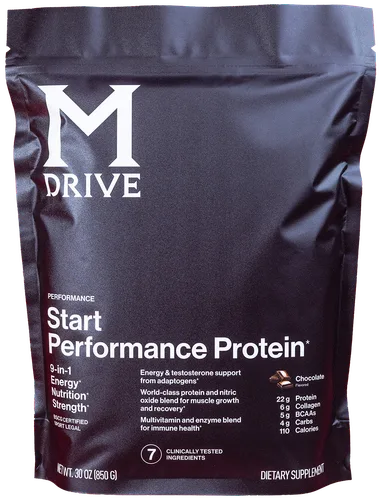
M Drive Mdrive Start Review
Mdrive Start is presented on this DreamBrands product page as a Protein and Elite Everyday Nutrition product. The page headline describes it as an industry best formula with 7 clinically tested ingredients, and it states that the formula provides 6 premium forms of protein. The listed product claims support for energy, T-Levels, lean muscle and recovery, and it includes a multivitamin blend intended for immune health. The page lists the product as a 30 Day Supply with 30 servings, and it is sold at a price of $79.99 with a note that shipping is free on orders over $60 and that the brand offers a satisfaction guarantee. The page shows the product under the default title with a single purchase option. The ingredient list on the page includes ProNativ native whey protein isolate from milk proteins, a Provega vegetable protein blend made from fava, pea, rice and mung bean proteins, and hydrolyzed bovine collagen. Botanical and functional ingredients listed include KSM-66 ashwagandha extract from root, EnXtra alpinia galanga extract from rhizome, and zumXR extended-release caffeine providing 50 mg of caffeine. The formula also lists an S7 blend containing green coffee bean extract, green tea leaf extract, turmeric rhizome extract, tart cherry fruit, blueberry fruit, broccoli head and kale leaf. A DigeZyme enzyme blend containing amylase, protease, cellulase, lactase and lipase is included, along with chromium from Chromax chromium picolinate, a vitamin blend of vitamin C, vitamin E, niacin, vitamin B6, vitamin B12, biotin and pantothenic acid, and cocoa powder for flavour. The page carries a California Proposition 65 warning stating that consuming the product can expose you to lead, which the State of California knows to cause birth defects or other reproductive harm, and it directs readers to the state warnings website for more information. Directions on the page instruct the user to add one scoop to an 8 oz glass of their favorite beverage, with milk, almond, cashew, coconut milk or water all named as options. The page notes that the powder can also be blended into a smoothie or stirred into coffee. The gallery images on the page include the product front, a new look same formula image, a supplement facts panel, a benefits panel, a directions panel and an athlete protein image, which together present the product labelling. The page does not show any customer ratings, star histogram or written reviews, so no review statistics can be drawn from this text. The product is therefore described here only from its marketing copy, ingredient list, directions and warning, and any purchaser should check the full supplement facts panel and label before use. This record should be read as the brand's own description of the product rather than independent evaluation.
We don’t sell supplements. We help you make decisions and get the best price.
Lowest prices
We may earn a commission from some store links. How we choose.
We hold no current store prices for it yet: check the store.
Sold at: DreamBrands · Sprouts
Products with nearly the same formula (Matched on the main ingredients)
Study, Trial or Testing Result Summary
Members Only55 human studies · 31 improved
1 of these 55 human studies gave the ingredient by injection, not by mouth.
The main studied ingredient is ashwagandha root extract at 600 mg, the dose used in trials. In three placebo-controlled trials, healthy men or men with low desire who took 600 mg daily for 8 weeks had better desire, satisfaction, erection scores or sexual function scores than with placebo, with no side effects reported in two of them [1][2][3]. An older trial of root powder in men with erection problems from psychological causes found no benefit over placebo [4]. Alpinia galanga extract is 300 mg per serving, reaching the studied dose only at two servings a day. One small 4-week trial of 500 mg in men with erection problems caused by meds found erection scores rose more than with placebo [5]. Caffeine was not linked to erection problems in large reviews [6][7]. Vitamin E and niacin are present only at trace amounts, far below studied doses [8][9]. Potassium, phosphorus and magnesium are small amounts, and their evidence comes only from diet surveys that cannot show cause [10][11]. Collagen evidence comes from surgery, not supplements [12]. No customer reviews were counted. Animal and cell studies are never counted.
See all 55 studies →Hide the studies
- Pooling 89 population studies of about 348,865 people, caffeine intake was unrelated to erectile dysfunction, though the number of caffeine studies was small and the analysis had low statistical power.Health-Related Lifestyle Factors and Sexual Dysfunction: A Meta-Analysis of Population-Based Research.
- Combining four cohort studies of 51,665 men, coffee or caffeine intake was not significantly linked to the risk of erectile dysfunction, but the small number of studies limits conclusions.Association between caffeine intake and erectile dysfunction: a meta-analysis of cohort studies.
- Pooling 24 trials of 1,643 men with Peyronie's disease, no treatment beat placebo in the main analysis, though a second method found vitamin E 300 mg improved curvature and plaque size.Medical Treatment for Peyronie's Disease: Systematic Review and Network Bayesian Meta-Analysis.
- In 15 trials of 352 kidney disease patients, only sparse data existed for vitamin E, so no conclusions about its effect on sexual function could be drawn.Interventions for treating sexual dysfunction in patients with chronic kidney disease.
- In 935 men with Peyronie's disease and erectile dysfunction across 23 studies, penile prosthesis surgery with grafting (including a collagen fleece) gave excellent results and 80 to 100% satisfaction, with the collagen fleece mainly shortening operating time rather than improving outcomes over other grafts.Penile Prosthesis Implantation Combined With Grafting Techniques in Patients With Peyronie's Disease and Erectile Dysfun…
- A review of 11 randomized trials (472 men, 337 women, 35 couples) found that one trial of niacin 1500 mg daily for 12 weeks significantly improved erectile function, while vitamins A, C and E had no significant effect on sexual function.Effect of vitamins on sexual function: A systematic review.
- In 697 men across 15 studies of penile implant surgery, grafting with collagen fleece helped reduce severe penile curvature, while sexual function gains were linked to a mix of techniques and treatments rather than collagen alone.Perioperative therapies and techniques to enhance penile dimensional and functional outcomes following inflatable penile…
- A review of 41 trials of non-surgical Peyronie's disease treatments found oral options including vitamin E showed evidence of improving curvature and plaque size, but overall results varied with few high-quality trials.A systematic review of non-surgical management in Peyronie's disease.
- A systematic review of animal and human studies concluded that ashwagandha may improve sexual health and some reproductive problems, but the number of people, doses and durations were not given and the authors said more research is needed.Effects of Ashwagandha on Reproductive Health: A Systematic Review of Sex-Specific Hormonal and Fertility Outcomes.
- In 697 adults with mild high blood pressure followed for 6 months, a low-sodium, high-potassium diet was tested alongside meds, and the abstract reports no sexual function benefit from that diet; erection problems worsened mainly with chlorthalidone on a usual diet, and the weight loss diet reduced that effect.Effect of antihypertensives on sexual function and quality of life: the TAIM Study.
- In 236 men with early Peyronie's disease, 300 mg vitamin E twice daily for 6 months did not improve pain, curvature or plaque size more than placebo.Comparison of vitamin E and propionyl-L-carnitine, separately or in combination, in patients with early chronic Peyronie…
- In 164 men with erectile dysfunction, a multi-ingredient supplement containing vitamin E for 3 months improved erectile function scores, and improved them more when combined with daily a med.Read the study on PubMed (38731094) →
- In 160 men with erectile dysfunction and high blood fats, up to 1,500 mg of niacin daily for 12 weeks improved erectile function scores, mainly in men with moderate to severe dysfunction, though the placebo group also improved somewhat.Effect of niacin on erectile function in men suffering erectile dysfunction and dyslipidemia.
- In 100 healthy men aged 30-50 taking 600 mg of ashwagandha root extract daily for 8 weeks, sexual desire, orgasm function, overall sexual satisfaction, semen volume, sperm number and sperm quality improved more than with placebo, with no side effects reported.Efficacy and safety of eight-week therapy with Ashwagandha root extract in improvement of sexual health in healthy men: …
- In 95 men with psychologically caused erectile dysfunction (86 finished), 60 days of ashwagandha root powder gave 12.6% improvement versus 19.11% with placebo, with no significant difference between groups and neither giving meaningful relief.Efficacy of Ashwagandha (Withania somnifera Dunal. Linn.) in the management of psychogenic erectile dysfunction.
- In 76 healthy men aged 30-50 taking 600 mg of ashwagandha root extract daily for 8 weeks, sexual desire, satisfying sexual events and erectile function scores improved more than with placebo, along with semen volume, sperm count and sperm movement, with no side effects reported.Efficacy and safety of ashwagandha root extract on sexual health in healthy Men: a prospective, randomized, double-blind…
- In 62 women with sexual dysfunction, a vitamin E and ginseng supplement for 6 weeks did not beat placebo on total sexual function score, though desire and satisfaction improved more.Vitamin E and ginseng supplementation to enhance female sexual function: a randomized, double-blind, placebo-controlled,…
- In 60 men after penile surgery, vitamin E 100 mg daily as the control for 12 weeks was followed by lower erectile function scores at 3 months, while the vardenafil group improved.[Small-dose vardenafil restores erectile function after penile surgery].
- In 60 men with erectile dysfunction who did not respond to a med, 400 IU of vitamin E daily for 6 weeks raised antioxidant markers and lowered an inflammation marker but did not improve erectile function, unlike a med.Read the study on PubMed (23324897) →
- In 60 men with erectile problems caused by meds, 500 mg of Alpinia galanga extract for 4 weeks raised erectile function scores from 11.2 to 17.4, versus 10.6 to 13.7 with placebo.Read the study on PubMed (37143784) →
- In 52 postmenopausal women, a vitamin E vaginal suppository used for 12 weeks improved sexual function scores about as much as estrogen cream; this study was in women, not men, and had no placebo group.Vitamin E as alternative local treatment in genitourinary syndrome of menopause: a randomized controlled trial.
- In a crossover trial of about 50 reproductive-age people with recurrent urinary infections, a once-daily combination of hyaluronic acid, chondroitin sulfate, N-acetylglucosamine and vitamin C for 3 months improved sexual and urinary scores more than control at 3 months, though scores were similar between groups by 6 months; this was a mixed-sex group scored on a female sexual function index and not a test of vitamin C alone.Oral preparation of hyaluronic acid, chondroitin sulfate, N-acetylglucosamine, and vitamin C improves sexual and urinary…
- In 50 men with low sexual desire, 600 mg of ashwagandha root extract daily for 8 weeks raised sexual function scores and blood testosterone more than placebo, while prolactin did not change.Effect of standardized root extract of ashwagandha (Withania somnifera) on well-being and sexual performance in adult ma…
- In 45 men with early Peyronie's disease and no erectile dysfunction, 600 mg of vitamin E daily plus colchicine for 6 months reduced plaque size and penile curvature more than a med, and 91% had pain relief versus 68% (not a significant difference).Combined treatment with vitamin E and colchicine in the early stages of Peyronie's disease.
- In 40 diabetic men with erectile dysfunction, a daily combination of propionyl-L-carnitine, L-arginine and nicotinic acid for 12 weeks raised erectile function scores by 2 points versus none with placebo, and by 5 points when combined with vardenafil.Effect of propionyl-L-carnitine, L-arginine and nicotinic acid on the efficacy of vardenafil in the treatment of erectil…
- In 39 men with Peyronie's disease and erectile dysfunction, 400 IU of vitamin E daily for 12 weeks did not significantly improve erection scores (IIEF-5), though plaque and pain improved; a med improved erection scores more.Read the study on PubMed (24190613) →
- In 20 men with sexual dysfunction who kept using erectile dysfunction drugs, a drink with 40 mg caffeine plus three other ingredients taken for 14 days improved desire, erection, orgasm, ejaculation and satisfaction scores compared with placebo, with no adverse events.Oral Testofen, L-Citrulline, Resveratrol, and Caffeine Supplement Drink Improves Sexual Function in Men with Phosphodies…
- In 70 men with Peyronie's disease, adding vitamin E to combined treatment for 6 months reduced plaque size more (50.2% vs 35.8%) and improved curvature in 96.6% versus 48.4% of men.Efficacy of vitamin E in the conservative treatment of Peyronie's disease: legend or reality? A controlled study of 70 c…
- In 64 men with metabolic syndrome, adding the Speroton antioxidant complex (which contains vitamin E) to standard care for 6 months improved erectile function and roughly halved oxidative stress markers compared with standard care alone.[The role of antioxidants in the therapy of metabolic syndrome in men].
- In 60 men with long-term bacterial prostate infection and erectile dysfunction, adding physiotherapy that delivers protein-digesting enzymes into the prostate to a med treatment worked better than meds alone, though the abstract gives no numbers.[Combined use of the unit AMUS-01-INTRAMAG and AIR-U-plus device in the treatment of chronic bacterial prostatitis].
- In 207 women with iron deficiency anemia, sexual function scores improved after iron treatment in an uncontrolled before-and-after study, but these were women, not men, and the study did not report a dose or duration.Impact of iron supplementation on sexual dysfunction of women with iron deficiency anemia in short term: a preliminary s…
- In 100 men with secondary erectile dysfunction, an uncontrolled oral tablet containing 33 mg tocopherol acetate (taken three times daily with other ingredients) for 4 weeks led 14% of men to satisfying intercourse and 15% to report increased libido.[Secondary erectile dysfunction. Is oral medication in the diagnostic phase indicated?].
- In an open-label study of 91 men with lifelong premature ejaculation, a daily tablet containing biotin with Rhodiola, folic acid and zinc for 90 days improved ejaculatory control in 60% of men, with few side effects; there was no placebo group, and the biotin dose was not stated.Rhodiola rosea, folic acid, zinc and biotin (EndEP®) is able to improve ejaculatory control in patients affected by life…
- In 69 men with small penis syndrome who completed the study, implanting fibroblast-seeded collagen scaffold increased penile girth over 6 months, and all men kept erectile function scores above 22, with 94% reporting satisfaction.Tissue engineering penoplasty with biodegradable scaffold Maxpol-T cografted autologous fibroblasts for small penis synd…
- In 54 men with erectile dysfunction, three months of a supplement combining propionyl-L-carnitine, L-arginine and niacin improved erections in 40% of them, with a small rise in erectile function scores, in an uncontrolled single-group study.Propionyl-L-carnitine, L-arginine and niacin in sexual medicine: a nutraceutical approach to erectile dysfunction.
- In 38 men with Peyronie's disease and erectile dysfunction, adding oral vitamin E and colchicine to injected medication improved all measures of sexual quality of life over about ten months, and partners were satisfied.Patient-partner satisfaction with intracavernous medication supported with oral agents in selected cases of Peyronie's d…
- In 29 men with Peyronie's disease given 400 units of oral vitamin E twice daily with interferon injections for 10 weeks, adding vitamin E made no significant difference, and sexual function gains were self-reported without a control group.Combined intralesional interferon alpha 2B and oral vitamin E in the treatment of Peyronie's disease.
- In 18 men with erectile dysfunction who did not respond to a med alone and had a gene variant linked to high homocysteine, taking vitamin B6 and folic acid with a med for 6 weeks improved erectile function in 16 of them (88.9%); the study had no placebo group and the effect of vitamin B6 alone cannot be separated from folic acid.Treatment of erectile dysfunction due to C677T mutation of the MTHFR gene with vitamin B6 and folic acid in patients non…
- In 9 men who did not fully respond to a PDE5 inhibitor, adding 300 mg daily of vitamin E for at least one month raised average erection scores from 13.8 to 17.1, and 8 of 9 reported favourable changes, mainly firmer erections.Salvage therapy trial for erectile dysfunction using phosphodiesterase type 5 inhibitors and vitamin E: preliminary repo…
- In a large US survey of 3,745 men, those with higher dietary intake of magnesium, zinc, copper and selenium had a lower prevalence of erectile dysfunction, though this cross-sectional design cannot show cause and effect.Dietary metal intake and the prevalence of erectile dysfunction in US men: Results from National Health and Nutrition Ex…
- In a survey of 3,724 US men, those with moderate daily caffeine intake (about 85 to 303 mg, roughly 2 to 3 cups of coffee) were less likely to report erectile dysfunction than men with the lowest intake.Role of Caffeine Intake on Erectile Dysfunction in US Men: Results from NHANES 2001-2004.
- In a large cross-sectional survey of 3,556 American men, those with the highest dietary phosphorus intake had about a 33% lower odds of erectile dysfunction than those with the lowest intake, though this does not prove cause and effect.Dietary calcium, phosphorus, and potassium intake associated with erectile dysfunction in the National Health and Nutrit…
- In a survey of 3184 US adults, those with the highest dietary niacin intake had about half the odds of erectile dysfunction compared with those with the lowest intake, though this association does not prove cause and effect.Relationship between dietary niacin intake and erectile dysfunction: a population-based study.
- In a cross-sectional study of 1381 men in China, higher vitamin B12 levels were associated with mild erectile dysfunction (odds ratio 1.62), especially in men aged 40 to 49, while folic acid showed no link; no supplementation was given.Association between homocysteine, vitamin B 12 , folic acid and erectile dysfunction: a cross-sectional study in China.
- In a survey of 242 community-dwelling adults aged 60 and older, caffeine use was not identified as a predictor of sexual activity or erectile function in men.Exploring factors associated with sexual activity in community-dwelling older adults.
- In a cross-sectional study of 134 men with erectile dysfunction and 50 healthy men, those with erectile dysfunction had lower vitamin B12 levels (256 versus 337.5) and higher homocysteine, and vitamin B12 was negatively correlated with homocysteine; no supplementation was given.Association between folic acid, homocysteine, vitamin B12 and erectile dysfunction-A cross-sectional study.
- In a retrospective review of 159 men with early-stage Peyronie's disease, a vitamin E 600 mg daily plus colchicine and a med regimen was compared with a shockwave and platelet-rich plasma approach; the shockwave group showed the reported gains in plaque size, curvature and erection scores, and the vitamin E group's own results were not separately reported as improved.A new alternative approach to management of acute phase Peyronie's disease: low intensity extracorporeal shockwave thera…
- In a cross-sectional study of 136 men without other known causes of erectile dysfunction, vitamin B12 levels showed no significant link to sexual function scores (15.3 in low-B12 men versus 16.1 in normal-B12 men); no supplementation was given.Correlation between erectile dysfunction and serum B12 levels: a 136-case cross-sectional analysis.
- In a cross-sectional study of 84 men with erectile dysfunction and 42 healthy men, those with erectile dysfunction had lower vitamin B12 levels (195 versus 338) and higher homocysteine; no supplementation was given.Association between erectile dysfunction and Helicobacter pylori, folic acid, vitamin B12, and homocysteine: a cross-sec…
- In a case-control study of 109 men, those with premature ejaculation had lower vitamin B12 blood levels (213 versus 266 ng/ml) than controls, and lower levels correlated with shorter ejaculation time; no supplementation was given.Relation between blood vitamin B12 levels with premature ejaculation: case-control study.
- In 51 male dialysis patients, those taking iron had lower erectile function scores, but this was a cross-sectional association and no dose or duration was reported.Dialysis modality and sexual dysfunction in male patients.
- In 19 men with Peyronie's disease, covering surgical defects with a collagen fleece and tissue sealant closed the tunica well, none developed erectile dysfunction afterward, and penile deviation improved over about 25 months of follow-up.Collagen fleece for defect coverage following plaque excision in patients with Peyronie's disease.
- In men aged 35 to 70 attending primary care clinics in Pakistan, Egypt, and Nigeria, caffeine consumption was linked to a higher prevalence of erectile dysfunction.Prevalence of erectile dysfunction and its correlates among men attending primary care clinics in three countries: Pakis…
- In 120 men with early Peyronie's disease, combining several antioxidants including vitamin E, with more agents giving greater effect, improved penile pain, plaque size, curvature and erectile function over 6 months; vitamin E was not tested alone.Rationale of combination therapy with antioxidants in medical management of Peyronie's disease: results of clinical appl…
- Using genetic data as a Mendelian randomization analysis plus a meta-analysis, genetically predicted coffee or caffeine intake was not associated with erectile dysfunction risk.Potential genetic association between coffee/caffeine consumption and erectile dysfunction: a Mendelian randomization st…
Review Totals and Summary
Members Only129 reviews
The review text I could reach was limited, so these themes are tentative. They come from the retailer framing and one third-party review roundup of the Mdrive line, not from a broad sample of individual reviews. That roundup reports that the Mdrive line is well regarded by buyers and describes it as a budget-friendly option. It also says the range is built around testosterone and performance support for men over 30. For Start specifically, the themes that the marketing and brand pages point to are convenience and an "all-in-one" morning routine. People who want one scoop to replace a separate protein powder, pre-workout and multivitamin are the main audience. The inclusion of digestive enzymes and extended-release caffeine suggests that buyers expect steady energy and a shake that is easy on the stomach. I did not find verified customer quotes confirming that these claims hold up. Several concerns are common for products of this type, and I could not confirm any of them from Start reviews. They are the price, since $79.99 for 30 servings is expensive compared with plain protein powders, and the taste and texture of chocolate plant-and-whey blends. They also include the caffeine content for people who are sensitive to it, and whether the adaptogens produce noticeable effects. For these points I found no review text to cite. I did not find customer feedback on how Start performs over time, such as muscle gain, energy or stress. Anyone deciding on this product should read the current Amazon and DreamBrands review sections directly. They should look in particular at comments on taste, mixability, digestion, jitters and value.
Biohacker Summary
Members Only9 of 10 recommend it
Ashwagandha is the main ingredient, and most of the panel backs it: five recommend it, one uses it, and the other four are neutral but describe the evidence in a favorable light. People take it mainly to lower cortisol and stress, improve sleep, ease anxiety, and support resilience during hard training, with one also pointing to testosterone. On dose, one suggests 250 milligrams a day over time, while another says studies mostly use 400 to 600 milligrams a day for at least 6 weeks; one advises choosing a standardized extract, with another naming two specific extract types. One panelist notes that the sleep evidence still lacks detailed sleep-lab data. Magnesium is a smaller ingredient in this product, and several panelists use it for sleep, with one cautioning that supplement labels can make the dose look larger than it is.
See all 10 biohackers →Hide the biohackers
Thomas DeLauer · Ashwagandha · recommends
- Recommends ashwagandha, but only after establishing proper cortisol patterns, as it helps the testosterone-cortisol axis by removing cortisol-mediated suppression of testosterone.
- Recommends considering vitamin C as a mast cell stabilizer.
- Recommends pre-bed magnesium glycinate to lower evening cortisol through GABA-A support and to drop core temperature for sleep onset.
- Recommends whole food vitamin C, found in kiwi fruit, citrus, and bell peppers, to help clear uric acid by competing at kidney transporters, preventing reabsorption.
- Recommends taking magnesium glycinate and threonate at night to act as a brake on the nervous system, block excitatory signaling, help wind down, and support serotonin and melatonin production for better sleep.
- Recommends taking a low dose of caffeine later in the morning, around 7 or 8 a.m., after cortisol has settled and adenosine has started to build, to maximize its effect on blocking fatigue.
- Recommends taking collagen peptides in the morning for tendon tensile effects and 5 or 10 grams at night before bed to couple with the body's natural growth hormone pulse for skin and connective tissue repair.
- Mentions that magnesium glycinate also helps a lot with sleep.
- Would consume more caffeine throughout the day to mobilize fat, emphasizing the importance of combining it with activity to oxidize the mobilized fat.
- If you can wait for your cortisol levels to play out, call it 30-60 minutes, then the caffeine is actually going to land when adenosine is reasserting and cortisol is falling, and you're going to get so much more out of your caffeine.
- Would add more collagen to his protein shakes, believing it helps connective tissue protein synthesis and works synergistically with whey protein for muscle protein synthesis.
- Mentions that restless leg syndrome is often treated with magnesium, but states that the sensation is actually coming from three other issues.
- Recommends Element electrolytes, noting they are focused on sodium first, then potassium, then magnesium, helping with sending signals and hydrating tissue.
- Recommends giving any iron intervention a couple of months before deciding if it works, and suggests increasing heme iron through red meat or liver intake.
Dr. Mark Hyman · Ashwagandha · recommends
- Lists ashwagandha as an herb that can help lower anxiety or depression symptoms.
- Recommends Magnesium Breakthrough Advanced 10 from Biooptimizers, stating it has 10 bioavailable forms and 550 milligrams of elemental magnesium, designed to support restful sleep, restorative sleep, muscle recovery, stress resilience, and metabolic health.
- Recommends magnesium breakthrough advanced ten from Biooptimizers, which is their most complete magnesium formula with 10 bioavailable forms and 550 milligrams of elemental magnesium, designed to support restful restorative sleep, muscle recovery, stress resilience, and metabolic health.
- Recommends considering magnesium glycinate before bed for nervous system support, deeper sleep quality, and to help the body transition into rest, and states that they take it every night.
- Explains that a lack of magnesium can cause muscles and nerves to malfunction, resulting in muscle weakness, twitching, and cramps.
- States that iron helps red blood cells carry oxygen, and a deficiency can make one feel like they are running on low power mode.
- Recommends Magnesium Breakthrough Advanced 10 from Bioptimizers for restful sleep, muscle recovery, stress resilience, and metabolic health, especially during stressful times of the year.
- Mentions iron as an existing biomarker that plays a role in mental health, which Function Health includes in their measurements.
- Warns that potassium bromate, a dough conditioner banned in the EU, UK, and Canada, is still allowed in U.S. bread.
- Recommends magnesium because it is involved in over 600 reactions in the body and up to 80% of people may have low levels that never get flagged on a standard blood test.
- Recommends magnesium as a basic supplement during detoxification to support pathways, help with constipation, and provide electrolytes.
- Recommends vitamin C as a basic supplement during detoxification to help with inflammation and detoxification.
- Recommends Magnesium Breakthrough Advanced 10 from Biooptimizers, which contains 10 bioavailable forms and 550 mg of elemental magnesium, to support restful sleep, restorative sleep, muscle recovery, stress resilience, and metabolic health.
- Dr. Hyman mentions vitamin C as an advanced therapy for skin repair.
Dr. Eric Berg · Ashwagandha · recommends
- Recommends ashwagandha, suggesting 250 milligrams per day over time to increase stress tolerance and help the cortisol receptor.
- Dr. Berg states that Vitamin E helps maintain healthy skin, support cell repair, and protect against oxidative damage.
- Dr. Eric Berg states that adding collagen to one's daily routine may help support joint health, skin elasticity, and connective tissue strength.
- States that taking collagen in the morning does not significantly raise blood sugars or insulin, so it does not break a fast.
- Notes that Italian pasta isn't enriched with iron, suggesting that enrichment with iron might be a negative factor.
- Criticizes the mainstream limit of 99 milligrams for potassium supplements, stating it's based on a weak 1972 study that incorrectly attributed problems to potassium chloride instead of a med.
- Recommends supplementing magnesium during prolonged fasting to prevent feeling unwell, especially since many individuals are already deficient.
- Recommends taking magnesium glycinate to fix intense leg cramps, stating that this form absorbs better and helps relax muscles.
- Recommends magnesium, specifically magnesium glycinate, for blood pressure control, sleep, stress reduction, prevention of muscle cramps, and energy support.
- Notes that collagen powder is a peptide that supports joints.
- States that collagen supports the arteries, preventing them from getting stiff or brittle.
- Lists phosphorus as an ingredient found in sardines.
- Mentions that one can of sardines provides 348% of the daily Vitamin B12.
- States that one can of sardines contains 382 mg of calcium.
Siim Land · Ashwagandha · recommends
- Recommends Ashwagandha for stress, sleep and performance, based primarily on human research, especially randomized controlled trials showing measurable benefits.
- Warns that if one is trying to get more deep sleep, they should stop consuming caffeine earlier in the day, and potentially try consuming no caffeine at all, as 400 mg of caffeine 4 hours before bed reduced deep sleep by approximately 30 minutes.
- Discusses Vitamin C as one of the most important vitamins for staying healthy and aging well, supporting collagen synthesis, skin health, immunity, antioxidant defense, and tissue repair. They also mention that a deficiency could contribute to atherosclerosis and scarring of blood vessels.
- Recommends taking vitamin C with collagen to support joint collagen synthesis.
- Recommends taking Collagen 1 hour before exercise with vitamin C to support joint collagen synthesis.
- Recommends stopping caffeine earlier to improve sleep.
- States that Magnesium can be a useful addition for some people for sleep.
- Notes that polyphenolic compounds in coffee, both decaf and regular caffeinated, can influence cellular stress pathways and have been seen to increase autophagy activity in mice, with regular coffee appearing more potent due to caffeine's additional energetic stress.
- States that vitamin C is needed for initiating collagen synthesis and that higher vitamin C intake appears to increase vitamin C content in the skin.
- Mentions that iron is a mineral necessary for making collagen.
- Recommends moving caffeine intake earlier in the day because having it too late can disrupt sleep, especially for slow metabolizers.
- Recommends not having caffeine after lunch, noting that 400 mg 4 hours before bed reduced deep sleep by approximately 30 minutes in a trial, although he personally has a fast caffeine metabolism.
- Recommends magnesium for sleep, especially deep sleep, and suggests trying better types like Threonate, Biscinate, or Torate, referencing a study where magnesium supplementation improved deep sleep.
- Recommends Collagen for joints, skin and connective tissue, based primarily on human research, especially randomized controlled trials showing measurable benefits.
Ben Greenfield · Ashwagandha · neutral
- Ashwagandha, taken as 120–1,000 mg for at least 6 weeks, with most studies providing a dose of 400–600 mg/d, can lower cortisol levels, improve sleep quality, and enhance cognitive resilience for athletes during challenging phases consisting of high-volume resistance training.
- Uses magnesium during surgery because it is neuroprotective.
- Mentions a recent study showing no significant increase in bleeding for patients on Vitamin E supplementation during open heart surgery, which was interesting for him to learn.
- States that vitamin C is extremely important for collagen turnover and cites orthopedic data showing that 500 mg to 1 g of vitamin C can reduce the rate of complex regional pain in total knee replacements and wrist fractures.
- Came off caffeine for a year after his separation.
- Quit caffeine in the same year he quit testosterone replacement therapy and alcohol.
- Says he is drinking LMNT, which contains sodium, potassium, and magnesium, and states that he actually drinks this stuff.
- Uses caffeine, such as coffee or green tea, in his morning fasted fat-burning session to slightly increase the oxidation of fats.
- Mentions that two separate meta-analyses found real improvement in skin elasticity when people consumed 2.5 to 5 g of collagen peptides a day for eight weeks.
- Recommends 2.5 to 5 grams a day of hydrolyzed collagen peptides for at least 8 weeks to improve skin elasticity and address sagging skin.
- Says he is drinking LMNT, which contains sodium, potassium, and magnesium, and states that he actually drinks this stuff.
- Advises against relying on caffeine for morning energy, suggesting that natural sugar-based stimulants combined with hydration and meditation can provide sufficient wakefulness.
- Mentions magnesium as part of a bare-minimum protocol.
- Advises getting red blood cell magnesium levels to the high end of the range as a minimum step for overall health and to slow down heart disease.
Dave Asprey · Ashwagandha · neutral
- Dave Asprey notes that ashwagandha, when taken as a real standardized extract at a real dose, genuinely lowers cortisol and shows effects on stress and sleep quality in randomized trials, but lacks polysomnography data.
- Takes D3 with K2 through Vitamin DAKE from Suppgrade Labs.
- Host Dave Asprey explores caffeine's effects on cardiovascular function, adenosine signaling, and inflammation, explaining why individualized responses matter more than blanket dietary restrictions.
- States that no one used collagen for health; it was previously used as a packing aid for pills.
- Looks at magnesium alongside protein to keep muscle for the long run.
- Suggests adding magnesium to help keep potassium in the system longer, as they work hand in hand.
- Mentions that most places put in extra biotin for hair growth, suggesting it's not always necessary or beneficial.
- Explains that potassium helps open a gate, allowing creatine to slip through and cross the blood-brain barrier more effectively.
- Recounts a doctor telling him in his 20s that vitamin C would kill him.
- Loves coffee, has the caffeine molecule tattooed on his arm, drinks it every morning, and says it does amazing things for your brain and for how long you can live, but it can't clear most brain fog on its own.
- Mentions magnesium in the context of sleep but states that it doesn't address the core issue of waking up during the night.
- States he made collagen into a billion-dollar industry because he needed it for his joints due to Ehlers-Danlos syndrome.
- Suggests that magnesium may help slow aging, support cellular repair, and improve sleep.
- Recommends taking collagen for better skin health.
Peter Attia · Ashwagandha · neutral
- Peter reviews the evidence for select off-label medications and supplements commonly used for sleep, including glycine, magnesium, ashwagandha, and phosphatidylserine.
- States there is some evidence that increasing dietary potassium through potassium-rich foods like bananas and potatoes, rather than supplements, can lower blood pressure.
- States that he needs two to three times the normal dose of any medication or drug to feel an effect, including caffeine, and can drink four cups of coffee without feeling anything.
- Peter reviews the evidence for select off-label medications and supplements commonly used for sleep, including glycine, magnesium, ashwagandha, and phosphatidylserine.
- Mentions data suggesting caffeine might be more helpful in the luteal phase to help with fatigue components.
- Suggests that zinc and magnesium could potentially help with vasodilation and sleep, particularly for women experiencing severe symptoms in the luteal phase.
- Uses caffeine in combination with Alpha GPC, MCT, and Theanine, often adding it to coffee for long periods of cognitive work.
- Finds Alpha GPC works well with caffeine, and he puts a product containing Alpha GPC, MCT, and caffeine into his coffee for long periods of cognitive work.
- Finds ashwagandha a little bit helpful for sleep, though notes it may not be for everyone.
- Finds ashwagandha "a little bit helpful" for sleep, but notes that it may not be for everyone.
- Peter discusses electrolytes and fiber and the ketogenic diet, specifically preventing magnesium loss.
- Recommends magnesium as one of the 'big three' micronutrients for bone health, suggesting a daily intake of 300 to 500 milligrams as a minimum, and personally aims for about a gram of supplemental magnesium.
- Recommends calcium as one of the 'big three' micronutrients for bone health, suggesting a daily intake of 1,000 to 1,200 milligrams, which can be supplemented with calcium carbonate or calcium citrate.
- Recommends magnesium for optimizing bone mineral density, suggesting a daily intake of 300 to 500 milligrams as a minimum, but personally aims for about a gram.
Andrew Huberman · Ashwagandha · recommends
- He shares science-based tools for modulating aggression, including supplementation with ashwagandha.
- Notes that Les Spellman's team includes 'Magnesium timed right' as part of their game plan to optimize recovery in unfavorable conditions.
- Used caffeine, taking 400 milligrams, to improve his mood and physical vigor during mundane tasks like swimming, noting that it made life not so bad and allowed him to rip through the water.
- Mentions caffeine in a discussion about supplement use.
- Discusses Magnesium Threonate as a tool for falling asleep.
- Discusses caffeine timing as a tool related to sleep.
- He recommends caffeine, in coffee or tea form, or in tablet or capsule form at lower dosages than found in coffee and tea, as a reasonable way to explore stimulant-based approaches for enhancing cognitive function and focus.
- Huberman states that caffeine can improve focus and concentration, with a general useful range of 100 to 400 milligrams, and most people do well with 100 to 200 milligrams prior to focused work.
- Discusses caffeine as a tool for improving attention, noting its impact on focus and sleep.
- Mentions that coffee and tea produce caffeine, which were likely defense chemicals, and that plants learned it was better to alter consciousness than kill predators outright.
- Discusses caffeine and its health benefits.
- Takes 400 mg of Magnesium Threonate before bed for sleep.
- Takes 10 grams of Collagen in the morning for muscle.
- Recommends caffeine as a tool to increase motivation and dopamine.
Dr. Rhonda Patrick · Ashwagandha · recommends
- Recommends Ashwagandha supplementation, specifically standardized for withanolides (KSM-66 at 5% or Sensoril at 10%), to indirectly boost testosterone by reducing cortisol levels, and also to improve anxiety, stress resilience, and sleep quality.
- Explains that while heme iron is essential at low levels, too much is very pro-inflammatory and pro-oxidant, damaging the pancreas and beta cells that produce insulin, and is linked to type 2 diabetes.
- Notes that scientists discovered vitamin C as the nutrient for scurvy.
- Mentions that scientists figured out that niacin was the nutrient for pelagra.
- Explains that magnesium helps the body activate and metabolize vitamin D, and that magnesium intake has been associated with lower odds of vitamin D deficiency and insufficiency.
- Mentions that getting too little magnesium may play a role in declining testosterone levels.
- Recommends getting enough magnesium, around 300–400 mg daily from diet and supplements, as it is an essential cofactor for vitamin D metabolism. Magnesium glycinate is a good form.
- Notes that magnesium is very important for preventing damage to DNA and cancer, and that half the US population doesn't get enough of it.
- Mentions magnesium as one of the micronutrients found in multivitamins that people often don't get enough of from their diets.
- Explains that magnesium helps control blood pressure by boosting the production of substances that relax blood vessels and improve cardiovascular health, citing a meta-analysis that found magnesium supplementation at an average dose of 368 mg per day notably lowers both systolic and diastolic blood pressure.
- Magnesium supplementation has lowered blood pressure in randomized controlled trials. An analysis of 34 trials involving over 2,000 participants found modest reductions in both systolic and diastolic pressure, with a median dose of 368 mg/day.
- Explains that caffeine can activate AMPK, a cellular energy sensor involved in fat burning and glucose regulation, which helps muscle cells take up glucose and promotes using fatty acids for energy.
- Warns that some magnesium supplements make the dose look much larger than it really is and that labels can fool people.
- Recommends pairing caffeine with L-theanine to enhance alertness and focus while mitigating anxiety and jitteriness, suggesting a dose of 100 to 150 mg of caffeine.
Bryan Johnson · Ashwagandha · uses
- Drinks his Blueprint longevity mix with additional morning supplements, including ashwagandha.
- Takes 10 grams of Collagen in the morning for muscle.
- Takes 400 mg of Magnesium Threonate before bed for sleep.
- Bryan Johnson states that he eats collagen peptides.
- Takes 10 grams of Collagen in the morning for muscle.
- Takes 400 mg of Magnesium Threonate before bed for sleep.
- Drinks coffee when starting to fade, ensuring the last cup is between 10 and 12 hours before bed so caffeine doesn't affect sleep.
- Takes 400 mg of Magnesium L-Threonate before bed for sleep.
- Consumes collagen peptides at 4:55 am.
- Has had low iron for 11 years and despite eating meat and trying all forms of iron supplementation at different times and sequences, none of it worked to raise his iron or ferritin levels.
- Had low iron for 11 years, with ferritin averaging 38 ng/mL, and has finally boosted it back to healthy levels.
- Uses collagen peptides as an ingredient in Nutty Pudding.
- Used 300 mg of caffeine in the morning as part of their jet lag recovery.
- Uses 300 mg of slow release caffeine in the morning as part of a jet lag recovery protocol.
RAL Summary
Members OnlyTier 4 for Sexual Health for Men
Ashwagandha at the full studied dose has placebo-controlled trials showing better sexual function in men, but with no counted reviews the product cannot rise above emerging. The rules' note citing potassium points to a trace mineral with only survey data, yet the tier stands either way.
Take 2 servings a day to match the dose that worked in the studies.
- Emerging: not enough evidence to rank higher yet.
Where the evidence disagrees: 20 of the 55 human studies found no effect.
More Details
Members OnlyBody systems · Combine with · Possible side effects
Body systems: Reproductive system, Endocrine system, Nervous system, Digestive system, Musculoskeletal system
Combine with: Because the exact formula is not identified, stacking should be conservative. For male vitality, products like this are commonly paired with zinc, magnesium, vitamin D3, and omega-3 fatty acids to support testosterone and cardiovascular health. Ashwagandha (KSM-66) can add stress and hormone support, and L-citrulline or L-arginine can support nitric oxide and blood flow. If the real goal is blood sugar support, consider a separate targeted product with berberine, chromium picolinate, alpha-lipoic acid, or Ceylon cinnamon, and consult a healthcare provider, especially if taking meds.
Possible side effects: No major side effects reported.
Supplement Facts
Includes <1 g added sugars 0 · Vitamin C 90 mg · Vitamin E 15 mg
| Calories | 110 | |
| Total Fat | 1 g | |
| Total Carbohydrate | 4 g | |
| Dietary Fiber | 1 g | |
| Total Sugars | 1 g | |
| Includes <1 g added sugars | ||
| Protein | 22 g | |
| Vitamin C | 90 mg | |
| Vitamin E | 15 mg | |
| Niacin | 16 mg | |
| Vitamin B6 | 1.7 mg | |
| Vitamin B12 | 2.4 mcg | |
| Biotin | 30 mcg | |
| Pantothenic Acid | 5 mg | |
| Calcium | 80 mg | |
| Iron | 1.4 mg | |
| Phosphorus | 50 mg | |
| Magnesium | 20 mg | |
| Chromium | 200 mcg | |
| Sodium | 40 mg | |
| Potassium | 100 mg | |
| ProNativ Native Whey Protein Isolate | 14 g | † |
| Hydrolyzed Bovine Collagen | 6 g | † |
| VegiZest Vegetable Protein Blend | 5 g | † |
| KSM-66 Ashwagandha Extract | 600 mg | † |
| enXtra (Alpinia galanga extract) | 300 mg | † |
| DigeZyme Enzyme Blend | 100 mg | † |
| zumXR Extended Release Caffeine | 70 mg | † |
| S7 | 50 mg | † |
Other ingredients: Cocoa Powder, Natural Flavors, Xanthan Gum, Sunflower Lecithin, Stevia Glycoside (Rebaudioside M).
Directions: Add one scoop to an 8 oz. glass of your favorite beverage: milk, almond, cashew, coconut milk or water. Can also be added to a smoothie or used in coffee.
Barcode (UPC) 852388001519 · Label source: Reverseagelab · Report a label change
Show entire label

More sexual health for men products
Members OnlyThe highest ranked for the same goal
Read more
Our articles on this subject
- How to Lower Blood Pressure NaturallyArticle · Jun 27, 2026
- How to Lower Diastolic Blood Pressure for LongevityArticle · Sep 17, 2026
Graded November 5, 2026 by the Reverse Age Lab evidence engine, from human studies, real reviews and our biohacker panel. How we grade. Is this medical advice? No. Rala organizes the published evidence; go over any change with your doctor, especially if you take meds.
Privacy policyConsumer health dataAffiliate disclosureTermsBrand and legal noticesDo Not Sell or Share My Personal InformationCookie settings