
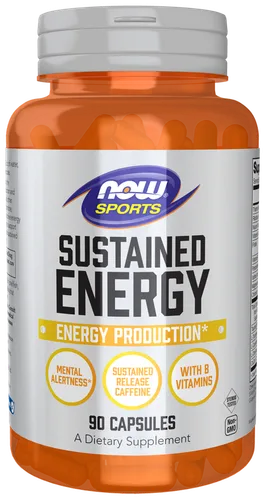
now foods Sustained Energy Capsules Review
NOW Foods Sustained Energy is a capsule supplement. A serving is 2 capsules, and each container holds 45 servings. The label lists these main ingredients per serving: Total Caffeine 120 mg, Taurine 250 mg, L-Tyrosine 250 mg, L-Carnitine 250 mg, L-Citrulline 100 mg and CoQ10 30 mg. It also carries B vitamins: Thiamin 10 mg, Riboflavin 10 mg, Niacin 20 mg, Vitamin B-6 10 mg, Folate 680 mcg DFE, Vitamin B-12 1000 mcg and Pantothenic Acid 20 mg. Minerals listed are Iodine 150 mcg, Magnesium 15 mg and Chromium (Albion) 200 mcg. Other ingredients are hypromellose (cellulose capsule), stearic acid (vegetable source), silicon dioxide, non-GMO maltodextrin, microcrystalline cellulose, pharmaceutical glaze and hypromellose. Directions as printed: take 2 capsules daily with 8 to 12 oz. of water, preferably with a meal. Do not exceed the recommended dose. Buyers most often say it gives them a steady lift in energy, especially in the afternoon, and many mention good quality. A few say they noticed little or no effect.
We don’t sell supplements. We help you make decisions and get the best price.
Lowest prices
Lowest cost per month first, in stock, at 2 capsules a day. Checked Nov 24.
- VitacostLowest$16.52 a bottle of 90 capsules$11.01/moBuy at Vitacost (opens in a new tab)
- Target$20.99 a bottle of 90 capsules$13.99/moBuy at Target (opens in a new tab)
- now foods$29.99 a bottle of 90 capsules$19.99/moBuy at now foods (opens in a new tab)
- AmazonPrice at AmazonCheck price at Amazon (opens in a new tab)
Also at: iHerb
Some store links earn us a commission.
Products with nearly the same formula (Matched on the main ingredients)
Study, Trial or Testing Result Summary
Members Only386 human studies · 182 improved
11 of these 386 human studies gave the ingredient by drip or injection, not by mouth.
The best support for energy in this formula comes from caffeine, which is at a full dose. Reviews and trials found low to moderate caffeine improved self-reported energy, mood and attention [1], and a single 86 milligram dose raised energetic mood [2]. Taken daily for several weeks, caffeine did not change fatigue. Coenzyme Q10 reaches a studied dose at two servings a day. A pooled analysis of 13 placebo-controlled trials found it reduced fatigue more than placebo [3], though a breast cancer trial found no benefit [4]. Taurine reaches a studied dose only at four servings a day, where a pooled analysis found a modest gain in endurance [5]. L-carnitine also needs four servings; it reduced fatigue in older people [6] but not in cancer patients [7]. Magnesium is below the studied dose, and citrulline is only a trace amount. The B vitamins mostly did not ease fatigue in people who were not low in them [8][9], though thiamin helped older women with a mild deficiency [10]. Tyrosine showed no effect on fatigue in one small study [11], and chromium showed no benefit in two small trials [12]. Animal and cell studies are never counted.
See all 386 studies →Hide the studies
- In a pooled analysis of 117 trials in 19,819 cancer patients, six trials tested L-carnitine for fatigue, but only erythropoietin and methylphenidate were reported to reduce fatigue significantly.Pharmacologic interventions for fatigue in cancer and transplantation: a meta-analysis.
- Across 16 trials with 6276 people, B12 with or without folic acid and B6 did not improve thinking or depression, and only one trial looked at fatigue so it could not be analyzed.Effects of Vitamin B12 Supplementation on Cognitive Function, Depressive Symptoms, and Fatigue: A Systematic Review, Met…
- Across 27 studies of 1,599 adults, NAD+ precursors did not improve perceived fatigue or sleep, but nicotinamide mononucleotide improved endurance and NADH improved cognitive performance.Domain-specific effects of NAD+ precursors on fatigue and functional performance: a systematic review and network meta-a…
- In 16 studies of 616 people with multiple sclerosis and 655 healthy people, folate and B12 blood levels did not differ, suggesting they are not drivers of worse physical function; this was not a supplement trial.The Relationship of Cobalamin and/or Folate to the Patient-Centred Outcomes in Multiple Sclerosis: A Systematic Review a…
- Across 13 placebo-controlled trials with 1,126 people, coenzyme Q10 reduced fatigue scores more than placebo, with larger doses and longer use linked to bigger reductions.Effectiveness of Coenzyme Q10 Supplementation for Reducing Fatigue: A Systematic Review and Meta-Analysis of Randomized …
- In 11 trials of 723 people with multiple sclerosis fatigue, amantadine worked but only two small studies hinted that carnitine might help similarly, so the evidence for carnitine is weak.Pharmacological treatments for fatigue in patients with multiple sclerosis: A systematic review and meta-analysis.
- In 12 placebo-controlled trials with 575 a med users, coenzyme Q10 reduced muscle pain, weakness, cramps and tiredness compared with placebo, but did not change blood creatine kinase.Read the study on PubMed (30371340) →
- In a meta-analysis of 21 trials involving 254 recreational and trained runners, acute intake of 3 to 9 milligrams per kilogram of caffeine improved running time to exhaustion and reduced the time needed to complete endurance running time trials compared to placebo.Effects of Caffeine Intake on Endurance Running Performance and Time to Exhaustion: A Systematic Review and Meta-Analysi…
- Across 11 trials with 234 participants, taking caffeine combined with taurine improved time to exhaustion, increased peak anaerobic power, and reduced perceived exertion compared to placebo.Effects of Caffeine-Taurine Co-Supplementation on Exercise Performance: A Systematic Review and Meta-Analysis.
- Across nine trials with 158 young healthy adults, a single dose of citrulline did not improve time to exhaustion or time to finish endurance exercise compared with a control.Effects of citrulline on endurance performance in young healthy adults: a systematic review and meta-analysis.
- Across eight trials with 137 people, 6-8 g of citrulline malate taken before strength training increased repetitions by about 6% compared with placebo, a small effect.Acute Effect of Citrulline Malate on Repetition Performance During Strength Training: A Systematic Review and Meta-Analy…
- A meta-analysis of 40 double-blind studies found that caffeine ingestion improved overall exercise test outcomes by 12.3 percent compared to placebo, especially during endurance and time-to-exhaustion tests.Effects of caffeine ingestion on exercise testing: a meta-analysis.
- A review of 13 crossover studies found that taking a low to moderate dose of caffeine before or during exercise improved attention, accuracy, speed, mood, and self-reported energy compared to placebo.Caffeine and Cognitive Functions in Sports: A Systematic Review and Meta-Analysis.
- In a review of 55 trials on combat sports, taking 5 to 10 milligrams per kilogram of caffeine improved energy production, time to exhaustion, power, handgrip strength, reaction time, and the number of attacks.Nutritional Ergogenic Aids in Combat Sports: A Systematic Review and Meta-Analysis.
- Across 10 studies, taurine alone at 1-6 g (single dose or up to 2 weeks) modestly improved endurance performance, with no difference by dose or duration.The Effects of an Oral Taurine Dose and Supplementation Period on Endurance Exercise Performance in Humans: A Meta-Analy…
- In a review of 12 studies of cancer-related fatigue, eight reported less fatigue, but the three higher-quality studies pooled together showed no significant benefit from carnitine.Efficacy and Effectiveness of Carnitine Supplementation for Cancer-Related Fatigue: A Systematic Literature Review and M…
- In three trials of foods rich in citrulline (part of a 118-study review), there was no effect on endurance exercise performance.Effect of food sources of nitrate, polyphenols, L-arginine and L-citrulline on endurance exercise performance: a systema…
- In a review of 55 trials of chronic fatigue syndrome with 6,316 people, a coenzyme Q10 plus NADH combination was one of eight treatments with a significant effect, but no treatment was clearly effective and reproducible.Systematic review of randomized controlled trials for chronic fatigue syndrome/myalgic encephalomyelitis (CFS/ME).
- Across 52 trials of 3398 dialysis patients, L-carnitine made little or no difference to fatigue scores, though it may have slightly raised haemoglobin and mental quality of life scores.Carnitine supplements for people with chronic kidney disease requiring dialysis.
- A review of 26 trials in 3,273 people with chronic fatigue syndrome found most supplements did not help, but magnesium and NADH showed benefit, though the trials were small and at high risk of bias.Complementary and alternative medicine for patients with chronic fatigue syndrome: a systematic review.
- A review of eight studies in 932 women with breast cancer listed acetyl-L-carnitine among the supplements that improved fatigue, along with guarana and coenzyme Q10.Dietary supplements and fatigue in patients with breast cancer: a systematic review.
- A review of 14 studies in 809 people with chronic fatigue syndrome found L-carnitine-based treatment reduced fatigue, but small studies and high risk of bias prevent firm conclusions.Dietary Supplementation for Fatigue Symptoms in Myalgic Encephalomyelitis/Chronic Fatigue Syndrome (ME/CFS)-A Systematic…
- In 10 trials of 489 people, NADH was well tolerated and linked to better quality of life, less anxiety and lower heart rate after stress, but fatigue results were not clearly shown.Evaluation of safety and effectiveness of NAD in different clinical conditions: a systematic review.
- In 20 studies of 483 people with rheumatic diseases, most fibromyalgia patients taking coenzyme Q10 had less pain and fatigue and better sleep and mood, and it was well tolerated.Coenzyme Q10 supplementation in rheumatic diseases: A systematic review.
- In a review of seven studies in 455 people with lingering hypothyroid symptoms, a placebo-controlled L-carnitine trial showed inconsistent symptom improvement, with ginger and surgery showing the largest fatigue gains.Interventions to improve symptomatology in patients with hypothyroidism and persistent symptoms: A systematic review.
- In six studies of 195 people with multiple sclerosis, 200 mg a day over 2-3 months gave unclear results, while 500 mg a day improved oxidative stress, inflammation, depression and fatigue.Coenzyme Q10 supplementation in multiple sclerosis; A systematic review.
- In a review of 13 small trials with 85 people with McArdle disease, vitamin B6 gave no benefit for exercise performance.Pharmacological and nutritional treatment for McArdle disease (Glycogen Storage Disease type V).
- A review of 14 reviews found oral niacin and nicotinamide can cause side effects including fatigue, stomach upset, flushing and liver problems, more often at higher doses and with niacin than nicotinamide.The adverse effects of oral niacin/nicotinamide - an overview of reviews.
- In a review of four diet trials in people with multiple sclerosis lasting 3 to 12 months, two diets supplying enough folate and magnesium reported improved fatigue, but firm conclusions were not possible.Is there an effect of dietary intake on MS-related fatigue? - A systematic literature review.
- A systematic review of 23 articles examining beetroot juice for endurance in athletes noted that its positive effects on cardiorespiratory endurance could potentially be undermined when combined with caffeine.Effects of Beetroot Juice Supplementation on Cardiorespiratory Endurance in Athletes. A Systematic Review.
- In a systematic review of 12 randomized controlled studies, consuming energy drinks with alcohol counteracted alcohol-related fatigue, weakness, and simple cognitive deficits, though it increased impulsivity.Acute impact of caffeinated alcoholic beverages on cognition: A systematic review.
- In a systematic review of 17 studies, caffeine consistently improved marksman reaction time and showed some evidence of reducing fatigue-related accuracy declines, though it did not improve overall marksmanship accuracy.The effects of caffeine on marksmanship accuracy and reaction time: a systematic review.
- A review of 16 studies found that shift workers frequently consume caffeine as a fatigue-management strategy, though this practice conflicts with standard sleep hygiene recommendations.Sleep hygiene in shift workers: A systematic literature review.
- In a review of 33 studies on countermeasures against mental fatigue, taking caffeine before a mentally fatiguing task was found to be one of the most promising interventions to combat mental fatigue compared to control or placebo.How to Tackle Mental Fatigue: A Systematic Review of Potential Countermeasures and Their Underlying Mechanisms.
- In a systematic review of 8 studies in basketball players, taking 3 to 6 milligrams per kilogram of caffeine before exercise improved vertical jump height, running time, agility, and simulated game performance, had mixed effects on aerobic capacity, and did not change perceived exertion.Acute Effects of Caffeine on Overall Performance in Basketball Players-A Systematic Review.
- A review of trials found only one completed trial, comparing 2 grams a day of acetyl L-carnitine with amantadine in people with multiple sclerosis, and the effect on fatigue was unclear, so evidence is insufficient.Carnitine for fatigue in multiple sclerosis.
- A systematic review recommended against using L-carnitine for cancer-related fatigue during active cancer treatment.Integrative Therapies for Cancer-Related Fatigue.
- A review of fatigue in older people with chronic illness listed acetyl-L-carnitine supplementation among the strategies used to manage fatigue.Chronic Illness and Fatigue in Older Individuals: A Systematic Review.
- In 11 placebo-controlled studies, 3 to 4 g of L-carnitine before exercise or 2 to 2.72 g daily for 9 to 24 weeks improved high-intensity exercise performance but not moderate-intensity performance.Effect of Acute and Chronic Oral l-Carnitine Supplementation on Exercise Performance Based on the Exercise Intensity: A …
- A guideline review of 113 randomized trials in cancer survivors advised against L-carnitine for cancer-related fatigue, as supplements other than American ginseng did not improve fatigue.Management of Fatigue in Adult Survivors of Cancer: ASCO-Society for Integrative Oncology Guideline Update.
- A review of 17 nutrition studies in chronic fatigue syndrome found fatigue improved with a combination of NADH and coenzyme Q10, but overall evidence for supplements was insufficient.Dietary and nutrition interventions for the therapeutic treatment of chronic fatigue syndrome/myalgic encephalomyelitis:…
- A review of 16 studies found that 10 showed less fatigue with coenzyme Q10, with the best results in people with a med-related fatigue and fibromyalgia, but more large, long trials are needed.Effect of coenzyme Q10 supplementation on fatigue: A systematic review of interventional studies.
- In a review of 37 trials in multiple sclerosis, the single coenzyme Q10 trial reported improved outcomes such as fatigue versus control, but evidence is limited to that one small trial.The effect of emerging nutraceutical interventions for clinical and biological outcomes in multiple sclerosis: A systema…
- A review of coenzyme Q10 and exercise performance found inconclusive data, though it may be useful for recovery and sports performance in people without a deficiency.Coenzyme Q10 Supplementation and Its Impact on Exercise and Sport Performance in Humans: A Recovery or a Performance-Enh…
- In 16 studies of athletes aged 17 and older, 30-300 mg of coenzyme Q10 improved antioxidant activity and anaerobic performance and lowered oxidative stress, liver damage and fatigue markers such as creatine kinase.Coenzyme Q10 Supplementation in Athletes: A Systematic Review.
- In 2501 heart disease or stroke survivors given low-dose B vitamins including 3 mg B6 for about 3 years, quality of life was not improved, and activity limits due to emotional problems were slightly worse.B vitamin and/or n-3 fatty acid supplementation and health-related quality of life: ancillary findings from the SU.FOL.O…
- In 537 people with mild to moderate chronic heart failure, propionyl-L-carnitine did not significantly improve maximum exercise time versus placebo, though an unplanned analysis suggested a benefit in those with higher heart pumping function.Study on propionyl-L-carnitine in chronic heart failure.
- Over 48 months in 443 older adults, coenzyme Q10 with selenium showed no overall change in quality of life, but a matched sub-analysis found more days out of hospital and less decline in several quality of life domains.Improved Health-Related Quality of Life, and More Days out of Hospital with Supplementation with Selenium and Coenzyme Q…
- In 409 women having taxane chemotherapy for breast cancer, 3,000 mg a day of acetyl-L-carnitine for 24 weeks did not change fatigue scores compared with placebo and increased nerve damage symptoms.Randomized double-blind placebo-controlled trial of acetyl-L-carnitine for the prevention of taxane-induced neuropathy i…
- In 376 people with cancer and fatigue, 2 grams a day of L-carnitine for 4 weeks did not reduce fatigue more than placebo, as both groups improved similarly.L-carnitine supplementation for the management of fatigue in patients with cancer: an eastern cooperative oncology group…
- In 374 people after thyroid cancer surgery, adding radioactive iodine-131 to a med improved quality-of-life scores, including vitality, more than a med alone, though this was a cancer treatment rather than an energy supplement and the dose and duration were not stated.Read the study on PubMed (39307136) →
- In a five-arm trial of 332 people with cancer-related weight loss over 4 months, L-carnitine 4 g daily alone was not shown to improve the main energy measures, though it was part of an arm where GPS and performance status improved; the combination of all agents worked best.Randomized phase III clinical trial of five different arms of treatment in 332 patients with cancer cachexia.
- In a five-arm trial of 332 people with cancer-related wasting, L-carnitine alone at 4 grams a day for 4 months did not significantly improve fatigue or lean body mass, though it was among the arms where the performance score improved, and the combination of all agents worked best.Randomised phase III clinical trial of 5 different arms of treatment on 332 patients with cancer cachexia.
- In 326 adults with fatigue after an infection, 4 weeks of sulbutiamine (400 or 600 mg a day) did not reduce fatigue more than placebo overall, though women on 600 mg had less fatigue at day 7 only.[Treatment of chronic postinfectious fatigue: randomized double-blind study of two doses of sulbutiamine (400-600 mg/day…
- In 311 people receiving a med agonist therapy, a daily fruit smoothie for 16 weeks did not change fatigue, fitness, or folate levels compared with standard treatment alone.Read the study on PubMed (40877839) →
- In 310 adults with long-term symptoms after COVID-19, 4 weeks of daily vitamin B1 (100 mg) with B6 and B12 did not change overall symptom severity compared with no B vitamins.Low-dose prednisolone and B vitamins for post-COVID-19 syndrome in Germany: the PreVitaCOV randomised clinical trial.
- In 236 women with newly diagnosed breast cancer, 300 mg of coenzyme Q10 daily for 24 weeks raised blood levels but did not reduce fatigue compared with placebo.A randomized, double-blind, placebo-controlled study of oral coenzyme Q10 to relieve self-reported treatment-related fat…
- In 207 adults with myalgic encephalomyelitis (chronic fatigue syndrome), 200 mg of coenzyme Q10 plus 20 mg of NADH daily for 12 weeks reduced cognitive fatigue and improved quality of life compared with baseline, in a placebo-controlled trial.Effect of Dietary Coenzyme Q10 Plus NADH Supplementation on Fatigue Perception and Health-Related Quality of Life in Ind…
- In 202 dialysis patients, 12 weeks of a multinutrient supplement containing vitamin B1 did not change fatigue or quality of life compared with placebo, though some heart rate and viral measures improved.Effects of nutritional supplementation on fatigue, and autonomic and immune dysfunction in patients with end-stage renal…
- In two placebo-controlled trials of 183 hemodialysis patients, intravenous L-carnitine over 24 weeks improved patient-reported fatigue and led to a smaller decline in peak exercise capacity, though the primary measure of peak oxygen use did not change.Intravenous L-carnitine increases plasma carnitine, reduces fatigue, and may preserve exercise capacity in hemodialysis …
- In 171 adults with mild insomnia, a blend including vitamin B6 for 2 weeks did not differ from placebo on sleep or physical fatigue, as both groups improved similarly.Exploring the Effect of Lactium™ and Zizyphus Complex on Sleep Quality: A Double-Blind, Randomized Placebo-Controlled Tr…
- In 162 adults on a weight loss meal replacement program, folate levels improved in both groups, and energy and fatigue improved slightly more with daily calorie restriction alone than with added alternate day fasting; folate was not tested alone.Randomized Trial of a High Protein, Partial Meal Replacement Program with or without Alternate Day Fasting: Similar Effe…
- In 162 smokers quitting tobacco and tracked for up to one year, those who continued using caffeine avoided the increased fatigue and decreased stimulation experienced by those who abstained from caffeine during the first 3 days of quitting.The impact of caffeine use on tobacco cessation and withdrawal.
- In 160 heart disease patients over about 38 months, niacin plus a med caused fatigue, nausea or muscle aches in 9% versus 5% on placebo, not a significant difference.Read the study on PubMed (14759379) →
- In an interim analysis of 125 people with cancer-related anorexia and cachexia over 4 months, the L-carnitine arm improved at least one primary endpoint, such as lean body mass, energy expenditure or fatigue, though the dose was not stated.Randomized phase III clinical trial of five different arms of treatment for patients with cancer cachexia: interim resul…
- In a double-blind, placebo-controlled trial of 121 people with overt hepatic encephalopathy, acetyl-L-carnitine over 90 days reduced mental and physical fatigue and increased physical activity more than placebo.Oral acetyl-L-carnitine therapy reduces fatigue in overt hepatic encephalopathy: a randomized, double-blind, placebo-con…
- In 120 men with advanced prostate cancer, a radioactive iodine-labeled drug given with enzalutamide for four cycles eight weeks apart caused more fatigue (75% vs 53.8%) than enzalutamide alone, though it improved the cancer response.131I-LNTH-1095 Radioligand Therapy plus Enzalutamide versus Enzalutamide Alone in Men with PSMA-Avid Metastatic Castrati…
- In 120 men aged 60 to 74 with male aging symptoms, 2 g each of propionyl-L-carnitine and acetyl-L-carnitine daily for 6 months improved fatigue scores compared with placebo, and the benefit faded after stopping.Carnitine versus androgen administration in the treatment of sexual dysfunction, depressed mood, and fatigue associated …
- In 112 women with anemia after childbirth, adding 1 mg a day of folic acid to iron for 4 weeks did not change fatigue scores, hemoglobin or health status compared with iron alone.A randomized controlled trial examining the addition of folic acid to iron supplementation in the treatment of postpartu…
- In 110 people with fibromyalgia, 3 months of a supplement with coenzyme Q10, tryptophan and magnesium did not significantly reduce fatigue (placebo improved significantly), though pain, sleep and overall impact improved.Effects of Coenzyme Q10, Tryptophan, and Magnesium Supplementation on Fatigue in Patients with Fibromyalgia - A Randomiz…
- In 106 people with chronic fatigue syndrome, both groups took vitamin B1 and glutathione for 8 weeks and improved, but the extra herbal tablet drove the larger gains, so the effect of vitamin B1 itself was not tested.Effects of Qiye Shen'an Pian Combined with Glutamate and Vitamin B1 on Fatigue State, Immune Function and Quality of Lif…
- In 104 women with advanced gynecological cancer, four months of combined treatment including L-carnitine reduced fatigue and improved quality of life more than megestrol acetate alone, but carnitine's own effect could not be separated.A randomized phase III clinical trial of a combined treatment for cachexia in patients with gynecological cancers: evalu…
- In 103 polio survivors with fatigue, 100 mg of coenzyme Q10 daily for 60 days did not reduce fatigue more than placebo.A randomized controlled trial of coenzyme Q10 for fatigue in the late-onset sequelae of poliomyelitis.
- In a placebo-controlled trial of 102 people with fibromyalgia, acetyl-L-carnitine over about 10 weeks gave larger gains than placebo in pain, mood and general health, while fatigue scores improved in both groups.Double-blind, multicenter trial comparing acetyl l-carnitine with placebo in the treatment of fibromyalgia patients.
- In 101 hemodialysis patients given 1 gram of L-carnitine or placebo around each dialysis session, quality of life improved early in the 6-month group but did not last, while the 3-month group showed better vitality and general health.Quality of life during and between hemodialysis treatments: role of L-carnitine supplementation.
- In 100 well-trained men, short-term ubiquinol before strenuous circuit training increased average load and repetitions and reduced muscle damage markers compared with placebo.Ubiquinol Short-Term Supplementation Prior to Strenuous Exercise Improves Physical Performance and Diminishes Muscle Dam…
- In 98 adults with inflammatory bowel disease in remission, 4 weeks of magnesium plus B vitamins reduced fatigue more than placebo, and also lowered ulcerative colitis symptom scores but not Crohn's disease scores.Effects of B vitamins and magnesium on fatigue, disease activity and quality of life in inflammatory bowel disease.
- In 97 professional football players, 14 days of taurine 1500 mg with caffeine (with or without phosphatidylserine) improved sprint time, reaction time and mental fatigue versus placebo, but taurine was not tested alone.Football-Specific Performance and Cognitive Fatigue Resistance Following Supplementation with Two Phosphatidylserine Dos…
- In 96 elderly people with fatigue, acetyl L-carnitine reduced physical and mental fatigue more than control and also improved daily function and memory test scores.Acetyl L-carnitine (ALC) treatment in elderly patients with fatigue.
- In 95 healthy young adults, a single oral dose of 200 or 400 mg of caffeine decreased boredom and fatigue during repetitive tasks while 200 mg facilitated performance on difficult math cancellation tasks.Effects of caffeine on mood and memory.
- In 87 burned-out workers, a multi-ingredient supplement containing taurine for 12 weeks reduced burnout and fatigue scores more than placebo, though placebo also improved.Burnout: evaluation of the efficacy and tolerability of TARGET 1® for professional fatigue syndrome (burnout).
- In a placebo-controlled trial of 84 elderly people with rapid muscle fatigue, 4000 mg per day of levocarnitine for 30 days reduced physical and mental fatigue by about 40% to 45%, compared with about 8% to 11% with placebo.Levocarnitine administration in elderly subjects with rapid muscle fatigue: effect on body composition, lipid profile an…
- In 82 healthy young exercisers, a multivitamin/mineral containing CoQ10 for 4 weeks raised energy expenditure (more in males) and lowered tiredness in some situations, but effects differed by sex and CoQ10 was not tested alone.Acute and chronic effects of multivitamin/mineral supplementation on objective and subjective energy measures.
- In 81 professional football players, 10 days of taurine 1500 mg with caffeine and phosphatidylserine gave better physical, reaction time and game outcomes than placebo, but taurine's own effect could not be isolated.Effects of Taurine-, Caffeine-, and Phosphatidylserine-Containing Supplementation Protocols on Physical and Cognitive Pe…
- In 80 elderly Irish women with marginal thiamin deficiency, 10 mg of thiamin daily for 6 weeks increased appetite and well-being and decreased fatigue compared with placebo.Influence of thiamin supplementation on the health and general well-being of an elderly Irish population with marginal t…
- In 80 people with advanced chronic kidney disease followed for 6 months, adding folic acid (alone or with pentoxifylline) to usual care reduced fatigue scores and improved kidney blood tests compared with usual care alone.The potential adding therapeutic effect of pentoxifylline and/or folic acid for chronic kidney disease patients: randomi…
- In a placebo-controlled trial of 80 adults, five weeks of L-carnitine tartrate improved perceived recovery and soreness after exercise and reduced muscle damage markers compared with placebo.L-Carnitine Tartrate Supplementation for 5 Weeks Improves Exercise Recovery in Men and Women: A Randomized, Double-Blind…
- In an 8-week placebo-controlled trial of 80 people with chronic fatigue syndrome, coenzyme Q10 combined with nicotinamide adenine dinucleotide reduced self-reported fatigue compared with placebo, though the trial's primary heart rate outcome was not clearly improved.Effect of coenzyme Q10 plus nicotinamide adenine dinucleotide supplementation on maximum heart rate after exercise testi…
- In 73 patients with chronic fatigue syndrome taking 200 mg coenzyme Q10 plus 20 mg NADH daily for 8 weeks, fatigue scores fell more than placebo and cellular energy and mitochondrial markers improved.Does oral coenzyme Q10 plus NADH supplementation improve fatigue and biochemical parameters in chronic fatigue syndrome?
- In 69 adults with moderate or severe depression taking 200 mg coenzyme Q10 daily for 8 weeks alongside standard treatment, depression and fatigue scores improved while placebo showed no change.Discovering the Potential Value of Coenzyme Q10 as an Adjuvant Treatment in Patients With Depression.
- In 68 people with chronic fatigue syndrome, vitamin B1 with oryzanol was the comparison group for 4 weeks; acupuncture added to it worked better, so vitamin B1's own effect on fatigue was not isolated.[Acupuncture in the treatment of chronic fatigue syndrome based on "interaction of brain and kidney" in TCM: a randomize…
- In 67 people with minimal hepatic encephalopathy taking 2 grams of acetyl-L-carnitine twice daily for 90 days, energy levels, quality of life, and depression scores improved more than with placebo.Acetyl-L-carnitine reduces depression and improves quality of life in patients with minimal hepatic encephalopathy.
- In 66 centenarians, 2 g of levocarnitine daily reduced physical fatigue, mental fatigue and fatigue severity and improved muscle mass and cognitive scores more than placebo.L-Carnitine treatment reduces severity of physical and mental fatigue and increases cognitive functions in centenarians:…
- In 65 people with chronic fatigue syndrome, a daily combination with 1.05 mg B6, beta-glucan, vitamin D3 and zinc for 36 weeks improved cognitive fatigue compared with their own baseline.Yeast Beta-Glucan Supplementation with Multivitamins Attenuates Cognitive Impairments in Individuals with Myalgic Enceph…
- In 64 women with polycystic ovary syndrome, 10 weeks of magnesium improved the energy and fatigue score and total quality of life compared with placebo.The effects of magnesium supplementation on abnormal uterine bleeding, alopecia, quality of life, and acne in women with…
- In 64 moderate caffeine consumers after overnight abstinence, a single 86 mg dose of caffeine increased energetic mood and improved reaction time just as much as two or three spaced doses totaling 172 mg or 258 mg compared to placebo.Mood and psychomotor performance effects of the first, but not of subsequent, cup-of-coffee equivalent doses of caffeine…
- In 63 women with premenstrual symptoms (32 completed), 50 mg of vitamin B6 daily for 3 months in a crossover design improved emotional symptoms including depression, irritability and tiredness compared with placebo.Pyridoxine (vitamin B6) and the premenstrual syndrome: a randomized crossover trial.
- In 62 people with heart failure, taking 2250 mg of L-carnitine daily with ubiquinol for 12 weeks lowered inflammatory markers compared with placebo, improved breathlessness and fatigue, and increased six-minute walking distance.Effect of carni Q-gel (ubiquinol and carnitine) on cytokines in patients with heart failure in the Tishcon study.
- In 61 patients with fatigue from primary biliary cirrhosis, a 12-week antioxidant blend containing ubiquinone did not reduce fatigue compared with placebo.Oral antioxidant supplementation for fatigue associated with primary biliary cirrhosis: results of a multicentre, random…
- In 60 adults with celiac disease taking 2 grams of L-carnitine daily for 180 days, fatigue scores fell significantly more than with placebo.L-Carnitine in the treatment of fatigue in adult celiac disease patients: a pilot study.
- In 60 people with hepatitis C on interferon and ribavirin for 12 months, adding acetyl-L-carnitine reduced physical and mental fatigue and improved quality of life compared with the same treatment without it.The supplementation of acetyl-L-carnitine decreases fatigue and increases quality of life in patients with hepatitis C t…
- In 60 people with chronic brain ischemia, 1000 or 2000 mg of L-carnitine daily for 60 days reduced fatigue and improved memory and attention scores compared with standard care alone, with a larger effect at the higher dose.[L-carnitine treatment patients with chronic cerebral ischemia].
- In 60 people with multiple sclerosis, one month of 2 g acetyl-L-carnitine daily showed only a trend toward lower fatigue than placebo, while amantadine clearly worked.Read the study on PubMed (24321164) →
- In 60 hypothyroid patients still fatigued on a med, 990 mg of L-carnitine twice daily for 12 weeks reduced mental fatigue compared with placebo, and 75% of the carnitine group improved on the overall fatigue score.Read the study on PubMed (27432821) →
- In 60 patients with a med-associated muscle problems, coenzyme Q10 for 3 months reduced tiredness and muscle symptoms, while the placebo group showed no significant change.Read the study on PubMed (23458201) →
- In 60 women with breast cancer on weekly paclitaxel, taking coenzyme Q10 was linked to less fatigue and less insomnia from week 9 onward compared with the paclitaxel-only group, though the study was open label.Coenzyme Q10 as an adjunctive strategy to reduce paclitaxel-induced toxicities in breast cancer: a randomized controlled…
- In 59 adults with chronic stress and exhaustion, a 12-week amino acid and micronutrient blend (including folic acid) improved perceived stress more than placebo, but folate was not tested on its own.Impact of a Specific Amino Acid Composition with Micronutrients on Well-Being in Subjects with Chronic Psychological Str…
- In 59 breast cancer patients on chemotherapy, a daily amino acid jelly containing coenzyme Q10 and L-carnitine for 21 days improved worst fatigue and overall fatigue compared with regular care.Efficacy and safety of an amino acid jelly containing coenzyme Q10 and L-carnitine in controlling fatigue in breast canc…
- In 58 people with long-COVID, 2000 mg of nicotinamide riboside daily raised blood NAD+ about 3-fold but did not significantly improve fatigue, cognition, or sleep versus placebo.Effects of nicotinamide riboside on NAD+ levels, cognition, and symptom recovery in long-COVID: a randomized controlled …
- In 54 cancer patients with hand-foot skin reactions from chemotherapy, topical pyridoxine for 6 weeks did not improve the skin reaction grade, but patients reported lower fatigue, better physical function and better quality of life than the placebo group.A pilot randomized double-blind, placebo-controlled study on the effects of the topical application of pyridoxine on pal…
- In 54 resistance-trained men, taking a single 300 milligram dose of caffeine from anhydrous caffeine or coffee 30 minutes before exercise prevented drops in sprint power across repeated sprints, but did not improve strength or repetitions to fatigue more than placebo.Effects of coffee and caffeine anhydrous on strength and sprint performance.
- In 54 physically active men, taking 300 milligrams of caffeine daily from anhydrous caffeine or coffee alongside creatine for 5 days did not improve strength, repetitions to fatigue, or sprint power compared to placebo.Effects of Coffee and Caffeine Anhydrous Intake During Creatine Loading.
- In 54 healthy active men, 300 mg of ubiquinol daily for 6 weeks improved muscle mitochondrial energy efficiency but did not change time to exhaustion during severe cycling compared with placebo.Effect of six weeks ubiquinol supplementation on mitochondrial respiratory function and exercise capacity in healthy mal…
- In 51 obese adults, 200 mg per day of coenzyme Q10 for 12 weeks lowered fatigue scores within the group, but the change did not differ significantly from placebo.Effects of coenzyme Q10 on arterial stiffness, metabolic parameters, and fatigue in obese subjects: a double-blind rando…
- In 50 people recovering from COVID-19, one month of 1-methylnicotinamide improved 6-minute walk distance in 92% versus 60% without it, and severe fatigue was 20% versus 56%.Use of 1-MNA to Improve Exercise Tolerance and Fatigue in Patients after COVID-19.
- In 50 prefrail older adults, 1.5 g daily of L-carnitine for 10 weeks improved frailty index scores and hand grip strength compared with placebo.Efficacy of L-carnitine supplementation on frailty status and its biomarkers, nutritional status, and physical and cogni…
- In 49 patients after colon surgery, magnesium oxide (1 g every 12 hours) did not change fatigue or bowel recovery compared with placebo.Effect of the laxative magnesium oxide on gastrointestinal functional recovery in fast-track colonic resection: a double…
- In 48 habitual caffeine users, a single 2000 mg taurine dose did not improve cognition or fatigue, and caffeine rather than taurine appeared responsible for the benefits.Differential cognitive effects of energy drink ingredients: caffeine, taurine, and glucose.
- In 47 veterans with Parkinson's disease, low-dose niacin taken for six months did not change motor scores meaningfully compared with placebo; physical fatigue was a secondary measure with no result given in the summary, and motor scores improved only after both groups took niacin openly for another six months.Low-Dose Niacin Supplementation Improves Motor Function in US Veterans with Parkinson's Disease: A Single-Center, Random…
- In 44 patients with rheumatic diseases taking a med, 10 mg per week of folic acid for 12 weeks (vs 5 mg) showed no difference in most outcomes but did lower fatigue severity slightly.Read the study on PubMed (42249242) →
- In 44 young adults, a single dose of 40 mg of caffeine combined with 97 mg of L-theanine increased alertness, reduced tiredness, and improved task-switching accuracy within 70 minutes compared to placebo.The combination of L-theanine and caffeine improves cognitive performance and increases subjective alertness.
- In 43 adults with sleep complaints, a blend containing a small amount of vitamin B3 taken with the evening meal for 14 days shortened sleep onset time and improved next-morning mood and vigor, but had no effect on cognitive performance.Mulberry leaf extract combined with tryptophan improves sleep and post wake mood in adults with sleep complaints - A ran…
- In 43 people with chronic fatigue syndrome, 150 mg of ubiquinol-10 daily for 12 weeks improved several symptoms, including autonomic and cognitive function, compared with placebo.Ubiquinol-10 supplementation improves autonomic nervous function and cognitive function in chronic fatigue syndrome.
- In 42 healthy adults aged 40-76, a glycine, glutamine and niacin mixture taken for 3 weeks raised growth hormone by about 70% compared with placebo, but did not change IGF-I, mood or memory.Effects of an oral mixture containing glycine, glutamine and niacin on memory, GH and IGF-I secretion in middle-aged and…
- In 41 trained cyclists, 4 weeks of a carnitine and alpha-lipoic acid supplement with a small amount of vitamin B1 did not improve performance or fatigue measures compared with placebo.l-Carnitine and Alpha-Lipoic Acid Fail to Improve Anaerobic and Aerobic Performance in Trained Cyclists Despite a Reduct…
- Forty-one patients with advanced cancer receiving a med therapy were given 200 milligrams of intravenous caffeine or placebo daily for two days, resulting in reduced drowsiness after the first day and slightly lower pain after the second day.Read the study on PubMed (23498965) →
- In 41 men, a single 8 g dose of citrulline malate increased bench press repetitions versus placebo (over 50% more in the last set) and reduced muscle soreness by about 40%.Citrulline malate enhances athletic anaerobic performance and relieves muscle soreness.
- In 40 people with quiescent bowel disease and severe fatigue, 4 weeks of high-dose thiamine (600-1800 mg a day) reduced fatigue by 4.5 points versus a 0.75 point increase on placebo, with 55% and 75% of the two groups improving.Randomised clinical trial: high-dose oral thiamine versus placebo for chronic fatigue in patients with quiescent inflamm…
- In 40 people with quiet inflammatory bowel disease and chronic fatigue, 4 weeks of high-dose thiamine in a crossover trial helped some people (responders) more than others, and responders had more Faecalibacterium prausnitzii gut bacteria.Thiamine-Reduced Fatigue in Quiescent Inflammatory Bowel Disease Is Linked to Faecalibacterium prausnitzii Abundance.
- In 38 adults aged 65 to 75 doing 8 weeks of high-intensity interval training, coenzyme Q10 improved chair-stand strength and power more than placebo, but did not change grip strength, balance, walking, or endurance.Effects of Coenzyme Q10 Supplementation on Physical Function Adaptations to High-Intensity Interval Training in Older Ad…
- In 37 healthy adults, a single energy shot containing taurine, caffeine, ginseng and vitamins improved cognitive performance, alertness and energy versus placebo, but taurine's own effect is unknown.Acute beneficial effects of a functional energy shot on cognitive performance and mood states during cognitively demandi…
- In 36 patients with primary biliary cholangitis, 4 weeks of high-dose thiamine (600-1800 mg a day) was safe but no better than placebo at reducing fatigue.High-dose oral thiamine versus placebo for chronic fatigue in patients with primary biliary cholangitis: A crossover ran…
- In 33 soldiers during a 12-day tropical training exercise, folate status declined in all groups and those eating combat rations reported more fatigue than those eating fresh food; folate was not given as a separate supplement.The physiological and psychological effects of combat ration feeding during a 12-day training exercise in the tropics.
- In 32 healthy young adults, 28 days of a B vitamin complex including B1 increased running time to exhaustion 1.26-fold and lowered blood lactate and ammonia compared with placebo.A functional evaluation of anti-fatigue and exercise performance improvement following vitamin B complex supplementation…
- In 32 Gulf War veterans with illness, a 4-6 week program of exercise, sauna and nicotinic acid plus other supplements improved physical quality of life by 6.9 points versus waitlist, and 11 of 16 quality of life, pain and fatigue measures improved.A Detoxification Intervention for Gulf War Illness: A Pilot Randomized Controlled Trial.
- In 32 people with chronic fatigue syndrome, weekly magnesium sulphate injections for 6 weeks led 12 of 15 treated patients to report benefit and better energy, versus 3 of 17 on placebo.Red blood cell magnesium and chronic fatigue syndrome.
- In 32 healthy adults, 1 or 3 grams daily of glycine propionyl-L-carnitine for 8 weeks with endurance training did not improve aerobic or anaerobic exercise performance compared with placebo.Effect of glycine propionyl-L-carnitine on aerobic and anaerobic exercise performance.
- In 32 male triathletes taking 3 g of citrulline daily with beetroot extract for 9 weeks, Cooper test distance improved and cortisol rise was prevented versus placebo, but muscle damage markers did not change.Long-Term Combined Effects of Citrulline and Nitrate-Rich Beetroot Extract Supplementation on Recovery Status in Trained…
- In 32 people with end-stage heart failure awaiting transplant, 60 mg of coenzyme Q10 daily for 3 months improved walking distance, fatigue and quality of life compared with placebo, though heart measures did not change.Coenzyme Q10 in patients with end-stage heart failure awaiting cardiac transplantation: a randomized, placebo-controlled…
- In 30 young women with premenstrual syndrome, both groups took vitamin B6 and calcium for 3 months; the group that also did treadmill exercise improved fatigue and other symptoms, so the effect is from exercise rather than vitamin B6.Effect of aerobic exercise on premenstrual symptoms, haematological and hormonal parameters in young women.
- In 30 adults with hypertension, diabetes or high blood fats, drinking water with 80 mg of magnesium daily for 4 weeks improved body mass index, insulin, triglycerides and fatigue compared with placebo water.Effects of deep ocean-derived magnesium-enhanced water on metabolic diseases with microbiome changes.
- In 30 prostate cancer survivors, a single dose of about 6 mg per kilogram of body weight of anhydrous caffeine 1 hour before testing increased exercise capacity by 3% without changing postexercise fatigue or perceived exertion compared with placebo.Effect of caffeine on exercise capacity and function in prostate cancer survivors.
- In 30 chronically sleep-restricted young drivers, 100 mg of caffeinated gum improved driving performance compared with placebo, while subjective sleepiness improved only when caffeine was combined with bright light.Bright light alone or combined with caffeine improves sleepiness in chronically sleep-restricted young drivers.
- In 30 elite male speed skaters, a single 6 g taurine dose raised peak power by about 13% and lowered perceived effort versus placebo, with no change in jump height.Taurine supplementation enhances anaerobic power in elite speed skaters: A double-blind, randomized, placebo-controlled,…
- In a 7-day placebo-controlled study of 30 adults with metabolic syndrome, 4 g daily of intravenous L-carnitine during a fasting period reduced fatigue and hunger compared with saline.L-carnitine ameliorated fasting-induced fatigue, hunger, and metabolic abnormalities in patients with metabolic syndrome…
- In a crossover trial of 30 people with chronic fatigue syndrome, L-carnitine taken for 8 weeks significantly improved 12 of 18 clinical measures, with no measure worsening.Amantadine and L-carnitine treatment of Chronic Fatigue Syndrome.
- In 30 trained male cyclists, 7 days of a blend with 6 g citrulline raised peak power by 11% and time to fatigue by 36% versus placebo, but did not improve 20 km time or average power.Effects of branched chain amino acids, l-citrulline, and alpha-glycerylphosphorylcholine supplementation on exercise per…
- In 30 basketball players, a single dose of a pre-workout blend containing 6 g citrulline malate improved jumping, agility and repeated sprint power versus placebo, but not sprinting or aerobic performance.The Effect of Acute Pre-Workout Supplement Ingestion on Basketball-Specific Performance of Well-Trained Athletes.
- In 30 male volleyball players, 120 mg of coenzyme Q10 plus Phlebodium decumanum daily for 4 weeks produced more favorable post-training blood markers of stress and inflammation than placebo.[Effect of phlebodium decumanum and coenzyme Q10 on sports performance in professional volleyball players].
- In a placebo-controlled trial of 29 people with advanced cancer and low carnitine, 2000 mg per day of L-carnitine for about two weeks did not significantly improve fatigue or other outcomes in the main analysis.L-carnitine supplementation in patients with advanced cancer and carnitine deficiency: a double-blind, placebo-controlle…
- In 28 trained young adults doing resistance training for 6 weeks, taking 3 milligrams of caffeine per kilogram of body weight daily before workouts did not improve strength, endurance, or fatigue compared to placebo.Effects of Creatine and Caffeine Supplementation During Resistance Training on Body Composition, Strength, Endurance, Ra…
- In a randomized, placebo-controlled crossover trial of 28 people with narcolepsy, 510 mg of oral L-carnitine daily reduced daytime dozing time compared with placebo, though a standard sleepiness questionnaire did not change significantly.Effects of oral L-carnitine administration in narcolepsy patients: a randomized, double-blind, cross-over and placebo-co…
- In 28 recreationally active young men, a single 8 g dose of citrulline malate did not improve cycling time to exhaustion or sprint performance versus placebo.Acute citrulline-malate supplementation is ineffective during aerobic cycling and subsequent anaerobic performance in re…
- In 28 middle-aged trained male cyclists, 8 weeks of oral coenzyme Q10 did not improve aerobic power compared with placebo, though some reached exhaustion at higher workloads.Effect of ubidecarenone oral treatment on aerobic power in middle-aged trained subjects.
- In 26 overweight middle-aged women doing aerobic training for 3 months, drinking 500 ml of orange juice daily (raising folate intake 61%) lowered blood lactate more (27% vs 17%), suggesting less muscle fatigue, but folate's effect cannot be separated from the juice.Orange juice improved lipid profile and blood lactate of overweight middle-aged women subjected to aerobic training.
- In 26 candidate pro footballers, a single dose of 3 or 4 grams of L-carnitine taken before a running test let them keep running longer before quitting, with lower blood lactate and heart rate at the same speeds than placebo.The effects of acute L-carnitine supplementation on endurance performance of athletes.
- In 25 healthy active adults, a single dose of a pre-workout blend containing 60 mg niacin raised reported vigor and energy and improved cognitive scores compared with placebo, with no gain in lifting or sprint performance.Effects of acute ingestion of a pre-workout dietary supplement with and without p-synephrine on resting energy expenditu…
- In a double-blind crossover trial of 25 resistance-trained adults, 7 days of a pre-workout drink containing 65 mg niacin (plus caffeine and other ingredients) improved some lower-body strength and endurance measures compared with placebo, but not cycling time-trial performance, with no differences in side effects.Short-Term Effects of a Ready-to-Drink Pre-Workout Beverage on Exercise Performance and Recovery.
- In 25 untrained men, a single 1000 mg dose of niacin before cycling raised the respiratory exchange ratio and shortened time to exhaustion compared with caffeine, suggesting impaired exercise performance.Niacin supplementation impairs exercise performance.
- In 25 male college students, 3 g of taurine daily for 12 days lessened one measure of eye fatigue (drop in visual signal strength) after 2.5 hours of screen work compared with placebo, while other measures did not clearly change.Effects of taurine supplementation on VDT work induced visual stress.
- In 25 trained young men, eight days of 2 g citrulline plus 200 mg glutathione raised blood flow 30 minutes after hard running and raised blood citrulline and arginine, but the abstract reports no clear gain in time to exhaustion.The effects of L-Citrulline and Glutathione on Endurance performance in young adult trained males.
- In 24 active adults, a single pre-workout drink with ketone salts, caffeine, leucine and taurine increased cycling time to exhaustion by about 8 to 10% compared with water, but taurine's own effect cannot be separated.A Pre-Workout Supplement of Ketone Salts, Caffeine, and Amino Acids Improves High-Intensity Exercise Performance in Keto…
- In 24 healthy adults aged 60-70, one month of 6 g citrulline plus nitrate lowered blood pressure and raised maximal cycling power by 5.2%, with no change in knee extension performance.Effect of chronic nitrate and citrulline supplementation on vascular function and exercise performance in older individu…
- In 24 healthy young adults, two months of 6 g citrulline plus nitrate with exercise training gave a larger gain in knee strength than placebo, but no extra gain in maximal aerobic performance.Synergetic Effect of NO Precursor Supplementation and Exercise Training.
- In 23 moderately trained healthy men, 90 mg of coenzyme Q10 daily for 8 weeks did not improve maximal oxygen uptake, workload at lactate threshold, or exercise-related oxidative stress compared with placebo.Coenzyme Q10 supplementation and exercise-induced oxidative stress in humans.
- In 22 college-aged adults taking 350 mg of magnesium daily for 10 days, muscle soreness and perceived recovery improved compared with placebo, but performance gains did not reach statistical significance.Effects of Magnesium Supplementation on Muscle Soreness and Performance.
- In 22 men, a single dose of 5 mg per kilogram of body weight of caffeine 60 minutes before exercise enhanced peak power and lowered perceived exertion during upper body anaerobic exercise compared to placebo.The effect of acute caffeine ingestion on upper and lower body anaerobic exercise performance.
- In 22 elite traditional jiu-jitsu athletes, a single dose of 3 mg of caffeine per kg of body weight taken 60 minutes before testing decreased fatigue perception, increased perceived power and endurance, and improved throwing fitness test performance compared to placebo.Effects of 3 mg/kg Body Mass of Caffeine on the Performance of Jiu-Jitsu Elite Athletes.
- In 22 adults, a single 6 gram dose of L-citrulline or a watermelon juice dose taken before exercise did not improve repetitions, time to exhaustion, or aerobic capacity compared with placebo.The effect of l-citrulline and watermelon juice supplementation on anaerobic and aerobic exercise performance.
- In 22 trained men, 2.4 g of citrulline daily for 7 days, plus a dose one hour before the test, cut the time to finish a 4 km bike time trial by 1.5% compared with placebo.Oral L-citrulline supplementation enhances cycling time trial performance in healthy trained men: Double-blind randomize…
- In 22 handball players, taking 1 gram of citrulline malate three times daily for 4 weeks during intense training lowered blood lactate after exercise more than placebo did.The Effect of Citrulline/Malate on Blood Lactate Levels in Intensive Exercise.
- In 21 untrained men, a caffeine supplement containing 40 mg of niacin taken once did not improve bench press strength, leg extension strength, or time to exhaustion on a bike compared with placebo.Acute effects of a caffeine-containing supplement on bench press and leg extension strength and time to exhaustion durin…
- In 20 singers with mild vocal symptoms, a single 1000 mcg B12 injection did not improve voice fatigue or singing measures more than a placebo injection.Effect of Vitamin B12 Injection on the Vocal Performance of Professional Singers: A Randomized, Double-blind, Placebo-Co…
- In 20 junior cyclists, a daily multi-nutrient tablet containing magnesium for 4 weeks led to faster fatigue recovery than a plain vitamin product, but magnesium was not tested alone.Studies concerning the ergogenic value of Cantamega-2000 supply in top junior cyclists.
- In 20 active adults who regularly consume caffeine, a single dose of Turkish coffee providing 3 mg of caffeine per kg of body weight increased subjective feelings of energy and improved reaction time compared to decaffeinated Turkish coffee.The effect of an acute ingestion of Turkish coffee on reaction time and time trial performance.
- In 20 middle-aged adults drinking at least 300 ml per day of green tea for 7 days, standard caffeinated green tea resulted in higher accumulated fatigue, higher stress markers, and lower sleep quality compared to low-caffeine green tea.Reduced Stress and Improved Sleep Quality Caused by Green Tea Are Associated with a Reduced Caffeine Content.
- In 20 elite male boxers, a single 3 g dose of taurine with caffeine improved power, agility, balance and reaction time versus placebo, while taurine alone raised some power measures only compared with caffeine alone.Does Single or Combined Caffeine and Taurine Supplementation Improve Athletic and Cognitive Performance without Affectin…
- In 20 elite male wrestlers, a single taurine dose before a warm-up protocol raised peak sprint power by about 17% and lowered blood lactate compared with placebo.Post-activation performance enhancement (PAPE) and taurine combination improves anaerobic performance in highly trained …
- In 20 elite rowers, one week of 6 grams of citrulline plus beetroot extract cleared lactate faster and raised peak power in one test, but produced no other gains compared with placebo.Impact of a short-term nitrate and citrulline co-supplementation on sport performance in elite rowers: a randomized, dou…
- In 20 healthy moderately active adults, 10 days of L-citrulline at 100 mg per kg body weight per day did not extend time to exhaustion compared with placebo, though a non-significant trend appeared in women.Ergogenic effects of a 10-day L-citrulline supplementation on time to exhaustion and cardiorespiratory and metabolic res…
- In 20 fibromyalgia patients, 300 mg of coenzyme Q10 daily for 40 days reduced fatigue and morning tiredness scores more than placebo, along with pain and tender points.Can coenzyme q10 improve clinical and molecular parameters in fibromyalgia?
- In 20 high-level swimmers taking 60 mg coenzyme Q10 with royal jelly daily for 10 days, high-intensity interval swimming performance improved more than placebo and exercise-induced oxidative stress and muscle damage markers were reduced.Royal jelly plus coenzyme Q10 supplementation improves high-intensity interval exercise performance via changes in plasm…
- In 19 trained men aged 22 to 74, 120 mg of ubiquinone daily for 6 weeks did not raise maximal oxygen uptake and shortened time to exhaustion in a prolonged test compared with placebo.Ubiquinone supplementation and exercise capacity in trained young and older men.
- In 18 men taking a single dose of 6 mg per kilogram of body weight of caffeine, jump height improved and those who had better exercise performance reported a lower sense of effort during fatiguing exercise.Effects of caffeine on neuromuscular function in a non-fatigued state and during fatiguing exercise.
- In 18 surgical trainees who had been kept awake overnight, 2 grams of taurine with caffeine brought reaction time back to rested levels and reduced sleepiness, but did not reduce errors during simulated keyhole surgery.Effect of caffeine and taurine on simulated laparoscopy performed following sleep deprivation.
- In 18 recreationally trained males, citrulline malate taken acutely or for seven days did not change quadriceps fatigue rate or recovery compared with placebo.Acute and Chronic Citrulline Malate Supplementation on Muscle Contractile Properties and Fatigue Rate of the Quadriceps.
- In 18 elite soccer players, a single 3 gram or 6 gram dose of citrulline malate did not change physical performance, fatigue or recovery compared with placebo during a soccer-specific test.The Effect of a Single Dose of Citrulline on the Physical Performance of Soccer-Specific Exercise in Adult Elite Soccer …
- In 18 resistance-trained men and women, a single 8 g dose of L-citrulline taken one hour before exercise did not improve strength, muscle endurance, muscle oxygenation, or self-rated energy compared with placebo.Acute Effect of L-Citrulline Supplementation on Resistance Exercise Performance and Muscle Oxygenation in Recreationally…
- In 18 endurance athletes, 28 days of coenzyme Q10 raised blood levels but did not change aerobic capacity or fatigue during cycling compared with placebo.Does exogenous coenzyme Q10 affect aerobic capacity in endurance athletes?
- In 17 people, a 3-week broad antioxidant capsule containing riboflavin did not preserve aerobic exercise performance in low-oxygen conditions better than the other supplement or placebo.Effects of antioxidant supplementation on exercise performance in acute normobaric hypoxia.
- In 17 amateur cyclists who took a herbal formula containing 200 mcg of chromium for 2 weeks, there was no improvement over placebo in oxygen use, time to exhaustion or peak power.Effects of a commercial herbal-based formula on exercise performance in cyclists.
- In 17 healthy men, a single 6 gram dose of taurine taken before running to exhaustion did not meaningfully extend how long they could keep running compared with a placebo drink.Acute administration of high doses of taurine does not substantially improve high-intensity running performance and the …
- In 17 female team-sport athletes who were habitual caffeine users, 1 gram of taurine taken with caffeine improved peak and average power in a 30-second all-out cycling sprint compared with placebo, but taurine alone did not.Combined but Not Isolated Ingestion of Caffeine and Taurine Improves Wingate Sprint Performance in Female Team-Sport Ath…
- In 17 healthy volunteers, 300 mg of coenzyme Q10 daily for 8 days reduced subjective fatigue and improved late-session physical performance during prolonged cycling compared with placebo.Antifatigue effects of coenzyme Q10 during physical fatigue.
- In 16 male athletes, 100 mg of thiamine daily for 3 days before cycling reduced complaints of fatigue shortly after exercise compared with placebo.Effects of thiamine supplementation on exercise-induced fatigue.
- In 16 trained men with two nights of short sleep, zinc magnesium aspartate had no effect on sleep, ratings of fatigue or morning weightlifting performance compared with placebo.Effects of Supplementing Zinc Magnesium Aspartate on Sleep Quality and Submaximal Weightlifting Performance, following T…
- In 16 physically active adults, a single dose of caffeine at 6 mg per kg of body weight increased peak muscle torque compared to placebo, but had no effect on relative fatigue or muscle soreness after exercise.Effect of Caffeine Supplementation on Quadriceps Performance After Eccentric Exercise.
- In 16 male football players in simulated high altitude, taurine at 50 mg/kg with caffeine extended time to exhaustion compared with placebo, while taurine alone did not show this benefit and repeated sprint performance was not improved.Effects of taurine combined with caffeine on repetitive sprint exercise performance and cognition in a hypoxic environme…
- In 16 male students cycling in hot, humid conditions, a single 4 gram dose of taurine lengthened time to exhaustion compared with placebo, while 1 gram and 6 gram doses had no effect.Dose-response relationship of taurine on endurance cycling performance under hot and humid conditions.
- In 16 trained young swimmers, a single dose of citrulline, arginine and branched-chain amino acids before an interval swim test made their 50 meter laps faster than placebo.The Effect of Branched-Chain Amino Acids, Citrulline, and Arginine on High-Intensity Interval Performance in Young Swimm…
- In 16 professional soccer players, 30 days of coenzyme Q10 improved time to fatigue during exhaustive cycling compared with placebo, which showed no change.Short-term CoQ10 supplementation reduces markers of cardiac stress in soccer players following heavy exercise: A randomi…
- In 15 people with chronic fatigue syndrome, injected liver extract with folic acid and vitamin B12 did not improve fatigue-related function more than placebo, and the placebo response was strong.Liver extract-folic acid-cyanocobalamin vs placebo for chronic fatigue syndrome.
- In 15 healthy men, a single dose of 6 grams of citrulline with beetroot juice raised blood flow after a test but did not change the number of knee extensions to exhaustion compared with placebo.Effects of acute nitric oxide precursor intake on peripheral and central fatigue during knee extensions in healthy men.
- In 15 sedentary men taking 100 mg coenzyme Q10 daily for 8 weeks, mean power improved only in the fifth repeated sprint test, while peak power and fatigue index did not clearly differ from placebo.The effects of coenzyme Q10 supplementation on performance during repeated bouts of supramaximal exercise in sedentary m…
- In 14 people given 1 gram a day of a thiamin derivative or placebo for 4 days in a crossover design, there were no differences in oxygen use, lactate, or 2000-meter cycling time.The effect of a thiamin derivative on exercise performance.
- In 14 men, 15 days of a four-capsule blend containing taurine, soybean peptides, Pueraria isoflavone and ginseng saponin lengthened time to exhaustion on a cycling test compared with placebo, though the taurine amount alone was not stated.Supplementation with soybean peptides, taurine, Pueraria isoflavone, and ginseng saponin complex improves endurance exer…
- In 14 healthy older men taking 6 grams of L-citrulline daily for seven days, breathing muscle strength and endurance did not change compared with placebo, although exhaled nitric oxide rose.Short-Term L-Citrulline Supplementation Does Not Affect Inspiratory Muscle Oxygenation and Respiratory Performance in Ol…
- In 12 skilled male golfers playing a 2-day tournament, taking about 1.9 mg of caffeine per kg of body weight before and during rounds increased perceived energy, reduced fatigue, and improved golf scores and drive distance compared to placebo.Effect of Caffeine on Golf Performance and Fatigue during a Competitive Tournament.
- In 12 trained male runners, a single 300 mg dose of caffeinated chewing gum improved running exercise tolerance by 18%.Effects of Caffeine Chewing Gum on Exercise Tolerance and Neuromuscular Responses in Well-Trained Runners.
- In 12 healthy participants, a single dose of 3 mg per kilogram of body weight of caffeine before 1 hour of cycling decreased self-perceived fatigue during exercise and increased feelings of vigor afterward compared with placebo.Caffeine increases whole-body fat oxidation during 1 h of cycling at Fatmax.
- Twelve healthy young adults took a single dose of 5 milligrams of caffeine per kilogram of body weight during exercise in the heat, which lowered perceived exertion and prolonged high-intensity cycling duration compared to placebo.In-Exercise Caffeine Improves Exercise Performance in the Heat without Exacerbating Hyperventilation and Brain Hypoperfu…
- In 12 university students in hot humid conditions, taurine alone, caffeine alone, and both together each extended time to exhaustion on a bike compared with placebo, with taurine showing the best effect; taurine doses were not stated in the abstract.Effects of Caffeine-Taurine Co-Ingestion on Endurance Cycling Performance in High Temperature and Humidity Environments.
- In 12 sports students exercising in hot, humid conditions, taurine with creatine extended time to exhaustion compared with placebo, but repeated sprint power did not differ between groups.Effect of Taurine Combined With Creatine on Repeated Sprinting Ability After Exhaustive Exercise Under Hot and Humid Con…
- In a placebo-controlled crossover trial of 12 endurance athletes, a single 2 g dose of L-carnitine taken before exhaustive cycling did not change time to exhaustion or recovery in a second test compared with placebo.L -Carnitine and the recovery from exhaustive endurance exercise: a randomised, double-blind, placebo-controlled trial.
- In 12 taekwondo athletes, a combined amino acid drink containing branched-chain amino acids, arginine and citrulline kept reaction times steadier after three simulated matches than placebo did.Branched-chain amino acids, arginine, citrulline alleviate central fatigue after 3 simulated matches in taekwondo athlet…
- In 12 recreationally trained adults, a single 8 gram dose of citrulline malate before a high-intensity leg workout did not improve muscle power, torque, fatigue, or lactate compared with placebo.The Effect of Citrulline Malate Supplementation on Muscle Fatigue Among Healthy Participants.
- In 12 recreationally trained men, 8 grams of citrulline malate taken 40 minutes before a bench press protocol did not improve overall exercise performance compared with placebo.Acute Effect of Citrulline Malate Supplementation on Upper-Body Resistance Exercise Performance in Recreationally Resist…
- In 12 healthy men, a single 6 gram dose of L-citrulline raised exhaled nitric oxide but did not improve breathing muscle endurance or breathing muscle oxygenation compared with placebo.Acute L-Citrulline Supplementation Increases Nitric Oxide Bioavailability but Not Inspiratory Muscle Oxygenation and Res…
- In 12 trained endurance athletes, drinks containing arginine and citrulline along with beetroot extract and dextrose did not change time to exhaustion compared with placebo water.Effect of different sports drink compositions on endurance performance and substrate oxidation: a randomized, double-bli…
- In 11 trained male cyclists, a single dose of 5 mg per kilogram of body weight of caffeine improved 4-kilometer cycling performance and blunted the increase in perceived exertion without altering muscle fatigue compared to placebo.Caffeine ingestion increases endurance performance of trained male cyclists when riding against a virtual opponent witho…
- In 11 trained cyclists, a single 1000 mg dose of taurine taken two hours before a 4 kilometer time trial did not change finishing time compared with a placebo.The effect of acute taurine ingestion on 4-km time trial performance in trained cyclists.
- In 11 male athletes, a single 1 g taurine dose with 80 mg caffeine taken before repeated 6-second sprints did not improve sprint performance and seemed to increase fatigue late in the set compared with placebo.Energy Drink Doses of Caffeine and Taurine Have a Null or Negative Effect on Sprint Performance.
- In 11 healthy men, a single 50 mg per kg dose of taurine taken 2 hours before cycling in the heat increased time to exhaustion by about 10% compared with placebo.Acute taurine supplementation enhances thermoregulation and endurance cycling performance in the heat.
- In 11 recreational male runners, a single 6 gram dose of taurine taken 90 minutes before exercise did not change how long they could run to exhaustion compared with a placebo.Acute Effects of Taurine Supplementation on Maximal Fat Oxidation and FATmax in Recreational Endurance Runners: A Random…
- Ten male volunteers taking a single capsule of 6 milligrams of caffeine per kilogram of body weight 1 hour before exercise increased their time to muscle fatigue by an average of 20.5 percent compared to placebo, with 7 of the 10 participants responding.Caffeine increases time to fatigue by maintaining force and not by altering firing rates during submaximal isometric con…
- In 10 graduate students, an energy drink containing taurine and caffeine kept reaction time and mental performance steady during a night when the placebo group slowed down and felt less well.A taurine and caffeine-containing drink stimulates cognitive performance and well-being.
- In 10 healthy adults cycling in heat, a single dose of taurine (50 mg/kg) plus caffeine taken 1 hour before exercise did not change time to exhaustion compared with placebo, although oxygen use, breathing and heat production were higher.Acute Effects of Caffeine and Taurine Co-Ingestion on Time to Exhaustion and Thermoregulatory Responses to Cycling in th…
- In 10 healthy men, 6 grams of L-citrulline daily for 7 days sped up oxygen uptake at the start of hard cycling, extended time to exhaustion, and increased total work completed compared with placebo.l-Citrulline supplementation improves O2 uptake kinetics and high-intensity exercise performance in humans.
- In 10 well-trained males, a single 12-gram dose of citrulline malate taken one hour before high-intensity cycling did not improve time to exhaustion compared with placebo.Acute Citrulline-Malate Supplementation and High-Intensity Cycling Performance.
- In 10 healthy university students, L-citrulline did not speed blood lactate removal during recovery or improve time to exhaustion compared with placebo.The Effects of L-Citrulline on Blood-Lactate Removal Kinetics Following Maximal-Effort Exercise.
- In 10 people with juvenile fibromyalgia, 100 mg per day of ubiquinol-10 for 12 weeks improved chronic fatigue scores on the Chalder Fatigue Scale.Increased oxidative stress and coenzyme Q10 deficiency in juvenile fibromyalgia: amelioration of hypercholesterolemia an…
- In 9 trained men, a single dose of 6 milligrams of anhydrous caffeine per kilogram of body weight taken 60 minutes before a workout did not change workout performance, muscle power, strength, or perceived exertion compared to placebo.Effect of caffeine supplementation on exercise performance, power, markers of muscle damage, and perceived exertion in t…
- In 9 healthy men taking creatine for 6 days, adding 5 mg of caffeine per kg of body weight daily completely eliminated the muscle torque improvements seen with creatine alone during an exercise fatigue test.Caffeine counteracts the ergogenic action of muscle creatine loading.
- In 9 male triathletes taking 3 g of taurine daily for 8 weeks, endurance performance on a treadmill test did not change compared with placebo.Effects of taurine on markers of muscle damage, inflammatory response and physical performance in triathletes.
- In 9 females, a single 50 mg per kg taurine dose improved power at the end of a cycling test to exhaustion but reduced peak power in later repeated sprints compared with placebo.The effects of taurine on repeat sprint cycling after low or high cadence exhaustive exercise in females.
- In 9 male tennis players given a mix of branched-chain amino acids, arginine and citrulline one hour before a simulated match, accuracy in directional ball-hitting after the match was higher than with placebo.Prevention of perceptual-motor decline by branched-chain amino acids, arginine, citrulline after tennis match.
- In 9 untrained young men, a single 6 g dose of citrulline malate before resistance exercise did not speed muscle recovery over 72 hours compared with placebo.Citrulline Malate Does Not Improve Muscle Recovery after Resistance Exercise in Untrained Young Adult Men.
- In 9 trained male cyclists, 6 grams of L-citrulline per day for one week gave a 5.2 percent faster 40-kilometre time trial compared with placebo, a trend that did not reach statistical significance.One Week of L-Citrulline Supplementation Improves Performance in Trained Cyclists.
- In 8 healthy young men, one week of 1.5 grams each of pantothenic acid and cysteine daily did not change muscle coenzyme A, fuel use during exercise, or work output compared with placebo.Acute pantothenic acid and cysteine supplementation does not affect muscle coenzyme A content, fuel selection, or exerci…
- In 8 active men doing high-intensity shuttle running, adding 400 mg of chromium picolinate to a carbohydrate drink did not extend running time beyond what the carbohydrate drink alone achieved.Effects of carbohydrate and chromium ingestion during intermittent high-intensity exercise to fatigue.
- In eight men given a single dose of 6 milligrams of caffeine per kilogram of body weight, caffeine increased central excitability before and during a muscle fatigue protocol compared to placebo, but did not enhance maximal voluntary muscle activation during fatigue or recovery.Central excitability does not limit postfatigue voluntary activation of quadriceps femoris.
- Eight resistance-trained college-age men taking a pre-workout supplement containing caffeine 10 minutes before exercise performed more repetitions with greater power than placebo, but reported no differences in subjective feelings of energy, focus, or fatigue.Effect of a pre-workout energy supplement on acute multi-joint resistance exercise.
- In 8 male Olympic-level boxers, a single dose of 6 mg per kilogram of body weight of caffeine improved peak and mean anaerobic power and jump height without altering lower limb fatigue compared to placebo.Caffeine Supplementation Improves Anaerobic Performance and Neuromuscular Efficiency and Fatigue in Olympic-Level Boxers…
- In 8 men, a blend containing taurine and caffeine taken before resistance exercise modestly improved endurance during high-intensity lifting compared with a maltodextrin placebo.Effects of an amino acid/creatine energy supplement on the acute hormonal response to resistance exercise.
- In 8 recreationally active men, 16 days of watermelon juice providing about 3.4 g L-citrulline daily raised blood citrulline and nitrite but did not extend time to exhaustion during hard cycling compared with placebo.Two weeks of watermelon juice supplementation improves nitric oxide bioavailability but not endurance exercise performan…
- In 7 well-trained male cyclists, a multinutrient supplement containing pyridoxine-alpha-ketoglutarate for 3 weeks did not extend time to exhaustion during cycling or speed recovery compared with placebo.Tricarboxylic-acid-cycle intermediates and cycle endurance capacity.
- In 7 adult men cycling in low-oxygen conditions, a single dose of 4 mg per kilogram of body weight of caffeine improved time to exhaustion by 12% and reduced subjective fatigue and perceived effort compared to placebo.Effects of caffeine on neuromuscular fatigue and performance during high-intensity cycling exercise in moderate hypoxia.
- In 7 male team-sport players, a single 50 mg per kg dose of taurine taken an hour before repeated Wingate sprints increased sprint power compared with placebo and more than caffeine did.The Effects of Caffeine, Taurine, or Caffeine-Taurine Coingestion on Repeat-Sprint Cycling Performance and Physiological…
- In 7 triathletes, 6 weeks of an antioxidant capsule containing 100 mg coenzyme Q10 did not change maximal oxygen uptake or muscle fatigue compared with placebo.No effect of antioxidant supplementation in triathletes on maximal oxygen uptake, 31P-NMRS detected muscle energy metabo…
- In five male rugby athletes, taking caffeine combined with carnitine improved exercise endurance time more than water, caffeine alone, or carnitine alone.Effects of carnitine coingested caffeine on carnitine metabolism and endurance capacity in athletes.
- In a blood analysis of people with quiescent inflammatory bowel disease and chronic fatigue, 4 weeks of high-dose oral thiamine did not change most B vitamin levels, though those who reported less fatigue had lower riboflavin afterward.B-vitamins, related vitamers, and metabolites in patients with quiescent inflammatory bowel disease and chronic fatigue …
- In a placebo-controlled crossover pilot in healthy middle-aged adults, 7 days of RiaGev (1520 mg twice daily) raised blood NAD+ metabolites and reduced fatigue and improved concentration and motivation compared with baseline, with no clinically relevant side effects.A Combination of Nicotinamide and D-Ribose (RiaGev) Is Safe and Effective to Increase NAD+ Metabolome in Healthy Middle-…
- In two randomized trials of a cancer-fatigue extract, the capsules contained about 100 mg of magnesium silicate; higher magnesium levels were linked with higher fatigue scores afterward, so the extract was no better than placebo and magnesium's role remains unclear.Purified Dry Paullinia cupana (PC-18) Extract for Chemotherapy-Induced Fatigue: Results of Two Double-Blind Randomized C…
- In people with fibromyalgia, 100 mg of magnesium daily for one month did not change fatigue more than placebo.Short-Term Magnesium Therapy Alleviates Moderate Stress in Patients with Fibromyalgia: A Randomized Double-Blind Clinica…
- In a crossover trial, a single 150 mg dose of caffeine reduced mental fatigue and improved visual information processing and reaction time, while combining it with 250 mg of L-theanine also increased alertness and reduced tiredness compared to placebo.The effects of L-theanine, caffeine and their combination on cognition and mood.
- In a pilot randomized controlled trial of healthy men, taking caffeine improved sustained attention compared to placebo.Read the study on PubMed (33201262) →
- In patients with head and neck cancer receiving chemoradiotherapy, 1000 mg of oral L-carnitine daily for 8 weeks kept physical functioning and quality of life steady, while the control group's carnitine levels fell and their physical functioning declined.Effects of l-carnitine administration on health-related quality of life during cisplatin-based chemoradiotherapy in pati…
- In head and neck cancer patients receiving chemoradiation, 500 mg of L-carnitine three times a day lowered fatigue scores (37 versus 52 on the fatigue inventory) and reduced treatment side effects compared with symptom care alone.L-Carnitine to Reduce Chemoradiotherapy-Induced Toxicity in Head and Neck Cancer: A Randomized Study.
- Citrulline malate increased liver urea production and kidney bicarbonate reabsorption in people and animals, which the authors say protected against acidosis and ammonia buildup and explains its anti-fatigue effect.Activity of citrulline malate on acid-base balance and blood ammonia and amino acid levels. Study in the animal and in m…
- In a placebo-controlled trial of people with multiple sclerosis, 500 mg per day of coenzyme Q10 for 12 weeks reduced fatigue compared with placebo.Coenzyme Q10 as a treatment for fatigue and depression in multiple sclerosis patients: A double blind randomized clinica…
- In 134 patients after cerebral aneurysm embolization, adding glycerol fructose to routine vitamin B6 gave better neurological fatigue scores than B6 alone, so the benefit is from glycerol fructose rather than B6.Glycerol fructose combined with vitamin B6 is beneficial to postoperative recovery of patients with cerebral aneurysm.
- In 73 children and young people with mild thalassemia, 3 months of carnitine with or without 1 mg a day of folic acid reduced bone pain and muscle weakness, but the benefit was attributed to carnitine and fatigue was not reported separately.Determining and surveying the role of carnitine and folic acid to decrease fatigue in β-thalassemia minor subjects.
- In 92 patients with high blood pressure, magnesium at 320 mg a day reduced some complaints such as nervousness and sleep problems but had no effect on mental or physical fatigue.[Level of total and ionized magnesium fraction based on biochemical analysis of blood and hair and effect of supplemente…
- In 70 diabetic fatty liver patients, 1000 mg of nicotinamide daily for 12 weeks improved quality of life including the activity and fatigue scores versus no supplement, in an open-label trial.Nicotinamide supplementation in diabetic nonalcoholic fatty liver disease patients: randomized controlled trial.
- In 50 hepatitis C patients on interferon, adding 2 g of carnitine daily led to significantly less physical fatigue, mental fatigue and fatigue severity in the first 1 to 3 months than interferon alone.L-carnitine decreases severity and type of fatigue induced by interferon-alpha in the treatment of patients with hepatit…
- In 42 normal-weight and overweight young men, CoQ10 taken after exercise in a crossover design increased resistance exercise volume and reduced muscle damage markers and soreness, with higher critical power in the normal-weight group.Post-workout supplementation with CoQ10 and sports drink on exercise performance and muscle recovery after exercise in n…
- In 40 Iraqi adults with relapsing-remitting multiple sclerosis and fatigue, 2 months of L-carnitine (20 people) or a med (20 people) significantly reduced fatigue scores, with a larger reduction in the L-carnitine group; there was no placebo group.Read the study on PubMed (37692018) →
- In 36 people with anxiety disorders or no disorder, single doses of 250 mg and 500 mg of oral caffeine altered physical tiredness reactivity in panic disorder patients while increasing anxiety and sweating in generalized anxiety patients.Anxiogenic effects of caffeine in patients with anxiety disorders.
- In 32 people with relapsed multiple myeloma, adding acetyl-L-carnitine to bortezomib chemotherapy did not change how often nerve damage occurred, and self-reported fatigue rose during treatment in the acetyl-L-carnitine group.Acetyl-L-carnitine (ALCAR) for the prevention of chemotherapy-induced peripheral neuropathy in patients with relapsed or…
- In 24 young men, a single 100 mg dose of caffeine in a beverage significantly decreased lethargy and fatigue and increased vigor.Effects of theobromine and caffeine on mood and vigilance.
- In 24 recreational athletes, three weeks of a multi-ingredient blend containing citrulline with interval training raised running speed at exhaustion by 2.9% and lean mass, but both groups improved aerobic fitness and the citrulline dose was not stated.The effects of a pre-workout supplement containing caffeine, creatine, and amino acids during three weeks of high-intens…
- In 21 sleep-restricted adults with treated sleep apnea, consuming two cans of coffee containing 255 mg of caffeine mitigated driver sleepiness more than a single can containing 127.5 mg of caffeine.Optimising the caffeine nap for counteracting driver sleepiness in CPAP treated obstructive sleep apnoea patients.
- In a small study of 21 people with cirrhosis but without overt confusion from liver disease, levocarnitine at 1,200 to 1,800 mg daily for three months improved fatigue scores compared with those not treated.The Efficacy of Levocarnitine Treatment in Relieving Fatigue in Patients with Cirrhosis but without Overt Hepatic Enceph…
- In a double-blind crossover study of 20 young men, a single oral dose of tyrosine had no effect on fatigue, vigor, alertness, or performance compared with placebo.The effects of dietary neurotransmitter precursors on human behavior.
- In 17 healthy young adults, 9 g of L-citrulline over 24 hours before a treadmill test shortened time to exhaustion compared with placebo and blunted the normal rise in insulin after exercise.L-citrulline reduces time to exhaustion and insulin response to a graded exercise test.
- In 15 middle-aged untrained men, 150 mg of coenzyme Q10 daily for 2 months raised blood levels and self-rated vigor but did not improve maximal oxygen consumption or lactate threshold.The effect of oral coenzyme Q10 on the exercise tolerance of middle-aged, untrained men.
- In 14 trained male cyclists, 6 grams of pantothenic acid daily for 16 weeks did not change muscle coenzyme A levels or cycling performance compared with the control group.Chronic pantothenic acid supplementation does not affect muscle coenzyme A content or cycling performance.
- In 14 untrained men, a daily amino acid blend containing carnitine (2.9 g total) did not improve intense exercise performance during 6 weeks of cycling training compared with lactose.Effects of a low-dose amino acid supplement on adaptations to cycling training in untrained individuals.
- In 13 healthy male military reservists, a single 300 mg dose of caffeine alleviated tiredness and cold stress during a 2.5-hour outdoor shooting session compared to placebo, though it did not affect marksmanship.Effect of caffeine on target detection and rifle marksmanship.
- Thirteen male field hockey players taking a single dose of 5 milligrams of caffeine per kilogram of body weight had lower perceived exhaustion, greater readiness to invest physical and mental effort, and better post-fatigue skill performance than with placebo.The effect of caffeine ingestion on field hockey skill performance following physical fatigue.
- In 12 men, a single 50 mg per kg body weight dose of taurine taken before exercise raised the power they could sustain during hard cycling and lengthened time to exhaustion at severe intensity compared with placebo.Oral taurine improves critical power and severe-intensity exercise tolerance.
- In 12 hemodialysis patients given intravenous L-carnitine for 8 weeks versus placebo, time to exhaustion rose about 22%, post-exercise lactate fell about 37%, and markers of oxidative stress improved.Effects of L-carnitine on oxidative stress responses in patients with renal disease.
- In 11 male volunteers, a single dose of 6 mg per kilogram of body weight of caffeine increased time to muscle fatigue by 25.8% and increased maximal voluntary knee activation compared to placebo.Effects of caffeine on neuromuscular function.
- In 11 men exercising in the cold, a single 50 mg per kg body weight dose of taurine taken two hours beforehand did not significantly extend time to exhaustion on a bike compared with placebo.Physiological and thermoregulatory effects of oral taurine supplementation on exercise tolerance during forced convectiv…
- In 11 trained male triathletes taking a blend containing 100 mg coenzyme Q10 daily for 4 weeks, time to exhaustion during running and cycling was not different from placebo.Effects of coenzyme athletic performance system as an ergogenic aid on endurance performance to exhaustion.
- In 9 young women in a crossover study, 4 weeks of thiamine tetrahydrofurfuryl disulfide during exercise lowered blood lactate and ammonia compared with placebo and was linked to less exertion-related fatigue.The effects of endurance training and thiamine supplementation on anti-fatigue during exercise.
- In 9 healthy men taking 3 grams of L-carnitine daily for 7 days versus placebo, substrate use, heart rate and perceived fatigue during submaximal cycling after glycogen depletion were not changed.Effect of L-carnitine on submaximal exercise metabolism after depletion of muscle glycogen.
- Eight healthy young men taking 6 grams of potassium-magnesium aspartate over 24 hours before a hard cycling test lasted about as long to exhaustion as those given placebo, so no endurance benefit was seen.The effects of oral administration of salts of aspartic acid on the metabolic response to prolonged exhausting exercise …
- In 6 adults doing a simulated night shift, a single 200 mg dose of caffeine taken immediately before a 30-minute nap improved vigilant attention and subjective fatigue compared to decaffeinated coffee.A pilot study investigating the impact of a caffeine-nap on alertness during a simulated night shift.
- In 6 healthy active men, 150 mg of coenzyme Q10 daily for 4 weeks raised blood levels but did not change oxygen use, aerobic capacity, or exercise economy compared with placebo.Muscle and plasma coenzyme Q10 concentration, aerobic power and exercise economy of healthy men in response to four week…
- Construction workers who drank riboflavin-fortified apple juice daily for 28 days reported less fatigue on fatigue questionnaires, along with improved antioxidant markers.Physicochemical properties of and volatile compounds in riboflavin fortified cloudy apple juice; study of its effect on …
- Young adults who consumed caffeine in a beverage perceived preserved mental energy throughout a two-hour testing period, although cognitive performance did not improve.Feeling smart: Effects of caffeine and glucose on cognition, mood and self-judgment.
- In people with anorexia nervosa, adding carnitine and cobamamide to standard care improved work speed and steadied productivity compared with standard care alone, though it did not fully remove latent fatigue.[Effects of carnitine and cobamamide on the dynamics of mental work capacity in patients with anorexia nervosa].
- In 220 adults with advanced liver cirrhosis and fatigue, 1000 mg of taurine daily for 12 weeks did not reduce fatigue more than standard care; a post hoc subgroup without anemia showed a possible benefit, but this open-label finding needs confirmation.A randomized controlled trial of L-taurine for fatigue in decompensated cirrhosis.
- In an uncontrolled study of 181 adults with type 2 diabetes, taking 2 grams of L-carnitine daily for six months was linked to lower tiredness and sleep-disruption scores and better scores on a mental activity test.L-Carnitine as a Diet Supplement in Patients With Type II Diabetes.
- In 180 adults with low vitamin B12 and anemia, 1,000 mcg injections given six times a week for six weeks raised hemoglobin from 9.7 to 12.6 g/dL and lowered enlarged red blood cell size; the study had no placebo group and did not directly measure energy.Clinical and Hematological Characteristics of Vitamin B12 Deficiency and Evaluation of the Therapeutic Response to Vitam…
- In an open comparative study of 120 adults aged 54 to 67 with high blood pressure or heart disease and asthenia, 10 days of intravenous levocarnitine 1000 mg daily followed by acetylcarnitine for 2 months significantly reduced fatigue compared with usual care.[Antiastenic effect of sequential levocarnitine and acetylcarnitine therapy in patients with cardiovascular diseases].
- In an open-label trial of 90 people with chronic fatigue syndrome, 2000 mg per day of acetyl-L-carnitine or propionyl-L-carnitine over 24 weeks led to considerable improvement in 59% to 63% of patients, and attention concentration improved, though the combination of both was less effective.Exploratory open label, randomized study of acetyl- and propionylcarnitine in chronic fatigue syndrome.
- In 60 people with advanced solid tumors, an experimental cancer drug given alone or with niacin, in an open-label phase I safety study, showed no clinical benefit at the doses tested, and enrollment was stopped early.First-in-Human Phase I Study of KPT-9274, a First-in-Class Dual Inhibitor of PAK4 and NAMPT, in Patients with Advanced S…
- In 60 people with relapsing multiple sclerosis on interferon beta-1a, 3 months of added coenzyme Q10 lowered oxidative damage and inflammation markers and reduced fatigue severity in an open-label crossover design.Coenzyme Q10 supplementation reduces peripheral oxidative stress and inflammation in interferon-β1a-treated multiple scl…
- In an open-label pilot of 50 people with Parkinson disease, 100 mg thiamine injections twice weekly were followed by improved motor and non-motor symptoms and less fatigue in six patients who had fatigue, with no placebo group to compare against.Long-Term Treatment with High-Dose Thiamine in Parkinson Disease: An Open-Label Pilot Study.
- In 36 men with low sperm counts and poor sperm movement, a daily multi-ingredient supplement containing coenzyme Q10 for 3 months improved sperm measures; energy was not measured.Positive Effect of a New Combination of Antioxidants and Natural Hormone Stimulants for the Treatment of Oligoasthenoter…
- In 30 people with cirrhosis, taking 1,800 mg of L-carnitine daily for six months improved total and mental health scores and chronic fatigue, along with a marker of antioxidant status.Effect of L-carnitine on health-related quality of life in patients with liver cirrhosis.
- In an open-label study of 27 patients with cancer and carnitine deficiency, doses of 250 to 3000 mg per day for one week were safe, and fatigue scores fell from 66 to 40 with no control group.Safety, tolerability and symptom outcomes associated with L-carnitine supplementation in patients with cancer, fatigue, …
- In an open-label study of 27 people with chronic fatigue syndrome, 400 mg of coenzyme Q10 plus selenium daily for 8 weeks improved fatigue and quality of life, raised antioxidant capacity, lowered lipid peroxide levels and reduced circulating inflammatory cytokines, with no placebo group for comparison.Does Coenzyme Q10 Plus Selenium Supplementation Ameliorate Clinical Outcomes by Modulating Oxidative Stress and Inflamma…
- In 26 people with multiple sclerosis, 400 mg of sulbutiamine daily for about 2 months significantly reduced fatigue scores, with the clearest benefit in those also taking disease-modifying treatment, and no serious side effects; there was no control group.Sulbutiamine shows promising results in reducing fatigue in patients with multiple sclerosis.
- In breast cancer patients taking 400 mg of magnesium oxide daily for 4 weeks, fatigue was significantly reduced, though this single-group pilot study had no placebo comparison.A pilot phase II trial of magnesium supplements to reduce menopausal hot flashes in breast cancer patients.
- In 24 adults with Parkinson's disease taking levodopa, a daily tablet containing 15 mcg vitamin B12, plus folic acid and vitamin D3, for six months improved some quality-of-life scores such as mental function and mood, but blood vitamin B12 levels did not change; there was no placebo group and energy was not measured directly.The Impact of the Dietary Intake of Vitamin B12, Folic Acid, and Vitamin D3 on Homocysteine Levels and the Health-Relate…
- A once-daily food-derived iron supplement that also contains folate for 8 weeks resolved iron deficiency in 23 nonanemic women, and self-reported fatigue and energy improved, though the study had no control group.A Food-Derived Dietary Supplement Containing a Low Dose of Iron Improved Markers of Iron Status Among Nonanemic Iron-Def…
- Adults with refractory Hodgkin lymphoma given iodine-131 labeled antibody had mild grade 1 fatigue in 19 of 22 patients, with severe low blood counts in 7.Treatment of refractory Hodgkin's lymphoma patients with an iodine-131-labeled murine anti-CD30 monoclonal antibody.
- In 22 women with fibromyalgia taking 200 mg coenzyme Q10 twice daily in an open-label crossover study, fatigue dropped by about 22 percent compared with the control period.Role for a water-soluble form of CoQ10 in female subjects affected by fibromyalgia. A preliminary study.
- In 18 men with fatigue, 15 days of 6 g daily citrulline malate reduced the sensation of fatigue and increased the rate of oxidative energy production in finger-flexor muscle measured by magnetic resonance.Citrulline/malate promotes aerobic energy production in human exercising muscle.
- In 12 people with ulcerative colitis or Crohn's disease, high-dose oral thiamine (600 to 1500 mg daily by body weight) for 20 days led to complete fatigue relief in 10 people and nearly complete relief in 2 others, with no control group.Thiamine and fatigue in inflammatory bowel diseases: an open-label pilot study.
- In 11 cancer patients with fatigue during chemotherapy, taking 1,500 mg of levocarnitine daily for eight weeks reduced general fatigue in all patients.L-Carnitine supplementation reduces the general fatigue of cancer patients during chemotherapy.
- In a pilot of 10 kidney cancer patients on sunitinib, 6 of the 7 who took levocarnitine for 2 weeks had less fatigue by week 4, with no control group.Can levocarnitine supplementation improve fatigue caused by sunitinib as a treatment for renal cell carcinoma? A single-…
- In 10 adults with mitochondrial disease taking 250 to 500 mg coenzyme Q10 daily for 30 days, fatigue scores and five-times sit-to-stand test results did not change significantly.Evaluating a Coenzyme Q10-Based Food for Special Medical Purpose, for Mitochondrial Diseases Management: An Open-Label, …
- In 10 people with Huntington's disease taking 600 to 1,200 mg a day of coenzyme Q10 for 6 months, the supplement was well tolerated but did not significantly change clinical ratings.Assessment of coenzyme Q10 tolerability in Huntington's disease.
- In 8 healthy adults taking 4 g of L-carnitine daily for 3 months, muscle carnitine, endurance exercise capacity and maximal performance did not change meaningfully.Long-term administration of L-carnitine to humans: effect on skeletal muscle carnitine content and physical performance.
- In seven people with hypertrophic cardiomyopathy taking about 200 mg a day of coenzyme Q10 for at least 3 months, all reported less fatigue and shortness of breath, though the study had no placebo group.Treatment of hypertrophic cardiomyopathy with coenzyme Q10.
- In a 12-week single-group trial of six children with neurofibromatosis type 1, 1000 mg per day of levocarnitine tartrate was safe and was linked to increased muscle strength and walking distance, though there was no placebo group.L-carnitine supplementation for muscle weakness and fatigue in children with neurofibromatosis type 1: A Phase 2a clinic…
- In an open-label extension in inflammatory bowel disease, 300 mg per day of oral thiamine for 12 weeks did not reduce fatigue compared with no thiamine, though 66 percent of patients reached normal fatigue levels after six months of unrestricted follow-up.Long-term maintenance treatment with 300 mg thiamine for fatigue in patients with inflammatory bowel disease: results fr…
- In an open-label study, oral levocarnitine at 3 to 6 grams daily reduced fatigue intensity in about 63% of multiple sclerosis patients who had fatigue from immunosuppressive or immunomodulatory therapy.Levocarnitine administration in multiple sclerosis patients with immunosuppressive therapy-induced fatigue.
- In a large cohort of about 81,500 women aged 60 and older followed for a median of 16 years, higher magnesium intake was linked to a lower risk of frailty, with the top fifth of intake showing 12% lower risk than the bottom fifth.Total magnesium intake and risk of frailty in older women.
- In a large survey of adults aged 40 and older, higher blood levels of active folate (5-methyltetrahydrofolate) were linked to lower odds of moderate or severe fatigue, and this link was strongest among people with higher folate levels.Dietary intake of live microbes is inversely associated with fatigue and modified by serum folate among adults aged 40 y…
- Among 2,584 thyroid cancer patients surveyed 2 to 4 years after diagnosis, receiving radioactive iodine treatment was linked to reporting worse energy than before treatment (odds ratio 1.31).Energy level and fatigue after surgery for thyroid cancer: A population-based study of patient-reported outcomes.
- In a chart review of 2142 people with fibromyalgia, 42.4% had vitamin B12 deficiency, and deficiency was linked to higher odds of fatigue (odds ratio 1.39) after adjusting for vitamin D.Association of Vitamin B12, Vitamin D, and Thyroid-Stimulating Hormone With Fatigue and Neurologic Symptoms in Patients …
- In 1676 people with colorectal cancer, higher blood levels of active vitamin B6 were linked with less fatigue and better quality of life six months after diagnosis, though this was not a supplement trial.Circulating B-vitamin biomarkers and B-vitamin supplement use in relation to quality of life in patients with colorectal…
- In a 3.5-year study of 1,643 adults aged 65 and older, those with the lowest dietary vitamin B6 intake had about 2.8 times the odds of developing frailty, which includes exhaustion, compared with those with the highest intake. This is an association from diet, not proof that supplements prevent frailty.Low vitamin intake is associated with risk of frailty in older adults.
- In a retrospective study of 689 children without complaints, 23.2% had vitamin B12 deficiency and it was linked to vitamin D deficiency, but no supplement was tested for energy.Is There An Association Between Vitamin B12 Level and Vitamin D Status in Children?
- In 665 Korean adults over 65 who ate enough energy and protein, lower dietary thiamine and other vitamin intake was not linked to frailty, including its low-energy component.Lack of Association between Insufficient Intake of Multiple Vitamins and Frailty in Older Adults Who Consume Sufficient …
- In 602 healthy adults, higher homocysteine (which tracks lower folate and vitamin B12) was linked to some fatigue measures in a sex-specific way, but the links were inconsistent and disappeared when homocysteine was measured as a continuous value.Associations of Plasma Homocysteine Reflecting Vitamin B12 and Folate Status with Fatigue-Related Outcomes in Healthy Ad…
- In 500 Kashmiri adults, those with low thiamin status had more weakness and fatigue at follow-up (11.9% vs 1.47% reporting fatigue), though this cross-sectional study cannot prove that low thiamin causes the fatigue.Public health implications of thiamin deficiency in an endemic population: lessons from a community-based study in Kashm…
- Older adults with fatigue had higher blood folic acid than those without fatigue, and lower vitamin D tracked with more fatigue; this study did not test folate supplements.Decrease in Serum Vitamin D Level of Older Patients with Fatigue.
- In 335 older adults, vitamin B12 levels were not associated with frailty, and no supplement was tested.Association between serum vitamin B12 level and frailty in older adults.
- In a cross-sectional survey of 283 people with multiple sclerosis in Iran, folic acid intake was below recommended levels, but the study did not report any link between folate and energy or fatigue.Anthropometric indices, nutrient intakes and health-related characteristics of patients with multiple sclerosis: a cross…
- In 142 people with heart failure who had taken meds long term, stopping a med and taking about 300 mg a day of coenzyme Q10 over an average of 2.8 years was followed by improved symptoms, including fatigue, though the study had no placebo group.Read the study on PubMed (31496499) →
- In a cross-sectional study of 135 adolescents aged 16 to 17 years, consuming caffeinated beverages was correlated with increased fatigue, insomnia, and feelings of a lack of rest.[Energy drink consumption patterns and its adverse effects on adolescent health.].
- Women with fibromyalgia had lower vitamin B12 levels than 58 healthy women, and lower levels were linked to more tender points, though this study did not test supplements.Could ferritin, vitamin B12, and vitamin D play a role in the etiopathogenesis of fibromyalgia syndrome?
- In 114 people with multiple sclerosis or neuromyelitis optica, levocarnitine treatment in patients with low carnitine levels did not appear to reduce depression or fatigue.Depressive state and chronic fatigue in multiple sclerosis and neuromyelitis optica.
- In people with irritable bowel syndrome, lower vitamin B6 intake was linked with more fatigue, but this was an observational association within a diet study and not a test of vitamin B6 supplements.Poor intake of vitamins and minerals is associated with symptoms among patients with irritable bowel syndrome.
- In 101 people with relapsing multiple sclerosis, lower dietary folate intake was linked to higher fatigue scores, but this cross-sectional study cannot show cause.Dietary intake of nutrients and its correlation with fatigue in multiple sclerosis patients.
- In a retrospective study of 93 people with medium-chain acyl-CoA dehydrogenase deficiency, carnitine supplementation was not linked to fewer hospital visits, and fatigue or muscle ache risk was the same with or without low carnitine levels.Plasma carnitine concentrations in Medium-chain acyl-CoA dehydrogenase deficiency: lessons from an observational cohort …
- Red blood cell magnesium was normal in 89 people with chronic fatigue syndrome, and a magnesium loading test in 6 of them found no deficiency, so the authors saw no reason to use magnesium treatment for this condition.Normal red cell magnesium concentrations and magnesium loading tests in patients with chronic fatigue syndrome.
- In 76 Faroese adults with primary carnitine deficiency, reported fatigue fell from 43% to 12% after starting L-carnitine supplementation, though the dose was not stated and there was no control group.Primary Carnitine deficiency in the Faroe Islands: health and cardiac status in 76 adult patients diagnosed by screening…
- In COVID-19 survivors with lingering fatigue, a multi-ingredient supplement containing vitamin B6 improved strength and walking performance over 8 weeks compared with a control group, but vitamin B6 was not tested alone.Effects of a New Multicomponent Nutritional Supplement on Muscle Mass and Physical Performance in Adult and Old Patients…
- In 65 adults with self-reported gluten sensitivity following a gluten-free diet, folic acid intake was below recommended levels, and the baseline report did not link folate to energy or tiredness.Dietary and symptom assessment in adults with self-reported non-coeliac gluten sensitivity.
- Half of 60 people with chronic fatigue syndrome had low serum folate levels, but this survey did not test whether folate supplements improve energy.Serum folate and chronic fatigue syndrome.
- In 59 hemodialysis patients, higher blood carnitine and higher daily carnitine excretion were linked to better muscle status and lower mortality, while a higher acylcarnitine ratio was linked to more fatigue; no carnitine dose was given.Association of carnitine levels with muscle status, fatigue, and mortality in hemodialysis patients.
- Vitamin B12 levels were normal in 55 people with primary fibromyalgia, who reported muscle fatigue as one of their most disabling symptoms.Primary fibromyalgia. A clinical and laboratory study of 55 patients.
- In a retrospective review of 12 people with chronic fatigue syndrome and 40 with hypothyroidism, 7 weeks of oral L-carnitine raised serotonin and roughly halved fatigue, with no control group.Association between fatigue, peripheral serotonin, and L-carnitine in hypothyroidism and in chronic fatigue syndrome.
- In a Swedish registry of 40 adults with a med-associated multiple acyl-CoA dehydrogenase deficiency, 38 of 39 treated with riboflavin clinically improved, including reduced fatigue and muscle symptoms.Read the study on PubMed (41808636) →
- In a 7-day diary study of 20 adults with hypophosphatasia and 20 matched controls, vitamin B6 intake did not differ significantly between groups, and the study did not measure energy levels directly.Mineral Intake and Clinical Symptoms in Adult Patients with Hypophosphatasia.
- In a survey of 38 people with chronic fatigue syndrome or fibromyalgia, those who rated themselves much improved had taken more vitamin B12 injections and higher daily folic acid for longer, though this was not a controlled test.Response to vitamin B12 and folic acid in myalgic encephalomyelitis and fibromyalgia.
- In a retrospective review of 38 children with neurological symptoms of vitamin B12 deficiency, all recovered within one month of B12 supplementation; fatigue was among the symptoms but was not reported separately.Neurological symptoms of vitamin B12 deficiency: analysis of pediatric patients.
- In a study of 37 adults with pulmonary arterial hypertension, 29% had a functional vitamin B12 deficiency, but no supplement was tested, so the study does not show whether B12 improves energy.Nutritional status in pulmonary arterial hypertension.
- Newborn screening of 364,545 babies found 36 with primary carnitine deficiency; 25 received L-carnitine, one died suddenly after stopping treatment, and fatigue was not measured against carnitine dose.Newborn screening for primary carnitine deficiency in Quanzhou, China.
- Among 32 helicopter pilots studied over 4 to 5 day work trips, daily caffeine consumption increased by 42 percent while subjective fatigue and negative mood still worsened by the end of trip days.Flight crew fatigue III: North Sea helicopter air transport operations.
- In 25 patients with multiple acyl-CoA dehydrogenase deficiency, those whose condition responded to riboflavin had favorable outcomes, while non-responders had more severe early illness.Determinants of Riboflavin Responsiveness in Multiple Acyl-CoA Dehydrogenase Deficiency.
- Children treated for thyroid cancer with surgery and radioactive iodine had fatigue as one of their long-term adverse events, reported in 5 of 25 children.Frequent adverse events after treatment for childhood-onset differentiated thyroid carcinoma: a single institute experie…
- In a small cross-sectional pilot of 20 adults with mild-to-moderate multiple sclerosis, higher folate intake was linked to better walking and physical function scores, but folate was not linked to fatigue.Impact of Nutritional Intake on Function in People with Mild-to-Moderate Multiple Sclerosis.
- In a small case series of 20 infants with vitamin B12 deficiency, who were treated with cyanocobalamin, clinical and lab findings improved overall, though energy was not separately reported and the dose and duration were not stated.Vitamin B12 Deficiency in Infants.
- In 19 people with multiple sclerosis, those on a less inflammatory diet, which had higher vitamin B6 intake, reported more energy and fewer symptoms than those on a more inflammatory diet.Assessment of Functional Status in Patients with Multiple Sclerosis Based on the Inflammatory Potential of Their Diet.
- In 11 elite weightlifters, a 6-day rapid weight loss cut energy intake by about 40% and lowered magnesium intake below recommended levels, and recovery scores worsened, but magnesium was not given as a supplement, so this does not show that magnesium affects energy.Weight Loss, Performance and Psychological Related States in High-level Weightlifters.
- In 11 cancer patients getting cisplatin chemotherapy, fatigue rose over the first 8 days of treatment, and urinary carnitine levels changed at the same time, suggesting a link between carnitine and chemotherapy fatigue; no carnitine was given as a supplement.Relationship between Carnitine Pharmacokinetics and Fatigue in Patients Treated with Cisplatin-Containing Chemotherapy.
- In 10 patients with late-onset multiple acyl-CoA dehydrogenase deficiency, high-dose riboflavin at 400 mg daily produced rapid muscle strength improvement, though neuropathic symptoms did not improve.Diagnostic Challenges in Late Onset Multiple Acyl-CoA Dehydrogenase Deficiency: Clinical, Morphological, and Genetic Asp…
- In a small study of 5 people from 2 families with a inherited nerve disorder caused by low vitamin B6 activity, giving the active form of B6 (pyridoxal 5'-phosphate) in one family normalized blood levels and improved strength, pain, and fatigue, and patients regained the ability to walk independently during the first year.PDXK mutations cause polyneuropathy responsive to pyridoxal 5'-phosphate supplementation.
- All 5 people with ALS who received methylcobalamin injections reported more energy and less fatigue, based on interviews; the dose was not stated.Patients' experiences with methylcobalamin injections in amyotrophic lateral sclerosis.
- In a case series of 19 adults with a rare bone disorder, four patients given empirical pyridoxine (vitamin B6) did not get symptom relief, including fatigue.Hypophosphatasia in Adults: Clinical Spectrum and Its Association With Genetics and Metabolic Substrates.
- Apart from hypothyroid fatigue, children with thyroid cancer given a tracer dose of radioactive iodine for scans reported no symptoms.124-iodine positron emission tomography/computed tomography dosimetry in pediatric patients with differentiated thyroid …
- In 2 patients with COQ8A-related ataxia, coenzyme Q10 raised brain energy levels and improved speech and leg coordination in one patient, while energy levels fell without clinical benefit in the other.The cerebellar bioenergetic state predicts treatment response in COQ8A-related ataxia.
- In lymphoma survivors, a higher vitamin B6 breakdown marker was associated with a greater risk of chronic cancer-related fatigue, pointing to low-grade inflammation as a possible cause.Metabolic analysis of amino acids and vitamin B6 pathways in lymphoma survivors with cancer related chronic fatigue.
- In a pilot observational study of people with long-lasting tiredness after a coronavirus infection, a supplement containing acetyl L-carnitine along with hydroxytyrosol and vitamins B, C and D was associated with less perceived fatigue, supporting further clinical trials.Proposal of a food supplement for the management of post-COVID syndrome.
- This survey of hypothetical scenarios found people kept taking B12 for fatigue after a small symptom improvement, showing post hoc bias rather than any real effect of B12 on energy.Post Hoc Bias in Treatment Decisions.
- In 765 patients with chronic diseases, a personalised plan to correct nutrient deficiencies, including low 5-methyltetrahydrofolate, over about 13 months was followed by significant improvement in energy levels, though there was no control group and folate was not studied on its own.Metabolomics-based treatment for chronic diseases: results from a multidisciplinary clinical study.
- In 533 advanced cancer patients with wasting given a combined treatment including L-carnitine, changes in leptin predicted gains in lean body mass, grip strength, energy use and fatigue, but there was no comparison group and the effect of carnitine alone was not tested.Leptin as a surrogate immune-metabolic marker to predict impact of anti-cachectic therapy: results of a prospective rand…
- In 50 cancer patients with chemotherapy-related fatigue, 4 grams of levocarnitine daily for one week improved fatigue in 45 patients, and the improvement was maintained until the next chemotherapy cycle.Potential role of levocarnitine supplementation for the treatment of chemotherapy-induced fatigue in non-anaemic cancer …
- In 15 people with autonomic dystonia and chronic low blood pressure, 6 g per day of citrulline malate reduced fatigue and low performance symptoms, though the study had no placebo group.[Use of citrulline malate (stimol) in patients with autonomic dystonia associated with arterial hypotension].
- In a large family with an inherited mitochondrial muscle mutation, riboflavin given to two affected members did not improve their exercise intolerance or fatigue.Benign mitochondrial myopathy with exercise intolerance in a large multigeneration family due to a homoplasmic m.3250T>C…
- Two adults with multiple acyl-CoA dehydrogenase deficiency already taking L-carnitine showed reduced fat burning during exercise; the study did not test carnitine itself.Impaired fat oxidation during exercise in multiple acyl-CoA dehydrogenase deficiency.
- In hypertensive patients, a nicotinamide mononucleotide supplement lowered blood pressure and improved vascular function, but energy was not measured.NAD+ exhaustion by CD38 upregulation contributes to blood pressure elevation and vascular damage in hypertension.
- In this mostly lab and animal study, nicotinamide with pyridoxine helped muscle stem cells regenerate muscle and improved strength in animals, but energy was not measured.Nicotinamide and pyridoxine stimulate muscle stem cell expansion and enhance regenerative capacity during aging.
- Normal young adults taking 400 milligrams of caffeine three times daily for one week experienced poor sleep, increased anxiety, and increasing fatigue despite heightened physiological activation.Insomnia, metabolic rate and sleep restoration.
- In mice, acetylcarnitine supplementation improved exercise tolerance and muscle energy handling, and in humans, exercise-trained people had higher muscle enzyme activity linked to faster energy recovery; no human supplementation trial was done.Carnitine Acetyltransferase Mitigates Metabolic Inertia and Muscle Fatigue during Exercise.
- In a rat study lasting 6 weeks, chromium picolinate added to the diet lowered blood sugar, total cholesterol, and triglycerides and reduced oxidative stress, with a stronger effect in rats that exercised regularly. This was an animal study, not a human trial.The effects of chromium picolinate on glucose and lipid metabolism in running rats.
- In mice, pantothenate deficiency lowered tissue levels of coenzyme A and glycogen stores and shortened running time to exhaustion compared with supplemented mice.The effect of pantothenate deficiency in mice on their metabolic response to fast and exercise.
- In rats given a multi-ingredient energy formula containing niacin-bound chromium (0.45% of the formula) for 90 days, heart energy levels and heart function after an induced blood-flow interruption improved. The chromium was not tested alone, and this was an animal study.Enhanced cardiovascular function and energy level by a novel chromium (III)-supplement.
Review Totals and Summary
Members Only476 reviews · 85% positive
No written reviews read yet.
Biohacker Summary
Members Only10 of 10 recommend it
Caffeine is the main ingredient, and the panel is split between using it and cautioning about timing. Four of them use it, for mood, morning alertness, long stretches of mental work and jet lag recovery, with doses of 300 to 400 milligrams mentioned and pairings such as theanine, MCT and coffee itself. Three warn or advise that caffeine late in the day cuts deep sleep, with one citing 400 milligrams four hours before bed as costing about 30 minutes of deep sleep, so they suggest taking it earlier, and one cautions that too much can raise the stress response. One person recommends a low dose later in the morning, one stopped caffeine for a year, and one says it takes a lot of coffee for him to feel anything. Coenzyme Q10 and magnesium are smaller ingredients in this product, and magnesium is the one most of the panel backs, mainly for sleep, in glycinate or threonate form.
See all 10 biohackers →Hide the biohackers
Andrew Huberman · Caffeine · warns
- Lists caffeine too close to bedtime as one of the things that inhibit the ability to fall asleep.
- The host agrees that the blood-flow argument for niacin as an amplifier of psilocybin's effects makes sense, since niacin is a vasodilator that could help deliver more blood and psilocin to peripheral nerve endings.
- Notes that Les Spellman's team includes 'Magnesium timed right' as part of their game plan to optimize recovery in unfavorable conditions.
- Used caffeine, taking 400 milligrams, to improve his mood and physical vigor during mundane tasks like swimming, noting that it made life not so bad and allowed him to rip through the water.
- Mentions caffeine in a discussion about supplement use.
- Discusses caffeine timing as a tool related to sleep.
- He recommends caffeine, in coffee or tea form, or in tablet or capsule form at lower dosages than found in coffee and tea, as a reasonable way to explore stimulant-based approaches for enhancing cognitive function and focus.
- Discusses Magnesium Threonate as a tool for falling asleep.
- Huberman states that caffeine can improve focus and concentration, with a general useful range of 100 to 400 milligrams, and most people do well with 100 to 200 milligrams prior to focused work.
- Discusses caffeine as a tool for improving attention, noting its impact on focus and sleep.
- Mentions that coffee and tea produce caffeine, which were likely defense chemicals, and that plants learned it was better to alter consciousness than kill predators outright.
- Discusses caffeine and its health benefits.
- Takes 400 mg of Magnesium Threonate before bed for sleep.
- Recommends caffeine as a tool to increase motivation and dopamine.
Ben Greenfield · Coenzyme Q10 · neutral
- Mentions that coenzyme Q10 can nurture mitochondria.
- Often mixes two scoops of Magnesium Breakthrough powder with psyllium husk powder before bed, using about 4 ounces of water, and uses the raspberry lemonade flavor.
- Uses magnesium during surgery because it is neuroprotective.
- Came off caffeine for a year after his separation.
- Quit caffeine in the same year he quit testosterone replacement therapy and alcohol.
- Uses caffeine, such as coffee or green tea, in his morning fasted fat-burning session to slightly increase the oxidation of fats.
- Says he is drinking LMNT, which contains sodium, potassium, and magnesium, and states that he actually drinks this stuff.
- Advises against relying on caffeine for morning energy, suggesting that natural sugar-based stimulants combined with hydration and meditation can provide sufficient wakefulness.
- Mentions magnesium as part of a bare-minimum protocol.
- Advises getting red blood cell magnesium levels to the high end of the range as a minimum step for overall health and to slow down heart disease.
- Recommends taking sufficient iodine to ensure free T3 levels are right, which is important for the reverse calcium transport system.
- Mentions chromium as a secondary ingredient in blood sugar control products, along with vanadium and bittermelon extract.
- Recommends methylfolate as an active form of folate that the body can use directly without conversion.
- Recommends Caffeine, noting that it can improve focus, mood, and training, help control appetite, raise calories burned, and reduce fatigue.
Siim Land · Caffeine · warns
- Warns that if one is trying to get more deep sleep, they should stop consuming caffeine earlier in the day, and potentially try consuming no caffeine at all, as 400 mg of caffeine 4 hours before bed reduced deep sleep by approximately 30 minutes.
- Recommends stopping caffeine earlier to improve sleep.
- States that Magnesium can be a useful addition for some people for sleep.
- Notes that polyphenolic compounds in coffee, both decaf and regular caffeinated, can influence cellular stress pathways and have been seen to increase autophagy activity in mice, with regular coffee appearing more potent due to caffeine's additional energetic stress.
- Recommends moving caffeine intake earlier in the day because having it too late can disrupt sleep, especially for slow metabolizers.
- Recommends not having caffeine after lunch, noting that 400 mg 4 hours before bed reduced deep sleep by approximately 30 minutes in a trial, although he personally has a fast caffeine metabolism.
- Recommends magnesium for sleep, especially deep sleep, and suggests trying better types like Threonate, Biscinate, or Torate, referencing a study where magnesium supplementation improved deep sleep.
- States that taurine supports normal muscle, nerve, and heart function, and supplement trials suggest benefits for some metabolic markers, exercise performance and blood pressure.
- Recommends Magnesium for blood pressure, migraines and deficiency, based primarily on human research, especially randomized controlled trials showing measurable benefits.
- Recommends Taurine for blood pressure and metabolic health, based primarily on human research, especially randomized controlled trials showing measurable benefits.
- Lists Magnesium as one of 15 supplements backed by human studies.
- Lists Taurine as one of 15 supplements backed by human studies.
- States that magnesium is a fundamental mineral governing over 600 enzymes and metabolic reactions, and recommends that most people need at least 400-500 mg/d for health, with some needing up to 600 mg/d.
- Lists seafood and pumpkin seeds as sources of Magnesium.
Dave Asprey · Caffeine · neutral
- Host Dave Asprey explores caffeine's effects on cardiovascular function, adenosine signaling, and inflammation, explaining why individualized responses matter more than blanket dietary restrictions.
- Host Dave Asprey examines the connection between taurine, inflammaging, immune function, and longevity, explaining why cellular nutrient availability may matter more than blood concentrations and what this emerging mechanism means for supplementation and inflammation management.
- Looks at magnesium alongside protein to keep muscle for the long run.
- Suggests adding magnesium to help keep potassium in the system longer, as they work hand in hand.
- Loves coffee, has the caffeine molecule tattooed on his arm, drinks it every morning, and says it does amazing things for your brain and for how long you can live, but it can't clear most brain fog on its own.
- Mentions magnesium in the context of sleep but states that it doesn't address the core issue of waking up during the night.
- Suggests that magnesium may help slow aging, support cellular repair, and improve sleep.
- Created Danger Coffee, a mineral-enriched, lab-tested, mold-free coffee that delivers rich flavor and clean caffeine without all the junk, and recommends it to others.
- Dave Asprey's lab proved that caffeine is a flow hack and the only known substance to actually make you flow prone. Coffee will make you more flow prone.
- States that magnesium can affect how the body responds to a supplement.
- States that folate can affect how the body responds to a supplement.
- Dave explains why the 1:2 ratio of caffeine to L-theanine beats coffee alone for working memory, accuracy, and calm, sustained concentration.
- States that his entire career started on caffeine and he uses it every morning, but notes it's like a loan from your future self, leading to an afternoon crash.
- Dave Asprey's company used caffeine, which is a safe ingredient, but they stopped using it because it doesn't provide the type of results and change in the skin that newer ingredients do.
Dr. Eric Berg · Coenzyme Q10 · recommends
- Recommends coenzyme Q10 at 200 mg a day to support energy.
- Notes that B1 depends on magnesium to work.
- Names magnesium as a cofactor needed for vitamin D to work, abundant in meat.
- Vitamin B1 powers energy production in high-demand tissues and helps make GABA, the brain's natural brake. Tinnitus is one of the early symptoms of a severe B1 deficiency.
- Says tinnitus involves the brain's response to hearing changes, and that vitamin B1 supports the nerve function and energy production involved.
- Iodine and garlic are said to work together to dry out and remove skin tags and similar growths safely, and can be used at home.
- Vitamin B12 is described as important for making DNA, red blood cells, and the myelin sheath that protects the nerves. Grass-finished beef liver, certain seafood, and other animal products such as grass-finished beef are named as some of the best sources.
- Says magnesium is necessary for vitamin D to be effective and says many people fail to take it, so it should be taken alongside vitamin D.
- A chapter in the video is titled Vitamin B1 for long COVID, but no specific claim about its effect is spelled out in the notes.
- Lists iodine as something that can help with hypothyroidism, which is indicated by losing outer eyebrows.
- Recommends magnesium glycinate as the gold standard for good absorption with few GI problems, since magnesium helps relax arteries and keep blood pressure from rising.
- Says the natural remedy for a heel spur, which reflects a calcium problem, is magnesium glycinate at 400 milligrams.
- Recommends supplementing magnesium during prolonged fasting to prevent feeling unwell, especially since many individuals are already deficient.
- Iodine is essential for producing thyroid hormones that help regulate metabolism, energy use, and many important processes throughout the body. Getting enough iodine matters, but too much can also interfere with thyroid function.
Thomas DeLauer · Caffeine · recommends
- Recommends taking a low dose of caffeine later in the morning, around 7 or 8 a.m., after cortisol has settled and adenosine has started to build, to maximize its effect on blocking fatigue.
- Speaker would add magnesium glycinate, citing a 2022 meta-analysis of 17 studies showing reduced C-reactive protein and fibrinogen, linked to cardiovascular inflammation.
- Says taking boatloads or truckloads of magnesium because you sleep poorly is not how the system works, and that supplements should replace a blood-work-defined deficiency rather than be stacked.
- Recommends pre-bed magnesium glycinate to lower evening cortisol through GABA-A support and to drop core temperature for sleep onset.
- Recommends taking magnesium glycinate and threonate at night to act as a brake on the nervous system, block excitatory signaling, help wind down, and support serotonin and melatonin production for better sleep.
- Would consume more caffeine throughout the day to mobilize fat, emphasizing the importance of combining it with activity to oxidize the mobilized fat.
- If you can wait for your cortisol levels to play out, call it 30-60 minutes, then the caffeine is actually going to land when adenosine is reasserting and cortisol is falling, and you're going to get so much more out of your caffeine.
- Mentions that magnesium glycinate also helps a lot with sleep.
- Mentions that restless leg syndrome is often treated with magnesium, but states that the sensation is actually coming from three other issues.
- Explains that caffeine from green tea mobilizes fatty acids, which can be converted into ketones, providing a ketone boost, especially in a fasted or low-carb state.
- Uses Element's cans which contain 30 milligram magnesium, finding that electrolytes help his workout performance.
- Warns that treating brain fog with caffeine without addressing underlying inflammation is ineffective and likely to make the situation worse.
- Uses Element's 30 mg magnesium cans first thing in the morning to prime his day and help with workout performance.
- Recommends magnesium around the time one would normally break a fast to calm the brain and dull feelings of conditioned hunger.
Dr. Rhonda Patrick · Caffeine · neutral
- Explains that caffeine can activate AMPK, a cellular energy sensor involved in fat burning and glucose regulation, which helps muscle cells take up glucose and promotes using fatty acids for energy.
- Mentions that scientists figured out that niacin was the nutrient for pelagra.
- Explains that magnesium helps the body activate and metabolize vitamin D, and that magnesium intake has been associated with lower odds of vitamin D deficiency and insufficiency.
- Mentions that getting too little magnesium may play a role in declining testosterone levels.
- Recommends getting enough magnesium, around 300–400 mg daily from diet and supplements, as it is an essential cofactor for vitamin D metabolism. Magnesium glycinate is a good form.
- Notes that magnesium is very important for preventing damage to DNA and cancer, and that half the US population doesn't get enough of it.
- Mentions magnesium as one of the micronutrients found in multivitamins that people often don't get enough of from their diets.
- Mentions folate as one of the micronutrients found in multivitamins that people often don't get enough of from their diets.
- Explains that magnesium helps control blood pressure by boosting the production of substances that relax blood vessels and improve cardiovascular health, citing a meta-analysis that found magnesium supplementation at an average dose of 368 mg per day notably lowers both systolic and diastolic blood pressure.
- Magnesium supplementation has lowered blood pressure in randomized controlled trials. An analysis of 34 trials involving over 2,000 participants found modest reductions in both systolic and diastolic pressure, with a median dose of 368 mg/day.
- Warns that some magnesium supplements make the dose look much larger than it really is and that labels can fool people.
- Mentions that taurine depletion is a concern raised in long-term animal studies regarding Beta Alanine, though not observed in human trials, and notes that one can supplement with taurine, which is a beneficial compound.
- Recommends pairing caffeine with L-theanine to enhance alertness and focus while mitigating anxiety and jitteriness, suggesting a dose of 100 to 150 mg of caffeine.
- Recommends pairing coffee with L-theanine to enhance cognitive performance, noting that L-theanine can help balance caffeine’s stimulatory effects.
Dr. Mark Hyman · Caffeine · warns
- Discusses with patients their caffeine consumption, suggesting that too much caffeine can artificially increase their stress response.
- Recommends Magnesium Breakthrough Advanced 10 from Biooptimizers, stating it has 10 bioavailable forms and 550 milligrams of elemental magnesium, designed to support restful sleep, restorative sleep, muscle recovery, stress resilience, and metabolic health.
- Recommends magnesium breakthrough advanced ten from Biooptimizers, which is their most complete magnesium formula with 10 bioavailable forms and 550 milligrams of elemental magnesium, designed to support restful restorative sleep, muscle recovery, stress resilience, and metabolic health.
- Recommends considering magnesium glycinate before bed for nervous system support, deeper sleep quality, and to help the body transition into rest, and states that they take it every night.
- Explains that a lack of magnesium can cause muscles and nerves to malfunction, resulting in muscle weakness, twitching, and cramps.
- Recommends Magnesium Breakthrough Advanced 10 from Bioptimizers for restful sleep, muscle recovery, stress resilience, and metabolic health, especially during stressful times of the year.
- Notes that taking folate can lower homocysteine levels, which has shown health benefits and physical improvements in brain scans in clinical trials.
- Notes that some people may need a little bit extra folate with a supplement.
- Recommends magnesium because it is involved in over 600 reactions in the body and up to 80% of people may have low levels that never get flagged on a standard blood test.
- Recommends magnesium as a basic supplement during detoxification to support pathways, help with constipation, and provide electrolytes.
- Recommends Magnesium Breakthrough Advanced 10 from Biooptimizers, which contains 10 bioavailable forms and 550 mg of elemental magnesium, to support restful sleep, restorative sleep, muscle recovery, stress resilience, and metabolic health.
- Has recommended magnesium breakthrough from bioptimizers for years and now uses Magnesium Breakthrough Advanced 10 as part of his evening routine, especially during periods of travel, training, and higher stress, to support sleep, muscle recovery, and metabolic health.
- Explains that pellagra, which killed 100,000 Americans, was a niacin deficiency, a B vitamin.
- Recommends correcting nutrient deficiencies with magnesium.
Bryan Johnson · Caffeine · uses
- Drinks coffee when starting to fade, ensuring the last cup is between 10 and 12 hours before bed so caffeine doesn't affect sleep.
- Takes 400 mg of Magnesium Threonate before bed for sleep.
- Takes 400 mg of Magnesium Threonate before bed for sleep.
- Takes 400 mg of Magnesium L-Threonate before bed for sleep.
- Used 300 mg of caffeine in the morning as part of their jet lag recovery.
- Uses 300 mg of slow release caffeine in the morning as part of a jet lag recovery protocol.
- Takes 400 mg of Magnesium Threonate before bed for sleep.
- He takes 400 mg of Double Wood Magnesium L-Threonate before bed for sleep.
- Notes that coffee affects the gut, which then affects the brain, and that it is the coffee bean, not the caffeine, doing most of the work.
- Takes 400 mg of Magnesium L-Threonate before bed for sleep.
- Takes 400 mg of Magnesium Threonate before bed for sleep.
- Takes 400 mg of Magnesium L-Threonate before bed for sleep.
- Takes 400 mg of magnesium L-threonate before bed for sleep.
- He takes 400 mg of Magnesium L-Threonate before bed for sleep.
Peter Attia · Caffeine · uses
- States that he needs two to three times the normal dose of any medication or drug to feel an effect, including caffeine, and can drink four cups of coffee without feeling anything.
- Peter reviews the evidence for select off-label medications and supplements commonly used for sleep, including glycine, magnesium, ashwagandha, and phosphatidylserine.
- Mentions data suggesting caffeine might be more helpful in the luteal phase to help with fatigue components.
- Suggests that zinc and magnesium could potentially help with vasodilation and sleep, particularly for women experiencing severe symptoms in the luteal phase.
- Uses caffeine in combination with Alpha GPC, MCT, and Theanine, often adding it to coffee for long periods of cognitive work.
- Finds Alpha GPC works well with caffeine, and he puts a product containing Alpha GPC, MCT, and caffeine into his coffee for long periods of cognitive work.
- Discusses the dangers of supplementing with high levels of iodine.
- Warns that high-dose iodine supplementation carries a risk of autoimmune thyroid disease, citing increased incidence in Japan due to higher dietary iodine intake.
- Peter discusses electrolytes and fiber and the ketogenic diet, specifically preventing magnesium loss.
- Recommends magnesium as one of the 'big three' micronutrients for bone health, suggesting a daily intake of 300 to 500 milligrams as a minimum, and personally aims for about a gram of supplemental magnesium.
- Recommends magnesium for optimizing bone mineral density, suggesting a daily intake of 300 to 500 milligrams as a minimum, but personally aims for about a gram.
- Peter Attia's AVIA Skincare vitamin C serum also contains niacinamide, which is useful to apply to the skin right after washing.
- Mentions that experimenting with the timing of caffeine is a great idea for sleep.
- Warns that decaffeinated coffee can contain significant amounts of caffeine and advises cutting off all coffee, including decaf, by 11 a.m. for better sleep quality.
RAL Summary
Members OnlyTier 2 for Energy
Tier 2 stands. A pooled analysis of 13 trials found coenzyme Q10 reduced fatigue [3], and caffeine at a full dose raised energy in controlled studies [1]. Of 485 reviews, 84% are positive.
Take 4 servings a day (8 capsules) to match the dose that worked in the studies.
Where the evidence disagrees: 142 of the 386 human studies found no effect.
More Details
Members OnlyBody systems · Combine with · Possible side effects
Body systems: Nervous system, Muscular system, Cardiovascular system, Metabolic system
Combine with: Ingredients often paired with this kind of energy formula include L-theanine, which is added because it acts on the same alertness pathway as caffeine and is used to smooth its edges. Iron is often paired with B vitamins because both feed the same energy-making steps in cells. Vitamin C is often paired with iron because it helps the body absorb it. Alpha-lipoic acid is often paired with CoQ10 because both work in the cell's energy machinery.
Possible side effects: Very high caffeine intake worsened sleep and increased fatigue in studies, and high doses of niacin can cause fatigue. The amounts in this product are far below those levels.
Supplement Facts
Thiamin 10 mg · Riboflavin 10 mg · Niacin 20 mg
| Thiamin (Vitamin B-1) | 10 mg | |
| Riboflavin (Vitamin B-2) | 10 mg | |
| Niacin (Vitamin B-3) | 20 mg | |
| Vitamin B-6 | 10 mg | † |
| Folate | 680 mcg DFE | |
| Vitamin B-12 | 1,000 mcg | † |
| Pantothenic Acid | 20 mg | |
| Iodine | 150 mcg | |
| Magnesium | 15 mg | |
| Chromium (Albion™) | 200 mcg | |
| Total Caffeine | 120 mg | † |
| Taurine | 250 mg | † |
| L-Tyrosine | 250 mg | † |
| L-Carnitine | 250 mg | † |
| L-Citrulline | 100 mg | † |
| CoQ10 | 30 mg | † |
Other ingredients: Hypromellose (cellulose capsule), Stearic Acid (vegetable source), Silicon Dioxide, Maltodextrin (non-GMO), Microcrystalline Cellulose, Pharmaceutical Glaze and Hypromellose.
Directions: Take 2 capsules daily with 8-12 oz. of water, preferably with a meal. Do not exceed recommended dose.
Label source: Reverseagelab · Report a label change
Show entire label

More energy products
Members OnlyThe highest ranked for the same goal
Read more
Our articles on this subject
- Ubiquinol vs Ubiquinone: Which CoQ10 Is Worth It?Article · Nov 12, 2026
- Best Vitamins for Fatigue and the Habits That Matter MoreArticle · Jun 15, 2026
Graded November 24, 2026 by the Reverse Age Lab evidence engine, from human studies, real reviews and our biohacker panel. How we grade. Is this medical advice? No. Rala organizes the published evidence; go over any change with your doctor, especially if you take meds.
Privacy policyConsumer health dataAffiliate disclosureTermsBrand and legal noticesDo Not Sell or Share My Personal InformationCookie settings