
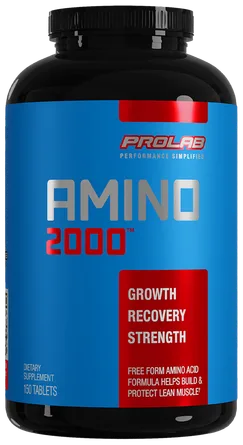
Prolab Amino 2000 Review
We don’t sell supplements. We help you make decisions and get the best price.
Lowest prices
We may earn a commission from some store links. How we choose.
Finding the lowest prices at the stores now. This takes a few seconds.
Study, Trial or Testing Result Summary
Members Only32 human studies · 5 improved
5 of these 32 human studies gave amino 2000 by drip, not by mouth.
No study tested this product, or an oral mixed amino acid supplement like it, for blood pressure. The amount of each amino acid is hidden in a blend, so it cannot be compared with studied doses. Most related studies used other forms. Extra intravenous amino acids given to very small newborns did not change their blood pressure years later compared with placebo [1]. Blood pressure stayed stable over 3 years in kidney patients on a keto acid and low-protein diet program [2]. An amino acid dialysis solution gave blood pressure similar to standard solutions [3]. In overweight adults, 30 grams of arginine daily for 90 days lowered the top blood pressure number in women, a far larger dose of one amino acid than a typical blend tablet is likely to hold [4]. Large observational studies linked higher intake or blood levels of branched-chain amino acids to a higher risk of high blood pressure, while higher glycine intake went with a lower risk [5][6]. These links do not prove cause. Overall, there is no good evidence that this product lowers blood pressure. Animal and cell studies are never counted.
See all 32 studies →Hide the studies
- In 16 observational studies of 57,913 people, higher dietary intake of branched-chain and aromatic amino acids went with a higher risk of high blood pressure, while higher glycine intake went with a lower risk.Dietary amino acid intake and the risk of hypertension: a systematic review and meta-analysis.
- Across 32,845 people, higher blood levels of isoleucine, leucine and valine were linked to higher risk of high blood pressure, and genetic analysis suggested isoleucine may be a cause of essential hypertension.Causal Relationship Between Branched-Chain Amino Acids and Hypertension: A Mendelian Randomization Study.
- Pooling three trials of liver cancer patients having surgery, oral branched-chain amino acids did not change recurrence or survival, and hypertension was listed among the more frequent side effects.Pre-, peri-, and postoperative oral administration of branched-chain amino acids for primary liver cancer patients for h…
- In 280 school-aged children who as extremely low birthweight infants got an extra 1 gram a day of intravenous amino acids for 5 days, blood pressure and most other outcomes were similar to placebo, while handgrip strength was lower.Early Amino Acid Intake in ELBW Infants: School-Aged Outcomes From a Randomized Controlled Trial.
- In 186 patients with chronic kidney failure followed for 3 years, mean arterial blood pressure stayed stable while kidney function, proteins and blood fats improved most with erythropoietin plus keto acids plus a low-protein diet.Enhanced metabolic effect of erythropoietin and keto acids in CRF patients on low-protein diet: Czech multicenter study.
- In 101 overweight or obese adults taking 15 or 30 grams of arginine daily for 90 days, 30 grams lowered systolic blood pressure in women and was well tolerated.Safety of dietary supplementation with arginine in adult humans.
- In 85 people with advanced chronic kidney disease on a low-protein diet with keto acids for 12 months, swapping animal protein for soy protein led to a smaller rise in central systolic blood pressure (2.6% vs 13.0%).[Soy protein as part of a low-protein diet is a new direction in cardio- and nephroprotection in patients with 3B-4 stag…
- In 85 people with advanced chronic kidney disease on a low-protein diet with keto acids for 12 months, replacing animal protein with soy protein led to a smaller rise in central systolic blood pressure (2.6% vs 13.0%).Soy Protein as a Part of a Low-protein Diet is a New Direction in Cardio- and Nephroprotection in Patients With 3b-4 Sta…
- In 74 new peritoneal dialysis patients (50 finished), a regimen including one daily amino acid exchange over a 30-week and 24-week crossover did not change blood pressure compared with standard dialysis solutions.Clinical effects of a peritoneal dialysis regimen low in glucose in new peritoneal dialysis patients: a randomized cross…
- In 63 new peritoneal dialysis patients, a regimen with one daily amino acid dwell for 30 weeks gave blood pressure similar to standard dialysis solutions.Initiating CAPD with a regimen low in glucose and glucose degradation products, with icodextrin and amino acids (NEPP) i…
- In a small 1989 trial of people with chronic kidney failure, a low protein diet with essential amino acids was studied for kidney progression, and changes in blood pressure were correlated with kidney progression; the abstract does not report a direct blood pressure effect of the amino acids.Stockholm clinical study on progression of chronic renal failure--an interim report.
- In 39 adults with elevated blood pressure, eating 1 or 2 cups of watermelon daily for 4 weeks did not significantly change 24-hour blood pressure compared with control, though blood levels of L-arginine rose.Dose-Response Effect of Watermelon Consumption on Ambulatory Blood Pressure in Adults with Elevated Blood Pressure: A Ra…
- In 29 healthy volunteers given a single collagen peptide amino acid drink with or without tryptophan, no significant differences in blood pressure or heart rate were reported between the two drinks.Evaluation of acute tryptophan depletion and sham depletion with a gelatin-based collagen peptide protein mixture.
- In 22 people with chronic kidney failure, a very-low-protein diet with essential amino acids for 9 months was no better than a conventional low-protein diet, and kidney function changes were not linked to blood pressure changes.Supplemented low-protein diets--are they superior in chronic renal failure?
- In healthy men, 20 grams of L-arginine per day for 28 days did not change weekly blood pressure compared with placebo or change blood vessel responses in the forearm.Effects of in vivo and in vitro L-arginine supplementation on healthy human vessels.
- In 14 surgical patients, an amino acid infusion during anesthesia did not change blood pressure or heart rate compared with saline, and stress hormone levels were similar between groups.Amino acid-induced thermogenesis to prevent hypothermia during anesthesia is not associated with increased stress respon…
- In 10 people with recovered post-traumatic stress disorder, a single drink of amino acids without tryptophan raised diastolic blood pressure during a trauma-related challenge compared with a control drink.Serotonin and sensitivity to trauma-related exposure in selective serotonin reuptake inhibitors-recovered posttraumatic …
- In eight normal adults, single oral doses of L-tyrosine did not produce a blood pressure effect compared with placebo; a small rise in systolic blood pressure came from the separate drug idazoxan.Modulation of the actions of tyrosine by alpha 2-adrenoceptor blockade.
- In recreationally active men taking a preworkout supplement with amino acids daily for 28 days, resting blood pressure and heart rate showed no adverse change; small drops over time were seen in both groups.Ingesting a preworkout supplement containing caffeine, creatine, β-alanine, amino acids, and B vitamins for 28 days is b…
- In patients having abdominal surgery, a combination of amino acids, lidocaine and magnesium lowered inflammation markers, pain and time to first bowel movement, while blood pressure results were not reported as differing.Impact of Perioperatively Administered Amino Acids, Lidocaine, and Magnesium on Inflammatory Response and Pain Associate…
- In 20 recreationally active adults, a single sugar-free amino acid electrolyte drink did not change 5-km running time, and blood pressure results were not reported as differing, but it kept blood potassium better and reduced cramping compared with a sports drink and water.The effects of a sugar-free amino acid-containing electrolyte beverage on 5-kilometer performance, blood electrolytes, a…
- In healthy adults, an intravenous L-arginine infusion lowered systolic and diastolic blood pressure and reduced total peripheral vascular resistance, while an L-lysine infusion and a saline infusion did not produce this vasodilation.Haemodynamic and biochemical responses to L-arginine and L-lysine infusions in normal subjects: L-arginine-induced vasod…
- In a large Swedish study of about 34,000 women followed for about 10 years, those eating the most dietary cysteine (an amino acid, averaging 635 mg a day) had 21% lower stroke risk than those eating the least, though this was an observational association and not a supplement trial.Dietary cysteine and other amino acids and stroke incidence in women.
- In 4288 adults in Tehran followed for three years, a dietary pattern rich in branched chain, aromatic and alcoholic amino acids and proline was linked to higher hypertension risk (highest vs lowest quartile odds ratio 1.83).Dietary amino acids and incidence of hypertension: A principle component analysis approach.
- Among 4287 adults in Tehran followed for about 3 years, the highest dietary intake ratios of certain amino acids were linked to higher odds of developing high blood pressure. This was an observational association.Do dietary amino acid ratios predict risk of incident hypertension among adults?
- In 4184 adults in Iran, higher dietary branched-chain amino acids were linked to hypertension, but the link disappeared after adjusting for total protein and calorie intake.Branched-chain amino acids and the risk of hypertension; a persian cohort-based study.
- In 1200 Iranian adults, certain blood acylcarnitines and amino acids were linked to higher odds of stage 2 hypertension, while higher glycine was linked to lower odds.Association of plasma acylcarnitines and amino acids with hypertension: A nationwide metabolomics study.
- In 283 people, higher circulating amylin was found in hypertension and in normotensive people with a family history of hypertension; an amino acid infusion was used only as a test to provoke amylin release and did not change blood pressure.Circulating amylin in human essential hypertension: heritability and early increase in individuals at genetic risk.
- In 92 people with heart disease eating low-fat or Mediterranean-style diets, higher dietary methionine and alanine were linked to higher blood pressure, while threonine and histidine were linked to lower blood pressure over 2 years. This was an observational association and does not show cause.Dietary amino acids and blood pressure: a cohort study of patients with cardiovascular disease.
- In a small nested case-control study over 5 years, higher blood levels of four amino acids were linked to lower future hypertension risk, while higher levels of lyxose were linked to higher risk.A Nested Case-Control Study of Association between Metabolome and Hypertension Risk.
- In 39 normotensive adults, those with a family history of hypertension had a blunted kidney filtration response to an amino acid infusion, which the authors link to a possible early step toward hypertension; blood pressure itself was not reported as an outcome.Early alteration in glomerular reserve in humans at genetic risk of essential hypertension: mechanisms and consequences.
- In a nested case-control study of about 490 new hypertension cases over six years in Iran, higher dietary amino acid intake tended to go with higher hypertension risk, but the link was not statistically significant.Dietary amino acid profile and risk of hypertension: findings from the Ravansar cohort study.
Review Totals and Summary
Members Only53 reviews · 83% positive
Extensive customer reviews and qualitative feedback are currently being aggregated for this product. Check back soon for a detailed sentiment analysis.
Biohacker Summary
Members Only0 of 10 recommend it
Amino acids are the main ingredient, and eight of the ten panelists spoke about them, with views that are mixed rather than a clear endorsement. Three recommend them (for muscle, appetite control and getting a complete daily profile), two use them, and the rest are neutral or cautious. People take them mainly to protect and build muscle, to support skin and collagen, and to recover after surgery or workouts; one panelist takes an essential amino acid complex at 10 grams before a workout and 10 grams again in the afternoon, another puts 7.6 grams in a morning drink, and a few say food sources such as animal meat and liver are the best way to get them. Cautions are common: two panelists say not to take them during a fast because the leucine can stop ketosis and cellular cleanup, one warns that single amino acids do not help muscle growth and can raise blood sugar, and another says too much from animal protein may keep a growth pathway switched on and raise cancer risk. One panelist pairs them with caffeine to blunt the insulin spike, and another says they should not be taken during a race.
See all 9 biohackers →Hide the biohackers
Ben Greenfield · Amino Acids · uses
- For longer operations, Ben Greenfield runs intraoperative IV bags of amino acids to mitigate muscle protein breakdown during surgery.
- Gives a nod to amino acids, suggesting they would fit into the same category as collagen peptides for improving skin elasticity, even though studies have focused on collagen peptides.
- States that amino acid intake can help fight age-related muscle loss.
- Takes amino acids.
- Takes Keon aminos, an essential amino acid complex, with 10 grams pre-workout and another 10 grams in the afternoon, noting its benefits for muscle preservation even without exercise.
- Will discuss new research on amino acids, inflammation, and faster recovery.
- States he is a huge proponent of amino acids, personally takes over 20 grams of Keon essential amino acids per day, and recommends them for muscle recovery, gut support, muscle building in a fasted state, and muscle protein synthesis.
- Recommends amino acid supplementation to support neurotransmitter production.
- Uses amino acids to help stave off central nervous system fatigue that occurs as muscles break down during endurance activities.
- Personally consumes 40 grams of amino acids per day.
Dr. Eric Berg · Amino Acids · neutral
- Mentions that grass-fed liver is loaded with high-quality amino acids.
- Explains that mitochondria need sufficient amino acids to produce energy, and amino acids come from protein in the diet.
- Recommends consuming amino acids to naturally trigger L-cells and activate GLP-1.
- Recommends consuming high quality amino acids, specifically from animal meat, to allow biochemistry to work correctly.
- Warns against taking single amino acids for muscle growth, stating that studies show it's not effective and can increase blood sugar.
- States that rice water contains amino acids essential for the hair.
- Recommends consuming high quality amino acids, found in foods like fish, eggs, and meat, to build up antioxidant networks.
- States that amino acids stimulate human growth hormone and also trigger IGF-1.
- Notes that amino acids differ between plant and animal sources, and it's more difficult to get a complete amino acid profile from a vegan diet.
- Notes that stress can cause deficiencies in amino acids.
Thomas DeLauer · Amino Acids · warns
- States that amino acids, including essential amino acids and BCAAs, cannot be consumed during a fast as they can shut down ketosis due to the leucine insulin response.
- Warns against taking branch chain or essential amino acids during a fast, as the leucine in them will trigger mTor and stop autophagy, preventing mitochondrial benefits.
- Has an amino blueberry lemonade post-workout, which contains 100 milligrams of caffeine, keeping their caffeine intake low.
- Recommends being open to amino acid supplementation, as it can make a difference in being able to run and lift effectively.
- Mentions that having a little bit of amino acids can spike insulin, and caffeine might be able to blunt that effect.
- Recommends liquid aminos as a soy sauce alternative, acknowledging they contain some soy but are a nice alternative, though tamari is preferred.
- Recommends getting amino acids in place as a crucial step for collagen production, noting that different forms of collagen require different amino acids and that non-meat eaters need to get various aminos from different sources.
- States that amino acids are necessary building blocks for muscle.
- Warns that amino acids trigger mTOR, which defeats the purpose of autophagy during a fast, and advises against consuming them while fasting.
- Discusses Bragg Liquid Aminos as a gluten-free alternative, but notes that it still contains soy, though not GMO soy.
Dave Asprey · Amino Acids · neutral
- States that amino acids build muscle and that missing one of the 9 essential amino acids means the signal doesn't fire.
- Confirms that the Ignitrons are dissolved into powdered amino acids that are then dissolved into water.
- Dave Asprey discusses how amino acids influence mTOR, IGF-1, and aging.
- Uses intravenous amino acids after surgery as part of their recovery protocol.
- Has discussed in his longevity book that an excess of amino acids from animal protein might increase mTOR, which can increase cancer risk if always turned on.
- States that the right amino acids are needed as building blocks for the body.
- Recommends getting the right aminos at higher levels than supposed to, because of higher levels of toxins.
- States that Ketone-IQ can be stacked with amino acids as a pre-workout, as it doesn't interfere and is complementary.
- Suggests that if someone is vegan and on a med, they might consider a broad spectrum amino acid supplement.
- Discusses spacing amino acids throughout the day.
Siim Land · Amino Acids · neutral
- States that amino acids are among many other nutrients needed for glutathione.
- Mentions that amino acids like proline help to expedite results from micro needling and collagen intake for collagen synthesis.
- Discusses Amino acids as a supplement.
- Includes different amino acids as playing a very important role in detox.
- Likes to combine exosomes with amino acids, vitamins, minerals, and hyaluronic acid to synergize their effects, providing the skin with building blocks for collagen and elastin creation.
- Notes that even if one eats enough protein, they can still be deficient in amino acids due to utilization, which depends on other nutrients consumed.
- Takes a lot of amino acids when he starts feeling slightly weak or like an infection is coming on, and finds that he recovers much better.
- Recommends amino acids before exercise to combat muscle breakdown and promote growth when fasting for fitness.
- Assumes amino complex is essentially amino acids.
- For fasted lifting and resistance training, Siim Land suggests taking amino acids, protein, HMB, citrulline, or beta-alanine to have a better workout, as working out fasted is not optimal for muscle growth.
Dr. Mark Hyman · Amino Acids · recommends
- Believes that if functional testing is done to replete deficiencies like amino acids before someone stops their medication, withdrawal symptoms can be completely eliminated.
- Mentions amino acids as nutrients that act as helpers in biochemical steps to improve brain function, as part of mitochondrial therapies.
- Mentions amino acids as something that can be measured and have been linked to mental health.
- Suggests that vegans who are as fit and muscular as Bryan Johnson likely supplement with processed plant protein powders, possibly spiked with amino acids, because a pure vegan diet alone may not be sufficient for high protein intake.
- Mentions that The Absorption Company is diving deep into amino acids to get them into people's bodies quickly for immediate effects.
- Notes that many people are deficient in amino acids, which are the building blocks of proteins, and without them, the body cannot assemble proteins for skeletal muscle, natural killer cells, collagen, elastin, and fibrin.
- Recommends amino acids that promote relaxation and deep rest as part of the 10-Day Detox Diet.
- Dr. Mark Hyman's personal PK protocol includes a whole series of amino acids and minerals to help with detoxification.
- Often recommends amino acid powder or blends as precursors to neurotransmitters, especially for children who may not get enough from their diet.
- Recommended taking amino acids to help biofix energy deficits and optimize flow.
Peter Attia · Amino Acids · uses
- Uses amino acids, noting they are absorbed faster than whey protein and are a good alternative when she doesn't want a milky substance.
- States that no protein or amino acids should be consumed throughout a race because it would divert oxygen away from pure propulsion.
- Explains that amino acids are not just building blocks but also signaling molecules that directly stimulate muscle protein synthesis by activating the mTOR pathway.
- States that they will discuss amino acids, particularly leucine, in relation to how nutrients work and their interaction with mTOR.
- Discusses amino acids like methionine, tryptophan, and leucine as candidates to consider in relation to diet, noting that mTOR is an amino acid sensor.
- Notes that amino acids have a very different purpose and structure compared to carbohydrates and fats, with nitrogen being a key differentiating factor.
- Explains that amino acids have a carboxy end and a nitrogen end, and the body reconnects them based on messenger RNA to form proteins, with each of the 20 amino acids having a different side chain and other metabolic functions beyond building blocks.
- States that amino acids can suppress ghrelin secretion.
Andrew Huberman · Amino Acids · recommends
- Suggests that replacing foods that cause sugar cravings with foods high in omega-3s or amino acids can reduce those cravings.
- Discusses amino acids as a tool for blunting appetite.
- States that people tend to eat until their brain perceives adequate intake of amino acids, which are building blocks for muscle, repair, and neurochemicals in the brain.
- Believes non-protein amino acids will be the next big thing in the health space, discussing how they exist in seeds and nuts and, if consumed in abundance, may incorporate into proteins in our tissues, potentially leading to misfolding and explaining certain forms of neurodegeneration.
- Mentions that amino acids are needed as the supply for growing new skeletal muscle.
- Andrew Huberman mentions that taking amino acids before bed could potentially help with growth hormone release, as most growth hormone is released during sleep.
- Discusses amino acids, including leucine and the concept of 'pulsing'.
Bryan Johnson · Amino Acids · recommends
- Emphasizes the importance of getting a complete amino acid profile every day for every fundamental element of the body, as nine essential amino acids can only be obtained through food.
- Includes 7.6 grams of aminos in his Green Giant drink, which he consumes first thing in the morning.
RAL Summary
Members OnlyTier 4 for Blood Pressure
The ineffective grade rests on studies of intravenous amino acids in newborns, keto acid therapy in kidney patients, amino acid dialysis fluids and single-amino-acid arginine doses, none of which tested an oral mixed amino acid supplement like this one, so the evidence is thin rather than showing it does not work. So it is graded Tier 4, as the studies disagree.
- Emerging: not enough evidence to rank higher yet.
Where the evidence disagrees: 20 of the 32 human studies found no effect.
More Details
Members OnlyBody systems · Combine with · Possible side effects
Body systems: Cardiovascular system, Kidneys
Combine with: Combine with a healthy diet and lifestyle.
Possible side effects: Arginine at 30 grams daily was well tolerated in adults. In one study of newborns given extra intravenous amino acids, handgrip strength was lower years later.
Supplement Facts
Calcium 23 mg · Whey Protein concentrate 8 g
| Calories | 30 | |
| Total Fat | 0.5 g | |
| Cholesterol | 20 mg | |
| Protein | 6 g | |
| Calcium | 23 mg | |
| Sodium | 15 mg | |
| Whey Protein concentrate | 8 g | † |
Other ingredients: Cellulose, Cellulose, Cellulose Gum, Stearic Acid, Silica, natural food Glaze, Talc, Carnauba Wax.
Directions: Directions: take 3 tablets, two times daily, between meals and after intense training. Best when taken 45 minutes prior to a meal and immediately following a workout. For best absorption, take with diluted fruit juice or other diluted carbohydrate liquid.
Barcode (UPC) 750902102004 · Label source: NIH label database · Report a label change
Other sizes and barcodes: 325 Tablet(s), UPC 7 50902 10201 1 (off market)
Show entire label
More blood pressure products
Members OnlyThe highest ranked for the same goal
Read more
Our articles on this subject
- How to Lower Diastolic Blood Pressure for LongevityArticle · Sep 17, 2026
- DASH Diet for High Blood Pressure: What It Lowers, What to Eat, and How to StartArticle · Sep 19, 2026
Graded November 14, 2026 by the Reverse Age Lab evidence engine, from human studies, real reviews and our biohacker panel. How we grade. Is this medical advice? No. Rala organizes the published evidence; go over any change with your doctor, especially if you take meds.
Privacy policyConsumer health dataAffiliate disclosureTermsDo Not Sell or Share My Personal InformationCookie settings