
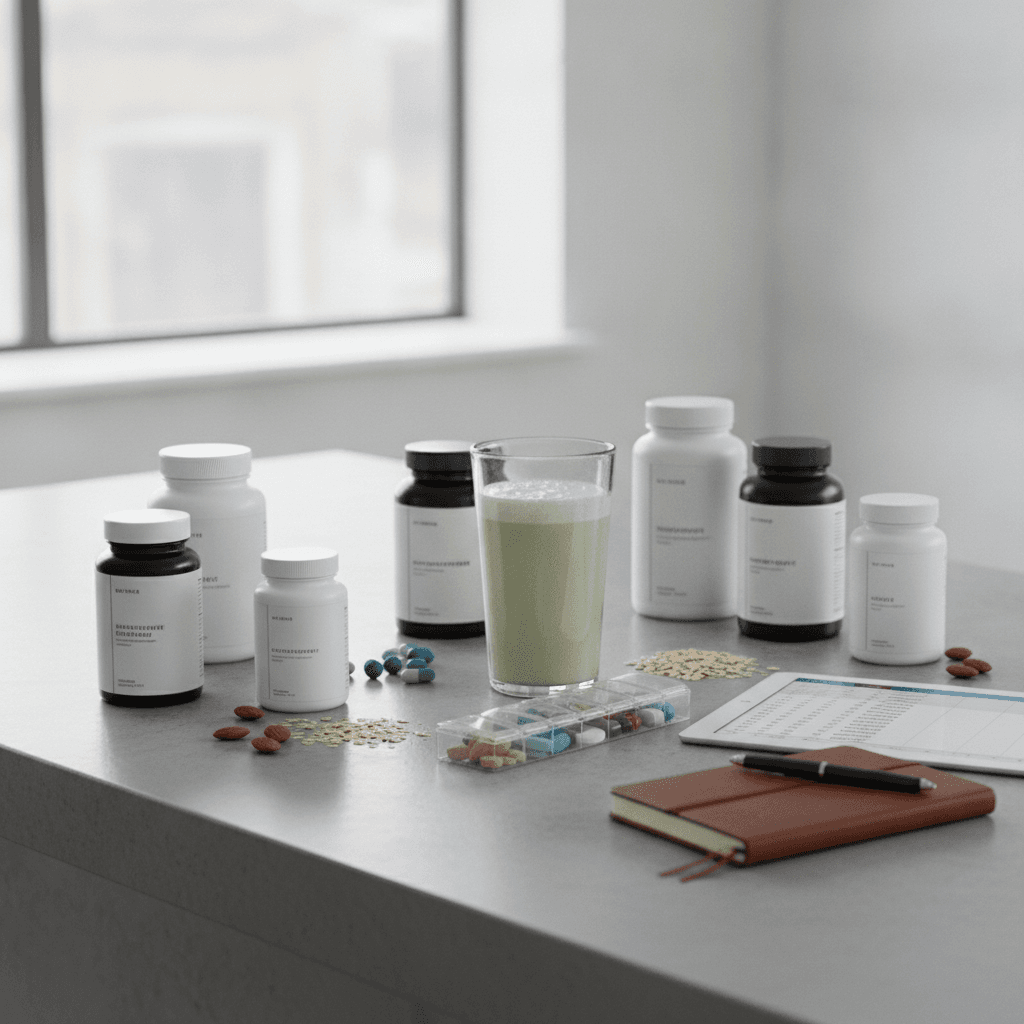
A good supplement stack is not a long list of pills. It is a short, deliberate set of supplements matched to your specific goals and the gaps in your diet and bloodwork. Most people overspend by collecting trendy products they do not need, when a smaller, smarter stack would do more for less. Building one well is mostly about subtraction and strategy, not addition.
The short answer: start from a goal, find your real gaps with bloodwork and your diet, build a small foundation (vitamin D if low, omega-3 if you skip fish, magnesium, creatine, protein and fiber), then add one or two goal specific supplements at a time. Take fat soluble ones with food, buy single ingredient products with third party testing, and retest after a few months so you can cut what is not working.
Here is a practical guide to building a supplement stack that actually works, without wasting money.
Key takeaways
A supplement stack is a short deliberate set where each item earns its place, not a collection.
Start from a goal, then find your real gaps with bloodwork and your diet.
Build a small foundation, then add one or two goal specific items at a time.
Take fat soluble items with food and space apart competing minerals.
Retest after a few months and cut whatever did nothing. Trimming matters as much as adding.
What a Supplement Stack Actually Is
A stack simply means the combination of supplements you take regularly, ideally chosen to work together toward a purpose. The mistake most people make is treating it as a collection, adding whatever sounds promising until the cabinet is full. A well-built stack is the opposite: a focused set where each item earns its place. The aim is the fewest supplements that meaningfully support your goals, not the most.
Step 1: Start With Your Goals, Not a List
Before buying anything, get clear on what you are trying to support, whether that is better sleep, more energy, healthy aging, or filling a known dietary gap. Your goal determines what belongs in your stack, and it just as importantly tells you what to leave out. A supplement that does not serve a goal you actually have is money spent on nothing. Starting from goals keeps the stack lean and purposeful.
Step 2: Identify Your Gaps
The most reliable supplements are the ones that correct a real shortfall, so the next step is finding yours. Bloodwork is the best tool here, since it can reveal common gaps like low vitamin D or other markers worth addressing. Beyond labs, your diet tells a story too: if you rarely eat fish, omega-3s are a logical candidate, and if your intake of certain nutrients is consistently low, that points to a target. Filling genuine gaps gives you the clearest return on your money. The VITAL trial is the cautionary tale: vitamin D and omega-3 did nothing for cancer or heart disease in adults who were not selected for deficiency (Manson et al., 2019, omega-3 arm).
Layer | What goes in it | How to decide |
|---|---|---|
Foundation | Vitamin D if low, omega-3 if you skip fish, magnesium, creatine, protein and fiber | Bloodwork and diet gaps |
Goal specific | Sleep, stress, blood sugar, blood pressure, joints or focus picks | One or two at a time, each with human data |
Quality check | Single clearly dosed ingredients with third party testing | Published Certificate of Analysis |
Prune | Anything that did not move a marker or how you feel | Retest after a few months |
Step 3: Build the Foundation
Most well-designed stacks share a small foundation of broadly useful, well-studied basics, added only where they fit your gaps and goals. Common foundational choices include vitamin D for those who are low, omega-3s for people who do not eat much fatty fish, magnesium for broad support, and creatine for muscle and strength as you age. Adequate protein and fiber, while really part of diet, belong in the same conversation because they do so much. This foundation covers a lot of ground before you add anything specialized. Sources: omega-3 for cardiovascular events (Hu et al., 2019), magnesium shortfall and metabolic disease (Rosanoff et al., 2012), creatine safety and dosing (Kreider et al., 2017), protein with age (Journal of Cachexia, Sarcopenia and Muscle, 2022). The basics are covered in a professional guide to daily health supplements.
Step 4: Add Goal-Specific Supplements
Once the foundation is set, you can layer in a small number of targeted additions for your specific goal, and this is where the options get far wider than most roundups admit. For sleep, that might be melatonin at a low physiological dose, glycine, or L-theanine. For stress, ashwagandha. For blood sugar, berberine. For blood pressure, beetroot. For joints, UC-II collagen or a bioavailable curcumin. For focus, bacopa or a caffeine and L-theanine pairing. Each of these has human evidence for its specific goal, which is the whole point: you match the compound to the job, not to a trend. The rule is restraint: add one or two at a time, give them a fair trial, and keep only what earns its place. Piling on many new supplements at once makes it impossible to know what is actually helping. Human evidence for each: low dose melatonin (Ferracioli-Oda et al., 2013), glycine (Bannai et al., 2012), L-theanine (Hidese et al., 2019), ashwagandha (Akhgarjand et al., 2022), berberine (Guo et al., 2021), beetroot (Siervo et al., 2013), UC-II collagen (Lugo et al., 2016), curcumin (Chandran and Goel, 2012), bacopa (Kongkeaw et al., 2014) and caffeine with L-theanine (Owen et al., 2008). Sleep options are compared in best supplements for better sleep, and blood pressure options in lowering blood pressure naturally.
Step 5: Mind Timing, Quality, and Interactions
A few practical details protect both your results and your wallet. Take fat-soluble supplements with a meal that contains fat, space apart competing nutrients like calcium and iron, and avoid stimulating supplements late in the day. On quality, favor single, clearly dosed ingredients with third-party testing over crowded proprietary blends that hide what you are getting. These habits ensure the supplements you do buy actually work as intended. Vitamin D absorbs better with a fat containing meal (Dawson-Hughes et al., 2015), about 15 percent of older adults are at risk of a major interaction, often from supplements (Qato et al., 2016), and FDA testing found 776 products tainted with hidden drugs (Tucker et al., 2018). Timing rules are in the best time to take your vitamins and supplements.
Step 6: Test, Track, and Trim
The final step is the one that keeps your stack lean. After a few months, retest relevant markers and notice how you feel, then keep what is working and cut what is not. Most people only ever add supplements; the highest-value move is often trimming the ones doing nothing. A stack should get more refined and usually smaller over time, not endlessly bigger.
Make Your Stack Personal
The hard part of all this is doing it for your specific body, goals, and bloodwork, then adjusting it as your data changes. That is exactly what Reverse Age Lab is built to do. Rala, our patented AI, reviews the human studies and turns them into one personalized daily protocol of supplements, diet, and exercise built around your needs, then helps you refine it as you retest, so your stack stays lean and effective. Build your protocol free at ReverseAgeLab.net. Our grading rules are on the methodology page.
Ready to build a lean stack? Reverse Age Lab sells no supplements. Start your 7 day free trial and Rala builds one daily protocol around your goals and test results, or check any product with the free research tool.
Related reading:How to tell if a supplement is evidence based or just good marketing · Do you need a personalized supplement plan? · Build a personalized supplement protocol
Frequently Asked Questions
How do I build a supplement stack?
Start with your specific goals, identify real gaps through bloodwork and your diet, then build a small foundation of well-studied basics like vitamin D, omega-3s, and magnesium where they fit. Add one or two goal-specific supplements at a time, mind timing and quality, and retest after a few months to keep only what works.
What supplements should everyone take?
There is no universal stack, because the best choices depend on your gaps and goals. That said, the most commonly useful basics are vitamin D for those who are low, omega-3s for people who rarely eat fish, and magnesium for broad support, alongside adequate protein and fiber from diet. Test where you can rather than guessing.
How many supplements should be in a stack?
Fewer than most people think. A focused stack of a handful of well-chosen supplements that match your goals and gaps usually outperforms a large collection of trendy products. The goal is the fewest supplements that meaningfully help, and trimming what is not working is as important as adding.
How do I know if my supplements are working?
The most reliable approach is to measure. Retest relevant blood markers after a few months and pay attention to changes in how you feel and function. If a supplement has not produced a noticeable benefit or corrected a known gap, it may not belong in your stack.