
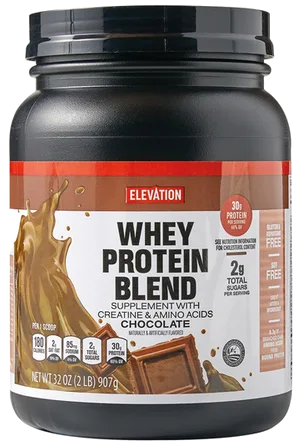
Elevation Whey Protein Blend Chocolate Review
Elevation Whey Protein Blend in Chocolate is a powder supplement meant to be mixed as a protein drink. Each serving is 50 grams, and one container holds 19 servings. The label prints 180 calories per serving, with 30 g of protein, 8 g of total carbohydrates and 2.5 g of total fat. It also lists 80 mg of cholesterol and 85 mg of sodium. Added to the blend are 2 g of creatine monohydrate, 2 g of taurine and 0.5 g of L-glutamine per serving. The mineral amounts printed are calcium 340 mg, potassium 200 mg, phosphorus 280 mg and magnesium 40 mg. The label shows whey protein concentrate and whey protein isolate each as 0 in the facts panel. Other ingredients are cocoa, powder, maltodextrin, natural and artificial flavors, sunflower lecithin, cellulose gum, acesulfame potassium and sucralose. No directions for use are printed on the label provided, so check the container for mixing instructions before you buy.
We don’t sell supplements. We help you make decisions and get the best price.
Lowest prices
We hold no current store prices for it yet: check the store.
- AmazonPrice at AmazonCheck price at Amazon (opens in a new tab)
Also at: Walmart
Some store links earn us a commission.
Study, Trial or Testing Result Summary
Members Only329 human studies · 140 improved
5 of these 329 human studies gave the ingredient by drip, not by mouth.
Creatine is the best-supported ingredient here at a full dose, reached at two servings a day. Across 143 trials, creatine added about 0.82 kg of lean mass, with larger effects alongside strength training [1]. Across 61 trials, it added about 1.39 kg of lean mass in both new and experienced lifters [2]. With strength training, it modestly improved bench press, squat and jumping, but not handgrip or leg press [3]. Older adults also gained lean mass and strength [4]. Whey protein is the main ingredient, but its amount is hidden in a blend. With strength training, whey added about 1.24 kg of lean mass, and benefits leveled off around 30 to 35 grams a day [5]. Without exercise, whey did not build muscle in older adults [6]. Calcium reaches the studied dose at three servings a day, but the larger trials found no muscle gain [7]. Magnesium did not improve strength in pooled trials [8]. Glutamine taken alone had no effect on lean mass [9]. Potassium did not build muscle in trials [10]. Taurine taken alone did not change strength or power [11]. Phosphorus has only population links and no trials [12]. Animal and cell studies are never counted.
See all 329 studies →Hide the studies
- Across 78 trials with 5272 middle-aged and older adults doing resistance training, whey protein ranked best among six protein types for increasing muscle mass, handgrip strength and walking speed.Comparative Efficacy of Different Protein Supplements on Muscle Mass, Strength, and Physical Indices of Sarcopenia among…
- Across 116 trials of 4,711 adults doing resistance training, protein taken after exercise or at night increased muscle mass and strength versus placebo, and milk proteins including whey were among the types that helped both, but no timing or type improved physical performance tests.Effects of Timing and Types of Protein Supplementation on Improving Muscle Mass, Strength, and Physical Performance in A…
- Across 15 studies of 2,866 adults over 65, vitamin D with or without calcium did not improve grip strength and slightly worsened a walking-mobility test.Vitamin D supplementation and its influence on muscle strength and mobility in community-dwelling older persons: a syste…
- In a pooled analysis of 29 trials with 2,255 older adults, creatine (among other nutrients such as amino acids) significantly improved muscle mass, though the best dose and duration were not established.Factors influencing the efficacy of nutritional interventions on muscle mass in older adults: a systematic review and me…
- In 30 trials of 2,105 adults aged 60 and older, whey protein did not improve handgrip strength, walking tests, lean mass or fat mass overall, but with resistance training it modestly improved lower body strength.Effectiveness of whey protein supplementation on muscle strength and physical performance of older adults: A systematic …
- Across 69 trials with 1,937 adults, creatine plus resistance training modestly improved bench press, squat, jump height and peak power versus placebo, but not handgrip or leg press strength, with clearer benefits in younger adults and men.The Effects of Creatine Supplementation on Upper- and Lower-Body Strength and Power: A Systematic Review and Meta-Analys…
- In 36 trials of 1,552 people doing resistance training for at least 6 weeks, whey protein added about 1.24 kg of lean mass compared with placebo, the largest gain of any protein type, with benefits leveling off around 30 to 35 g per day and a smaller advantage in older adults.Dose-structure-population interactions of protein supplementation combined with resistance training on body composition:…
- In 1387 adults doing resistance training, multi-ingredient protein supplements (often protein plus creatine) added about 0.8 kg of lean mass and some strength compared with non-multi-ingredient supplements, but were not better than protein alone.Do multi-ingredient protein supplements augment resistance training-induced gains in skeletal muscle mass and strength? …
- In 18 trials of 1,341 older adults with or at risk of sarcopenia, adding supplements such as whey protein to exercise improved grip strength and limb muscle mass but not walking mobility, though the certainty of evidence was very low.Comparative effectiveness of protein or protein-related supplementation combined with resistance or functional exercise …
- In 10 trials of 1,154 older adults with sarcopenia, whey protein increased limb muscle mass and gait speed, increased handgrip strength when combined with resistance training, and lowered interleukin-6.Improving sarcopenia in older adults: a systematic review and meta-analysis of randomized controlled trials of whey prot…
- Across 33 placebo-controlled trials with 1076 older adults and adults with chronic disease, creatine improved sit-to-stand performance, upper-body and handgrip strength, and lean tissue mass, though the evidence quality was low or very low.Creatine supplementation for optimization of physical function in the patient at risk of functional disability: A system…
- In 21 trials with 837 people doing resistance training for about 13 weeks, whey protein improved muscle strength and fat mass compared with placebo, and lean mass in healthy people, mainly in those under 40.Effect of whey protein supplementation during resistance training sessions on body mass and muscular strength: a meta-an…
- In 763 women across 14 trials combining supplements (protein, amino acids, creatine) with exercise, muscle mass did not improve but bench press and handgrip strength did, particularly in creatine studies.Nutritional Supplementation Combined with Exercise for Musculoskeletal Health in Women: A Systematic Review and Meta-Ana…
- In three trials of 637 patients with sarcopenia, whey protein with leucine and vitamin D increased limb muscle mass, and improved grip strength and physical function only when combined with an exercise program.Effects of Whey Protein, Leucine, and Vitamin D Supplementation in Patients with Sarcopenia: A Systematic Review and Met…
- In 608 postmenopausal women across seven trials, creatine added about 0.37 kg of lean mass and 7.5 kg of leg-press strength, mainly at 5 g or more per day with resistance training, with no change in bone density.Creatine monohydrate for lean mass, strength, and bone density in postmenopausal women: a systematic review and meta-ana…
- In seven trials of 591 older people with sarcopenia doing resistance training, adding whey protein gave small gains in muscle mass and about 2.3 kg more handgrip strength, though the effects were small and the evidence quality was low.Effectiveness of Whey Protein Supplementation during Resistance Exercise Training on Skeletal Muscle Mass and Strength i…
- In 10 trials with 574 adults aged 60 and over doing resistance training, milk protein added about 0.74 kg more fat-free mass than control, with no significant change in fat mass or body weight.Effects of Milk Proteins Supplementation in Older Adults Undergoing Resistance Training: A Meta-Analysis of Randomized C…
- Pooling 14 trials of 542 athletes, healthy adults, elderly people and alcoholics, magnesium did not significantly improve muscle strength, torque or power, though it may help people who are low in magnesium such as the elderly.The effect of magnesium supplementation on muscle fitness: a meta-analysis and systematic review.
- In 509 adults under 50 across 23 trials, creatine with resistance training raised upper-body strength by 4.4 kg and lower-body strength by 11.4 kg more than placebo, with clearer gains in males than females.Effects of Creatine Supplementation and Resistance Training on Muscle Strength Gains in Adults <50 Years of Age: A Syste…
- In seven trials of 472 older people with sarcopenia, strength training with whey protein or HMB increased fat-free mass and some physical performance measures, and whey with training improved handgrip strength, though the evidence should be viewed cautiously.Combined effects of strength training, whey protein, and HMB on sarcopenia in older people: A systematic review and meta…
- In five studies with 391 older adults doing resistance training, whey protein increased total protein intake, blood leucine and the rate of muscle protein building compared with control.Effects of whey protein supplement in the elderly submitted to resistance training: systematic review and meta-analysis.
- In 14 trials with 364 people with muscle diseases, creatine raised muscle strength in muscular dystrophies by about 8.5% over placebo but did not improve strength in metabolic muscle diseases, and high doses worsened daily activities and muscle pain in McArdle disease.Creatine for treating muscle disorders.
- In 357 older adults doing resistance training for about 13 weeks, adding creatine increased fat-free mass, chest press and leg press strength, and chair-stand performance more than training alone.Creatine supplementation during resistance training in older adults-a meta-analysis.
- Across seven trials of 349 older people with weak bones and low muscle, strength training raised muscle mass, grip strength and protein intake, but calcium intake did not change significantly.Effects of Strength Training on Body Composition, Physical Performance, and Protein or Calcium Intake in Older People wi…
- In seven trials with 270 people doing exercise training, whey protein and beef protein gave similar lean mass, fat mass and protein intake results, so whey showed no advantage over beef protein.Does Beef Protein Supplementation Improve Body Composition and Exercise Performance? A Systematic Review and Meta-Analys…
- In nine trials with 266 people doing resistance training for at least 6 weeks, whey and soy protein both raised strength and gave no difference in lean mass or strength between them.No Difference Between the Effects of Supplementing With Soy Protein Versus Animal Protein on Gains in Muscle Mass and St…
- In 12 trials with 261 young adults doing resistance training, whey protein improved bench press and squat strength but did not significantly change lean body mass.The Impact of Whey and Soy Protein Supplementation on Resistance Training in Young Adults: A Systematic Review and Meta-…
- In 258 patients with short bowel syndrome across 13 trials, glutamine combined with growth hormone and a modified diet increased lean body mass by about 2 kg and body weight by about 2.4 kg, but fat mass did not change.Clinical evidence of growth hormone, glutamine and a modified diet for short bowel syndrome: meta-analysis of clinical t…
- In eight trials with 246 healthy athletes training for about 9 weeks, whey protein reduced fat mass more than placebo but did not significantly change fat-free mass.Comparative Meta-Analysis of the Effect of Concentrated, Hydrolyzed, and Isolated Whey Protein Supplementation on Body C…
- In 10 trials of 211 older women, creatine with resistance training increased upper-body strength but not lower-body strength or muscle mass overall, with gains in both strength types when training lasted 24 weeks or more.Efficacy of Creatine Supplementation Combined with Resistance Training on Muscle Strength and Muscle Mass in Older Femal…
- Across 9 trials in resistance-trained adults, whey protein alone or in a multi-ingredient product gave small extra gains in fat-free mass and upper and lower body strength compared with calorie-matched carbohydrate or other protein supplements, with the larger effect seen when creatine was included.Effects of Whey Protein Alone or as Part of a Multi-ingredient Formulation on Strength, Fat-Free Mass, or Lean Body Mass…
- Across 12 observational studies of older adults, people with sarcopenia (age-related muscle loss) ate less phosphorus, along with less energy and several other nutrients, than people without it.Energy and nutrient intake by people with and without sarcopenia diagnosed by the European Working Group on Sarcopenia i…
- A pooled analysis of 23 observational studies found older people with sarcopenia ate less magnesium and other nutrients than those without, but this did not test magnesium supplements.Comparison of calorie and nutrient intake among elderly with and without sarcopenia: A systematic review and meta-analys…
- A pooled analysis of 4 trials in adults aged 55 and over found that magnesium, along with vitamin E plus vitamin D and protein, shortened the time to complete 5 chair stands, though magnesium was not tested on its own in the pooled result.Antioxidant-rich foods, antioxidant supplements, and sarcopenia in old-young adults ≥55 years old: A systematic review a…
- Pooling placebo-controlled studies, creatine produced small but significant gains in lean body mass and short high-intensity exercise performance, with larger effects for upper-body exercise and no difference by sex or training status.Effect of creatine supplementation on body composition and performance: a meta-analysis.
- Pooled trials in older adults doing resistance training showed creatine gave greater gains in lean tissue mass and strength than placebo, including when taken only on training days, though strength benefits depended partly on a loading phase.Meta-Analysis Examining the Importance of Creatine Ingestion Strategies on Lean Tissue Mass and Strength in Older Adults…
- In ten trials of healthy adults training for at least 6 weeks, creatine added a very small increase in muscle size measured by imaging, about 0.10 to 0.16 cm in muscle thickness.The Effects of Creatine Supplementation Combined with Resistance Training on Regional Measures of Muscle Hypertrophy: A …
- Across 143 trials, creatine increased fat-free mass by 0.82 kg and reduced body fat percentage by 0.28 points, with larger effects when combined with resistance training.Creatine supplementation protocols with or without training interventions on body composition: a GRADE-assessed systemat…
- In twelve trials of adults under 50 doing resistance training, creatine added 1.14 kg of lean mass and reduced fat mass by 0.73 kg compared with training alone.The Effect of Creatine Supplementation on Resistance Training-Based Changes to Body Composition: A Systematic Review and…
- Pooled trials showed creatine significantly increased muscle strength, with greater gains in untrained people, with low-to-moderate doses, and with high-intensity training.Effects of creatine supplementation on muscle strength gains-a meta-analysis and systematic review.
- Across 61 trials, creatine added 1.39 kg of fat-free mass compared with placebo in both novice and experienced lifters, with no significant difference between the two groups.Creatine supplementation and resistance training: a comparison between novice and experienced lifters - a systematic rev…
- Across 34 studies, a single serving of caffeine-containing energy drinks improved muscle strength and endurance, endurance exercise, jumping and sport-specific actions but not sprinting, and higher taurine doses were linked to better performance.Acute effects of caffeine-containing energy drinks on physical performance: a systematic review and meta-analysis.
- Across 25 trials in adult athletes, glutamine had no effect on lean body mass, body fat percentage or aerobic performance, though it was linked to a small drop in body weight.The effect of glutamine supplementation on athletic performance, body composition, and immune function: A systematic rev…
- In nine trials of overweight and obese adults, whey protein favored better body composition, including lean mass (0.77 kg) and fat mass, versus placebo or control.Whey Protein Supplementation Improves Body Composition and Cardiovascular Risk Factors in Overweight and Obese Patients:…
- Across 13 trials in young healthy adults, whey protein gave small to medium improvements in recovery of muscle function from under 24 hours to 96 hours after resistance training compared with control.The Effect of Whey Protein Supplementation on the Temporal Recovery of Muscle Function Following Resistance Training: A …
- In 13 trials of women, whey protein modestly increased lean mass by about 0.37 kg compared with non-whey controls without changing fat mass, with larger gains when combined with energy restriction.Effect of whey protein supplementation on body composition changes in women: a systematic review and meta-analysis.
- In adults aged 60 and older doing resistance training, whey protein at 10 to 15 grams daily gave less lean mass gain than control supplements in four of five studies, and milk protein overall was superior to whey for lean mass.Effects of Milk Protein in Resistance Training-Induced Lean Mass Gains for Older Adults Aged ≥ 60 y: A Systematic Review…
- In postmenopausal women, whey protein improved biceps strength and lower-limb lean mass only when combined with resistance training, and showed no benefit on strength or lean mass without training.Effect of Whey Protein Supplementation in Postmenopausal Women: A Systematic Review and Meta-Analysis.
- Whey protein alone did not change lean mass or strength overall but improved physical function in older adults, and improved lean mass in sarcopenic or frail older adults; adding vitamin D gave larger gains in lean mass, strength, and function.Whey Protein Supplementation with or without Vitamin D on Sarcopenia-Related Measures: A Systematic Review and Meta-Anal…
- In 31 trials in healthy people, plant protein beat little or no protein for strength and endurance but was less effective than other proteins such as whey, beef or milk protein.The Effect of Plant-Based Protein Ingestion on Athletic Ability in Healthy People-A Bayesian Meta-Analysis with Systemat…
- Across 30 randomized trials, animal protein (including whey) gave modestly greater muscle mass gains than non-soy plant protein and plant-based diets, but muscle strength and physical performance did not differ between plant and animal protein.Effect of Plant Versus Animal Protein on Muscle Mass, Strength, Physical Performance, and Sarcopenia: A Systematic Revie…
- In a network meta-analysis of 51 trials, whey protein taken after resistance training was the only protein source that significantly raised short-term muscle protein synthesis, though the evidence was of low to moderate certainty.Impact of different protein sources on acute muscle protein synthesis following resistance training: a systematic review…
- In a review of nine reviews covering 128 studies, calcium supplements had only modest effects on bone mineral content and no muscle benefit was reported for calcium itself, though cheese and yogurt were linked to better grip strength.Nutrients and food supplements for the prevention of musculoskeletal diseases: an umbrella review.
- Across 30 trials in 1976 critically ill adults (12 on glutamine), only six trials measured muscle and none showed a clear benefit from glutamine, so the effect on muscle wasting remains uncertain.A systematic review to assess the impact of amino acids or their derivatives on skeletal muscle wasting in critically il…
- In seven studies of 463 people with cancer, creatine did not clearly improve lean body mass compared with placebo, and effects on weight and fat mass varied.Effect of Creatine Supplementation on Body Composition in Cancer Patients: A Systematic Review.
- Across 7 trials with 263 adults, taking creatine and β-alanine together for at least 4 weeks improved high-intensity exercise performance, but did not improve maximal strength or body composition more than creatine alone, and results for lean mass were mixed.Effects of Creatine and β-Alanine Co-Supplementation on Exercise Performance and Body Composition: A Systematic Review.
- In children with spinal muscular atrophy types II and III, creatine showed no clinically important change in motor function compared with placebo across trials lasting three to 24 months.Drug treatment for spinal muscular atrophy types II and III.
- In a review of 45 mostly cross-sectional studies in older adults, no link was found between calcium and muscle mass, strength, physical performance or sarcopenia.Minerals and Sarcopenia in Older Adults: An Updated Systematic Review.
- In a review of 10 mostly observational studies in older adults, phosphorus intake was linked to sarcopenia in one study, while the strongest evidence for muscle benefit was for magnesium, selenium and calcium.Minerals and Sarcopenia; The Role of Calcium, Iron, Magnesium, Phosphorus, Potassium, Selenium, Sodium, and Zinc on Musc…
- A review of 14 trials in middle-aged and older women found vitamin D plus magnesium helped muscle outcomes in some trials, while magnesium alone showed no effect.Nutrition Interventions on Muscle-Related Components of Sarcopenia in Females: A Systematic Review of Randomized Control…
- A review of 8 trials in healthy people over 65 combining supplements with exercise, including creatine, concluded the combination may improve strength, balance and speed.[Exercise and nutritional supplements; effects of combined use in people over 65 years; a systematic review].
- In 37 trials of adults aged 60 and over, exercise improved muscle mass and function, but adding supplements including creatine gave extra benefit in only about a quarter of studies.Nutrition and physical activity in the prevention and treatment of sarcopenia: systematic review.
- A systematic review of 23 trials in adults over 60 found six creatine trials showed no consistent effect on muscle mass, strength or physical performance.Effects of Protein, Essential Amino Acids, B-Hydroxy B-Methylbutyrate, Creatine, Dehydroepiandrosterone and Fatty Acid S…
- In older adults, creatine added to exercise may improve muscle strength and lean mass when taken as a continuous low daily dose with at least 12 weeks of resistance training, but benefits were not seen for mental health and effects on bone and cognition remain unclear.The Additive Effects of Creatine Supplementation and Exercise Training in an Aging Population: A Systematic Review of Ra…
- After anterior cruciate ligament reconstruction, creatine in one included trial produced no statistically significant gain in strength or muscle size of the operated leg compared with control.[Effect of dietary supplements and whey protein on muscle mass and strength of the operated limb after anterior cruciate…
- This review of reviews found creatine during resistance training safely increased total and lean body mass, strength and performance in short, repeated high-intensity tasks in healthy young people and athletes.Performance-Enhancing Drugs in Healthy Athletes: An Umbrella Review of Systematic Reviews and Meta-analyses.
- In breast cancer patients, creatine showed limited or no benefit for fatigue or muscle strength in the trials reviewed.Impact of Dietary Supplements on Clinical Outcomes and Quality of Life in Patients with Breast Cancer: A Systematic Revi…
- In 19 studies of combat sport athletes, creatine increased body mass, fat-free mass, strength and power, but did not change endurance, recovery or fatigue, with no serious side effects.Creatine Supplementation in Combat Sport Athletes: A Narrative Systematic Review.
- In five trials of adults with short bowel syndrome, growth hormone with or without glutamine increased lean body mass by about 1.9 kg and weight by about 1.7 kg, but the benefits were short-lived and the evidence was judged inconclusive.Human growth hormone and glutamine for patients with short bowel syndrome.
- In six studies of adults doing strength exercise, glutamine alone did not change muscle strength between groups apart from less perceived weakness, while glutamine combined with other nutrients showed favorable results, but data were insufficient.[GLUTAMINE AS AN AID IN THE RECOVERY OF MUSCLE STRENGTH: SYSTEMATIC REVIEW OF LITERATURE].
- In cancer patients, a mix of HMB, arginine and glutamine raised lean body mass after 4 weeks in one study but not after 8 weeks in a larger study, so the evidence was not solid.A systematic review on the role of vitamins, minerals, proteins, and other supplements for the treatment of cachexia in …
- In a review of nine trials of hip and knee replacement patients, one paper reported that a mix of HMB, arginine and glutamine reduced muscle strength loss after knee replacement, though evidence overall was limited.What Is the Role of Nutritional Supplements in Support of Total Hip Replacement and Total Knee Replacement Surgeries? A …
- A review of 35 papers in adults aged 60 and older found that whey protein supplements promoted protein building in the body and improved muscle performance, though the number of people studied was not stated.Whey protein ingestion in elderly diet and the association with physical, performance and clinical outcomes.
- A review of 8 studies in people who had weight-loss surgery found that higher protein intake (108 g a day, including 48 g whey protein) combined with physical activity increased muscle strength.Nutrient and fluid requirements in post-bariatric patients performing physical activity: A systematic review.
- In 16 studies of older adults with sarcopenia, resistance exercise combined with whey protein or essential amino acids and vitamin D improved muscle mass and lean mass.Exercise Programs Combined with Diet Supplementation Improve Body Composition and Physical Function in Older Adults with…
- In a review of 19 trials in active young people, soy protein gave lean mass gains identical to whey in some studies, with possible better antioxidant status in long-term studies.Effect of Soy Protein Supplementation on Muscle Adaptations, Metabolic and Antioxidant Status, Hormonal Response, and Ex…
- In 1434 children aged 6 to 9, two years of an after-school program with 380 mg daily calcium-rich snacks and exercise raised bone stiffness in one group but did not change muscle strength or vertical jump.Beat osteoporosis - nourish and exercise skeletons (BONES): a group randomized controlled trial in children.
- In 1,368 older women, 1.2 g of calcium carbonate daily for one year did not change lean (muscle) mass or fat mass compared with placebo.Effects of calcium supplementation on circulating osteocalcin and glycated haemoglobin in older women.
- In 614 postmenopausal women, 600 mg daily calcium with vitamin D improved left grip strength at one year in one group but not in the other, while the control group's grip strength declined over two years.Effects of Enhanced Exercise and Combined Vitamin D and Calcium Supplementation on Muscle Strength and Fracture Risk in …
- In 472 advanced cancer patients given a mix of HMB, glutamine and arginine or a control mix for 8 weeks, lean body mass did not differ significantly, though there was a trend toward higher lean mass and only 37% finished the treatment.A randomized, double-blind, placebo-controlled trial of a beta-hydroxyl beta-methyl butyrate, glutamine, and arginine mi…
- In 387 older adults given calcium plus vitamin D3 or placebo for 3 years, the blood aging marker klotho was not linked to grip strength or lean mass, and the treatment did not change klotho levels.Serum klotho is inversely associated with girth in older women but is not associated with falls or musculoskeletal measu…
- Over 13 weeks, sarcopenic older adults who drank a vitamin D and leucine-enriched whey protein supplement twice daily gained more leg muscle mass and improved chair-stand time compared with an iso-caloric control drink, though handgrip strength and physical performance scores did not differ between groups.Effects of a vitamin D and leucine-enriched whey protein nutritional supplement on measures of sarcopenia in older adult…
- In 244 men and women aged 50 and older, 3 months of potassium bicarbonate lowered bone turnover and calcium loss in urine but had no significant effect on muscle strength or function compared with placebo.Potassium Bicarbonate Supplementation Lowers Bone Turnover and Calcium Excretion in Older Men and Women: A Randomized Do…
- In 241 older adults with sarcopenia over 12 weeks, nutrition supplementation with whey protein, fish oil and vitamin D improved muscle mass and grip strength compared with routine care.Effects of nutrition supplementation and physical exercise on muscle mass, muscle strength and fat mass among sarcopenic…
- In 237 postmenopausal women over 2 years, creatine with exercise increased lean tissue mass compared with placebo in completers, but did not increase bench press or squat strength and did not change bone density.A 2-yr Randomized Controlled Trial on Creatine Supplementation during Exercise for Postmenopausal Bone Health.
- In 226 people with low bone density who all took calcium 600 mg with vitamin D daily, adding acupuncture for 6 months improved balance and sit-to-stand time versus before treatment, but this does not show an effect of calcium itself on muscle.Acupuncture in Treating Osteopenia: A Multicenter, Randomized, Controlled Clinical Trial.
- In 208 healthy adults over 65 followed for one year, taking 20 grams of whey protein twice daily without exercise did not increase muscle size or strength compared with a carbohydrate drink, while adding heavy resistance training did.The effect of daily protein supplementation, with or without resistance training for 1 year, on muscle size, strength, a…
- In 200 postmenopausal women with osteopenia over two years, 3 grams of creatine daily did not improve bone health, lean mass or muscle function compared with placebo.Creatine Supplementation (3 g/d) and Bone Health in Older Women: A 2-Year, Randomized, Placebo-Controlled Trial.
- In 200 pre-frail and frail older adults doing resistance training for 16 weeks, adding creatine did not improve muscle mass or strength compared with placebo.Supplement-based nutritional strategies to tackle frailty: A multifactorial, double-blind, randomized placebo-controlled…
- In 159 undernourished Thai children aged 1-6, a calcium-fortified milk-based drink (420 mL a day) plus dietary counselling for 3 months led to greater gains in fat-free mass and soft lean mass than counselling alone, though calcium was only one of many ingredients.Effects of oral nutritional supplement on growth and body composition in malnutrition at risk and malnourished children:…
- In 156 older women with low muscle mass, 1500 mg daily of calcium-HMB for 12 weeks did not add to the effects of resistance training on muscle quality compared with placebo.β-Hydroxy-β-Methylbutyrate Supplementation May Not Enhance Additional Effects of Exercise on Muscle Quality in Older Wom…
- In 150 patients with Parkinson disease or parkinsonism doing a 30-day intensive rehabilitation program, twice-daily whey protein formula with leucine and vitamin D improved walking distance more than standard diet alone and helped preserve muscle mass.Muscle-targeted nutritional support for rehabilitation in patients with parkinsonian syndrome.
- In 150 people with cirrhosis, 30 grams daily of branched-chain amino acids for 12 months did not improve muscle strength or muscle mass better than an equal amount of whey protein.Branched-chain amino acid supplementation does not improve measures of sarcopenia in cirrhosis: results of a randomised …
- In 148 men aged 70 and over with low testosterone, 20 weeks of calcium, vitamin D and protein with resistance training and testosterone improved chair stand performance versus no intervention, but calcium's own effect could not be separated.Beneficial effects of exercise, testosterone, vitamin D, calcium and protein in older men-A randomized clinical trial.
- In hospitalized older adults with sarcopenia doing physical rehabilitation, a whey protein formula enriched with leucine and vitamin D improved walking speed, physical performance, function and muscle mass more than a control formula, over a stay of about 4 to 8 weeks.Improving rehabilitation in sarcopenia: a randomized-controlled trial utilizing a muscle-targeted food for special medic…
- In 136 frail older adults doing exercise, 3 g daily of calcium HMB for 12 weeks improved physical performance and muscle mass more than placebo, but not handgrip strength.[Effects of Exercise Training Combined With β-Hydroxy-β-Methylbutyrate Supplementation on Physical Function in Older Adu…
- In 135 overweight postmenopausal women on a 6-month diet, low-fat dairy gave better fat loss and lean tissue preservation than placebo, while calcium plus vitamin D supplements mainly improved bone density.Role of Calcium and Low-Fat Dairy Foods in Weight-Loss Outcomes Revisited: Results from the Randomized Trial of Effects …
- In 130 sarcopenic elderly people over 12 weeks with exercise, 22 g of whey protein with amino acids and vitamin D increased lean mass and handgrip strength and lowered C-reactive protein compared with placebo.Whey protein, amino acids, and vitamin D supplementation with physical activity increases fat-free mass and strength, fu…
- In 128 healthy adults aged 65 and older, 24 weeks of potassium bicarbonate did not improve muscle power, physical performance or muscle mass compared with placebo, though blood levels of a growth hormone marker (IGF-1) were higher.Independent effects of whey protein and alkali supplementation on muscle health in healthy older adults: factorial rando…
- In 116 physically active older adults, 31 g a day of milk protein for 12 weeks increased lean body mass more than placebo, though strength did not change more than placebo.Protein supplementation improves lean body mass in physically active older adults: a randomized placebo-controlled trial…
- In 110 older adults with sarcopenia, 12 weeks of a protein, calcium HMB and vitamin D supplement plus exercise modestly increased lean tissue, handgrip strength and walking performance versus controls, but the effect of calcium HMB alone cannot be separated.Effects of combined nutritional supplementation and exercise on proxy measures of muscle mass, strength, and function in…
- In 105 older outpatients at risk of malnutrition, a nutrient-rich drink for 12 weeks raised calcium intake and increased muscle mass in women, but muscle strength and physical performance did not differ from standard care.The effect of 12-weeks Nutritional supplementation on Nutritional Intake and Status among Indonesian Older Outpatients w…
- In 104 people with amyotrophic lateral sclerosis taking 5 g of creatine daily for 6 months, creatine produced no measurable benefit on muscle strength or function compared with placebo.A clinical trial of creatine in ALS.
- In 103 older adults doing resistance training for 16 weeks, taking 3 g of creatine daily added benefits to strength and daily function and lowered inflammation and oxidative stress markers compared with placebo.Effects of high-load, velocity-intentional variable resistance training combined with creatine supplementation on neurop…
- In 102 adults with obesity on a calorie-restricted diet, a supplement with 3 g daily of calcium HMB plus protein for 12 weeks preserved muscle mass versus a loss in controls, and 52.9% gained at least 0.5 kg of muscle.Calcium Beta-Hydroxy-Beta-Methylbutyrate-Enriched Nutritional Supplementation During Dietary Weight Loss in Adults With …
- In 101 adults aged 55 and older, 12 weeks of resistance exercise and walking improved strength and mobility, but adding whey protein did not improve results beyond exercise alone.Changes in Strength, Mobility, and Body Composition Following Self-Selected Exercise in Older Adults.
- In 101 women aged 70 and older over 12 weeks, a milk protein and milk fat membrane snack did not change the sit-to-stand test versus control but improved the overall physical performance score, mainly balance.Effect of Milk Fat Globule Membrane- and Protein-Containing Snack Product on Physical Performance of Older Women-A Rando…
- In 100 older adults doing resistance training for 16 weeks, adding vitamin D3 to 400 mg of calcium did not further improve muscle strength endurance or mobility.Effects of Vitamin D3 Supplementation and Resistance Training on 25-Hydroxyvitamin D Status and Functional Performance o…
- In 98 adults over 50, drinking 1 liter a day of calcium- and magnesium-rich mineral water for 12 months raised muscle mass relative to height versus low-mineral water, but showed no difference in physical performance scores.Efficacy of a Naturally Calcium and Magnesium-Rich Mineral Water on Musculoskeletal Fragility: A Randomized, Double-Blin…
- In 98 healthy adults aged 20-49 over 4 weeks of power training, whey protein isolate was used only as the placebo, and the milk fat membrane powder beat it for strength, so whey itself was not shown to help.Effects of milk fat globule membrane ingestion with exercise on physical strength in healthy young adults: a randomized …
- In 95 people with chronic kidney failure followed about 19 months, restricting protein or phosphate did not slow kidney decline, and changes in muscle mass were similar across groups.Failure of dietary protein and phosphate restriction to retard the rate of progression of chronic renal failure: a prosp…
- In 83 vitamin D-deficient middle-aged women, 250 mg magnesium daily plus weekly vitamin D for 8 weeks improved handgrip strength and walking-test time and lowered a blood inflammation marker, but did not change body composition or knee strength.Randomized Study of the Effects of Vitamin D and Magnesium Co-Supplementation on Muscle Strength and Function, Body Comp…
- In older adults with sarcopenia, combining leucine-enriched whey protein (11 g protein per dose) with resistance training for 24 weeks did not differ from training alone at the end, but after 24 weeks without training, muscle mass and grip strength were higher in the combined group.De-Training Effects Following Leucine-Enriched Whey Protein Supplementation and Resistance Training in Older Adults with…
- In 80 older women at risk of muscle loss who did 32 weeks of two kinds of exercise training, lower dietary potassium was linked to worse chair-stand performance in the fast-resistance group only, but potassium was not given as a supplement.Nutritional intake as a determinant of high-speed resistance and multicomponent training efficacy on strength in older w…
- In 80 resistance-trained men, a pre-workout supplement containing 2 grams of creatine nitrate improved some thinking test scores and strength at 4 weeks, but these benefits were similar to placebo by 8 weeks and body composition did not differ.Effects of ingesting a pre-workout dietary supplement with and without synephrine for 8 weeks on training adaptations in…
- In 80 mobility-limited adults aged 70 to 85, 40 g daily of whey protein concentrate for six months added no benefit beyond resistance training for lean mass, thigh muscle size or strength compared with an isocaloric control.Efficacy of whey protein supplementation on resistance exercise-induced changes in lean mass, muscle strength, and physi…
- In women after gastric bypass surgery, whey protein alone did not improve strength, but whey protein combined with 18 weeks of strength training increased lower-limb strength; lean body mass did not differ between groups.Resistance Training and Protein Supplementation Increase Strength After Bariatric Surgery: A Randomized Controlled Trial…
- In 75 older women recovering from hip fracture surgery, a daily supplement containing 3 g calcium HMB, vitamin D and protein increased muscle strength by day 30 compared with standard nutrition alone.Effect of Calcium β-Hydroxy-β-Methylbutyrate (CaHMB), Vitamin D, and Protein Supplementation on Postoperative Immobiliza…
- In 74 middle-aged overweight women, 250 mg magnesium oxide daily for 8 weeks did not produce greater gains in muscle strength, function or lean mass than placebo.Does magnesium supplementation improve body composition and muscle strength in middle-aged overweight women? A double-bl…
- In 73 functionally limited adults aged 70 to 85, six months of resistance exercise with whey protein or placebo was used to link blood metabolites to physical function, but the abstract does not report a clear whey-versus-placebo effect on muscle strength.Metabolites related to gut bacterial metabolism, peroxisome proliferator-activated receptor-alpha activation, and insuli…
- In older adults doing supervised resistance training for one year, creatine increased lower-leg muscle density more than placebo, with some favorable bone area changes.Efficacy of Creatine Supplementation and Resistance Training on Area and Density of Bone and Muscle in Older Adults.
- In 70 childhood cancer survivors over 24 weeks of resistance training, 21 g of daily whey protein did not increase lean mass or strength more than placebo.Protein Supplementation and Resistance Training in Childhood Cancer Survivors.
- In 70 older adults doing a 6-month exercise program, 40 g a day of whey protein did not improve walking speed, grip strength or physical performance compared with rice protein, though whey caused twice as many stomach symptoms.A Randomized Controlled Pilot Exercise and Protein Effectiveness Supplementation Study (EXPRESS) on Reducing Frailty Ris…
- In 70 men with prostate cancer on hormone therapy, 12 months of exercise with daily whey protein, calcium and vitamin D did not change thinking or memory compared with usual care.Effects of a multicomponent resistance-based exercise program with protein, vitamin D and calcium supplementation on cog…
- In 69 young adults during 5 weeks of strength training, a mix of creatine, whey protein and conjugated linoleic acid gave a larger gain in strength and lean mass than the other groups, though the creatine effect could not be separated from the other ingredients.Conjugated linoleic acid combined with creatine monohydrate and whey protein supplementation during strength training.
- In 68 people with HIV-related weight loss (43 finished), 14 g of glutamine daily combined with HMB and arginine for 8 weeks led to a gain of about 2.55 kg of lean mass, while the placebo group lost about 0.7 kg.Nutritional treatment for acquired immunodeficiency virus-associated wasting using beta-hydroxy beta-methylbutyrate, glu…
- In 68 previously untrained men doing 12 weeks of resistance training, 30 g of whey protein after exercise did not increase muscle size or strength more than carbohydrate, but it did lower abdominal fat and increase lean mass relative to body weight.The effects of whey protein with or without carbohydrates on resistance training adaptations.
- Over 1 year in healthy older Danes, daily whey protein supplementation, with or without exercise, did not change muscle protein synthesis or the muscle metabolome compared with a carbohydrate control.Effect of 1-year daily protein supplementation and physical exercise on muscle protein synthesis rate and muscle metabol…
- In 65 older adults, 25 g of whey protein daily for 3 months improved lung function, lowered inflammatory markers, and increased peripheral muscle strength compared with control.Whey Protein Supplementation Positively Modulates Lung Function and Pulmonary and Systemic Immune Response in Older Adul…
- In 64 middle-aged and older adults over 12 weeks, 10 grams of creatine per day (5 grams twice daily) increased lean tissue mass and strength with or without exercise and diet, and improved some memory and thinking test scores compared with placebo.Effects of creatine supplementation with and without exercise and diet intervention on body composition, cognitive funct…
- In 63 adults taking 5 grams per day of creatine for 13 weeks, lean body mass rose 0.5 kg more than controls after a 7-day start, mainly in women, but added resistance training gave no extra lean mass gain over 12 weeks.The Effect of Creatine Supplementation on Lean Body Mass with and Without Resistance Training.
- In 62 patients recovering from knee replacement, 12 weeks of daily whey protein plus standard rehabilitation improved muscle strength and leg circumference more than placebo plus rehabilitation.Study of whey protein on muscle mass and functional rehabilitation in postoperative total knee arthroplasty patients.
- In 61 patients having abdominal cancer surgery, 7 g of glutamine daily with HMB and arginine for 3 days before and 7 days after surgery did not change muscle mass, handgrip strength or wound complications compared with placebo.Perioperative Nutritional Support With Beta-hydroxy-beta-methylbutyrate, Arginine, and Glutamine in Surgery for Abdomina…
- In 60 women with low-bone-density osteoporosis and low muscle mass, taking one calcium carbonate tablet (1.5 g with vitamin D) daily for 12 weeks was the control arm; adding thunder-fire moxibustion produced larger gains in balance, back pain and muscle and bone markers, while the calcium-only group showed only a small drop in myostatin and no reported gain in balance.[Effects of thunder-fire moxibustion on balance function and musculoskeletal metabolism in female patients of primary os…
- In 60 vulnerable older women over 24 weeks, creatine combined with resistance training increased leg strength and appendicular lean mass more than placebo or creatine alone, while creatine alone matched resistance training alone for lean mass gains.Creatine supplementation and resistance training in vulnerable older women: a randomized double-blind placebo-controlled…
- In 60 young men doing resistance training for 8 weeks, taking creatine (25 g daily for 5 days, then 5 g daily) lowered homocysteine within the group, but the change was not significantly different from placebo or control.Creatine supplementation alters homocysteine level in resistance trained men.
- In 60 older adults with muscle loss, a whey protein drink with vitamin D and vitamin E over six months improved muscle mass and grip strength compared with a control drink.A high whey protein, vitamin D and E supplement preserves muscle mass, strength, and quality of life in sarcopenic older…
- In prostate cancer patients on androgen deprivation therapy, adding 31 g of whey protein to 20 weeks of resistance training did not produce greater gains in muscle mass or strength than placebo with training.Resistance Exercise Training Increases Muscle Mass and Strength in Prostate Cancer Patients on Androgen Deprivation Ther…
- In 60 men aged over 50 with type 2 diabetes doing 12 weeks of resistance training, 20 g of whey protein daily did not increase muscle thickness more than maltodextrin or colored water, although it lowered insulin resistance and strength rose in all groups.Effect of resistance training combined with carbohydrate and protein supplementation on the HOMA-IR, glycemic, lipid pro…
- In 59 patients with alcoholic liver disease, 6 weeks of magnesium had no effect on muscle strength or mass compared with placebo, as both groups improved.Magnesium supplementation and muscle function in patients with alcoholic liver disease: a randomized, placebo-controlled…
- In 59 older adults averaging about 80 years, a combination supplement containing magnesium improved muscle mass, all muscle function tests and inflammation markers compared with placebo.A Patented Dietary Supplement (Hydroxy-Methyl-Butyrate, Carnosine, Magnesium, Butyrate, Lactoferrin) Is a Promising Ther…
- In older women over 24 weeks, creatine added nothing to the muscle strength gains from strength training; training alone improved strength compared with no training.Creatine supplementation associated or not with strength training upon emotional and cognitive measures in older women: …
- In young adults taking 4.5 g daily of whey protein for 3 months, maximum knee strength rose, but muscle thickness and muscle mass did not change, and nerve activation fell less than with Alaska pollack protein.Effects of Alaska Pollack Protein Ingestion on Neuromuscular Adaptation in Young Healthy Adults: A Randomized, Placebo-C…
- In 54 postmenopausal women with low bone density, high-intensity exercise improved leg strength and lean mass over 13 months, but both groups took calcium and vitamin D, so calcium's own effect was not tested.Changes in Menopausal Risk Factors in Early Postmenopausal Osteopenic Women After 13 Months of High-Intensity Exercise: …
- In 54 healthy young men doing resistance training for 12 weeks, 22 g daily of whey protein isolate did not increase muscle fiber size, satellite cell content or myonuclei compared with a maltodextrin placebo.Protein Supplementation Does Not Affect Myogenic Adaptations to Resistance Training.
- In 53 resistance-trained men over 8 weeks, calcium beta-hydroxy-beta-methylbutyrate did not improve strength or body composition markers beyond placebo.Leucine metabolites do not induce changes in phase angle, bioimpedance vector analysis patterns, and strength in resista…
- In 51 people with Parkinson's disease, magnesium was used as the comparison to whey protein for 4 weeks, and the two groups did not differ in changes in walking and movement tests.Can we add whey protein supplementation in patients with Parkinson's disease without interfering with levodopa response?
- In 50 people with Down syndrome, 5 grams of creatine daily for 6 months (after a 5-day loading phase) reduced arm and leg fat percentage versus placebo but did not change total fat or lean mass.Creatine supplementation modifies fat deposition in arm and leg tissues in individuals with Down syndrome.
- In 50 boys with Duchenne muscular dystrophy, glutamine (0.6 g per kg daily) or creatine for 6 months did not significantly change muscle strength compared with placebo, though a small benefit could not be ruled out.CINRG randomized controlled trial of creatine and glutamine in Duchenne muscular dystrophy.
- In 50 post-stroke rehabilitation patients, a whey protein and vitamin D jelly taken twice daily for up to 16 weeks reduced fat infiltration into thigh muscle compared with placebo, but did not change thigh muscle size, muscle index, strength, or daily activity ability.Investigation of the Effect of Nutritional Supplementation with Whey Protein and Vitamin D on Muscle Mass and Muscle Qua…
- In 49 healthy older men, twice-daily use of a whey protein supplement containing 400 mg calcium (with vitamin D, creatine and omega-3s) for 6 weeks raised lean mass and strength compared with a maltodextrin control, and strength gains grew further when exercise was added.A whey protein-based multi-ingredient nutritional supplement stimulates gains in lean body mass and strength in healthy …
- In 49 chronic heavy-drinking adults, 6 weeks of oral magnesium raised muscle strength significantly while placebo produced no change.Oral magnesium supplementation improves metabolic variables and muscle strength in alcoholics.
- In 49 older adults with minor trauma, a supplement of HMB with 14 g glutamine and 14 g arginine daily for 2 weeks did not change thigh muscle size or grip strength compared with a glutamine-containing control.Urinary Titin N-Fragment Evaluation in a Randomized Controlled Trial of Beta-Hydroxy-Beta-Methylbutyrate for Acute Mild …
- In untrained young adults doing resistance training for 12 weeks, 19 g of whey protein isolate and 26 g of soy protein, matched for leucine, produced similar gains in lean mass and leg strength.No Significant Differences in Muscle Growth and Strength Development When Consuming Soy and Whey Protein Supplements Mat…
- In 47 postmenopausal women over 12 months of resistance training, creatine raised relative bench press strength more than placebo (64% vs 34% gain).Effects of Creatine and Resistance Training on Bone Health in Postmenopausal Women.
- In active adults over 60, 25 g of whey protein daily for 13 days reduced the muscle damage marker creatine kinase 24 hours after a 20 to 30 km walk, compared with placebo, while pea protein did not.Supplementation with Whey Protein, but Not Pea Protein, Reduces Muscle Damage Following Long-Distance Walking in Older A…
- In 46 adults with moderate-to-severe lung disease (COPD), 8 weeks of a daily 250 ml whey drink fortified with magnesium and vitamin C increased muscle mass index, body protein and handgrip strength compared with the control group, and lowered an inflammation marker.Fortified whey beverage for improving muscle mass in chronic obstructive pulmonary disease: a single-blind, randomized c…
- In 45 older Korean adults over 10 weeks, a fermented whey protein supplement improved grip strength, muscle mass and physical performance versus placebo, and raised magnesium intake from 135.5 to 316.3 mg, but magnesium itself was not tested separately.Fermented Whey Protein Supplement Slows the Progression of Frailty and Sarcopenia Among Older Korean Adults: A Randomize…
- In 45 older adults, resistance training with creatine for 10 weeks produced larger muscle strength gains than training with placebo.The role of resistance training and creatine supplementation on oxidative stress, antioxidant defense, muscle strength, …
- In 45 people with inflammatory bowel disease and sarcopenia, 10 grams of whey protein daily for 8 weeks alongside resistance training increased appendicular muscle mass more than placebo with training.Effects of nutritional supplement and resistance training for sarcopenia in patients with inflammatory bowel disease: A …
- In adults with fatty liver disease on a 30% calorie restriction for 4 weeks, whey protein with resistance training improved some muscle strength measures, but body composition changes did not differ between groups and muscle mass was preserved in all groups.Independent and Combined Effects of Resistance Training and Whey Protein on Skeletal Muscle Mass and Function in Individ…
- In 45 healthy older men, a single 20 g dose of whey protein did not raise muscle protein synthesis above fasting levels, and it was no better than a plant protein blend.Ingestion of 20 g of a Plant-derived Protein Blend With and Without Added Leucine or Whey Protein Does not Increase Musc…
- In 44 resistance-trained men taking 3 grams of calcium beta-hydroxy-beta-methylbutyrate daily for 12 weeks during resistance training, gains in muscle size, strength and lean mass were no greater than with placebo.Negligible Effects of β-Hydroxy-β-Methylbutyrate Free Acid and Calcium Salt on Strength and Hypertrophic Responses to Re…
- In 44 children and teens with cystic fibrosis, 300 mg of magnesium daily for 8 weeks improved breathing muscle strength much more than placebo in a crossover trial.Oral magnesium supplementation in children with cystic fibrosis improves clinical and functional variables: a double-bli…
- In 44 patients having surgery for head and neck cancer, enteral glutamine given within 4 weeks after surgery improved fat-free mass, serum albumin and quality of life compared with controls.Enteral glutamine supplementation in surgical patients with head and neck malignancy: A randomized controlled trial.
- Women aged 60 to 80 taking oral glutamine for 30 days had stronger knee muscles and lower markers of oxidative stress than before, with the largest gains in those who also exercised.L-Glutamine Supplementation Enhances Strength and Power of Knee Muscles and Improves Glycemia Control and Plasma Redox B…
- In 44 older adults having cardiac surgery, at least 2 weeks of a supplement with 7 g glutamine, HMB and arginine improved walking distance, strength and physical performance versus no supplement, but did not change muscle mass.Effects of preoperative beta-hydroxy-beta-methylbutyrate, arginine, and glutamine supplementation on cardiac surgery: A …
- In 44 untrained adults doing combined training for 8 weeks, 40 g of whey-based protein after each session produced greater leg strength gains than a placebo drink.Protein Supplementation Increases Adaptations to Low-Volume, Intra-Session Concurrent Training in Untrained Healthy Adul…
- In young untrained men doing resistance training for 12 weeks, 45 g per day of whey protein drink and a plant protein blend produced similar gains in lean mass, muscle size and leg strength.Similar effects between animal-based and plant-based protein blend as complementary dietary protein on muscle adaptation…
- In 43 older men with low bone density and muscle loss, one year of high-intensity resistance training increased muscle mass and leg strength, while both groups also took calcium, vitamin D and whey protein, so calcium's own effect was not tested.Effects of High-Intensity Resistance Training on Osteopenia and Sarcopenia Parameters in Older Men with Osteosarcopenia-…
- In 43 malnourished people with liver cirrhosis, 3 g a day of calcium HMB for 12 weeks did not change fat-free mass compared with the supplement without it, though handgrip strength trended upward.Randomized Clinical Trial: Effects of β-Hydroxy-β-Methylbutyrate (HMB)-Enriched vs. HMB-Free Oral Nutritional Supplement…
- In 43 middle-aged women taking 3 grams of calcium beta-hydroxy-beta-methylbutyrate plus vitamin D3 daily for 12 weeks, thigh muscle volume and fat within muscle changed more favorably than with placebo, but muscle function did not change.Small-Scale Randomized Controlled Trial to Explore the Impact of β-Hydroxy-β-Methylbutyrate Plus Vitamin D3 on Skeletal …
- In 43 resistance-trained young men who trained four times a week for 8 weeks, creatine (a week of loading at 0.3 g per kg of body weight daily, then 0.03 g per kg daily) built more lean muscle than placebo, most in the arms (7.1% gain) versus the legs (3.2%) and trunk (2.1%).Creatine supplementation elicits greater muscle hypertrophy in upper than lower limbs and trunk in resistance-trained me…
- In 42 middle-aged and older men over 14 weeks of resistance training, 5 g of creatine daily added no strength or lean mass benefit beyond training with placebo.The effects of supplementation with creatine and protein on muscle strength following a traditional resistance training …
- In critically ill adults immobilized in intensive care for 4 weeks, the amount of glutamine and other individual amino acids in their feeding was not linked to how much muscle they lost.Is the amino acid pattern in medical nutrition therapy crucial for successfully attenuating muscle mass loss in adult IC…
- In 40 young men doing 8 weeks of resistance training, calcium HMB did not improve muscle thickness, strength or power more than placebo.Leucine Metabolites Do Not Enhance Training-induced Performance or Muscle Thickness.
- In 40 resistance-trained young men over 8 weeks of weight training, calcium HMB supplementation did not improve body composition more than placebo.No effect of HMB or α-HICA supplementation on training-induced changes in body composition.
- In 40 resistance-trained young men over 8 weeks of training, calcium HMB did not reduce training-related inflammation or change muscle thickness or strength compared with placebo.Leucine metabolites do not attenuate training-induced inflammation in young resistance trained men.
- In 40 young adults doing resistance training for eight weeks, creatine monohydrate or creatine hydrochloride increased strength, muscle size and lean mass more than placebo, with hydrochloride giving no extra benefit over monohydrate.Supplementing With Which Form of Creatine (Hydrochloride or Monohydrate) Alongside Resistance Training Can Have More Imp…
- In 40 people with rheumatoid arthritis over 12 weeks, a mixture of HMB, glutamine and arginine did not reverse muscle wasting better than a placebo amino acid mix, though it caused fewer stomach complaints.Dietary treatment of rheumatoid cachexia with beta-hydroxy-beta-methylbutyrate, glutamine and arginine: a randomised con…
- In 40 resistance-trained women over eight weeks, all groups took supplemental whey protein and gained similar lean mass and strength whether or not they used time-restricted eating, and whey dose was not separately tested.Time-restricted feeding plus resistance training in active females: a randomized trial.
- In 40 people with HIV on antiretroviral therapy, 12 weeks of resistance training increased maximal strength whether or not they took 20 grams of whey protein before and after each session, and strength was largely kept during a further 12 weeks without training.Improvement in Muscular Strength in HIV-Infected Individuals Receiving Antiretroviral Therapy.
- In 40 resistance-trained men over 8 weeks, 30 grams of whey protein daily with training increased muscle mass and strength more than a placebo drink.The combined effects of whey protein and collagen supplementation on bone mineral density and muscle mass in resistance-…
- In 39 older adults over 32 weeks of resistance training, creatine increased muscle strength more than placebo, and taking it right after training gave the largest lean tissue gain.Strategic creatine supplementation and resistance training in healthy older adults.
- In 38 healthy older adults, 12 weeks of a twice-daily amino acid supplement containing creatine and vitamin D increased lean mass, strength and power compared with placebo.Effects of 12 Weeks of Essential Amino Acids (EAA)-Based Multi-Ingredient Nutritional Supplementation on Muscle Mass, Mu…
- In 37 adults having knee replacement surgery, creatine monohydrate (10 grams daily for 10 days before surgery, then 5 grams daily for 30 days after) did not improve body composition, muscle strength or recovery compared with placebo.Creatine monohydrate supplementation does not improve functional recovery after total knee arthroplasty.
- In older adults with limited mobility doing electrical muscle stimulation for 12 weeks, whey protein isolate alone did not beat a carbohydrate drink for knee strength, while whey plus omega-3, rutin and curcumin raised knee strength by 13% more than the carbohydrate drink.Supplementation with Whey Protein, Omega-3 Fatty Acids and Polyphenols Combined with Electrical Muscle Stimulation Incre…
- In 36 people with muscular dystrophy taking creatine or placebo for 8 weeks in a crossover design, creatine produced a mild but significant improvement in muscle strength and daily activities.Creatine monohydrate in muscular dystrophies: A double-blind, placebo-controlled clinical study.
- In 36 resistance-trained men over 10 weeks of training, taking 5 g daily of glutamine with whey and branched-chain amino acids did not increase lean mass; whey plus casein gave the largest gains.The effects of protein and amino acid supplementation on performance and training adaptations during ten weeks of resist…
- In 36 healthy older men over 12 weeks, 25 grams of whey protein twice daily increased walking speed compared with a placebo, but did not add to the gains in strength or muscle mass from resistance exercise.Effects of resistance exercise and whey protein supplementation on skeletal muscle strength, mass, physical function, an…
- In 35 young men given a creatine and arginine alpha-ketoglutarate blend (which also contained taurine, a dose not stated) or creatine alone for 10 days, bench-press repetitions rose versus placebo and the blend raised peak power, but lean mass did not change in any group.Creatine, arginine alpha-ketoglutarate, amino acids, and medium-chain triglycerides and endurance and performance.
- In 33 patients recovering from knee replacement, high-intensity resistance training with a supplement containing 366 mg calcium for 12 weeks increased leg strength more than standard rehabilitation, but did not increase muscle mass more than standard rehabilitation.High-Intensity Resistance Training Enhances Strength, But Not Muscle Mass and Physical Functioning Gains during Total Kn…
- In 33 college football players over 10 weeks of strength training, creatine alone or with beta-alanine produced greater strength gains than placebo, and creatine plus beta-alanine also gave greater gains in lean body mass and reductions in body fat.Effect of creatine and beta-alanine supplementation on performance and endocrine responses in strength/power athletes.
- In 33 older adults taking creatine at high or moderate doses or a placebo for 10 days, creatine did not improve muscle strength or endurance beyond placebo, with or without resistance training.Effect of Creatine Supplementation Dosing Strategies on Aging Muscle Performance.
- In 33 young men doing 12 weeks of elbow arm training, whey protein taken around workouts did not increase arm muscle size or strength compared with placebo.Whey protein does not enhance the adaptations to elbow flexor resistance training.
- In older men with obesity, a 3-month program of home exercise plus a multi-ingredient powder containing calcium improved lean mass, leg strength and stair-climb speed more than a collagen-based powder, but calcium was not tested on its own.Obesity and Metabolic Disease Impair the Anabolic Response to Protein Supplementation and Resistance Exercise: A Retrosp…
- In 32 sedentary older men doing home resistance band training for 12 weeks, a supplement containing creatine plus protein, vitamin D and omega-3 improved lean mass, grip and leg strength, and muscle fiber size, but creatine was not tested on its own.A Five-Ingredient Nutritional Supplement and Home-Based Resistance Exercise Improve Lean Mass and Strength in Free-Livin…
- In 32 trained men, a single dose of taurine alone did not change strength or power versus placebo, while taurine combined with low-dose caffeine modestly raised handgrip strength and average power.Effects of combined low-dose caffeine and taurine on anaerobic, neuromuscular, and cognitive performance: a double-blind…
- In 32 men doing four weeks of supervised resistance exercise, those given whey protein isolate gained more muscle mass and strength and endurance in the knees and shoulders than those given placebo, under controlled meals.Effects of Whey Protein Supplement on 4-Week Resistance Exercise-Induced Improvements in Muscle Mass and Isokinetic Musc…
- In 31 women doing resistance training for 9 weeks, 1000 mg daily of amorphous calcium carbonate increased bench press strength gains more than placebo, though back squat gains did not differ.The Effects of Amorphous Calcium Carbonate (ACC) Supplementation on Resistance Exercise Performance in Women.
- In 31 untrained adults around age 58 doing 12 weeks of resistance training, adding creatine at 0.1 grams per kilogram daily increased muscle mass and body mass more than placebo, with greater benefit in men than women.Effect of creatine supplementation and drop-set resistance training in untrained aging adults.
- In a placebo-controlled trial of 31 young adults over 6 weeks of resistance training, glutamine at 0.9 g per kg lean mass per day did not improve strength, lean mass or muscle protein breakdown compared with placebo.Effect of glutamine supplementation combined with resistance training in young adults.
- People with chronic heart failure taking 8 grams per day of alanyl-glutamine with fish oil for 3 months gained lean body mass and reported better quality of life, but their muscle strength and exercise performance did not improve more than placebo.Supplementation of l-Alanyl-l-Glutamine and Fish Oil Improves Body Composition and Quality of Life in Patients With Chro…
- In 31 healthy adults aged 65-89 taking 14 g glutamine daily as part of an HMB/arginine/glutamine mix for six months, total lean body mass increased more than with placebo (p < 0.05).Oral Supplementation with Beta-Hydroxy-Beta-Methylbutyrate, Arginine, and Glutamine Improves Lean Body Mass in Healthy O…
- In older adults on a calorie-restricted, low-activity diet, 60 g daily of whey protein did not prevent leg lean mass loss overall, but leg lean mass increased during the final recovery week only in the whey group.A randomized controlled trial of the impact of protein supplementation on leg lean mass and integrated muscle protein sy…
- In 31 older adults doing resistance training for 12 weeks, adding 20 grams of whey protein at breakfast and at dinner did not improve muscle strength, muscle size or daily function more than a placebo drink.Can supplemental protein to low-protein containing meals superimpose on resistance-training muscle adaptations in older …
- In 30 men averaging 70 years old doing 12 weeks of resistance training, creatine at 0.07 g per kg of body weight per day after a 5-day loading phase increased lean mass, leg strength, leg endurance, and power more than placebo.Creatine supplementation combined with resistance training in older men.
- In a crossover trial of 30 boys with Duchenne muscular dystrophy, about 4 months of creatine monohydrate at roughly 0.10 g per kg body weight daily increased fat-free mass and dominant hand grip strength compared with placebo, with no change in functional tasks.Creatine monohydrate enhances strength and body composition in Duchenne muscular dystrophy.
- In 30 healthy young men, a 5-day creatine loading dose of 20 g per day did not prevent loss of thigh muscle size or leg strength during 7 days of leg immobilization in a cast, compared with placebo.Creatine Loading Does Not Preserve Muscle Mass or Strength During Leg Immobilization in Healthy, Young Males: A Randomiz…
- In 30 men with prostate cancer on androgen deprivation therapy, adding creatine to a 12-week resistance exercise program produced no greater gains in lean mass, strength, or physical function than exercise plus placebo, though both groups improved.Creatine supplementation does not add to resistance training effects in prostate cancer patients under androgen deprivat…
- In 30 older adults hospitalized for stroke, 10 g of creatine twice daily for 7 days did not improve physical function, strength or muscle mass compared with placebo, though it lowered progranulin levels.Influence of CReatine Supplementation on mUScle Mass and Strength After Stroke (ICaRUS Stroke Trial): A Randomized Contr…
- In 30 active older adults doing a training program, 6 weeks of creatine plus HMB improved functional strength and endurance, but changes in muscle mass within the group were not statistically significant.Combined creatine and HMB co-supplementation improves functional strength independent of muscle mass in physically activ…
- In 30 critically ill trauma patients, 17 days of intravenous alanyl-glutamine with growth hormone improved nitrogen balance, saving lean body mass, but worsened insulin sensitivity.Frequent intravenous pulses of growth hormone together with glutamine supplementation in prolonged critical illness afte…
- In 30 boys with Duchenne muscular dystrophy, 4 months of oral glutamine (0.5 g/kg daily) did not improve walking speed or muscle function over placebo, and fat-free mass rose less than with placebo.Lack of functional benefit with glutamine versus placebo in Duchenne muscular dystrophy: a randomized crossover trial.
- In 30 patients after gastric bypass, 8 weeks of an oral HMB, glutamine and arginine supplement did not preserve lean body mass better than no supplement.Nutritional effect of oral supplement enriched in beta-hydroxy-beta-methylbutyrate, glutamine and arginine on resting me…
- In 30 older men, a single session of very light resistance exercise raised muscle protein building, and whey protein taken in either pattern did not change this effect compared with a placebo drink.Light-load resistance exercise increases muscle protein synthesis and hypertrophy signaling in elderly men.
- In 30 institutionalized older adults over 24 weeks, whey protein and vitamin D with resistance training increased lean mass more than the control group without training.Whey protein and vitamin D supplementation in institutionalized older adults: A randomized trial.
- In 30 young men, 20 grams a day of a fava bean peptide blend over three weeks of leg immobilization and recovery did not change muscle size differently from milk protein, but it increased muscle protein synthesis during recovery.Vicia faba Peptide Network Supplementation Does Not Differ From Milk Protein in Modulating Changes in Muscle Size During…
- In 30 healthy adults across three age groups, adding a saponin extract to whey protein for 4 weeks along with resistance training raised amino acid absorption and produced slightly greater gains in grip strength and muscle mass than placebo.Effects of Astragalus membranaceus and Panax notoginseng Saponins Extract on the Pharmacokinetics of Whey Protein Absorp…
- In 30 adults with fatty liver disease on a calorie-restricted diet for 4 weeks, adding resistance exercise plus whey protein at 0.7 g per kg daily increased muscle mass, while exercise alone did not.Effects of Resistance Exercise and Whey Protein Supplementation on Irisin Levels in Patients with MASLD Under a Calorie-…
- In 29 track and field athletes over 8 weeks, a creatine plus 4 g per day glutamine group gained more body mass and lean mass than placebo, but the glutamine effect cannot be separated from creatine.The effects of 8 weeks of creatine monohydrate and glutamine supplementation on body composition and performance measure…
- In 28 trained young adults over 6 weeks of resistance training, creatine alone or with caffeine produced no between-group differences in strength or body composition, except a small extra gain in knee extensor muscle thickness with creatine alone.Effects of Creatine and Caffeine Supplementation During Resistance Training on Body Composition, Strength, Endurance, Ra…
- In 28 recreationally active men doing 8 weeks of resistance training, creatine monohydrate increased overall quadriceps muscle size more than placebo, but leg extension strength and endurance did not differ between groups.Effects of a Blend of Trisodium Citrate, Creatine Monohydrate, Leucine, and Blueberry Extract on Training-Induced Change…
- In 28 resistance-trained men over 8 weeks, a supplement of creatine, ribose and glutamine did not add to strength, endurance or body composition gains compared with placebo during resistance training.Effects of effervescent creatine, ribose, and glutamine supplementation on muscular strength, muscular endurance, and bo…
- In 27 adults aged 50 to 70, a 10-day diet with whey protein did not build muscle differently than a plant protein diet, though resistance training increased muscle building in both groups.Resistance training increases myofibrillar protein synthesis in middle-to-older aged adults consuming a typical diet wit…
- In 26 healthy young adults doing 10 weeks of resistance training, a supplement with whey protein, leucine, creatine, calcium citrate and vitamin D twice daily increased lean body mass more than placebo (+4.1 vs +2.8 kg), but calcium's own effect cannot be separated.The Effect of a Multi-ingredient Supplement on Resistance Training-induced Adaptations.
- Over 10 weeks of resistance training, a multi-ingredient supplement containing calcium citrate increased the size of fast muscle fibers more than a collagen control, though calcium's effect could not be separated from the other ingredients.The Effect of Multi-Ingredient Protein versus Collagen Supplementation on Satellite Cell Properties in Males and Females…
- In 26 resistance-trained men over 12 weeks, whey protein with HMB or with leucine (both groups 50 g whey daily) produced equal muscle and strength gains, so HMB added nothing beyond leucine.Equivalent Hypertrophy and Strength Gains in β-Hydroxy-β-Methylbutyrate- or Leucine-supplemented Men.
- In young men doing four weeks of alternate-day fasting, adding 25 g whey protein on fasting days did not prevent the muscle loss seen with fasting.Effects of Four Weeks of Alternate-Day Fasting with or Without Protein Supplementation-A Randomized Controlled Trial.
- In 25 college football players doing resistance training for 9 weeks, creatine (20 g daily for 5 days, then 5 g daily) gave greater gains in body weight, lean mass, strength and anaerobic performance than placebo or no supplement.Creatine supplementation during resistance training in college football athletes.
- In 25 people with cancer, a single 40 gram meal of a leucine-enriched casein and whey medical food increased muscle protein building over 5 hours, while a conventional 24 gram casein medical food did not.Muscle protein synthesis in cancer patients can be stimulated with a specially formulated medical food.
- In 25 people with chronic heart failure, taking 30 grams of whey protein isolate daily for 12 weeks increased skeletal muscle mass and reduced waist size and body fat compared with placebo, but did not significantly change muscle strength.Effects of Whey Protein Isolate on Body Composition, Muscle Mass, and Strength of Chronic Heart Failure Patients: A Rand…
- In 24 healthy older adults on 10 days of bed rest, 3 grams daily of HMB calcium salt (a leucine metabolite, not calcium alone) prevented the loss of lean body mass seen with placebo.Effect of β-hydroxy-β-methylbutyrate (HMB) on lean body mass during 10 days of bed rest in older adults.
- In 24 stroke patients in rehabilitation, one daily sachet of a multi-nutrient supplement containing algal calcium for 8 weeks improved fatigue, balance, cognition and lean mass more than rehabilitation alone.The role of nutritional supplement on post-stroke fatigue: a pilot randomized controlled trial.
- In 24 older adults, a single dose of 3 g calcium beta-hydroxy-beta-methylbutyrate added to 40 g whey boosted muscle protein synthesis in older women and reduced muscle protein breakdown, but the effect was not seen in men.The Effect of β-Hydroxy-β-Methyl Butyrate (HMB) upon Acute Fed-State Muscle Protein Turnover in Older Men and Women: A R…
- In 24 trained men who ate 80 g of whey protein over 12 hours after resistance exercise, 20 g every 3 hours produced more muscle protein synthesis than 10 g every 1.5 hours or 40 g every 6 hours, though all schedules raised synthesis above rest.Timing and distribution of protein ingestion during prolonged recovery from resistance exercise alters myofibrillar prot…
- In 24 master-age male triathletes over 10 weeks, 20 g a day of whey protein did not preserve thigh muscle thickness better than carbohydrate, and thickness fell in both groups; beef protein performed better.Effects of Supplementation with Beef or Whey Protein Versus Carbohydrate in Master Triathletes.
- In 24 untrained adults, milk protein taken for 4 days after a muscle-damaging workout did not speed recovery or reduce muscle damage compared with an isoenergetic control drink.Milk protein ingestion does not enhance recovery from muscle-damaging resistance exercise in untrained males and females…
- In 23 adults after liver transplant, a formula with calcium beta-hydroxy-beta-methylbutyrate taken for 30 days after surgery increased grip strength and muscle mass at 1 and 2 months compared with controls and shortened hospital stays.Effect of administration of β-hydroxy-β-methyl butyrate-enriched formula after liver transplantation: A pilot randomized…
- In 23 resistance-trained men over 8 weeks, creatine plus training gave larger effect sizes for lean mass and squat strength than training alone, but differences between groups were not statistically significant.Creatine Enhances the Effects of Cluster-Set Resistance Training on Lower-Limb Body Composition and Strength in Resistan…
- In 23 patients having knee replacement, taking the glutamine, arginine and beta-hydroxy-beta-methylbutyrate blend from 5 days before surgery to 28 days after kept quadriceps strength from falling as it did in the control group at 14 days after surgery.Effects of supplementation with a combination of β-hydroxy-β-methyl butyrate, L-arginine, and L-glutamine on postoperati…
- In 22 rowers over 6 weeks, creatine monohydrate (a 5-day loading phase followed by a maintenance dose) did not improve performance or training volume beyond placebo, though both groups improved.Effects of creatine monohydrate supplementation during combined strength and high intensity rowing training on performan…
- In 22 physically active young adults doing resistance training for 6 weeks, creatine taken after each training set increased leg press and chest press strength and total body strength, while the placebo group did not change.Effects of Creatine Supplementation during Resistance Training Sessions in Physically Active Young Adults.
- In 22 adults doing 12 weeks of knee strength training, adding a high-leucine whey protein drink with carbohydrate increased thigh muscle size by 7.3% versus 3.4% with carbohydrate alone.Whey protein hydrolysate augments tendon and muscle hypertrophy independent of resistance exercise contraction mode.
- In 21 people with cirrhosis and sarcopenia, 12 weeks of a supplement with 1.48 g of calcium HMB daily did not increase muscle mass or handgrip strength more than maltodextrin, although some measures improved within the group.The effects of beta-hydroxy-beta-methylbutyrate on sarcopenia in stable decompensated cirrhosis: A pilot randomized cont…
- In naturally menstruating women doing at-home resistance training for 6 weeks, 5 g daily of creatine did not produce strength gains beyond placebo, though it increased sleep on training days.Creatine Improves Total Sleep Duration Following Resistance Training Days versus Non-Resistance Training Days among Natu…
- Over six weeks of resistance training in 20 active adults aged about 52, a post-workout blend containing creatine improved fat-free mass and reduced fat mass compared with a carbohydrate-only drink, but did not add further muscle thickness gains.Effect of a Multi-Ingredient Post-Workout Dietary Supplement on Body Composition and Muscle Strength - A Randomized Cont…
- In 20 physically active vegan adults over 4 weeks, creatine monohydrate (0.1 g per kg of body weight daily) increased muscle mass compared with placebo and improved jump performance, while sprint and strength tests did not change.Does creatine supplementation improve strength and power in physically active individuals on a vegan diet? a randomized,…
- In a 20-person pilot of patients with liver cancer taking lenvatinib, a beverage containing HMB, arginine and glutamine plus walking training did not significantly change muscle mass compared with the control group (96.5% vs 89.9% retained, p = 0.407).An open-label, randomized, controlled trial on the benefit of β-hydroxy-β-methyl butyrate, l-arginine, l-glutamine combi…
- In 19 resistance-trained men over 12 weeks of heavy training, creatine at 5 grams daily after a loading week increased fat-free mass, bench press and squat strength, and muscle fiber size more than placebo.Performance and muscle fiber adaptations to creatine supplementation and heavy resistance training.
- In breast cancer survivors, 7 days of creatine (5 g four times daily) did not change muscle performance compared with placebo.Impact of Short-Term Creatine Supplementation on Muscular Performance among Breast Cancer Survivors.
- In 19 trained women doing 10 weeks of Pilates, daily whey protein at 0.6 g per kg body weight did not improve body composition, core endurance, or flexibility beyond what Pilates alone produced, compared with maltodextrin placebo.Effects of protein supplementation during pilates training on body composition, core muscle endurance, and joint flexibi…
- In young men doing 8 weeks of resistance training, creatine raised strength on several exercises above placebo, starting as early as 2 weeks, though it also increased muscle damage markers.Creatine monohydrate supplementation during eight weeks of progressive resistance training increases strength in as litt…
- In 18 injured adolescent swimmers, creatine during rehabilitation gave a larger gain in ankle strength and lower pain and muscle damage marker levels than placebo, with similar lean mass regain in both groups.Creatine Supplementation Supports the Rehabilitation of Adolescent Fin Swimmers in Tendon Overuse Injury Cases.
- In 18 young men already eating plenty of protein, 23 g of whey protein after each resistance session for 8 weeks did not add to muscle or strength gains compared with a placebo.Neither Chia Flour nor Whey Protein Supplementation Further Improves Body Composition or Strength Gains after a Resistan…
- In 17 recreationally active young women, adding creatine to four weeks of high-intensity interval training did not improve fitness, performance or body composition more than placebo with the same training.Creatine Monohydrate Supplementation Does Not Augment Fitness, Performance, or Body Composition Adaptations in Response …
- In 17 male high school canoeists, 20 grams of creatine daily for 6 days increased upper-body maximal strength but did not change explosive power.Effects of Creatine Supplementation on Muscle Strength and Optimal Individual Post-Activation Potentiation Time of the U…
- In 17 healthy men doing 8 weeks of bicep curls with either blood flow restriction or traditional training, creatine increased muscle thickness compared with placebo in both training types, though the difference between creatine and placebo was not statistically significant.Creatine supplementation combined with blood flow restriction training enhances muscle thickness and performance: a rand…
- In 16 untrained men doing 12 weeks of resistance training, 3 g of calcium HMB added to whey protein increased leg fat-free mass more than whey protein plus placebo (+14.2% vs +7.0%), though whole-body gains did not differ.Combined protein and calcium β-hydroxy-β-methylbutyrate induced gains in leg fat free mass: a double-blinded, placebo-co…
- In 16 healthy adults over 72 hours after hard leg exercise, L-glutamine at 0.3 g per kg per day speeded recovery of knee muscle strength and reduced soreness compared with placebo.The Influence of Oral L-Glutamine Supplementation on Muscle Strength Recovery and Soreness Following Unilateral Knee Ext…
- In 15 adults with burns, one year of vitamin D3 injections with daily oral calcium improved quadriceps strength at high speed compared with placebo, but did not change bone density.Effects of cholecalciferol supplementation and optimized calcium intakes on vitamin D status, muscle strength and bone h…
- In 15 women recovering from weight-loss surgery, 8 grams of creatine before each strength training session, three times a week for 8 weeks, did not reduce muscle loss any more than placebo.Creatine Supplementation Prior to Strength Exercise Training Is Not Superior in Preventing Muscle Mass Loss Compared wit…
- In 15 female futsal players, taking 30 g of whey protein with omega-3 two hours before muscle-damaging jumps improved jump height, leg strength, and power and reduced next-day soreness compared with starch placebo.Boosting Recovery: Omega-3 and Whey Protein Enhance Strength and Ease Muscle Soreness in Female Futsal Players.
- In 13 female collegiate dancers taking creatine monohydrate for 42 days, lean mass estimates rose from about 39.8 to 41.5 kg, though the abstract reports this change within the creatine group without a direct comparison to placebo.Creatine monohydrate supplementation changes total body water and DXA lean mass estimates in female collegiate dancers.
- In a placebo-controlled crossover trial of 13 children with facioscapulohumeral muscular dystrophy, creatine monohydrate (100 mg per kg daily, capped at 10 g) for 12-week periods did not significantly change the primary motor function score compared with placebo, though the 6-minute walk distance trended upward and creatine was well tolerated.Effect of creatine monohydrate on motor function in children with facioscapulohumeral muscular dystrophy: A multicenter,…
- In 12 male weight trainers, a single dose of potassium-magnesium aspartate taken before a resistance workout did not lower blood ammonia or improve bench press performance to failure compared with vitamin C.Effect of acute potassium-magnesium aspartate supplementation on ammonia concentrations during and after resistance trai…
- In 12 adolescents with type 1 diabetes, 3 months of glutamine (0.5 g/kg daily) plus exercise snacks did not produce a significant change in lean mass beyond the exercise effect, which reduced body fat in both groups.Can Short Bouts of Exercise ("Exercise Snacks") Improve Body Composition in Adolescents with Type 1 Diabetes? A Feasibil…
- In 12 postmenopausal women over 10 weeks of resistance training, whey protein taken during sessions did not add to gains in strength or muscle thickness compared with maltodextrin placebo.Whey protein and high-volume resistance training in postmenopausal women.
- In 11 novice resistance-trained men over about 72 hours, creatine improved bench press repetitions at 80% of maximum compared with placebo, though beetroot juice produced broader benefits.Beetroot juice or creatine: which yields greater short-term benefits for resistance training capacity, performance and k…
- In 10 young adults over 8 weeks of resistance training, creatine monohydrate (0.1 g per kg of body weight) given before or after training gave similar gains in muscle thickness and strength on each side of the body.Timing of creatine supplementation does not influence gains in unilateral muscle hypertrophy or strength from resistance…
- In 10 resistance-trained men in a crossover trial, 10 grams of creatine daily for 5 days raised maximum leg force by about 10%, increased body mass by about 2%, and improved muscle endurance compared with placebo.Creatine supplementation enhances maximum voluntary isometric force and endurance capacity in resistance trained men.
- In 10 older women, a whey protein drink reduced appetite and later food intake compared with no supplement, but muscle outcomes were not measured.Αcute effects of essential amino acid gel-based and whey protein supplements on appetite and energy intake in older wome…
- In nine older women on a low-protein diet for about two weeks, whey protein supplements were followed by weight loss and higher nitrogen loss, while a collagen supplement preserved lean body mass.Effects of whey and fortified collagen hydrolysate protein supplements on nitrogen balance and body composition in older…
- In 9 well-trained adults, a whey protein drink taken before a low-carbohydrate endurance ride did not raise muscle protein synthesis or protein balance compared with a flavored water drink.Effects of protein intake prior to carbohydrate-restricted endurance exercise: a randomized crossover trial.
- In 8 short bowel patients, 4 weeks of high-dose growth hormone plus glutamine (28 g oral glutamine daily) did not change body weight, lean mass or fat mass compared with placebo.Effect of high-dose growth hormone and glutamine on body composition, urine creatinine excretion, fatty acid absorption,…
- In eight men with overweight or obesity, taking a fat drink four hours before a milk protein and sugar drink reduced how much amino acids entered leg muscle early after the meal, compared with water, in a single-visit crossover test.Acute effects of prior dietary fat ingestion on postprandial metabolic responses to protein and carbohydrate co-ingestio…
- In people having hip replacement surgery, a pain-relief cocktail that included magnesium sulfate and sodium bicarbonate reduced pain and morphine use and improved early walking, while the abstract does not report muscle strength results.Effects of a Modified Long-Acting Cocktail on Analgesia and Enhanced Recovery After Total Hip Arthroplasty: A Double-Bli…
- In resistance-trained men over 11 weeks of training, creatine with carbohydrate or with whey protein gave greater strength gains and muscle growth than carbohydrate alone.Effects of whey isolate, creatine, and resistance training on muscle hypertrophy.
- In older adults with frailty doing 14 weeks of resistance training, adding creatine to whey protein did not improve muscle function or body composition more than whey protein alone, though both groups improved on functional tests.Resistance Training and Co-supplementation with Creatine and Protein in Older Subjects with Frailty.
- In untrained healthy older men doing 8 weeks of high-velocity resistance training, creatine at 0.1 g per kg of body weight per day plus maltodextrin gave greater gains in leg press and total lower-body strength than placebo, while muscle strength and thickness rose in both groups.Effects of high-velocity resistance training and creatine supplementation in untrained healthy aging males.
- In hemodialysis patients taking 5 g of creatine per day for one year, 65% of patients increased their skeletal muscle mass index at 6 months compared with 15.8% on placebo, and fat-free mass rose in the creatine group.Effect of Creatine Supplementation on Body Composition and Malnutrition-Inflammation Score in Hemodialysis Patients: An …
- During a low-calorie diet, post-workout whey protein did not prevent a blunted growth-factor response to a single leg-strength workout, so muscle-building signals stayed suppressed.Caloric restriction induces anabolic resistance to resistance exercise.
- In resistance-trained young men over 60 days, 20 grams of whey protein with a probiotic raised blood amino acid levels and improved leg press strength and jump power more than whey protein with a placebo.The effect of Bacillus coagulans Unique IS-2 supplementation on plasma amino acid levels and muscle strength in resistan…
- In sedentary adults doing resistance training for 12 weeks, whey protein and pea protein gave similar strength and muscle mass results, with whey showing an 11.1% strength gain that was not statistically significant.Efficacy of Pea Protein Supplementation in Combination with a Resistance Training Program on Muscle Performance in a Sed…
- Over 12 weeks, a postbiotic drink made with whey protein at 6 g per day improved grip strength in the dominant hand compared with placebo, but did not change lean mass or grip strength in the other hand.Bioconversion-Based Postbiotics Enhance Muscle Strength and Modulate Gut Microbiota in Healthy Individuals: A Randomized…
- In 66 adolescent girls, about 1300 mg daily calcium from milk for 12 weeks did not change body composition or muscle performance, though resistance training did improve them and milk with training improved bone density.Resistance Training and Milk-Substitution Enhance Body Composition and Bone Health in Adolescent Girls.
- Over about nine months of resistance training, men and women taking whey protein gained more lean body mass than those taking soy protein or a carbohydrate control.Whey protein supplementation during resistance training augments lean body mass.
- In 40 older adults with type 2 diabetes and abdominal obesity on a low-calorie diet, 200 g daily of a taurine-enriched fermented milk for 3 weeks kept skeletal muscle mass while fluid decreased, unlike the control group, but it was a multi-ingredient product with no placebo.[Assessment of the clinical effectiveness of a specialized fermented milk product for the dietary correction of carbohyd…
- In 38 young men doing twice-weekly resistance training for 12 weeks, whey protein from supplements to reach 1.6 grams of protein per kilogram of body weight daily gave muscle and strength gains that were no different from a plant-based soy protein diet.High-Protein Plant-Based Diet Versus a Protein-Matched Omnivorous Diet to Support Resistance Training Adaptations: A Com…
- In 30 people over 60 recovering from thigh fracture, 500 mg of creatine phosphate injected daily for 20 days with physiotherapy increased thigh muscle thickness by 4.4 mm, versus 1.5 mm with physiotherapy alone.[Evaluation of the recovery of muscular trophicity in aged patients with femoral fractures treated with creatine phospha…
- In 30 resistance-trained young men, 40 grams of whey protein after a single workout stimulated muscle protein synthesis more than 20 grams did, while body size did not change the response.The response of muscle protein synthesis following whole-body resistance exercise is greater following 40 g than 20 g of…
- In 26 untrained young adults doing 7 weeks of leg strength training, those taking magnesium gained more thigh strength than those on placebo (211 vs 174 Nm).Effect of magnesium supplementation on strength training in humans.
- In 19 critically ill ventilated patients given 3 days of glutamine-supplemented feeding at 0.4 g per kg per day, protein breakdown fell but patients stayed in negative protein balance; only adding growth hormone and IGF-I produced net protein gain.Combined growth hormone/insulin-like growth factor I in addition to glutamine-supplemented TPN results in net protein an…
- In 18 older adults doing 10 weeks of resistance training, increasing whey protein intake from 0.8 to 2.2 grams per kilogram per day did not change muscle outcomes compared with a constant protein diet, though training itself improved lean mass, strength, and muscle quality.The Effects of Graded Protein Intake in Conjunction with Progressive Resistance Training on Skeletal Muscle Outcomes in …
- In 11 people with chronic tetraplegia doing circuit resistance training for 6 months, whey protein of about 36 to 37 grams taken around workouts was linked to bigger gains in arm aerobic capacity than delayed protein, though strength gains were similar in both groups.Circuit training and protein supplementation in persons with chronic tetraplegia.
- In 8 patients with short bowel syndrome, 21 days of growth hormone, oral glutamine and a diet raised lean body mass and lowered body fat, but all patients developed swelling, so the gain likely reflected extra fluid and faded after stopping.Effect of growth hormone, glutamine, and diet on body composition in short bowel syndrome: a randomized, controlled stud…
- In 80 healthy women over 65 taking 1.5 grams of calcium beta-hydroxy-beta-methylbutyrate daily for 8 weeks, a balance and walking score did not change compared with controls, but leg strength, handgrip endurance, 6-minute walk distance and muscle density improved more than in controls.Effect of Oral Beta-Hydroxy-Beta-Methylbutyrate (HMB) Supplementation on Physical Performance in Healthy Old Women Over …
- In sarcopenic older adults eating adequate protein, a whey, leucine and vitamin D supplement for 12 weeks did not change muscle mass or grip strength more than diet counseling alone, but it improved walking speed, especially in those under 75.Effects of adequate dietary protein with whey protein, leucine, and vitamin D supplementation on sarcopenia in older adu…
- People with newly diagnosed advanced lung cancer who took a beta-hydroxy-beta-methylbutyrate, arginine and glutamine supplement for 12 weeks did not keep more lean body mass than those who did not, and the trial was stopped early due to slow recruitment.Beta-hydroxy beta-methylbutyrate/arginine/glutamine (HMB/Arg/Gln) supplementation to improve the management of cachexia …
- In under-16 male basketball players doing 8 weeks of training, creatine improved one jump power measure more than control, with no group difference in the other jump tests.A randomized open-labeled study to examine the effects of creatine monohydrate and combined training on jump and scoring…
- Patients with short bowel syndrome who took 30 grams of glutamine per day with growth hormone and tube feeding for 4 weeks absorbed nutrients better and gained body weight and lean mass, though there was no comparison group.Effect of growth hormone, glutamine, and enteral nutrition on intestinal adaptation in patients with short bowel syndrom…
- In 6 healthy men, 5 days of 21 g per day creatine raised muscle creatine about 30% but did not change how fast muscle protein was built or broken down, at rest or after feeding.Creatine supplementation has no effect on human muscle protein turnover at rest in the postabsorptive or fed states.
- In an open label pilot of adults on chronic hemodialysis, 5 g of creatine daily for 8 weeks improved physical performance scores and increased skeletal muscle mass and fat-free mass, though there was no placebo group and handgrip strength did not change significantly.Oral creatine in hemodialysis patients increases physical functional capacity and muscle mass, an open label study.
- In a large UK survey of about 68,000 adults, dietary calcium was not reported as linked to handgrip strength, while oily fish, magnesium and retinol were linked to higher grip strength.Associations between diet and handgrip strength: a cross-sectional study from UK Biobank.
- In a large Korean national survey of 16,558 adults, higher potassium intake was linked to lower odds of low muscle mass in men but not in women, and higher potassium was associated with greater muscle index overall.Potassium intake, skeletal muscle mass, and effect modification by sex: data from the 2008-2011 KNHANES.
- In a large US national survey of adults (about 6,700 analysed), higher dietary potassium was associated with lower odds of sarcopenia (low muscle mass and strength), though the study cannot show cause and effect.Associations of four important dietary pattern scores, micronutrients with sarcopenia and osteopenia in adults: results …
- In 2,570 women, higher dietary magnesium was linked with more muscle mass and greater leg explosive power, but not with grip strength.Dietary Magnesium Is Positively Associated With Skeletal Muscle Power and Indices of Muscle Mass and May Attenuate the A…
- In a cross-sectional study of 2532 older adults, higher oral magnesium intake was associated with lower odds of sarcopenia in a dose-dependent pattern, even after full adjustment.Association between oral intake magnesium and sarcopenia: a cross-sectional study.
- In 766 black and white adolescents, lower dietary magnesium intake was associated with higher CRP and lower fat-free mass, and almost none of the teens met the recommended magnesium intake.Magnesium Intake, C-Reactive Protein, and Muscle Mass in Adolescents.
- In a study of 620 adults aged 60 and over, higher magnesium intake was linked to better walking and mobility test times in women but not in men, and no nutrient including magnesium remained linked to grip strength after adjustment.Muscle Strength and Physical Performance in Relation to Dietary Intake Among Older Men and Women.
- In 516 gastric cancer patients, those given perioperative glutamine had a greater rise in psoas muscle size over three months after gastrectomy than matched patients who did not receive it.Perioperative Glutamine Supplementation May Restore Atrophy of Psoas Muscles in Gastric Adenocarcinoma Patients Undergoi…
- In a cross-sectional study of 512 healthy university students in Beijing, higher dietary potassium was linked to better maintained skeletal muscle mass, though the study cannot show cause and effect.Association between sodium and potassium intake levels and body compositions of Chinese college students.
- In 400 older Asian adults, muscle mass and strength were more closely linked to bone density than body fat was; calcium intake was only a statistical adjustment and was not tested as a treatment.Muscle plays a more superior role than fat in bone homeostasis: A cross-sectional study of old Asian people.
- In 392 adults with knee osteoarthritis, higher dietary potassium intake was linked to greater lower limb muscle strength over 24 months.Associations of Dietary Macroelements with Knee Joint Structures, Symptoms, Quality of Life, and Comorbid Conditions in …
- In 300 older Iranian adults, a dietary pattern rich in magnesium and other nutrients was linked to lower odds of sarcopenia, but magnesium was not studied on its own.Patterns of Nutrient Intake in Relation to Sarcopenia and Its Components.
- Adults with type 2 diabetes had higher rates of sarcopenia and lower calcium intake than matched controls, but this study did not show calcium itself was linked to muscle strength.Sarcopenia: a chronic complication of type 2 diabetes mellitus.
- In a cross-sectional study of 118 people on hemodialysis in Tunisia, those with sarcopenia (low muscle strength and mass) had lower reported magnesium intake than those without it, but this does not show that magnesium affects muscle.Sarcopenia in Hemodialysis Patients: Prevalence, Independent Risk Factors, and Functional Implications-A Multicenter Cro…
- In 106 young Lebanese adults, daily calcium intake was not reported as linked to bone density, while leg strength in the half-squat was linked to higher bone density.Performance physique et densité minérale osseuse chez de jeunes adultes libanais.
- In a cross-sectional study of 82 people with acromegaly and matched controls, higher calcium intake from food was associated with greater lean muscle mass; this is an association from diet records, not a trial result.The relationships among nutrition, body composition, muscle strength and physical performance in patients with acromegal…
- In 53 Chinese men and women aged 18 to 35, calcium intake was similar across age and sex groups, and the study found only correlations between bone, body composition, and muscle strength, with no intervention tested.Muscle-Bone Interactions in Chinese Men and Women Aged 18-35 Years.
- In a retrospective study of 52 middle-aged Chinese women, 12 weeks of a combined supplement with 75 mg magnesium plus vitamin D3, K2, B6 and B12 lowered high-sensitivity CRP, body weight and body fat, with no adverse events reported; muscle gain was not measured and magnesium's own effect could not be separated out.Effects of 12-Week Multiple Micronutrient Supplementation on Immune Function, Body Weight, and Metabolic Parameters in M…
- In 49 resistance-trained men, those who used whey protein had less body fat, but whey use was not linked to better muscle strength.Association between whey protein, regional fat mass, and strength in resistance-trained men: a cross-sectional study.
- In a study of long-term care residents in Spain, most participants (over 80%) had low potassium intake, but the abstract does not report a potassium link to muscle outcomes.Dietary Intake and Associated Factors in Long-Term Care Homes in Southeast Spain.
- In elite male basketball, handball and volleyball players, higher magnesium intake from diet was linked with better trunk, grip, jumping and leg strength test scores.Magnesium intake is associated with strength performance in elite basketball, handball and volleyball players.
- In a survey of Korean myopathy patients, average magnesium intake was only about 15% of the recommended amount, but the abstract does not link this intake to muscle outcomes.Nutritional Status and Body Composition in Korean Myopathy Patients.
- In an 8-year study of middle-aged and older Japanese adults, those with higher dietary taurine intake (average about 207 mg per day at baseline) kept more knee extension leg strength over time, and in people aged 65 and over, higher intake reduced the decline in strength.Association of taurine intake with changes in physical fitness among community-dwelling middle-aged and older Japanese a…
- In 40 people with tumor-induced osteomalacia, phosphorus was one of the treatments given, and remission after tumor removal was linked to restored bone and muscle mass, but phosphorus's own effect was not tested.[Clinical features, diagnostics and treatment of FGF23 secreting tumors: series of 40 clinical cases].
- Six volunteers training intensely in a hot climate on a daily potassium intake of 100 mEq ended up with a mean potassium deficit of 517 mEq, mostly from sweating, while lean body mass rose.Pathophysiology of intense physical conditioning in a hot climate. I. Mechanisms of potassium depletion.
- A genetic (Mendelian randomization) analysis found no significant link between phosphorus and sarcopenia-related traits, while magnesium, zinc, and omega-3 showed links.Causal relationships between micronutrients and sarcopenia: a two-sample bidirectional Mendelian randomization study.
Review Totals and Summary
Members Only418 reviews · 77% positive
No written reviews read yet.
Biohacker Summary
Members Only10 of 10 recommend it
Creatine is the main ingredient, and all ten panelists spoke about it: five recommend it, three use it, and the rest were neutral, with one of those only discussing a study. They take it for muscle strength and size, and several add brain health, with one also pointing to mood. Creatine monohydrate is the form named, and doses are mostly 5 grams a day, though one takes 10 grams and says 3 to 5 grams is already enough. Tips include mixing it into water or a drink, taking it with a meal, avoiding late evening so it does not keep you awake, and choosing a product with independent safety certification because of possible contaminants like lead. One panelist warns that the apparent muscle gain in a study was water retention, and another explains why a cancer study does not apply to the average user. Whey protein is a smaller ingredient in this product, and the panel mostly talks about total daily protein, with one having stopped whey shakes and another warning about protein quality.
See all 10 biohackers →Hide the biohackers
Dave Asprey · Creatine · uses
- Dave uses higher doses of creatine for cognitive performance, and the notes say creatine supports brain energy.
- Takes creatine every day for muscle. They say brain research gives them one more reason to stay consistent, while holding the human brain claims loosely because the cited study was in rats.
- Builds breakfast around protein, usually eggs or steak, to stay full and keep energy steady until lunch.
- Says protein raises insulin and mTOR and ends a fast, so a scoop of protein powder in coffee ends it.
- Thinks everyone should be doing 1 g of animal protein per pound of body weight to be healthy for a long time.
- Mentions that algae provides protein.
- Host Dave Asprey examines the connection between taurine, inflammaging, immune function, and longevity, explaining why cellular nutrient availability may matter more than blood concentrations and what this emerging mechanism means for supplementation and inflammation management.
- Dave and Phil examine creatine dosing, hydration, electrolytes, absorption, and why creatine supplementation can influence kidney-related blood test results.
- Loves creatine and believes it is the very best, stating that every study he looks at supports its benefits. He recommends a dose of 5 to 10 grams daily, noting that higher doses are not necessarily more useful for most people and can lead to problems.
- Looks at magnesium alongside protein to keep muscle for the long run.
- Suggests adding magnesium to help keep potassium in the system longer, as they work hand in hand.
- Explains that potassium helps open a gate, allowing creatine to slip through and cross the blood-brain barrier more effectively.
- Mentions magnesium in the context of sleep but states that it doesn't address the core issue of waking up during the night.
- Suggests that creatine supports brain health and muscle function.
Siim Land · Creatine · neutral
- Says creatine and glycine are very different supplements but quite related, and made a video comparing their effects and ranking which could be more useful.
- Creatine is described as one of the most researched supplements for strength, muscle, and power. Siim Land says doses of 3 to 5 grams are already adequate based on the research, and that about 100 mg per kilogram would be a maximal dose, which is more than needed.
- Richard Morgan consumed approximately 112 g of protein daily at a body weight of 59 kg.
- Recommends mixing creatine with water or any beverage, noting that taking it with a meal, especially one with carbohydrates and protein, may slightly increase muscle creatine uptake.
- Recommends taking Creatine any time but warns it might keep you awake if taken too late in the evening.
- Does not take creatine every day because he doesn't want to build more muscle strength, is not deficient in creatine, and is interested in avoiding its VO2 max inhibiting effects.
- States that Magnesium can be a useful addition for some people for sleep.
- Mentions an Alzheimer’s pilot study that found increased brain creatine and improvements in some cognitive test scores after 20 g/day for eight weeks, though it involved only 20 people and no placebo group.
- Reduced his protein intake from around 2 g/kg to 1.4–1.6 g/kg.
- Recommends magnesium for sleep, especially deep sleep, and suggests trying better types like Threonate, Biscinate, or Torate, referencing a study where magnesium supplementation improved deep sleep.
- States that creatine supports muscle strength, power, and energy availability.
- States that taurine supports normal muscle, nerve, and heart function, and supplement trials suggest benefits for some metabolic markers, exercise performance and blood pressure.
- Recommends Creatine for strength, muscle and cognition, based primarily on human research, especially randomized controlled trials showing measurable benefits.
- Recommends Protein powder for muscle growth and recovery, based primarily on human research, especially randomized controlled trials showing measurable benefits.
Dr. Mark Hyman · Creatine · uses
- Takes 10 grams of creatine with his morning protein shake and says it is good for muscle and brain. He notices muscle loss when he travels without it.
- Tofu and tempeh are probably the most concentrated low starch plant protein sources and are great, especially if organic. Plant proteins usually need added amino acids to activate muscle building.
- Includes enough quality protein in nearly every meal to support muscles as they get older.
- Recommends a high-protein breakfast (30–35g) as the first thing to eat in the morning to support dopamine production, balance blood sugar, and send a message of stability and safety to the brain, leading to fewer impulsive food choices, more stable energy, reduced late-night snacking, and better emotional regulation.
- Recommends starting the day with at least 30 grams of protein and healthy fat to trigger muscle protein synthesis, activate mTOR, stimulate stem cell regeneration, clear out senescent cells, and support metabolic flexibility and healthy aging.
- Recommends eating about 30 grams of protein at every meal so the body can rebuild after exercise.
- Recommends Magnesium Breakthrough Advanced 10 from Biooptimizers, stating it has 10 bioavailable forms and 550 milligrams of elemental magnesium, designed to support restful sleep, restorative sleep, muscle recovery, stress resilience, and metabolic health.
- Recommends building meals around quality protein to address autoimmune conditions.
- Recommends magnesium breakthrough advanced ten from Biooptimizers, which is their most complete magnesium formula with 10 bioavailable forms and 550 milligrams of elemental magnesium, designed to support restful restorative sleep, muscle recovery, stress resilience, and metabolic health.
- Recommends considering magnesium glycinate before bed for nervous system support, deeper sleep quality, and to help the body transition into rest, and states that they take it every night.
- Recommends eating protein at every meal as part of a longevity starter pack.
- Recommends pairing coffee with protein, like eggs, to keep energy steady.
- Recommends having protein as part of improving meal composition for insulin resistance.
- Explains that a lack of magnesium can cause muscles and nerves to malfunction, resulting in muscle weakness, twitching, and cramps.
Thomas DeLauer · Creatine · recommends
- Says creatine is the one supplement he might give a lifelong approval to, outside of supplements tied to deficiencies and priorities.
- Speaker would add magnesium glycinate, citing a 2022 meta-analysis of 17 studies showing reduced C-reactive protein and fibrinogen, linked to cardiovascular inflammation.
- Says taking boatloads or truckloads of magnesium because you sleep poorly is not how the system works, and that supplements should replace a blood-work-defined deficiency rather than be stacked.
- Says he recommends 1 to 1.2 grams per pound of body weight protein to clients during a phase, but would not suggest it for life.
- Recommends getting more protein as it has a significant impact on metabolism and is one of the most documented ways to manage blood glucose in a healthier way.
- Recommends pre-bed magnesium glycinate to lower evening cortisol through GABA-A support and to drop core temperature for sleep onset.
- Only uses and recommends Pure E protein because it is a clean label certified brand from Denmark that third-party tests for over 200 contaminants and publicly posts all test results.
- Recommends using whey protein, specifically Pure E brand, to spike leucine levels high enough to clear the muscle protein synthesis threshold, especially between meals.
- Recommends taking creatine first thing in the morning on an empty stomach, before coffee or food, as it can help stabilize the energy network and grid energy properly, especially for those dealing with metabolic dysfunction.
- Notes that while the body can make creatine, meat eaters have far higher levels because creatine is only found in meats, suggesting that consuming it leads to more optimal levels.
- Recommends taking magnesium glycinate and threonate at night to act as a brake on the nervous system, block excitatory signaling, help wind down, and support serotonin and melatonin production for better sleep.
- Recommends Create's German Creapure creatine, noting it makes his brain feel better and helps him feel more in control on fasting days.
- Mentions that magnesium glycinate also helps a lot with sleep.
- Would consume protein shakes mixed with water before some workouts to preserve muscle, especially when trying to get shredded.
Andrew Huberman · Creatine · uses
- Each serving has 5 g of creatine monohydrate to support muscle strength and performance as well as brain health.
- Notes that AG1 Pro contains 5g of creatine monohydrate to support muscle strength, performance, and brain health.
- Notes that AG1 Pro contains 5g of creatine monohydrate to support muscle strength, performance, and brain health.
- Notes that Les Spellman's team includes 'Magnesium timed right' as part of their game plan to optimize recovery in unfavorable conditions.
- Discusses creatine in the context of its dose, benefits, and safety.
- Each serving of AG1 Pro has 5 g of creatine monohydrate to support muscle strength and performance, as well as brain health.
- Notes that AG1 Pro contains 5 grams of creatine monohydrate to support muscle strength and performance, as well as brain health.
- Mentions creatine in a discussion about supplement use.
- Eats one or two David Bronze Bars per day as a snack to easily hit his protein goal without consuming excess calories.
- Discusses Magnesium Threonate as a tool for falling asleep.
- Discusses protein and food-based supplements.
- He mentions Dr. Layne Norton pointed to interesting data on potato protein as a potential great plant-based substitute for those avoiding whey-based protein.
- Notes that AG1 Pro contains 5 grams of creatine monohydrate to support muscle strength, performance, and brain health.
- Uses AG1 Pro, which contains 5 grams of creatine monohydrate to support muscle strength, performance, and brain health.
Bryan Johnson · Creatine · uses
- Takes 5 grams of Creatine in the morning for muscle.
- Takes 400 mg of Magnesium Threonate before bed for sleep.
- Takes 5 grams of Creatine in the morning for muscle.
- Takes 400 mg of Magnesium Threonate before bed for sleep.
- Warns that creatine did not build muscle or burn fat in a study, attributing the observed 'lean mass' increase to water retention rather than new contractile fibers.
- Mentions that $630,000 of elite Blueprint creatine was stolen earlier this year and a new batch just came off the line.
- Includes protein in their breakfast.
- Takes 5 grams of Creatine in the morning for muscle.
- Takes 400 mg of Magnesium L-Threonate before bed for sleep.
- Went off protocol and ate animal protein for the first time in six years while traveling in Australia, which changed his gut microbiome, causing good bacteria to drop 61%.
- Consumes protein at 4:55 am.
- Takes 5 grams of Creatine in the morning for muscle.
- Takes 400 mg of Magnesium Threonate before bed for sleep.
- He takes 5 g of Creatine in the morning for muscle.
Dr. Rhonda Patrick · Creatine · recommends
- States that creatine has value alongside resistance training for women, particularly after menopause, when maintaining muscle and strength becomes increasingly important.
- States that the guidelines recommend more protein than before, suggesting a level that is pretty much what Americans are eating now, and emphasize getting protein from a range of real food sources.
- Suggests considering creatine, particularly for people with a stressed brain, noting pilot studies where people with Alzheimer's disease taking 20g of creatine monohydrate daily for about 2 months improved brain creatine levels and cognitive function.
- Explains that magnesium helps the body activate and metabolize vitamin D, and that magnesium intake has been associated with lower odds of vitamin D deficiency and insufficiency.
- Recommends ensuring creatine is NSF certified due to potential contaminants like lead that can be harmful.
- Mentions that getting too little magnesium may play a role in declining testosterone levels.
- Notes that 20 g/day of Creatine for 8 weeks increased brain creatine by 11% and improved several cognitive measures in a small Alzheimer’s pilot study, calling it promising but preliminary.
- Recommends getting enough magnesium, around 300–400 mg daily from diet and supplements, as it is an essential cofactor for vitamin D metabolism. Magnesium glycinate is a good form.
- Notes that magnesium is very important for preventing damage to DNA and cancer, and that half the US population doesn't get enough of it.
- Mentions magnesium as one of the micronutrients found in multivitamins that people often don't get enough of from their diets.
- Explains that magnesium helps control blood pressure by boosting the production of substances that relax blood vessels and improve cardiovascular health, citing a meta-analysis that found magnesium supplementation at an average dose of 368 mg per day notably lowers both systolic and diastolic blood pressure.
- Magnesium supplementation has lowered blood pressure in randomized controlled trials. An analysis of 34 trials involving over 2,000 participants found modest reductions in both systolic and diastolic pressure, with a median dose of 368 mg/day.
- Discusses emerging research on creatine, noting pilot studies where 20g of creatine monohydrate daily for two months improved brain creatine levels and cognitive function in Alzheimer's patients, suggesting it may help a stressed brain.
- Creatine may help women in perimenopause maintain more consistent sleep when combined with strength training.
Dr. Eric Berg · Creatine · recommends
- Highly recommends 5g per day of creatine monohydrate, noting that it may be one of the fastest acting meds ever studied and can improve depression by addressing the brain's energy failure.
- Notes that B1 depends on magnesium to work.
- Names magnesium as a cofactor needed for vitamin D to work, abundant in meat.
- Says magnesium is necessary for vitamin D to be effective and says many people fail to take it, so it should be taken alongside vitamin D.
- Says some of the most popular protein sources may not be doing your metabolism any favors and that the quality of protein matters as much as the amount eaten. He says he recommends avoiding one specific protein, which he does not name in this clip.
- Says one of the biggest benefits of prioritizing high-quality protein is that it helps you feel satisfied, making it easier to reduce snacking and cravings.
- Advises consuming animal protein before the 24-hour fast.
- Potassium helps reduce blood pressure by relaxing blood vessels, lowering adrenaline, protecting the arteries and supporting insulin sensitivity. Dr. Eric Berg advises addressing a suspected potassium deficiency before high blood pressure becomes more severe.
- Says potassium is lost during fasting and should be taken together with salt, warning that high potassium without salt worsens symptoms.
- Recommends consuming more animal protein because it is loaded with iron, zinc and B12.
- Recommends magnesium glycinate as the gold standard for good absorption with few GI problems, since magnesium helps relax arteries and keep blood pressure from rising.
- Says the natural remedy for a heel spur, which reflects a calcium problem, is magnesium glycinate at 400 milligrams.
- Recommends dietary animal protein as critical for preventing muscle breakdown, particularly for women following menopause and individuals in their 60s, 70s, and beyond.
- Recommends supplementing magnesium during prolonged fasting to prevent feeling unwell, especially since many individuals are already deficient.
Ben Greenfield · Creatine · neutral
- Discusses a study that suggests creatine causes cancer, but explains why the study's methodology makes its findings not applicable to the average creatine user.
- Often mixes two scoops of Magnesium Breakthrough powder with psyllium husk powder before bed, using about 4 ounces of water, and uses the raspberry lemonade flavor.
- Uses magnesium during surgery because it is neuroprotective.
- Says he is drinking LMNT, which contains sodium, potassium, and magnesium, and states that he actually drinks this stuff.
- Notes that a recent review found that protein stops muscle loss and starts muscle gains and muscle protein synthesis around 1.9 to 3.2 g per kg of body weight a day, and frequency is as important as getting that total amount daily.
- Says he is drinking LMNT, which contains sodium, potassium, and magnesium, and states that he actually drinks this stuff.
- Mentions magnesium as part of a bare-minimum protocol.
- Advises getting red blood cell magnesium levels to the high end of the range as a minimum step for overall health and to slow down heart disease.
- States that creatine isn’t a med and that 5g a day builds lean mass safely.
- Notes that in middle-aged and older adults, creatine increases muscle mass even without exercise.
- Notes that creatine is a trending topic regarding its potential to help with the thymus and immunity in general.
- Recommends aiming for 0.8-1.2 g of protein per pound of body weight to help fill the space fat used to occupy under loose skin.
- Mentions creatine as something that helps keep healthy mitochondria efficient.
- Recommends Creatine, stating that research supports its use for building up the energy stores muscles use for short, hard efforts like heavy sets.
Peter Attia · Creatine · recommends
- Peter discusses creatine as a key nutritional factor that supports muscle growth.
- States there is some evidence that increasing dietary potassium through potassium-rich foods like bananas and potatoes, rather than supplements, can lower blood pressure.
- Universally recommends creatine as one of the few supplements that consistently demonstrates benefits for strength, power, and muscle mass, acting as a phosphate donor to generate ATP.
- Used to worry about protein timing but now thinks about it less, especially since he doesn't consume whey protein shakes much, if at all, and tends to eat more of his protein.
- Recommends consuming 1.6 to 2.4 grams of protein per kilogram per day, or roughly a gram per pound of body weight, for muscle growth and preservation, especially for older or less active individuals, and aims for 40 to 50 grams of protein four times a day through meals or snacks.
- Peter reviews the evidence for select off-label medications and supplements commonly used for sleep, including glycine, magnesium, ashwagandha, and phosphatidylserine.
- Mentions that the full episode covers the benefits of creatine supplementation.
- Notes that the full episode discusses the importance of protein.
- The episode covers the benefits of creatine supplementation.
- Notes that creatine pulls water into the cell and can help with fluid in the right places, indirectly supporting performance. He also mentions that creatine might benefit women more by reducing actual bloating and pulling water into the cell, especially during the luteal phase.
- Recommends consuming enough protein, particularly around 130 to 150 grams per day, evenly spaced throughout the day, to maintain lean mass and improve muscle quality, especially when using GLP1 agonists.
- Suggests that zinc and magnesium could potentially help with vasodilation and sleep, particularly for women experiencing severe symptoms in the luteal phase.
- Is reloading on creatine and will redo his resting metabolic rate measurement.
- Learned that protein is really important and that if protein intake goes from 250 grams a day to 70-80 grams a day, a lot of muscle will be lost. He recommends a high protein intake, double the RDA, especially for athletes or those trying to gain muscle, to prevent sarcopenia and maintain lean body mass.
RAL Summary
Members OnlyTier 3 for Muscle and Strength
Most of its 428 reviews (77%) are positive, and creatine at a full dose has strong trial support for lean mass and strength [1][2]. The whey dose is hidden in a blend.
Take 3 servings a day to match the dose that worked in the studies.
Where the evidence disagrees: 120 of the 329 human studies found no effect.
More Details
Members OnlyBody systems · Combine with · Possible side effects
Body systems: Muscular system, Skeletal system
Combine with: For Muscle Building, protein and creatine are often paired with beta-alanine, because both support work during hard training sets through different routes. They are often paired with leucine, since it acts on the same muscle-building pathway as protein. Vitamin D is often paired with them because it helps the body absorb calcium. Citrulline is often paired with them because it acts on the same blood-flow pathway as other amino acids.
Possible side effects: No major side effects reported.
Supplement Facts
Total Carbohydrates 8 g · Calcium 340 mg · Potassium 200 mg
| Calories | 180 | |
| Total Fat | 2.5 g | |
| Cholesterol | 80 mg | |
| Sodium | 85 mg | |
| Total Carbohydrates | 8 g | |
| Protein | 30 g | |
| Calcium | 340 mg | |
| Potassium | 200 mg | |
| Phosphorus | 280 mg | |
| Magnesium | 40 mg | |
| Creatine Monohydrate | 2 g | † |
| Taurine | 2 g | † |
| L-Glutamine | 0.5 g | † |
| Whey Protein Concentrate | 0 | † |
| Whey Protein Isolate | 0 | † |
Other ingredients: Cocoa, Powder, Maltodextrin, Natural & Artificial Flavors, Sunflower Lecithin, Cellulose Gum, Acesulfame Potassium, Sucralose.
Label source: NIH label database · Report a label change
Show entire label
More muscle and strength products
Members OnlyThe highest ranked for the same goal
Read more
Our articles on this subject
Graded November 27, 2026 by the Reverse Age Lab evidence engine, from human studies, real reviews and our biohacker panel. How we grade. Is this medical advice? No. Rala organizes the published evidence; go over any change with your doctor, especially if you take meds.
Privacy policyConsumer health dataAffiliate disclosureTermsBrand and legal noticesDo Not Sell or Share My Personal InformationCookie settings