
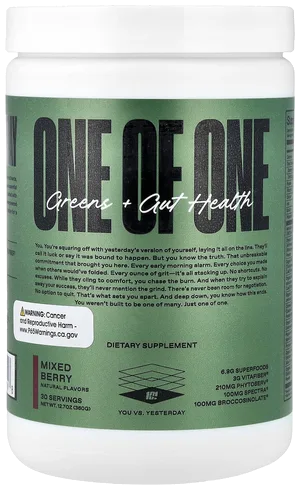
ONE OF ONE ONE OF ONE, Greens + Gut Health, Mixed Berry, (360 g) Review
This is a greens and gut health powder in Mixed Berry flavor, sold in a 360 g container. A serving is 1 scoop (12 g), and each container holds 30 servings. Per serving the label lists 35 calories, 7 g carbohydrate, 4 g dietary fiber, 1 g sugars and 2 g protein. The main ingredients are Isomalto-oligosaccharide (IMO) 3000 mg, Organic Spirulina powder 1500 mg, Organic Wheatgrass leaf powder 1500 mg, Organic Kale leaf powder 1000 mg, Organic Spinach leaf powder 500 mg and Chlorella powder 500 mg. Smaller amounts include Organic Oat Grass 250 mg, Peppermint leaf powder 250 mg, PhytoServ Fruit Blend 210 mg, Organic Barley Grass Juice Powder 200 mg, Organic Alfalfa Grass 200 mg and Organic Blueberry powder 200 mg. Other ingredients are citric acid, natural flavors, organic gum arabic and stevia leaf extract. The printed directions say to mix one scoop (12 g) in 8 to 12 oz (237 to 355 ml) of water and consume daily. Buyers most often praise the berry taste and how easily it mixes in water, though a few find it very sweet.
We don’t sell supplements. We help you make decisions and get the best price.
Lowest prices
We may earn a commission from some store links. How we choose.
Finding the lowest prices at the stores now. This takes a few seconds.
Products with nearly the same formula (Matched on the main ingredients)
Study, Trial or Testing Result Summary
Members Only110 human studies · 58 improved
2 of these 110 human studies gave the ingredient by drip, not by mouth.
The best-matched ingredient at a full dose is spirulina. In a 12-week trial of 60 adults with constipation-type irritable bowel, 1 gram a day eased symptoms and improved quality of life more than a placebo [1]. This product gives 1.5 grams. Peppermint has strong support from reviews of many trials for irritable bowel symptoms and belly pain [2][3]. Those studies used peppermint oil capsules, though, and this product contains peppermint leaf powder, so the results may not carry over. Some trials also found no clear benefit [4][5]. Several helpful ingredients are well below the studied amounts. Blueberries helped 53 percent of people with gut disorders, against 30 percent on placebo, but at the equivalent of 180 grams of fresh berries [6]. Ginger eased bloating and fullness at 400 milligrams [7], and this product gives 50 milligrams. Pomegranate helped bloating only as part of a probiotic blend at 400 milligrams [8]. Milk thistle reaches the studied dose only at three servings a day [9]. Vitamin C, calcium, iron and potassium are present in small amounts and showed no benefit for bowel comfort [10][11][12]. Wheatgrass, kale, chlorella and most of the other greens have no human studies for this goal. Animal and cell studies are never counted.
See all 110 studies →Hide the studies
- Across 51 trials with 4,644 adults with irritable bowel syndrome treated for 4 to 12 weeks, peppermint oil capsules ranked first for improving overall symptoms, though many trials were at risk of bias.Efficacy of soluble fibre, antispasmodic drugs, and gut-brain neuromodulators in irritable bowel syndrome: a systematic …
- In 16 trials of 3789 dialysis patients, lanthanum carbonate was compared with calcium carbonate and others for mineral and bone disorder; it did not test calcium for bowel comfort, and it reported no calcium-related digestive benefit.Efficacy and safety of lanthanum carbonate on chronic kidney disease-mineral and bone disorder in dialysis patients: a s…
- Across six studies of 3,285 adults, a low-volume bowel prep with vitamin C cleansed as well as the comparison prep and caused less vomiting, with no difference in nausea or abdominal pain.Efficacy and safety of split-dose ultra-low-volume polyethylene glycol with ascorbic acid versus sodium picosulfate with…
- In 20 trials of 2,468 children preparing for colonoscopy, a bowel cleanser containing vitamin C was rated adequate but was tested in only one study, and no clear benefit for digestive symptoms was shown.Comparative Cleansing Efficacy, Safety, and Tolerability of Bowel Preparation Agents in Pediatric Patients: A Network an…
- In 10 trials with 1,030 adults with irritable bowel syndrome, peppermint oil beat placebo for overall symptoms and abdominal pain but caused more side effects, and the quality of evidence was very low.Systematic review and meta-analysis: efficacy of peppermint oil in irritable bowel syndrome.
- In 12 trials with 835 adults with irritable bowel syndrome, peppermint oil improved overall symptoms and abdominal pain more than placebo, with no significant difference in side effects.The impact of peppermint oil on the irritable bowel syndrome: a meta-analysis of the pooled clinical data.
- In 9 placebo-controlled trials with 726 patients with irritable bowel syndrome, enteric-coated peppermint oil capsules were better than placebo for overall symptoms and abdominal pain, with mild side effects such as heartburn.Peppermint oil for the treatment of irritable bowel syndrome: a systematic review and meta-analysis.
- In 4 trials with 392 adults with irritable bowel syndrome, peppermint oil reduced the risk of persistent symptoms compared with placebo.Effect of fibre, antispasmodics, and peppermint oil in the treatment of irritable bowel syndrome: systematic review and …
- In 3 trials with 249 people with functional dyspepsia, a peppermint and caraway oil combination reduced pain and improved overall condition more than placebo.Menthacarin, a Proprietary Peppermint Oil and Caraway Oil Combination, Improves Multiple Complaints in Patients with Fun…
- Across sixteen studies in people with chronic kidney disease, ferric citrate improved iron stores but raised the risk of diarrhoea, abdominal pain and discoloured stools.Ferric citrate in the management of hyperphosphataemia and iron deficiency anaemia: A meta-analysis in patients with chr…
- Across 33 placebo-controlled trials of herbal treatments for irritable bowel syndrome, 17 of them testing peppermint oil, pooled results showed peppermint oil relieved symptoms and was well tolerated in short-term use.Western herbal medicines in the treatment of irritable bowel syndrome: A systematic review and meta-analysis.
- A review of 8 trials, with 5 placebo-controlled trials pooled, suggested peppermint oil might relieve irritable bowel symptoms, but flaws in the studies meant no firm conclusion could be drawn.Peppermint oil for irritable bowel syndrome: a critical review and metaanalysis.
- In a review of 14 trials with 1927 children across various digestive problems, peppermint oil reduced the duration, frequency and severity of pain in children with functional abdominal pain, though the authors say results need careful interpretation.Herbal Medicines for Gastrointestinal Disorders in Children and Adolescents: A Systematic Review.
- A review of 6 studies with 275 children with abdominal pain disorders found peppermint oil may improve symptoms compared with placebo, but the result was not statistically clear. Overall evidence quality was very low, and well-designed trials are needed.Pharmacologic treatment in pediatric functional abdominal pain disorders: a systematic review.
- In 111 people with functional dyspepsia who also had irritable bowel symptoms, pain intensity fell by 50-75% on average over 28 days of treatment with Menthacarin.Effectiveness of Menthacarin on symptoms of irritable bowel syndrome.
- In one trial of 50 children with recurrent abdominal pain and irritable bowel syndrome, peppermint oil capsules showed a possible but not statistically significant improvement over placebo.Pharmacological interventions for recurrent abdominal pain (RAP) and irritable bowel syndrome (IBS) in childhood.
- A review of 26 studies found people with irritable bowel syndrome tended to have lower calcium levels and intake, but there were too few supplement trials to say whether calcium eases symptoms.Association between irritable bowel syndrome and micronutrients: A systematic review.
- In eleven trials in children with iron-deficiency anaemia, groups given lactoferrin had significantly less constipation than iron-only groups, though vomiting, poor appetite and abdominal pain were also reported.Lactoferrin as treatment for iron-deficiency anemia in children: a systematic review.
- In a review of 70 placebo-controlled trials of irritable bowel drugs, peppermint oil was named as needing further study, so no clear conclusion about it could be drawn.Pharmacologic treatment of the irritable bowel syndrome: a systematic review of randomized, controlled trials.
- A 2010 clinical evidence review of bowel treatments listed peppermint oil among antispasmodics, but the abstract does not state its measured effect.Irritable bowel syndrome.
- A 2012 clinical evidence review of bowel treatments listed peppermint oil among antispasmodics, but the abstract does not state its measured effect.Irritable bowel syndrome.
- A review of medical guidelines found peppermint oil is strongly recommended for abdominal pain and gas in bowel disorders.[Phytotherapeutic recommendations in medical guidelines for the treatment of gastroenterological diseases - a systematic…
- In 350 adults with self-reported bloating or indigestion, a daily synbiotic containing 400 mg pomegranate extract plus probiotics for 6 weeks improved digestive quality of life, bloating, gas, abdominal discomfort and regularity versus placebo, with 72.3% reporting never or rarely bloating versus 55.9% on placebo.A Randomized, Placebo-Controlled Trial Evaluating Multi-Species Synbiotic Supplementation for Bloating, Gas, and Abdomin…
- In 228 children aged 8 to 18 with irritable bowel syndrome or functional abdominal pain, peppermint oil capsules of 182 mg were no better than placebo for reducing abdominal pain over 8 weeks.Peppermint Oil and Sweets in Pediatric Irritable Bowel Syndrome and Functional Abdominal Pain: A Randomized Trial.
- In 213 adults with non-ulcer dyspepsia, an enteric-coated capsule with 90 mg peppermint oil and 50 mg caraway oil reduced pain intensity as much as an older formulation, and caused less peppermint-taste belching.[Peppermint oil-caraway oil fixed combination in non-ulcer dyspepsia--comparison of the effects of enteric preparations]…
- In 206 adults having an afternoon colonoscopy, the 2-liter prep with vitamin C cleansed less well than a 4-liter prep without it and was linked to more bloating (23.1% vs 11.5%).Efficacy of morning-only 4 liter sulfa free polyethylene glycol vs 2 liter polyethylene glycol with ascorbic acid for af…
- In 196 adults with quiet ulcerative colitis, a 1-liter prep with vitamin C cleansed as well as the 2-liter dose (98.6% vs 97.1% success) but caused more nausea.One-liter polyethylene glycol with ascorbic acid provides comparable cleansing quality to two-liter regimen in bowel pre…
- In 189 adults with irritable bowel syndrome taking 182 mg of small-intestinal-release peppermint oil for 8 weeks, 46.8% had an abdominal pain response, not significantly different from placebo at 34.4%, though abdominal pain, discomfort and symptom severity were reduced more than placebo.Efficacy and Safety of Peppermint Oil in a Randomized, Double-Blind Trial of Patients With Irritable Bowel Syndrome.
- In 182 outpatients with COVID-19, a diet with pomegranate juice and sumac alongside standard care reduced symptoms including diarrhea, nausea, vomiting and abdominal pain more than standard care alone.The Effect of Pomegranate Juice and Sumac Consumption in the Treatment of Outpatients with COVID-19.
- In 173 adults with irritable bowel syndrome, extraintestinal symptoms improved over 6 weeks in the peppermint oil, placebo and usual care groups alike, so these symptoms were not caused by peppermint oil.Are They Side Effects? Extraintestinal Symptoms Reported During Clinical Trials of Irritable Bowel Syndrome May Be More …
- In 168 adults, 1 liter of the vitamin C prep plus a suppository cleansed as well as the 2-liter prep, with similar abdominal pain and nausea but less sleep disturbance and anal discomfort.Combination of bisacodyl suppository and 1 L polyethylene glycol plus ascorbic acid is a non-inferior and comfortable re…
- In 150 people with diarrhea-type irritable bowel syndrome, a ginger juice herbal plaster on the navel for 4 weeks reduced bloating, pain and stool problems, but ginger was not tested alone and the plaster was compared with a drug rather than placebo.[Diarrhea-predominant irritable bowel syndrome of spleen deficiency and damp excess treated with fire needling therapy w…
- An economic analysis of 126 adults with irritable bowel syndrome found small-intestinal release peppermint oil over 8 weeks had a high chance of being cost-effective, based on a slightly higher share of abdominal pain responders than placebo, though the cost gain was uncertain.A trial-based economic evaluation of peppermint oil for the treatment of irritable bowel syndrome.
- In 126 adults with functional indigestion, two capsules a day of a ginger and artichoke extract for 4 weeks improved overall symptoms more than placebo, including nausea, fullness, pain and bloating.The Effect of Ginger (Zingiber officinalis) and Artichoke (Cynara cardunculus) Extract Supplementation on Functional Dys…
- In 120 anaemic adolescent girls given iron and folic acid for 3 months, weekly dosing caused fewer side effects than daily dosing (8.3% versus 13.35%), with abdominal pain the most common.Weekly iron folate supplementation in adolescent girls--an effective nutritional measure for the management of iron defi…
- In 114 adults with functional dyspepsia, Menthacarin capsules taken twice daily for 4 weeks reduced pain and discomfort more than placebo and improved quality of life.A randomized placebo-controlled trial on the effects of Menthacarin, a proprietary peppermint- and caraway-oil-preparati…
- In 110 adults with irritable bowel syndrome taking enteric-coated peppermint oil capsules three to four times daily for 1 month, 79% had less abdominal pain, and gas, bloating and stool frequency also improved more than with placebo.Enteric-coated peppermint-oil capsules in the treatment of irritable bowel syndrome: a prospective, randomized trial.
- In 106 people with functional bloating, a three-herb blend containing ginger taken for 2 weeks reduced bloating frequency and severity more than placebo or dimethicone, with benefits lasting 8 weeks after stopping.The efficacy of a Persian herbal formulation on functional bloating: A double-blind randomized controlled trial.
- In 90 outpatients with irritable bowel syndrome, enteric-coated peppermint oil capsules taken three times daily for 8 weeks left more people free of abdominal pain than placebo (14 versus 6 by week 8) and improved quality of life.The effect of enteric-coated, delayed-release peppermint oil on irritable bowel syndrome.
- In 80 people with ulcerative colitis in remission, 140 mg of silymarin daily for 6 months alongside standard treatment lowered a disease activity score and a blood marker of inflammation, and 35 of 38 people who finished were flare-free, though the difference from placebo (21 of 32) was not statistically significant.A randomized, double blinded, placebo-controlled clinical trial of silymarin in ulcerative colitis.
- In 80 adults with mild to moderate functional indigestion, 480 mg a day of steamed ginger extract for 12 weeks improved digestive symptoms, including pain, constipation, indigestion and reflux, and quality of life more than placebo.Efficacy and safety of steamed ginger extract for gastric health: a randomized, double-blind, placebo-controlled multi-c…
- In 74 adults with diarrhea-predominant irritable bowel syndrome, peppermint oil taken three times daily for 6 weeks reduced abdominal pain more than placebo, but the benefit faded within two weeks after stopping.Efficacy of Peppermint oil in diarrhea predominant IBS - a double blind randomized placebo - controlled study.
- In 72 adults with irritable bowel syndrome, a sustained-release peppermint oil capsule taken three times daily for 4 weeks reduced overall symptom scores more than placebo, with a 40% drop from baseline versus 24% with placebo.A Novel Delivery System of Peppermint Oil Is an Effective Therapy for Irritable Bowel Syndrome Symptoms.
- In 62 women given dairy foods with about 1300 mg calcium daily for 1 week, those who could not digest lactose well had more gas with regular dairy than with lactose-reduced dairy, but bloating, pain and diarrhea did not differ.Lactose maldigestion is not an impediment to the intake of 1500 mg calcium daily as dairy products.
- In 60 adults with constipation-predominant irritable bowel syndrome, 1 g of spirulina daily for 12 weeks improved quality of life, symptom severity, antioxidant capacity, oxidative stress and a gut leakiness marker more than placebo.Effects of Spirulina (Arthrospira) platensis supplementation on intestinal permeability, antioxidant and inflammatory ma…
- In 60 tuberculosis patients on drugs that upset the stomach, 500 mg of ginger before each dose for 4 weeks lowered nausea (70% vs 90% with placebo), though liver injury differences were not statistically significant.Ginger for Prevention of Antituberculosis-induced Gastrointestinal Adverse Reactions Including Hepatotoxicity: A Randomi…
- In 57 adults with irritable bowel syndrome, 75% of those taking enteric-coated peppermint oil for 4 weeks had at least a 50% drop in total symptoms, compared with 38% on placebo.Peppermint oil (Mintoil) in the treatment of irritable bowel syndrome: a prospective double blind placebo-controlled ran…
- In 56 people with irritable bowel syndrome, a supplement with menthol, limonene and gingerol added to standard care for 30 days lowered symptom scores more than placebo, with no significant gut bacteria changes.Efficacy and safety of a food supplement with standardized menthol, limonene, and gingerol content in patients with irri…
- In 55 people, the vitamin C bowel prep alone cleansed poorly in those with spinal cord injury (50% acceptable) versus 89% in able-bodied people, and adding neostigmine raised acceptable cleansing to 85%.Neostigmine Administered With MoviPrep Improves Bowel Preparation for Elective Colonoscopy in Patients With Spinal Cord …
- In 52 people with relapsing-remitting multiple sclerosis, 1,500 mg of ginger daily for 12 weeks reduced constipation, nausea and bloating (and possibly abdominal pain) more than placebo.The effects of ginger supplementation on common gastrointestinal symptoms in patients with relapsing-remitting multiple …
- In 51 children with irritable bowel syndrome, 500 mg a day of calcium butyrate for 8 weeks led to at least a 50% drop in symptom scores in 73% of the butyrate group versus 3.8% on placebo.Calcium butyrate efficacy in pediatric irritable bowel syndrome: Randomized placebo-controlled multiomics-based clinical…
- In 51 people with constipation-type irritable bowel syndrome (47 finished), a supplement of inulin, choline and silymarin added to a constipation diet for 8 weeks improved abdominal pain by 68.3% and bloating by 34.8%, but stool number and consistency did not differ significantly between groups.Inulin, Choline and Silymarin in the Treatment of Irritable Bowel Syndrome with Constipation-Randomized Case-Control Stu…
- In 50 opium users with lead-related abdominal pain, adding one dose of 1 g intravenous calcium gluconate to morphine lowered pain scores more than morphine alone at 30 and 60 minutes.Intravenous calcium Gluconate alleviates Lead-induced abdominal pain, a randomized clinical trial.
- In 50 adults with functional dyspepsia, 400 mg a day of a ginger extract for 4 weeks made 79% responders versus 21% on placebo, and bloating, fullness and early satiation cleared in 64% versus 13%.A Randomized, Double-Blind, Placebo Controlled, Parallel-Group, Comparative Clinical Study to Evaluate the Efficacy and …
- In 45 people with irritable bowel syndrome, 1 g or 2 g of ginger daily for 28 days did not beat placebo, with 47% responders on 1 g and 33% on 2 g versus 57% on placebo.Is ginger effective for the treatment of irritable bowel syndrome? A double blind randomized controlled pilot trial.
- In 43 patients with functional gut disorders, 6 weeks of freeze-dried blueberries (equal to 180 g fresh) gave relevant abdominal symptom relief in 53% versus 30% on placebo, with better quality of life scores, though total and pain symptom scores did not change significantly.Blueberries Improve Abdominal Symptoms, Well-Being and Functioning in Patients with Functional Gastrointestinal Disorder…
- In a double-blind trial of 42 children with irritable bowel syndrome, enteric-coated peppermint oil capsules reduced pain severity in 75% of children after 2 weeks, compared with placebo.Enteric-coated, pH-dependent peppermint oil capsules for the treatment of irritable bowel syndrome in children.
- In 40 adults over 4 weeks, a hydration drink containing vitamin C among other ingredients was well tolerated, with only mild bloating and cramping changes and no meaningful harm versus placebo.Randomized Trial to Assess the Safety and Tolerability of Daily Intake of an Allulose Amino Acid-Based Hydration Beverag…
- In 40 children aged 7 to 12 with functional abdominal pain, enteric-coated peppermint oil at 540 or 900 mg daily for one week gave menthol levels that rose with dose, and the 900 mg dose slowed colon and whole-gut contractions compared with 540 mg.Randomized trial: Peppermint oil (menthol) pharmacokinetics in children and effects on gut motility in children with fun…
- In 40 people with irritable bowel syndrome, an 8-week herbal capsule combining ginger with two other herbs improved symptoms about as much as the standard drug mebeverine, with no placebo group.Treatment of irritable bowel syndrome using a selected herbal combination of Iraqi folk medicines.
- In 32 healthy adults, a single dose of peppermint and caraway oil did not change stomach emptying or pressure, but it increased hunger and reduced burning, bloating and fullness compared with placebo.The combination of L-menthol and caraway oil does not affect gastric function but increases hunger in healthy subjects.
- In 32 people with diarrhea-predominant irritable bowel syndrome, a herbal blend including pomegranate taken twice daily for 4 weeks did not improve symptoms more than placebo.Efficacy and safety of Ayurvedic herbs in diarrhoea-predominant irritable bowel syndrome: A randomised controlled crosso…
- In 30 children with functional abdominal pain taking 180 to 540 mg of enteric-coated peppermint oil for 1 week, higher menthol blood levels were linked to stronger stomach, small bowel and whole-gut contractions, and to shorter colon transit time, though the study did not measure symptom relief.Randomised trial: Peppermint oil (menthol) pharmacokinetics in children and effects on gut motility in children with fun…
- In 30 children aged 7 to 12 with functional abdominal pain, one week of enteric-coated peppermint oil at 180 to 540 mg per day did not change overall gut bacteria composition, though a few rare bacteria shifted. The study did not measure symptom outcomes.Peppermint oil effects on the gut microbiome in children with functional abdominal pain.
- In a small 11-day trial of 24 healthy adults, 170 g of cooked spinach per day as part of a warm meal was compared with a duckweed vegetable, and the two groups differed only on hunger, gas and constipation, with the direction of those differences not stated in the abstract.Daily Intake of Lemna minor or Spinach as Vegetable Does Not Show Significant Difference on Health Parameters and Taste …
- In 23 people with irritable bowel syndrome taking 6 g a day of calcium polycarbophil for six months in a crossover trial, 15 of 21 who had a preference (71%) chose it over placebo, with better relief of constipation, bloating, pain and nausea.Calcium polycarbophil compared with placebo in irritable bowel syndrome.
- In a small crossover trial of 19 healthy young men, a single 1,200 mg dose of ginger did not change gallbladder function or bloating, nausea or fullness compared with placebo.The effects of ginger on gallbladder motility in healthy male humans.
- In 14 healthy young men, one gram of ginger powder in water made the lower esophageal sphincter relax more during swallowing and slowed esophageal contractions, with no change in resting pressure.Effect of ginger on lower esophageal sphincter pressure.
- In healthy volunteers, a single 182 mg peppermint oil capsule lowered stomach pressure and reduced appetite during fasting compared with placebo, but did not change fullness or symptoms after a nutrient drink.Effect of acute peppermint oil administration on gastric sensorimotor function and nutrient tolerance in health.
- In a 6-week placebo-controlled trial, enteric-coated peppermint oil at 180 mg three times daily did not improve irritable bowel syndrome symptom scores more than placebo, as both groups improved substantially.Peppermint Oil Treatment for Irritable Bowel Syndrome: A Randomized Placebo-Controlled Trial.
- In 80 people with diarrhea-type irritable bowel syndrome, a herbal plaster containing dried ginger plus acupuncture for 4 weeks eased bloating and stool frequency more than moxibustion plus acupuncture, with 37 of 40 responding.[Herbal-moxa plaster for diarrhea type irritable bowel syndrome of spleen and kidney yang deficiency: a randomized contr…
- In 60 people with mild to moderate irritable bowel syndrome, a herbal mixture including ginger reduced abdominal pain, bloating, anxiety and depression scores over up to 3 months, while the control group did not change significantly.Evaluating the efficacy of mixture of Boswellia carterii, Zingiber officinale, and Achillea millefolium on severity of s…
- In 47 patients with acute ischemic colitis, adding Ginkgo biloba extract by injection (30 patients) to routine care relieved abdominal pain and bloody stool faster and improved gut lining healing, and raised an antioxidant enzyme while lowering oxidative and inflammatory markers, compared with routine care alone (17 patients).Therapeutic effects of Ginkgo biloba extract against acute ischemic colitis.
- In 39 adults who drank 100 ml of blueberry kombucha daily for 4 weeks, stool consistency normalized and bloating and pain dropped, with about 90% reporting better bowel function, though this was an exploratory study.Physicochemical, Bioactive, and Clinical Evaluation of Blueberry-Enriched Kombucha as a Functional Beverage.
- In 9 children with lactose malabsorption, lactose-hydrolyzed milk gave fewer abdominal pain, bloating and gas symptoms than ordinary milk, and calcium absorption was higher on that diet than on a lactose-free diet.Calcium absorption and acceptance of low-lactose milk among children with primary lactase deficiency.
- In 1585 people with irritable bowel syndrome, 4 weeks of a supplement made with 960 mg ginger root powder and palmarosa oil lowered overall symptom scores by about 68% and improved bloating and bowel habits, though there was no placebo group.Very-Low-Absorbable Geraniol for the Treatment of Irritable Bowel Syndrome: A "Real-World" Open-Label Study on 1585 Pati…
- In an uncontrolled study of 899 adults with bowel symptoms, a multi-ingredient product containing mint over 2 months significantly reduced symptom severity, with no side effects documented. The product was not tested alone and had no control group.Efficacy of a new nutraceutical formulation: L-tryptophan, probiotics, charcoal, chamomile, mint, and licorice (COLONIR®…
- In 313 people with chronic pancreatitis treated with a medical plan that included an antioxidant mix with 540 mg vitamin C daily, 84.7 percent had significant abdominal pain relief at one year, though vitamin C was not tested alone.Long-term pain relief with optimized medical treatment including antioxidants and step-up interventional therapy in pati…
- In 126 people with bloating or abdominal cramps without an organic cause, one Menthacarin capsule twice daily for 8 weeks significantly improved abdominal symptoms and quality of life in a single-group trial with no control group.Treatment of disorders of gut-brain interaction with peppermint oil and caraway oil combination Menthacarin : A phase IV…
- In 69 Japanese adults with irritable bowel syndrome, peppermint oil capsules taken three times daily before meals for 4 weeks led to an 85% patient-rated improvement rate in a single-group open-label trial with no control group.Efficacy and safety of peppermint oil for the treatment in Japanese patients with irritable bowel syndrome: a prospectiv…
- In 47 people with functional dyspepsia, 1080 mg per day of ginger for 8 weeks was well tolerated, with mild bloating, heartburn or diarrhea in some participants; the study did not measure whether symptoms improved.Evaluation of Adverse Effects and Tolerability of Dietary Ginger Supplementation in Patients With Functional Dyspepsia.
- In 43 Australian adults with digestive disorders, a multi-ingredient herbal formula containing peppermint oil, taken at 10 g daily after a 5 g step, improved gut symptoms by 60% to 80% over 16 weeks, though there was no placebo group.Herbal formula improves upper and lower gastrointestinal symptoms and gut health in Australian adults with digestive dis…
- In 14 patients after upper gut surgery given 1500 mg vitamin C daily by feeding tube for 5 days, the high-dose feed was well tolerated, with flatulence in only 3 of 14 people.Safety and intestinal tolerance of high-dose enteral antioxidants and glutamine peptides after upper gastrointestinal su…
- In a large UK study of 157,900 adults followed for about 13 years, moderate intake of vitamin C within an overall antioxidant diet was linked to lower risk of irritable bowel syndrome, while very high intake gave no added protection.Nonlinear association between composite dietary antioxidant index and irritable bowel syndrome: insights from UK Biobank…
- In a national survey of 7042 American women, higher blood vitamin C levels were linked to a lower prevalence of gallbladder disease and gallstones, but no link was found in men.Serum ascorbic acid and gallbladder disease prevalence among US adults: the Third National Health and Nutrition Examinat…
- This six-month study of 1012 people with functional bowel disorders counted how often people used ginger and other complementary remedies, but it did not measure whether ginger improved their symptoms.Complementary and alternative medicine use and cost in functional bowel disorders: a six month prospective study in a la…
- In a case-control study of Iranian adults, a nutrient pattern high in antioxidants including vitamin C was linked to lower odds of irritable bowel syndrome, but this was an association and vitamin C was not tested alone.The Relationship of Dietary Nutrient Patterns and Irritable Bowel Syndrome: A Multicenter Case-Control Study.
- In a Saudi survey of 828 people, 87% reported using complementary remedies for digestive problems, and 62% of users reported using mint, but this survey did not measure whether mint worked.The use of complementary and alternative medicine for functional gastrointestinal disorders among the saudi population.
- In a case-control study of 775 Lebanese adults, lower vitamin C intake was linked to food hypersensitivity (including gut symptoms), but this was an association and not a test of vitamin C.Nutritional Profile, Lifestyle Characteristics, and Intestinal Inflammation in Lebanese Adults Suffering from Food Hyper…
- In 555 young women, higher vitamin C intake and mid-range blood vitamin C levels were linked to more premenstrual appetite changes and bloating or swelling.Associations Between Dietary Vitamin C, Serum Ascorbic Acid, and GSTT1 Genotype and Premenstrual Symptoms.
- In a survey of 404 hemodialysis patients, using calcium acetate as a phosphate binder was an independent risk factor for irritable bowel syndrome, alongside anxiety and long-term dialysis.Irritable bowel syndrome frequency and related factors in hemodialysis patients.
- In a questionnaire survey of Romanian adults with anemia, vitamin C had mixed results in easing treatment side effects such as stomach discomfort.Impact of Side Effects on Anemia Therapy Compliance.
- In a case-control study of 289 people, healthy controls ate pomegranate and other functional foods more often than people with digestive diseases, but this association does not prove that pomegranate protects against these diseases.Increased Functional Foods' Consumption and Mediterranean Diet Adherence May Have a Protective Effect in the Appearance …
- A survey of 157 medical students and 125 cancer patients found both groups commonly know and use mint for abdominal discomfort, but the survey did not test whether it works.Medicinal Plants Used for Abdominal Discomfort - Information from Cancer Patients and Medical Students.
- Women with endometriosis had more gastrointestinal symptoms such as flatulence and constipation than controls and lower dietary vitamin C intake, but the study did not test vitamin C as a treatment.Different nutrient intake and prevalence of gastrointestinal comorbidities in women with endometriosis.
- In a non-interventional study of 190 people with drug-related elevated liver enzymes, silymarin over about 4 months improved flatulence, upper abdominal discomfort and other liver-related symptoms, with symptom improvement already seen after 2 months.[Effect of silymarin on liver health and quality of life. Results of a non-interventional study].
- People with irritable bowel syndrome ate more vitamin C from food than matched controls, but vitamin C intake was not linked to symptom severity or bowel subtype.Nutrient intake in patients with irritable bowel syndrome compared with the general population.
- In a survey of 160 patients with digestive disorders in Algeria, about 7.8% reported using pomegranate as a herbal remedy, but the survey measured no effects on symptoms.A survey into the utilization of probiotics and medicinal plants among individuals afflicted with gastrointestinal disor…
- In 155 adults with irritable bowel syndrome, vitamin C intake was low in many participants, but the study did not link vitamin C intake to bowel symptoms.Intake of fiber and micronutrients in patients with IBS.
- In a retrospective study of 146 children, an oral sulfate tablet worked as well as a polyethylene glycol and ascorbate bowel prep for colonoscopy, with less abdominal pain. This tested bowel-cleansing products, not vitamin C as a digestive aid.Efficacy and safety of oral sulfate tablet vs. polyethylene glycol and ascorbate for bowel preparation in children.
- In 105 people with irritable bowel syndrome, lower iron intake and lower blood iron were linked to more gut symptoms, but this was an association and no iron supplement was tested.Poor intake of vitamins and minerals is associated with symptoms among patients with irritable bowel syndrome.
- In 65 adults with self-reported gluten sensitivity on a gluten-free diet, calcium intake was below recommended levels and wind and bloating were the most common gut symptoms, but this baseline report did not test a calcium intervention.Dietary and symptom assessment in adults with self-reported non-coeliac gluten sensitivity.
- In a retrospective review of 59 people with diabetes and dyslipidemia, 6 months of a supplement containing berberine and silymarin was followed by diarrhea in 5 of 31 treated people, compared with 22 of 28 untreated people with diarrhea.Retrospective analysis of the effects of a highly standardized mixture of Berberis aristata, Silybum marianum, and monac…
- In 53 people with irritable bowel syndrome, vitamin C intake was high from diet, and higher fiber intake was linked to fewer general symptoms. Vitamin C itself was not linked to symptoms.[Dietary intake of a group of patients with irritable bowel syndrome; relation between dietary fiber and symptoms].
- In a 1988 study of 45 people (chronic pancreatitis patients, epilepsy patients on enzyme-inducing drugs, and controls), vitamin C intake was one of several factors that separated the groups, but no vitamin C supplement was given and no digestive symptoms were measured.Antioxidants, enzyme induction, and chronic pancreatitis: a reappraisal following studies in patients on anticonvulsants…
- In a 1985 dietary survey of gastroenterology outpatients, women with functional bowel and reflux disorders had lower vitamin C intake than women with inflammatory bowel disease. No vitamin C supplement was tested and symptoms were not linked to vitamin C.Nutritional status of gastroenterology outpatients: comparison of inflammatory bowel disease with functional disorders.
- In a retrospective study of people with irritable bowel syndrome, a low FODMAP diet group had greater symptom relief than a regular diet group and higher vitamin C intake, but vitamin C itself was not tested as the cause of the benefit.Impact of low-FODMAP diet on symptom relief in irritable bowel syndrome patients.
- In a retrospective single-group study of adults with functional dyspepsia, a ginger and perilla supplement reduced stomach pain, heartburn, nausea, gas and bloating within the first week, with further improvement by 2 weeks and only mild side effects.Effectiveness of a nutraceutical supplement containing highly standardized perilla and ginger extracts in patients with …
- In a pilot study of 50 endurance athletes, a chewable pill with 320 mg of ginger and artichoke extract plus simethicone for 4 weeks reduced exercise-related gas, cramps, loose stools and bloating.Efficacy of artichoke and ginger extracts with simethicone to treat gastrointestinal symptoms in endurance athletes: a p…
- In a small pilot of 20 people with cancer-related loss of appetite, a combination of ginger, turmeric and gentian for 2 weeks was poorly tolerated, often causing nausea, vomiting and bloating, and did not significantly improve appetite.Tolerability of the combination of ginger (Zingiber officinalis), gentian (Gentiana lutea) and turmeric (Curcuma longa) …
Review Totals and Summary
Members Only71 reviews · 92% positive
Across the stores that sell it, this greens powder carries about 71 ratings, and the feedback leans positive, with most buyers praising the mixed berry taste and how easily it mixes, and a few raising doubts about sweetness, effect and the label. **What buyers say it did for them:** Several buyers use it as a daily routine item. One says it is taken "every morning to boost gut health," and another reports their "stomach has felt so much lighter this week." One reviewer says it adds "more green fibres" on days without enough veggies. Another is satisfied so far and finds it "easy to include in my daily routine." One buyer says they "don't feel anything" when taking it and are unsure if it works. **What they complain about:** The complaints are few and varied. One buyer finds it "very sweet" and cannot take the full dose. Another says it is "not fully soluble." One reviewer points to a cancer warning on the label and says the product was close to its expiry date. One says they are "not sure if its effective or not." **Taste, smell and form:** Taste draws the most praise. One buyer expected it to taste like "lawn clippings" and found the berry flavor "actually really good." Others call the taste "great" or "acceptable," and one says it is good "hot or cold." Mixing gets mixed comments: some say it "dissolves easily in water" and "mixes super smooth," while another notes it does not fully dissolve. **Value for money:** Price comes up a few times. One buyer calls it a "good price," while another says the price is good "only for buy one get one free deals," which suggests it may feel pricey at full cost. **Who it seems to suit and who it did not:** It seems to suit people who want a berry flavored greens drink they can stir into water and who like a long ingredients list; one buyer chose it for the "comprehensive ingredients list." It suited less well those who dislike sweet drinks, those who expect to notice an effect right away, and the buyer who was put off by the label warning and the near expiry date.
Biohacker Summary
Members Only9 of 10 recommend it
Spirulina, the main ingredient, gets a mostly positive but split response: of the five panelists who spoke on it, three recommend it, one is neutral, and one has stopped. Those in favor point to better sleep, lower stress, better mood and faster recovery, including help with rhinitis, and one simply names their favorite spirulina tablets. The neutral voice puts it in the okay tier and cautions that most spirulina can be contaminated with heavy metals, so careful sourcing matters. The one who stopped says it lacks essential nutrients like protein and can cause bloating and low energy. No one gave a dose or a preferred form beyond tablets, and none described a pairing. Among the smaller ingredients in this product, vitamin C, potassium and iron drew the most comments, mostly positive, with some caution about calcium and iron supplements.
See all 10 biohackers →Hide the biohackers
Dave Asprey · Spirulina · recommends
- Recommends their favorite spirulina tablets.
- Recommends their favorite chlorella tablets.
- Explains that potassium helps open a gate, allowing creatine to slip through and cross the blood-brain barrier more effectively.
- Recounts a doctor telling him in his 20s that vitamin C would kill him.
- Recommends taking vitamin C for better skin health.
- States that superfoods like kale aren't good for health.
- Mentions chlorella as an ingredient used in the 'release' step of the Qualia 2-Day Detox to grab onto unwanted compounds in the gut.
- Would have to eat a ridiculous pile of pomegranates every day to get enough Urolithin A, and they are not doing that.
- Uses acai in her plant stem cell retinol alternative product.
- Uses alfalfa in her plant stem cell retinol alternative product.
- States that currently, he is only taking vitamin C and vitamin D.
- Created a product with buchi oil, alfalfa, and acai, which was tested against traditional retinol, with 85% of users reporting better results from her product.
- Created a product with buchi oil, alfalfa, and acai, which was tested against traditional retinol, with 85% of users reporting better results from her product.
- Warns that spinach is a 'healthy' food packed with anti-nutrients that cause inflammation and block nutrient absorption.
Thomas DeLauer · Spirulina · recommends
- Recommends spirulina, stating that it improves sleep quality, decreases stress scores, and improves mood by reducing inflammation and providing tryptophan for serotonin production.
- Explains that Urolithin A is derived from pomegranates, but eating pomegranates does not provide the same absorption of Urolithin A as a pure supplement.
- Recommends whole food vitamin C, found in kiwi fruit, citrus, and bell peppers, to help clear uric acid by competing at kidney transporters, preventing reabsorption.
- Recommends broccoli for its NRF2 and sulforaphane content, which has a huge beneficial effect, and diindolylmethane (DIM) that can help modulate estrogen metabolism for hair loss.
- Recommends Element electrolytes, noting they are focused on sodium first, then potassium, then magnesium, helping with sending signals and hydrating tissue.
- Recommends giving any iron intervention a couple of months before deciding if it works, and suggests increasing heme iron through red meat or liver intake.
- Recommends consistently eating whole pomegranate pearls, rather than just the juice, because the fiber feeds the gut bacteria necessary for Urolithin A conversion, gradually shifting the microbiome towards greater production.
- Uses Element's cans which contain 100 milligram potassium, finding that electrolytes help his workout performance.
- Recommends taking vitamin C along with collagen about an hour before a workout for connective tissue benefits.
- Uses Element's 100 mg potassium cans first thing in the morning to prime his day and help with workout performance.
- Uses vitamin C as part of their immunity duo, stating it is important for boosting the immune system, especially during cold and flu season.
- Recommends eating steamed broccoli with brown mustard powder to activate sulforaphane, noting that 200g of cooked broccoli with one gram of mustard powder increased sulforaphane metabolites almost 5x, acting as a master switch for detox pathways.
- Mentions that Dose Daily contains organic ginger root powder.
- Notes that Dose Daily contains organic milk thistle, highlighting its significant data supporting liver health benefits.
Ben Greenfield · Peppermint · neutral
- Notes that a recent study showed peppermint oil improved symptoms of irritable bowel syndrome by more than 63% compared to a placebo group.
- Advises patients to stop ginkgo biloba before surgery because it can act as a med or antiplatelet agent.
- Advises patients to stop ginger before surgery because it can act as a med or antiplatelet agent.
- States that vitamin C is extremely important for collagen turnover and cites orthopedic data showing that 500 mg to 1 g of vitamin C can reduce the rate of complex regional pain in total knee replacements and wrist fractures.
- Says he is drinking LMNT, which contains sodium, potassium, and magnesium, and states that he actually drinks this stuff.
- Mentions vitamin C as part of a bare-minimum protocol.
- Questions the efficacy of pomegranate extract for plaque melting, asking how an enzyme can get through stomach acid and if the gut bacteria can utilize its chemical trash to make K.
- Notes that while vitamin C has significant value, the optimal dose is a vexed question, and high doses might not always be beneficial, potentially blunting the hormetic effects of exercise.
- Notes that IV vitamin C has been used for decades for cancer patients with almost no standardization and that he receives many questions about its effectiveness and combination with chemo.
- Recommends Celtic Sea Salt's new electrolyte drink 'Hydrate' for replenishing electrolytes and trace minerals lost through sweat, noting it contains 70 naturally occurring trace minerals, magnesium, taurine, and potassium, with no added sugar, artificial colors, or synthetic ingredients.
- Mentions pomegranates as a food that increases angiogenesis, as outlined in Dr. William Lee's book 'Eat to Beat Disease'.
- Says they like to put a little peppermint oil in the sauna for the aroma and for the lungs.
- Recommends Vitamin C for skin repair post-tattoo.
- Recommends testing for and replenishing iron if levels are low, as it can affect the ability to maintain or preserve muscle, especially for those on GLP-1s.
Siim Land · Spirulina · neutral
- Places Spirulina in the 'okay' tier, cautioning that most spirulina can be contaminated with heavy metals, requiring careful sourcing, and notes some limited evidence for stem cell proliferation.
- Recommends taking vitamin C with collagen to support joint collagen synthesis.
- States that vitamin C is needed for initiating collagen synthesis and that higher vitamin C intake appears to increase vitamin C content in the skin.
- Mentions that iron is a mineral necessary for making collagen.
- Lists sauerkraut and fruit as sources of Vitamin C.
- Lists potatoes and fruit as sources of Potassium.
- Lists dairy and sardines as sources of Calcium.
- States that broccoli is one of the boring foods from which he gets most of his fiber.
- Lists broccoli as a food high in spermidine, providing 3 mg per 100g, which he consumes for longevity.
- Notes that Vitamin C is one of several supplements with human evidence.
- States that excess iron promotes oxidative stress and inflammation, which increases heart disease risk.
- Notes that Boron reduces calcium/magnesium loss.
- Mentions ginger as a compound that can increase autophagy, but notes it doesn't come close to exercise in effectiveness.
- Notes that bananas have potassium but there are at least 8 other foods with more potassium than bananas.
Dr. Eric Berg · Spirulina · stopped
- Dr. Berg used to recommend spirulina as superfoods for the heart, but now he advises against them because they don't provide essential nutrients like protein and can lead to bloating and low energy.
- States that one can of sardines contains 382 mg of calcium.
- Warns against calcium supplements, citing studies that link them to a higher risk of heart attack, especially in postmenopausal women, and suggests getting calcium from dairy instead.
- Warns against iron supplements, suggesting instead to get iron from red meat or liver.
- Dr. Berg states that when nutrients like iron are too low, fatigue and weakness can follow.
- Warns against generic multivitamins, stating they are often full of fillers and synthetics.
- Recommends potassium as an important electrolyte, noting that most people get less than half of the 4700 mg RDA.
- Recommends focusing on calcium to support stronger bones if a neck hump is associated with osteoporosis.
- Mentions that bleeding or swollen gums point to vitamin C deficiency, and sugar competes with it directly, reducing absorption.
- Does not recommend taking iron supplements or cooking in iron skillets because the body has no mechanism of getting rid of iron unless one donates blood or is a menstruating female.
- Dr. Eric Berg recommends pairing broccoli with mustard seeds to boost beneficial plant compounds.
- Dr. Eric Berg recommends pairing spinach with lemon for better iron absorption.
- Suggests that ginger is an easy addition to a daily routine that may support digestion, inflammation, and healthy blood sugar levels.
- Warns against calcium carbonate, calling it limestone and the worst source of calcium, stating it takes 12 steps to be converted in the body and is like eating rocks.
Dr. Mark Hyman · Peppermint · uses
- Uses peppermint oil in her products for its therapeutic effect of helping with sebum production.
- Included ginger in their chicken dish as an anti-inflammatory power couple with turmeric.
- States that iron helps red blood cells carry oxygen, and a deficiency can make one feel like they are running on low power mode.
- Mentions iron as an existing biomarker that plays a role in mental health, which Function Health includes in their measurements.
- Includes spinach in their breakfast egg scramble.
- Warns that potassium bromate, a dough conditioner banned in the EU, UK, and Canada, is still allowed in U.S. bread.
- Recommends vitamin C as a basic supplement during detoxification to help with inflammation and detoxification.
- Dr. Hyman mentions vitamin C as an advanced therapy for skin repair.
- Mentions topical vitamin C as an antioxidant that can help skin with aging.
- Mentions that what they do when a cold comes on is not just vitamin C.
- Uses ginger in his chicken soup and a special drink because it is anti-inflammatory and helps with symptoms when feeling sick.
- Recommends ensuring adequate vitamin C intake on a regular basis for immune support, stating it's important for healthy immune function despite mixed data on its effectiveness for colds.
- Mentions that vitamin C was the very first vitamin discovered, isolated, and synthesized in 1932, and its deficiency caused scurvy.
- Recommends ginger as an anti-inflammatory powerhouse.
Andrew Huberman · Spirulina · recommends
- Recommends spirulina as a tool for accelerating recovery, specifically mentioning its use for rhinitis.
- Discusses a study where people who had taken powdered ginger were less judgmental because their stomachs were calmed, noting that ginger calms the stomach.
- Uses Element, an electrolyte drink with sodium, magnesium, and potassium in correct ratios and no sugar, to ensure adequate hydration and electrolytes, especially when starting days fast or during physical exercise.
- States that Iron is one of the critical nutrients with the best evidence for cognitive function and reducing the risk of dementia.
- Takes a multivitamin every day for longevity.
- Asks if ginger can increase metabolism and states that apparently, it can.
- Conducted a study on ginger powder dissolved in warm water, which significantly elevated the thermic effect of food over a 6-hour period, suggesting it could boost energy expenditure.
- Uses Element, which contains potassium in the correct ratios, to ensure proper hydration and electrolyte intake for brain and body function.
- Mentions potassium as an electrolyte.
- Recommends AG1, a vitamin, mineral, and probiotic drink, and notes that for a limited time, a subscription comes with additional supplements.
- Uses Element, an electrolyte drink with sodium, magnesium, and potassium in correct ratios and no sugar, to ensure adequate hydration and electrolytes, drinking it first thing in the morning and during physical exercise.
- Notes that broccoli sprouts have up to 100 times more sulfurophane than broccoli and activate glutathione in the brain.
- Uses Element, an electrolyte drink with sodium, magnesium, and potassium in correct ratios and no sugar, to ensure he is hydrated and has sufficient electrolytes. He drinks it first thing in the morning and during physical exercise, especially on hot days.
- Uses Element, an electrolyte drink with sodium, magnesium, and potassium but no sugar, to ensure adequate hydration and electrolytes, especially when waking up and during exercise.
Bryan Johnson · Peppermint · uses
- Is currently in the Penalty Box on doctor's orders to rest, and has made himself some peppermint tea.
- Has had low iron for 11 years and despite eating meat and trying all forms of iron supplementation at different times and sequences, none of it worked to raise his iron or ferritin levels.
- Had low iron for 11 years, with ferritin averaging 38 ng/mL, and has finally boosted it back to healthy levels.
- Uses pomegranate juice as an ingredient in Nutty Pudding.
- Uses pomegranate seeds because they have unique polyphenols that protect cholesterol from oxidation, which improves blood flow.
- Uses broccoli and recommends letting it sit for 40 minutes after chopping before cooking to activate the enzyme myrosinase, which unlocks sulforaphane, a strong anti-cancer compound with potential sugar-lowering and detoxifying properties.
- Recommends calcium as a mineral that, along with phosphorus, magnesium, and boron, is deposited to fortify the bone structure after the collagen scaffold is in place.
- Agrees that a little extra calcium is probably okay, especially for women, to really hit home for bone mineral density.
- States that spinach is great but one should be mindful not to have too much.
- Uses Vitamin C as an example of how it would be great if people knew that when they took it, it had a measurable amount and wasn't polluted, which is what Brian ensures with his products.
- Applies vitamin C after showering.
- Includes three capsules of Ginger in his Blueprint stack.
- Finishes his Nutty Pudding with 60 mL of pomegranate juice for antioxidants and heart health.
- Includes 250g of broccoli in his Super Veggie for antioxidants, bowel health, and fiber.
Dr. Rhonda Patrick · Broccoli · recommends
- States that sulforaphane, found in broccoli, activates enzymes that make plastic-associated chemicals water soluble for excretion.
- Adds kale to her smoothie, noting it contains lutein and zeaxanthin, and its bioavailability is increased by the monounsaturated fat from avocado.
- Sometimes has raw kale with their homemade turkey burger for their first meal.
- Explains that pomegranate contains polyphenols called ellagitannins, which gut bacteria convert into Urolithin A, but there's significant individual variation in how much Urolithin A people actually produce from eating it.
- Sometimes has raw kale with a turkey burger for breakfast, or a kale salad for dinner.
- Rhonda's current diet includes raw kale with a turkey burger as an alternative for her first meal.
- Rhonda's current diet includes a homemade blueberry, whey protein, and psyllium husk muffin as a pre-workout.
- Kale is exceptionally high in lutein.
- Lutein and zeaxanthin can also be obtained from certain multivitamins.
- Adds kale to his smoothie because it is rich in lutein, which contributes to visual and cognitive function.
- Likes adding ginger to bone broth for flavor, warmth, and its anti-inflammatory compounds.
- Recommends kale as one of the highest-ROI vegetables for smoothies, noting its lutein content helps protect against macular degeneration and is linked to faster cognitive processing and better fluid intelligence.
- Mentions that kale delivers calcium, a micronutrient many diets fall short on.
- Includes 3 cups of kale in their daily smoothie.
Peter Attia · Potassium · recommends
- States there is some evidence that increasing dietary potassium through potassium-rich foods like bananas and potatoes, rather than supplements, can lower blood pressure.
- Recommends broccoli as a fibrous carbohydrate source, noting it is about one-third fiber.
- States that broccoli is about one-third fiber and is one of the foods he eats every day.
- Recommends calcium as one of the 'big three' micronutrients for bone health, suggesting a daily intake of 1,000 to 1,200 milligrams, which can be supplemented with calcium carbonate or calcium citrate.
- Explains that bone is 50 to 70% mineral, predominantly calcium, and that virtually all of the body's calcium is contained within bone, making bone important for calcium homeostasis.
- Recommends vitamin C as an important molecule for skin, noting its role as a precursor for collagen synthesis, a powerful antioxidant, and a regulator of complexion for even skin tone.
- Tried a vitamin C serum mixed with ferulic acid but stopped using it because she hated the smell. She notes that topical application of vitamin C far exceeds the levels achievable by ingestion for skin benefits.
- Recommends iron supplements for women of reproductive age who are iron deficient.
- Recommends calcium for bone health, stating that teenagers probably need about 1000 milligrams a day.
- Discusses bone acting as a reservoir for calcium and how resorption and formation release calcium into the blood when needed.
- Notes that deficiencies in certain vitamins and minerals, such as iron, can be a cause of hair loss in women.
- States that vitamin C deficiency is associated with an elevated risk of cataract, but supplementation to supranormal levels has not been shown to protect against cataract formation.
- Mentions the elimination of scurvy through the work of James Lind and the eventual understanding that it was due to vitamin C, initially thought to be just citrus.
- Consumes quite a bit of broccoli as a source of fiber.
RAL Summary
Members OnlyTier 3 for Digestion and Bloating
Tier 3 fits: 92 percent of 71 reviews are positive, and full-dose spirulina has one small trial showing better bowel symptoms [1]. The peppermint trials used oil rather than leaf powder, so they give only indirect support.
Take 3 servings a day (3 scoops) to match the dose that worked in the studies.
Where the evidence disagrees: 34 of the 110 human studies found no effect.
More Details
Members OnlyBody systems · Combine with · Possible side effects
Body systems: Digestive system
Combine with: For sensitive bowels and digestion, the greens and fiber here are often paired with psyllium husk, since both add bulk and water to stool, and with magnesium citrate, which draws water into the gut and works on the same irregularity pathway. Probiotic strains such as Lactobacillus plantarum are often paired with fiber because the fiber feeds them. Fennel seed is often paired with ginger-type herbs for gas, as both relax gut muscle.
Possible side effects: Peppermint oil caused more side effects than placebo in some reviews, mostly mild heartburn, and iron can upset the stomach. Buyers mainly mentioned that it is very sweet and does not fully dissolve.
Supplement Facts
Vitamin C 9 mg · Calcium 31 mg · Iron 2 mg
| Calories | 35 | |
| Total Carbohydrate | 7 g | |
| Dietary Fiber | 4 g | |
| Total Sugars | 1 g | |
| Protein | 2 g | |
| Vitamin C | 9 mg | |
| Calcium | 31 mg | |
| Iron | 2 mg | |
| Sodium | 20 mg | |
| Potassium | 110 mg | |
| Isomalto-oligosaccharide (IMO) | 3,000 mg | † |
| Organic Spirulina (Arthrospira platensis) (Whole algae plant) Powder | 1,500 mg | † |
| Organic Wheatgrass (Triticumaestivum) (Leaf) Powder | 1,500 mg | † |
| Organic Kale (Brassica oleracea var. acephala) (Leaf) Powder | 1,000 mg | † |
| Organic Spinach (Spinacia oleracea) (Leaf) Powder | 500 mg | † |
| Chlorella (Chlorella vulgaris) (Cracked Cell) (Whole) Powder Organic | 500 mg | † |
| Organic Oat Grass (Avena sativa) Powder | 250 mg | † |
| Peppermint (Mentha piperita) Leaf Powder | 250 mg | † |
| PhytoServ® Fruit Blend | 210 mg | † |
| Organic Barley Grass (Hordeum vulgare) (Leaf) Juice Powder | 200 mg | † |
| Organic Alfalfa Grass (Medicago sativa) (Leaf) Powder | 200 mg | † |
| Organic Blueberry (Vaccinium corymbosum) Powder | 200 mg | † |
| SPECTRA® | 100 mg | † |
| BroccoSinolate® Broccoli (Brassica oleracea italica) Powder (2% Glucosinolate) | 100 mg | † |
| Organic Acai (Euterpe oleracea mart) (Fruit) Powder | 50 mg | † |
| Pomegranate (Punica granatum L.) Fruit Juice Powder | 50 mg | † |
| Milk Thistle (Silybum marianum) Extract (80% Silymarin) | 50 mg | † |
| Ginger (Zingiber officinale Roscoe) (Root) Powder | 50 mg | † |
| Ginko Biloba Leaf Powder | 50 mg | † |
| Goji (Lycium barbarum L.) (Fruit) Powder (45% Polysaccharides) | 50 mg | † |
| Organic Cranberry (Vaccinium macrocarpon) (Fruit) Powder | 50 mg | † |
Other ingredients: Citric Acid, Natural Flavors, Organic Gum Arabic, Stevia (Leaf) Extract.
Directions: MIX ONE (1) SCOOP (12 G) IN 8-12 OZ (237-355 ML) OF WATER; CONSUME DAILY.
Barcode (UPC) 628235090148 · Label source: Reverseagelab · Report a label change
Show entire label

More digestion and bloating products
Members OnlyThe highest ranked for the same goal
Read more
Our articles on this subject
- How to Improve Gut Health Naturally: Fiber, Foods and the Probiotic Strains With Human TrialsArticle · Sep 15, 2026
- Best Probiotic for Bloating: The Strains With Human Trials, and How to Choose OneArticle · Oct 27, 2026
Graded November 15, 2026 by the Reverse Age Lab evidence engine, from human studies, real reviews and our biohacker panel. How we grade. Is this medical advice? No. Rala organizes the published evidence; go over any change with your doctor, especially if you take meds.
Privacy policyConsumer health dataAffiliate disclosureTermsDo Not Sell or Share My Personal InformationCookie settings