
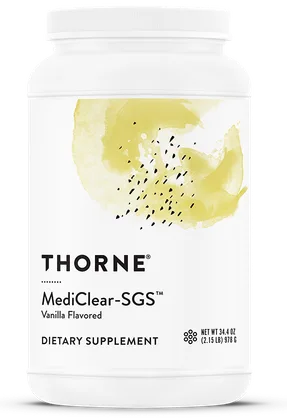
Thorne MediClear-SGS™ - Vanilla Review
Thorne MediClear-SGS is presented as an all-in-one daily detox product with protein, multi-vitamin, and multi-mineral support in a vanilla flavour. The page describes it as a powerhouse of daily nutrition that combines two plant-based proteins, a complete multi-vitamin and multi-mineral complex, antioxidants, broccoli seed extract, and liver-supportive botanicals, intended to help the body balance life in a toxic world. The product is described as having more protein, more detox factors, fewer carbohydrates, and added special nutrients than other daily detox alternatives, and is positioned as a more affordable and more complete formula. The powder is said to mix easily with water, juice, or a favourite beverage for on-the-go nutritional support, or to be blended into a smoothie with fruits and greens. The benefits listed include powerhouse nutrition with all-in-one daily protein and multi-vitamin and mineral support with added antioxidant support, daily support with a choice of chocolate or vanilla flavour, detox benefits that support the body's defences against modern toxic insults, and a powdered alternative to capsules that mixes with a favourite beverage. The features section states that rice and pea proteins are less likely to trigger an allergic reaction or cause digestive discomfort than common protein sources. It describes the vitamins and minerals as the most absorbable, best utilised forms, including the active forms of vitamins B6, B12, and folate, along with mineral chelates from Albion Laboratories. Reduced glutathione is presented as a well-absorbed form of the body's most abundant antioxidant. Glycine, glutamine, and taurine, along with vitamins A, C, and E, and minerals such as zinc and selenium, are described as building blocks the body uses to make and recycle antioxidants. Green tea and milk thistle extracts are said to promote healthy liver function, while curcumin and grape seed phytosomes are said to support a healthy inflammatory response. Sulforaphane glucosinolate from broccoli seed extract is described as helping to protect cells for up to 72 hours. The page states that the product has been third-party tested and certified to verify that what is in the package matches the label and that it contains no unsafe levels of contaminants such as heavy metals, pesticides, and microorganisms. The warnings section includes a California Proposition 65 lead warning, and notes that the product is contraindicated for anyone with a history of hypersensitivity to its ingredients. It states that the grape seed phytosome uses phospholipids derived from soy, although the phospholipids contain no soy protein. It also advises caution for people with a known, serious peanut allergy because the product contains pea protein. Pregnant individuals are advised to consult a health-care practitioner before use. Interaction warnings cover a med with 5-MTHF folate and curcumin with cyclophosphamide, camptothecin-related agents, and irinotecan. The page lists a serving size of 2 scoops with 21 servings per container and a price of $90, or $81 with a subscription.
We don’t sell supplements. We help you make decisions and get the best price.
Lowest prices
We may earn a commission from some store links. How we choose.
Finding the lowest prices at the stores now. This takes a few seconds.
Products with nearly the same formula (Matched on the main ingredients)
Study, Trial or Testing Result Summary
Members Only647 human studies · 281 improved
32 of these 647 human studies gave the ingredient by drip or injection, not by mouth.
This shake has several liver-studied ingredients at the doses used in studies. Curcumin, here as a phytosome, lowered liver enzymes and improved liver scans in pooled trials of people with fatty liver [1]. In one trial of a phytosome form, 75% improved on ultrasound versus 4.7% on placebo [2]. A 2026 pooled analysis said the benefits were not clearly meaningful [3]. Milk thistle lowered liver enzymes across 55 trials [4] and improved liver fat in fatty liver disease [5], though it did not help alcohol-related hepatitis. Vitamin E improved liver tissue in non-diabetic adults with fatty liver inflammation [6][7], but results were weaker in people with diabetes [8]. Vitamin D reduced liver fat in a 12-month trial [9]. Grape seed extract lowered liver enzymes in small trials [10]. Vitamin A, niacin, chromium, boron and betaine taken alone did not help the liver in the better studies [11][12][13][14][15]. Taurine, betaine and vanadium are present only in trace amounts, far below the studied doses [16][17]. Sulforaphane and glutathione have only thin evidence [18][19]. Animal and cell studies are never counted.
See all 647 studies →Hide the studies
- Across 14 trials of about 170,000 people, antioxidant supplements including vitamin A did not lower the rate of liver or other digestive cancers, and beta-carotene with vitamin A raised overall death risk.Antioxidant supplements for prevention of gastrointestinal cancers: a systematic review and meta-analysis.
- Across eleven trials with 109,244 high-risk patients, adding lipid-lowering drugs (including niacin) to meds did not reduce major heart events and significantly increased the risk of liver injury.Read the study on PubMed (25965621) →
- Across six long-term studies of 60,811 people, those with higher blood vitamin D had about 22% lower risk of liver cancer, and each 10 nmol/L increase was linked to 8% lower risk.Vitamin D and liver cancer risk: A meta-analysis of prospective studies.
- In 22 observational studies of 30,368 people, higher blood folate was linked to about 25% lower odds of fatty liver disease, and genetic analysis suggested slightly lower liver enzyme (ALT) levels.Homocysteine, folate, and nonalcoholic fatty liver disease: a systematic review with meta-analysis and Mendelian randomi…
- In 50 mostly observational studies, people with hepatitis, cirrhosis or liver cancer had lower selenium levels and higher selenium was linked to 41% fewer advanced liver disease cases, but fatty liver showed no clear link.Selenium Status in Patients with Chronic Liver Disease: A Systematic Review and Meta-Analysis.
- In 202 trials of 14,200 people with non-alcohol-related fatty liver disease, the evidence was too uncertain to say whether nutritional supplements, including vitamin E, change clinical outcomes.Nutritional supplementation for nonalcohol-related fatty liver disease: a network meta-analysis.
- Across 29 trials of 9,324 adults with biopsy-proven fatty liver inflammation (MASH), vitamin E combined with pioglitazone was significantly better than placebo for resolving MASH without worsening scarring.Comparison of pharmacological therapies in metabolic dysfunction-associated steatohepatitis for fibrosis regression and …
- Across 55 randomized trials with 3545 people with liver injury, silymarin lowered the liver enzymes AST and ALT but not ALP, with less benefit in people with drug-induced or alcohol-related liver disease.Are alterations needed in Silybum marianum (Silymarin) administration practices? A novel outlook and meta-analysis on ra…
- This pooled analysis of 25 observational studies found blood vitamin C was lower in people with primary biliary cholangitis but not autoimmune hepatitis; no supplement was tested.Serum vitamins and homocysteine levels in autoimmune liver disease: A systematic review and meta-analysis.
- In a pooled comparison of 37 trials with 2509 people with fatty liver disease, artichoke leaf extract and naringenin ranked best for liver enzymes and blood fats, and curcumin was not reported as the top performer.Effects of different natural products in patients with non-alcoholic fatty liver disease-A network meta-analysis of rand…
- Across 26 randomized trials with 2375 people with fatty liver disease, silymarin lowered liver enzymes, cholesterol and fat markers and improved fat build-up in the liver on biopsy.Administration of silymarin in NAFLD/NASH: A systematic review and meta-analysis.
- Across trials of eight dietary polyphenols in 2,173 people with fatty liver disease, curcumin lowered liver enzymes, body mass index, blood fats and insulin resistance compared with placebo without more side effects.Efficacy and safety of dietary polyphenol supplementation in the treatment of non-alcoholic fatty liver disease: A syste…
- In a pooled analysis of 32 trials of 2,053 adults with fatty liver disease, a new curcumin preparation ranked highest for lowering the liver enzyme ALT, but most plant extracts did not significantly beat placebo and the authors say the results do not show clear clinical benefit.Efficacy of plant extracts for metabolic dysfunction-associated steatotic liver disease: a network meta-analysis.
- In 29 trials of 2037 premature infants fed by vein, fish oil and MCT-containing lipid mixtures did not clearly lower liver disease or cholestasis compared with soybean oil emulsions, except in two small trials of infants who already had cholestasis.Lipid emulsions for parenterally fed preterm infants.
- In 27 trials of 1979 adults with chronic liver disease given vitamin D for about 6 months on average, the effect on death and side effects was very uncertain because the trials were at high risk of bias and the evidence was very low certainty.Vitamin D supplementation for chronic liver diseases in adults.
- Across 24 trials of 1,825 people with advanced digestive system cancers, adding sodium cantharidinate with vitamin B6 injection to usual care improved treatment response and eased chemotherapy side effects, including liver toxicity and abnormal liver enzymes.Efficacy and safety of sodium cantharidinate and vitamin B6 injection for the treatment of digestive system neoplasms: a…
- In 20 trials of 1,225 people with liver disease, antioxidant supplements including vitamin A had no effect on deaths and may have raised liver enzymes.Meta-analysis: antioxidant supplements for liver diseases - the Cochrane Hepato-Biliary Group.
- In 20 trials of 1,225 people with liver disease, antioxidant supplements including vitamin A did not change deaths and raised a liver enzyme (gamma glutamyl transpeptidase), so benefit was neither shown nor ruled out.Antioxidant supplements for liver diseases.
- Across 30 trials of 1,201 people with severe acute pancreatitis, glutamine lowered deaths, complications and hospital stay, and helped restore liver function (higher albumin) and lowered inflammation compared with conventional nutrition.Efficacy of Glutamine in Treating Severe Acute Pancreatitis: A Systematic Review and Meta-Analysis.
- Across 21 trials with 1191 adults with fatty liver disease, curcumin at 50-3000 mg a day, mostly for 8-12 weeks, lowered fasting blood sugar, insulin resistance, triglycerides, cholesterol, weight and BMI, but not inflammation markers (CRP, TNF-α), and the authors urged caution.Curcumin effects on glycaemic indices, lipid profile, blood pressure, inflammatory markers and anthropometric measuremen…
- In 2 trials (133 people with fatty liver) vitamin E combined with vitamin C had very uncertain, essentially no clear effect on liver enzymes (ALT, AST, GGT) compared with placebo.Vitamin E for people with non-alcoholic fatty liver disease.
- In 15 trials of 1034 adults with chronic liver disease given vitamin D for about 6 months, the effect on death and side effects was uncertain, and no data were found on liver-related illness.Vitamin D supplementation for chronic liver diseases in adults.
- In 16 trials with 1,028 people with fatty liver disease, curcumin improved ultrasound-measured disease severity and fat resolution and lowered liver enzymes, total cholesterol and body mass index.Curcumin as adjuvant treatment in patients with non-alcoholic fatty liver (NAFLD) disease: A systematic review and meta-…
- In 15 trials of 979 premature infants fed by vein, newer lipid emulsions containing MCTs did not change the rate of parenteral nutrition-related liver disease compared with soybean oil emulsions.Alternative lipid emulsions versus pure soy oil based lipid emulsions for parenterally fed preterm infants.
- In 15 trials with 835 people with fatty liver disease, curcumin lowered the liver enzyme AST but not ALT, with high variability between trials, and adding piperine gave no extra benefit.Does curcumin improve liver enzymes levels in nonalcoholic fatty liver disease? A systematic review, meta-analysis, and …
- Across six placebo-controlled trials of 624 people with rheumatoid arthritis taking a med, low-dose folic or folinic acid cut the risk of raised liver enzymes by about 77% compared with placebo.Read the study on PubMed (23728635) →
- Across six placebo-controlled trials of 624 people with rheumatoid arthritis on a med, low-dose folic or folinic acid lowered the risk of raised liver enzymes by about 77% compared with placebo.Read the study on PubMed (24737913) →
- In a pooled analysis of seven trials with 571 critically ill patients, curcumin lowered the liver enzyme ALT and total bilirubin and raised albumin compared with placebo, and also lowered organ failure scores and shortened intensive care stays.Curcumin Supplementation in Critically Ill Patients: A GRADE-Assessed Systematic Review and Meta-Analysis of Randomized …
- In ten trials of 544 people with fatty liver disease, vitamin D lowered blood sugar, insulin and insulin resistance and slightly lowered one liver enzyme (ALT) without clear significance, but did not clearly improve the other liver enzyme (AST) or cholesterol.Vitamin D and non-alcoholic fatty liver disease: a meta-analysis of randomized controlled trials.
- In eight placebo-controlled trials of 520 people with fatty liver disease taking 70 to 3,000 mg of curcumin daily for 8 to 12 weeks, body mass index and waist size fell slightly but body weight did not change.The effects of curcumin supplementation on body mass index, body weight, and waist circumference in patients with nonalc…
- In 7 trials of 501 liver transplant patients, nutrition including glutamine lowered infections, hospital stay and one liver enzyme (AST), but did not change ALT, bilirubin, deaths or rejection.Peri-operative immunonutrition in patients undergoing liver transplantation: a meta-analysis of randomized controlled tr…
- Pooling nine trials of 467 people with fatty liver disease, vitamin D did not significantly change the main liver enzymes (ALT, AST, GGT), though alkaline phosphatase fell, mainly at doses above 3,000 IU a day, and the authors concluded it does not show benefit for treating the disease.The Efficacy of Vitamin D Supplementation against Nonalcoholic Fatty Liver Disease: A Meta-Analysis.
- In seven trials with 338 people with cirrhosis, zinc supplements slightly raised albumin, lowered the liver enzyme ALT and blood ammonia, and improved a mental function test compared with controls.Zinc supplementation in liver cirrhosis: meta-analysis of its effect on biochemical and clinical outcomes.
- In 6 trials of 306 surgery patients, a mixed lipid emulsion with MCTs gave lower liver enzyme levels than soybean-based or olive-soybean emulsions, but was not significantly different from an MCT/LCT emulsion.Safety and efficacy of a new parenteral lipid emulsion (SMOF) for surgical patients: a systematic review and meta-analys…
- In trials of people with newly diagnosed type 1 diabetes taking nicotinamide, only a few had temporary rises in liver enzymes (2 people), so liver harm was rare.Meta-analysis of nicotinamide treatment in patients with recent-onset IDDM. The Nicotinamide Trialists.
- In 9 trials of 273 term and late preterm infants fed by vein, fish oil-containing emulsions (some with MCTs) did not change cholestasis risk in surgical infants but reduced it in two small trials of infants who already had cholestasis.Lipid emulsions for parenterally fed term and late preterm infants.
- In four trials with 247 people with cirrhosis and brain impairment, zinc plus lactulose over 3 to 6 months improved the number connection test but did not significantly change the digit symbol test or blood ammonia compared with lactulose alone.Zinc supplementation in patients with cirrhosis and hepatic encephalopathy: a systematic review and meta-analysis.
- In four trials with 229 people with fatty liver disease, curcumin lowered the liver enzyme AST, bad cholesterol, triglycerides, blood sugar, insulin resistance and weight versus placebo, but did not significantly lower the liver enzyme ALT.The effects of curcumin on the metabolic parameters of non-alcoholic fatty liver disease: a meta-analysis of randomized …
- Across 133 genetic studies, genetically higher vitamin D levels were linked to lower risk of fatty liver disease among many other outcomes, though most links were only suggestive.Vitamin D and human health: evidence from Mendelian randomization studies.
- In a pooled analysis of trials in children with fatty liver disease, vitamin E improved cholesterol but did not clearly change liver enzymes, fibrosis or ballooning, and raised fasting glucose in treatment of 12 months or less.Vitamin E in paediatric non-alcoholic fatty liver disease: a meta-analysis.
- In 26 trials of people with biopsy-proven fatty liver inflammation (NASH), vitamin E alone was better than placebo for improving scarring by at least one stage, and vitamin E plus pioglitazone was better than placebo for resolving NASH.Systematic review with network meta-analysis: comparative efficacy of pharmacologic therapies for fibrosis improvement a…
- In a pooled analysis of placebo-controlled trials in adults with fatty liver disease, vitamin E plus pioglitazone ranked among the top treatments for resolving liver inflammation (NASH) without worsening scarring.Comparative Efficacy of Drug Interventions on NAFLD Over 24 Weeks: A Traditional and Network Meta-Analysis of Randomized…
- Pooling eight studies of people with fatty liver disease, vitamin B12 blood levels did not differ from healthy people, though homocysteine was higher; no supplement was given.VITAMIN B12 AND HOMOCYSTEINE LEVELS IN PATIENTS WITH NAFLD: A SYSTEMATIC REVIEW AND METANALYSIS.
- Across 78 randomized trials, magnesium supplementation (most trials used 300 mg or more daily) did not significantly change the liver enzymes ALT or AST, though it modestly improved blood sugar, cholesterol, blood pressure and interleukin-6.Comprehensive Effects of Magnesium Supplementation on Cardiometabolic Risk Factors: A Systematic Review and Dose-Respons…
- Across 21 studies with 6639 people with fatty liver disease, dietary zinc intake did not differ significantly from that of healthy people, apart from a small increase in studies using food questionnaires.Dietary iron and zinc intakes and nonalcoholic fatty liver disease: A meta-analysis.
- In 75 trials, zinc supplements lowered blood fats, blood sugar and inflammation markers but had no noticeable effect on the liver enzymes AST and ALT.Zinc supplementation and cardiovascular disease risk factors: A GRADE-assessed systematic review and dose-response meta-…
- Trials of selenium supplements for preventing liver cancer gave inconsistent results with unclear bias, and there was no convincing evidence that selenium prevents cancer.Selenium for preventing cancer.
- Pooling 15 randomized trials in people with type 2 diabetes, chromium at 200-1000 mcg per day did not significantly change the liver enzymes ALT or AST, though it lowered diastolic blood pressure and a marker of oxidative stress.Effects of chromium supplementation on blood pressure, body mass index, liver function enzymes and malondialdehyde in pa…
- Across 20 trials in overweight and obese people, chromium did not significantly change AST and slightly increased ALT, although the authors concluded it helped liver enzyme levels overall.The effect of chromium supplementation on cardio-metabolic risk factors in overweight and obese patients. A systematic r…
- In 21 trials of surgical or critically ill adults over 5-7 days, structured triglycerides gave lower liver enzymes than physical MCT/LCT mixtures, so the MCT mixture was less liver-friendly.Structured triglycerides versus physical mixtures of medium- and long-chain triglycerides for parenteral nutrition in su…
- In 15 trials, mixed lipid emulsions with MCTs had liver function test effects similar to soybean oil emulsions, so they were similarly safe for the liver.Comparison of Formulas Based on Lipid Emulsions of Olive Oil, Soybean Oil, or Several Oils for Parenteral Nutrition: A S…
- Pooling six trials in people with fatty liver disease, turmeric or curcumin lowered the liver enzymes ALT and AST, with the reduction seen only in studies lasting under 12 weeks.Does turmeric/curcumin supplementation improve serum alanine aminotransferase and aspartate aminotransferase levels in p…
- In nine trials of people with fatty liver disease, curcumin lowered the liver enzymes ALT and AST, cholesterol, blood sugar, insulin resistance and waist size, but not triglycerides, body weight or BMI overall.The effects of curcumin supplementation on liver function, metabolic profile and body composition in patients with non-a…
- In 14 studies of people with metabolic-associated fatty liver disease, curcumin, alone or with diet and lifestyle changes, improved the liver enzymes ALT and AST, insulin, insulin resistance, triglycerides, cholesterol and waist size.Meta-Analysis of Exploring the Effect of Curcumin Supplementation with or without Other Advice on Biochemical and Anthro…
- In seven placebo-controlled trials in people with fatty liver disease, phytosomal curcumin reduced body mass index, body fat percent, weight and waist size but not hip size or waist-to-hip ratio.Influence of phytosomal curcumin on anthropometric indices for nonalcoholic fatty liver disease: A meta-analysis.
- Pooling 12 trials of mostly people with liver or metabolic problems taking 0.5 to 6 grams of taurine daily for 15 days to 6 months, taurine lowered blood pressure, total cholesterol and triglycerides but did not change blood sugar, weight or HDL and LDL cholesterol.The effects of taurine supplementation on obesity, blood pressure and lipid profile: A meta-analysis of randomized contr…
- Pooling 11 randomized trials in adults, grape products lowered one liver enzyme (alkaline phosphatase) but not ALT or AST overall, while trials lasting 12 weeks or more and those using grape seed extract showed drops in all three, though the effects were small.The effect of grape products on liver enzymes: A systematic review and meta-analysis of randomized controlled trials.
- Pooling four trials in people with fatty liver disease, green tea lowered liver enzymes (ALT by 12.81 U/L, AST by 10.91 U/L), body mass index, triglycerides and cholesterol, with no clear effect on HDL cholesterol or insulin resistance.Green tea as a safe alternative approach for nonalcoholic fatty liver treatment: A systematic review and meta-analysis o…
- A pooled analysis of trials found betaine supplementation did not change liver enzymes (ALT, AST, GGT) or inflammation (CRP), though it raised total and LDL cholesterol.Effects of betaine supplementation on cardiovascular markers: A systematic review and Meta-analysis.
- In a review of 29 trials with 1,840 people with fatty liver disease, turmeric and curcumin lowered liver enzymes, inflammatory markers, blood fats, insulin resistance and disease score, though results varied across trials.Polyphenol Intervention Ameliorates Non-Alcoholic Fatty Liver Disease: An Updated Comprehensive Systematic Review.
- A review of 936 reported cases of herb-induced liver injury listed green tea extract among the most common supplements causing it, with most patients recovering after stopping the product.Herb-induced liver injury: Systematic review and meta-analysis.
- Across seven trials of 709 people with rheumatoid arthritis taking a med, those given folate were much less likely to have raised liver enzymes than those given placebo.Read the study on PubMed (29975207) →
- In a review of five trials with 257 people with liver disease or cirrhosis, non-drug treatments including curcumin capsules reduced itching, but curcumin was only one of several treatments and was not analysed separately.Effect of Nonpharmacological Methods on Pruritus in Patients with Liver Disease and Liver Cirrhosis: Systematic Review.
- A review of 25 case reports, case series and retrospective studies covering 140 children with drug-induced liver injury found that a combination including reduced glutathione was used in 31 children, but the evidence was too weak to show whether it works.Read the study on PubMed (36006605) →
- In two studies with 118 people with cirrhosis, one found curcumin improved quality of life and the other found improvements in some liver blood tests, with no or negligible side effects reported.The effect of medicinal plants on cirrhosis: A systematic review of clinical trials.
- In 49 patients with a rare inherited B6-responsive seizure disorder treated with active vitamin B6, liver toxicity was the most common side effect, affecting 10 patients (20.4%), possibly linked to high doses.Effectiveness of Pyridoxal-5'-Phosphate in PNPO Deficiency: A Systematic Review.
- In one small trial of 34 stem cell transplant patients, glutamine versus placebo showed no liver vein blockage disease in either group, so evidence was insufficient to support its use.Interventions for prophylaxis of hepatic veno-occlusive disease in people undergoing haematopoietic stem cell transplant…
- Seven Tuscan cases and 23 published cases of acute liver injury were linked to turmeric supplements, mostly high-dose, high-absorption products, and most patients got better after stopping them.Acute liver injury following turmeric use in Tuscany: An analysis of the Italian Phytovigilance database and systematic …
- A review of tests for vitamin A status found they detect deficiency reasonably well compared with liver vitamin A levels, but it did not test vitamin A for liver health.Systematic Review and Meta-Analysis of the Relative Dose-Response Tests to Assess Vitamin A Status.
- A review of 30 observational studies linked diets rich in vitamin E, folate and beta-carotene to lower liver cancer risk, but did not report an effect for vitamin A itself.The Association between Diet and Hepatocellular Carcinoma: A Systematic Review.
- A review of 30 studies found lower blood alpha-carotene, beta-carotene and lycopene linked to more liver disease, but carotenoid supplements did not show clear effects on liver cancer and vitamin A itself was not tested.A systematic review of dietary and circulating carotenoids and liver disease.
- In a review of 15 fatty liver trials, ursodeoxycholic acid did not differ from a vitamin E and vitamin C combination in normalizing liver enzyme ALT.Pharmacological interventions for nonalcoholic fatty liver disease in adults and in children: a systematic review.
- A review of clinical evidence concluded that vitamin D, among other supplements, if well dosed and taken for medium to long periods with lifestyle changes, could have positive effects on fatty liver disease.Nutraceutical Approach to Non-Alcoholic Fatty Liver Disease (NAFLD): The Available Clinical Evidence.
- A review of 12 studies (4 in humans) found that tocotrienol, a form of vitamin E, improved fatty liver outcomes, though results depended on severity and study length and more human research is needed.Tocotrienol in the Management of Nonalcoholic Fatty Liver Disease: A Systematic Review.
- A review of 40 meta-analyses found vitamin E had positive effects on some liver enzymes in adults, though the evidence quality was generally weak.Natural products and dietary interventions on liver enzymes: an umbrella review and evidence map.
- In short trials of a slow-release niacin at 2000 mg a day, liver enzymes rose up to 1.6-fold but stayed under three times the upper limit of normal, with similar abnormal results to placebo, though one patient developed a hepatitis-like illness that reversed.A systematic review on evidence of the effectiveness and safety of a wax-matrix niacin formulation.
- A review of 14 reviews found oral niacin and nicotinamide can cause liver dysfunction among other side effects, more often at higher doses and with niacin than nicotinamide, and most effects resolved after reducing or stopping.The adverse effects of oral niacin/nicotinamide - an overview of reviews.
- A review of 59 observational studies found the evidence on niacin and fatty liver disease inconsistent, though often suggesting lower disease with higher intake, and certainty was very low.B vitamins and metabolic dysfunction-associated steatotic liver disease (MASLD): a systematic review of observational st…
- In a review of 16 studies, metadoxine (a compound of pyroglutamic acid and vitamin B6) improved liver function after chronic alcoholism in 4 of 5 studies and appeared safe.Pharmacology, Systematic Review and Recent Clinical Trials of Metadoxine.
- In a review of 46 studies, evidence that folic acid or related B vitamins affect alcohol-related liver disease was weak or negative.The Role of Micronutrients in the Pathogenesis of Alcohol-Related Liver Disease.
- In a review of 56 studies, not taking folate supplements was linked to a higher risk of liver damage in people treated with a med.Prognostic factors for liver, blood and kidney adverse events from glucocorticoid sparing immune-suppressing drugs in im…
- A review of a med liver toxicity in psoriasis noted that folic acid may reduce the risk, but doses used were inconsistent and no clear results were given.Read the study on PubMed (42403312) →
- In a review of four studies on detecting liver disease caused by intestinal failure, blood vitamin B12 levels did not correlate with liver injury; no supplement was given.Systematic Review: Noninvasive Assessments of Intestinal Failure-Associated Liver Disease in the Adult Population.
- A review of 18 publications on muscle cramps in cirrhosis found some reported improvement with zinc and other treatments, but the evidence mostly came from case reports with few randomized trials.Systematic review: the treatment of muscle cramps in patients with cirrhosis.
- A review of eight studies on severe alcoholic hepatitis included two testing anakinra plus zinc for 90-day survival, but no clear conclusion on zinc was given and meds remain first-line.Read the study on PubMed (41024761) →
- In 6 trials of adults on home parenteral nutrition, differences in liver function tests between lipid emulsions including an MCT blend were minimal.Influence of different intravenous lipid emulsions on fatty acid status and laboratory and clinical outcomes in adult pa…
- A review of studies on curcumin and liver disease found it protected the liver by reducing inflammation and oxidative stress, though more clinical studies are needed.Curcumin in Liver Diseases: A Systematic Review of the Cellular Mechanisms of Oxidative Stress and Clinical Perspective.
- An umbrella review of 161 meta-analyses of randomized trials found that ginger-family plants and curcumin mainly improved metabolic syndrome and non-alcoholic fatty liver disease, among other outcomes, and were generally safe, though higher-quality research is still needed.Zingiberaceae plants/curcumin consumption and multiple health outcomes: An umbrella review of systematic reviews and met…
- A review of herbal treatments for fatty liver inflammation found that curcumin and berberine reduced liver inflammation and oxidative damage, but study designs and doses varied too much to draw firm conclusions.The Green Path to Liver Health: Herbal Solutions for Non-alcoholic Steatohepatitis.
- A review of earlier meta-analyses in people with fatty liver disease found curcumin led to a small drop in body weight but no clear change in body mass index or waist size.Effects of curcumin on anthropometric measurements in nonalcoholic fatty liver disease: An umbrella meta-analysis study.
- A review of trials in people with chronic viral hepatitis found silymarin likely lowered liver enzymes but did not change viral load or liver tissue damage.Silymarin treatment of viral hepatitis: a systematic review.
- A review of 216 case reports, 34 involving liver damage, found that concentrated green tea extracts on an empty stomach were more likely to cause harm, but no safety issues prevented well-formulated products with a caution label.Safety of green tea extracts : a systematic review by the US Pharmacopeia.
- A review of 159 human studies found that concentrated catechin-rich green tea preparations caused liver side effects at large bolus doses, but not brewed tea or extracts in beverages or food, and set a safe intake of 338 mg EGCG per day.The safety of green tea and green tea extract consumption in adults - Results of a systematic review.
- In 29,450 healthy adults in China given vitamin and mineral combinations including retinol with zinc for about 5 years, liver cancer deaths did not differ overall, though retinol plus zinc lowered deaths in people under 55.Chemoprevention of primary liver cancer: a randomized, double-blind trial in Linxian, China.
- In 226 hepatitis B carriers and 3,849 relatives of liver cancer patients, daily selenium yeast for 2 to 4 years led to fewer liver cancers than ordinary yeast.[Preliminary observations on effect of selenium yeast on high risk populations with primary liver cancer].
- In adults with prediabetes (2423 randomized to vitamin D or placebo), fatty liver scores did not change the effect of vitamin D on diabetes risk, and people with likely fatty liver had a smaller rise in blood vitamin D from supplements.Indices of hepatic steatosis and fibrosis in prediabetes and association with diabetes development in the vitamin D and …
- In 2,065 hepatitis B carriers with normal liver function in a high-risk area, 0.5 mg of selenium daily for three years was linked to fewer new liver cancers (34 of 1,112 vs 57 of 953 on placebo).[The prevention of primary liver cancer by selenium in high risk populations].
- In 1,220 adults with high cholesterol, 24 weeks of extended-release niacin (2 g a day), alone or with a med/a med, showed liver-related side effects similar across all groups.Read the study on PubMed (18420099) →
- Adding niacin/laropiprant to a med for 12 weeks caused more liver transaminase elevations than doubling a med dose.Read the study on PubMed (20518948) →
- In 1075 postmenopausal women given green tea extract with 843 mg EGCG daily for one year, 6.7% had raised liver enzyme (ALT) compared with 0.7% on placebo, though most side effects were mild.The safety of green tea extract supplementation in postmenopausal women at risk for breast cancer: results of the Minnes…
- In a secondary analysis of postmenopausal women taking 843 mg EGCG daily for a year, women with the UGT1A4 A/C gene type had larger liver enzyme (ALT) rises at 6 to 9 months than those with the C/C type.Hepatotoxicity with High-Dose Green Tea Extract: Effect of Catechol-O-Methyltransferase and Uridine 5'-Diphospho-glucuro…
- In 1021 women with normal liver tests, daily green tea extract for 12 months raised liver enzymes more than placebo, and 5.1% developed moderate or worse liver abnormalities, which resolved after stopping.Effect of Green Tea Supplements on Liver Enzyme Elevation: Results from a Randomized Intervention Study in the United St…
- In 1005 adults aged 50-70 given vitamin C 1 g with vitamin E and a med for about 3.6 years, the odds of fatty liver were 71% lower than with placebo.Read the study on PubMed (20842109) →
- In 942 people with high cholesterol given extended-release niacin up to 2 g with a med/a med for 64 weeks, liver side effects were rare (under 1%) in both groups.Read the study on PubMed (20152243) →
- In 496 adults with newly diagnosed lung tuberculosis, adding vitamin D3 to standard tuberculosis drugs lowered treatment failure (22.1% vs 38.1%) and the authors concluded it gave extra protection against liver and muscle side effects of the drugs.Efficacy and safety of cholecalciferol-augmented anti-tuberculosis therapy for treatment of naïve patients with pulmonar…
- In 385 people with leg artery disease given niacin (1000 or 2000 mg) plus lovastatin for 28 weeks, treatment was associated with increases in liver enzymes.Effect of niacin ER/lovastatin on claudication symptoms in patients with peripheral artery disease.
- In 370 tuberculosis patients, milk thistle capsules did not prevent anti-tuberculosis drug liver injury compared with vitamin C, and a stricter definition of liver injury was more common in the milk thistle group.Preventive use of a hepatoprotectant against anti-tuberculosis drug-induced liver injury: A randomized controlled trial.
- In 311 adults with fatty liver disease, 1000 IU of vitamin D daily for 12 months reduced liver fat and liver stiffness measures more than placebo.Vitamin D for treatment of non-alcoholic fatty liver disease detected by transient elastography: A randomized, double-bl…
- In 295 adults with an eye disease, taking 15,000 IU of vitamin A daily for up to 12 years caused no signs of liver toxicity compared with a trace-dose group.Safety of <7500 RE (<25000 IU) vitamin A daily in adults with retinitis pigmentosa.
- In 247 adults with fatty liver inflammation and no diabetes, 800 IU of vitamin E daily for 96 weeks improved liver tissue in 43% versus 19% on placebo and lowered liver enzymes, but did not improve scarring.Pioglitazone, vitamin E, or placebo for nonalcoholic steatohepatitis.
- In 227 obese adults with type 2 diabetes, 1500 mg of curcumin daily for 12 months reduced liver fat, liver stiffness, blood sugar marker HbA1c, and inflammation more than placebo, with only mild stomach discomfort reported.Curcumin Attenuates Liver Steatosis via Antioxidant and Anti-Inflammatory Pathways in Obese Patients with Type 2 Diabete…
- In 226 preschool children given fortified seasoning for 6 months, the multi-nutrient group (including riboflavin) improved vitamin A levels and iron mobilization from liver stores, but riboflavin was not tested alone and there was no placebo group.Effects of vitamin A, vitamin A plus iron and multiple micronutrient-fortified seasoning powder on preschool children in…
- In 226 hepatitis B surface antigen carriers, 200 mcg of selenium daily for four years led to no liver cancers versus 7 of 113 on placebo, but the benefit faded once supplements stopped.Protective role of selenium against hepatitis B virus and primary liver cancer in Qidong.
- In 222 people with Alzheimer's disease taking tacrine, 420 mg a day of silymarin for 12 weeks did not prevent the rise in the liver enzyme ALAT compared with placebo, though it reduced stomach and cholinergic side effects.Aminotransferase levels and silymarin in de novo tacrine-treated patients with Alzheimer's disease.
- In 216 patients starting chemotherapy for stomach or bowel cancer, magnesium isoglycyrrhizinate cut liver abnormalities to 10.5% versus 27.3% with glutathione.[Magnesium isoglycyrrhizinate prevention of chemotherapy-induced liver damage during initial treatment of patients with …
- In 200 men with treatment-resistant schizophrenia, 600 mg a day of vitamin B6 for 16 weeks lowered prolactin more than aripiprazole; liver function was monitored but no liver benefit or harm was reported in the abstract.Safety and Efficacy of High-Dose Vitamin B6 as an Adjunctive Treatment for Antipsychotic-Induced Hyperprolactinemia in M…
- In 199 patients after abdominal or chest surgery given nutrition by vein for 5 days, a lipid mix containing medium chain triglycerides was safe and liver and lab measures did not differ from standard soybean oil, though the authors suggested possibly better liver tolerance.Safety and efficacy of a new parenteral lipid emulsion (SMOFlipid) in surgical patients: a randomized, double-blind, mul…
- In 191 people with fatty liver inflammation, 8 weeks of a combination containing nicotinamide ascorbate reduced liver fat by 25% and lowered liver enzymes, while placebo did not.Efficacy and safety of oral betaine glucuronate in non-alcoholic steatohepatitis. A double-blind, randomized, parallel-g…
- In 180 young people with thalassemia and low vitamin C, 100 mg of vitamin C daily for one year alongside iron-removing drugs lowered liver iron concentration and ferritin compared with no vitamin C, with no adverse events.Role of vitamin C as an adjuvant therapy to different iron chelators in young β-thalassemia major patients: efficacy and…
- In 177 adults with overweight or obesity given sodium pentaborate pentahydrate (200 to 1,000 mg daily) or placebo for 12 weeks, there were no clinically meaningful changes in liver markers, though the 1,000 mg dose reduced body weight more than placebo.Assessment of the safety and efficacy of sodium pentaborate pentahydrate in individuals with overweight and obesity: a r…
- In 173 cirrhosis patients with brain complications from liver disease, neomycin plus magnesium sulfate worked about as well as lactulose.Comparison between neomycin and lactulose in 173 patients with hepatic encephalopathy: a randomized clinical study.
- In 171 postmenopausal women with low bone density, 500 mg a day of green tea polyphenols for 24 weeks did not change liver enzymes or kidney function, so it appeared safe for the liver.Green tea polyphenols supplementation and Tai Chi exercise for postmenopausal osteopenic women: safety and quality of li…
- In 170 people with cirrhosis of the liver, 420 mg a day of silymarin for about 41 months on average raised 4-year survival to 58% compared with 39% on placebo, with no side effects seen.Randomized controlled trial of silymarin treatment in patients with cirrhosis of the liver.
- In 169 liver transplant recipients, 2 grams of taurine daily for 30 days led to greater drops in AST, bilirubin and INR than placebo, along with lower mortality and shorter intensive care and hospital stays.Could taurine supplementation improve graft functions after liver transplantation? A randomized clinical trial among liv…
- In 160 infants after gut surgery fed by vein, those given the MCT/LCT emulsion had higher liver enzyme and bilirubin levels after 4 weeks than those given the SMOF mixture.The effects of two mixed intravenous lipid emulsions on clinical outcomes in infants after gastrointestinal surgery: a p…
- In 155 adults with obesity and metabolic syndrome, a three-month multi-nutrient mix including vitamin B12 reduced liver fat score by 4% and liver stiffness by 7.8% compared with placebo, so B12's own effect cannot be separated.Use of a Micronutrient Cocktail to Improve Metabolic Dysfunction-Associated Steatotic Liver Disease (MASLD) in Adults wi…
- In 150 adults with fatty liver disease, 400 IU of vitamin E daily for 3 months significantly lowered liver enzymes (ALT and AST), while the lifestyle-plus-placebo group showed no significant change.Treatment options for nonalcoholic fatty liver disease: a double-blinded randomized placebo-controlled trial.
- In 150 people with type 2 diabetes, a seven-herb combination including milk thistle taken for 3 months improved blood sugar, and no notable liver side effects were seen, but liver benefit was not shown.Efficacy and Safety of a Traditional Herbal Combination in Patients with Type II Diabetes Mellitus: A Randomized Control…
- In 149 hepatitis B carriers, 2000 IU of vitamin D daily for two months raised vitamin D levels but did not change hepatitis B virus DNA or surface antigen compared with no supplement.The association of vitamin D with hepatitis B virus replication: Bystander rather than offender.
- In 146 people at risk of fatty liver disease, Heptex capsules containing 100 mg milk thistle extract for 36 weeks lowered liver enzymes within groups but did not beat placebo, and were safe and well tolerated.The activity of a herbal medicinal product of Phyllanthus niruri and Silybum marianum powdered extracts (Heptex®) in pat…
- In 144 premature infants given five types of lipid emulsion by vein, only 3 developed liver bile-flow problems (cholestasis) and liver function at 6 weeks did not differ between groups.The effect of 5 intravenous lipid emulsions on plasma phytosterols in preterm infants receiving parenteral nutrition: a …
- In 140 adults with fatty liver disease, six daily capsules of a multi-ingredient nutraceutical containing curcumin complex for 12 weeks reduced liver fat more than placebo, with no dose of curcumin stated.A new nutraceutical (Livogen Plus®) improves liver steatosis in adults with non-alcoholic fatty liver disease.
- In 133 very premature infants fed by vein, a lipid mix containing medium-chain triglycerides did not change liver fat, liver function tests or liver bile-flow problems compared with soybean oil.Nutritional Evaluation and Optimisation in Neonates: a randomized, double-blind controlled trial of amino acid regimen a…
- In 132 adults with overweight or obesity and fatty liver disease, 14,000 IU of vitamin D3 per week plus lifestyle changes for 24 weeks reduced liver fat score more than lifestyle changes alone, but did not significantly change liver stiffness.Effects of vitamin D status and supplementation on MASLD severity in individuals with overweight or obesity: a cross-sec…
- In 131 adults with high cholesterol, 25 weeks of extended-release niacin up to 3,000 mg a day caused small rises in liver enzymes, and liver test abnormalities were not significantly different from placebo.Multiple-dose efficacy and safety of an extended-release form of niacin in the management of hyperlipidemia.
- In a placebo-controlled trial of 130 healthy adults taking a liquid herbal blend containing turmeric twice daily for 180 days, liver enzyme levels improved significantly more than with placebo, with no adverse events reported.Long-term safety and efficacy of a highly purified plant-based nutraceutical for improving clinical parameters of liver …
- In 124 non-diabetic adults with fatty liver inflammation (MASH), 300 mg of vitamin E daily improved liver biopsy results in 29.3% of people, compared with 14.1% on placebo. Fat, inflammation, and scarring scores all improved.Vitamin E (300 mg) in the treatment of MASH: A multi-center, randomized, double-blind, placebo-controlled study.
- In 124 people having liver cancer surgery, 14 days of intravenous nutrition including a 50% medium-chain fat emulsion reduced complications (34% vs 55%) and liver function declined less than in the control group.Perioperative nutritional support in patients undergoing hepatectomy for hepatocellular carcinoma.
- In 124 people having liver cancer surgery, one week before and after surgery of nutrition by vein including medium-chain triglycerides lowered complications (34% vs 55%) and caused less loss of liver function than no nutrition support, though blood liver enzymes rose.Perioperative nutritional support in patients undergoing hepatectomy for hepatocellular carcinoma.
- In 124 people at high risk of liver cancer, 500 mg or 1000 mg of green tea polyphenols daily for 3 months lowered a urine marker of oxidative DNA damage (about 1.0 to 1.15 versus 2.02 ng/mg creatinine with placebo).Phase IIa chemoprevention trial of green tea polyphenols in high-risk individuals of liver cancer: modulation of urinary…
- In 120 patients with severe burns, trauma or major surgery, glycine was given only as the placebo for 7 days while glutamine was the tested treatment; liver and kidney function did not differ between the groups, so this study does not show a liver benefit from glycine.[Analysis of the therapeutic effect and the safety of glutamine granules per os in patients with severe burns and trauma…
- In 118 alcoholic patients given 500 mg magnesium or placebo for 8 weeks, liver enzymes (GGT, AST, ALT) did not differ significantly overall, though AST was lower in magnesium takers who stuck with treatment.Magnesium treatment in alcoholics: a randomized clinical trial.
- In 116 people with alcoholic hepatitis, 420 mg of silymarin daily for three months did not beat placebo; both groups improved similarly.[Treatment of alcoholic hepatitis with silymarin. A double-blind comparative study in 116 patients].
- In 113 adults with fatty liver disease, a supplement mixture containing d-alpha-tocopherol for 3 months was safe but did not improve liver enzymes, metabolic markers or inflammation compared with placebo.Randomised trial of chronic supplementation with a nutraceutical mixture in subjects with non-alcoholic fatty liver dise…
- In 111 adults with fatty liver disease, 3 months of fish oil plus 1680 IU daily vitamin D3 lowered liver enzyme ALT, triglycerides and inflammation markers compared with corn oil, but results were similar to fish oil alone.The effects of fish oil plus vitamin D3 intervention on non-alcoholic fatty liver disease: a randomized controlled trial…
- In 111 adults with fatty liver disease, 6 months of nicotinamide riboside with pterostilbene did not change liver fat versus placebo, but the standard dose lowered the liver enzymes ALT and GGT; the double dose did not.Nicotinamide riboside and pterostilbene reduces markers of hepatic inflammation in NAFLD: A double-blind, placebo-contro…
- In 110 children with cystic fibrosis given a choline-rich lipid supplement for 12 months, choline intake and blood and muscle choline levels rose compared with placebo, but the abstract reports no liver fat change from the supplement.Choline Supplementation With a Structured Lipid in Children With Cystic Fibrosis: A Randomized Placebo-Controlled Trial.
- In 109 patients with fatty liver disease, 50,000 IU vitamin D3 weekly for 12 weeks raised vitamin D levels and lowered liver enzymes (ALT, AST) and insulin resistance compared with placebo.Effect of vitamin D supplementation on various parameters in non-alcoholic fatty liver disease patients.
- In 109 children with biopsy-proven fatty liver disease (100 finished), 2000 IU daily vitamin D for 6 months improved liver fat and inflammation on biopsy and lowered liver enzymes versus placebo, with no effect on fibrosis or cell ballooning.Vitamin D and nonalcoholic fatty liver disease in children: a randomized controlled clinical trial.
- In 106 adults with fatty liver disease (91 analyzed), 12 weeks of weekly vitamin D3 or daily calcitriol lowered some liver enzymes from baseline, but liver enzymes did not differ from placebo at the end.Vitamin D supplementation for the treatment of non-alcoholic fatty liver disease: A randomized double blind placebo cont…
- In 106 people with liver disease mostly caused by alcohol, silymarin for 4 weeks lowered liver enzymes more than placebo, normalized liver function tests more often, and normalized liver tissue changes more often.Effect of silymarin on chemical, functional, and morphological alterations of the liver. A double-blind controlled study…
- In 105 adults with type 2 diabetes and fatty liver disease, 800 IU of vitamin E daily for 18 months did not significantly improve the main liver biopsy score compared with placebo, although it improved liver fat and resolved the disease more often than placebo.Role of Vitamin E for Nonalcoholic Steatohepatitis in Patients With Type 2 Diabetes: A Randomized Controlled Trial.
- In 105 patients after stomach cancer surgery, adding glutamine to intravenous nutrition reduced infections and hospital stay but did not influence liver or kidney function.The clinical value of parenteral immunonutrition in surgical patients.
- In 105 adults with acute hepatitis in Egypt, 140 mg of silymarin three times daily for four weeks led to faster resolution of dark urine, jaundice and yellowing of the eyes than placebo, with no side effects, though liver enzymes did not differ significantly.A randomized controlled trial to assess the safety and efficacy of silymarin on symptoms, signs and biomarkers of acute …
- In 104 people with severe alcohol-related liver inflammation, a combination of anakinra, pentoxifylline and zinc for 180 days gave survival similar to meds (67.9% vs 56% at 180 days, not a significant difference).IL-1 receptor antagonist plus pentoxifylline and zinc for severe alcohol-associated hepatitis.
- In 102 Egyptian adults with fatty liver disease, 800 mg of vitamin E daily for three months lowered liver enzymes by about half and reduced inflammatory markers, with a larger effect than ursodeoxycholic acid or pentoxifylline.A randomized controlled trial comparing the effects of Vitamin E, Ursodeoxycholic acid and Pentoxifylline on Egyptian no…
- In 100 overweight women with low vitamin D, 1250 mcg vitamin D3 weekly for 2 months lowered liver enzymes (ALT, AST), homocysteine and CRP versus no change on placebo, but kidney function worsened.Vitamin D3 reduces risk of cardiovascular and liver diseases by lowering homocysteine levels: double-blinded, randomised…
- In 100 adults with fatty liver disease, 268 mg of alpha-tocopherol (a form of vitamin E) twice daily for 48 weeks improved liver fat, insulin resistance and markers of fat-damage oxidation, though it was no better than delta-tocotrienol.Comparison of delta-tocotrienol and alpha-tocopherol effects on hepatic steatosis and inflammatory biomarkers in patient…
- In 100 adults with fatty liver disease, 268 mg of alpha-tocopherol twice daily for 48 weeks lowered circulating microRNAs linked to liver fat, insulin resistance and inflammation, though delta-tocotrienol lowered two of them more strongly.Hepato-Protective Effects of Delta-Tocotrienol and Alpha-Tocopherol in Patients with Non-Alcoholic Fatty Liver Disease: …
- In 100 adults with type 2 diabetes taking 500 mg curcuminoids plus 5 mg piperine daily for 3 months, ALT and AST liver enzymes fell more than with placebo.Effects of Curcuminoids Plus Piperine on Glycemic, Hepatic and Inflammatory Biomarkers in Patients with Type 2 Diabetes …
- In 100 women with polycystic ovary syndrome, 80 mg per day of curcumin nanomicelles added to a med for 3 months improved insulin resistance and lipids, but the abstract reports no liver outcome results.Read the study on PubMed (33861440) →
- In 99 healthy Japanese adults given 150 mg a day of highly absorbable curcumin for 12 weeks, common cold symptom days were reduced and no adverse effects were seen, but the abstract reports no liver benefit.Effects of Highly Bioavailable Curcumin Supplementation on Common Cold Symptoms and Immune and Inflammatory Functions in…
- In 99 adults with fatty liver inflammation (NASH), silymarin at 700 mg three times daily for 48 weeks did not significantly improve the overall disease activity score compared with placebo, but it led to more people with reduced liver scarring and lower liver stiffness than placebo.A Randomized Trial of Silymarin for the Treatment of Nonalcoholic Steatohepatitis.
- In 97 people with thalassemia major taking desferrioxamine, adding silymarin from milk thistle for 9 months improved liver function tests more than placebo did, and also lowered iron overload markers.A randomized double-blind, placebo-controlled study of therapeutic effects of silymarin in β-thalassemia major patients …
- In 97 men with precancerous prostate changes, 400 mg a day of EGCG from green tea catechins for one year was well tolerated and caused no treatment-related adverse effects, including on monthly liver tests.Randomized, placebo-controlled trial evaluating the safety of one-year administration of green tea catechins.
- In 96 obese Sri Lankan children with low vitamin D, a weekly 50,000 IU dose for 24 weeks improved liver enzyme ALT, with larger gains than a lower dose or placebo.Vitamin D supplementation in obese Sri Lankan children: a randomized controlled trial.
- In 95 adults (59 with high blood fats and 36 healthy), 300 mg of beta-carotene daily for 30 days caused no changes in liver enzymes (transaminases), retinol levels or lasting blood fat levels compared with wheat germ oil.Read the study on PubMed (8010332) →
- In 92 people with fatty liver disease, 3 grams of turmeric daily for 12 weeks lowered body mass index, waist size and some blood fats more than placebo, and raised good cholesterol.Turmeric and chicory seed have beneficial effects on obesity markers and lipid profile in non-alcoholic fatty liver dise…
- In 90 children with fatty liver disease on diet and exercise, 500 mg vitamin C plus vitamin E daily for 12 months did not change liver enzyme or insulin resistance levels compared with placebo.Effect of vitamin E on aminotransferase levels and insulin resistance in children with non-alcoholic fatty liver disease…
- In 90 people with fatty liver inflammation, 800 IU of vitamin E daily for 6 months significantly reduced liver fat and a marker of oxidative stress. A combination of N-acetylcysteine and a med produced larger improvements.New Approach Combination-Dosed Therapy for Nonalcoholic Steatohepatitis Versus Vitamin E: A Randomized Controlled Trial.
- In 90 people with acid reflux, adding magnesium-containing mineral water to standard treatment for about a month improved symptoms and normalized liver function.Application of mineral waters in the complex treatment of patients with gastroesophageal reflux disease.
- In 90 people with cirrhosis and recurrent brain complications from liver disease, 600 mg of zinc acetate daily for six months on top of standard care normalized blood zinc, but test results were not significantly better than standard care alone (88.6% vs 86% had no episodes).Management of hepatic encephalopathy with oral zinc supplementation: a long-term treatment.
- In 87 people with fatty liver disease, drinking 400 ml of magnesium-containing mineral water daily for 12 months improved liver fat, gut barrier, inflammation and oxidative stress compared with diet alone.Beneficial Effects of Long-Lasting Bicarbonate-Sulfate-Calcium-Magnesium Water Intake on Metabolic Dysfunction-Associate…
- In 87 adults with fatty liver disease taking 1000 mg curcumin daily for 8 weeks, cholesterol, triglycerides and uric acid fell, though liver fat itself was not reported as measured.Curcumin Lowers Serum Lipids and Uric Acid in Subjects With Nonalcoholic Fatty Liver Disease: A Randomized Controlled Tr…
- In 87 adults with fatty liver disease, 1000 mg of phytosomal curcumin daily for 8 weeks improved liver ultrasound findings in 75% of people, compared with 4.7% on placebo, and lowered liver enzymes and body mass.Efficacy and Safety of Phytosomal Curcumin in Non-Alcoholic Fatty Liver Disease: A Randomized Controlled Trial.
- In 84 postmenopausal women, 500 mg of curcumin twice daily for 8 weeks improved fasting blood sugar and cholesterol without harming liver or kidney function, but did not show a liver benefit.Curcumin and vitamin E improve hot flashes, lipid profile, and fasting blood glucose without any detrimental effect on t…
- In 83 adults with fatty liver disease, 103.2 mg of silymarin daily for 24 weeks significantly reduced liver stiffness compared with placebo, with no significant change in fat content on scan.Silymarin decreases liver stiffness associated with gut microbiota in patients with metabolic dysfunction-associated ste…
- In 83 obese women on a calorie-restricted diet, 300 mg a day of EGCG for 12 weeks did not change liver function markers compared with placebo and caused no adverse liver effects.Effects of dietary supplementation with epigallocatechin-3-gallate on weight loss, energy homeostasis, cardiometabolic r…
- In a crossover placebo-controlled trial of 82 people with beta-thalassemia major, 140 mg of silymarin three times daily for 12 weeks reduced liver iron, but changes in liver function were not statistically significant.Iron-chelating effect of silymarin in patients with β-thalassemia major: A crossover randomised control trial.
- In 82 children with leukemia receiving chemotherapy, silymarin for eight weeks lowered liver enzymes ALT and AST, though a Persian fruit infusion lowered ALT more; there was no placebo group.Efficacy of a traditional persian fruit infusion (Naqu Fawakeh) versus silymarin in reducing chemotherapy-induced hepato…
- In 81 adults with fatty liver disease and low vitamin D, a single 600,000 unit vitamin D injection plus lifestyle changes lowered liver enzyme (ALT) levels over 6 months compared with lifestyle changes alone, and also raised adiponectin and kept insulin resistance from worsening.Vitamin D supplementation in patients with nonalcoholic fatty liver disease: A randomized controlled trial.
- In 81 adults with mildly raised fasting blood sugar, a multi-ingredient supplement with zinc taken for 3 months lowered blood sugar and showed no signs of liver or kidney toxicity, but liver health itself was not improved.Efficacy and Tolerability of a Food Supplement Based on Zea mays L., Gymnema sylvestre (Retz.) R.br.ex Sm, Zinc and Chro…
- In 80 overweight adults, vitamin E (800 IU per day, raised to 1,200 IU after 3 months) for 6 months lowered blood markers of oxidative stress and liver enzyme levels compared with placebo, while the improvement in insulin sensitivity was temporary.Effect of high-dose vitamin E on insulin resistance and associated parameters in overweight subjects.
- In 80 overweight adults taking a curcumin supplement containing phosphatidylcholine for 8 weeks, liver enzymes and a fatty liver index improved compared with placebo, though choline was not tested on its own.Effects of phytosomal curcumin on anthropometric parameters, insulin resistance, cortisolemia and non-alcoholic fatty li…
- In 80 adults with fatty liver disease, 250 mg of phytosomal curcumin daily for 2 months reduced fat in the liver and the aspartate aminotransferase liver enzyme more than placebo.The Effect of Curcumin Phytosome on the Treatment of Patients with Non-alcoholic Fatty Liver Disease: A Double-Blind, Ra…
- In 80 adults with simple fatty liver, 500 mg of curcumin daily for 24 weeks reduced liver fat compared with placebo, along with changes in gut bacteria and bile acids.Curcumin supplementation alleviates hepatic fat content associated with modulation of gut microbiota-dependent bile acid…
- In 79 people with cirrhosis and brain complications from liver disease, 225 mg of polaprezinc daily for 6 months on top of standard care lowered encephalopathy grade and blood ammonia and improved liver severity score and physical quality of life compared with standard care alone.Clinical trial: oral zinc in hepatic encephalopathy.
- In 79 adults with fatty liver disease taking 500 mg curcumin daily for 2 months, alkaline phosphatase fell more than with placebo and liver fat severity improved.Curcumin and Piperine Combination for the Treatment of Patients with Non-alcoholic Fatty Liver Disease: A Double-Blind R…
- In 78 adults with type 2 diabetes and fatty liver disease, 1500 mg of curcumin daily for 12 months improved liver fat and stiffness and lowered inflammation and oxidative stress compared with placebo.Curcumin for Inflammation Control in Individuals with Type 2 Diabetes Mellitus and Metabolic Dysfunction-Associated Stea…
- In 78 adults with fatty liver inflammation (NASH), silymarin at 700 mg three times daily for 48 weeks did not improve the disease activity score more than placebo, with 4 of 27 people on this dose reaching the primary target versus 3 of 25 on placebo.Silymarin in non-cirrhotics with non-alcoholic steatohepatitis: A randomized, double-blind, placebo controlled trial.
- In 76 healthy Chinese adults, vitamin D3 at 400 to 2000 international units daily for 16 weeks raised vitamin D levels but did not change liver enzyme levels compared with placebo.A dose-response study of vitamin D3 supplementation in healthy Chinese: a 5-arm randomized, placebo-controlled trial.
- In 76 women with premenstrual syndrome taking 500 mg curcuminoids daily over three cycles, AST and direct bilirubin fell within the curcumin group, though the between-group liver comparison was not reported.Effects of curcumin supplementation on vitamin D levels in women with premenstrual syndrome and dysmenorrhea: a randomiz…
- In 75 critically ill adults given intravenous feeding for 5 days, a four-oil fat emulsion containing medium-chain triglycerides lowered liver enzymes and bilirubin somewhat more than soybean oil, but the differences were not statistically significant.Four-oil intravenous lipid emulsion effect on plasma fatty acid composition, inflammatory markers and clinical outcomes …
- In 74 Chinese adults with fatty liver disease, 3 months of fish oil with or without vitamin D raised a blood fat molecule, and higher levels of that molecule tracked with better liver enzyme, triglyceride and inflammation readings.Elevated serum phosphatidylcholine (16:1/22:6) levels promoted by fish oil and vitamin D3 are highly correlated with bio…
- In 74 adults with high cholesterol, adding niacin up to 3 grams daily to fluvastatin caused small liver enzyme rises in 29% of patients, versus 8% on niacin with placebo over 15 weeks.Combination therapy with fluvastatin and niacin in hypercholesterolemia: a preliminary report on safety.
- In a placebo-controlled trial of 74 acne patients taking a med, 140 mg of silymarin daily for 30 days kept liver enzymes (AST and ALT) from rising compared with placebo.Read the study on PubMed (31997509) →
- In 74 patients after surgery receiving intravenous nutrition for 5 to 30 days, solutions with and without taurine had similar effects on liver function tests, though LDL cholesterol fell more with taurine.Phase IV prospective clinical study to evaluate the effect of taurine on liver function in postsurgical adult patients r…
- In 73 adults with fatty liver on a calorie-reduced diet, 25 mcg of calcitriol daily for 12 weeks lowered a liver enzyme and improved blood fats and insulin sensitivity compared with placebo, with no difference in body measurements.Regression of Non-Alcoholic Fatty Liver by Vitamin D Supplement: A Double-Blind Randomized Controlled Clinical Trial.
- In 73 adults with intestinal failure on IV feeding for 4 weeks, a lipid emulsion containing medium-chain triglycerides lowered liver enzymes and bilirubin compared with a soybean-only emulsion, though all stayed within the normal range.Four-week parenteral nutrition using a third generation lipid emulsion (SMOFlipid)--a double-blind, randomised, multicen…
- In 72 intensive care patients after major stomach or bowel surgery given intravenous feeding for about 9 days, a four-oil fat emulsion containing medium-chain triglycerides lowered liver enzymes, bilirubin and inflammation markers more than a standard emulsion.[Application of a lipid emulsion for parenteral nutrition support in intensive care patients following gastrointestinal …
- In 72 adults after a heart attack, 500 mg per day of curcumin with piperine for 8 weeks lowered ALT liver enzyme levels and reduced the rise in ALP compared with placebo.The Effects of Curcumin Plus Piperine Supplementation in Patients with Acute Myocardial Infarction: A Randomized, Double…
- In 72 people with alcoholic liver disease followed for about 15 months, 280 mg daily of silymarin did not change how the disease progressed or the risk of death compared with placebo.[Controlled study of the effect of silymarin on alcoholic liver disease].
- In 71 people on hemodialysis, turmeric lowered inflammation markers within the turmeric group over 12 weeks, but the change was not different from placebo; turmeric caused no adverse effects.Evaluation of Curcumin's effect on inflammation in hemodialysis patients.
- In 70 adults with type 2 diabetes (57 finished), 500 mg of vitamin C daily for eight weeks did not change liver enzymes (AST, ALT) compared with placebo.Eight Weeks of Vitamin C Supplementation Restores the Lost Correlation between Serum Leptin and C-reactive Protein (CRP)…
- In 70 adults with diabetes and fatty liver, 1,000 mg of nicotinamide daily for 12 weeks lowered liver enzymes and cholesterol compared with usual care, but did not change liver fat or fibrosis scores.Nicotinamide supplementation in diabetic nonalcoholic fatty liver disease patients: randomized controlled trial.
- In 70 people with severe alcoholic hepatitis, a daily antioxidant mix that included folic acid for 6 months did not improve 6-month survival compared with placebo (52.8% vs 55.8%).Read the study on PubMed (17532088) →
- In 70 heart surgery patients, 30 days of a glutamine, arginine and HMB combination lowered heart injury markers and hospital stay and had lower bilirubin, with no clear effect on liver enzymes ALT and AST reported.Evaluation of the recovery after heart surgery following preoperative supplementation with a combination of beta-hydroxy…
- In 70 adults with fatty liver disease, 500 mg of curcuminoids taken with 5 mg of piperine daily for 12 weeks improved liver disease severity more than placebo.Curcuminoids plus piperine improve nonalcoholic fatty liver disease: A clinical trial.
- In 70 adults with liver cirrhosis, 1000 mg per day of curcumin for 12 weeks improved quality of life scores compared with placebo, including fatigue, physical function and fewer abdominal symptoms.Curcumin ameliorates health-related quality of life in patients with liver cirrhosis: A randomized, double-blind placebo…
- In 70 healthy middle-aged adults with high-normal liver blood tests, a glucoraphanin-rich broccoli sprout supplement taken for 24 weeks lowered blood ALT (a liver enzyme) more than placebo, but glutathione levels did not differ.Effects of broccoli sprout supplements enriched in glucoraphanin on liver functions in healthy middle-aged adults with h…
- In 69 people with fatty liver disease, 800 IU of vitamin E daily for one year lowered liver enzyme levels, but adding pentoxifylline gave greater fibrosis regression and better insulin measures than vitamin E alone.Efficacy of combining pentoxiphylline and vitamin E versus vitamin E alone in non-alcoholic steatohepatitis- A randomize…
- In 69 cirrhosis patients with minimal hepatic encephalopathy, 45 mg of elemental zinc daily for 12 weeks improved psychomotor performance and quality of life compared with placebo.Efficacy of Zinc Supplement in Minimal hepatic Encephalopathy: A prospective, Randomized Controlled Study (Zinc-MHE Tria…
- In 68 very low birth weight infants given glutamine-supplemented formula for about four weeks, there were fewer infections but no difference in liver enzymes.Enteral glutamine supplementation for very low birth weight infants decreases morbidity.
- In a placebo-controlled trial of 68 people with beta-thalassemia major, 1,000 mg of curcumin daily for 12 weeks lowered liver enzymes ALT and AST and reduced iron burden compared with placebo.An investigation of the effects of curcumin on iron overload, hepcidin level, and liver function in β-thalassemia major …
- In 68 overweight adults with fatty liver disease, a supplement containing silymarin plus a Mediterranean diet for three months improved liver steatosis more than the diet alone, with a 9-point drop in the liver steatosis index versus 6 points in the diet-only group.The Synergic Effect of a Nutraceutical Supplementation Associated to a Mediterranean Hypocaloric Diet in a Population of…
- In 67 people with alcohol-related cirrhosis, taking 500 mg of vitamin E daily for one year raised blood vitamin E levels but did not change liver lab tests, deaths, or hospital stays compared with placebo.Effects of long-term vitamin E supplementation in alcoholic cirrhotics.
- In 66 women with anemia before surgery, folic acid and iron were given to both groups for 3 weeks; liver enzymes in the group given sorghum extract stayed in the normal range, so folic acid itself was not tested for liver health.An open-label, randomized, parallel-group comparative study of the efficacy of sorghum bicolor extract in preoperative a…
- In 65 liver transplant patients, 7 days of intravenous nutrition with glutamine dipeptide improved the liver enzyme AST and reduced liver cell injury compared with standard nutrition.Nutrition support with glutamine dipeptide in patients undergoing liver transplantation.
- In a placebo-controlled trial of 65 adults with fatty liver disease, phytosomal curcumin for 8 weeks raised adiponectin, lowered leptin and increased HDL cholesterol compared with placebo.Effect of Phytosomal Curcumin on Circulating Levels of Adiponectin and Leptin in Patients with Non-Alcoholic Fatty Liver…
- In 64 people with moderate coronary artery disease, 300 mg of magnesium sulfate daily for 6 months lowered liver enzyme levels (SGOT and SGPT) compared with placebo, and liver tests suggested it was safe.Magnesium Sulfate Administration in Moderate Coronary Artery Disease Patients Improves Atherosclerotic Risk Factors: A D…
- In 62 adults with fatty liver disease, eating 400 g of oranges daily for 4 weeks reduced fatty liver prevalence; riboflavin intake rose but was not tested on its own.Daily Orange Consumption Reduces Hepatic Steatosis Prevalence in Patients with Metabolic Dysfunction-Associated Steatoti…
- In 62 people with decompensated hepatitis C cirrhosis, a high dose of 1,050 mg silymarin daily for 12 weeks improved liver enzymes, albumin, bilirubin and clotting ratio, while the 420 mg dose did not.High Dose of Silymarin in Patients with Decompensated Liver Disease: A Randomized Controlled Trial.
- In 62 adults with slightly high fasting blood sugar, a combination supplement containing grape extract taken for 6 months improved blood sugar and blood fats versus placebo, but the abstract reports no specific liver results.Impact of a food supplement containing Citrus limon L. Osbeck and Vitis vinifera L. extracts, hesperidin and chromium in…
- In 62 girls with obesity aged 6 to 10, 400 mg a day of decaffeinated green tea polyphenols for 12 weeks caused no adverse effects, and liver and kidney markers did not differ from placebo apart from a uric acid drop.Decaffeinated green tea polyphenols supplementation had no adverse health effects in girls with obesity: a randomized co…
- In 61 people with liver cirrhosis, 50 mg a day of pyridoxine for 12 weeks, alone or with glutathione, did not significantly change oxidative stress or antioxidant capacity compared with placebo.Impact of Glutathione and Vitamin B-6 in Cirrhosis Patients: A Randomized Controlled Trial and Follow-Up Study.
- In 61 people with fatigue from primary biliary cirrhosis, 12 weeks of an antioxidant mix containing selenium did not reduce fatigue or other liver-related symptoms compared with placebo.Oral antioxidant supplementation for fatigue associated with primary biliary cirrhosis: results of a multicentre, random…
- In 60 high-risk heart procedure patients, a vitamin B6 metabolite reduced heart enzyme release and no safety issues were identified, but the abstract reports no liver benefit.Reduction of myocardial ischemic injury following coronary intervention (the MC-1 to Eliminate Necrosis and Damage trial…
- In 60 people with cirrhosis and high portal pressure, adding 5-MTHF to propranolol for 90 days lowered liver vein pressure more than placebo plus propranolol (20% vs 12.5% drop).5-MTHF enhances the portal pressure reduction achieved with propranolol in patients with cirrhosis: A randomized placebo…
- In 60 women with severe preeclampsia given magnesium sulfate, adding Danshen injection for 7 days lowered liver enzymes (ALT and AST) more than magnesium sulfate alone, but the effect of magnesium itself was not tested.Effect of Compound Danshen Injection Combined with Magnesium Sulfate on Oxidative Stress, TNF-α, NO, and Therapeutic Eff…
- In 60 adults with high blood pressure taking chlorthalidone, 16 weeks of potassium magnesium citrate did not change liver fat differently from potassium chloride, though it limited the rise in fasting blood sugar.Potassium Magnesium Citrate Is Superior to Potassium Chloride in Reversing Metabolic Side Effects of Chlorthalidone.
- In 60 healthy adults with high cholesterol, a daily pill containing zinc with bergamot, artichoke, and Q10 for 8 weeks reduced fatty liver indexes and waist size compared with placebo, and lowered inflammation (hs-CRP) compared with baseline.Effect of Dietary Supplementation with Eufortyn® Colesterolo Plus on Serum Lipids, Endothelial Reactivity, Indexes of No…
- In 60 overweight children with fatty liver inflammation, 30 mg of zinc daily for 16 weeks lowered ALT and hs-CRP compared with placebo, but did not change liver fat on ultrasound.Effects of Zinc Supplementation on Inflammatory Status and Nonalcoholic Steatohepatitis in Overweight or Obese Children:…
- In 60 people with type 2 diabetes, chromium (200 mcg) plus vitamin C (500 mg) led to significantly lower ALT and AST liver enzymes than placebo.Synchronizing positive effect of vitamin C and chromium on hyper lipidemia, hyperglycemia, liver enzymes and BMI of diab…
- In 60 adults with mildly raised ALT liver enzyme, 3 g daily of fermented turmeric powder for 12 weeks lowered ALT and AST more than placebo, with no serious side effects.The effectiveness of fermented turmeric powder in subjects with elevated alanine transaminase levels: a randomised contr…
- In 60 adults with liver cirrhosis who completed the trial, 1000 mg of curcumin daily for 3 months lowered disease severity scores, while scores worsened in the placebo group.Effect of curcumin supplementation on disease severity in patients with liver cirrhosis: A randomized controlled trial.
- In 60 people with moderate to high fatty liver, 500 mg of curcumin with 5 mg of piperine daily for 12 weeks improved liver enzymes, waist size, blood pressure and cholesterol versus placebo, but liver stiffness did not change.Efficacy of curcumin plus piperine co-supplementation in moderate-to-high hepatic steatosis: A double-blind, randomized,…
- In 60 people with compensated alcoholic cirrhosis, one month of silymarin (dose not stated) normalized elevated liver enzymes and bilirubin and reduced gamma-glutamyl transferase, while the placebo group showed no such changes.Immunomodulatory and hepatoprotective effects of in vivo treatment with free radical scavengers.
- In 60 children with beta thalassemia taking standard iron-removal medicine, 100 mg a day of grape seed extract for 4 weeks lowered the liver enzymes ALT and AST, along with iron, inflammation and oxidative stress markers, compared with placebo.Grape seed extract in combination with deferasirox ameliorates iron overload, oxidative stress, inflammation, and liver …
- In 58 people having major liver surgery, a multivitamin infusion including 1 g of vitamin C gave better clotting and liver enzyme results after surgery than no treatment.Antioxidant treatment during liver resection for alleviation of ischemia-reperfusion injury.
- In a placebo-controlled trial of 58 adults with fatty liver disease, 250 mg of phospholipid curcumin daily for 8 weeks lowered several blood metabolites linked to liver and gut metabolism compared with placebo.A pilot study of the effect of phospholipid curcumin on serum metabolomic profile in patients with non-alcoholic fatty l…
- In 57 adults fed a low-choline diet for up to 6 weeks, many developed fatty liver or muscle damage, and 400 mcg per day of folic acid did not change this response.Sex and menopausal status influence human dietary requirements for the nutrient choline.
- In 57 overweight adults, an 8-week program combining diet advice, fibre, probiotics and chromium led to weight loss and improved liver and kidney function, with no changes in the placebo group; chromium's own effect was not separated.A multifaceted lifestyle program for weight loss in overweight adults: evidence from a randomised clinical trial.
- In 56 people with severe alcohol-related hepatitis, adding 600 mg of vitamin E per day, together with selenium and zinc, lowered a marker of oxidative stress and bilirubin faster and cut deaths from 40% to 6.5% compared with standard care alone. The selenium and zinc were given at the same time, so the vitamin E effect cannot be separated out.[Alcohol-induced toxic hepatitis--a "free radical" associated disease. Lowering fatality by adjuvant antioxidant therapy…
- In 56 overweight adults with fatty liver, 30 mg of zinc daily for 12 weeks with a calorie-restricted diet lowered liver enzymes ALT and GGT and waist size compared with placebo, but did not significantly change liver fat.The Effect of Zinc Supplementation on Steatosis Severity and Liver Function Enzymes in Overweight/Obese Patients with Mi…
- In 56 overweight adults with fatty liver, 30 mg of zinc daily for 12 weeks with a weight-loss diet improved insulin resistance and oxidative stress markers (SOD1, MDA) but did not improve lipid profiles beyond diet alone.The effects of zinc supplementation on metabolic profile and oxidative stress in overweight/obese patients with non-alco…
- In 55 overweight adults, a 12-week multi-ingredient supplement containing 200 IU of vitamin E, plus other ingredients, lowered liver enzyme readings (AST and ALT) compared with placebo, alongside weight loss.Novel Multi-Ingredient Supplement Facilitates Weight Loss and Improves Body Composition in Overweight and Obese Individu…
- In 55 children with liver injury caused by antiepileptic drugs, 1 mg daily folic acid for one month lowered liver enzymes, and it lowered them more than silymarin did, with no rebound or side effects during three months of follow-up.Comparison of efficacy of folic acid and silymarin in the management of antiepileptic drug induced liver injury: a rando…
- In a placebo-controlled trial of 55 adults with fatty liver disease, 500 mg of curcumin with 5 mg piperine daily for 8 weeks did not significantly change the pro-oxidant and antioxidant balance compared with placebo.The effect of curcumin with piperine supplementation on pro-oxidant and antioxidant balance in patients with non-alcohol…
- In 55 adults with fatty liver disease taking 500 mg curcuminoids daily for 8 weeks, liver ultrasound showed less fat than with placebo, and inflammatory signals such as TNF-alpha also improved.Effects of curcuminoids on inflammatory status in patients with non-alcoholic fatty liver disease: A randomized controll…
- In 55 adults with scarring of the liver from fatty liver disease, 80 mg per day of nano-curcumin for 16 weeks lowered liver enzymes more than placebo, but liver scarring and fat content did not differ from placebo.Effect of nano-curcumin supplementation on liver fibrosis in patients with NAFLD-associated fibrosis: a double-blind ran…
- In 55 tuberculosis patients, silymarin taken for four weeks reduced the risk of antituberculosis drug-induced liver injury (1 of 27 vs 9 of 28 on placebo), and the silymarin group kept more of its antioxidant enzyme superoxide dismutase.A double-blinded randomized controlled trial of silymarin for the prevention of antituberculosis drug-induced liver inju…
- In 55 people with cystic fibrosis liver disease given taurine (30 mg per kg daily) for 1 year, taurine raised prealbumin but had no effect on liver blood tests, while the bile acid drug improved them.Ursodeoxycholic acid for liver disease associated with cystic fibrosis: a double-blind multicenter trial. The Italian Gr…
- In 55 people with biopsy-proven fatty liver inflammation, 20 g of betaine daily for 12 months did not improve liver fat, activity score or fibrosis compared with placebo.Betaine for nonalcoholic fatty liver disease: results of a randomized placebo-controlled trial.
- Over 24 months in children with fatty liver disease, liver health improved in both groups with lifestyle changes, but adding vitamin C and vitamin E to lifestyle changes gave no extra benefit over placebo.Lifestyle intervention and antioxidant therapy in children with nonalcoholic fatty liver disease: a randomized, controll…
- In adults with fatty liver disease given 50,000 IU of vitamin D3 every two weeks for four months, women had lower cholesterol, bad cholesterol and inflammatory marker CRP, while men had higher total cholesterol.Women may respond different from men to vitamin D supplementation regarding cardiometabolic biomarkers.
- In 52 adults with fatty liver disease, 1500 mg of curcumin daily for 12 weeks lowered liver fibrosis, cholesterol, glucose and liver enzymes, but was no better than lifestyle changes plus weight loss alone.The effects of curcumin supplementation on liver enzymes, lipid profile, glucose homeostasis, and hepatic steatosis and …
- In 52 people with fatty liver disease already following a lifestyle program, 1.5 grams of curcumin daily for 12 weeks gave no additional cardiometabolic benefit over placebo after multiple-testing correction.Curcumin Offers No Additional Benefit to Lifestyle Intervention on Cardiometabolic Status in Patients with Non-Alcoholic…
- In 52 adults with fatty liver inflammation and scarring (NASH), 2 g daily of phospholipid curcumin (Meriva) for 72 weeks led to NASH resolution in 62% of users versus 12% on placebo, with fibrosis improvement and good safety.Effect of phospholipid curcumin Meriva on liver histology and kidney disease in nonalcoholic steatohepatitis: A randomiz…
- In 52 people with a severe form of fatty liver disease, phospholipid curcumin (Meriva) was given for 72 weeks alongside a study of meal-related gut hormones and kidney injury; the abstract reports no clear curcumin-versus-placebo benefit.Impaired postprandial GLP-2 response enhances endotoxemia, systemic inflammation, and kidney injury in metabolic dysfunc…
- In 52 Japanese men with fatty liver, 2 months of broccoli sprout extract capsules lowered the liver enzymes ALT and γ-GTP and a urinary marker of oxidative stress, while placebo had no significant effects.Sulforaphane-rich broccoli sprout extract improves hepatic abnormalities in male subjects.
- In 51 adults with mild to moderate alcoholic hepatitis, 1000 IU of vitamin E daily for 3 months did not improve liver function tests compared with placebo, though it lowered a fibrosis marker, serum hyaluronic acid.A randomized placebo controlled trial of vitamin E for alcoholic hepatitis.
- In 51 patients with minimal hepatic encephalopathy from cirrhosis, 4 weeks of a potassium-iron-phosphate-citrate complex moved 72% to normal test scores versus 26.9% on placebo, with better quality of life.Treatment with a potassium-iron-phosphate-citrate complex improves PSE scores and quality of life in patients with minim…
- In 51 young people with cystic fibrosis, 6 months of taurine plus a bile acid drug did not improve nutritional status; liver tests improved with the bile acid drug in those with chronic liver disease, with no taurine-specific benefit reported.Effect of a medium dose of ursodeoxycholic acid with or without taurine supplementation on the nutritional status of pat…
- In 50 patients having major liver surgery, an antioxidant infusion of vitamin E (tocopherol) and vitamin C (ascorbate) given just before blood flow was restored reduced a marker of fat damage in the liver, and prothrombin time was better and complications were less frequent than in controls.Normothermic liver ischemia and antioxidant treatment during hepatic resections.
- In 50 overweight adults with fatty liver disease, all participants received a calorie-restricted diet plus 800 IU of vitamin E daily for 36 weeks, and both groups improved liver enzymes and liver biopsy scores, with or without the drug orlistat added.Orlistat for overweight subjects with nonalcoholic steatohepatitis: A randomized, prospective trial.
- In 50 adults with fatty liver and metabolic syndrome, a daily tablet with butyrate, 5 mg zinc, and vitamin D for 3 months improved the fatty liver index compared with placebo and lowered GGT compared with baseline.Effect of Supplementation of a Butyrate-Based Formula in Individuals with Liver Steatosis and Metabolic Syndrome: A Rand…
- In 50 adults with fatty liver disease, 1500 mg of curcumin daily for 12 weeks, added to lifestyle advice, did not improve inflammation or liver changes more than lifestyle advice plus placebo, although both groups improved over time.Curcumin and inflammation in non-alcoholic fatty liver disease: a randomized, placebo controlled clinical trial.
- In 50 children with leukemia and liver toxicity, milk thistle for 28 days did not change liver tests at day 28 versus placebo, though AST was significantly lower by day 56.A randomized, controlled, double-blind, pilot study of milk thistle for the treatment of hepatotoxicity in childhood acu…
- In 50 people with type 2 diabetes and high cholesterol, a polyherbal powder containing 500 mg milk thistle seed twice daily for 12 weeks did not change liver enzymes ALT or AST, with no harm to the liver.A Randomized Controlled Trial of a Herbal Compound for Improving Metabolic Parameters in Diabetic Patients with Uncontro…
- In 50 hospitalized people with COVID-19 taking nano-silymarin three times daily for 2 weeks, alanine aminotransferase fell more than with placebo, but symptoms and hospital stay did not differ.Evaluation of the efficacy of oral nano-silymarin formulation in hospitalized patients with COVID-19: A double-blind pla…
- In a trial of 260 people with fatty liver disease testing a traditional Chinese herbal granule, a silibinin arm of 50 people significantly lowered ALT only, while the herbal granule had broader effects; the study did not compare silibinin with placebo.Danshao Shugan Granule therapy for non-alcoholic fatty liver disease.
- In 50 people with fatty liver disease, grape seed extract for 2 months reduced inflammation and oxidative stress markers and improved some quality of life scores compared with placebo; liver enzymes were not reported.Grape seed extract supplementation in non-alcoholic fatty liver disease.
- In 50 people with fatty liver disease, 520 mg a day of grape seed extract for 2 months lowered AST, improved insulin resistance, blood fats and blood pressure, and reduced fatty liver severity compared with placebo.The effects of grape seed extract supplementation on cardiovascular risk factors, liver enzymes and hepatic steatosis in…
- In 49 adults with fatty liver inflammation and scarring, taking 1000 mg of vitamin C with 1000 IU of vitamin E daily for 6 months improved liver scarring compared with placebo, but did not reduce inflammation.Vitamin E and vitamin C treatment improves fibrosis in patients with nonalcoholic steatohepatitis.
- In 49 long-term heavy drinkers, 6 weeks of oral magnesium lowered the liver enzymes ASAT, ALAT and GGT, while placebo produced no change.Oral magnesium supplementation improves metabolic variables and muscle strength in alcoholics.
- In 49 surgical newborns born at 34 weeks or later receiving IV feeding, a medium-chain triglyceride and soybean oil emulsion did not change the rate of liver cholestasis compared with a four-oil emulsion, but it raised blood triglycerides more.Parenteral nutrition-associated cholestasis and triglyceridemia in surgical term and near-term neonates: A pilot randomi…
- In a placebo-controlled trial of 48 chronic alcohol drinkers with raised liver enzymes, 500 mg daily of a curcumin complex for 8 weeks cut liver enzymes by about 30% from baseline while placebo rose, and also raised antioxidant levels and lowered inflammation markers.A Novel Curcumin-Galactomannoside Complex Delivery System Improves Hepatic Function Markers in Chronic Alcoholics: A Dou…
- In 48 people with multiple sclerosis taking fingolimod, silymarin for six months lowered liver enzymes ALT and AST and a marker of oxidative stress (malondialdehyde) and raised antioxidant capacity compared with placebo.Antioxidative effects of silymarin on the reduction of liver complications of fingolimod in patients with relapsing-remi…
- In 47 patients with acute viral hepatitis, 900 mg a day of phosphatidyl choline did not change bilirubin or liver enzyme recovery compared with no treatment over 12 weeks.The effect of polyunsaturated phosphatidyl choline in the treatment of acute viral hepatitis.
- In 46 adults with fatty liver disease, 4000 IU of vitamin D daily for 12 weeks lowered liver enzymes and some fibrosis-related blood markers compared with placebo.Effects of vitamin D supplementation on liver fibrogenic factors, vitamin D receptor and liver fibrogenic microRNAs in m…
- In 46 adults with high cholesterol, sustained-release niacin titrated up to 3 grams daily caused liver toxicity in 52% of patients, while none taking immediate-release niacin developed it.A comparison of the efficacy and toxic effects of sustained- vs immediate-release niacin in hypercholesterolemic patient…
- In 46 people with fatty liver disease, 400 mcg per day of chromium picolinate for 12 weeks improved body weight, oxidative stress and hormone markers versus placebo, but liver enzymes did not differ between groups.Chromium picolinate balances the metabolic and clinical markers in nonalcoholic fatty liver disease: a randomized, doubl…
- In 46 people with fatty liver disease, 400 mcg per day of chromium picolinate for 3 months lowered triglycerides, insulin resistance and inflammation markers compared with placebo but did not change the severity of liver fat.A pilot study of the effects of chromium picolinate supplementation on serum fetuin-A, metabolic and inflammatory factor…
- In 45 abdominal surgery patients given fat through a vein for 5 days, a standard MCT/LCT mix caused more subclinical liver injury than a structured triglyceride blend, though this paper has since been retracted.Hepatocellular integrity in patients requiring parenteral nutrition: comparison of structured MCT/LCT vs. a standard MCT…
- In 45 adults with fatty liver disease, 250 mg of phytosomal curcumin daily for 8 weeks lowered liver enzymes, body weight and a marker of DNA damage more than placebo.Efficacy of phytosomal curcumin among patients with non-alcoholic fatty liver disease.
- In 45 obese older women with fatty liver disease, curcumin alone for 12 weeks did not significantly change liver enzymes or liver structure, while resistance training did improve liver enzymes.Effects of non-linear resistance training and curcumin supplementation on the liver biochemical markers levels and struc…
- In 45 adults with prediabetes, 1.5 g of green tea daily for 12 weeks was compared with placebo and a Pluchea indica tea; the abstract reports liver enzyme results only for the Pluchea tea, not the green tea arm alone.The Effect of Pluchea indica (L.) Less. Tea on Blood Glucose and Lipid Profile in People with Prediabetes: A Randomized …
- In a placebo-controlled trial of 44 overweight children taking 500 mg of vitamin C daily with vitamin E and selenium for about 4 months, markers of oxidative stress fell and liver enzyme levels improved modestly, though markers of inflammation did not change.Antioxidant supplements reduced oxidative stress and stabilized liver function tests but did not reduce inflammation in …
- In 44 adults with abnormal blood sugar, 30,000 international units of vitamin D3 weekly for 8 weeks did not change a marker of liver enzyme activity compared with placebo.No impact of vitamin D on the CYP3A biomarker 4β-hydroxycholesterol in patients with abnormal glucose regulation.
- In 44 postoperative patients given intravenous feeding for 5 days, a four-oil fat emulsion containing medium-chain triglycerides kept liver enzymes lower than an olive and soybean oil emulsion; this study was later retracted.Hepatocellular integrity after parenteral nutrition: comparison of a fish-oil-containing lipid emulsion with an olive-so…
- In 44 adults with fatty liver disease, 250 mg per day of phytosomal curcumin for 8 weeks did not change liver enzymes compared with placebo.A pilot study of the effect of curcumin on epigenetic changes and DNA damage among patients with non-alcoholic fatty liv…
- In 44 breast cancer patients starting tamoxifen, 500 mg of curcumin daily for 6 months led to fewer patients developing worsening fatty liver on ultrasound than placebo (13.6% vs 54.5%), with no curcumin-related side effects reported.Curcumin Supplementation as a Preventive Strategy Against Tamoxifen-Induced Nonalcoholic Fatty Liver Disease in ER+ Brea…
- In 44 children with cystic fibrosis, oral glutathione at 65 mg per kg daily for 6 months improved weight, height, BMI and gut inflammation versus placebo, and the abstract says secondary outcomes including liver function tests improved significantly.Oral reduced L-glutathione improves growth in pediatric cystic fibrosis patients.
- In 42 adults with slightly high cholesterol and inflammation, taking 294 mg per day of micellar curcuminoids for 6 weeks raised blood curcuminoid levels and was safe, but liver enzymes, blood fats and inflammation markers did not differ from placebo.Highly bioavailable micellar curcuminoids accumulate in blood, are safe and do not reduce blood lipids and inflammation …
- In a placebo-controlled crossover trial of 41 children with attention deficit disorders, a megavitamin regimen that included vitamin C raised liver enzyme levels above normal in 42% of children, and the vitamins did not improve behavior compared with placebo.Effects of megavitamin therapy on children with attention deficit disorders.
- In 41 adults aged 70 and older with high LDL cholesterol, taking 400 IU of vitamin E daily for 6 months (alone or with pravastatin, over 12 months total) did not change liver function tests compared with placebo.Health-related quality of life and long-term therapy with pravastatin and tocopherol (vitamin E) in older adults.
- In 40 brain-dead organ donors, an infusion of 100 mg of vitamin C per kg of body weight lowered inflammatory IL-6 levels, and recipients of their livers had lower liver enzymes by day 3 after transplant.Evaluation of the Effect of Ascorbic Acid Administration on Gene Expression Level of IL-6 and TNF-α Cytokines in Decease…
- In a placebo-controlled trial of 40 adults, a hydration drink containing vitamin C for 4 weeks caused no meaningful change in liver or kidney blood tests compared with placebo.Randomized Trial to Assess the Safety and Tolerability of Daily Intake of an Allulose Amino Acid-Based Hydration Beverag…
- In 40 women with polycystic ovary syndrome, 3200 IU of vitamin D daily for 3 months produced a greater reduction in the liver enzyme ALT than placebo, with only a weak effect on insulin resistance.A Randomized, Controlled Trial of Vitamin D Supplementation on Cardiovascular Risk Factors, Hormones, and Liver Markers …
- In 40 men with type 2 diabetes, 8 weeks of weekly vitamin D with aerobic training lowered liver enzymes, cholesterol and triglycerides and reduced inflammation-related gene activity more than either approach alone.Decreased inflammatory gene expression accompanies the improvement of liver enzyme and lipid profile following aerobic t…
- In a placebo-controlled trial of 40 children with fatty liver disease, a combination containing vitamin E, along with omega-3 fat and choline, significantly reduced severe fat buildup in the liver and lowered liver enzyme and blood sugar levels compared with placebo.Efficacy of docosahexaenoic acid-choline-vitamin E in paediatric NASH: a randomized controlled clinical trial.
- In 40 obese men, 12 weeks of nicotinamide riboside at 2000 mg a day was safe but did not improve insulin sensitivity or the liver-related measures reported in the abstract.A randomized placebo-controlled clinical trial of nicotinamide riboside in obese men: safety, insulin-sensitivity, and l…
- In a placebo-controlled trial of 40 adults with impaired fasting glucose, a combined supplement containing folic acid improved triglycerides, HDL cholesterol, and insulin measures over 8 weeks, but liver function was not reported as improved.Nutraceutical Effects on Glucose and Lipid Metabolism in Patients with Impaired Fasting Glucose: A Pilot, Double-Blind, …
- In 40 people with fatty liver disease, 1000 micrograms of vitamin B12 daily for 12 weeks lowered homocysteine versus placebo, but liver enzymes, liver fat, blood sugar and oxidative stress did not differ significantly from placebo.The effects of vitamin B12 supplementation on metabolic profile of patients with non-alcoholic fatty liver disease: a ra…
- In 40 people having a living donor liver transplant, magnesium given beforehand shortened the post-reperfusion syndrome and shifted immune signaling toward a Th2 pattern compared with saline.Effects of magnesium pretreatment on the levels of T helper cytokines and on the severity of reperfusion syndrome in pat…
- In 40 healthy adults, four weeks of different oral zinc regimens reduced liver copper content, with the standard zinc acetate and 50 mg zinc gluconate three times daily working best, while 150 mg once daily was less effective and effects varied widely between people.Effect of oral zinc regimens on human hepatic copper content: a randomized intervention study.
- In 40 tin miners taking 300 micrograms of selenium daily for one year, liver enzyme levels did not change compared with placebo, while a fat-damage marker in the blood fell.Intervention trial with selenium for the prevention of lung cancer among tin miners in Yunnan, China. A pilot study.
- In 40 people with Hashimoto's thyroiditis taking 200 mcg of selenium daily for 60 days, liver enzymes did not change compared with placebo, though a blood marker of oxidative stress (MDA) decreased.Effect of Selenomethionine- Enriched Yeast on Hypothyroidism Patients.
- In 40 patients after abdominal surgery, 7 days of nutrition through a vein that included glutamine dipeptide kept antioxidant glutathione levels and albumin higher than nutrition without it, and the authors say it supported liver function.[Effects on glutathione of patients received glutamine dipeptide enriched parenteral nutrition post abdominal surgery].
- In 40 abdominal surgery patients, 7 days of intravenous glutamine dipeptide kept antioxidant glutathione levels and albumin higher than in the control group.Effects of glutamine supplementation on patients undergoing abdominal surgery.
- In 40 critically ill sepsis patients given nano-curcumin (160 mg twice daily) for 10 days, inflammation and oxidative stress markers improved versus placebo, but liver enzymes (ALT, AST, ALP, GGT, bilirubin) did not change significantly.Nano-curcumin supplementation in critically ill patients with sepsis: a randomized clinical trial investigating the infl…
- In 40 young adults with leukemia on chemotherapy, taurine lowered bilirubin and liver enzymes compared with placebo, along with lower oxidative stress markers.Effect of taurine on attenuating chemotherapy-induced adverse effects in acute lymphoblastic leukemia.
- In 40 women with breast cancer history, Polyphenon E green tea extract taken twice daily for 6 months was tested for safety at three doses, and one woman on the highest dose had a liver function abnormality that limited her dose.Phase IB randomized, double-blinded, placebo-controlled, dose escalation study of polyphenon E in women with hormone rec…
- In 39 liver transplant patients given 1500 mg of intravenous vitamin C or saline, post-reperfusion syndrome was less frequent with vitamin C but not significantly, and postoperative kidney failure was more frequent with vitamin C.A randomized trial of ascorbic acid for the prevention of post-reperfusion syndrome during liver transplantation.
- In 39 people at high risk of colon growths, 780 mg EGCG daily for 6 months caused a liver enzyme (transaminase) rise in one participant that was attributed to treatment.Randomized Phase II Trial of Polyphenon E versus Placebo in Patients at High Risk of Recurrent Colonic Neoplasia.
- In 38 obese women on a weight-loss diet, 3 grams of taurine daily for 8 weeks did not change liver enzymes compared with placebo, though cholesterol and inflammation markers improved.Effect of weight-loss diet combined with taurine supplementation on body composition and some biochemical markers in obe…
- In 37 people with cirrhosis, a single 3 g intravenous dose of vitamin C reduced oxidative stress and largely prevented the meal-related rise in liver blood pressure, compared with placebo.Ascorbic acid improves the intrahepatic endothelial dysfunction of patients with cirrhosis and portal hypertension.
- In 37 obese adults, 200 mg of lecithin-formulated curcumin twice daily for 6 weeks did not significantly reduce liver fat compared with placebo, though it was well tolerated.The effect of curcumin on hepatic fat content in individuals with obesity.
- In a placebo-controlled trial of 36 overweight men, a 5-week mix of supplements including vitamin C changed many blood markers, and liver fat burning increased, but inflammation markers did not clearly improve.An antiinflammatory dietary mix modulates inflammation and oxidative and metabolic stress in overweight men: a nutrigeno…
- In 36 people with cirrhosis and low vitamin D, 2,800 IU of vitamin D3 daily for 8 weeks raised blood vitamin D levels but had no significant effect on liver function tests or other liver measures compared with placebo.Effects of Vitamin D Supplementation on Serum 25-Hydroxyvitamin D Concentrations in Cirrhotic Patients: A Randomized Con…
- In 35 healthy adults, eating 100 g a day of selenium-biofortified strawberries for 30 days raised blood selenium and lowered AST and GGT liver enzymes within the normal range, while selenium tablets at 100 mcg a day showed no significant change.Selenium-Biofortified Strawberries Improve Glucose Homeostasis and Hepatic Function: A 30-Day Randomized Controlled Tria…
- In 34 bone marrow transplant patients, glutamine given through a vein preserved protein C and albumin levels better than a control amino acid mixture, suggesting it protected liver function.Parenteral glutamine protects hepatic function during bone marrow transplantation.
- In 34 people with chronic hepatitis C, 160 mg of milk thistle extract three times a week for 4 weeks lowered liver enzyme levels compared with no treatment, with no side effects reported, but did not reduce the virus level.Does Silybum marianum play a role in the treatment of chronic hepatitis C?
- In 33 liver transplant patients, a single 50 g dose of L-alanyl-glutamine given into the portal vein before transplant lowered a marker of fat damage (lipid peroxidation) in the donor liver compared with saline, while other markers were similar.L-Alanyl-Glutamine Attenuates Oxidative Stress in Liver Transplantation Patients.
- In 33 healthy men, 714 mg per day of green tea polyphenols for 3 weeks did not impair liver function compared with placebo, so it appeared safe in the short term.Daily consumption of an aqueous green tea extract supplement does not impair liver function or alter cardiovascular dise…
- In 32 healthy adults over 60, taking 800 mg of vitamin E daily for 30 days compared with placebo did not change liver or kidney function tests and caused no side effects.Assessment of the safety of high-dose, short-term supplementation with vitamin E in healthy older adults.
- In 32 healthy older adults doing resistance training for 12 weeks, 924 mcg per day of chromium picolinate did not affect liver function measures, which were normal throughout.Resistive training and chromium picolinate: effects on inositols and liver and kidney functions in older adults.
- In 32 people with chronic hepatitis C, silymarin up to 2.1 grams a day for seven days was safe and well tolerated, but it did not meaningfully lower liver enzymes or hepatitis C virus levels compared with placebo.Silymarin ascending multiple oral dosing phase I study in noncirrhotic patients with chronic hepatitis C.
- In 32 women with fatty liver disease, 1,000 mg a day of broccoli sprout extract for 8 weeks, alone or with Pilates, did not significantly change liver enzyme levels.Effects of Broccoli Sprout Supplementation and Pilates Training on Liver Enzymes in Women with Nonalcoholic Fatty Liver …
- In 31 men with prostate cancer, 1 gram of green tea extract (830 mg of polyphenols) with or without 800 mg quercetin for four weeks showed no significant difference in green tea compound levels or liver toxicity between groups.Prospective randomized trial evaluating blood and prostate tissue concentrations of green tea polyphenols and quercetin …
- In 31 weight training athletes given vanadyl sulphate (0.5 mg per kg of body weight daily) or placebo for 12 weeks, there were no effects on blood cells, blood thickness, or liver and kidney blood tests.Oral vanadyl sulphate does not affect blood cells, viscosity or biochemistry in humans.
- In 30 male alcoholics, 10000 IU of vitamin A daily for four months did not help sexual function and was linked to liver abnormalities in 5 of 15 treated men versus 1 of 15 on placebo.Vitamin A treatment of sexual dysfunction in male alcoholics.
- In 30 people with hepatitis C, 1000 mg of ascorbate daily plus black cumin for 8 weeks alongside antiviral drugs lowered liver enzymes and oxidative stress markers more than antiviral drugs alone, though the differences were not statistically significant.Enhanced Efficacy of Direct-Acting Antivirals in Hepatitis C Patients by Coadministration of Black Cumin and Ascorbate a…
- In 29 overweight adults with elevated liver enzymes, 400 IU of vitamin E twice daily for 8 weeks lowered ALT and AST liver enzymes, while lipid profiles and insulin sensitivity did not change significantly.Pharmacokinetics and Pharmacodynamics of Ursodeoxycholic Acid in an Overweight Population With Abnormal Liver Function.
- In 30 people with stable alcoholic cirrhosis, 600 mg zinc sulfate daily for six weeks, compared with placebo, improved taste and some liver blood markers such as bilirubin and prothrombin.Zinc supplementation in alcoholic cirrhosis. A double-blind clinical trial.
- In 30 older adults in a long-term care facility, 0.5 g per kg of body weight daily of L-glutamine for 14 days caused no clinically significant changes in liver or kidney lab tests, though small kidney-filtration changes were seen.The safety of oral use of L-glutamine in middle-aged and elderly individuals.
- In 30 very low birth weight infants on intravenous feeding, adding glutamine lowered liver enzyme AST and bilirubin levels compared with the control group, suggesting protection of the liver.Protective effect of parenteral glutamine supplementation on hepatic function in very low birth weight infants.
- In 30 premature infants fed through a vein, adding glutamine for 14 days lowered liver enzymes (AST and GGT) compared with standard feeding.Glutamine supplementation in preterm infants receiving parenteral nutrition leads to an early improvement in liver funct…
- In 30 breast cancer patients given chemotherapy, 140 mg of silymarin three times daily for one month reduced liver involvement on ultrasound within the group, but the difference from placebo was not significant and FibroScan and liver tests did not differ.Oral silymarin formulation efficacy in management of AC-T protocol induced hepatotoxicity in breast cancer patients: A r…
- In 29 people with cirrhosis, low magnesium levels were linked to poorer thinking and attention test scores, but the abstract does not report the effect of magnesium treatment itself.Magnesium Deficiency and Minimal Hepatic Encephalopathy among Patients with Compensated Liver Cirrhosis.
- In 28 children with obesity-related liver dysfunction, vitamin E (400 mg daily for 2 months, then 100 mg daily) lowered liver enzymes no more than placebo with diet; the liver brightening on ultrasound cleared only in children who lost weight.Vitamin E treatment in pediatric obesity-related liver disease: a randomized study.
- In a randomized, double-blind trial of 28 children on home intravenous feeding, a lipid emulsion containing vitamin E and fish oil lowered blood bilirubin over 29 days more than a soybean oil emulsion did, and liver enzymes did not differ between the groups.A new intravenous fat emulsion containing soybean oil, medium-chain triglycerides, olive oil, and fish oil: a single-cen…
- In 28 dialysis patients, extended-release nicotinic acid titrated up to 1000 mg a day for 12 weeks lowered phosphorus, and liver enzyme levels did not change significantly.Effectiveness and safety of extended-release nicotinic acid for reducing serum phosphorus in hemodialysis patients.
- In 28 adults with high LDL cholesterol, 500 mg of niacin three times daily added to low-dose lovastatin did not change liver function tests compared with higher-dose lovastatin alone.Combination therapy with low-dose lovastatin and niacin is as effective as higher-dose lovastatin.
- In 28 adults after digestive surgery given 5 days of parenteral nutrition, an emulsion containing medium-chain triglycerides with soybean oil did not change liver function tests differently from the other fat emulsions tested.Evolution of lipid profile, liver function, and pattern of plasma fatty acids according to the type of lipid emulsion ad…
- In 28 older adults with prediabetes, 80 mg of curcumin daily for 12 weeks lowered average blood sugar over three months compared with placebo, but the curcumin group's liver enzyme aspartate aminotransferase rose, while the liver enzyme changes did not clearly favor curcumin.Twelve-Week Curcumin Supplementation Improves Glucose Homeostasis and Gut Health in Prediabetic Older Adults: A Pilot, D…
- In 27 healthy adults, a drink containing only retinol did not change the liver hormone FGF21 after a meal.Protein intake counteracts alcohol intake in the regulation of postprandial FGF21 secretion in humans.
- In 27 obese adults with fatty liver, 2,000 mg daily of extended-release niacin for 16 weeks did not reduce liver fat compared with placebo.Effect of fenofibrate and niacin on intrahepatic triglyceride content, very low-density lipoprotein kinetics, and insuli…
- In 27 overweight or obese women, a daily caffeine and green tea EGCG drink for 10 weeks caused no adverse effects on liver or kidney markers.Physiological effects of caffeine, epigallocatechin-3-gallate, and exercise in overweight and obese women.
- In 27 overweight, active adults, 400 mg a day of decaffeinated green tea extract for 8 weeks did not change liver enzymes or most cardiometabolic markers compared with placebo.The Impact of Decaffeinated Green Tea Extract on Fat Oxidation, Body Composition and Cardio-Metabolic Health in Overweig…
- In 27 obese adults with prediabetes, 9.9 g of betaine daily for 12 weeks did not change liver fat compared with placebo and raised total cholesterol.Metabolic Effects of Betaine: A Randomized Clinical Trial of Betaine Supplementation in Prediabetes.
- In 25 people with Niemann-Pick type C, a 4-month regimen including nicotinic acid, cholestyramine and lovastatin lowered liver and blood cholesterol with minimal side effects.The effect of cholesterol-lowering agents on hepatic and plasma cholesterol in Niemann-Pick disease type C.
- In 25 malnourished patients on 4 weeks of intravenous feeding, early intravenous fat (which supplied about 280 mg of choline per day from its lecithin emulsifier) was linked to significant rises in the liver enzyme AST, so liver function did not improve; choline was not tested on its own.Abnormal liver function in malnourished patients receiving total parenteral nutrition: a prospective randomized study.
- In 24 people with chronic hepatitis C, adding 544 IU of vitamin E daily to interferon, N-acetylcysteine and selenium for 24 weeks gave 6 of 8 complete responses versus 3 of 8 on interferon alone, but liver tissue did not significantly improve and relapses were common.Interferon/antioxidant combination therapy for chronic hepatitis C--a controlled pilot trial.
- In a crossover trial of 24 low-risk adults, a 14-day diet high in antioxidants (not a vitamin E supplement) improved blood vessel function compared with a low-antioxidant diet, and alpha-tocopherol (vitamin E) levels rose, while CRP (an inflammation marker) and liver enzyme GGT fell.Food selection based on high total antioxidant capacity improves endothelial function in a low cardiovascular risk popul…
- In 24 hospitalized patients with acute kidney injury, escalating doses of nicotinamide riboside with pterostilbene given twice daily for 2 days left liver function tests unchanged compared with placebo.Nicotinamide riboside with pterostilbene (NRPT) increases NAD+ in patients with acute kidney injury (AKI): a randomized,…
- In 24 adults with metabolic syndrome, eating two whole eggs a day with spinach for 4 weeks did not change liver enzymes or most inflammation and oxidation markers compared with egg substitute, though one oxidation marker (malondialdehyde) was lower.The Effects of Eggs in a Plant-Based Diet on Oxidative Stress and Inflammation in Metabolic Syndrome.
- In 24 men with prostate cancer taking high-dose selenized yeast (1600 or 3200 mcg daily) for about 12 months, liver and kidney blood tests stayed within normal limits, though the higher dose caused more selenium-related side effects.A report of high-dose selenium supplementation: response and toxicities.
- In 24 head trauma patients given intravenous feeding for 10 days, a 50/50 medium-chain and long-chain fat emulsion changed liver enzymes and bilirubin no differently than a long-chain-only emulsion.Long-chain versus medium and long-chain triglyceride-based fat emulsion in parental nutrition of severe head trauma pati…
- In 24 adults with chronic hepatitis, 1.5 g of taurine daily for 2 months did not improve liver enzymes, while ursodeoxycholic acid did.Effects of ursodeoxycholic acid and taurine on serum liver enzymes and bile acids in chronic hepatitis.
- In 24 overweight or obese men taking green tea extract tablets with brisk walking for 12 weeks, liver enzyme AST fell significantly compared with no change in the placebo group, though HDL cholesterol also fell.Effects of green tea extract combined with brisk walking on lipid profiles and the liver function in overweight and obes…
- In people with multiple sclerosis, 800 mg per day of Polyphenon E green tea extract was linked to abnormal liver tests in many participants, and the safety board stopped the phase II trial early because of liver risk.Polyphenon E, non-futile at neuroprotection in multiple sclerosis but unpredictably hepatotoxic: Phase I single group an…
- In 22 overweight women with fatty liver disease, 2000 IU of vitamin D daily for 6 weeks lowered liver enzymes and improved cholesterol and triglycerides compared with placebo, including after an exhausting exercise session.Alterations of liver enzymes and lipid profile in response to exhaustive eccentric exercise: vitamin D supplementation t…
- In 22 people with fatty liver disease, 16 weeks of L-carnitine with 150 mg magnesium lowered liver enzymes AST and ALT by about 20 to 25 percent, but these changes were not statistically significant.Hepatoprotective effect of combination of L-carnitine and magnesium-hydroxide in nonalcoholic fatty liver disease patien…
- In 22 cirrhosis patients with chronic confusion, 600 mg per day of zinc acetate for 7 days improved hepatic encephalopathy on a trail-making test compared with placebo.Oral zinc supplementation improves hepatic encephalopathy. Results of a randomised controlled trial.
- In 22 gallstone patients, a short lipid infusion containing medium-chain triglycerides raised bile cholesterol more than a long-chain emulsion, a change that favors gallstone formation.The effects of short term lipid infusion on plasma and hepatic bile lipids in humans.
- In 22 liver transplant patients given intravenous feeding for 7 days, a fat emulsion containing medium-chain triglycerides helped liver reticuloendothelial (immune clearance) function recover better than a long-chain-only emulsion.Hepatic reticuloendothelial function during parenteral nutrition including an MCT/LCT or LCT emulsion after liver transp…
- In 22 people with cirrhosis and varices, 6 g of taurine daily for 4 weeks lowered portal vein pressure by about 12% versus a 2% rise on placebo, and 7 of 12 on taurine had a pressure drop over 10%.Randomised clinical study: the effects of oral taurine 6g/day vs placebo on portal hypertension.
- In 20 intensive care patients fed intravenously for at least five days, a fat emulsion enriched with vitamin E raised liver enzymes less than a standard soybean emulsion, suggesting better liver function.Liver function and plasma antioxidant status in intensive care unit patients requiring total parenteral nutrition: compa…
- In a pilot trial of 20 non-diabetic adults with fatty liver disease, 400 IU of vitamin E daily alone did not significantly change liver histology, insulin sensitivity, or fasting fats, while adding pioglitazone did.A pilot study of vitamin E versus vitamin E and pioglitazone for the treatment of nonalcoholic steatohepatitis.
- In 20 trained men who cut their daily steps for 20 days and overate fructose, a nutrient cocktail containing vitamin E, omega-3s, polyphenols and selenium prevented the rise in liver fat production (de novo lipogenesis) and the blood fat changes seen in the control group, though insulin sensitivity still declined.A nutrient cocktail prevents lipid metabolism alterations induced by 20 days of daily steps reduction and fructose overf…
- In 20 men with metabolic syndrome, 8 weeks of 2 grams a day of Niaspan lowered triglycerides by 28 percent but caused liver insulin resistance and reduced the liver's response to insulin.Nicotinic acid effects on insulin sensitivity and hepatic lipid metabolism: an in vivo to in vitro study.
- In 20 critically ill surgical patients given fat through a vein for 5 days, a 50/50 MCT/LCT mix did not change liver function tests compared with LCT alone.Use of a mixture of medium-chain triglycerides and longchain triglycerides versus long-chain triglycerides in critically…
- In 20 critically ill patients after severe blood loss, an MCT/LCT fat emulsion given for 5 days raised ALT liver enzymes more than a structured triglyceride emulsion did.[Applied studies of structured triglycerides for parenteral nutrition in severe hemorrhagic shock patients after resusci…
- In 20 people starting alcohol detoxification, a 40-day food supplement containing D-phenylalanine, L-glutamine and L-5-hydroxytriptophan did not change liver enzyme or bilirubin levels more than placebo, as both groups improved about equally.The use of a food supplementation with D-phenylalanine, L-glutamine and L-5-hydroxytriptophan in the alleviation of alco…
- In 20 people with chronic active hepatitis, 240 mg of milk thistle silybin taken twice daily for 7 days significantly lowered liver enzymes and bilirubin in the treated group, though the placebo comparison is not reported as significant.A pilot study on the liver protective effect of silybin-phosphatidylcholine complex (IdB1016) in chronic active hepatiti…
- In 20 premature infants given intravenous nutrition for 10 days, adding taurine at 10.8 mg per kg daily raised blood taurine but did not change liver function compared with no taurine.Effect of taurine supplementation on hepatic function during short-term parenteral nutrition in the premature infant.
- In 20 preterm infants given intravenous amino acid solutions for 1 week, the formula that included taurine and the general one gave similar liver function test results, though blood taurine levels differed.Comparison of a neonatal versus general-purpose amino acid formulation in preterm neonates.
- In 20 people with fatty liver inflammation, 2 weeks of a multi-ingredient food containing betaine plus diet lowered liver enzymes and body fat, while diet alone did not significantly.[Efficacy of newly developed food for special dietary use in the diet of patients with non-alcoholic steatohepatitis].
- In 19 overweight adults with low vitamin D, repleting vitamin D over about 6 months improved insulin sensitivity in the liver and reduced inflammation and scarring in belly fat, while the placebo group trended worse.Insulin-sensitizing effects of vitamin D repletion mediated by adipocyte vitamin D receptor: Studies in humans and mice.
- In 19 people with obesity and liver dysfunction, 400 IU of vitamin E twice daily for eight weeks improved liver dysfunction and lowered some uremic toxins, though it did not produce the metabolic changes seen with ursodeoxycholic acid.Ursodeoxycholic acid improves liver function via phenylalanine/tyrosine pathway and microbiome remodelling in patients w…
- In 19 obese men with mixed high blood fats, 8 weeks of extended-release niacin reduced markers of inflammation and liver dysfunction, though it also increased insulin resistance.Niacin action in the atherogenic mixed dyslipidemia of metabolic syndrome: Insights from metabolic biomarker profiling a…
- In 18 ovarian cancer patients on paclitaxel and cisplatin, 100 mg of magnesium isoglycyrrhizinate given for 4 days shortened how long paclitaxel stayed in the blood, but the improvement in liver function was not statistically significant.Increased elimination of paclitaxel by magnesium isoglycyrrhizinate in epithelial ovarian cancer patients treated with p…
- In 17 people, a green tea and plant mouth rinse used for 12 weeks did not change gum or plaque measures compared with placebo, and no liver, kidney, or bone marrow harm was seen.A clinical study: Melaleuca, Manuka, Calendula and green tea mouth rinse.
- In 17 people with fatty liver disease, 700 ml daily of green tea with high-density catechins for 12 weeks lowered ALT liver enzymes, improved liver fat on CT, and reduced urinary oxidative stress marker 8-isoprostane compared with placebo.Green tea with high-density catechins improves liver function and fat infiltration in non-alcoholic fatty liver disease …
- In 16 patients with alcoholic cirrhosis given 100 mcg selenium daily for 4 months, blood selenium rose, but breath test liver function improved in 3 of 4 treated patients and 3 of 6 placebo patients, too few to judge.Low selenium status in alcoholic cirrhosis is correlated with aminopyrine breath test. Preliminary effects of selenium s…
- In 16 men with cardiovascular risk factors, sublingual glutathione lowered total and LDL cholesterol versus placebo but did not change blood vessel function or oxidative stress markers overall, and the abstract reports no liver-specific result.Medium-term effect of sublingual l-glutathione supplementation on flow-mediated dilation in subjects with cardiovascular…
- In 15 people with metabolic syndrome at risk of fatty liver, a combination supplement including vitamin B6 taken for 3 months alongside a Mediterranean diet improved blood fats and glucose versus diet alone, but the drops in liver enzymes (AST and ALT) were not statistically significant.Effect of MetioNac® in patients with metabolic syndrome who are at risk of metabolic dysfunction associated fatty liver …
- In 15 long-term intravenous-nutrition patients with low blood choline, oral lecithin for 6 weeks raised blood choline and reduced liver fat on CT scans, while the placebo group showed no significant change.Lecithin increases plasma free choline and decreases hepatic steatosis in long-term total parenteral nutrition patients.
- In 13 patients receiving IV feeding, a half medium-chain triglyceride emulsion caused no harmful changes in routine liver function tests compared with a long-chain triglyceride emulsion.The metabolic consequences of infusing emulsions containing medium chain triglycerides for parenteral nutrition: a compa…
- In 12 analyzed cirrhosis patients with high blood ammonia and low zinc, 150 mg per day of zinc acetate for about 3 months lowered blood ammonia compared with placebo, in a small preliminary trial.Effect of zinc on liver cirrhosis with hyperammonemia: a preliminary randomized, placebo-controlled double-blind trial.
- In 12 people with mild high blood pressure, six months of a med bumetanide did not lower body potassium, and minor abnormalities in liver function tests were noted.Lack of effect of bumetanide on body potassium content in hypertension.
- In a small safety study of 12 healthy volunteers taking broccoli sprout extracts for 7 days, no significant liver or thyroid test abnormalities or side effects appeared, but this study did not test whether liver health improved.Safety, tolerance, and metabolism of broccoli sprout glucosinolates and isothiocyanates: a clinical phase I study.
- In nine healthy men overfed fructose for 6 days, a mix of five essential amino acids including lysine (6.77 g three times daily) reduced the rise in liver fat compared with placebo, though blood triglycerides did not improve.Effects of supplementation with essential amino acids on intrahepatic lipid concentrations during fructose overfeeding i…
- In 8 surgical patients fed glutamine- and arginine-enriched diets for 3 days, liver cell membrane transport of these amino acids increased, though this was a small mechanistic study rather than a clinical outcome.Dietary modulation of amino acid transport in rat and human liver.
- In 7 people with acute alcoholic hepatitis given one infusion of mangafodipir, blood manganese levels were linked to a drop in prothrombin time, a liver function measure.Pharmacokinetic-pharmacodynamic modeling of manganese after a single intravenous infusion of mangafodipir in patients wi…
- In a small crossover trial of 4 patients with an inherited immune disorder, magnesium L-threonate for 12 weeks compared with placebo did not change the immune measures studied, and one patient on high-dose intravenous magnesium sulfate developed asymptomatic liver enzyme elevation that led to their removal from the study.A Double-Blind, Placebo-Controlled, Crossover Study of Magnesium Supplementation in Patients with XMEN Disease.
- In a 12-month randomized trial in adults with non-diabetic fatty liver inflammation, a daily combination of 500 mg vitamin C and 800 mg vitamin E lowered liver enzyme levels and reduced liver steatosis and fibrosis scores more than ursodeoxycholic acid did.COMPARATIVE ANALYSIS OF EFFICIENCY OF URSODEOXYCHOLIC ACID AND COMBINATION OF VITAMIN E AND VITAMIN C IN TREATMENT OF NO…
- In adults with fatty liver inflammation and low vitamin D, taking 2100 international units of vitamin D3 daily for 48 weeks lowered a liver enzyme level more than placebo did.Treatment of non-alcoholic steatohepatitis patients with vitamin D: a double-blinded, randomized, placebo-controlled pil…
- In cirrhosis patients with a bacterial abdominal infection and low vitamin D, adding vitamin D to standard treatment over 6 months was linked to higher 6-month survival (64% vs 42%) than standard treatment alone.Effect of Vitamin D supplementation in patients with liver cirrhosis having spontaneous bacterial peritonitis: a randomi…
- In adults with fatty liver inflammation, 48% of those taking vitamin E had a clear drop in liver enzyme (ALT) levels, compared with 16% on placebo, and the drop was linked to less liver inflammation on biopsy.Vitamin E and changes in serum alanine aminotransferase levels in patients with non-alcoholic steatohepatitis.
- In adults with fatty liver disease, 52 weeks of 400 IU vitamin E daily, alone or with spironolactone, raised blood noggin levels similarly in both groups, with no difference between the two treatments.Noggin levels in nonalcoholic fatty liver disease: the effect of vitamin E treatment.
- In children with fatty liver disease, four months of hydroxytyrosol plus vitamin E lowered markers of DNA damage and oxidative stress and raised the anti-inflammatory marker IL-10, with a drop in IL-6, more than placebo.Antioxidant activity of Hydroxytyrosol and Vitamin E reduces systemic inflammation in children with paediatric NAFLD.
- In two placebo-controlled safety trials of healthy adults given benfotiamine (a form of vitamin B1) at 150 to 1200 mg in single doses or 150 to 600 mg in repeated doses for about 10 days, the treatment was safe and well tolerated, with increased liver enzyme (ALT) among the commonly reported drug-related side effects and no liver benefit measured.Safety, Tolerability and Pharmacokinetics of Single and Multiple Ascending Doses of Benfotiamine in Healthy Subjects.
- In a placebo-controlled crossover trial, 7 days of nicotinamide with D-ribose (1520 mg twice daily) raised blood NAD levels in healthy middle-aged adults, with no changes in liver markers and no significant adverse events.A Combination of Nicotinamide and D-Ribose (RiaGev) Is Safe and Effective to Increase NAD+ Metabolome in Healthy Middle-…
- Over 52 weeks in rheumatoid arthritis trials, a med given without folate was linked to more clinically significant liver enzyme elevations than when folate was given alongside it.Read the study on PubMed (10668525) →
- In a placebo-controlled trial of 1 mg daily folic acid during a med treatment for rheumatoid arthritis, high homocysteine predicted liver enzyme elevations only in the placebo group, and the study did not report a direct liver benefit of folate.Read the study on PubMed (1934868) →
- Healthy adult men fed a choline-free diet for 3 weeks had lower choline stores in the blood and a small rise in a liver enzyme, while men who continued receiving choline showed no such change.Choline, an essential nutrient for humans.
- In a double-blind crossover trial of people eating three diets with different amounts of choline for 2 weeks each, blood betaine fell by 32% on the lowest-choline diet, but the study did not measure any liver health outcome.Two methods for assessment of choline status in a randomized crossover study with varying dietary choline intake in peop…
- In a crossover feeding study of healthy adults eating 100%, 50% or 25% of the recommended choline for 15 days each, blood choline and betaine tracked intake, and liver scans showed more liver fat in some people on the lowest choline diet, though responses varied.Choline and betaine concentrations in plasma discriminate levels of dietary choline intake in healthy adults: analysis o…
- Three trials in a high-risk Chinese county using selenium salt or 200 mcg selenized yeast daily for 2 to 5 years reported significantly fewer primary liver cancers, though the abstract gives no group sizes.A preliminary report on the intervention trials of primary liver cancer in high-risk populations with nutritional supple…
- In children and teenagers receiving chemotherapy, selenium supplementation for one year was followed by better kidney and liver function compared with placebo, with less fatigue and nausea.Supplementation with selenium can influence nausea, fatigue, physical, renal, and liver function of children and adolesc…
- In people with cirrhosis, 200 or 400 micrograms of selenate daily for four weeks raised a blood selenium-dependent enzyme more than placebo in moderate cirrhosis, but selenomethionine did not, and responses varied widely.Selenium deficiency occurs in some patients with moderate-to-severe cirrhosis and can be corrected by administration of …
- In alcoholics admitted for detoxification, an antioxidant cocktail containing selenium did not speed the fall of a liver enzyme (AST) or of a marker of free radical activity over the first week compared with placebo, although vitamin E levels rose more in the supplemented group.The effect of antioxidant supplementation on a serum marker of free radical activity and abnormal serum biochemistry in …
- In adults with type 2 diabetes, chromium supplementation at 1000 mcg daily had no consistent effect on insulin action across participants, though it was linked to lower fat inside muscle cells; the abstract does not report a change in liver fat.Characterization of the metabolic and physiologic response to chromium supplementation in subjects with type 2 diabetes …
- A combination product containing chromium picolinate, red yeast rice, and guggulipid lowered cholesterol in adults with mildly high cholesterol over 8 weeks, and liver function tests did not change, indicating no liver harm.Efficacy and tolerability of a nutraceutical combination of red yeast rice, guggulipid, and chromium picolinate evaluate…
- In healthy adults aged 50-79 who ate lettuce enriched with iodine and molybdenum for 12 days, blood levels of the liver enzymes AST and ALT and of triglycerides went down compared with ordinary lettuce, and HDL cholesterol went up.Biofortification of Vegetables with Iodine and Molybdenum for Healthy Nutrition: A Controlled Trial.
- Over about five days after gut surgery, IV lipid emulsions containing medium-chain triglycerides did not change most liver tests, but gamma-glutamyl transferase rose about 2.4 times in both groups, a sign of mild bile flow changes.Hepatobiliary response in postoperative lipid therapy in gastrointestinal surgery.
- In a 10-day crossover trial of intravenous feeding, a 50% medium-chain triglyceride emulsion left aspartate transaminase and alkaline phosphatase unchanged compared with conventional fat, while plasma bilirubin was lower.Total parental nutrition using conventional and medium chain triglycerides: effect on liver function tests, complement, …
- In septic patients given fat through a vein for 10 days, liver cholestasis enzymes rose in both the MCT/LCT and LCT groups, with no clear liver difference between them, although the MCT/LCT group had better protein and nitrogen results.[Comparative study of two lipid emulsions in the parenteral nutrition of the septic patient].
- In people starting six months of tuberculosis drugs, a daily herbal mix containing turmeric extract (curcumin) was given with the drugs, and fewer people developed liver injury than in the control group, with lower liver enzyme and bilirubin levels.Prevention of hepatotoxicity due to anti tuberculosis treatment: a novel integrative approach.
- In adults with fatty liver disease, 8 weeks of an amorphous curcumin formulation (500 mg daily, equal to 70 mg curcumin) reduced liver fat more than placebo (78.9% vs 27.5% improvement), and also lowered BMI, cholesterol, triglycerides, and liver enzymes, with good tolerability.Treatment of Non-alcoholic Fatty Liver Disease with Curcumin: A Randomized Placebo-controlled Trial.
- In a placebo-controlled trial of people with multiple sclerosis taking interferon beta, adding silymarin lowered liver enzyme levels and reduced inflammatory signals compared with placebo.Significant immunomodulatory and hepatoprotective impacts of Silymarin in MS patients: A double-blind placebo-controlled…
- In a randomized double-blind study of liver cirrhosis, people with alcoholic cirrhosis given silymarin had a significantly higher survival rate than those given placebo.[The influence of therapy with silymarin on the survival rate of patients with liver cirrhosis (author's transl)].
- In a safety analysis of a placebo-controlled trial in people with back pain and osteoarthritis, taking 6 g of MSM daily for 16 weeks caused no significant change in liver tests (bilirubin, ALT, AST) compared with placebo.Methylsulfonylmethane for treatment of low back pain: A safety analysis of a randomized, controlled trial.
- In a clinical trial in people with fatty liver disease, the main green tea compound epigallocatechin gallate was linked to less liver fat and less inflammation, but the abstract does not give the sample size or dose.Epigallocatechin gallate alleviates non-alcoholic fatty liver disease through the inhibition of the expression and activ…
- In 144 men with liver cirrhosis or liver cancer, 60 days of mineral supplements raised their low blood zinc and selenium levels, though this study did not measure liver outcomes.Effects of mineral supplementation on liver cirrhotic/cancer male patients.
- In 132 women with hepatitis C, 30 days of herbal or pharmaceutical supplements raised blood and serum selenium by about 10 to 21 percent and improved some liver-related blood tests, though levels stayed below those of 128 healthy women.Effects of selenium and zinc status in biological samples of hepatitis C patient after herbal and pharmaceutical supplem…
- In 62 acne patients on a med and 62 healthy controls, vitamin B12 and liver function tests did not change significantly over about 45 days; no B12 was given.Read the study on PubMed (26338739) →
- In 75 people with chronic hepatitis C receiving interferon, adding 150 mg per day of polaprezinc (zinc) for 24 weeks raised complete response to 40.7 percent in those with moderate virus levels, compared with 18.2 percent with interferon alone; overall outcomes did not differ between groups.Zinc supplementation enhances the response to interferon therapy in patients with chronic hepatitis C.
- In 67 people with newly diagnosed Wilson's disease, zinc sulphate and D-penicillamine had similar long-term effectiveness over 12 years, and zinc was better tolerated with fewer discontinuations.Effects of long-term treatment in Wilson's disease with D-penicillamine and zinc sulphate.
- In 60 people with alcohol-related liver disease, adding 400 mg of silymarin daily to ursodeoxycholic acid lowered liver enzymes further than ursodeoxycholic acid alone over about six months.[Use of ursodeoxycholic acid combined with silymarin in the treatment of chronic ethyl-toxic hepatopathy].
- In 60 people with alcoholic or nonalcoholic steatohepatitis, a combination of essential phospholipids and silymarin shortened symptom duration and lowered transaminases more than the comparison products Essentiale and Carsil.[Study of clinical efficiency of essential phospholipids and silymarin combination in nonalcoholic and alcoholic steatoh…
- In 60 insulin-treated diabetic people with alcohol-related cirrhosis, taking 600 mg of silymarin daily for 12 months along with standard therapy lowered blood sugar, insulin needs and a marker of cell membrane damage compared with standard therapy alone.Long-term (12 months) treatment with an anti-oxidant drug (silymarin) is effective on hyperinsulinemia, exogenous insuli…
- In 55 people with occupational toxic liver disease, 420 mg of silymarin daily produced slight changes in some liver function tests, while the placebo group showed no significant change; the effect seemed greater when exposure was shorter.[Toxic occupational liver diseases. Therapeutic effects of silymarin].
- In 41 children with chronic hepatitis B in leukemia remission, adding betaine arginine to standard care left ALT 1.6 times lower and reduced a fibrosis marker versus standard care alone.MODERN APPROACHES IN MANAGEMENT OF CHILDREN WITH CHRONIC HEPATITIS B IN REMISSION OF ACUTE LYMPHOBLASTIC LEUKEMIA.
- In 40 people with alcoholic cirrhosis, one month of silymarin (dose not stated) normalized elevated liver enzymes and bilirubin and reduced gamma-glutamyl transferase, while the placebo group showed no such changes.Hepatoprotective and immunological effects of antioxidant drugs.
- In 40 people with alcoholic cirrhosis, one month of silymarin (dose not stated) normalized elevated liver enzymes and bilirubin and reduced gamma-glutamyl transferase, while the placebo group showed no such changes.Hepatoprotective and immunomodulatory effects of antioxidant therapy.
- In 38 obese women, those with low magnesium who took 450 mg of magnesium daily for 4 months had lower ALT liver enzyme levels than the control group, while the CRP inflammation marker only showed a trend down.Oral magnesium supplementation decreases alanine aminotransferase levels in obese women.
- In 31 adults with high triglycerides, 3 grams daily of nicotinic acid for 6 weeks was compared with acipimox; the abstract does not report liver enzyme changes for nicotinic acid.A comparison between nicotinic acid and acipimox in hypertriglyceridaemia--effects on serum lipids, lipoproteins, glucos…
- In 30 people with cirrhosis, 600 mg per day of vitamin E for 30 days lowered markers of fat-damage oxidation and blood clotting activity, while patients on standard therapy alone showed no such change.Vitamin E reduces monocyte tissue factor expression in cirrhotic patients.
- In 30 people with hepatitis C, 400 mg of silymarin daily added to sofosbuvir and ribavirin for eight weeks was reported to lower liver enzymes and improve antioxidant markers, though the liver enzyme changes were not statistically significant.Effect of Silymarin as an Adjunct Therapy in Combination with Sofosbuvir and Ribavirin in Hepatitis C Patients: A Miniat…
- In 30 patients with fatty liver, grape seed extract for 3 months improved the grade of fatty liver and lowered ALT more than vitamin C did.Grape seed extract to improve liver function in patients with nonalcoholic fatty liver change.
- In 24 people with chronic hepatitis, 6 grams of taurine daily for 3 months lowered liver enzymes (ALT and AST), cholesterol, triglycerides and an oxidative stress marker.Dietary amino acid taurine ameliorates liver injury in chronic hepatitis patients.
- In 21 adults fed low-choline diets with controlled folate changes, plasma choline fell by about 25% during folate depletion, but serum transaminase and lipid levels showed no functional choline deficiency, so no liver effect was seen.Folate nutriture alters choline status of women and men fed low choline diets.
- In 19 adults with poorly controlled type 2 diabetes, a nicotinic acid infusion lowering free fatty acids for 3 to 6 hours rapidly restored the liver's ability to suppress glucose output, compared with saline infusion.Time-dependent effects of free fatty acids on glucose effectiveness in type 2 diabetes.
- In a small controlled study of gallstone and gallbladder-removed patients, 420 mg of silymarin daily for 30 days reduced cholesterol concentration in bile.Effect of Silibinin on biliary lipid composition. Experimental and clinical study.
- In 15 people with cirrhosis, a single 20 gram oral glutamine load slowed reaction time when given with placebo, but this did not happen when the same people also received the drug L-ornithine-L-aspartate.Effect of L-ornithine-L-aspartate on patients with and without TIPS undergoing glutamine challenge: a double blind, plac…
- In 6 people with liver failure and 7 healthy people, the glycine-containing dipeptide glycyl-tyrosine was cleared and broken down as well in liver failure as in healthy people, but the study did not test whether it improves liver health.Utilization of tyrosine-containing dipeptides and N-acetyl-tyrosine in hepatic failure.
- In 7 adults with type 2 diabetes and 6 without diabetes, 3 weeks of vanadyl sulfate (100 mg daily) reduced liver glucose output and improved insulin sensitivity in those with diabetes, but did not change it in those without diabetes.Oral vanadyl sulfate improves insulin sensitivity in NIDDM but not in obese nondiabetic subjects.
- In children with bile-flow blockage, a retinyl palmitate injection corrected low liver vitamin A stores and was well tolerated over one year of follow-up.Short- and long-term vitamin A treatment in children with cholestasis.
- In 8 adults with type 2 diabetes, 4 weeks of vanadyl sulfate (100 mg daily) lowered fasting glucose by about 20% and reduced liver glucose output during insulin infusion, though 6 of 8 had stomach side effects in the first week.Effects of vanadyl sulfate on carbohydrate and lipid metabolism in patients with non-insulin-dependent diabetes mellitus…
- In 6 adults with type 2 diabetes, 3 weeks of vanadyl sulfate (100 mg daily) improved liver and muscle insulin sensitivity, with more suppression of liver glucose production, and the effects lasted up to 2 weeks after stopping.Oral vanadyl sulfate improves hepatic and peripheral insulin sensitivity in patients with non-insulin-dependent diabetes…
- In patients with gallstones and liver disease, adding vitamin C and vitamin E to treatment improved liver function, based on liver enzyme activity.[Antioxidants in the treatment of cholelithiasis patients].
- In hospitalized women, a single small IV dose of labeled vitamin E was taken up by the liver, but women with fatty liver released it more slowly than healthy women, suggesting excess liver fat holds onto vitamin E; no treatment benefit was tested.Vitamin E sequestration by liver fat in humans.
- In a one-day double-blind placebo-controlled study, 1 gram of niacin caused flushing and raised blood bilirubin and related compounds, which the authors described as potentially risky.The acute effect of different NAD+ precursors included in the combined metabolic activators.
- In patients with acute viral hepatitis, coenzyme-B12 brought liver enzyme levels back to normal faster than cyanocobalamin, though the abstract gives no group sizes or doses.Coenzyme-B12 therapy in acute viral hepatitis.
- A single 200 mg dose of labeled glycine was used only as a tracer to measure protein turnover; people with cirrhosis showed higher protein synthesis and higher protein requirements than healthy controls, and glycine itself was not tested as a treatment.Elevated protein requirements in cirrhosis of the liver investigated by whole body protein turnover studies.
- After oral medium-chain triglycerides, people with fibrocalculous pancreatic diabetes showed only a mild rise in blood ketones, much less than diabetic and healthy comparison groups.Ketosis resistance in fibrocalculous pancreatic diabetes: II. Hepatic ketogenesis after oral medium-chain triglycerides.
- In a six-month double-blind placebo-controlled trial in people with chronic alcohol-related liver disease, 420 mg of silymarin daily raised antioxidant defenses and lowered a marker of fat damage compared with placebo.[Effect of silimarin (Legalon) therapy on the antioxidant defense mechanism and lipid peroxidation in alcoholic liver di…
- In a non-placebo-controlled trial in people with liver disease linked to short bowel syndrome, 10 grams of betaine daily for three months reduced liver fat on MRI, but blood markers of inflammation and liver damage did not significantly improve, and diarrhea and nausea were common.Betaine: a potential agent for the treatment of hepatopathy associated with short bowel syndrome.
- In 814 adults with dyslipidemia taking up to 2,000 mg of niacin with 40 mg lovastatin daily for a year, only 0.5% had liver enzymes rise above three times normal.Long-term safety and efficacy of a once-daily niacin/lovastatin formulation for patients with dyslipidemia.
- In 317 adults with cholestasis from chronic liver disease, a 10-day Remaxol infusion containing nicotinamide worked about as well as S-adenosyl-L-methionine, with 51% of Remaxol patients responding on liver blood tests.[The results of phase III multicenter open randomized controlled study REM-Chol-III-16 in patients with intrahepatic cho…
- In an uncontrolled study of 305 adults with functional dyspepsia taking a multi-herb capsule containing turmeric extract for 60 days, liver enzyme levels fell by 13 to 20 units in those who started high, though this was not compared with a control group.[Phytotherapy with a mixture of dry extracts with hepato-protective effects containing artichoke leaves in the managemen…
- In 269 adults with high cholesterol taking extended-release niacin at 500 to 3,000 mg nightly (median 2,000 mg) for up to 96 weeks, liver enzyme elevations more than twice normal occurred in 2.6% of patients and were reversible, with adverse liver effects described as minor.Effectiveness of once-nightly dosing of extended-release niacin alone and in combination for hypercholesterolemia.
- In 190 people with fatty liver disease, a combination of silymarin, vitamin E and essential phospholipids for six months was followed by lower liver enzymes, blood fats, blood sugar and liver fibrosis scores, with no side effects, though there was no placebo group.Therapeutic Efficacy of Silymarin, Vitamin E, and Essential Phospholipid Combination Therapy on Hepatic Steatosis, Fibro…
- In 158 outpatients with chronic liver disease, vitamin D blood levels rose after oral replacement in deficient patients and fell over about four months in those not supplemented.Oral vitamin D replacement is effective in chronic liver disease.
- In 141 people with Wilson's disease, a copper-liver disorder, long-term maintenance zinc therapy (follow-up up to 10 years) was effective as sole treatment and had low toxicity.Treatment of Wilson's disease with zinc: XV long-term follow-up studies.
- Over 38 weeks, 1500 mg per day of wax-matrix niacin lowered cholesterol, but liver enzymes tended to rise and 4 people stopped niacin because of liver enzyme abnormalities.A clinical trial of oat bran and niacin in the treatment of hyperlipidemia.
- In 96 a med-intolerant adults over about 3 months, a chromium-containing blend with a med lowered cholesterol more than a med alone, but liver enzymes rose more in the blend group, though still within the acceptable range.Read the study on PubMed (32456525) →
- In 70 men with alcohol-related cirrhosis taking 1000 IU of vitamin D daily, vitamin D blood levels rose over six months and many patients moved to a better liver disease severity class, though there was no placebo group.Vitamin D supplementation in patients with alcoholic liver cirrhosis: a prospective study.
- In 70 people with fatty liver disease and high ALT, betaine at 2, 4 or 8 g a day for 12 to 24 weeks lowered liver enzymes and other liver injury markers, but 1 g a day did not.Pilot trials of oral betaine in participants with metabolic dysfunction-associated steatotic liver disease and elevated …
- In 57 people with fatty liver disease, 500 mg vitamin C daily with 600 IU vitamin E for 6 months lowered liver enzymes and normalized ALT in 63% of patients, a result not significantly different from ursodeoxycholic acid.Management of fatty liver disease with vitamin E and C compared to ursodeoxycholic acid treatment.
- In a single-group trial, 50 people with chronic hepatitis C took oral and intravenous antioxidant combinations containing vitamin C for 20 weeks; 48% improved in at least one liver measure, but there was no placebo group and the amount of vitamin C was not stated.Treatment of chronic hepatitis C virus infection via antioxidants: results of a phase I clinical trial.
- In 49 women with advanced breast cancer, a combination of retinyl palmitate, interferon-beta and tamoxifen caused moderate toxicity that was mainly liver-related, and it was not studied for liver health.Interferon-beta, retinoids, and tamoxifen in the treatment of metastatic breast cancer: a phase II study.
- In 45 people with peptic ulcer symptoms, 3000 mg of turmeric per day for up to 12 weeks was followed by ulcer healing in 76 percent of endoscoped patients by 12 weeks, with no significant changes in liver or kidney function.Phase II clinical trial on effect of the long turmeric (Curcuma longa Linn) on healing of peptic ulcer.
- In 40 adults with low vitamin D and fat in the liver, 20,000 international units of vitamin D weekly for 6 months reduced liver fat measured by ultrasound elastography within 4 weeks, while standard liver blood tests did not change; there was no control group.Effect of Short-Term Vitamin D Correction on Hepatic Steatosis as Quantified by Controlled Attenuation Parameter (CAP).
- In 39 premenopausal women taking 800 mg daily of epigallocatechin gallate, alone or with fertility drugs, no signs of liver injury or abnormal folate levels were found; the study was open-label with no control group and the duration of daily use is not stated.Assessing the Hepatic Safety of Epigallocatechin Gallate (EGCG) in Reproductive-Aged Women.
- In 38 children with glycogen storage disease type 1, adding medium-chain triglyceride oil to their diet for three months reduced liver size and lowered blood triglycerides, cholesterol, uric acid and lactate.Medium-Chain Triglyceride Oil and Dietary Intervention Improved Body Composition and Metabolic Parameters in Children wi…
- In 35 wheat mill workers exposed to a liver-toxic mold toxin, one month of zinc and vitamin C supplements lowered liver enzymes and a marker of cell damage, but there was no control group.Role of antioxidant supplementation in oxidant/antioxidant status and hepatotoxic effects due to aflatoxin B1 in wheat m…
- In 34 children with Wilson's disease, zinc acetate doses by age kept liver function maintained and controlled copper, but it lowered the HDL-to-total cholesterol ratio.Treatment of Wilson's disease with zinc XVI: treatment during the pediatric years.
- In an open trial without a control group, 30 women with fatty liver took Essentiale forte capsules (containing 6 mg vitamin B1 among other nutrients) for six months, and most showed improved liver ultrasound findings and lower liver enzymes.[The effect of polyene phosphatidylcholine (Essentiale forte) in the treatment of liver steatosis and ultrasound finding…
- In 30 people with advanced type 2 diabetes taking a six-herb formula that includes milk thistle twice daily for 40 days, liver and kidney blood tests did not change significantly, though blood sugar, HbA1c and some blood fats improved.Safety and efficacy of a polyherbal formulation for the management of dyslipidemia and hyperglycemia in patients with ad…
- In 28 children with infantile spasms treated with high-dose pyridoxal phosphate plus low-dose ACTH, about half had transient rises in liver enzymes, and no serious side effects were reported.ACTH therapy for infantile spasms: a combination therapy with high-dose pyridoxal phosphate and low-dose ACTH.
- In an open-label study of 28 adults with Wilson's disease, a once-daily copper-binding drug containing choline (15 to 60 mg a day) met treatment success in 71% of patients after 24 weeks, but this was a single-group study with no placebo comparison and the drug is not a choline supplement.Bis-choline tetrathiomolybdate in patients with Wilson's disease: an open-label, multicentre, phase 2 study.
- In 27 people with HIV and fatty liver disease, 800 IU of vitamin E daily for 24 weeks lowered liver enzyme ALT, fat content, and a marker of liver cell death. There was no placebo group, so the results are less certain.Vitamin E is an effective treatment for nonalcoholic steatohepatitis in HIV mono-infected patients.
- In 26 patients with autoimmune hepatitis in remission, taking 150 mg per day of polaprezinc raised blood zinc and improved the worry subscale of their quality of life score, with no serious side effects.Zinc Supplementation and an Improved Quality of Life in Patients with Autoimmune Hepatitis.
- In 26 men with prostate cancer given 800 mg EGCG daily until surgery, liver enzymes including AST decreased without any rise, though there was no placebo group.Tea polyphenols decrease serum levels of prostate-specific antigen, hepatocyte growth factor, and vascular endothelial g…
- In 19 adults with severe obesity, 2 weeks of dietary glycine at 100 mg/kg per day raised blood glycine and lowered triglycerides and liver enzymes (aminotransferases), with no change in body weight; the abstract reports no placebo group.Metabolic impact of dietary glycine supplementation in individuals with severe obesity.
- In children with biliary atresia, all patients received taurine alongside ursodeoxycholic acid; bilirubin and bile acid decreases were not statistically significant, and the study did not isolate taurine's effect.Effects of ursodeoxycholic acid treatment on essential fatty acid deficiency in patients with biliary atresia.
- In 16 adults with type 2 diabetes, 6 weeks of vanadyl sulfate at 75, 150, or 300 mg daily improved glucose control in some patients at higher doses, but did not reduce sugar released by the liver and did not clearly improve insulin sensitivity.Metabolic effects of vanadyl sulfate in humans with non-insulin-dependent diabetes mellitus: in vivo and in vitro studie…
- In 15 adults with a bile duct liver disease, 750 mg twice daily of curcumin for 12 weeks did not significantly lower markers of bile flow problems; 3 of 15 people (20%) met the main target.Efficacy and safety of curcumin in primary sclerosing cholangitis: an open label pilot study.
- In a small open-label study of 13 healthy adults taking a multivitamin for 12 weeks, liver enzymes (ALT, AST, GGT) did not change significantly, although blood folate levels rose.Safety and Efficacy of a Multivitamin, Multimineral, Bovine Colostrum-Containing Supplement: An Open-label Pilot Interve…
- In 11 adults with type 2 diabetes, 6 weeks of 150 mg daily vanadyl sulfate lowered blood sugar, lowered sugar released by the liver by about 20 percent, and modestly improved muscle insulin response.Vanadyl sulfate improves hepatic and muscle insulin sensitivity in type 2 diabetes.
- In adults with short-bowel syndrome on long-term intravenous feeding, taurine supplementation raised plasma taurine and lowered the liver enzyme AST, but bile acid levels did not change.Taurine status and response to intravenous taurine supplementation in adults with short-bowel syndrome undergoing long-t…
- In 10 children with fatty liver from simple obesity, oral taurine raised liver CT readings and improved ALT levels, with benefit seen even in children who did not control their weight, though there was no control group.Effect of taurine on the fatty liver of children with simple obesity.
- In 10 adults with NASH, betaine taken for up to 12 months improved liver enzymes and liver biopsy scores in an uncontrolled pilot study, with mild stomach side effects in four patients.Betaine, a promising new agent for patients with nonalcoholic steatohepatitis: results of a pilot study.
- In 9 healthy volunteers taking turmeric oil for 3 months, no liver toxicity was found, and 2 of 9 stopped early, one for a skin rash.Early human safety study of turmeric oil (Curcuma longa oil) administered orally in healthy volunteers.
- In 5 people with high cholesterol taking nicotinic acid at about 2.6 grams a day for an average of 1.3 years, liver enzyme levels showed no significant abnormalities, though the study's main focus was lowered thyroid hormones.Nicotinic acid decreases serum thyroid hormone levels while maintaining a euthyroid state.
- In a dose-finding study of 3 people with advanced liver cancer and poor liver function, taking 2 grams a day of milk thistle extract was followed by worsening liver tests in all 3, and all 3 died within 23 to 69 days, possibly from liver failure.A phase I dose-finding study of silybin phosphatidylcholine (milk thistle) in patients with advanced hepatocellular carc…
- In adults with mitochondrial myopathy, niacin at 750 to 1,000 mg daily raised blood NAD and reduced liver fat by up to 50% in patients, over 4 to 10 months.Niacin Cures Systemic NAD+ Deficiency and Improves Muscle Performance in Adult-Onset Mitochondrial Myopathy.
- In people with fatty liver inflammation (NASH) given a silybin supplement for 12 months without a control group, liver scores improved significantly only in the milder group, and blood fat damage markers fell in that group.Serum oxidative stress markers and lipidomic profile to detect NASH patients responsive to an antioxidant treatment: a p…
- In UK Biobank participants followed over time, higher blood vitamin D was associated with lower risk of fatty liver disease, cirrhosis, and liver cancer, with the strongest links in people with lower vitamin D receptor activity.Serum 25-hydroxyvitamin D, vitamin D-related variants, and risk of chronic liver disease.
- In large US and UK surveys, people with higher dietary lysine intake, often from red meat, had higher odds of fatty liver disease and more severe fatty liver disease.Association between dietary amino acid intake and the risk of metabolic dysfunction-associated steatotic liver disease.
- In about 29,000 men, higher blood retinol was linked to a lower risk of liver cancer, but also to a higher risk of prostate cancer.Serum Retinol and Risk of Overall and Site-Specific Cancer in the ATBC Study.
- In a large US survey of 12,355 adults, higher dietary niacin intake was linked to lower odds of fatty liver disease, though this association does not prove cause.Association between Dietary Niacin Intake and Nonalcoholic Fatty Liver Disease: NHANES 2003-2018.
- In a large US national survey, people with the lowest blood retinol levels had higher rates of liver scarring and a higher risk of dying from liver disease than those with the highest levels, though this was observational.Low vitamin A levels are associated with liver-related mortality: a nationally representative cohort study.
- In nearly 10,000 adults in Iran, higher dietary vitamin A and provitamin A carotenoids were linked to lower odds of elevated alkaline phosphatase, a liver enzyme, though this was an observational association.Dietary antioxidants and liver enzymes in Rafsanjan, a Region in Southeast Iran.
- In a national survey of 9445 Chinese adults, mixtures of heavy metals in blood were linked to lower albumin and higher liver enzyme AST, and molybdenum was not singled out as a risk factor.Heavy metals and metalloids exposure and liver function in Chinese adults - A nationally representative cross-sectional …
- A genetic analysis of 9182 people in East China found no causal link between vitamin D levels and fatty liver disease in either direction.Vitamin D and Nonalcoholic Fatty Liver Disease: Bi-directional Mendelian Randomization Analysis.
- In 8,550 Chinese adults, higher blood selenium levels were linked to higher odds of fatty liver disease, with the highest selenium quartile showing 1.54 times the odds of the lowest quartile.Plasma selenium levels and nonalcoholic fatty liver disease in Chinese adults: a cross-sectional analysis.
- In a large US survey of 6,869 adults, higher dietary and blood selenium were linked to higher liver enzyme levels (ALT and AST) but lower alkaline phosphatase, so the link to liver health is unclear.Impact of dietary selenium and blood concentration on liver function: a population-based study.
- In a large US survey of 6,603 adults, those with the highest dietary folate intake had lower odds of fatty liver disease than those with the lowest intake, with the link stronger in women and people with a BMI of 25 or higher.Folate intake and non-alcoholic fatty liver disease in US adults.
- In a survey of 5,641 US adults, higher blood selenium was linked to lower liver stiffness, a sign of less liver scarring, especially in men and adults aged 60 and older.Inverse Association between Serum Selenium Level and Severity of Liver Fibrosis: A Cross-Sectional Study.
- In 5205 US adults, higher urinary molybdenum was associated with a higher risk of fatty liver disease (MASLD).Biological ageing mediates the associations between urinary metals and metabolic dysfunction-associated steatotic liver …
- In a cross-sectional study of 5,098 US adults, higher dietary intake of carotenoids including lutein and zeaxanthin was associated with lower odds of fatty liver disease, though this was not proven to cause the difference.Association between dietary intake of carotenoids and metabolic dysfunction-associated fatty liver disease in US adults:…
- In a large US national health survey, higher blood vitamin D was associated with lower odds of metabolic fatty liver disease, especially in people with abnormal blood fats, though this cross-sectional design cannot prove cause.Association of 25-Hydroxyvitamin D With Metabolic Dysfunction-Associated Fatty Liver Disease: Results From NHANES 2017-2…
- In a US national survey, higher lutein and zeaxanthin intake was marginally associated with less liver fat measured by elastography.Clinical Relevance of Vitamins and Carotenoids With Liver Steatosis and Fibrosis Detected by Transient Elastography in A…
- In a US survey of 4,175 adults, those with fatty liver disease reported higher selenium intake than matched controls, alongside other diet differences.Dietary macro and micronutrients associated with MASLD: Analysis of a national US cohort database.
- In 3,181 adults in a high-manganese drinking water area of China, higher blood manganese was linked with higher odds of fatty liver disease.Blood manganese and non-alcoholic fatty liver disease in a high manganese exposure area in China.
- In US adults with fatty liver disease followed for about 10 years, the highest blood lutein and zeaxanthin levels were linked to lower risk of death from any cause and from heart disease.Associations of serum carotenoids with all-cause and cardiovascular mortality in adults with MAFLD.
- In a northern China study of about 2,900 adults, those with higher blood manganese had lower odds of fatty liver disease, with the link stronger in men and in people with high triglycerides.Blood manganese and nonalcoholic fatty liver disease: A cohort-based case-control study.
- In a US national survey, higher dietary intake of lutein and zeaxanthin was associated with a lower risk of metabolic fatty liver disease.Association between carotenoid intake and metabolic dysfunction-associated fatty liver disease among US adults: A cross-…
- In 2092 US adults, higher urinary molybdenum was associated with a higher risk of fatty liver disease (NAFLD).Exposure to Environmental Pollutants and Nonalcoholic Fatty Liver Disease: A Cross-Sectional Study.
- In a US national survey of 1624 people with fatty liver disease, higher blood vitamin D was associated with lower odds of advanced scarring of the liver, mainly in men, non-obese people, and those under 60.Serum vitamin D is associated with ultrasound-defined hepatic fibrosis.
- In a case-control study within the UK Biobank, people with higher dietary thiamin intake had a lower risk of developing alcohol-related liver disease (231 cases and 1386 controls).A Comprehensive Investigation of Dietary Micronutrient Intakes and Risk of Alcoholic Liver Disease.
- In 1467 Mexican adults, low vitamin D was linked to fatty liver on first analysis, but the link disappeared after accounting for calorie intake and physical activity.Vitamin D Deficiency is not Associated with Fatty Liver in a Mexican Population.
- In the Framingham cohort over about 6 years, combined lutein and zeaxanthin intake was not associated with new fatty liver disease or change in liver fat.Eggs, Dietary Choline, and Nonalcoholic Fatty Liver Disease in the Framingham Heart Study.
- In three retrospective groups of people with primary sclerosing cholangitis, low blood vitamin B6 was linked to shorter survival without liver transplant and to more liver decompensation; this shows an association, not that B6 treatment helps.Vitamin B6 predicts poor outcomes in geographically distinct populations with primary sclerosing cholangitis.
- In 1171 residents of northeast China, higher urine manganese was linked to higher albumin and higher ALT (a liver enzyme where higher levels suggest liver stress), so the liver signal was mixed and not clearly beneficial.Association between urine metals and liver function biomarkers in Northeast China: A cross-sectional study.
- In 1145 people with chronic hepatitis C, silymarin users had similar liver enzyme and virus levels to non-users but reported fewer symptoms and somewhat better quality of life, though the use was self-chosen and not controlled.Herbal product use by persons enrolled in the hepatitis C Antiviral Long-Term Treatment Against Cirrhosis (HALT-C) Trial…
- In a national survey of teenagers aged 12 to 19, higher serum zinc was linked to higher ALT liver enzyme levels in boys but not in girls.Association Between Serum Trace Heavy Metals and Liver Function Among Adolescents.
- In 1,084 people with hepatitis C, dietary niacin intake differed between those who responded to interferon treatment and those who did not, but the abstract does not state which direction the difference went or report any liver improvement from niacin itself.The impact of diet on liver fibrosis and on response to interferon therapy in patients with HCV-related chronic hepatiti…
- In 901 outpatients, those with high homocysteine had lower vitamin D, and within fatty liver patients, higher homocysteine was linked to lower vitamin D levels.Hyperhomocysteinemia is linked to MASLD.
- In a retrospective study of 385 people with fatty liver disease and 347 healthy people, blood vitamin D levels were lower in those with fatty liver disease, and lower levels tracked with more severe disease.Correlation between serum 25-OH vitamin D expression and non-alcoholic fatty liver disease.
- In a large cohort with fatty liver disease, low dietary choline intake was linked to more liver scarring only in postmenopausal women, and not in children, men or premenopausal women.Choline intake in a large cohort of patients with nonalcoholic fatty liver disease.
- In a retrospective review of 602 people across India, about 11 months of Liverubin silymarin (140 mg three times daily) was followed by large average drops in bilirubin and liver enzymes, with no significant treatment-related side effects.Effect of Liverubin™ on hepatic biochemical profile in patients of alcoholic liver disease: a retrospective study.
- Blood glycine was higher in people with hepatitis B than in healthy people, and in laboratory and mouse studies glycine combined with interferon reduced hepatitis B virus DNA and surface antigen levels; human glycine supplementation was not tested in this abstract.Therapeutic inhibition of HBsAg and HBV cccDNA through a novel phased combination treatment: glycine and interferon-α.
- In 571 metal-exposed workers, higher blood molybdenum was linked to lower bilirubin levels, while higher blood iron was linked to higher bilirubin; the authors say these links need further study.Plasma metals and serum bilirubin levels in workers from manganese-exposed workers healthy cohort (MEWHC).
- In a retrospective study of 502 rheumatoid arthritis patients taking a med, those on folic acid above 5 mg weekly had more abnormal liver enzyme (ALT) readings than those on 5 mg or less, in the lower a med dose group.Read the study on PubMed (28898908) →
- In 452 adults with fatty liver disease, higher dietary choline intake was linked to lower odds of significant liver scarring, and this link was stronger in carriers of a specific gene variant.Impact of the Association Between PNPLA3 Genetic Variation and Dietary Intake on the Risk of Significant Fibrosis in Pat…
- In 450 mother-newborn pairs, higher zinc in umbilical cord blood was linked to lower newborn liver enzyme levels, while mixed metal exposure overall was linked to higher liver enzymes.Maternal and cord blood levels of metals and fetal liver function.
- In 444 Mediterranean adults, dietary niacin intake was not significantly associated with fatty liver disease in the main analysis, though a curve analysis suggested lower risk below 35 mg per day.Impact of Dietary Niacin on Metabolic Dysfunction-Associated Steatotic Liver Disease in Mediterranean Subjects: A Popula…
- In 426 people from northeast China followed across three surveys, higher urine levels of chromium and other metals were associated with liver function markers that point toward liver damage; this reflects exposure, not supplementation.Joint and interactive effects of metal mixtures on liver damage: Epidemiological evidence from repeated-measures study.
- In 382 men with alcohol-related liver or pancreas disease, serum zinc was lower than in controls, and zinc absorption was reduced in those with liver cirrhosis or chronic pancreatitis, linked to weaker pancreatic digestive function.Evaluation of pancreatic exocrine function and zinc absorption in alcoholism.
- In 344 children with fatty liver disease, those from more deprived neighborhoods had lower vitamin D and lower HDL cholesterol, but liver severity was not worse.Correlating neighborhood-level deprivation and pediatric metabolic dysfunction-associated steatotic liver disease.
- In 320 Iranian adolescents, serum chromium was not significantly linked to liver enzymes or metabolic syndrome, while selenium and copper were inversely associated with liver enzymes.Association of serum concentrations of magnesium and some trace elements with cardiometabolic risk factors and liver enz…
- In 319 patients with subcortical vascular dementia, those with fatty liver disease had more severe low vitamin D levels, low vitamin B12 and folate, and higher homocysteine, along with worse thinking outcomes.Nonalcoholic Fatty Liver Disease and Altered Neuropsychological Functions in Patients with Subcortical Vascular Dementia…
- In 309 people with advanced chronic liver disease, low blood selenium was common and was independently linked to later liver decompensation and liver-related death.Prevalence and prognostic value of zinc and selenium deficiency in advanced chronic liver disease.
- In 300 people with fatty liver disease from a national health survey, lower blood zinc was linked to more liver scarring, and levels below 140 µg/dL were an independent risk factor for significant fibrosis.Serum zinc level and hepatic fibrosis in patients with nonalcoholic fatty liver disease.
- In 267 people with chronic liver disease, long-term zinc supplementation was linked to stable liver function, while liver function worsened in those not given zinc, with fewer liver cancer cases over 3 years, especially when blood zinc was above 70 µg/dL.Long-Term Zinc Supplementation Improves Liver Function and Decreases the Risk of Developing Hepatocellular Carcinoma.
- In 235 children, higher vitamin D levels were associated with less liver fat, and more liver fat was linked to lower bone density.Hepatic Steatosis is Negatively Associated with Bone Mineral Density in Children.
- People with chronic cholestatic liver disease had lower blood lutein and zeaxanthin levels than matched healthy people, although no clinical sign of deficiency was evident.Plasma antioxidant levels in chronic cholestatic liver diseases.
- In 204 children with chronic hepatitis B, lower vitamin D levels were independently linked to more liver scarring.Serum vitamin D and vitamin-D-binding protein levels in children with chronic hepatitis B.
- In a retrospective review of women with primary biliary cirrhosis, calcium and vitamin D supplementation did not improve bone mineral density in the spine, even in those with vitamin D deficiency. This study did not measure liver health directly.Hepatic osteodystrophy in primary biliary cirrhosis: effects of medical treatment.
- In 179 patients who had liver cancer surgery, the 17.8% with zinc deficiency had poorer liver function, more liver scarring, more complications and lower long-term survival as zinc levels fell.Significance of zinc deficiency in patients with hepatocellular carcinoma undergoing hepatic resection.
- About 62% of 178 people with chronic liver disease had low vitamin A, and blood vitamin A and retinol-binding protein dropped as liver disease got worse, so the authors suggest supplementing may be harmful in these patients.Vitamin A and retinol-binding protein deficiency among chronic liver disease patients.
- Patients with fatty liver inflammation (NASH) had lower serum zinc than matched controls, and lower zinc was associated with more severe liver inflammation.The Correlation between Serum Zinc Level and Liver Histology in Non-Alcoholic Steatohepatitis.
- In 158 young women, vegetarians and omnivores had similar vitamin B2 status, though vegetarians had lower liver enzyme (ALT) levels.A Vegetarian Diet Significantly Changes Plasma Kynurenine Concentrations.
- In a retrospective study of 157 patients with cirrhosis and hepatic encephalopathy, adding oral zinc to lactulose and rifaximin did not change 30-day or 1-year readmission rates.Clinical Outcomes of Oral Zinc Therapy in Hepatic Encephalopathy Treatment.
- In 150 people with hepatitis B or C, blood selenium levels differed by sex and virus type, and were lower than in healthy controls in some groups, but this cross-sectional study cannot show cause.Serum selenium concentration in liver cirrhotic patients suffering from hepatitis B and C in Pakistan.
- In 149 children newly diagnosed with celiac disease, liver abnormalities were not linked to vitamin D levels, though they were linked to lower folic acid and iron.Liver pathology in children with newly diagnosed celiac disease.
- In 126 people with cirrhosis, an abnormal reaction to a 10 g oral glutamine test combined with minimal hepatic encephalopathy was linked to higher death risk over about 25 months.Prognostic value of altered oral glutamine challenge in patients with minimal hepatic encephalopathy.
- People with fatty liver disease with steatohepatitis (NASH) ate less riboflavin than healthy controls, based on dietary records, though this study did not test riboflavin supplementation.Qualitative and Quantitative Evaluation of Dietary Intake in Patients with Non-Alcoholic Steatohepatitis.
- In a retrospective cohort of 116 matched adults with fatty liver disease and metabolic syndrome, vitamin E for 6 months lowered ALT, a liver enzyme, compared with matched controls, while weight, lipids and glucose did not change.Effect of vitamin E in nonalcoholic fatty liver disease with metabolic syndrome: A propensity score-matched cohort study…
- In 116 infants with biliary atresia after Kasai surgery, breastmilk with MCT was linked to lower bilirubin and fewer cholangitis cases, but the MCT-specific effect on liver outcomes was not separated from breastmilk.Breastmilk and medium-chain triglyceride supplementation: Retrospective study on outcomes in biliary atresia infants aft…
- In 115 children with overweight or obesity, those with fatty liver had lower bone density, and reported vitamin D intake did not explain this link.Hepatic fat content and bone mineral density in children with overweight/obesity.
- In 110 obese children, vitamin D levels did not differ between those with and without fatty liver on ultrasound, and obesity appeared to be the stronger factor.The relationship between vitamin D level and hepatosteatosis in obese children.
- In 100 people with fatty liver disease and high blood pressure, selenium and selenoprotein P levels were tied to inflammation and liver enzyme patterns, suggesting depleted antioxidant protection, but this observational study cannot show that selenium changes outcomes.SELENIUM-ASSOCIATED MECHANISMS OF PROGRESSION OF NONALCOHOLIC FATTY LIVER DISEASE IN HYPERTENSIVE PATIENTS.
- In 92 people with bile duct liver diseases, manganese and copper blood levels differed from healthy controls, and some patients had tremor, stiffness, or slurred speech.Manganese and copper levels in patients with primary biliary cirrhosis and primary sclerosing cholangitis.
- In a retrospective study of 86 newborns matched by gestational age and birth weight, a multicomponent lipid emulsion containing medium-chain triglycerides did not significantly change the rate of liver injury from intravenous feeding (12% versus 23%) compared with a soybean oil emulsion.Comparison of Two Lipid Emulsions on the Incidence of Parenteral Nutrition Associated Cholestasis in Neonates.
- Liver transplant recipients with hepatitis C who had no recurrence still showed higher liver oxidative stress and lower plasma antioxidant capacity than controls, and vitamin C levels were not reported as a treatment effect.Oxidative stress and nutritional factors in hepatitis C virus-positive liver recipients, controls, and hepatitis C virus…
- Adults with fatty liver disease ate more vitamin A than healthy adults in this 80-person study, and their inflammation markers were higher, but the study did not show that vitamin A itself caused the difference.Association between Inflammatory Biomarkers and Nutritional Status in Fatty Liver.
- In 80 adults, several blood carotenoids, including lutein, were inversely related to liver insulin resistance, but lutein was not singled out as significant.Obesity and Insulin Resistance Are Inversely Associated with Serum and Adipose Tissue Carotenoid Concentrations in Adult…
- In a retrospective study of 76 people with chronic liver disease and a manganese-related brain disorder, only 38% had raised blood manganese, and liver transplant was linked to better survival.Acquired hepatocerebral degeneration and hepatic encephalopathy: one or two entities?
- Children taking valproic acid for seizures had low biotinidase activity and raised liver enzymes. Biotin at 10 mg per day, given to 75 children over about 6 weeks, improved skin side effects, but the study did not show a liver benefit from biotin.Low serum biotinidase activity in children with valproic acid monotherapy.
- In 44 people with fatty liver disease and 20 controls, blood amino acids including glycine, serine and glutamate were altered, mainly in people with obesity, and a glutamate-serine-glycine index tracked liver disease severity.Altered amino acid concentrations in NAFLD: Impact of obesity and insulin resistance.
- In 63 adults on long-term home parenteral nutrition, most had low vitamin D, but vitamin D levels were not associated with liver fat.Vitamin D deficiency in patients with chronic intestinal failure on home parenteral nutrition.
- In 57 Chinese patients with a combined metabolic disorder and high homocysteine, treatment with vitamin B12, folic acid, carnitine and betaine led to full recovery in 11 of the 46 patients treated, with outcomes ranging from severe to mild; liver outcomes were not measured as a goal.[Clinical studies on fifty-seven Chinese patients with combined methylmalonic aciduria and homocysteinemia].
- People with inherited iron overload (hemochromatosis) had about five times more zinc in their liver tissue than normal livers, which suggests zinc builds up alongside iron in this condition.Hepatic zinc in hemochromatosis.
- Adult Bushmen in northeast Namibia had low plasma vitamin C, along with low vitamin A, vitamin E and folic acid compared with controls, and plasma protein patterns suggested a high frequency of chronic liver or gut disease.The plight of modern Bushmen.
- In 51 adults having heart bypass surgery with a heart-lung machine, blood zinc, copper and selenium fell after surgery and returned to normal by day five, and the drops were linked to more liver injury, but zinc was not given as a supplement.Trace Element Status and Postoperative Morbidity After On-pump Coronary Artery Bypass Surgery.
- Children with severe bile flow problems had very low liver vitamin A stores, and most infants under six months with this condition were deficient, while blood vitamin A readings above 10 micrograms per deciliter were not reliable indicators of liver stores.Biochemical indicators of vitamin A depletion in children with cholestasis.
- In 44 children, higher body fat predicted more liver fat, and this link was stronger in children with low vitamin D levels, though vitamin D was not given as a treatment.Adiposity and Cardiometabolic Risk in Children With and Without Antipsychotic Drug Treatment.
- In 40 adults with obesity undergoing bariatric surgery, liver tissue glycine was higher in patients with the more severe form of fatty liver disease (MASH) than in those with simple fatty liver (steatosis).Alterations in hepatic amino acid metabolism related to MASLD in individuals with obesity.
- In 37 patients with biopsy-confirmed fatty liver disease, vitamin A intake was lower in those with advanced liver scarring than in those with early scarring.Characterization of Nutrient Intake in Biopsy-Confirmed NAFLD Patients.
- Heroin addicts had significantly lower serum vitamin C than matched controls, and half of them had raised liver enzymes.Immunity and nutrition in heroin addicts.
- In 13 Chilean children with GLUT1 deficiency on a high-fat ketogenic diet that included about 17% of calories from medium-chain triglycerides, liver and lipid blood tests did not differ from those of 13 matched healthy controls.Analysis of dietary fats intake and lipid profile in Chilean patients with glucose transport type 1 deficiency syndrome:…
- In liver biopsies from 24 people with Wilson's disease, those treated with zinc had higher reduced glutathione and lower lipid peroxidation than those treated with penicillamine.Zinc treatment prevents lipid peroxidation and increases glutathione availability in Wilson's disease.
- In 22 infants with biliary atresia who had Kasai surgery, a medium-chain triglyceride formula with supplements over six months improved growth, and infants whose cholestasis improved responded better.Effect of medium chain triglycerides enriched formula on growth of biliary atresia patients after Kasai portoenterostomy…
- People with liver cirrhosis had much higher whole blood manganese than controls, and manganese built up in the basal ganglia of the brain, which may contribute to hepatic encephalopathy.Manganese and chronic hepatic encephalopathy.
- In 18 children with citrin deficiency treated with MCT oil plus diet, liver tests normalised over follow-up, though the MCT oil effect cannot be separated from the diet in this retrospective study.Deep phenotyping of patients with citrin deficiency in Singapore- single centre experience.
- In five infants with Wolman disease treated with enzyme replacement therapy and a diet high in medium-chain triglycerides, liver function tests improved over a median of seven years, though the diet was given alongside the enzyme therapy so its effect cannot be separated out.Sebelipase alfa enzyme replacement therapy in Wolman disease: a nationwide cohort with up to ten years of follow-up.
- In a large US national survey, adults who ate more carotenoids, or had higher blood levels of them, had lower odds of fatty liver disease, though this was an observational association.Dietary Carotenoids and Non-Alcoholic Fatty Liver Disease among US Adults, NHANES 2003⁻2014.
- Genetic analysis found no significant link between higher circulating vitamin A or beta-carotene and risk of digestive system cancers, including liver cancer.Diet-Derived Circulating Antioxidants and Risk of Digestive System Tumors: A Mendelian Randomization Study.
- In a study of neurology outpatients, fatty liver disease was independently linked to low vitamin D, low folate, low vitamin B12, high homocysteine, and worse thinking and mood scores.Non-alcoholic fatty liver disease and neurological defects.
- Genetically predicted higher vitamin D levels were associated with about 22% lower odds of fatty liver disease in European populations.Inverse Association Between Serum 25-Hydroxyvitamin D and Nonalcoholic Fatty Liver Disease.
- Patients with alcohol-related fatty liver disease had lower blood vitamin D, and in mice, vitamin D deficiency worsened alcohol-related liver injury and inflammation.Effects of vitamin D deficiency on chronic alcoholic liver injury.
- People with liver disease had lower biotin-processing enzyme activity and lower serum biotin than healthy controls, especially those with decompensated cirrhosis or liver cancer. In a few severely ill patients, biotin supplementation lowered abnormal metabolite levels in urine, but the dose and number of patients were not stated.Biotinidase activity in patients with liver disease.
- Factory workers with higher blood zinc had about 30% higher liver enzyme (ALT) levels than workers with lower blood zinc, suggesting long-term high zinc exposure may stress the liver.Zinc-associated phospholipid metabolic alterations and their impacts on ALT levels in workers.
- People with alcoholic or non-alcoholic liver disease had lower blood and liver selenium levels than healthy controls, and these low levels appeared linked to overall nutritional status rather than diet alone.Selenium in chronic liver disease.
- In a genetic analysis of over 800,000 people, higher genetically predicted circulating selenium was linked to a higher risk of fatty liver disease, though this does not show that selenium supplements cause harm.Genetically determined circulating micronutrients and the risk of nonalcoholic fatty liver disease.
- In a large US national survey, higher blood selenium was linked to higher odds of fatty liver disease but lower odds of liver fibrosis, so the association is mixed and cannot show cause and effect.Association of serum selenium with MASLD and liver fibrosis: A cross-sectional study.
- In a large US national survey, higher blood selenium was linked to lower odds of liver fibrosis and cirrhosis, but this cross-sectional design cannot show that selenium supplements prevent liver disease.L-shaped association of selenium in blood metal mixtures with the incidence of liver fibrosis/cirrhosis: NHANES 2017-202…
- People with viral hepatitis, chronic liver disease, gallbladder disease, or liver or pancreatic cancer had higher blood molybdenum levels than healthy controls, and levels fell during recovery from acute hepatitis.Serum molybdenum in diseases of the liver and biliary system.
- In a cohort of obese adolescents, a higher glutamate-serine-glycine index was linked to a twofold higher chance of fatty liver disease and correlated with liver enzyme levels.Glutamate-Serine-Glycine Index: A Novel Potential Biomarker in Pediatric Non-Alcoholic Fatty Liver Disease.
- In a retrospective review of children and newborns on intravenous feeding fats, a fish oil blend containing medium-chain triglycerides had less liver disease from bilirubin buildup (12%) than a soybean oil-only product (32%).Liver Function in Pediatric Recipients: A Comparison of Intralipid and Smoflipid.
- In a cross-sectional study of older US adults, a fatty liver risk index partly explained the link between dietary lutein and zeaxanthin and better thinking scores; the abstract does not report a direct effect of lutein on liver health.The Mediation Role of the Risk of Non-Alcoholic Fatty Liver Disease in Relationship between Lutein and Zeaxanthin and Co…
- In older Chinese adults, higher urinary vanadium was linked to a greater risk of metabolic syndrome, and about 22 percent of that link appeared to run through elevated liver enzyme levels.Associations between multiple urinary metals and metabolic syndrome: Exploring the mediating role of liver function in C…
- In 166 children with fatty liver disease from a vitamin E or a med trial, a drop in a blood fibrosis score over 96 weeks was linked to improved liver tissue but not to improved scarring; the analysis did not compare vitamin E with placebo.Read the study on PubMed (34400208) →
- In 153 people with chronic hepatitis, drinking mineral water at a spa with liver galvanization led to earlier relief of symptoms and lower liver enzyme levels, and the liver took up magnesium along with other mineral ions, though magnesium's effect was not tested on its own.[The combined treatment of patients with chronic persisting hepatitis at a health resort in Morshin].
- In 51 adults, a choline-deficient diet for up to 6 weeks doubled white blood cell DNA damage, and those who developed liver or muscle problems also had more cell death.Choline deficiency increases lymphocyte apoptosis and DNA damage in humans.
- In 40 patients with liver cancer and liver failure after surgery, the selenium drug Selenaze raised blood selenium by 10-12% and lowered markers of oxidative stress, with earlier recovery of liver function.[Selenium and oxidative stress in cancer patients].
- In 38 people with autoimmune hepatitis taking polaprezinc (zinc) for more than 24 months, serum markers of liver scarring improved, with the study reporting increases in gelatinase enzymes and a higher ratio of MMP-9 to TIMP-1.Zinc Administration and Improved Serum Markers of Hepatic Fibrosis in Patients with Autoimmune Hepatitis.
- In 31 men with heart disease, 2 months of a multi-antioxidant complex containing selenium reduced oxidation products in blood plasm and raised red blood cell selenium-dependent glutathione peroxidase activity; in rats, 30 days of the same complex raised antioxidant capacity in the liver.[Experimental and clinical assessment of antioxidant efficacy of multicomponent antioxidant medication].
- In 20 children with beta-thalassemia, three months of vitamin C and vitamin E raised blood antioxidant levels, but total bilirubin dropped only slightly and not significantly, and there was no uncontrolled comparison group.The benefits of vitamin C and vitamin E in children with beta-thalassemia with high oxidative stress.
- In 20 people with liver lesions, a manganese-based MRI contrast agent improved image contrast; side effects included flushing and a metallic taste.[Manganese DPDP as a contrast medium for MR tomography of focal liver lesions. Tolerance and image quality in 20 patient…
- In 19 patients with glioblastoma taking nicotinamide with radiation, 8 did not finish the protocol, partly because of liver toxicity from an interaction with phenytoin.Tolerance of nicotinamide and carbogen with radiation therapy for glioblastoma.
- In 13 prostate cancer patients taking high-dose silybin-phytosome (2.5 to 20 g daily, with 13 g daily recommended), the most common side effect was raised bilirubin, found in 9 of 13 patients, and asymptomatic liver toxicity was the most common adverse event.A phase I and pharmacokinetic study of silybin-phytosome in prostate cancer patients.
- In 8 adults with HIV, 1000 mcg of chromium picolinate daily for 8 weeks improved insulin sensitivity, but two participants developed abnormal liver function.Chromium picolinate for insulin resistance in subjects with HIV disease: a pilot study.
- A single patient with sclerosing cholangitis who had liver toxicity from oral metabisulfite was given cobalamin along with a low-sulfite diet, meds and meds, and had a benign course for 19 years, though cobalamin's separate effect cannot be determined.Hepatic metabisulfite sensitivity in a patient with sclerosing cholangitis.
- In laboratory and animal work, retinoic acid, an active form of vitamin A, reduced fat buildup in the liver, and lower dietary vitamin A was linked to less severe fatty liver disease in people.Liver endothelial zonation orchestrates hepatic steatosis onset through retinoic acid-regulated FGF1.
- In Gambian men, vitamin C supplementation that raised blood levels did not change liver drug-metabolism activity measured by a breath test.An investigation into the effect of different intakes of vitamin C on drug metabolism in Gambian men.
- Children with biliary atresia had impaired vitamin D activation in the liver, and this impairment was linked to more scarring in the liver in lab and animal experiments.Effect and mechanism of vitamin D activation disorder on liver fibrosis in biliary atresia.
- During a deep saturation dive, divers taking 150 mg of alpha-tocopherol daily along with vitamin C and tea catechins had less liver disturbance than expected from the dive alone.Supplementation of antioxidants prevents oxidative stress during a deep saturation dive.
- In infants who carried one alpha 1-antitrypsin deficiency gene, vitamin E reduced liver dysfunction at two months of age but not at five months.Vitamin E and liver damage in MZ heterozygous infants with alpha 1-antitrypsin deficiency.
- A single preoperative dose of 1 ml of 10% alpha-tocopherol improved the lipid peroxidation shifts seen in patients with liver hydatid disease undergoing surgery.[The effect of alpha-tocopherol on blood lipid peroxidation in patients with hepatic echinococcosis].
- In patients with liver disease, urinary excretion of a thiamine propyl disulfide metabolite fell as liver disease became more severe, suggesting it may serve as a test of liver function, though this was not a treatment study.Measurement of urinary thiamine propyl disulfide metabolites as an index of liver function.
- In mice and a human trial, zinc supplementation shifted gut bacteria to produce p-coumaric acid, which reduced reactive oxygen species in liver cells and protected against cholestatic liver injury; human liver injury markers were inversely linked to this acid.Zinc promotes microbial p-coumaric acid production that protects against cholestatic liver injury.
- In aged mice, a nanoparticle selenium supplement extended lifespan and improved several organs, including reducing fatty buildup in the liver, though these results come from animal and cell studies rather than people.Enhanced Selenium Supplement Extends Lifespan and Delays Multi-Organs Aging by Regulating the Sik1 Pathway Through Maint…
- In laboratory liver cancer cells, manganese at non-toxic levels reduced hepatitis B virus replication; this has not been tested as a treatment in people.Manganese inhibits HBV transcription and promotes HBsAg degradation at non-toxic levels.
- A genetic analysis found that higher blood lysine levels were linked to higher risk of benign liver tumors, but this does not show a direct effect of supplemental lysine on liver health.Unveiling causal links between serum amino acid levels and risk of hepatobiliary neoplasms by Mendelian randomization st…
- This paper describes a statistical method for comparing liver biopsy results from a controlled trial of silymarin in chronic hepatitis, but the abstract does not report the outcome of that trial.Analysis of a certain type of 2 x 3 tables, exemplified by biopsy findings in a controlled clinical trial.
- In rats, silymarin reduced liver fat through gut bacteria that produce vitamin B12, and in people, changes in blood vitamin B12 tracked inversely with blood triglycerides.Microbially produced vitamin B12 contributes to the lipid-lowering effect of silymarin.
- In a dose-escalation study of people with liver cirrhosis, Polyphenon E taken for 24 weeks at doses up to 1600 mg daily was well tolerated, and a liver DNA damage marker fell in most participants; the study had no control group and recommended 1200 mg daily for a later trial.A Phase I Dose-Escalation Study of Polyphenon E in Liver Cirrhosis: Evaluation of Safety and Effect on Liver γ-OHPdG Lev…
- In mice and liver cell experiments, sulforaphane activated the Nrf2 protein and suppressed fat-building (lipogenesis) that was triggered by a liver X receptor agonist, suggesting a possible protective effect against fatty liver; this was not tested in people.Nrf2 inhibits LXRα-dependent hepatic lipogenesis by competing with FXR for acetylase binding.
- In mice given a liver-damaging dose of paraquat, 5 days of MSM injections at 500 mg/kg per day reduced liver and lung damage, lowered markers of oxidative stress and inflammation, and reduced liver enzyme levels in the blood.Effect of methylsulfonylmethane on paraquat-induced acute lung and liver injury in mice.
- In obese mice given 1% to 5% MSM in their drinking water, liver fat (triglycerides and cholesterol) decreased, along with lower blood sugar, insulin levels, and reduced inflammation-related gene expression.Methylsulfonylmethane (MSM), an organosulfur compound, is effective against obesity-induced metabolic disorders in mice.
- In an animal study of juvenile male mice given MSM for 8 days, the MSM sulfur was absorbed by the small intestine and built up in liver and other protein fractions, but this absorption study did not measure any liver health outcome.Small Intestinal Absorption of Methylsulfonylmethane (MSM) and Accumulation of the Sulfur Moiety in Selected Tissues of …
- In male mice given MSM in drinking water for 17 days, MSM alone caused no evidence of liver toxicity, though it was given together with a cannabis extract in this study.Safety and Molecular-Toxicological Implications of Cannabidiol-Rich Cannabis Extract and Methylsulfonylmethane Co-Admini…
- In mice given a toxic dose of a med, a single pre-dose of sulforaphane reduced liver cell damage, protected antioxidant glutathione, and prevented harmful reactive oxygen formation in the liver.Read the study on PubMed (25818464) →
- In diabetic and obese mice, sulforaphane improved blood sugar control and reduced excess sugar production in the liver, working about as well as a med in the high-fat model.Sulforaphane improves disrupted ER-mitochondria interactions and suppresses exaggerated hepatic glucose production.
- In mice with chemical-induced acute liver injury, sulforaphane did not reduce the liver damage, which appeared to be driven by inflammation from liver macrophages rather than oxidative stress.N,N-dimethylformamide-induced acute liver damage is driven by the activation of NLRP3 inflammasome in liver macrophages …
- In mice already given a liver-cancer-causing chemical, daily sulforaphane injections for 3 months led to larger and more numerous liver tumors than in untreated mice, so it may speed up tumor growth once cancer has started.Tumor Promoting Effects of Sulforaphane on Diethylnitrosamine-Induced Murine Hepatocarcinogenesis.
- In mice fed a high-fat diet, sulforaphane lowered body weight, blood sugar, and blood fats, improved insulin resistance, and reduced markers of fat-related oxidative damage in the liver.Sulforaphane alleviates high fat diet-induced insulin resistance via AMPK/Nrf2/GPx4 axis.
- In mice forced to swim to exhaustion, sulforaphane reduced liver damage markers in the blood, lowered liver oxidative stress and inflammation, and protected liver tissue.Sulforaphane Inhibits Exhaustive Exercise-Induced Liver Injury and Transcriptome-Based Mechanism Analysis.
- In rats given a liver blood-flow interruption followed by partial liver removal, sulforaphane injected before the surgery reduced liver injury, lowered inflammatory signals, and improved survival.Sulforaphane Is Protective against Warm Ischemia/Reperfusion Injury and Partial Hepatectomy in Rats.
Review Totals and Summary
Members Only481 reviews · 86% positive
Overall, buyers rate Thorne MediClear-SGS Vanilla favorably, with about 449 ratings across the stores. Most of the written feedback is positive and centers on trust in the brand and an easy-to-drink shake, but a few people find it too sweet or dislike the taste. This summary covers the powder only. Feedback on other forms of the product was left out. **What buyers say it did for them:** Several people use it as a quick meal or daily shake and say they feel better for it. One calls it a go-to when rushed: "something quick until lunch." Another says, "I feel better starting my day with a shake." A diabetic reviewer says it "checks all the boxes." The Vitacost page describes reviewers reporting more energy, better sleep, less sluggishness, clearer skin, and no bloating. One reviewer says it supports liver health. These come from the store summary, not from a quote. **What buyers complain about:** The main complaints are sweetness, the sweetener, and mixing. One reviewer wants a "flavorless or unsweetened one," saying the vanilla is too sweet. Another gave two stars after a formula change: "Causes GI upset. Artificial sweeteners." That reviewer preferred the earlier version sweetened only with monk fruit. The Vitacost page notes one customer who found the powder hard to mix in a blender bottle and will not repurchase. The Thorne page also mentions a need for a scooper. Some low and middling star ratings on the Thorne page have no written explanation. **Taste, smell, and form:** Opinions on the vanilla flavor split. Some find it easy: "goes down easy," and one person likes it "ice cold." They also sometimes mix it with a protein drink. The Vitacost page describes the taste as quite neutral with a little vanilla sweetness, more palatable than the unflavored version, and says you get used to it. Others struggle. One reviewer found the vanilla "a bit of a challenge to choke down" and recommends the chocolate instead. The product is a powder, and one Vitacost reviewer mentions how big the container is. **Value for money:** Price comes up only once in the reviews. A reviewer who liked the nutrition profile said, "if it weren't so expensive," they would take it daily as a multivitamin. The store summaries say little about price. **Who it seems to suit and who it did not:** It seems to suit people who want a convenient breakfast or on-the-go shake, trust Thorne, and like a mild vanilla flavor. One person on a very restrictive diet was glad to find it, and a diabetic reviewer was happy with it. It suited others less if they dislike sweet flavors, are sensitive to artificial sweeteners, or dislike powders that clump in a shaker. One reviewer thought the chocolate flavor was the better pick. Written reviews are few and often short, so treat these themes as indicative rather than definitive.
Biohacker Summary
Members Only9 of 10 recommend it
See all 10 biohackers →Hide the biohackers
Dave Asprey · Curcumin · uses
- Says CallaCurcumin is like "mommy's little helper" and he takes it when he knows he's going to eat late at night, around 5:00 or 6:00, to avoid overeating.
- Takes Vitamin DAKE from Suppgrade Labs.
- Mentions magnesium in the context of sleep but states that it doesn't address the core issue of waking up during the night.
- Suggests that vitamin D supports brain health, muscle function, and focus.
- Suggests that magnesium may help slow aging, support cellular repair, and improve sleep.
- Recommends detoxing with glutathione.
- Recommends taking vitamin C for better skin health.
- States that magnesium can affect how the body responds to a supplement.
- States that folate can affect how the body responds to a supplement.
- Host Dave Asprey explains why correcting a vitamin D deficiency still makes sense for male fertility, even though supplementation did not improve overall semen parameters in a randomized trial.
- Recommends Tetrahydro Curcuminoids, stating they lower inflammation.
- States that currently, he is only taking vitamin C and vitamin D.
- States that currently, he is only taking vitamin C and vitamin D.
- Dave Asprey's kids get a little bit of vitamin E every day, which helps to stabilize the bad oils they get when eating at restaurants.
Dr. Eric Berg · Curcumin · neutral
- Mentions that turmeric contains curcumin, which has been studied for its effects on inflammation, joint discomfort, mood, and blood sugar.
- Dr. Berg warns that the recommended daily intake for vitamin D is based on a massive error and that the actual necessary amount is closer to 8,895 IU, with millions remaining deficient.
- Recommends getting vitamin D levels tested to ensure they are between 50 and 70, as vitamin D is intimately involved in regulating prostate size.
- Recommends ensuring sufficient zinc intake because the prostate needs enough zinc for the conversion from testosterone to DHT to be smooth and optimized.
- Recommends taking at least 10,000 IUs of vitamin D3 every single day in the winter, stating it is the most important vitamin to lower cancer risk.
- Recommends vitamin D to support the immune system, aiming for blood levels between 80 to 100 ng per ml.
- Dr. Eric Berg states that magnesium supports energy, muscle function, and sleep, and that most of it is stored inside cells, making deficiencies harder to detect with a standard blood test.
- Recommends adding sulforaphane, a phytonutrient found in broccoli sprouts or radish sprouts, to the diet for its studied effects against cancer.
- States that people need more potassium than any other mineral, yet most people aren’t getting enough.
- Notes that magnesium could also be a factor in preventing muscle cramps.
- Explains that potassium is essential for peristalsis, the pumping action through the colon, and without it, things can sit there, leading to constipation.
- Mentions that lemon is loaded with vitamin C, and when combined with coffee, vitamin C significantly increases the bioavailability of antioxidants in the coffee.
- Recommends taking no less than 10,000 IU's of vitamin D3 for osteoporosis, alongside magnesium and K2.
- Recommends increasing vitamin D to restore balance and support healthy blood pressure.
Thomas DeLauer · Milk Thistle · neutral
- Notes that Dose Daily contains organic milk thistle, highlighting its significant data supporting liver health benefits.
- Uses Element's cans which contain 30 milligram magnesium, finding that electrolytes help his workout performance.
- Uses Element's cans which contain 100 milligram potassium, finding that electrolytes help his workout performance.
- Explains that glycine is critical for collagen synthesis, which supports the intestinal wall, and deficiency can slow down the repair process.
- Explains that the body needs roughly 10g more of glycine per day than a typical modern diet provides, and that this deficit can lead to issues with creatine production, connective tissue repair, and sleep. He recommends increasing glycine intake.
- Recommends taking vitamin C along with collagen about an hour before a workout for connective tissue benefits.
- Uses Element's 30 mg magnesium cans first thing in the morning to prime his day and help with workout performance.
- Uses Element's 100 mg potassium cans first thing in the morning to prime his day and help with workout performance.
- Recommends magnesium around the time one would normally break a fast to calm the brain and dull feelings of conditioned hunger.
- Uses vitamin C as part of their immunity duo, stating it is important for boosting the immune system, especially during cold and flu season.
- Adds zinc to their immunity duo because it helps them absorb vitamin C, considering the two together a fantastic combination for fall and winter.
- Uses vitamin D3 in the fall and winter months when getting less sun, as it's important to supplement it then.
- Recommends taurine, stating it raises the stress threshold, acts as a GABA and glycine receptor modulator, and protects neurons from stress, ultimately lowering cortisol release.
- Recommends rotating thymoquinone with other NRF2 activators like sulforaphane instead of stacking it daily to maintain sensitivity and preserve intensity.
Siim Land · Curcumin · recommends
- Recommends Curcumin for joint pain and inflammation, based primarily on human research, especially randomized controlled trials showing measurable benefits.
- Suggests that a higher glycine to methionine ratio appears to preferentially target visceral fat and improve insulin sensitivity.
- Advises against taking vitamin D in the morning with other supplements because it is fat soluble and requires dietary fat for better absorption.
- Recommends pairing NAC with glycine to support antioxidant activity in your sleep.
- Recommends taking Vitamin D with fat for better absorption.
- Recommends taking vitamin C with collagen to support joint collagen synthesis.
- Believes glycine is the best longevity supplement and encourages viewers to learn more about its longevity benefits.
- States that Glycine can be a useful addition for some people for sleep.
- States that Magnesium can be a useful addition for some people for sleep.
- States that Vitamin D connects biology to light and that UVB reaching the skin enables its production.
- Increased his glycine supplementation to 10g a day, noting that it balances methionine and improves blood sugar and glycation.
- Personally uses glycine for its health benefits, including glutathione, blood sugar glycation, and potentially sleep, and notes that it appears to have some autophagy benefits by increasing autophagy through its role in methionine metabolism.
- Notes that glycine is one of the most important building blocks for collagen synthesis, making up 30% of collagen, and that 12g of glycine a day is needed for collagen turnover.
- States that vitamin C is needed for initiating collagen synthesis and that higher vitamin C intake appears to increase vitamin C content in the skin.
Dr. Mark Hyman · Curcumin · recommends
- States that curcumin is great for immune support and is anti-inflammatory, suggesting making curries.
- Recommends considering magnesium glycinate before bed for nervous system support, deeper sleep quality, and to help the body transition into rest, and states that they take it every night.
- Recommends Rosen Nutrition Liposomal Glutathione to support immunity through colder months, noting it helps maintain healthy immune cell function, supports natural detoxification, and neutralizes free radicals.
- Recommends Vitamin D for health, stating that amazing things happen when patients' vitamin D statuses reach optimal levels.
- Recommends Magnesium Breakthrough Advanced 10 from Bioptimizers for restful sleep, muscle recovery, stress resilience, and metabolic health, especially during stressful times of the year.
- Mentions vitamin D as an existing biomarker that plays a role in mental health, which Function Health includes in their measurements.
- Notes that taking folate can lower homocysteine levels, which has shown health benefits and physical improvements in brain scans in clinical trials.
- Mentions that sulforaphane helps the body make glutathione, an amazing nutrient that helps the body get rid of toxins.
- Notes that vitamin D plays a role in immune function.
- Notes that some people may need a little bit extra folate with a supplement.
- Notes that sulforaphane, found in cruciferous vegetables, is excellent for general detoxification, helps the body produce glutathione, and assists with estrogen metabolism.
- Mentions that vitamin A levels can be looked at to get a deep sense of what's happening with nutrient levels.
- Warns that potassium bromate, a dough conditioner banned in the EU, UK, and Canada, is still allowed in U.S. bread.
- Recommends magnesium because it is involved in over 600 reactions in the body and up to 80% of people may have low levels that never get flagged on a standard blood test.
Dr. Rhonda Patrick · Curcumin · neutral
- Curcumin may be one of the most powerful naturally occurring dietary compounds for lowering age-related inflammation. The phytosomal form is preferred because standard curcumin is rapidly broken down by the liver, while phytosomal delivery makes it far more bioavailable.
- Magnesium supplementation has lowered blood pressure in randomized controlled trials. An analysis of 34 trials involving over 2,000 participants found modest reductions in both systolic and diastolic pressure, with a median dose of 368 mg/day.
- Takes sulforaphane every day to activate enzymes that make plastic-associated chemicals like BPA and phthalates water soluble for excretion, noting it's the biggest dietary activator of the NRF2 detox system.
- Warns that some magnesium supplements make the dose look much larger than it really is and that labels can fool people.
- Mentions that taurine depletion is a concern raised in long-term animal studies regarding Beta Alanine, though not observed in human trials, and notes that one can supplement with taurine, which is a beneficial compound.
- Vitamin D supplementation was linked to a 40% lower risk of dementia in an observational study of more than 12,000 older adults.
- Mentions that vitamin D also plays a role in maintaining muscle mass.
- Mentions magnesium as an important nutrient component for testosterone.
- Notes that not getting enough zinc can affect testosterone, as zinc is very important for testosterone synthesis.
- Warns that some supplement companies mislead consumers by listing the total compound weight of magnesium citrate as the elemental magnesium dose, when the actual elemental magnesium content is much lower, potentially around 44-66 milligrams.
- Recommends ensuring adequate vitamin D intake for men's sperm health.
- Recommends men take a 30 milligram zinc supplement for sperm health when preparing for IVF.
- Recommends ensuring adequate methyl folate intake, ideally through a prenatal vitamin, for women preparing for IVF.
- Vitamin D and strength training alone did not, but adding them strengthened the effect on one clock, with the full combination slowing that measure by ~3.8 months.
Ben Greenfield · Curcumin · neutral
- Mentions curcumin as another Nrf2 activator, but notes that sulforaphane outperforms it.
- Will do glutathione for some patients after surgery.
- Uses magnesium during surgery because it is neuroprotective.
- Ben Greenfield's formulation includes 30 grams of zinc a day, taken for one week before surgery and two weeks after, as it is an important cofactor for wound healing.
- Mentions a recent study showing no significant increase in bleeding for patients on Vitamin E supplementation during open heart surgery, which was interesting for him to learn.
- States that vitamin C is extremely important for collagen turnover and cites orthopedic data showing that 500 mg to 1 g of vitamin C can reduce the rate of complex regional pain in total knee replacements and wrist fractures.
- Notes that Vitamin D is actually a hormone and recommends patients aim for levels around 40 to 50, or even 60 for fracture healing, for optimal healing, as opposed to just above 20 which is considered normal.
- Says he is drinking LMNT, which contains sodium, potassium, and magnesium, and states that he actually drinks this stuff.
- Says he is drinking LMNT, which contains sodium, potassium, and magnesium, and states that he actually drinks this stuff.
- Notes that Vitamin A is a fat-soluble vitamin that supports healthy skin cell turnover.
- Mentions magnesium as part of a bare-minimum protocol.
- Advises getting red blood cell magnesium levels to the high end of the range as a minimum step for overall health and to slow down heart disease.
- Mentions vitamin C as part of a bare-minimum protocol.
- Mentions vitamin D as part of a bare-minimum protocol.
Andrew Huberman · Curcumin · neutral
- Discusses curcumin as a supplement for prenatal care and sperm health.
- Zinc carnosine to support and improve the lining of your gut.
- Notes that AG1 Pro contains zinc carnosine to support and improve the lining of the gut.
- Discusses Magnesium Threonate as a tool for falling asleep.
- States that AG1 Pro contains zinc carnosine to support and improve the lining of the gut.
- Uses AG1 Pro, which contains zinc carnosine to support and improve the lining of the gut.
- States that AG1 Pro contains zinc carnosine to support and improve the lining of the gut, and he was already taking some of these ingredients separately.
- States that AG1 Pro includes zinc carnosine, which he was already taking separately, to support and improve the lining of the gut.
- Notes that most people are probably deficient in vitamin D and benefit from supplementing, but there's no point in doing it unless you're deficient for most things.
- Personally takes zinc carnosine, which is included in AG1 Pro to support and improve the lining of the gut.
- AG1 Pro has zinc carnosine to support and improve the lining of your gut. Some of these ingredients I personally was already taking separate from the AG1 formula.
- States that AG1 Pro contains zinc carnosine to support and improve the lining of your gut.
- Uses AG1 Pro, which contains zinc carnosine to support and improve the lining of the gut.
- Dr. Gottfried looks at glutathione in nutritional testing, considering it an important lever.
Bryan Johnson · Vitamin D · uses
- Takes 5000 IU of Vitamin D3 in the morning for general health.
- Takes 2 grams of Glycine before bed for sleep.
- Takes 400 mg of Magnesium Threonate before bed for sleep.
- Takes 5000 IU of Vitamin D3 in the morning for general health.
- Takes 2 grams of Glycine before bed for sleep.
- Takes 400 mg of Magnesium L-Threonate before bed for sleep.
- Mentions that the sunlight assessment claims low vitamin D levels cause the immune system to misfire, and notes that their vitamin D has been measured.
- Takes 5000 IU of Vitamin D3 in the morning for longevity.
- Takes 2 grams of Glycine before bed for sleep.
- Takes 400 mg of Magnesium Threonate before bed for sleep.
- Takes 2 mg of Boron in the morning for longevity.
- Takes 15 mg of Zinc in the morning for longevity.
- He takes 5000 IU of Vitamin D3 in the morning for general health.
- He takes 2 g of Glycine before bed for sleep.
Peter Attia · Potassium · recommends
- States there is some evidence that increasing dietary potassium through potassium-rich foods like bananas and potatoes, rather than supplements, can lower blood pressure.
- Peter reviews the evidence for select off-label medications and supplements commonly used for sleep, including glycine, magnesium, ashwagandha, and phosphatidylserine.
- Peter reviews the evidence for select off-label medications and supplements commonly used for sleep, including glycine, magnesium, ashwagandha, and phosphatidylserine.
- Suggests that zinc and magnesium could potentially help with vasodilation and sleep, particularly for women experiencing severe symptoms in the luteal phase.
- Lists vitamin D as one of her staple supplements.
- Suggests that zinc and magnesium could potentially help with vasodilation and sleep, particularly for women experiencing severe symptoms in the luteal phase.
- Notes that several studies show patients taking vitamin D can reduce TPO levels and prolong the honeymoon period of Hashimoto's disease.
- Notes that several studies show patients taking selenium can reduce TPO levels and prolong the honeymoon period of Hashimoto's disease.
- Peter discusses electrolytes and fiber and the ketogenic diet, specifically preventing magnesium loss.
- States that in mouse studies, there was a combined effect of alpha ketoglutarate with vitamin D for both sexes.
- Notes that in mouse studies, there was a combined effect of alpha ketoglutarate with vitamin A for male mice.
- Uses vitamin D as an example of how people might dismiss its efficacy due to failed clinical trials that didn't adjust the dose or measure levels.
- Mentions that they also see positive effects of glycine, among other things.
- In mouse studies, Peter Attia's team found a combined effect of AKG with Vitamin D for both sexes.
RAL Summary
Members OnlyTier 3 for Liver Health
481 reviews are 86% positive. Vitamin E, curcumin and milk thistle at full doses have human studies showing better liver enzymes, liver fat or liver tissue, which gives the some study support that tier 3 needs [6][1][4].
Take 3 servings a day (6 scoops) to match the dose that worked in the studies.
Where the evidence disagrees: 272 of the 647 human studies found no effect.
More Details
Members OnlyBody systems · Combine with · Possible side effects
Body systems: Digestive system, Liver, Metabolic system
Combine with: For liver and detox support, MediClear-SGS pairs well with milk thistle (silymarin), additional NAC or glutathione, alpha-lipoic acid, and a high-quality fish oil. Fiber such as psyllium or PGX helps bind toxins and supports regular elimination. If the goal is blood sugar support, consider adding berberine, chromium picolinate, or magnesium glycinate, and consult a healthcare provider, especially if taking glucose-lowering medication.
Possible side effects: Some reviewers report stomach upset, which they put down to the sweeteners, and some find the shake too sweet. Studies link high-dose green tea extract and rare high-dose curcumin products to raised liver enzymes, at amounts far above what this product contains.
Supplement Facts
Includes 5 g Added Sugars 0 · Vitamin A 1.5 mg · Vitamin C 300 mg
| Calories | 190 | |
| Total Fat | 5 g | |
| Saturated Fat | 2 g | |
| Total Carbohydrate | 10 g | |
| Dietary Fiber | 1 g | |
| Total Sugars | 5 g | |
| Includes 5 g Added Sugars | ||
| Protein | 20 g | |
| Vitamin A | 1.5 mg | |
| Vitamin C | 300 mg | |
| Vitamin D | 10 mcg | |
| Vitamin E | 80.6 mg | |
| Thiamin | 12 mg | |
| Riboflavin | 5 mg | |
| Niacin | 38 mg | |
| Vitamin B6 | 10 mg | |
| Folate | 500 mcg DFE | |
| Vitamin B12 | 50 mcg | |
| Biotin | 150 mcg | |
| Pantothenic Acid | 50 mg | |
| Choline | 11 mg | |
| Calcium | 300 mg | |
| Magnesium | 150 mg | |
| Zinc | 10 mg | |
| Selenium | 70 mcg | |
| Manganese | 1.5 mg | |
| Chromium | 100 mcg | |
| Molybdenum | 50 mcg | |
| Potassium | 100 mg | |
| Proprietary Blend | 26.12 g | † |
| Glycine††† | 1.65 g | † |
| Medium Chain Triglycerides (MCTs) | 1.5 g | † |
| L-Glutamine††† | 500 mg | † |
| L-Lysine | 500 mg | † |
| Curcumin Phytosome†††† | 400 mg | † |
| Milk Thistle extract | 250 mg | † |
| Taurine††† | 110 mg | † |
| Methyl Sulfonyl Methane (MSM) | 100 mg | † |
| Grape Seed Phytosome†††† | 50 mg | † |
| Green Tea Phytosome†††† | 50 mg | † |
| Betaine Anhydrous (Trimethylglycine) | 50 mg | † |
| Sulforaphane Glucosinolate | 30 mg | † |
| Glutathione (Reduced)††† | 30 mg | † |
| Boron | 100 mcg | † |
| Lutein | 60 mcg | † |
| Vanadium | 50 mcg | † |
Other ingredients: Cane Sugar, Flavor, Rebaudioside A, Silicon Dioxide.
Directions: For adults and children 12 or more years of age. Mix one serving (two scoops) with at least 10 ounces of cold water, juice, rice milk, or nut milk as recommended by your health-care practitioner.
Label source: Reverseagelab · Report a label change
Show entire label

More liver health products
Members OnlyThe highest ranked for the same goal
Read more
Our articles on this subject
- Supplements for Stress and Anxiety Relief: What the Evidence SupportsArticle · Oct 26, 2026
- Supplement and Medication Interactions You Should KnowArticle · Oct 20, 2026
Graded November 6, 2026 by the Reverse Age Lab evidence engine, from human studies, real reviews and our biohacker panel. How we grade. Is this medical advice? No. Rala organizes the published evidence; go over any change with your doctor, especially if you take meds.
Privacy policyConsumer health dataAffiliate disclosureTermsDo Not Sell or Share My Personal InformationCookie settings