
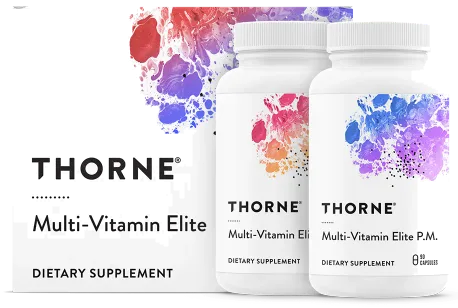
Thorne Multi-Vitamin Elite - NSF Certified for Sport Review
We don’t sell supplements. We help you make decisions and get the best price.
Lowest prices
We may earn a commission from some store links. How we choose.
Finding the lowest prices at the stores now. This takes a few seconds.
Products with nearly the same formula (Matched on the main ingredients)
Study, Trial or Testing Result Summary
Members Only662 human studies · 290 improved
14 of these 662 human studies gave the ingredient by drip, injection or inhaler, not by mouth.
This multivitamin has many nutrients at doses used in mood studies. Vitamin D eased depressive symptoms across 41 trials, though certainty was very low [1], while very large five-year trials in older adults found no drop in depression [2]. Magnesium lowered depression scores across seven placebo-controlled trials [3]. Zinc added to meds eased depressive symptoms [4], and selenium lowered depression scores across many trials [5]. Curcumin added to meds improved symptoms [6]. Folate helped when added to a med medicine [7]. Vitamin C did not improve mood overall but gave a small benefit in mild depression [8]. Vitamin A improved depression scores in one trial of people with multiple sclerosis [9] but not in a larger trial of pregnant women with HIV [10]. Vitamin B12 did not improve depression scores in pooled trials [11]. Vitamin E and lutein are present only in trace amounts, far below studied doses, and riboflavin is below the studied dose. The botanical blend does not name its herbs, so studies of other herbal blends cannot be applied to it. Green tea reaches the studied amount only at three servings a day [12]. Animal and cell studies are never counted.
See all 662 studies →Hide the studies
- Across 25 observational studies of about 100,955 people, those with the highest dietary vitamin A intake had a 17% lower risk of depression than those with the lowest intake, and people with depression ate less vitamin A than people without.Associations of Dietary Vitamin A and Beta-Carotene Intake With Depression. A Meta-Analysis of Observational Studies.
- In 25 observational studies of 91,966 people, those with the highest vitamin C intake from food had about 28% lower risk of depression than those with the lowest intake.Associations of Dietary Vitamin C and E Intake With Depression. A Meta-Analysis of Observational Studies.
- Across 41 randomized trials of 53,235 adults, vitamin D reduced depressive symptoms compared with placebo, with doses of 2,000 IU/day or more appearing to work, though certainty of evidence was very low.The effect of vitamin D supplementation on depressive symptoms in adults: A systematic review and meta-analysis of rando…
- Across 176 studies of 34,051 people, those with major depression or bipolar disorder had lower blood levels of vitamin A and other fat-soluble antioxidants and more fat oxidation damage than healthy people; no vitamin A supplement was tested.Reverse cholesterol transport and lipid peroxidation biomarkers in major depression and bipolar disorder: A systematic r…
- Across 14 observational studies of 31,424 adults, people with depression had lower vitamin D levels, and those with the lowest levels had higher odds and risk of depression, but this does not show that vitamin D treats depression.Vitamin D deficiency and depression in adults: systematic review and meta-analysis.
- In 31 trials of 24,189 adults, each 1,000 IU per day of vitamin D3 slightly reduced depressive symptoms, mostly in trials of 24 weeks or less, with no significant effect on anxiety.The effect of vitamin D supplementation on depression: a systematic review and dose-response meta-analysis of randomized…
- In six observational studies of 19,137 people, low blood magnesium was linked to a higher risk of depression, but the link was marginal and not significant in a sensitivity analysis; no supplement was tested.Hypomagnesaemia linked to depression: a systematic review and meta-analysis.
- In a pooled analysis of 192 trials with 17,437 adults with depression across 44 supplements, adding folate to a med medicine eased depressive symptoms more than a med alone.Comparative efficacy and tolerability of nutraceuticals for depressive disorder: A systematic review and network meta-an…
- In six long-term observational studies of 16,287 older adults, each 10 ng/mL higher blood vitamin D level was linked to 12% lower risk of developing depression; this is an association, not a supplement trial.Serum 25-Hydroxyvitamin D Levels and Depression in Older Adults: A Dose-Response Meta-Analysis of Prospective Cohort Stu…
- In a pooled analysis of 163 studies in major depression, curcumin (2 trials, 89 people) reduced anxiety compared with placebo in the lowest-bias trials, but did not show a clear benefit for depressive symptoms, and confidence in the evidence was low to very low.Nutraceuticals and phytoceuticals for the treatment of major depressive disorder: a systematic review and network meta-a…
- In nine follow-up studies of 8,470 pregnant women, low vitamin D levels were linked to higher risk of postpartum depression but not to depression during pregnancy; no supplementation was tested.Association between vitamin D deficiency and antepartum and postpartum depression: a systematic review and meta-analysis…
- Across 25 placebo-controlled trials with 7,534 people, vitamin D lowered negative emotions such as depression and anxiety, especially in people with major depression or low vitamin D, with trials of 8 weeks or more and 4,000 IU a day or less showing benefit, though results varied widely between studies.The effect of vitamin D supplement on negative emotions: A systematic review and meta-analysis.
- Across 16 trials with 6276 people without severe nerve disease or true B12 deficiency, B12 alone or B complex (with or without B6) did not improve thinking or depression symptoms.Effects of Vitamin B12 Supplementation on Cognitive Function, Depressive Symptoms, and Fatigue: A Systematic Review, Met…
- Across 52 randomized trials with 4049 people taking antioxidant supplements, selenium supplements significantly reduced depression scores compared with controls, and antioxidants overall also improved anxiety.Protective role of antioxidant supplementation for depression and anxiety: A meta-analysis of randomized clinical trials…
- In 28 trials with 2745 people at high risk of depression, drugs including selenium were together more effective than placebo at preventing depression, but selenium was not reported separately.Pharmacological interventions for prevention of depression in high risk conditions: Systematic review and meta-analysis.
- In 21 trials with 1610 people with Hashimoto thyroiditis, selenium lowered thyroid antibodies and thyroid-stimulating hormone, and the authors say this led to better well-being or mood, though mood was not directly measured in the abstract.Clinical efficacy of selenium supplementation in patients with Hashimoto thyroiditis: A systematic review and meta-analy…
- In a network analysis of 25 trials of 1,453 women with polycystic ovary syndrome, vitamin D plus probiotics showed no significant benefit for anxiety and depression compared with control.A network meta-analysis of interventions for anxiety and depression in PCOS.
- In 31 placebo-controlled trials with 1168 people, a single 200 mg dose of L-theanine improved attention and modestly reduced stress, with possible lower depressive symptoms, but anxiety effects were inconsistent and non-significant.Cognitive and affective effects of L-Theanine: a systematic review and meta-analysis of 31 randomized trials.
- In 15 randomized trials with 1,123 adults who had chronic diseases, curcumin lowered depressive and anxiety symptoms compared with controls, though results varied widely between studies.Potential therapeutic benefits of curcumin in depression or anxiety induced by chronic diseases: a systematic review of …
- In nine trials with 1,061 adults with major depression, adding folate beat placebo for improving depressive symptoms, with similar side effects and dropouts.Adjunctive folate for major mental disorders: A systematic review.
- In a pooled analysis of 16 trials with 953 people with schizophrenia (four trials tested curcumin), curcumin only marginally beat placebo for overall symptoms and did better on positive, negative and general symptoms, but results were not robust.Efficacy and safety of Nrf2 activators for schizophrenia: a systematic review and meta-analysis.
- Across 10 trials with 836 adults, vitamin C did not improve mood overall, but in 5 trials of people with mild depression not taking meds it gave a small mood benefit.The effect of vitamin C supplementation on mood status in adults: a systematic review and meta-analysis of randomized co…
- In ten trials with 594 people, curcumin reduced depressive symptoms and raised response rates compared with control, but the evidence quality was low and depressive symptoms alone showed no clear change.The efficacy and acceptability of curcumin for the treatment of depression or depressive symptoms: A systematic review a…
- In a pooled analysis of 10 studies with 531 people with depression, curcumin added to standard care lowered depressive and anxiety symptoms with a large effect, though the sample was small.Curcumin for depression: a meta-analysis.
- In pooled trials of about 500 adults with major depression, adding L-methylfolate to meds gave a modest improvement in depressive symptoms and response compared with meds alone.Systematic Review and Meta-Analysis of L-Methylfolate Augmentation in Depressive Disorders.
- In six trials with 377 depressed patients lasting 4 to 8 weeks, curcumin reduced depression scores more than placebo, with no adverse events reported.Clinical Use of Curcumin in Depression: A Meta-Analysis.
- Pooling nine placebo-controlled trials, vitamin E lowered depression scores in 354 people but the anxiety result (306 people) was not statistically significant, so overall results were inconclusive.Vitamin E, Alpha-Tocopherol, and Its Effects on Depression and Anxiety: A Systematic Review and Meta-Analysis.
- In people with schizophrenia, adding folate to antipsychotics did not improve depressive symptoms or total symptoms more than placebo, though negative symptoms improved slightly.Folic acid/methylfolate for the treatment of psychopathology in schizophrenia: a systematic review and meta-analysis.
- A review of 15 poor-quality epilepsy trials found no reliable evidence for routine vitamin use, with one small study of 72 people reporting better thinking skills with thiamine and no mood outcome for thiamine.Vitamins for epilepsy.
- Across seven placebo-controlled trials of 325 adults with depression, magnesium supplements significantly lowered depression scores compared with placebo.Magnesium supplementation beneficially affects depression in adults with depressive disorder: a systematic review and me…
- In six trials with 289 people, curcumin improved cognition in older adults, with only a small, not statistically significant drop in depression scores, and did not help people with Alzheimer's disease.Curcumin intervention for cognitive function in different types of people: A systematic review and meta-analysis.
- In three trials with 247 people with depression, adding folate to other treatment lowered depression scores by about 2.65 more points over 10 weeks, but folate alone was not better than trazodone.Folate for depressive disorders: systematic review and meta-analysis of randomized controlled trials.
- Pooled studies found people with depression ate less vitamin A and had lower blood vitamin A than healthy people, but this does not show that taking vitamin A treats depression.The relationship between antioxidant vitamins and mental disorders: a meta-analysis.
- An umbrella review of ten meta-analyses of randomized trials found vitamin D supplements reduced depression symptoms compared with placebo, and lower blood vitamin D was linked to higher odds of depression.Vitamin D protects against depression: Evidence from an umbrella meta-analysis on interventional and observational meta-…
- In 32 placebo-controlled studies of menopausal women, nutritional interventions (including vitamin D in some) reduced depressive and anxiety symptoms, but vitamin D was not assessed on its own and results varied widely.Effects of nutritional interventions on the severity of depressive and anxiety symptoms of women in the menopausal trans…
- A pooled analysis of 18 studies found vitamin D deficiency was linked to about 1.5 times higher odds of depression, though the direction of the link is unclear.Vitamin D deficiency and depressive symptoms: meta-analysis of studies .
- In 18 randomized trials in adults, vitamin D modestly reduced depression scores overall, with benefit in people with blood vitamin D above 50 nmol/L but no effect in those below it.The effect of vitamin D supplementation on primary depression: A meta-analysis.
- In 25 mostly observational studies of women before and after childbirth, those with depression had lower blood vitamin D levels than those without, based on low-quality evidence; supplements were not tested.Is Serum Vitamin D Associated with Depression or Anxiety in Ante- and Postnatal Adult Women? A Systematic Review with Me…
- Across 18 observational studies, people with the highest dietary riboflavin intake had a 23% lower risk of depression than those with the lowest intake, with the link significant in women but not in men.Associations of dietary vitamin B1, vitamin B2, vitamin B6, and vitamin B12 with the risk of depression: a systematic re…
- This pooled analysis found people with depression had somewhat lower blood folate and dietary folate than people without depression, but it did not test supplements.The association of folate and depression: A meta-analysis.
- A review of many meta-analyses found folate linked to lower risk of death and many chronic diseases, but also to adverse effects including depression, prostate cancer and asthma.Association Between Folate and Health Outcomes: An Umbrella Review of Meta-Analyses.
- In 11 placebo-controlled trials of folate and/or B12, short-term use did not ease depression in adults on meds, but longer use may lower relapse and the onset of significant depressive symptoms in at-risk people.Systematic review and meta-analysis of randomized placebo-controlled trials of folate and vitamin B12 for depression.
- For adding vitamin B12 to meds in major depression, only one randomized trial was available, with positive and mixed results, so the evidence is not yet sufficient.Efficacy of adding nutritional supplements in unipolar depression: A systematic review and meta-analysis.
- A review of 56 quantitative and 3 qualitative studies in thyroid cancer patients found that low iodine diets before radioactive iodine treatment had a negative impact on psychological health, but it did not test iodine supplementation for mood.Impact of low iodine diets on ablation success in differentiated thyroid cancer: A mixed-methods systematic review and m…
- Magnesium supplements were linked to fewer depressive symptoms in uncontrolled trials, but the effect was small and not clear in placebo-controlled trials, so the review found little evidence of a role in mood disorders.Magnesium and mood disorders: systematic review and meta-analysis.
- Blood magnesium was slightly lower in people with depression in 11 serum studies, but the finding was not robust and plasma and spinal fluid levels did not differ; no supplement was tested.Decreased serum magnesium levels in depression: a systematic review and meta-analysis.
- In people with fibromyalgia, magnesium with malic acid made little or no difference to pain or depressive symptoms, based on only one randomized trial.Magnesium and malic acid supplement for fibromyalgia.
- Pooled trials found zinc added to meds lowered depression scores more than placebo at 6 and 12 weeks, with the biggest effect in people who had not responded to earlier meds.Read the study on PubMed (33641635) →
- A pooled analysis of randomized trials in pregnant and postpartum women found that elemental metals (iron, zinc and magnesium combined) were not better than placebo at reducing depression symptoms, so zinc alone was not shown to help.Dietary interventions for perinatal depression and anxiety: a systematic review and meta-analysis of randomized controll…
- In three placebo-controlled trials of people with Hashimoto's thyroiditis on thyroid hormone, those taking selenium for 3 months were about 2.8 times more likely to report better well-being or mood than controls.Selenium supplementation in the treatment of Hashimoto's thyroiditis: a systematic review and a meta-analysis.
- In nine controlled trials of people with autoimmune thyroiditis not taking thyroid hormone, selenium did not improve quality of life compared with placebo, though three trials saw some better wellbeing in people also on thyroid hormone.Insufficient documentation for clinical efficacy of selenium supplementation in chronic autoimmune thyroiditis, based on…
- Pooling human studies, selenium supplementation significantly reduced depressive symptoms, and higher selenium intake was linked to lower risk of postpartum depression, though blood selenium levels did not differ between depressed and healthy people.The role of selenium in depression: a systematic review and meta-analysis of human observational and interventional stud…
- Combining four randomized trials in people with schizophrenia, curcumin added to usual treatment slightly reduced negative symptoms and general psychopathology but did not significantly improve depression, positive symptoms, or total symptoms, and the evidence was low to very low certainty.Effect of Curcumin Supplementation on Schizophrenia Treatment: A Systematic Review and Meta-Analysis of Randomized Contr…
- Across 11 placebo-controlled studies, caffeine plus L-theanine moderately improved alertness and attention switching within two hours of a single dose.Acute effects of tea constituents L-theanine, caffeine, and epigallocatechin gallate on cognitive function and mood: a s…
- In 8 observational studies, people who drank the most green tea had about a one-third lower odds of depression symptoms, though the one cohort study was not significant.Green Tea Consumption and Risk of Depression Symptoms: A Systematic Review and Meta-Analysis of Observational Studies.
- In a review of 50 trials in healthy people, theanine with caffeine gave small-to-moderate gains in attention and a small, uncertain gain in overall mood in the first two hours, with wide uncertainty.Effects of Tea (Camellia sinensis) or its Bioactive Compounds l-Theanine or l-Theanine plus Caffeine on Cognition, Sleep…
- In a review of 11 reviews covering 185 observational studies, vitamin D deficiency was weakly linked to higher odds of depression after childbirth, with very low certainty of evidence.Risk factors of postpartum depression and depressive symptoms: umbrella review of current evidence from systematic revie…
- A review of 35 studies on diet and supplements in pregnancy and after birth found some protective effects, possibly including selenium, but the evidence on depression risk was inconclusive.The role of diet and nutritional supplementation in perinatal depression: a systematic review.
- A review of 13 observational studies of 12,742 pregnant and postpartum women found low folate intake, along with low calcium and iron, was associated with maternal depression.Association of Maternal depression with diet: A systematic review.
- A review of 20 randomized trials of 2,256 adults with depression or anxiety found vitamin D and B vitamins lowered depression scores, alone or added to standard treatment, though benefits could not be attributed strictly to them when combined with other compounds.Efficacy of B-vitamins and vitamin D therapy in improving depressive and anxiety disorders: a systematic review of rando…
- In four trials with 463 people with Hashimoto's thyroiditis, one small high-risk-of-bias trial of 36 people found 200 mcg sodium selenite improved subjective well-being versus placebo, but the overall evidence was incomplete.Selenium supplementation for Hashimoto's thyroiditis.
- In 9 trials of 318 people with multiple sclerosis taking 600-1200 mg of EGCG daily, mostly for about 4 months, depression scores and interleukin-6 improved but disease progression did not change.The Effects of Epigallocatechin-3-Gallate Nutritional Supplementation in the Management of Multiple Sclerosis: A Systema…
- In three trials with 247 people with depression, adding folate to other treatment lowered depression scores by about 2.65 more points at ten weeks, while folate in place of trazodone showed no significant benefit.Folate for depressive disorders.
- In a review of nutraceutical trials in multiple sclerosis, both vitamin A trials were reported to improve biological or clinical outcomes such as fatigue or depression compared with control, though the trials were small and mood results were not specified.The effect of emerging nutraceutical interventions for clinical and biological outcomes in multiple sclerosis: A systema…
- A review of genetic studies found autoimmune thyroid disease was linked to a higher risk of major depression and lower blood vitamin A, but it tested no vitamin A treatment for mood.Autoimmune thyroid disease and human health: a systematic review of Mendelian randomization studies.
- A review of 122 studies of mitochondria-supporting supplements in psychiatric disorders included vitamin A among many nutrients, found heterogeneous results with high risk of bias, and gave no vitamin A-specific mood result.Clinical outcomes of mitochondrial-enhancing nutraceutical supplementation in psychiatric disorders: A systematic review…
- In a review of 37 mostly uncontrolled studies in cancer patients, intravenous vitamin C may have eased symptoms including depression, but the evidence was preliminary.Intravenous Vitamin C and Cancer: A Systematic Review.
- A review of add-on nutrient trials for depression found mixed results for vitamin C, while other nutrients like omega-3 and vitamin D had more positive results.Adjunctive Nutraceuticals for Depression: A Systematic Review and Meta-Analyses.
- In a review of 14 studies in women, high-dose sustained-release vitamin C reduced anxiety and blood pressure responses to stress, though evidence was limited.The impact of essential fatty acid, B vitamins, vitamin C, magnesium and zinc supplementation on stress levels in women:…
- A review of nine studies linked vitamin C deficiency to depression and poorer thinking, but no studies tested whether replacing vitamin C helps.The neuropsychiatric effects of vitamin C deficiency: a systematic review.
- A review of 54 reviews covering 210 trials found that only 1 of 4 meta-analyses reported a benefit of vitamin D for depression, and most trials were done in people without low vitamin D.Non-skeletal health effects of vitamin D supplementation: A systematic review on findings from meta-analyses summarizing…
- A review of five studies suggested vitamin D deficiency is related to depression after childbirth, but evidence is inconsistent and few trials tested supplements.Postpartum depression and vitamin D: A systematic review.
- A review of earlier reviews found vitamin D deficiency was a risk factor for depression after childbirth, and vitamin D was listed among protective factors.Risk factors for postpartum depression: An evidence-based systematic review of systematic reviews and meta-analyses.
- A review of 31 vitamin D trials for depression found that only five looked at related health problems such as falls or thinking skills, and just two of those reported some benefit.Adverse health outcomes in vitamin D supplementation trials for depression: A systematic review.
- A review of studies in adults aged 18 to 59 found that higher blood vitamin D levels were mostly associated with fewer symptoms of depression, anxiety and low mood, but methods varied and more research is needed.Relationship between vitamin D deficiency and psychophysiological variables: a systematic review of the literature.
- A review of six studies in adults with diabetes found vitamin D taken for at least 12 weeks mostly improved depression and anxiety, though quality of life improved only when combined with mindfulness training, and doses varied and few studies used a placebo.Influence of Vitamin D Supplementation on Mental Health in Diabetic Patients: A Systematic Review.
- A review of 60 studies on nutrition and bipolar disorder found variable, mainly non-significant effects of vitamin D supplementation on bipolar disorder symptoms.Nutrition and bipolar disorder: a systematic review.
- A review of 8 randomized trials in adults with depression, mostly lasting 8 to 12 weeks, found vitamin D improved depression scores in five trials but not in three, so the evidence was not strong.Effect of Vitamin D Supplementation on Depression in Adults: A Systematic Review of Randomized Controlled Trials (RCTs).
- A review of 5 randomized trials in adults with lung diseases found that three reported better mental health with vitamin D and two did not, so the evidence was not strong.Supplementation of Vitamin D and Mental Health in Adults with Respiratory System Diseases: A Systematic Review of Random…
- A review of observational studies in postmenopausal women linked deficiencies of vitamin D and other nutrients to higher risk of conditions including depression, but did not test supplementation directly for mood.A systematic review on the impact of nutrition and possible supplementation on the deficiency of vitamin complexes, iron…
- A review of 14 mostly observational studies linked vitamin D deficiency to several chronic conditions including mental health issues, but it did not test supplements for mood specifically.Unraveling the Relationship Between Vitamin D and Noncommunicable Diseases: A Systemic Review and Meta-Analysis.
- A review of 66 studies, mostly cross-sectional, found lower vitamin D levels were associated with depression, but it remains unproven whether vitamin D supplements protect against depression.Vitamin D and depression in adults: A systematic review.
- A broad review of 209 trials of over-the-counter products for depression in adults found vitamin D was among the most studied, but it did not report vitamin D results, so no conclusion on its effect can be drawn from this summary.Understanding the research landscape of over-the-counter herbal products, dietary supplements, and medications evaluated…
- A review of 23 randomized trials of oral nutrition products in stroke recovery, including vitamin D, found mixed results for daily function, thinking and mood, with no clear conclusion for vitamin D.Oral Nutritional Interventions for Stroke Recovery: A Systematic Review.
- An umbrella review of 27 meta-analyses found vitamin E intake was inversely associated with depression, though most evidence was low or very low quality.Vitamin E intake and multiple health outcomes: an umbrella review.
- A review of 14 studies (11 observational, 1 small trial, 2 animal) found that higher vitamin K intake or blood levels were mostly linked to fewer depressive symptoms, but the evidence was mostly cross-sectional and only one small trial tested supplements.Exploring the Link Between Vitamin K and Depression: A Systematic Review.
- A systematic review of nutrient treatments for bipolar disorder found that preliminary randomized trials suggest folate may help reduce manic symptoms, but the evidence is limited and needs larger studies.Nutrient-based therapies for bipolar disorder: a systematic review.
- A review of 23 trials and open-label studies, 9 of them in major depression, found folate supplements, especially 5-methylfolate, were linked to better clinical outcomes in several psychiatric conditions and were well tolerated.The potential use of folate and its derivatives in treating psychiatric disorders: A systematic review.
- Of 58 studies on pregnancy-related depression, 31 found lower folate, vitamin B12, iron, zinc or vitamin D linked to depression, with the evidence for folate considered mixed and inconclusive.A Systematic Review of the Correlation Between Micronutrient Levels and Perinatal Depression.
- In a review of ten mostly small studies in adults 50 and over with bipolar disorder, nutritional interventions including B12 seemed linked to better mood and thinking, but the evidence quality was limited.A Review of the Evidence Base for Nutrition and Nutritional Supplements in Older Adults with Bipolar Disorder: A report …
- In a review of nine trials in healthy adults aged 50 and over, beef and its nutrients improved wellbeing overall, but vitamin B12 showed no effect.The potential role of beef and nutrients found in beef on outcomes of wellbeing in healthy adults 50 years of age and ol…
- In a review of 32 observational studies in children and teens, higher dietary vitamin B12 intake was consistently linked to fewer depressive symptoms, though many studies did not adjust for other factors.Associations between dietary intake, diet quality and depressive symptoms in youth: A systematic review of observational…
- A review of 11 studies on thyroid status and depression around pregnancy found that high depressive symptoms reduced the thinking benefits of iodine supplements in pregnancy, and the evidence was scarce and often at high risk of bias.Perinatal depression, maternal thyroid status and fetus/infant health and development: A systematic review.
- A review of 27 studies found higher dietary magnesium linked to fewer depression symptoms and suggested supplements may help, but the data were scarce and inconsistent.Magnesium and depression: a systematic review.
- A review of 20 articles on diet and depression found that magnesium and folic acid intake, among other dietary habits, was linked to less depression.Evidence of the Importance of Dietary Habits Regarding Depressive Symptoms and Depression.
- A review of 32 articles on mental disorders found mostly positive but inconsistent results for magnesium in depression, with supplements possibly helpful but more trials needed.The Role and the Effect of Magnesium in Mental Disorders: A Systematic Review.
- A review of eleven trials in pre-menopausal women found three controlled studies suggesting zinc helped depressive symptoms, both alongside meds and alone in women low in zinc.Increasing iron and zinc in pre-menopausal women and its effects on mood and cognition: a systematic review.
- A review of 22 trials of selenium in pregnancy, including some on postpartum depression, found most were poorly designed and the evidence supporting selenium was poor.Selenium Supplementation in Pregnancy-Maternal and Newborn Outcomes.
- A review of 43 sources on gut-health supplements in psychiatric disorders found mixed evidence overall, with some favorable data for probiotics plus selenium only in people with memory and thinking disorders, not mood.The current state of research for psychobiotics use in the management of psychiatric disorders-A systematic literature r…
- A review of lab, animal and human studies found curcumin promising for several brain and mood conditions, with the strongest support for major depression, though better-designed clinical trials are needed.Curcumin for neuropsychiatric disorders: a review of in vitro, animal and human studies.
- A review of herbal medicines for psychiatric disorders found preliminary evidence that turmeric may help depression, though stronger evidence exists for other herbs.Herbal medicines in the treatment of psychiatric disorders: 10-year updated review.
- A review of 10 randomized trials concluded that curcumin improved depression and anxiety in people, though doses and formulations varied and larger studies are needed.Read the study on PubMed (33673739) →
- A review of plant-compound studies in Parkinson disease found curcumin and other flavonoid-rich treatments improved movement, but no significant differences in quality of life, mood or thinking.Dietary flavonoids may have a protective and therapeutic effect in Parkinson disease: A systematic review.
- A review of 13 randomized trials and 1 meta-analysis of herbal products found that turmeric, saffron, lavender and St John's wort eased depression symptoms and lowered inflammatory markers, but it did not test the Meriva form of curcumin specifically.Phytochemicals in the treatment of patients with depression: a systemic review.
- A review of 21 studies found green tea may reduce anxiety and benefit memory, attention and brain activity, mostly when caffeine and L-theanine act together.Green tea effects on cognition, mood and human brain function: A systematic review.
- A review of 9 trials suggested 200-400 mg a day of L-theanine may reduce stress and anxiety in people under stressful conditions, though larger and longer studies are needed.The Effects of Green Tea Amino Acid L-Theanine Consumption on the Ability to Manage Stress and Anxiety Levels: a Systema…
- Among 38 trials of flavonoid-rich foods, 12 of 25 long-term studies favored the flavonoids for mood, with only one of them using green tea.Effects of Dietary Flavonoids on Mood and Mental Health: A Systematic Review.
- In about 20,000 Australians aged 60 to 84, monthly high-dose vitamin D3 over about 5 years did not reduce depression scores or clinically relevant depression compared with placebo, though a subgroup taking meds at baseline had slightly lower scores.Effect of vitamin D supplementation on depression in older Australian adults.
- In 18,353 adults aged 50 and older taking 2,000 IU of vitamin D3 daily for a median of 5.3 years, the risk of depression and mood scores did not differ from placebo.Effect of Long-term Vitamin D3 Supplementation vs Placebo on Risk of Depression or Clinically Relevant Depressive Sympto…
- In 4331 older women taking B6 with folic acid and B12 daily for about 7 years, depression risk was no different from placebo.Effect of long-term supplementation with folic acid and B vitamins on risk of depression in older women.
- In 4000 HIV-positive Tanzanian adults starting antiretroviral therapy with low vitamin D, taking vitamin D3 (50,000 IU weekly for 4 weeks, then 2000 IU daily) for 1 year did not change HIV progression, viral suppression, weight, or depression compared with placebo.Cholecalciferol Supplementation Does Not Affect the Risk of HIV Progression, Viral Suppression, Comorbidities, Weight Lo…
- In 2919 adults aged 65+ with high homocysteine given vitamin B12 (500 mcg) and folic acid daily for two years, depressive symptoms did not differ from placebo, though one quality-of-life score declined slightly less.Effects of Two-Year Vitamin B12 and Folic Acid Supplementation on Depressive Symptoms and Quality of Life in Older Adult…
- Older adults given 1600 or 3200 IU of vitamin D3 daily for 5 years did not have fewer new cases of major depressive disorder than those given placebo, though a borderline lower rate appeared during longer follow-up.Vitamin D supplementation and incidence of major depressive disorder - A randomized clinical trial.
- In 1,621 women aged 70 or older, taking 800 IU of vitamin D (with calcium) daily for six months did not improve mental health scores compared with no supplement.Can vitamin D supplementation prevent winter-time blues? A randomised trial among older women.
- In rural Malawi, pregnant women given a fat-rich nutrient supplement, a multiple-micronutrient capsule, or iron-folate capsules had similar depressive symptoms at 6 months after birth, so the supplement did not reduce postnatal depression.The impact of maternal diet fortification with lipid-based nutrient supplements on postpartum depression in rural Malawi…
- In 1,220 pregnant women in Ethiopia, earlier access to iodized salt improved iodine levels and children's thinking scores by about 4 IQ points, but the abstract reports no mood result for the mothers.Pre-pregnancy iodized salt improved children's cognitive development in randomized trial in Ethiopia.
- In 1078 HIV-positive pregnant women in Tanzania, vitamin A had no effect on depression or quality of life, while a B-complex, C and E multivitamin lowered the risk of elevated depressive symptoms.Multivitamin supplementation in HIV-positive pregnant women: impact on depression and quality of life in a resource-poor…
- In 1025 overweight adults with mild depressive symptoms, a daily multinutrient supplement including 30 micrograms of selenium for one year did not reduce new major depression compared with placebo.Effect of Multinutrient Supplementation and Food-Related Behavioral Activation Therapy on Prevention of Major Depressive…
- In 909 distressed adults aged 60-74 given vitamin B12 (100 mcg) with folic acid daily for up to two years, depressive symptoms were not reduced compared with placebo.Mental health literacy, folic acid and vitamin B12, and physical activity for the prevention of depression in older adul…
- In 900 adults aged 60-74 given vitamin B12 (100 mcg) with folic acid daily for two years, the supplement did not boost the effect of a med medication on depressive symptoms.Read the study on PubMed (20805005) →
- In 756 people with mild memory impairment followed up to 3 years, vitamin E did not delay progression to Alzheimer disease among those with depressive symptoms, while donepezil did.Donepezil delays progression to AD in MCI subjects with depressive symptoms.
- In 726 dialysis patients with depression, 52 weeks of 50,000 IU weekly vitamin D3 did not significantly reduce depressive symptoms overall compared with placebo, but it did reduce symptoms in the subgroup with vascular depression.Efficacy of High-Dose Supplementation With Oral Vitamin D3 on Depressive Symptoms in Dialysis Patients With Vitamin D3 I…
- In 720 older adults at risk for depression, taking 2,000 IU of vitamin D3 daily for 2 years did not prevent major depression or change mood scores compared with placebo.Effects of Vitamin D3 and Marine Omega-3 Fatty Acids Supplementation on Indicated and Selective Prevention of Depression…
- In 674 Guatemalan schoolchildren given 10 mg zinc oxide five days a week for 6 months, mental health scores did not differ from placebo, though rises in blood zinc were linked to less depression and anxiety.Randomized trial of the effect of zinc supplementation on the mental health of school-age children in Guatemala.
- In 620 adults with disturbed sleep, a blend with 75 mg each of hops and valerian oil plus a little THC reduced anxiety and stress and improved well-being over 4 weeks versus placebo, but the lower-botanical blend with more THC showed no benefit.A Randomized, Double-Blind, Placebo-Controlled Decentralized Trial to Assess Sleep, Health Outcomes, and Overall Well-Be…
- In a placebo-controlled trial of 501 adults aged 60 to 74, 100, 200, or 300 mcg of selenium daily for six months did not improve mood or quality of life compared with placebo.Impact of selenium on mood and quality of life: a randomized, controlled trial.
- In young adults given high-dose vitamin B6 for one month, self-reported anxiety fell compared with placebo and depression showed a trend toward reduction.High-dose Vitamin B6 supplementation reduces anxiety and strengthens visual surround suppression.
- In 475 adults with moderate to severe depression taking meds, adding 5 mg per day of folic acid for 12 weeks did not improve mood or quality of life compared with placebo.Folate Augmentation of Treatment--Evaluation for Depression (FolATED): randomised trial and economic evaluation.
- In 459 Guatemalan women, weekly and daily folic acid combined with iron, zinc and vitamin B-12 for 12 weeks lowered depression scores by 2.3 points on average, with no difference between the weekly and daily groups. Lower red blood cell folate at baseline was linked to more depressive symptoms, though this association was not statistically significant.Micronutrient supplementation may reduce symptoms of depression in Guatemalan women.
- In a school-based trial of rural adolescents, 9 weeks of 2,250 IU vitamin D3 daily lowered depression scores more than a low-dose control of 250 IU daily.Does Vitamin D3 Supplementation Improve Depression Scores among Rural Adolescents? A Randomized Controlled Trial.
- In 441 overweight and obese adults, taking 20,000 or 40,000 IU of vitamin D weekly for one year improved depression scores in both dose groups, while the placebo group showed no such improvement.Effects of vitamin D supplementation on symptoms of depression in overweight and obese subjects: randomized double blind…
- In 436 healthy adults aged 60 and older, about 600 IU of vitamin D3 daily for 24 weeks kept blood vitamin D steady through winter but did not improve mood or cognition compared with placebo.The Effects of Vitamin D-Enriched Mushrooms and Vitamin D3 on Cognitive Performance and Mood in Healthy Elderly Adults: …
- Adults with knee osteoarthritis and vitamin D deficiency who took 50,000 IU of vitamin D3 monthly for 24 months had greater improvement in depressive symptoms than those given placebo.Effect of Vitamin D Supplementation on Depressive Symptoms in Patients With Knee Osteoarthritis.
- In 387 healthy older Europeans given 15 or 30 mg of zinc gluconate daily for 6 months, positive and negative mood did not change compared with placebo.Supplemented zinc does not alter mood in healthy older European adults--a randomised placebo-controlled trial: the Zenit…
- In 366 anemic pregnant women in rural China, adding retinol and/or riboflavin to iron and folic acid for 2 months led to more women reporting improved well-being than iron and folic acid alone.Retinol and riboflavin supplementation decreases the prevalence of anemia in Chinese pregnant women taking iron and foli…
- In 350 heart surgery patients given intravenous magnesium during bypass, short-term neurologic function was better than placebo, but by 3 months depression scores did not differ between groups.Magnesium as a neuroprotectant in cardiac surgery: a randomized clinical trial.
- In 348 adults in a food-based heart health program, depression scores fell more than in the control group over 6 months, and higher dietary vitamin B6 intake was linked to lower depression scores.Coronary Health Improvement Project (CHIP) is associated with improved nutrient intake and decreased depression.
- In 279 older adults with mild memory impairment and high homocysteine, 500 mcg of methylcobalamin with folic acid daily for 24 months lowered depression scores at 12 months compared with placebo, but this effect did not last to 24 months and cognitive decline was not reduced.A randomized placebo-controlled trial of using B vitamins to prevent cognitive decline in older mild cognitive impairmen…
- In 273 stroke survivors followed about 7 years, daily B6 with folic acid and B12 lowered the hazard of major depression versus placebo (18.4% vs 23.3%).B-vitamins reduce the long-term risk of depression after stroke: The VITATOPS-DEP trial.
- In 267 adults given 100 mg vitamin B6 daily for one month, those with mild or worse depression symptoms at the start had a large reduction in depression versus placebo, with no effects on anxiety or stress.High Dose Vitamin B6 Reduces Depression Symptoms.
- In 264 stressed adults with low magnesium over 8 weeks, adding B6 to magnesium was not better than magnesium alone overall, but gave 24% greater stress improvement in those with severe stress.Superiority of magnesium and vitamin B6 over magnesium alone on severe stress in healthy adults with low magnesemia: A r…
- In a secondary analysis of 264 people taking magnesium with or without 30 mg vitamin B6 for 8 weeks, adding vitamin B6 did not further raise magnesium levels, and this analysis did not report a separate mood or stress effect of vitamin B6.Impact of magnesium supplementation, in combination with vitamin B6, on stress and magnesium status: secondary data from…
- In 236 women with newly diagnosed breast cancer, coenzyme Q10 plus 300 IU vitamin E daily for 24 weeks did not improve depression scores versus placebo plus vitamin E; vitamin E was given to both groups.A randomized, double-blind, placebo-controlled study of oral coenzyme Q10 to relieve self-reported treatment-related fat…
- In 227 breast cancer survivors, a 12-month program combining a Mediterranean diet, exercise and vitamin D improved well-being and quality of life, but vitamin D was not tested alone, and the study reports no mood-specific outcome.Quality of Life in Women Diagnosed with Breast Cancer after a 12-Month Treatment of Lifestyle Modifications.
- In 227 obese adults with type 2 diabetes, curcumin taken for 12 months reduced depression severity more than placebo, with higher serotonin and lower inflammation and oxidative stress markers.Curcumin Reduces Depression in Obese Patients with Type 2 Diabetes: A Randomized Controlled Trial.
- In 225 hospitalised older patients, a daily multi-nutrient drink providing 100% of recommended vitamins and minerals (including folate) for 6 weeks led to fewer depressive symptoms than placebo at 6 months. Folate was not studied alone.Effects of dietary supplements on depressive symptoms in older patients: a randomised double-blind placebo-controlled tr…
- In two trials of 223 adults with depression who had not fully responded to a med meds, adding 15 mg daily of L-methylfolate for 30 days improved depression scores more than placebo in the second trial of 75 people, but the first trial using 7.5 or 15 mg showed no significant difference.Read the study on PubMed (23212058) →
- In 215 working men aged 30 to 55, a high-dose B vitamin, vitamin C and mineral supplement taken for 33 days improved stress, general mental health and vigour ratings compared with placebo.Effects of high-dose B vitamin complex with vitamin C and minerals on subjective mood and performance in healthy males.
- In 213 sepsis survivors given intravenous vitamin C, thiamine and hydrocortisone for up to 4 days, there was no psychological benefit at 6 months and higher odds of posttraumatic stress disorder than with placebo.Read the study on PubMed (36853612) →
- In 211 women of various ages, 750 mcg of folate daily for 35 days did not improve mood compared with placebo, although it slightly improved some memory tests.Short-term folate, vitamin B-12 or vitamin B-6 supplementation slightly affects memory performance but not mood in women…
- In 210 people having elective surgery, a calming herbal tea did not lower anxiety more than a placebo tea, although it was linked to more positive feelings about the surgery.Exploring the Effects of a Calming Herbal Tea Blend on Perioperative Anxiety: A Randomized Clinical Trial.
- In 198 working men aged 30 to 55, a B vitamin, vitamin C and mineral supplement taken for 4 weeks improved self-rated physical stamina, concentration, mental stamina and alertness compared with placebo.Vitamins and psychological functioning: a mobile phone assessment of the effects of a B vitamin complex, vitamin C and m…
- A nutrition education programme for caregivers of 173 dependent older adults at risk of malnutrition over 6 months improved nutrition scores and vitamin E intake, but the abstract reports no mood results, so it does not show a mood benefit.The efficacy of a nutrition education intervention to prevent risk of malnutrition for dependent elderly patients receiv…
- In 171 young adults, two extra daily servings of fresh fruit and vegetables for 2 weeks improved vitality, flourishing and motivation but not depression, anxiety or mood, and the benefit was not explained by blood vitamin C.Let them eat fruit! The effect of fruit and vegetable consumption on psychological well-being in young adults: A randomi…
- In 171 adults with mild insomnia, a two-week multi-ingredient blend containing vitamin B6 did not improve sleep or mood and anxiety more than placebo, as both groups improved similarly.Exploring the Effect of Lactium™ and Zizyphus Complex on Sleep Quality: A Double-Blind, Randomized Placebo-Controlled Tr…
- In pregnant women in Iran, 2000 IU of vitamin D3 daily from 26 to 28 weeks of pregnancy until birth lowered depression scores more than placebo, with the difference still present 8 weeks after birth.A randomized controlled trial of vitamin D supplementation on perinatal depression: in Iranian pregnant mothers.
- In people with Hashimoto's thyroiditis and mildly raised TSH, myo-inositol plus selenium for six months improved thyroid hormone levels and personal wellbeing compared with selenium alone.Myo-inositol plus selenium supplementation restores euthyroid state in Hashimoto's patients with subclinical hypothyroid…
- In 167 young adults with low vitamin C, a 250 mg vitamin C tablet daily for 4 weeks improved well-being after two weeks, and also improved mood and fatigue in those with consistently low vitamin C, while placebo showed no change; kiwifruit had somewhat stronger effects.KiwiC for Vitality: Results of a Randomized Placebo-Controlled Trial Testing the Effects of Kiwifruit or Vitamin C Table…
- In a placebo-controlled trial of 166 first-time pregnant women in Iran, taking 100 mcg of selenium daily from the first trimester until delivery was linked to lower depression scores in the 8 weeks after birth than placebo.Effect of supplementation with selenium on postpartum depression: a randomized double-blind placebo-controlled trial.
- In 160 men with low testosterone, vitamin E/C capsules used as the control for 6 months produced no significant changes in anxiety or depression, while testosterone treatment improved them.Androgen replacement therapy improves psychological distress and health-related quality of life in late onset hypogonadi…
- In adolescent girls with severe vitamin D deficiency and premenstrual mood symptoms, vitamin D given for 4 months reduced anxiety, irritability, sadness, and relationship problems compared with placebo.Vitamin D Supplementation for Premenstrual Syndrome-Related Mood Disorders in Adolescents with Severe Hypovitaminosis D.
- In an 8-week placebo-controlled trial of 158 people with major depression, blood folate levels did not predict or track improvement, while changes in omega-3 fatty acids did.EPA and DHA as markers of nutraceutical treatment response in major depressive disorder.
- In 158 adults with major depression, an 8-week combination supplement that included zinc picolinate did not beat placebo for depression scores (40% responded versus 51% on placebo), and it caused more nausea.Nutraceuticals for major depressive disorder- more is not merrier: An 8-week double-blind, randomised, controlled trial.
- In 155 older adults with depressive symptoms and low vitamin D, 1200 IU a day of vitamin D3 for 12 months did not change depressive symptoms compared with placebo.Vitamin D supplementation for the prevention of depression and poor physical function in older persons: the D-Vitaal stu…
- In 153 adults aged 50 or over with major depression taking citalopram, adding vitamin B6 with B12 and folic acid for 52 weeks did not improve remission at 12 weeks but led to more remission over the year (85.5% vs 75.8%) and less relapse.Read the study on PubMed (25257064) →
- In 152 sedentary overweight or obese older adults, 160 mg of curcumin daily for 16 weeks did not reduce chronic pain; this trial did not report mood results for curcumin.Fish oil supplementation reduces osteoarthritis-specific pain in older adults with overweight/obesity.
- In 150 adults with tension headaches and fatigue, adding a combination tablet containing nicotinamide for about 25 days reduced anxiety and depression scores more than standard treatment alone.[Results of the observational program CITOTREK (use of the drug CITOflavin in Tablets) in patients with tension headache…
- In a randomized clinical trial, 144 participants with treatment-resistant major depression received 100 mg nicotinamide as a placebo, and it did not show a significant effect on treatment response compared to psilocybin.Efficacy and Safety of Psilocybin in Treatment-Resistant Major Depression: The EPISODE Randomized Clinical Trial.
- In 142 graduate students given a single 1000 mg dose of vitamin C, anxiety and mood scores did not change overall, but the most anxious women had a significant drop in anxiety two hours later.Effects of ascorbic acid on anxiety state and affect in a non-clinical sample.
- In a placebo-controlled trial of 140 people with Alzheimer or vascular dementia taking 1 mg methylcobalamin plus folic acid daily for 24 months, global cognitive decline was not slowed, and depression scores did not differ significantly from placebo.A randomized placebo controlled trial of homocysteine lowering to reduce cognitive decline in older demented people.
- In 140 people with chronic illness, a multi-ingredient product containing vitamin B12 as methylcobalamin for 60 days reduced mild depressive symptoms more than placebo, but B12 alone was not tested.SAFETY AND EFFICACY OF THE COMPLEX DEPRILIUM® IN REDUCING SUBCLINICAL SYMPTOMS OF DEPRESSION IN PATIENTS WITH CHRONIC NO…
- In 140 overweight or obese adults with mild to moderate depressive symptoms, 30 mg of zinc gluconate daily for 12 weeks lowered depression scores more than placebo, and zinc worked better than vitamin D, but cortisol and BDNF did not change.Effects of zinc, vitamin D, and their co-supplementation on mood, serum cortisol, and brain-derived neurotrophic factor …
- In 138 overweight adults on a calorie-restricted diet, 2 months of a green tea compound (EGCG) plus an appetite-suppressing fat compound improved depressive symptoms and binge eating more than placebo, though weight loss did not differ between groups.Administration of a dietary supplement ( N-oleyl-phosphatidylethanolamine and epigallocatechin-3-gallate formula) enhanc…
- In 135 adults with constipation, 300 or 500 mg daily of an ashwagandha and okra herbal blend for 60 days reduced depression and anxiety symptoms and improved sleep quality compared with placebo.A Novel Herbal Composition Alleviates Functional Constipation, Reduces Gastrointestinal Transit Time, and Improves Bowel…
- In 129 women with type 2 diabetes and depressive symptoms, weekly vitamin D3 at 50,000 IU or 5,000 IU for 6 months gave no difference in depression scores between doses, though mood improved over time in both groups.Vitamin D Supplementation for the Treatment of Depressive Symptoms in Women with Type 2 Diabetes: A Randomized Clinical …
- In 129 healthy young adults taking high-dose vitamins for a year, women felt more agreeable, more composed and had better mental health, and men felt more agreeable, with better thiamin status linked to better mood in women.Vitamin supplementation for 1 year improves mood.
- In 128 adults with overweight or obesity and metabolic syndrome, 1 g curcumin with probiotics daily for 8 weeks reduced stress and anxiety and improved general health versus placebo, but depression did not change significantly.Mental health and health-related quality of life response to curcumin-probiotic drink powder co-supplementation in adult…
- In 127 adults with major depression taking a med, adding 500 mcg of folic acid daily for 10 weeks gave greater improvement than placebo, and this benefit was seen in women. 93.9% of women on folic acid had a good response (over 50% reduction in symptom score), compared with 61.1% on placebo.Read the study on PubMed (10967371) →
- In 124 women starting a low-dose birth control pill, 150 mg of vitamin B6 daily for 30 days did not reduce depression, irritability or other side effects significantly more than placebo.Effect of vitamin B6 on the side effects of a low-dose combined oral contraceptive.
- In 123 people with major depression, curcumin extract or curcumin plus saffron for 12 weeks improved depressive and anxiety symptoms more than placebo, with no difference between doses.Efficacy of curcumin, and a saffron/curcumin combination for the treatment of major depression: A randomised, double-bli…
- In 120 spine surgery patients, a single intravenous dose of magnesium sulfate combined with lidocaine reduced anxiety and depression for up to three months versus saline; the abstract does not give separate mood results for magnesium alone.Effects of intravenous single-bolus lidocaine infusion versus intravenous single-bolus magnesium sulfate infusion on pos…
- In 120 adults with major depression, 8 weeks of a combination of probiotics, magnesium orotate and coenzyme Q10 lowered depression at 4 weeks and the end of treatment versus placebo, and reduced anxiety and stress, but the depression difference was not seen at 8 and 16 weeks of follow-up.Probiotics and magnesium orotate for the treatment of major depressive disorder: a randomised double blind controlled tr…
- In 114 gallbladder surgery patients, a single intravenous dose of magnesium sulfate raised the recovery quality score by 8 points over saline on day one, mainly through better physical comfort and independence; the abstract does not report anxiety or depression results.Intravenously injected lidocaine or magnesium improves the quality of early recovery after laparoscopic cholecystectomy:…
- In 113 adults with atypical depression, 600 mcg of chromium daily for 8 weeks did not beat placebo on overall depression scores, but helped appetite and carbohydrate craving, and in those with high craving 65% responded versus 33% on placebo.A double-blind, placebo-controlled, exploratory trial of chromium picolinate in atypical depression: effect on carbohydr…
- In a placebo-controlled trial of 108 obese women with mild to moderate depressive symptoms, 250 mg of magnesium daily for 8 weeks did not change depression scores more than placebo, although depression scores fell in all groups. Magnesium with vitamin D was reported to have beneficial effects on some inflammation and brain-protein measures.Randomized study of the effects of vitamin D and/or magnesium supplementation on mood, serum levels of BDNF, inflammatio…
- In 108 men with major depression taking meds, 1000 mg of curcumin daily for 6 weeks reduced depression scores more than placebo, along with lower inflammatory cytokines and lower salivary cortisol.Read the study on PubMed (26066335) →
- In 106 people with Alzheimer's disease, a multi-nutrient formula including vitamin E improved cognitive scores within 3 months versus placebo, but caregiver-reported mood and behavior improvements were not significant.A Phase II Randomized Clinical Trial of a Nutritional Formulation for Cognition and Mood in Alzheimer's Disease.
- In a placebo-controlled trial of 103 healthy active adults, an evening blend containing magnesium L-threonate (145 mg of magnesium) for two weeks did not show clear improvements in stress or sleep, while a morning ashwagandha and rhodiola product did.Modulating stress and sleep through a multi-compound dietary supplement: a randomized, double-blind, placebo-controlled …
- In 101 people with relapsing-remitting multiple sclerosis, vitamin A as retinyl palmitate for one year improved fatigue and depression scores compared with placebo.Effect of Vitamin A Supplementation on fatigue and depression in Multiple Sclerosis patients: A Double-Blind Placebo-Con…
- In 100 people under mental and physical stress, 400 mg of magnesium daily for 90 days improved the balance of the nervous system, while the control group showed no change.[Long-term HRV analysis shows stress reduction by magnesium intake].
- In a placebo-controlled trial of 100 moderately stressed adults, a magnesium, B vitamin, green tea and rhodiola combination taken before a stress test reduced subjective stress, anxiety and mood disturbance and increased relaxed brain activity compared with placebo.A combination of green tea, rhodiola, magnesium and B vitamins modulates brain activity and protects against the effects…
- In a placebo-controlled trial of 100 chronically stressed adults, a daily magnesium, B vitamin, rhodiola and green tea combination for 28 days reduced stress scores more than placebo and improved daytime sleepiness, though the magnesium dose was not reported separately.Effect of a Combination of Magnesium, B Vitamins, Rhodiola, and Green Tea (L-Theanine) on Chronically Stressed Healthy I…
- In 100 adults with poor sleep, 2 g daily of magnesium L-threonate for 6 weeks improved cognitive test scores compared with placebo, but did not change self-reported emotional wellbeing.The effects of magnesium L-threonate (Magtein®) on cognitive performance and sleep quality in adults: a randomised, doub…
- In 100 moderately stressed adults, a combination of green tea, rhodiola, magnesium and B vitamins increased brain theta activity during attention tasks under induced stress, but did not change task performance or event-related brain responses.A Combination of Green Tea, Rhodiola, Magnesium, and B Vitamins Increases Electroencephalogram Theta Activity During Att…
- Over 8 weeks in 100 healthy adults, matcha tea paired with a guided meditation app improved mood and reduced stress about as much as traditional breathing meditation, with no clear added benefit from the tea.Feasibility and Efficacy of a Novel Mindfulness App Used With Matcha Green Tea in Generally Healthy Adults: Randomized C…
- In 99 postpartum women taking 320 mg magnesium sulfate daily for 8 weeks, depression and anxiety scores did not differ from placebo.Effects of zinc and magnesium supplements on postpartum depression and anxiety: A randomized controlled clinical trial.
- Among 99 older adults with mild memory decline, 2 g of matcha daily for 12 months improved facial emotion perception compared with placebo, but the main cognitive and daily living scores did not change.Effect of matcha green tea on cognitive functions and sleep quality in older adults with cognitive decline: A randomized…
- In 96 new mothers taking 500 mg of curcumin daily for eight weeks, depression and anxiety scores fell more than with placebo.The effect of curcumin on postpartum depression and anxiety in primiparous women: a double-blind randomized placebo-cont…
- In 95 people being treated for major depression, 16 weeks of tuna oil capsules (with 10 mg vitamin E) did not improve depression scores more than olive oil placebo, though rises in red blood cell DHA tracked with better scores.Improvement of major depression is associated with increased erythrocyte DHA.
- In a crossover diet study of 94 adults, a low-sodium, high-potassium diet for 4 weeks improved mood more than a DASH-style diet; this tested diet changes, not magnesium supplements, and higher urinary magnesium was only weakly linked to vigour.Dietary electrolytes are related to mood.
- In 92 vitamin D-deficient teens with depressive symptoms, 2640 IU daily for 4 weeks showed no consistent difference in effect based on baseline inflammation levels, so the results did not support that inflammation changes how well vitamin D works.Does inflammation moderate the effect of vitamin D supplementation on depressive symptoms? Results of an interventional …
- In a placebo-controlled trial of 90 adults with fibromyalgia, 80 mg of vitamin B6 daily did not improve anxiety, depression, or other psychological measures more than placebo, although scores improved in both groups.Effect of vitamin B6 on pain, disease severity, and psychological profile of fibromyalgia patients; a randomized, double…
- In 90 adults aged 50 to 69 who were overweight or had prehypertension, 900 mg of turmeric hot water extract daily for 12 weeks lowered inflammation markers and improved mood and general health scores compared with placebo.Hot Water Extract of Curcuma longa L. Improves Serum Inflammatory Markers and General Health in Subjects with Overweight…
- In 90 overweight adults aged 50 to 69, a turmeric extract taken for 12 weeks improved mental health scores and lowered anger and hostility more than placebo, along with lower inflammatory blood markers.Curcuma longa extract improves serum inflammatory markers and mental health in healthy participants who are overweight: …
- In 90 adults aged 40-75 with memory complaints, 10 mg of lutein plus 2 mg of zeaxanthin daily for 6 months improved visual memory and learning but did not change mood or other self-reported measures compared with placebo.The Effects of Lutein and Zeaxanthin Supplementation on Cognitive Function in Adults With Self-Reported Mild Cognitive C…
- In 89 menopausal women over 24 weeks, a blend with Magnolia bark, magnesium and soy isoflavones eased mood symptoms more than calcium plus vitamin D3 alone, so vitamin D itself was the comparison, not the active treatment.Soy isoflavones, lactobacilli, Magnolia bark extract, vitamin D3 and calcium. Controlled clinical study in menopause.
- In 89 adults with mild sleep problems, a daily polyphenol blend taken for 30 days improved sleep quality and lowered insomnia severity compared with placebo, and some attention and memory measures improved, but mood was not reported as improved.A Randomized, Double-Blind, Placebo-Controlled Trial of a Polyphenol Botanical Blend on Sleep and Daytime Functioning.
- In adults with drug-resistant epilepsy and low vitamin D, 100,000 IU vitamin D3 given as periodic high doses did not reduce seizures versus placebo during the 3-month blinded phase, but over the open-label year fatigue and quality of life scores improved across the group.Vitamin D deficiency and effect of treatment on seizure frequency and quality of life parameters in patients with drug-r…
- In 88 overweight or obese men, 800 mg of green tea EGCG daily for 8 weeks produced a more positive mood than placebo, though it did not change insulin resistance and modestly lowered diastolic blood pressure.Effects of dietary supplementation with the green tea polyphenol epigallocatechin-3-gallate on insulin resistance and as…
- In 86 children with attention-deficit/hyperactivity disorder given a multinutrient formula or placebo for 8 weeks, blood boron levels rose more with the formula, but this rise did not explain who improved in behaviour, and boron was not tested on its own for mood.Evaluating mineral biomarkers as mediators and moderators of behavioural improvements in a randomised controlled trial o…
- In 84 patients with vascular depression on meds, vitamin C was used as an inactive comparator and did worse than nimodipine, with 25% reaching full remission versus 45% on nimodipine.Read the study on PubMed (11288158) →
- In 84 women with polycystic ovary syndrome, taking 90 micrograms of vitamin K2 (menaquinone-7) daily for 8 weeks improved depression scores significantly more than placebo.Effect of vitamin K2 administration on depression status in patients with polycystic ovary syndrome: a randomized clinic…
- In 84 people with irritable bowel syndrome, 20 mg of zinc daily for 90 days lowered depression and stress scores more than zinc plus probiotics, with zinc alone doing better on mood than the combination.Effects of zinc and probiotic co-supplementation on inflammation, gastrointestinal symptoms, quality of life, and mood i…
- In 83 nursing students with premenstrual syndrome, a one-hour nutrition education session with follow-up emails lowered symptom scores, including depressive feelings and anxiety, over 4 months; zinc was not given as a supplement, and dietary zinc rose by only 0.6 mg per day.The effect of nutrition education on premenstrual syndrome: Randomized controlled study.
- In 82 inpatients with depression given biotin for 4 weeks, both the probiotic-plus-biotin and the placebo-plus-biotin groups improved in symptoms, with no clinical difference between them (the biotin effect itself was not isolated).PROVIT: Supplementary Probiotic Treatment and Vitamin B7 in Depression-A Randomized Controlled Trial.
- In an 81-person placebo-controlled trial, 3000 mg per day of sustained-release vitamin C for 2 weeks lowered depression questionnaire scores in the vitamin C group, while the placebo group showed no such drop.High-dose ascorbic acid increases intercourse frequency and improves mood: a randomized controlled clinical trial.
- In anemic new mothers, a placebo containing 25 mg vitamin C did not improve mood or cognition, while iron treatment did; vitamin C was not tested on its own.Maternal iron deficiency anemia affects postpartum emotions and cognition.
- In 81 postmenopausal women who took 1000 mg of vitamin E daily for 8 weeks, anxiety fell significantly more than with placebo and antioxidant levels rose, while depression scores fell in every group including placebo.Clinical Efficacy of Curcumin and Vitamin E on Inflammatory-Oxidative Stress Biomarkers and Primary Symptoms of Menopaus…
- In a placebo-controlled trial of 81 pregnant women at risk of postpartum depression, 80 mg of vitamin B6 daily from week 28 of pregnancy lowered depression scores compared with placebo.Can Vitamin B6 Help to Prevent Postpartum Depression? A Randomized Controlled Trial.
- In an 8-week placebo-controlled trial of 80 adults with post-COVID fatigue or neuropsychiatric symptoms, weekly vitamin D at 60,000 IU improved anxiety and cognitive test scores, but not depression scores, compared with placebo.Effects of an 8-week high-dose vitamin D supplementation on fatigue and neuropsychiatric manifestations in post-COVID sy…
- In 80 adults aged 35 to 55 with self-reported sleep problems, 1000 mg of magnesium L-threonate daily for 21 days improved deep sleep, daytime energy, alertness and mood compared with placebo, and was well tolerated.Magnesium-L-threonate improves sleep quality and daytime functioning in adults with self-reported sleep problems: A rand…
- In 80 healthy young men, one daily multivitamin tablet with zinc for 28 days reduced anxiety and perceived stress more than placebo.The effects of an oral multivitamin combination with calcium, magnesium, and zinc on psychological well-being in healthy…
- In 80 adults with diabetes and nerve damage in the feet, 80 mg daily nano-curcumin for 8 weeks reduced depression and anxiety scores more than placebo.Beneficial effects of nano-curcumin supplement on depression and anxiety in diabetic patients with peripheral neuropathy…
- In 80 healthy adults aged 50 to 80, 400 mg daily Longvida (80 mg curcumin) for 12 weeks improved working memory and lowered fatigue more than placebo.Further Evidence of Benefits to Mood and Working Memory from Lipidated Curcumin in Healthy Older People: A 12-Week, Doub…
- In 80 adults with joint pain, a dispersible curcumin product taken daily for 2 weeks did not change mood or quality of life scores compared with placebo, although it reduced morning joint pain more than placebo.The Effect of a Dispersible Curcumin (HydroCurc®) Compared to a Placebo for Reducing Joint Pain in an Adult Population -…
- In 79 postmenopausal women in Greece, eating 60 g of vitamin D3-enriched cheese daily for 8 weeks (5.7 mcg vitamin D3) raised vitamin D levels and improved the emotional well-being score compared with a control group, whose score fell (P = 0.028).Reduced-fat Gouda-type cheese enriched with vitamin D3 effectively prevents vitamin D deficiency during winter months in…
- In 79 adults with digestive complaints, 500 mg daily Curcugen curcumin extract for 8 weeks reduced anxiety more than placebo, though other mood and quality of life measures did not differ significantly.Efficacy of a curcumin extract (Curcugen™) on gastrointestinal symptoms and intestinal microbiota in adults with self-re…
- In 78 adults over 60 with moderate to severe depression, a weekly 50,000 IU vitamin D3 capsule for 8 weeks lowered depression scores compared with placebo, which saw a slight rise.Effect of vitamin D supplementation on depression in elderly patients: A randomized clinical trial.
- In 77 people with mild-to-moderate Alzheimer's disease, 12 months of vitamin E (15 mg) with fish oil and carotenoids improved blood nutrient levels and memory by caregiver report compared with placebo, while the abstract gives no clear separate mood result.Supplementation With Carotenoids, Omega-3 Fatty Acids, and Vitamin E Has a Positive Effect on the Symptoms and Progressi…
- In 76 healthy men aged 70 to 79, 20 mg of pyridoxine daily for 3 months did not change mood compared with placebo, though it modestly improved long-term memory.Vitamin B-6 supplementation in elderly men: effects on mood, memory, performance and mental effort.
- In African Americans with type 2 diabetes, 4000 IU of vitamin D3 daily for one year did not improve mood, depression, or walking test scores compared with 600 IU daily.The effect of vitamin D supplementation on mental and functional health outcomes in African Americans with type 2 diabet…
- In 75 adults with depression who did not respond fully to a med, 15 mg per day of L-methylfolate for about 60 days improved depression scores more than placebo, especially in people with high BMI or elevated inflammatory markers.Read the study on PubMed (24813065) →
- In 74 postmenopausal women, 1000 mg daily of curcumin for 8 weeks reduced fatigue compared with placebo but did not significantly change depression.Effect of curcumin on fatigue and musculoskeletal health in postmenopausal women: a double-blind randomised controlled t…
- In 74 healthy adults taking green tea daily for 5 weeks, depression rating scores dropped more than with placebo, alongside better reward learning.Effect of green tea on reward learning in healthy individuals: a randomized, double-blind, placebo-controlled pilot stud…
- In 72 adults with migraine, 50,000 IU of vitamin D every two weeks plus a probiotic for 12 weeks reduced headache frequency and severity more than placebo, but did not change depression or anxiety scores.Effects of probiotic and vitamin D co-supplementation on clinical symptoms, mental health, and inflammation in adult pat…
- In 72 adults with type 2 diabetes and high triglycerides, 500 mg of curcuminoids with 5 mg of piperine daily for 12 weeks increased energy and reduced fatigue compared with placebo, with no change in most other measures.The effect of curcumin-piperine supplementation on lipid profile, glycemic index, inflammation, and blood pressure in pa…
- In children with attention problems, a vitamin-mineral supplement gave some mood and functioning gains over placebo on some ratings, but pre-treatment zinc and other nutrient blood levels did not reliably predict who responded.Can we predict treatment response in children with ADHD to a vitamin-mineral supplement? An investigation into pre-treat…
- In 70 women with polycystic ovary syndrome and low vitamin D, 50,000 IU of vitamin D3 weekly for 12 weeks improved sexual function scores; this study did not report a mood result in the abstract.The effect of hormonal contraceptives combined with vitamin D3 supplements on sexual dysfunction in women with polycysti…
- In 70 men on methadone treatment, 12 weeks of a multivitamin including vitamin E lowered depression scores more than placebo but did not change anxiety scores.The effect of multivitamins on anxiety and depression in patients undergoing methadone maintenance treatment: A double-b…
- In 70 women with premenstrual syndrome, taking curcumin capsules for three menstrual cycles reduced symptom severity much more than placebo did.Curcumin attenuates severity of premenstrual syndrome symptoms: A randomized, double-blind, placebo-controlled trial.
- In 70 women with premenstrual symptoms, curcumin capsules over three menstrual cycles raised blood brain-derived neurotrophic factor levels and reduced mood and physical symptom scores compared with placebo.Effect of curcumin on serum brain-derived neurotrophic factor levels in women with premenstrual syndrome: A randomized, …
- In 70 adults with liver cirrhosis, 1000 mg of curcumin per day for 12 weeks improved mental health and emotional function scores more than placebo did.Curcumin ameliorates health-related quality of life in patients with liver cirrhosis: A randomized, double-blind placebo…
- In 70 smokers, 80 mg of nano-curcumin daily for 3 months did not change depression, anxiety, or nicotine dependence compared with placebo, though it lowered C-reactive protein, malondialdehyde, and nitric oxide.Nano-curcumin effects on nicotine dependence, depression, anxiety and metabolic parameters in smokers: A randomized doub…
- In 70 people with migraine, 250 mg daily of phytosomal curcumin for 8 weeks improved headaches and sleep but did not significantly change depression or anxiety compared with placebo.Effect and Safety of Phytosomal Curcumin Supplementation on Migraine Patients: A Randomized, Double-Blind and Placebo-Co…
- In 69 female university students with premenstrual syndrome, 220 mg of elemental zinc daily for 24 weeks reduced physical and psychological symptoms, including anxiety and depressed mood, more than placebo.The Effect of Zinc Supplementation on the Improvement of Premenstrual Symptoms in Female University Students: a Randomiz…
- In 68 adults in methadone maintenance, 12 weeks of vitamin D (50,000 IU every 2 weeks) lowered depression scores and inflammation (CRP) and raised antioxidant capacity compared with placebo.Clinical trial of the effects of vitamin D supplementation on psychological symptoms and metabolic profiles in maintenan…
- In a 6-month trial of 68 malnourished older adults, an intensive nutrition program led by a dietitian improved depression scores and cognitive function more than standard care, and raised vitamin B6 intake through diet; the vitamin B6 dose itself was not set as a supplement.Intensive dietary intervention by a dietitian as a case manager among community dwelling older adults: the EDIT study.
- In adults with a med use disorder on methadone, zinc supplementation for three months lowered depression, anxiety, and stress scores and drug craving compared with methadone alone.Read the study on PubMed (36609286) →
- In 67 older adults, 6 months of a tocotrienol-enriched drink improved psychological quality of life more than the comparison group, along with some antioxidant and telomerase measures.Tocotrienol-Enriched Beverage Enhances Psychological Well-Being, Antioxidant Defense, and Genomic Stability in Older Adu…
- In 66 hospitalized people with manic bipolar disorder taking lithium, 40 mg of daily vitamin B6 for 8 weeks improved mood scores more than placebo.Efficacy of vitamins B1 and B6 as an adjunctive therapy to lithium in bipolar-I disorder: A double-blind, randomized, pl…
- In 65 people with chronic fatigue syndrome, 36 weeks of a capsule containing vitamin D3 with beta-glucan improved cognitive fatigue, but the abstract does not report a mood or anxiety benefit from vitamin D itself.Yeast Beta-Glucan Supplementation with Multivitamins Attenuates Cognitive Impairments in Individuals with Myalgic Enceph…
- In 65 adults with coeliac disease on a gluten-free diet, a daily combined vitamin pill containing 3 mg of vitamin B6 for 6 months improved general well-being compared with placebo, especially anxiety and low mood.Clinical trial: B vitamins improve health in patients with coeliac disease living on a gluten-free diet.
- In 65 adults with major depression taking meds, curcumin added to usual treatment for 12 weeks improved depression ratings more than placebo, with benefits seen at weeks 12 and 16, and the effect was stronger in men.Add-on Treatment with Curcumin Has Antidepressive Effects in Thai Patients with Major Depression: Results of a Randomize…
- In a placebo-controlled trial of 64 women with polycystic ovary syndrome, magnesium supplementation for 10 weeks improved overall quality of life, including emotional wellbeing, but did not change acne, hair loss, or uterine bleeding.The effects of magnesium supplementation on abnormal uterine bleeding, alopecia, quality of life, and acne in women with…
- In hospitalized adults with moderate COVID-19, 300 mg of magnesium daily improved quality of life and depression scores compared with placebo.A randomized clinical trial investigating the impact of magnesium supplementation on clinical and biochemical measures i…
- In adults with ADHD, an 8-week micronutrient formula improved mood and other outcomes, but baseline zinc levels did not predict who responded.Moderators of treatment response in adults with ADHD treated with a vitamin-mineral supplement.
- In 64 adults taking 1330 mg of curcumin plus 350 mg of green tea EGCG daily for eight weeks, mood improved, but no more than with placebo.A Randomized Controlled Trial to Determine the Effects of Curcumin and Epigallocatechin-3-Gallate Supplementation on Ser…
- In 63 overweight or obese adults with low vitamin D, 16 weeks of vitamin D3 (4,000 IU daily after a 100,000 IU starting dose) did not lower depression scores compared with placebo, even though blood vitamin D rose.Vitamin D and symptoms of depression in overweight or obese adults: A cross-sectional study and randomized placebo-contr…
- In 63 people with HIV who used drugs, taking 200 mcg of selenium daily for one year reduced anxiety and raised vigor compared with placebo, but did not change depression or overall mood distress.Psychological burden in the era of HAART: impact of selenium therapy.
- In 62 people with hepatitis C taking interferon and ribavirin, a daily pill combining 30 mg vitamin E with silybin and phospholipids for 12 months reduced depression and anxiety compared with placebo.Silybin supplementation during HCV therapy with pegylated interferon-α plus ribavirin reduces depression and anxiety and…
- In 62 adults with alcohol use disorder, 2,000 mg a day of citicoline for 12 weeks did not change depressive symptoms, alcohol craving, drinking, or thinking test scores compared with placebo.A Randomized, Double-Blind, Placebo-Controlled Trial of Citicoline in Patients with Alcohol Use Disorder.
- In people with tobacco use disorder, 50,000 IU of vitamin D every two weeks for 24 weeks improved depression scores and raised antioxidant capacity and glutathione compared with placebo.The effect of vitamin D supplementation on tobacco-related disorders in individuals with a tobacco use disorder: a rando…
- In 60 depressed adults with low blood magnesium, 500 mg of magnesium oxide daily for eight weeks lowered depression scores more than placebo (about 15.7 vs 10.4 points), and most of the magnesium group reached normal blood magnesium levels.Effect of magnesium supplementation on depression status in depressed patients with magnesium deficiency: A randomized, …
- In 60 adults with type 2 diabetes and coronary heart disease, 250 mg magnesium oxide plus 150 mg zinc sulfate daily for 12 weeks reduced Beck depression and anxiety scores compared with placebo, along with lower C-reactive protein.The effects of combined magnesium and zinc supplementation on metabolic status in patients with type 2 diabetes mellitus…
- In 60 adults with depression taking imipramine, 25 mg of zinc daily for 12 weeks significantly reduced depression scores in patients who had not responded to meds before, but made no clear difference in patients who had responded before.Zinc supplementation augments efficacy of imipramine in treatment resistant patients: a double blind, placebo-controlled…
- In a 12-week placebo-controlled trial of 60 women with polycystic ovary syndrome, 200 mcg of selenium daily with a probiotic improved depression, anxiety and stress scores and lowered inflammation and oxidative stress markers compared with placebo.The effects of probiotic and selenium co-supplementation on parameters of mental health, hormonal profiles, and biomarke…
- In a 12-week placebo-controlled trial of 60 high-risk pregnant women, 200 mcg of selenium daily improved depression, anxiety and sleep quality scores and lowered inflammation compared with placebo.The Effect of Selenium Supplementation on Clinical Outcomes, Metabolic Profiles, and Pulsatility Index of the Uterine Ar…
- In people with newly diagnosed Graves' disease, adding L-carnitine and selenium to methimazole did not change overall symptom burden but reduced tremor, irritability, and mood lability compared with methimazole alone.Adding L-Carnitine and Selenium to Methimazole in Graves' Disease: A Prospective Randomized Trial on Thyroid Markers and…
- In 60 adults with major depression, 1000 mg of curcumin per day for 6 weeks worked about as well as a med, with 62.5% of the curcumin group responding, though the difference was not statistically significant.Efficacy and safety of curcumin in major depressive disorder: a randomized controlled trial.
- In 60 healthy adults aged 60 to 85, 400 mg Longvida curcumin for 4 weeks improved working memory, general fatigue, and calmness compared with placebo.Investigation of the effects of solid lipid curcumin on cognition and mood in a healthy older population.
- In 60 adults with major depression, 200 mg per day of L-theanine added to a med for 6 weeks reduced depression scores more than a med plus placebo, with more people reaching remission.Read the study on PubMed (37084960) →
- In 60 adults with chronic schizophrenia, 400 mg per day of L-theanine added to risperidone for 8 weeks improved symptom scores more than placebo, while depression scores did not differ between groups.L-Theanine adjunct to risperidone in the treatment of chronic schizophrenia inpatients: a randomized, double-blind, plac…
- In 59 adults with major depression and severe vitamin D deficiency, 12 weeks of vitamin D (60,000 IU every 5 days) added to a med did not improve depression scores compared with placebo.A randomized, double-blind, placebo-controlled, 12-week trial of vitamin D augmentation in major depressive disorder ass…
- In 59 adults randomly assigned to depression or control groups, the depression group ate less riboflavin from their diet than controls, with no supplement given.Evaluation of Nutritional Status of Patients with Depression.
- In 59 adults with chronic stress and exhaustion, 12 weeks of a combined amino acid and micronutrient supplement (including magnesium) improved perceived stress scores more than placebo; magnesium was not tested on its own.Impact of a Specific Amino Acid Composition with Micronutrients on Well-Being in Subjects with Chronic Psychological Str…
- In 59 healthy young adults, 13 or 27 mg a day of combined macular carotenoids for up to 12 months lowered psychological stress and blood cortisol and improved emotional and physical health symptoms compared with placebo.Supplementation with macular carotenoids reduces psychological stress, serum cortisol, and sub-optimal symptoms of physi…
- In 57 people with type 2 diabetes and nerve damage, 600 mg of benfotiamine daily for 12 months did not change nerve measures or quality of life and depression scores compared with placebo.Effects of benfotiamine treatment over 12 months on morphometric, neurophysiological and clinical measures in type 2 dia…
- In 56 adults with mild to moderate depression, 50,000 IU of vitamin D every two weeks for 8 weeks raised vitamin D levels and significantly lowered depression scores compared with placebo.Effects of vitamin D supplementation on depression and some involved neurotransmitters.
- In 56 adults with mild to moderate depression, 50,000 IU of vitamin D3 every two weeks for 8 weeks raised vitamin D levels and lowered depression scores more than placebo.Effects of vitamin D supplementation on depression and some selected pro-inflammatory biomarkers: a double-blind randomi…
- In 56 adults with major depression, 1000 mg of curcumin per day for 8 weeks produced greater mood improvement than placebo during weeks 4 to 8.Curcumin for the treatment of major depression: a randomised, double-blind, placebo controlled study.
- In 56 adults with mild to moderate ulcerative colitis, 80 mg of curcuminoid nanomicelles three times daily for 4 weeks, added to mesalamine, improved self-reported well-being compared with placebo plus mesalamine.The efficacy of curcuminoids in improvement of ulcerative colitis symptoms and patients' self-reported well-being: A ran…
- In a double-blind trial of 55 women with premenstrual mood changes, 150 mg of vitamin B6 daily for two months improved some symptoms such as dizziness and behavior changes, but many emotional symptoms remained, and the authors urged caution because of possible toxicity at low doses.The effects of vitamin B6 supplementation on premenstrual symptoms.
- In 55 adults with metabolic syndrome on a six-month weight loss diet, those who increased their folate intake showed larger improvements in self-reported depression, although both diets improved mood similarly.Longitudinal relationship of diet and oxidative stress with depressive symptoms in patients with metabolic syndrome afte…
- In 55 people with schizophrenia taking stable antipsychotics, 15 mg of L-methylfolate daily for 12 weeks raised blood folate and improved overall symptom scores more than placebo, but mood and cognition scores did not differ from placebo.Biochemical, physiological and clinical effects of l-methylfolate in schizophrenia: a randomized controlled trial.
- In a 12-week placebo-controlled trial of 54 people with type 2 diabetes and heart disease, 200 mcg of selenium daily with a probiotic lowered depression and anxiety scores and reduced inflammation compared with placebo; the paper has been retracted.The effects of probiotic and selenium co-supplementation on mental health parameters and metabolic profiles in type 2 di…
- In 54 women with polycystic ovary syndrome, 200 mcg chromium plus 1000 mg carnitine daily for 12 weeks improved depression, anxiety and stress scores compared with placebo.Carnitine and chromium co-supplementation affects mental health, hormonal, inflammatory, genetic, and oxidative stress p…
- In 50 women with sexual dysfunction, 8 weeks of saffron plus 50 mg vitamin E improved sexual function and lowered depression scores compared with vitamin E plus placebo saffron, though anxiety differences faded by 8 weeks; vitamin E alone was the comparison arm, so its own effect is unclear.Effect of vitamin E with and without saffron on the sexual function in women of reproductive age with sexual dysfunction…
- In 50 people with a manic episode of bipolar disorder taking lithium, 80 mg of vitamin B6 daily for 8 weeks did not improve mood more than placebo, and memory and thinking test scores were slightly lower in the vitamin B6 group.The efficacy of vitamin B6 as an adjunctive therapy to lithium in improving the symptoms of acute mania in patients with…
- In 50 people with delayed sleep phase syndrome, 3 mg of methylcobalamin daily for 4 weeks did not improve daytime mood or drowsiness compared with placebo.Vitamin B12 treatment for delayed sleep phase syndrome: a multi-center double-blind study.
- In 50 people with taste disturbance, 140 mg of zinc gluconate daily improved taste and lowered depression scores more than placebo.Zinc gluconate in the treatment of dysgeusia--a randomized clinical trial.
- In overweight or obese adults, 30 mg of zinc daily for 12 weeks reduced depression scores more than placebo, with the largest benefit in those who had depressive symptoms at the start.Zinc monotherapy increases serum brain-derived neurotrophic factor (BDNF) levels and decreases depressive symptoms in ov…
- In 50 adults with chronic fatigue syndrome, 16 weeks of 10 mg zinc with 1 mg melatonin daily reduced physical fatigue compared with placebo, while the abstract does not report a significant mood effect.Effect of Melatonin Plus Zinc Supplementation on Fatigue Perception in Myalgic Encephalomyelitis/Chronic Fatigue Syndrom…
- In a double-blind crossover trial of 50 people, 100 mcg of selenium daily for 5 weeks improved overall mood and reduced anxiety compared with placebo, with larger benefit in people with lower dietary selenium.The impact of selenium supplementation on mood.
- In a double-blind crossover trial of 50 people, 100 mcg of selenium daily for 5 weeks substantially improved mood compared with placebo, while mood did not change on placebo.Selenium supplementation improves mood in a double-blind crossover trial.
- In a 12-week placebo-controlled trial of 50 newly diagnosed depression patients taking standard a med, 55 mcg daily of nano-selenium did not produce a significantly greater change in inflammation-related gene activity than placebo.Impact of Nano-Selenium supplementation on the JAK/STAT signaling pathway in major depressive disorder: a Triple-Blind, …
- In 50 adults newly diagnosed with major depression, taking 55 mcg of nano-selenium daily alongside a med for 12 weeks reduced depressive symptoms more than placebo and raised antioxidant levels, though the drop in a fat-damage marker did not differ between groups.Read the study on PubMed (41057673) →
- In 50 adults with major depression, 1000 mg daily of a curcumin extract for 8 weeks changed several body chemicals compared with placebo, and people with higher starting levels of endothelin-1 and leptin had larger drops in depression scores.Read the study on PubMed (25523883) →
- In 50 overweight adults on a reduced-calorie diet, a daily blend with 105 mg of green tea catechin (EGCG) improved mood compared with placebo at week 4, but this did not hold at week 8, when only feelings of tension had improved.The effect of a dietary supplement (N-oleyl-phosphatidyl-ethanolamine and epigallocatechin gallate) on dietary complianc…
- In 49 older women, 12 mg of lutein daily for 4 months improved verbal fluency, but mood was not affected by supplementation.Cognitive findings of an exploratory trial of docosahexaenoic acid and lutein supplementation in older women.
- In 48 healthy adults, 150 mg of turmeric water extract daily for 8 weeks reduced mood-related fatigue compared with placebo, while the higher 900 mg dose was not reported as significant.Effect of a water extract of Curcuma longa on emotional states in healthy participants.
- In 46 healthy young adults with low vitamin C, 500 mg twice daily for four weeks improved attention and work absorption compared with placebo but did not change mood.Vitamin C supplementation promotes mental vitality in healthy young adults: results from a cross-sectional analysis and …
- In 46 adults with depression, 500 mg daily of magnesium oxide for 8 weeks improved Beck depression scores compared with placebo, but did not change brain-derived neurotrophic factor levels.The effects of magnesium supplementation on serum level of brain derived neurotrophic factor (BDNF) and depression statu…
- In 45 adults with type 2 diabetes, 1000 mg of vitamin C daily for six weeks significantly reduced anxiety compared with placebo, though it did not change stress or depression scores.Efficacy of supplementary vitamins C and E on anxiety, depression and stress in type 2 diabetic patients: a randomized, …
- In 44 women over one menstrual cycle, 50 mg of vitamin B6 taken with 200 mg of magnesium reduced anxiety-related premenstrual symptoms more than placebo, though the effect was modest and vitamin B6 alone was not separately shown to help.A synergistic effect of a daily supplement for 1 month of 200 mg magnesium plus 50 mg vitamin B6 for the relief of anxie…
- In 43 adults with major depression, adding vitamin C to citalopram for eight weeks did not improve depression scores more than adding placebo.Vitamin C as an adjuvant for treating major depressive disorder and suicidal behavior, a randomized placebo-controlled c…
- In 43 adults taking 100 mg each of vitamins B1 and B2 for 4 weeks, perceived stress, sleep quality and sleepiness improved compared with placebo, but anxiety did not.Impact of Vitamin B1 and Vitamin B2 Supplementation on Anxiety, Stress, and Sleep Quality: A Randomized, Double-Blind, P…
- In 43 adults with sleep complaints, a blend including a small amount of vitamin B3 taken for 14 days improved next-morning relaxation and vigor compared with the control.Mulberry leaf extract combined with tryptophan improves sleep and post wake mood in adults with sleep complaints - A ran…
- In 43 people with multiple sclerosis and depression, 50 mg of zinc daily for 12 weeks lowered depression scores more than placebo.Zinc sulphate: A reasonable choice for depression management in patients with multiple sclerosis: A randomized, double-b…
- In 43 adults with mild to moderate ulcerative colitis, 80 mg of nano-curcumin twice daily for one month did not produce a significant change in anxiety and depression scores compared with placebo (p = 0.06).Evaluation of oral nano-curcumin formulation effectiveness in patients with mild to moderate ulcerative colitis: a rando…
- In 42 high school students, 500 mg of vitamin C daily for 14 days reduced anxiety scores compared with placebo.Effects of Oral Vitamin C Supplementation on Anxiety in Students: A Double-Blind, Randomized, Placebo-Controlled Trial.
- In 42 healthy middle-aged and older adults, 3 weeks of a glycine, glutamine and niacin mixture raised growth hormone but did not improve mood or memory.Effects of an oral mixture containing glycine, glutamine and niacin on memory, GH and IGF-I secretion in middle-aged and…
- In a placebo-controlled pilot of 42 women with premenstrual syndrome, a multi-ingredient supplement containing vitamin B6 improved mood within the group over three months, but it did not beat placebo.Effects of the PREMEN-CALM® in the Management of the Premenstrual Syndrome: A Randomized, Double-Blind, Placebo-Controll…
- In 42 postmenopausal women with joint pain from aromatase inhibitor breast cancer drugs, 200 mg daily nanoemulsion curcumin for 3 months did not improve well-being or pain scores more than placebo, and it was well tolerated.Randomized placebo-controlled, double-blind clinical trial of nanoemulsion curcumin in women with aromatase inhibitor-in…
- In 42 patients with a heart blood flow condition, 80 mg of nano-curcumin daily for 12 weeks improved mental quality of life and depression scores compared with placebo.Effect of nano-curcumin supplementation on cardiometabolic risk factors, physical and psychological quality of life, and…
- In 41 adults aged 70 or older, 400 IU of tocopherol daily for 6 months, alone or with pravastatin, did not change depression or other quality-of-life scores compared with placebo over 12 months.Health-related quality of life and long-term therapy with pravastatin and tocopherol (vitamin E) in older adults.
- In 41 people with depression or schizophrenia who had low red-cell folate, 15 mg of methylfolate daily for 6 months added to usual treatment improved clinical and social recovery more than placebo, with the gap widening over time.Enhancement of recovery from psychiatric illness by methylfolate.
- In 41 people with depression or schizophrenia who had low red-cell folate, 15 mg of methylfolate daily for 6 months added to usual treatment improved clinical and social recovery more than placebo, with the gap widening over time.Enhancement of recovery from psychiatric illness by methylfolate.
- In 40 adults with major depression, weekly vitamin D for eight weeks gave only a trend toward lower depression scores versus placebo, but improved antioxidant markers; this trial has since been retracted.Vitamin D Supplementation Affects the Beck Depression Inventory, Insulin Resistance, and Biomarkers of Oxidative Stress …
- Adults with relapsing multiple sclerosis who took 14,000 IU of vitamin D3 daily for 48 weeks had no greater reduction in depressive symptoms or inflammatory markers than those given placebo.Vitamin D3 supplementation in multiple sclerosis: Symptoms and biomarkers of depression.
- In 40 women with polycystic ovary syndrome, 12 weeks of 400 IU vitamin E plus 1000 mg omega-3 improved depression, anxiety and stress scores more than placebo and lowered inflammatory gene expression, though the effect of vitamin E alone cannot be separated out.The effects of omega-3 and vitamin E co-supplementation on parameters of mental health and gene expression related to in…
- In 40 exercise-trained adults, a blend containing 420 mg magnesium citrate taken twice daily for 3.5 days reduced muscle soreness interference but had no significant effect on mood disturbance compared with placebo.A randomized, double-blind, placebo-controlled, repeated-dose pilot study of the safety, tolerability, and preliminary e…
- In 40 people with depression, taking 250 mg of magnesium daily with a med for 6 weeks lowered depression scores more than a med alone.Read the study on PubMed (41916937) →
- In 40 people with first-episode depression taking 500 mg of curcumin daily with meds for five weeks, depression scores improved but no more than with placebo.Curcumin as an add-on to antidepressive treatment: a randomized, double-blind, placebo-controlled, pilot clinical study.
- In 40 people with Crohn's disease, a wormwood herbal blend for 10 weeks improved symptoms in 18 of 20 patients and improved depression scores, while the placebo group worsened.Read the study on PubMed (17240130) →
- In 39 elderly people with low blood B12 but no anemia or nerve damage, B12 was no better than placebo for psychiatric state or general wellbeing, though all participants improved over the trial.Clinical trial of the effect of vitamin B12 in elderly subjects with low serum B12 levels.
- In 39 healthy volunteers taking alpha-glycerylphosphorylcholine for two weeks, motivation at night was significantly higher than with placebo and showed a general upward tendency, but anxiety did not change.Alpha-Glycerylphosphorylcholine Increases Motivation in Healthy Volunteers: A Single-Blind, Randomized, Placebo-Controll…
- In a placebo-controlled crossover study of 38 women, 200 mg of magnesium oxide daily for two menstrual cycles had no effect on premenstrual symptoms in the first cycle and reduced fluid retention symptoms such as bloating and swelling in the second cycle. Mood symptoms were not reported as improved.Magnesium supplementation alleviates premenstrual symptoms of fluid retention.
- In 38 adults with chronic schizophrenia taking antipsychotics, 3000 mg per day of curcumin for 24 weeks improved total symptom scores and negative symptoms more than placebo, but did not change positive symptoms or depression scores compared with placebo.Curcumin as Add-On to Antipsychotic Treatment in Patients With Chronic Schizophrenia: A Randomized, Double-Blind, Placeb…
- In adults with major depression taking meds, 25 mg of elemental zinc daily for 12 weeks lowered depression scores more than placebo, though inflammatory markers did not change.Read the study on PubMed (23602205) →
- In 37 adults with overweight or obesity on a mildly reduced-calorie diet, 240 mcg of selenium daily for 3 months gave higher general well-being scores than placebo, along with changes in body composition.Selenium Supplementation, Body Mass Composition, and Leptin Levels in Patients with Obesity on a Balanced Mildly Hypocal…
- In 36 people doing 14 days of high intensity cycling training, 1000 mg per day of optimized curcumin did not change well-being compared with placebo, although it also did not impair training gains.Short Term, Oral Supplementation with Optimized Curcumin Does Not Impair Performance Improvements Associated with High I…
- In a placebo-controlled crossover trial of 35 stressed adults, a herbal supplement containing magnesium and chromium taken for 15 days improved mood and reduced trait anxiety and anger compared with placebo. Magnesium's share of the effect cannot be separated from the herbs.Effects of a Scutellaria baicalensis/Crataegus laevigata, magnesium and chromium supplement on stressed individuals: A r…
- In a pilot study of 35 women with osteoporosis, 200 mg of oral magnesium daily for 3 months alongside zoledronate did not change pain, anxiety, depression or sleep quality compared with baseline.Quantitative sensory testing of pain in osteoporosis: a pilot randomized clinical trial with magnesium supplementation.
- In 34 healthy adults aged 18 to 40, a single L-theanine drink reduced self-rated stress during a demanding mental task compared with placebo, and lowered the stress hormone cortisol response three hours later.Anti-Stress, Behavioural and Magnetoencephalography Effects of an L-Theanine-Based Nutrient Drink: A Randomised, Double-…
- In 33 adults with bipolar depression and low vitamin D, taking 5,000 IU of vitamin D3 daily for 12 weeks did not improve depression or anxiety more than placebo, though vitamin D levels rose.Vitamin D supplementation in bipolar depression: A double blind placebo controlled trial.
- In a randomized crossover trial of 32 women who completed it, 50 mg of pyridoxine daily for three months reduced emotional premenstrual symptoms such as depression, irritability and tiredness compared with placebo.Pyridoxine (vitamin B6) and the premenstrual syndrome: a randomized crossover trial.
- In 32 people with chronic fatigue syndrome, weekly magnesium sulphate injections for 6 weeks led 12 of 15 treated people to report benefit, compared with 3 of 17 on placebo.Red blood cell magnesium and chronic fatigue syndrome.
- In a double-blind trial of 32 women with premenstrual syndrome, 360 mg of magnesium taken three times daily from mid-cycle until menstruation for 2 months significantly improved total premenstrual symptom scores and negative mood compared with placebo.Oral magnesium successfully relieves premenstrual mood changes.
- In overweight women aged 40 to 60, 30 mg of zinc daily for 12 weeks improved cognitive test scores more than placebo, but did not change anxiety or depression scores.Effects of Zinc Supplementation on Inflammatory and Cognitive Parameters in Middle-Aged Women with Overweight or Obesity…
- In 32 adults with diarrhea-predominant irritable bowel syndrome, a turmeric-containing Ayurvedic herbal blend taken for 4 weeks did not improve anxiety or depression compared with placebo.Efficacy and safety of Ayurvedic herbs in diarrhoea-predominant irritable bowel syndrome: A randomised controlled crosso…
- In women with premenstrual dysphoric disorder, a single intravenous magnesium infusion did not improve mood more than placebo in a double-blind crossover trial, and the study found no evidence of magnesium deficiency in these women.Magnesium (mg) retention and mood effects after intravenous mg infusion in premenstrual dysphoric disorder.
- In a 30-woman pilot trial, a date bar with 300 mg vitamin C plus other nutrients eaten daily for 4 weeks lowered perceived stress within the group, but the difference from the placebo bar was not statistically significant.The Effect of a Fortified Date Bar on Perceived Stress and Morning Salivary Cortisol in Female Students: A Pilot Randomi…
- In 30 women with fibromyalgia, vitamin D3 given for 20 weeks to raise blood levels reduced pain compared with placebo; the abstract does not report a clear mood result from the anxiety and depression scale.Effects of vitamin D on patients with fibromyalgia syndrome: a randomized placebo-controlled trial.
- In 30 young adults with mild depressive symptoms, a week of a tryptophan, B6 and nicotinamide supplement improved one depression score only in those with severe symptoms, while the placebo group also improved on the other score.Effect of Tryptophan, Vitamin B6, and Nicotinamide-Containing Supplement Loading between Meals on Mood and Autonomic Ner…
- In 30 elderly volunteers, 2 months of nicotinic acid plus pentifylline improved brain blood flow, and most volunteers spontaneously reported better memory and general well-being.SPECT monitoring of improved cerebral blood flow during long-term treatment of elderly patients with nootropic drugs.
- In 30 older adults with mild cognitive decline, 2 months of a combined nutraceutical containing folate improved depression scores, but placebo improved similarly, so the mood benefit was not shown to be greater than placebo.Short-Term Impact of a Combined Nutraceutical on Cognitive Function, Perceived Stress and Depression in Young Elderly wi…
- In a small placebo-controlled trial, 30 young women who took 7 mg of zinc plus a multivitamin daily for 10 weeks reported less anger and less depressed mood, while women on the multivitamin alone did not change.Effect of zinc supplementation on mood states in young women: a pilot study.
- In 30 obese adults in a double-blind crossover trial, 1,000 mg of curcumin daily for 30 days lowered anxiety scores compared with placebo, but did not change depression scores.An investigation of the effects of curcumin on anxiety and depression in obese individuals: A randomized controlled tria…
- Twenty-nine patients with cancer-related anxiety and depression who took niacin for 7 weeks as a control did not show improvements in anxiety or depression.Rapid and sustained symptom reduction following psilocybin treatment for anxiety and depression in patients with life-th…
- In 28 people given a single thermogenic drink containing green tea extract, mood did not differ from placebo after correction for multiple comparisons, although energy and focus improved.Effects of a ready-to-drink thermogenic beverage on resting energy expenditure, hemodynamic function, and subjective out…
- In 27 people with myotonic dystrophy, a placebo-controlled trial of up to 800 mg vitamin E plus selenium daily over 2 years found no conclusive benefit on muscle strength, walking speed, daily function, well-being or thinking ability.Functional deterioration and selenium-vitamin E treatment in myotonic dystrophy. A placebo-controlled study.
- In 27 people with winter seasonal depression, 1.5 mg of cyanocobalamin three times daily for 2 weeks did not improve depression scores compared with placebo.A controlled trial of cyanocobalamin (vitamin B12) in the treatment of winter seasonal affective disorder.
- In 27 healthy adults given a single dose of green tea catechin (epigallocatechin gallate, 135 or 270 mg), mood and cognitive performance did not change compared with placebo, although blood flow in the frontal cortex was reduced.Epigallocatechin gallate, cerebral blood flow parameters, cognitive performance and mood in healthy humans: a double-bli…
- In 26 adults with mild to moderate mood disturbance, eating two SunGold kiwifruit daily for four weeks significantly reduced mood disturbance compared with their usual diet, in a non-blinded crossover trial.SunGold Kiwifruit and Psychological Health (GoKiPH): A Randomised Controlled Crossover Trial.
- In 26 older adults with cognitive decline, 12 weeks of chromium picolinate did not improve learning rate or retention but reduced semantic interference and increased brain activation; depression was assessed but no result was reported.Improved cognitive-cerebral function in older adults with chromium supplementation.
- In 25 severely depressed patients over 4 weeks, tryptophan with nicotinamide did not differ substantially from imipramine or the combination, and its effect tended to fade when doses were raised.Tryptophan-nicotinamide, imipramine and their combination in depression. A controlled study.
- In 24 children with major depression, adding 1000 mg of vitamin C daily to a med for six months reduced depressive symptoms more than a med plus placebo.Read the study on PubMed (23510529) →
- In 24 overweight adults with binge eating disorder, 6 months of 600 or 1000 mcg chromium lowered fasting glucose, while greater reductions in depression symptoms versus placebo were not statistically significant.A double-blind, randomized pilot trial of chromium picolinate for binge eating disorder: results of the Binge Eating and…
- In 23 consumers given a single 4 gram dose of matcha tea powder, mood scores showed no change compared with placebo, though some attention and reaction speed measures improved.An intervention study on the effect of matcha tea, in drink and snack bar formats, on mood and cognitive performance.
- In 22 women with fibromyalgia, a Mediterranean diet enriched with 60 mg of magnesium and 60 mg of tryptophan for 16 weeks reduced anxiety and mood disturbance more than a standard diet.Psychological and Sleep Effects of Tryptophan and Magnesium-Enriched Mediterranean Diet in Women with Fibromyalgia.
- In a small placebo-controlled trial of 22 men with recurrent prostate cancer, a combination supplement containing green tea, turmeric, resveratrol and broccoli sprouts for 12 weeks was well tolerated, and the study did not find a statistically significant difference from placebo in the anxiety and depression measures it tracked.A Placebo-Controlled Double-Blinded Randomized Pilot Study of Combination Phytotherapy in Biochemically Recurrent Prosta…
- In 20 obese adults on a calorie-restricted diet, 500 mg of vitamin C daily for 4 weeks lowered self-reported fatigue and reduced heart rate and perceived exertion during moderate walking, compared with placebo.Vitamin C status and perception of effort during exercise in obese adults adhering to a calorie-reduced diet.
- In 20 people with depression, pyridoxine plus L-tryptophan and a med maprotiline produced no differences in outcome at 2 or 4 weeks.The clinical significance of disordered renal excretion of xanthurenic acid in depressive patients.
- In 20 healthy adults, 3 mg daily of methylcobalamin for 2 weeks improved some well-being ratings, such as feeling refreshed and concentration, and shortened sleep, while cyanocobalamin did not produce the same alerting effect.Effects of vitamin B12 on performance and circadian rhythm in normal subjects.
- In a small open-label pilot of 19 adults with depression, adding 200 mg a day of tetrahydrocurcumin, a curcumin metabolite, to a med for 29 days did not produce better depression scores than a med alone, although stomach symptoms improved.Tetrahydrocurcumin for Major Depressive Disorder with Therapeutic Potential and Mechanistic Insights from Clinical and P…
- Adults with life-threatening illness who took 100 mg of niacin as a placebo for 6-7 weeks did not show significant improvements in depression and anxiety symptoms compared to psilocybin.Psilocybin-assisted psychotherapy for depression and anxiety associated with life threatening illness: A phase 2b random…
- In a randomized controlled trial, 18 people took 100 mg of niacin as an active placebo for 2.43 weeks, and it showed no significant a med effects compared to psilocybin.Short-Term and Late-Term Effects of Psilocybin on Symptoms in Major Depression: A Randomized Clinical Trial.
- Clinicians with depression who took 100 mg of niacin daily for 4 weeks showed a reduction in depression symptoms, but less than those who received psilocybin.Psilocybin Therapy for Clinicians With Symptoms of Depression From Frontline Care During the COVID-19 Pandemic: A Random…
- In 15 people with schizophrenia or schizoaffective disorder, vitamin B6 added to their medicines (raised to 400 mg daily over 9 weeks) did not improve psychotic symptoms more than placebo.Vitamin B6 as add-on treatment in chronic schizophrenic and schizoaffective patients: a double-blind, placebo-controlled…
- In a small 8-week trial of 15 adults with atypical depression, 7 of 10 people taking 600 mcg chromium picolinate daily responded versus none on placebo.Effectiveness of chromium in atypical depression: a placebo-controlled trial.
- In a very small placebo-controlled pilot study of 14 adults with depression taking standard meds, 25 mg of zinc daily lowered depression scores more than placebo after 6 and 12 weeks.Read the study on PubMed (14730113) →
- In a small placebo-controlled pilot of 12 people with moderate to late-stage Alzheimer's disease, a vitamin formulation containing vitamin E delayed cognitive decline and caregivers reported about 30 percent improvement in neuropsychiatric symptoms, including mood, over more than 9 months.Efficacy of a vitamin/nutriceutical formulation for moderate-stage to later-stage Alzheimer's disease: a placebo-control…
- In 12 healthy adults given a single dose of a multi-ingredient fat-loss product containing green tea extract, mood and hunger did not differ from placebo during exercise.Acute effectiveness of a "fat-loss" product on substrate utilization, perception of hunger, mood state and rate of perce…
- In 8 college women taking birth control pills, 100 mg of vitamin B6 daily for 4 weeks lowered depression scores by 20% compared with an 11% rise on placebo (p = 0.046).Vitamin B6 Supplementation Reduces Symptoms of Depression in College Women Taking Oral Contraceptives: A Randomized, Dou…
- A placebo-controlled trial of weekly high-dose vitamin D3 added to meds for non-remitted depression was stopped after only 7 people completed it, so it gave no reliable answer on whether vitamin D helps mood.Adjunctive Vitamin D in the treatment of non-remitted depression: Lessons from a failed clinical trial.
- In frail nursing home residents, 8 weeks of selenium, vitamin C and folate combined reduced depression scores in a subgroup with higher scores, but depression tracked selenium rather than vitamin C levels, so vitamin C's own effect is unclear.Effect of micronutrient supplementation on mood in nursing home residents.
- In a double-blind trial of acutely hospitalized patients with low vitamin C, 500 mg taken twice daily reduced mood disturbance by 34% compared with the vitamin D comparison group, which showed no mood change.Vitamin C provision improves mood in acutely hospitalized patients.
- In acutely hospitalized patients with low vitamin C, 500 mg twice daily for about 8 days reduced mood disturbance and psychological distress more than high-dose vitamin D did.Effects of vitamin C and vitamin D administration on mood and distress in acutely hospitalized patients.
- In a multicentre trial of older people with Alzheimer's disease, ascorbic acid was used as an inactive comparator for three months of injections; posatirelin improved memory, mood and daily function more than the comparator, so vitamin C showed no benefit.Posatirelin for the treatment of late-onset Alzheimer's disease: a double-blind multicentre study vs citicoline and asco…
- An inhaled vitamin C aerosol helped some people stop smoking over 5 weeks, and among those who quit, the fine-particle version lowered cravings and negative mood more than the coarse-particle version.Clinical trials using ascorbic acid aerosol to aid smoking cessation.
- In women aged 70 or older, an annual 500,000 IU vitamin D3 dose for 3 to 5 years did not improve mood or well-being compared with placebo, although blood vitamin D levels rose.Annual high-dose vitamin D3 and mental well-being: randomised controlled trial.
- In overweight postmenopausal women on a weight loss program, 2000 IU of vitamin D3 daily for 12 months did not change depressive symptoms compared with placebo, but women who became vitamin D replete had worse sleep quality scores.Repletion of vitamin D associated with deterioration of sleep quality among postmenopausal women.
- In older Black and White women, daily vitamin D3 doses from 400 to 4800 IU for one year did not change geriatric depression scores compared with placebo.Dose ranging effects of vitamin D3 on the geriatric depression score: A clinical trial.
- In adults with depression, 70 micrograms of vitamin D daily for about 12 weeks did not reduce depression scores more than placebo.Vitamin D3 supplementation and treatment outcomes in patients with depression (D3-vit-dep).
- In adults with depression and low vitamin D, vitamin D supplementation for 6 months improved anxiety scores compared with control but did not improve depression scores.Vitamin D supplementation improves anxiety but not depression symptoms in patients with vitamin D deficiency.
- In older adults with osteoporosis, a new spine fracture was linked to worse anxiety or depression and lower overall health-related quality of life, both immediately and several months later; this trial did not test vitamin K for mood.Health state utility values and patient-reported outcomes before and after vertebral and non-vertebral fractures in an o…
- In healthy volunteers, 6 months of a multivitamin and trace element product containing niacin raised blood niacin and serotonin levels compared with placebo, but mood itself was not directly measured.Mood improving Potential of a Vitamin Trace Element Composition--A randomized, double blind, placebo controlled clinical…
- The effect of nicotinic acid on depression in alcohol withdrawal syndrome was not reliably different from saline on the injection day.[The influence of thyrotrophin-releasing hormone (TRH) on depression in the alcohol withdrawal syndrome (author's transl…
- Schizophrenic patients who had a positive niacin flush response were significantly associated with an increased score for affective symptoms.Membrane fatty acids, niacin flushing and clinical parameters.
- In children taking levetiracetam who had behavior side effects, adding pyridoxine led to improvement in those side effects within about 9 days, and no pyridoxine toxicity was seen.Pyridoxine Add-On Treatment for the Control of Behavioral Adverse Effects Induced by Levetiracetam in Children: A Case-C…
- Over 8 weeks, stressed adults taking magnesium with 30 mg vitamin B6 or magnesium alone both had reduced depression and anxiety scores, and only the combination gave greater gains in perceived physical activity capacity at week 4.Effect of magnesium and vitamin B6 supplementation on mental health and quality of life in stressed healthy adults: Post…
- In depressed patients, 125 mg of pyridoxine three times daily with L-tryptophan for 2 to 4 weeks did not change blood tryptophan levels, and no link to mood scores was found.Kinetics of L-tryptophan in depressive patients: a possible correlation between the plasma concentrations of L-tryptopha…
- In adults with depression who did not respond fully to a med, 15 mg per day of L-methylfolate calcium over about 60 days improved depression scores more than placebo, with the greatest benefit in people with high BMI and elevated inflammatory markers.Read the study on PubMed (26613389) →
- In people with bipolar depression taking quetiapine, adding folic acid reduced a med benefit of added lamotrigine over 12 weeks, with no mood benefit from folic acid itself.Biochemical and genetic predictors and correlates of response to lamotrigine and folic acid in bipolar depression: Analy…
- In adolescents with anorexia nervosa, 50 mg of elemental zinc daily was followed by lower depression and anxiety scores in a small double-blind randomized trial.Zinc deficiency in anorexia nervosa.
- In overweight or obese adults aged 50 to 80 taking 160 mg of curcumin daily for 16 weeks, vigour improved compared with placebo and memory complaints decreased, but other mood measures did not change.An Exploratory Analysis of Changes in Mental Wellbeing Following Curcumin and Fish Oil Supplementation in Middle-Aged an…
- In adults with mild allergic rhinitis, a turmeric and ashwagandha blend taken twice daily for 28 days reduced overall mood disturbance more than placebo or plain curcumin did.Short-term influence of Immufen™ on mild allergic rhinitis: a randomized, double-blind, placebo-controlled study.
- A single 300 mg dose of green tea EGCG made people feel calmer and less stressed than placebo in a crossover study measured 120 minutes after dosing.Acute neurocognitive effects of epigallocatechin gallate (EGCG).
- In healthy Japanese adults, 2.7 g of matcha daily for 4 weeks did not change measured sleep, while participants reported a trend toward better sleep satisfaction and lower depression scores that did not reach statistical significance.Matcha Does Not Affect Electroencephalography during Sleep but May Enhance Mental Well-Being: A Randomized Placebo-Contr…
- In 1011 Cambodian women using birth control pills, those given daily vitamin B6 (577 women) reported less depression, nausea and headache than women given usual care without placebo (434 women).Supplementation with vitamin B6 reduces side effects in Cambodian women using oral contraception.
- In 250 women aged 43 to 72, mood worsened in fall and improved in spring over a year, and 400 IU of vitamin D daily did not change these mood scores.Seasonal mood changes in 250 normal women.
- In 155 young adults with low vitamin C, 250 mg vitamin C daily for 4 weeks marginally improved mood until day 12 and effects were weaker than kiwifruit, but mood improved in those with low starting vitamin C.Smartphone survey data reveal the timecourse of changes in mood outcomes following vitamin C or kiwifruit intervention i…
- In 120 young women taking 50 mg thiamine daily for 2 months, better thiamine status went with feeling more clearheaded, composed and energetic, and reaction times were faster, but memory did not change.Thiamine supplementation mood and cognitive functioning.
- In 111 adults with major depression taking standard meds, adding 1,000 mg of curcuminoids with 10 mg of piperine daily for 6 weeks led to greater reductions in depression and anxiety scores than meds alone.Investigation of the efficacy of adjunctive therapy with bioavailability-boosted curcuminoids in major depressive disord…
- In 94 elderly long-term inpatients with low vitamin C levels, taking vitamin C for 2 months raised vitamin C levels and gave slight gains in weight and blood proteins, but mood and mobility did not change compared with placebo.The effect of vitamin C supplements on body weight, serum proteins, and general health of an elderly population.
- In 62 people with major depression, 50,000 IU of vitamin D3 for 3 months on top of usual care lowered depression scores, especially in women, and raised serotonin levels.Vitamin D Supplementation Ameliorates Severity of Major Depressive Disorder.
- In 60 women with fibromyalgia, 300 mg daily of magnesium citrate for 8 weeks significantly lowered Beck depression scores, though the study had no placebo group and was not clearly randomized.Is magnesium citrate treatment effective on pain, clinical parameters and functional status in patients with fibromyalgi…
- In a controlled trial of 60 patients recovering from open-heart surgery, 500 mg of magnesium oxide daily for five days lowered anxiety and depression scores more than routine care alone and improved sleep quality.Effect of short-term magnesium supplementation on anxiety, depression and sleep quality in patients after open-heart sur…
- In 60 adults with major depression taking imipramine, those given zinc had higher blood zinc levels than those given placebo over 12 weeks, and lower depression scores went along with higher zinc levels.Serum zinc level in depressed patients during zinc supplementation of imipramine treatment.
- In 60 adolescents, six cups of decaffeinated green tea daily for 6 weeks improved depression, anxiety, stress and mental health linked to stuttering, and lowered stress hormone levels.Green tea consumption and the management of adrenal stress hormones in adolescents who stutter.
- In 28 nursing home residents with dementia and low vitamin B12 levels, intramuscular B12 for 16 weeks improved blood markers but did not change cognition or psychiatric symptoms, including depression, compared with a group with normal B12 levels.Cognitive and psychiatric effects of vitamin B12 replacement in dementia with low serum B12 levels: a nursing home study…
- In 40 people over about 18 months, a daily formula of lutein, meso-zeaxanthin and zeaxanthin (10 mg lutein) was given to people with Alzheimer's disease, and the disease progressed less in the group that also took fish oil; carers reported better memory, sight and mood, though mood was not the measured outcome.Nutritional Intervention to Prevent Alzheimer's Disease: Potential Benefits of Xanthophyll Carotenoids and Omega-3 Fatty…
- In 38 women with premenstrual tension and 38 symptom-free controls, vitamin B6 given in a double-blind crossover during the luteal phase did not significantly improve premenstrual symptoms compared with placebo.Platelet serotonin uptake and effects of vitamin B6-treatment in premenstrual tension.
- In a double-blind placebo-controlled trial of 30 adults around age 76, taking 400 mg a day of vitamin E with selenium for one year improved depression, anxiety, mental alertness and motivation compared with placebo, with no side effects reported.Vitamin E and selenium supplementation in geriatric patients : A double-blind preliminary clinical trial.
- In 23 male submariners on a 3-month patrol, 0.5 mg daily vitamin B6 did not change mood depression compared with placebo, and mood scores did not track vitamin B6 status.Decreased vitamin B-6 status of submariners during prolonged patrol.
- In 22 adults over 60 with depression who were treated with a med, higher folate levels measured at the start predicted better improvement, especially on the self-rated scale, with a med group showing the stronger link. Folate was measured, not given as a supplement.Read the study on PubMed (12826993) →
- In 20 young men, raising plasma vitamin C through supplementation did not change alertness, memory, or self-rated mood compared with low vitamin C periods.Lack of effect on mental efficiency of extra vitamin C.
- In 18 students given a mental stress task, drinking shaded white tea or green tea blunted the rise in a stress marker in saliva and shaded white tea lowered reported mood disturbance compared with warm water.Intake of green tea inhibited increase of salivary chromogranin A after mental task stress loads.
- In 12 adults with coeliac disease and depressive symptoms, 80 mg of daily oral vitamin B6 for 6 months lowered depression scores on a personality test, after gluten withdrawal alone had not changed them.Reversal of psychopathology in adult coeliac disease with the aid of pyridoxine (vitamin B6).
- In 11 healthy men on a controlled metabolic diet, changing selenium intake from 13 to 356 mcg daily for about 17 weeks did not change mood, though men with lower starting selenium status had more mood decline on the low-selenium diet.Effects of dietary selenium on mood in healthy men living in a metabolic research unit.
- In 10 men on maintenance hemodialysis, zinc added to the dialysate did not change depression ratings compared with placebo.Effects of zinc in chronic hemodialysis.
- In 10 women with normal cycles, eating more manganese (5.6 mg a day rather than 1.0 mg) during 39-day periods was linked to fewer premenstrual mood and pain symptoms.Dietary calcium and manganese effects on menstrual cycle symptoms.
- In nine people with schizophrenia, up to 20 grams per day of choline chloride did not change symptom ratings but appeared to increase symptoms of depression.Choline chloride in schizophrenia.
- Large double-blind trials of daily vitamin C with extra doses during illness reduced the days of winter illness, but produced little change in infection frequency, sense of well-being, or cholesterol.Large scale studies with vitamin C.
- In a double-blind, placebo-controlled crossover trial, a single 3 gram dose of vitamin C made both manic and depressed patients significantly better than placebo.Vanadium: a possible aetiological factor in manic depressive illness.
- In elderly people taking 2 mg of vitamin B6 daily for one year, psychological well-being scores improved slightly compared with placebo.Vitamin B6 status of Finnish elderly. Comparison with Dutch younger adults and elderly. The effect of supplementation.
- In an open-label crossover trial of 112 adults with mild-to-moderate low mood, 248 mg of elemental magnesium daily as magnesium chloride for 6 weeks gave a clinically meaningful drop in depression scores compared with a no-treatment period, with improvement seen within two weeks.Role of magnesium supplementation in the treatment of depression: A randomized clinical trial.
- In 86 pregnant women with moderate nausea and vomiting, adding 3 weeks of mindfulness-based therapy to pyridoxine (40 mg daily) and medical care reduced anxiety and depression more than pyridoxine and medical care alone, and the gains held at 1 month; the benefit is attributed to the therapy, since both groups took pyridoxine.A RCT of psychotherapy in women with nausea and vomiting of pregnancy.
- In 81 people with epilepsy and high homocysteine, six months of folate plus 1500 mcg daily of vitamin B12 (mecobalamin) was followed by larger seizure reductions in those with a specific gene variant, with no control group and no mood results reported in the abstract.Association between MTHFR polymorphism and seizure control in epileptic patients with hyperhomocysteinaemia.
- In 78 people with burning mouth syndrome over 6 weeks, adding danzhixiaoyao pills to methylcobalamin tablets lowered depression scores more than methylcobalamin alone, but anxiety scores did not differ between groups.Efficacy of Danzhixiaoyao tablets combined with methylcobalamin tablets in the treatment of burning mouth syndrome: an o…
- In 68 adults with depression who were already taking a med, 15 mg of L-methylfolate daily for up to 12 months led to full recovery in 38 percent of them, with no recurrences of depression.Long-term efficacy, safety, and tolerability of L-methylfolate calcium 15 mg as adjunctive therapy with selective seroto…
- In 61 elderly long-term care patients, a four-week nutrition education program without a control group was followed by significant improvement in self-rated depression and riboflavin intake, though the program did not supply riboflavin directly.The effect of a nutritional education program on the nutritional status of elderly patients in a long-term care hospital…
- In 60 adults with long COVID, low magnesium, low vitamin D and mild to moderate depression, taking magnesium chloride plus 4000 international units of vitamin D daily for four months reduced depression more than vitamin D alone, with 73.2% of the combination group reaching a normal-range score versus 34.5% of the vitamin D group.Combined oral supplementation with magnesium plus vitamin D alleviates mild to moderate depressive symptoms related to l…
- In 50 women with type 2 diabetes and significant depressive symptoms, a weekly 50,000 IU vitamin D (ergocalciferol) dose for six months, with no control group, was followed by significant drops in depression and anxiety scores and better mental health scores.Vitamin D Supplementation Improves Mood in Women with Type 2 Diabetes.
- In an open-label study of 46 women with mild to moderate anxiety, a saffron, ashwagandha, tryptophan and vitamin B6 supplement taken for 12 weeks lowered anxiety scores, though there was no control group and the lockdown may have influenced results.Effectiveness of a Saffron and Withania Supplement on Mood in Women With Mild-to-Moderate Anxiety During the COVID-19 Lo…
- In an open-label trial of 44 adults with depression, adding 800 micrograms daily of methylfolate to a med for 4 weeks produced a 40.33% improvement in depression symptoms versus 26.43% with a med alone, though remission rates did not differ significantly.Read the study on PubMed (39844190) →
- In 44 adults with depression, adding 800 mg of magnesium glycinate to a standard a med for 4 weeks improved depression scores more than a med alone, in an open-label trial that was not randomized.Read the study on PubMed (42283837) →
- In an uncontrolled study of 43 adults with digestive disorders, a herbal formula containing curcumin over 16 weeks improved gut symptoms, mood, and sleep, with no placebo group for comparison.Herbal formula improves upper and lower gastrointestinal symptoms and gut health in Australian adults with digestive dis…
- In 40 adults with major depression, 3 months of weekly 50,000 IU vitamin D3 lowered depression scores and raised serum ghrelin, with no placebo group for comparison.Serum Ghrelin and Leptin Concentrations in Patients with Major Depressive Disorder before and after Supplementation with…
- In a pilot study of 40 women with fibromyalgia, spraying magnesium chloride on the arms and legs twice daily for 4 weeks improved fibromyalgia-related quality of life scores at weeks 2 and 4, though there was no control group.Effects of transdermal magnesium chloride on quality of life for patients with fibromyalgia: a feasibility study.
- In an uncontrolled 12-month pilot of 40 children with fetal alcohol spectrum disorders taking 9 mg per kg daily of the green tea compound EGCG, oxidative stress fell and some thinking and memory scores and aggressive behavior improved, but attention, anxiety and mood did not change.Cognitive and transcriptomic effects of Epigallocatechin gallate in fetal alcohol spectrum disorders.
- In a real-world study of 35 children and teens with factitious oral ulcers, zinc was given only to those with low blood zinc as part of a broader program, and some psychological scores improved by 12 weeks, but zinc's own effect could not be separated out.[Psychological factors and comprehensive intervention in factitious oral ulcer among children and adolescents: a real-wo…
- In 33 students who drank 1.5 g of green tea a day for 10 days, reaction speed, memory and attention test scores improved, and most reported a calming effect and sense of well-being.Effects of Guarana and Green Tea Consumption on Students' Intellectual Performances.
- In 30 adults with chronic brain circulation problems, one month of mexiB 6 tablets improved complaints, thinking, anxiety and low mood over about two months, with a further added benefit from vinpotropil in 19 patients; no side effects were recorded, but there was no control group.[The possibility of using combination therapy in patients with chronic cerebral ischemia].
- In an open trial of 29 adults with binge eating disorder or bulimia nervosa taking meds, 150 mg daily of polaprezinc (containing 34 mg zinc) for 16 weeks reduced binge episodes and depressive symptoms, with no control group.Polaprezinc (Zinc-L-Carnosine Complex) as an Add-on Therapy for Binge Eating Disorder and Bulimia Nervosa, and the Possi…
- In 25 adults with bronchial asthma, a spa program that included inhaled iodine salt solution lowered depression scores and reduced the number of patients with depressive symptoms from 11 to 2, though the iodine part could not be separated from the other treatments.[Psychological investigation on spa therapy in patients with bronchial asthma].
- In 24 people with Alzheimer's disease taking a multi-ingredient formula that included vitamin E for one year, cognition and behavior symptoms were maintained rather than declining, but there was no placebo group.Maintenance of Cognitive Performance and Mood for Individuals with Alzheimer's Disease Following Consumption of a Nutrac…
- In 22 adults with depression that did not fully respond to a med, adding 15 to 30 mg per day of leucovorin (folinic acid) for 8 weeks lowered depression scores, with about 27% of the group reaching response, though there was no placebo group.Read the study on PubMed (12046638) →
- In 20 elderly adults with depression, 50 mg per day of methyltetrahydrofolate for 6 weeks led to marked improvement, with 81% of the 16 who completed at least 4 weeks responding, though there was no placebo group.An open trial of methyltetrahydrofolate in elderly depressed patients.
- In an open-label study of 20 adults with major depression, 250 mg per day of L-theanine for 8 weeks lowered depression, anxiety and poor sleep scores and improved some memory and thinking tests, though without a placebo group.Effects of chronic l-theanine administration in patients with major depressive disorder: an open-label study.
- In 12 people with treatment-resistant depression, 8 weeks of a probiotic and magnesium orotate combination added to meds improved depression scores, though benefits faded after stopping the combination.Read the study on PubMed (28155119) →
- In 11 women with menstrual-cycle mood symptoms, short-term chromium reduced mood symptoms in most participants, though the study was small and only partly controlled.Chromium supplementation for menstrual cycle-related mood symptoms.
- In a small open-label pilot of 10 children with bipolar spectrum disorders taking a 36-ingredient multinutrient supplement for eight weeks, blood retinol rose and the supplement appeared safe, but the abstract does not report a clear mood result for vitamin A.Nutritional and safety outcomes from an open-label micronutrient intervention for pediatric bipolar spectrum disorders.
- In an open-label registry of 10 adults with bipolar depression taking 15 mg daily of L-methylfolate alongside usual treatment for 6 weeks, depression scores fell from 23.4 to 13.9, and 6 of 10 people had at least a 50% drop in symptoms.L-Methylfolate For Bipolar I depressive episodes: An open trial proof-of-concept registry.
- In nine schizophrenia patients with minor depression, 150 mg of pyridoxine daily for 4 weeks markedly improved depression in two of them.[Antidepressive effect of pyridoxine (vitamin B6) in neuroleptic-treated schizophrenic patients with co-morbid minor dep…
- In a pilot study of 6 youth with treatment-resistant bipolar depression, curcumin taken for 8 weeks, reaching 2,000 mg daily, was followed by significant improvement in overall depression and illness severity without a control group.Pilot Trial of Adjunctive Curcumin for Treatment-Resistant Bipolar Depression in Youth: Focus on Inflammation and Oxidat…
- In acutely hospitalized patients with low vitamin C, one week of vitamin C raised blood levels to normal and improved mood disturbance scores by 33%.Metabolic origin of hypovitaminosis C in acutely hospitalized patients.
- In a UK cohort of 144,439 adults followed for a median of about 14 years, higher dietary biotin intake was linked to a lower risk of anxiety or depression, with risk falling up to a moderate intake level and then leveling off, and inflammation partly explained this link.Associations of dietary biotin intake on anxiety and depression: findings from a population-based prospective cohort stu…
- In a national survey of about 70,000 adults, higher vitamin A intake was linked to lower depression risk in women with low zinc intake, but not in women with high zinc intake or in men.Dietary Zinc Intake Affects the Association Between Dietary Vitamin A and Depression: A Cross-Sectional Study.
- In a large retrospective cohort of adults with rheumatoid arthritis, those with vitamin D deficiency had a higher 8-year risk of developing depression than those with sufficient levels, though cause cannot be proven.Association between vitamin D deficiency and the 8-year risk of incident depression in patients with rheumatoid arthriti…
- In a large Korean national survey of 34,700 people, higher thiamine intake from food was linked to lower odds of depression (odds ratio 0.90), though this cross-sectional design cannot prove cause.Association between levels of thiamine intake, diabetes, cardiovascular diseases and depression in Korea: a national cro…
- In a national survey of 20,342 adults, a mix of nine dietary minerals including copper was linked to lower depression scores, with copper contributing more in women, though copper's individual effect was not clearly reported.Association of dietary mineral mixture with depressive symptoms: A combination of Bayesian approaches.
- In a large survey of American adults, those with the highest dietary riboflavin intake had about a 22 percent lower odds of depression than those with the lowest intake.Associations of dietary B vitamins intakes with depression in adults.
- In a large US survey, adults with higher dietary magnesium intake had lower odds of depression, though this cross-sectional study cannot prove cause.Dietary magnesium intake and risk of depression.
- In 17,401 US adults, those with the highest dietary lutein and zeaxanthin intake had about half the odds of depressive symptoms compared with the lowest intake group.Associations between dietary carotenoid intakes and the risk of depressive symptoms.
- In a large Spanish cohort followed for about 10 years, higher dietary magnesium intake was not significantly linked to a lower risk of new depression.Magnesium intake and depression: the SUN cohort.
- In a large Brazilian survey of 14,737 adults, higher dietary vitamin A intake was linked to less depression only among women; no such link was seen in men, and this was not tested as a supplement.Associations of depression and intake of antioxidants and vitamin B complex: Results of the Brazilian Longitudinal Study…
- In Spanish university graduates followed for a median of 8.5 years, having inadequate intake of four or more micronutrients, iodine among them, was linked to higher depression risk, but this link was no longer significant when repeated diet measurements were used.Micronutrient intake adequacy and depression risk in the SUN cohort study.
- Among 13,115 older Chinese adults, daily green tea drinkers had lower odds of depressive symptoms (odds ratio 0.85) than non-drinkers.Type of tea consumption and depressive symptoms in Chinese older adults.
- In US adults surveyed in NHANES 2005-2010, higher plasma lutein plus zeaxanthin levels were linked to a lower risk of depression, though this study focused mainly on vitamin B6.Associations of Dietary Intake of Vitamin B6 and Plasma Pyridoxal 5'-Phosphate Level With Depression in US Adults: Findi…
- In 11687 US adults, higher vitamin K intake was linked to lower odds of depressive symptoms; the highest quartile had about 32% lower odds than the lowest quartile.Association between vitamin K intake and depressive symptoms in US adults: Data from the National Health and Nutrition E…
- In US adults, higher magnesium intake was linked to lower rates of a syndrome that includes depression and short sleep, though this study cannot show cause.The association between magnesium intake and circadian syndrome among US adults attending NHANES 2005-2016.
- In a large Korean survey of young adults, food insecurity was linked to more anxiety and depression and to diets often below the vitamin C requirement, but vitamin C intake itself was not tested against mood.How does young adults' dietary and health-related quality of life vary by food security and household income?
- In a national survey of about 10,000 Korean adults, vitamin A intake was associated with depression only in older men, and the abstract does not state the direction of that link.Analysis of the Effects of Nutrient Intake and Dietary Habits on Depression in Korean Adults.
- In 10,014 older Chinese adults, regular tea drinkers, including green tea drinkers, had lower depression scores and lower odds of depressive symptoms than people who never drank tea.Habitual tea consumption was associated with lower levels of depressive symptoms among older Chinese: Guangzhou Biobank …
- In a cross-sectional survey of 9,848 Korean adults, higher daily dietary intake of thiamin (vitamin B1) and niacin (vitamin B3) was associated with lower rates of depression, but this study cannot show that intake causes the difference.Mixtures modeling identifies vitamin B1 and B3 intakes associated with depression.
- In a large Korean national survey of 9,576 adults, those who drank green tea at least 3 cups a week had about 21% lower odds of lifetime depression than non-drinkers.Green Tea, Coffee, and Caffeine Consumption Are Inversely Associated with Self-Report Lifetime Depression in the Korean …
- In a large US survey of 9306 adults, a machine learning model ranked dietary vitamin C among the strongest predictors of depression with suicidal thoughts, but the study does not show whether vitamin C improves mood.Machine learning and SHAP-based interpretation of dietary antioxidants' impact on comorbid MDD and suicidal ideation.
- In a large US survey of adults, those with high levels of iodine in their urine had higher odds of depressive symptoms than those with normal levels, and women with low iodine levels also had higher odds.Association of Urinary Iodine Concentration with Depressive Symptoms among Adults: NHANES 2007-2018.
- In US adults, very low magnesium intake was linked to depression, mainly in those under 65, while the pattern reversed in people 65 and older.Magnesium intake and depression in adults.
- In a national survey of 8655 adults with heart or metabolic disease, those with the highest dietary intake of lutein plus zeaxanthin had lower odds of depression than those with the lowest intake; this is an association from food intake, not a supplement trial.The Association between Dietary Carotenoid Intake and Risk of Depression among Patients with Cardiometabolic Disease.
- In a large US survey of adults, mixtures of heavy metals including selenium were linked to higher odds of depression, with cadmium contributing most; selenium's own effect was not singled out.The association between heavy metals co-exposures and depression: a convergence of network toxicology and epidemiology.
- In a large national survey of US adults, vitamin E intake was among the top nutrition factors a machine learning model used to predict depressive symptoms, but the study did not report whether higher intake was linked to better or worse mood.Exploring Depression and Nutritional Covariates Amongst US Adults using Shapely Additive Explanations.
- In US adults aged 20 and older, the highest intake and highest blood levels of lutein plus zeaxanthin were each linked to a lower risk of depression compared with the lowest levels.Associations of dietary and plasma lutein + zeaxanthin with depression in US adults: findings from NHANES.
- In a prospective cohort of 7524 adults in China followed for a median of 2 years, the most frequent green tea drinkers had about a 22 percent lower risk of developing depressive symptoms than non-drinkers after adjustment for lifestyle and diet.Green tea consumption and risk of depressive symptoms: Results from the TCLSIH Cohort Study.
- In a national survey of about 7,400 Nepali women, those who ate more vitamin A-rich fruits and vegetables had lower rates of depressive and anxiety symptoms.Dietary diversity among women with depressive and generalized anxiety symptoms in Nepal.
- In a survey of 7387 Iranian adults, higher dietary biotin intake was linked to lower odds of depression, anxiety, and stress, though this cross-sectional design cannot prove cause and effect and the link was not significant in men.Dietary intake of B vitamins and their association with depression, anxiety, and stress symptoms: A cross-sectional, pop…
- In 7,335 US adults, lower serum lutein and zeaxanthin was seen in people with suicidal thoughts, but the adjusted association was reported only for beta-carotene.Association between serum β-carotene and suicidal ideation in adults: a cross-sectional study.
- In 7,264 US adults, higher serum lutein and zeaxanthin was linked to a lower likelihood of depressive symptoms, with a threshold effect seen around 7.7 micrograms per deciliter.Serum carotenoid levels inversely correlate with depressive symptoms among adults: Insights from NHANES data.
- In a large cross-sectional survey of adults in northeastern Iran, higher vitamin E intake from food was linked to higher depression scores, though the study cannot show cause and effect.Dietary vitamin E and fat intake are related to Beck's depression score.
- In a large community sample of over 7,000 adults, higher vitamin D levels were linked to fewer depressive symptoms, and white blood cell count explained only a small part of that link; this study did not test taking vitamin D.Inflammation and the Association of Vitamin D and Depressive Symptomatology.
- In a survey of over 6,500 Japanese junior high students, higher dietary riboflavin was linked to fewer depressive symptoms in girls but not in boys.Dietary folate, riboflavin, vitamin B-6, and vitamin B-12 and depressive symptoms in early adolescence: the Ryukyus Chil…
- In a cross-sectional analysis of 5739 adults with overweight or obesity and metabolic syndrome features, higher iodine intake was seen alongside more severe metabolic syndrome, but the study did not test iodine's effect on mood.Leisure-Time Physical Activity, Sedentary Behaviour and Diet Quality are Associated with Metabolic Syndrome Severity: Th…
- Among 5,557 older Chinese adults, habitual tea drinkers were less likely to report anxiety or depression problems, with the link stronger for black or oolong tea than for green tea.Tea Consumption and Health-Related Quality of Life in Older Adults.
- In 5,419 US adults in a national survey, higher blood copper was linked to more depression symptoms, and people with obesity and high copper had the highest odds, though the adjusted main association was not significant.BMI Modifies the Association Between Depression Symptoms and Serum Copper Levels.
- In a large US national survey of 4949 women, those with a selenium intake of 55 micrograms or more had lower odds of depressive symptoms (OR 0.64), and selenium intake appeared to offset the higher depression risk linked to infertility.The moderating effect of dietary selenium intake on the risk of infertility-associated depressive symptoms in female.
- In two German population samples, low vitamin D combined with childhood abuse and a certain serotonin transporter gene variant was linked to higher depression scores, but this pattern did not appear in people with the other gene variant.Vitamin D moderates the interaction between 5-HTTLPR and childhood abuse in depressive disorders.
- In a cross-sectional study of 4,882 Chinese adults aged 65 and older, higher blood vitamin D levels were linked to lower odds of depressive symptoms, though this association cannot show that vitamin D itself caused the difference.[Association between plasma 25-hydroxyvitamin D level and depressive symptom in older adults aged 65 years and above in …
- In a cross-sectional study of 4,375 adults aged 45 to 79, those with the highest dietary vitamin K intake had lower odds of depressive symptoms than those with the lowest intake, though this cannot show cause and effect.The Relationship between Dietary Vitamin K and Depressive Symptoms in Late Adulthood: A Cross-Sectional Analysis from a …
- In a US national survey of 4,278 adults, higher serum vitamin E was linked to lower severe depression only in adults aged 60 and over, not in younger adults.Serum vitamin levels and major depressive disorder: Age-dependent associations in the US adult population.
- In 4,105 US adults, dietary lutein and zeaxanthin intake was not linked to depressive symptoms, although beta-cryptoxanthin was.Dietary carotenoids intake and depressive symptoms in US adults, NHANES 2015-2016.
- A genetic analysis found that higher genetically predicted green tea intake was linked to slower progression to dementia in Parkinson's disease, with a weaker, non-significant link to slower progression to depression.Green Tea Intake and Parkinson's Disease Progression: A Mendelian Randomization Study.
- In 3846 Iranian adults, a diet pattern high in pantothenic acid, amino acids, and zinc was linked to lower anxiety, depression, and distress in men and women, though this cross-sectional study cannot prove cause and effect.Do patterns of nutrient intake predict self-reported anxiety, depression and psychological distress in adults? SEPAHAN s…
- In 3,643 adults, eating red meat within a high-quality diet raised intake of brain-supporting nutrients including choline but did not change mental health outcomes.Red meat consumption in higher healthy eating index diets is associated with brain health critical nutritional adequacy,…
- In 3,362 Iranian adults, lower dietary vitamin B6 intake was linked to higher odds of depression and anxiety, most clearly in women; this is an association and does not prove that more vitamin B6 prevents these conditions.Higher vitamin B6 intake is associated with lower depression and anxiety risk in women but not in men: A large cross-sec…
- In 3,247 older US adults, machine learning and regression linked depression to blood cadmium, ethyl mercury and mercury, but chromium was not identified as a risk or protective factor.Machine learning model for depression based on heavy metals among aging people: A study with National Health and Nutriti…
- In a large US community study of 3009 adults, people with more depressive symptoms had lower combined blood carotenoid levels, which included lutein and zeaxanthin, even after adjusting for health and lifestyle factors.Oxidative stress, anti-oxidants and the cross-sectional and longitudinal association with depressive symptoms: results f…
- In a Singapore cohort of older adults followed for about 4 years, those who drank 3 or more cups of tea a day were less likely to have worsening depression scores, and daily tea drinkers were less likely to develop depression.Tea Consumption and Depression from Follow Up in the Singapore Longitudinal Ageing Study.
- In a survey of 60-plus US adults, higher food intake of lutein and zeaxanthin was linked to better thinking scores, but it was not clearly linked to depression scores.Higher intake of certain nutrients among older adults is associated with better cognitive function: an analysis of NHANE…
- In a cross-sectional study of 2921 Iranian adults, a dietary pattern containing biotin was linked to lower anxiety and distress in women but not to depression in either sex, so the biotin-specific effect is unclear.Patterns of nutrients intake in relation to depression, anxiety, and psychological distress among Iranian university emp…
- In a survey of 2,894 US adults over 40, low blood chromium was linked to higher odds of heart disease and diabetes in men, while men with low chromium had lower odds of depression, so the survey does not show that chromium improves mood.Blood Chromium Levels and Their Association with Cardiovascular Diseases, Diabetes, and Depression: National Health and …
- In 2,682 middle-aged Finnish men, dietary riboflavin intake was not linked to depressive symptoms, although low folate intake was linked to a higher risk of depression.Dietary folate and depressive symptoms are associated in middle-aged Finnish men.
- In a study of 2,599 women in rural Bangladesh, eating vitamin A-rich foods was linked to lower odds of depression.Depression among women of reproductive age in rural Bangladesh is linked to food security, diets and nutrition.
- In a survey of 2570 adult childhood cancer survivors, those who used dietary supplements reported better emotional well-being, but this was a general supplement association, not a zinc-only effect, and zinc use was linked to excess intake in some users.Dietary supplement use among adult survivors of childhood cancer: A report from the St. Jude Lifetime Cohort Study.
- In a national survey of 2524 US adults, those with the highest blood folate levels had lower odds of elevated depressive symptoms, especially among women (odds ratio 0.37 compared with the lowest tertile).Serum folate, vitamin B-12, and homocysteine and their association with depressive symptoms among U.S. adults.
- In older adults in Singapore, tea drinking was linked to better balance, walking, and daily living abilities, but the link for green tea alone held only in a simple analysis and not after adjustment.Tea consumption and physical function in older adults: a cross-sectional study.
- In 1,837 US adults with fatty liver disease, higher serum chromium was linked to lower odds of depression, but this observational survey does not show that taking chromium supplements improves mood.Higher serum chromium level may be associated with the presentation of depression in patients with metabolic dysfunction…
- In US adults, lutein plus zeaxanthin levels in women were independently linked to lower odds of elevated depressive symptoms after adjusting for dietary intake and supplement use.Antioxidant status and its association with elevated depressive symptoms among US adults: National Health and Nutrition …
- In Australian adults, a plant-based dietary pattern rich in vitamin C, fiber, and carotenoids was linked to fewer depressive symptoms, but vitamin C was not studied on its own.Nutrient patterns and depressive symptoms among Australian adults.
- In 1634 elderly Japanese adults, vitamin K intake was lower in those with depressive symptoms, but after adjustment it was linked to depressive symptoms only in women and overweight people, not in men or underweight people.Relationship between Vitamin Intake and Depressive Symptoms in Elderly Japanese Individuals: Differences with Gender and…
- In 1587 older Chinese adults, higher thiamine levels in red blood cells were linked to fewer depressive symptoms, with the lowest-level group having about three times the odds of depressive symptoms.Thiamine nutritional status and depressive symptoms are inversely associated among older Chinese adults.
- In a large cohort of Puerto Rican adults followed for 5 years, serum vitamin D was not linked to depressive symptoms.Serum Vitamin D and Depressive Symptomatology among Boston-Area Puerto Ricans.
- In 1,226 pregnant women, early pregnancy red blood cell copper was not clearly associated with depressive symptoms during pregnancy or after birth.Early pregnancy essential and non-essential metal mixtures and maternal antepartum and postpartum depressive symptoms.
- In a national survey of 1089 postmenopausal women, dietary lutein plus zeaxanthin was not significantly linked to depression prevalence, while lycopene, beta-carotene and total carotenoid intake were.Dose-response relationship between carotenoid intake and risk of depressive symptoms in postmenopausal women.
- In 1058 community-dwelling Japanese adults aged 70 and older, drinking 4 or more cups of green tea a day was linked to lower odds of depressive symptoms compared with 1 cup or less.Green tea consumption is associated with depressive symptoms in the elderly.
- In 1040 Australian women, vitamin D levels measured in cord blood at delivery were not consistently linked to postpartum depression at six weeks or six months.Association of cord blood vitamin D at delivery with postpartum depression in Australian women.
- In a 17-year follow-up of 1010 adults aged 65 and older, higher blood levels of zeaxanthin and of lutein plus zeaxanthin were linked to a lower risk of depressive symptoms, though lutein alone was not reported as significant.Plasma carotenoids and risk of depressive symptomatology in a population-based cohort of older adults.
- In 999 adults with heart failure from a national survey, those eating at least 731 mcg of vitamin A daily had lower odds of depression, but this does not prove vitamin A causes the benefit.Association between vitamin A intake and depression among patients with heart failure.
- In 998 young women, low vitamin D was linked to more severe premenstrual confusion and anxiety, but not to depression or mood swings.Association between Vitamin D Status and Premenstrual Symptoms.
- In 988 Iranian adolescent girls, those with the highest vitamin C intake had lower odds of depressive symptoms (odds ratio 0.61) compared with those with the lowest intake, though this was not statistically significant.Dietary antioxidants and fibre intake and depressive symptoms in Iranian adolescent girls.
- In a large descriptive analysis of 932 postmenopausal women in the Minnesota Green Tea Trial, menopause symptoms, including negative mood, were milder in older age groups, but the analysis did not compare green tea against a control for mood.Quality of life among postmenopausal women enrolled in the Minnesota Green Tea Trial.
- Among Japanese workers followed for 3 years, drinking green tea at the start was not linked to developing depressive symptoms, and no link was found in the cross-sectional analysis either.Green Tea Consumption and Depressive Symptoms among Japanese Workers: The Furukawa Nutrition and Health Study.
- In 890 children aged 8 to 11, higher blood manganese was linked to more anxiety, depression and behavior problems, especially in children with attention problems; this was an observational study, not a supplement trial.Blood manganese levels in relation to comorbid behavioral and emotional problems in children with attention-deficit/hype…
- Mothers who ate the most calcium during pregnancy had children with fewer depressive symptoms at age 13, but the overall trend across intake levels was not statistically significant.Maternal calcium intake during pregnancy and adolescent depressive symptoms: The Kyushu Okinawa Maternal and Child Healt…
- In a case-control study of 849 Korean adolescent girls, higher dietary vitamin E intake was linked to lower rates of depression, though the study cannot show cause and effect.Associations between Dietary Pattern and Depression in Korean Adolescent Girls.
- In a post hoc pooled analysis of fingolimod MS trials, people who took vitamin D daily over 24 months had fewer new or enlarging brain lesions and less brain volume loss at 12 months than non-users, while relapses and disability were similar and the lower depression rate was not statistically significant.Efficacy and safety outcomes in vitamin D supplement users in the fingolimod phase 3 trials.
- In a population study of 721 adults aged 60 and over, low blood vitamin E was not linked to depressive symptoms or depression after adjusting for health and lifestyle factors.Vitamin E and depressive symptoms are not related. The Rotterdam Study.
- In Spanish schoolchildren, those with depressive symptoms had lower vitamin E intake from food records than peers without symptoms, but this cross-sectional link does not show that vitamin E prevents depression.Nutrient Intake and Depression Symptoms in Spanish Children: The ANIVA Study.
- In 612 patients after ischemic stroke, higher blood levels of choline and betaine were linked to a lower risk of depression three months later.Circulating choline pathway nutrients and depression after ischemic stroke.
- In 607 community-dwelling older Japanese adults, those in the highest vitamin K intake tertile had about half the odds of depressive symptoms compared with the lowest tertile, after adjusting for frailty and other factors.Association between Vitamin K Intake and Depressive Symptoms Considering Frailty in Community-Dwelling Older Japanese: A…
- Among 586 older Europeans followed for 5 years, mental health was not linked to vitamin B12 or folate status at the final assessment.Five year changes in mental health and associations with vitamin B12/folate status of elderly Europeans.
- In 530 postmenopausal women, blood vitamin D levels were not clinically linked to emotional well-being, sleep disturbance, or fatigue.Vitamin D levels and menopause-related symptoms.
- In 517 Japanese adults, higher dietary folate intake was linked to fewer depressive symptoms in men but not in women. Men in the highest intake quartile had about half the odds of depressive symptoms compared with the lowest quartile.Dietary intake of folate, other B vitamins, and omega-3 polyunsaturated fatty acids in relation to depressive symptoms i…
- In a study of 443 middle-aged women, blood selenium levels had no effect on depressive symptoms.Selenium as a Factor Moderating Depression and Obesity in Middle-Aged Women.
- In a cross-sectional study of 400 pregnant women, depressive symptoms in the third trimester were linked to hormone and endocrine disruptor levels and to micronutrient deficiency, but no vitamin D supplementation was tested.Read the study on PubMed (40043813) →
- In 400 midlife women, magnesium intake was one of many dietary factors significantly associated with depression, but the summary does not state the direction of that link.Relationships between depression and food intake in climacteric women.
- In a cross-sectional study of 200 people with epilepsy and 200 controls, people with epilepsy had lower blood selenium and higher psychological distress, and selenium was linked to less distress, though this does not show that supplementing selenium helps mood.Integrative Analysis of Trace Elements, Oxidative Stress, and Psychological Distress in Epilepsy: Biochemical Profiling …
- In Korean stroke patients from a national survey, those without anxiety or depression ate more riboflavin than those with anxiety or depression.Association of the Anxiety/Depression with Nutrition Intake in Stroke Patients.
- In older adults, higher blood gamma-tocopherol (a form of vitamin E) was linked to higher odds of depressive symptoms over 12 years, but only in people with a susceptible brain profile; this is an association, not a treatment effect.Association of dietary and nutritional factors with cognitive decline, dementia, and depressive symptomatology in older …
- In 368 young Turkish women, those with vitamin D deficiency reported more depression, irritability, and mood swings than those with adequate levels, though this comparison does not show that vitamin D supplements change mood.Serum vitamin D concentrations in young Turkish women with primary dysmenorrhea: A randomized controlled study.
- In 239 stroke patients and 100 healthy controls, lower blood levels of retinoic acid, a vitamin A metabolite, were linked to higher odds of depression three months after stroke, but this is an association and not a supplement trial.Association of serum retinoic acid with depression in patients with acute ischemic stroke.
- In 332 elderly men followed in the Zutphen Elderly Study, dietary folate and vitamin B6 and B12 intake and blood homocysteine were not related to depressive symptoms.Dietary intake of B(6-9-12) vitamins, serum homocysteine levels and their association with depressive symptoms: the Zutp…
- Adults following a strict EAT-Lancet style diet that limited meat had poorer mood, and this group did not meet the recommended intake for selenium and other nutrients.Adherence to the EAT-Lancet Diet: Unintended Consequences for the Brain?
- Among 322 hospitalized older adults, those with low blood vitamin C had more depression symptoms at baseline and at 6 weeks than those with normal levels.Poor vitamin C status is associated with increased depression symptoms following acute illness in older people.
- In 314 men aged 50 and older, higher blood manganese was linked to more depressive symptoms, but only among men with low testosterone; this was a cross-sectional correlation, not a supplement trial.The Relationship between Selected Bioelements and Depressiveness Associated with Testosterone Deficiency Syndrome in Agi…
- In 310 adults in St. Petersburg, lower vitamin D was linked to more anxiety, but not to depression.[Anxiety/depressive disorders and vitamin D status].
- In Italian schoolchildren, blood lead and urinary arsenic were linked to behavior problems, including anxiety and depression symptoms, while selenium's own effect was not reported as significant.The effects of the exposure to neurotoxic elements on Italian schoolchildren behavior.
- In a study of 295 adults with depression, those who had attempted suicide had lower blood levels of vitamin K than those who had not, and lower levels were linked to a higher chance of attempts.Associations Between Vitamin K and Suicide Attempts in Patients with Depression: A Case-Control Study.
- In a cross-sectional study of 290 adults with long COVID, higher dietary zinc intake was nominally linked to fewer depressive symptoms, especially in women, but these exploratory findings did not survive correction for multiple comparisons.DietaryMineral Density and Clinical Outcomes in Adults with Long COVID: A Cross-Sectional Analysis of Global and Sex-Spe…
- In a cross-sectional study of 279 older adults in Japan, men with a medium vitamin E intake had lower odds of depressive symptoms than men with low intake, and the study cannot show cause and effect.Nutrition and depressive symptoms in community-dwelling elderly persons in Japan.
- In 278 older adults, those with depression had lower dietary lutein intake than those without, but lutein was not among the intake measures that stayed significant after adjusting for other factors.Fruit, vegetable, and antioxidant intakes are lower in older adults with depression.
- In a cross-sectional study of 263 Iranian teenage girls, those with the highest vitamin E intake from food had lower odds of stress than those with the lowest intake, though the study cannot show cause and effect.Antioxidant vitamin intakes and risk of depression, anxiety and stress among female adolescents.
- In a prospective cohort of 259 healthy premenopausal women followed for up to two menstrual cycles, blood levels of gamma tocopherol (a form of vitamin E) were not linked to mood symptoms such as depression or cravings; the only gamma tocopherol link was lower odds of hand or foot swelling.Serum antioxidant vitamin concentrations and oxidative stress markers associated with symptoms and severity of premenstr…
- In a retrospective review of 240 children with epilepsy taking levetiracetam, those also taking vitamin B6 were less likely to stop the drug because of behavior and mood side effects, and many who stayed on it reported better behavior with B6.Vitamin B6 decreases the risk of levetiracetam discontinuation in children with epilepsy: A retrospective study.
- In 232 older adults with depression followed for 2 years, vitamin D levels fell over time, and this decline did not depend on whether their depression improved or worsened; a faster drop was linked to worsening frailty.A prospective study into change of vitamin D levels, depression and frailty among depressed older persons.
- Copper levels were higher in psychiatric patients than in healthy controls, especially in women with mood spectrum disorders, which suggests possible mild copper excess in that group.Copper excess in psychiatric disorders: a focus on mood spectrum disorders and sex.
- Zinc and copper levels did not differ between people with bipolar disorder and people with major depression, so these levels did not distinguish the two conditions.Zinc and copper concentration do not differentiate bipolar disorder from major depressive disorder.
- In a survey of 219 women with Hashimoto's disease, those who followed dietary advice that included iodine-rich foods reported fewer depressive symptoms, though this survey cannot show cause and effect.Physical Activity, Nutritional Behaviours and Depressive Symptoms in Women with Hashimoto's Disease.
- Women with muscle or joint pain who had lower vitamin D levels and eat less calcium had more anxiety, depression and severe premenstrual symptoms, but this study did not test supplements.Severity of premenstrual symptoms among women with musculoskeletal pain: relation to vitamin D, calcium, and psychologic…
- Women with a skin condition on the palms and soles had higher blood calcium and far more psychiatric disorders than control women, but this case-control study did not test calcium intake or supplements.Women with palmoplantar pustulosis have disturbed calcium homeostasis and a high prevalence of diabetes mellitus and psy…
- Among 205 breast cancer patients, those with significant depressive symptoms had lower vitamin B2 (riboflavin) intake than those without.Impact of Gut Microbiota on the Association between Diet and Depressive Symptoms in Breast Cancer.
- A study of 198 adolescents found that those with depressive disorder had a significantly attenuated and delayed niacin skin flushing response compared to healthy controls.Identification of adolescent patients with depression via assessment of the niacin skin flushing response.
- In 191 perimenopausal women, vitamin D levels were not significantly linked to depression severity, though low vitamin D was linked to higher cholesterol and triglycerides.The effect of vitamin D levels on lipid, glucose profiles and depression in perimenopausal women.
- Iodine levels in urine were similar in Swiss teens with and without major depression, and iodine intake was adequate in both groups.Investigating thyroid function and iodine status in adolescents with and without paediatric major depressive disorder.
- In 182 young women, those with higher thinking scores ate more vitamin A from food, but the study did not link vitamin A to mood.A study of the association between cognitive abilities and dietary intake in young women.
- In 181 young women, eating more riboflavin-containing Nordic-style foods was not tied to mood outcomes; the mood link found was with cabbage and vegetable intake.Impact of a Nordic diet on psychological function in young students.
- In a cross-sectional study of 172 adults with obesity, those without metabolic syndrome ate more green tea than those with it, but mood was not measured against green tea intake as an outcome.Cross sectional study about nutritional risk factors of metabolically unhealthy obesity.
- In a survey of 165 Filipino American midlife women, food calcium intake was generally low and 24.8% had depression symptoms, but the study did not test whether calcium affects mood.The perimenopausal transition of Filipino American midlife women: biopsychosociocultural dimensions.
- In 159 bereaved men, higher blood vitamin B12 levels were associated with better mood and fewer depressive symptoms, though this cross-sectional association does not show that B12 causes the change.Cobalamin level is related to self-reported and clinically rated mood and to syndromal depression in bereaved HIV-1(+) a…
- In 154 psychiatric admissions with poor diets, low thiamine levels were common and were seen more often in patients with malnutrition or alcohol, drug, or psychiatric diagnoses, but no supplement was tested.Thiamine and pyridoxine lack newly-admitted psychiatric patients.
- Homeless adults in Reading, UK, ate less vitamin C (79 vs 109 mg) than matched housed adults and had higher depression and anxiety symptom scores.Dietary intake, nutritional status and mental wellbeing of homeless adults in Reading, UK.
- In a case-control study of 72 people with major depressive disorder and 75 healthy adults in China, higher iodine levels in blood serum were linked to lower odds of depression, while higher iodine levels in urine were linked to higher odds.Serum and urinary essential trace elements in association with major depressive disorders: a case-control study.
- Vitamin D levels did not differ between 99 people treated for depression and 45 healthy controls, although lower vitamin D correlated with higher depression scores after treatment in some subgroups.Bone Metabolism in Patients Treated for Depression.
- In a cross-sectional study of 142 female university students in Iran, higher dietary zinc intake from food questionnaires was linked to lower odds of depression and anxiety, but the link was weaker for some sleep measures, and this design cannot prove cause.The Association Between Dietary Zinc Intake and Health Status, Including Mental Health and Sleep Quality, Among Iranian …
- In 141 young Japanese women, those eating more than 240 mcg of folate daily from food had lower odds of depressive symptoms (adjusted odds ratio 0.22). This was an observational association and not proof of cause.Impact of dietary folate intake on depressive symptoms in young women of reproductive age.
- In a one-time survey of 128 adults with psychiatric disorders, people who ate more zinc from their diet had somewhat lower hyperactivity scores, but zinc was not linked to impulsivity, and the study cannot show that zinc caused the difference.Association among serum uric acid, hyperactivity, impulsivity and dietary components in adults: a cross-sectional study …
- In 126 pregnant and postpartum women, higher vitamin D levels were consistently associated with fewer depressive symptoms, but no supplementation was tested.Vitamin D deficiency and depressive symptoms in the perinatal period.
- In a retrospective German cohort of 125 breast cancer patients, those given intravenous vitamin C (7.5 g, at least 4 weeks) alongside standard treatment reported less depression and other symptoms than untreated controls.Intravenous vitamin C administration improves quality of life in breast cancer patients during chemo-/radiotherapy and a…
- In 124 young Japanese men, poor sleep quality was linked to lower intake of several nutrients, including vitamin K, but the study did not measure mood changes from vitamin K.Associations between dietary consumption and sleep quality in young Japanese males.
- In 120 postpartum women, those with depressive symptoms had lower plasma riboflavin levels than those without, and higher riboflavin levels were linked to lower risk of postpartum depression.Association between Postpartum Nutritional Status and Postpartum Depression Symptoms.
- In a case-control study of 60 men with major depression and 60 matched controls, blood vitamin E and vitamin A levels were significantly lower in the depressed men, but this study did not test supplementation.Evaluation of Some Trace Elements and Vitamins in Major Depressive Disorder Patients: a Case-Control Study.
- In 116 women treated for major depression, lower blood folic acid was linked to more severe depression, and folic acid was significantly lower in those with treatment-resistant depression.Blood Concentrations of Folic Acid and Homocysteine Are Associated with Treatment-Resistant Depression Among Female Depr…
- In 115 adults with type 2 diabetes, higher dietary vitamin B1 intake was associated with lower depression scores, but this cross-sectional survey cannot show cause.Impact of micronutrients on anxiety-depressive disorders in type 2 diabetics.
- In this small case-control study of young Korean adults, women with depression had more inappropriate riboflavin intake than matched controls, and the depression group overall ate less energy and nutrients.Nutrient Inadequacy in Korean Young Adults with Depression: A Case Control Study.
- In 113 nursing home residents, higher blood vitamin A was linked to better thinking ability, but the study did not show vitamin A changing mood or depressive symptoms.Cognitive Status and Nutritional Markers in a Sample of Institutionalized Elderly People.
- In a small birth cohort of 112 children, prenatal exposure to a mix of zinc, chromium and cobalt was associated with higher depressive symptoms at ages 9 to 11, and this link appeared weaker in children carrying Akkermansia muciniphila bacteria.Akkermansia muciniphila modifies the association between metal exposure during pregnancy and depressive symptoms in late…
- In 112 children, a prenatal pattern of zinc, chromium and cobalt exposure was tied to higher depression scores at ages 9 to 11, and children with Akkermansia muciniphila in their gut had lower scores within that group.Akkermansia muciniphila attenuates association between specific metal exposures during pregnancy and depressive symptoms…
- In 110 adults with depression starting a med, vitamin B12 levels at the start did not predict how soon their mood improved over 8 weeks; low folate, not B12, was linked to a slower response.Read the study on PubMed (15877935) →
- In 109 people with major depressive disorder, blood levels of retinol (a form of vitamin A) and the activity that makes its active form were higher than in healthy controls, and the pattern differed between men and women; no supplement was given.Retinoid homeostasis in major depressive disorder.
- In 105 pregnant women followed into the postpartum period, low vitamin D was linked to more depressive symptoms, but this was not statistically significant. The study did not test supplementation.Sleep, Anxiety, and Vitamin D Status and Risk for Peripartum Depression.
- In 48 unmedicated adults with major depression and 54 controls, vitamin D levels did not differ between groups, though lower vitamin D was linked to higher inflammation markers. This cross-sectional study did not test supplementation.Vitamin D and inflammation in major depressive disorder.
- In 102 people with a non-cancerous thyroid nodule and normal thyroid function, those with lower urinary iodine had higher anxiety and depression scores, but the study did not test iodine supplements.The Relationship between Iodine and Selenium Levels with Anxiety and Depression in Patients with Euthyroid Nodular Goite…
- In 100 people living with HIV in Iran, higher daily dietary vitamin C intake was linked to lower depression, anxiety, and stress scores, but this food-based correlation does not show that vitamin C itself caused the change.Correlation Between Daily Dietary Micronutrients Intake and Mental Health Outcomes in Iranians Living With HIV Infection…
- In 100 adults with central obesity, chromium intake correlated with depressive symptoms in an unadjusted analysis, but only riboflavin remained linked to better mental health after adjustment.Mental Health Component Scale Is Positively Associated with Riboflavin Intake in People with Central Obesity.
- In a small cross-sectional study of 99 Thai medical students, vitamin D levels were not associated with depressive symptoms, though many students were vitamin D deficient or insufficient.Vitamin D Deficiency and Depression in Thai Medical Students During COVID-19 Pandemic: a Cross-Sectional Study.
- In 97 adults with bipolar or major depressive disorder, 64% had folate intake below the estimated average requirement, compared with 27% in a general population survey. This study did not measure mood changes from folate.Vitamin and mineral intakes in adults with mood disorders: comparisons to nutrition standards and associations with soci…
- In 97 adults with mood disorders, higher pantothenic acid intake was modestly correlated with better overall psychiatric functioning, though this cross-sectional study cannot show cause and effect.Nutrient intakes are correlated with overall psychiatric functioning in adults with mood disorders.
- In a small case-control study of 94 pregnant women in rural Brazil, thiamine levels were measured alongside anxiety and depression symptoms, and the authors suggest thiamine metabolism may play a role in emotional state, though the direction was not clearly stated.Social vulnerability: The connection between psychiatric disorders and thiamine deficiency in pregnant women.
- In a study of 60 people with borderline personality disorder and 30 healthy controls, vitamin A levels were measured but the abstract reports no difference for vitamin A; higher oxidative stress markers were found in the patients, and vitamin E was lower in self-harming patients. No vitamin A supplementation was given.Evaluation of Asymmetric Dimethylarginine, Malondialdehyde, and Vitamin Levels of Borderline Personality Disorder Patien…
- In a case-control study of 88 young Ecuadorian adults, blood zinc levels were not significantly associated with depressive symptoms, while lower blood vitamin C was.Association of Serum Ascorbic Acid and Zinc Levels with Depressive Symptoms in Young Ecuadorian Adults: A Case-Control S…
- In 87 people, including 48 with epilepsy, copper levels did not differ between those with and without depression or fatigue, although copper was higher in people with epilepsy.The Relationship of Fatigue and Depression with Trace Element Levels in Epileptic Patients.
- In 43 ferroalloy workers exposed to manganese and 40 controls, the abstract reports differences in reasoning, movement and tremor but does not report a mood difference.[Occupational exposure to manganese in ferroalloy industry: neurobehavioral effects in a workers' cohort].
- In 82 psychiatric inpatients, vitamin D deficiency was more severe in people with mood disorders than in those with schizophrenia. This study did not test supplementation.Mood disorders are associated with a more severe hypovitaminosis D than schizophrenia.
- In 43 asymptomatic welders exposed to manganese fumes, mood scores did not differ from 29 healthy controls, although some thinking and movement tests did.High signal intensity on magnetic resonance imaging is a better predictor of neurobehavioral performances than blood man…
- In 66 miners with early manganese poisoning, high hair manganese was accompanied by anxiety, asthenia and somatized depression-like symptoms; this was an occupational exposure study, not a supplement trial.[Functional changes in the subclinical stage of manganese toxicosis in miners].
- Adults self-reporting gluten sensitivity who followed a gluten-free diet had low average vitamin D intake (about 7 µg daily from food) and reported tiredness, fatigue, and mild depression alongside gastrointestinal symptoms, but no supplement was tested.Dietary and symptom assessment in adults with self-reported non-coeliac gluten sensitivity.
- In 63 stroke patients with depression and memory problems, hair levels of manganese were higher than reference values, though this study did not test any manganese supplement.[A trace element analysis of hair in stroke with comorbid depression and cognitive impairment].
- Petrol station workers and taxi drivers exposed to leaded fuel reported mood swings, but manganese levels were not significantly raised at group level; the study was not a supplement trial.Blood lead concentrations in exposed forecourt attendants and taxi drivers in parts of South Africa.
- In 58 adults with HIV, those with depressive symptoms ate much less vitamin A from food than those without symptoms, but this is an association and not a trial result.Depression and dietary intake in a cohort of HIV-positive clients in Sydney.
- In a small study of 51 people with multiple sclerosis, higher thiamine intake from food was linked to lower levels of depression.Vitamin B1 Intake in Multiple Sclerosis Patients and its Impact on Depression Presence: A Pilot Study.
- In 50 healthy adults over 65, lower vitamin D levels were linked to higher depression scores on a geriatric depression scale. This study did not test supplementation.Relation between vitamin D and geriatric syndrome.
- This study did not give niacin as a treatment; it used the skin flushing response to niacin as a biomarker in 50 people with depression, finding that a weaker flushing response tracked with more severe depressive symptoms and predicted early response to a med medication, so it does not show that niacin supplements support mood.Read the study on PubMed (41749161) →
- In 49 patients with chronic hypoparathyroidism, higher doses of the active vitamin D drug calcitriol were linked to more depression and anxiety symptoms on a quality-of-life questionnaire, in a cross-sectional study.The Influence of Conventional Treatment on Symptoms and Complaints in Patients With Chronic Postsurgical Hypoparathyroid…
- In a pilot study of 47 healthy young men, those with vitamin D deficiency had lower sexual function scores and higher depression scores than men with normal vitamin D levels; no supplement was given.The effect of low vitamin D status on sexual functioning and depressive symptoms in apparently healthy men: a pilot stud…
- Blood 5-methyltetrahydrofolate was lower in 26 depressed people than in 21 healthy volunteers, both before and after electroconvulsive therapy. Folate deficiency was related to depression severity but not to treatment response.5-Methyltetrahydrofolate level in the serum of depressed subjects and its relationship to the outcome of ECT.
- In a review of 42 people with Wilson's disease, many had mood or behavior symptoms such as irritability, aggression, and depression before diagnosis, so this study shows the disease itself can cause psychiatric symptoms and does not test zinc for mood.The psychiatric presentations of Wilson's disease.
- In a small pilot study of 27 depressed patients receiving electroconvulsive therapy and 14 healthy controls, riboflavin was measured among blood markers, but the abstract reports no riboflavin result.The effect of electroconvulsive therapy (ECT) on serum tryptophan metabolites.
- In 20 people with lung disease (COPD) and 20 healthy people of similar age, the study recorded diet and mood but did not test gamma tocopherol. The COPD group had lower vitamin E intake and higher depression scores, and the abstract does not link these to gamma tocopherol or mood improvement.Nutritional Intake, Physical Activity and Quality of Life in COPD Patients.
- In 36 healthy adults, those with lower vitamin D had similar depression and anxiety scores to those with higher vitamin D, though low vitamin D was linked to worse blood sugar regulation.Levels of 25-hydroxyvitamin D3, biochemical parameters and symptoms of depression and anxiety in healthy individuals.
- In 36 hospitalized adults with major depression, none had low thiamine levels, and blood B vitamin status did not track depression severity.B complex vitamin patterns in geriatric and young adult inpatients with major depression.
- In 34 hip replacement patients with metal implants, cobalt and chromium blood levels rose at 6 months and stayed above baseline at 12 months, but depression and cognition scores did not change significantly over the same period.Psychiatric Disorders and Genotoxicity Following Primary Metal on Polyethylene Total Hip Arthroplasty and Their Correlat…
- In 30 male veterans with mostly mild brain injuries, a supervised treatment combining magnesium with ibogaine improved daily functioning and lowered depression, anxiety and trauma symptoms one month later; there were no serious side effects, but the study was uncontrolled and the dose was not reported.Magnesium-ibogaine therapy in veterans with traumatic brain injuries.
- In 25 pregnant women with gestational diabetes, a lower dietary intake of vitamin K was linked to more depression symptoms.Factors associated with symptoms of depression among pregnant women with gestational diabetes mellitus in Japan.
- In 21 patients with low magnesium linked to a med use, magnesium supplements quickly improved symptoms including depression, muscle weakness, low potassium, and hard-to-control atrial fibrillation.Read the study on PubMed (6812785) →
- In 16 patients on long-term intravenous nutrition with manganese in their multi-mineral supplement, blood manganese was often high and 66% reported depression, with no control group.Effects of manganese from a commercial multi-trace element supplement in a population sample of Canadian patients on lon…
- In a prospective observational study of pregnant women with iron deficiency anemia taking a liposomal iron and vitamin C product, anxiety and depression scores improved over the course of pregnancy.Liposomal ferric pyrophosphate and ascorbic acid supplementation in pregnant women with iron deficiency anaemia: haemato…
- In 174 obese adults with depression, average blood vitamin D levels were lower than in non-depressed obese adults, but this observational study cannot show whether low vitamin D causes depression.Vitamin D deficiency and depression in obese adults: a comparative observational study.
- In a large US national survey (NHANES 2007-2018) of adults aged 20-44, higher vitamin D levels were associated with a lower chance of depression, most strongly in pregnant and postpartum women.Low Vitamin D Concentration Is Associated with Increased Depression Risk in Adults 20-44 Years Old, an NHANES 2007-2018 …
- In women with thyroid problems after childbirth, a med lifted depressive symptoms mainly in those with normal vitamin D, while low vitamin D blunted this benefit; vitamin D itself was not given as a supplement.Read the study on PubMed (40647196) →
- In a cross-sectional study of heart failure patients, alpha-tocopherol (a form of vitamin E) was identified as a diagnostic marker linked to depressive symptoms, but no supplementation effect was tested.Landscape of gut microbiota and metabolites and their interaction in comorbid heart failure and depressive symptoms: a r…
- In a large US national survey of adults, thiamine intake overall was not significantly linked to depression, though intake below about 1.35 mg per day was associated with lower odds of depression.Association between thiamine intake and depression: A national cross-sectional study.
- In a large national survey (NHANES 2005-2014), vitamin B6 intake was only trivially associated with depression after adjusting for confounders, so no meaningful link was found.Associations between vitamin intake and depression severity: A cross-sectional analysis of NHANES 2005-2014.
- In people with folate deficiency whose mental symptoms, nerve problems and depression eased with folic acid, a serotonin-related breakdown product in spinal fluid returned to normal after treatment, while it stayed low in people whose symptoms did not respond.Effect of folic acid and vitamin B12 deficiencies on 5-hydroxyindoleacetic acid in human cerebrospinal fluid.
- In a large US survey, adults aged 46 and older with high iodine levels in their urine had higher odds of major depression than those with normal levels.Age-dependent association of high urinary iodine concentration with major depression in adults: NHANES 2007-2020.
- In Iranian adolescent girls, higher dietary zinc intake was linked to fewer depression symptoms, but blood zinc levels were not linked to depression.Relationship of Dietary and Serum Zinc with Depression Score in Iranian Adolescent Girls.
- In post-menopausal Indonesian women, selenium intake differed between hypertensive and normotensive women, but mood was not measured as an outcome of selenium.Selenium Intake in Hypertensive and Normotensive Post-Menopausal Indonesian Women.
- In a meta-analysis of observational studies, people with the highest dietary selenium intake had about 37% lower odds of depression than those with the lowest intake, though this association does not prove cause and effect.Associations of Dietary Copper, Selenium, and Manganese Intake With Depression: A Meta-Analysis of Observational Studies…
- In a survey of older adults in Japan, those who drank 4 or more cups of green tea a day rated their happiness slightly higher than non-tea drinkers, after accounting for social contacts and other factors.The relationship between green tea consumption and happiness.
- In African-American adults, gene variants linked to low carotenoid status, including a lutein plus zeaxanthin score, did not show a clear link to elevated depressive symptoms.Gene polymorphisms and gene scores linked to low serum carotenoid status and their associations with metabolic disturban…
- A genetic analysis suggested that higher carotene levels were linked to higher risk of depression, while higher retinol levels were linked to lower risk of bipolar disorder.Bidirectional causality between micronutrients and mental illness: Mendelian randomization studies.
- In 51 people with long-term epilepsy, taking folate and vitamin B12 for one year was accompanied by lower depression scores, but the study had no separate control group for comparison.The effect of vitamin B supplementation on homocysteine metabolism and clinical state of patients with chronic epilepsy …
- In a small study of 60 university men, those with depression ate less lutein and zeaxanthin from food than matched healthy controls.Total antioxidant capacity of diet and serum, dietary antioxidant vitamins intake, and serum hs-CRP levels in relation t…
- In a 1978 Russian study of 48 adults with depression, pyridoxine (vitamin B6) treatment produced a positive effect on depressive symptoms, along with higher noradrenaline excretion.[Effect of pyridoxine on the psychopathology and pathochemistry of involutional depressions].
- In 38 patients taking high doses of deanol, eight had mood changes: five became depressed and three became hypomanic.Mood alterations during deanol therapy.
- Among 37 adults on total intravenous feeding, four with very low blood zinc developed low mood, skin problems, and hair loss, and these symptoms responded to zinc therapy.A syndrome of acute zinc deficiency during total parenteral alimentation in man.
- In a case series of 8 adults with refractory mood disorders who took chromium supplements, patients reported marked improvement in mood symptoms and daily functioning, with rare, mild side effects such as vivid dreaming; the study had no placebo group.Chromium treatment of depression.
- In three girls with severe osteogenesis imperfecta treated with pamidronate for 2 to 5 years, the two younger children reported better well-being, but vitamin D (1,25-dihydroxycholecalciferol) was only an add-on to manage calcium levels and was not tested as the ingredient.Read the study on PubMed (9510450) →
- This study examined why people dropped out of two pilot trials of vitamin supplements (carotene and retinol) for cancer prevention and did not measure any effect on mood.Predictors of participant retention in two chemoprevention feasibility trials.
- In a randomized study of oral and topical botanical products containing a form of vitamin E among other ingredients, the combined group felt less fatigue and confusion after 8 weeks, but total mood disturbance rose in all groups, and the COVID pandemic may have confounded the mood results.Combining Topical and Oral Botanicals for Skin Redness, Pigmentation, Sleep, and Mood: A Randomized Controlled Study.
- Copper levels were higher in the blood of people with depression and in the brains of stressed mice, and in mice exercise restored copper balance and eased depression-like behavior.Astrocytic FDX1 Contributes to Copper Dyshomeostasis-associated Synaptic Dysfunction in Depression and Is Modulated by E…
- In mice and in human trials, green tea with a specific balance of caffeine and EGCG to theanine and arginine reduced depressed mood and brain inflammation, with daily use at a ratio of about 4 to 5 suggested as beneficial.Improvement of Depressed Mood with Green Tea Intake.
- Over 6 months, a personalized Mediterranean-style diet with dietitian visits reduced depression symptoms in older adults and raised intake of lutein and zeaxanthin, but the effect cannot be attributed to lutein alone.A personalized diet intervention improves depression symptoms and changes microbiota and metabolite profiles among commu…
Review Totals and Summary
Members OnlyWhat buyers say
No written reviews read yet.
Biohacker Summary
Members Only0 of 10 recommend it
Vitamin D is the main ingredient the panel talks about most, and most of the ten recommend or use it. Reasons include brain health, muscle mass, healing and general health, and one panelist warns that many people stay deficient. Doses mentioned are 5000 IU of vitamin D3 each morning from one panelist and at least 10,000 IU daily in winter from another, while two advise testing blood levels, and one says to take it with dietary fat for better absorption. Another says supplementing only makes sense if you are deficient. Vitamin C is also backed, with two panelists pairing it with collagen for joints and connective tissue, and one panelist takes 90 mcg of vitamin K2 in the morning. Magnesium is a smaller ingredient in this product, and many on the panel use it for sleep, though one warns that supplement labels can make the dose look larger than it is.
See all 10 biohackers →Hide the biohackers
Dr. Eric Berg · Vitamin D · warns
- Dr. Berg warns that the recommended daily intake for vitamin D is based on a massive error and that the actual necessary amount is closer to 8,895 IU, with millions remaining deficient.
- Recommends getting vitamin D levels tested to ensure they are between 50 and 70, as vitamin D is intimately involved in regulating prostate size.
- Discusses foods that contain Vitamin K2.
- Recommends ensuring sufficient zinc intake because the prostate needs enough zinc for the conversion from testosterone to DHT to be smooth and optimized.
- Recommends taking at least 10,000 IUs of vitamin D3 every single day in the winter, stating it is the most important vitamin to lower cancer risk.
- Recommends vitamin D to support the immune system, aiming for blood levels between 80 to 100 ng per ml.
- Dr. Eric Berg states that magnesium supports energy, muscle function, and sleep, and that most of it is stored inside cells, making deficiencies harder to detect with a standard blood test.
- Notes that magnesium could also be a factor in preventing muscle cramps.
- Mentions that lemon is loaded with vitamin C, and when combined with coffee, vitamin C significantly increases the bioavailability of antioxidants in the coffee.
- Recommends taking no less than 10,000 IU's of vitamin D3 for osteoporosis, alongside magnesium and K2.
- Recommends increasing vitamin D to restore balance and support healthy blood pressure.
- Recommends taking 40 to 45 milligrams of vitamin K2 daily for osteoporosis, citing a study from Japan with great results.
- Dr. Berg states that Vitamin C helps fight biofilms and is essential for making collagen in gums, teeth, and capillaries.
- Recommends magnesium, specifically magnesium glycinate, stating it is key for D3 and K2 to work and is probably more important than calcium for building bone.
Dave Asprey · Vitamin D · uses
- Takes Vitamin DAKE from Suppgrade Labs.
- Mentions magnesium in the context of sleep but states that it doesn't address the core issue of waking up during the night.
- Says CallaCurcumin is like "mommy's little helper" and he takes it when he knows he's going to eat late at night, around 5:00 or 6:00, to avoid overeating.
- Suggests that vitamin D supports brain health, muscle function, and focus.
- Suggests that magnesium may help slow aging, support cellular repair, and improve sleep.
- Recommends taking vitamin C for better skin health.
- States that magnesium can affect how the body responds to a supplement.
- States that folate can affect how the body responds to a supplement.
- Host Dave Asprey explains why correcting a vitamin D deficiency still makes sense for male fertility, even though supplementation did not improve overall semen parameters in a randomized trial.
- States that currently, he is only taking vitamin C and vitamin D.
- States that currently, he is only taking vitamin C and vitamin D.
- Dave Asprey's kids get a little bit of vitamin E every day, which helps to stabilize the bad oils they get when eating at restaurants.
- Recommends taking vitamin K2 with vitamin D to keep calcium in the bones, and suggests kids also take it for stronger bones.
- Recommends Vitamin K2, stating it supports healthy calcium metabolism.
Siim Land · Vitamin D · recommends
- Advises against taking vitamin D in the morning with other supplements because it is fat soluble and requires dietary fat for better absorption.
- States that green tea is very effective for visceral fat loss due to its polyphenol content.
- Recommends taking Vitamin D with fat for better absorption.
- Recommends taking vitamin C with collagen to support joint collagen synthesis.
- Personally drinks 2 cups of green tea a day and made it one of the small changes while reducing his visceral fat.
- States that Magnesium can be a useful addition for some people for sleep.
- States that Vitamin D connects biology to light and that UVB reaching the skin enables its production.
- Mentions that green tea's EGCG has stimulated autophagy in cultured liver cells and mouse experiments by increasing AMPK.
- States that vitamin C is needed for initiating collagen synthesis and that higher vitamin C intake appears to increase vitamin C content in the skin.
- Mentions that copper is a mineral necessary for making collagen.
- Recommends magnesium for sleep, especially deep sleep, and suggests trying better types like Threonate, Biscinate, or Torate, referencing a study where magnesium supplementation improved deep sleep.
- Consumed more polyphenol-rich foods, including green tea, to reduce visceral fat.
- Notes that Vitamin K2 helps activate proteins involved in bone mineralization and calcium regulation.
- Mentions that prunes contain vitamin K, which is a factor in their ability to help with bone density.
Ben Greenfield · Vitamin E · neutral
- Mentions a recent study showing no significant increase in bleeding for patients on Vitamin E supplementation during open heart surgery, which was interesting for him to learn.
- States that vitamin C is extremely important for collagen turnover and cites orthopedic data showing that 500 mg to 1 g of vitamin C can reduce the rate of complex regional pain in total knee replacements and wrist fractures.
- Notes that Vitamin D is actually a hormone and recommends patients aim for levels around 40 to 50, or even 60 for fracture healing, for optimal healing, as opposed to just above 20 which is considered normal.
- Mentions that overshooting zinc can lead to a copper deficiency, highlighting the interplay between these elements.
- Uses magnesium during surgery because it is neuroprotective.
- Ben Greenfield's formulation includes 30 grams of zinc a day, taken for one week before surgery and two weeks after, as it is an important cofactor for wound healing.
- Says he is drinking LMNT, which contains sodium, potassium, and magnesium, and states that he actually drinks this stuff.
- Notes that Vitamin A is a fat-soluble vitamin that supports healthy skin cell turnover.
- Mentions vitamin C as part of a bare-minimum protocol.
- Mentions vitamin D as part of a bare-minimum protocol.
- Advises getting vitamin D levels between 60 and 100 nanograms per milliliter as a minimum step for overall health and to slow down heart disease.
- Discusses vitamin K2, specifically the menaquinone forms, as crucial for arterial health and notes that it breaks down into MK-4 and MK-7.
- Explains that gut bacteria liberate K from the diet or make the K needed, and that poor absorption of vitamin K due to bacterial imbalances is linked to heart disease.
- Mentions magnesium as part of a bare-minimum protocol.
Dr. Mark Hyman · Vitamin D · recommends
- Recommends Vitamin D for health, stating that amazing things happen when patients' vitamin D statuses reach optimal levels.
- Recommends considering magnesium glycinate before bed for nervous system support, deeper sleep quality, and to help the body transition into rest, and states that they take it every night.
- Mentions vitamin D as an existing biomarker that plays a role in mental health, which Function Health includes in their measurements.
- Recommends Magnesium Breakthrough Advanced 10 from Bioptimizers for restful sleep, muscle recovery, stress resilience, and metabolic health, especially during stressful times of the year.
- Notes that taking folate can lower homocysteine levels, which has shown health benefits and physical improvements in brain scans in clinical trials.
- Notes that vitamin D plays a role in immune function.
- Mentions that vitamin A levels can be looked at to get a deep sense of what's happening with nutrient levels.
- Notes that some people may need a little bit extra folate with a supplement.
- Recommends magnesium because it is involved in over 600 reactions in the body and up to 80% of people may have low levels that never get flagged on a standard blood test.
- Recommends vitamin C as a basic supplement during detoxification to help with inflammation and detoxification.
- Recommends magnesium as a basic supplement during detoxification to support pathways, help with constipation, and provide electrolytes.
- Recommends checking vitamin D levels and states that if they had to pick one single intervention for immune health, vitamin D would be it.
- Dr. Hyman discusses vitamin D in relation to sun exposure patterns.
- States that vitamin D supplementation can help with oxidative stress.
Thomas DeLauer · Vitamin C · recommends
- Recommends taking vitamin C along with collagen about an hour before a workout for connective tissue benefits.
- Now rotates green tea with coffee, having green tea for two days, then coffee for two days, to maintain energy and benefit from different antioxidant profiles. He previously focused too much on green tea and neglected coffee.
- Combines MCT oil with matcha green tea in a cognitive cocktail, finding that green tea provides more mental benefits than coffee for focus and calm energy.
- Uses Element's cans which contain 30 milligram magnesium, finding that electrolytes help his workout performance.
- Uses Element's 30 mg magnesium cans first thing in the morning to prime his day and help with workout performance.
- Uses vitamin C as part of their immunity duo, stating it is important for boosting the immune system, especially during cold and flu season.
- Uses vitamin D3 in the fall and winter months when getting less sun, as it's important to supplement it then.
- Recommends magnesium around the time one would normally break a fast to calm the brain and dull feelings of conditioned hunger.
- Adds zinc to their immunity duo because it helps them absorb vitamin C, considering the two together a fantastic combination for fall and winter.
- Recommends taking a massive amount of vitamin D simultaneously with an early morning massive breakfast to help reset circadian rhythms and address hyperphagia.
- Recommends Vitamin B12 for mental health and mood, explaining its role in myelination and neurotransmitter production. They specifically recommend a liposomal and micellar form of methylcobalamin B12 for better absorption and to avoid toxicity.
- Explains that green tea's catechin benefits often diminish in the intestines, with less than 20% surviving digestion, but adding citrus can reclaim these benefits by about 5x.
- Recommends adding citrus, specifically lemon, to green tea to reclaim the benefits of catechins, as it can leave 80% of them intact.
- Notes that PET scans showed a significant reduction in amyloid plaque build-up in the group taking curcumin, suggesting fewer instances of Alzheimer's and dementia.
Bryan Johnson · Vitamin K · uses
- Takes 90 mcg of Vitamin K2 in the morning for general health.
- Takes 5000 IU of Vitamin D3 in the morning for general health.
- Takes 400 mg of Magnesium Threonate before bed for sleep.
- Takes 5000 IU of Vitamin D3 in the morning for general health.
- Takes 400 mg of Magnesium L-Threonate before bed for sleep.
- Mentions that the sunlight assessment claims low vitamin D levels cause the immune system to misfire, and notes that their vitamin D has been measured.
- Takes 100 mcg of Vitamin K2 in the morning for longevity.
- Takes 5000 IU of Vitamin D3 in the morning for longevity.
- Takes 400 mg of Magnesium Threonate before bed for sleep.
- Takes 2 mg of Boron in the morning for longevity.
- Takes 15 mg of Zinc in the morning for longevity.
- He takes 100 mcg of Vitamin K2 in the morning for general health.
- He takes 5000 IU of Vitamin D3 in the morning for general health.
- He takes 400 mg of Double Wood Magnesium L-Threonate before bed for sleep.
Dr. Rhonda Patrick · Vitamin D · neutral
- Vitamin D supplementation was linked to a 40% lower risk of dementia in an observational study of more than 12,000 older adults.
- Magnesium supplementation has lowered blood pressure in randomized controlled trials. An analysis of 34 trials involving over 2,000 participants found modest reductions in both systolic and diastolic pressure, with a median dose of 368 mg/day.
- Warns that some magnesium supplements make the dose look much larger than it really is and that labels can fool people.
- Mentions that vitamin D also plays a role in maintaining muscle mass.
- Mentions magnesium as an important nutrient component for testosterone.
- Notes that not getting enough zinc can affect testosterone, as zinc is very important for testosterone synthesis.
- Recommends ensuring adequate vitamin D intake for men's sperm health.
- Warns that some supplement companies mislead consumers by listing the total compound weight of magnesium citrate as the elemental magnesium dose, when the actual elemental magnesium content is much lower, potentially around 44-66 milligrams.
- Recommends men take a 30 milligram zinc supplement for sperm health when preparing for IVF.
- Recommends ensuring adequate methyl folate intake, ideally through a prenatal vitamin, for women preparing for IVF.
- Vitamin D and strength training alone did not, but adding them strengthened the effect on one clock, with the full combination slowing that measure by ~3.8 months.
- States there is not yet strong, consistent evidence that magnesium supplementation reliably improves sleep, noting that while some meta-analyses suggest it can improve sleep quality scores, sleep efficiency, and sleep duration, individual studies are inconsistent and several have found no meaningful effect.
- Lutein and zeaxanthin can also be obtained from certain multivitamins.
- Lutein and zeaxanthin can also be obtained from certain multivitamins.
Andrew Huberman · Vitamin D · neutral
- Notes that most people are probably deficient in vitamin D and benefit from supplementing, but there's no point in doing it unless you're deficient for most things.
- Zinc carnosine to support and improve the lining of your gut.
- Notes that AG1 Pro contains zinc carnosine to support and improve the lining of the gut.
- Discusses Magnesium Threonate as a tool for falling asleep.
- States that AG1 Pro contains zinc carnosine to support and improve the lining of the gut.
- Uses AG1 Pro, which contains zinc carnosine to support and improve the lining of the gut.
- States that AG1 Pro contains zinc carnosine to support and improve the lining of the gut, and he was already taking some of these ingredients separately.
- Drinks green tea and believes it has very positive cognitive benefits in terms of focus.
- States that AG1 Pro includes zinc carnosine, which he was already taking separately, to support and improve the lining of the gut.
- Personally takes zinc carnosine, which is included in AG1 Pro to support and improve the lining of the gut.
- AG1 Pro has zinc carnosine to support and improve the lining of your gut. Some of these ingredients I personally was already taking separate from the AG1 formula.
- States that AG1 Pro contains zinc carnosine to support and improve the lining of your gut.
- Uses AG1 Pro, which contains zinc carnosine to support and improve the lining of the gut.
- Takes 5,000 IU of Vitamin D3 in the morning for longevity.
Peter Attia · Vitamin D · uses
- Lists vitamin D as one of her staple supplements.
- Peter reviews the evidence for select off-label medications and supplements commonly used for sleep, including glycine, magnesium, ashwagandha, and phosphatidylserine.
- Suggests that zinc and magnesium could potentially help with vasodilation and sleep, particularly for women experiencing severe symptoms in the luteal phase.
- Suggests that zinc and magnesium could potentially help with vasodilation and sleep, particularly for women experiencing severe symptoms in the luteal phase.
- Discusses the dangers of supplementing with high levels of iodine.
- Notes that several studies show patients taking vitamin D can reduce TPO levels and prolong the honeymoon period of Hashimoto's disease.
- Warns that high-dose iodine supplementation carries a risk of autoimmune thyroid disease, citing increased incidence in Japan due to higher dietary iodine intake.
- Notes that several studies show patients taking selenium can reduce TPO levels and prolong the honeymoon period of Hashimoto's disease.
- Peter discusses electrolytes and fiber and the ketogenic diet, specifically preventing magnesium loss.
- States that in mouse studies, there was a combined effect of alpha ketoglutarate with vitamin D for both sexes.
- Notes that in mouse studies, there was a combined effect of alpha ketoglutarate with vitamin A for male mice.
- Uses vitamin D as an example of how people might dismiss its efficacy due to failed clinical trials that didn't adjust the dose or measure levels.
- In mouse studies, Peter Attia's team found a combined effect of AKG with Vitamin D for both sexes.
- In mouse studies, Peter Attia's team found a combined effect of AKG with Vitamin A for male mice.
RAL Summary
Members OnlyTier 4 for Mood
Several ingredients, led by vitamin A, have human studies suggesting mood benefits, but with no reviews counted the product cannot rank above emerging. Evidence is also mixed, for example vitamin A trials disagree [9][10].
Take 3 servings a day (9 capsules) to match the dose that worked in the studies.
- Emerging: not enough evidence to rank higher yet.
Where the evidence disagrees: 229 of the 662 human studies found no effect.
More Details
Members OnlyBody systems · Combine with · Possible side effects
Body systems: Nervous system, Endocrine system
Possible side effects: No major side effects reported.
Supplement Facts
SUPPLEMENT FACTS FOR A.M. 0 · Vitamin A 1050 mcg · Vitamin C 250 mg
| SUPPLEMENT FACTS FOR A.M. | 0 | † |
| Vitamin A | 1,050 mcg | |
| Vitamin C | 250 mg | |
| Vitamin D | 50 mcg | |
| Vitamin E | 13.5 mg | |
| Vitamin K | 100 mcg | |
| Thiamin | 50 mg | |
| Riboflavin | 12 mg | |
| Niacin | 60 mg | |
| Vitamin B6 | 20 mg | |
| Folate | 1,000 mcg DFE | |
| Vitamin B12 | 600 mcg | |
| Biotin | 500 mcg | |
| Pantothenic Acid | 45 mg | |
| Choline | 18 mg | |
| Calcium | 75 mg | |
| Iodine | 75 mcg | |
| Magnesium | 63 mg | |
| Zinc | 10 mg | |
| Selenium | 100 mcg | |
| Copper | 0.75 mg | |
| Manganese | 1.5 mg | |
| Chromium | 200 mcg | |
| Curcumin Phytosome††† | 200 mg | † |
| Green Tea Phytosome††† | 75 mg | † |
| d-Gamma Tocopherol | 24 mg | † |
| Boron | 1 mg | † |
| Lutein | 300 mcg | † |
| Vitamin K2 | 100 mcg | |
| SUPPLEMENT FACTS FOR P.M. | 0 | † |
| Vitamin A | 210 mcg | |
| Vitamin C | 150 mg | |
| Vitamin D | 12.5 mcg | |
| Vitamin E | 13.5 mg | |
| Vitamin K | 100 mcg | |
| Folate | 667 mcg DFE | |
| Biotin | 500 mcg | |
| Choline | 36 mg | |
| Calcium | 85 mg | |
| Iodine | 75 mcg | |
| Magnesium | 107 mg | |
| Zinc | 20 mg | |
| Selenium | 100 mcg | |
| Copper | 0.75 mg | |
| Manganese | 1.5 mg | |
| Chromium | 200 mcg | |
| Botanical Blend | 200 mg | † |
| d-Gamma Tocopherol | 24 mg | † |
| Boron | 2 mg | † |
| Lutein | 300 mcg | † |
| Vitamin K2 | 100 mcg |
Other ingredients: A.M.: Hypromellose (derived from cellulose) capsule. P.M.: Hypromellose (derived from cellulose) capsule, Microcrystalline Cellulose, Silicon Dioxide.
Directions: Take 3 capsules of the A.M. formula in the morning and 3 capsules of the P.M. formula in the evening daily with a meal or as recommended by your health-care practitioner.
Label source: Reverseagelab · Report a label change
Show entire label
More mood products
Members OnlyThe highest ranked for the same goal
Read more
Our articles on this subject
Graded November 5, 2026 by the Reverse Age Lab evidence engine, from human studies, real reviews and our biohacker panel. How we grade. Is this medical advice? No. Rala organizes the published evidence; go over any change with your doctor, especially if you take meds.
Privacy policyConsumer health dataAffiliate disclosureTermsDo Not Sell or Share My Personal InformationCookie settings