
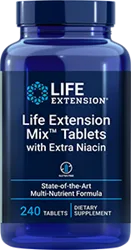
Life Extension Mix Tablets with Extra Niacin Review
Life Extension Mix Tablets with Extra Niacin is a multivitamin sold as tablets. A serving is 8 tablets, and a container holds 30 servings. Per serving the label prints vitamin A 1500 mcg, vitamin C 970 mg, vitamin D3 50 mcg, vitamin E 67 mg, niacin 862 mg, vitamin B6 105 mg, vitamin B12 600 mcg, biotin 3000 mcg, calcium 500 mg, magnesium 420 mg, zinc 35 mg and chromium 500 mcg. It also lists NAC 600 mg, a broccoli concentrate blend 525 mg, decaffeinated green tea extract 325 mg, acerola extract 300 mg, inositol 250 mg and taurine 200 mg, along with many other plant extracts. It contains sesame. The printed directions say to take eight tablets daily in divided doses with meals, or as recommended by a healthcare practitioner. Buyers most often describe it as a complete all in one formula, and many call the price fair. The complaint heard most often is that the tablets are large and hard to swallow.
We don’t sell supplements. We help you make decisions and get the best price.
Lowest prices
We hold no current store prices for it yet: check the store.
- AmazonPrice at AmazonCheck price at Amazon (opens in a new tab)
Also at: iHerb · Walmart · Vitacost
Some store links earn us a commission.
Products with nearly the same formula (Matched on the main ingredients)
Study, Trial or Testing Result Summary
Members Only479 human studies · 202 improved
24 of these 479 human studies gave the ingredient by drip, injection or inhaler, not by mouth.
Ashwagandha is at a full dose and has the strongest support: trials found less fatigue and more vigor than placebo [1][2], even at a low daily dose [3], though one trial found no change. Magnesium is at a full dose and eased fatigue in several placebo trials [4][5], but not in others [6]. Vitamin D, also at a full dose, reduced fatigue mainly in people low in it [7], but not in a very large trial of older women [8]. Selenium helped tiredness in some small trials [9], but not in the largest one [10]. Vitamin C helped mainly people with low levels [11]. Thiamine helped older women who were mildly low in it [12]. N-acetylcysteine and green tea extract reach their studied doses only at two servings a day [13][14]. The extra niacin does not show an energy benefit [15], and one large dose shortened cycling time [16]. Vitamin A, vitamin E, taurine and pomegranate are below their studied doses, and quercetin, bilberry and trimethylglycine are only trace amounts [17][18]. Animal and cell studies are never counted.
See all 479 studies →Hide the studies
- A review of 32 studies of phone apps for osteoporosis self-management found no clear effect on fatigue or on calcium intake; this was not a test of calcium supplements.Digital Health Technologies for Long-term Self-management of Osteoporosis: Systematic Review and Meta-analysis.
- Across 16 trials with 6276 people, B12 with or without folic acid and B6 did not improve thinking or depression, and only one trial looked at fatigue so it could not be analyzed.Effects of Vitamin B12 Supplementation on Cognitive Function, Depressive Symptoms, and Fatigue: A Systematic Review, Met…
- In 21 trials of 3177 adults with lupus, vitamin D lowered disease activity scores compared with placebo; twelve studies reported benefits including less fatigue, while nine found no significant effect.A Systematic Review and Meta-Analysis of the Effects of Vitamin D on Systemic Lupus Erythematosus.
- Across 18 trials of 2062 breast cancer patients, ashwagandha ranked as the most effective of 15 plant substances for reducing fatigue and improving quality of life and physical functioning compared with standard treatment.Systematic review and network meta-analysis of the effects of plant active substance on quality of life in breast cancer…
- Across 27 studies of 1,599 adults, NAD+ precursors did not improve perceived fatigue or sleep, but nicotinamide mononucleotide improved endurance and NADH improved cognitive performance.Domain-specific effects of NAD+ precursors on fatigue and functional performance: a systematic review and network meta-a…
- In 16 studies of 616 people with multiple sclerosis and 655 healthy people, folate and B12 blood levels did not differ, suggesting they are not drivers of worse physical function; this was not a supplement trial.The Relationship of Cobalamin and/or Folate to the Patient-Centred Outcomes in Multiple Sclerosis: A Systematic Review a…
- In a pooled analysis of 14 trials with 733 people, anthocyanins showed no significant effect on working, immediate or delayed memory or verbal learning, though some trials reported less fatigue and better mood.The Effect of Anthocyanins on Cognition: A Systematic Review and Meta-analysis of Randomized Clinical Trial Studies in C…
- In two placebo-controlled trials of 404 adults with Charcot-Marie-Tooth disease type 1A, ascorbic acid at two doses over 12 to 24 months had little meaningful effect on fatigue.Interventions for fatigue in peripheral neuropathy.
- In five trials of 345 people with multiple sclerosis, vitamin D reduced fatigue slightly more than control.Effect of Vitamin D Supplementation on Fatigue in Multiple Sclerosis: A Systematic Review and Meta-Analysis.
- Across 11 randomized trials with 234 people, caffeine plus taurine beat placebo for time to exhaustion, peak power and perceived effort, but the effect of taurine alone could not be separated out.Effects of Caffeine-Taurine Co-Supplementation on Exercise Performance: A Systematic Review and Meta-Analysis.
- A review of studies in people with chronic fatigue syndrome and fibromyalgia found lower blood vitamin E than in healthy people (not in high-quality studies), and supplement trials did not improve symptoms.Vitamin and mineral status in chronic fatigue syndrome and fibromyalgia syndrome: A systematic review and meta-analysis.
- Across 51 trials in people with rheumatoid arthritis, a group of supplements including zinc sulfate modestly improved disease activity scores, but fatigue and energy were not reported separately for zinc.Non-pharmacological interventions in the treatment of rheumatoid arthritis: A systematic review and meta-analysis.
- Across 10 studies, taurine alone at 1-6 g (single dose or up to 2 weeks) modestly improved endurance performance, with no difference by dose or duration.The Effects of an Oral Taurine Dose and Supplementation Period on Endurance Exercise Performance in Humans: A Meta-Analy…
- A review of 26 trials in 3,273 people with chronic fatigue syndrome found most supplements did not help, but magnesium and NADH showed benefit, though the trials were small and at high risk of bias.Complementary and alternative medicine for patients with chronic fatigue syndrome: a systematic review.
- A review of 51 studies with 1288 people found 37% of flavonoid studies reported better exercise performance, but only 25% of the quercetin studies did.Does Flavonoid Consumption Improve Exercise Performance? Is It Related to Changes in the Immune System and Inflammatory …
- In a review of 23 studies of 1230 cancer patients, zinc had no effect on fatigue, quality of life, weight or survival.Zinc as a complementary treatment for cancer patients: a systematic review.
- A review of 14 small, high-risk-of-bias studies (809 people with chronic fatigue syndrome) found some supplements, including a CoQ10-selenium combination, reduced fatigue, but flaws in the studies prevent firm conclusions.Dietary Supplementation for Fatigue Symptoms in Myalgic Encephalomyelitis/Chronic Fatigue Syndrome (ME/CFS)-A Systematic…
- Across nine studies of 720 people, three of four controlled trials found intravenous vitamin C lowered fatigue scores more than control, and four of five uncontrolled studies saw fatigue fall.Feasibility of Vitamin C in the Treatment of Post Viral Fatigue with Focus on Long COVID, Based on a Systematic Review o…
- In 10 trials of 489 people, NADH was well tolerated and linked to better quality of life, less anxiety and lower heart rate after stress, but fatigue results were not clearly shown.Evaluation of safety and effectiveness of NAD in different clinical conditions: a systematic review.
- A review of 13 trials with 466 esports players found some supplements, including an inositol-enhanced arginine silicate product, were linked to better attention, more vitality and less fatigue, but the evidence is preliminary and mostly not specific to inositol.Nutritional supplements to improve esports player performance: a systematic review of randomized controlled trials.
- In a review of ten studies of 240 children and young people with rheumatic conditions, a placebo-controlled vitamin D study showed less fatigue, but overall evidence for reducing fatigue was insufficient and most studies had high risk of bias.Reducing fatigue in pediatric rheumatic conditions: a systematic review.
- In a review of 13 small trials with 85 people with McArdle disease, vitamin B6 gave no benefit for exercise performance.Pharmacological and nutritional treatment for McArdle disease (Glycogen Storage Disease type V).
- A review of 37 trials in people with multiple sclerosis reported that both trials of vitamin A found improvements in clinical or biological outcomes (such as fatigue) compared with control, but trials were small and few.The effect of emerging nutraceutical interventions for clinical and biological outcomes in multiple sclerosis: A systema…
- A review of 37 studies in cancer patients found intravenous vitamin C may ease fatigue and other symptoms, but the evidence is preliminary and mostly uncontrolled.Intravenous Vitamin C and Cancer: A Systematic Review.
- A review of supplements for football players said vitamin C may improve performance by lowering oxidative stress, but gave no numbers and called for more research.The efficacy of dietary supplements on health status and performance of football players: a systematic review.
- In a review of four lupus trials, three found vitamin D reduced disease activity and improved inflammatory markers, fatigue and blood vessel function, while one found no improvement in disease activity.Effect of vitamin D supplementation on patients with systemic lupus erythematosus: a systematic review.
- A review of eleven studies in people with lupus found vitamin D raised blood levels and lowered inflammation markers, but only a low glycaemic index diet was reported to reduce fatigue.Dietary intervention and health in patients with systemic lupus erythematosus: A systematic review of the evidence.
- In a review of six studies in people with multiple sclerosis, most found vitamin D improved mental health and quality of life, with fatigue assessed only as an additional outcome.Vitamin D Supplementation and Mental Health in Multiple Sclerosis Patients: A Systematic Review.
- In a review of 14 diet trials in lupus, vitamin D improved inflammatory markers but not disease activity in most studies, and fatigue improvement was reported only for a low glycaemic index diet.Diet and Systemic Lupus Erythematosus (SLE): From Supplementation to Intervention.
- In a review of five studies of cancer patients receiving chemotherapy or radiotherapy, vitamin D was described as safe and as easing side effects including fatigue, though the studies were too varied to compare.A Systematic Review of Vitamin D Supplementation in Oncology: Chance of Science or Effectiveness?
- A review of 14 reviews found oral niacin and nicotinamide can cause side effects including fatigue, stomach upset, flushing and liver problems, more often at higher doses and with niacin than nicotinamide.The adverse effects of oral niacin/nicotinamide - an overview of reviews.
- In a review of four diet trials in people with multiple sclerosis lasting 3 to 12 months, two diets supplying enough folate and magnesium reported improved fatigue, but firm conclusions were not possible.Is there an effect of dietary intake on MS-related fatigue? - A systematic literature review.
- A review of 38 articles found muscle symptoms including fatigue improved after selenium in 18 of 19 patients on tube or intravenous feeding or with poor absorption, but in low-selenium soil areas selenium and placebo worked similarly.Skeletal muscle disorders associated with selenium deficiency in humans.
- A review of eight mostly animal studies found N-acetylcysteine improved muscle force and lowered oxidative stress and inflammation, but human data were limited to one trial of acute fatigue recovery.N-acetyl cysteine and skeletal muscle health across aging and disease models: A systematic review of preclinical and pre…
- A review of eight placebo-controlled trials in adult male soccer players found polyphenols such as tart cherry juice may reduce muscle soreness and improve well-being, but blood markers and physical recovery were inconsistent and low certainty.Effect of Polyphenol Supplementation on Post-Exercise Recovery in Adult Male Soccer Players: A Systematic Review.
- Nine trials of carotenoids and other supplements for nearsightedness found modest gains in eye pigment and less visual fatigue, but no consistent slowing of myopia, and this did not measure general energy.Nutritional Supplementation for Myopia Prevention and Control: A Systematic Review of Randomized Controlled Trials.
- A review of 10 randomized trials in healthy people who exercised found that maslinic acid lowered perceived fatigue or soreness in some settings, but olive products overall did not consistently improve exercise performance.Olive-Derived Nutritional Interventions in Exercise: Effects on Performance, Fatigue, Recovery, and Muscle Adaptation-A …
- In 34,157 postmenopausal women given 400 IU vitamin D plus 1000 mg calcium daily or placebo for about 5.7 years, energy and fatigue did not differ between groups.Calcium and vitamin D supplementation do not influence menopause-related symptoms: Results of the Women's Health Initiat…
- In 8112 healthy French adults taking a daily antioxidant capsule (including 6 mg beta-carotene) for about 6 years, quality of life, including vitality, did not differ from placebo.Long-term antioxidant supplementation has no effect on health-related quality of life: the randomized, double-blind, pla…
- In 2501 heart disease or stroke survivors given low-dose B vitamins including 3 mg B6 for about 3 years, quality of life was not improved, and activity limits due to emotional problems were slightly worse.B vitamin and/or n-3 fatty acid supplementation and health-related quality of life: ancillary findings from the SU.FOL.O…
- In 1078 HIV-positive pregnant women in Tanzania, vitamin A had no effect on depression or quality of life including vitality, while a B-complex, C and E multivitamin did help.Multivitamin supplementation in HIV-positive pregnant women: impact on depression and quality of life in a resource-poor…
- In 697 adults with mild high blood pressure, a low-sodium, high-potassium diet with placebo for 6 months was linked to more fatigue (34%) than the usual diet (18%) or a weight loss diet (15%).Effect of antihypertensives on sexual function and quality of life: the TAIM Study.
- In adults aged 70 and older with low vitamin D and high fall risk, taking 1,000 IU or more of vitamin D3 daily for up to 24 months did not reduce frailty, including exhaustion, compared with 200 IU daily.The effects of vitamin D supplementation on frailty in older adults at risk for falls.
- In 443 older adults given selenium and coenzyme Q10 for 48 months, no overall change in quality of life was seen, but in a matched subgroup vitality and physical role declined less than with placebo.Improved Health-Related Quality of Life, and More Days out of Hospital with Supplementation with Selenium and Coenzyme Q…
- In 374 people after thyroid cancer surgery, adding radioactive iodine-131 to a med improved quality-of-life scores, including vitality, more than a med alone, though this was a cancer treatment rather than an energy supplement and the dose and duration were not stated.Read the study on PubMed (39307136) →
- In 326 people with long-lasting fatigue after an infection, 4 weeks of sulbutiamine (400 or 600 mg a day, a thiamine-related compound) did not reduce fatigue more than placebo overall; women on 600 mg had less fatigue at day 7 only, and it did not last.[Treatment of chronic postinfectious fatigue: randomized double-blind study of two doses of sulbutiamine (400-600 mg/day…
- In 322 healthy adults given high-dose monthly vitamin D3 or placebo for 18 months, reported earthquake-related problems, including fatigue, did not differ between groups.Effect of monthly vitamin D3 supplementation in healthy adults on adverse effects of earthquakes: randomised controlled …
- In 311 people receiving a med agonist therapy, a daily fruit smoothie for 16 weeks did not change fatigue, fitness, or folate levels compared with standard treatment alone.Read the study on PubMed (40877839) →
- In 310 adults with long-term symptoms after COVID-19, taking 50 mg of vitamin B6 daily (together with vitamins B1 and B12) for 4 weeks did not reduce overall symptom severity, including fatigue, any more than no B vitamins (difference of -0.1 points, not significant).Low-dose prednisolone and B vitamins for post-COVID-19 syndrome in Germany: the PreVitaCOV randomised clinical trial.
- In 275 adults with early COVID-19 given a 10-day combination that included vitamin C, less fatigue at day 14 was seen only when famotidine was added, not with the vitamin C combination alone.Read the study on PubMed (41693032) →
- In 271 adults with Charcot-Marie-Tooth disease type 1A, 1.5 g of ascorbic acid daily for 2 years did not differ from placebo on neuropathy or on secondary outcomes including fatigue.Ascorbic acid in Charcot-Marie-Tooth disease type 1A (CMT-TRIAAL and CMT-TRAUK): a double-blind randomised trial.
- In 236 women with breast cancer, both groups took 300 IU vitamin E daily for 24 weeks, and adding coenzyme Q10 did not reduce fatigue compared with placebo.A randomized, double-blind, placebo-controlled study of oral coenzyme Q10 to relieve self-reported treatment-related fat…
- In 227 breast cancer survivors over 12 months of a program combining a Mediterranean diet, exercise and vitamin D, fatigue fell significantly, but the program was not tested with vitamin D alone and the dose was not reported.Quality of Life in Women Diagnosed with Breast Cancer after a 12-Month Treatment of Lifestyle Modifications.
- In 215 working men aged 30 to 55, a high-dose B vitamin, vitamin C and mineral supplement for 33 days improved vigour, stress and mental health ratings and made them feel less mentally tired than placebo.Effects of high-dose B vitamin complex with vitamin C and minerals on subjective mood and performance in healthy males.
- In 202 hemodialysis patients, a multinutrient supplement containing vitamin C for 12 weeks did not reduce fatigue compared with placebo, though some heart rate variability measures improved.Effects of nutritional supplementation on fatigue, and autonomic and immune dysfunction in patients with end-stage renal…
- In 192 vitamin D-deficient premenopausal women given vitamin D or placebo for 12 months, vitality scores and mental component scores were slightly but significantly better with vitamin D, while heart and metabolic risk factors did not change.Effect of vitamin D supplementation on cardiometabolic risks and health-related quality of life among urban premenopausa…
- In 186 stressed adults over 60 days, a full-spectrum ashwagandha extract reduced stress and improved sleep and anxiety compared with placebo, and the authors report reduced fatigue, but mental alertness did not differ.Effects of multi-herb and ashwagandha root formulas on stress modulation: a randomized, double-blind, placebo-controlled…
- In 182 outpatients with COVID-19, 25,000 IU of vitamin A daily for 10 days added to standard treatment reduced symptoms including weakness and fatigue more than standard treatment alone.Evaluation and comparison of vitamin A supplementation with standard therapies in the treatment of patients with COVID-1…
- In 171 young adults, two extra daily servings of fresh fruit and vegetables for 14 days improved vitality and motivation, but blood vitamin C did not explain these benefits.Let them eat fruit! The effect of fruit and vegetable consumption on psychological well-being in young adults: A randomi…
- In 171 adults with mild insomnia, a blend including vitamin B6 for 2 weeks did not differ from placebo on sleep or physical fatigue, as both groups improved similarly.Exploring the Effect of Lactium™ and Zizyphus Complex on Sleep Quality: A Double-Blind, Randomized Placebo-Controlled Tr…
- In 167 young adults with low vitamin C, a 250 mg vitamin C tablet daily for 4 weeks improved well-being after two weeks, and also mood and fatigue in those with consistently low vitamin C, while placebo showed no change; kiwifruit gave somewhat stronger effects.KiwiC for Vitality: Results of a Randomized Placebo-Controlled Trial Testing the Effects of Kiwifruit or Vitamin C Table…
- In 162 adults on a weight loss meal replacement program, folate levels improved in both groups, and energy and fatigue improved slightly more with daily calorie restriction alone than with added alternate day fasting; folate was not tested alone.Randomized Trial of a High Protein, Partial Meal Replacement Program with or without Alternate Day Fasting: Similar Effe…
- In 160 heart bypass surgery patients, vitamin C plus omega-3 fatty acids given from the day before surgery through the first 5 days after reduced post-operative fatigue more than placebo.The combined effect of vitamin C and omega-3 polyunsaturated fatty acids on fatigue following coronary artery bypass gra…
- In 160 women with breast cancer taking letterozole, 30,000 IU of vitamin D3 weekly for 24 weeks did not significantly reduce joint symptom worsening on the main measure (37% vs 51%), and the abstract does not report a fatigue result.Randomized trial of vitamin D3 to prevent worsening of musculoskeletal symptoms in women with breast cancer receiving ad…
- In 160 heart disease patients over about 38 months, niacin plus a med caused fatigue, nausea or muscle aches in 9% versus 5% on placebo, not a significant difference.Read the study on PubMed (14759379) →
- In 158 people with multiple sclerosis and significant fatigue, 1 mcg of alfacalcidol daily for six months reduced fatigue scores more than placebo (41.6% vs 27.4% decrease).Effect of Alfacalcidol on multiple sclerosis-related fatigue: A randomized, double-blind placebo-controlled study.
- In men aged 70 and older with low testosterone and mobility problems, a combined program of strength training, testosterone, and vitamin D, calcium and protein supplements for 20 weeks reduced tiredness compared with no intervention, though the vitamin D effect could not be separated from the other parts of the program.Beneficial effects of exercise, testosterone, vitamin D, calcium and protein in older men-A randomized clinical trial.
- In 148 frail men aged 70 and older with low testosterone, over one year, only the group receiving testosterone plus strength training (which also took vitamin D, calcium and protein supplements) reported less fatigue than controls; vitamin D was not tested on its own.Testosterone and resistance training improved physical performance and reduced fatigue in frail older men: 1 year follow…
- In 141 healthy office workers, a single 10 gram intravenous vitamin C dose lowered fatigue scores for up to one day compared with saline placebo, especially in those with low starting vitamin C, and also lowered oxidative stress.Intravenous vitamin C administration reduces fatigue in office workers: a double-blind randomized controlled trial.
- In 135 women over 8 weeks, Shatavari combined with ashwagandha improved sexual function and lowered fatigue and other mood scores compared with placebo.Effects of Shatavari (Asparagus racemosus) Root Extract on Sexual Wellness in Women: Findings from a Prospective, Random…
- In a placebo-controlled trial of 130 vitamin D-deficient young women with premenstrual syndrome, 2,000 IU vitamin D every other day for 12 weeks did not reduce fatigue more than placebo, although fatigue fell within the vitamin D group.The Effect of Vitamin D Supplement Consumption on Premenstrual Syndrome in Vitamin D-Deficient Young Girls: A Randomized…
- In 128 stroke patients with fatigue, electroacupuncture with cupping improved energy more than a medication group that took a vitamin E capsule, magnesium and a med for 5 weeks; vitamin E was not tested alone.[Clinical observation on the therapeutic effect of electroacupuncture combined with cupping on post-stroke fatigue].
- In 122 hospitalized adults with moderate COVID-19, a selenium and iron-chelator nanomedicine combination lowered IL-6 compared with placebo, and clinical scores for fatigue and cough improved.Beneficial effects of the combination of BCc1 and Hep-S nanochelating-based medicines on IL-6 in hospitalized moderate C…
- In 122 adults with active rheumatoid arthritis who were already on standard antirheumatic drugs, taking 300 mg of silymarin daily for 8 weeks reduced fatigue, joint pain and swelling, depression and anxiety compared with the control group.Silymarin Supplementation in Active Rheumatoid Arthritis: Outcomes of a Pilot Randomized Controlled Clinical Study.
- In 120 people with fatigue and low vitamin D, a single 100,000-unit oral dose of vitamin D3 reduced fatigue more than placebo over 4 weeks, with 72% of the vitamin D group reporting improved fatigue versus 50% on placebo.Effect of vitamin D3 on self-perceived fatigue: A double-blind randomized placebo-controlled trial.
- In 120 men with advanced prostate cancer, a radioactive iodine-labeled drug given with enzalutamide for four cycles eight weeks apart caused more fatigue (75% vs 53.8%) than enzalutamide alone, though it improved the cancer response.131I-LNTH-1095 Radioligand Therapy plus Enzalutamide versus Enzalutamide Alone in Men with PSMA-Avid Metastatic Castrati…
- In 120 adults with self-reported cognitive and energy problems, 600 mg a day of ashwagandha root extract for 8 weeks improved memory, attention, mood, vigor and mental fatigue more than placebo.Safety and Efficacy of Ashwagandha Root Extract on Cognition, Energy and Mood Problems in Adults: Prospective, Randomize…
- In 120 men aged 40-70 taking 400 mg daily of a pomegranate rind and cacao seed extract combination for 84 days, fatigue scores, general health scores, six-minute walk distance and hand-grip strength improved more than with placebo.A Combination of Punica granatum Fruit Rind and Theobroma cacao Seed Extracts Enhances Sexual Function in Aging Males in…
- In 117 university students given 1000 IU of vitamin D3 daily for one month in winter, vitamin D blood levels rose and parathyroid hormone fell, but physical performance and fatigue-related markers did not improve.Effect of vitamin D3 supplementation in winter on physical performance of university students: a one-month randomized co…
- In 112 women with anemia after childbirth, adding 1 mg a day of folic acid to iron for 4 weeks did not change fatigue scores, hemoglobin or health status compared with iron alone.A randomized controlled trial examining the addition of folic acid to iron supplementation in the treatment of postpartu…
- In 110 people with fibromyalgia, 3 months of a supplement with coenzyme Q10, tryptophan and magnesium did not significantly reduce fatigue (placebo improved significantly), though pain, sleep and overall impact improved.Effects of Coenzyme Q10, Tryptophan, and Magnesium Supplementation on Fatigue in Patients with Fibromyalgia - A Randomiz…
- In 102 adults with metabolic syndrome, 10 mg daily of olive oil polyphenol extract for 12 weeks lowered fatigue scores more than placebo, along with improvements in blood sugar, blood pressure and oxidized LDL.The impact of olive oil polyphenol supplementation on metabolic syndrome parameters The OleoMetS study: A randomized, co…
- In 101 people with relapsing-remitting multiple sclerosis, 25,000 IU daily of retinyl palmitate for 6 months then 10,000 IU for 6 months reduced fatigue and depression more than placebo.Effect of Vitamin A Supplementation on fatigue and depression in Multiple Sclerosis patients: A Double-Blind Placebo-Con…
- In a 3-month double-blind trial of 99 people with severe kidney failure taking 250 mg vitamin C three times weekly, symptoms including fatigue were similar to placebo, and nausea trended worse with vitamin C.Vitamin C supplementation in kidney failure: effect on uraemic symptoms.
- In 98 adults with inflammatory bowel disease in remission, 4 weeks of magnesium plus B vitamins reduced fatigue more than placebo, and also lowered ulcerative colitis symptom scores but not Crohn's disease scores.Effects of B vitamins and magnesium on fatigue, disease activity and quality of life in inflammatory bowel disease.
- In 97 professional football players, 14 days of taurine 1500 mg with caffeine (with or without phosphatidylserine) improved sprint time, reaction time and mental fatigue versus placebo, but taurine was not tested alone.Football-Specific Performance and Cognitive Fatigue Resistance Following Supplementation with Two Phosphatidylserine Dos…
- In adults with moderate kidney disease, 8,000 IU of vitamin D a day for 12 weeks did not change fatigue compared with placebo.High doses of cholecalciferol alleviate the progression of hyperparathyroidism in patients with CKD Stages 3-4: results …
- In 94 adults, a 4-week high-calcium diet was compared with a DASH-type diet and the abstract reports mood benefits only for the low-sodium, high-potassium diet, not for the high-calcium diet.Dietary electrolytes are related to mood.
- In 91 people with chronic fatigue syndrome after COVID-19 or vaccination and low vitamin D, a 12-week program of 25 mcg daily vitamin D with diet, sun, and exercise guidance reduced symptom counts more than vitamin D alone, with 16 participants no longer meeting diagnostic criteria versus 1 in the control group.Vitamin D in Myalgic Encephalomyelitis/Chronic Fatigue Syndrome After COVID-19 or Vaccination: A Randomized Controlled T…
- In 88 adults with drug-resistant epilepsy and low vitamin D, a placebo-controlled 3-month period showed no fatigue or seizure benefit from vitamin D3, but over a longer open-label period fatigue and quality of life scores improved significantly.Vitamin D deficiency and effect of treatment on seizure frequency and quality of life parameters in patients with drug-r…
- In 87 burned-out workers, a multi-ingredient supplement containing taurine for 12 weeks reduced burnout and fatigue scores more than placebo, though placebo also improved.Burnout: evaluation of the efficacy and tolerability of TARGET 1® for professional fatigue syndrome (burnout).
- In 86 people with mental fatigue, a single dose of homeopathic potassium phosphate taken before an attention test did not work better than placebo, though the test's ceiling effect limits the result.Homeopathy for mental fatigue: lessons from a randomized, triple blind, placebo-controlled cross-over clinical trial.
- In 81 professional football players, 10 days of taurine 1500 mg with caffeine and phosphatidylserine gave better physical, reaction time and game outcomes than placebo, but taurine's own effect could not be isolated.Effects of Taurine-, Caffeine-, and Phosphatidylserine-Containing Supplementation Protocols on Physical and Cognitive Pe…
- In 81 anxious employees over 12 weeks, naturopathic care including ashwagandha 600 mg a day improved fatigue, vitality and anxiety more than psychotherapy, though the effect of ashwagandha alone cannot be separated.Naturopathic care for anxiety: a randomized controlled trial ISRCTN78958974.
- In 80 adults with fatigue or neuropsychiatric symptoms after COVID-19, 60,000 IU of vitamin D given weekly for 8 weeks reduced fatigue more than placebo, along with some anxiety and cognitive test gains.Effects of an 8-week high-dose vitamin D supplementation on fatigue and neuropsychiatric manifestations in post-COVID sy…
- In 80 healthy elderly Irish women with marginal thiamin deficiency, 10 mg of thiamin daily for 6 weeks increased appetite, energy intake and general well-being and decreased fatigue compared with placebo.Influence of thiamin supplementation on the health and general well-being of an elderly Irish population with marginal t…
- In 80 people with advanced chronic kidney disease followed for 6 months, adding folic acid (alone or with pentoxifylline) to usual care reduced fatigue scores and improved kidney blood tests compared with usual care alone.The potential adding therapeutic effect of pentoxifylline and/or folic acid for chronic kidney disease patients: randomi…
- In 80 healthy adults doing resistance training, 600 mg a day of ashwagandha root extract for 8 weeks improved endurance, strength and muscle size more than placebo.Effects of Ashwagandha ( Withania somnifera) standardized root extract on physical endurance and VO 2max in healthy adul…
- In 80 office workers (aged 20-40) who completed the study, 480 mg a day of bilberry extract for 8 weeks eased screen-induced eye fatigue (flicker sensitivity and several fatigue symptoms) better than placebo, with no severe side effects.Bilberry extract supplementation for preventing eye fatigue in video display terminal workers.
- In 78 adults with chronic fatigue, 500 mg daily of lecithin-based quercetin for 2 months lowered fatigue scores by about 10.6 points more than placebo and also improved sleep, step count and physical performance.Two-month period of 500 mg lecithin-based delivery form of quercetin daily dietary supplementation counterbalances chron…
- In 75 African American adults with type 2 diabetes, taking 4000 IU of vitamin D3 daily for one year did not improve fatigue, mood, or walking ability compared with 600 IU daily.The effect of vitamin D supplementation on mental and functional health outcomes in African Americans with type 2 diabet…
- In 74 perimenopausal women with low bone density, 1,200 mg of calcium carbonate daily for 6 months produced minor, non-significant changes in pain and vitality, while the bone-extract calcium complex improved them more.Comparison of the effects of calcium carbonate and ossein-hydroxyapatite complex on back and knee pain and quality of li…
- In 70 obese adults (45 finished) taking a multi-ingredient product containing Citrus aurantium for 8 weeks with diet and exercise, self-rated energy rose 29.3% versus 5.1% with placebo.Eight weeks of supplementation with a multi-ingredient weight loss product enhances body composition, reduces hip and wa…
- In 70 heavy screen users given 10 mg lutein plus 2 mg zeaxanthin for 6 months, tear tests and eye recovery improved versus placebo, but self-reported eye fatigue, sleep and attention did not differ.The effects of lutein/ zeaxanthin (Lute-gen®) on eye health, eye strain, sleep quality, and attention in high electronic…
- In 68 people with multiple sclerosis, 20,000 IU of vitamin D3 weekly for 96 weeks produced no significant difference in fatigue compared with placebo.Effect of vitamin D3 supplementation on relapses, disease progression, and measures of function in persons with multiple…
- In 68 people with chronic fatigue syndrome, vitamin B1 with oryzanol for 4 weeks reduced fatigue scores, but adding acupuncture worked better; the study did not test thiamine against placebo.[Acupuncture in the treatment of chronic fatigue syndrome based on "interaction of brain and kidney" in TCM: a randomize…
- In 68 adults with lupus, 1000 mg a day of green tea extract for 12 weeks reduced disease activity and improved vitality and general health scores compared with starch capsules.A Randomized, Double-blind, Placebo-controlled Clinical Trial Examining the Effects of Green Tea Extract on Systemic Lup…
- In 65 people with chronic fatigue syndrome, a daily combination of beta-glucan, 3.75 mcg vitamin D3, vitamin B6 and zinc for 36 weeks improved cognitive fatigue compared with baseline, but vitamin D was not tested on its own.Yeast Beta-Glucan Supplementation with Multivitamins Attenuates Cognitive Impairments in Individuals with Myalgic Enceph…
- In 64 women with polycystic ovary syndrome, 10 weeks of magnesium improved the energy and fatigue score and total quality of life compared with placebo.The effects of magnesium supplementation on abnormal uterine bleeding, alopecia, quality of life, and acne in women with…
- In 63 women with premenstrual symptoms (32 completed), 50 mg of vitamin B6 daily for 3 months in a crossover design improved emotional symptoms including depression, irritability and tiredness compared with placebo.Pyridoxine (vitamin B6) and the premenstrual syndrome: a randomized crossover trial.
- In 63 HIV-positive drug users, 200 mcg of selenium daily for 12 months increased self-reported vigor and reduced anxiety compared with placebo, with no effect on depression.Psychological burden in the era of HAART: impact of selenium therapy.
- In 61 people with primary biliary cirrhosis fatigue, 12 weeks of an antioxidant mix including selenium did not reduce fatigue more than placebo.Oral antioxidant supplementation for fatigue associated with primary biliary cirrhosis: results of a multicentre, random…
- In 60 head and neck cancer patients having radiotherapy, adding pentoxifylline and vitamin E reduced the occurrence of fatigue compared with radiotherapy alone, though the combination was not testing vitamin E alone.Pentoxifylline and vitamin E reduce the severity of radiotherapy-induced oral mucositis and dysphagia in head and neck c…
- In 60 a med users with muscle symptoms, coenzyme Q10 reduced tiredness and muscle pain over 3 months, but adding selenium gave no significant additional benefit.Read the study on PubMed (23458201) →
- In 60 healthy video gamers, 7 days of an inositol-enhanced arginine silicate supplement raised self-reported energy and reduced anger and some test errors compared with placebo.A Prospective Study Evaluating the Effects of a Nutritional Supplement Intervention on Cognition, Mood States, and Menta…
- In 60 college students over 30 days, 700 mg a day of ashwagandha root extract led participants to report more sustained energy, mental clarity and better sleep in interviews and daily check-ins.The Perceived Impact of Ashwagandha on Stress, Sleep Quality, Energy, and Mental Clarity for College Students: Qualitati…
- In 60 patients with stress, anxiety and high blood pressure, 600 mg a day of ashwagandha extract for 60 days lowered anxiety, stress and cortisol compared with placebo; fatigue was measured but no result was reported.Safety and efficacy of ashwagen (a standardized withania somnifera extract) in stress and anxiety with hypertension and …
- In 60 stressed adults, 30 mg a day of ashwagandha extract for 4 weeks reduced self-reported stress and cortisol reactivity more than placebo, but no significant differences were found for other secondary outcomes.An Examination into the Anti-stress and Anti-fatigue Effects of an Ashwagandha Extract (Ashwa.30™) in Stressed Adults: A…
- In 60 male student athletes, 500 mg daily of quercetin for 8 weeks did not improve time to exhaustion compared with placebo, though muscle damage marker creatine kinase fell within the quercetin group.Does quercetin and vitamin C improve exercise performance, muscle damage, and body composition in male athletes?
- In 60 children aged 5 to 12 given 10 mg lutein plus 2 mg zeaxanthin daily for 180 days, eye strain and fatigue were reduced and focus, memory and attention improved compared with placebo.Lutein and Zeaxanthin Supplementation Improves Dynamic Visual and Cognitive Performance in Children: A Randomized, Doubl…
- In 59 people with rheumatoid arthritis and low vitamin D, high-dose cholecalciferol (100,000 IU ampoules) over 6 months improved functional disability slightly, but there was no significant difference in fatigue compared with placebo.A randomised, double-blind, placebo-controlled study assessing the efficacy of high doses of vitamin D on functional dis…
- In 59 adults with chronic stress and exhaustion, a 12-week amino acid and micronutrient blend (including folic acid) improved perceived stress more than placebo, but folate was not tested on its own.Impact of a Specific Amino Acid Composition with Micronutrients on Well-Being in Subjects with Chronic Psychological Str…
- In 59 healthy young adults, 225 mg a day of liposomal ashwagandha, taken as a single dose and then daily for 30 days, improved several memory and attention measures and lowered feelings of tension and fatigue.Acute and Repeated Ashwagandha Supplementation Improves Markers of Cognitive Function and Mood.
- In 58 healthy adults with mild prolonged tiredness, a supplement combining pomegranate extract with B vitamins and vitamin C reduced fatigue scores over 8 weeks compared with placebo, though vitamin C was not tested alone and biochemical markers did not change.Combination of Chemically Characterized Pomegranate Extract and Hydrophilic Vitamins against Prolonged Fatigue: A Monoce…
- In 58 people with long-COVID, 2000 mg of nicotinamide riboside daily raised blood NAD+ about 3-fold but did not significantly improve fatigue, cognition, or sleep versus placebo.Effects of nicotinamide riboside on NAD+ levels, cognition, and symptom recovery in long-COVID: a randomized controlled …
- In 58 healthy, moderately trained young adults in military training, 1 g daily of quercetin for 6 weeks did not change energy, fatigue or sleep quality compared with placebo.Effects of 6 weeks of quercetin supplementation on energy, fatigue, and sleep in ROTC cadets.
- In 57 overweight men aged 40-70 with mild fatigue, 8 weeks of ashwagandha extract raised DHEA-S and testosterone more than placebo, but fatigue and vigor did not differ significantly between groups.A Randomized, Double-Blind, Placebo-Controlled, Crossover Study Examining the Hormonal and Vitality Effects of Ashwagand…
- In 56 team sport athletes, 600 mg a day of ashwagandha for 42 days improved perceived fatigue and recovery in women and jump performance in men compared with placebo, while stress hormones stayed more stable.Ashwagandha Root Extract Stabilises Physiological Stress Responses in Male and Female Team Sports Athletes During Pre-Se…
- In 54 cancer patients with hand-foot skin reactions from chemotherapy, topical pyridoxine for 6 weeks did not improve the skin reaction grade, but patients reported lower fatigue, better physical function and better quality of life than the placebo group.A pilot randomized double-blind, placebo-controlled study on the effects of the topical application of pyridoxine on pal…
- In 51 Japanese women with premenstrual symptoms, taking 180 mg of γ-tocopherol twice a day for 7 days before their period reduced fatigue compared with placebo.Effect of γ-tocopherol supplementation on premenstrual symptoms and natriuresis: a randomized, double-blind, placebo-con…
- In 50 people with chronic fatigue syndrome, high-dose vitamin D3 given every 2 months for 6 months did not improve fatigue scores compared with placebo.Effect of intermittent vitamin D3 on vascular function and symptoms in chronic fatigue syndrome--a randomised controlled…
- In 50 people with multiple sclerosis given 50 mcg daily of calcifediol or cholecalciferol, neither form had a significant effect on fatigue, though calcifediol raised vitamin D blood levels faster.Investigating the effects of 25-hydroxyvitamin D3 on clinical outcomes in multiple sclerosis patients: A randomized, dou…
- In 50 people recovering from COVID-19, one month of 1-methylnicotinamide improved 6-minute walk distance in 92% versus 60% without it, and severe fatigue was 20% versus 56%.Use of 1-MNA to Improve Exercise Tolerance and Fatigue in Patients after COVID-19.
- In 50 people given 100 mcg of selenium daily for 5 weeks versus placebo in a crossover design, mood improved and anxiety fell, with tiredness decreasing most in those with low dietary selenium.The impact of selenium supplementation on mood.
- In 50 overweight adults on a low-calorie diet, a daily blend of 105 mg green tea EGCG and 120 mg NOPE reduced fatigue and improved mood at week 4, but these benefits were gone by week 8 and body composition did not differ from placebo.The effect of a dietary supplement (N-oleyl-phosphatidyl-ethanolamine and epigallocatechin gallate) on dietary complianc…
- In an 8-week placebo-controlled trial of 50 healthy athletic adults, 600 mg daily of ashwagandha root extract improved maximum aerobic capacity and reduced reported lack of energy more than placebo.A double-blind, randomized, placebo-controlled trial on the effect of Ashwagandha (Withania somnifera dunal.) root extra…
- In 50 middle-aged adults, 60 ml of tart cherry juice daily for 3 months improved sustained attention, raised alertness and lowered mental fatigue ratings compared with placebo.Polyphenol-rich tart cherries (Prunus Cerasus, cv Montmorency) improve sustained attention, feelings of alertness and me…
- In 49 patients after colon surgery, magnesium oxide (1 g every 12 hours) did not change fatigue or bowel recovery compared with placebo.Effect of the laxative magnesium oxide on gastrointestinal functional recovery in fast-track colonic resection: a double…
- In 48 habitual caffeine users, a single 2000 mg taurine dose did not improve cognition or fatigue, and caffeine rather than taurine appeared responsible for the benefits.Differential cognitive effects of energy drink ingredients: caffeine, taurine, and glucose.
- In 47 veterans with Parkinson's disease, low-dose niacin taken for six months did not change motor scores meaningfully compared with placebo; physical fatigue was a secondary measure with no result given in the summary, and motor scores improved only after both groups took niacin openly for another six months.Low-Dose Niacin Supplementation Improves Motor Function in US Veterans with Parkinson's Disease: A Single-Center, Random…
- In 46 older adults with mild cognitive impairment, a daily omega-3 and omega-6 formula with 0.6 mg vitamin A and vitamin E for 6 months improved fatigue, cognition, walking capacity and sleepiness more than placebo.The Effects of a 6-Month High Dose Omega-3 and Omega-6 Polyunsaturated Fatty Acids and Antioxidant Vitamins Supplementat…
- In healthy young adults with low vitamin C levels, 500 mg twice a day for 4 weeks improved attention and work absorption compared with placebo, with a trend toward less fatigue.Vitamin C supplementation promotes mental vitality in healthy young adults: results from a cross-sectional analysis and …
- In a 28-day placebo-controlled trial of 46 adults with long COVID, twice-daily liposomal vitamin C (500 mg) with l-arginine reduced persistent fatigue (2 of 23 still fatigued vs 21 of 23 on placebo) and improved walking distance and handgrip strength.Effects of l-Arginine Plus Vitamin C Supplementation on Physical Performance, Endothelial Function, and Persistent Fatig…
- In 46 active men, 2000 IU of vitamin D3 daily for 12 weeks lowered fatigue index scores and improved aerobic capacity and power compared with placebo.Effects of vitamin D3 supplementation for 12 weeks on serum levels of anabolic hormones, anaerobic power, and aerobic pe…
- In 45 people with COPD and weight loss, 12 weeks of a nutrition drink containing 10 mcg vitamin D3 and omega-3 fatty acids reduced exercise-induced fatigue more than an isocaloric comparator drink.Targeted medical nutrition for cachexia in chronic obstructive pulmonary disease: a randomized, controlled trial.
- In 45 women with lupus, 1200 IU of vitamin D3 daily for three months reduced fatigue scores and inflammation, and the combination with curcumin-piperine worked best.Randomised Clinical Trial Study: The Combination of Vitamin D and Curcumin Piperine Attenuates Disease Activity and Pro-…
- In 45 collegiate badminton players over 4 weeks, hyperbaric oxygen plus lycopene lowered exercise-induced fatigue, oxidative stress and inflammation markers versus no intervention, and beat hyperbaric oxygen alone on some markers (catalase, interleukin-6, creatine kinase); the lycopene dose was not stated and its effect cannot be separated from the oxygen therapy.Effects of Hyperbaric Oxygen Combined with Lycopene on Oxidative Stress and Inflammation in Collegiate Badminton Players…
- In 44 children with sickle cell disease or who were healthy, daily vitamin D3 at 4,000 or 7,000 IU for 12 weeks significantly reduced fatigue and improved physical performance.Vitamin D Supplementation Improves Health-Related Quality of Life and Physical Performance in Children with Sickle Cell …
- In 44 patients with rheumatic diseases taking a med, 10 mg per week of folic acid for 12 weeks (vs 5 mg) showed no difference in most outcomes but did lower fatigue severity slightly.Read the study on PubMed (42249242) →
- In 44 adults with screen-related eye fatigue, 6 weeks of a capsule combining anthocyanin, astaxanthin and lutein reduced the drop in eye focusing function and some focusing complaints versus placebo.Effects of anthocyanin, astaxanthin, and lutein on eye functions: a randomized, double-blind, placebo-controlled study.
- In 43 adults with sleep complaints, a blend containing a small amount of vitamin B3 taken with the evening meal for 14 days shortened sleep onset time and improved next-morning mood and vigor, but had no effect on cognitive performance.Mulberry leaf extract combined with tryptophan improves sleep and post wake mood in adults with sleep complaints - A ran…
- In 43 young adults over 6 weeks, a pre-workout blend containing betaine raised self-rated energy and focus versus a comparator but did not improve strength-endurance performance or body composition.Effects of a pre-workout supplement on lean mass, muscular performance, subjective workout experience and biomarkers of …
- In 42 healthy older adults (65-82 years), a daily blend of tocotrienol 10 mg, astaxanthin 12 mg and zinc 6 mg for 4 months with 3 months of incline-walking training raised muscle strength and size versus no change on placebo, while endurance and walking distance rose with training in both groups.Building strength, endurance, and mobility using an astaxanthin formulation with functional training in elderly.
- In 42 healthy adults aged 40-76, a glycine, glutamine and niacin mixture taken for 3 weeks raised growth hormone by about 70% compared with placebo, but did not change IGF-I, mood or memory.Effects of an oral mixture containing glycine, glutamine and niacin on memory, GH and IGF-I secretion in middle-aged and…
- In 42 young adults, 2 g of matcha daily for 2 weeks kept attention and emotion recognition better after mild stress than placebo, without changing feelings of fatigue or most other tests.Matcha consumption maintains attentional function following a mild acute psychological stress without affecting a feelin…
- In 41 trained male cyclists, 4 weeks of a combination supplement including 1.1 mg vitamin B1 did not improve aerobic or anaerobic performance or fatigue measures versus placebo, though it lowered blood lactate after hard exercise.l-Carnitine and Alpha-Lipoic Acid Fail to Improve Anaerobic and Aerobic Performance in Trained Cyclists Despite a Reduct…
- In 40 young adults with low vitamin C, 1000 mg daily for 4 weeks improved mental vitality and reduced inflammation compared with placebo, with gut bacteria changes linked to the gains.Gut microbiota links vitamin C supplementation to enhanced mental vitality in healthy young adults with suboptimal vitam…
- In teenagers and young adults with lupus, 50,000 IU of vitamin D once a week for 24 weeks reduced fatigue related to social life compared with placebo.Vitamin D Supplementation in Adolescents and Young Adults With Juvenile Systemic Lupus Erythematosus for Improvement in …
- In a cluster randomized trial of 40 nursing home residents over 65, being encouraged to spend 20-30 minutes outdoors daily for two months in summer improved self-perceived mental health and vitality compared with before the summer, while the control group showed no change.Sunlight Exposure and Vitamin D Levels in Older People- An Intervention Study in Swedish Nursing Homes.
- In 40 men with COPD and low vitamin D, vitamin D3 for 26 weeks improved the 6-minute walk distance, breathlessness and fatigue scores compared with placebo.Does Vitamin D₃ Supplementation Improve Exercise Tolerance of D₃ Deficient Chronic Obstructive Lung Disease Patients? - …
- In 40 people with quiescent inflammatory bowel disease and severe fatigue, 4 weeks of high-dose thiamine (600-1800 mg a day) reduced fatigue by 4.5 points versus a 0.75-point increase on placebo, with 55% and 75% of the two groups improving on thiamine.Randomised clinical trial: high-dose oral thiamine versus placebo for chronic fatigue in patients with quiescent inflamm…
- In 40 healthy older men, 100 mg oleuropein daily for 36 days raised muscle pyruvate dehydrogenase activity but did not change leg strength, muscle fatigue resistance, or whole-body energy metabolism compared with placebo.Oleuropein Supplementation Increases Resting Skeletal Muscle Fractional Pyruvate Dehydrogenase Activity but Does Not Inf…
- In 40 adults with COVID-19, 10 mg a day of boron citrate (alone or with oleoylethanolamide) improved oxygen saturation, breathing rate and symptoms including fatigue compared with routine care alone, though the study length was not stated.Possible therapeutic effects of boron citrate and oleoylethanolamide supplementation in patients with COVID-19: A pilot …
- In 40 healthy women, 4 weeks of a blackcurrant drink did not change stress reactivity but improved working memory and some mood measures compared with placebo.Effects of a Flavonoid-Rich Blackcurrant Beverage on Markers of the Gut-Brain Axis in Healthy Females: Secondary Finding…
- In healthy older adults, a 12-week multi-ingredient supplement that included vitamin D did not change muscle fatigue measures compared with placebo, though it improved muscle strength and power.Effects of 12 Weeks of Essential Amino Acids (EAA)-Based Multi-Ingredient Nutritional Supplementation on Muscle Mass, Mu…
- In 38 high-level basketball players, a single dose of mangiferin with 140 mg quercetin before a simulated game lowered circuit times and perceived exertion compared with placebo.Effects of a Singular Dose of Mangiferin-Quercetin Supplementation on Basketball Performance: A Double-Blind Crossover S…
- In 37 healthy adults, a single energy shot containing taurine, caffeine, ginseng and vitamins improved cognitive performance, alertness and energy versus placebo, but taurine's own effect is unknown.Acute beneficial effects of a functional energy shot on cognitive performance and mood states during cognitively demandi…
- In 36 volunteers, 1 g of vitamin C daily for 30 days improved maximal oxygen uptake and lowered oxidative stress only in those with the lowest vitamin C levels, and it did not reduce fatigue index.Antioxidant supplementation, redox deficiencies and exercise performance: A falsification design.
- In 36 people with primary biliary cholangitis and severe fatigue, 4 weeks of high-dose thiamine (600-1800 mg a day) was safe but not better than placebo at reducing fatigue.High-dose oral thiamine versus placebo for chronic fatigue in patients with primary biliary cholangitis: A crossover ran…
- In 36 people with lupus, 2.4 to 4.8 grams a day of N-acetylcysteine for 3 months lowered fatigue scores and disease activity compared with placebo, while 1.2 grams did not help.Read the study on PubMed (22549432) →
- In 36 older adults, 8 weeks of a hesperidin, diosmin and proanthocyanidin supplement improved attention and cognition and reduced fall risk versus controls; fatigue results were not clearly reported.The Effectiveness of Hesperidin, Diosmin and Proanthocyanidins Nutritional Supplementation on Cognitive and Motor Functi…
- In 33 soldiers during a 12-day tropical training exercise, folate status declined in all groups and those eating combat rations reported more fatigue than those eating fresh food; folate was not given as a separate supplement.The physiological and psychological effects of combat ration feeding during a 12-day training exercise in the tropics.
- In 32 healthy young adults, 28 days of a daily B vitamin complex including B1 increased running time to exhaustion 1.26-fold and lowered blood lactate and ammonia during exercise compared with placebo.A functional evaluation of anti-fatigue and exercise performance improvement following vitamin B complex supplementation…
- In 32 Gulf War veterans with illness, a 4-6 week program of exercise, sauna and nicotinic acid plus other supplements improved physical quality of life by 6.9 points versus waitlist, and 11 of 16 quality of life, pain and fatigue measures improved.A Detoxification Intervention for Gulf War Illness: A Pilot Randomized Controlled Trial.
- In 32 people with chronic fatigue syndrome, weekly magnesium sulphate injections for 6 weeks led 12 of 15 treated patients to report benefit and better energy, versus 3 of 17 on placebo.Red blood cell magnesium and chronic fatigue syndrome.
- In 31 male handball players, 600 milligrams of ashwagandha daily for 8 days did not produce a meaningful difference from placebo in fatigue, though handgrip strength improved.Effects of 8 days of Ashwagandha supplementation on strength, fatigue, soreness, and recovery in amateur handball player…
- In 30 older patients (average age 76), one year of vitamin E (400 mg a day) plus selenium improved fatigue, mental alertness, motivation and general condition compared with placebo, with no side effects.Vitamin E and selenium supplementation in geriatric patients : A double-blind preliminary clinical trial.
- In 30 young women with premenstrual syndrome, both groups took vitamin B6 and calcium for 3 months; the group that also did treadmill exercise improved fatigue and other symptoms, so the effect is from exercise rather than vitamin B6.Effect of aerobic exercise on premenstrual symptoms, haematological and hormonal parameters in young women.
- In 30 adults with hypertension, diabetes or high blood fats, drinking water with 80 mg of magnesium daily for 4 weeks improved body mass index, insulin, triglycerides and fatigue compared with placebo water.Effects of deep ocean-derived magnesium-enhanced water on metabolic diseases with microbiome changes.
- In 30 elite male speed skaters, a single 6 g taurine dose raised peak power by about 13% and lowered perceived effort versus placebo, with no change in jump height.Taurine supplementation enhances anaerobic power in elite speed skaters: A double-blind, randomized, placebo-controlled,…
- In 30 male recreational runners, Haskap berry compared with placebo lengthened time to exhaustion by 20 seconds and improved 5 km time trial by about 21 seconds.Improved Endurance Running Performance Following Haskap Berry (Lonicera caerulea L.) Ingestion.
- In 30 young volunteers, 600 mg daily of quercetin combined with mango leaf and tiger nut extracts for 48 hours raised peak sprint power after restricted blood flow by 19.4% versus placebo.Mangifera indica L. Leaf Extract in Combination With Luteolin or Quercetin Enhances VO2peak and Peak Power Output, and P…
- In 30 breast cancer survivors, a 3-month antioxidant-rich diet improved fatigue by 44% versus 8% in the control group, but this was a whole diet rather than lutein alone.Fatigue reduction diet in breast cancer survivors: a pilot randomized clinical trial.
- In people recovering from knee ligament surgery, 600 mg alpha-tocopherol plus 600 mg gamma-tocopherol and vitamin C for 16 weeks did not change muscle strength or time to exhaustion compared with placebo.Serum cytokines and muscle strength after anterior cruciate ligament surgery are not modulated by high-doses of vitamins…
- In 29 sedentary men, 1,200 mg a day of N-acetylcysteine for 7 days improved muscle fatigue index and maximal oxygen uptake compared with controls.N-acetylcysteine supplementation controls total antioxidant capacity, creatine kinase, lactate, and tumor necrotic facto…
- In 29 recreationally active adults, 56 ml daily of olive fruit water for 16 days improved running economy, perceived exertion and early recovery, but time to exhaustion did not differ significantly from placebo.The Effect of a Hydroxytyrosol-Rich, Olive-Derived Phytocomplex on Aerobic Exercise and Acute Recovery.
- In 28 men with marginal vitamin C status, 1000 mg daily for 8 weeks produced a physical activity rise that was not statistically significant compared with placebo, though cold episodes were fewer.Vitamin C supplementation slightly improves physical activity levels and reduces cold incidence in men with marginal vit…
- In 28 young adults, a single thermogenic drink containing caffeine and green tea extract raised energy, focus, concentration and alertness and increased resting calorie burn by about 5% compared with placebo.Effects of a ready-to-drink thermogenic beverage on resting energy expenditure, hemodynamic function, and subjective out…
- In 26 overweight middle-aged women doing aerobic training for 3 months, drinking 500 mL of orange juice daily was linked with lower blood lactate, suggesting less muscle fatigue than training alone.Orange juice improved lipid profile and blood lactate of overweight middle-aged women subjected to aerobic training.
- Eating two SunGold kiwifruit daily for 4 weeks improved mood disturbance, wellbeing and vitality compared with usual diet in 26 adults with mild to moderate mood disturbance.SunGold Kiwifruit and Psychological Health (GoKiPH): A Randomised Controlled Crossover Trial.
- In 26 adults with post-COVID fatigue syndrome, a 3-month synbiotic containing zinc reduced general fatigue, but placebo did too; the synbiotic was superior to placebo only for post-exercise malaise, and zinc's own effect was not isolated.The effects of 3-month supplementation with synbiotic on patient-reported outcomes, exercise tolerance, and brain and mu…
- In 26 healthy older adults, 4 weeks of a blackcurrant formula reduced false alarms on an attention task and showed a trend toward less mental fatigue compared with placebo.Four-week supplementation with a blackcurrant formulation enhances cognitive performance, reduces mental fatigue and mod…
- In 26 amateur male cyclists in a crossover trial, 15 days of pomegranate extract increased time to exhaustion and time to reach the second ventilatory threshold compared with placebo, but did not significantly improve force restoration.Pomegranate Extract Improves Maximal Performance of Trained Cyclists after an Exhausting Endurance Trial: A Randomised C…
- In 26 young female swimmers, 8 weeks of quercetin did not change aerobic capacity, time to exhaustion or body fat compared with placebo.Quercetin supplementation does not attenuate exercise performance and body composition in young female swimmers.
- In 26 badminton players, 1000 mg daily of quercetin for 8 weeks increased time to exhaustion within the quercetin group, but aerobic capacity, lactate and body fat did not differ from placebo.Effect of eight weeks of quercetin supplementation on exercise performance, muscle damage and body muscle in male badmin…
- In 25 healthy young adults, a single dose of a pre-workout drink containing 500 mg vitamin C along with other ingredients raised self-rated energy and vigour compared with placebo, though adding synephrine gave no extra benefit.Effects of acute ingestion of a pre-workout dietary supplement with and without p-synephrine on resting energy expenditu…
- In 25 breast cancer survivors, 500 mg vitamin C plus vitamin E daily for 10 weeks alongside strength training did not reduce fatigue more than placebo.Effect of strength training and antioxidant supplementation on perceived and performance fatigability in breast cancer s…
- In a double-blind crossover trial of 25 resistance-trained adults, 7 days of a pre-workout drink containing 65 mg niacin (plus caffeine and other ingredients) improved some lower-body strength and endurance measures compared with placebo, but not cycling time-trial performance, with no differences in side effects.Short-Term Effects of a Ready-to-Drink Pre-Workout Beverage on Exercise Performance and Recovery.
- In 25 untrained men, a single 1000 mg dose of niacin before cycling raised the respiratory exchange ratio and shortened time to exhaustion compared with caffeine, suggesting impaired exercise performance.Niacin supplementation impairs exercise performance.
- In 25 male college students, 3 g of taurine daily for 12 days lessened one measure of eye fatigue (drop in visual signal strength) after 2.5 hours of screen work compared with placebo, while other measures did not clearly change.Effects of taurine supplementation on VDT work induced visual stress.
- In 25 healthy adults aged 45-65 taking a grape seed and pine bark proanthocyanidin blend with vitamins and minerals versus placebo in a crossover trial, the main energy checklist score did not differ, but self-rated energy change was significant only in the analysis of those who took the product as assigned.The effect of OPC Factor on energy levels in healthy adults ages 45-65: a phase IIb randomized controlled trial.
- In 24 healthy adults with one arm immobilised for two weeks, 1000 IU of vitamin D daily did not significantly change muscle strength loss or muscle fatigue measures compared with placebo.Omega-3 Fatty Acids and Vitamin D in Immobilisation: Part B- Modulation of Muscle Functional, Vascular and Activation Pr…
- In 24 adults with low parathyroid function, one month each of calcium citrate and calcium carbonate showed no difference in quality of life scores; the abstract does not report a fatigue difference.Calcium Citrate Versus Calcium Carbonate in the Management of Chronic Hypoparathyroidism: A Randomized, Double-Blind, Cr…
- In 24 stroke patients, 8 weeks of a multi-nutrient supplement containing algal calcium reduced motor, cognitive and total fatigue more than rehabilitation alone, though calcium's own effect was not isolated.The role of nutritional supplement on post-stroke fatigue: a pilot randomized controlled trial.
- In 24 patients on chemotherapy for colorectal cancer, 70 mg of zinc per day for 16 weeks prevented the increase in fatigue and decline in quality of life seen in the placebo group.Effects of zinc supplementation on fatigue and quality of life in patients with colorectal cancer.
- In 24 hemodialysis patients taking a zinc-containing amino acid blend for 12 weeks, energy and fatigue scores improved along with lower inflammation and oxidative stress, though zinc was not tested alone.The Combined Use of Hydroxymethylbutyrate and Branched-Chain Amino Acids to Counteract Uremic Sarcopenia.
- In 24 lupus patients, 2.4 or 4.8 grams a day of N-acetylcysteine for 3 months lowered attention deficit scores compared with placebo; the abstract does not report a separate fatigue result.Attention deficit and hyperactivity disorder scores are elevated and respond to N-acetylcysteine treatment in patients w…
- In 24 active adults, a single pre-workout drink with ketone salts, caffeine, leucine and taurine increased cycling time to exhaustion by about 8 to 10% compared with water, but taurine's own effect cannot be separated.A Pre-Workout Supplement of Ketone Salts, Caffeine, and Amino Acids Improves High-Intensity Exercise Performance in Keto…
- In 24 active college men, two weeks of betaine improved squat endurance and the number of high-quality repetitions versus placebo, but did not change jump, bench press throw or cycling sprint power.Effect of betaine supplementation on power performance and fatigue.
- In 24 older adults taking quercetin glycosides or placebo for one week, quercetin lowered the force level at which muscle nerve units switch on and led to more fatigue in the higher-threshold units during resistance exercise, with no difference in electrically triggered muscle contraction.One-week quercetin intervention modifies motor unit recruitment patterns before and during resistance exercise in older …
- In 24 healthy adults taking astaxanthin plus sesamin for four weeks each versus placebo in a crossover design, recovery from mental fatigue improved and a marker of oxidative stress rose less during tasks, but daily fatigue and other secondary outcomes did not differ from placebo.Effects of Dietary Supplementation of Astaxanthin and Sesamin on Daily Fatigue: A Randomized, Double-Blind, Placebo-Cont…
- In 24 healthy adults, 300 mg a day of a blend containing calcium fructoborate for 9 days led to less perceived exhaustion, better sleep and less muscle pain after damaging exercise than placebo, but no differences in muscle function, inflammation or muscle damage markers.The Effects of a Phytochemical Supplement Blend on Markers of Exercise-Induced Muscle Damage: A Randomised Controlled Tr…
- In 24 football players, 600 mg a day of blackcurrant extract for 7 days reduced sprint slowing in trained youth players only, with 12 of 24 experiencing less fatigue.Effect of New Zealand Blackcurrant Extract on Performance during the Running Based Anaerobic Sprint Test in Trained Yout…
- In 23 trained female runners, blackcurrant juice had unclear effects on incremental test and 5 km time trial performance compared with placebo, with a possible improvement only in the fastest runners.Effects of dietary antioxidants on training and performance in female runners.
- In 22 college-aged adults taking 350 mg of magnesium daily for 10 days, muscle soreness and perceived recovery improved compared with placebo, but performance gains did not reach statistical significance.Effects of Magnesium Supplementation on Muscle Soreness and Performance.
- In 21 young football players, 15 days of vitamin E (400 IU a day) plus vitamin C reduced signs of oxidative stress but did not improve power, agility, muscle soreness or recovery compared with placebo.Antioxidant vitamin supplementation prevents oxidative stress but does not enhance performance in young football athlete…
- In 21 untrained men, a caffeine supplement containing 40 mg of niacin taken once did not improve bench press strength, leg extension strength, or time to exhaustion on a bike compared with placebo.Acute effects of a caffeine-containing supplement on bench press and leg extension strength and time to exhaustion durin…
- In 20 obese adults on a calorie-restricted diet, 500 mg of vitamin C daily for 4 weeks lowered self-reported fatigue and reduced heart rate and perceived exertion during exercise compared with placebo.Vitamin C status and perception of effort during exercise in obese adults adhering to a calorie-reduced diet.
- In 20 male athletic students, 450 mg vitamin E daily for 8 weeks did not change oxidative stress markers or cycling endurance compared with placebo.Effects of vitamin E supplementation on oxidative stress at rest and after exercise to exhaustion in athletic students.
- In 20 singers with mild vocal symptoms, a single 1000 mcg B12 injection did not improve voice fatigue or singing measures more than a placebo injection.Effect of Vitamin B12 Injection on the Vocal Performance of Professional Singers: A Randomized, Double-blind, Placebo-Co…
- In 20 junior cyclists, a daily multi-nutrient tablet containing magnesium for 4 weeks led to faster fatigue recovery than a plain vitamin product, but magnesium was not tested alone.Studies concerning the ergogenic value of Cantamega-2000 supply in top junior cyclists.
- In 20 people with panic disorder, up to 18 g a day of inositol for one month worked similarly to fluvoxamine for anxiety and caused less tiredness than fluvoxamine; energy itself was not measured as a benefit.Double-blind, controlled, crossover trial of inositol versus fluvoxamine for the treatment of panic disorder.
- In 20 elite male boxers, a single 3 g dose of taurine with caffeine improved power, agility, balance and reaction time versus placebo, while taurine alone raised some power measures only compared with caffeine alone.Does Single or Combined Caffeine and Taurine Supplementation Improve Athletic and Cognitive Performance without Affectin…
- In 20 elite male wrestlers, a single taurine dose before a warm-up protocol raised peak sprint power by about 17% and lowered blood lactate compared with placebo.Post-activation performance enhancement (PAPE) and taurine combination improves anaerobic performance in highly trained …
- In 20 recreational runners, 600 mg per day of blackcurrant extract for 7 days before and 2 days after a half-marathon did not improve recovery of jump performance or muscle soreness and fatigue compared with placebo.No Effect of New Zealand Blackcurrant Extract on Recovery of Muscle Damage Following Running a Half-Marathon.
- In 20 trained male cyclists, 7 days of juçara powder lengthened cycling time to exhaustion by about 63 seconds compared with placebo and raised reduced glutathione, with no effect on lactate or sprint fatigue.Juçara (Euterpe edulis Martius) improves time-to-exhaustion cycling performance and increased reduced glutathione: a ran…
- In a small placebo-controlled trial of 20 adults, taking a daily capsule combining fish oil, bilberry extract (59 mg anthocyanidin) and lutein for 4 weeks improved self-reported eye strain symptoms and mental fatigue more than placebo, with no side effects reported.Effects of dietary supplementation with a combination of fish oil, bilberry extract, and lutein on subjective symptoms o…
- In 19 adults with sleep apnea, 4,000 IU of vitamin D3 daily for 15 weeks did not change sleepiness, fatigue, or thinking tests compared with placebo, though it lowered some blood inflammation markers.Vitamin D Improves Selected Metabolic Parameters but Not Neuropsychological or Quality of Life Indices in OSA: A Pilot S…
- In 19 smokers taking 1200 mg NAC daily with weekly oltipraz or placebo for 12 weeks, the study was stopped early for toxicity, with fatigue among the side effects reported.Phase I/pharmacodynamic study of N-acetylcysteine/oltipraz in smokers: early termination due to excessive toxicity.
- In 19 healthy adults, about two days of EGCG (405 mg a day) raised maximal oxygen uptake compared with placebo, with no change in maximal work rate or heart rate.Epigallocatechin-3-gallate increases maximal oxygen uptake in adult humans.
- In 19 active men and women, a single dose of pomegranate extract taken 30 minutes before running increased blood flow and lengthened running time to exhaustion at 90% and 100% of peak speed compared with placebo.Effects of pomegranate extract on blood flow and running time to exhaustion.
- In 19 resistance-trained adults, a single 1000 mg dose of pomegranate extract raised blood flow and vessel diameter after exercise and increased power in one sprint, but did not change bench or leg press repetitions to fatigue.Effects of pomegranate extract on blood flow and vessel diameter after high-intensity exercise in young, healthy adults.
- In 18 healthy volunteers, 1000 mg a day of ascorbic acid for 8 days did not reduce physical fatigue during a long cycling task, while a different product did.Effects of Applephenon and ascorbic acid on physical fatigue.
- In 18 sedentary women taking 300 mg vitamin E daily across two menstrual cycles, supplementation did not change exhaustive muscle performance compared with placebo.Exercise-induced oxidative stress and muscle performance in healthy women: role of vitamin E supplementation and endogen…
- In 18 trained adults, three days of hydrogen-rich calcium powder lowered breathing rate and blood pH during exercise but did not change oxygen uptake compared with placebo.Application of Molecular Hydrogen as an Antioxidant in Responses to Ventilatory and Ergogenic Adjustments during Increme…
- In 18 people with relapsing multiple sclerosis, 600 mg a day of EGCG for 12 weeks improved muscle energy use during moderate exercise more in men than in women, with other effects differing by sex.Metabolic response to epigallocatechin-3-gallate in relapsing-remitting multiple sclerosis: a randomized clinical trial.
- In 18 healthy people, a single dose of p-synephrine did not change resting energy expenditure but increased fat burning during exercise compared with placebo.Acute p-synephrine ingestion increases fat oxidation rate during exercise.
- In 18 surgical trainees who had been kept awake overnight, 2 grams of taurine with caffeine brought reaction time back to rested levels and reduced sleepiness, but did not reduce errors during simulated keyhole surgery.Effect of caffeine and taurine on simulated laparoscopy performed following sleep deprivation.
- In 18 male sport climbers, 600 mg a day of blackcurrant extract for 7 days improved total climbing time by 23% versus a 11% decline with placebo over three climbs, with no effect on pull-ups.Effects of New Zealand blackcurrant extract on sport climbing performance.
- In 17 people, 3 weeks of a broad antioxidant mixture including beta-carotene did not protect cycling performance in low oxygen better than placebo, while a different supplement did.Effects of antioxidant supplementation on exercise performance in acute normobaric hypoxia.
- In 17 amateur cyclists who took a herbal formula containing 200 mcg of chromium for 2 weeks, there was no improvement over placebo in oxygen use, time to exhaustion or peak power.Effects of a commercial herbal-based formula on exercise performance in cyclists.
- In 17 healthy men, a single 6 gram dose of taurine taken before running to exhaustion did not meaningfully extend how long they could keep running compared with a placebo drink.Acute administration of high doses of taurine does not substantially improve high-intensity running performance and the …
- In 17 female team-sport athletes who were habitual caffeine users, 1 gram of taurine taken with caffeine improved peak and average power in a 30-second all-out cycling sprint compared with placebo, but taurine alone did not.Combined but Not Isolated Ingestion of Caffeine and Taurine Improves Wingate Sprint Performance in Female Team-Sport Ath…
- In 16 male athletes, 100 mg of thiamine daily for 3 days before cycling exercise reduced the rise in blood glucose in those with normal thiamine levels and lowered the number of fatigue complaints after exercise compared with placebo.Effects of thiamine supplementation on exercise-induced fatigue.
- In 16 trained men with two nights of short sleep, zinc magnesium aspartate had no effect on sleep, ratings of fatigue or morning weightlifting performance compared with placebo.Effects of Supplementing Zinc Magnesium Aspartate on Sleep Quality and Submaximal Weightlifting Performance, following T…
- In 16 active young men, a single 500 mg dose of green tea extract lengthened time to exhaustion in cycling and lowered the respiratory exchange ratio in normal temperatures compared with placebo.Synergistic Effects of Green Tea Extract and Ginger Supplementation on Endurance Performance and Thermal Perception in N…
- In 16 adults, a single 103 mg dose of p-synephrine alone did not produce stimulant-like mood or energy effects, unlike the caffeine-containing doses, and did not add to caffeine's effects.Acute hematological and mood perception effects of bitter orange extract (p-synephrine) consumed alone and in combinatio…
- In 16 male football players in simulated high altitude, taurine at 50 mg/kg with caffeine extended time to exhaustion compared with placebo, while taurine alone did not show this benefit and repeated sprint performance was not improved.Effects of taurine combined with caffeine on repetitive sprint exercise performance and cognition in a hypoxic environme…
- In 16 male students cycling in hot, humid conditions, a single 4 gram dose of taurine lengthened time to exhaustion compared with placebo, while 1 gram and 6 gram doses had no effect.Dose-response relationship of taurine on endurance cycling performance under hot and humid conditions.
- In 16 active men, 600 mg a day of blackcurrant extract for 7 days increased total running distance by 7.9% versus placebo, and 8 of 16 (50%) improved consistently in both trials.Individual Responses to Repeated Dosing with Anthocyanin-Rich New Zealand Blackcurrant Extract During High-Intensity Int…
- In 15 people with chronic fatigue syndrome, injected liver extract with folic acid and vitamin B12 did not improve fatigue-related function more than placebo, and the placebo response was strong.Liver extract-folic acid-cyanocobalamin vs placebo for chronic fatigue syndrome.
- In 15 healthy men, 1,200 mg a day of N-acetylcysteine for 8 days lowered oxidative damage markers and changed blood cell measures, but did not improve cycling exercise performance.Modulatory effect of N-acetylcysteine on pro-antioxidant status and haematological response in healthy men.
- In 15 adults with progressive multiple sclerosis, 3750 mg a day of N-acetylcysteine for 4 weeks was well tolerated, but fatigue fell about as much on placebo (18 points) as on N-acetylcysteine (11 points).A pilot study of oxidative pathways in MS fatigue: randomized trial of N-acetyl cysteine.
- In 15 elite cyclists, a single dose of p-synephrine did not change energy expenditure or heart rate but raised fat burning during exercise versus placebo.p-Synephrine, the main protoalkaloid of Citrus aurantium, raises fat oxidation during exercise in elite cyclists.
- In 15 healthy men, 4 and 7 days of 600 mg blackcurrant extract had no effect on cardiovascular function, muscle force or fatigue during low-intensity repeated muscle contractions compared with placebo.New Zealand blackcurrant extract has no effect on physiological and cardiovascular responses during low-intensity sustai…
- In 15 young men taking 1,000 mg of quercetin daily for one week, repeated sprint times did not improve and the drop in sprint performance from fatigue was larger than with placebo (5.1% vs 3.8%).Effect of quercetin supplementation on repeated-sprint performance, xanthine oxidase activity, and inflammation.
- In 14 young men, 30 mg of beta-carotene daily for 1 month did not change exercise-related DNA oxidative damage in urine in a significant way, and energy or exercise performance was not measured.Effect of a single bout of exercise and beta-carotene supplementation on the urinary excretion of 8-hydroxy-deoxyguanosi…
- In 14 healthy volunteers, 3000 mg a day of ascorbic acid for 8 days did not change physical fatigue during a long cycling task compared with placebo.Daily oral administration of crocetin attenuates physical fatigue in human subjects.
- In 14 people given 1 gram a day of a thiamine derivative or placebo for 4 days in a crossover design, there was no difference in oxygen uptake, lactate or 2000-metre cycling time.The effect of a thiamin derivative on exercise performance.
- In 14 men, 15 days of a four-capsule blend containing taurine, soybean peptides, Pueraria isoflavone and ginseng saponin lengthened time to exhaustion on a cycling test compared with placebo, though the taurine amount alone was not stated.Supplementation with soybean peptides, taurine, Pueraria isoflavone, and ginseng saponin complex improves endurance exer…
- In 14 elite athletes, an açai beverage increased time to exhaustion during high-intensity running by 69 seconds and reduced perceived exertion compared with no beverage.Consumption of açai (Euterpe oleracea Mart.) functional beverage reduces muscle stress and improves effort tolerance in …
- In 14 runners, 4 days of blueberry powder did not change 8 km time trial performance versus placebo, though it lowered blood lactate after the run and lessened the drop in reactive strength.Four Days of Blueberry Powder Supplementation Lowers the Blood Lactate Response to Running But Has No Effect on Time-Tri…
- In 13 healthy adults in a crossover trial, a single dose of a calcium-containing compound delayed muscle fatigue by up to 28% and increased total work by about 10.5% during intense exercise compared with sugar.High-intensity dynamic human muscle performance enhanced by a metabolic intervention.
- In 13 patients with mild lung disease (9 finished), 1,800 mg a day of N-acetylcysteine for 4 days raised blood glutathione but did not improve exercise time compared with placebo.Oral N-acetylcysteine and exercise tolerance in mild chronic obstructive pulmonary disease.
- In a small double-blind crossover trial of 13 healthy volunteers, a single 400 mg dose of ashwagandha extract improved working memory and sustained attention and reduced mental fatigue on cognitive tests compared with placebo over 6 hours.Effects of Acute Ashwagandha Ingestion on Cognitive Function.
- In 13 men, 500 mg of tart cherry extract for 7 days reduced oxidative stress and muscle damage markers after hard squat exercise and prevented the drop in handgrip strength compared with placebo.Broad Spectrum Polyphenol Supplementation from Tart Cherry Extract on Markers of Recovery from Intense Resistance Exerci…
- In 13 healthy adults, 5 days of tart cherry supplement lengthened cycling time to exhaustion in low oxygen slightly (940 vs 912 seconds) versus placebo and improved muscle oxygen levels.Five Days of Tart Cherry Supplementation Improves Exercise Performance in Normobaric Hypoxia.
- In 13 people in a crossover trial, a supplement of lutein, zeaxanthin and blackcurrant extract over two-week periods reduced visual fatigue measured by brain and eye recordings compared with placebo.The effect of lutein supplementation on visual fatigue: a psychophysiological analysis.
- In 12 middle-aged triathletes during a 90-minute cycling session, taking vitamin C with glutathione improved energy-related metabolic and heart measures and lowered an oxidative stress marker compared with placebo, though vitamin C was not tested alone and this was a single acute session.Enhancing Supplemental Effects of Acute Natural Antioxidant Derived from Yeast Fermentation and Vitamin C on Sports Perf…
- In 12 trained men, 6 days of N-acetylcysteine helped preserve repeated running test performance after damaging exercise compared with placebo, though it caused mild stomach side effects and higher muscle damage marker levels.N-Acetylcysteine's attenuation of fatigue after repeated bouts of intermittent exercise: practical implications for tour…
- In 12 university students in hot humid conditions, taurine alone, caffeine alone, and both together each extended time to exhaustion on a bike compared with placebo, with taurine showing the best effect; taurine doses were not stated in the abstract.Effects of Caffeine-Taurine Co-Ingestion on Endurance Cycling Performance in High Temperature and Humidity Environments.
- In 12 sports students exercising in hot, humid conditions, taurine with creatine extended time to exhaustion compared with placebo, but repeated sprint power did not differ between groups.Effect of Taurine Combined With Creatine on Repeated Sprinting Ability After Exhaustive Exercise Under Hot and Humid Con…
- In 12 recreational cyclists, 300 ml of tart cherry juice daily for 6 days did not change cycling time trial performance, fuel use or recovery compared with a sports drink.The effect of tart cherry juice compared to a sports drink on cycling exercise performance, substrate metabolism, and re…
- In 12 healthy young adults, 5 days of tart cherry did not change the drop in blood pressure after cycling to exhaustion in low oxygen compared with placebo.Post-Exercise Hypotension after Exercising in Hypoxia with and Without Tart Cherry Supplementation.
- In 12 untrained volunteers, 1,000 mg of quercetin daily for 7 days raised maximal oxygen uptake by 3.9% and ride time to fatigue by 13.2% compared with placebo.The dietary flavonoid quercetin increases VO(2max) and endurance capacity.
- In 12 physically active men, 15 days of luteolin (50 or 100 mg daily) combined with mango leaf extract improved sprint performance and muscle oxygen use compared with placebo, in a double-blind crossover trial.Enhancement of Exercise Performance by 48 Hours, and 15-Day Supplementation with Mangiferin and Luteolin in Men.
- In 12 intermediate rock climbers, 7 days of New Zealand blackcurrant extract (600 mg daily) improved forearm muscle oxygenation and recovery speed but did not change time to exhaustion compared with placebo.New Zealand Blackcurrant Extract Enhances Muscle Oxygenation During Forearm Exercise in Intermediate-Level Rock Climbers…
- In 12 recreationally active men, 7 days of 600 mg daily New Zealand blackcurrant extract increased muscle force early in a fatiguing exercise test and raised resting twitch force, but had no effect on force during the rest of the test or on recovery.Effect of New Zealand Blackcurrant Extract on Isometric Contraction-Induced Fatigue and Recovery: Potential Muscle-Fiber…
- In 11 trained male triathletes, 4 weeks of a combination supplement including vitamin E did not change time to exhaustion compared with placebo (223 vs 215 minutes).Effects of coenzyme athletic performance system as an ergogenic aid on endurance performance to exhaustion.
- In 11 trained cyclists, a single 1000 mg dose of taurine taken two hours before a 4 kilometer time trial did not change finishing time compared with a placebo.The effect of acute taurine ingestion on 4-km time trial performance in trained cyclists.
- In 11 male athletes, a single 1 g taurine dose with 80 mg caffeine taken before repeated 6-second sprints did not improve sprint performance and seemed to increase fatigue late in the set compared with placebo.Energy Drink Doses of Caffeine and Taurine Have a Null or Negative Effect on Sprint Performance.
- In 11 healthy men, a single 50 mg per kg dose of taurine taken 2 hours before cycling in the heat increased time to exhaustion by about 10% compared with placebo.Acute taurine supplementation enhances thermoregulation and endurance cycling performance in the heat.
- In 11 recreational male runners, a single 6 gram dose of taurine taken 90 minutes before exercise did not change how long they could run to exhaustion compared with a placebo.Acute Effects of Taurine Supplementation on Maximal Fat Oxidation and FATmax in Recreational Endurance Runners: A Random…
- In 11 experienced runners, 4 days of blueberries did not change 30-minute time trial distance in low oxygen compared with placebo, though blood lactate rose less after the run.Blueberry supplementation reduces the blood lactate response to running in normobaric hypoxia but has no effect on perfo…
- In 11 active college men in a crossover trial, 15 days of betaine did not raise chest press force and did not change soreness, but it reduced the rise in self-rated fatigue compared with placebo.Effect of 15 days of betaine ingestion on concentric and eccentric force outputs during isokinetic exercise.
- In 10 healthy adults who ate few fruits and vegetables, 4 weeks of a combined antioxidant supplement (including 15,000 IU beta-carotene, a vitamin A precursor) raised antioxidant status about 21%, improved airflow, and lowered breathing rate and perceived exertion during exercise compared with placebo.The effects of antioxidant vitamin supplementation on expiratory flow rates at rest and during exercise.
- In 10 active men who regularly use caffeine, a single dose of 100 mg Citrus aurantium plus 100 mg caffeine did not change sprint performance or perceived effort and fatigue versus placebo.The Effects of Caffeine and Citrus Aurantium on Performance During Repeated Maximal Anaerobic Exercise Bouts in Habitual…
- In 10 graduate students, an energy drink containing taurine and caffeine kept reaction time and mental performance steady during a night when the placebo group slowed down and felt less well.A taurine and caffeine-containing drink stimulates cognitive performance and well-being.
- In 10 healthy adults cycling in heat, a single dose of taurine (50 mg/kg) plus caffeine taken 1 hour before exercise did not change time to exhaustion compared with placebo, although oxygen use, breathing and heat production were higher.Acute Effects of Caffeine and Taurine Co-Ingestion on Time to Exhaustion and Thermoregulatory Responses to Cycling in th…
- In 10 male cyclists, 7 days of 300 mg daily blackcurrant extract (105 mg anthocyanin) made total time for two 4 km cycling trials 0.82% faster than placebo, with 7 of 10 riders faster, though individual trial times, heart rate and lactate did not differ.Effect of New Zealand Blackcurrant Extract on Repeated Cycling Time Trial Performance.
- In 10 male runners in a hot environment, betaine added to rehydration fluid did not significantly improve sprint duration, though it changed some blood and thermal measures.Influence of betaine consumption on strenuous running and sprinting in a hot environment.
- In 10 healthy men in a crossover trial, 2.5 g of betaine daily for two weeks reduced exercise-related white blood cell death but did not change aerobic capacity, oxidative stress or time to exhaustion compared with placebo.Effects of Two-Week Betaine Supplementation on Apoptosis, Oxidative Stress, and Aerobic Capacity after Exhaustive Endura…
- In 10 teenage handball players in a crossover trial, 2.5 g of betaine daily for two weeks let them do more leg press and bench press repetitions and lowered post-exercise cortisol and lactate compared with placebo.Effects of short-term betaine supplementation on muscle endurance and indices of endocrine function following acute high…
- In 10 trained cyclists, a single 30 ml dose of tart cherry juice did not change time to exhaustion but raised sprint power and work by about 10% and lowered systolic blood pressure versus placebo.Effects of montmorency tart cherry (L. Prunus Cerasus) consumption on nitric oxide biomarkers and exercise performance.
- In 10 young men, a single dose of quercetin glycosides changed how leg muscle motor units were recruited and fired after resistance exercise, but muscle torque did not differ from placebo.Acute effects of caffeine or quercetin ingestion on motor unit firing pattern before and after resistance exercise.
- In 9 male triathletes taking 3 g of taurine daily for 8 weeks, endurance performance on a treadmill test did not change compared with placebo.Effects of taurine on markers of muscle damage, inflammatory response and physical performance in triathletes.
- In 9 females, a single 50 mg per kg taurine dose improved power at the end of a cycling test to exhaustion but reduced peak power in later repeated sprints compared with placebo.The effects of taurine on repeat sprint cycling after low or high cadence exhaustive exercise in females.
- In 8 healthy young men, one week of 1.5 grams each of pantothenic acid and cysteine daily did not change muscle coenzyme A, fuel use during exercise, or work output compared with placebo.Acute pantothenic acid and cysteine supplementation does not affect muscle coenzyme A content, fuel selection, or exerci…
- In eight men doing calf contractions to exhaustion, calcium carbonate used as the control had no effect on time to fatigue, which was similar to the acid and alkaline trials, showing that changing muscle pH did not alter fatigue.The effect of pH on fatigue during submaximal isometric contractions of the human calf muscle.
- In 8 active men doing high-intensity shuttle running, adding 400 mg of chromium picolinate to a carbohydrate drink did not extend running time beyond what the carbohydrate drink alone achieved.Effects of carbohydrate and chromium ingestion during intermittent high-intensity exercise to fatigue.
- In eight men, a glucose drink lowered blood potassium during and after intense cycling, but it did not delay fatigue compared with placebo.A single oral glucose load decreases arterial plasma [K+ ] during exercise and recovery.
- In 8 untrained men doing intense intermittent cycling, IV NAC changed blood antioxidant status but did not change time to fatigue compared with saline.N-acetylcysteine infusion alters blood redox status but not time to fatigue during intense exercise in humans.
- In eight endurance-trained men, intravenous N-acetylcysteine given before and during prolonged cycling increased time to fatigue by about 26% compared with placebo and raised muscle cysteine and glutathione levels.N-acetylcysteine enhances muscle cysteine and glutathione availability and attenuates fatigue during prolonged exercise …
- In 8 well-trained men, IV NAC before and during prolonged cycling delayed fatigue by about 24 percent compared with saline.N-acetylcysteine attenuates the decline in muscle Na+,K+-pump activity and delays fatigue during prolonged exercise in h…
- In eight people, a single 1,800 mg oral dose of N-acetylcysteine taken 45 minutes before heavy exercise kept breathing muscle strength higher late in the session than placebo, suggesting less respiratory muscle fatigue.Effects of N-acetylcysteine on respiratory muscle fatigue during heavy exercise.
- In 8 healthy men, a single oral dose of NAC taken 60 minutes before handgrip exercise did not change arm blood flow, muscle oxygenation, or time to exhaustion compared with placebo.Acute supplementation of N-acetylcysteine does not affect muscle blood flow and oxygenation characteristics during handg…
- In eight young men given a single 1450 mg dose of epigallocatechin gallate before cycling to exhaustion, stress hormone levels and fat burning during exercise were lower than with placebo, and time to exhaustion did not differ.The polyphenol epigallocatechin gallate lowers circulating catecholamine concentrations and alters lipid metabolism duri…
- In 8 men, a blend containing taurine and caffeine taken before resistance exercise modestly improved endurance during high-intensity lifting compared with a maltodextrin placebo.Effects of an amino acid/creatine energy supplement on the acute hormonal response to resistance exercise.
- In 8 highly trained cyclists, a single 1000 mg dose of pomegranate extract did not improve time to exhaustion at sea level or altitude, although oxygen uptake rose at altitude.The effect of acute pomegranate extract supplementation on oxygen uptake in highly-trained cyclists during high-intensit…
- In 7 well-trained male cyclists, a multinutrient supplement containing pyridoxine-alpha-ketoglutarate for 3 weeks did not extend time to exhaustion during cycling or speed recovery compared with placebo.Tricarboxylic-acid-cycle intermediates and cycle endurance capacity.
- In 7 well-trained runners, drinking a prescribed volume of a potassium-containing carbohydrate-electrolyte drink during 4 hours of recovery from a long run let them keep running about 16% longer later than drinking as much as they wanted.Influence of fluid intake pattern on short-term recovery from prolonged, submaximal running and subsequent exercise capa…
- In seven men, a single oral dose of N-acetylcysteine extended time to fatigue only at a moderate cycling intensity (80% of peak power), with no benefit at higher intensities.Effects of oral N-acetylcysteine on fatigue, critical power, and W' in exercising humans.
- In 7 male team-sport players, a single 50 mg per kg dose of taurine taken an hour before repeated Wingate sprints increased sprint power compared with placebo and more than caffeine did.The Effects of Caffeine, Taurine, or Caffeine-Taurine Coingestion on Repeat-Sprint Cycling Performance and Physiological…
- In four healthy adults, a single intravenous dose of N-acetylcysteine (150 mg per kg of body weight) delayed diaphragm fatigue from breathing against a resistive load, compared with placebo.Effect of N-acetylcysteine on human diaphragm strength and fatigability.
- In a double-blind trial of mothers with overweight or gestational diabetes, a prenatal supplement containing beta-carotene (in the control group) did not change energy or macronutrients in breast milk; fatigue or energy in the mothers was not reported.A nutritional supplement taken during preconception and pregnancy influences human milk macronutrients in women with ove…
- In adults with daily fatigue, a sesame lignan and vitamin E supplement (55 mg alpha-tocopherol) for 8 weeks did not beat placebo overall, though in people aged 40 and over it improved sleep and appearance versus placebo and raised antioxidant capacity.Sesame Lignans and Vitamin E Supplementation Improve Subjective Statuses and Anti-Oxidative Capacity in Healthy Humans W…
- In a small placebo-controlled crossover study of healthy young men, taking an antioxidant cocktail with vitamin E before a 5 km cycling time trial slowed finishing time and increased perceived fatigue compared with placebo.Exercise performance and physiological responses: the potential role of redox imbalance.
- In people with quiescent inflammatory bowel disease and chronic fatigue given high dose oral thiamine for 4 weeks, blood levels of other B vitamins were not linked to the fatigue response, and only lower riboflavin was seen in those reporting benefit.B-vitamins, related vitamers, and metabolites in patients with quiescent inflammatory bowel disease and chronic fatigue …
- In a placebo-controlled crossover pilot in healthy middle-aged adults, 7 days of RiaGev (1520 mg twice daily) raised blood NAD+ metabolites and reduced fatigue and improved concentration and motivation compared with baseline, with no clinically relevant side effects.A Combination of Nicotinamide and D-Ribose (RiaGev) Is Safe and Effective to Increase NAD+ Metabolome in Healthy Middle-…
- In young women with premenstrual syndrome, 500 mg of calcium carbonate twice daily for 3 months reduced early tiredness compared with placebo.Effects of calcium supplement therapy in women with premenstrual syndrome.
- In two randomized trials of a cancer-fatigue extract, the capsules contained about 100 mg of magnesium silicate; higher magnesium levels were linked with higher fatigue scores afterward, so the extract was no better than placebo and magnesium's role remains unclear.Purified Dry Paullinia cupana (PC-18) Extract for Chemotherapy-Induced Fatigue: Results of Two Double-Blind Randomized C…
- In people with fibromyalgia, 100 mg of magnesium daily for one month did not change fatigue more than placebo.Short-Term Magnesium Therapy Alleviates Moderate Stress in Patients with Fibromyalgia: A Randomized Double-Blind Clinica…
- In children and adolescents receiving chemotherapy for cancer, selenium supplementation reduced fatigue and nausea scores after 30 days and up to one year, and kidney and liver function improved compared with placebo.Supplementation with selenium can influence nausea, fatigue, physical, renal, and liver function of children and adolesc…
- An intravenous antioxidant infusion given before and during exercise blocked some of the muscle signaling changes that normally follow exercise in healthy people, suggesting it dampens early adaptation to exercise.Infusion with the antioxidant N-acetylcysteine attenuates early adaptive responses to exercise in human skeletal muscle.
- In a small study of people with a rare inherited muscle disorder, those given N-acetylcysteine made more positive comments about treatment effects than those given placebo, with fatigue and weakness the main symptoms reported.Understanding Symptoms in RYR1-Related Myopathies: A Mixed-Methods Analysis Based on Participants' Experience.
- In a randomized study of women with sensitive skin, taking an oral botanical blend with ashwagandha for 8 weeks did not clearly lift energy on its own, while the group using both oral and topical products reported less fatigue, though overall mood disturbance rose in all groups.Combining Topical and Oral Botanicals for Skin Redness, Pigmentation, Sleep, and Mood: A Randomized Controlled Study.
- In a 12-week placebo-controlled trial of overweight or mildly obese adults with high stress and fatigue, 200 mg of ashwagandha root extract taken twice daily significantly reduced fatigue compared with placebo, though it did not reduce perceived stress more than placebo.Exploring the efficacy and safety of a novel standardized ashwagandha (Withania somnifera) root extract (Witholytin®) in…
- In adults with mild hay fever, a turmeric and ashwagandha combination taken twice daily for 4 weeks produced higher energy levels and less fatigue than placebo or standard curcumin.Short-term influence of Immufen™ on mild allergic rhinitis: a randomized, double-blind, placebo-controlled study.
- In a randomized, placebo-controlled trial, healthy adults taking 30 mg per day of a low-dose root ashwagandha extract for 8 weeks had higher measured maximal oxygen uptake (VO2max) and better fatigue and exertion scores than those taking placebo.Efficacy and Safety of Low-Dose Ashwagandha Supplementation on Exercise Endurance: A Randomized, Placebo-Controlled, Dou…
- In healthy adults, blackcurrant powder and juice inhibited platelet monoamine oxidase B to a similar degree, and stronger inhibition was linked to higher alertness and less mental fatigue, but the study did not compare against a placebo and did not measure energy directly.Identification of Sarmentosin as a Key Bioactive from Blackcurrants (Ribes nigrum) for Inhibiting Platelet Monoamine Oxi…
- In 351 Bangladeshi schoolchildren aged 6-11, daily fortified biscuits raised blood levels of retinol and other nutrients, and children and teachers reported less tiredness and better energy, though energy was not measured directly.Impact of fortified biscuits on micronutrient deficiencies among primary school children in Bangladesh.
- In 155 young adults with low vitamin C, a 250 mg vitamin C tablet daily for 4 weeks only marginally improved mood until day 12, with effects weaker than kiwifruit, though mood improved in those with low starting vitamin C.Smartphone survey data reveal the timecourse of changes in mood outcomes following vitamin C or kiwifruit intervention i…
- In active duty soldiers, a 90-day vitamin D3 supplement improved self-reported fatigue and sleep scores compared with a no-treatment control group.A Prospective Cohort Study of Vitamin D Supplementation in AD Soldiers: Preliminary Findings.
- In 134 patients after cerebral aneurysm embolization, adding glycerol fructose to routine vitamin B6 gave better neurological fatigue scores than B6 alone, so the benefit is from glycerol fructose rather than B6.Glycerol fructose combined with vitamin B6 is beneficial to postoperative recovery of patients with cerebral aneurysm.
- In 73 children and young people with mild thalassemia, 3 months of carnitine with or without 1 mg a day of folic acid reduced bone pain and muscle weakness, but the benefit was attributed to carnitine and fatigue was not reported separately.Determining and surveying the role of carnitine and folic acid to decrease fatigue in β-thalassemia minor subjects.
- In 92 patients with high blood pressure, magnesium at 320 mg a day reduced some complaints such as nervousness and sleep problems but had no effect on mental or physical fatigue.[Level of total and ionized magnesium fraction based on biochemical analysis of blood and hair and effect of supplemente…
- In 70 diabetic fatty liver patients, 1000 mg of nicotinamide daily for 12 weeks improved quality of life including the activity and fatigue scores versus no supplement, in an open-label trial.Nicotinamide supplementation in diabetic nonalcoholic fatty liver disease patients: randomized controlled trial.
- In 61 hemodialysis patients, 100 mg of intravenous vitamin C after each session for 6 months did not improve energy-related quality of life or red blood cell production compared with no vitamin C.Effects of intravenous ascorbic acid on erythropoiesis and quality of life in unselected hemodialysis patients.
- In 57 volunteers, a single 2000 mg dose of quercetin did not significantly change vigilance, vigor or fatigue compared with placebo, while 200 mg of caffeine did.Effects of 2 adenosine antagonists, quercetin and caffeine, on vigilance and mood.
- In 25 volunteers given a mango leaf and quercetin blend for 2 days, resting muscle signaling shifted in ways seen after exercise training, but exercise-related stress responses were partly blunted; performance was not measured.A Mango Leaf Extract (Zynamite®) Combined with Quercetin Has Exercise-Mimetic Properties in Human Skeletal Muscle.
- In 21 healthy men in a crossover study, olive leaf extract lessened the power drop in the first sprint and lowered heart rate during moderate exercise, but did not change muscle fatigability.Oleuropein-based olive leaf extract enhances muscle mitochondrial bioenergetics response to moderate - but not maximal -…
- In 20 men, N-acetylcysteine infusion did not change muscle ionic shifts during exercise before sprint training but lowered some of them after 6 weeks of training.High-Intensity Exercise Training Alters the Effect of N-Acetylcysteine on Exercise-Related Muscle Ionic Shifts in Men.
- In 16 active men, a single dose of N-acetylcysteine before an hour of cycling did not improve later time to exhaustion, though it preserved muscle excitability.Physiological and performance effects of dietary nitrate and N-acetylcysteine supplementation during prolonged heavy-int…
- In 16 active men taking blackcurrant extract for 7 days, only the few with mostly slow-twitch muscle fibres ran 15-17% farther in high-intensity intermittent running, while overall correlations were not significant.Effects of Blackcurrant Extract During High-Intensity Intermittent Running: An Exploratory Study of Possible Muscle Fibr…
- In 14 trained male cyclists, 6 grams of pantothenic acid daily for 16 weeks did not change muscle coenzyme A levels or cycling performance compared with the control group.Chronic pantothenic acid supplementation does not affect muscle coenzyme A content or cycling performance.
- In 13 healthy adults, a single 2-hour inhalation of zinc oxide fume at 5 mg/m3 caused fever, muscle aches, cough, fatigue and raised blood IL-6, showing harm rather than benefit.Metal fume fever: characterization of clinical and plasma IL-6 responses in controlled human exposures to zinc oxide fum…
- In 12 young adults, a single dose of a caffeine and green tea extract blend raised resting calorie burn for four hours, increased energy, alertness and focus, and lowered fatigue at hour one compared with placebo.Effects of ingestion of a commercially available thermogenic dietary supplement on resting energy expenditure, mood stat…
- In 12 men, a single 50 mg per kg body weight dose of taurine taken before exercise raised the power they could sustain during hard cycling and lengthened time to exhaustion at severe intensity compared with placebo.Oral taurine improves critical power and severe-intensity exercise tolerance.
- In 12 healthy active students, 1,000 mg of quercetin daily for 7 days lengthened high-intensity cycling time to exhaustion, raised antioxidant capacity, and lowered a marker of oxidative damage and interleukin 6 compared with placebo.Short-Term Oral Quercetin Supplementation Improves Post-exercise Insulin Sensitivity, Antioxidant Capacity and Enhances …
- In 11 male runners, 4 days of calcium phosphate loading did not improve maximal aerobic capacity or time to exhaustion compared with placebo.Phosphate supplementation, cardiovascular function, and exercise performance in humans.
- In 11 men exercising in the cold, a single 50 mg per kg body weight dose of taurine taken two hours beforehand did not significantly extend time to exhaustion on a bike compared with placebo.Physiological and thermoregulatory effects of oral taurine supplementation on exercise tolerance during forced convectiv…
- In 11 professional rugby league players, tart cherry juice for about 8 days around a match did not change inflammation, soreness, fatigue or muscle function compared with placebo.Montmorency tart cherry juice does not reduce markers of muscle soreness, function and inflammation following profession…
- In 10 healthy sedentary men, taking 300 mg of retinol daily for 4 weeks did not change blood lactate or most antioxidant measures after exhaustive exercise, though nitric oxide levels fell.Effect of vitamin A administration on free radicals and lactate levels in individuals exercised to exhaustion.
- In 9 students in a crossover trial, 4 weeks of thiamine tetrahydrofurfuryl disulfide at 10 mg per kg body weight daily lowered blood lactate and ammonia during exercise and reduced perceived exertion compared with placebo.The effects of endurance training and thiamine supplementation on anti-fatigue during exercise.
- In 8 people with COPD, a single 2 g IV vitamin C dose compared with saline reduced quadriceps neuromuscular fatigue and lowered inflammatory C-reactive protein during exercise, but did not improve breathlessness or exercise tolerance.Ascorbate attenuates cycling exercise-induced neuromuscular fatigue but fails to improve exertional dyspnea and exercise…
- Eight healthy young men taking 6 grams of potassium-magnesium aspartate over 24 hours before a hard cycling test lasted about as long to exhaustion as those given placebo, so no endurance benefit was seen.The effects of oral administration of salts of aspartic acid on the metabolic response to prolonged exhausting exercise …
- In 8 healthy males given NAC by IV infusion during single cycling sessions, average exercise tolerance did not change compared with saline; 4 of 8 men lasted longer on NAC and 4 lasted less long.Influence of N-acetylcysteine administration on pulmonary O₂ uptake kinetics and exercise tolerance in humans.
- In 7 male triathletes, 6 weeks of a daily antioxidant capsule containing 600 mg ascorbic acid did not change maximal oxygen uptake or muscle fatigue compared with placebo.No effect of antioxidant supplementation in triathletes on maximal oxygen uptake, 31P-NMRS detected muscle energy metabo…
- In 7 men cycling to exhaustion, IV NAC given before and during exercise did not lengthen time to fatigue compared with control, although it reduced the rise in blood potassium at fatigue.Effects of intravenous N-acetylcysteine infusion on time to fatigue and potassium regulation during prolonged cycling ex…
- In 6 healthy men, adding 1,000 IU vitamin E to coenzyme Q10 for 2 weeks did not change aerobic power or exercise economy.Muscle and plasma coenzyme Q10 concentration, aerobic power and exercise economy of healthy men in response to four week…
- In patients with muscle symptoms from meds and low vitamin D, six months of vitamin D replacement raised blood vitamin D levels and reduced pain by 63% compared with untreated controls, with better quality of life, but energy and fatigue were not directly measured.Read the study on PubMed (36346279) →
- Construction workers who drank riboflavin-fortified apple juice daily for 28 days reported less fatigue on fatigue questionnaires, along with improved antioxidant markers.Physicochemical properties of and volatile compounds in riboflavin fortified cloudy apple juice; study of its effect on …
- In 220 adults with advanced liver cirrhosis and fatigue, 1000 mg of taurine daily for 12 weeks did not reduce fatigue more than standard care; a post hoc subgroup without anemia showed a possible benefit, but this open-label finding needs confirmation.A randomized controlled trial of L-taurine for fatigue in decompensated cirrhosis.
- In 214 outpatients with COVID-19, 8000 mg ascorbic acid for 10 days did not shorten symptoms, including fatigue, compared with usual care.Effect of High-Dose Zinc and Ascorbic Acid Supplementation vs Usual Care on Symptom Length and Reduction Among Ambulator…
- In 180 adults with low vitamin B12 and anemia, 1,000 mcg injections given six times a week for six weeks raised hemoglobin from 9.7 to 12.6 g/dL and lowered enlarged red blood cell size; the study had no placebo group and did not directly measure energy.Clinical and Hematological Characteristics of Vitamin B12 Deficiency and Evaluation of the Therapeutic Response to Vitam…
- In a non-randomized open-label comparison of 100 breast cancer patients, those taking 2 g of ashwagandha root extract every 8 hours during chemotherapy reported less fatigue than those on chemotherapy alone.Effect of Withania somnifera (Ashwagandha) on the development of chemotherapy-induced fatigue and quality of life in bre…
- In 88 women newly diagnosed with breast cancer, 9 weeks of weekly vitamin D3 plus omega-3 lowered fatigue scores and reduced inflammation markers, but vitamin D alone did not produce significant changes.The effects of Omega-3 fatty acids and vitamin D supplementation on the quality of life and blood inflammation markers i…
- In 60 people with advanced solid tumors, an experimental cancer drug given alone or with niacin, in an open-label phase I safety study, showed no clinical benefit at the doses tested, and enrollment was stopped early.First-in-Human Phase I Study of KPT-9274, a First-in-Class Dual Inhibitor of PAK4 and NAMPT, in Patients with Advanced S…
- In an open-label pilot of 50 people with Parkinson disease, thiamine injections of 100 mg twice a week were followed by better motor and non-motor symptom scores over a mean follow-up of about 42 weeks, but without a placebo group.Long-Term Treatment with High-Dose Thiamine in Parkinson Disease: An Open-Label Pilot Study.
- In an open-label trial of 40 head and neck cancer survivors, 100 mg vitamin C tablets daily for 8 weeks gave less fatigue relief than Tualang honey.Effects of Tualang Honey on Cancer Related Fatigue: A Multicenter Open-label Trial of H&N Cancer Patients.
- In 39 patients with advanced cancer and weight loss, a 4-month regimen that included 30,000 IU a day of vitamin A along with other antioxidants, supplements, and drugs improved fatigue scores and lowered inflammatory cytokines, but it was an open study with no placebo group and vitamin A's effect could not be separated from the other ingredients.A phase II study with antioxidants, both in the diet and supplemented, pharmaconutritional support, progestagen, and ant…
- In a phase I safety study of 34 cancer patients given high-dose intravenous sodium selenite for 2 to 4 weeks, fatigue was among the most common side effects, though it was reversible.Pharmacokinetics and Toxicity of Sodium Selenite in the Treatment of Patients with Carcinoma in a Phase I Clinical Trial…
- In 28 patients with advanced lung cancer and low performance status, a multidrug regimen that included vitamin D was followed by improved fatigue and other general symptoms in most patients; there was no control group.Somatostatin, retinoids, melatonin, vitamin D, bromocriptine, and cyclophosphamide in advanced non-small-cell lung cance…
- In an open-label study of 27 people with myalgic encephalomyelitis (chronic fatigue syndrome), 200 mcg of selenium plus 400 mg of coenzyme Q10 daily for 8 weeks significantly reduced overall fatigue and lowered inflammatory and oxidative stress markers.Does Coenzyme Q10 Plus Selenium Supplementation Ameliorate Clinical Outcomes by Modulating Oxidative Stress and Inflamma…
- In 26 people with multiple sclerosis, taking 400 mg of sulbutiamine (a fat-soluble form of thiamine) once daily for two months significantly reduced fatigue scores, with the benefit seen mainly in those also taking disease-modifying treatment; the study had no placebo group.Sulbutiamine shows promising results in reducing fatigue in patients with multiple sclerosis.
- In a single-group study of 26 adults with hypophosphatasia, an 8-week diet with about 900 mg of calcium per day and restricted phosphorus improved vitality scores and walking-related tests, but fatigue scores did not change and there was no control group.Impact of Restricted Phosphorus, Calcium-adjusted Diet on Musculoskeletal and Mental Health in Hypophosphatasia.
- In breast cancer patients taking 400 mg of magnesium oxide daily for 4 weeks, fatigue was significantly reduced, though this single-group pilot study had no placebo comparison.A pilot phase II trial of magnesium supplements to reduce menopausal hot flashes in breast cancer patients.
- In 24 adults with Parkinson's disease taking levodopa, a daily tablet containing 15 mcg vitamin B12, plus folic acid and vitamin D3, for six months improved some quality-of-life scores such as mental function and mood, but blood vitamin B12 levels did not change; there was no placebo group and energy was not measured directly.The Impact of the Dietary Intake of Vitamin B12, Folic Acid, and Vitamin D3 on Homocysteine Levels and the Health-Relate…
- In a small uncontrolled pilot of 23 iron-deficient women, a daily food-derived supplement that also contained vitamin C was taken for 8 weeks, and self-reported energy improved, though vitamin C alone was not tested and there was no placebo group.A Food-Derived Dietary Supplement Containing a Low Dose of Iron Improved Markers of Iron Status Among Nonanemic Iron-Def…
- Adults with refractory Hodgkin lymphoma given iodine-131 labeled antibody had mild grade 1 fatigue in 19 of 22 patients, with severe low blood counts in 7.Treatment of refractory Hodgkin's lymphoma patients with an iodine-131-labeled murine anti-CD30 monoclonal antibody.
- In an open-label pilot of 15 retired football players, a daily multi-nutrient supplement that included vitamin D for 6 months was followed by improved vigor at 3 months and better general health ratings, but without a placebo group.The effect of dietary supplements on the quality of life of retired professional football players.
- In 12 symptomatic, severely vitamin D-deficient adults given cholecalciferol, muscle mitochondrial function improved and all participants reported less fatigue; there was no control group and the dose and duration were not stated.Improving the vitamin D status of vitamin D deficient adults is associated with improved mitochondrial oxidative functio…
- In an open-label pilot of 12 people with ulcerative colitis or Crohn's disease, high-dose oral thiamine (600 to 1500 mg daily, based on body weight) led to complete fatigue relief in 10 patients and nearly complete relief in the other 2 after about 20 days.Thiamine and fatigue in inflammatory bowel diseases: an open-label pilot study.
- In patients with inflammatory bowel disease, 300 mg of thiamine daily for 12 weeks did not significantly change fatigue compared with no thiamine, and fatigue rose over the study period for both groups.Long-term maintenance treatment with 300 mg thiamine for fatigue in patients with inflammatory bowel disease: results fr…
- In a large cohort of about 81,500 women aged 60 and older followed for a median of 16 years, higher magnesium intake was linked to a lower risk of frailty, with the top fifth of intake showing 12% lower risk than the bottom fifth.Total magnesium intake and risk of frailty in older women.
- In a large survey of adults aged 40 and older, higher blood levels of active folate (5-methyltetrahydrofolate) were linked to lower odds of moderate or severe fatigue, and this link was strongest among people with higher folate levels.Dietary intake of live microbes is inversely associated with fatigue and modified by serum folate among adults aged 40 y…
- In a survey of complementary medicine practitioners giving IV vitamin C (average 28 g every 4 days), 59 of 9,328 patients with data had lethargy or fatigue as a side effect, and most side effects were minor.Vitamin C: intravenous use by complementary and alternative medicine practitioners and adverse effects.
- In a survey of 4091 American adults, higher blood levels of two vitamin A forms, retinyl palmitate and retinyl stearate, were linked to less fatigue, but this link was not seen among the 272 people with a cancer history.Serum carotenoids and cancer-related fatigue: An analysis of the 2005-2006 National Health and Nutrition Examination Sur…
- Among 2,584 thyroid cancer patients surveyed 2 to 4 years after diagnosis, receiving radioactive iodine treatment was linked to reporting worse energy than before treatment (odds ratio 1.31).Energy level and fatigue after surgery for thyroid cancer: A population-based study of patient-reported outcomes.
- In a chart review of 2142 people with fibromyalgia, 42.4% had vitamin B12 deficiency, and deficiency was linked to higher odds of fatigue (odds ratio 1.39) after adjusting for vitamin D.Association of Vitamin B12, Vitamin D, and Thyroid-Stimulating Hormone With Fatigue and Neurologic Symptoms in Patients …
- In 1676 people with colorectal cancer, higher blood levels of active vitamin B6 were linked with less fatigue and better quality of life six months after diagnosis, though this was not a supplement trial.Circulating B-vitamin biomarkers and B-vitamin supplement use in relation to quality of life in patients with colorectal…
- Among 1643 older Spanish adults followed for about 3.5 years, dietary vitamin A intake was not reported as linked to developing frailty, while low intakes of vitamins B6, C, E and folate were.Low vitamin intake is associated with risk of frailty in older adults.
- Among 1145 people with advanced chronic hepatitis C, self-selected silymarin users reported less fatigue than non-users after adjusting for age, education, alcohol, smoking and other factors, though the uncontrolled design cannot prove benefit.Herbal product use by persons enrolled in the hepatitis C Antiviral Long-Term Treatment Against Cirrhosis (HALT-C) Trial…
- In a 90-day follow-up of 923 Indonesian COVID-19 survivors, vitamin C combined with other micronutrients and favipiravir did not significantly change post-COVID symptoms, including fatigue, which was the most common symptom.Vaccination status, favipiravir, and micronutrient supplementation roles in post-COVID symptoms: A longitudinal study.
- In 857 people with multiple sclerosis at the start of an online lifestyle course, about 30% were taking vitamin D at the course target of 5,000 IU a day, and vitamin D was not analysed separately for fatigue; only combined healthy habits, including diet and physical activity, were linked to lower fatigue.Baseline engagement with healthy lifestyles and their associations with health outcomes in people with multiple sclerosi…
- In 765 people with chronic diseases treated over about 57 weeks with personalised treatment that corrected nutrient gaps found by metabolic testing (including low vitamin D), reported energy levels improved, but with no control group and vitamin D not studied alone.Metabolomics-based treatment for chronic diseases: results from a multidisciplinary clinical study.
- In a population study of 750 adults, people with both low selenium and antibodies against selenoprotein P had about twice the prevalence of persistent fatigue after coronavirus infection.Low serum selenium combined with SELENOP-autoantibodies are associated with persistent fatigue after SARS-CoV-2 infectio…
- In a retrospective study of 689 children without complaints, 23.2% had vitamin B12 deficiency and it was linked to vitamin D deficiency, but no supplement was tested for energy.Is There An Association Between Vitamin B12 Level and Vitamin D Status in Children?
- In 602 healthy adults, higher homocysteine (which tracks lower folate and vitamin B12) was linked to some fatigue measures in a sex-specific way, but the links were inconsistent and disappeared when homocysteine was measured as a continuous value.Associations of Plasma Homocysteine Reflecting Vitamin B12 and Folate Status with Fatigue-Related Outcomes in Healthy Ad…
- In a survey of 576 people in Syria who had COVID-19, 76.4% reported using vitamin C, but the survey did not measure whether vitamin C improved energy or fatigue, and fatigue was the most reported symptom.COVID-19 infected patients' experiences in Syria, and the role of the pharmacists during their infection.
- In 530 older postmenopausal women, blood vitamin D levels were not clearly linked to energy or fatigue symptoms after adjustment; this was a measurement of existing levels, not a supplement trial.Vitamin D levels and menopause-related symptoms.
- In a survey of 499 postpartum women in Saudi Arabia, fatigue was linked to lower physical activity, but thiamine intake was only a statistical adjustment factor and was not tested as a treatment for energy.Physical activity patterns among women during the postpartum period: an insight into the potential impact of perceived f…
- Older adults with fatigue had higher blood folic acid than those without fatigue, and lower vitamin D tracked with more fatigue; this study did not test folate supplements.Decrease in Serum Vitamin D Level of Older Patients with Fatigue.
- In 411 dentists and their wives, people who took little vitamin C reported about double the number of fatigue symptoms compared with those who took more.Daily vitamin C consumption and fatigability.
- In a cross-sectional study of 342 breast cancer patients, low intake of vitamin A (along with other nutrients) was linked to more cancer-related fatigue; this was an association from diet, not a supplement trial.The Mediating Role of Gut Microbiota on the Association Between Dietary Quality and Cancer-Related Fatigue Among Breast …
- In 335 older adults, vitamin B12 levels were not associated with frailty, and no supplement was tested.Association between serum vitamin B12 level and frailty in older adults.
- In a cross-sectional survey of 283 people with multiple sclerosis in Iran, folic acid intake was below recommended levels, but the study did not report any link between folate and energy or fatigue.Anthropometric indices, nutrient intakes and health-related characteristics of patients with multiple sclerosis: a cross…
- In a retrospective study of 271 cancer rehabilitation patients, those with low blood selenium who got up to 600 mcg a day of sodium selenite for about three weeks during rehab and three months after had better fatigue and physical and emotional functioning, though the study did not compare against a placebo group.Selenium in Cancer Rehabilitation-A Retrospective Study from a Specialized Clinic.
- In 190 patients with drug-related elevated liver enzymes, silymarin treatment over 2 to 4 months was followed by reduced fatigue and other liver-related symptoms and better quality of life, with no adverse drug reactions reported.[Effect of silymarin on liver health and quality of life. Results of a non-interventional study].
- In a prospective study of 146 people with fatigue after COVID-19 who took Astenor Energy, a product containing arginine aspartate, vitamin B6, biotin and magnesium, fatigue scores fell over three months of treatment, but there was no placebo group and biotin's effect could not be separated from the other ingredients.The Effects of Arginine-Based Supplements on Fatigue Levels following COVID-19 Infection: A Prospective Study in Romania…
- Former manganese alloy workers reported more fatigue at the initial examination with higher cumulative manganese exposure, but this link was not reported at the 14-year follow-up, and symptoms continued years after exposure ended.Manganese cumulative exposure and symptoms: a follow-up study of alloy workers.
- In a cross-sectional survey of 135 Mexican adolescents, energy drinks containing taurine were linked to tremors and chest pain, and caffeinated drinks were linked to fatigue, insomnia and poor sleep quality.[Energy drink consumption patterns and its adverse effects on adolescent health.].
- In a retrospective German cohort of 125 breast cancer patients, adding intravenous vitamin C of 7.5 g for at least 4 weeks was associated with fewer treatment side effects, including fatigue, than no added vitamin C.Intravenous vitamin C administration improves quality of life in breast cancer patients during chemo-/radiotherapy and a…
- In a retrospective review of 120 outpatients with lingering symptoms after a coronavirus infection, fatigue improved in all patients who took zinc acetate hydrate by 8 weeks, compared with those who did not take it; the difference was smaller and not significant at 12 weeks.Symptom Profile of Patients With Post-COVID-19 Conditions and Influencing Factors for Recovery.
- Women with fibromyalgia had lower vitamin B12 levels than 58 healthy women, and lower levels were linked to more tender points, though this study did not test supplements.Could ferritin, vitamin B12, and vitamin D play a role in the etiopathogenesis of fibromyalgia syndrome?
- In people with irritable bowel syndrome, lower vitamin B6 intake was linked with more fatigue, but this was an observational association within a diet study and not a test of vitamin B6 supplements.Poor intake of vitamins and minerals is associated with symptoms among patients with irritable bowel syndrome.
- In an open, uncontrolled 12-week study of 104 menopausal women taking a pollen extract containing 5 mg vitamin E, fatigue fell by 47.8% along with other menopausal symptoms.Prospective observational study to evaluate the efficacy and safety of the pollen extract Sérélys® in the management of …
- In 101 people with relapsing multiple sclerosis, lower dietary folate intake was linked to higher fatigue scores, but this cross-sectional study cannot show cause.Dietary intake of nutrients and its correlation with fatigue in multiple sclerosis patients.
- In a case-control study of 49 people with multiple sclerosis and 51 controls, fatigue scores did not differ between the groups, and blood manganese was higher in controls, not in people with the disease.Investigation of the Relationship Between Serum Trace Elements and MSFC Levels in Multiple Sclerosis: A Cross-sectional …
- Red blood cell magnesium was normal in 89 people with chronic fatigue syndrome, and a magnesium loading test in 6 of them found no deficiency, so the authors saw no reason to use magnesium treatment for this condition.Normal red cell magnesium concentrations and magnesium loading tests in patients with chronic fatigue syndrome.
- In 87 people, including 48 with epilepsy, selenium levels were higher in epilepsy patients, but selenium levels did not differ between people with and without fatigue.The Relationship of Fatigue and Depression with Trace Element Levels in Epileptic Patients.
- In a retrospective chart review of 86 cancer patients given high-dose IV vitamin C (50 to 150 g per infusion), patients overall reported improved fatigue, pain, and mood, with temporary nausea and injection-site discomfort as the most common side effects.Retrospective Evaluation of Clinical Experience With Intravenous Ascorbic Acid in Patients With Cancer.
- In 82 people (41 with rheumatoid arthritis), vitamin D supplementation over about 9 months was linked with better fatigue scores, though the dose was not stated and there was no placebo group.Associations of Vitamin D Levels and Vitamin D Receptor Genotypes with Patient-Reported Outcome/Disease Activity in Pati…
- In a survey of 76 people with chronic hepatitis C, 10 reported using milk thistle, and users of complementary and alternative medicine commonly reported less fatigue; the survey did not measure energy for milk thistle alone or compare it with a control group.Complementary and alternative medicine use by patients chronically infected with hepatitis C virus.
- Among manganese alloy workers who drank alcohol, those with both high blood manganese and high weekly alcohol intake had the highest fatigue scores, and the combined effect was statistically significant.Blood manganese and alcohol consumption interact on mood states among manganese alloy production workers.
- In 67 adults with shingles, about 2 weeks of intravenous vitamin C alongside standard treatment was followed by reduced pain and less general fatigue, but the study had no placebo group.Intravenous vitamin C in the treatment of shingles: results of a multicenter prospective cohort study.
- In COVID-19 survivors with lingering fatigue, a multi-ingredient supplement containing vitamin B6 improved strength and walking performance over 8 weeks compared with a control group, but vitamin B6 was not tested alone.Effects of a New Multicomponent Nutritional Supplement on Muscle Mass and Physical Performance in Adult and Old Patients…
- In 32 people with fibromyalgia and 32 healthy controls, serum selenium levels did not differ between groups, and the abstract links fatigue to magnesium levels rather than selenium.The relationship between serum trace element levels and clinical parameters in patients with fibromyalgia.
- In a cross-sectional study of 63 people with dementia in Vietnam, vitamin A intake was typically 80-90% of recommended amounts; energy or fatigue outcomes were not measured.Nutritional status, dietary quality and eating disturbance issues among people with dementia in Vietnam: evidence of a c…
- Half of 60 people with chronic fatigue syndrome had low serum folate levels, but this survey did not test whether folate supplements improve energy.Serum folate and chronic fatigue syndrome.
- In a retrospective review of 58 stroke survivors with fatigue, all who were treated for low vitamin D had significant improvement in fatigue; there was no control group.Does Vitamin D Deficiency Predispose to Post Stroke Fatigue?
- Vitamin B12 levels were normal in 55 people with primary fibromyalgia, who reported muscle fatigue as one of their most disabling symptoms.Primary fibromyalgia. A clinical and laboratory study of 55 patients.
- In a retrospective real-world study of 51 adults with leg venous or lymphatic swelling, a 30-day course of a combined phlebotonic product with grape (Vitis vinifera) extract alongside compression therapy improved symptoms including fatigue, though there was no control group and the product was not grape extract alone.Real-world effectiveness of a phlebotonic formulation combining diosmin, Ruscus, Melilotus and Vitis vinifera on symptom…
- In a prospective study of 50 multiple sclerosis patients followed for three months on a Mediterranean diet counselling program, quality of life improved, and higher selenium intake was among the factors linked to that improvement, though no selenium dose was given and the study was not controlled.Impact of Mediterranean diet adherence on quality of life in patients with multiple sclerosis: A prospective study.
- In a pilot study of 44 thyroidectomized patients, blood selenium-related proteins were correlated with tiredness despite normal thyroid hormone levels, but no selenium supplement was given and the study cannot show that selenium changes energy.Glutathione Peroxidase and Selenoprotein P Evaluation in Well-Being Assessment After Total Thyroidectomy.
- In 43 bridge welders exposed to manganese fumes, excessive fatigue was reported by 65% and fatigue increased significantly with cumulative manganese exposure.Dose-effect relationships between manganese exposure and neurological, neuropsychological and pulmonary function in conf…
- In a Swedish registry of 40 adults with a med-associated multiple acyl-CoA dehydrogenase deficiency, 38 of 39 treated with riboflavin clinically improved, including reduced fatigue and muscle symptoms.Read the study on PubMed (41808636) →
- In a 7-day diary study of 20 adults with hypophosphatasia and 20 matched controls, vitamin B6 intake did not differ significantly between groups, and the study did not measure energy levels directly.Mineral Intake and Clinical Symptoms in Adult Patients with Hypophosphatasia.
- In a survey of 38 people with chronic fatigue syndrome or fibromyalgia, those who rated themselves much improved had taken more vitamin B12 injections and higher daily folic acid for longer, though this was not a controlled test.Response to vitamin B12 and folic acid in myalgic encephalomyelitis and fibromyalgia.
- In a retrospective review of 38 children with neurological symptoms of vitamin B12 deficiency, all recovered within one month of B12 supplementation; fatigue was among the symptoms but was not reported separately.Neurological symptoms of vitamin B12 deficiency: analysis of pediatric patients.
- In a study of 37 adults with pulmonary arterial hypertension, 29% had a functional vitamin B12 deficiency, but no supplement was tested, so the study does not show whether B12 improves energy.Nutritional status in pulmonary arterial hypertension.
- In 30 people with a rare inherited muscle disorder, muscle fatigability in the thigh did not change over six months, and this stability was assessed alongside a placebo-controlled N-acetylcysteine trial.Use of Fatigue Index as a Measure of Local Muscle Fatigability in Ryanodine Receptor Isoform-1-Related Myopathies.
- In 29 women (18 with primary biliary cirrhosis, 11 healthy), higher blood manganese was linked to abnormal brain imaging, and the abnormality was greater in patients who were more fatigued.Fatigue and primary biliary cirrhosis: association of globus pallidus magnetisation transfer ratio measurements with fat…
- In 27 well-trained endurance athletes, plasma manganese and other trace elements did not change across different levels of cycling exercise intensity, and no link to energy use was found.Plasma trace elements levels are not altered by submaximal exercise intensities in well-trained endurance euhydrated ath…
- In 26 people with cognitive complaints after COVID-19 taking co-ultraPEALut for about 10 months, fatigue scores improved but not significantly, while memory questionnaire scores improved significantly.Co-ultraPEALut in Subjective Cognitive Impairment Following SARS-CoV-2 Infection: An Exploratory Retrospective Study.
- In 25 patients with multiple acyl-CoA dehydrogenase deficiency, those whose condition responded to riboflavin had favorable outcomes, while non-responders had more severe early illness.Determinants of Riboflavin Responsiveness in Multiple Acyl-CoA Dehydrogenase Deficiency.
- Children treated for thyroid cancer with surgery and radioactive iodine had fatigue as one of their long-term adverse events, reported in 5 of 25 children.Frequent adverse events after treatment for childhood-onset differentiated thyroid carcinoma: a single institute experie…
- In a small cross-sectional pilot of 20 adults with mild-to-moderate multiple sclerosis, higher folate intake was linked to better walking and physical function scores, but folate was not linked to fatigue.Impact of Nutritional Intake on Function in People with Mild-to-Moderate Multiple Sclerosis.
- In a small case series of 20 infants with vitamin B12 deficiency, who were treated with cyanocobalamin, clinical and lab findings improved overall, though energy was not separately reported and the dose and duration were not stated.Vitamin B12 Deficiency in Infants.
- In 19 people with multiple sclerosis, those on a less inflammatory diet, which had higher vitamin B6 intake, reported more energy and fewer symptoms than those on a more inflammatory diet.Assessment of Functional Status in Patients with Multiple Sclerosis Based on the Inflammatory Potential of Their Diet.
- In 17 well-trained endurance athletes during incremental cycling, plasma manganese levels were not linked to stress hormones, blood sugar, or fats, though zinc and selenium did vary with exercise intensity.Plasma levels of trace elements and exercise induced stress hormones in well-trained athletes.
- In 11 elite weightlifters, a 6-day rapid weight loss cut energy intake by about 40% and lowered magnesium intake below recommended levels, and recovery scores worsened, but magnesium was not given as a supplement, so this does not show that magnesium affects energy.Weight Loss, Performance and Psychological Related States in High-level Weightlifters.
- In 10 patients with late-onset multiple acyl-CoA dehydrogenase deficiency, high-dose riboflavin at 400 mg daily produced rapid muscle strength improvement, though neuropathic symptoms did not improve.Diagnostic Challenges in Late Onset Multiple Acyl-CoA Dehydrogenase Deficiency: Clinical, Morphological, and Genetic Asp…
- In a small study of 5 people from 2 families with a inherited nerve disorder caused by low vitamin B6 activity, giving the active form of B6 (pyridoxal 5'-phosphate) in one family normalized blood levels and improved strength, pain, and fatigue, and patients regained the ability to walk independently during the first year.PDXK mutations cause polyneuropathy responsive to pyridoxal 5'-phosphate supplementation.
- All 5 people with ALS who received methylcobalamin injections reported more energy and less fatigue, based on interviews; the dose was not stated.Patients' experiences with methylcobalamin injections in amyotrophic lateral sclerosis.
- In a case series of 19 adults with a rare bone disorder, four patients given empirical pyridoxine (vitamin B6) did not get symptom relief, including fatigue.Hypophosphatasia in Adults: Clinical Spectrum and Its Association With Genetics and Metabolic Substrates.
- Apart from hypothyroid fatigue, children with thyroid cancer given a tracer dose of radioactive iodine for scans reported no symptoms.124-iodine positron emission tomography/computed tomography dosimetry in pediatric patients with differentiated thyroid …
- In lymphoma survivors, a higher vitamin B6 breakdown marker was associated with a greater risk of chronic cancer-related fatigue, pointing to low-grade inflammation as a possible cause.Metabolic analysis of amino acids and vitamin B6 pathways in lymphoma survivors with cancer related chronic fatigue.
- A survey of U.S. adults found that drinkers had higher energy intake than non-drinkers, but their diets were less nutrient dense, including for calcium; the survey did not test calcium for energy.Alcohol consumption and nutrient density of diets in the Nationwide Food Consumption Survey.
- Chinese welding workers exposed to manganese for about 16 years scored higher on fatigue-inertia and other negative mood measures than a control group from a flour plant.A comprehensive study on neurobehavior, neurotransmitters and lymphocyte subsets alteration of Chinese manganese welding…
- In a pilot observational study of people with long COVID fatigue, a food supplement containing hydroxytyrosol, acetyl L-carnitine and vitamins B, C and D was associated with improved perceived fatigue, suggesting it merits a full clinical trial.Proposal of a food supplement for the management of post-COVID syndrome.
- In a retrospective review by general practitioners, people with long COVID taking palmitoylethanolamide with luteolin reported improved fatigue along with other symptoms.What Is the Role of Palmitoylethanolamide Co-Ultramicronized with Luteolin on the Symptomatology Reported by Patients Su…
- This survey of hypothetical scenarios found people kept taking B12 for fatigue after a small symptom improvement, showing post hoc bias rather than any real effect of B12 on energy.Post Hoc Bias in Treatment Decisions.
- In a cross-sectional study of 389 primary care patients in Greece, low vitamin D was linked to higher odds of excessive daytime sleepiness and depressive symptoms, and the link to fatigue was not statistically clear. This shows an association only, not that vitamin D improves energy.Vitamin D levels in primary care patients: correlations with clinical, seasonal, and quality-of-life parameters.
- In this comparison of 184 young Turkish women with painful periods and 184 without, women with painful periods had lower vitamin D levels, and those with low vitamin D reported more fatigue, depression and irritability. This was an observational association, not a supplement trial.Serum vitamin D concentrations in young Turkish women with primary dysmenorrhea: A randomized controlled study.
- In 303 people with eye fatigue, a computer model predicted that most of 58 tested would benefit from the highest dose of a lutein-containing blend over 45 days, but it did not compare against placebo.A Machine Learning Based Dose Prediction of Lutein Supplements for Individuals With Eye Fatigue.
- In 70 kidney disease patients, a two-week nutrition program that raised calcium intake among other changes improved tiredness compared with the control group, but calcium's own effect was not isolated.A practical approach to nutritional intervention for people with chronic kidney disease in Vietnam.
- This baseline analysis of 65 adults with self-reported gluten sensitivity on a gluten-free diet found low vitamin D intake and reported tiredness and fatigue among their symptoms, but it did not test vitamin D supplementation or its effect on energy.Dietary and symptom assessment in adults with self-reported non-coeliac gluten sensitivity.
- In 47 liver transplant waiting list patients, 12 weeks of nutritional counseling raised calcium intake from food, but the study did not test calcium's effect on energy or fatigue.Effect of a 12-week nutritional intervention in the food intake of patients on the waiting list for liver transplantatio…
- In a small cross-sectional pilot of 23 people with multiple sclerosis, vitamin D intake from food was only weakly and not clearly linked to physical capacity or fatigue.Is diet associated with physical capacity and fatigue in persons with multiple sclerosis? -Results from a pilot study.
- In a large family with an inherited mitochondrial muscle mutation, riboflavin given to two affected members did not improve their exercise intolerance or fatigue.Benign mitochondrial myopathy with exercise intolerance in a large multigeneration family due to a homoplasmic m.3250T>C…
- In hypertensive patients, a nicotinamide mononucleotide supplement lowered blood pressure and improved vascular function, but energy was not measured.NAD+ exhaustion by CD38 upregulation contributes to blood pressure elevation and vascular damage in hypertension.
- In this mostly lab and animal study, nicotinamide with pyridoxine helped muscle stem cells regenerate muscle and improved strength in animals, but energy was not measured.Nicotinamide and pyridoxine stimulate muscle stem cell expansion and enhance regenerative capacity during aging.
- In mice, oleuropein activated mitochondrial calcium uptake and energy metabolism, improving endurance and reducing fatigue in young and aged animals, though not in mice lacking the calcium uniporter in muscle.Mitochondrial calcium uptake declines during aging and is directly activated by oleuropein to boost energy metabolism an…
- In a rat study lasting 6 weeks, chromium picolinate added to the diet lowered blood sugar, total cholesterol, and triglycerides and reduced oxidative stress, with a stronger effect in rats that exercised regularly. This was an animal study, not a human trial.The effects of chromium picolinate on glucose and lipid metabolism in running rats.
- In mice, biotin deficiency shortened swimming time in a forced-swim test, suggesting fatigue or low mood, and a single biotin injection quickly restored swimming time; this was an animal study with no human data.Experimental study of fatigue provoked by biotin deficiency in mice.
- In exhausted rats, a daily mix of ten nutrients including a small biotin dose (0.1 mg per kg) let them run longer, reduced oxidative damage, and increased mitochondrial proteins in muscle compared with rats given no supplement; this was an animal study and biotin's effect alone was not isolated.Mitochondrial nutrients stimulate performance and mitochondrial biogenesis in exhaustively exercised rats.
- In mice, pantothenate deficiency lowered tissue levels of coenzyme A and glycogen stores and shortened running time to exhaustion compared with supplemented mice.The effect of pantothenate deficiency in mice on their metabolic response to fast and exercise.
- In rats given a multi-ingredient energy formula containing niacin-bound chromium (0.45% of the formula) for 90 days, heart energy levels and heart function after an induced blood-flow interruption improved. The chromium was not tested alone, and this was an animal study.Enhanced cardiovascular function and energy level by a novel chromium (III)-supplement.
Review Totals and Summary
Members Only287 reviews · 91% positive
Across the stores that sell it, this multivitamin carries about 287 ratings, and the starred reviews lean positive, with 64% giving 4 or 5 stars. **What buyers say it did for them:** Many reviewers talk about how complete the formula is rather than about effects. Those who do mention effects describe energy, focus and the niacin itself. One wrote "more energy and better focus throughout the day". Another said "The niacin really increases blood flow." A third noticed the niacin sensation directly: "you really can feel it". One buyer had felt anxious and over stimulated on the original mix, then switched to this version and wrote "my body feels better on this formula." **What they complain about:** A smaller group had problems with it. One wrote "I become extremely nauseous." Another said "Seem to have a reaction to this compound." One reviewer reported that her husband "got constipated on this". One was unhappy that the label lists a bioengineered ingredient: "there was BIOENGINEERED FOOD included in this product". Two others wished for extras, mentioning oil based nutrients, astaxanthin and PQQ. **Pill size and form:** Size comes up more than anything else. One reviewer said "they are quite big in size and not that easy to swallow". Another called them "very large tablets" but kept going because of what is inside. One would rather have capsules and asked "why it is not coated!" Nobody comments on taste or smell. **Value for money:** Opinions lean favorable. One said "Worth the money." Another liked that it is "without being priced to high". The large 240 tablet bottle is called excellent value by one buyer. Others are more cautious, with one calling it "a little pricey at first" and another calling it an "Expensive mistake" after a bad reaction. **Who it seems to suit and who it did not:** It seems to suit people who want one product in place of many. One said it lets you "avoid taking multiple pills", and another said it "simplifies your life by putting it all in one". Several long term users of the brand say they have trusted it for years or decades. It did not suit buyers who had nausea, stomach trouble or a reaction, including one who already knew niacin was hard for them, and it was a struggle for those who find large tablets hard to swallow.
Biohacker Summary
Members Only10 of 10 recommend it
Magnesium is the main ingredient, and most of the panel recommends or uses it, with two staying neutral or mixed. Most take it for sleep, and others mention muscle recovery, stress resilience, keeping muscle with protein, and helping the body activate vitamin D. Forms named include glycinate, threonate and a powder mixed with psyllium husk, and doses given were 400 milligrams of threonate before bed and 550 milligrams of elemental magnesium in one blend, usually taken at night. One panelist cautions against piling on large amounts for poor sleep and says supplements should fix a deficiency shown by blood work, and no one said they stopped. Vitamin D is the smaller ingredient most often paired with it, and zinc and vitamin C also come up as smaller ingredients in this product.
See all 10 biohackers →Hide the biohackers
Dr. Eric Berg · Magnesium · neutral
- Notes that B1 depends on magnesium to work.
- Names magnesium as a cofactor needed for vitamin D to work, abundant in meat.
- Vitamin B1 powers energy production in high-demand tissues and helps make GABA, the brain's natural brake. Tinnitus is one of the early symptoms of a severe B1 deficiency.
- Says tinnitus involves the brain's response to hearing changes, and that vitamin B1 supports the nerve function and energy production involved.
- Says vitamin C and zinc are the two things a person needs most while sick with an infection, so what they reach for matters.
- Says vitamin C is one of the two nutrients you need most during an illness, and that it is depleted by sugar and refined carbs.
- Says zinc and vitamin C are the two things a person needs most while sick with an infection, so what they reach for matters.
- Names zinc as a cofactor needed for vitamin D to work, abundant in meat.
- Says zinc is one of the two nutrients you need most during a viral or bacterial illness, and that it is depleted by sugar and refined carbs.
- Names retinol as a cofactor needed for vitamin D to work, abundant in meat.
- Says a vitamin D deficiency may be fixable without taking more vitamin D, since the secret is cofactors rather than more vitamin D, and without cofactors vitamin D floats around the blood rendered useless.
- Iodine and garlic are said to work together to dry out and remove skin tags and similar growths safely, and can be used at home.
- Vitamin B12 is described as important for making DNA, red blood cells, and the myelin sheath that protects the nerves. Grass-finished beef liver, certain seafood, and other animal products such as grass-finished beef are named as some of the best sources.
- Says magnesium is necessary for vitamin D to be effective and says many people fail to take it, so it should be taken alongside vitamin D.
Thomas DeLauer · Magnesium · recommends
- Speaker would add magnesium glycinate, citing a 2022 meta-analysis of 17 studies showing reduced C-reactive protein and fibrinogen, linked to cardiovascular inflammation.
- Says vitamin D has a huge influence on glucose metabolism and urges viewers not to skimp on it, with sun exposure as a source.
- Says taking boatloads or truckloads of magnesium because you sleep poorly is not how the system works, and that supplements should replace a blood-work-defined deficiency rather than be stacked.
- Says vitamin D is probably the most common deficiency he sees in clients, and that magnesium deficiency is rarely seen, so deficiencies should be tested and fixed.
- Recommends considering vitamin C as a mast cell stabilizer.
- Recommends considering quercetin as a mast cell stabilizer.
- Recommends pre-bed magnesium glycinate to lower evening cortisol through GABA-A support and to drop core temperature for sleep onset.
- Recommends ashwagandha, but only after establishing proper cortisol patterns, as it helps the testosterone-cortisol axis by removing cortisol-mediated suppression of testosterone.
- Recommends whole food vitamin C, found in kiwi fruit, citrus, and bell peppers, to help clear uric acid by competing at kidney transporters, preventing reabsorption.
- Recommends quercetin from food sources like capers and red onions, stating it inhibits the xanthine oxidase enzyme that produces uric acid.
- Recommends taking magnesium glycinate and threonate at night to act as a brake on the nervous system, block excitatory signaling, help wind down, and support serotonin and melatonin production for better sleep.
- Recommends taking Vitamin D3 in the morning, between 6:00 and 10:00 a.m., to align with the body's natural metabolic activation phase and sunlight-triggered vitamin D production.
- Mentions that magnesium glycinate also helps a lot with sleep.
- Mentions apigenin also works well for clearing caffeine, but finds rutaecarpine more potent.
Ben Greenfield · Magnesium · uses
- Often mixes two scoops of Magnesium Breakthrough powder with psyllium husk powder before bed, using about 4 ounces of water, and uses the raspberry lemonade flavor.
- Uses magnesium during surgery because it is neuroprotective.
- Mentions that overshooting zinc can lead to a copper deficiency, highlighting the interplay between these elements.
- Ben Greenfield's formulation includes 30 grams of zinc a day, taken for one week before surgery and two weeks after, as it is an important cofactor for wound healing.
- Mentions a recent study showing no significant increase in bleeding for patients on Vitamin E supplementation during open heart surgery, which was interesting for him to learn.
- States that vitamin C is extremely important for collagen turnover and cites orthopedic data showing that 500 mg to 1 g of vitamin C can reduce the rate of complex regional pain in total knee replacements and wrist fractures.
- Notes that Vitamin D is actually a hormone and recommends patients aim for levels around 40 to 50, or even 60 for fracture healing, for optimal healing, as opposed to just above 20 which is considered normal.
- Says he is drinking LMNT, which contains sodium, potassium, and magnesium, and states that he actually drinks this stuff.
- Says he is drinking LMNT, which contains sodium, potassium, and magnesium, and states that he actually drinks this stuff.
- Notes that Vitamin A is a fat-soluble vitamin that supports healthy skin cell turnover.
- Mentions magnesium as part of a bare-minimum protocol.
- Advises getting red blood cell magnesium levels to the high end of the range as a minimum step for overall health and to slow down heart disease.
- Mentions vitamin C as part of a bare-minimum protocol.
- Mentions vitamin D as part of a bare-minimum protocol.
Dr. Mark Hyman · Magnesium · recommends
- Recommends Magnesium Breakthrough Advanced 10 from Biooptimizers, stating it has 10 bioavailable forms and 550 milligrams of elemental magnesium, designed to support restful sleep, restorative sleep, muscle recovery, stress resilience, and metabolic health.
- Suggests that if kids' brains are malnourished and they don't have omega-3s, B vitamins, magnesium, or zinc, they won't be able to engage or function properly.
- Recommends magnesium breakthrough advanced ten from Biooptimizers, which is their most complete magnesium formula with 10 bioavailable forms and 550 milligrams of elemental magnesium, designed to support restful restorative sleep, muscle recovery, stress resilience, and metabolic health.
- Consumes Zetopia's Atlantic salmon to get Vitamin D, particularly in the winter months, as it is one of the few foods that provides both Omega-3s and Vitamin D.
- Recommends considering magnesium glycinate before bed for nervous system support, deeper sleep quality, and to help the body transition into rest, and states that they take it every night.
- Explains that a lack of magnesium can cause muscles and nerves to malfunction, resulting in muscle weakness, twitching, and cramps.
- Explains that zinc is important for the body's repair crew, helping to heal damaged tissue, and a deficiency can lead to cuts and wounds taking longer to heal.
- Mentions that the body makes vitamin D from sunlight exposure, and a deficiency can hinder calcium absorption, which is crucial for strong bones.
- Recommends Vitamin D for health, stating that amazing things happen when patients' vitamin D statuses reach optimal levels.
- Lists ashwagandha as an herb that can help lower anxiety or depression symptoms.
- Lists inositol as a supplement that helps balance neurotransmitters and can help lower anxiety or depression symptoms.
- Recommends Magnesium Breakthrough Advanced 10 from Bioptimizers for restful sleep, muscle recovery, stress resilience, and metabolic health, especially during stressful times of the year.
- Mentions vitamin D as an existing biomarker that plays a role in mental health, which Function Health includes in their measurements.
- Notes that taking folate can lower homocysteine levels, which has shown health benefits and physical improvements in brain scans in clinical trials.
Bryan Johnson · Magnesium · uses
- Takes 400 mg of Magnesium Threonate before bed for sleep.
- Says lutein is a staple in their protocol to support retinal tissue.
- Takes 2 mg of Boron in the morning for longevity.
- Takes 15 mg of Zinc in the morning for longevity.
- Takes 5000 IU of Vitamin D3 in the morning for longevity.
- Takes 900 mg of Inositol before bed for sleep.
- Takes 50 mg of Apigenin before bed for sleep.
- Takes 400 mg of Magnesium Threonate before bed for sleep.
- Takes 5000 IU of Vitamin D3 in the morning for general health.
- Takes 50 mg of Apigenin before bed for sleep.
- Takes 400 mg of Magnesium L-Threonate before bed for sleep.
- Takes 5000 IU of Vitamin D3 in the morning for general health.
- Takes 50 mg of Apigenin before bed for sleep.
- Mentions that the sunlight assessment claims low vitamin D levels cause the immune system to misfire, and notes that their vitamin D has been measured.
Dr. Rhonda Patrick · Magnesium · recommends
- Explains that magnesium helps the body activate and metabolize vitamin D, and that magnesium intake has been associated with lower odds of vitamin D deficiency and insufficiency.
- Notes that scientists discovered vitamin C as the nutrient for scurvy.
- Mentions that scientists figured out that niacin was the nutrient for pelagra.
- States that people taking vitamin D supplements have a 40% lower risk of dementia, and those with lower vitamin D levels have a 50 to 80% higher risk of dementia.
- Notes that vitamin D from sunlight, food, or supplements needs to undergo conversions in the liver and kidneys to become its active hormone form, calcitriol.
- Mentions that getting too little magnesium may play a role in declining testosterone levels.
- Mentions that getting too little zinc may play a role in declining testosterone levels, and that zinc helps the body make testosterone.
- States that Vitamin D supplementation has been associated with a 40% lower dementia risk, and low levels are linked to a 50 to 80% higher risk.
- Recommends getting enough magnesium, around 300–400 mg daily from diet and supplements, as it is an essential cofactor for vitamin D metabolism. Magnesium glycinate is a good form.
- Notes that magnesium is very important for preventing damage to DNA and cancer, and that half the US population doesn't get enough of it.
- Mentions magnesium as one of the micronutrients found in multivitamins that people often don't get enough of from their diets.
- Mentions folate as one of the micronutrients found in multivitamins that people often don't get enough of from their diets.
- Explains that magnesium helps control blood pressure by boosting the production of substances that relax blood vessels and improve cardiovascular health, citing a meta-analysis that found magnesium supplementation at an average dose of 368 mg per day notably lowers both systolic and diastolic blood pressure.
- Magnesium supplementation has lowered blood pressure in randomized controlled trials. An analysis of 34 trials involving over 2,000 participants found modest reductions in both systolic and diastolic pressure, with a median dose of 368 mg/day.
Andrew Huberman · Magnesium · recommends
- Notes that Les Spellman's team includes 'Magnesium timed right' as part of their game plan to optimize recovery in unfavorable conditions.
- The host agrees that the blood-flow argument for niacin as an amplifier of psilocybin's effects makes sense, since niacin is a vasodilator that could help deliver more blood and psilocin to peripheral nerve endings.
- Zinc carnosine to support and improve the lining of your gut.
- States that AG1 Pro contains zinc carnosine to support and improve the lining of the gut.
- Notes that AG1 Pro contains zinc carnosine to support and improve the lining of the gut.
- Zinc carnosine to support and improve the lining of your gut.
- Notes that AG1 Pro contains zinc carnosine to support and improve the lining of the gut.
- Discusses Magnesium Threonate as a tool for falling asleep.
- Discusses Apigenin as a tool for falling asleep.
- Discusses Myo-Inositol as a tool for middle-of-the-night waking.
- States that AG1 Pro contains zinc carnosine to support and improve the lining of the gut.
- Uses AG1 Pro, which contains zinc carnosine to support and improve the lining of the gut.
- States that AG1 Pro contains zinc carnosine to support and improve the lining of the gut, and he was already taking some of these ingredients separately.
- States that AG1 Pro includes zinc carnosine, which he was already taking separately, to support and improve the lining of the gut.
Dave Asprey · Magnesium · uses
- Looks at magnesium alongside protein to keep muscle for the long run.
- Says they take D3 with K2 and test their 25(OH)D, because estimating vitamin D from sun exposure is unreliable; their level stayed low after six weeks in Hawaii.
- Takes D3 with K2 through Vitamin DAKE from Suppgrade Labs.
- Takes D3 with K2 through Vitamin DAKE from Suppgrade Labs.
- Says grass-fed butter has real amounts of vitamin K2, and cites the Rotterdam study linking high K2 intake to lower heart disease death risk.
- Mentions that algae provides manganese.
- Host Dave Asprey examines the connection between taurine, inflammaging, immune function, and longevity, explaining why cellular nutrient availability may matter more than blood concentrations and what this emerging mechanism means for supplementation and inflammation management.
- Suggests adding magnesium to help keep potassium in the system longer, as they work hand in hand.
- Mentions that most places put in extra biotin for hair growth, suggesting it's not always necessary or beneficial.
- Suggests trying inositol for PCOS before going on a med, to see if it helps with sex binding globulin and anorobes.
- Explains that potassium helps open a gate, allowing creatine to slip through and cross the blood-brain barrier more effectively.
- Recounts a doctor telling him in his 20s that vitamin C would kill him.
- Takes Vitamin DAKE from Suppgrade Labs.
- Mentions magnesium in the context of sleep but states that it doesn't address the core issue of waking up during the night.
Siim Land · Magnesium · recommends
- States that Magnesium can be a useful addition for some people for sleep.
- Discusses Vitamin C as one of the most important vitamins for staying healthy and aging well, supporting collagen synthesis, skin health, immunity, antioxidant defense, and tissue repair. They also mention that a deficiency could contribute to atherosclerosis and scarring of blood vessels.
- Advises against taking vitamin D in the morning with other supplements because it is fat soluble and requires dietary fat for better absorption.
- Recommends taking vitamin C with collagen to support joint collagen synthesis.
- Recommends taking Vitamin D with fat for better absorption.
- States that Vitamin D connects biology to light and that UVB reaching the skin enables its production.
- States that vitamin C is needed for initiating collagen synthesis and that higher vitamin C intake appears to increase vitamin C content in the skin.
- Mentions that copper is a mineral necessary for making collagen.
- Recommends magnesium for sleep, especially deep sleep, and suggests trying better types like Threonate, Biscinate, or Torate, referencing a study where magnesium supplementation improved deep sleep.
- States that taurine supports normal muscle, nerve, and heart function, and supplement trials suggest benefits for some metabolic markers, exercise performance and blood pressure.
- Boron is a mineral that helps with bone density and vitamin D utilization, and also helps to increase free testosterone by reducing SHBG.
- Recommends Magnesium for blood pressure, migraines and deficiency, based primarily on human research, especially randomized controlled trials showing measurable benefits.
- Recommends Ashwagandha for stress, sleep and performance, based primarily on human research, especially randomized controlled trials showing measurable benefits.
- Recommends Taurine for blood pressure and metabolic health, based primarily on human research, especially randomized controlled trials showing measurable benefits.
Peter Attia · Ashwagandha · neutral
- Peter reviews the evidence for select off-label medications and supplements commonly used for sleep, including glycine, magnesium, ashwagandha, and phosphatidylserine.
- States there is some evidence that increasing dietary potassium through potassium-rich foods like bananas and potatoes, rather than supplements, can lower blood pressure.
- Peter reviews the evidence for select off-label medications and supplements commonly used for sleep, including glycine, magnesium, ashwagandha, and phosphatidylserine.
- Suggests that zinc and magnesium could potentially help with vasodilation and sleep, particularly for women experiencing severe symptoms in the luteal phase.
- Lists vitamin D as one of her staple supplements.
- Suggests that zinc and magnesium could potentially help with vasodilation and sleep, particularly for women experiencing severe symptoms in the luteal phase.
- Discusses the dangers of supplementing with high levels of iodine.
- Notes that several studies show patients taking vitamin D can reduce TPO levels and prolong the honeymoon period of Hashimoto's disease.
- Warns that high-dose iodine supplementation carries a risk of autoimmune thyroid disease, citing increased incidence in Japan due to higher dietary iodine intake.
- Notes that several studies show patients taking selenium can reduce TPO levels and prolong the honeymoon period of Hashimoto's disease.
- Finds ashwagandha a little bit helpful for sleep, though notes it may not be for everyone.
- Finds ashwagandha "a little bit helpful" for sleep, but notes that it may not be for everyone.
- Peter discusses electrolytes and fiber and the ketogenic diet, specifically preventing magnesium loss.
- States that in mouse studies, there was a combined effect of alpha ketoglutarate with vitamin D for both sexes.
RAL Summary
Members OnlyTier 2 for Energy
Full-dose magnesium and ashwagandha each have placebo-controlled trials showing less fatigue [4][1], and 91% of 297 counted reviews are positive. Note that the 80% figure for magnesium comes from a small trial of magnesium injections [19], not tablets, but the oral trials still support the tier.
Take 3 servings a day (24 tablets) to match the dose that worked in the studies.
Where the evidence disagrees: 197 of the 479 human studies found no effect.
More Details
Members OnlyBody systems · Combine with · Possible side effects
Body systems: Nervous system, Muscular system, Cardiovascular system, Digestive system, Immune system
Combine with: For energy, the B vitamins in this product are often paired with coenzyme Q10, which works in the same cell energy pathway. Carnitine is often paired with them because it carries fatty acids into the cell's energy centers, where B vitamins are used. Iron is often paired with the vitamin C here, since vitamin C helps iron absorb. Alpha lipoic acid is often paired with niacin because both act in the same energy making steps.
Possible side effects: Some reviewers reported nausea, constipation, a reaction to the formula, and a noticeable niacin sensation, and many found the large tablets hard to swallow. Studies note that high niacin doses can cause fatigue and that N-acetylcysteine can upset the stomach [PMID:40999226][PMID:22089305].
Supplement Facts
Vitamin A 1500 mcg^ · Vitamin C 970 mg · Vitamin D3 50 mcg
Other ingredients: Microcrystalline cellulose, maltodextrin, stearic acid, croscarmellose sodium, silica, vegetable stearate, starch, coating (purified water, hypromellose, glycerin). Contains sesame.
Directions: Take eight (8) tablets daily in divided doses with meals, or as recommended by a healthcare practitioner.
Barcode (UPC) 737870996170 · Label source: Reverseagelab · Report a label change
Other sizes and barcodes: 240 Tablet(s), UPC 7 37870 23572 9 (found for sale); 240 Tablet(s), UPC 7 37870 22572 0 (replaced by a newer label); 315 Tablet(s), UPC 7 37870 20573 9 (replaced by a newer label); 315 Tablet(s), UPC 7 37870 19573 3 (replaced by a newer label); 315 Tablet(s), UPC 7 37870 18573 4 (replaced by a newer label)
Show entire label

More energy products
Members OnlyThe highest ranked for the same goal
Read more
Our articles on this subject
- Magnesium Glycinate vs Citrate: What the Studies ShowArticle · Oct 30, 2026
- Magnesium Glycinate vs Threonate: Which Form Is Right for You?Article · Nov 6, 2026
Graded November 23, 2026 by the Reverse Age Lab evidence engine, from human studies, real reviews and our biohacker panel. How we grade. Is this medical advice? No. Rala organizes the published evidence; go over any change with your doctor, especially if you take meds.
Privacy policyConsumer health dataAffiliate disclosureTermsBrand and legal noticesDo Not Sell or Share My Personal InformationCookie settings