
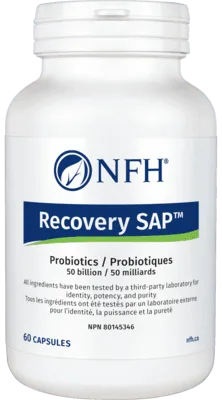
NFH Recovery SAP Review
NFH Recovery SAP is a probiotic supplement in capsule form. The label lists a serving as 1 capsule, and each container holds 30 servings. The label names eleven strains: Lactobacillus plantarum R1012, Lactobacillus casei R0215, Bifidobacterium longum R0175, Lactobacillus rhamnosus R0011, Lactobacillus paracasei HA-196, Lactobacillus Helveticus R0052, Bifidobacterium infantis R0033, Bifidobacterium breve R0070, Bifidobacterium Bifidus R0071, Lactobacillus delbrueckii ssp. bulgaricus HA-137 and Streptococcus salivarius ssp. thermophilus R0083. The label prints an amount of 0 beside each strain, so no usable amounts are given for them. Other ingredients are vegetable magnesium stearate, potato starch, ascorbic acid, inulin, arabinogalactan, vegetable hypromellose, acetate, succinate and purified water. The printed directions read: Adults, adolescents, and children greater than or equal to 6 years old: take 1 capsule once or twice daily with water or juice, or as directed by your healthcare practitioner. That makes the printed range one or two capsules a day, so a container lasts 15 to 30 days at those amounts.
We don’t sell supplements. We help you make decisions and get the best price.
Lowest prices
We may earn a commission from some store links. How we choose.
Finding the lowest prices at the stores now. This takes a few seconds.
Study, Trial or Testing Result Summary
Members Only173 human studies · 112 improved
This product blends eleven probiotic strains, and every amount is hidden in a blend, so none can be checked against the doses used in studies. Only two strains were tested in their exact form. Bifidobacterium longum R0175 and Lactobacillus paracasei HA-196 each did no better than placebo for overall bowel symptoms in 251 adults with irritable bowel syndrome over 8 weeks, though bowel habits shifted toward normal with HA-196 [1]. A two-strain capsule with Lactobacillus rhamnosus R0011 and Lactobacillus helveticus R0052 eased bloating and diarrhea during a med treatment for a stomach infection [2]. A multi-strain product that included R0052 relieved overall bowel symptoms better than placebo over 4 weeks [3]. Other strains of the same species often helped. A Bifidobacterium bifidum strain gave relief to 34% versus 19% on placebo [4], and mixes with Bifidobacterium breve or Streptococcus thermophilus relieved symptoms in 68% versus 37.5% [5]. Results disagree, though. Bifidobacterium infantis alone did not help in a pooled analysis [6], and one Lactobacillus plantarum strain did not ease pain or bloating [7]. These results come from other strains and may not apply here. Animal and cell studies are never counted.
See all 173 studies →Hide the studies
- Across 82 trials of 10,332 adults with irritable bowel syndrome, some probiotics (including Lactobacillus plantarum 299V, with low certainty) helped overall symptoms, but certainty of evidence was low to very low and the specific strain R1012 was not tested.Efficacy of Probiotics in Irritable Bowel Syndrome: Systematic Review and Meta-analysis.
- In 43 trials of 5,531 people with irritable bowel syndrome, Lactobacillus plantarum ranked first for quality of life but not significantly better than other probiotics, while Bacillus coagulans ranked best for symptoms.Efficacy of Probiotics for Irritable Bowel Syndrome: A Systematic Review and Network Meta-Analysis.
- In a network analysis of 3,154 people with irritable bowel syndrome, Lactobacillus plantarum ranked least effective for quality of life and was not shown to be better than placebo.Comparative effectiveness and safety of probiotics with psychotropic potential in mental health benefits in irritable bo…
- In 3,122 children treated for Helicobacter pylori, probiotic add-ons raised eradication and cut side effects overall, and a multi-strain mix containing Lactobacillus plantarum was best for reducing diarrhea, but this is not about irritable bowel symptoms.Efficacy and safety of probiotic-supplemented triple therapy for eradication of Helicobacter pylori in children: a syste…
- In 21 trials with 1807 children with functional abdominal pain, probiotics reduced pain and improved symptoms versus placebo, and B. longum DM8504 was among the most effective strains.Comparative efficacy of probiotic, prebiotic, and synbiotic interventions in children with functional abdominal pain dis…
- In 9 trials of 702 children with functional abdominal pain, Lactobacillus reuteri reduced pain intensity, but Lactobacillus rhamnosus GG showed no significant difference from placebo on the outcomes reported.Use of probiotics in the treatment of functional abdominal pain in children-systematic review and meta-analysis.
- In three trials of 290 children with abdominal pain-related bowel disorders, Lactobacillus rhamnosus GG gave more treatment responders than placebo, especially in children with irritable bowel syndrome, but not in those with functional abdominal pain or functional dyspepsia.Meta-analysis: Lactobacillus rhamnosus GG for abdominal pain-related functional gastrointestinal disorders in childhood.
- Across trials of probiotics for gut diseases, Lactobacillus plantarum did not show a significant benefit, although probiotics overall did.A meta-analysis of probiotic efficacy for gastrointestinal diseases.
- In a pooled analysis of 10 trials in irritable bowel syndrome, probiotic mixes containing Lactobacillus plantarum reduced bloating (distension) and gas scores compared with placebo.Effect of probiotic species on irritable bowel syndrome symptoms: A bring up to date meta-analysis.
- Pooling 18 studies of Lactiplantibacillus plantarum, alone or combined, showed significantly less abdominal pain, plus benefits for gum health, C-reactive protein and cholesterol.The Health Benefits of Probiotic Lactiplantibacillus plantarum: A Systematic Review and Meta-Analysis.
- In 15 trials of adults with constipation, probiotics overall sped gut transit and raised stool frequency, but B. longum alone did not change bowel movements per week.Meta-analysis of randomized controlled trials of the effects of probiotics on functional constipation in adults.
- In five trials of people with irritable bowel syndrome, B. infantis alone did not ease pain, bloating or bowel habit satisfaction, but composite probiotics containing it significantly reduced abdominal pain and bloating.Efficacy of Bifidobacterium infantis 35624 in patients with irritable bowel syndrome: a meta-analysis.
- In a review of 24 trials with 1,390 children with functional abdominal pain, Lactobacillus rhamnosus GG gave significantly more treatment responders than placebo, though evidence quality was very low to moderate.Nonpharmacologic treatment of functional abdominal pain disorders: a systematic review.
- In seven trials of 515 children with constipation, Lactobacillus casei rhamnosus Lcr35 did not differ from placebo in treatment success, and no probiotic helped abdominal pain.Systematic review: probiotics for functional constipation in children.
- A review reported that some trials showed Lactobacillus casei Shirota significantly improved constipation in people with irritable bowel syndrome, but the studies were mostly small and not always well designed.[Probiotics as therapeutic agents in irritable bowel syndrome].
- A review of trials in children found no evidence that Lactobacillus casei rhamnosus LCR35 helped functional constipation, and overall evidence for probiotics was insufficient.Effectiveness of Probiotics in Children With Functional Abdominal Pain Disorders and Functional Constipation: A Systemat…
- In healthy infants fed probiotic formula, Lactobacillus rhamnosus GG did not reduce colic, crying or irritability and was linked to looser stools, and the Lactobacillus rhamnosus LPR combination had no effects.To add or not to add probiotics to infant formulae? An updated systematic review.
- A review of 104 clinical studies in irritable bowel syndrome found that formulations based on Lactobacillus rhamnosus and Lactobacillus acidophilus ranked highest, especially for quality of life, bloating and abdominal pain.Evaluating the Efficacy of Probiotics in IBS Treatment Using a Systematic Review of Clinical Trials and Multi-Criteria D…
- A review of 51 randomized trials found that Lacticaseibacillus rhamnosus may improve symptoms in people with irritable bowel syndrome and was generally safe in healthy people, though the abstract gives no numbers or strain details.Clinical Evidence on the Health Benefits and Safety of Probiotic Lacticaseibacillus rhamnosus: A Systematic Review.
- In a review of 16 trials in adults with irritable bowel syndrome, B. infantis 35624 improved a combined score of abdominal pain, bloating and bowel difficulty versus placebo in two well-designed studies.The utility of probiotics in the treatment of irritable bowel syndrome: a systematic review.
- In three winter trials of healthy adults (237, 234 and 250 people), multi-strain synbiotics containing Lactobacillus rhamnosus improved bowel function, with less bloating and more regular motility, compared with placebo.A new chance of preventing winter diseases by the administration of synbiotic formulations.
- In 443 adults with irritable bowel syndrome, 8 weeks of a daily heat-inactivated B. bifidum MIMBb75 capsule led 34% to reach the pain and symptom relief goal versus 19% on placebo.Heat-inactivated Bifidobacterium bifidum MIMBb75 (SYN-HI-001) in the treatment of irritable bowel syndrome: a multicentr…
- In 434 very low birth weight preterm infants, 6 weeks of B. bifidum with L. acidophilus lowered death or serious bowel infection (4 of 217 vs 20 of 217), with no gas or diarrhea problems; this is a different population from adults with sensitive digestion.Oral probiotics prevent necrotizing enterocolitis in very low birth weight preterm infants: a multicenter, randomized, c…
- In 362 women with irritable bowel syndrome taking it for 4 weeks, the 100 million CFU dose beat placebo for abdominal pain, bloating, straining and gas, while the lower and higher doses did not.Efficacy of an encapsulated probiotic Bifidobacterium infantis 35624 in women with irritable bowel syndrome.
- In 307 adults with diarrhea-predominant irritable bowel syndrome, 8 weeks of Lactiplantibacillus plantarum Lpla33 at 1 billion or 10 billion live cells daily cut symptom scores more than placebo, with a bigger effect at the higher dose, and more people had improved stool form (62.5% and 88.4% versus 26.3%).Efficacy and dose response of Lactiplantibacillus plantarum in diarrhea-predominant irritable bowel syndrome.
- In 302 adults with occasional abdominal discomfort and bloating taking it for 4 weeks, symptom severity did not differ from placebo, though there were more bloating-free days with the probiotic.Multi-Center, Double-Blind, Randomized, Placebo-Controlled, Parallel-Group Study to Evaluate the Benefit of the Probioti…
- In 300 healthy adults with hard stools and evacuation problems, 30 days of a probiotic blend containing Lactobacillus plantarum LP01 (or a separate Bifidobacterium strain) improved weekly bowel movements, stool consistency, ease of passing stool and bloating compared with placebo.The use of probiotics in healthy volunteers with evacuation disorders and hard stools: a double-blind, randomized, place…
- In 295 adults starting oral iron for iron deficiency anaemia, adding this probiotic during the first 30 days lowered stomach and bowel side effects such as bloating and abdominal pain, and fewer people stopped iron, compared with iron alone (not placebo-controlled).Improved gastrointestinal tolerance and iron status via probiotic use in iron deficiency anaemia patients initiating ora…
- In healthy infants fed formula with milk oligosaccharides and probiotics for about 4 months, stools were more frequent and softer, but caregivers reported no differences in gas, spitting up, crying, fussing or colic compared with standard formula.Growth and safety evaluation of infant formulae containing oligosaccharides derived from bovine milk: a randomized, doub…
- In 267 people with irritable bowel syndrome, a synbiotic with the probiotic gave similar pain and well-being responses as a prebiotic alone, though it looked encouraging in the diarrhea type; there was no placebo group.Clinical trial on the efficacy of a new symbiotic formulation, Flortec, in patients with irritable bowel syndrome: a mul…
- In 251 adults with irritable bowel syndrome given B. longum R0175, L. paracasei or placebo for 8 weeks, symptom severity changes were similar between groups, though emotional well-being and social functioning improved from baseline.Efficacy of Lactobacillus paracasei HA-196 and Bifidobacterium longum R0175 in Alleviating Symptoms of Irritable Bowel S…
- In a 4-week placebo-controlled trial of 250 adults with constipation, a blend of Lacticaseibacillus rhamnosus HN001 and Bifidobacterium lactis HN019 softened stool compared with placebo, though bowel movement frequency did not change.Effects of dietary fibers or probiotics on functional constipation symptoms and roles of gut microbiota: a double-blinde…
- In 246 pelvic cancer patients, a two-strain probiotic did not significantly cut overall radiation diarrhea, though at 60 days more patients on the standard dose were free of moderate or severe diarrhea than on placebo (35% vs 17%).A randomized double-blind controlled trial: impact of probiotics on diarrhea in patients treated with pelvic radiation.
- In 214 people with irritable bowel syndrome, 4 weeks of Lactobacillus plantarum 299v lowered abdominal pain and bloating more than placebo, and 78.1% rated the effect excellent or good versus 8.1% on placebo.Clinical trial: Lactobacillus plantarum 299v (DSM 9843) improves symptoms of irritable bowel syndrome.
- In 200 adults with diarrhea-predominant irritable bowel syndrome, 12 weeks of B. longum CECT 7347 (live or heat-treated) cut symptom scores far more than placebo (about 174-178 points vs 60).A randomized double-blind, placebo-controlled trial to evaluate the safety and efficacy of live Bifidobacterium longum C…
- In 171 adults with chronic constipation, 4 weeks of a two-strain probiotic improved stool consistency and quality of life versus placebo, but did not change the number of complete spontaneous bowel movements.Probiotics Ameliorate Stool Consistency in Patients with Chronic Constipation: A Randomized, Double-Blind, Placebo-Contr…
- In 163 adults with constipation-predominant irritable bowel syndrome, a daily 350 ml sterilized Lactobacillus helveticus drink for 1 week shortened gut transit time and eased constipation symptoms in both groups, with no added benefit from polydextrose and no placebo group.Effectiveness of Sterilized Symbiotic Drink Containing Lactobacillus helveticus Comparable to Probiotic Alone in Patient…
- In 146 children with long-term constipation, 4 weeks of a multi-strain synbiotic that included L. plantarum gave complete benefit in 66.7% versus 28.3% on placebo, with more bowel movements and less abdominal pain.Investigation of the efficacy of synbiotics in the treatment of functional constipation in children: a randomized double…
- In a double-blind placebo-controlled trial of 141 children with irritable bowel syndrome or functional abdominal pain, Lactobacillus rhamnosus GG for eight weeks significantly reduced how often and how severely they had abdominal pain, and the benefit lasted through follow-up.A randomized controlled trial of Lactobacillus GG in children with functional abdominal pain.
- In adults with irritable bowel syndrome after an infection, 14 days of a probiotic containing Bifidobacterium longum and Enterococcus faecium restored lactose digestion and eased symptoms in 70.8% of patients, while 68.4% on placebo showed no positive effect.[Lactase deficiency in patients with postinfectious irritable bowel syndrome and the role of intestinal microflora in it…
- In an unblinded trial of 123 people with irritable bowel syndrome, L. rhamnosus GG for 6 weeks lowered symptom scores, but the reduction was not significantly better than a normal diet, while a low FODMAP diet did show a significant benefit.Ehealth: low FODMAP diet vs Lactobacillus rhamnosus GG in irritable bowel syndrome.
- In 122 people with irritable bowel syndrome, 4 weeks of daily B. bifidum MIMBb75 reduced symptoms including pain, bloating and urgency, with 57% responding versus 21% on placebo.Randomised clinical trial: Bifidobacterium bifidum MIMBb75 significantly alleviates irritable bowel syndrome and improve…
- In 121 children aged 3-12 taking amoxicillin-type meds, Bifidobacterium breve PRL2020 cut the incidence of diarrhea by about 70% and shortened it by 19 hours versus controls.Read the study on PubMed (42234385) →
- In 120 people with irritable bowel syndrome, Lactobacillus plantarum 299v did not relieve abdominal pain, bloating or incomplete emptying more than placebo.Role of Lactobacillus plantarum 299v versus Placebo in symptomatic improvement of irritable bowel syndrome patients.
- In 120 adults after heart surgery for congenital heart disease, this probiotic taken twice daily for 10 days reduced bloating and hard stools compared with placebo, but the overall digestive symptom score did not differ significantly.Lactobacillus plantarum 24-7 improves postoperative bloating and hard stools by modulating intestinal microbiota in pati…
- In 120 adults with irritable bowel syndrome, a butyrate, probiotic and fibre mixture gave adequate relief to more people than placebo at 4 weeks (64.7% vs 42.0%) and lowered urgency, but symptom severity and quality of life scores did not differ.Efficacy and Safety of a Mixture of Microencapsulated Sodium Butyrate, Probiotics, and Short Chain Fructooligosaccharide…
- In 120 toddlers with respiratory illness, 12 weeks of B. infantis YLGB-1496 led to fewer stomach symptoms such as stomachache, nausea, vomiting and diarrhea than the control group, with no change in stool frequency or consistency.Safety and Tolerance of Bifidobacterium longum subsp. Infantis YLGB-1496 in Toddlers with Respiratory Symptoms.
- In 117 people recovering from acute diverticulitis, adding B. infantis 35624 to mesalamine for 12 weeks gave no extra symptom relief compared with mesalamine alone or placebo.A randomized controlled study of mesalamine after acute diverticulitis: results of the DIVA trial.
- In 117 people (76 with irritable bowel syndrome, 41 healthy) given a B. infantis 35624 capsule or placebo daily for 8 weeks, the probiotic showed up in stool but did not change irritable bowel symptoms.Fecal excretion of Bifidobacterium infantis 35624 and changes in fecal microbiota after eight weeks of oral supplementat…
- In 113 people with irritable bowel syndrome, 12 weeks of a three-strain Lactobacillus mix including L. casei improved most symptoms and quality of life versus placebo in some subgroups, most in diarrhea-type and female participants, though not pain intensity.Lactobacillus acidophilus CL1285, Lactobacillus casei LBC80R and Lactobacillus rhamnosus CLR2 improve quality-of-life an…
- In 112 adults with lower digestive symptoms, a three-strain product that includes a Lactobacillus plantarum strain (not this exact strain) for 8 weeks relieved overall symptoms more than placebo, with less abdominal pain and bloating.Validity and safety of ID-JPL934 in lower gastrointestinal symptom improvement.
- In 110 people with irritable bowel syndrome, 12 weeks of a two-strain cultured milk drink improved bowel symptom severity, but placebo groups improved too, so there was no clear advantage over placebo.A randomized, double-blinded, placebo-controlled clinical trial on Lactobacillus-containing cultured milk drink as adjuv…
- In 109 adults with irritable bowel syndrome, a multi-strain probiotic taken for 4 weeks gave more relief of overall symptoms than placebo, especially in women and people with constipation-predominant IBS.Efficacy of Quadruple-coated Probiotics in Patients With Irritable Bowel Syndrome: A Randomized, Double-blind, Placebo-c…
- In a placebo-controlled trial of 104 children with abdominal pain disorders, L. rhamnosus GG for 4 weeks gave treatment success (no pain) in 25% versus 9.6% on placebo, with the clearest benefit in children with irritable bowel syndrome.A randomized double-blind placebo-controlled trial of Lactobacillus GG for abdominal pain disorders in children.
- In 103 adults with irritable bowel syndrome, a daily four-strain probiotic capsule for six months cut the total score for belly pain, bloating, gas, and rumbling by a median of 42%, versus 6% on placebo.A probiotic mixture alleviates symptoms in irritable bowel syndrome patients: a controlled 6-month intervention.
- In 101 caesarean-born children aged 6-24 months given the probiotic for 12 weeks, stool frequency was higher and constipation and abdominal pain were less common than with placebo, with no related adverse events.Safety and tolerance of Lacticaseibacillus paracasei N1115 in caesarean-born young children: a randomised, placebo-contr…
- In 100 adults with diarrhea-predominant irritable bowel syndrome, adding a two-strain probiotic with Lactobacillus plantarum to standard treatment for 12 weeks gave larger symptom reductions than standard treatment alone, and all patients in the probiotic group reached remission or mild symptoms.Two Lactobacilli strains as adjuvant therapy in the management of irritable bowel syndrome: a randomized control trial.
- In 100 patients on long-term acid-reducing medication, the probiotic taken three days a week for up to six months reduced bloating and flatulence and improved stool form and frequency compared with placebo.Read the study on PubMed (25660822) →
- In 90 adults with Helicobacter pylori gastritis, taking a probiotic capsule with Lacticaseibacillus rhamnosus R0011 alongside 14 days of standard a med therapy, then continuing for 4 more weeks, reduced bloating, diarrhea, nausea and bitter taste compared with placebo.Efficacy and safety of Lacticaseibacillus rhamnosus R0011 and Lactobacillus helveticus R0052 as an adjuvant for Helicoba…
- In 81 children hospitalized with acute diarrhea, seven days of Lactobacillus casei rhamnosus twice daily improved abdominal pain, bloating and bowel habits compared with no probiotic.Probiotic Lactobacillus casei: Effective for Managing Childhood Diarrhea by Altering Gut Microbiota and Attenuating Feca…
- In 81 adults with irritable bowel syndrome, a 4-week multi-strain probiotic that included B. breve raised gut levels of probiotic strains and improved diarrhea scores, but total symptom scores did not differ from placebo (74% vs 62% reported adequate relief, not significant).Effect of administering a multi-species probiotic mixture on the changes in fecal microbiota and symptoms of irritable b…
- In 80 adults with irritable bowel syndrome, Lactobacillus casei Shirota taken twice daily for 8 weeks did not reach the 30% symptom improvement goal and did not differ significantly from placebo.Efficacy of Lactobacillus casei Shirota for patients with irritable bowel syndrome.
- In 80 adults with diarrhea-predominant irritable bowel syndrome, an 8-week synbiotic containing Lactobacillus rhamnosus reduced overall symptom severity and flatulence more than placebo, and 68 patients completed the study.The Effectiveness of Synbiotic Preparation Containing Lactobacillus and Bifidobacterium Probiotic Strains and Short Chai…
- In 80 breastfed healthy term infants, 21 days of Bifidobacterium infantis EVC001 was safe and well tolerated, and stools were softer and better formed than with lactation support alone.Safety and tolerability of Bifidobacterium longum subspecies infantis EVC001 supplementation in healthy term breastfed i…
- In 77 people with irritable bowel syndrome, 8 weeks of Bifidobacterium infantis 35624 reduced abdominal pain, bloating and bowel difficulty more than placebo and normalized an inflammation-related cytokine ratio.Lactobacillus and bifidobacterium in irritable bowel syndrome: symptom responses and relationship to cytokine profiles.
- In 48 children with irritable bowel syndrome, a three-strain bifidobacteria mixture (not this strain alone) given for 6 weeks led to more complete resolution of abdominal pain than placebo, with no benefit seen in 25 children with functional dyspepsia.A Mixture of 3 Bifidobacteria Decreases Abdominal Pain and Improves the Quality of Life in Children With Irritable Bowel…
- In 72 patients taking standard Helicobacter pylori meds, adding this probiotic for 6 weeks reduced abdominal pain and acid reflux compared with placebo, without changing how well the infection was cleared.Adjuvant Lactiplantibacillus plantarum Lp05 modulates gut microbiota and alleviates symptoms during Helicobacter pylori …
- In 71 healthy young adults taking a two-strain probiotic for 3 weeks, stool became looser with higher doses, but the abstract reports no clear effect on bloating or gas and no change in blood fats.Dose-response study of probiotic bacteria Bifidobacterium animalis subsp lactis BB-12 and Lactobacillus paracasei subsp …
- In 70 adults with irritable bowel syndrome, a 4-week course of Lactobacillus plantarum LP01 with Bifidobacterium breve BR03 reduced abdominal pain and overall symptom severity more than placebo, with pain scores falling about 42 to 49 percent versus 25 to 30 percent with placebo.Probiotics in the treatment of irritable bowel syndrome.
- In 70 adults with chronic constipation, a daily 65 ml Lactobacillus casei Shirota drink for 4 weeks improved constipation and stool consistency versus placebo (89% vs 56% reported benefit), but gas and bloating did not change.Probiotic beverage containing Lactobacillus casei Shirota improves gastrointestinal symptoms in patients with chronic co…
- In 70 children taking a daily heartburn medicine for four weeks, a daily probiotic containing Lactobacillus rhamnosus R0011 did not reduce the rate of bacterial overgrowth in the small intestine compared with placebo (33% vs 26.5%).Read the study on PubMed (23796359) →
- In 70 hospitalized patients with a med-associated diarrhea, about 5 days of L. casei plus B. breve did not shorten diarrhea or significantly improve cure rates compared with placebo.Read the study on PubMed (22370839) →
- In 70 Korean adults with irritable bowel syndrome, 8 weeks of a composite probiotic reduced abdominal pain more than placebo (-31.9 vs -17.7).Effect of probiotics on symptoms in korean adults with irritable bowel syndrome.
- In 67 older adults with irritable bowel syndrome taking a synbiotic daily for 4 weeks, 51.5% responded versus 23.5% on placebo and abdominal pain improved, but gas and bloating did not differ from placebo.Efficacy of a Synbiotic Containing Lactobacillus paracasei DKGF1 and Opuntia humifusa in Elderly Patients with Irritable…
- In 66 healthy adults, 3 weeks of probiotic fermented milk raised gut lactobacilli and bifidobacteria, but digestive symptoms were not improved, and adding inulin increased symptoms like gas.The effect of probiotic fermented milk and inulin on the functions and microecology of the intestine.
- In 61 people with irritable bowel syndrome and inflammatory bowel disease, a four-strain probiotic for 3 months did not significantly improve symptoms compared with placebo; 45% of the active group reached a 100-point symptom score drop versus 33% on placebo.Four-strain probiotic exerts a positive effect on irritable bowel syndrome symptoms occurring in inflammatory bowel dise…
- In 61 patients with diarrhea-predominant irritable bowel syndrome, 8 weeks of B. breve Bif195 did not improve bowel symptom scores versus placebo, though it did lower fatigue scores.Eight weeks of treatment with probiotic Bifidobacterium breve, Bif195 lowers fatigue scores in patients with diarrhoea-p…
- In 60 adults with irritable bowel syndrome, a 400 ml daily rose-hip drink fermented with Lactobacillus plantarum DSM 9843 for four weeks reduced flatulence days compared with a plain rose-hip drink, and abdominal pain fell in both groups.Alteration of intestinal microflora is associated with reduction in abdominal bloating and pain in patients with irritab…
- In 60 patients with post-infection irritable bowel syndrome and lactase deficiency, 14 days of a Bifidobacterium longum probiotic restored healthy small bowel bacteria in 70.8%, while 68.4% on placebo showed no clear improvement.[The role of small bowel microflora in the development of secondary lactase deficiency and the possibilities of its trea…
- In 60 gastric bypass patients with stomach symptoms, 2 weeks of Bifidobacterium longum BB536 or Clostridium butyricum improved quality-of-life scores, including gas, bloating and abdominal pain, though the comparison group took digestive enzymes rather than placebo.Effect of probiotics on postoperative quality of gastric bypass surgeries: a prospective randomized trial.
- In 60 very low birth weight preterm infants, up to 6 weeks of B. bifidum with L. acidophilus did not change serious bowel infection rates (3.2% vs 3.4%) or time to full feeding, and caused no gas or diarrhea.Effect of oral probiotics supplementation in the prevention of necrotizing enterocolitis among very low birth weight pre…
- In 59 overweight or obese adults, 1 gram daily of this strain for 4 weeks increased bowel movement frequency and eased reflux, nausea, abdominal pain and constipation compared with placebo.Impact of probiotic Lactobacillus plantarum GKM3 on gastrointestinal health in overweight and obese individuals: A rando…
- In a crossover trial of 59 school-aged children with functional constipation, Bifidobacterium longum added to daily yogurt for five weeks improved defecation frequency and abdominal pain more than plain yogurt alone.Pediatric functional constipation treatment with Bifidobacterium-containing yogurt: a crossover, double-blind, controlle…
- In 59 adults taking meds to clear H. pylori, adding Lactobacillus rhamnosus GG for the 7-day treatment did not significantly reduce bloating, diarrhea, taste changes or stomach discomfort compared with placebo.[Lactobacillus rhamnosus GG supplementation to reduce side-effects of anti-Helicobacter pylori treatment].
- In a placebo-controlled trial of 56 healthy adults, three weeks of a multi-strain kefir product containing Bifidobacterium longum reduced bloating and abdominal pain in male participants compared with control, while female participants showed only changes in gut bacteria counts.Putative Probiotic Strains Isolated from Kefir Improve Gastrointestinal Health Parameters in Adults: a Randomized, Singl…
- In 55 adults with irritable bowel syndrome, the i3.1 probiotic containing Lactobacillus plantarum for 6 weeks improved quality of life in 50 percent of patients versus 16.7 percent on placebo, and also improved abdominal pain and stool consistency.Combination of a Probiotic and an Antispasmodic Increases Quality of Life and Reduces Symptoms in Patients with Irritabl…
- In 55 adults with chronic diarrhea, Lactobacillus plantarum CCFM1143 taken for four weeks eased symptoms and improved quality of life more than placebo, and lowered the inflammatory marker IL-6.Lactobacillus plantarum CCFM1143 Alleviates Chronic Diarrhea via Inflammation Regulation and Gut Microbiota Modulation: …
- In 55 people with irritable bowel syndrome taking a multispecies probiotic containing Lactobacillus rhamnosus GG for 6 months, gut bacteria stayed largely stable and the authors concluded that factors other than the bacteria measured likely explained the symptom relief seen compared with placebo.Effects of multispecies probiotic supplementation on intestinal microbiota in irritable bowel syndrome.
- In 52 adults with irritable bowel syndrome, a four-strain probiotic taken for 8 weeks improved symptom severity, quality of life, days with pain and satisfaction with bowel habit more than placebo.Clinical trial: a multistrain probiotic preparation significantly reduces symptoms of irritable bowel syndrome in a doub…
- In 50 adults with diarrhea-dominant irritable bowel syndrome, a multi-strain probiotic containing Lactobacillus plantarum taken daily for eight weeks gave adequate overall symptom relief to 48% of people versus 12% on placebo, and firmer stools.The effect of a multispecies probiotic mixture on the symptoms and fecal microbiota in diarrhea-dominant irritable bowel…
- In 50 patients with symptomatic diverticular disease on a high-fibre diet, the probiotic taken 14 days a month for 6 months reduced bloating and prevented recurrence of prolonged abdominal pain compared with diet alone.Efficacy of Lactobacillus paracasei sub. paracasei F19 on abdominal symptoms in patients with symptomatic uncomplicated …
- In 50 adults with heartburn taking fermented soy for 3 weeks, there were no differences from placebo in heartburn or digestive symptom scores, but some quality of life items improved and heartburn, diarrhea and bloating improved in the washout week.Fermented soy supplementation improves indicators of quality of life: a randomized, placebo-controlled, double-blind tri…
- In a placebo-controlled trial of 49 adults with irritable bowel syndrome, a multi-strain probiotic twice daily for 4 weeks substantially relieved symptoms in 68% of people versus 37.5% on placebo, and improved abdominal pain and bloating.Effect of multispecies probiotics on irritable bowel syndrome: a randomized, double-blind, placebo-controlled trial.
- In 48 healthy adults, a 400 ml daily rose-hip drink fermented with Lactobacillus plantarum DSM 9843 for three weeks significantly reduced flatulence and softened stools compared with a plain rose-hip drink.Survival of Lactobacillus plantarum DSM 9843 (299v), and effect on the short-chain fatty acid content of faeces after in…
- In 45 adults with irritable bowel syndrome, adding a probiotic containing Lactobacillus plantarum P-8 to routine treatment for 28 days lowered symptom scores and blood levels of inflammation markers IL-6 and TNF-alpha compared with routine treatment alone.Adjunctive treatment with probiotics partially alleviates symptoms and reduces inflammation in patients with irritable b…
- In 45 children with chronic constipation, Lcr35 for 4 weeks improved stool frequency, stool hardness and treatment success versus placebo, worked about as well as magnesium oxide, and caused less abdominal pain.Lactobacillus casei rhamnosus Lcr35 in children with chronic constipation.
- In 45 people with symptomatic diverticular disease, a daily synbiotic with Lactobacillus paracasei B21060 plus a high-fibre diet for 6 months reduced abdominal pain and bloating, but the high-fibre diet alone also relieved pain, with only bloating and prolonged pain showing clearer gains with the probiotic.High-fibre diet and Lactobacillus paracasei B21060 in symptomatic uncomplicated diverticular disease.
- In 44 adults with irritable bowel syndrome, 6 weeks of Bifidobacterium longum NCC3001 reduced depression scores compared with placebo (14 of 22 improved versus 7 of 22), but had no significant effect on anxiety or irritable bowel symptoms.Probiotic Bifidobacterium longum NCC3001 Reduces Depression Scores and Alters Brain Activity: A Pilot Study in Patients …
- In 42 children with functional abdominal pain, melatonin with Lactobacillus rhamnosus GG for four weeks cut abdominal pain by more than half within the melatonin group, but the difference from the placebo plus LGG group was not significant at the final 12-week check.Randomised controlled trial of melatonin for paediatric functional abdominal pain disorders.
- In 40 adults with irritable bowel syndrome, Lactobacillus plantarum 299V liquid taken for four weeks led to improvement in overall symptoms in 95% of people versus 15% on placebo, and abdominal pain resolved in all treated patients.A controlled, double-blind, randomized study on the efficacy of Lactobacillus plantarum 299V in patients with irritable …
- In 40 people with irritable bowel syndrome, Lactobacillus paracasei CNCM I-1572 did not significantly improve abdominal pain or overall relief compared with placebo, though it changed gut bacteria, increased short chain fatty acids and lowered one inflammatory marker.Effect of Lactobacillus paracasei CNCM I-1572 on symptoms, gut microbiota, short chain fatty acids, and immune activatio…
- In 40 older adults with Parkinson's disease, a probiotic tablet for 3 months reduced abdominal pain and bloating about as well as trimebutine, but did not significantly improve constipation with incomplete evacuation.Nonmotor gastrointestinal disorders in older patients with Parkinson's disease: is there hope?
- In 36 healthy adults, 6 weeks of a synbiotic product containing Lactobacillus bulgaricus improved self-reported digestive symptoms and bowel habits compared with placebo.Beneficial effects of a synbiotic supplement on self-perceived gastrointestinal well-being and immunoinflammatory status…
- In 35 cancer patients on home tube feeding, 20 billion CFU of Lactobacillus plantarum 299v daily for four weeks reduced vomiting and flatulence compared with baseline, while quality of life did not differ from placebo.Effects of 4 weeks of Lactobacillus plantarum 299v supplementation on nutritional status, enteral nutrition tolerance, a…
- In 35 adults with non-constipated irritable bowel syndrome, 6 weeks of Bifidobacterium longum NCC3001 raised blood butyric acid and other metabolites, and these changes were linked to lower anxiety and depression scores.Metabolome-associated psychological comorbidities improvement in irritable bowel syndrome patients receiving a probiotic…
- In 35 people with irritable bowel syndrome without constipation, 12 weeks of a multi-strain probiotic with vitamin D improved stool frequency and consistency and a gut barrier marker versus placebo, but not overall symptom severity scores.Multistrain Probiotics Plus Vitamin D Improve Gut Barrier Function and Gut Microbiota Composition in Irritable Bowel Syn…
- In a placebo-controlled pilot trial of 34 people with functional bowel disorders, 8 weeks of heat-treated Lacticaseibacillus rhamnosus reduced irritable bowel symptom scores and improved quality of life compared with placebo.Efficacy of heat-treated postbiotic Lacticaseibacillus rhamnosus in patients with functional bowel disorders: a randomiz…
- In 30 adults with diarrhea-predominant irritable bowel syndrome, 4 weeks of a multi-strain fermented milk containing Bifidobacterium longum lowered small-bowel intestinal permeability and reduced global IBS symptom scores, while colonic permeability did not change; the control group drank milk without bacteria.Clinical trial: effect of active lactic acid bacteria on mucosal barrier function in patients with diarrhoea-predominant…
- In an 8-week placebo-controlled trial of 30 adults with constipation-predominant irritable bowel syndrome, Lacticaseibacillus rhamnosus IDCC 3201 improved bowel movements, bloating and bowel satisfaction more than placebo.Effect of Lacticaseibacillus rhamnosus IDCC 3201 on irritable bowel syndrome with constipation: a randomized, double-bli…
- In 30 adults with irritable bowel syndrome, 4 weeks of a synbiotic fermented milk raised the added probiotic strains in stool only briefly and did not change the overall gut bacteria profile compared with placebo; symptoms were not reported.Effects of synbiotic fermented milk containing Lactobacillus acidophilus La-5 and Bifidobacterium animalis ssp. lactis B…
- In 27 adults with diarrhea-predominant irritable bowel syndrome, GTB1 for 4 weeks gave global symptom relief to 94.4 percent of takers versus 62.5 percent on placebo, with less abdominal pain, bloating and diarrhea.Effect of Oral Intake of Lactiplantibacillus plantarum APsulloc 331261 (GTB1TM) on Diarrhea-Predominant Irritable Bowel …
- In 25 adults with irritable bowel syndrome, one month of Bifidobacterium longum and Lactobacillus rhamnosus HN001 with vitamin B6 reduced abdominal pain, bloating and overall severity more than placebo, and improved stool consistency in diarrhea-type patients.Effects of Bifidobacterium longum BB536 and Lactobacillus rhamnosus HN001 in IBS patients.
- In 24 adults with irritable bowel syndrome and bloating, Lactobacillus GG at 10 billion CFU daily did not significantly improve pain, urgency or bloating compared with placebo.Bacterial supplementation in the irritable bowel syndrome. A randomised double-blind placebo-controlled crossover study.
- In a placebo-controlled crossover trial of 24 mostly constipated adults, 2 weeks of Bifidobacterium longum BB536 affected bowel movement frequency differently from person to person, and gut bacteria and metabolites helped predict who responded.Integrated gut microbiome and metabolome analyses identified fecal biomarkers for bowel movement regulation by Bifidobac…
- In 24 women with HIV/AIDS and moderate diarrhea, 100 mL per day of yogurt with L. rhamnosus GR-1 and L. reuteri RC-14 for 15 days resolved diarrhea, gas, and nausea in all 12 treated women within two days, versus 2 of 12 on plain yogurt.Yogurt containing probiotic Lactobacillus rhamnosus GR-1 and L. reuteri RC-14 helps resolve moderate diarrhea and increa…
- In 23 lactose-intolerant adults with ongoing gut symptoms, 30 days of Lactobacillus rhamnosus HN001 with Bifidobacterium longum and vitamin B6 reduced bloating and eased constipation more than placebo.Effects of Bifidobacterium longum and Lactobacillus rhamnosus on Gut Microbiota in Patients with Lactose Intolerance and…
- In 16 adults with irritable bowel syndrome, 10 billion CFU of Lactobacillus plantarum MF1298 daily for three weeks worsened symptoms compared with placebo, and most participants preferred placebo.A candidate probiotic with unfavourable effects in subjects with irritable bowel syndrome: a randomised controlled trial…
- In a pilot crossover study of 8 children with autism and gut symptoms, Bifidobacterium infantis with colostrum was well tolerated, and some children had fewer gut symptoms, though the comparison was colostrum alone.Pilot study of probiotic/colostrum supplementation on gut function in children with autism and gastrointestinal symptoms…
- In people with nontyphoid Salmonella infection, a probiotic containing Lactobacillus plantarum 299 v did not speed clearance of the infection or resolution of symptoms compared with placebo.Effects of probiotic intake and gender on nontyphoid Salmonella infection.
- In adults with irritable bowel syndrome, two daily capsules of Lactobacillus plantarum 299 v (5 billion CFU each) for 8 weeks did not relieve abdominal pain more than placebo, though both groups improved strongly.Randomized clinical trial: effect of Lactobacillus plantarum 299 v on symptoms of irritable bowel syndrome.
- In adults with functional constipation taking a multi-strain probiotic sachet containing Lactobacillus casei once daily for 30 days, stool frequency and stool quality improved within each group, but the differences between the three groups were not statistically significant.The effect of probiotics on functional constipation in adults: A randomized, double-blind controlled trial.
- In a double-blind placebo-controlled trial of volunteers with stress, three weeks of a daily sachet containing Bifidobacterium longum Rosell-175 reduced stress-related abdominal pain and nausea or vomiting compared with placebo.Probiotic food supplement reduces stress-induced gastrointestinal symptoms in volunteers: a double-blind, placebo-contro…
- In a placebo-controlled six-month trial of people with irritable bowel syndrome, a four-strain probiotic reduced the total symptom score (abdominal pain, distension, flatulence, rumbling) by 42% versus 6% on placebo.Clinical studies on alleviating the symptoms of irritable bowel syndrome.
- In a placebo-controlled trial, adding Lacticaseibacillus rhamnosus LRa05 to a med therapy for H. pylori did not significantly raise the cure rate, but it lowered inflammatory markers such as IL-6 and TNF-alpha and eased bloating, abdominal pain, and reflux over four weeks.Evaluation of efficacy and safety of Lacticaseibacillus rhamnosus LRa05 in the eradication of Helicobacter pylori: a ran…
- In a further analysis of a trial in people with non-constipated irritable bowel syndrome, 25% of those taking Lacticaseibacillus paracasei DG for 12 weeks responded on abdominal pain and stool type, and responders had more of certain gut bacteria at the start.Collinsella aerofaciens as a predictive marker of response to probiotic treatment in non-constipated irritable bowel syn…
- In a subgroup analysis of adults with type 2 diabetes, kidney disease and constipation, a Bifidobacterium bifidum strain for 12 weeks improved stool consistency, constipation score and bloating in most subgroups, especially people 65 or older, men, and those with better kidney function.Effects of age, sex, and renal function on bowel movement-improving effects of Bifidobacterium bifidum G9-1 on constipat…
- In adults with diarrhea-predominant irritable bowel syndrome, 8 weeks of a multi-strain probiotic reduced symptom severity more than placebo (score change -165.8 vs -105.6) and improved pain and quality of life, with no difference in side effects.The Effectiveness and Safety of Multi-Strain Probiotic Preparation in Patients with Diarrhea-Predominant Irritable Bowel…
- In 426 children aged 4-12 on amoxicillin-type meds, 15 days of Bifidobacterium breve PRL2020 reduced diarrhea episodes and abdominal pain compared with controls, without changing stool frequency or consistency.Read the study on PubMed (41971733) →
- In 142 people with irritable bowel syndrome, four weeks of multistrain probiotic fermented milk including B. infantis improved most symptoms, and adding dietary fiber helped constipation more, though there was no placebo group.Probiotic Fermented Milk Containing Dietary Fiber Has Additive Effects in IBS with Constipation Compared to Plain Probio…
- In 122 adults with functional abdominal bloating, adding a Lactobacillus helveticus probiotic to standard anti-gas treatment for 2 weeks improved the bloating sensation and visible abdominal swelling more than standard treatment alone.Impact of cefixime and probiotics on functional abdominal bloating: a pilot study.
- In 65 people with irritable bowel syndrome, about 6 months of a multi-ingredient supplement reduced abdominal pain, distension and constipation more than usual care.Treatment of irritable bowel syndrome. A case control experience.
- In a non-randomised study of people with irritable bowel syndrome after major floods, 3 months of Bifidobacterium infantis M-63 improved mental well-being compared with controls, with a small sample.Bifidobacterium infantis M-63 improves mental health in victims with irritable bowel syndrome developed after a major fl…
- In 52 women with irritable bowel syndrome, a low-FODMAP diet improved symptoms and quality of life over 6 weeks, but adding a Lactobacillus rhamnosus probiotic gave no extra benefit over the diet alone.Evaluation of the effects of the FODMAP diet and probiotics on irritable bowel syndrome (IBS) symptoms, quality of life …
- In 14 lactase-deficient adults given an 18 gram lactose test meal on separate days, the Lactobacillus bulgaricus-enriched fermented milk caused fewer total symptoms than lactulose, though it did not differ from the other fermented milks.Digestion and tolerance of lactose from yoghurt and different semi-solid fermented dairy products containing Lactobacill…
- A post hoc analysis of a trial in diarrhea-predominant irritable bowel syndrome found that responders to an 8-week multi-strain probiotic differed from non-responders in gut bacteria, and that Fusicatenibacter saccharivorans rose in responders, but the analysis did not report a clear overall symptom effect.Compositional Changes in the Gut Microbiota of Responders and Non-responders to Probiotic Treatment Among Patients With …
- In a small pilot randomized study of children with acute leukemia on chemotherapy, Lactobacillus rhamnosus taken twice daily reduced nausea and vomiting, with a trend toward less diarrhea, compared with no probiotic.Probiotic Supplementation Decreases Chemotherapy-induced Gastrointestinal Side Effects in Patients With Acute Leukemia.
- In children visiting an emergency department, five drops daily of a Lactobacillus reuteri and Lactobacillus rhamnosus combination for 15 days was linked to symptom improvement and faster stool normalization for abdominal pain, gas colic, and gastroenteritis.Effect of Lactobacillus reuteri LRE02-Lactobacillus rhamnosus LR04 combination and gastrointestinal functional disorders…
- In a single-arm real-world study of 1,098 Italian adults with irritable bowel syndrome, 8 weeks of a five-strain probiotic mixture led to bloating improvement in about 82 percent of patients and abdominal pain improvement in 73 percent, with no control group.A multicenter real-world, open-label study assessing the impact of a probiotic mixture on symptoms of irritable bowel sy…
- In an open uncontrolled study of 636 adults with constipation-type irritable bowel syndrome, about five weeks of a daily 3 g symbiotic containing Bifidobacterium longum W11 was followed by fewer moderate-to-severe bloating and abdominal pain complaints and more frequent bowel movements.Effect of a symbiotic preparation on the clinical manifestations of irritable bowel syndrome, constipation-variant. Resu…
- In a 30-day study without a placebo group, 97.4% of 77 adults with constipation-predominant irritable bowel syndrome who drank a daily cultured milk containing Lactobacillus paracasei CASEI-01 and Lactobacillus acidophilus LA-5 reported better constipation symptoms, and their inflammatory cytokines fell.Clinical assessment and cytokines level in constipation-predominant irritable bowel syndrome participants treated with L…
- In a randomized open-label trial of 113 hospitalized adults on meds, a probiotic mix containing Lactobacillus rhamnosus GG, taken twice daily, was followed by less diarrhea (11% vs 28%) and no C. difficile infection (0% vs 11%) compared with meds alone.Read the study on PubMed (38258024) →
- In 90 adults with diverticular disease, Lactobacillus casei DG 16 billion daily for 15 days per month, alone or with mesalazine, was studied over 12 months; Lactobacillus casei alone did not differ from mesalazine alone, while the combination kept more people symptom free.Mesalazine and/or Lactobacillus casei in preventing recurrence of symptomatic uncomplicated diverticular disease of the …
- In 64 children and adolescents aged 8 to 18 with irritable bowel syndrome, 12 weeks of Bifidobacterium longum 35624 at 1 billion CFU daily improved symptom scores, with 96.6% reaching clinically meaningful improvement in this open-label, single-group study.Effects of Bifidobacterium longum 35624 in Children and Adolescents with Irritable Bowel Syndrome.
- In 54 adults with diarrhea-predominant irritable bowel syndrome or a med-associated diarrhea, one capsule daily of a multi-strain probiotic containing Lactobacillus rhamnosus for 21 days lowered diarrhea and abdominal pain scores and normalized gut bacteria, with no control group.Read the study on PubMed (37801459) →
- In 51 people with constipation-predominant irritable bowel syndrome, 3 months of Bifidobacterium longum W11 significantly reduced symptom severity, especially bloating and abdominal pain.Targeted probiotic therapy in irritable bowel syndrome: a clinical evaluation on Clostridium butyricum CBM588 and Bifido…
- In 50 elderly adults with chronic constipation, 28 days of a probiotic-prebiotic mix containing Lactobacillus rhamnosus increased weekly bowel movements in 64% of participants, with no adverse events reported in this single-group pilot.Efficacy of a probiotic-prebiotic mix on chronic constipation symptoms in the elderly: results of a pilot study.
- In 40 people with irritable bowel syndrome, 8 weeks of a daily probiotic combination of two Bifidobacterium longum strains improved symptoms and mood and lowered the inflammatory marker TNF-alpha compared with baseline.Interactions between symptoms and psychological status in irritable bowel syndrome: An exploratory study of the impact o…
- In 37 adults with functional gastrointestinal disorders, drinking 100 mL per day of fermented milk containing Bifidobacterium bifidum YIT 10347 for 4 weeks improved abdominal pain, diarrhea and constipation scores and lowered a urinary oxidative stress marker, though these gains faded after stopping.Continuous consumption of fermented milk containing Bifidobacterium bifidum YIT 10347 improves gastrointestinal and psyc…
- In an open-label 12-week study of 30 people with Parkinson's disease and constipation, a synbiotic containing Lacticaseibacillus paracasei DG and inulin improved non-motor symptoms and bowel movement frequency and stool form.Synbiotic supplementation may globally improve non-motor symptoms in patients with stable Parkinson's disease: results f…
- In an open-label study of 30 adults with type 2 diabetes, chronic kidney disease and constipation, Bifidobacterium bifidum G9-1 taken for 12 weeks raised the share of people with normal stool form to 44.8%, up from 3.3% at the start, with no worsening of blood sugar or kidney function.Efficacy of probiotics (Bifidobacterium bifidum G9-1) in patients with type 2 diabetes mellitus and chronic kidney disea…
- In a 31-day single-group pilot of 29 infants with cow's milk allergy, a synbiotic formula with Bifidobacterium breve M-16V improved abdominal pain, wind, and constipation, and growth and caregiver quality of life increased.Synbiotic containing extensively hydrolyzed formula improves gastrointestinal and atopic symptom severity, growth, careg…
- In a small prospective study of 26 people with irritable bowel syndrome, a four-strain probiotic capsule taken twice daily for 30 days reduced symptom scores by 71 percent in those who also had small intestine bacterial overgrowth, versus 11 percent in those without it. The product was not L. plantarum R1012 alone.Effect of a Preparation of Four Probiotics on Symptoms of Patients with Irritable Bowel Syndrome: Association with Intes…
- In 20 pregnant women with constipation, a six-strain probiotic mixture containing Lactobacillus plantarum W62 for 4 weeks raised weekly bowel movements from 3.1 to 6.7 and reduced straining and abdominal pain, though the study had no control group.Is a multispecies probiotic mixture effective in constipation during pregnancy? 'A pilot study'.
- In a small uncontrolled pilot of 20 children with constipation, a six-strain probiotic mix that included L. casei for 4 weeks increased weekly bowel movements and reduced fecal accidents and belly pain, but no placebo group was used.The role of a probiotics mixture in the treatment of childhood constipation: a pilot study.
- In a 4-week pilot of 20 children with functional constipation, daily Bifidobacterium breve increased bowel movements, improved stool consistency, and reduced fecal incontinence and abdominal pain episodes.Is Bifidobacterium breve effective in the treatment of childhood constipation? Results from a pilot study.
- In 18 adults with irritable bowel syndrome drinking 65 mL of Yakult daily for 6 weeks, breath test changes suggesting less small intestine bacterial overgrowth occurred in most, but overall symptoms did not significantly improve except for wind.Probiotic effects on intestinal fermentation patterns in patients with irritable bowel syndrome.
- In 15 adults with irritable bowel syndrome, a multi-strain probiotic containing this bacterium for 4 or 8 weeks reduced episodes of abdominal pain, though there was no control group.Probiotic VSL#3 Treatment Reduces Colonic Permeability and Abdominal Pain Symptoms in Patients With Irritable Bowel Synd…
- In a pilot study of 11 people with inactive Crohn's disease and bowel symptoms, 24 mg of Bifidobacterium bifidum G9-1 taken three times daily for 4 weeks improved quality of life and lowered anxiety scores, while bowel symptom scores improved only non-significantly and a blood inflammation marker fell.Effect of Bifidobacterium bifidum G9-1 on the Intestinal Environment and Diarrhea-Predominant Irritable Bowel Syndrome (…
- In a preliminary study of 10 people with irritable bowel syndrome or functional diarrhea, the VSL-3 probiotic, which includes Bifidobacterium infantis, improved clinical symptoms and increased bifidobacteria in stool; no control group was used.Effects of probiotic administration upon the composition and enzymatic activity of human fecal microbiota in patients wi…
- In a pilot of 10 people with systemic sclerosis and moderate bloating, 2 months of one Bifidobacterium infantis capsule (1 billion CFU) daily significantly reduced bloating and distention scores and overall gut symptom scores; there was no placebo group.Probiotics for the treatment of systemic sclerosis-associated gastrointestinal bloating/ distention.
- In 3,460 outpatients with chronic intestinal disorders, one daily stick of a three-strain probiotic for 8 weeks significantly reduced intestinal symptoms and improved stool form, with no control group.Abincol® (Lactobacillus plantarum LP01, Lactobacillus lactis subspecies cremoris LLC02, Lactobacillus delbrueckii LDD01)…
- In a large real-world observational program of 912 people with duodenal ulcer treated for H. pylori, a probiotic-containing regimen with a Lactobacillus rhamnosus strain was associated with high eradication rates and a significant reduction in stomach abdominal pain scores, though there was no control group.[Efficacy and safety of H. pylori eradication therapy in real-world clinical practice: results of the «PAMIR» observatio…
- In a cohort of 330 children with cow's milk allergy, those given a hydrolyzed formula with L. rhamnosus GG had fewer functional gut disorders than those given the formula alone (16.4% vs 40%).Dietary Treatment with Extensively Hydrolyzed Casein Formula Containing the Probiotic Lactobacillus rhamnosus GG Prevent…
- In an open-label real-world study of 233 people with irritable bowel syndrome, taking one capsule of Bifidobacterium longum 35624 daily for 30 days lowered symptom severity and improved quality of life, with 57% moving to milder categories or remission.Effect of Bifidobacterium longum 35624 on disease severity and quality of life in patients with irritable bowel syndrome…
- In a real-world study of 221 patients with irritable bowel syndrome taking one 10 billion CFU capsule of Lactobacillus plantarum 299v daily, overall symptoms fell significantly over 12 weeks, with flatulence severity down about 61 percent and well tolerated by 94 percent of patients.[Treatment of IBS with Lactobacillus plantarum 299v: Therapeutic success increases with length of treatment - real-life …
- In a retrospective review of 153 older adults with stroke, those given Bifidobacterium bifidum over 4 weeks had better neurological, memory and mood scores, lower inflammatory markers, and fewer cases of diarrhea and constipation than those given standard care alone.Bifidobacterium bifidum supplementation improves ischemic stroke outcomes in elderly patients: A retrospective study.
- In a retrospective real-world study of 54 people with diverticular disease and ongoing diarrhea after rifaximin, one month of a multi-ingredient supplement containing Lactobacillus rhamnosus GG reduced daily bowel movements and abdominal pain, with most patients satisfied.A multi-compound dietary supplement to improve the well-being of symptomatic uncomplicated diverticular disease.
- In 50 adults with bloating, physical quality of life rose over about 30 days on a synbiotic, while mental quality of life declined, with no control group.Evaluation of Health-Related Quality of Life in Patients Treated with Synbiotics: a Prospective Observational Study.
- In 42 adults with irritable bowel syndrome, 12 weeks of Bifidobacterium longum 35624 at 1 billion CFU daily significantly reduced abdominal pain, bloating, stool problems and overall symptom severity, with changes lasting one month after stopping.[Long-term probiotic administration for irritable bowel syndrome: a legal need].
- In 20 adults with diarrhea-predominant irritable bowel syndrome and 20 matched healthy controls, a probiotic mix containing Bifidobacterium bifidum for 8 weeks did not significantly change the overall symptom severity score, although bowel movements, urgency and mucus in stool decreased.No distinction in the gut microbiota between diarrhea predominant-irritable bowel syndrome and healthy subjects: matched…
- This study tested a low FODMAP diet, not a Bifidobacterium longum supplement, in 34 people with irritable bowel syndrome; people whose symptoms improved had more Bifidobacterium longum in their gut afterward.The impact of diet and ethnicity on gut microbiota variation in irritable bowel syndrome: A multi-center study.
- In 38 adults with chronic kidney disease, six months of a probiotic combination that included Bifidobacterium bifidum improved bloating-type gas and stool formation scores and lowered blood inflammation markers, alongside slower kidney function decline.Effect of a Probiotic Combination in an Experimental Mouse Model and Clinical Patients With Chronic Kidney Disease: A Pi…
- Lab tests showed that Bifidobacterium breve and longum strains changed inflammatory signals in intestinal and immune cells, with sonicated extracts stronger than live bacteria, and the abstract reports no clinical numbers for their use in children with acute diarrhea.Immunomodulatory Effects of Bifidobacterium spp. and Use of Bifidobacterium breve and Bifidobacterium longum on Acute Di…
Review Totals and Summary
Members Only2 reviews · 100% positive
No written reviews read yet.
Biohacker Summary
Members Only10 of 10 recommend it
This product's ingredients are all smaller ingredients, all probiotic strains, so the panel's views are spread across several of them. Lactobacillus rhamnosus drew the most support: Dr. Mark Hyman's and Ben Greenfield's mentions and Thomas DeLauer's all recommend or use it, and two panelists spoke of it for gut health, fewer colds and flu, lower stress and anxiety, and food sensitivities, with one favoring a specific strain and another pointing to yogurt as a source. Bifidobacterium longum was recommended or used by two of the panel, one for taking stress off the kidney and one in a targeted strain paired with three B vitamins for brain fog, while others noted a link to deep sleep and to fewer food sensitivities. Lactobacillus plantarum got mostly neutral comments about gut balance, memory and folate, with one recommendation, and Lactobacillus casei drew the only cautions: one panelist warned it can form histamine in sensitive people, and another stopped taking it because the 12-hour sleeps felt overwhelming. One panelist also recommended Lactobacillus paracasei for immune cell function, and no one gave a dose beyond a study that used two servings a day.
See all 7 biohackers →Hide the biohackers
Dave Asprey · Bifidobacterium longum · uses
- Uses a targeted strain of B. longum 1714 paired with three B vitamins to fix brain fog from the gut up.
- Mentions that some species of lactobacillus plantarum, a common probiotic, can produce uricase.
- Dave Asprey discusses a unique species of Bifidobacterium longum that has an exopolysaccharide covering made of peptidoglycan, which is important for balancing mood, reducing inflammation, and negating the negative effects of cortisol in the gut.
- Dave Asprey warns that Lactobacillus casei is a known histamine former and can cause problems like hives, allergies, food allergies, and inflammation for sensitive individuals.
Dr. Mark Hyman · Bifidobacterium longum · neutral
- Mentions a specific strain, Bifidobacterium longum 1714, that a patient took and found improved the quality of deep sleep.
- Notes that Lactobacillus rhamnosus is a probiotic less likely to produce histamine and can be effective for healing the gut and with histamine and mast cell release.
- Mentions Lactobacillus rhamnosus as a protective strain connected with anxiety and mental health issues, and also helping with Gaba.
- Mentions Lactobacillus plantarum as a protective strain connected with anxiety and mental health issues.
- Recommends Lactobacillus rhamnosus GG, a widely studied probiotic strain, for mothers with a family history of atopy, as studies show it significantly reduces the risk of eczema and asthma in infants when taken during the third trimester and while nursing.
- Mentions that many bacteria, including lactobacillus rhamnosus, can help produce GABA in the gut, which is a relaxation neurotransmitter.
- Mentions that many bacteria, including lactobacillus plantarum, can help produce GABA in the gut, which is a relaxation neurotransmitter.
- States that lactobacillus rhamnosus targets anxiety through GABA receptors.
- Mentions that lactobacillus plantarum influences dopamine and serotonin levels, which are related to anxiety.
- Mentions Lactobacillus plantarum, found in fermented foods like sauerkraut, as an ingredient that helps stimulate T effector memory cells.
- Mentions Lactobacillus GG as a commercially available probiotic that has been well-studied for treating different conditions.
- Used Lactobacillus plantarum in their study because a healthy gut microbiome makes B complex vitamins and it has been shown to increase endogenous microbial production of natural folates.
- Used Lactobacillus plantarum in their study because a healthy gut microbiome makes a B complex and this specific probiotic has been shown to increase endogenous microbial production of natural folates.
- Notes that people with OCD tend to be really low in lactobacillus rhamnosus.
Ben Greenfield · Bifidobacterium longum · neutral
- Ben Greenfield's Bifidobacterium longum, which plays a role in immune education and is sensitive to meds, increased after FMT, contributing to reduced food sensitivities.
- Recommends Lactobacillus rhamnosus 1505, noting it has extensive studies on human benefit, including improving digestive function and reducing absenteeism from colds and flu in school children.
- Uses Lactobacillus rhamnosus 1505 as an ingredient in Microbiome Rejuvenate, noting its extensive studies on human benefit for digestive function and reducing absenteeism from colds and flu.
- Recommends growing lactobacillus rhamnosus on soy milk or coconut milk to reduce food sensitivities and switch off allergies, noting that one culture can last for years and is an inexpensive treatment.
- Recommends Lactobacillus paracasei as a specific probiotic strain that is good for NK cell function.
- Recommends Lactobacillus casei as a specific probiotic strain that is good for NK cell function.
- Ben lists Bifidobacterium longum as a probiotic strain.
- Ben lists Lactobacillus rhamnosus as a probiotic strain.
- Ben lists Lactobacillus casei as a probiotic strain.
- Ben recommends probiotics like Lactobacillus plantarum for constipation.
- Ben lists Lactobacillus plantarum as a probiotic strain.
Siim Land · Lactobacillus plantarum · recommends
- Lists Lactobacillus plantarum as a researched probiotic strain that can degrade microplastics, found in sauerkraut, pickles, sourdough bread, and brined olives.
- Used Lactobacillus plantarum in their study, hoping it would support folate production, and observed a significant increase in circulating methyl folate in participants.
Dr. Eric Berg · Bifidobacterium longum · recommends
- Highly recommends bifidobacterium longum, stating it has been extensively used to help take the stress off the kidney.
- Highly recommends lactobacillus casei, stating it has a unique property to help increase an enzyme to get rid of excessive urea, taking stress off the kidney.
- Explains that lactobacillus plantarum is the dominant microbe in both sauerkraut and kimchi, and it can survive harsh environments like stomach acid, helping to balance good and bad bacteria and prevent leaky gut.
- Dr. Eric Berg, a chronic insomniac, used to add Lactobacillus casei Shirota (from Yakult) to their yogurt and slept 12 hours a night, but had to stop because it was too overwhelming.
- Dr. Eric Berg, a chronic insomniac, used to add Lactobacillus casei Shirota as yogurt and would sleep 12 hours a night, but had to stop because it was so overwhelming.
- Dr. Berg recommends looking for Bifidobacterium longum on probiotic labels, as these microbes will start making lactase to break down lactose.
- Dr. Berg suggests that Bifidobacteria longum, found in fermented foods like sauerkraut, kimchi, kefir, certain soft cheeses, and probiotic yogurts, may help reduce menopause-related weight changes due to its hormone-balancing properties.
- Dr. Berg lists Bifidobacterium longum as one of the best probiotics for type 2 diabetes.
- Dr. Berg states that Lactobacillus casei, found in fermented dairy products like cheese and yogurt, is linked to strong immune system functions and supports the body’s ability to maintain inflammatory balance.
- Dr. Berg notes that Lactobacillus casei appears especially beneficial for managing gastroparesis.
- Dr. Berg notes that Lactobacillus plantarum appears especially beneficial for managing gastroparesis.
- Dr. Berg notes that Lactobacillus rhamnosus, present in fermented dairy products, vegetables, and soy products, supports regular digestion and may help strengthen the vaginal tract by producing antimicrobial compounds.
Thomas DeLauer · Lactobacillus plantarum · neutral
- Describes a study where subjects were required to take Lactobacillus plantarum, a specific probiotic, per day to support the gut microbiome.
- The study had participants take Lactobacillus plantarum, a specific probiotic strain, two times a day.
- He emphasizes the importance of L. rhamnosus, stating it is the most researched strain of lactobacillus and one of the most prevalent and beneficial bacteria in the gut.
- Mentions L. rhamnosus as one of their personal favorite strains from Seed, noting its research for lowering stress and anxiety.
- Recommends looking for yogurts that have L. rhamnosus because it is the most researched bacteria strain with huge benefits across the board.
- Notes that L-Rhamnosus is one of the most studied probiotics, with peer-reviewed science demonstrating its powerful effects on mood and digestion.
- Highlights Lactobacillus Rhamnosus as a widely researched and beneficial transient microbe that helps break down oxalates in foods like spinach, allowing for better nutrient absorption.
- Recommends taking a probiotic that has lactobacillus rhamnosus within a couple of hours of eating almonds to help break down the phytic acid and oxalates.
- Discusses a study where adding Lactobacillus rhamnosus to mice led to increases in GABA levels, resulting in calmer mice, but this effect was negated if the vagus nerve was severed.
- Recommends Lactobacillus rhamnosus as the most researched probiotic strain, proven to boost the immune system through various pathways and stimulate mucus production in the gut.
- Recommends consuming Lactobacillus plantarum, found in sauerkraut, for IBS, stating it is tremendous for restoring the gut biome and can dramatically improve symptoms by reducing inflammation.
Dr. Rhonda Patrick · Lactobacillus plantarum · neutral
- Cites a study where a daily dose of Lactobacillus plantarum probiotic supplement improved attention, working memory, and verbal memory in individuals with mild cognitive impairment, strongly correlating with increased serum BDNF levels.
- Mentions pre-clinical evidence demonstrating that certain strains like Lactobacillis Rhamnosus have been shown to alter GABA activity in the brain, suggesting promise for conditions involving alterations in the GABAergic system like depression and anxiety.
RAL Summary
Members OnlyTier 4 for Digestion and Bloating
Every strain is in a hidden blend, the two exact strains tested did not beat placebo for overall symptoms, and the evidence otherwise comes from other strains with mixed results [1][6]. With only two reviews, emerging is the right tier.
- Emerging: not enough evidence to rank higher yet.
- Bifidobacterium longum R0175: amount hidden in a blend
- Lactobacillus rhamnosus R0011: amount hidden in a blend
- Lactobacillus helveticus R0052: amount hidden in a blend
- Bifidobacterium infantis R0033: amount hidden in a blend
- Bifidobacterium bifidum R0071: amount hidden in a blend
- Lactobacillus delbrueckii subsp. bulgaricus HA-137: amount hidden in a blend
- Streptococcus thermophilus R0083: amount hidden in a blend
Where the evidence disagrees: 31 of the 173 human studies found no effect.
More Details
Members OnlyBody systems · Combine with · Possible side effects
Body systems: Digestive system
Combine with: For sensitive bowels and digestion, probiotic strains are often paired with partially hydrolyzed guar gum, because it is a fiber that gut bacteria ferment as food. They are often paired with psyllium husk, which adds bulk and moisture to stool and works alongside the bacteria's own effects on regularity. Ginger is often paired with them because it acts on the same pathway of stomach emptying that bloating involves.
Possible side effects: No major side effects reported.
Supplement Facts
Lactobacillus plantarum R1012 0 · Lactobacillus casei R0215 0 · Bifidobacterium longum R0175 0
Other ingredients: Vegetable Magnesium Stearate, Potato Starch, Ascorbic Acid, Inulin, Arabinogalactan, Vegetable Hypromellose, Acetate, Succinate, Water, Purified.
Directions: Directions for use: Adults, adolescents, and children greater than or equal to 6 years old: Take 1 capsule once or twice daily with water or juice or as directed by your healthcare practitioner.
Barcode (UPC) 856711001511 · Label source: NIH label database · Report a label change
Other sizes and barcodes: 60 Capsule(s), UPC 8 56711 11125 8 (not checked yet)
Show entire label
More digestion and bloating products
Members OnlyThe highest ranked for the same goal
Read more
Our articles on this subject
- How to Improve Gut Health Naturally: Fiber, Foods and the Probiotic Strains With Human TrialsArticle · Sep 15, 2026
- Best Probiotic for Bloating: The Strains With Human Trials, and How to Choose OneArticle · Oct 27, 2026
Graded November 15, 2026 by the Reverse Age Lab evidence engine, from human studies, real reviews and our biohacker panel. How we grade. Is this medical advice? No. Rala organizes the published evidence; go over any change with your doctor, especially if you take meds.
Privacy policyConsumer health dataAffiliate disclosureTermsDo Not Sell or Share My Personal InformationCookie settings