
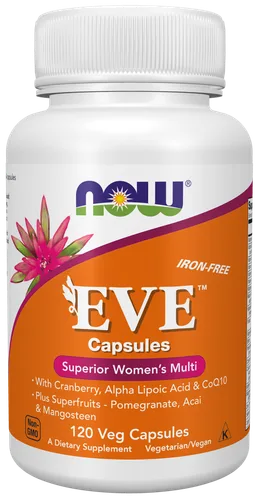
now foods Eve\u2122 Women's Multiple Vitamin Veg Capsules Review
This is a women's multivitamin and mineral supplement in vegetable capsule form. The serving size is 4 veg capsules, and each container holds 30 servings. The label prints these main amounts per serving: Vitamin A 3000 mcg, Vitamin C 300 mg, Vitamin D 25 mcg, Vitamin E 134 mg, Vitamin K 35 mcg, Vitamin K-2 45 mcg, Folate 1360 mcg DFE, Vitamin B-12 200 mcg, Calcium 250 mg, Magnesium 100 mg, Zinc 15 mg, Iodine 150 mcg and Selenium 200 mcg. It also lists thiamin, riboflavin, niacin, B-6, biotin, pantothenic acid, choline, copper, manganese, chromium, molybdenum and potassium. Plant and other ingredients include cranberry 100 mg, pomegranate extract 50 mg, organic acai 50 mg, mangosteen extract 50 mg, coenzyme Q10 30 mg, alpha lipoic acid 30 mg, inositol 25 mg, organic aloe vera 25 mg, lycopene 500 mcg and lutein 500 mcg. Other ingredients are hypromellose (cellulose capsule), microcrystalline cellulose, stearic acid (vegetable source) and silicon dioxide. The directions printed on the label say: Take 4 capsules daily with food.
We don’t sell supplements. We help you make decisions and get the best price.
Lowest prices
We may earn a commission from some store links. How we choose.
We found no store selling it right now.
Products with nearly the same formula (Matched on the main ingredients)
Study, Trial or Testing Result Summary
Members Only450 human studies · 196 improved
5 of these 450 human studies gave the ingredient by drip or injection, not by mouth.
At the dose on the label, vitamin C has the best support. In 29 trials with 11,306 people taking at least 200 mg a day, colds were not less common in the general public, but they were about 8% shorter in adults and 14% shorter in children [1]. A review of eight reviews found vitamin C does not prevent colds [2]. Zinc, at a full dose, did not stop people catching colds but may shorten them by about 2.4 days [3]. Selenium in healthy people did not clearly change most immune measures [4]. Vitamin E at 200 mg improved some immune responses in older adults [5]. Vitamin D, taken as two servings, gave a small drop in respiratory infections in pooled trials [6], but a large trial of 15,804 older adults found no benefit [7]. Cranberry lowered urinary tract infections by about 28% [8]. Lycopene, lutein, alpha lipoic acid, inositol, aloe and niacin are present far below the amounts studied, so their findings do not apply here [9][10][11]. Animal and cell studies are never counted.
See all 450 studies →Hide the studies
- Across 199,055 children and adults in many trials of nutrient supplements including vitamin B12, supplementation in healthy people had no or very limited effect on preventing viral respiratory infections; only zinc (children in Asia) and vitamin D (adults in North America) showed protection, not B12.Nutrient supplementation for prevention of viral respiratory tract infections in healthy subjects: A systematic review a…
- In six trials of 27,351 children up to seven years old, vitamin A (with vitamin E added in two trials) did not clearly change how many upper respiratory infections they had; the evidence was low certainty and this was mainly a vitamin A review.Oral vitamin A supplements to prevent acute upper respiratory tract infections in children up to seven years of age.
- In 14 trials of 25,758 mother and infant pairs, high-dose vitamin A given after birth raised breast milk vitamin A but did not reduce illness or death in mothers or infants compared with placebo or no treatment.Vitamin A supplementation for postpartum women.
- Across 25 trials with 11,321 people of all ages, vitamin D supplements lowered the odds of a sudden respiratory infection by about 12%, with the biggest benefit in very deficient people and those taking daily or weekly doses rather than large single doses.Vitamin D supplementation to prevent acute respiratory infections: individual participant data meta-analysis.
- Across 29 placebo-controlled trials with 11,306 people taking at least 0.2 g of vitamin C daily, colds were not less common in the general public but were about half as common in marathon runners, skiers and soldiers, and colds lasted 8% shorter in adults and 14% shorter in children.Vitamin C for preventing and treating the common cold.
- Across 50 trials with 10,495 people, cranberry lowered the risk of urinary tract infections by about 28% compared with placebo, with no significant difference in side effects.Nonantibiotic prophylaxis for urinary tract infections: a network meta-analysis of randomized controlled trials.
- In 50 trials with 8,857 people, cranberry products cut the risk of urinary tract infections by about 30%, helping women with recurrent infections, children and people prone to infection after procedures, but not the elderly in care, pregnant women or people with bladder emptying problems.Cranberries for preventing urinary tract infections.
- In 50 trials with 8,857 people, cranberry products cut the risk of urinary tract infections by about 30%, helping women with recurrent infections, children and people prone to infection after procedures, but not the elderly in care, pregnant women or people with bladder emptying problems.Cranberries for preventing urinary tract infections.
- Across 34 trials with 8526 children and adults, zinc made little or no difference to catching a cold but may have shortened colds by about 2.4 days when used as treatment, with more mild side effects.Zinc for prevention and treatment of the common cold.
- Across 56 trials of 5807 people with burns, iodine-based dressings made little difference to infection compared with a burn ointment, and povidone iodine may have healed burns slightly faster than chlorhexidine, but most evidence was low certainty.Antiseptics for burns.
- In six trials of 5031 surgery patients, povidone-iodine skin cleansing led to more surgical site infections than chlorhexidine (chlorhexidine odds ratio 0.68).Systematic review and meta-analysis of preoperative antisepsis with chlorhexidine versus povidone-iodine in clean-contam…
- In 24 trials of 5004 surgery patients, rinsing the surgical site with povidone-iodine cut surgical site infections to 8.0% from 13.4% with no antiseptic.Meta-analysis of intraoperative povidone-iodine application to prevent surgical-site infection.
- In 37 trials of 4,905 critically ill adults, vitamin E alone and combined with selenium, zinc and copper showed no clear reduction in deaths or infections compared with placebo, and the evidence was very low certainty.Antioxidant micronutrient supplements for adult critically ill patients: A bayesian multiple treatment comparisons meta-…
- Across 23 trials with 3,979 people prone to urinary tract infections, cranberry products reduced infection risk by about 30%, with juice showing a larger effect than capsules or tablets.Consumption of cranberry as adjuvant therapy for urinary tract infections in susceptible populations: A systematic revie…
- In 35 trials of 3494 critically ill patients, intravenous thiamine did not clearly change death rates or infection outcomes listed, shortened shock and lowered lactate and organ failure scores, but slightly lengthened intensive care stay.Effect of intravenous thiamine administration on critically ill patients: A systematic review and meta-analysis of rando…
- Across 23 studies with 3,335 children with a history of recurrent urinary tract infections, cranberry products lowered the odds of symptomatic infection compared with control, though they did not reduce kidney scarring.Prophylaxis Options in Children With a History of Recurrent Urinary Tract Infections: A Systematic Review.
- In 20 trials with 3,091 people, cranberry juice gave a 27% lower rate of urinary tract infections than placebo liquid and 54% lower than no treatment, with less a med use, based on moderate to low certainty evidence.Cranberry Juice, Cranberry Tablets, or Liquid Therapies for Urinary Tract Infection: A Systematic Review and Network Met…
- Across nine studies of 2,367 people, vitamin D deficiency was not overall linked to the immune response to flu vaccination, though protection rates for two strains were lower in deficient people.Does Vitamin D Deficiency Affect the Immunogenic Responses to Influenza Vaccination? A Systematic Review and Meta-Analys…
- In a pooled analysis of 35 trials in people with Hashimoto thyroiditis, selenium lowered thyroid antibodies, thyroid-stimulating hormone and an oxidative stress marker, with side effects similar to placebo, but showed no change in interleukin-2 or interleukin-10.Selenium Supplementation in Patients with Hashimoto Thyroiditis: A Systematic Review and Meta-Analysis of Randomized Cli…
- In four trials with 1,935 people infected with Helicobacter pylori, cranberry raised the odds of clearing the infection slightly, but the result was not statistically significant.The effect of cranberry supplementation on Helicobacter pylori eradication in H. pylori positive subjects: a systematic …
- In six trials of 1804 spinal surgery patients, povidone-iodine irrigation lowered surgical site infection to 0.77% from 6.0% with saline or no irrigation, without harming bone fusion.RCT-based meta-analysis of povidone-iodine irrigation in spinal surgery: clarifying efficacy and safety.
- In 7 trials with 1,498 otherwise healthy women with past urinary tract infections, cranberry reduced the risk of another infection by 26% compared with placebo or control.Cranberry Reduces the Risk of Urinary Tract Infection Recurrence in Otherwise Healthy Women: A Systematic Review and Met…
- In a pooled analysis of 16 trials with 1426 children (cranberry and probiotics together), cranberry cut repeat urinary tract infections by about half compared with placebo or no treatment and worked about as well as low-dose meds.Read the study on PubMed (34156540) →
- In a pooled analysis of four studies with 415 people with spinal cord injury, cranberry did not significantly reduce bacteria in the urine compared with control, and the studies had bias and gaps.Cranberry for Bacteriuria in Individuals with Spinal Cord Injury: A Systematic Review and Meta-Analysis.
- A review of eight systematic reviews covering 31 randomized trials concluded that taking vitamin C does not prevent people from catching a common cold.Does vitamin C prevent the common cold?
- In a pooled analysis of randomized trials in adults, vitamin C slightly lowered the risk of respiratory infections by 4% and shortened symptoms by 9%, with a stronger prevention effect in men and in middle-income countries.Effect of micronutrient supplements on influenza and other respiratory tract infections among adults: a systematic revie…
- In 10 placebo-controlled trials of healthy people taking at least 1 g of vitamin C daily, cold severity was 15% lower than with placebo, with a clear benefit on severe symptoms but not on mild ones.Vitamin C reduces the severity of common colds: a meta-analysis.
- Across 22 supplementation studies in people with multiple sclerosis, vitamin D3 did not clearly reduce relapses or disability overall, but high doses did lower the yearly relapse rate while low doses did not.Vitamin D status, supplementation, and multiple sclerosis: a systematic review and meta-analysis.
- In 30 studies of intensive care patients, vitamin E alone did not change deaths, ventilator time or side effects, but shortened intensive care stay by about 1.3 days after excluding highly varying studies; combining it with selenium showed no benefit.Efficacy and safety of selenium or vitamin E administration alone or in combination in ICU patients: A systematic review…
- In nine trials of older adults, micronutrient supplements improved immune function overall, and vitamin E had the largest effect on cellular immunity.Effects of micronutrient supplementation on immune function in older adults: a meta-analysis.
- A pooled analysis of 28 genetic-based studies found no causal link between blood levels of vitamin D or other micronutrients (including vitamin B6) and COVID-19 outcomes, though a few individual studies reported associations.Micronutrients, Vitamin D, and Inflammatory Biomarkers in COVID-19: A Systematic Review and Meta-analysis of Causal Infe…
- This meta-analysis was retracted and reports no usable results.RETRACTED: Preoperative chlorhexidine versus povidone-iodine antisepsis for preventing surgical site infection: A meta-a…
- Across 18 studies, cleaning with antiseptics such as povidone-iodine or chlorhexidine before urinary catheter use may modestly lower catheter-related urinary infections, but the overall effect on bacteriuria was not clearly significant.Effectiveness of meatal cleaning in the prevention of catheter-associated urinary tract infections and bacteriuria: an u…
- Pooling 6 trials of adults with colds, zinc lozenges did not significantly reduce the chance of having cold symptoms at 7 days.A meta-analysis of zinc salts lozenges and the common cold.
- In 13 placebo-controlled trials in sepsis patients, intravenous selenium did not reduce deaths, kidney failure or secondary infection, but shortened vasopressor use and ICU and hospital stays and lowered ventilator-associated pneumonia.A meta-analysis of randomized controlled trials: Efficacy of selenium treatment for sepsis.
- In nine trials in healthy people lasting 8 to 48 weeks, selenium did not substantially change antibodies, white blood cells or cytokines; the only benefit was higher natural killer cell activity, and results were inconsistent.Selenium and immune function: a systematic review and meta-analysis of experimental human studies.
- In seven trials of cardiac surgery patients, selenium lowered kidney injury, hospital stay and C-reactive protein, but did not change ICU days, deaths or hospital-acquired infections.Efficacy of selenium on patients undergoing cardiac surgery: a meta-analysis of randomized controlled trials.
- In a pooled analysis of clinical trials, cranberry products significantly reduced urinary tract infections, with the clearest benefit in people at higher risk such as those with recurrent infections.Can Cranberries Contribute to Reduce the Incidence of Urinary Tract Infections? A Systematic Review with Meta-Analysis a…
- Pooled randomized trials of polyphenol compounds, including cranberry, found higher Helicobacter pylori eradication rates, though cranberry was not reported separately.Effect of polyphenol compounds on Helicobacter pylori eradication: a systematic review with meta-analysis.
- In a pooled analysis of ten randomized trials, cranberry products giving at least 36 mg of proanthocyanidins daily lowered the risk of urinary tract infections by 18%, while lower amounts showed no significant benefit.Preventive effect of cranberries with high dose of proanthocyanidins on urinary tract infections: a meta-analysis and sy…
- In a pooled analysis of trials in adults with COVID-19, pomegranate juice added to standard care was linked to a higher neutrophil-to-lymphocyte ratio (a sign of more inflammation), though the certainty of this evidence was very low.Efficacy of supplementation with nutrients and dietary supplements on recovery and inflammatory response among patients …
- A review of 77 studies on nutrition and HPV-related inflammation listed lycopene among the nutrients studied but gave no lycopene-specific results; benefits were reported for vitamins E, D, A, folate and B12.The influence of nutrition on HPV-associated inflammation: a systematic review and meta-analysis.
- Five small, low-quality trials with 2,655 children and adults gave vitamin C at 125 mg to 2 g daily, and the evidence was too weak to tell whether it prevents or treats pneumonia.Vitamin C supplementation for prevention and treatment of pneumonia.
- In multiple sclerosis, about 14% of patients used selenium supplements, and three trials of selenium-containing supplements reported safety with improved inflammation and oxidative stress, but there is no evidence for selenium alone.Shining a Light on Selenium: a Meta-analysis of Supplementation in Multiple Sclerosis.
- In 12 trials of 1797 women with recurrent bladder infections, six cranberry trials gave mixed results, so no firm recommendation could be made for plant-based treatments.Original Article Phytotherapy in Adults With Recurrent Uncomplicated Cystitis.
- In four trials of 875 people with simple traumatic wounds, two showed povidone-iodine reduced wound infection compared with non-antiseptic solutions, but the evidence was very low quality.Antiseptic versus non-antiseptic solutions for preventing infection in acute traumatic wounds: a systematic review.
- In four trials of 463 people with Hashimoto's thyroiditis, 200 mcg selenium lowered thyroid antibodies in three studies but not in one, with evidence at unclear to high risk of bias.Selenium supplementation for Hashimoto's thyroiditis.
- A review of 39 randomized trials of eight supplements, including vitamin C, in healthy people under stress found some signs of benefit but too many gaps to draw firm conclusions about immune protection.Select Dietary Supplement Ingredients for Preserving and Protecting the Immune System in Healthy Individuals: A Systemat…
- A review of 13 studies in healthy adults found alternative vitamin C forms often raised white blood cell vitamin C and were better tolerated, with one study showing fewer colds, but more research is needed to confirm immune benefits.Enhanced Vitamin C Delivery: A Systematic Literature Review Assessing the Efficacy and Safety of Alternative Supplement …
- A review of 20 trials in healthy adults (8 on vitamin D) found micronutrients other than vitamin C, including vitamin D, may not prevent colds or reduce symptom severity.Zinc Supplementation Reduces Common Cold Duration among Healthy Adults: A Systematic Review of Randomized Controlled Tri…
- A review of 9 reviews found low vitamin D levels linked to higher risk of COVID-19 infection, but trials are still needed to confirm whether supplements help with severity or death.The role of vitamin D in prevention OF COVID-19 and its severity: an umbrella review.
- A review of the literature suggests vitamin D plays a role in innate immunity and that supplementation may help prevent or treat COVID-19, though this is a hypothesis.Vitamin D in SARS-CoV-2 infection.
- In a review of 14 diet trials in people with lupus, vitamin D was linked to better inflammation markers in most studies but not to better disease activity scores.Diet and Systemic Lupus Erythematosus (SLE): From Supplementation to Intervention.
- A review of 28 systematic reviews on diet and lupus looked at vitamin D among other nutrients but the abstract gives no clear result for vitamin D, and no specific dietary recommendations were established.The Interconnection Between Systemic Lupus Erythematosus and Diet: Unmet Needs, Available Evidence, and Guidance-A Patie…
- A guideline review of evidence made a conditional recommendation against vitamin D supplements for preventing eczema in children.Guidelines of care for the primary prevention of atopic dermatitis and awareness of comorbid conditions in pediatric ato…
- This review of vitamin E and genes in aging found contradictory results in older people, with some trials even suggesting harm to survival, possibly due to dose, form and genetic differences.Vitamin E-gene interactions in aging and inflammatory age-related diseases: implications for treatment. A systematic rev…
- A review of the research on nutrients and viral infections including coronavirus concluded that vitamin E, along with other nutrients, helps the immune system work properly, but few trials tested it directly and more trials are needed.Nutrients in prevention, treatment, and management of viral infections; special focus on Coronavirus.
- A review of 53 articles found that low levels of nutrients including vitamin E were linked to changes in immune measures, but only omega-3 fats, zinc and vitamin A had intervention studies confirming benefit.[Influence of nutrients on human immunity].
- In 50 studies of children with acute respiratory infections, results for vitamin E were mixed and no single supplement, including vitamin E, could be recommended for routine treatment.A systematic review and meta-analysis on nutritional and dietary interventions for the treatment of acute respiratory in…
- In one trial among 11 in a review of gastrointestinal surgery patients, wound dressings containing vitamin E and silicone reduced surgical site infection, pain, inflammation and hospital stay.Does micronutrient supplementation improve outcomes in adult gastrointestinal surgery patients? A systematic review.
- This review of vitamin K and probiotics in rheumatoid arthritis describes lower vitamin K levels in patients and some reports of oral vitamin K reducing disease activity, but it gives no pooled results or numbers.Tailoring gut microbiota with a combination of Vitamin K and probiotics as a possible adjuvant in the treatment of rheum…
- A review of 105 mostly preclinical studies on sepsis found thiamine restores energy enzyme activity and improves lactate clearance, but human data are limited to small trials and no large trial shows a survival benefit.Mitochondrial dysfunction in sepsis: nutritional strategies for restoring bioenergetic homeostasis.
- A review of the literature says folic acid is important for immune function and may matter in COVID-19, but it reports no pooled numbers or trial results on immune outcomes.Folic acid - importance for human health and its role in COVID-19 therapy.
- In a systematic review of trials in patients with pernicious anemia, vitamin B12 (methylcobalamin or cyanocobalamin) raised levels of several immune cells toward normal and improved natural killer cell activity, though the number of people and dose were not stated in the abstract.The Immunomodulatory Effect of Vitamin B12 in Pernicious Anemia: A Systematic Review.
- A review of 49 articles on nutrition found that choline, among many other nutrients, can lower blood markers of inflammation and oxidative stress, but choline was not studied on its own for immune support.[Effect of nutrition on human inflammatory and oxidative stress markers].
- This review of human trials in healthy adults found that inulin-type fibers helped gut bacteria and calcium absorption, but it did not test calcium supplements for immune support.The Prebiotic Potential of Inulin-Type Fructans: A Systematic Review.
- In a review of 27 randomised trials, iodine on wounds worked as well as other antiseptics, neither slowing nor speeding healing, and caused no more side effects.Benefit and harm of iodine in wound care: a systematic review.
- A review of 20 studies on breast-feeding mothers linked iodine and other nutrient intake to better infant brain development and fewer allergic conditions, but it did not test iodine for immune support directly.Maternal Lifestyle Factors Affecting Breast Milk Composition and Infant Health: A Systematic Review.
- This review of common cold treatments covered zinc gel and lozenges among other options, but the abstract gives no results for zinc.Common cold.
- This review of common cold treatments covered zinc gel and lozenges among other options, but the abstract gives no results for zinc.Common cold.
- This review of controlled trials on nutrition and viral infections found selenium and zinc showed favourable immune-modulating effects in viral respiratory infections.Enhancing immunity in viral infections, with special emphasis on COVID-19: A review.
- Across nine randomised trials, selenium affected T and natural killer cells depending on dose and form, but had little effect on antibody-based immunity.Selenium status and immunity.
- A review of five systematic reviews found that four reported selenium at 200 micrograms a day helped delay the drop in CD4 immune cell counts in people with HIV, with study lengths ranging from 2 weeks to 18 months.Selenium and zinc supplementation in HIV-infected patients.
- This review of 49 studies on atopic dermatitis found the evidence too limited to say what role copper plays, with benefit shown only for vitamin D and links to selenium and zinc.Micronutrients in Atopic Dermatitis: A Systematic Review.
- This review of 29 articles on leishmaniasis found higher copper levels in patients, and only zinc supplementation was shown to help wound healing, so copper supplementation was not shown to help.Leishmaniasis and Trace Element Alterations: a Systematic Review.
- A review of 14 laboratory, animal and human studies found chromium lowered inflammation markers in 12 of them, but the three human studies gave conflicting results, so more trials are needed.Potential roles of chromium on inflammatory biomarkers in diabetes: A Systematic.
- Earlier meta-analyses of cranberry for preventing urinary tract infections reached conflicting conclusions, largely because of which study populations were included; one pooled estimate, limited to women with recurrent infections, showed about 47% fewer infections.Cranberries and Urinary Tract Infections: How Can the Same Evidence Lead to Conflicting Advice?
- A review of non-a med ways to prevent urinary tract infections in pregnancy found cranberry juice was reported to be safe, but the evidence was of varying quality and only hygiene measures were supported for routine use.Read the study on PubMed (29653573) →
- In a review of treatments for reflux of urine from the bladder into the kidneys in children, cranberry was tested in only a single study compared with no treatment, and the abstract reports no cranberry result.Interventions for primary vesicoureteric reflux.
- No randomized trials were found testing cranberry for treating existing urinary tract infections, so there is no good-quality evidence that it helps.Cranberries for treating urinary tract infections.
- This review mainly evaluated methenamine, not cranberry; cranberry appeared only as a comparator, so it gives no direct evidence that cranberry supports immune function.Use of Methenamine for Urinary Tract Infection Prophylaxis: Systematic Review of Recent Evidence.
- A review of 88 clinical trials listed pomegranate among the foods that helped regulate inflammation, though human evidence overall was described as inconclusive.Functional foods modulating inflammation and metabolism in chronic diseases: a systematic review.
- A review of trials in people with inflammatory arthritis reported that pomegranate extract, among other supplements, showed anti-inflammatory and immune-modulating effects.Nutrition and diet in rheumatoid arthritis, axial spondyloarthritis, and psoriatic arthritis: a systematic review.
- A review of nutritional supplements including coenzyme Q10 in rheumatoid arthritis discussed their potential to modulate gut bacteria and inflammation, but the abstract gives no numbers for coenzyme Q10 specifically.Modulating inflammation and oxidative stress in rheumatoid arthritis: a systematic review of nutraceutical interventions…
- A review of 20 cell and mouse studies and 12 studies in people with multiple sclerosis found lipoic acid reduced immune cell activity and inflammation in the lab and animals, and people had stable disability scores, better walking and few side effects.Role of lipoic acid in multiple sclerosis.
- A review of clinical, preclinical and traditional-use studies of medicinal plants including aloe reported better diabetic wound healing through immune and inflammation regulation, but it did not separate out aloe or give numbers.Clinical Evidence of Traditional Medicines in Modulating the Immune Response and Diabetic Wound Healing.
- A review of 48 trials and 10 observational studies of supplements for allergic rhinitis found promising evidence for tomato extract among others, but gave no lycopene-specific results and noted the evidence was limited in quality.Health supplements for allergic rhinitis: A mixed-methods systematic review.
- A review of 10 trials of enriched chocolate (including lycopene) found some improved immune function, inflammation and oxidative markers while other trials showed minimal effect.A systematic review of randomized controlled trials on the health effects of chocolate enriched/fortified/supplemented w…
- In 29,133 male smokers aged 50 to 69 given 50 mg of vitamin E daily for about 6 years, vitamin E did not change overall pneumonia risk, though those who started smoking at 21 or older had a 35% lower risk.Vitamin E and beta-carotene supplementation and hospital-treated pneumonia incidence in male smokers.
- In 15,804 older adults, 2,000 IU of vitamin D3 daily did not significantly lower the risk of upper respiratory infection at 1 year compared with placebo.Effect of Daily Vitamin D Supplementation on Risk of Upper Respiratory Infection in Older Adults: A Randomized Controlle…
- In 8,851 schoolchildren in Mongolia, 14,000 IU of vitamin D3 weekly for 3 years did not lower tuberculosis infection (3.6% vs 3.3% with placebo), tuberculosis disease, or respiratory infection.Vitamin D Supplements for Prevention of Tuberculosis Infection and Disease.
- In 7,469 male smokers who started smoking at 21 or older, 50 mg of vitamin E daily for 5 to 8 years reduced pneumonia by 69% in lighter smokers who exercised, and by 14% (not significant) in heavier smokers or non-exercisers.Vitamin E administration may decrease the incidence of pneumonia in elderly males.
- In 4,048 healthy adults, a flu vaccine containing the vitamin E based adjuvant AS03 produced higher antibody levels than the same vaccine without it, and protection persisted to month 6 in adults aged 18 to 64.Long-term immunogenicity of an AS03-adjuvanted influenza A(H1N1)pdm09 vaccine in young and elderly adults: an observer-b…
- In 2157 adults aged 70 or older, 2000 IU of vitamin D3 daily for 3 years did not significantly reduce infection rates or improve blood pressure, physical performance, cognition, or fractures compared with placebo.Effect of Vitamin D Supplementation, Omega-3 Fatty Acid Supplementation, or a Strength-Training Exercise Program on Clin…
- In 2004 newborns in a region with high rates of trachoma, iodine eye drops worked about as well as chloramphenicol for the first 2 days, were 6% less effective from day 3 to 15, and nearly doubled the risk of chlamydia eye infection.Randomised equivalency trial comparing 2.5% povidone-iodine eye drops and ophthalmic chloramphenicol for preventing neon…
- In 1,444 army recruits taking 6,000 mg of vitamin C daily for 30 days, the risk of getting a common cold was 0.80 times that of those taking placebo.Vitamin C supplementation reduces the odds of developing a common cold in Republic of Korea Army recruits: randomised co…
- In 1000 Indian children aged 6-30 months given vitamin B12 and/or folic acid for 6 months, neither reduced diarrhea or lower respiratory infections, and folic acid raised the risk of persistent diarrhea.Folic acid and vitamin B-12 supplementation and common infections in 6-30-mo-old children in India: a randomized placebo…
- In 977 Kenyan schoolchildren over about 11 months, a daily multivitamin and mineral tablet containing 8 mg of vitamin E lowered the intensity of schistosome worm reinfection compared with placebo, but had no significant effect on hookworm, roundworm or whipworm reinfection.Effects of multimicronutrient supplementation on helminth reinfection: a randomized, controlled trial in Kenyan schoolch…
- In 881 pregnant women, 4,400 IU daily of vitamin D started at 10-18 weeks of pregnancy did not lower preeclampsia compared with 400 IU (8.08% vs 8.33%), though women with higher vitamin D blood levels had lower risk.Early pregnancy vitamin D status and risk of preeclampsia.
- In 875 pregnant Gambian women, all given folic acid and iron, maternal supplement type did not change infant thymus size, but infants given extra micronutrients in the second half of infancy had an 8% larger thymus at 1 year.Thymic size is increased by infancy, but not pregnancy, nutritional supplementation in rural Gambian children: a randomi…
- In 868 Navajo schoolchildren given vitamin C or placebo, there was no difference in how many got ill (133 vs 129), number of illness episodes, or illness length, though blood vitamin C levels were higher.Vitamin C and acute illness in Navajo schoolchildren.
- In 826 Indonesian preschool children given 10 mg zinc daily for 4 months, days with upper respiratory infection fell 12 percent (not significant), and 20 percent after vitamin A was given.Zinc combined with vitamin A reduces upper respiratory tract infection morbidity in a randomised trial in preschool chil…
- In 796 children aged 0-6 with food allergies, a probiotic, zinc and B vitamin product plus hydrolyzed formula for 6 months lowered allergy skin-test size, total IgE and food allergy prevalence compared with formula alone, with benefits lasting 6 months after.Products of compound probiotics combined with zinc and vitamin B ameliorate the risk of food allergy.
- In 740 pregnant women in rural Nepal, a multiple micronutrient supplement reduced vitamin deficiencies including riboflavin but had no effect on subclinical infection.Antenatal supplementation with micronutrients and biochemical indicators of status and subclinical infection in rural Ne…
- In a randomized trial of 688 adult women, 1 gram of vitamin C daily produced a small reduction in chest colds but no effect on simple colds.A randomized controlled trial of vitamin C in the prevention and amelioration of the common cold.
- In 674 marine recruits given 2 grams of vitamin C or placebo daily for eight weeks, colds were no less common or shorter, though the vitamin C group rated their colds as less severe.Vitamin C prophylaxis in marine recruits.
- In 617 nursing home residents aged 65 or older, taking 200 IU of vitamin E daily for one year did not significantly reduce overall respiratory infections, but fewer people on vitamin E caught at least one upper respiratory infection or common cold than on placebo.Vitamin E and respiratory tract infections in elderly nursing home residents: a randomized controlled trial.
- In 600 Nepali infants aged 6-11 months given 2 mcg vitamin B12 daily for 1 year, there was no difference from placebo in common infections or clinic visits.The Effect of Daily Vitamin B-12 Supplementation on the Incidence of Common Childhood Infections in Nepal: Secondary Out…
- In 597 Chinese infants revaccinated against tuberculosis, 3 months of daily vitamin A plus 500 IU vitamin D raised positive skin test response to 96.1% versus 89.7% in the control group.Enhancement of vitamin A combined vitamin D supplementation on immune response to Bacille Calmette-Guérin vaccine revacc…
- In 595 critically ill surgical patients, early antioxidant supplementation with vitamin C and vitamin E did not significantly reduce lung complications compared with standard care, but it reduced multiple organ failure and shortened time on the ventilator and in intensive care.Randomized, prospective trial of antioxidant supplementation in critically ill surgical patients.
- In 522 adults with Helicobacter pylori infection, drinking high-proanthocyanidin cranberry juice twice daily for 8 weeks lowered the infection rate by 20 percent compared with placebo and other doses, while cranberry powder capsules had no significant effect.Suppression of Helicobacter pylori infection by daily cranberry intake: A double-blind, randomized, placebo-controlled t…
- In 502 critically ill adults given 500 micrograms of selenium a day by intravenous feeding for up to 7 days, new infections were not significantly reduced overall, but were reduced in those who received it for at least 5 days.Randomised trial of glutamine, selenium, or both, to supplement parenteral nutrition for critically ill patients.
- In 423 Tanzanian adults with tuberculosis given a daily multivitamin with selenium, there was no overall effect on immune cell proliferation responses compared with placebo.Micronutrient supplementation and T cell-mediated immune responses in patients with tuberculosis in Tanzania.
- In 420 healthy adults, bird flu vaccines containing a vitamin E based adjuvant (11.86 mg of alpha-tocopherol in the AS03A version) met immune response targets, with lower vaccine doses needed when adjuvanted, and no vaccine-related serious side effects.Evaluation of a primary course of H9N2 vaccine with or without AS03 adjuvant in adults: A phase I/II randomized trial.
- In 408 adults with mild to moderate asthma, vitamin D for 28 weeks did not reduce cold severity or frequency compared with placebo, and African American participants had more colds on vitamin D.Vitamin D Supplementation and the Risk of Colds in Patients with Asthma.
- In 374 people with stomach inflammation from H. pylori, calcium carbonate alone for 16 weeks did not reduce inflammation or tissue damage compared with placebo, while tetracycline and triple therapy did.Anti-inflammatory and tissue-protectant drug effects: results from a randomized placebo-controlled trial of gastritis pa…
- Women with a recent urinary tract infection who drank one 240 mL cranberry beverage daily for 24 weeks had about 39% fewer clinical infection episodes than those given placebo.Consumption of a cranberry juice beverage lowered the number of clinical urinary tract infection episodes in women with …
- In 341 children aged about 4 in day care, 3 months of cranberry juice compared with placebo did not change throat bacteria or gut bacteria and did not reduce common infections or their symptoms, though the juice was well accepted.Cranberry juice and bacterial colonization in children--a placebo-controlled randomized trial.
- In a 5-year double-blind trial of older Japanese adults, 500 mg of vitamin C daily cut the number of people with three or more colds, compared with 50 mg daily, but did not shorten or lessen the colds.Effect of vitamin C on common cold: randomized controlled trial.
- In 301 mechanically ventilated intensive care patients given up to 28 days of tube feeding enriched with selenium and other immune nutrients, new infections were no less common than with standard tube feeding, and 6-month mortality was higher in the medical subgroup.High-protein enteral nutrition enriched with immune-modulating nutrients vs standard high-protein enteral nutrition and …
- In 300 women having cancer surgery, rinsing the wound with povidone iodine did not change the rate of wound infection over 30 days compared with saline rinsing.Subcutaneous rifampicin versus povidone-iodine for the prevention of incisional surgical site infections following gynec…
- In 287 women with cervical HPV infection, a daily vaginal cream containing aloe vera and other herbs for 30 days cleared the infection in 87.7% of women versus 73.3% with placebo, though it caused more irritation and itching.Clearance of cervical human papillomavirus infection by topical application of curcumin and curcumin containing polyherb…
- In 275 people with early COVID-19, a 10-day combination therapy including vitamin C was safe and well tolerated, but the study did not test whether it improved immune health.Read the study on PubMed (41693032) →
- In women having pelvic surgery, 36 mg cranberry capsules daily for 10 days did not reduce postoperative bacteriuria compared with placebo, at 27% versus 25% within 15 days.Cranberry capsules to prevent nosocomial urinary tract bacteriuria after pelvic surgery: a randomised controlled trial.
- In 254 older adults with COVID-19, a single high dose of 400,000 IU vitamin D3 lowered deaths at 14 days compared with 50,000 IU (6% vs 11%), but the benefit was gone by 28 days.High-dose versus standard-dose vitamin D supplementation in older adults with COVID-19 (COVIT-TRIAL): A multicenter, ope…
- In 247 high school students, 2000 IU of vitamin D3 daily for 2 months did not lower overall influenza A (13.5% vs 12.1% on placebo), though a post hoc look showed fewer cases in the first month only.Effects of vitamin D supplements on influenza A illness during the 2009 H1N1 pandemic: a randomized controlled trial.
- In 245 breastfeeding mothers given 600 IU vitamin D2 plus 1800 IU vitamin A daily for 2 months, infant fever, respiratory infection, diarrhoea and eczema were not lower than with placebo; the effect of vitamin D alone cannot be separated.Impact of Maternal Daily Oral Low-Dose Vitamin A Supplementation on the Mother-Infant Pair: A Randomised Placebo-Control…
- In 243 people having gallbladder or bile duct surgery, spraying povidone-iodine into the wound led to more wound infections (9%) than a single dose of intravenous ceftriaxone (1%).Ceftriaxone versus povidone iodine in preventing wound infections following biliary surgery.
- In a post hoc analysis of 240 critically ill children, zinc, selenium, glutamine and metoclopramide protected those who were immunocompromised from nosocomial infection and sepsis, while whey protein was better for immune-competent children without lymphopenia.Interaction Between 2 Nutraceutical Treatments and Host Immune Status in the Pediatric Critical Illness Stress-Induced I…
- In a placebo-controlled trial of pregnant women with mild to moderate iodine deficiency, 60 mcg of selenium daily did not lower thyroid antibodies compared with placebo, though it shifted some thyroid hormone levels in women who had thyroid antibodies.Effect of low-dose selenium on thyroid autoimmunity and thyroid function in UK pregnant women with mild-to-moderate iodi…
- In 228 health care workers, vitamin D2 raised blood vitamin D levels but did not change COVID-19 infection rates (50.5% vs 52.4%), symptoms, or inflammation markers compared with no treatment.Randomized trial of influence of vitamin D on the prevention and improvement of symptomatic COVID-19.
- In 227 women aged 60 and older having hip fracture surgery with a urinary catheter, cranberry capsules taken from admission to 5 days after surgery did not significantly reduce bacteria in urine compared with placebo.Cranberry juice concentrate does not significantly decrease the incidence of acquired bacteriuria in female hip fracture…
- In 226 preschool children, a seasoning powder with thiamine and other micronutrients for 6 months lowered respiratory and diarrhea illness and shortened respiratory illness compared with vitamin A alone or with iron.Effect of vitamin A, vitamin A plus iron and multiple micronutrient-fortified seasoning powder on infectious morbidity o…
- Among 226 people with hepatitis B surface antigen, taking 200 micrograms of selenium daily as selenized yeast for 4 years led to no liver cancer cases in the selenium group versus 7 of 113 in the placebo group.Protective role of selenium against hepatitis B virus and primary liver cancer in Qidong.
- In 209 people having eye surgery, a 5% povidone-iodine rinse before surgery eliminated surface bacteria in all groups, but the study was not designed to compare it against a control, and levofloxacin duration made no difference to infection.Optimal Duration for the Use of 0.5% LevofloxacinEye Drops Before Vitreoretinal Surgery.
- In 202 dialysis patients given a multinutrient drink including thiamine for 12 weeks, fatigue did not change but herpesvirus 7 levels in saliva fell and heart rate variability improved versus placebo.Effects of nutritional supplementation on fatigue, and autonomic and immune dysfunction in patients with end-stage renal…
- In 199 heart bypass surgery patients, intensive blood sugar control with a glucose-insulin-potassium solution during surgery did not clearly change infection rates (17% vs 13%) and raised the risk of low blood sugar (23% vs 3%).Safety and efficacy of intensive intraoperative glycaemic control in cardiopulmonary bypass surgery: a randomised trial.
- In children with recurrent urinary tract infections, cranberry was found to be no worse than trimethoprim and was well tolerated, with infection rates of 46% in under-1-year-olds and 26% in those over 1 year.[Efficacy and safety profile of cranberry in infants and children with recurrent urinary tract infection].
- In 311 National Institutes of Health employees taking 3 g of ascorbic acid daily for nine months (with extra doses at cold onset), the vitamin had at best a minor effect on the duration and severity of colds, and the results could be explained by a break in blinding.Ascorbic acid for the common cold. A prophylactic and therapeutic trial.
- In a double-blind study of 95 identical twin pairs over 100 days, vitamin C shortened cold episodes by about 19% but had no other significant effect compared with placebo.Vitamin C and the common cold: using identical twins as controls.
- In a placebo-controlled trial of 186 HIV-positive adults, 200 mcg of selenium daily over about 2 years was linked to fewer hospital admissions and lower hospital costs than placebo.Impact of a selenium chemoprevention clinical trial on hospital admissions of HIV-infected participants.
- In 185 children aged 6 to 35 months, vaccines with different amounts of a vitamin E-containing adjuvant all produced strong immune responses; the study did not test vitamin E on its own against a placebo, and the vitamin E amount was not stated.Immunogenicity and Safety of AS03-adjuvanted H5N1 Influenza Vaccine in Children 6-35 Months of Age: Results From a Phase…
- In 185 women aged 65 and older living in nursing homes, 72 mg of cranberry proanthocyanidin daily for one year did not significantly reduce bacteria plus white blood cells in urine compared with placebo.Effect of Cranberry Capsules on Bacteriuria Plus Pyuria Among Older Women in Nursing Homes: A Randomized Clinical Trial.
- After pelvic surgery, patients taking methenamine with cranberry had significantly fewer urinary tract infections than those taking cranberry with placebo over 1 to 6 weeks.Methenamine Hippurate With Cranberry Capsules Versus Cranberry Alone for Urinary Tract Infection Prevention in a Short-T…
- In 182 outpatients with COVID-19, a diet with pomegranate juice and sumac alongside standard treatment reduced symptoms such as fever, cough, weakness and shortness of breath more than standard treatment alone.The Effect of Pomegranate Juice and Sumac Consumption in the Treatment of Outpatients with COVID-19.
- In 164 older nursing home residents, an 8-week multivitamin and mineral supplement raised blood folate but did not improve antibody response to flu vaccine compared with placebo.Can a short period of micronutrient supplementation in older institutionalized people improve response to influenza vacc…
- In 160 women having gynecological surgery with a urinary catheter, two cranberry juice capsules twice daily for 6 weeks cut urinary tract infections from 38 percent with placebo to 19 percent.Cranberry juice capsules and urinary tract infection after surgery: results of a randomized trial.
- Women with repeated urinary infections who took 240 mg of a cranberry proanthocyanidin extract daily for a year had about half as many infections as those on placebo, with no adverse events reported.Randomized, placebo-controlled, double-blinded study of prophylactic cranberries use in women with recurrent uncomplicat…
- In 157 people with recurrent viral skin infections (warts, herpes), a nutrient blend containing vitamin E plus coenzyme Q10, selenium and methionine, added to standard treatment, healed lesions faster and reduced relapses compared with control groups.Coenzyme Q(10), vitamin E, selenium, and methionine in the treatment of chronic recurrent viral mucocutaneous infections…
- In 152 girls aged 5 to 12 with a first kidney infection, adding vitamin E to meds for 14 days lowered fever, urinary frequency, urgency, dribbling and incontinence compared with meds alone, though urine cultures and scan results did not differ.Vitamin E as adjuvant treatment for urinary tract infection in girls with acute pyelonephritis.
- In 151 adults with long COVID, taking 240 mcg vitamin K2 (MK-7) with 2000 IU vitamin D3 daily for 24 weeks reduced long COVID symptom scores and inflammation and gut leakage markers compared with standard care, which saw symptoms worsen.Vitamins K2 and D3 Improve Long COVID, Fungal Translocation, and Inflammation: Randomized Controlled Trial.
- In perimenopausal women with recurrent cystitis, a cranberry, propolis and D-mannose sachet taken 10 days a month for 3 months led to complete remission of urinary symptoms in 92 women, compared with an untreated control group.[Evaluation of the effects of a natural dietary supplement with cranberry, Noxamicina® and D-mannose in recurrent urinar…
- Women with repeated urinary infections who took 500 mg of whole cranberry powder daily for six months had about half as many culture-confirmed infections as those on placebo.Whole cranberry fruit powder supplement reduces the incidence of culture-confirmed urinary tract infections in females w…
- In 146 people with HIV, 200 micrograms of selenium daily for 6 months did not significantly raise CD4 immune cell counts compared with placebo.The effect of selenium and zinc on CD4(+) count and opportunistic infections in HIV/AIDS patients: a randomized double b…
- In 145 women with recurrent bladder infections, a high dose of cranberry proanthocyanidin extract for 24 weeks did not significantly reduce infections compared with a low dose, though a post-hoc analysis suggested benefit in women with fewer than 5 infections per year.High dose versus low dose standardized cranberry proanthocyanidin extract for the prevention of recurrent urinary tract …
- In 130 low birthweight infants given folic acid or placebo from 2 weeks to 6 months, there was no difference in infection or blood measures (only 62 completed follow-up).Folic acid in low birthweight infants.
- In 127 Mexican children aged 5 to 15 months, vitamin A lowered norovirus GII infections and norovirus-linked diarrhea compared with placebo, but lengthened how long the virus was shed.Vitamin A supplementation has divergent effects on norovirus infections and clinical symptoms among Mexican children.
- In the first 127 people with HIV, the report covers only baseline deficiencies (20% had low folate) and adherence, with no results yet on immune outcomes.Micronutrient deficiency and treatment adherence in a randomized controlled trial of micronutrient supplementation in AR…
- In 120 stroke patients with swallowing difficulty, vitamin C stimulation added to routine swallowing training improved swallowing tests, nutrition markers and antibody levels compared with routine training alone.Effects of vitamin C stimulation on rehabilitation of dysphagia after stroke: a randomized trial.
- In 120 children with acute Kawasaki disease, adding vitamin D to standard treatment brought fever down faster (27 vs 50 hours) and lowered inflammatory markers compared with standard treatment alone.Read the study on PubMed (40996174) →
- In 120 heart attack patients randomized to coenzyme Q10 or no supplement, heart function recovered significantly better at 1 and 3 months, and mouse experiments showed less inflammatory macrophage activity.Coenzyme Q10 mitigates macrophage mediated inflammation in heart following myocardial infarction via the NLRP3/IL1β path…
- In 117 children with sickle cell disease, a year of folic acid did not change the proportion with infections compared with placebo, though fewer had repeated dactylitis.A trial of folate supplementation in children with homozygous sickle cell disease.
- In 117 healthy adults aged 50 to 64 with low selenium, supplementation for 12 weeks boosted some flu-related immune cell responses and suppressed others, with no change in mucosal flu antibodies.Selenium supplementation has beneficial and detrimental effects on immunity to influenza vaccine in older adults.
- In 113 people having abdominal surgery, povidone-iodine instilled into the wound did not lower wound infections (39.5%) compared with no treatment (42.1%), while meds lowered them to 8.1%.Read the study on PubMed (72953) →
- In 113 children with urinary tract infections, cranberry-lingonberry juice for 6 months changed the bacteria in urine and gut compared with placebo juice, but the study did not measure immune function directly and the E. coli difference was not significant.Cranberry-lingonberry juice affects the gut and urinary microbiome in children - a randomized controlled trial.
- In 112 women with repeated implantation failure, vitamin D alone gave a 17.8% pregnancy rate versus 10.7% for control, and only the combination with vaginal probiotics (46.4%) significantly changed immune markers.The effect of vitamin D supplementation and vaginal probiotics on fertility in women with recurrent implantation failure…
- In 110 adults taking 6 mg lutein plus zeaxanthin and elderberry daily for 20 days, dry eye scores improved, but the 15.9% improvement in immune status scores was not significantly different from placebo.Effect of Dietary Supplementation with Lutein, Zeaxanthin, and Elderberries on Dry Eye Disease (DED) and Immunity: A Ran…
- In 104 patients with Helicobacter pylori, adding 200 mg vitamin E and vitamin C to triple a med therapy lowered eradication of metronidazole-susceptible infections to 53% from 80% without the vitamins, and did not reduce stomach inflammation.Vitamin C and E supplements to lansoprazole-amoxicillin-metronidazole triple therapy may reduce the eradication rate of …
- In 104 hip and knee replacement patients, adding a very dilute povidone-iodine solution to the sterile water basin stopped contamination in the iodine group (0 of samples positive) compared with 47.9% contaminated in the plain water group.Dilute Povidone-Iodine Solution Prevents Intraoperative Contamination of Sterile Water Basins During Total Joint Arthrop…
- In 103 healthy volunteers, a povidone-iodine alcohol skin preparation reduced skin bacteria by more than 2 to 3 log levels and kept this effect for up to 96 hours, while a chlorhexidine alcohol product lasted 7 days; both were well tolerated.Antimicrobial persistence of two alcoholic preoperative skin preparation solutions.
- In people with autoimmune thyroiditis, 200 mcg of selenite daily for three months lowered thyroid antibody levels within the group, but the change was not significantly different from placebo or from vitamin C.Effects of selenium and vitamin C on the serum level of antithyroid peroxidase antibody in patients with autoimmune thyr…
- In 101 patients having laparoscopic colorectal cancer surgery, applying vitamin E ointment under the incision lowered wound infections to 4% from 17.6% in the untreated group, with less pain, shorter hospital stays, and lower C-reactive protein and white blood cell counts.Effect of Subcutaneous Sterile Vitamin E Ointment on Incisional Surgical Site Infection after Elective Laparoscopic Colo…
- In 101 dialysis patients, drinking 100 ml of pomegranate juice three times a week for one year lowered oxidative stress and inflammation markers and reduced hospitalizations due to infections compared with placebo.One year of pomegranate juice intake decreases oxidative stress, inflammation, and incidence of infections in hemodialys…
- In 100 healthy older Dutch adults, 200 mg of vitamin E daily for 15 months did not change blood levels of the immune markers DHEA-S or neopterin compared with placebo, and did not reduce respiratory infection days.The effect of vitamin E supplementation on serum DHEA and neopterin levels in elderly subjects.
- In 100 adults with type 2 diabetes, 90 days of B vitamins and antioxidants raised blood folate but did not significantly reduce infections compared with placebo.Effect of antioxidants and B-group vitamins on risk of infections in patients with type 2 diabetes mellitus.
- In 100 patients after gastrointestinal cancer surgery, an immune-supporting tube-feeding formula gave fewer complications, more lymphocytes and lower inflammation markers than standard feeding, but vitamin B12's own effect is unclear.Immunomodulatory enteral nutrition in post-surgical gastrointestinal cancer: Clinical, biochemical and nutritional impac…
- In 100 gastrointestinal cancer surgery patients, a tube feed rich in arginine, vitamin B12 and other nutrients led to higher immune complement proteins, fewer complications and better albumin to globulin ratios than standard feed, but B12's own effect cannot be separated.Plasma proteomic profiles reveal immune modulation by immunonutrition in GI cancer.
- In 100 people with chronic hives, both groups took calcium gluconate and other drugs for 4 weeks, and adding proteoglycan gave better results and raised interferon gamma, so the benefit was not from calcium.Effects of combination of mizolastine and proteoglycan on chronic urticaria: a randomized controlled trial.
- In a placebo-controlled trial of 100 people with mild to moderate ulcerative colitis, 200 mcg of selenomethionine daily for 10 weeks raised a gene called SIRT1 in blood cells compared with placebo, but a second gene (PGC-1 alpha) did not change significantly.Effect of Selenium Supplementation on Expression of SIRT1 and PGC-1α Genes in Ulcerative Colitis Patients: a Double Blin…
- In 100 healthy adults taking processed aloe vera gel for 8 weeks with a flu vaccine, vaccine protection rates did not differ from placebo, but antibody rise against one flu strain was higher and fewer upper respiratory infections occurred.Effect of processed aloe vera gel on immunogenicity in inactivated quadrivalent influenza vaccine and upper respiratory …
- In 98 adults with mild to moderate coronavirus illness, 1000 mg of vitamin C daily for 14 days had no effect on symptom progression or quality of life compared with placebo.A Pilot of a Randomized Control Trial of Melatonin and Vitamin C for Mild-to-Moderate COVID-19.
- In 97 healthy older adults taking a ginkgo plus choline formula for 6 months, one immune-related marker (epidermal growth factor) dropped and a few memory test scores improved, but the effects were isolated and modest.A double-blind, randomized clinical trial of dietary supplementation on cognitive and immune functioning in healthy olde…
- In 96 children with epidural catheters, skin preparation with povidone-iodine led to more catheter colonization than chlorhexidine (5 of 44 catheters vs 1 of 52).Chlorhexidine versus povidone iodine in preventing colonization of continuous epidural catheters in children: a randomiz…
- In 93 healthy adults given single doses, 500 mg of calcium ascorbate increased some immune measures such as neutrophil function and natural killer cells compared with ascorbic acid, but 250 mg showed no differences.Comparative Effectiveness of Ascorbic Acid vs. Calcium Ascorbate Ingestion on Pharmacokinetic Profiles and Immune Biomar…
- In 91 adults with cystic fibrosis given a large vitamin D3 dose during a lung flare-up then every other week for a year, there was no difference from placebo in time to next flare-up or death, lung function, or an infection-fighting protein.Vitamin D for the Immune System in Cystic Fibrosis (DISC): a double-blind, multicenter, randomized, placebo-controlled c…
- In 91 health care workers given 5000 or 2000 IU of vitamin D3 daily for 3 months, vitamin D intake was not linked to lower COVID-19 illness, though the higher dose group had only asymptomatic cases.Vitamin D Intake May Reduce SARS-CoV-2 Infection Morbidity in Health Care Workers.
- In 91 power plant workers exposed to magnetic fields, 400 IU of vitamin E daily for 3 months lowered the inflammatory marker IL-6 compared with the control group, though it also raised good cholesterol.The Effects of Antioxidant Vitamins on Proinflammatory Cytokines and Some Biochemical Parameters of Power Plant Workers:…
- In 90 outpatients with COVID-19, a daily combination of vitamin K2 (240 mcg) with vitamin C, vitamin D3 and zinc for 21 days did not improve overall health or symptoms compared with placebo, though the trial stopped early.Dietary supplements to reduce symptom severity and duration in people with SARS-CoV-2: a double-blind randomised control…
- In premenopausal women with recurrent urinary infections, a probiotic and cranberry product taken twice daily for 26 weeks led to fewer recurrent infections than placebo, at 9.1% versus 33.3%.Probiotic and cranberry supplementation for preventing recurrent uncomplicated urinary tract infections in premenopausal…
- In 88 healthy adults aged 65 and older, taking 200 mg of vitamin E daily for about 4 months improved some measures of T-cell immunity, including skin test reactions and antibody responses to hepatitis B and tetanus vaccines, compared with placebo. Other doses showed smaller effects.Vitamin E supplementation and in vivo immune response in healthy elderly subjects. A randomized controlled trial.
- In 88 people with mild-to-moderate ulcerative colitis, 200 mg of coenzyme Q10 daily for 8 weeks lowered IL-17 and NF-kB activity and raised IL-10 and the antimicrobial peptide LL-37 compared with placebo (this publication was later retracted).A randomized controlled trial on the coloprotective effect of coenzyme Q10 on immune-inflammatory cytokines, oxidative s…
- In 87 lung transplant recipients, 100,000 IU of vitamin D monthly for 2 years did not change chronic lung rejection, inflammation or other outcomes compared with placebo.High-dose vitamin D after lung transplantation: A randomized trial.
- In women with recurrent cystitis, a cranberry and propolis product over 6 months lowered the number of urinary infections compared with placebo and delayed the first infection.A Multicenter, Randomized, Placebo-Controlled Study Evaluating the Efficacy of a Combination of Propolis and Cranberry (…
- In 82 adolescent swimmers, 12 weeks of vitamin D3 versus placebo did not change thymus activity markers, and these were not linked to respiratory infection severity or duration.Thymus Activity, Vitamin D, and Respiratory Infections in Adolescent Swimmers.
- In 80 healthy older adults, an 8-week multivitamin raised several vitamin levels but not thiamin, and did not change immune-related signals interleukin-2, -6, -10 or prostaglandin E2.The effects of a multivitamin/mineral supplement on micronutrient status, antioxidant capacity and cytokine production i…
- In 80 healthy adults with a new common cold, zinc gluconate nasal gel used four times daily until symptoms resolved (up to 10 days) shortened cold duration to a median of 4.3 days versus 6 days with placebo.Effect of zincum gluconicum nasal gel on the duration and symptom severity of the common cold in otherwise healthy adult…
- In adults on hemodialysis, 200 mcg of selenium daily for 12 weeks improved nutritional status scores and lowered a marker of oxidative stress compared with placebo, and slowed a rise in the inflammation marker interleukin-6.Selenium supplementation improves the nutritional status of hemodialysis patients: a randomized, double-blind, placebo-c…
- In 76 sepsis patients, sodium selenite did not improve immune cytokine release compared with placebo over three weeks.Immune function testing in sepsis patients receiving sodium selenite.
- In 75 hospitalized infants under one year with respiratory syncytial virus infection, adding 1 mg of oral sodium selenite to routine care shortened the time to symptom relief compared with routine care alone and improved some cell immune measures.[Effects of selenium supplement on acute lower respiratory tract infection caused by respiratory syncytial virus].
- In 65 healthy children aged 7 to 13 who ate breakfast cereal fortified with vitamins including vitamin E for two months, immune function measures and upper respiratory infection rates did not differ between fortification groups.Ingestion of micronutrient fortified breakfast cereal has no influence on immune function in healthy children: a randomi…
- In 72 adults with recurrent urinary tract infection, a standardized cranberry extract over 12 weeks reduced bacteria sticking to cells and lowered recurrence compared with placebo, with no side effects reported.Effect of oral cranberry extract (standardized proanthocyanidin-A) in patients with recurrent UTI by pathogenic E. coli:…
- In 72 people with early macular degeneration, 10 mg of lutein daily for one year lowered blood levels of complement proteins (factor D by 51%, C5a by 36%, C3d by 9%), which are part of innate immune activation; placebo lowered only factor D.The effect of lutein supplementation on blood plasma levels of complement factor D, C5a and C3d.
- In 70 women with autoimmune thyroiditis, 200 micrograms of selenium daily for 3 months reduced thyroid peroxidase antibodies to about 64% of starting levels, compared with 88% in the placebo group.Selenium supplementation in patients with autoimmune thyroiditis decreases thyroid peroxidase antibodies concentrations.
- In 70 adult volunteers, one capsule of a high A-type proanthocyanidin cranberry extract twice daily for 7 days produced significantly lower urine bacterial counts and fewer infections than placebo.Prevention of Urinary Tract Infection with Oximacro, A Cranberry Extract with a High Content of A-Type Proanthocyanidins…
- In 69 adults with obesity, eating 57 g of almonds daily for 6 weeks lowered blood levels of three inflammation-related proteins compared with a cookie, but immune cell counts did not differ; this tested almonds as a whole food, not magnesium alone.Almond Consumption Improves Inflammatory Profiles Independent of Weight Change: A 6-Week Randomized Controlled Trial in …
- In 68 pregnant Bangladeshi women given 250 mcg of vitamin B12 daily through pregnancy and 3 months after birth, flu vaccine antibody (IgA) responses rose in the mothers and fewer infants had raised inflammation markers than with placebo, though infants showed no vaccine response gain.Vitamin B12 supplementation during pregnancy and postpartum improves B12 status of both mothers and infants but vaccine …
- In 68 people having liver cancer surgery, implanting iodine-125 seeds raised immune signaling levels after surgery and kept some immune cell counts stable, while the control group's counts fell.[Immunological influence of iodine-125 implantation in patients with hepatocellular carcinoma resection].
- In a pilot trial of 68 sepsis patients, 400 mcg of selenium nanoparticles daily raised T cell counts and lowered inflammatory markers IL-6 and HMGB1 compared with standard care alone.Selenium nanoparticles as adjunctive therapy in sepsis: A pilot randomized clinical trial.
- In 55 uncircumcised boys aged 6 to 18 with a history of urinary tract infection, 120 mL of concentrated cranberry juice daily for 6 months led to fewer repeat urinary tract infections than placebo juice.Cranberries for Preventing Recurrent Urinary Tract Infections in Uncircumcised Boys.
- In 65 intermediate-risk older adults given a daily capsule with 100 mcg vitamin B12 plus garlic extract and other nutrients for 1 year, artery calcium progressed less and oxidation markers changed, but immune outcomes were not the focus and the effect of B12 alone is unclear.Aged garlic extract supplemented with B vitamins, folic acid and L-arginine retards the progression of subclinical ather…
- In 64 women with rheumatoid arthritis, 10 mg of vitamin K1 daily for 8 weeks did not change joint damage or immune markers compared with placebo, although rheumatoid factor fell within the vitamin K group alone.Effects of Vitamin K on Matrix Metalloproteinase-3 and Rheumatoid Factor in Women with Rheumatoid Arthritis: A Randomize…
- In 63 adults with overweight or obesity, eating 750 g per week of cod for 8 weeks lowered a blood marker of immune activation compared with a no-fish control group, while salmon had no such effect; cod also raised blood selenium levels, but no selenium supplement was given.Effect of high intake of cod or salmon on serum total neopterin concentration: a randomised clinical trial.
- In 62 healthy older men over 24 weeks, eating selenium-enriched wheat raised blood selenium but did not change markers of cancer risk, oxidative stress, inflammation or immune function compared with placebo.Increased consumption of wheat biofortified with selenium does not modify biomarkers of cancer risk, oxidative stress, o…
- In 60 children prone to recurrent respiratory infections, a daily orange juice providing 70 mg of vitamin C was associated with a drop in infection episodes from about 6.75 to 2.62 per child.Beneficial therapeutic effects of vitamin C on recurrent respiratory tract infections in children: preliminary data.
- In 60 healthy elderly Chileans given a multi-nutrient formula including 3.8 mcg vitamin B12 for 4 months, natural killer cell activity rose and infections were less frequent (13% vs 22% of visits) than in non-supplemented people, though B12's own effect is unclear.Effects of a nutritional supplement on the immune response and cytokine production in free-living Chilean elderly.
- In cancer patients with swelling from lymphedema, sodium selenite given with physical therapy for three weeks prevented skin infections (erysipelas) during treatment and over three months of follow-up, while half of the placebo group developed erysipelas in follow-up.Sodium selenite as prophylaxis against erysipelas in secondary lymphedema.
- In 60 patients after urostomy surgery, cranberry capsules reduced urinary tract infections over about 4 months compared with a control group that received no capsules.The effects of training and the use of cranberry capsule in preventing urinary tract infections after urostomy.
- In 60 healthy adults drinking a mangosteen-based beverage for 30 days, blood antioxidant capacity was 15% higher than placebo and C-reactive protein fell 46%, but immune markers (IgA, IgG, IgM, C3, C4) did not change.Daily consumption of a mangosteen-based drink improves in vivo antioxidant and anti-inflammatory biomarkers in healthy a…
- In 60 burn patients, 300 mg of coenzyme Q10 daily for 10 days did not change inflammation or oxidative stress markers versus placebo, though albumin rose.Coenzyme Q10 supplementation in burn patients: a double-blind placebo-controlled randomized clinical trial.
- In 59 healthy adults, a personalized supplement with selenium, zinc and vitamin D did not reduce how often or how severely upper respiratory infections occurred compared with placebo, although one intention-to-treat analysis showed a higher symptom score in the treatment arm.Individualized Supplementation of Immunoactive Micronutrients and Severity of Upper Respiratory Infection Symptoms-A Ran…
- In 59 healthy adults aged 40-60 taking a mangosteen product with vitamins and minerals for 30 days, helper T-cell counts and complement proteins rose, C-reactive protein fell, and more people reported greatly improved overall health than with placebo.Effect of a mangosteen dietary supplement on human immune function: a randomized, double-blind, placebo-controlled trial…
- In 58 children with immunotolerant chronic hepatitis B, 100 mg of vitamin E daily for 3 months did not change liver enzymes or viral load compared with children who took no supplement.Efficacy of vitamin E in children with immunotolerant-phase chronic hepatitis B infection.
- In 56 children with shigellosis, both groups got a thiamine-containing multivitamin for 2 weeks and the added zinc, not thiamine, raised the lymphocyte response, so thiamine's own effect was not tested.Effect of zinc supplementation on immune and inflammatory responses in pediatric patients with shigellosis.
- In 56 children with shigellosis, adding zinc to multivitamins plus calcium for 14 days improved antibody response and B cell levels versus multivitamins plus calcium alone, so the effect was from zinc and not calcium.Effects of zinc supplementation as adjunct therapy on the systemic immune responses in shigellosis.
- In 53 people with multiple sclerosis, 48 weeks of vitamin D3 did not change immune cell CD25 or IL2RA gene activity compared with placebo, though some CD25 measures fell only in the placebo group.Vitamin D3 supplementation and the IL-2/IL-2R pathway in multiple sclerosis: Attenuation of progressive disturbances?
- In 53 healthy elderly people, drinking tomato juice with 47.1 mg lycopene daily for 8 weeks raised blood lycopene but did not change immune cell function compared with mineral water.Prolonged tomato juice consumption has no effect on cell-mediated immunity of well-nourished elderly men and women.
- In 52 healthy elderly people, 13.3 mg of lycopene daily for 12 weeks had no beneficial or harmful effect on T cell immune measures compared with placebo.Low-dose supplementation with lycopene or beta-carotene does not enhance cell-mediated immunity in healthy free-living e…
- In 50 women with inactive lupus given 2000 mcg vitamin B12 plus folic acid daily for 12 weeks, fat tissue DNA methylation of immune and inflammation-related genes changed in normal-weight women but not in women with excess weight.Nutritional status-dependent DNA methylation modifications on adipose tissue in systemic lupus erythematosus women follo…
- In 50 healthy adults aged 40-80 taking an aloe, rosemary and Poria cocos blend for 8 weeks with a flu vaccine, some immune markers such as gamma-delta T cells and flu B antibodies rose more than with placebo, but cold symptoms and quality of life did not differ.Healthy adults supplemented with a nutraceutical formulation containing Aloe vera gel, rosemary and Poria cocos enhances…
- In 49 HIV-positive adults, 800 IU of vitamin E plus 1000 mg of vitamin C daily for 3 months reduced markers of oxidative stress compared with placebo, but the viral load reduction was not statistically significant and infection counts were similar (9 vs 7).Effects of vitamin E and C supplementation on oxidative stress and viral load in HIV-infected subjects.
- In 48 people having wisdom teeth removed, povidone-iodine irrigation was linked to more pain, dry socket, swelling and jaw stiffness than chlorhexidine, with results similar to saline.The Efficiency of Three Irrigating Solutions after Surgical Removal of Impacted Mandibular Third Molars: A Cross-section…
- In 48 people with relapsing multiple sclerosis, 500 mg of coenzyme Q10 daily for 12 weeks lowered TNF-alpha, IL-6 and MMP-9 compared with placebo, without changing IL-4 or TGF-beta.Coenzyme Q10 supplementation ameliorates inflammatory markers in patients with multiple sclerosis: a double blind, place…
- In 26 pregnant and 21 non-pregnant women fed 480 or 930 mg of choline daily for 12 weeks, choline intake did not change immune gene activity or DNA damage in blood cells; pregnancy itself raised these.Pregnancy induces transcriptional activation of the peripheral innate immune system and increases oxidative DNA damage a…
- In 47 children with asthma, six months of a high fruit and vegetable diet reduced the share having two or more asthma attacks (63.6% vs 88.0%), and a rise in blood lycopene was linked to higher virus-induced interferon production.The Effects of Increasing Fruit and Vegetable Intake in Children with Asthma on the Modulation of Innate Immune Response…
- In 46 diabetic postmenopausal women taking SGLT-2 inhibitors, 120 mg of cranberry extract daily for 6 months reduced urinary tract infection episodes compared with placebo.Supplementation with Highly Standardized Cranberry Extract Phytosome Achieved the Modulation of Urinary Tract Infection …
- In 45 adults, 10 weeks of a daily cranberry beverage increased gamma-delta T cell proliferation almost fivefold compared with placebo and was linked to fewer self-reported cold and flu symptoms.Consumption of cranberry polyphenols enhances human γδ-T cell proliferation and reduces the number of symptoms associate…
- In 44 people with tuberculosis, a multivitamin and trace element supplement reduced sputum-positive cases at two months (2 of 22 vs 7 of 22) compared with a calcium placebo, so calcium was the control and not the treatment.Nutrient supplementation as adjunct therapy in pulmonary tuberculosis.
- In 44 patients with large bowel cancer, selenium supplementation raised serum selenium and increased several cell-mediated immune measures compared with a control group.[The relationship between selenium and immunity in large bowel cancer].
- In 40 adults with active rheumatoid arthritis, adding vitamin D to standard drugs for 3 months raised regulatory immune cell levels more than standard drugs alone, alongside lower disease activity scores.Vitamin D: does it help Tregs in active rheumatoid arthritis patients.
- In 40 postmenopausal women, 2 mcg a day of active vitamin D3 for 2 weeks slightly raised CD3 and CD8 T cell counts while 1 mcg a day changed nothing and CD4 cells were unchanged.The effect of 1,25(OH)2 vitamin D3 on CD4+/CD8+ subsets of T lymphocytes in postmenopausal women.
- In 40 Air Force Academy cadets taking 15 mg of zinc gluconate daily for seven months, self-reported symptom-free episodes were significantly higher than with placebo, but doctor-diagnosed upper respiratory infections did not differ.Use of zinc supplements to reduce upper respiratory infections in United States Air Force Academy cadets.
- In 40 volunteers with low selenium, supplementing for 11 weeks produced little change in immune function, though granulocytes killed slightly more Staphylococcus aureus than with placebo.Selenium and immune functions in humans.
- In 40 postmenopausal women with high cholesterol, 200 micrograms of chromium daily for 12 weeks did not clearly change immune cell growth by itself, and adding copper lowered the response.The effects of chromium and copper supplementation on mitogen-stimulated T cell proliferation in hypercholesterolaemic p…
- In 40 children with repeated urinary tract infections, daily high-proanthocyanidin cranberry juice for one year lowered the average number of infections per child compared with juice without proanthocyanidin.Cranberry juice for the prevention of pediatric urinary tract infection: a randomized controlled trial.
- In 40 women having bladder-prolapse surgery, taking a cranberry and D-mannose supplement twice daily for 2 weeks after surgery improved the filling symptom score at week 4 compared with surgery alone, but urinary infections did not differ and the voiding score change was not significant.Cranberry, D-mannose and anti-inflammatory agents prevent lower urinary tract symptoms in women undergoing prolapse surg…
- In 39 women with early rheumatoid arthritis, a single 300,000 IU dose of vitamin D3 added to standard treatment improved general health over 3 months, but did not change immune cell subtypes or bone-cell precursors.Vitamin D and immunomodulation in early rheumatoid arthritis: A randomized double-blind placebo-controlled study.
- In 38 hemodialysis patients, 12 weeks of vitamin D3 normalized blood vitamin D levels but did not change monocyte counts, T helper cell frequencies, or inflammation markers compared with placebo.Influence of cholecalciferol supplementation in hemodialysis patients on monocyte subsets: a randomized, double-blind, p…
- In 38 people with relapsing multiple sclerosis, high-dose vitamin D3 (20,400 IU every other day) reduced sugar-chain branching on T and natural killer cells but mostly did not change immune cell numbers compared with low-dose.Effect of vitamin D supplementation on N-glycan branching and cellular immunophenotypes in MS.
- In 38 triathletes, taking 800 IU of vitamin E daily for 2 months before the Kona Triathlon increased lipid peroxidation and post-race inflammation markers compared with placebo.Vitamin E and immunity after the Kona Triathlon World Championship.
- In cancer patients having pancreas surgery, a preoperative oral supplement containing antioxidants raised blood selenium and vitamin C and improved total antioxidant capacity after surgery compared with placebo, but did not reduce oxidative stress or inflammation markers.Oral preoperative antioxidants in pancreatic surgery: a double-blind, randomized, clinical trial.
- In 36 childhood cancer patients given selenium and placebo in a crossover design (30 days each), selenium reduced neutropenia cases and raised neutrophils in solid tumor patients, while antibody effects differed between patient groups.Impact of Selenium Supplementation in Neutropenia and Immunoglobulin Production in Childhood Cancer Patients.
- In 35 patients with rheumatoid arthritis, all took 5 mg folic acid daily and half also took vitamin B6 for 12 weeks; the inflammation drop was linked to the added B6, and folic acid alone was only the control, with no immune changes except lymphocyte percentage in the B6 group.Vitamin B(6) supplementation improves pro-inflammatory responses in patients with rheumatoid arthritis.
- In 35 healthy men over 67, a multivitamin/multimineral taken for at least six months did not change blood magnesium levels, though it improved vitamin levels and prevented a decline in the oxygen use of immune cells called monocytes.Multivitamin/Multimineral Supplementation Prevents or Reverses Decline in Vitamin Biomarkers and Cellular Energy Metabol…
- In 35 adults with type 2 diabetes, 10 mg of lycopene daily for 8 weeks improved antioxidant balance and was linked to higher IgM and lower IgG antibodies.The opposite associations of lycopene and body fat mass with humoral immunity in type 2 diabetes mellitus: a possible ro…
- In 34 healthy young adults eating three eggs a day for 3 weeks, eggs enriched with omega-3 fats, selenium, vitamin E and lutein lowered a pro-inflammatory marker (IL-17A) compared with regular eggs.Consumption of Hen Eggs Enriched with n-3 Polyunsaturated Fatty Acids, Selenium, Vitamin E and Lutein Incites Anti-Infla…
- In 33 people with HIV not responding to standard treatment, 900 mg a day of alpha-lipoic acid for 6 months raised blood glutathione and improved white blood cell response to stimulation compared with placebo, but did not change viral load or CD4 count.Restoration of blood total glutathione status and lymphocyte function following alpha-lipoic acid supplementation in pat…
- In 32 people given 2,000 IU of vitamin D daily for 10 weeks before a tetanus booster shot, antibody response was slightly higher than with placebo, while other immune measures were similar.Efficient tetanus toxoid immunization on vitamin D supplementation.
- In 32 healthy older adults, 800 mg of vitamin E daily for 30 days improved some immune responses and reduced lipid peroxidation compared with placebo.Vitamin E supplementation enhances cell-mediated immunity in healthy elderly subjects.
- In 32 older adults, eating four gold kiwifruit daily for 4 weeks raised blood folate and vitamin C and shortened some cold symptoms like head congestion and sore throat, but did not reduce overall infections or change immune cell activity; folate's own effect cannot be separated.Consumption of gold kiwifruit reduces severity and duration of selected upper respiratory tract infection symptoms and i…
- In 32 patients having ostomy closure, a silver dressing left in place for 5 days produced no wound infections over 30 days, while the control group that received povidone-iodine cleansing had infections in 4 of 16 patients.Applying a Silver-containing Dressing to the Incision Site and Its Effect on the Development of Surgical Site Infection …
- In 32 elderly tube-fed patients, a probiotic enriched with zinc and selenium for 60 days did not significantly change infection rates or inflammation markers compared with placebo.Safety and Efficacy of Probiotic Supplementation in Reducing the Incidence of Infections and Modulating Inflammation in …
- In 30 male volleyball players, 120 mg of coenzyme Q10 daily with Phlebodium decumanum for 4 weeks gave the most favorable immune and stress profile (lower interleukin 6 and cortisol) compared with placebo.[Effect of phlebodium decumanum and coenzyme Q10 on sports performance in professional volleyball players].
- In 28 people recovering from COVID-19, a single 1000 mg dose of vitamin C reduced one type of immune-related reactive oxygen species by 45% but did not raise nitric oxide levels.A Plant-Based Dietary Supplement Exhibits Significant Effects on Markers of Oxidative Stress, Inflammation, and Immune R…
- In 28 healthy adults with an induced chemical skin rash, a single 200,000 IU dose of vitamin D3 reduced skin inflammation in all participants, with effects lasting 6 weeks.Vitamin D3 and deconvoluting a rash.
- In 15 non-smokers and 12 smokers given tomato extract with about 14.6 mg lycopene daily for 2 weeks, immune cell growth, natural killer cell activity and two of the immune signals measured did not change, though one allergy-related signal (IL-4) fell in smokers.Effects of supplementing a low-carotenoid diet with a tomato extract for 2 weeks on endogenous levels of DNA single stra…
- In 26 healthy young adults eating three whole eggs daily for 4 weeks, choline intake and blood choline rose, but inflammation markers did not change and immune cell changes were limited to a subgroup of women on oral contraceptives.Consumption of Different Egg-Based Diets Alters Clinical Metabolic and Hematological Parameters in Young, Healthy Men an…
- In 26 healthy young volunteers, a tomato drink with 5.7 mg lycopene daily for 26 days lowered blood production of the inflammatory signal TNF-alpha by 34% versus placebo, but other immune and inflammation markers did not change.Effect of a tomato-based drink on markers of inflammation, immunomodulation, and oxidative stress.
- In 25 cyclists, 4 weeks of cranberry beverage led to a small, temporary rise in some immune-related proteins and oxylipins after exercise compared with placebo, with no difference in gut microbes.A Multiomics Evaluation of the Countermeasure Influence of 4-Week Cranberry Beverage Supplementation on Exercise-Induced…
- In 24 patients receiving stem cell transplants for myeloma or lymphoma, high-dose vitamin C (20 g daily for 10 days, then 500 mg twice daily until day 100) was linked to rising natural killer and CD3 immune cell counts from day 30 to day 100 and fewer infections, compared with standard care alone.Effect of vitamin C on immune reconstitution after bone marrow transplantation.
- In a small exploratory trial of 24 children with fetal alcohol spectrum disorder, choline was linked to a smaller rise in the inflammatory marker MCP-1 in blood plasma than placebo over about nine months, though this did not survive correction for multiple comparisons.Plasma and Brain-Derived Extracellular Vesicle Biomarkers Following a Randomized Controlled Trial of Choline for Neurode…
- In 24 adolescent male soccer players, 300 mg of coenzyme Q10 daily for 14 days preserved CD4 immune cell counts (790 vs 680 per microliter on placebo) and immunoglobulin levels, and lowered oxidative stress and interleukin 6 during intensive training.Practical Nutritional Strategies to Attenuate Physiological Stress in Adolescent Soccer Players: A Comparative Trial of …
- In 22 hospitalized people with mild COVID-19 and heart disease, 10,000 IU of vitamin D3 daily reduced inflammatory markers and was linked to less severe illness, fewer hospital days, and lower death rate than placebo.Vitamin D3 supplementation in COVID-19 patients with cardiovascular disease and gut dysbiosis.
- In 22 adults with low selenium, taking 50 or 100 micrograms of selenium daily for 15 weeks increased interferon gamma, T helper cells and T cell proliferation and cleared a poliovirus faster than placebo.An increase in selenium intake improves immune function and poliovirus handling in adults with marginal selenium status.
- In 21 patients with major burns, 14 to 21 days of intravenous copper, selenium and zinc led to fewer infections (median 2 versus 4) and fewer lung infections than placebo, with better antioxidant status and wound healing.Trace element supplementation after major burns modulates antioxidant status and clinical course by way of increased tis…
- In 20 children having surgery, ascorbate before premedication did not change neutrophil mobility during anaesthesia or surgery, and no infections occurred.Neutrophil mobility during anaesthesia in children. A trial of ascorbate premedication.
- In 20 runners, a single dose of chews containing 40 mg niacinamide plus quercetin, vitamin C and fish oils taken 15 minutes before a 2-hour run did not change exercise-related inflammation or immune changes compared with placebo.The acute effect of ingesting a quercetin-based supplement on exercise-induced inflammation and immune changes in runner…
- In a small double-blind crossover trial of 20 adults, two cranberry chews a day increased the ability of urine to block bacteria from sticking to the bladder wall compared with placebo chews, but no infections were measured.A randomized, double-blind, placebo-controlled pilot study to assess bacterial anti-adhesive activity in human urine fol…
- In 18 elite kendo athletes, 300 mg of coenzyme Q10 daily for 20 days might limit the rise in inflammation-related monocytes during hard training, but the difference between groups was not significant and no lymphocyte differences were seen.Coenzyme Q10 supplementation downregulates the increase of monocytes expressing toll-like receptor 4 in response to 6-da…
- In 16 people with inflammatory bowel disease in remission, 12 weeks of pomegranate juice lowered a gut inflammation marker and changed immune-related gene activity, but blood inflammatory markers did not change significantly.Evidence for a Modulatory Effect of a 12-Week Pomegranate Juice Intervention on the Transcriptional Response in Inflamma…
- In 15 healthy men given a single 1000 mg dose, calcium ascorbate with vitamin C metabolites gave higher white blood cell vitamin C at 24 hours than plain vitamin C, with no plasma difference.Vitamin C metabolites, independent of smoking status, significantly enhance leukocyte, but not plasma ascorbate concentr…
- In 12 adults who exercised for about two hours in heat, 1500 mg of vitamin C daily for 12 days lowered the stress hormone cortisol after exercise, but did not change salivary antibody levels or cold-like symptoms compared with placebo.Vitamin C supplementation and salivary immune function following exercise-heat stress.
- In adults with type 2 diabetes and low magnesium, a daily magnesium supplement (15 mmol) lowered some T-cell inflammatory signals compared with placebo, but did not change immune cell counts or circulating inflammatory proteins significantly.Magnesium Supplementation Modulates T-cell Function in People with Type 2 Diabetes and Low Serum Magnesium Levels.
- In 11 healthy adults, a single 500 mg dose of an aloe, Poria cocos and rosemary blend increased immune cell activity and antioxidant enzyme levels over 3 hours compared with placebo.Rapid increase in immune surveillance and expression of NKT and γδT cell activation markers after consuming a nutraceuti…
- In 5 male runners, 6 days of a zinc and copper supplement blocked the exercise-induced rise in neutrophil reactive oxygen species but did not prevent the drop in immune cell growth after a long run.Exercise-induced changes in immune function: effects of zinc supplementation.
- In a small crossover trial of people with XMEN disease, 12 weeks of magnesium L-threonate did not change EBV levels or NKG2D immune receptor status, and the trial was stopped.A Double-Blind, Placebo-Controlled, Crossover Study of Magnesium Supplementation in Patients with XMEN Disease.
- In healthy adults aged 55 and older, a 12-week multivitamin and mineral supplement raised blood vitamin C and zinc levels but did not change measured immune function compared with placebo.The Effect of a Multivitamin and Mineral Supplement on Immune Function in Healthy Older Adults: A Double-Blind, Randomiz…
- In older adults, a 30-day course of a multi-ingredient supplement that also contained vitamin C lowered inflammatory blood markers and improved lymphocyte levels, though they did not reach the levels seen in younger people; the vitamin C dose was not stated.Use of Nutraceuticals in Elderly to Fight Inflammation and Immuno-Senescence: A Randomized Case-Control Study.
- In a randomized trial of ultramarathon runners and sedentary controls, taking 600 mg of vitamin C daily was linked to fewer upper airway infection symptoms in the two weeks after a race than placebo, with 33% of supplement takers developing symptoms versus 68% of placebo takers among runners.Vitamin C supplementation reduces the incidence of postrace symptoms of upper-respiratory-tract infection in ultramarath…
- In HIV-infected adults in a flu vaccine trial, taking vitamin D supplements did not improve the immune response to the vaccine.Vitamin D supplementation does not increase immunogenicity of seasonal influenza vaccine in HIV-infected adults.
- In a 3-month supplementation study of breastfeeding mothers and infants, higher maternal vitamin D status was linked to lower infant TNF levels and stronger infant immune cell responses to challenge, with some responses tied to the infant's own vitamin D.Maternal Vitamin D Status Correlates to Leukocyte Antigenic Responses in Breastfeeding Infants.
- Over 2 years in institutionalized elders, a low-dose micronutrient supplement containing vitamin E, vitamin C and beta-carotene did not significantly reduce infections, while the trace mineral part did.Micronutrient supplementation and infection in institutionalized elders.
- In people with mild-to-moderate psoriasis, 500 mg of nicotinamide riboside twice daily for 4 weeks reduced Th17 immune responsiveness and raised circulating SLIT2 compared with placebo.NAD+ augmentation by nicotinamide riboside engages SLIT2/ROBO1 signaling to attenuate Th17 inflammation in psoriasis.
- In children with recurrent pus-forming infections, calcium gluconate was used as the placebo for 6 months; 39% of that group improved versus 68% on the immune drugs, so calcium was not the treatment being tested.[Controlled randomized clinical trials of immunomodulators diucifon and sodium nucleinate in children with recurrent sup…
- In 481 evaluable central venous catheters, povidone-iodine skin disinfection led to about twice the catheter colonization rate of a chlorhexidine-based solution (22.2% vs 11.6%).Chlorhexidine-based antiseptic solution vs alcohol-based povidone-iodine for central venous catheter care.
- A single nasal application of 10% povidone-iodine temporarily reduced methicillin-resistant Staphylococcus aureus at 1 and 6 hours compared with placebo, but the effect did not last to 12 or 24 hours, and twice-daily use for 5 days did not reduce it at 12 hours.Efficacy of a povidone iodine preparation in reducing nasal methicillin-resistant Staphylococcus aureus in colonized pat…
- In a small randomized trial, 2% iodine applied to the fingers blocked experimental rhinovirus (common cold virus) transmission: none of 8 volunteers became infected right after treatment, versus all 7 placebo-treated volunteers.Interruption of experimental rhinovirus transmission.
- Two months of magnesium supplementation did not prevent the immune changes caused by exhaustive exercise in athletes whose magnesium levels were already normal.Effect of magnesium on granulocyte function and on the exercise induced inflammatory response.
- Giving lidocaine, magnesium and amino acids together around abdominal surgery lowered inflammation markers and pain scores, but the effect of magnesium alone cannot be separated out.Impact of Perioperatively Administered Amino Acids, Lidocaine, and Magnesium on Inflammatory Response and Pain Associate…
- In head and neck cancer patients receiving treatment, 200 mcg of selenium daily for 8 weeks enhanced cell-mediated immune responses, while the placebo group's responses declined.Selenium and immunocompetence in patients with head and neck cancer.
- In patients undergoing major upper gastrointestinal surgery, a feed enriched with zinc, selenium and other immune nutrients did not change inflammation or nutrition markers or shorten hospital stay compared with a standard feed.Immunonutrition in patients undergoing major upper gastrointestinal surgery: a prospective double-blind randomised contr…
- In healthy people taking 200 mcg of selenium daily as sodium selenite for 8 weeks, immune cells responded more strongly to stimulation and expressed more interleukin 2 receptor.Supplementation with selenium and human immune cell functions. I. Effect on lymphocyte proliferation and interleukin 2 r…
- In people with adequate selenium levels, 200 mcg per day of selenite for eight weeks increased the killing activity of immune cells against tumor cells and increased natural killer cell activity compared with baseline.Supplementation with selenium and human immune cell functions. II. Effect on cytotoxic lymphocytes and natural killer ce…
- In people with rheumatoid arthritis, trivalent chromium for 12 weeks improved disease activity scores by about 26 percent compared with about 12 percent for the drug baricitinib, with fewer side effects.Trivalent chromium versus baricitinib for rheumatoid arthritis treatment: first phase 2/3 randomized controlled trial, i…
- In adults with simple urinary tract infections, a cranberry tablet was compared with a med fosfomycin over 7 days, and the cranberry group reported higher well-being on days 3 and 7.Read the study on PubMed (38126412) →
- In elderly women, drinking 300 mL of cranberry juice cocktail daily for 6 months reduced bacterial infections in the urine and white blood cells in the urine by nearly half.New support for a folk remedy: cranberry juice reduces bacteriuria and pyuria in elderly women.
- In a crossover trial of healthy adult men who did not smoke, 26 days of lycopene supplementation raised blood levels of lycopene but did not produce a striking change in immune cell surface molecules compared with placebo.Effects of lycopene and lutein supplementation on the expression of functionally associated surface molecules on blood m…
- In healthy men on a low-carotenoid diet, 2 weeks of tomato juice with 37 mg lycopene daily raised blood lycopene but did not produce matching changes in immune function, with effects appearing later during the washout.Supplementation of a low-carotenoid diet with tomato or carrot juice modulates immune functions in healthy men.
- In 1053 people with superficial burns, povidone iodine plus neosporin led to fewer infections and faster healing than silver sulphadiazine used in 1089 people, with similar death rates.Povidone iodine plus neosporin in superficial burns--a continuing study.
- In 613 patients with deep burns up to 50% of body surface, adding povidone-iodine solution under the burn crust led to significantly fewer infections on days 7 and 8 than crust treatment alone in 595 matched patients.Subeschar clysis in deep burns.
- In two trials of 8-9 year old children (172 and 642) given 1000 mg vitamin C daily, cold duration and severity seemed lower but cold incidence stayed the same or rose, and the total sick days were fewer only in the smaller pilot study.Vitamin C as a preventive medicine against common colds in children.
- In 628 people with minor wounds treated in an emergency unit, a povidone-iodine powder spray significantly reduced wound infections in forearm and hand injuries.Prophylactic povidone iodine in minor wounds.
- In about 210 students (three groups of about 70) taking 1 gram daily for 15 weeks, the D-isoascorbic acid group had 34% fewer colds than the other two groups, which included the L-ascorbic acid group, so regular vitamin C showed no clear benefit.L-Ascorbic acid and D-isoascorbic acid in a common cold survey.
- Among 180 COVID-19 patients, those with vitamin D deficiency were hospitalized more often (41.3% vs 12.5%), and those given vitamin D3 recovered from hospital about 5 days sooner than deficient patients.Importance of Vitamin D3 in COVID-19 Patients.
- In a randomized trial of 127 peritoneal dialysis patients, cleaning the catheter exit site with povidone-iodine and protective dressings led to fewer exit-site infections than cleaning with soap and water alone (0.27 vs 0.71 episodes per patient-year). This was an infection-prevention outcome, not an immune measure.Exit-site care and exit-site infection in continuous ambulatory peritoneal dialysis (CAPD): results of a randomized mult…
- In 120 patients with urinary catheters after surgery, adding Uronext sachets to ceftriaxone left 66.67% of catheters free of bacterial growth, versus 38.33% with ceftriaxone alone.[Prevention of the development of catheter-associated urinary system infections in the early postoperative period].
- In 100 patients undergoing eye surgery, applying 5% povidone-iodine before saline rinsing left 30% of eyes with positive conjunctival cultures, compared with 66% after saline rinsing alone.Preoperative ocular disinfection by the use of povidone-iodine 5%.
- In 80 patients with pulmonary tuberculosis, adding vitamin E to standard anti-TB treatment significantly raised immunoglobulin levels and T-cell counts compared with the control group receiving standard treatment alone.Immune boosting role of vitamin E against pulmonary tuberculosis.
- In 80 people with pulmonary tuberculosis, adding selenium to anti-tuberculosis drugs raised immunoglobulin and white blood cell counts and lowered lipid peroxidation compared with drugs alone.Immune modulatory and anti-oxidative effect of selenium against pulmonary tuberculosis.
- In 80 women with recurrent bladder infections, taking this supplement daily for 6 months led to fewer repeat episodes, milder symptoms and better quality of life than in women not taking it.Effects of a supplement associating Lactobacillus strains and proanthocyanidin-rich plant extracts against recurrent unc…
- In 70 children with cancer or blood diseases, transfusions of red cells treated with riboflavin and UV light worked as well as standard cells and did not cause an excessive immune response.The pathogen-reduced red blood cell suspension: single centre study of clinical safety and efficacy in children with onc…
- In 62 pregnant women with high blood pressure, a combined treatment that included vitamin E, alongside meds, delayed pregnancy complications and was linked to better outcomes than the control group, though the vitamin E dose was not stated and the study was not randomized.[Basic and metabolic therapy of hypertensive disease in pregnant women].
- In 60 pregnant women, 30 took magnesium citrate with 40 mg of vitamin B6 daily and were compared with 30 who did not; the treated group had fewer cases of respiratory viral infection symptoms and other complications, but the effect of vitamin B6 alone cannot be separated.EFFECTIVENESS OF THE MAGNESIUM APPLICATION IN OBSTETRICAL PRACTICE.
- In 60 older adults drinking selenium and vitamin E enriched milk for 12 weeks, some immune measures stayed stable and certain cytokines changed, while TNF-alpha rose in all groups, so the overall immune effect was mixed.Effects of the Consumption of Milk Biofortified with Selenium, Vitamin E, and Different Fatty Acid Profile on Immune Res…
- In 49 students with gum inflammation, a 17-day salt room therapy containing potassium chloride added to standard dental care was reported to improve gum condition and local mouth immunity compared with standard care alone.[Complex treatment of generalized gingivitis with mineral therapy].
- In a pilot study of 44 women with repeated bladder infections, taking one standardized cranberry extract capsule daily for 60 days reduced infection episodes by 73 percent compared with 15 percent in those not taking it, with no adverse events.Cranberry supplementation in the prevention of non-severe lower urinary tract infections: a pilot study.
- In a randomized, triple-blinded trial of 41 people with symptoms, rinsing for 60 seconds with 0.5% povidone-iodine lowered coronavirus viral load in saliva by 70% to 97% at 45 minutes. This is an antiviral effect measured in saliva, not a measure of immune function.Estimating salivary carriage of severe acute respiratory syndrome coronavirus 2 in nonsymptomatic people and efficacy of…
- In 36 teens with recurrent urinary infections, taking one 120 mg cranberry extract capsule daily for 60 days was linked to far fewer infections than the control group.Highly standardized cranberry extract supplementation (Anthocran®) as prophylaxis in young healthy subjects with recurre…
- In 36 elite male swimmers, 14 days of coenzyme Q10 prevented the rise in inflammatory markers seen after heavy training in the control and pre-cooling groups.The Impact of Pre-Cooling and CoQ10 Supplementation on Mediators of Inflammatory Cytokines in Elite Swimmers.
- In 35 adults with type 2 diabetes, 10 mg of lycopene daily for 8 weeks improved antioxidant balance versus placebo and was linked to higher IgM and lower IgG, but did not improve the delayed skin immune response.Physiological dose of lycopene suppressed oxidative stress and enhanced serum levels of immunoglobulin M in patients wit…
- In 30 junior swimmers, 60 mg of coenzyme Q10 daily for 4 weeks lowered basophil white blood cell levels (0.66% to 0.50%) and the authors reported immune-regulating effects compared with diet alone.[Immunomodulating effects of using L-carnitine and coenzyme Q10 in the nutrition of junior athletes].
- In 10 young women with HIV who took aloe vera gruel daily for one year, weight gain matched that of 20 controls on antiretroviral drugs, but the CD4 immune cell rise was smaller and not statistically significant.Preliminary trial of aloe vera gruel on HIV infection.
- In 27 infants recovering from severe malnutrition, copper sulphate at 80 mcg per kg daily raised blood copper, and the placebo group had significantly more severe lower respiratory infections.Controlled trial of copper supplementation during the recovery from marasmus.
- In 23 healthy men on a low-carotenoid diet, 2 weeks of tomato juice with 40 mg lycopene daily restored the immune signals IL-2 and IL-4 that had dropped during the low-carotenoid diet, while white blood cell growth stayed unchanged.Modulation of human T-lymphocyte functions by the consumption of carotenoid-rich vegetables.
- In 18 hemodialysis patients, dialysis using vitamin E-loaded dialyzers lowered an inflammation-linked enzyme activity and nitric oxide levels compared with standard low-flux dialysis and hemodiafiltration.Vitamin e-loaded membrane dialyzers reduce hemodialysis inflammaging.
- In 16 people with cystic fibrosis, 3 months of vitamin D2 or D3 was linked to lower T cell activation markers in a dose-dependent way compared with controls.Vitamin D treatment modulates immune activation in cystic fibrosis.
- In 14 hemodialysis patients, using a vitamin E-coated dialyzer membrane reduced monocyte activation markers and increased T cell proliferation compared with standard membranes.Vitamin E-coated dialyzer membranes downregulate expression of monocyte adhesion and co-stimulatory molecules.
- In 8 healthy men, a 10-week low-zinc diet (4.6 mg a day) reduced immune cell proliferation, which stayed reduced after 5 weeks of 9.1 mg zinc a day, while immune cell numbers and several other immune measures did not change.Immune functions are maintained in healthy men with low zinc intake.
- In 5 growth-retarded children with sickle-cell disease, zinc, iron, folate and vitamin E supplements did not change growth rate or clinical course.Growth retardation in sickle-cell disease treated by nutritional support.
- In a large double-blind trial, 1 g of vitamin C daily gave a small, non-significant reduction in colds, but more people stayed illness-free and vitamin takers had about 30% fewer days of disability from illness than placebo takers.Vitamin C and the common cold: a double-blind trial.
- In older adults, 500 mg of vitamin C injected daily for one month improved T-lymphocyte response and skin test reaction compared with placebo, but did not change antibody levels.Effect of vitamin C supplements on cell-mediated immunity in old people.
- Applying riboflavin solution to the skin before ultraviolet light exposure reduced the immune suppression caused by UVA and UVB in healthy volunteers.Topical riboflavin attenuates ultraviolet B- and ultraviolet A-induced immunosuppression in humans.
- In infants given 1 mg folic acid daily from 2 months of age compared with placebo, red cell folate doubled but the rate of infection was no different between the groups.Folate nutrition and growth in infancy.
- In people with Alzheimer disease and psychosis, adding vitamin B12 to antipsychotic drugs lowered the inflammatory markers IL-8 and TNF-alpha and raised the anti-inflammatory marker TGF-beta, with the number of people and the dose not stated.Vitamin B12 in Association with Antipsychotic Drugs Can Modulate the Expression of Pro-/Anti-Inflammatory Cytokines in A…
- In patients with perforated or gangrenous appendicitis, meds given before surgery plus povidone-iodine applied to the wound during surgery reduced wound infections from 36% to 5% compared with untreated controls; povidone-iodine alone had little effect.Read the study on PubMed (6378144) →
- Skin disinfection at injection sites with povidone-iodine or chlorhexidine in ethanol reduced skin bacteria by similar amounts, with no significant difference in germ-killing effect between them.Antiseptic effects at injection sites.
- In patients with acute intestinal infections caused by gram-negative bacteria, a combination that included magnesium sulfate with unithiol and vitamin E shortened illness and diarrhea, reduced repeat infections, and restored immune function more quickly; magnesium was not tested alone.[The antioxidant treatment of patients with acute intestinal infections due to gram-negative microorganisms].
- In cancer patients, a selenium and zinc combination strengthened the skin immune reaction to a test chemical compared with the comparison group, and raised interferon levels.Study of immune function of cancer patients influenced by supplemental zinc or selenium-zinc combination.
- In a human trial of three groups given coenzyme Q10, vitamin B6, or both, blood levels of IgG antibodies and T4 helper immune cells rose, but the abstract gives no sample size, dose, or duration.The activities of coenzyme Q10 and vitamin B6 for immune responses.
- In men with chronic prostatitis, a supplement containing lycopene along with other antioxidants reduced white blood cells in semen and prostate fluid compared with an untreated control group and improved sperm motility and pain scores.Effects of a dietary supplement on chronic pelvic pain syndrome (Category IIIA), leucocytospermia and semen parameters.
- In infertile women with low vitamin D, supplementation (23 tested before and after) lowered the ratio of Th1 to Th2 immune cells, and 11 of 23 (47.8%) reached sufficient vitamin D levels.Vitamin D Regulates Maternal T-Helper Cytokine Production in Infertile Women.
- In an open pilot of 64 people with recurrent urinary tract infection or interstitial cystitis, 400 mg per day of cranberry extract for 60 days was followed by fewer symptoms, with 16 of 20 cranberry users becoming completely symptom-free, though a Pycnogenol group did better.Pycnogenol® Supplementation Prevents Recurrent Urinary Tract Infections/Inflammation and Interstitial Cystitis.
- In 58 people with dementia or mild memory impairment, one month of a B vitamin combination lowered homocysteine but did not change neopterin, a marker of immune activation.Homocysteine but not neopterin declines in demented patients on B vitamins.
- In 50 older Japanese adults given one H1N1 flu vaccine containing an adjuvant based on alpha-tocopherol (vitamin E), antibody responses met regulatory criteria at 21 days but fell by 6 months; this was a vaccine study, not a vitamin E supplement trial.Evaluation of immune response following one dose of an AS03A-adjuvanted H1N1 2009 pandemic influenza vaccine in Japanese…
- In 50 people with chronic hepatitis C taking a multi-antioxidant combination that included lipoic acid for 20 weeks, about 48% improved on at least one measure such as liver enzymes, viral load or liver biopsy. There was no control group.Treatment of chronic hepatitis C virus infection via antioxidants: results of a phase I clinical trial.
- In intensive care patients with severe infection-related inflammation, selenium replacement for nine days lowered illness scores and the need for dialysis for kidney failure compared with usual low-dose selenium, though the death difference was not statistically significant.Selenium replacement in patients with severe systemic inflammatory response syndrome improves clinical outcome.
- In 40 people with psoriasis and metabolic syndrome, adding a multi-ingredient supplement that contains lipoic acid to etanercept for 3 months improved HDL cholesterol and triglycerides. The abstract did not report any immune measure.Efficacy of food supplement to improve metabolic syndrome parameters in patients affected by moderate to severe psoriasi…
- In a small feasibility study of people with a new common cold, 250 mg of vitamin C daily for 5 days was used only as the comparison arm against a warm humidified air treatment, and the abstract reports no benefit from vitamin C itself.Randomised controlled trial of rhinothermy for treatment of the common cold: a feasibility study.
- In 30 healthy Brazilian adults taking 5 mg folic acid daily for 90 days in an uncontrolled trial, the number and killing activity of natural killer immune cells fell, while inflammatory signals rose.A Daily Dose of 5 mg Folic Acid for 90 Days Is Associated with Increased Serum Unmetabolized Folic Acid and Reduced Natu…
- In 28 patients receiving hip implants coated with povidone-iodine, no infections were seen over an average follow-up of 33 months, and no thyroid problems were detected.Iodine-Supported Hip Implants: Short Term Clinical Results.
- In 23 adults with pernicious anemia given vitamin B12 injections, lab tests of white blood cell function showed no change, but a skin tuberculosis test turned positive in 5 of 7 people tested.Immune functions in pernicious anaemia before and during treatment with vitamin B12.
- In 20 healthy volunteers, 1 mg of folic acid daily for 8 weeks raised immune and inflammation-related gene activity in the colon, while a low-folate diet lowered it, and the authors suggest excess folate may promote pro-inflammatory activity.Altered folate availability modifies the molecular environment of the human colorectum: implications for colorectal carc…
- In 20 asthma patients, 200 mcg of selenium daily for 6 months lowered several inflammation-related adhesion molecules on immune cells and blood vessel cells compared with before treatment.Effects of selenium supplementation on expression of adhesion molecules in corticoid-dependent asthmatics.
- In 18 older adults low in vitamin D, taking 6,400 IU of vitamin D3 daily for 14 weeks strengthened the skin immune response to a chickenpox virus antigen and reduced inflammatory cell build-up.Vitamin D3 replacement enhances antigen-specific immunity in older adults.
- In 17 a med-dependent asthma patients with low selenium, 200 mcg daily for 96 weeks was followed by changes in several immune measures, including more T cells and higher IgG and IgA, without a control group.The influence of selenium supplementation on the immunity of corticoid-dependent asthmatics.
- In a small open-label pilot of 15 runners, 26 days of a curcumin and pomegranate extract supplement around a half-marathon produced both increases and no clear reduction in inflammation-related proteins and RNA, so the effect on inflammation was unclear.Optimized Curcumin, Pomegranate Extract, and Methylsulfonylmethane Reduce Acute, Systemic Inflammatory Response to a Hal…
- In 13 healthy adults taking a colostrum-containing multivitamin for 12 weeks without a control group, saliva immune antibody (IgA) levels rose, but the effect of vitamin B12 alone cannot be separated.Safety and Efficacy of a Multivitamin, Multimineral, Bovine Colostrum-Containing Supplement: An Open-label Pilot Interve…
- In 11 healthy men, a diet with 0.38 mg copper daily for 42 days reduced immune cell growth responses, and 2.49 mg daily for 24 days stopped further decline but did not restore them.Effects of low-copper diets on human immune response.
- In healthy young adults in Cape Town given high-dose vitamin D3 in winter, HIV-1 replication in blood cells fell, circulating white blood cells rose, and winter-associated anemia reversed.High-dose vitamin D3 reduces deficiency caused by low UVB exposure and limits HIV-1 replication in urban Southern Africa…
- In people with inflammatory bowel disease, 12 weeks of vitamin D was linked to lower disease activity and inflammation markers and shifts in immune responses to gut bacteria, with no control group.Multi-omics reveal vitamin D regulation of immune-gut microbiome interactions and tolerogenic pathways in inflammatory b…
- In a large US national survey of 64,560 people, higher dietary lycopene intake was linked to a 14% lower odds of acute respiratory infection, with the strongest link in the highest intake group.Dietary carotenoids and acute respiratory infection in the general US population: NHANES 2003 - 2018.
- In a large US adult survey followed for about 17 years, people with the highest blood lycopene levels had about 57 percent lower risk of dying from influenza or pneumonia than those with the lowest levels.Serum antioxidant status and mortality from influenza and pneumonia in US adults.
- In 6651 mother-child pairs in Japan, higher maternal folate in pregnancy was linked to higher odds of wheezing at age 2 but not at ages 1, 4 or 7, and folate levels were not linked to changes in DNA methylation at age 7.Prevalence of childhood wheeze and modified DNA methylation at 7 years of age according to maternal folate levels during…
- In a large Finnish birth cohort, higher maternal dietary magnesium during pregnancy was linked to lower risk of eczema in 5-year-old children, while other antioxidants showed no link to asthma, rhinitis or eczema.Intake of antioxidants during pregnancy and the risk of allergies and asthma in the offspring.
- In a cohort of 1975 middle-aged and older Finnish men followed for about 19 years, higher serum copper was linked to a higher risk of hospitalization for infection.Serum copper-to-zinc-ratio and risk of incident infection in men: the Kuopio Ischaemic Heart Disease Risk Factor Study.
- In 728 adults aged 65 and older, blood lutein was linked to only four blood proteins, far fewer than beta-cryptoxanthin or beta-carotene, with proteins tied to inflammation, oxidative stress and innate immunity.The Plasma Proteome Fingerprint Associated with Circulating Carotenoids and Retinol in Older Adults.
- In 652 elderly Dutch adults, blood lycopene levels were not related to how often or how severely they had acute respiratory infections over the prior year.Plasma carotenoid concentrations in relation to acute respiratory infections in elderly people.
- In 594 adults aged 19 to 75 in Germany, higher blood folate was linked to some immune cell subsets in opposite directions, with some increases and some decreases, and these links were not statistically significant after correcting for multiple testing.Association between serum folate and T cell subsets in a population-based study.
- In 250 Nigerian children under five with respiratory infections compared with 250 without, blood vitamin D was slightly lower in those with infections and lowest in those with lower respiratory infections.Vitamin D and Acute Respiratory Infections in Children.
- In a study of 433 women followed for a year, those with the highest dietary vitamin C intake were less likely to have a persistent human papillomavirus infection than those with the lowest intake.Dietary intake and risk of persistent human papillomavirus (HPV) infection: the Ludwig-McGill HPV Natural History Study.
- In 414 severely ill COVID-19 patients, lower vitamin D3 blood levels on admission were linked to higher inflammation markers, longer stays, more ventilator days and death.Cholecalciferol level and its impact on COVID-19 patients.
- In a retrospective cohort of women after pelvic reconstructive surgery, a care bundle that included daily cranberry extract for 6 weeks was followed by fewer urinary tract infections (17.6% before versus 6.5% after), though cranberry could not be separated from the other bundle parts.Reducing urinary tract infection in female pelvic surgery: A retrospective cohort study.
- In a retrospective study of 251 women with cervical human papillomavirus infection, 10 days of intravaginal aloe capsules cleared the virus in 45.7% of users versus 36.8% of controls after one year, a difference that was not statistically significant.Intravaginal Aloe barbadensis and cervical HPV clearance: A retrospective observational study.
- In 248 nursing home residents and health care workers given flu vaccine, higher blood vitamin E levels were linked to an intact antibody response, especially among the elderly.Immune response to influenza vaccine in healthy adults and the elderly: association with nutritional status.
- In 207 Nigerian children with fever, eating red palm oil, a source of vitamin A precursors, had little effect on malaria severity.Lack of influence of red palm oil on severity of malaria infection in pre-school Nigerian children.
- In a case-control study of 165 children with malaria, blood alpha-tocopherol (vitamin E) levels did not differ across malaria severity groups or healthy controls.Immunological and anti-oxidant profiles of malarial children in Abuja, Nigeria.
- In 147 HIV-infected adults, plasma selenium was within the normal range and was not linked to inflammation or vascular disease, and a med therapy did not change selenium levels differently from placebo.Plasma Selenium Concentrations Are Sufficient and Associated with Protease Inhibitor Use in Treated HIV-Infected Adults.
- In 85 taxi drivers exposed to air pollution and 55 people without that exposure, lycopene levels were negatively associated with inflammatory markers, but this was not tested as a supplement intervention, so the authors say more studies are needed.Cellular response to chemicals present in air pollution in occupationally exposed workers and its potential cancer susce…
- In 131 healthy Italians, a stronger Mediterranean-style diet was linked to higher blood levels of lutein plus zeaxanthin, along with a more anti-inflammatory cytokine profile and lower lipid peroxidation.Mediterranean Diet Effect: an Italian picture.
- In 95 patients with septic shock treated with a combined protocol of vitamin C, hydrocortisone and thiamine, two immune response patterns emerged, and the group with higher early inflammation had lower ICU mortality; thiamine's own effect could not be separated from the other treatments.Patterns of inflammatory immune responses in patients with septic shock receiving vitamin C, hydrocortisone, and thiamin…
- In 59 people with oral leukoplakia and 30 healthy controls, measured serum manganese was reported in the abstract alongside abnormal immune function, including lower CD3+ T cells and CD8+ T cells in patients. The study shows an association only and does not test manganese supplementation.The potential contribution of metal dyshomeostasis to the occurrence of oral leukoplakia-through abnormal immune functio…
- After measles, preschool children had low vitamin A levels, frequent infections for about six months, and slower weight gain, although vitamin A therapy improved their eye lesions.Effect of measles on the nutritional status of preschool children.
- In 84 women with cancer-linked human papillomavirus infection, blood lutein levels were not associated with faster clearance of the virus over about 10 months; lycopene was the nutrient that showed an effect.Effect of plasma micronutrients on clearance of oncogenic human papillomavirus (HPV) infection (United States).
- Adults with psoriasis had low blood lycopene, and lycopene levels fell as psoriasis severity increased.Low serum lycopene, and adequate α-tocopherol levels in patients with psoriasis: A cross-sectional study.
- In 80 adults with dengue, lower blood vitamin D levels were linked to more severe disease, but no supplement was given.Association of systemic vitamin D on the course of dengue virus infection in adults: a single-centre dengue cohort study…
- Children with acute infections had lower blood levels of several carotenoids than healthy children, but lycopene was not reported as significantly different between the groups.Serum carotenoid and retinol levels during childhood infections.
- People with human immunodeficiency virus infection had significantly lower blood levels of lycopene and other carotenoids than 38 controls, and lycopene levels were linked to CD4 counts in some analyses.Antioxidant-micronutrients and HIV infection.
- In 68 people with beta-thalassemia major, serum folate levels were not correlated with regulatory T cell gene expression or the immune marker GDF-15.Evaluation of regulatory T cells frequency and FoxP3/GDF-15 gene expression in β-thalassemia major patients with and wit…
- In a retrospective study of 52 middle-aged women, 12 weeks of a daily combined supplement with 100 mcg vitamin K2 (plus vitamin D3, B6, B12 and magnesium) was followed by higher antibody levels and lower high-sensitivity CRP, a marker of inflammation, with no comparison group.Effects of 12-Week Multiple Micronutrient Supplementation on Immune Function, Body Weight, and Metabolic Parameters in M…
- In 21 welders exposed to manganese fume compared with 21 factory controls, higher blood manganese was linked to lower counts of CD8+ T cells, CD4+ naive T cells and B cells, which are key immune cells. This was workplace exposure, not supplementation.Decreases in CD8+ T, naive (CD4+CD45RA+) T, and B (CD19+) lymphocytes by exposure to manganese fume.
- Twenty people with atopic dermatitis had lower blood lutein levels than 20 healthy volunteers, along with lower zeaxanthin and retinoid levels.Reduced Carotenoid and Retinoid Concentrations and Altered Lycopene Isomer Ratio in Plasma of Atopic Dermatitis Patients…
- In 39 adults with eosinophilic esophagitis, higher folate intake from food was linked to lower peak eosinophil counts at baseline, though this food-diary association does not prove folate caused the change.Dietary composition of adult eosinophilic esophagitis patients is related to disease severity.
- In 37 patients with skin infections called phlegmons, those given zinc tablets after low serum zinc was found had no further lesions for more than 10 months, though the study was uncontrolled.Serum zinc levels in patients with phlegmons as a marker of the severity of infection and the potential of zinc suppleme…
- In 35 hospitalized COVID-19 patients, low selenium-related protein levels combined with low zinc were more common in those who did not survive, and this combined status predicted survival, though no supplement was given.Prediction of survival odds in COVID-19 by zinc, age and selenoprotein P as composite biomarker.
- In 16 children with vitamin D deficient rickets compared with 15 healthy children, low vitamin D went along with fewer T cells and more frequent infections; no supplement was tested.Lymphocyte subpopulations in children with vitamin D deficient rickets.
- In a small survey of 30 people with HIV, 37% had above-normal blood folate, and this was a measurement only, with no treatment tested.Micronutrient status and human immunodeficiency virus (HIV) infection.
- In 28 children with infantile tremor syndrome caused by low vitamin B12, immune abnormalities were more common before treatment than at 6 weeks after treatment, but not all of the abnormal immune changes reverted by 6 weeks.Immunoglobulins and Lymphocyte Subsets in Children with Infantile Tremor Syndrome.
- In 28 people with adenoviral conjunctivitis followed for 21 days, higher virus levels in the eye tracked with more severe symptoms and slower virus clearance. The abstract does not report an iodine effect on immune function.Correlation of Adenoviral Titers with Severity of Adenoviral Conjunctivitis and Time to Viral Clearance for 21 Days.
- In 27 people with Graves' disease, radioactive iodine treatment was followed within 30 days by altered immune regulatory cell levels and reduced suppressive function, and pretreatment with methimazole partly prevented these changes.Impaired immune regulation after radioiodine therapy for Graves' disease and the protective effect of Methimazole.
- In 23 institutionalized elderly people, those who did not respond to flu vaccination had lower vitamin E levels, along with lower cellular immune response, than responders.Relationship between the response to influenza vaccination and the nutritional status in institutionalized elderly subje…
- In 22 people newly diagnosed with pulmonary tuberculosis, blood selenium levels did not change over two months of a med treatment, while zinc rose and the copper-to-zinc ratio fell.Changes in serum selenium, copper, zinc levels and cu/zn ratio in patients with pulmonary tuberculosis during therapy.
- In six children with transcobalamin II deficiency, low blood counts and low lymphocytes and antibodies improved after parenteral vitamin B12 treatment, though two children had lasting speech and walking problems.Different Presentations of Patients with Transcobalamin II Deficiency: A Single-Center Experience from Turkey.
- Five people with dengue fever who took calcium carbonate plus vitamin D3 by mouth improved overall and had shorter symptoms, with no comparison group.Clinical response in patients with dengue fever to oral calcium plus vitamin D administration: study of 5 cases.
- Three Chinese infants with methylmalonic acidaemia had low lymphocyte counts and severe infections, and none responded to vitamin B12 treatment.Immunodeficiency in methylmalonic acidaemia.
- In hospital records of patients with upper respiratory tract infection, adding vitamin C injection to Xiyanping injection did not improve cure rates compared with Xiyanping alone.[Analysis of actual effects of combining xiyanping injection with vitamin C injection in treatment of upper respiratory …
- In a large population study of adults in Catalonia, cholecalciferol was linked to slightly lower COVID-19 infection risk (4.0% vs 4.2%), and both forms were linked to better outcomes only in people reaching blood levels of 30 ng/ml or higher, while calcifediol overall did not reduce infection or death.Vitamin D supplementation and COVID-19 risk: a population-based, cohort study.
- In healthy German adults followed for 24 weeks after COVID-19 vaccination, antibody response did not differ by vitamin D blood level.Relationship between Vitamin D Status and Antibody Response to COVID-19 mRNA Vaccination in Healthy Adults.
- Children with kwashiorkor, a severe form of protein-energy malnutrition, had significantly lower plasma vitamin E levels alongside higher inflammatory markers than healthy children.Inflammatory mediators in children with protein-energy malnutrition.
- In this study of patients, blood and lymphocyte thiamine levels were higher in those with normal cellular immunity than in those with deficient cellular immunity, but no supplementation was tested.[Effect of some vitamins on activity of immunocompetent cells].
- In a retrospective before-and-after study of septic shock patients with intra-abdominal infection, adding intravenous hydrocortisone, vitamin C and thiamine was linked to better recovery of organ function by day 7 than the control group.Combined hydrocortisone, ascorbic acid, and thiamine therapy for septic shock with complicated intraabdominal infection:…
- Young vegetarians and vegans had more zinc deficiency than omnivores, and this deficiency was linked to lower interleukin-2 production and weaker immune function.Reduced interleukin-2 production and increased CREMα protein expression in vegetarians and vegans due to zinc deficiency…
- In COVID-19 patients, survivors had higher serum copper and ceruloplasmin than non-survivors, and copper with selenoprotein P and age predicted survival well, but selenium supplementation was not tested.Relation of Serum Copper Status to Survival in COVID-19.
- In a small comparative observational pilot, a pomegranate seed oil extract skin cream was associated with lower skin inflammation markers in rats and human volunteers, though the abstract gives no participant numbers, dose, or duration.Biochemical Pilot Study on Effects of Pomegranate Seed Oil Extract and Cosmetic Cream on Neurologically Mediated Skin In…
- In head and neck cancer survivors, one group with distinct immune-related DNA methylation patterns also had high blood lycopene levels, but this link was observed only and does not show lycopene improved immune function.Epigenetic stratification of head and neck cancer survivors reveals differences in lycopene levels, alcohol consumption,…
- In a study comparing blood vitamin K levels, people hospitalized with COVID-19 had lower vitamin K2 (MK-7) than healthy controls and pneumonia patients, and MK-7 was equally low in those who died and those who survived, so this shows a link, not a treatment effect.Dramatic Decrease of Vitamin K2 Subtype Menaquinone-7 in COVID-19 Patients.
- In body-contouring surgery patients, a nutritional supplement that included vitamin B12 raised nutrient levels in 13 ulcer patients and obese and post-weight-loss patients taking it had complication rates similar to normal-weight patients, with no separate B12 effect shown.Enhanced recovery after body-contouring surgery: reducing surgical complication rates by optimizing nutrition.
- In 98 healthy men aged 20 to 75, 5 weeks of a combined carotenoid supplement containing 15 mg lycopene did not change immune status much; age had a larger effect than carotenoid levels.Immune status is more affected by age than by carotenoid depletion-repletion in healthy human subjects.
- Before liver surgery, magnesium citrate bowel preparation led to lower C-reactive protein after surgery than polyethylene glycol preparation, with no surgical site infections in either group.[Effect of Preoperative Bowel Preparation on Surgical Site Infection in Liver Surgery].
- In 35 adults with chronic immune thrombocytopenia who had failed meds or splenectomy, the meds all-trans retinoic acid raised platelet counts in 54% of patients, and this drug is not a standard vitamin A supplement.Efficacy of immunomodulatory therapy with all-trans retinoid acid in adult patients with chronic immune thrombocytopenia…
- In 21 adults with early autoimmune thyroiditis, taking myo-inositol with selenium twice daily for six months lowered TSH and thyroid antibody levels and reduced the immune signaling chemical CXCL10.Myo-inositol and selenium reduce the risk of developing overt hypothyroidism in patients with autoimmune thyroiditis.
- In 19 hemodialysis patients given influenza vaccine, 4 weeks of zinc acetate (60 mg elemental zinc daily) did not increase antibody responsiveness to the vaccine.Influenza vaccination in chronic hemodialysis patients. The effect of zinc supplementation.
- In 19 healthy older adults, moderate zinc supplementation reduced spontaneous inflammatory cytokine release and improved T cell response to stimulation.Zinc supplementation in the elderly reduces spontaneous inflammatory cytokine release and restores T cell functions.
- In 12 healthy volunteers, a nasal dose of 400 IU cholecalciferol did not produce detectable levels of the antimicrobial peptide hBD-2, while bacterial lysates did.Human β-defensin-2 induction in nasal mucosa after administration of bacterial lysates.
- In 6 patients with acrodermatitis enteropathica, low zinc levels were linked to weaker T and B cell responses, and these normalized when zinc levels recovered with supplementation.Abnormal immune responses during hypozincaemia in acrodermatitis enteropathica.
- In 5 patients with tropical sprue and low vitamin E, correcting the deficiency improved depressed T cell immune function and neuropathy.Vitamin E in intestinal fat malabsorption.
- In people with Sjogren's syndrome, 100,000 units of vitamin A daily for two weeks increased some immune cell killing activity but also raised a marker of fat damage in the blood.Effect of vitamin A treatment on immune reactivity and lipid peroxidation in patients with Sjögren's syndrome.
- In laboratory dishes, vitamin D changed activation markers on immune T-cells, but in 10 healthy people blood vitamin D levels were not significantly linked to those markers.Vitamin D modulates the expression of HLA-DR and CD38 after in vitro activation of T-cells.
- In patients with recurrent infections, six weeks of 200 to 300 mg daily vitamin E improved clinical status and normalized blood vitamin E, while granulocyte bacteria-killing activity rose only slightly and metabolic activity changed inconsistently.The effect of vitamin E on granulocyte function in patients with recurrent infections.
- Stressed mice had lower serum thiamine and faster tumor growth, and thiamine boosted the activation and tumor-killing ability of CD8 immune cells in lab tests and in patient blood cells after thiamine supplementation.Post-traumatic stress disorder impairs CD8+ T cell-dependent anti-tumor immune responses by downregulating thiamine.
- In patients with pernicious anemia, cyanocobalamin treatment raised lymphocyte counts, restored natural killer cell activity and the CD4/CD8 ratio, and raised complement and immunoglobulin levels compared with before treatment.Effects of cyanocobalamin on immunity in patients with pernicious anemia.
- In mice, pantothenic acid boosted the effect of an immune checkpoint antibody against tumors, and in melanoma patients higher pantothenic acid levels in the blood before treatment were linked to a better response to checkpoint antibody therapy.Coenzyme A fuels T cell anti-tumor immunity.
- In mice and in patients with brain tumors (glioblastoma), a vitamin B5 calcium compound improved response to radiotherapy and immune checkpoint treatment; the abstract does not give the number of patients or the dose.Targeting GOLPH3L improves glioblastoma radiotherapy by regulating STING-NLRP3-mediated tumor immune microenvironment re…
- Magnesium did not restore NKG2D immune receptor levels in lab-engineered cells or in one XMEN patient, as the defect was caused by faulty sugar attachment to the protein.Lack of NKG2D in MAGT1-deficient patients is caused by hypoglycosylation.
- In volunteers with experimentally produced colds, zinc gluconate removed the drop in choice reaction time seen during the cold.Effects of zinc gluconate and nedocromil sodium on performance deficits produced by the common cold.
- In an early clinical trial of patients with advanced lung cancer, selenium nanoparticles added to standard chemotherapy and bevacizumab gave an objective tumor response rate of 83.3%, though the abstract does not give the number of people or the dose.Translational Selenium Nanoparticles Promotes Clinical Non-small-cell Lung Cancer Chemotherapy via Activating Selenoprot…
- In a first-in-human phase I trial in healthy men, sodium copper chlorophyllin was well tolerated up to 3000 mg and reached blood levels above 5 μM, and it caused biphasic immune changes, with no clear immune benefit shown in people.First-in-human clinical trial of high-dose sodium copper chlorophyllin: Pharmacology and efficacy as a dual immunomodula…
- In mice, manganese supported antitumor immune responses, and combining manganese with an anti-PD-1 antibody boosted tumor control. A phase 1 trial of the combination reportedly revived responses to immunotherapy in most patients with advanced solid tumors, but the abstract gives no patient numbers, manganese dose, or percentages.Manganese is critical for antitumor immune responses via cGAS-STING and improves the efficacy of clinical immunotherapy.
- In a study of children with fluorosis-stained teeth, sodium molybdate given for 3 months lowered hair fluoride and raised hair molybdenum, and the share of children with a positive skin test response for immune function rose from 33.3% to 69.2%; the abstract gives no group size, dose, or control group.[Microelement-molybdenum and its use for the treatment of children's fluorine-stained teeth].
- In volunteers who took 7 mg of lycopene by mouth daily for one month, blood antibodies against Chlamydia pneumoniae decreased, and lab tests showed lycopene inhibited the infection in immune cells.Lycopene Inhibits Propagation of Chlamydia Infection.
- In a rat study, giving 100 international units of vitamin E over 3 days increased thymus mass, boosted lymphocyte activity, and raised antibody levels and lysosomal enzyme activity in the blood compared with vitamin E-deficient rats.[Specific and nonspecific immunity indices in a varying vitamin E allowance in rats].
- In a mouse study of influenza, a mixed preparation containing sodium pantothenate increased immune cell counts in the spleen, but this was an animal experiment and the effect of pantothenic acid alone was not separated out.[Effect of a number of preparations on the function of the immune system in experimental influenza in mice].
Review Totals and Summary
Members OnlyWhat buyers say
No written reviews read yet.
Biohacker Summary
Members Only9 of 10 recommend it
Zinc is the main ingredient, and the panel leans toward recommending or using it: of the ten, three recommend it, four use it, two are neutral and one warns. Their reasons vary: gut lining support in the form of zinc carnosine, immune function, testosterone, wound healing, sleep and blood vessel widening, brain function in kids, and longevity, and one panelist developed a zinc sunscreen for skin. Doses were given by two: 15 mg taken in the morning for longevity, and 30 grams a day for one week before surgery and two weeks after for wound healing. Pairings mentioned were vitamin C, which zinc is said to help the body absorb, and magnesium, which one panelist suggested together with zinc for sleep. The one caution is that taking too much zinc can lead to a copper deficiency, and magnesium is a smaller ingredient in this product that several panelists also recommend for sleep.
See all 10 biohackers →Hide the biohackers
Dr. Eric Berg · Zinc · neutral
- Lists zinc as something that can help with balding, which is a sign of high DHT.
- Lists iodine as something that can help with hypothyroidism, which is indicated by losing outer eyebrows.
- Dr. Berg states that Vitamin E helps maintain healthy skin, support cell repair, and protect against oxidative damage.
- Dr. Berg states that Vitamin D helps maintain healthy skin, support cell repair, and protect against oxidative damage.
- Dr. Berg states that Vitamin A helps maintain healthy skin, support cell repair, and protect against oxidative damage.
- States that zinc carnosine can greatly help with ulcerative colitis.
- Iodine is essential for producing thyroid hormones that help regulate metabolism, energy use, and many important processes throughout the body. Getting enough iodine matters, but too much can also interfere with thyroid function.
- Warns against taking iodine with Hashimoto's, explaining that it's an immune situation with a lot of inflammation, and adding more iodine can create more problems.
- Recommends Vitamin D3, especially, for reducing plaque in arteries.
- States that Vitamin A is essential for healthy vision, especially when eyes need to adjust to darkness, and a deficiency can cause night blindness.
- Recommends selenium for Hashimoto's, explaining it helps clean up excess hydrogen peroxide, aids in T4 to T3 conversion, and can lower TPO and thyroglobulin antibodies.
- Mentions interesting data suggesting copper regulates ferritin.
- Mentions recent data suggesting higher doses of vitamin K2 can reduce plaque and calcium, and recommends it for reducing plaque in arteries.
- Criticizes the mainstream limit of 99 milligrams for potassium supplements, stating it's based on a weak 1972 study that incorrectly attributed problems to potassium chloride instead of a med.
Andrew Huberman · Zinc · uses
- Zinc carnosine to support and improve the lining of your gut.
- States that AG1 Pro contains zinc carnosine to support and improve the lining of the gut.
- Notes that AG1 Pro contains zinc carnosine to support and improve the lining of the gut.
- Notes that Les Spellman's team includes 'Magnesium timed right' as part of their game plan to optimize recovery in unfavorable conditions.
- Zinc carnosine to support and improve the lining of your gut.
- Notes that AG1 Pro contains zinc carnosine to support and improve the lining of the gut.
- Discusses Magnesium Threonate as a tool for falling asleep.
- Discusses Myo-Inositol as a tool for middle-of-the-night waking.
- States that AG1 Pro contains zinc carnosine to support and improve the lining of the gut.
- Uses AG1 Pro, which contains zinc carnosine to support and improve the lining of the gut.
- States that AG1 Pro contains zinc carnosine to support and improve the lining of the gut, and he was already taking some of these ingredients separately.
- States that AG1 Pro includes zinc carnosine, which he was already taking separately, to support and improve the lining of the gut.
- Notes that most people are probably deficient in vitamin D and benefit from supplementing, but there's no point in doing it unless you're deficient for most things.
- Personally takes zinc carnosine, which is included in AG1 Pro to support and improve the lining of the gut.
Dr. Mark Hyman · Zinc · recommends
- Suggests that if kids' brains are malnourished and they don't have omega-3s, B vitamins, magnesium, or zinc, they won't be able to engage or function properly.
- Recommends Magnesium Breakthrough Advanced 10 from Biooptimizers, stating it has 10 bioavailable forms and 550 milligrams of elemental magnesium, designed to support restful sleep, restorative sleep, muscle recovery, stress resilience, and metabolic health.
- Recommends getting choline from sources like liver, soy, eggs, and fish, or taking choline supplements on a regular basis for membrane health.
- Recommends magnesium breakthrough advanced ten from Biooptimizers, which is their most complete magnesium formula with 10 bioavailable forms and 550 milligrams of elemental magnesium, designed to support restful restorative sleep, muscle recovery, stress resilience, and metabolic health.
- Consumes Zetopia's Atlantic salmon to get Vitamin D, particularly in the winter months, as it is one of the few foods that provides both Omega-3s and Vitamin D.
- Recommends considering magnesium glycinate before bed for nervous system support, deeper sleep quality, and to help the body transition into rest, and states that they take it every night.
- Explains that zinc is important for the body's repair crew, helping to heal damaged tissue, and a deficiency can lead to cuts and wounds taking longer to heal.
- Explains that a lack of magnesium can cause muscles and nerves to malfunction, resulting in muscle weakness, twitching, and cramps.
- Mentions that the body makes vitamin D from sunlight exposure, and a deficiency can hinder calcium absorption, which is crucial for strong bones.
- Recommends Vitamin D for health, stating that amazing things happen when patients' vitamin D statuses reach optimal levels.
- Lists inositol as a supplement that helps balance neurotransmitters and can help lower anxiety or depression symptoms.
- Recommends Magnesium Breakthrough Advanced 10 from Bioptimizers for restful sleep, muscle recovery, stress resilience, and metabolic health, especially during stressful times of the year.
- Mentions vitamin D as an existing biomarker that plays a role in mental health, which Function Health includes in their measurements.
- Notes that taking folate can lower homocysteine levels, which has shown health benefits and physical improvements in brain scans in clinical trials.
Bryan Johnson · Zinc · uses
- Takes 15 mg of Zinc in the morning for longevity.
- Takes 90 mcg of Vitamin K2 in the morning for longevity.
- Takes 5000 IU of Vitamin D3 in the morning for longevity.
- Takes 900 mg of Inositol before bed for sleep.
- Takes 400 mg of Magnesium Threonate before bed for sleep.
- Takes 90 mcg of Vitamin K2 in the morning for general health.
- Takes 5000 IU of Vitamin D3 in the morning for general health.
- Takes 400 mg of Magnesium Threonate before bed for sleep.
- Takes 5000 IU of Vitamin D3 in the morning for general health.
- Takes 400 mg of Magnesium L-Threonate before bed for sleep.
- Mentions that the sunlight assessment claims low vitamin D levels cause the immune system to misfire, and notes that their vitamin D has been measured.
- Uses pomegranate juice as an ingredient in Nutty Pudding.
- Takes 15 mg of Zinc in the morning for longevity.
- Takes 100 mcg of Vitamin K2 in the morning for longevity.
Dr. Rhonda Patrick · Zinc · neutral
- Mentions that getting too little zinc may play a role in declining testosterone levels, and that zinc helps the body make testosterone.
- Notes that fermented dairy creates menquinones (Vitamin K2), which have anti-insulin resistance and other positive benefits.
- Mentions pomegranate as a source of polyphenols.
- Notes that scientists discovered vitamin C as the nutrient for scurvy.
- Mentions that scientists figured out that niacin was the nutrient for pelagra.
- States that people taking vitamin D supplements have a 40% lower risk of dementia, and those with lower vitamin D levels have a 50 to 80% higher risk of dementia.
- Notes that vitamin D from sunlight, food, or supplements needs to undergo conversions in the liver and kidneys to become its active hormone form, calcitriol.
- Explains that magnesium helps the body activate and metabolize vitamin D, and that magnesium intake has been associated with lower odds of vitamin D deficiency and insufficiency.
- Mentions that getting too little magnesium may play a role in declining testosterone levels.
- States that Vitamin D supplementation has been associated with a 40% lower dementia risk, and low levels are linked to a 50 to 80% higher risk.
- Recommends getting enough magnesium, around 300–400 mg daily from diet and supplements, as it is an essential cofactor for vitamin D metabolism. Magnesium glycinate is a good form.
- Notes that magnesium is very important for preventing damage to DNA and cancer, and that half the US population doesn't get enough of it.
- Mentions vitamin K as one of the micronutrients found in multivitamins that people often don't get enough of from their diets.
- Mentions magnesium as one of the micronutrients found in multivitamins that people often don't get enough of from their diets.
Ben Greenfield · Zinc · warns
- Ben Greenfield's formulation includes 30 grams of zinc a day, taken for one week before surgery and two weeks after, as it is an important cofactor for wound healing.
- Mentions that coenzyme Q10 can nurture mitochondria.
- Mentions that overshooting zinc can lead to a copper deficiency, highlighting the interplay between these elements.
- Uses magnesium during surgery because it is neuroprotective.
- Mentions a recent study showing no significant increase in bleeding for patients on Vitamin E supplementation during open heart surgery, which was interesting for him to learn.
- States that vitamin C is extremely important for collagen turnover and cites orthopedic data showing that 500 mg to 1 g of vitamin C can reduce the rate of complex regional pain in total knee replacements and wrist fractures.
- Notes that Vitamin D is actually a hormone and recommends patients aim for levels around 40 to 50, or even 60 for fracture healing, for optimal healing, as opposed to just above 20 which is considered normal.
- Says he is drinking LMNT, which contains sodium, potassium, and magnesium, and states that he actually drinks this stuff.
- Says he is drinking LMNT, which contains sodium, potassium, and magnesium, and states that he actually drinks this stuff.
- Notes that Vitamin A is a fat-soluble vitamin that supports healthy skin cell turnover.
- Mentions magnesium as part of a bare-minimum protocol.
- Advises getting red blood cell magnesium levels to the high end of the range as a minimum step for overall health and to slow down heart disease.
- Mentions vitamin C as part of a bare-minimum protocol.
- Mentions vitamin D as part of a bare-minimum protocol.
Thomas DeLauer · Zinc · uses
- Adds zinc to their immunity duo because it helps them absorb vitamin C, considering the two together a fantastic combination for fall and winter.
- Recommends considering vitamin C as a mast cell stabilizer.
- Recommends pre-bed magnesium glycinate to lower evening cortisol through GABA-A support and to drop core temperature for sleep onset.
- Recommends whole food vitamin C, found in kiwi fruit, citrus, and bell peppers, to help clear uric acid by competing at kidney transporters, preventing reabsorption.
- Explains that Urolithin A is derived from pomegranates, but eating pomegranates does not provide the same absorption of Urolithin A as a pure supplement.
- Recommends taking magnesium glycinate and threonate at night to act as a brake on the nervous system, block excitatory signaling, help wind down, and support serotonin and melatonin production for better sleep.
- Recommends taking Vitamin K2 with Vitamin D3 in the morning, along with morning fats, to ensure calcium is directed to the bones and not deposited in arteries or soft tissue.
- Recommends taking Vitamin D3 in the morning, between 6:00 and 10:00 a.m., to align with the body's natural metabolic activation phase and sunlight-triggered vitamin D production.
- Mentions that magnesium glycinate also helps a lot with sleep.
- Mentions that restless leg syndrome is often treated with magnesium, but states that the sensation is actually coming from three other issues.
- Recommends Element electrolytes, noting they are focused on sodium first, then potassium, then magnesium, helping with sending signals and hydrating tissue.
- Recommends consistently eating whole pomegranate pearls, rather than just the juice, because the fiber feeds the gut bacteria necessary for Urolithin A conversion, gradually shifting the microbiome towards greater production.
- Uses Element's cans which contain 30 milligram magnesium, finding that electrolytes help his workout performance.
- Uses Element's cans which contain 100 milligram potassium, finding that electrolytes help his workout performance.
Dave Asprey · Zinc · uses
- Developed a nonnano zinc sunscreen over five years, stating her skin is probably better now than it's ever been.
- Takes D3 with K2 through Vitamin DAKE from Suppgrade Labs.
- Takes D3 with K2 through Vitamin DAKE from Suppgrade Labs.
- Now tests their vitamin D levels and takes D3 with K2.
- Warns that guessing one's vitamin D levels from sun exposure is a bad bet, as even after six weeks in Hawaii, their 25(OH)D levels were still low.
- Explains that Vitamin K2 acts as a traffic cop for calcium, waving it into bones and away from arteries, and that grass-fed butter is one of the only foods with a real amount of K2.
- Mentions that algae provides manganese.
- Looks at magnesium alongside protein to keep muscle for the long run.
- Suggests adding magnesium to help keep potassium in the system longer, as they work hand in hand.
- Mentions that most places put in extra biotin for hair growth, suggesting it's not always necessary or beneficial.
- Suggests trying inositol for PCOS before going on a med, to see if it helps with sex binding globulin and anorobes.
- Explains that potassium helps open a gate, allowing creatine to slip through and cross the blood-brain barrier more effectively.
- Recounts a doctor telling him in his 20s that vitamin C would kill him.
- Takes Vitamin DAKE from Suppgrade Labs.
Siim Land · Zinc · recommends
- States that deficiencies in nutrients such as zinc can impair normal immune regulation.
- Discusses Vitamin C as one of the most important vitamins for staying healthy and aging well, supporting collagen synthesis, skin health, immunity, antioxidant defense, and tissue repair. They also mention that a deficiency could contribute to atherosclerosis and scarring of blood vessels.
- Advises against taking vitamin D in the morning with other supplements because it is fat soluble and requires dietary fat for better absorption.
- Recommends taking vitamin C with collagen to support joint collagen synthesis.
- Recommends taking Vitamin D with fat for better absorption.
- States that Magnesium can be a useful addition for some people for sleep.
- States that Vitamin D connects biology to light and that UVB reaching the skin enables its production.
- States that vitamin C is needed for initiating collagen synthesis and that higher vitamin C intake appears to increase vitamin C content in the skin.
- Mentions that copper is a mineral necessary for making collagen.
- Recommends magnesium for sleep, especially deep sleep, and suggests trying better types like Threonate, Biscinate, or Torate, referencing a study where magnesium supplementation improved deep sleep.
- Notes that Vitamin K2 helps activate proteins involved in bone mineralization and calcium regulation.
- Mentions that prunes contain vitamin K, which is a factor in their ability to help with bone density.
- Recommends Magnesium for blood pressure, migraines and deficiency, based primarily on human research, especially randomized controlled trials showing measurable benefits.
- Recommends Vitamin K2 for bone health and calcium metabolism, based primarily on human research, especially randomized controlled trials showing measurable benefits.
Peter Attia · Zinc · recommends
- Suggests that zinc and magnesium could potentially help with vasodilation and sleep, particularly for women experiencing severe symptoms in the luteal phase.
- States there is some evidence that increasing dietary potassium through potassium-rich foods like bananas and potatoes, rather than supplements, can lower blood pressure.
- Peter reviews the evidence for select off-label medications and supplements commonly used for sleep, including glycine, magnesium, ashwagandha, and phosphatidylserine.
- Suggests that zinc and magnesium could potentially help with vasodilation and sleep, particularly for women experiencing severe symptoms in the luteal phase.
- Lists vitamin D as one of her staple supplements.
- Discusses the dangers of supplementing with high levels of iodine.
- Notes that several studies show patients taking vitamin D can reduce TPO levels and prolong the honeymoon period of Hashimoto's disease.
- Warns that high-dose iodine supplementation carries a risk of autoimmune thyroid disease, citing increased incidence in Japan due to higher dietary iodine intake.
- Notes that several studies show patients taking selenium can reduce TPO levels and prolong the honeymoon period of Hashimoto's disease.
- Peter discusses electrolytes and fiber and the ketogenic diet, specifically preventing magnesium loss.
- States that in mouse studies, there was a combined effect of alpha ketoglutarate with vitamin D for both sexes.
- Notes that in mouse studies, there was a combined effect of alpha ketoglutarate with vitamin A for male mice.
- Uses vitamin D as an example of how people might dismiss its efficacy due to failed clinical trials that didn't adjust the dose or measure levels.
- In mouse studies, Peter Attia's team found a combined effect of AKG with Vitamin D for both sexes.
RAL Summary
Members OnlyTier 4 for Immune Health
Vitamin C at a full dose shortens colds in pooled trials, and zinc and vitamin D show modest or mixed results, but only 10 reviews were counted, too few to rank higher than emerging.
Take 2 servings a day to match the dose that worked in the studies.
- Emerging: not enough evidence to rank higher yet.
Where the evidence disagrees: 150 of the 450 human studies found no effect.
More Details
Members OnlyBody systems · Combine with · Possible side effects
Body systems: Immune system, Respiratory system, Urinary system
Combine with: For immune support, vitamin C, vitamin D and zinc are the main ingredients here. Quercetin is often paired with vitamin C and zinc because it helps carry zinc into cells. Vitamin C is often paired with bioflavonoids because they travel together in citrus and act on the same antioxidant pathway. Vitamin D is often paired with magnesium, which the body uses up while converting vitamin D to its active form.
Possible side effects: Zinc caused more mild side effects than placebo in cold trials. The folate amount is above the daily recommended limit, so members may choose to take less.
Supplement Facts
Vitamin A 3000 mcg · Vitamin C 300 mg · Vitamin D 25 mcg
| Vitamin A | 3,000 mcg | |
| Vitamin C | 300 mg | |
| Vitamin D | 25 mcg | |
| Vitamin E | 134 mg | |
| Vitamin K | 35 mcg | |
| Thiamin (Vitamin B-1) | 25 mg | |
| Riboflavin (Vitamin B-2) | 25 mg | |
| Niacin (Vitamin B-3) | 30 mg | |
| Vitamin B-6 | 25 mg | † |
| Folate | 1,360 mcg DFE | |
| Vitamin B-12 | 200 mcg | † |
| Biotin | 300 mcg | |
| Pantothenic Acid (Vitamin B-5) | 50 mg | |
| Choline | 25 mg | |
| Calcium | 250 mg | |
| Iodine | 150 mcg | |
| Magnesium | 100 mg | |
| Zinc | 15 mg | |
| Selenium | 200 mcg | |
| Copper | 1 mg | |
| Manganese | 2 mg | |
| Chromium | 120 mcg | |
| Molybdenum | 75 mcg | |
| Potassium | 25 mg | |
| Cranberry (Vaccinium macrocarpon) (Fruit) | 100 mg | † |
| Pomegranate Extract (Fruit) | 50 mg | † |
| Organic Acai (Euterpe oleracea) (Fruit Skin and Pulp) | 50 mg | † |
| Mangosteen Extract (Fruit Peel) (Garcinia mangostana) | 50 mg | † |
| Coenzyme Q10 (CoQ10) (Ubiquinone) | 30 mg | † |
| Alpha Lipoic Acid | 30 mg | † |
| Inositol | 25 mg | † |
| Organic Aloe Vera (Leaf) (Concentrate) | 25 mg | † |
| Lycopene | 500 mcg | † |
| Lutein | 500 mcg | † |
| Vitamin K-2 | 45 mcg | † |
Other ingredients: Hypromellose (cellulose capsule), Microcrystalline Cellulose, Stearic Acid (vegetable source) and Silicon Dioxide.
Directions: Take 4 capsules daily with food.
Label source: Reverseagelab · Report a label change
Show entire label
More immune health products
Members OnlyThe highest ranked for the same goal
Read more
Our articles on this subject
- How to Improve Gut Health Naturally: Fiber, Foods and the Probiotic Strains With Human TrialsArticle · Sep 15, 2026
- How to Build a Longevity Supplement Stack: An Evidence-First ReviewArticle · Sep 7, 2026
Graded November 20, 2026 by the Reverse Age Lab evidence engine, from human studies, real reviews and our biohacker panel. How we grade. Is this medical advice? No. Rala organizes the published evidence; go over any change with your doctor, especially if you take meds.
Privacy policyConsumer health dataAffiliate disclosureTermsBrand and legal noticesDo Not Sell or Share My Personal InformationCookie settings