
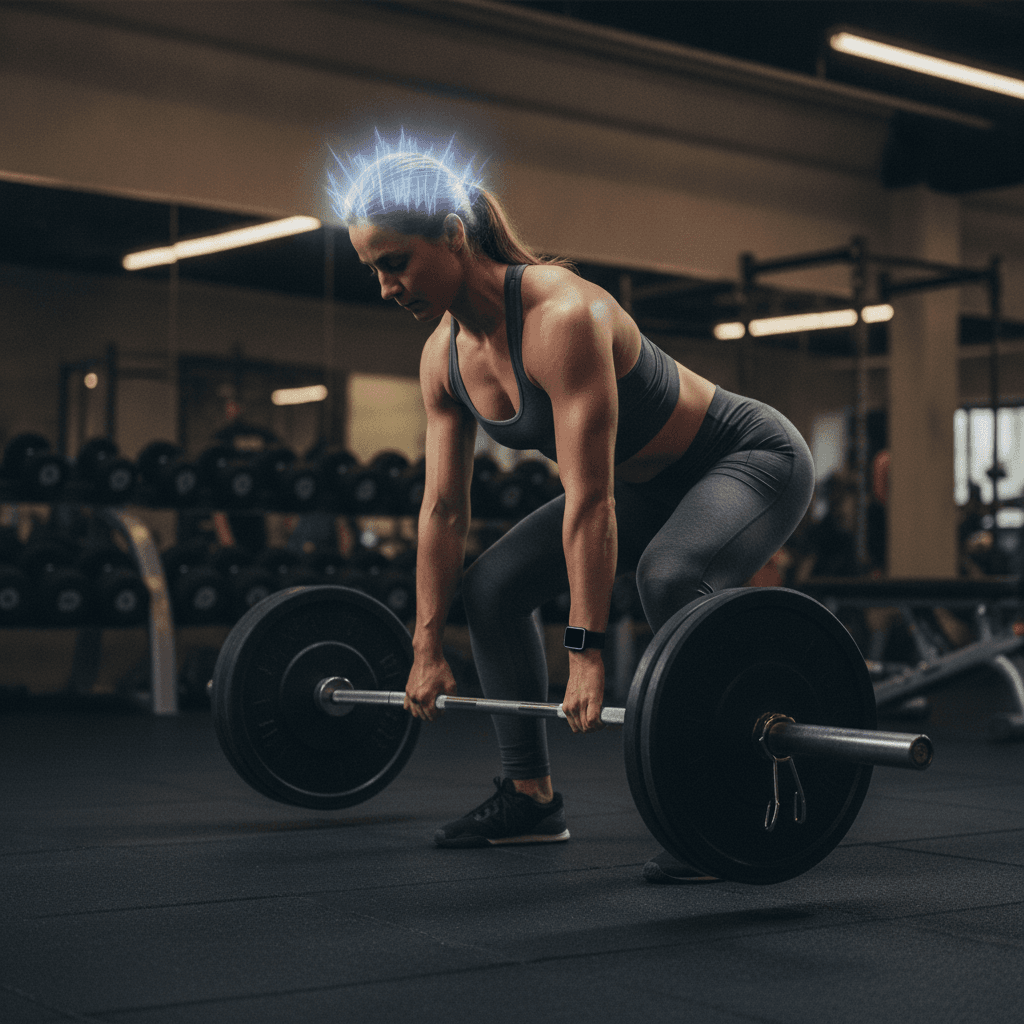
A randomized trial found that creatine monohydrate combined with high-intensity resistance training was associated with greater prefrontal oxygenation, higher sleep consistency, and fewer self-reported temperature sensitivity days in perimenopausal females.
Source: Human randomized trial, 51 perimenopausal females. People were assigned at random to take it or not: the strongest single kind of study for showing cause and effect.
What was found
In perimenopausal females, creatine monohydrate combined with high-intensity resistance training was associated with greater prefrontal oxygenation, higher sleep consistency, and fewer self-reported temperature sensitivity days compared to a placebo group.
The study did not find significant changes in cognitive performance measures, such as Stroop reaction time or Rey 15-item memory test scores, across the groups over time.
How it was done
Researchers randomized 51 perimenopausal females (average age 46) into three groups: creatine monohydrate (CM), placebo (PLA), or a non-training control (CON) group.
The CM and PLA groups completed a 5-day loading phase with 20 grams of creatine per day, followed by six weeks of maintenance with approximately 4.5 grams per day. These groups also participated in twice-weekly progressive high-intensity resistance training.
Cognitive performance and prefrontal oxygenation were assessed at baseline, pre-training, and post-training. Sleep and self-reported menopause symptoms, including temperature sensitivity, fatigue, soreness, brain fog, and bloating, were monitored daily using a wearable wristband.
What it does not show
This was an exploratory analysis, and the findings should be interpreted with caution.
The study involved a small number of participants and a relatively short intervention period of six weeks, which limits the generalizability of the results.
The study design does not allow for conclusions about the effects of creatine or high-intensity resistance training alone, as they were combined.
Where this fits
This exploratory study suggests that creatine, when combined with high-intensity resistance training, may offer benefits for sleep and some menopause symptoms in perimenopausal females. The results are specific to this population and the combined intervention. Readers may wish to check the creatine dose studied against product labels if considering supplementation.
Read more: Best supplements for sleep
Who was talking about it
- European journal of applied physiology on journal (2026-10-24): European journal of applied physiology published a study finding that creatine monohydrate combined with high-intensity resistance training was associated with greater prefrontal oxygenation, higher sleep consistency, and fewer self-reported temperature sensitivity days in perimenopausal females. See the post
The source
This is news, reported from the source above. It is not medical advice and not a recommendation. Talk to your doctor or pharmacist before you change any medicine or supplement.